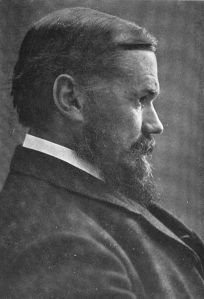
Who was Adolf Meyer?

Introduction

Adolf Meyer (13 September 1866 to 17 March 1950) was a Swiss-born psychiatrist who rose to prominence as the first psychiatrist-in-chief of the Johns Hopkins Hospital (1910-1941).

Adolf Meyer.

He was president of the American Psychiatric Association in 1927-1928 and was one of the most influential figures in psychiatry in the first half of the twentieth century. His focus on collecting detailed case histories on patients was one of the most prominent of his contributions. He oversaw the building and development of the Henry Phipps Psychiatric Clinic at Johns Hopkins Hospital, opened in April 1913, making sure it was suitable for scientific research, training and treatment. Meyer’s work at the Phipps Clinic is possibly the most significant aspect of his career.

Meyer’s main theoretical contribution was his idea of ergasiology (a term he derived from the Greek for “working” and “doing”) to describe a psychobiology. This brought together all the biological, social and psychological factors and symptoms pertaining to a patient. It considered mental illnesses to be a product of dysfunctional personality not a pathology of the brain. Believing that whole-life social and biological factors should be central to both diagnosis and treatment Meyer was one of the earliest psychologists to support occupational therapy as an important connection between the activities of an individual and their mental health, and incorporated community based activities and services to develop people’s everyday living skills.

Personal Life and Education

Adolf Meyer was born in Niederweningen, Switzerland, in 1866. He was the son of a Zwinglian pastor. Meyer received his MD from the University of Zurich in 1892, where he studied neurology under Auguste Forel. During his time at the university, he studied abroad in Paris, London and Edinburgh, working under John Hughlings Jackson and Jean-Martin Charcot. Unable to secure an appointment with the university, he emigrated to the United States in 1892. Meyer married Mary Brooks on 15 September 1902. They had one daughter, Julia Lathrup Meyer, on 14 February 1916. Meyer died on 17 March 1950, in Baltimore, Maryland, at the age of 83 of a heart attack.

Medical Career

Early Career

After moving to the United States, Meyer first practiced neurology and teaching at the University of Chicago, where he was exposed to the ideas of the Chicago functionalists. He was unable to find a paid full-time post at the University of Chicago, so his time at the university was short-lived. From 1893 to 1895, he served as pathologist at the new mental hospital at Kankakee, Illinois, after which he worked at the state hospital at Worcester, Massachusetts from 1895 to 1902, all the while publishing papers prolifically in neurology, neuropathology, and psychiatry.

Time in New York

In 1902, he became director of the Pathological Institute of the New York State Hospital system (shortly afterwards given its present name, The Psychiatric Institute), where in the next few years he shaped much of American psychiatry by emphasizing the importance of keeping detailed patient records and by introducing both Emil Kraepelin’s classificatory system and Sigmund Freud‘s ideas. While in the New York State Hospital system, Meyer was one of the first importers of Freud’s ideas about the importance both of sexuality and of the formative influence of early rearing on the adult personality. Meyer found many of Freud’s ideas and therapeutic methods insightful and useful, but he rejected psychoanalysis as a wholesale etiological explanation of mental disorders in favour of his own theory of psychobiology. He never practiced psychoanalysis and always kept it at arm’s length from Johns Hopkins because of Freud’s increasingly dogmatic insistence on the psychical causation of mental illnesses. As he wrote in his presidential address to the 84th Annual Meeting of the American Psychiatric Association: “Those who imagine that all psychiatry and psychopathology and therapy have to resolve themselves into a smattering of claims and hypotheses of psychoanalysis and that they stand or fall with one’s feelings about psychoanalysis, are equally misguided”. Meyer was Professor of Psychiatry at Cornell University from 1904 to 1909.

The Phipps Clinic at Johns Hopkins

In 1908, Meyer was asked to become the director of a new psychiatric clinic at the Johns Hopkins Hospital after Henry Phipps Jr. donated 1.5 million dollars to open the clinic. Meyer accepted the offer, which he described as “the most important professorship [in psychiatry] in the English-speaking domain.” He oversaw the building and development of the clinic and made sure the building was suitable for scientific research, training and treatment. The Henry Phipps Psychiatric Clinic opened in April 1913.

Meyer’s work at the Phipps Clinic is arguably the most significant aspect of his career. His model for the Phipps Clinic combined clinical and laboratory work, which was the first time these elements were combined in a mental institute in the United States. Though the Phipps Clinic did not use the clinical model of Emil Kraepelin, Meyer did incorporate some of Kraepelin’s practices into the clinic. These practices include extensive observations of the patients and studying both the pre-symptomatic and remissive phases of mental illness, along with periods of acute illness.

Meyer also served as a Professor of Psychiatry at Johns Hopkins School of Medicine from 1910 to 1941. In his beginning years at Johns Hopkins, Meyer helped oversee the work of a few of his aspiring students. Phyllis Greenacre, from the University of Chicago, and Curt Richter, a Harvard graduate, both had the opportunity to study under Meyer. Most notably, Richter studied the behaviour of rats with Meyer and John Watson, a behavioural psychologist. Adolf Meyer worked at Johns Hopkins until his retirement in 1941.

Legacy

People

Many of Meyer’s students went on to make significant contributions to American psychiatry or psychoanalysis, though not necessarily as Meyerians. Most of the founders of the New York Psychoanalytic Society had worked under Meyer at Manhattan State Hospital, including its chief architect Abraham Arden Brill, and Charles Macfie Campbell.

Meyer and William Henry Welch played an instrumental role in Clifford Beers’ founding of the Connecticut Society for Mental Hygiene in 1908. Under Meyer’s direction, Leo Kanner founded the first child psychiatry clinic in the United States at the Johns Hopkins Hospital in 1930.

Contributions to Psychology

Meyer’s main contribution was in his ideas of psychobiology, where he focused on addressing all biological, social and psychological factors and symptoms pertaining to a patient. Meyer coined the term “ergasiology”, which has Greek roots for “working” and “doing”, as another way to classify psychobiology. One of his ideas was that mental illnesses were a product of a dysfunctional personality and not from the pathology of the brain. He also stressed the idea that social and biological factors that affect someone throughout their entire life should be heavily considered when diagnosing and treating a patient. Another contribution of Meyer was that he was one of the earlier psychologists that supported occupational therapy. He thought there was an important connection between the activities of an individual and their mental health. Taking this into consideration he looked for community based activities and services to aid people with everyday living skills.

Meyer was a strong believer in the importance of empiricism, and advocated repeatedly for a scientific, and, particularly, a biological approach to understanding mental illness. He hoped that the Phipps Clinic would help put mental illness on the same ground as every other human illness. He insisted that patients could best be understood through consideration of their “psychobiological” life situations. He reframed mental disease as biopsychosocial “reaction types” rather than as biologically specifiable natural disease entities. In 1906, he reframed dementia praecox as a “reaction type”, a discordant bundle of maladaptive habits that arose as a response to biopsychosocial stressors.

Meyer was also involved with the Eugenics Records Office, which he viewed as a natural extension of the mental hygiene movement which he helped to create. He served on the advisory council of the American Eugenics Society for 12 years, from 1923 to 1935. Meyer’s views on eugenics have not yet been studied closely and his association with the Eugenics Record Office cannot be equated straightforwardly with the extremism of some eugenicists, especially in light of the fact that the fundamental premise of Meyerian psychobiology contradicted the genetic determinism that underpinned scientific racism in the first half of the twentieth century.

Publications

Meyer never published a textbook. Between 1890 and 1943, he published roughly 400 articles in scientific and academic journals, mostly in English, but also in his native German and in French. Most were published together after his death in 1950 in four bound volumes called The Collected Papers of Adolf Meyer.

  • The Collected Papers of Adolf Meyer (Baltimore: Johns Hopkins University Press, 1951).
  • The Anatomical Facts and Clinical Varieties of Traumatic Insanity (1904).
  • The Nature and Conception of Dementia Praecox (1910).
  • Constructive Formulation of Schizophrenia (1922).

On This Day … 30 March [2022]

People (Births)

  • 1882 – Melanie Klein, Austrian-English psychologist and author (d. 1960).

People (Deaths)

  • 1873 – Bénédict Morel, Austrian-French psychiatrist and physician (b. 1809).

Melanie Klein

Melanie Klein (née Reizes; 30 March 1882 to 22 September 1960) was an Austrian-British author and psychoanalyst known for her work in child analysis.

She was the primary figure in the development of object relations theory. Klein suggested that pre-verbal existential anxiety in infancy catalysed the formation of the unconscious, resulting in the unconscious splitting of the world into good and bad idealisations. In her theory, how the child resolves that split depends on the constitution of the child and the character of nurturing the child experiences; the quality of resolution can inform the presence, absence, and/or type of distresses a person experiences later in life.

Benedict Morel

Bénédict Augustin Morel (22 November 1809 to 30 March 1873) was a French psychiatrist born in Vienna, Austria.

He was an influential figure in the field of degeneration theory during the mid-19th century.

Who is Tanya Byron?

Introduction

Tanya Byron (born 06 April 1967) is a British psychologist, writer, and media personality, best known for her work as a child therapist on television shows Little Angels and The House of Tiny Tearaways.

She also co-created the BBC Two sitcom The Life and Times of Vivienne Vyle with Jennifer Saunders, and still contributes articles to various newspapers.

In 2008, she became Professor of the Public Understanding of Science at Edge Hill University and is the first and current Chancellor of the same institution.

Early Life

Byron’s father was the film and television director John Sichel, founder of ARTTS International in Yorkshire. Her mother was a nursing sister and a model.

When Byron was 15 years old, her German-born paternal grandmother was murdered by being battered to death by a woman who abused illicit drugs. Her grandmother knew the woman, who was in pursuit of money. Byron was perplexed by this cruelty, and at about that time she began to try to understand how anyone could do such a terrible thing and began to be interested in psychology.

Education

Byron was educated at North London Collegiate School, University of York (BSc Psychology, 1989), University College London (MSc Clinical Psychology, 1992), and University of Surrey (PhD, 1995). Her PhD thesis was entitled “The evaluation of an outpatient treatment programme for stimulant drug misuse”, and was completed at University College Hospital.

Career

Prior to training in Clinical Psychology, Byron worked as a researcher on the BBC’s Video Diaries documentary series. Once she qualified, Byron worked in the British National Health Service for 18 years in a number of public health areas such as drug addiction, STDs, and mental disorders.

In 2005, Byron was featured on French and Saunders’ Christmas Special as herself, who came in to sort out Dawn and Jennifer’s childish behaviour on the show. Subsequently, she co-wrote the series The Life and Times of Vivienne Vyle with Jennifer Saunders. Byron has also co-authored a book on parenting based on the Little Angels show and two other books on child development and parenting, as well as writing weekly articles for The Times and contributing to several women’s magazines. She has also worked with the Home Office on the current changes to the Homicide Act as it relates to children and young people, and she also works with the National Family and Parenting Institute advising government and ministers on related policy.

In September 2007, it was announced that she would head an independent review in England – supported by the Department for Children, Schools, and Families, as well as the Department for Culture, Media, and Sport – into the potentially harmful effects of both the Internet and video games on children. This was published in March 2008 as “Safer Children in a Digital World”, but is commonly called the Byron Review.

In April 2008, Byron fronted a four-part show called Am I Normal? exploring the boundaries of acceptable behaviour.

In May 2008, she was elected as the first Chancellor of Edge Hill University, in Lancashire and installed at a ceremony in December 2008. Edge Hill University also appointed her to the post of Professor of the Public Understanding of Science, and she delivered her inaugural lecture, “The Trouble With Kids”, in March the following year.

In 2009, Byron was awarded an honorary doctorate by the University of York.

Byron is the patron of Prospex, a charity which works with young people in North London. She is also a partner in a media company, Doris Partnership.

She has published The Skeleton Cupboard: The Making of a Clinical Psychologist in 2015.

Personal Life

Byron married The Bill actor Bruce Byron in Barnet, London, in 1997. They have a daughter (born 1995, Hendon, London) and a son (born 1998, Barnet). Tanya and Bruce met when Bruce applied to the very first ARTTS course.

Television

Little Angels

Tanya Byron, Stephen Briers, Rachel Morris and Laverne Antrobus became household names working on the British TV show Little Angels (which ran for three series), a docu-soap that follows the lives of families where the children have behavioural problems that are causing the parents difficulty. The show is seen as a ‘life line’ by the parents who are effectively calling professionals with years of experience of working with children and families to help them fix a problem that they believe beyond their ability to fix. Tanya Byron, Stephen Briers, Rachel Morris and Laverne Antrobus, monitor the behaviour of the family and the children before discussing with the parents the real underlying causes of the problem (which are nearly always in some way either caused by or contributed to by the parents themselves – usually by inadvertently rewarding inappropriate behaviour with their attention). They then discuss a course of action with them and later they coach them in how to change their own and their children’s behaviour to improve the situation (this is frequently done in scenes where the family is filmed doing something together with the parents receiving advice from the attending professional via an ear piece). The show is intended to be instructive to viewers in how to deal with common problems as well as of real help to the family being filmed (and of course entertaining).

The House of Tiny Tearaways

In 2005 Tanya began to host her own show called The House of Tiny Tearaways, a reality TV style show that brings three families experiencing problems into a large, purpose-built house where they are monitored and aided for a week. The show is vaguely similar to programmes like Big Brother, in that all the rooms have cameras in them and the families are frequently monitored in their activities with the audience shown highlights of a particular day. Each family stays in the house for six days in which time Tanya monitors them all for one day before having very honest and direct discussions with the parents about the issues and how they can be dealt with, and then guiding the families through courses of action, exercises and deliberate changes of behaviour on the parents’ side to deal with the problems. Tanya does not do this entirely singlehandedly, as one element of the programme is the support the parents receive from the other families who are in the house with them at the same time.

The show is characterised by: scenes of children misbehaving, therapy sessions between Tanya and the parents of the children (which are often very emotional and are sometimes the first time they have ever really discussed the problems they are facing), tasks in and outside the house which the families are set to help them practice the skills they have learnt (often having to do things they would normally find difficult, like take a child with eating problems to a restaurant) and by the ending, the families review any improvements or shortcomings they’ve made.

In 2007, Byron stated that she did not want to make any more television programmes on parenting as it had become “a well-marketed area”.

Am I Normal?

In 2008 Tanya presented a four-part series called Am I Normal? exploring the boundaries of acceptable behaviour. The episodes explore the themes of addiction, faith, sex and body image. The programme presents both behaviours and treatments which Dr Byron is able to explore objectively but with some common sense cynicism. Is having sex with 5,000 men within the range of normal behaviour? Is being attracted to pre-pubescent girls okay if you do not act on that attraction in a way that harms or coerces them? Are sex addiction or addiction to computer games real physiological addictions? Is hearing God different to hearing voices? These are the questions that she explores, without yielding to the temptation to give easy answers. This was based on the radio series presented by Vivienne Parry.

Radio

In 2020, Tanya Byron presented “Word of Mouth”, on BBC Radio Four, featuring an investigation into the benefits of ‘Talking to Strangers’. Previously, she presented All in the Mind, a BBC magazine radio programme about psychology and psychiatry.

In October 2013 she was the guest for BBC Radio 4’s Desert Island Discs. Her choices were “Absolute Beginners” by David Bowie, Baba O’Riley by The Who, Take Five by Dave Brubeck, “I Want That Man” by Debbie Harry, Perhaps, Perhaps, Perhaps by Doris Day, Uncertain Smile by The The, Canon in D Major by Johann Pachelbel and That’s Life by Frank Sinatra.

Who was Frederik van Eeden?

Introduction

Frederik Willem van Eeden (03 April 1860, Haarlem to 16 June 1932, Bussum) was a late 19th-century and early 20th-century Dutch writer and psychiatrist.

He was a leading member of the Tachtigers and the Significs Group, and had top billing among the editors of De Nieuwe Gids (The New Guide) during its celebrated first few years of publication, starting in 1885.

Biography

Van Eeden was the son of Frederik Willem Van Eeden, director of the Royal Tropical Institute in Haarlem.

Frederik van Eeden.

In 1880 he studied Medicine in Amsterdam, where he pursued a bohemian lifestyle and wrote poetry. Whilst living in the city, he coined the term lucid dream in the sense of mental clarity, a term that nowadays is a classic term in the Dream literature and study, meaning dreaming while knowing that one is dreaming. In his early writings, he was strongly influenced by Hindu ideas of selfhood, by Boehme’s mysticism, and by Fechner’s panpsychism.

He went on to become a prolific writer, producing many critically acclaimed novels, poetry, plays, and essays. He was widely admired in the Netherlands in his own time for his writings, as well as his status as the first internationally prominent Dutch psychiatrist.

Van Eeden’s psychiatrist practice included treating his fellow Tachtiger Willem Kloos as a patient starting in 1888. His treatment of Kloos was of limited benefit, as Kloos deteriorated into alcoholism and increasing symptoms of mental illness. Van Eeden also incorporated his psychiatric insights into his later writings, such as in a deeply psychological novel called “Van de koele meren des doods” (translated in English as “The Deeps of Deliverance”). Published in 1900, the novel intimately traced the struggle of a woman addicted to morphine as she deteriorated physically and mentally.

His best known written work, “De Kleine Johannes” (“Little Johannes”), which first appeared in the premiere issue of De Nieuwe Gids, was a fantastical adventure of an everyman who grows up to face the harsh realities of the world around him and the emptiness of hopes for a better afterlife, but ultimately finding meaning in serving the good of those around him. This ethic is memorialized in the line “Waar de mensheid is, en haar weedom, daar is mijn weg.” (“Where mankind is, and her woe, there is my path.”)

Van Eeden sought not only to write about, but also to practice, such an ethic. He established a commune named Walden (commune), taking inspiration from Thoreau’s book Walden, in Bussum, North Holland, where the residents tried to produce as much of their needs as they could themselves and to share everything in common, and where he took up a standard of living far below what he was used to. This reflected a trend toward socialism among the Tachtigers; another Tachtiger, Herman Gorter, was a founding member of the world’s first Communist political party, the Dutch Social-Democratic Party, in 1909.

Van Eeden visited the US He had contacts with William James and other psychologists. He met Freud in Vienna, whom he practically introduced in the Netherlands. He corresponded with Hermann Hesse, Charles Lloyd Tuckey (medical hypnotist), Harold Williams (linguist) and was a friend of Peter Kropotkin, the Russian anarchist living in London (UK).

Van Eeden also had a keen interest in Indian philosophy. He translated many of Tagore’s works, including Gitanjali and short stories.

In late years of his life, Van Eeden became a Roman Catholic.

Works

  • (August 1911). “The Quest For A Happy Humanity, First Article: The Essential Injustice Of Society”. The World’s Work: A History of Our Time. XXII: 14702–14713.
  • (September 1911). “The Quest For A Happy Humanity, Second Article: As Poet And Doctor”. The World’s Work: A History of Our Time. XXII: 14873–14881.
  • (October 1911). “The Quest For A Happy Humanity, Last Article: How I Came To See The Essential Wrong Underlying Commercial Life – The Way Out”. The World’s Work: A History of Our Time. XXII: 15006–15010.

On This Day … 28 March [2022]

People (Births)

  • 1955 – John Alderdice, Baron Alderdice, Northern Irish psychiatrist and politician, 1st Speaker of the Northern Ireland Assembly.

John Alderdice

John Thomas Alderdice, Baron Alderdice (born 28 March 1955) is a Northern Ireland politician.

He was the Speaker and a Member of the Northern Ireland Assembly (MLA) for East Belfast from 1998 to 2004 and 1998 to 2003, respectively. Alderdice was the leader of the Alliance Party of Northern Ireland from 1987 to 1998, and since 1996 has sat in the House of Lords as a Liberal Democrat.

He was educated at Ballymena Academy and the Queen’s University Belfast (QUB) where he studied medicine and qualified in 1978. In 1977 he married Joan Hill, with whom he has two sons and one daughter. He worked part-time as a consultant psychiatrist in psychotherapy in the NHS from 1988 until he retired from psychiatric practice in 2010. He also lectured at Queen’s University’s Faculty of Medicine between 1991 and 1999.

Alderdice claims a distant relationship to John King, a 19th-century Australian explorer and the sole survivor of the Burke and Wills expedition.

On This Day … 27 March [2022]

People (Deaths)

  • 1946 – Karl Groos, German psychologist and philosopher (b. 1861).
  • 1998 – David McClelland, American psychologist and academic (b. 1917).

Karl Groos

Karl Groos (10 December 1861 to 27 March 1946, in Tübingen) was a philosopher and psychologist who proposed an evolutionary instrumentalist theory of play. His 1898 book on The Play of Animals suggested that play is a preparation for later life.

Groos was full Professor of philosophy in Gießen, Basel and 1911-1929 in Tübingen.

His main idea was that play is basically useful, and so it can be explained by the normal process of evolution by natural selection. When animals ‘play’ they are practising basic instincts, such as fighting, for survival. This is translated from the original as “pre-tuning”. Despite this insight, Groos’ work is seldom read today, and his connection of play with aesthetics has been termed “misguided”. Another area of study was the psychology of literature, including statistical analysis.

Among his scholars is the German philosopher Willy Moog (1888-1935) (doctorate on Goethe supervised by Karl Groos in Gießen 1909).

David McClelland

David Clarence McClelland (20 May 1917 to 27 March 1998) was an American psychologist, noted for his work on motivation Need Theory.

He published a number of works between the 1950s and the 1990s and developed new scoring systems for the Thematic Apperception Test (TAT) and its descendants. McClelland is credited with developing Achievement Motivation Theory, commonly referred to as “need for achievement” or n-achievement theory. A Review of General Psychology survey published in 2002, ranked McClelland as the 15th most cited psychologist of the 20th century.

On This Day … 26 March [2022]

People (Births)

  • 1905 – Viktor Frankl, Austrian neurologist and psychiatrist (d. 1997).

People (Deaths)

  • 2014 – Roger Birkman, American psychologist and author (b. 1919).
  • 2015 – Tomas Tranströmer, Swedish poet, translator, and psychologist Nobel Prize laureate (b. 1931).

Viktor Frankl

Viktor Emil Frankl (26 March 1905 to 02 September 1997) was an Austrian neurologist, psychiatrist, philosopher, author, and Holocaust survivor.

He was the founder of logotherapy, a school of psychotherapy that describes a search for a life’s meaning as the central human motivational force. Logotherapy is part of existential and humanistic psychology theories.

Logotherapy was recognised as the third school of Viennese Psychotherapy; the first school was created by Sigmund Freud, and the second by Alfred Adler.

Frankl published 39 books. The autobiographical Man’s Search for Meaning, a best-selling book, is based on his experiences in various Nazi concentration camps.

Roger Birkman

Roger Winfred Birkman (01 February 1919 to 26 March 2014) was an American organizational psychologist. He was the creator of The Birkman Method, a workplace psychological assessment. Birkman received his Ph.D. in psychology in 1961 from the University of Texas at Austin. He was the founder and chairman of the board of Birkman International, Inc.

Tomas Transtromer

Tomas Gösta Tranströmer (15 April 1931 to 26 March 2015) was a Swedish poet, psychologist and translator. His poems captured the long Swedish winters, the rhythm of the seasons and the palpable, atmospheric beauty of nature. Tranströmer’s work is also characterised by a sense of mystery and wonder underlying the routine of everyday life, a quality which often gives his poems a religious dimension. He has been described as a Christian poet.

Tranströmer is acclaimed as one of the most important Scandinavian writers since the Second World War. Critics praised his poetry for its accessibility, even in translation. His poetry has been translated into over 60 languages. He was the recipient of the 1990 Neustadt International Prize for Literature, the 2004 International Nonino Prize, and the 2011 Nobel Prize in Literature.

On This Day … 25 March [2022]

People (Deaths)

Milton H. Erickson

Milton Hyland Erickson (05 December 1901 to 25 March 1980) was an American psychiatrist and psychologist specializing in medical hypnosis and family therapy.

He was founding president of the American Society for Clinical Hypnosis and a fellow of the American Psychiatric Association, the American Psychological Association, and the American Psychopathological Association. He is noted for his approach to the unconscious mind as creative and solution-generating. He is also noted for influencing brief therapy, strategic family therapy, family systems therapy, solution focused brief therapy, and neuro-linguistic programming.

On This Day … 24 March [2022]

People (Births)

  • 1897 – Wilhelm Reich, Austrian-American psychotherapist and academic (d. 1957).

Wilhelm Reich

Wilhelm Reich (24 March 1897 to 03 November 1957) was an Austrian doctor of medicine and a psychoanalyst, along with being a member of the second generation of analysts after Sigmund Freud. The author of several influential books, most notably The Impulsive Character (1925), Character Analysis (1933), and The Mass Psychology of Fascism (1933), he became known as one of the most radical figures in the history of psychiatry.

Reich’s work on character contributed to the development of Anna Freud’s The Ego and the Mechanisms of Defence (1936), and his idea of muscular armour – the expression of the personality in the way the body moves shaped innovations such as body psychotherapy, Gestalt therapy, bioenergetic analysis and primal therapy. His writing influenced generations of intellectuals; he coined the phrase “the sexual revolution” and according to one historian acted as its midwife. During the 1968 student uprisings in Paris and Berlin, students scrawled his name on walls and threw copies of The Mass Psychology of Fascism at police.

After graduating in medicine from the University of Vienna in 1922, Reich became deputy director of Freud’s outpatient clinic, the Vienna Ambulatorium. During the 1930s, he was part of a general trend among younger analysts and Frankfurt sociologists that tried to reconcile psychoanalysis with Marxism. He is credited for establishing the first sexual advisory clinics in Vienna, along with Marie Frischauf. He said he wanted to “attack the neurosis by its prevention rather than treatment”.

He moved to New York in 1939, after having accepted a position as Assistant Professor at the New School of Social Research. During his five years in Oslo, he had coined the term “orgone energy” – from “orgasm” and “organism” – for the notion of life energy. In 1940 he started building orgone accumulators, modified Faraday cages that he claimed were beneficial for cancer patients. He claimed that his laboratory cancer mice had had remarkable positive effects from being kept in a Faraday cage, so he built human-size versions, where one could sit inside. This led to newspaper stories about “sex boxes” that cured cancer.

Following two critical articles about him in The New Republic and Harper’s in 1947, the US Food and Drug Administration obtained an injunction against the interstate shipment of orgone accumulators and associated literature, believing they were dealing with a “fraud of the first magnitude”. Charged with contempt in 1956 for having violated the injunction, Reich was sentenced to two years imprisonment, and that summer over six tons of his publications were burned by order of the court. He died in prison of heart failure just over a year later, days before he was due to apply for parole.

Who is Nancy Coover Andreasen?

Introduction

Nancy Coover Andreasen (born 11 November 1938) is an American neuroscientist and neuropsychiatrist.

She currently holds the Andrew H. Woods Chair of Psychiatry at the Roy J. and Lucille A. Carver College of Medicine at the University of Iowa.

Early Life

Andreasen was born in Lincoln, Nebraska. She received her undergraduate degree from the University of Nebraska with majors in English, History, and Philosophy. She received a Ph.D. in English literature. She was a Professor of Renaissance Literature in the Department of English at the University of Iowa for 5 years. She published scholarly articles on John Donne and her first book in the field of Renaissance English literature: John Donne: Conservative Revolutionary

Clinical

A serious illness after the birth of her first daughter piqued Andreasen’s interest in medicine and biomedical research, and she decided to change careers to study medicine. She attended medical school at the University of Iowa College of Medicine, graduated in 1970 and completed her psychiatry residency in 1973. In 1974, she conducted the first modern empirical study of creativity that recognised some association between creativity and manic-depressive illness.

Early in her career she recognised that negative symptoms and associated cognitive impairments had more debilitating effects than psychotic symptoms, like delusions and hallucinations. While psychotic symptoms represent an exaggeration of normal brain/mind functions, negative symptoms represent a loss of normal functions, for example, alogia the loss of the ability to think and speak fluently, affective blunting the loss of the ability to express emotions, avolition, loss of the ability to initiate goal-directed activity, and anhedonia, loss of the ability to experience emotions. The papers describing these concepts have become citation classics, as determined by the Science Citation Index produced by the Institute for Scientific Information. Andreasen is largely responsible for development of the concept of negative symptoms in schizophrenia, having created the first widely used scales for rating the positive and negative symptoms of schizophrenia. She became one of the world’s foremost authorities on schizophrenia. She contributed to nosology and phenomenology by serving on the DSM III and DSM IV Task Forces, chairing the Schizophrenia Work Group for DSM IV.

Andreasen pioneered the application of neuroimaging techniques in major mental illnesses, and published the first quantitative study of magnetic resonance imaging (MRI) of brain abnormalities in schizophrenia. Andreasen became director of the Iowa Mental Health Clinical Research Centre and the Psychiatric Iowa Neuroimaging Consortium. She leads a multidisciplinary team working on three-dimensional image analysis techniques to integrate multi-modality imaging and on developing automated analysis of structural and functional imaging techniques. Software developed by this team is known as BRAINS (Brain Research: Analysis of Images, Networks, and Systems).

She resumed research about the neuroscience of creativity in the 2000s.

Honours

In 2000 President Clinton awarded her the National Medal of Science, America’s highest award for scientific achievement. This award was given for:

her pivotal contributions to the social and behavioral sciences, through the integrative study of mind, brain, and behavior, by joining behavioral science with the technologies of neuroscience and neuroimaging in order to understand mental processes such as memory and creativity, and mental illnesses such as schizophrenia.

She has received numerous other awards, including the Interbrew-Baillet-Latour Prize from the Belgian Academy of Science, the Lieber Schizophrenia Research Prize, and many awards from the American Psychiatric Association, including its Research Prize, the Judd Marmor Award, and the Distinguished Service Award. She was elected a Fellow of the American Academy of Arts and Sciences in 2002. She is a member of the National Academy of Medicine (formerly the Institute of Medicine of the National Academy of Sciences. She was elected to serve two terms on the governing council of the latter organisation. She chaired two Institute of Medicine/National Academy of Sciences Committees that published influential reports. She served as Editor-in-Chief of the American Journal of Psychiatry for 13 years. She is past president of the American Psychopathological Association and the Psychiatric Research Society. She was the founding Chair of the Neuroscience Section of the American Association for the Advancement of Science. She is a member of the Society for Neuroscience and on the Honorary International Editorial Advisory Board of the Mens Sana Monographs.

Experience of Sexism

She has spoken about her experiences of sexism. Early in her career she found that her articles were more likely to be accepted for publication when she used her initials instead of her first name.

Personal Life

She is the mother of two daughters. Suz Andreasen, who was a jewellry designer who lived in New York City, died from ovarian cancer on 10 November 2010. Robin Andreasen is a professor of Cognitive Science at the University of Delaware. She is married to Captain Terry Gwinn, a retired military officer who flew helicopter gunships for 3.5 tours during the Vietnam War.

Selected Bibliography

She has written three books for the general public:

  • “The Broken Brain: The Biological Revolution in Psychiatry” (1983).
  • “Brave New Brain: Conquering Mental Illness in the Era of the Genome” (2001).
  • “The Creating Brain: The Neuroscience of Genius”.

She authored, co-authored, or edited twelve other scholarly books and over 600 articles.

  • John Donne: Conservative Revolutionary. 1967.
  • Introductory Textbook of Psychiatry, Fourth Edition by Nancy C. Andreasen and Donald W. Black.
  • Understanding mental illness: A layman’s guide (Religion and medicine series).
  • Schizophrenia: From Mind to Molecule (American Psychopathological Association).
  • Brain Imaging: Applications in Psychiatry.