
Posts

What is Affect Labelling?

Introduction

Affect labelling is an implicit emotional regulation strategy that can be simply described as “putting feelings into words”.

Refer to Affect Regulation.
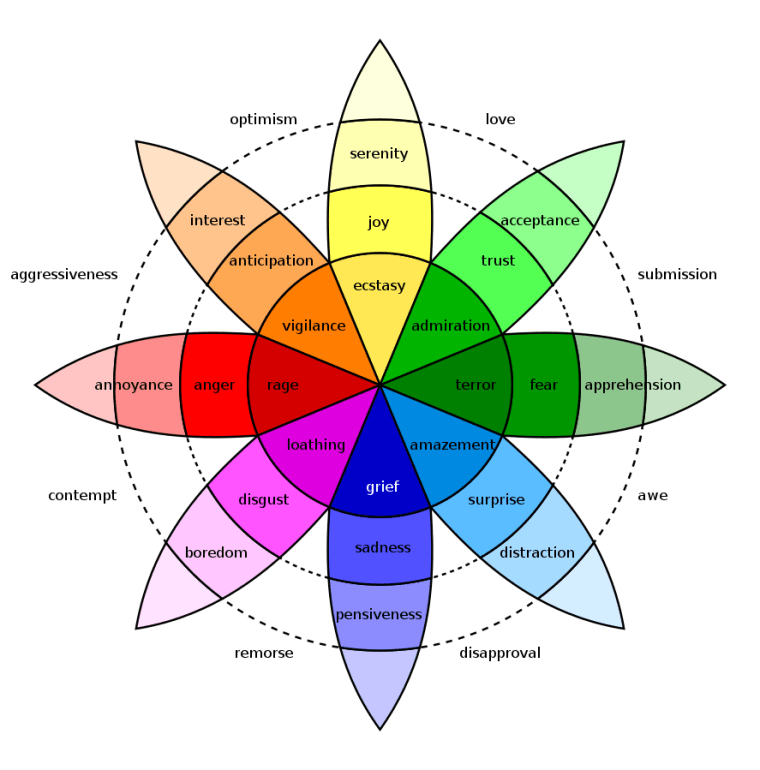
Plutchik Wheel

Specifically, it refers to the idea that explicitly labelling one’s, typically negative, emotional state results in a reduction of the conscious experience, physiological response, and/or behaviour resulting from that emotional state. For example, writing about a negative experience in one’s journal may improve one’s mood. Some other examples of affect labelling include discussing one’s feelings with a therapist, complaining to friends about a negative experience, posting one’s feelings on social media or acknowledging the scary aspects of a situation.

Affect labelling is an extension of the simple concept that talking about one’s feelings can make oneself feel better. Although this idea has been used in talk therapy for over a century, formal research into affect labelling has only begun in recent years. Already, researchers have quantified some of the emotion-regulatory effects of affect labelling, such as decreases in subjective emotional affect, reduced activity in the amygdala, and a lower skin conductance response to frightening stimuli. As a consequence of being a relatively new technique in the area of emotion regulation, affect labelling tends to be compared to, and is often confused with, emotional reappraisal, another emotion-regulatory technique. A key difference between the two is that while reappraisal intuitively feels like a strategy to control one’s emotions, affect labelling often does not. Even when someone does not intend to regulate their emotions, the act of labelling one’s emotions still has positive effects.

Affect labelling is still in the early stages of research and thus, there is much about it that remains unknown. While there are several theories for the mechanism by which affect labelling acts, more research is needed to provide empirical support for these hypotheses. Additionally, some work has been done on the applications of affect labelling to real-world issues, such as research that suggests affect labelling may be commonplace on social media sites. Affect labelling also sees some use in clinical settings as a tentative treatment for fear and anxiety disorders. Nonetheless, research on affect labelling has largely focused on laboratory studies, and further research is needed to understand its effects in the real world.

Brief History

The notion that talking about or writing down one’s feelings can be beneficial is not a recent one. People have kept diaries for centuries, and the use of talk therapy dates back to the beginnings of psychotherapy. Over the past few decades, the idea that putting one’s feelings into words can be beneficial has been shown experimentally. More recently, the concept of affect labelling has grown out of this literature, honing in on the emotion regulation aspect of the benefits of vocalising feelings.

In recent years, research on affect labelling has mostly focused on proving its applicability as an emotion regulation strategy. Although some research exists on the behavioural and neural mechanisms behind its effectiveness, this area of study is still in its early, speculative stages.

Regulatory Effects

Emotional Experience

When engaging in affect labelling, subjects subjectively report lower levels of emotional affect than they do in identical conditions without the affect labelling. This effect is not only found when subjects rate their own emotional state, but also when they label the emotion displayed or evoked by stimuli such as images.

Autonomic Response

Autonomic responses characteristic of various emotions may decrease after performing affect labelling. For instance, upon quantifying their level of anger on a rating scale, subjects subsequently experienced decreases in heart rate and cardiac output. Research also indicates that giving labels to aversive stimuli results in a lower skin conductance response when similar aversive stimuli are presented in the future, implying affect labelling can have long-term effects on autonomic responses.

Neuroscientific Basis

Research has found that engaging in affect labelling results in higher brain activity within the ventrolateral prefrontal cortex (vlPFC), and reduced activity in the amygdala when compared to other tasks involving emotional stimuli. In addition, evidence from brain lesion studies also point to the vlPFC’s involvement in the affect labelling process. Subjects with lesions to the right vlPFC were less able to identify the emotional state of a character throughout a film. This implies that the region is required in order for affect-labelling to take place. Additionally, it has been shown through meta-analysis that while the amygdala is found to be active in tasks involving emotional stimuli, activity is lower when subjects had to identify the emotions rather than simply passively viewing the stimuli.

One theory that integrates these findings proposes that the ventrolateral prefrontal cortex works to down-regulate activity in the amygdala during affect labelling. This theory is supported by evidence from several studies that found negative connectivity between the two brain regions during an affect-labelling task. Furthermore, researchers have used dynamic causal modelling to show specifically that increased activity in the vlPFC is the cause of lower amygdala activity.

Comparison to Emotional Reappraisal

Emotional reappraisal is an emotion regulation technique where an emotional stimulus is reinterpreted in a new, usually less negative, fashion in order to reduce its effect. As an example, someone might reinterpret a bad test score as being a learning experience, rather than dwelling on the negative aspects of the situation. As it is a related emotion regulation strategy, affect labelling research often draws insight from the existing literature on reappraisal.

The most salient difference between affect labelling and reappraisal lies in people’s perception of the efficacy of affect labelling. Unlike reappraisal, affect labelling’s effectiveness in regulating emotion is fairly unintuitive. Research has shown that while subjects expect reappraisal to reduce emotional distress, they predict the opposite for affect labelling, expecting the vocalisation of feelings to actually increase their emotional distress. In reality, while the magnitude of the reduction in emotional response is found to be stronger for reappraisal than for affect labelling, both strategies produce a noticeable decrease.

Individuals who respond more to reappraisal after the presentation of emotional stimuli tend to also benefit more from affect labelling, indicating they may act through the same mechanism.

Reappraisal and affect labelling share similarities in their neural signatures. As in affect labelling, reappraisal produces activity in the vlPFC while inhibiting response in the amygdala. However, in contrast to affect labelling, reappraisal has also been found to generate activity in the anterior cingulate cortex, supplementary motor area, and dorsolateral prefrontal cortex.

Possible Mechanisms

Distraction

One possible explanation for affect labelling’s effectiveness is that it is simply preventing the labeller from fully experiencing the emotional response by drawing their attention away. Distraction techniques have been shown to elicit similar neural activity as affect labelling, with increased activity in the vlPFC and decreased in the amygdala. Additionally, some explicit distraction paradigms have been shown to result in similar reductions of negative emotions.

However, evidence is mixed on this front, as other tasks that involve turning attention away, such as a gender labelling task, do not produce the same reduction. Applications of affect labelling seem to suggest that the mechanism of action is not simply distraction. When applied with exposure therapy, affect labelling was found to be much more effective in reducing skin conductance response than distraction. Affect labelling is also known to result in long-term benefits in clinical settings, whereas distraction is generally considered to negatively affect progress.

Self-Reflection

Another proposed mechanism for affect labelling is through self-reflection. Emotional introspection differs from affect labelling in that it does not require explicit labelling of emotion; however, engaging in introspection has similar effects to affect labelling. As such, rather than being the entire process, affect labelling could act as a first-step in an emotional introspective process. Evidence supporting this mechanism uses a measure of dispositional mindfulness to quantify people’s ability to self-reflect. Researchers were able to link dispositional mindfulness to affect labelling by showing that people with higher levels of dispositional mindfulness showed stronger brain activation in regions associated with affect labelling, such as the vlPFC. Additionally, they showed greater reductions in activity in the amygdala, suggesting that mindfulness modulates the effectiveness of affect labelling, and lending support to the idea that introspection is the mechanism of action.

Unfortunately, this theory of affect labelling struggles to explain affect labelling’s benefits on stimuli that do not apply to the self. For instance, the regulatory effects of labelling external stimuli, such as faces or aversive images presented during an experiment, are unlikely to be explained by a self-reflective process.

Reduction of Uncertainty

People are known to be ambiguity averse, and the complexity of emotion can often create uncertainty in feelings that is unpleasant. Some researchers believe that affect labelling acts by reducing uncertainty in emotion. This is supported by neural evidence connecting uncertainty to activity in the amygdala. Affect labelling has been shown to down-regulate activity in the amygdala, and this may be a result of the reduction of uncertainty of feelings.

Evidence against this theory is the fact that while some emotions are characteristically uncertain, such as fear or anxiety, others tend to be more straightforward, e.g. sadness and anger. Since affect labelling is known to work across all these types of emotions, it is unlikely that uncertainty reduction is the only mechanism by which it acts.

Symbolic Conversion

Another theory of affect labelling posits that the act of labelling is a sort of symbolic encoding of information, changing the stimulus into language. It has been proposed that this symbolic conversion may act as a type of psychological distancing from the stimulus, leading to overall lower levels of affect. While affect labelling specifically refers to giving labels to emotions, assigning abstract content labels, such as identifying objects as “human”, “landscape”, etc., has been found to yield many of the same benefits. There is neural evidence to support this as well. Several studies have found that when subjects classify stimuli based on non-emotional categories, they exhibit greater vlPFC activity and less activity in the amygdala, just like in affect labelling. The fact that labelling non-emotional stimuli has similar effects to that of emotional stimuli suggests that the simple act of converting a stimulus into language may be driving the effect.

Applications

Social Media

The act of posting about one’s feelings on social media sites such as Twitter is a type of affect labelling. One research study analysed 74,487 Twitter users’ tweets for emotional contact, classifying tweets as either before or after instances of affect labelling, which were identified as tweets stating “I feel…”. The researchers found that emotions tended to increase in valence over time in tweets preceding the affect labelling tweet, with the greatest positive or negative emotion being experienced closest to the act of labelling. After the affect labelling tweet, the emotional intensity of the following tweets was found to fall off quickly, going back to baseline levels of valence. The results of this study support the application of affect labelling as an emotion regulation strategy in real-world settings, and show that social media users engage, potentially unknowingly, in affect labelling all the time.

Mental Health

A small body of work has begun to look at affect labelling’s potential as a clinical treatment in conjunction with exposure therapy for phobias, anxiety disorders, and other stress disorders.

One study found that subjects with high public speaking anxiety who chose from a set of predetermined emotion words to describe their feelings before giving a speech in front of an audience showed greater reductions in anxiety, quantified by physiological responses such as heart rate, than subjects who performed a control, shape-matching, task before giving their speeches. These results suggest that combining affect labelling with an exposure treatment is more effective than exposure alone. Notably, the affect labelling and control conditions found no difference in self-reported anxiety; however, physiological responses characteristic of anxiety were reduced for the subjects who performed the affect labelling.

Another study found similar results in spider-fearful individuals, exposing them to a tarantula over two days while simultaneously verbalising their feelings. Compared to subjects in reappraisal, distraction, and control conditions, subjects who engaged in affect labelling showed lower skin conductance response than the other conditions, although there was no difference between conditions in self-reported fear.

Although there is tentative evidence for the value of affect labelling in clinical settings, researchers acknowledge that there is still a need for many more studies drawing from clinical populations in order to deduce the value of using affect labelling in conjunction with other treatments before it can be safely adopted into practice.

Limitations and Concerns

The use of self-report measures of emotion in psychological research may invoke affect labelling, even in studies unrelated to the topic. Whether or not this poses a problem for emotion researchers is still largely unknown.

Although affect labelling appears be effective in laboratory studies with many participants, as with all psychological phenomena, individuals will vary in their experience. The reasons for individual differences in the effectiveness of affect labelling are in need of further research. Furthermore, paradigms used to study affect labelling differ widely, with some providing subjects with pre-prepared labels to select, while others require subjects to self-generate their own labels. These paradigms produce noticeable differences in results, with self-generative paradigms finding more long-term delayed effects of regulation, and pre-prepared paradigms finding immediate effects. The explanation for the differences in these results is still relatively unexplored, though some suspect it may be due to pre-prepared labels implying a kind of interpersonal emotion regulation, since it may be interpreted as a kind of support from the experimenter.

Whether or not the laboratory findings about affect labelling are applicable to affect labelling in the real world is another question researchers must ask. The situations in which people use affect labelling in real life are rich with context, and it is difficult to say whether the particular operationalisations of affect labelling used in a study allow the results to generalise.

On This Day … 23 February

People (Births)

  • 1883 – Karl Jaspers, German-Swiss psychiatrist and philosopher (d. 1969).

Karl Jaspers

Karl Theodor Jaspers (23 February 1883 to 26 February 1969) was a German-Swiss psychiatrist and philosopher who had a strong influence on modern theology, psychiatry, and philosophy.

After being trained in and practicing psychiatry, Jaspers turned to philosophical inquiry and attempted to discover an innovative philosophical system. He was often viewed as a major exponent of existentialism in Germany, though he did not accept the label.

What is Working Through?

Introduction

In psychodynamic psychotherapy, working through is seen as the process of repeating, elaborating, and amplifying interpretations. It is believed that such working through is critical towards the success of therapy.

The concept was introduced by Sigmund Freud in 1914, and assumed ever greater importance in psychoanalysis, in contrast to the immediacy of abreaction.

Interpretation and Resistance

Interpretations are made when the client comes up with some material, be it written, a piece of art, music, or verbal, and are intended to bring the material offered into connection with the unconscious mind. Because of the resistance to accepting the unconscious, interpretations, whether correct or partially incorrect, consciously accepted or rejected, will inevitably require amplifying and extending to other aspects of the client’s life.

In a process Sandor Rado compared to the labour of mourning, the unconscious content must be demonstrated repeatedly in all its various forms and linkages – the process of working through.

Because of the power of resistance, the client’s rational thought and conscious awareness may not be sufficient on their own to overcome the maladjustment, entailing further interpretation and further working through.

Rat Man

Before formulating the concept of working through, in his case study of the Rat Man, Freud wrote of his interpretations:

“It is never the aim of discussions like these to create convictions. They are only intended to bring the repressed complexes into consciousness…and to facilitate the emergence of fresh material from the unconscious. A sense of conviction is only attained after the patient has himself worked over the reclaimed material”.

Transference

The necessity of working through the transference is stressed in almost all forms of psychodynamic therapy, from object relations theory, through the openings offered for working through by transference disruption in self psychology, to the repetitive exploration of the transference in group therapy.

What is Abreaction?

Introduction

Abreaction (German: Abreagieren) is a psychoanalytical term for reliving an experience to purge it of its emotional excesses – a type of catharsis.

Sometimes it is a method of becoming conscious of repressed traumatic events.

Psychoanalytic Origins

The concept of abreaction may have actually been initially formulated by Freud’s mentor, Josef Breuer; but it was in their joint work of 1895, Studies on Hysteria, that it was first made public to denote the fact that pent-up emotions associated with a trauma can be discharged by talking about it. The release of strangulated affect by bringing a particular moment or problem into conscious focus, and thereby abreacting the stifled emotion attached to it, formed the cornerstone of Freud’s early cathartic method of treating hysterical conversion symptoms. For instance, they believed that pent-up emotions associated with trauma can be discharged by talking about it. Freud and Breur, however, did not treat the spontaneous emotional reliving of traumatic event as curative. They instead described abreaction as the full emotional and motoric response to a traumatic event necessary in adequately relieving a person of being repetitively and unpredictably assailed by the trauma’s original and unmitigated emotional intensity. Although the element of surprise is not compatible with Freud’s approach to therapy, other theorists consider that, in abreaction, it is an important part of analytic technique.

Early in his career, psychoanalyst Carl Jung expressed interest in abreaction, or what he referred to as trauma theory, but later decided it had limitations in treatment of neurosis. Jung said:

Though traumata of clearly aetiological significance were occasionally present, the majority of them appeared very improbable. Many traumata were so unimportant, even so normal, that they could be regarded at most as a pretext for the neurosis. But what especially aroused my criticism was the fact that not a few traumata were simply inventions of fantasy and had never happened at all.

Later Developments

Mainstream psychoanalysis tended over time (with Freud) to downplay the role of abreaction, in favour of the working through of the emotions revealed through such acting-out of the past. However, Otto Rank explored abreaction of birth trauma as a central part of his revision of Freudian theory; while Edward Bibring revived the notion of abreaction as emotional reliving, a theme subsequently taken up by Vamik Volkan in his re-grief therapy.

Abreaction Therapies

In Scientology, Dianetics is a form of abreaction that science fiction writer L. Ron Hubbard borrowed from the United States Navy when he spent three months in a San Diego hospital in 1943 with the complaints of an ulcer and malaria. Hubbard later wrote, in his autobiography My Philosophy, that he had observed abreactive therapy in the hospital, though in later life he claimed to have made the discovery on his own after being wounded in battle and given up as untreatable.

What is Vicarious Traumatisation?

Introduction

Vicarious trauma (VT) was a term coined by McCann and Pearlman that is used to describe how working with traumatised clients and the effect it has on trauma therapists.

Previously, the phenomenon was referred to as secondary traumatic stress coined by Dr. Charles Figley. The theory behind VT is that the therapist has a profound world change and is permanently altered by the interaction of empathetic bonding with a client. This change is thought to have three conditional requirements: empathic engagement and exposure to graphic and traumatising material, the therapist being exposed to human cruelty, and re-enactment of trauma within the therapy process. This change can produce changes in a therapist’s sense of spirituality, worldview, and self-identity.

VT is still a subject of debate by theorists, with some saying it is based on the concept of countertransference (refer to transference), burnout, and compassion fatigue. McCann and Pearlman argue, however, that there is probably a relationship between these constructs, but VT is unique and distinct.

As time has progressed, the term VT has expanded to more than just indirect trauma experienced by trauma therapists and has come to include many more populations, although the phenomenon is still evolving.

Signs and Symptoms

The symptoms of vicarious trauma align with the symptoms of primary, actual trauma. When helping professionals attempt to connect with their clients/victims emotionally, the symptoms of VT can create emotional disturbance such as feelings of sadness, grief, irritability and mood swings. The signs and symptoms of VT parallel those of direct trauma, although they tend to be less intense. Workers who have personal trauma histories may be more vulnerable to VT, although the research findings on this point are mixed.

Common signs and symptoms include, but are not limited to:

  • Social withdrawal;
  • Mood swings;
  • Aggression;
  • Greater sensitivity to violence;
  • Somatic symptoms;
  • Sleep difficulties;
  • Intrusive imagery;
  • Cynicism;
  • Sexual difficulties;
  • Difficulty managing boundaries with clients; and
  • Core beliefs and resulting difficulty in relationships reflecting problems with security, trust, esteem, intimacy, and control.

Contributing Factors

VT, conceptually based in constructivist self-development theory, arises from an interaction between individuals and their situations. This means that the individual helper’s personal history (including prior traumatic experiences), coping strategies, and support network, among other things, all interact with his or her situation (including work setting, the nature of the work s/he does, the specific clientele served, etc.), to give rise to individual expressions of vicarious trauma. This in turn implies the individual nature of responses or adaptations to VT as well as individual ways of coping with and transforming it. Some have postulated that this traumatisation occurs when one’s view of the world or a feeling of safety is shattered by hearing about the experiences of their clients. This exposure to trauma, however indirectly, can cause an interruption to the daily functioning of the clinician reducing their effectiveness.

Anything that interferes with the helper’s ability to fulfil their responsibility to assist traumatised clients can contribute to vicarious trauma. Many human service workers report that administrative and bureaucratic factors that impediment to their effectiveness influence work satisfaction. Negative aspects of the organisation as a whole, such as reorganisation, downsizing in the name of change management and a lack of resources in the name of lean management, contribute to burned-out workers.

Vicarious trauma has also been attributed to the stigmatisation of mental health care among service providers. Stigma leads to an inability to engage in self care and eventually the service provider may reach burnout, and become more likely to experience VT. The research has also begun to show that vicarious trauma is more prominent in those with a prior history of trauma and adversity. Research indicates that a mental health provider’s defence style might pose as a risk factor for VT. Mental health providers with self-sacrificing defence styles have been found to experience increased VT.

Research has demonstrated that females are more likely to develop secondary traumatic stress than males and counsellors not in private practice are more likely to develop secondary traumatic stress. Those with stronger counsellor professional identity (CPI) experience less secondary traumatic stress as well.

Specifically, in emergency medical service (EMS) personnel, previous veteran status increased likelihood of experiencing VT.

While the term “vicarious trauma” has been used interchangeably with “compassion fatigue”, “secondary traumatic stress disorder,” “burnout,” “countertransference,” and “work-related stress,” there are important differences. These include the following:

  • Unlike compassion fatigue, VT is a theory-based construct. This means that observable symptoms can serve as the starting for a process of discovering contributing factors and related signs, symptoms, and adaptations. VT also specifies psychological domains that can be affected, rather than specific symptoms that may arise. This specificity may more accurately guide preventive measures and interventions, and allow for the accurate development of interventions for multiple domains (such as changes in the balance between psychotherapy and other work-related tasks and changes in self-care practices).
  • Countertransference is the psychotherapist’s response to a particular client. VT refers to responses across clients, across time.
  • Unlike burnout, countertransference, and work-related stress, VT is specific to trauma workers. This means that the helper will experience trauma-specific difficulties, such as intrusive imagery, that are not part of burnout or countertransference. The burnout and VT constructs overlap, specifically regarding emotional exhaustion. A worker may experience both VT and burnout, and each has its own remedies. VT and countertransference may also co-occur, intensifying each other.
  • Unlike VT, countertransference can be a very useful tool for psychotherapists, providing them with important information about their clients.
  • Work-related stress is a generic term without a theoretical basis, specific signs and symptoms or contributing factors, or remedies. Burnout and VT can co-exist. Countertransference responses may potentiate VT.
  • Vicarious post-traumatic growth, unlike VT, is not a theory-based construct but rather is based on self-reported signs.
  • Body-centred countertransference.

Mechanism

The posited mechanism for VT is empathy. Different forms of empathy may result in different effects on helpers. Batson and colleagues have conducted research that might inform trauma helpers about ways to manage empathic connection constructively. If helpers identify with their trauma survivor clients and immerse themselves in thinking about what it would be like if these events happened to them, they are likely to experience personal distress, feeling upset, worried, distressed. On the other hand, if helpers instead imagine what the client experienced, they may be more likely to feel compassion and moved to help.

Measurement

Over the years, VT has been measured in a wide variety of ways. VT is a multifaceted construct requiring a multifaceted assessment. More specifically, the aspects of VT that would need to be measured for a complete assessment include self capacities, ego resources, frame of reference (identity, world view, and spirituality), psychological needs, and trauma symptoms. Measuring of some of these elements of VT exist, including the following:

  • Psychological needs, using the Trauma and Attachment Belief Scale.
  • Self capacities, using the Inner Experience Questionnaire and/or the Inventory of Altered Self-Capacities.
  • Trauma symptoms, using the PTSD Checklist, Impact of Events Scale, Impact of Events Scale-Revised, children’s revised Impact of Events Scale (Arabic Version), Trauma Symptom Inventory, Detailed Assessment of Posttraumatic Stress, and/or the World Assumptions Scale.
  • Secondary Traumatic Stress Scale is a 17 item, 5-point Likert scale that distinguishes between PTSD measures by framing the questions as stressors from exposure to clients.
  • The Professional Quality of Life (ProQol) version 5. This assessment has 30 questions on a 5-point Likert scale and measures compassion fatigue and secondary trauma.

Addressing

VT is not the responsibility of clients or systems, although institutions that provide trauma-related services bear a responsibility to create policies and work settings that facilitate staff (and therefore client) well-being. Each trauma worker is responsible for self-care, working reflectively, and engaging in regular, frequent, trauma-informed professional confidential consultation.

There are many ways of addressing VT. All involve awareness, balance, and connection. One set of approaches can be grouped together as coping strategies. These include, for example, self-care, rest, escape, and play. A second set of approaches can be grouped as transforming strategies. Transforming strategies aim to help workers create community and find meaning through the work. Within each category, strategies may be applied in one’s personal life and professional life. Organisations that provide trauma services can also play a role in mitigating VT.

Research shows that many simple things increase happiness and this aids to lessen the impact of VT. People who are more socially connected tend to be happier. People who consciously practice gratitude are also shown happier. Creative endeavours that are completely detached with work also increase happiness. Self-care practices like yoga, qigong, and sitting meditation are found to be helpful for those who practice. The Harvard Business Review in a case study regarding to traumatisation stated that it is essential to create an organisational culture in which it is cool to be a social worker or a counsellor, where these professionals are empowered to influence the workplace issues, the strategy of human services in both corporate and care services. Additionally, research indicates clinicians who are exposed to VT are in need of targeted interventions that will boost their resilience. Findings have show interventions such as respite, increasing self efficacy, and having appropriate professional support buffer against the effects of vicarious trauma.

Individuals Found to Experience Vicarious Trauma

Children

Children have been found to experience VT from the traumas experienced by their caregivers and peers. In children the following factors have been found to predict vicarious trauma symptoms:

  • Socioeconomic status.
  • Gender (girls more than boys).
  • Race.
  • Witnessing the trauma directly.
  • Caregiver warmth and hostility.

Foster Parents

Foster parents have been found to experience VT related to the trauma of those they care for. Several studies have found that foster parents experience vicarious trauma, burnout, and compassion fatigue and report that emotional disengagement (a common symptom of VT) is a coping strategy.

Counsellors and Other Mental Health Providers

Counsellors and other mental health professional have been found to experience vicarious trauma when working with veterans and others that have experienced trauma. Some of the factors that predict vicarious trauma severity include:

  • Professional trauma.
  • Level of peer supervision.
  • Social support availability.
  • Emotional coping strategies.
  • Long hours and high caseloads.
  • Population served by the clinician.
  • Defensc mechanisms of the therapist.

American Muslims

After the terrorist attack on the World Trade Centre in the United States, many Muslims were relegated with terrorists and attacks of violence were perpetrated against them. This caused many individuals in this community to experience VT and added to a feeling of worry and being unsafe. Those feeling a stronger sense of religious identity were more likely to experience VT.

On This Day … 21 February

Events

People (Births)

  • 1914 – Jean Tatlock, American psychiatrist and physician (d. 1944).
  • 1961 – Elliot Hirshman, American psychologist and academic.

Jean Tatlock

Jean Frances Tatlock (21 February 1914 to 04 January 1944) was an American psychiatrist and physician. She was a member of the Communist Party of the United States of America and was a reporter and writer for the party’s publication Western Worker. She is most widely known for her romantic relationship with Robert Oppenheimer, the director of the Manhattan Project’s Los Alamos Laboratory during World War II.

The daughter of John Strong Perry Tatlock, a prominent Old English philologist and an expert on Geoffrey Chaucer, Tatlock was a graduate of Vassar College and the Stanford Medical School, where she studied to become a psychiatrist. Tatlock began seeing Oppenheimer in 1936, when she was a graduate student at Stanford and Oppenheimer was a professor of physics at the University of California, Berkeley. As a result of their relationship and her membership of the Communist Party, she was placed under surveillance by the FBI and her phone was tapped.

She suffered from clinical depression and completed suicide on 04 January 1944.

Elliot Hirshman

Elliot Lee Hirshman (born 21 February 1961) is an American psychologist and academic who is the president of Stevenson University in Owings Mills, Maryland since 03 July 2017.

Prior to Stevenson University he served as president at San Diego State University and served as the provost and senior vice president of the University of Maryland, Baltimore County.

On This Day … 20 February

People (Births)

  • 1893 – Elizabeth Holloway Marston, American psychologist and author (d. 1993).

People (Deaths)

  • 1996 – Solomon Asch, American psychologist and academic (b. 1907).

Elizabeth Holloway Marston

Elizabeth Holloway Marston (20 February 1893 to 27 March 1993) was an American attorney and psychologist. She is credited, with her husband William Moulton Marston, with the development of the systolic blood pressure measurement used to detect deception; the predecessor to the polygraph.

She is also credited as the inspiration for her husband’s comic book creation Wonder Woman, a character who was also fashioned on their polyamorous life partner, Olive Byrne.

Solomon Asch

Solomon Eliot Asch (14 September 1907 to 20 February 1996) was a Polish-American Gestalt psychologist and pioneer in social psychology.

He created seminal pieces of work in impression formation, prestige suggestion, conformity, and many other topics. His work follows a common theme of Gestalt psychology that the whole is not only greater than the sum of its parts, but the nature of the whole fundamentally alters the parts. Asch stated: “Most social acts have to be understood in their setting, and lose meaning if isolated. No error in thinking about social facts is more serious than the failure to see their place and function” (Asch, 1952, p. 61). Asch is most well known for his conformity experiments, in which he demonstrated the influence of group pressure on opinions. A Review of General Psychology survey, published in 2002, ranked Asch as the 41st most cited psychologist of the 20th century.

What is Transportation Theory (Psychology)?

Introduction

Narrative transportation theory proposes that when people lose themselves in a story, their attitudes and intentions change to reflect that story.

The mental state of narrative transportation can explain the persuasive effect of stories on people, who may experience narrative transportation when certain contextual and personal preconditions are met, as Green and Brock postulate for the transportation-imagery model. As Van Laer, de Ruyter, Visconti, and Wetzels elaborate further, narrative transportation occurs whenever the story receiver experiences a feeling of entering a world evoked by the narrative because of empathy for the story characters and imagination of the story plot.

Defining the Field

Deighton, Romer, and McQueen  anticipate the construct of narrative transportation by arguing that a story invites story receivers into the action it portrays and, as a result, makes them lose themselves in the story. Gerrig was the first to coin the notion of narrative transportation within the context of novels. Using travel as a metaphor for reading, he conceptualizes narrative transportation as a state of detachment from the world of origin that the story receiver – in his words, the traveller – experiences because of his or her engrossment in the story, a condition that Green and Brock later describe as the story receiver’s experience of being carried away by the story. Notably, the state of narrative transportation makes the world of origin partially inaccessible to the story receiver, thus marking a clear separation in terms of here/there and now/before, or narrative world/world of origin.

Relevant Features

Most research on narrative transportation follows the original definition of the construct. Scholars in the field constantly reaffirm the relevance of three features.

  1. Narrative transportation requires that people process stories – the acts of receiving and interpreting.
  2. Story receivers become transported through two main components: empathy and mental imagery. Empathy implies that story receivers try to understand the experience of a story character, that is, to know and feel the world in the same way. Thus, empathy offers an explanation for the state of detachment from the world of origin that is narrative transportation. In mental imagery, story receivers generate vivid images of the story plot, such that they feel as though they are experiencing the events themselves.
  3. When transported, story receivers lose track of reality in a physiological sense.

In accordance with these features, Van Laer et al.  define narrative transportation as the extent to which:

  • An individual empathizes with the story characters; and
  • The story plot activates their imagination,

Which leads them to experience suspended reality during story reception.

Similar Constructs

Narrative transportation is a form of experiential response to narratives and thus is similar to other constructs, such as absorption, narrative involvement, identification, optimal experience or flow, and immersion. Yet several subtle, critical differences exist. Absorption refers to a personality trait or general tendency to be immersed in life experiences; transportation is an engrossing temporary experience. Flow is a more general construct (i.e. people can experience flow in a variety of activities), whereas transportation specifically entails empathy and mental imagery, which do not occur in flow experiences. Phillips and McQuarrie demonstrate that immersion is primarily an experiential response to aesthetic and visual elements of images, whereas narrative transportation relies on a story with plot and characters, features that are not present in immersion. Identification emphasizes the involvement with story characters, while narrative transportation is concerned with the involvement with the narrative as a whole.

Narrative Persuasion

Since narrative transportation’s conceptualisation, research has demonstrated that the transported “traveller” can return changed by the journey. Subsequent studies have confirmed that a story can engross the story receiver in a transformational experience, whose effects are strong and long-lasting. The transformation that narrative transportation achieves is persuasion of the story receiver. More specifically, Van Laer et al.’s literature review reveals that narrative transportation can cause affective and cognitive responses, beliefs, and attitude and intention changes. However, the processing pattern of narrative transportation is markedly different from that in well-established models of persuasion.

A 2016 meta-analysis found significant, positive narrative persuasion (i.e. narrative-consistent) effects for attitudes, beliefs, intentions and behaviours.

Rival Models

Before 2000, dual-process models of persuasion, especially the elaboration likelihood model and heuristic-systematic model, dominated persuasion research. These models attempt to explain why people accept or reject message claims. According to these models, the determination of a claim’s acceptability can result from careful evaluation of the arguments presented or from reliance on superficial cues, such as the presence of an expert. Whether receivers scrutinise a message depends on the extent to which they are able and motivated to process it systematically. As important variables, these models include empathy, familiarity, involvement, and the number and nature of thoughts the message evokes. If these variables are mainly positive, the receiver’s attitudes and intentions tend to be more positive; if the variables are predominantly negative, the resulting attitudes and intentions are more negative. These variables also exist in narrative persuasion.

Differences between Analytical and Narrative Persuasion

Analytical persuasion and narrative persuasion differ depending on the role of involvement. In analytical persuasion, involvement depends on the extent to which the message has personally relevant consequences for a receiver’s money, time, or other resources. If these consequences are sufficiently severe, receivers evaluate the arguments carefully and generate thoughts related to the arguments. Yet, as Slater notes, even though severe consequences for stories are relatively rare, “viewers or readers of an entertainment narrative typically appear to be far more engrossed in the message.” This type of involvement, or narrative transportation, is arguably the crucial determinant of narrative persuasion.

Though the dual-process models provide a valid description of analytical persuasion, they do not encompass narrative persuasion. Analytical persuasion refers to attitudes and intentions developed from processing messages that are overtly persuasive, such as most lessons in science books, news reports, and speeches. However, narrative persuasion refers to attitudes and intentions developed from processing narrative messages that are not overtly persuasive, such as novels, movies, or video games. Addressing the strength and duration of the persuasive effects of processing stories, narrative transportation is a mental state that produces enduring persuasive effects without careful evaluation of arguments. Transported story receivers are engrossed in a story in a way that neither is inherently critical nor involves great scrutiny.

Sleeper Effect

Narrative transportation seems to be more unintentionally affective than intentionally cognitive in nature. This way of processing leads to potentially increasing and long-lasting persuasive effects. Appel and Richter use the term “Sleeper effect” to describe this paradoxical property of narrative transportation over time, which consists of a more pronounced change in attitudes and intentions and a greater certainty that these attitudes and intentions are correct.

Plausible explanations for the sleeper effect are twofold:

  1. According to post-structural research, language’s articulation in narrative format is capable not only of mirroring reality but also of constructing it. As such, stories could cause profound and durable persuasion of the transported story receiver as a result of his or her progressive internalization. When stories transport story receivers, not only do they present a narrative world but, by reframing the story receiver’s language, they also durably change the world to which the story receiver returns after the transportation experience.
  2. Research demonstrates that people analyse and retain stories differently from other information formats. For example, Deighton et al. show that analytical advertisements stimulate cognitive responses whereas narrative advertisements are more likely to stimulate affective responses.

Following this line of reasoning, Van Laer et al. define narrative persuasion as:

the effect of narrative transportation, which manifests itself in story receivers’ affective and cognitive responses, beliefs, attitudes, and intentions from being swept away by a story and transported into a narrative world that modifies their perception of their world of origin.

The conceptual distinction between analytical persuasion and narrative persuasion and the theoretical framework of sound interpretation of narrative persuasion both ground the extended transportation-imagery model (ETIM).

Moderators

ETIM contains three methodological factors that moderate the overall effect of narrative transportation, as van Laer, Feiereisen, and Visconti detail. The narrative transportation effect is stronger for stories:

  • In the commercial (vs. non-commercial) domain;
  • By users (vs. professionals); and
  • Received alone (vs. with others).

What is Negative Transference?

Introduction

Negative transference is the psychoanalytic term for the transference of negative and hostile feelings, rather than positive ones, onto a therapist (or other emotional object).

Refer to Narcissistic Neurosis and Transference Neurosis.

Freud’s Preference

In his pioneering studies of transference phenomena, Freud noted the existence of both positive and negative transferences, while expressing a preference for the former, which he initially saw as a prerequisite for analytic work. Freud considered that “The hostile feelings make their appearance as a rule later than the affectionate ones and behind them”; and more frequently in same-sex than in mixed-sex analytic pairings.

Otto Fenichel pointed out that whereas neurotic aggravations can follow the emergence of a negative transference, so too (paradoxically) can improvements: the patient gets better to spite the therapist for emphasising the patient’s problems.

Later Formulations

Melanie Klein in her disputes with Anna Freud laid much greater emphasis than her opponent on the constructive role to be played by interpreting the negative transference. Jacques Lacan followed her theoretical lead in seeing “the projection of what Melanie Klein calls bad internal objects” as key to “the negative transference that is the initial knot of the analytic drama” – though he himself would face criticism for glossing over the negative transference in training analyses, to keep his analysands in dependence.

W.R.D. Fairbairn was also more interested in the negative than the positive transference, which he saw as a key to the repetition and exposure of unconscious attachments to internalised bad objects. In his wake, object relations theorists have tended to stress the positive results that can emerge from working with the negative transference.

Technical Blocks

  • Fritz Wittels considered the brevity of Wilhelm Stekel’s analyses to be due to his narcissism being unable to endure the emergence of the negative transference.
  • Rollo May saw the flaw in person-centred therapy as a pervasive reluctance to deal with the negative transference.

Literary Analogues

Describing the process of becoming the focus of a paranoid’s hostility, C.P. Snow wrote:

“No one likes being hated: most of us are afraid of it: it jars to the bone when we meet hatred face to face.”

What is Narcissistic Neurosis?

Introduction

Narcissistic neurosis is a term introduced by Sigmund Freud to distinguish the class of neuroses characterised by their lack of object relations and their fixation upon the early stage of libidinal narcissism.

The term is less current in contemporary psychoanalysis, but still a focus for analytic controversy.

Freud considered such neurosis as impervious to psychoanalytic treatment, as opposed to the transference neurosis where an emotional connection to the analyst was by contrast possible.

Freud’s Changing Ideas

Freud originally applied the term “narcissistic neurosis” to a range of disorders, including perversion, depression, and psychosis. In the 1920s, however, he came to single out “illnesses which are based on a conflict between the ego and the super-ego… we would set aside the name of ‘narcissistic psycho-neuroses’ for disorders of that kind” – melancholia being the outstanding example.

About the same time, in the wake of the work of Karl Abraham, he began to modify to a degree his view on the inaccessibility of narcissistic neurosis to analytic treatment. However his late lectures from the thirties confirmed his opinion of the unsuitability of narcissistic and psychotic conditions for treatment “to a greater or less extent”; as did his posthumous ‘Outline of Psychoanalysis’.

Later Developments

From the twenties onwards, Freud’s views of the inaccessibility of the narcissistic neuroses to analytic influence had been challenged, first by Melanie Klein, and then by object relations theorists more broadly.

While classical analysts like Robert Waelder would maintain Freud’s delimiting standpoint into the sixties, eventually even within ego psychology challenges to the ‘off-limits’ view of what were increasingly seen as borderline disorders emerged.

Relational psychoanalysis, like Heinz Kohut, would also take a more positive approach to narcissistic neurosis, emphasising the need for a partial or initial participation in the narcissistic illusions.

In retrospect, Freud’s caution may be seen as a result of his unwillingness to work with the negative transference, unlike the post-Kleinians.