
Who is Virginia Gonzalez Torres?

Introduction

Virginia Gonzalez Torres is a female human rights activist in Mexico who provides support and resources for the mentally ill. She is often referred to as the Dorothea Dix of Mexico.

Born into a wealthy family that owned a pharmacy chain, Virginia began a volunteer women’s programme at Sayago hospital in the 1980s. In her investigative role, she has sneaked into most of the public mental institutions in Mexico, sometimes posing as a patient, and she once smuggled the mayor of Mexico City into a men’s mental hospital to view the conditions there. More than once she has been beaten up at institutions when she was discovered inside hiding in the dark.

In 1992 Virginia helped make men’s mental hospital Ramirez Moreno infamous by filming conditions inside. In 1995, she helped draft a new mental health law.

A Look at the Soul

Virginia Gonzalez Torres was born in Mexico City, the daughter of Margarita Torres de la Parra and Roberto González Terán. He began his approach to the issue of human rights of the mentally ill when he faces 22 years to an episode that changed his life. Her older sister is hospitalised in a private psychiatric hospital in the United States, to be attended by depression. It was then that Virginia could see that, the psychiatric world, a world of confinement, punishment, neglect and suffering. When visiting her sister in the hospital daily, was awaken their interest in these places, then he realised that he had isolation rooms where patients could stay for days as part of treatment. Over the years Virginia was getting closer to the Psychiatric Hospital in Mexico now, his great ability to empathize with clients allowed them to look at the person behind the diagnosis and may feel their needs, was then given account that has found a cause to fight for the defence of human rights of people with mental illness.

Her Work in Civil Society

Virginia Gonzalez Torres prepares to visit psychiatric hospitals and is aware of the continuing human rights violations, lack of medical care, facilities deplorable lack of clothing and footwear, food in poor condition, in order that the deal was outrageous. Therefore decided to create the Mexican Foundation for Rehabilitation of Persons with mental illness, IAP, which started operations on 14 November 1980, being an institution of non-profit private assistance, is a pioneer in Mexico in the fight for respect for human rights of the mentally ill. In the same year, coordinating a community psychosocial rehabilitation program at the Hospital “José Sayago”, who then becomes a very significant place for Virginia, since the first public psychiatric hospital where he comes to begin what would later Psychiatric Reform in Mexico. Thus, by the Virginia Foundation continues to develop community programs aimed at the Psychosocial Rehabilitation in 1985 such as the “Centre Day” being the first programme of its kind in Mexico. Following this task in 1988, the Foundation is launching the program “Community Residence” thought in people with mental illness who have been discharged from public psychiatric hospitals and lack of family support and economic resources, this programme is free and supports users in their process of reintegration into society. Virginia González’s work was extended to other hospitals and in 1988 together with the Foundation organised a psychosocial rehabilitation program in the Psychiatric Hospital “Dr. Samuel Ramirez Moreno”. Virginia’s vision is to promote the participation of users of mental health services in the defence of their human rights, so the front of the Mexican Foundation for Psychosocial Rehabilitation, achieved during the keynote of the Congress of the World Mental Health, held in Mexico, involving users at the same time presented the “Charter of Human Rights of people suffering from mental illness and are hospitalised” as a cornerstone in the fight for the Defence of Human Rights. One of the legacies of Virginia Gonzalez Torres is the creation of citizen committees, who have the task of ensuring respect for human rights in their struggle for recognition has been achieved these committees to Secretary of Health and have access to all the administrative and budget of the institution. The first steering committee was established Psychiatric Hospital “Dr. Samuel Ramirez Moreno.”

Allegations of Human Rights Violations of the Mentally Ill

One of the tasks of the Foundation is publicly denounce human rights violations of people with mental illness in 1992, a complaint before the National Commission on Human Rights for violations at “Samuel Ramirez Moreno, this action is for a year after the Commission made a series of recommendations to address the abuse allegations.

Participation in the International Field

Virginia Gonzalez’s work has transcended the international field in 1994 during the session of the Human Rights Commission United Nations in Geneva, Switzerland, Virginia on behalf of the FMREM presented to the plenary of the Assembly a report on violations Human rights in Mexico’s public mental hospitals, thus manages to foreground the issue at international level that exists in Mexico.

Official Standard NOM-025-SSA2-1994

The tireless struggle of one of Virginia Gonzalez pays off when in 1995, holding with the foundation in the development of the NOM-025-SSA2-1994, which governs the provision of services in units of Hospital Care Medical-Psychiatric in Mexico. It gets its publication in July 1995 and will be included in the standard list of human rights of mentally ill in hospital, before the foundation promoted by addition of rules establishing the citizens’ committees in all Psychiatric Hospitals country.

Psychosocial Rehabilitation

Virginia Gonzalez believes that the asylum model Psychiatric Hospitals does not contribute to the rehabilitation of the mentally ill, advocates a new treatment, where users of such services have benefits to help them reintegrate into society, so in 1998, promotes actions that lead users to participate in the workshop receive financial support, promotes mental hospitals in the outputs of the user community, and organises workshops in four state psychiatric hospitals, which also manages the articles sold in stores within these mental hospitals are given at cost to users.

A Hope

Thanks to a public outcry by Virginia Gonzalez in 1999, closing the Ocaranza Psychiatric Hospital. At the same time there is a hope for the mentally ill who are admitted to this hospital, because in 2000, were inaugurated transitional villas hospital, whose goal is to leave the overcrowded and have a decent space in which to carry out activities that will lead to rehabilitation. They also open two halfway houses that support the reintegration of users who have been discharged from hospital.

Work from Government

The way Virginia has started from the Civil Society, perseverance and courage have enabled him to be recognised as the leading advocate of human rights of mental patients in Mexico. In 2000 assumed the post of Deputy Director of Psychosocial Rehabilitation in the Ministry of Health, from there its purpose is to generate large changes in psychiatric care for the benefit of the mentally ill. Virginia has not been a common public servant, but has shown its true commitment to defending human rights and is the first to withdraw if the government is not doing well, example is the mobilization that led in 2003 being a civil servant. A picket in front of the headquarters of the dependence of the Secretary of Health Julio Frenk require the Secretary to respond to patients ‘lifers’ with the system of psychiatric asylum. This mobilization makes the secretary agreed to install a desk, coordinated by Virginia Gonzalez Torres, to develop a plan to implement the so-called “Model Hidalgo” mental health care for the benefit of 2 000 400 patients who have been granted asylum different psychiatric hospitals in the country for 20 years, on average.

Miguel Hidalgo as a Role Model

This new model provides for the establishment of new structures of care and is based on respect for the rights of users to receive comprehensive medical care-psychiatric quality and warmth. The model provides a network of services with different alternatives for prevention, hospitalisation and social reintegration in the area of mental health.

National Council for Mental Health

In 2004, establishing the National Council of Mental Health and is named Virginia Technical Secretariat, recognising his work for over thirty years in the Defence of Human Rights of the Mentally Ill. During his tenure on the Council its main objective is to promote the Psychiatric Reform for the Restructuring of Psychiatric Services System and Mental Health in Mexico, which signed 27 states in 2006. This model is intended to implement the Miguel Hidalgo in the country. During his tenure on the Council, visit Virginia Psychiatric hospitals in the country, in 2005, visiting the Psychiatric Durango, realizes that this is the place where most frequently practice the use of electroshock, for what is against this practice, encouraged to seek other, less invasive to patients, makes a commitment to managing the inclusion of psychiatric medications in the catalogue of the Seguro Popular to the lack of medications is not an excuse to use the electric shocks. In January 2006, Virginia Gonzalez Torres, performing observations at Psychiatric Hospital “José Sayago”, found that he violated the human rights of detained 290 patients, with this panorama, the federal agency claims that the state government, “not unable or unwilling to intervene in the matter, “that allows the Health Department take responsibility for the Hospital to implement the model of psychiatric care Miguel Hidalgo.

Revolution in the Sayago Hospital

Virginia has been particularly attentive to the Hospital José Sayago, as it was in the place where he began his work with volunteer groups. On 19 October 2006 Villages were opened in the hospital transition Sayago Hospital, the latter being crucial action to continue implementing the Model Miguel Hidalgo on behalf of users. Later in the year 2009 takes action to continue the revolution within the hospital. A goal is to care for the users who are treated here is made from a humanistic approach, where doctors see the users as individuals and not as a diagnostic label, and they can receive quality medical care and warmth. With hospital nurses made a special approach recognises the importance of their work and urges them to comply with the highest quality standards but above all warmth. It serves the needs of nurses in training, human resources and materials. Propose an organisation of hospital units where work is organised with a multidisciplinary approach. Boost campaign is counting on me, count on you “for the purpose of bringing doctors and nurses to clients from a non-hierarchical position, but person to person.

Autism

A topic of interest to Virginia is the care of children with autism spectrum disorders, so that in 2009, opened the Autism Clinic, which provides specialized care during their first year of operation awarded 28, 800 and took care consultations more than 400 children. Another action in relation to Autism Walk was “Together for Autism” on 26 March to mark the World Day of Conscience on Autism, which is on 02 April, the walk had the participation of more than 3000 people.

Free Consultations for 2,009 Patients

A fight of Virginia Gonzalez Torres, has been to seek free of Mental Health Services, recognising that most people with these conditions can not afford medicines and consultations are required. Thus consultations given by the Centre City Comprehensive Mental Health does not charge any consultation. Following this, in 2009, following a dialogue work, the Chamber of Deputies proposing an agreement for exemption of payments to persons who are served annually in federal health facilities and lack of social insurance, or ISSSTE Seguro Popular Virginia Gonzalez Torres continues to lead the National Mental Health Council at the end of 2009 reported isolation rooms at the Psychiatric Hospital Adolfo. M. Nieto, a situation that eventually uncovered several irregularities that caused the dismissal of the authorities. He is currently working on amendments to the NOM-025-SSA, in order to continue promoting the reform of psychiatry in Mexico and thus make respect for human rights of the mentally ill is part of the daily life of all Mexicans.

This page is based on the copyrighted Wikipedia article < https://en.wikipedia.org/wiki/Virginia_Gonzalez_Torres >; it is used under the Creative Commons Attribution-ShareAlike 3.0 Unported License (CC-BY-SA). You may redistribute it, verbatim or modified, providing that you comply with the terms of the CC-BY-SA.

An Overview of the Dorothea Dix Hospital

Introduction

The Dorothea Dix Hospital was the first North Carolina psychiatric hospital, located on Dix Hill in Raleigh, North Carolina, and named after mental health advocate Dorothea Dix from New England. It was founded in 1856 and closed in 2012. The site is now designated as Dorothea Dix Park and serves as Raleigh’s largest city park.

A photo of the NCDHHS Dorothea Dix Campus in Raleigh, North Carolina. Pictured are the Hargrove Building (left) and McBryde Building (right) as viewed from Smithwick Drive.

Brief History

In 1848, Dorothea Dix visited North Carolina and called for reform in the care of mentally ill patients. In 1849, when the North Carolina State Medical Society was formed, the construction of an institution in the capital, Raleigh, for the care of mentally ill patients was authorised. The hospital opened in 1856 as Dix Hill in honour of her grandfather and almost 100 years later was named in honour of Dorothea Lynde Dix.

The hospital grounds at one time included 2,354 acres (953 ha), which were used for the hospital’s farms, orchards, livestock, maintenance buildings, employee housing, and park grounds. In 1984, the Hunt administration transferred 385 acres to North Carolina State University’s “Centennial Campus”, and in 1985, the Martin administration transferred an additional 450 acres. Other pieces of the property now include the State Farmer’s Market.

In 2000, a consultant said the hospital needed to close. This move was made despite the fact that the hospital was operating well and that its closure meant that mental health patients would have no local, public facility to use for care. The hospital land was purchased by the state to house the hospital.

The Dorothea Dix Hospital was at one time slated to be closed by the state by 2008, and the fate of the remaining 306 acres (124 ha) was a matter of much discussion and debate in state and local circles. As of October 6, 2008, according to the News & Observer, state officials were calling the facility “Central Regional Hospital – Raleigh Campus”. But in 2009, the state announced that Dorothea Dix Hospital would not be closing and would not be a “satellite” of CRH. It was announced in August 2010 that a lack of funding meant the facility would “shut its doors by the end of the year.”

A thorough history of the hospital was published in 2010 by the Office of Archives and History of the North Carolina Department of Cultural Resources.

In August 2012, Dorothea Dix Hospital moved its last patients to Central Regional Hospital in Butner, North Carolina, a facility that critics said did not provide enough beds for the most serious cases. To help alleviate the situation, in May 2012, UNC agreed to spend $40 million on mental health services.

The hospital is the setting for “Dix Hill”, David Sedaris’ reminiscence of working there as a volunteer in his youth, published in his collection Naked.

On 05 May 2015, the Council of State members voted unanimously to approve selling the 308 acres to the city. Proceeds of the sale were to go to “fund facilities and services for the mentally ill.” Located on the property is Spring Hill, listed on the National Register of Historic Places in 1983. The property is now operated as a city park and is open to the public.

The former hospital is now home to the North Carolina Department of Health and Human Services, Ryan McBryde Building.

This page is based on the copyrighted Wikipedia article < https://en.wikipedia.org/wiki/Dorothea_Dix_Hospital >; it is used under the Creative Commons Attribution-ShareAlike 3.0 Unported License (CC-BY-SA). You may redistribute it, verbatim or modified, providing that you comply with the terms of the CC-BY-SA.
Who was Dorothea Dix?

Introduction

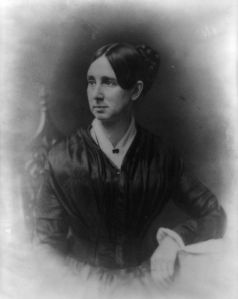
Dorothea Lynde Dix (04 April 1802 to 17 July 1887) was an American advocate on behalf of the indigent mentally ill who, through a vigorous and sustained programme of lobbying state legislatures and the United States Congress, created the first generation of American mental asylums.

During the American Civil War, she served as a Superintendent of Army Nurses.

Refer to the Kirkbride Plan, Virginia Gonzalez Torres (often referred to as Dorothea Dix of Mexico), and Dorothea Dix Hospital.

Early Life

Born in the town of Hampden, Maine, she grew up in Worcester, Massachusetts among her parents’ relatives. She was the first child of three born to Joseph Dix and Mary Bigelow, who had deep ancestral roots in Massachusetts Bay Colony. Her mother suffered from poor health, thus she was not able to provide consistent support to her children. Her father was an itinerant bookseller and Methodist preacher. At the age of twelve, she and her two brothers were sent to their wealthy grandmother, Dorothea Lynde (married to Dr. Elijah Dix) in Boston to get away from her alcoholic parents and abusive father. She began to teach in a school all for girls in Worcester, Massachusetts at fourteen years old and had developed her own curriculum for her class, in which she emphasized ethical living and the natural sciences. In about 1821 Dix opened a school in Boston, which was patronised by well-to-do families. Soon afterward she also began teaching poor and neglected children out of the barn of her grandmother’s house, but she suffered poor health. It has been suggested that Dorothea suffered from major depressive episodes, which contributed to her poor health. From 1824 to 1830, she wrote mainly devotional books and stories for children. Her Conversations on Common Things (1824) reached its sixtieth edition by 1869, and was reprinted 60 times and written in the style of a conversation between mother and daughter. Her book The Garland of Flora (1829) was, along with Elizabeth Wirt’s Flora’s Dictionary, one of the first two dictionaries of flowers published in the United States. Other books of Dix’s include Private Hours, Alice and Ruth, and Prisons and Prison Discipline.

Although raised Catholic and later directed to Congregationalism, Dix became a Unitarian. After Dix’s health forced her to relinquish her school, she began working as a governess on Beacon Hill for the family of William Ellery Channing, a leading Unitarian intellectual. It was while working with his family that Dix travelled to St. Croix, where she first witnessed slavery at first hand, though her experience did not dispose her sympathies toward abolitionism. In 1831, she established a model school for girls in Boston, operating it until 1836, when she suffered a breakdown. Dix was encouraged to take a trip to Europe to improve her health. While she was there she met British social reformers who inspired her. These reformers included Elizabeth Fry, Samuel Tuke and William Rathbone with whom she lived during the duration of her trip in Europe. In hopes of a cure, in 1836 she travelled to England, where she met the Rathbone family. During her trip in Europe and her stay with the Rathbone family, Dorothea’s grandmother died and left her a “sizable estate, along with her royalties” which allowed her to live comfortably for the remainder of her life. It was also during this trip that she came across an institution in Turkey, which she used as a model institution despite its conditions being just like other facilities. They invited her as a guest to Greenbank, their ancestral mansion in Liverpool. The Rathbones were Quakers and prominent social reformers. At Greenbank, Dix met their circle of men and women who believed that government should play a direct, active role in social welfare. She was also introduced to Great Britain’s reform movement for care of the mentally ill, known as lunacy reform. Its members were making deep investigations of madhouses and asylums, publishing their studies in reports to the House of Commons.

Antebellum Career

Reform movements for treatment of the mentally ill were related in this period to other progressive causes: abolitionism, temperance, and voter reforms. After returning to America, in 1840-1841 Dix conducted a state-wide investigation of care for the mentally ill poor in Massachusetts. Dorothea’s interest for helping out the mentally ill of society started while she was teaching classes to female prisoners in East Cambridge. She saw how these individuals were locked up and whose medical needs were not being satisfied since only private hospitals would have such provisions. It was during her time at the East Cambridge prison, that she visited the basement where she encountered four mentally ill individuals, whose cells were “dark and bare and the air was stagnant and foul”. She also saw how such individuals were labelled as “looney paupers” and were being locked up along with violently deranged criminals and received treatment that was inhumane.

In most cases, towns contracted with local individuals to care for mentally ill people who could not care for themselves and lacked family/friends to do so. Unregulated and underfunded, this system resulted in widespread abuse. Dix published the results in a fiery report, a Memorial, to the state legislature. “I proceed, Gentlemen, briefly to call your attention to the present state of Insane Persons confined within this Commonwealth, in cages, stalls, pens! Chained, naked, beaten with rods, and lashed into obedience.” Her lobbying resulted in a bill to expand the state’s mental hospital in Worcester.

During the year 1844 Dix visited all the counties, jails and almshouses in New Jersey in a similar investigation. She prepared a memorial for the New Jersey Legislature, giving a detailed account of her observations and facts. Dix urgently appealed to the legislature to act and appropriate funds to construct a facility for the care and treatment of the mentally ill. She cited a number of cases to emphasize the importance of the state taking responsibility for this class of unfortunates. Dix’s plea was to provide moral treatment for the mentally ill, which consisted of three values: modesty, chastity, and delicacy.

She gave as an example a man formerly respected as a legislator and jurist, who, suffering from mental decline, fell into hard times in old age. Dix discovered him lying on a small bed in a basement room of the county almshouse, bereft of even necessary comforts. She wrote: “This feeble and depressed old man, a pauper, helpless, lonely, and yet conscious of surrounding circumstances, and not now wholly oblivious of the past—this feeble old man, who was he?” Many members of the legislature knew her pauper jurist. Joseph S. Dodd introduced her report to the Senate on 23 January 1845.

Dodd’s resolution to authorise an asylum passed the following day. The first committee made their report 25 February, appealing to the New Jersey legislature to act at once. Some politicians secretly opposed it due to taxes needed to support it. Dix continued to lobby for a facility, writing letters and editorials to build support. During the session, she met with legislators and held group meetings in the evening at home. The act of authorization was taken up 14 March 1845, and read for the last time. On 25 March 1845, the bill was passed for the establishment of a state facility.

Dix travelled from New Hampshire to Louisiana, documenting the condition of the poor mentally ill, making reports to state legislatures, and working with committees to draft the enabling legislation and appropriations bills needed. In 1846, Dix travelled to Illinois to study mental illness. While there, she fell ill and spent the winter in Springfield recovering. She submitted a report to the January 1847 legislative session, which adopted legislation to establish Illinois’ first state mental hospital.

In 1848, Dix visited North Carolina, where she again called for reform in the care of mentally ill patients. Her first attempt to bring reform to North Carolina was denied. However, after a board member’s wife requested, as a dying wish, that Dix’s plea be reconsidered, the bill for reform was approved. In 1849, when the (North Carolina) State Medical Society was formed, the legislature authorised construction of an institution in the capital, Raleigh, for the care of mentally ill patients. Dix Hill Asylum, named in honour of Dorothea Dix’s father, was eventually opened in 1856. One hundred years later, the Dix Hill Asylum was renamed the Dorothea Dix Hospital, in honour of her legacy. A second state hospital for the mentally ill was authorised in 1875, Broughton State Hospital in Morganton, North Carolina; and ultimately, the Goldsboro Hospital for the Negro Insane was also built in eastern part of the state. Dix had a biased view that mental illness was related to conditions of educated whites, not minorities (Dix, 1847).

She was instrumental in the founding of the first public mental hospital in Pennsylvania, the Harrisburg State Hospital. In 1853, she established its library and reading room.

The high point of her work in Washington was the Bill for the Benefit of the Indigent Insane, legislation to set aside 12,225,000 acres (49,473 km2) of Federal land 10,000,000 acres (40,000 km2) to be used for the benefit of the mentally ill and the remainder for the “blind, deaf, and dumb”. Proceeds from its sale would be distributed to the states to build and maintain asylums. Dix’s land bill passed both houses of the United States Congress; but in 1854, President Franklin Pierce vetoed it, arguing that social welfare was the responsibility of the states. Stung by the defeat of her land bill, in 1854 and 1855 Dix travelled to England and Europe. She reconnected with the Rathbone family and, encouraged by British politicians who wished to increase Whitehall’s reach into Scotland, conducted investigations of Scotland’s madhouses. This work resulted in the formation of the Scottish Lunacy Commission to oversee reforms.

Dix visited the British colony of Nova Scotia in 1853 to study its care of the mentally ill. During her visit, she travelled to Sable Island to investigate reports of mentally ill patients being abandoned there. Such reports were largely unfounded. While on Sable Island, Dix assisted in a shipwreck rescue. Upon her return to Boston, she led a successful campaign to send upgraded life-saving equipment to the island. The day after supplies arrived, a ship was wrecked on the island. Thankfully, because of Dix’s work, 180 people were saved.

In 1854, Dix investigated the conditions of mental hospitals in Scotland, and found them to be in similarly poor conditions. In 1857, after years of work and opposition, reform laws were finally passed. Dix took up a similar project in the Channel Islands, finally managing the building of an asylum after thirteen years of agitation. Extending her work throughout Europe, Dix continued on to Rome. Once again finding disrepair and maltreatment, Dix sought an audience with Pope Pius IX. The pope was receptive to Dix’s findings and visited the asylums himself, shocked at their conditions. He thanked Dix for her work, saying in a second audience with her that “a woman and a Protestant, had crossed the seas to call his attention to these cruelly ill-treated members of his flock.”

The Civil War

During the American Civil War, Dix, on 10 June 1861, was appointed Superintendent of Army Nurses by the Union Army, beating out Dr. Elizabeth Blackwell.

Dix set guidelines for nurse candidates. Volunteers were to be aged 35 to 50 and plain-looking. They were required to wear unhooped black or brown dresses, with no jewellry or cosmetics. Dix wanted to avoid sending vulnerable, attractive young women into the hospitals, where she feared they would be exploited by the men (doctors as well as patients). Dix often fired volunteer nurses she had not personally trained or hired (earning the ire of supporting groups like the United States Sanitary Commission).

At odds with Army doctors, Dix feuded with them over control of medical facilities and the hiring and firing of nurses. Many doctors and surgeons did not want any female nurses in their hospitals. To solve the impasse, the War Department introduced Order No. 351 in October 1863. It granted both the Surgeon General (Joseph K. Barnes) and the Superintendent of Army Nurses (Dix) the power to appoint female nurses. However, it gave doctors the power of assigning employees and volunteers to hospitals. This relieved Dix of direct operational responsibility. As superintendent, Dix implemented the Federal army nursing program, in which over 3,000 women would eventually serve. Meanwhile, her influence was being eclipsed by other prominent women such as Dr. Mary Edwards Walker and Clara Barton. She resigned in August 1865 and later considered this “episode” in her career a failure. Although hundreds of Catholic nuns successfully served as nurses, Dix distrusted them; her anti-Catholicism undermined her ability to work with Catholic nurses, lay or religious.

Her even-handed caring for Union and Confederate wounded alike assured her memory in the South. Her nurses provided what was often the only care available in the field to Confederate wounded. Georgeanna Woolsey, a Dix nurse, said, “The surgeon in charge of our camp…looked after all their wounds, which were often in a most shocking state, particularly among the rebels. Every evening and morning they were dressed.” Another Dix nurse, Julia Susan Wheelock, said, “Many of these were Rebels. I could not pass them by neglected. Though enemies, they were nevertheless helpless, suffering human beings.”

When Confederate forces retreated from Gettysburg, they left behind 5,000 wounded soldiers. These were treated by many of Dix’s nurses. Union nurse Cornelia Hancock wrote about the experience: “There are no words in the English language to express the suffering I witnessed today….”

She was well respected for her work throughout the war because of her dedication. This stemmed from her putting aside her previous work to focus completely on the war at hand. With the conclusion of the war her service was recognised formally. She was awarded with two national flags, these flags being for “the Care, Succour, and Relief of the Sick and wounded Soldiers of the United States on the Battle-Field, in Camps and Hospitals during the recent war.” Dix ultimately founded thirty-two hospitals, and influenced the creation of two others in Japan.

Post-war Life

At the end of the war, Dix helped raise funds for the national monument to deceased soldiers at Fortress Monroe. Following the war, she resumed her crusade to improve the care of prisoners, the disabled, and the mentally ill. Her first step was to review the asylums and prisons in the South to evaluate the war damage to their facilities. In addition to pursuing prisons reforms after the civil war, she also worked on improving life-saving services in Nova Scotia, establishing a war memorial at Hampton Roads in Virginia and a fountain for thirsty horses at the Boston Custom Square.

In 1881, Dix moved into the New Jersey State Hospital, formerly known as Trenton State Hospital, that she built years prior. The state legislature had designated a suite for her private use as long as she lived. Although in poor health, she carried on correspondence with people from England, Japan, and elsewhere. Dix died on 17 July 1887. She was buried in Mount Auburn Cemetery in Cambridge, Massachusetts.

Honours

  • Dix was elected “President for Life” of the Army Nurses Association (a social club for Civil War Volunteer Nurses), but she had little to do with the organisation. She opposed its efforts to get military pensions for its members.
  • In December 1866 she was awarded two national flags for her service during the Civil War. This award was awarded for “the Care, Succour, and Relief of the Sick and wounded Soldiers of the United States on the Battle-Field, in Camps and Hospitals during the recent War.”
  • In 1979 she was inducted into the National Women’s Hall of Fame.
  • In 1983 the United States Postal Service honoured her life of charity and service by issuing a 1¢ Dorothea Dix Great Americans series postage stamp.
  • In 1999 a series of six tall marble panels with a bronze bust in each was added to the Massachusetts State House; the busts are of Dix, Florence Luscomb, Mary Kenney O’Sullivan, Josephine St. Pierre Ruffin, Sarah Parker Remond, and Lucy Stone. As well, two quotations from each of those women (including Dix) are etched on their own marble panel, and the wall behind all the panels has wallpaper made of six government documents repeated over and over, with each document being related to a cause of one or more of the women.
  • A United States Navy transport ship serving in World War II was named for Dix, the USS Dorothea L. Dix.
  • The Bangor Mental Health Institute was renamed in August 2006 to the Dorothea Dix Psychiatric Centre.
  • A crater on Venus was named Dix in her honour.
  • She is remembered on the Boston Women’s Heritage Trail.

Numerous locations commemorate Dix, including the Dix Ward in McLean Asylum at Somerville, Dixmont Hospital in Pennsylvania, the Dorothea L. Dix House, and the Dorothea Dix Park located in Raleigh, North Carolina.

Works

  • The Garland of Flora, Boston: S.G. Goodrich & Co., and Carter & Hendee, 1829. Published anonymously.
  • Remarks on Prisons and Prison Discipline in the United States, 2nd edition, from the 1st Boston edition, Philadelphia: Joseph Kite & Co, 1845.
  • Memorial of Miss D. L. Dix in Relation to the Illinois Penitentiary, February 1847.
  • Memorial of Miss D. L. Dix to the Hon. The General Assembly in Behalf of the Insane of Maryland, House of Delegates?, 05 March 1852.
  • She wrote a variety of other tracts on prisoners. She is also the author of many memorials to legislative bodies on the subject of lunatic asylums and reports on philanthropic subjects.
  • For young readers:
    • Conversations on Common Things, or, Guide to Knowledge, with Questions (3rd ed.), Boston: Monroe & Francis, 1828 [1824].
    • Alice and Ruth.
    • Evening Hours.
  • and other books.

This page is based on the copyrighted Wikipedia article < https://en.wikipedia.org/wiki/Dorothea_Dix >; it is used under the Creative Commons Attribution-ShareAlike 3.0 Unported License (CC-BY-SA). You may redistribute it, verbatim or modified, providing that you comply with the terms of the CC-BY-SA.

A Brief Overview of Advocacy in Fife (Scotland)?

Introduction

This short article aims to introduce key concepts about advocacy in Fife, Scotland, including:

  • The importance of advocacy;
  • The principles and standards;
  • Types of advocacy; and
  • The services available for children, younger people, adults and older people in Fife.

Read in conjunction with What is Advocacy?.

What is Advocacy?

Advocacy IS:

  • Supporting people to speak about issues important to them;
  • A safeguarding role;
  • Supporting people to make their own choices and decisions;
  • Supporting people to have their views heard and increase their self-confidence; and
  • Representing the views of people when they are unable to do so for themselves.

Advocacy IS NOT:

  • Counselling;
  • Mediation;
  • Care/support;
  • Telling somebody what to do; or
  • Befriending.

What are the Two Types of Advocate?

  • Citizen Advocates:
    • Are volunteers from all walks of life who want to help others in their community.
    • They are a friend, an ally and a spokesperson and they take time out of their busy lives to support people who may not otherwise be able to put their own interests forward.
    • Advocates may help their partner with practical support and advice, or just be someone to turn to for moral support.
  • Advocacy Partners:
    • Are vulnerable adults looking for support and someone to speak up for them.
    • Partners are generally people with learning disabilities or other issues that mean they may risk isolation, social exclusion or unfair treatment.
    • Partners may also have a mental health need, physical disability or long-term (chronic) health condition that means they are at risk of being unable to safeguard their rights.
    • Partners may be people living independently, in long-term care or in supported housing.

What is an Advocacy Relationship?

  • An advocacy relationship is a mutual partnership in which the advocate’s sole loyalty is to their partner.
  • It is not a service provided to the person with a disability but a relationship of friendship and support between two individuals.

What is the Importance of Advocacy?

Independent advocacy services are critical to safeguarding and empowering those people who are most vulnerable and at risk be enabling them to express their views and to have their voice heard.

Advocacy has to main themes:

  • Safeguarding people who are in situations where they are vulnerable; and
  • Speaking up for and with people who are not being heard, helping them to express their views and make their own decisions and contributions.

What are the Principles and Standards of Independent Advocacy?

Independent advocacy should be provided by an organisation whose sole role is independent advocacy, or whose other tasks either compliment or do not conflict with the provision of independent advocacy. If the service or advocate has a conflict of interest, they should withdraw from acting for the person.

  • Listening:
    • Ensures people are listened to and their views are taken into account.
    • Recognises and safeguards everyone’s right to be heard.
    • Reduces the barriers people face in having their voice head because of communication, capacity, the political, social, economic and personal interests.
  • Loyalty:
    • Is loyal to the people it supports, and stands by their views and wishes.
    • Provides no others services, has no other interests, ties or links other than delivery, promotion, support and defence of independent advocacy.
    • Must be able to evidence and demonstrate its structural, financial, and psychological independence from others.
    • Follows the agenda of the people supported, regardless of the views, interest and agendas of others.
  • Upholding Rights:
    • Stands up to injustice, discrimination and disempowerment.
    • Enables people to have greater control and influence.
    • Challenges discrimination and promotes equality and human rights.
    • Recognises power imbalances, or the barriers people face, and takes steps to address these.

What are the Types of Independent Advocacy?

Below are some of the most common types of independent advocacy services:

  • Individual Advocacy:
    • Professional, or issue-based advocacy, involves a professional advocate providing expert and specialist knowledge to help resolve a particular issue. The relationship is normally short-term.
    • Citizen advocacy is a person-based service that usually, but not always, takes place on a longer-term basis The advocate is usually an unpaid volunteer, who builds a trusting relationship with a person, and supports them to resolve any issues they have. This ensures that individuals have an active life within the community.
  • Non-Instructed Advocacy:
    • Can be provided by professional or citizen advocates. It happens when a person cannot tell an advocate what they want. This may be because the person has complex needs, and/or limited communication, which prevent them from clearly stating their wished and desires.
    • The advocate observes the person, tries different ways of communicating with them, and will speak to significant others in the person’s life.
  • Group Advocacy:
    • Group advocacy, or collective self-advocacy, is designed to allow people with the same concerns, issues or experiences to provide support to each other and highlight issues or campaign for improvement. The groups are run by members, for members, and are supported by a development worker.
  • Peer Advocacy:
    • This is provided by an individual who has gone through similar experiences. This arrangement can help to reassure the person, who is be advocated for, that the individual providing the advocacy understands them and their situation.
  • Children’s Rights Services:
    • The nature of Children’s Right Services is very similar to professional advocacy. It aims to ensure that a child’s rights are fully taken into account when decisions are made about them. Generally, this service is focussed on providing support for children and young people who have been in the care system, or who are subject to a child protection case conference.
    • The service supports the child or young person at reviews and other complex meetings, helping them to express their views and wishes in all decisions affecting them. This advocacy allows children and young people to contribute to statutory child’s plans.

What are the Adult Eligibility Criteria?

Within Fife, Scotland, the eligibility criteria for adults and older people includes:

  • People in Fife aged 16 or over;
  • People affected by disability;
  • People affected by chronic illness;
  • People with dementia or mental disorder (including mental illness, learning disability or personality disorder); and
  • Individuals who are unable to safeguard their own well-being, rights, care, or other interests.

What are the Professional Advocacy Services for Available for Adults and Older People in Fife?

  • Fife Women’s Aid (FWA):
  • Fife Forum:
    • A voluntary sector advice and information agency.
    • Established in 1990 as the Fife Elderly Forum Executive.
    • Provides advocacy for people over 65 who are in community hospitals, residential homes, or nursing care homes.
    • http://www.fifeforum.org.uk.
  • Fife Carers Centre:
  • Kindred:
  • Circles Network:
  • Fife Advocacy Forum (FVA):
    • Provides professional advocacy to children subject to compulsory measures under the Mental Health (Care and Treatment) (Scotland) Act 2003.
    • http://www.fifeadvocacyforum.org.uk.

What are the Citizen Advocacy Services for Adults and Older People in Fife?

  • Citizen advocates are unpaid and independent of service providers and families.
  • They are members of the local community.
  • Fife has three (3) citizen advocacy organisations who provide support on a longer term basis for people aged 16-65.
  • Shorter term advocacy is also available when someone would benefit from a citizen advocacy relationship to resolve a specific issue.

Organisations include:

What are the Group/Peer Advocacy Services for Adults and Older People in Fife?

  • People First (Scotland) work to support people with learning difficulties to have more choice and control over their lives.
  • Peer advocacy refers to one-to-one support provided by advocates with a similar disability or experience to a person using the service(s).
  • Trained and supported volunteers often provide peer advocacy as part of a coordinated project.
  • They facilitate seventeen (17) local advocacy groups in Fife, including two (2) women only groups and two (2) men only groups.
  • People First workers will support individuals to find a suitable local group for their needs.
  • http://peoplefirstscotland.org/.

What are the Advocacy Services for Children and Young People in Fife?

  • Who Cares? Scotland:
    • Provides professional advocacy for young people up to the age of 25.
    • These young people will either have been, or will be, resident in Fife’s residential homes.
    • http://www.whocaresscotland.org/.
  • Kindred:
  • Fife Young Carers:
  • Circles Network:
    • Provides professional advocacy to children subject to compulsory measures under the Mental Health (Care and Treatment) Act 2003.
    • http://circlesnetwork.org.uk/.
  • Believe in Children (Barnardo’s):
    • Provides a children’s rights and advocacy service to children and young people in secure or purchased residential placements.
    • Children looked after at home, in kinship care, foster care, or children and young people who are subject to multi-agency statutory child’s plans can also access advocacy through Barnardo’s.
    • http://www.barnardos.org.uk/fifeservices/.

Further Reading

  • Fife Advocacy Strategy 2018-2021.
  • Carers Strategy for Fife 2018-2021.
  • Advocacy in Fife (Information Leaflet).
  • Fife Adult Support and Protection (webpage).
  • Fife Health and Social Care Strategic Plan 2016-2019.

On This Day … 18 May [2022]

People (Deaths)

  • 2019 – Austin Eubanks, American addiction recovery advocate, survivor of the Columbine shooting (b. 1981).

Austin Eubanks

Stephen Austin Eubanks (07 October 1981 to 18 May 2019) was an American motivational speaker on addiction and recovery.

He was a survivor of the Columbine High School massacre, in which his best friend, 17-year-old Corey DePooter, was killed and Eubanks was shot in his hand and knee. Eubanks struggled with opioid addiction after the shooting. Eubanks was the chief operations officer for the Foundry Treatment Centre.

Columbine Shooting

The Columbine High School massacre was a school shooting and attempted bombing that occurred on 20 April 1999, at Columbine High School in Columbine, Colorado, United States.

The perpetrators, twelfth grade (senior) students Eric Harris and Dylan Klebold, murdered 12 students and one teacher. Ten students were killed in the school library, where the pair subsequently committed suicide. Twenty-one additional people were injured by gunshots, and gunfire was also exchanged with the police. Another three people were injured trying to escape. At the time, it was the deadliest high school shooting in US history. The shooting has inspired dozens of copycat killings, including many deadlier shootings across the world. The word “Columbine” has become a byword for school shootings.

In addition to the shootings, Harris and Klebold planted several homemade bombs in the school, although they failed to detonate. Two bombs were set up as diversions at another location away from the school, one of which (partially) detonated. The motive remains unclear, but they had planned for around a year and hoped to massacre the most victims in US history, which at the time meant exceeding the death toll of the Oklahoma City bombing.

The police were slow to enter the school and were heavily criticized for not intervening during the shooting. The incident resulted in the introduction of the Immediate Action Rapid Deployment tactic, which is used in active shooter situations. Columbine also resulted in an increased emphasis on school security with zero tolerance policies. Debates and moral panic were sparked over guns and gun control laws, high school cliques, subcultures (e.g. goths), outcasts, and school bullying, as well as teenage use of pharmaceutical antidepressants, the Internet and violence in video games and movies.

Many impromptu memorials were created after the massacre, including victims Rachel Scott’s car and John Tomlin’s truck. Fifteen crosses for the victims and shooters were also erected on top of a hill in Clement Park. The crosses for Harris and Klebold were removed later following controversy. The Columbine Memorial began planning as a permanent memorial in June 1999 and opened to the public on 21 September 2007.

What is a Support Group?

Introduction

In a support group, members provide each other with various types of help, usually nonprofessional and nonmaterial, for a particular shared, usually burdensome, characteristic. Members with the same issues can come together for sharing coping strategies, to feel more empowered and for a sense of community.

Help may take the form of providing and evaluating relevant information, relating personal experiences, listening to and accepting others’ experiences, providing sympathetic understanding and establishing social networks.

A support group may also work to inform the public or engage in advocacy.

Refer to Peer Support and Peer Support Specialist.

Background

Formal support groups may appear to be a modern phenomenon, but they supplement traditional fraternal organisations such as Freemasonry in some respects, and may build on certain supportive functions (formerly) carried out in (extended) families.

Other types of groups formed to support causes, including causes outside of themselves, are more often called advocacy groups, interest groups, lobby groups, pressure groups or promotional groups. Trade unions and many environmental groups, for example, are interest groups.

The term support group in this article refers to peer-to-peer support.

Maintaining Contact

Support groups maintain interpersonal contact among their members in a variety of ways. Traditionally, groups meet in person in sizes that allow conversational interaction. Support groups also maintain contact through printed newsletters, telephone chains, internet forums, and mailing lists. Some support groups are exclusively online (see below).

Membership in some support groups is formally controlled, with admission requirements and membership fees. Other groups are “open” and allow anyone to attend an advertised meeting, for example, or to participate in an online forum.

Management by Peers or Professionals

A self-help support group is fully organised and managed by its members, who are commonly volunteers and have personal experience in the subject of the group’s focus. These groups may also be referred to as fellowships, peer support groups, lay organisations, mutual help groups, or mutual aid self-help groups. Most common are 12-step groups such as Alcoholics Anonymous and self-help groups for mental health.

Professionally operated support groups are facilitated by professionals who most often do not share the problem of the members, such as social workers, psychologists, or members of the clergy. The facilitator controls discussions and provides other managerial service. Such professionally operated groups are often found in institutional settings, including hospitals, drug-treatment centres and correctional facilities. These types of support group may run for a specified period of time, and an attendance fee is sometimes charged.

Types of Support Group

In the case of a disease, an identity or a pre-disposition, for example, a support group will provide information, act as a clearing-house for experiences, and may serve as a public relations voice for sufferers, other members, and their families. Groups for high IQ or LGBTQIA+ individuals, for example, differ in their inclusivity, but both connect people on the basis of identity or pre-disposition.

For more temporary concerns, such as bereavement or episodic medical conditions, a support group may veer more towards helping those involved to overcome or push through their condition/experience.

Some support groups and conditions for which such groups may be formed are:

  • Addiction.
  • Alcoholics Anonymous.
  • Anxiety disorders.
  • Bereavement.
  • Cancer.
  • Diabetes.
  • Debtors Anonymous.
  • Domestic violence.
  • Eating disorders.
  • Gamblers Anonymous.
  • Grief.
  • Infertility.
  • Mental Health.
  • Sexual abuse survivors.
  • Stuttering.
  • Suicide prevention.

Online Support Groups

Since at least 1982, the Internet has provided a venue for support groups. Discussing online self-help support groups as the precursor to e-therapy, Martha Ainsworth notes that “the enduring success of these groups has firmly established the potential of computer-mediated communication to enable discussion of sensitive personal issues.”

In one study of the effectiveness of online support groups among patients with head and neck cancer, longer participation in online support groups were found to result in a better health-related quality of life.

Appropriate Groups Still Difficult to Find

A researcher from University College London says the lack of qualitative directories, and the fact that many support groups are not listed by search engines can make finding an appropriate group difficult. Even so, he does say that the medical community needs “to understand the use of personal experiences rather than an evidence-based approach… these groups also impact on how individuals use information. They can help people learn how to find and use information: for example, users swap Web sites and discuss Web sites.”

It is not difficult to find an online support group, but it is hard to find a good one. In the article What to Look for in Quality Online Support Groups, John M. Grohol gives tips for evaluating online groups and states: “In good online support groups, members stick around long after they’ve received the support they were seeking. They stay because they want to give others what they themselves found in the group. Psychologists call this high group cohesion, and it is the pinnacle of group achievement.”

Benefits and Pitfalls

Several studies have shown the importance of the Internet in providing social support, particularly to groups with chronic health problems. Especially in cases of uncommon ailments, a sense of community and understanding in spite of great geographical distances can be important, in addition to sharing of knowledge.

Online support groups, online communities for those affected by a common problem, give mutual support and provide information, two often inseparable features. They are, according to Henry Potts of University College London, “an overlooked resource for patients.” Many studies have looked at the content of messages, while what matters is the effect that participation in the group has on the individual. Potts complains that research on these groups has lagged behind, particularly on the groups which are set up by the people with the problems, rather than by researchers and healthcare professionals. User-defined groups can share the sort of practical knowledge that healthcare professionals can overlook, and they also impact on how individuals find, interpret and use information.

There are many benefits to online support groups that have been found through research studies. Although online support group users are not required to be anonymous, a study conducted by Baym (2010) finds that anonymity is beneficial to those who are lonely or anxious. This does not pertain to some people seeking support groups, because not all are lonely and/or anxious, but for those who are, online support groups are a great outlet where one can feel comfortable honestly expressing themselves because the other users do not know who they are.

A study was conducted by Walther and Boyd (2000) and they found a common trend to why people find online support groups appealing. First, the social distance between members online reduced embarrassment and they appreciated the greater range of expertise offered in the larger online social network. Next, they found that anonymity increased one’s confidence in providing support to others and decreased embarrassment. The users of the social support websites were more comfortable being able to reread and edit their comments and discussion forum entries before sending them, and they have access to the website any time during the day. Each of these characteristics of online support groups are not offered when going to an in-person support group.

In a study conducted by Gunther Eysenbach, John Powell, Marina Englesakis, Carlos Rizo, and Anita Stern (2004), the researchers found it difficult to draw conclusions on the effectiveness of online peer-to-peer support groups. In online support groups, people must have the desire to support and help each other, and many times participants go on the sites in order to get help themselves or are limited to a certain subgroup.

An additional benefit to online support groups is that participation is asynchronous. This means that it is not necessary for all participants to be logged into the forum simultaneously in order to communicate. An experience or question can be posted and others can answer questions or comment on posts whenever they are logged in and have an appropriate response. This characteristic allows for participation and mass communication without having to worry about time constraints. Additionally, there are 24-hour chat rooms and spaces for focused conversation at all times of the day or night. This allows users to get the support they need whenever they need it, while remaining comfortable and, if they so wish, anonymous.

Mental Health

Although there has been relatively little research on the effectiveness of online support groups in mental health, there is some evidence that online support groups can be beneficial. Large randomised controlled trials have both found positive effects and failed to find positive effects.

What is Advocacy?

Introduction

Advocacy is an activity by an individual or group that aims to influence decisions within political, economic, and social institutions. Advocacy includes activities and publications to influence public policy, laws and budgets by using facts, their relationships, the media, and messaging to educate government officials and the public.

Advocacy can include many activities that a person or organisation undertakes including media campaigns, public speaking, commissioning and publishing research. Lobbying (often by lobby groups) is a form of advocacy where a direct approach is made to legislators on a specific issue or specific piece of legislation.

Research has started to address how advocacy groups in the United States and Canada are using social media to facilitate civic engagement and collective action.

An advocate is someone who provides advocacy support to people who need it.

Read in conjunction with A Brief Overview of Advocacy in Fife (Scotland).

Forms of Advocacy

There are several forms of advocacy, each representing a different approach in a way to initiate changes in the society. One of the most popular forms is social justice advocacy.

The initial definition does not encompass the notions of power relations, people’s participation and a vision of a just society as promoted by social justice advocates. For them, advocacy represents the series of actions taken and issues highlighted to change the “what is” into a “what should be”, considering that this “what should be” is a more decent and a more just society. Those actions, which vary with the political, economic and social environment in which they are conducted, have several points in common. They:

  • Question the way policy is administered.
  • Participate in the agenda-setting as they raise significant issues.
  • Target political systems “because those systems are not responding to people’s needs”.
  • Are inclusive and engaging.
  • Propose policy solutions.
  • Open up space for public argumentation.

Other forms of advocacy include:

  • Budget advocacy:
    • Another aspect of advocacy that ensures proactive engagement of Civil Society Organisations with the government budget to make the government more accountable to the people and promote transparency.
    • Budget advocacy also enables citizens and social action groups to compel the government to be more alert to the needs and aspirations of people in general and the deprived sections of the community.
  • Bureaucratic advocacy:
    • People considered “experts” have more chance to succeed at presenting their issues to decision-makers.
    • They use bureaucratic advocacy to influence the agenda, although at a slower pace.
  • Express versus issue advocacy:
    • These two types of advocacy when grouped together usually refers to a debate in the United States whether a group is expressly making their desire known that voters should cast ballots in a particular way, or whether a group has a long-term issue that isn’t campaign and election season specific.
  • Health advocacy:
    • Supports and promotes patients’ health care rights as well as enhance community health and policy initiatives that focus on the availability, safety and quality of care.
  • Ideological advocacy:
    • In this approach, groups fight, sometimes during protests, to advance their ideas in the decision-making circles.
  • Interest-group advocacy:
    • Lobbying is the main tool used by interest groups doing mass advocacy.
    • It is a form of action that does not always succeed at influencing political decision-makers as it requires resources and organisation to be effective.
  • Legislative advocacy:
    • The “reliance on the state or federal legislative process” as part of a strategy to create change.
  • Mass advocacy:
    • Any type of action taken by large groups (petitions, demonstrations, etc.).
  • Media advocacy:
    • The strategic use of the mass media as a resource to advance a social or public policy initiative.
    • In Canada, for example, the Manitoba Public Insurance campaigns illustrate how media advocacy was used to fight alcohol and tobacco-related health issues.
    • One can also consider the role of health advocacy and the media in the enactment of municipal smoking bylaws in Canada between 1970 and 1995.
  • Special education advocacy:
    • Advocacy with a specific focus on the educational rights of students with disabilities.

Different contexts in which advocacy is used:

  • In a legal/law context:
    • An advocate is the title of a specific person who is authorised/appointed in some way to speak on behalf of a person in a legal process.
  • In a political context:
    • An advocacy group is an organised collection of people who seek to influence political decisions and policy, without seeking election to public office.
  • In a social care context:
    • Both terms (and more specific ones such as “independent advocacy”) are used in the UK in the context of a network of interconnected organisations and projects which seek to benefit people who are in difficulty (primarily in the context of disability and mental health).
  • In the context of inclusion:
    • Citizen Advocacy organisations (or programmes) seek to cause benefit by reconnecting people who have become isolated.
    • Their practice was defined in two key documents: CAPE, and Learning from Citizen Advocacy Programmes.

Advocacy Tactics

Margaret E. Keck and Kathryn Sikkink have observed four types of advocacy tactics:

  • Information politics: quickly and credibly generating politically usable information and moving it to where it will have the most impact.
  • Symbolic politics: calling upon symbols, actions, or stories that make sense of a situation for an audience that is frequently far away.
  • Leverage politics: calling upon powerful actors to affect a situation where weaker members of a network are unlikely to have influence.
  • Accountability politics: efforts to hold powerful actors to their previously stated policies or principles.

These tactics have been also observed within advocacy organisations outside the USA.

Aims of Advocacy

Advocacy in all its forms seeks to ensure that people, particularly those who are most vulnerable in society, are able to:

  • Have their voice heard on issues that are important to them.
  • Defend and safeguard their rights.
  • Have their views and wishes genuinely considered when decisions are being made about their lives.
  • Leading a change towards a greater social justice and equality.

Advocacy is a process of supporting and enabling people to:

  • Express their views and concerns.
  • Access information and services.
  • Defend and promote their rights and responsibilities.
  • Explore choices and options.

Use of the Internet

Groups involved in advocacy work have been using the Internet to accomplish organisational goals. It has been argued that the Internet helps to increase the speed, reach and effectiveness of advocacy-related communication as well as mobilisation efforts, suggesting that social media are beneficial to the advocacy community.

Other Examples

Advocacy activities may include conducting an exit poll or the filing of an amicus brief.

Topics

People advocate for a large number and variety of topics. Some of these are clear-cut social issues that are universally agreed to be problematic and worth solving, such as human trafficking. Others – such as abortion – are much more divisive and inspire strongly-held opinions on both sides. There may never be a consensus on this latter type of issues, but intense advocacy is likely to remain. In the United States, any issue of widespread debate and deeply-divided opinion can be referred to as a social issue. The Library of Congress has assembled an extensive list of social issues in the United States, ranging from vast ones like abortion to same-sex marriage to smaller ones like hacking and academic cheating.

Topics that appear to involve advancing a certain positive ideal are often known as causes. A particular cause may be very expansive in nature – for instance, increasing liberty or fixing a broken political system. For instance in 2008, US presidential candidate Barack Obama utilised such a meaning when he said, “this was the moment when we tore down barriers that have divided us for too long; when we rallied people of all parties and ages to a common cause.” Change.org and Causes are two popular websites that allow people to organise around a common cause.

Topics upon which there is universal agreement that they need to be solved include, for example, human trafficking, poverty, water and sanitation as a human right.

“Social issues” as referred to in the United States also include topics (also known as “causes”) intended by their advocates to advance certain ideals (such as equality) include: civil rights, LGBT rights, women’s rights, environmentalism, and veganism.

Transnational Advocacy

Advocates and advocacy groups represent a wide range of categories and support several issues as listed on worldadvocacy.com. The Advocacy Institute, a US-based global organisation, is dedicated to strengthening the capacity of political, social, and economic justice advocates to influence and change public policy.

The phenomenon of globalisation draws a special attention to advocacy beyond countries’ borders. The core existence of networks such as World Advocacy or the Advocacy Institute demonstrates the increasing importance of transnational advocacy and international advocacy. Transnational advocacy networks are more likely to emerge around issues where external influence is necessary to ease the communication between internal groups and their own government. Groups of advocates willing to further their mission also tend to promote networks and to meet with their internal counterparts to exchange ideas.

Transnational advocacy is increasingly playing a role in advocacy for migrants rights, and migrant advocacy organisations have strategically called upon governments and international organisations for leverage.

Transnational advocates spend time with local interest groups in order to better understand their views and wishes.