
What is Observational Learning?

Introduction

Observational learning is learning that occurs through observing the behaviour of others. It is a form of social learning which takes various forms, based on various processes. In humans, this form of learning seems to not need reinforcement to occur, but instead, requires a social model such as a parent, sibling, friend, or teacher with surroundings. Particularly in childhood, a model is someone of authority or higher status in an environment. In animals, observational learning is often based on classical conditioning, in which an instinctive behaviour is elicited by observing the behaviour of another (e.g. mobbing in birds), but other processes may be involved as well.

Human Observational Learning

Many behaviours that a learner observes, remembers, and imitates are actions that models display and display modelling, even though the model may not intentionally try to instil a particular behaviour. A child may learn to swear, smack, smoke, and deem other inappropriate behaviour acceptable through poor modelling. Albert Bandura claims that children continually learn desirable and undesirable behaviour through observational learning. Observational learning suggests that an individual’s environment, cognition, and behaviour all incorporate and ultimately determine how the individual functions and models.

Through observational learning, individual behaviours can spread across a culture through a process called diffusion chain. This basically occurs when an individual first learns a behaviour by observing another individual and that individual serves as a model through whom other individuals learn the behaviour, and so on.

Culture plays a role in whether observational learning is the dominant learning style in a person or community. Some cultures expect children to actively participate in their communities and are therefore exposed to different trades and roles on a daily basis. This exposure allows children to observe and learn the different skills and practices that are valued in their communities.

Albert Bandura, who is known for the classic Bobo doll experiment, identified this basic form of learning in 1961. The importance of observational learning lies in helping individuals, especially children, acquire new responses by observing others’ behaviour.

Albert Bandura states that people’s behaviour could be determined by their environment. Observational learning occurs through observing negative and positive behaviours. Bandura believes in reciprocal determinism in which the environment can influence people’s behaviour and vice versa. For instance, the Bobo doll experiment shows that the model, in a determined environment, affects children’s behaviour. In this experiment Bandura demonstrates that one group of children placed in an aggressive environment would act the same way, while the control group and the other group of children placed in a passive role model environment hardly shows any type of aggression.

In communities where children’s primary mode of learning is through observation, the children are rarely separated from adult activities. This incorporation into the adult world at an early age allows children to use observational learning skills in multiple spheres of life. This learning through observation requires keen attentive abilities. Culturally, they learn that their participation and contributions are valued in their communities. This teaches children that it is their duty, as members of the community, to observe others’ contributions so they gradually become involved and participate further in the community.

Influential Stages and Factors

The stages of observational learning include exposure to the model, acquiring the model’s behaviour and accepting it as one’s own.

Bandura’s social cognitive learning theory states that there are four factors that influence observational learning:

  1. Attention: Observers cannot learn unless they pay attention to what’s happening around them. This process is influenced by characteristics of the model, such as how much one likes or identifies with the model, and by characteristics of the observer, such as the observer’s expectations or level of emotional arousal.
  2. Retention/Memory: Observers must not only recognise the observed behaviour but also remember it at some later time. This process depends on the observer’s ability to code or structure the information in an easily remembered form or to mentally or physically rehearse the model’s actions.
  3. Initiation/Motor: Observers must be physically and/intellectually capable of producing the act. In many cases, the observer possesses the necessary responses. But sometimes, reproducing the model’s actions may involve skills the observer has not yet acquired. It is one thing to carefully watch a circus juggler, but it is quite another to go home and repeat those acts.
  4. Motivation: The observer must have motivation to recreate the observed behaviour.

Bandura clearly distinguishes between learning and performance. Unless motivated, a person does not produce learned behaviour. This motivation can come from external reinforcement, such as the experimenter’s promise of reward in some of Bandura’s studies, or the bribe of a parent. Or it can come from vicarious reinforcement, based on the observation that models are rewarded. High-status models can affect performance through motivation. For example, girls aged 11 to 14 performed better on a motor performance task when they thought it was demonstrated by a high-status cheerleader than by a low-status model.

Some have even added a step between attention and retention involving encoding a behaviour.

Observational learning leads to a change in an individual’s behaviour along three dimensions:

  1. An individual thinks about a situation in a different way and may have incentive to react to it.
  2. The change is a result of a person’s direct experiences as opposed to being in-born.
  3. For the most part, the change an individual has made is permanent.

Effect on Behaviour

According to Bandura’s social cognitive learning theory, observational learning can affect behaviour in many ways, with both positive and negative consequences. It can teach completely new behaviours, for one. It can also increase or decrease the frequency of behaviours that have previously been learned. Observational learning can even encourage behaviours that were previously forbidden (for example, the violent behaviour towards the Bobo doll that children imitated in Albert Bandura’s study). Observational learning can also influence behaviours that are similar to, but not identical to, the ones being modelled. For example, seeing a model excel at playing the piano may motivate an observer to play the saxophone.

Age Difference

Albert Bandura stressed that developing children learn from different social models, meaning that no two children are exposed to exactly the same modelling influence. From infancy to adolescence, they are exposed to various social models. A 2013 study found that a toddlers’ previous social familiarity with a model was not always necessary for learning and that they were also able to learn from observing a stranger demonstrating or modelling a new action to another stranger.

It was once believed that babies could not imitate actions until the latter half of the first year. However, a number of studies now report that infants as young as seven days can imitate simple facial expressions. By the latter half of their first year, 9-month-old babies can imitate actions hours after they first see them. As they continue to develop, toddlers around age two can acquire important personal and social skills by imitating a social model.

Deferred imitation is an important developmental milestone in a two-year-old, in which children not only construct symbolic representations but can also remember information. Unlike toddlers, children of elementary school age are less likely to rely on imagination to represent an experience. Instead, they can verbally describe the model’s behaviour. Since this form of learning does not need reinforcement, it is more likely to occur regularly.

As age increases, age-related observational learning motor skills may decrease in athletes and golfers. Younger and skilled golfers have higher observational learning compared to older golfers and less skilled golfers.

Observational Causal Learning

Humans use observational Moleen causal learning to watch other people’s actions and use the information gained to find out how something works and how we can do it ourselves.

A study of 25-month-old infants found that they can learn causal relations from observing human interventions. They also learn by observing normal actions not created by intentional human action.

Comparisons with Imitation

Observational learning is presumed to have occurred when an organism copies an improbable action or action outcome that it has observed and the matching behaviour cannot be explained by an alternative mechanism. Psychologists have been particularly interested in the form of observational learning known as imitation and in how to distinguish imitation from other processes. To successfully make this distinction, one must separate the degree to which behavioural similarity results from:

  • Predisposed behaviour;
  • Increased motivation resulting from the presence of another animal;
  • Attention drawn to a place or object;
  • Learning about the way the environment works, as distinguished from what we think of as;
  • Imitation (the copying of the demonstrated behaviour).

Observational learning differs from imitative learning in that it does not require a duplication of the behaviour exhibited by the model. For example, the learner may observe an unwanted behaviour and the subsequent consequences, and thus learn to refrain from that behaviour. For example, Riopelle (1960) found that monkeys did better with observational learning if they saw the “tutor” monkey make a mistake before making the right choice. Heyes (1993) distinguished imitation and non-imitative social learning in the following way: imitation occurs when animals learn about behaviour from observing conspecifics, whereas non-imitative social learning occurs when animals learn about the environment from observing others.

Not all imitation and learning through observing is the same, and they often differ in the degree to which they take on an active or passive form. John Dewey describes an important distinction between two different forms of imitation: imitation as an end in itself and imitation with a purpose. Imitation as an end is more akin to mimicry, in which a person copies another’s act to repeat that action again. This kind of imitation is often observed in animals. Imitation with a purpose utilises the imitative act as a means to accomplish something more significant. Whereas the more passive form of imitation as an end has been documented in some European American communities, the other kind of more active, purposeful imitation has been documented in other communities around the world.

Observation may take on a more active form in children’s learning in multiple Indigenous American communities. Ethnographic anthropological studies in Yucatec Mayan and Quechua Peruvian communities provide evidence that the home or community-centred economic systems of these cultures allow children to witness first-hand, activities that are meaningful to their own livelihoods and the overall well-being of the community. These children have the opportunity to observe activities that are relevant within the context of that community, which gives them a reason to sharpen their attention to the practical knowledge they are exposed to. This does not mean that they have to observe the activities even though they are present. The children often make an active decision to stay in attendance while a community activity is taking place to observe and learn. This decision underscores the significance of this learning style in many indigenous American communities. It goes far beyond learning mundane tasks through rote imitation; it is central to children’s gradual transformation into informed members of their communities’ unique practices. There was also a study, done with children, that concluded that Imitated behaviour can be recalled and used in another situation or the same.

Apprenticeship

Apprenticeship can involve both observational learning and modelling. Apprentices gain their skills in part through working with masters in their profession and through observing and evaluating the work of their fellow apprentices. Examples include renaissance inventor/painter Leonardo da Vinci and Michelangelo, before succeeding in their profession they were apprentices.

Learning without Imitation

Michael Tomasello described various ways of observational learning without the process of imitation in animals:

  • Exposure: Individuals learn about their environment through close proximity to other individuals that have more experience. For example, a young dolphin learning the location of a plethora of fish by staying near its mother.
  • Stimulus enhancement: Individuals become interested in an object from watching others interact with it. Increased interest in an object may result in object manipulation, which facilitates new object-related behaviours by trial-and-error learning. For example, a young killer whale might become interested in playing with a sea lion pup after watching other whales toss the sea lion pup around. After playing with the pup, the killer whale may develop foraging behaviours appropriate to such prey. In this case, the killer whale did not learn to prey on sea lions by observing other whales do so, but rather the killer whale became intrigued after observing other whales play with the pup. After the killer whale became interested, then its interactions with the sea lion resulted in behaviours that provoked future foraging efforts.
  • Goal emulation – Individuals are enticed by the end result of an observed behaviour and attempt the same outcome but with a different method. For example, Haggerty (1909) devised an experiment in which a monkey climbed up the side of a cage, stuck its arm into a wooden chute, and pulled a rope in the chute to release food. Another monkey was provided an opportunity to obtain the food after watching a monkey go through this process on four separate occasions. The monkey performed a different method and finally succeeded after trial and error.

Peer Model Influences

Observational learning is very beneficial when there are positive, reinforcing peer models involved. Although individuals go through four different stages for observational learning: attention; retention; production; and motivation, this does not simply mean that when an individual’s attention is captured that it automatically sets the process in that exact order. One of the most important ongoing stages for observational learning, especially among children, is motivation and positive reinforcement.

Performance is enhanced when children are positively instructed on how they can improve a situation and where children actively participate alongside a more skilled person. Examples of this are scaffolding and guided participation. Scaffolding refers to an expert responding contingently to a novice so the novice gradually increases their understanding of a problem. Guided participation refers to an expert actively engaging in a situation with a novice so the novice participates with or observes the adult to understand how to resolve a problem.

Cultural Variation

Cultural variation can be seen by the extent of information learned or absorbed by children in non-Western cultures through learning by observation. Cultural variation is not restricted only to ethnicity and nationality, but rather, extends to the specific practices within communities. In learning by observation, children use observation to learn without verbal requests for further information, or without direct instruction. For example, children from Mexican heritage families tend to learn and make better use of information observed during classroom demonstration than children of European heritage. Children of European heritage experience the type of learning that separates them from their family and community activities. They instead participate in lessons and other exercises in special settings such as school. Cultural backgrounds differ from each other in which children display certain characteristics in regards to learning an activity. Another example is seen in the immersion of children in some Indigenous communities of the Americas into the adult world and the effects it has on observational learning and the ability to complete multiple tasks simultaneously. This might be due to children in these communities having the opportunity to see a task being completed by their elders or peers and then trying to emulate the task. In doing so they learn to value observation and the skill-building it affords them because of the value it holds within their community. This type of observation is not passive, but reflects the child’s intent to participate or learn within a community.

Observational learning can be seen taking place in many domains of Indigenous communities. The classroom setting is one significant example, and it functions differently for Indigenous communities compared to what is commonly present in Western schooling. The emphasis of keen observation in favour of supporting participation in ongoing activities strives to aid children to learn the important tools and ways of their community. Engaging in shared endeavours – with both the experienced and inexperienced – allows for the experienced to understand what the inexperienced need in order to grow in regards to the assessment of observational learning. The involvement of the inexperienced, or the children in this matter, can either be furthered by the children’s learning or advancing into the activity performed by the assessment of observational learning. Indigenous communities rely on observational learning as a way for their children to be a part of ongoing activities in the community (Tharp, 2006).

Although learning in the Indigenous American communities is not always the central focus when participating in an activity, studies have shown that attention in intentional observation differs from accidental observation. Intentional participation is “keen observation and listening in anticipation of, or in the process of engaging in endeavours”. This means that when they have the intention of participating in an event, their attention is more focused on the details, compared to when they are accidentally observing.

Observational learning can be an active process in many Indigenous American communities. The learner must take initiative to attend to activities going on around them. Children in these communities also take initiative to contribute their knowledge in ways that will benefit their community. For example, in many Indigenous American cultures, children perform household chores without being instructed to do so by adults. Instead, they observe a need for their contributions, understand their role in their community, and take initiative to accomplish the tasks they have observed others doing. The learner’s intrinsic motivations play an important role in the child’s understanding and construction of meaning in these educational experiences. The independence and responsibility associated with observational learning in many Indigenous American communities are significant reasons why this method of learning involves more than just watching and imitating. A learner must be actively engaged with their demonstrations and experiences in order to fully comprehend and apply the knowledge they obtain.

Indigenous Communities of the Americas

Children from indigenous heritage communities of the Americas often learn through observation, a strategy that can carry over into adulthood. The heightened value towards observation allows children to multi-task and actively engage in simultaneous activities. The exposure to an uncensored adult lifestyle allows children to observe and learn the skills and practices that are valued in their communities. Children observe elders, parents, and siblings complete tasks and learn to participate in them. They are seen as contributors and learn to observe multiple tasks being completed at once and can learn to complete a task while still engaging with other community members without being distracted.

Indigenous communities provide more opportunities to incorporate children in everyday life. This can be seen in some Mayan communities where children are given full access to community events, which allows observational learning to occur more often. Other children in Mazahua, Mexico are known to observe ongoing activities intensely. In native northern Canadian and indigenous Mayan communities, children often learn as third-party observers from stories and conversations by others. Most young Mayan children are carried on their mother’s back, allowing them to observe their mother’s work and see the world as their mother sees it. Often, children in Indigenous American communities assume the majority of the responsibility for their learning. Additionally, children find their own approaches to learning. Children are often allowed to learn without restrictions and with minimal guidance. They are encouraged to participate in the community even if they do not know how to do the work. They are self-motivated to learn and finish their chores. These children act as a second set of eyes and ears for their parents, updating them about the community.

Children aged 6 to 8 in an indigenous heritage community in Guadalajara, Mexico participated in hard work, such as cooking or running errands, thus benefiting the whole family, while those in the city of Guadalajara rarely did so. These children participated more in adult regulated activities and had little time to play, while those from the indigenous-heritage community had more time to play and initiate in their after-school activities and had a higher sense of belonging to their community. Children from formerly indigenous communities are more likely to show these aspects than children from cosmopolitan communities are, even after leaving their childhood community.

Within certain indigenous communities, people do not typically seek out explanations beyond basic observation. This is because they are competent in learning through astute observation and often nonverbally encourage to do so. In a Guatemalan footloom factory, amateur adult weavers observed skilled weavers over the course of weeks without questioning or being given explanations; the amateur weaver moved at their own pace and began when they felt confident. The framework of learning how to weave through observation can serve as a model that groups within a society use as a reference to guide their actions in particular domains of life. Communities that participate in observational learning promote tolerance and mutual understand of those coming from different cultural backgrounds.

Other Human and Animal Behaviour Experiments

When an animal is given a task to complete, they are almost always more successful after observing another animal doing the same task before them. Experiments have been conducted on several different species with the same effect: animals can learn behaviours from peers. However, there is a need to distinguish the propagation of behaviour and the stability of behaviour. Research has shown that social learning can spread a behaviour, but there are more factors regarding how a behaviour carries across generations of an animal culture.

Learning in Fish

Experiments with ninespine sticklebacks showed that individuals will use social learning to locate food.

Social Learning in Pigeons

A study in 1996 at the University of Kentucky used a foraging device to test social learning in pigeons. A pigeon could access the food reward by either pecking at a treadle or stepping on it. Significant correspondence was found between the methods of how the observers accessed their food and the methods the initial model used in accessing the food.

Acquiring Foraging Niches

Studies have been conducted at the University of Oslo and University of Saskatchewan regarding the possibility of social learning in birds, delineating the difference between cultural and genetic acquisition. Strong evidence already exists for mate choice, bird song, predator recognition, and foraging.

Researchers cross-fostered eggs between nests of blue tits and great tits and observed the resulting behaviour through audio-visual recording. Tits raised in the foster family learned their foster family’s foraging sites early. This shift—from the sites the tits would among their own kind and the sites they learned from the foster parents—lasted for life. What young birds learn from foster parents, they eventually transmitted to their own offspring. This suggests cultural transmissions of foraging behaviour over generations in the wild.

Social Learning in Crows

The University of Washington studied this phenomenon with crows, acknowledging the evolutionary trade-off between acquiring costly information first-hand and learning that information socially with less cost to the individual but at the risk of inaccuracy. The experimenters exposed wild crows to a unique “dangerous face” mask as they trapped, banded, and released 7-15 birds at five different study places around Seattle, WA. An immediate scolding response to the mask after trapping by previously captured crows illustrates that the individual crow learned the danger of that mask. There was a scolding from crows that were captured that had not been captured initially. That response indicates conditioning from the mob of birds that assembled during the capture.

Horizontal social learning (learning from peers) is consistent with the lone crows that recognised the dangerous face without ever being captured. Children of captured crow parents were conditioned to scold the dangerous mask, which demonstrates vertical social learning (learning from parents). The crows that were captured directly had the most precise discrimination between dangerous and neutral masks than the crows that learned from the experience of their peers. The ability of crows to learn doubled the frequency of scolding, which spread at least 1.2 km from where the experiment started to over a 5-year period at one site.

Propagation of Animal Culture

Researchers at the Département d’Etudes Cognitives, Institut Jean Nicod, Ecole Normale Supérieure acknowledged a difficulty with research in social learning. To count acquired behaviour as cultural, two conditions need must be met: the behaviour must spread in a social group, and that behaviour must be stable across generations. Research has provided evidence that imitation may play a role in the propagation of a behaviour, but these researchers believe the fidelity of this evidence is not sufficient to prove the stability of animal culture.

Other factors like ecological availability, reward-based factors, content-based factors, and source-based factors might explain the stability of animal culture in a wild rather than just imitation. As an example of ecological availability, chimps may learn how to fish for ants with a stick from their peers, but that behaviour is also influenced by the particular type of ants as well as the condition. A behaviour may be learned socially, but the fact that it was learned socially does not necessarily mean it will last. The fact that the behaviour is rewarding has a role in cultural stability as well. The ability for socially-learned behaviours to stabilise across generations is also mitigated by the complexity of the behaviour. Different individuals of a species, like crows, vary in their ability to use a complex tool. Finally, a behaviour’s stability in animal culture depends on the context in which they learn a behaviour. If a behaviour has already been adopted by a majority, then the behaviour is more likely to carry across generations out of a need for conforming.

Animals are able to acquire behaviours from social learning, but whether or not that behaviour carries across generations requires more investigation.

Hummingbird Experiment

Experiments with hummingbirds provided one example of apparent observational learning in a non-human organism. Hummingbirds were divided into two groups. Birds in one group were exposed to the feeding of a knowledgeable “tutor” bird; hummingbirds in the other group did not have this exposure. In subsequent tests the birds that had seen a tutor were more efficient feeders than the others.

Bottlenose Dolphin

Herman (2002) suggested that bottlenose dolphins produce goal-emulated behaviours rather than imitative ones. A dolphin that watches a model place a ball in a basket might place the ball in the basket when asked to mimic the behaviour, but it may do so in a different manner seen.

Rhesus Monkey

Kinnaman (1902) reported that one rhesus monkey learned to pull a plug from a box with its teeth to obtain food after watching another monkey succeed at this task.

Fredman (2012) also performed an experiment on observational behaviour. In experiment 1, human-raised monkeys observed a familiar human model open a foraging box using a tool in one of two alternate ways: levering or poking. In experiment 2, mother-raised monkeys viewed similar techniques demonstrated by monkey models. A control group in each population saw no model. In both experiments, independent coders detected which technique experimental subjects had seen, thus confirming social learning. Further analyses examined copying at three levels of resolution.

The human-raised monkeys exhibited the greatest learning with the specific tool use technique they saw. Only monkeys who saw the levering model used the lever technique, by contrast with controls and those who witnessed poking. Mother-reared monkeys instead typically ignored the tool and exhibited fidelity at a lower level, tending only to re-create whichever result the model had achieved by either levering or poking.

Nevertheless, this level of social learning was associated with significantly greater levels of success in monkeys witnessing a model than in controls, an effect absent in the human-reared population. Results in both populations are consistent with a process of canalisation of the repertoire in the direction of the approach witnessed, producing a narrower, socially shaped behavioural profile than among controls who saw no model.

Light Box Experiment

Pinkham and Jaswal (2011) did an experiment to see if a child would learn how to turn on a light box by watching a parent. They found that children who saw a parent use their head to turn on the light box tended to do the task in that manner, while children who had not seen the parent used their hands instead.

Swimming Skill Performance

When adequate practice and appropriate feedback follow demonstrations, increased skill performance and learning occurs. Lewis (1974) did a study[54] of children who had a fear of swimming and observed how modelling and going over swimming practices affected their overall performance. The experiment spanned nine days, and included many steps. The children were first assessed on their anxiety and swimming skills. Then they were placed into one of three conditional groups and exposed to these conditions over a few days.

At the end of each day, all children participated in a group lesson. The first group was a control group where the children watched a short cartoon video unrelated to swimming. The second group was a peer mastery group, which watched a short video of similar-aged children who had very good task performances and high confidence. Lastly, the third group was a peer coping group, whose subjects watched a video of similar-aged children who progressed from low task performances and low confidence statements to high task performances and high confidence statements.

The day following the exposures to each condition, the children were reassessed. Finally, the children were also assessed a few days later for a follow-up assessment. Upon reassessment, it was shown that the two model groups who watched videos of children similar in age had successful rates on the skills assessed because they perceived the models as informational and motivational.

Do-as-I-do Chimpanzee

Flexible methods must be used to assess whether an animal can imitate an action. This led to an approach that teaches animals to imitate by using a command such as “do-as-I-do” or “do this” followed by the action that they are supposed to imitate . Researchers trained chimpanzees to imitate an action that was paired with the command. For example, this might include a researcher saying “do this” paired with clapping hands. This type of instruction has been utilised in a variety of other animals in order to teach imitation actions by utilising a command or request.

Observational Learning in Everyday Life

Observational learning allows for new skills to be learned in a wide variety of areas. Demonstrations help the modification of skills and behaviours.

Learning Physical Activities

When learning skills for physical activities can be anything that is learned that requires physical movement, this can include learning a sport, learning to eat with a fork, or learning to walk. There are multiple important variables that aid in modifying physical skills and psychological responses from an observational learning standpoint. Modelling is a variable in observational learning where the skill level of the model is considered. When someone is supposed to demonstrate a physical skill such as throwing a baseball the model should be able to execute the behaviour of throwing the ball flawlessly if the model of learning is a mastery model. Another model to utilise in observational learning is a coping model, which would be a model demonstrating a physical skill that they have not yet mastered or achieved high performance in. Both models are found to be effective and can be utilised depending on the what skills is trying to be demonstrated. These models can be used as interventions to increase observational learning in practice, competition, and rehabilitation situations. Observational learning is also dependent on the learner’s intentions and goals where performance can be enhanced by increasing instruction and beneficial feedback depending on the individual’s age, personality, and abilities.

Neuroscience

Recent research in neuroscience has implicated mirror neurons as a neurophysiological basis for observational learning. Mirror neurons were first discovered in 1991 by researchers led by Giacomo Rizzolatti. The scientists had a device connected to a monkey to monitor brain activity. When the scientists came into the lab eating ice cream, the device buzzed. This accidental finding led them to mirror neurons which are an essential part in imitation and observational learning. These specialised visuomotor neurons fire action potentials when an individual performs a motor task and also fire when an individual passively observes another individual performing the same motor task. In observational motor learning, the process begins with a visual presentation of another individual performing a motor task, this acts as a model. The learner then needs to transform the observed visual information into internal motor commands that will allow them to perform the motor task, this is known as visuomotor transformation. Mirror neuron networks provide a mechanism for visuo-motor and motor-visual transformation and interaction. Similar networks of mirror neurons have also been implicated in social learning, motor cognition and social cognition.

Clinical Perspective

Autism Spectrum Disorder

Discrete trial training (DTT) is a structured and systematic approach utilised in helping individuals with autism spectrum disorder learn. Individuals with autism tend to struggle with learning through observation, therefore something that is reinforcing is necessary in order to motivate them to imitate or follow through with the task. When utilising DTT to teach individuals with autism modelling is utilised to aid in their learning. Modelling would include showing how to reach the correct answer, this could mean showing the steps to a math equation. Utilising DTT in a group setting also promotes observational learning from peers as well.

This page is based on the copyrighted Wikipedia article < https://en.wikipedia.org/wiki/Observational_learning >; it is used under the Creative Commons Attribution-ShareAlike 3.0 Unported License (CC-BY-SA). You may redistribute it, verbatim or modified, providing that you comply with the terms of the CC-BY-SA.


What is Behaviour Management?

Introduction

Behaviour management, similar to behaviour modification, is a less-intensive form of behaviour therapy. Unlike behaviour modification, which focuses on changing behaviour, behaviour management focuses on maintaining positive habits and behaviours and reducing negative ones. Behaviour management skills are especially useful for teachers and educators, healthcare workers, and those working in supported living communities. This form of management aims to help professionals oversee and guide behaviour management in individuals and groups toward fulfilling, productive, and socially acceptable behaviours. Behaviour management can be accomplished through modelling, rewards, or punishment.

Research

Influential behaviour management researchers B.F. Skinner and Carl Rogers both take different approaches to managing behavio.

Skinner claimed that anyone can manipulate behaviour by identifying what a person finds rewarding. Once the rewards are known, they can be given in exchange for good behaviour. Skinner called this “Positive Reinforcement Psychology.”

Rogers proposed that the desire to behave appropriately must come before addressing behavioural problems. This is accomplished by teaching the individual about morality, including why one should do what is right. Rogers held that a person must have an internal awareness of right and wrong.

Many principles and techniques are the same as in behaviour modification. However, they are considerably different and administered less often.

In the Classroom

Behaviour management is often applied by a classroom teacher as a form of behavioural engineering, in order to raise students’ retention of material and produce higher yields of student work completion. This also helps to reduce classroom disruption and places more focus on building self-control and self-regulating a calm emotional state.

American education psychologist, Brophy (1986, p.191) writes:

Contemporary behavior modification approaches involve students more actively in planning and shaping their own behavior through participation in the negotiation of contracts with their teachers and through exposure to training designed to help them to monitor and evaluate their behavior more actively, to learn techniques of self-control and problem solving, and to set goals and reinforce themselves for meeting these meetings.

In general, behaviour management strategies are effective at reducing classroom disruption. Recent efforts have focused on incorporating principles of functional assessment.

Such strategies can come from a variety of behavioural change theories, although the most common practices rely on using applied behaviour analysis principles such as positive reinforcement and mild punishments (like response cost and child time-out). Behavioural practices like differential reinforcement are often used. These may be delivered in a token economy or a level system. In general, the reward component is considered effective. For example, Cotton (1988) reviewed 37 studies on tokens, praise, and other reward systems and found them to be effective in managing student classroom behaviour. A comprehensive review of token procedures to match children’s level of behavioural severity is found in Walker’s text “The Acting Out Child.”

Behaviour management systems have three main parts:

  • Whole group;
  • Table group; and
  • Individual.

Examples may include marble jars for the class, prize charts for tables, and a grid chart with 25 spaces for individual students. Many types of charts can be found to use in each situation.

Effective behaviour management depends on using tools that are appropriate to each situation. One effective tool is the High Card/Low Card system. To use a high card, the educator or instructor uses strong intervention to address the issue. Some examples of High Cards are:

  • Sending a student to the office.
  • Keeping a student after school hours.
  • Calling home to the student’s parent.

A Low Card approach is a less invasive way to address a behavioural issue and may include:

  • Speaking to a student privately.
  • Making eye contact during the issue.
  • Changing the seating arrangement.

Some student behaviours must be addressed immediately and could cause a teacher to interrupt teaching in order to resolve the issue. This is known as a direct cost situation. This typically arises in extreme behaviour situations like physical disputes between students, loud outbursts in class, or disrupting the class disrespectfully.

Purkey proposed a visualisation way to keep track of the methods used to manage student behaviour. He called it the “Blue-card, orange-card theory”. Blue cards help reinforce good behaviour and ways to encourage a student. Orange cards, in contrast, are things that may be critical, discouraging, or demeaning. Some examples of blue cards might be bringing up the good things a student has done before focusing on the behaviour that needs to change, therefore reminding the student that they have worth and causing them to feel encouraged. An orange card could list ways to critique a student’s work in front of the class, which would lower their feelings of self-worth, providing an example of what to avoid. Teachers can be aware and provide students with required critique and feedback, while reinforcing their self-image. Purkey’s theory helps teachers understand how they can edit behavioural management specifically in the classroom.

In Supported Living

When bringing behavioural management in relation with supported living the purpose of this is to keep a person’s dignity. Most of the time, residents have some behaviour that is meant to be improved in order for them to live a more normal life. Our main goal of the behavioural management is to help them become as independent as possible. Of course, it is important to recognise that not every resident will be back to being completely independent.

There are a lot of ways to help residents be more independent and we will look at some of those here.

It is important we first take a look at each resident’s history. Many of them will have gone through an experience that may have started the behaviour change in the first place. Some examples of these are child abuse, trauma, anxiety, depression, etc.

Once a person is in the behaviour management process, we have to consider their behaviour daily. We should also be meeting with them regularly in order to keep accurate data of their behaviour. In this way we can look back and make modifications to what they need during the behaviour management process.

Each resident will be different and need a variety of attention. But it is important to consider what will be needed in order to get to their success. The main goal of the behaviour management is to address the behaviour issue in order to keep them independent.

When with a resident there are a variety of behaviours you may come into contact with. You will not only need to know what to do in each situation but also how to act. Your behaviour is crucial to the progress of their behaviour. There may be situations when yourself can not handle the behaviour and will need to lead to a bigger solution. Redirecting them to a psychologist, psychiatrist, hospital, or a behaviour management centre may be beneficial.

Building Prosocial Behaviour

Behavioural management principles have used reinforcement, modelling, and punishment to foster prosocial behaviour. This is sometimes referred to as behavioural development, a sub-category of which is behaviour analysis of child development. The “token economy” is an example of behavioural management approach that seeks to develop prosocial behaviour. In this model, socially appropriate behaviours are encouraged and reinforced since these are equivalent to points that can be exchanged for rewards. Examples of situations and behaviours where tokens can be earned include attending groups, taking medication, and refraining from aggressive behaviours, among others.

Several studies have been done in this area to discover effective methods of building prosocial behaviour. Midlarsky and colleagues (1973) used a combination of modelling and reinforcement to build altruistic behaviour. Two studies exist in which modelling by itself did not increase prosocial behaviour; however, modelling is much more effective than instruction-giving (such as “preaching”). The role of rewards has been implicated in the building of self-control and empathy. Cooperation seems particularly susceptible to rewards. Sharing is another prosocial behaviour influenced by reinforcement. In a Harvard study, it was proven that acts of kindness and expressing gratitude in the classroom can cause better behaviour and increased mood overall.

Reinforcement is particularly effective in the learning environment if context conditions are similar. Recent research indicates that behavioural interventions produce the most valuable results when applied during early childhood and early adolescence. Positive reinforcement motivates better than punishment. Motivation to behaviour change is also less damaging to the relationship.

More controversy has arisen concerning behaviour management due to the role of punishment in forming prosocial behaviour. However, one study found that sharing rates of children could be increased by removing factors that caused a failure to share. The socialisation process continues by peers with reinforcement and punishment playing major roles. Peers are more likely to punish cross-gender play and reinforce play specifically to gender.

Positive reinforcement, negative reinforcement, positive punishment, and negative punishment are all forms of operant conditioning. Reinforcements are an attempt to change behaviour, either positively or negatively. Positive reinforcement attempts to increase a behaviour by adding something the target wants (e.g. awarding good behaviour with a treat). Negative reinforcement is attempting to increase behaviour by removing something unwanted from the target. (e.g. a child’s room is messy and their mother nags them to clean it up, they will eventually try to keep it clean to stop the mother from nagging them). Punishment is trying to decrease behaviour, either by using negative or positive stimuli. Positive punishment is when one adds an unwanted stimulus to decrease the target’s behaviour (e.g. spanking a child when they behave badly). Here, spanking is being added to decrease undesired behaviour. Negative punishment is when one removes something the target enjoys or likes to decrease their undesired behaviour. (e.g. a child comes home past curfew every weekend, so if their mother bans them from watching TV when they are past curfew, the child will eventually try to come home on time). This is negative punishment because the child likes to watch TV, so when the mother takes that away from them, they dislike the consequence. Thus, they will be more likely to come home in time to avoid having that privilege taken away.

Abraham Maslow is a very well-known humanist psychologist, known for his work on the hierarchy of needs, in which he states that humans must have one level of needs satisfied before attaining the next level. There are five needs that are being satisfied in sequence: physiological, safety, social, esteem, and self-actualisation. Maslow also claims that humans’ needs are never completely fulfilled and that this affects how people behave (e.g. if a person’s needs are never fully satisfied, then they might not always behave well, even if they do receive a treat for good behaviour). A related concept, the “Hawthorne Effect”, involves the manipulation of behaviour of somebody being observed. For example, if someone is being studied in an experiment, that person might perform better or work harder because they are aware of the attention they are receiving. It is this effect of observation that is called the “Hawthorne Effect”. This is interesting because if a child who is behaving very poorly, no matter what, is put in an experiment, they might increase their good behaviour. After all, they are receiving attention from the researcher. The point of operant conditioning in behaviour modification is to regulate the behaviour. This method uses different techniques and ties them all together to monitor behaviour. It can lead to problems, however, when talking about Maslow’s Hierarchy of needs because in this model Maslow goes on to explain how no one’s needs are fully met. The highest point on Maslow’s pyramid is self-actualisation which Maslow argues is the goal in which we do not reach. This can pose a problem when it comes to behaviour modification because one might think if that individual can not reach that ultimate goal, why try at all. Self-actualisation is the goal in which humans have this sense of belonging or accomplishment. Humans have an inherent need to achieve goals and attain self-satisfaction; when we do not attain those goals and needs, we feel dissatisfied. When a person does not meet that top goal, that person might feel a void, discouraged because they cannot seem to reach that ultimate step. Using these behavioural modifications or techniques, people can teach themselves how to better attain these goals.

Managing Defensive Behaviour

Understanding and dealing with defensiveness is an important personal skill. Following are some of the strategies:

  • Recognize that defensive behaviour is normal, as “defensive behaviours are intended to reduce a perceive threat or avoid an unwanted threat,” It is normal for one to be defensive when they feel that something is their fault. These actions are attempted in order to avoid blame or change of action.
  • Never attack a person’s defences. Do not try to “explain someone” to themselves by saying things like, “you know the real reason you are using that excuse is that you cannot bear to be blamed for anything.” Instead, try to concentrate on the act itself rather than on the person.
  • Postpone action. Sometimes it is best to do nothing at all. People frequently react to sudden threats by instinctively closing off and hiding their feelings. When given time the person will be able to give a more composed reaction or answer. These feelings often come from being overloaded, especially in the workplace where overload can have a taxing effect on a person’s ability to meet task expectations.
  • Recognize human limitations. Do not expect to be able to solve every problem that comes up, especially the human ones. More importantly, remember that a layman should not try to be a psychologist. Offering employees understanding is one thing; trying to deal with deep psychological problems is another matter entirely.
  • Knowing personal limits and expectations is important in helping others with defensive behaviour. Being able to have effective self-observation is important because if there is no solid idea of one’s feelings, then trying to help others will come across as too aggressive or too reserved. A smart way to start this change is by asking oneself a couple of different questions, such as “what am I feeling”, “what am I thinking”, “how else can I think about that,” etc. Then proceed to automatically notice if the feelings are winding up or down to act accordingly.

An effective strategy to dealing with defensiveness is the SCARF model which was developed by an Australian neuroscientist named David Rock. The five letters stand for status, certainty, autonomy, relatedness, and fairness. Understanding each domain will help explain the fight or flight response when someone is faced with a stressful situation; and focus on each individuals’ skills.

Status threats relate to how important the threat is to others and ourselves, looking at how the situation will help lift or put down the other people involved and forget about ego(s).

Certainty threats deal with predicting the future such as when someone says “I never get told anything in this company.” It is actually them asking to be kept in the loop about decisions that are being made.

Autonomy threats are based on the control throughout a situation; if someone is having this threat they will feel like they have not had any say or input and become frustrated as a result. In these situations, giving that person a choice is the best option.

Relatedness threats deal with how comfortable someone feels around other people. In this case, the leader of the group needs to make sure that everyone is feeling included and important. Making sure that everyone’s voice is heard and they are important individuals.

Finally, the fairness threat is the perception of both parties that the exchange of content and relation is fair and equal. No one wants to feel like they are putting in 80 percent while the other side is only putting in 20%.

This page is based on the copyrighted Wikipedia article < https://en.wikipedia.org/wiki/Behavior_management >; it is used under the Creative Commons Attribution-ShareAlike 3.0 Unported License (CC-BY-SA). You may redistribute it, verbatim or modified, providing that you comply with the terms of the CC-BY-SA.

What is Behaviour Therapy?

Introduction

Behaviour therapy or behavioural psychotherapy is a broad term referring to clinical psychotherapy that uses techniques derived from behaviourism and/or cognitive psychology. It looks at specific, learned behaviours and how the environment, or other people’s mental states, influences those behaviours, and consists of techniques based on behaviourism’s theory of learning: respondent or operant conditioning. Behaviourists who practice these techniques are either behaviour analysts or cognitive-behavioural therapists. They tend to look for treatment outcomes that are objectively measurable. Behaviour therapy does not involve one specific method, but it has a wide range of techniques that can be used to treat a person’s psychological problems.

Behavioural psychotherapy is sometimes juxtaposed with cognitive psychotherapy. While cognitive behavioural therapy integrates aspects of both approaches, such as cognitive restructuring, positive reinforcement, habituation (or desensitisation), counterconditioning, and modelling.

Applied behaviour analysis (ABA) is the application of behaviour analysis that focuses on functionally assessing how behaviour is influenced by the observable learning environment and how to change such behaviour through contingency management or exposure therapies, which are used throughout clinical behaviour analysis therapies or other interventions based on the same learning principles.

Cognitive-behavioural therapy views cognition and emotions as preceding overt behaviour and implements treatment plans in psychotherapy to lessen the issue by managing competing thoughts and emotions, often in conjunction with behavioural learning principles.

A 2013 Cochrane review comparing behaviour therapies to psychological therapies found them to be equally effective, although at the time the evidence base that evaluates the benefits and harms of behaviour therapies was weak.

Brief History

Precursors of certain fundamental aspects of behaviour therapy have been identified in various ancient philosophical traditions, particularly Stoicism. For example, Wolpe and Lazarus wrote,

While the modern behavior therapist deliberately applies principles of learning to this therapeutic operations, empirical behavior therapy is probably as old as civilization – if we consider civilization as having started when man first did things to further the well-being of other men. From the time that this became a feature of human life there must have been occasions when a man complained of his ills to another who advised or persuaded him of a course of action. In a broad sense, this could be called behavior therapy whenever the behavior itself was conceived as the therapeutic agent. Ancient writings contain innumerable behavioral prescriptions that accord with this broad conception of behavior therapy.

The first use of the term behaviour modification appears to have been by Edward Thorndike in 1911. His article Provisional Laws of Acquired Behaviour or Learning makes frequent use of the term “modifying behavior”. Through early research in the 1940s and the 1950s the term was used by Joseph Wolpe’s research group. The experimental tradition in clinical psychology used it to refer to psycho-therapeutic techniques derived from empirical research. It has since come to refer mainly to techniques for increasing adaptive behaviour through reinforcement and decreasing maladaptive behaviour through extinction or punishment (with emphasis on the former). Two related terms are behaviour therapy and applied behaviour analysis. Since techniques derived from behavioural psychology tend to be the most effective in altering behaviour, most practitioners consider behaviour modification along with behaviour therapy and applied behaviour analysis to be founded in behaviourism. While behaviour modification and applied behaviour analysis typically uses interventions based on the same behavioural principles, many behaviour modifiers who are not applied behaviour analysts tend to use packages of interventions and do not conduct functional assessments before intervening.

Possibly the first occurrence of the term “behavior therapy” was in a 1953 research project by B.F. Skinner, Ogden Lindsley, Nathan Azrin and Harry C. Solomon. The paper talked about operant conditioning and how it could be used to help improve the functioning of people who were diagnosed with chronic schizophrenia. Early pioneers in behaviour therapy include Joseph Wolpe and Hans Eysenck.

In general, behaviour therapy is seen as having three distinct points of origin: South Africa (Wolpe’s group), the United States (Skinner), and the United Kingdom (Rachman and Eysenck). Each had its own distinct approach to viewing behaviour problems. Eysenck in particular viewed behaviour problems as an interplay between personality characteristics, environment, and behaviour. Skinner’s group in the United States took more of an operant conditioning focus. The operant focus created a functional approach to assessment and interventions focused on contingency management such as the token economy and behavioural activation. Skinner’s student Ogden Lindsley is credited with forming a movement called precision teaching, which developed a particular type of graphing program called the standard celeration chart to monitor the progress of clients. Skinner became interested in the individualising of programs for improved learning in those with or without disabilities and worked with Fred S. Keller to develop programmed instruction. Programmed instruction had some clinical success in aphasia rehabilitation. Gerald Patterson used programme instruction to develop his parenting text for children with conduct problems. (see Parent management training.) With age, respondent conditioning appears to slow but operant conditioning remains relatively stable. While the concept had its share of advocates and critics in the west, its introduction in the Asian setting, particularly in India in the early 1970s and its grand success were testament to the famous Indian psychologist H. Narayan Murthy’s enduring commitment to the principles of behavioural therapy and biofeedback.

While many behaviour therapists remain staunchly committed to the basic operant and respondent paradigm, in the second half of the 20th century, many therapists coupled behaviour therapy with the cognitive therapy, of Aaron Beck, Albert Ellis, and Donald Meichenbaum to form cognitive behaviour therapy. In some areas the cognitive component had an additive effect (for example, evidence suggests that cognitive interventions improve the result of social phobia treatment.) but in other areas it did not enhance the treatment, which led to the pursuit of third generation behaviour therapies. Third generation behaviour therapy uses basic principles of operant and respondent psychology but couples them with functional analysis and a clinical formulation/case conceptualisation of verbal behaviour more inline with view of the behaviour analysts. Some research supports these therapies as being more effective in some cases than cognitive therapy, but overall the question is still in need of answers.

Theoretical Basis

The behavioural approach to therapy assumes that behaviour that is associated with psychological problems develops through the same processes of learning that affects the development of other behaviours. Therefore, behaviourists see personality problems in the way that personality was developed. They do not look at behaviour disorders as something a person has, but consider that it reflects how learning has influenced certain people to behave in a certain way in certain situations.

Behaviour therapy is based upon the principles of classical conditioning developed by Ivan Pavlov and operant conditioning developed by B.F. Skinner. Classical conditioning happens when a neutral stimulus comes right before another stimulus that triggers a reflexive response. The idea is that if the neutral stimulus and whatever other stimulus that triggers a response is paired together often enough that the neutral stimulus will produce the reflexive response. Operant conditioning has to do with rewards and punishments and how they can either increase or decrease certain behaviours.

Contingency management programs are a direct product of research from operant conditioning.

Current Forms

Behavioural therapy based on operant and respondent principles has considerable evidence base to support its usage. This approach remains a vital area of clinical psychology and is often termed clinical behaviour analysis. Behavioural psychotherapy has become increasingly contextual in recent years. Behavioural psychotherapy has developed greater interest in recent years in personality disorders as well as a greater focus on acceptance and complex case conceptualisations.

Functional Analytic Psychotherapy

One current form of behavioural psychotherapy is functional analytic psychotherapy. Functional analytic psychotherapy is a longer duration behaviour therapy. Functional analytic therapy focuses on in-session use of reinforcement and is primarily a relationally-based therapy. As with most of the behavioural psychotherapies, functional analytic psychotherapy is contextual in its origins and nature. and draws heavily on radical behaviourism and functional contextualism.

Functional analytic psychotherapy holds to a process model of research, which makes it unique compared to traditional behaviour therapy and cognitive behavioural therapy.

Functional analytic psychotherapy has a strong research support. Recent functional analytic psychotherapy research efforts are focusing on management of aggressive inpatients.

Assessment

Behaviour therapists complete a functional analysis or a functional assessment that looks at four important areas: stimulus, organism, response and consequences. The stimulus is the condition or environmental trigger that causes behaviour. An organism involves the internal responses of a person, like physiological responses, emotions and cognition. A response is the behaviour that a person exhibits and the consequences are the result of the behaviour. These four things are incorporated into an assessment done by the behaviour therapist.

Most behaviour therapists use objective assessment methods like structured interviews, objective psychological tests or different behavioural rating forms. These types of assessments are used so that the behaviour therapist can determine exactly what a client’s problem may be and establish a baseline for any maladaptive responses that the client may have. By having this baseline, as therapy continues this same measure can be used to check a client’s progress, which can help determine if the therapy is working. Behaviour therapists do not typically ask the why questions but tend to be more focused on the how, when, where and what questions. Tests such as the Rorschach inkblot test or personality tests like the MMPI (Minnesota Multiphasic Personality Inventory) are not commonly used for behavioural assessment because they are based on personality trait theory assuming that a person’s answer to these methods can predict behaviour. Behaviour assessment is more focused on the observations of a person’s behaviour in their natural environment.

Behavioural assessment specifically attempts to find out what the environmental and self-imposed variables are. These variables are the things that are allowing a person to maintain their maladaptive feelings, thoughts and behaviours. In a behavioural assessment “person variables” are also considered. These “person variables” come from a person’s social learning history and they affect the way in which the environment affects that person’s behaviour. An example of a person variable would be behavioural competence. Behavioural competence looks at whether a person has the appropriate skills and behaviours that are necessary when performing a specific response to a certain situation or stimuli.

When making a behavioural assessment the behaviour therapist wants to answer two questions: (1) what are the different factors (environmental or psychological) that are maintaining the maladaptive behaviour and (2) what type of behaviour therapy or technique that can help the individual improve most effectively. The first question involves looking at all aspects of a person, which can be summed up by the acronym BASIC ID. This acronym stands for behaviour, affective responses, sensory reactions, imagery, cognitive processes, interpersonal relationships and drug use.

Clinical Applications

Behaviour therapy based its core interventions on functional analysis. Just a few of the many problems that behaviour therapy have functionally analysed include intimacy in couples relationships, forgiveness in couples, chronic pain, stress-related behaviour problems of being an adult child of a person with an alcohol use disorder, anorexia, chronic distress, substance abuse, depression, anxiety, insomnia and obesity.

Functional analysis has even been applied to problems that therapists commonly encounter like client resistance, partially engaged clients and involuntary clients. Applications to these problems have left clinicians with considerable tools for enhancing therapeutic effectiveness. One way to enhance therapeutic effectiveness is to use positive reinforcement or operant conditioning. Although behaviour therapy is based on the general learning model, it can be applied in a lot of different treatment packages that can be specifically developed to deal with problematic behaviours. Some of the more well known types of treatments are: Relaxation training, systematic desensitization, virtual reality exposure, exposure and response prevention techniques, social skills training, modelling, behavioural rehearsal and homework, and aversion therapy and punishment.

Relaxation training involves clients learning to lower arousal to reduce their stress by tensing and releasing certain muscle groups throughout their body. Systematic desensitisation is a treatment in which the client slowly substitutes a new learned response for a maladaptive response by moving up a hierarchy of situations involving fear. Systematic desensitization is based in part on counter conditioning. Counter conditioning is learning new ways to change one response for another and in the case of desensitisation it is substituting that maladaptive behaviour for a more relaxing behaviour. Exposure and response prevention techniques (also known as flooding and response prevention) is the general technique in which a therapist exposes an individual to anxiety-provoking stimuli while keeping them from having any avoidance responses.

Virtual reality therapy provides realistic, computer-based simulations of troublesome situations. The modelling process involves a person being subjected to watching other individuals who demonstrate behaviour that is considered adaptive and that should be adopted by the client. This exposure involves not only the cues of the “model person” as well as the situations of a certain behaviour that way the relationship can be seen between the appropriateness of a certain behaviour and situation in which that behaviour occurs is demonstrated. With the behavioural rehearsal and homework treatment a client gets a desired behaviour during a therapy session and then they practice and record that behaviour between their sessions. Aversion therapy and punishment is a technique in which an aversive (painful or unpleasant) stimulus is used to decrease unwanted behaviours from occurring. It is concerned with two procedures: 1) the procedures are used to decrease the likelihood of the frequency of a certain behaviour and 2) procedures that will reduce the attractiveness of certain behaviours and the stimuli that elicit them. The punishment side of aversion therapy is when an aversive stimulus is presented at the same time that a negative stimulus and then they are stopped at the same time when a positive stimulus or response is presented. Examples of the type of negative stimulus or punishment that can be used is shock therapy treatments, aversive drug treatments as well as response cost contingent punishment which involves taking away a reward.

Applied behaviour analysis is using behavioural methods to modify certain behaviours that are seen as being important socially or personally. There are four main characteristics of applied behaviour analysis. First behaviour analysis is focused mainly on overt behaviours in an applied setting. Treatments are developed as a way to alter the relationship between those overt behaviours and their consequences.

Another characteristic of applied behaviour analysis is how it (behaviour analysis) goes about evaluating treatment effects. The individual subject is where the focus of study is on, the investigation is centred on the one individual being treated. A third characteristic is that it focuses on what the environment does to cause significant behaviour changes. Finally the last characteristic of applied behaviour analysis is the use of those techniques that stem from operant and classical conditioning such as providing reinforcement, punishment, stimulus control and any other learning principles that may apply.

Social skills training teaches clients skills to access reinforcers and lessen life punishment. Operant conditioning procedures in meta-analysis had the largest effect size for training social skills, followed by modelling, coaching, and social cognitive techniques in that order. Social skills training has some empirical support particularly for schizophrenia. However, with schizophrenia, behavioural programs have generally lost favour.

Some other techniques that have been used in behaviour therapy are contingency contracting, response costs, token economies, biofeedback, and using shaping and grading task assignments.

Shaping and graded task assignments are used when behaviour that needs to be learned is complex. The complex behaviours that need to be learned are broken down into simpler steps where the person can achieve small things gradually building up to the more complex behaviour. Each step approximates the eventual goal and helps the person to expand their activities in a gradual way. This behaviour is used when a person feels that something in their lives can not be changed and life’s tasks appear to be overwhelming.

Another technique of behaviour therapy involves holding a client or patient accountable of their behaviours in an effort to change them. This is called a contingency contract, which is a formal written contract between two or more people that defines the specific expected behaviours that you wish to change and the rewards and punishments that go along with that behaviour. In order for a contingency contract to be official it needs to have five elements. First it must state what each person will get if they successfully complete the desired behaviour. Secondly those people involved have to monitor the behaviours. Third, if the desired behaviour is not being performed in the way that was agreed upon in the contract the punishments that were defined in the contract must be done. Fourth if the persons involved are complying with the contract they must receive bonuses. The last element involves documenting the compliance and noncompliance while using this treatment in order to give the persons involved consistent feedback about the target behaviour and the provision of reinforcers.

Token economies is a behaviour therapy technique where clients are reinforced with tokens that are considered a type of currency that can be used to purchase desired rewards, like being able to watch television or getting a snack that they want when they perform designated behaviours. Token economies are mainly used in institutional and therapeutic settings. In order for a token economy to be effective there must be consistency in administering the program by the entire staff. Procedures must be clearly defined so that there is no confusion among the clients. Instead of looking for ways to punish the patients or to deny them of rewards, the staff has to reinforce the positive behaviours so that the clients will increase the occurrence of the desired behaviour. Over time the tokens need to be replaced with less tangible rewards such as compliments so that the client will be prepared when they leave the institution and won’t expect to get something every time they perform a desired behaviour.

Closely related to token economies is a technique called response costs. This technique can either be used with or without token economies. Response costs is the punishment side of token economies where there is a loss of a reward or privilege after someone performs an undesirable behaviour. Like token economies this technique is used mainly in institutional and therapeutic settings.

Considerable policy implications have been inspired by behavioural views of various forms of psychopathology. One form of behaviour therapy, habit reversal training, has been found to be highly effective for treating tics.

In Rehabilitation

Currently, there is a greater call for behavioural psychologists to be involved in rehabilitation efforts.

Treatment of Mental Disorders

Two large studies done by the Faculty of Health Sciences at Simon Fraser University indicate that both behaviour therapy and cognitive-behavioural therapy (CBT) are equally effective for OCD. CBT is typically considered the “first-line” treatment for OCD. CBT has also been shown to perform slightly better at treating co-occurring depression.

Considerable policy implications have been inspired by behavioural views of various forms of psychopathology. One form of behaviour therapy (habit reversal training) has been found to be highly effective for treating tics.

There has been a development towards combining techniques to treat psychiatric disorders. Cognitive interventions are used to enhance the effects of more established behavioural interventions based on operant and classical conditioning. An increased effort has also been placed to address the interpersonal context of behaviour.

Behaviour therapy can be applied to a number of mental disorders and in many cases is more effective for specific disorders as compared to others. Behaviour therapy techniques can be used to deal with any phobias that a person may have. Desensitisation has also been successfully applied to other issues such as dealing with anger, if a person has trouble sleeping and certain speech disorders. Desensitisation does not occur over night, there is a process of treatment. Desensitisation is done on a hierarchy and happens over a number of sessions. The hierarchy goes from situations that make a person less anxious or nervous up to things that are considered to be extreme for the patient.

Modelling has been used in dealing with fears and phobias. Fears are thought to develop through observational learning, and so positive modelling, when a person’s behaviour is imitated, can used to counter these effects. In a systematic review of 1,677 papers, positive modelling was found to lower fear levels. Modelling has been used in the treatment of fear of snakes as well as a fear of water.

Aversive therapy techniques have been used to treat sexual deviations, as well as alcohol use disorder.

Exposure and prevention procedure techniques can be used to treat people who have anxiety problems as well as any fears or phobias. These procedures have also been used to help people dealing with any anger issues as well as pathological grievers (people who have distressing thoughts about a deceased person).

Virtual reality therapy deals with fear of heights, fear of flying, and a variety of other anxiety disorders. VRT has also been applied to help people with substance abuse problems reduce their responsiveness to certain cues that trigger their need to use drugs.

Shaping and graded task assignments has been used in dealing with suicide and depressed or inhibited individuals. This is used when a patient feel hopeless and they have no way of changing their lives. This hopelessness involves how the person reacts and responds to someone else and certain situations and their perceived powerlessness to change that situation that adds to the hopelessness. For a person with suicidal ideation, it is important to start with small steps. Because that person may perceive everything as being a big step, the smaller you start the easier it will be for the person to master each step. This technique has also been applied to people dealing with agoraphobia, or fear of being in public places or doing something embarrassing.

Contingency contracting has been used to effectively deal with behaviour problems in delinquents and when dealing with on task behaviours in students.

Token economies are used in controlled environments and are found mostly in psychiatric hospitals. They can be used to help patients with different mental illnesses but it does not focus on the treatment of the mental illness but instead on the behavioural aspects of a patient. The response cost technique has been used to successfully address a variety of behaviours such as smoking, overeating, stuttering, and psychotic talk.

Treatment Outcomes

Systematic desensitisation has been shown to successfully treat phobias about heights, driving, insects as well as any anxiety that a person may have. Anxiety can include social anxiety, anxiety about public speaking as well as test anxiety. It has been shown that the use of systematic desensitisation is an effective technique that can be applied to a number of problems that a person may have.

When using modelling procedures this technique is often compared to another behavioural therapy technique. When compared to desensitisation, the modelling technique does appear to be less effective. However it is clear that the greater the interaction between the patient and the subject he is modelling the greater the effectiveness of the treatment.

While undergoing exposure therapy, a person typically needs five sessions to assess the treatment’s effectiveness. After five sessions, exposure treatment has been shown to provide benefit to the patient. However, it is still recommended treatment continue beyond the initial five sessions.

Virtual reality therapy (VRT) has shown to be effective for a fear of heights. It has also been shown to help with the treatment of a variety of anxiety disorders. Due to the costs associated with VRT in 2007, therapists were still awaiting results of controlled trials investigating VRT, to assess which applications demonstrate the best results.

For those with suicidal ideation, treatment depends on how severe the person’s depression and sense of hopelessness is. If these things are severe, the person’s response to completing small steps will not be of importance to them, because they do not consider the success an accomplishment. Generally, in those without severe depression or fear, this technique has been successful, as completion of simpler activities builds their confidences and allows them to progress to more complex situations.

Contingency contracts have been seen to be effective in changing any undesired behaviours of individuals. It has been seen to be effective in treating behaviour problems in delinquents regardless of the specific characteristics of the contract.

Token economies have been shown to be effective when treating patients in psychiatric wards who had chronic schizophrenia. The results showed that the contingent tokens were controlling the behaviour of the patients.

Response costs has been shown to work in suppressing a variety of behaviours such as smoking, overeating or stuttering with a diverse group of clinical populations ranging from sociopaths to school children. These behaviours that have been suppressed using this technique often do not recover when the punishment contingency is withdrawn. Also undesirable side effects that are usually seen with punishment are not typically found when using the response cost technique.

“Third Generation”

Since the 1980s, a series of new behavioural therapies have been developed. These have been later labelled by Steven C. Hayes as “the third-generation” of behavioural therapy. Under this classification, the first generation of behavioural therapy is that independently developed in the 1950s by Joseph Wolpe, Ogden Lindsley and Hans Eysenck, while the second generation is the cognitive therapy developed by Aaron Beck in the 1970s.

Other authors object to the term “third generation” or “third wave” and incorporate many of the “third wave” therapeutic techniques under the general umbrella term of modern cognitive behavioural therapies.

This “third wave” of behavioural therapy has sometimes been called clinical behaviour analysis because it has been claimed that it represents a movement away from cognitivism and back toward radical behaviourism and other forms of behaviourism, in particular functional analysis and behavioural models of verbal behaviour. This area includes acceptance and commitment therapy (ACT), cognitive behavioural analysis system of psychotherapy (CBASP) (McCullough, 2000), behavioural activation (BA), dialectical behaviour therapy, functional analytic psychotherapy (FAP), integrative behavioural couples therapy, metacognitive therapy and metacognitive training. These approaches are squarely within the applied behaviour analysis tradition of behaviour therapy.

Acceptance and Commitment Therapy (ACT) may be the most well-researched of all the third-generation behaviour therapy models. It is based on relational frame theory. As of March 2022, there are over 900 randomised trials of Acceptance and Commitment Therapy and 60 mediational studies of the ACT literature. ACT has been included in over 275 meta-analyses and systematic reviews. As the result of multiple randomised trials of ACT by the World Health Organisation (WHO) now distribute ACT-based self-help for “anyone who experiences stress, wherever they live, and whatever their circumstances.” As of March 2022, a number of different organizations have stated that Acceptance and Commitment Therapy is empirically supported in certain areas or as a whole according to their standards. These include: American Psychological Association, Society of Clinical Psychology (Div. 12), The WHO, The United Kingdom National Institute for Health and Care Excellence (NICE), Australian Psychological Society, Netherlands Institute of Psychologists: Sections of Neuropsychology and Rehabilitation, Sweden Association of Physiotherapists, SAMHSA’s National Registry of Evidence-based Programs and Practices, California Evidence-Based Clearinghouse for Child Welfare, and the US Veterans Affairs/Department of Defence.

Functional analytic psychotherapy is based on a functional analysis of the therapeutic relationship. It places a greater emphasis on the therapeutic context and returns to the use of in-session reinforcement. In general, 40 years of research supports the idea that in-session reinforcement of behaviour can lead to behavioural change.

Behavioural activation emerged from a component analysis of cognitive behaviour therapy. This research found no additive effect for the cognitive component. Behavioural activation is based on a matching model of reinforcement. A recent review of the research, supports the notion that the use of behavioural activation is clinically important for the treatment of depression.

Integrative behavioural couples therapy developed from dissatisfaction with traditional behavioural couples therapy. Integrative behavioural couples therapy looks to Skinner (1966) for the difference between contingency-shaped and rule-governed behaviour. It couples this analysis with a thorough functional assessment of the couple’s relationship. Recent efforts have used radical behavioural concepts to interpret a number of clinical phenomena including forgiveness.

A review study published in 2008, concluded that at the time, third-generation behavioural psychotherapies did not meet the criteria for empirically supported treatments.

Organisations

Many organisations exist for behaviour therapists around the world. In the United States, the American Psychological Association’s Division 25 is the division for behaviour analysis. The Association for Contextual Behavioural Science is another professional organisation. ACBS is home to many clinicians with specific interest in third generation behaviour therapy. Doctoral-level behaviour analysts who are psychologists belong to American Psychological Association’s Division 25 – behaviour analysis. APA offers a diploma in behavioural psychology.

The Association for Behavioural and Cognitive Therapies (formerly the Association for the Advancement of Behaviour Therapy) is for those with a more cognitive orientation. The ABCT also has an interest group in behaviour analysis, which focuses on clinical behaviour analysis. In addition, the Association for Behavioural and Cognitive Therapies has a special interest group on addictions.

Characteristics

By nature, behavioural therapies are empirical (data-driven), contextual (focused on the environment and context), functional (interested in the effect or consequence a behaviour ultimately has), probabilistic (viewing behaviour as statistically predictable), monistic (rejecting mind–body dualism and treating the person as a unit), and relational (analysing bidirectional interactions).

Behavioural therapy develops, adds and provides behavioural intervention strategies and programs for clients, and training to people who care to facilitate successful lives in various communities.

Training

Recent efforts in behavioural psychotherapy have focused on the supervision process. A key point of behavioural models of supervision is that the supervisory process parallels the behavioural psychotherapy provided.

This page is based on the copyrighted Wikipedia article < https://en.wikipedia.org/wiki/Behaviour_therapy >; it is used under the Creative Commons Attribution-ShareAlike 3.0 Unported License (CC-BY-SA). You may redistribute it, verbatim or modified, providing that you comply with the terms of the CC-BY-SA.
What is the Cognitive Behavioural Analysis System of Psychotherapy?

Introduction

The cognitive behavioural analysis system of psychotherapy (CBASP) is a talking therapy, a synthesis model of interpersonal and cognitive and behavioural therapies developed by James P. McCullough Jr. of Virginia Commonwealth University specifically for the treatment of all varieties of DSM-IV chronic depression.

McCullough writes that chronic depression (i.e. depressive disorder in adults that lasts continuously for two or more years, or one year continuously in adolescents), particularly the type beginning during adolescence (early-onset), is essentially a refractory mood disorder arising from traumatic experiences or interpersonal psychological insults delivered by the patient’s significant others (nuclear or extended family).

Basic Assumptions

Absence of felt interpersonal safety in patients. Chronic mood (e.g., chronic depression) denotes an absence of felt safety as regards (a) the precipitating (original) trauma event(s) or on a less sudden and violent level, (b) maltreating-hurtful significant others who have inflicted psychological insults on the individual through interpersonal rejection, harsh punishment, censure, or emotional abandonment/neglect. The lack of felt safety (c) has been transferred to a generalized fear of interpersonal relationships.

For patients, more often than not, “people are hell” to borrow a phrase from Jean-Paul Sartre. Whether the aetiology includes sudden trauma or psychological insults, the predominant coping strategy that maintains the dysphoric mood condition is an interpersonal avoidance of persons in the home, at work, or in the social environment. The patient’s successful situational and interpersonal avoidance pattern is the major treatment issue when the chronically depressed individual enters psychotherapy.

No change is possible as long as interpersonal avoidance patterns remain. As noted above, no emotional modification or termination of the chronic depression mood is possible apart from terminating patient interpersonal avoidance by enabling them to encounter the original precipitating trauma (violent/sudden event) or the psychological insults that stem from chronic interpersonal punishment, abuse or emotional neglect. The active arena where change processes are targeted and occur in CBASP psychotherapy involves the current interpersonal milieu within which the patient functions.

Treatment Strategies

In-session focus exercises in an atmosphere of felt safety help patients confront the feared stimuli and modify the Pavlovian fear driving the refractory emotional state. Learning appropriate non-avoidant ways to deal with the fear stimuli also decreases Skinnerian avoidance behaviour and prepares the way for mood change. In the beginning of therapy, it should be remembered that the chronic mood associated with trauma or psychological insults may involve stimulus events that remain tacit knowledge (out of awareness) for patients (i.e. the pain, fear and anxiety are clearly observable but the actual precipitating and maintaining stimuli may not be clearly understood or recognised by the patient). Material derived from the Significant Other History (SOH) often illustrates the tacit knowledge dimension of the patient’s avoidance patterns. In summary, another way to describe what’s going on in the beginning of therapy is to say that patients are avoiding others (including the therapist) and not responding to the interpersonal environment. Interpersonal avoidance always dictates that the patient’s primary focus remains on himself or herself (i.e. patients stay “in their heads”). In such a psychosocial functioning state, these individuals remain helpless and hopeless and continue to respond to themselves in a solitary and never-ending circle of pain, fear, anxiety (and depression); hence, they are unable to connect with their interpersonal world in any informing way.

Therapist Role

A feature of CBASP is the interpersonal role of the psychotherapist. CBASP clinicians enact a “disciplined personal involvement role” to heal the injurious interpersonal traumas and psychological insults patients have received at the hands of harmful significant others.

Outcome Goals of Treatment and Beyond

The goals of CBASP treatment are (1) to connect patients perceptually and behaviourally to the interpersonal world they live in so that their behaviour is informed by environmental (interpersonal) influences; (2) CBASP teaches patients how to make themselves feel better emotionally as well as how to maintain affective control; (3) patients are taught to negotiate interpersonal relationships successfully which means that patients acquire the requisite skills to obtain desirable interpersonal goals; finally, patients learn the crucial importance of “maintaining” the treatment gains after psychotherapy ends. Maintaining the gains requires daily practice of the in-session learning which protects (perpetuates) the extinction of the old pathological patterns of behaviour. Post-therapy practice for the rest of their lives holds in abeyance the ever-present danger of relapse and recurrence.

Combination Treatment

A large-scale study, published in 2000 by Martin Keller of Brown Medical School and others, compared the (then available) antidepressant Serzone (aka Nefazodone) with CBASP. Six hundred and eighty-one patients with severe chronic depression (some with other psychiatric illnesses) were enrolled in the trial, and were assigned to either Serzone, CBASP, or combination Serzone-CBASP for 12 weeks. The response rates to either Serzone or CBASP alone were 55 percent and 52 percent, respectively, for the 76 percent who completed the study. In other words, a little more than half of the completers in those two arms of the trial reduced their depression by 50 percent or better.

The Serzone findings roughly correspond with many other trial results for antidepressants, and underscore a major weakness in these drugs—that while they are effective, the benefit is often marginal and the treatment outcome problematic. Similarly, the CBASP findings validate other studies finding talking therapy about equal in efficacy to taking antidepressants.

The results for the combination drug-therapy group, however, were surprising, with 85% of the completing patients achieving a 50 percent reduction in symptoms or better. 42% in the combination group achieved remission (a virtual elimination of all depressive symptoms) compared to 22% in the Serzone group and 24% in the CBASP group.

The authors of the frequently cited study noted that “the rates of response and remission in the combined-treatment group were substantially higher than those that might have been anticipated on the basis of the outcomes of previous trials in similar patients.” Their figures show that treating depression with a combination of both an anti-depressant drug and a form of cognitive behaviour therapy can be highly effective, giving substantially better results than other methods of dealing with depression.

This page is based on the copyrighted Wikipedia article < https://en.wikipedia.org/wiki/Cognitive_behavioral_analysis_system_of_psychotherapy >; it is used under the Creative Commons Attribution-ShareAlike 3.0 Unported License (CC-BY-SA). You may redistribute it, verbatim or modified, providing that you comply with the terms of the CC-BY-SA.

What is the Strengths and Difficulties Questionnaire?

Introduction

The Strengths and Difficulties Questionnaire (SDQ) is a behavioural screening questionnaire for children and adolescents ages 2 through 17 years old, developed by child psychiatrist Robert N. Goodman in the United Kingdom.

Outline

Versions of it are available for use for no fee. The combination of its brevity and non-commercial distribution have made it popular among clinicians and researchers. There are more than 3000 peer-reviewed articles using it that are indexed in PubMed alone. Overall, the SDQ has proved to have satisfactory construct and concurrent validity across a wide range of settings and samples. It is considered a good general screening measure for attention problems, although the sensitivity and specificity are not both over 0.80 at any single cut score, so it should not be used by itself as the basis for a diagnosis of attention-deficit/hyperactivity disorder.

There are three versions of the SDQ designed for use in different situations: a short form, a longer form with an impact supplement, and a follow-up form designed for use after a behavioural intervention. The questionnaire takes 3–10 minutes to complete. There are now self-report (completed by the youth), parent-report, and teacher-report versions. A version designed for adults (age 18+ years) to fill out about themselves has also been developed. The SDQ has been translated into more than 80 languages, including Spanish, Chinese, Russian, and Portuguese.

General population norms are available for the US and UK for some of the variations of the SDQ.

This page is based on the copyrighted Wikipedia article < https://en.wikipedia.org/wiki/Strengths_and_Difficulties_Questionnaire >; it is used under the Creative Commons Attribution-ShareAlike 3.0 Unported License (CC-BY-SA). You may redistribute it, verbatim or modified, providing that you comply with the terms of the CC-BY-SA.

Who was B.F. Skinner?

Introduction

Burrhus Frederic Skinner (20 March 1904 to 18 August 1990) was an American psychologist, behaviourist, author, inventor, and social philosopher. He was a professor of psychology at Harvard University from 1958 until his retirement in 1974.

Skinner at the Harvard Psychology Department, c. 1950.

Considering free will to be an illusion, Skinner saw human action as dependent on consequences of previous actions, a theory he would articulate as the principle of reinforcement: If the consequences to an action are bad, there is a high chance the action will not be repeated; if the consequences are good, the probability of the action being repeated becomes stronger.

Skinner developed behaviour analysis, especially the philosophy of radical behaviourism, and founded the experimental analysis of behaviour, a school of experimental research psychology. He also used operant conditioning to strengthen behaviour, considering the rate of response to be the most effective measure of response strength. To study operant conditioning, he invented the operant conditioning chamber (aka the Skinner box), and to measure rate he invented the cumulative recorder. Using these tools, he and Charles Ferster produced Skinner’s most influential experimental work, outlined in their 1957 book Schedules of Reinforcement.

Skinner was a prolific author, publishing 21 books and 180 articles. He imagined the application of his ideas to the design of a human community in his 1948 utopian novel, Walden Two, while his analysis of human behaviour culminated in his 1958 work, Verbal Behaviour.

Skinner, John B. Watson and Ivan Pavlov, are considered to be the pioneers of modern behaviourism. Accordingly, a June 2002 survey listed Skinner as the most influential psychologist of the 20th century.

Biography

Skinner was born in Susquehanna, Pennsylvania, to Grace and William Skinner, the latter of whom was a lawyer. Skinner became an atheist after a Christian teacher tried to assuage his fear of the hell that his grandmother described. His brother Edward, two and a half years younger, died at age 16 of a cerebral haemorrhage.

Skinner’s closest friend as a young boy was Raphael Miller, whom he called Doc because his father was a doctor. Doc and Skinner became friends due to their parents’ religiousness and both had an interest in contraptions and gadgets. They had set up a telegraph line between their houses to send messages to each other, although they had to call each other on the telephone due to the confusing messages sent back and forth. During one summer, Doc and Skinner started an elderberry business to gather berries and sell them door to door. They found that when they picked the ripe berries, the unripe ones came off the branches too, so they built a device that was able to separate them. The device was a bent piece of metal to form a trough. They would pour water down the trough into a bucket, and the ripe berries would sink into the bucket and the unripe ones would be pushed over the edge to be thrown away.

Education

Skinner attended Hamilton College in New York with the intention of becoming a writer. He found himself at a social disadvantage at the college because of his intellectual attitude. He was a member of Lambda Chi Alpha fraternity.

He wrote for the school paper, but, as an atheist, he was critical of the traditional mores of his college. After receiving his Bachelor of Arts in English literature in 1926, he attended Harvard University, where he would later research and teach. While attending Harvard, a fellow student, Fred S. Keller, convinced Skinner that he could make an experimental science of the study of behaviour. This led Skinner to invent a prototype for the Skinner box and to join Keller in the creation of other tools for small experiments.

After graduation, Skinner unsuccessfully tried to write a novel while he lived with his parents, a period that he later called the “Dark Years”. He became disillusioned with his literary skills despite encouragement from the renowned poet Robert Frost, concluding that he had little world experience and no strong personal perspective from which to write. His encounter with John B. Watson’s behaviourism led him into graduate study in psychology and to the development of his own version of behaviourism.

Later Life

Skinner received a PhD from Harvard in 1931, and remained there as a researcher for some years. In 1936, he went to the University of Minnesota in Minneapolis to teach. In 1945, he moved to Indiana University, where he was chair of the psychology department from 1946 to 1947, before returning to Harvard as a tenured professor in 1948. He remained at Harvard for the rest of his life. In 1973, Skinner was one of the signers of the Humanist Manifesto II.

In 1936, Skinner married Yvonne “Eve” Blue. The couple had two daughters, Julie (later Vargas) and Deborah (later Buzan; married Barry Buzan). Yvonne died in 1997, and is buried in Mount Auburn Cemetery, Cambridge, Massachusetts,

Skinner’s public exposure had increased in the 1970s, he remained active even after his retirement in 1974, until his death. In 1989, Skinner was diagnosed with leukaemia and died on 18 August 1990, in Cambridge, Massachusetts. Ten days before his death, he was given the lifetime achievement award by the American Psychological Association and gave a talk concerning his work.

Contributions to Psychology

Behaviourism

Skinner referred to his approach to the study of behaviour as radical behaviourism, which originated in the early 1900s as a reaction to depth psychology and other traditional forms of psychology, which often had difficulty making predictions that could be tested experimentally. This philosophy of behavioural science assumes that behaviour is a consequence of environmental histories of reinforcement (refer to applied behaviour analysis). In his words:

The position can be stated as follows: what is felt or introspectively observed is not some nonphysical world of consciousness, mind, or mental life but the observer’s own body. This does not mean, as I shall show later, that introspection is a kind of psychological research, nor does it mean (and this is the heart of the argument) that what are felt or introspectively observed are the causes of the behavior. An organism behaves as it does because of its current structure, but most of this is out of reach of introspection. At the moment we must content ourselves, as the methodological behaviorist insists, with a person’s genetic and environment histories. What are introspectively observed are certain collateral products of those histories.… In this way we repair the major damage wrought by mentalism. When what a person does [is] attributed to what is going on inside him, investigation is brought to an end. Why explain the explanation? For twenty-five hundred years people have been preoccupied with feelings and mental life, but only recently has any interest been shown in a more precise analysis of the role of the environment. Ignorance of that role led in the first place to mental fictions, and it has been perpetuated by the explanatory practices to which they gave rise.

Foundations of Skinner’s Behaviourism

Skinner’s ideas about behaviourism were largely set forth in his first book, The Behaviour of Organisms (1938). Here, he gives a systematic description of the manner in which environmental variables control behaviour. He distinguished two sorts of behaviour which are controlled in different ways:

  • Respondent behaviours are elicited by stimuli, and may be modified through respondent conditioning, often called classical (or pavlovian) conditioning, in which a neutral stimulus is paired with an eliciting stimulus. Such behaviours may be measured by their latency or strength.
  • Operant behaviours are ’emitted’, meaning that initially they are not induced by any particular stimulus. They are strengthened through operant conditioning (aka instrumental conditioning), in which the occurrence of a response yields a reinforcer. Such behaviours may be measured by their rate.

Both of these sorts of behaviour had already been studied experimentally, most notably: respondents, by Ivan Pavlov; and operants, by Edward Thorndike. Skinner’s account differed in some ways from earlier ones, and was one of the first accounts to bring them under one roof.

The idea that behaviour is strengthened or weakened by its consequences raises several questions. Among the most commonly asked are these:

  • Operant responses are strengthened by reinforcement, but where do they come from in the first place?
  • Once it is in the organism’s repertoire, how is a response directed or controlled?
  • How can very complex and seemingly novel behaviours be explained?

1. Origin of Operant Behaviour

Skinner’s answer to the first question was very much like Darwin’s answer to the question of the origin of a ‘new’ bodily structure, namely, variation and selection. Similarly, the behaviour of an individual varies from moment to moment; a variation that is followed by reinforcement is strengthened and becomes prominent in that individual’s behavioural repertoire. Shaping was Skinner’s term for the gradual modification of behaviour by the reinforcement of desired variations. Skinner believed that ‘superstitious’ behaviour can arise when a response happens to be followed by reinforcement to which it is actually unrelated.

2. Control of operant Behaviour

The second question, “how is operant behaviour controlled?” arises because, to begin with, the behaviour is “emitted” without reference to any particular stimulus. Skinner answered this question by saying that a stimulus comes to control an operant if it is present when the response is reinforced and absent when it is not. For example, if lever-pressing only brings food when a light is on, a rat, or a child, will learn to press the lever only when the light is on. Skinner summarized this relationship by saying that a discriminative stimulus (e.g. light or sound) sets the occasion for the reinforcement (food) of the operant (lever-press). This three-term contingency (stimulus-response-reinforcer) is one of Skinner’s most important concepts, and sets his theory apart from theories that use only pair-wise associations.

3. Explaining Complex Behaviour

Most behaviour of humans cannot easily be described in terms of individual responses reinforced one by one, and Skinner devoted a great deal of effort to the problem of behavioural complexity. Some complex behaviour can be seen as a sequence of relatively simple responses, and here Skinner invoked the idea of “chaining”. Chaining is based on the fact, experimentally demonstrated, that a discriminative stimulus not only sets the occasion for subsequent behaviour, but it can also reinforce a behaviour that precedes it. That is, a discriminative stimulus is also a “conditioned reinforcer”. For example, the light that sets the occasion for lever pressing may also be used to reinforce “turning around” in the presence of a noise. This results in the sequence “noise – turn-around – light – press lever – food.” Much longer chains can be built by adding more stimuli and responses.

However, Skinner recognised that a great deal of behaviour, especially human behaviour, cannot be accounted for by gradual shaping or the construction of response sequences. Complex behaviour often appears suddenly in its final form, as when a person first finds his way to the elevator by following instructions given at the front desk. To account for such behaviour, Skinner introduced the concept of rule-governed behaviour. First, relatively simple behaviours come under the control of verbal stimuli: the child learns to “jump,” “open the book,” and so on. After a large number of responses come under such verbal control, a sequence of verbal stimuli can evoke an almost unlimited variety of complex responses.

Reinforcement

Reinforcement, a key concept of behaviourism, is the primary process that shapes and controls behaviour, and occurs in two ways: positive and negative. In The Behaviour of Organisms (1938), Skinner defines negative reinforcement to be synonymous with punishment, i.e. the presentation of an aversive stimulus. This definition would subsequently be re-defined in Science and Human Behaviour (1953).

In what has now become the standard set of definitions, positive reinforcement is the strengthening of behaviour by the occurrence of some event (e.g. praise after some behaviour is performed), whereas negative reinforcement is the strengthening of behaviour by the removal or avoidance of some aversive event (e.g. opening and raising an umbrella over your head on a rainy day is reinforced by the cessation of rain falling on you).

Both types of reinforcement strengthen behaviour, or increase the probability of a behaviour reoccurring; the difference being in whether the reinforcing event is something applied (positive reinforcement) or something removed or avoided (negative reinforcement). Punishment can be the application of an aversive stimulus/event (positive punishment or punishment by contingent stimulation) or the removal of a desirable stimulus (negative punishment or punishment by contingent withdrawal). Though punishment is often used to suppress behaviour, Skinner argued that this suppression is temporary and has a number of other, often unwanted, consequences. Extinction is the absence of a rewarding stimulus, which weakens behaviour.

Writing in 1981, Skinner pointed out that Darwinian natural selection is, like reinforced behaviour, “selection by consequences.” Though, as he said, natural selection has now “made its case,” he regretted that essentially the same process, “reinforcement”, was less widely accepted as underlying human behaviour.

Schedules of Reinforcement

Skinner recognised that behaviour is typically reinforced more than once, and, together with Charles Ferster, he did an extensive analysis of the various ways in which reinforcements could be arranged over time, calling it the schedules of reinforcement.

The most notable schedules of reinforcement studied by Skinner were continuous, interval (fixed or variable), and ratio (fixed or variable). All are methods used in operant conditioning.

  • Continuous reinforcement (CRF): each time a specific action is performed the subject receives a reinforcement. This method is effective when teaching a new behaviour because it quickly establishes an association between the target behaviour and the reinforcer.
  • Interval schedule: based on the time intervals between reinforcements.
    • Fixed interval schedule (FI): A procedure in which reinforcements are presented at fixed time periods, provided that the appropriate response is made. This schedule yields a response rate that is low just after reinforcement and becomes rapid just before the next reinforcement is scheduled.
    • Variable interval schedule (VI): A procedure in which behaviour is reinforced after scheduled but unpredictable time durations following the previous reinforcement. This schedule yields the most stable rate of responding, with the average frequency of reinforcement determining the frequency of response.
  • Ratio schedules: based on the ratio of responses to reinforcements.
    • Fixed ratio schedule (FR): A procedure in which reinforcement is delivered after a specific number of responses have been made.
    • Variable ratio schedule (VR): A procedure in which reinforcement comes after a number of responses that is randomised from one reinforcement to the next (e.g. slot machines). The lower the number of responses required, the higher the response rate tends to be. Variable ratio schedules tend to produce very rapid and steady responding rates in contrast with fixed ratio schedules where the frequency of response usually drops after the reinforcement occurs.

Token Economy

“Skinnerian” principles have been used to create token economies in a number of institutions, such as psychiatric hospitals. When participants behave in desirable ways, their behaviour is reinforced with tokens that can be changed for such items as candy, cigarettes, coffee, or the exclusive use of a radio or television set.

Verbal Behaviour

Challenged by Alfred North Whitehead during a casual discussion while at Harvard to provide an account of a randomly provided piece of verbal behaviour, Skinner set about attempting to extend his then-new functional, inductive approach to the complexity of human verbal behaviour. Developed over two decades, his work appeared in the book Verbal Behaviour. Although Noam Chomsky was highly critical of Verbal Behaviour, he conceded that Skinner’s “S-R psychology” was worth a review (behaviour analysts reject the “S-R” characterisation: operant conditioning involves the emission of a response which then becomes more or less likely depending upon its consequence).

Verbal Behaviour had an uncharacteristically cool reception, partly as a result of Chomsky’s review, partly because of Skinner’s failure to address or rebut any of Chomsky’s criticisms. Skinner’s peers may have been slow to adopt the ideas presented in Verbal Behaviour because of the absence of experimental evidence – unlike the empirical density that marked Skinner’s experimental work.

Scientific Inventions

Operant Conditioning Chamber

An operant conditioning chamber (also known as a “Skinner box”) is a laboratory apparatus used in the experimental analysis of animal behaviour. It was invented by Skinner while he was a graduate student at Harvard University. As used by Skinner, the box had a lever (for rats), or a disk in one wall (for pigeons). A press on this “manipulandum” could deliver food to the animal through an opening in the wall, and responses reinforced in this way increased in frequency. By controlling this reinforcement together with discriminative stimuli such as lights and tones, or punishments such as electric shocks, experimenters have used the operant box to study a wide variety of topics, including schedules of reinforcement, discriminative control, delayed response (“memory”), punishment, and so on. By channelling research in these directions, the operant conditioning chamber has had a huge influence on course of research in animal learning and its applications. It enabled great progress on problems that could be studied by measuring the rate, probability, or force of a simple, repeatable response. However, it discouraged the study of behavioural processes not easily conceptualised in such terms 0 spatial learning, in particular, which is now studied in quite different ways, for example, by the use of the water maze.

Cumulative Recorder

The cumulative recorder makes a pen-and-ink record of simple repeated responses. Skinner designed it for use with the operant chamber as a convenient way to record and view the rate of responses such as a lever press or a key peck. In this device, a sheet of paper gradually unrolls over a cylinder. Each response steps a small pen across the paper, starting at one edge; when the pen reaches the other edge, it quickly resets to the initial side. The slope of the resulting ink line graphically displays the rate of the response; for example, rapid responses yield a steeply sloping line on the paper, slow responding yields a line of low slope. The cumulative recorder was a key tool used by Skinner in his analysis of behaviour, and it was very widely adopted by other experimenters, gradually falling out of use with the advent of the laboratory computer and use of line graphs. Skinner’s major experimental exploration of response rates, presented in his book with Charles Ferster, Schedules of Reinforcement, is full of cumulative records produced by this device.

Air Crib

The air crib is an easily cleaned, temperature- and humidity-controlled box-bed intended to replace the standard infant crib. Skinner invented the device to help his wife cope with the day-to-day tasks of child rearing. It was designed to make early childcare simpler (by reducing laundry, diaper rash, cradle cap, etc.), while allowing the baby to be more mobile and comfortable, and less prone to cry. Reportedly it had some success in these goals.

The air crib was a controversial invention. It was popularly mischaracterized as a cruel pen, and it was often compared to Skinner’s operant conditioning chamber (aka the “Skinner box”). This association with laboratory animal experimentation discouraged its commercial success, though several companies attempted production.

In 2004 therapist Lauren Slater repeated unfounded rumours that Skinner had used his baby daughter in some of his experiments, and that she had subsequently committed suicide. His outraged daughter publicly accused Slater of giving new life to old lies about her and her father and of inventing new ones, and faulted her not making a good-faith effort to check her facts before publishing.

Teaching Machine

The teaching machine was a mechanical device whose purpose was to administer a curriculum of programmed learning. The machine embodies key elements of Skinner’s theory of learning and had important implications for education in general and classroom instruction in particular.

In one incarnation, the machine was a box that housed a list of questions that could be viewed one at a time through a small window. (see picture.) There was also a mechanism through which the learner could respond to each question. Upon delivering a correct answer, the learner would be rewarded.

Skinner advocated the use of teaching machines for a broad range of students (e.g., preschool aged to adult) and instructional purposes (e.g., reading and music). For example, one machine that he envisioned could teach rhythm. He wrote:

A relatively simple device supplies the necessary contingencies. The student taps a rhythmic pattern in unison with the device. “Unison” is specified very loosely at first (the student can be a little early or late at each tap) but the specifications are slowly sharpened. The process is repeated for various speeds and patterns. In another arrangement, the student echoes rhythmic patterns sounded by the machine, though not in unison, and again the specifications for an accurate reproduction are progressively sharpened. Rhythmic patterns can also be brought under the control of a printed score.

The instructional potential of the teaching machine stemmed from several factors: it provided automatic, immediate and regular reinforcement without the use of aversive control; the material presented was coherent, yet varied and novel; the pace of learning could be adjusted to suit the individual. As a result, students were interested, attentive, and learned efficiently by producing the desired behaviour, “learning by doing.”

Teaching machines, though perhaps rudimentary, were not rigid instruments of instruction. They could be adjusted and improved based upon the students’ performance. For example, if a student made many incorrect responses, the machine could be reprogrammed to provide less advanced prompts or questions – the idea being that students acquire behaviours most efficiently if they make few errors. Multiple-choice formats were not well-suited for teaching machines because they tended to increase student mistakes, and the contingencies of reinforcement were relatively uncontrolled.

Not only useful in teaching explicit skills, machines could also promote the development of a repertoire of behaviours that Skinner called self-management. Effective self-management means attending to stimuli appropriate to a task, avoiding distractions, reducing the opportunity of reward for competing behaviours, and so on. For example, machines encourage students to pay attention before receiving a reward. Skinner contrasted this with the common classroom practice of initially capturing students’ attention (e.g. with a lively video) and delivering a reward (e.g. entertainment) before the students have actually performed any relevant behaviour. This practice fails to reinforce correct behaviour and actually counters the development of self-management.

Skinner pioneered the use of teaching machines in the classroom, especially at the primary level. Today computers run software that performs similar teaching tasks, and there has been a resurgence of interest in the topic related to the development of adaptive learning systems.

Pigeon-Guided Missile

During World War II, the US Navy required a weapon effective against surface ships, such as the German Bismarck class battleships. Although missile and TV technology existed, the size of the primitive guidance systems available rendered automatic guidance impractical. To solve this problem, Skinner initiated Project Pigeon, which was intended to provide a simple and effective guidance system. This system divided the nose cone of a missile into three compartments, with a pigeon placed in each. Lenses projected an image of distant objects onto a screen in front of each bird. Thus, when the missile was launched from an aircraft within sight of an enemy ship, an image of the ship would appear on the screen. The screen was hinged, such that pecks at the image of the ship would guide the missile toward the ship.

Despite an effective demonstration, the project was abandoned, and eventually more conventional solutions, such as those based on radar, became available. Skinner complained that “our problem was no one would take us seriously.”

Verbal Summator

Early in his career Skinner became interested in “latent speech” and experimented with a device he called the verbal summator. This device can be thought of as an auditory version of the Rorschach inkblots. When using the device, human participants listened to incomprehensible auditory “garbage” but often read meaning into what they heard. Thus, as with the Rorschach blots, the device was intended to yield overt behaviour that projected subconscious thoughts. Skinner’s interest in projective testing was brief, but he later used observations with the summator in creating his theory of verbal behaviour. The device also led other researchers to invent new tests such as the tautophone test, the auditory apperception test, and the Azzageddi test.

Influence on Teaching

Along with psychology, education has also been influenced by Skinner’s views, which are extensively presented in his book The Technology of Teaching, as well as reflected in Fred S. Keller’s Personalized System of Instruction and Ogden R. Lindsley’s Precision Teaching.

Skinner argued that education has two major purposes:

  • To teach repertoires of both verbal and nonverbal behaviour; and
  • To interest students in learning.

He recommended bringing students’ behaviour under appropriate control by providing reinforcement only in the presence of stimuli relevant to the learning task. Because he believed that human behaviour can be affected by small consequences, something as simple as “the opportunity to move forward after completing one stage of an activity” can be an effective reinforcer. Skinner was convinced that, to learn, a student must engage in behaviour, and not just passively receive information.

Skinner believed that effective teaching must be based on positive reinforcement which is, he argued, more effective at changing and establishing behaviour than punishment. He suggested that the main thing people learn from being punished is how to avoid punishment. For example, if a child is forced to practice playing an instrument, the child comes to associate practicing with punishment and thus develops feelings of dreadfulness and wishes to avoid practicing the instrument. This view had obvious implications for the then widespread practice of rote learning and punitive discipline in education. The use of educational activities as punishment may induce rebellious behaviour such as vandalism or absence.

Because teachers are primarily responsible for modifying student behavior, Skinner argued that teachers must learn effective ways of teaching. In The Technology of Teaching (1968), Skinner has a chapter on why teachers fail. He says that teachers have not been given an in-depth understanding of teaching and learning. Without knowing the science underpinning teaching, teachers fall back on procedures that work poorly or not at all, such as:

  • Using aversive techniques (which produce escape and avoidance and undesirable emotional effects);
  • Relying on telling and explaining (“Unfortunately, a student does not learn simply when he is shown or told.”);
  • Failing to adapt learning tasks to the student’s current level; and
  • Failing to provide positive reinforcement frequently enough.

Skinner suggests that any age-appropriate skill can be taught. The steps are

  • Clearly specify the action or performance the student is to learn.
  • Break down the task into small achievable steps, going from simple to complex.
  • Let the student perform each step, reinforcing correct actions.
  • Adjust so that the student is always successful until finally the goal is reached.
  • Shift to intermittent reinforcement to maintain the student’s performance.

Contributions to Social Theory

Skinner is popularly known mainly for his books Walden Two (1948) and Beyond Freedom and Dignity, (for which he made the cover of Time magazine). The former describes a fictional “experimental community” in 1940s United States. The productivity and happiness of citizens in this community is far greater than in the outside world because the residents practice scientific social planning and use operant conditioning in raising their children.

Walden Two, like Thoreau’s Walden, champions a lifestyle that does not support war, or foster competition and social strife. It encourages a lifestyle of minimal consumption, rich social relationships, personal happiness, satisfying work, and leisure. In 1967, Kat Kinkade and others founded the Twin Oaks Community, using Walden Two as a blueprint. The community still exists and continues to use the Planner-Manager system and other aspects of the community described in Skinner’s book, though behaviour modification is not a community practice.

In Beyond Freedom and Dignity, Skinner suggests that a technology of behaviour could help to make a better society. We would, however, have to accept that an autonomous agent is not the driving force of our actions. Skinner offers alternatives to punishment, and challenges his readers to use science and modern technology to construct a better society.

Political Views

Skinner’s political writings emphasized his hopes that an effective and human science of behavioural control – a technology of human behaviour – could help with problems as yet unsolved and often aggravated by advances in technology such as the atomic bomb. Indeed, one of Skinner’s goals was to prevent humanity from destroying itself. He saw political activity as the use of aversive or non-aversive means to control a population. Skinner favoured the use of positive reinforcement as a means of control, citing Jean-Jacques Rousseau’s novel Emile: or, On Education as an example of literature that “did not fear the power of positive reinforcement.”

Skinner’s book, Walden Two, presents a vision of a decentralised, localised society, which applies a practical, scientific approach and behavioural expertise to deal peacefully with social problems (For example, his views led him to oppose corporal punishment in schools, and he wrote a letter to the California Senate that helped lead it to a ban on spanking). Skinner’s utopia is both a thought experiment and a rhetorical piece. In Walden Two, Skinner answers the problem that exists in many utopian novels – “What is the Good Life?” The book’s answer is a life of friendship, health, art, a healthy balance between work and leisure, a minimum of unpleasantness, and a feeling that one has made worthwhile contributions to a society in which resources are ensured, in part, by minimizing consumption.

If the world is to save any part of its resources for the future, it must reduce not only consumption but the number of consumers. (Skinner, Walden Two, 1948, p.xi).

Skinner described his novel as “my New Atlantis”, in reference to Bacon’s utopia.

When Milton’s Satan falls from heaven, he ends in hell. And what does he say to reassure himself? ‘Here, at least, we shall be free.’ And that, I think, is the fate of the old-fashioned liberal. He’s going to be free, but he’s going to find himself in hell. (Skinner, from William F. Buckley Jr, On the Firing Line, p.87).

“‘Superstition’ in the Pigeon” Experiment

One of Skinner’s experiments examined the formation of superstition in one of his favourite experimental animals, the pigeon. Skinner placed a series of hungry pigeons in a cage attached to an automatic mechanism that delivered food to the pigeon “at regular intervals with no reference whatsoever to the bird’s behavior.” He discovered that the pigeons associated the delivery of the food with whatever chance actions they had been performing as it was delivered, and that they subsequently continued to perform these same actions.

One bird was conditioned to turn counter-clockwise about the cage, making two or three turns between reinforcements. Another repeatedly thrust its head into one of the upper corners of the cage. A third developed a ‘tossing’ response, as if placing its head beneath an invisible bar and lifting it repeatedly. Two birds developed a pendulum motion of the head and body, in which the head was extended forward and swung from right to left with a sharp movement followed by a somewhat slower return.

Skinner suggested that the pigeons behaved as if they were influencing the automatic mechanism with their “rituals”, and that this experiment shed light on human behaviour:

The experiment might be said to demonstrate a sort of superstition. The bird behaves as if there were a causal relation between its behavior and the presentation of food, although such a relation is lacking. There are many analogies in human behavior. Rituals for changing one’s fortune at cards are good examples. A few accidental connections between a ritual and favorable consequences suffice to set up and maintain the behavior in spite of many unreinforced instances. The bowler who has released a ball down the alley but continues to behave as if she were controlling it by twisting and turning her arm and shoulder is another case in point. These behaviors have, of course, no real effect upon one’s luck or upon a ball half way down an alley, just as in the present case the food would appear as often if the pigeon did nothing—or, more strictly speaking, did something else.

Modern behavioural psychologists have disputed Skinner’s “superstition” explanation for the behaviours he recorded. Subsequent research (e.g. Staddon and Simmelhag, 1971), while finding similar behaviour, failed to find support for Skinner’s “adventitious reinforcement” explanation for it. By looking at the timing of different behaviours within the interval, Staddon and Simmelhag were able to distinguish two classes of behaviour: the terminal response, which occurred in anticipation of food, and interim responses, that occurred earlier in the interfood interval and were rarely contiguous with food. Terminal responses seem to reflect classical (as opposed to operant) conditioning, rather than adventitious reinforcement, guided by a process like that observed in 1968 by Brown and Jenkins in their “autoshaping” procedures. The causation of interim activities (such as the schedule-induced polydipsia seen in a similar situation with rats) also cannot be traced to adventitious reinforcement and its details are still obscure (Staddon, 1977).

Criticism

Noam Chomsky

American linguist Noam Chomsky published a review of Skinner’s Verbal Behaviour in the linguistics journal Language in 1959. Chomsky argued that Skinner’s attempt to use behaviourism to explain human language amounted to little more than word games. Conditioned responses could not account for a child’s ability to create or understand an infinite variety of novel sentences. Chomsky’s review has been credited with launching the cognitive revolution in psychology and other disciplines. Skinner, who rarely responded directly to critics, never formally replied to Chomsky’s critique, but endorsed Kenneth MacCorquodale’s 1972 reply.

I read half a dozen pages, saw that it missed the point of my book, and went no further. […] My reasons, I am afraid, show a lack of character. In the first place I should have had to read the review, and I found its tone distasteful. It was not really a review of my book but of what Chomsky took, erroneously, to be my position.

Many academics in the 1960s believed that Skinner’s silence on the question meant Chomsky’s criticism had been justified. But MacCorquodale points out that Chomsky’s criticism did not focus on Skinner’s Verbal Behaviour, but rather attacked a confusion of ideas from behavioural psychology. MacCorquodale also regretted Chomsky’s aggressive tone. Furthermore, Chomsky had aimed at delivering a definitive refutation of Skinner by citing dozens of animal instinct and animal learning studies. On the one hand, he argued that the studies on animal instinct proved that animal behaviour is innate, and therefore Skinner was mistaken. On the other, Chomsky’s opinion of the studies on learning was that one cannot draw an analogy from animal studies to human behaviour – or, that research on animal instinct refutes research on animal learning.

Chomsky also reviewed Skinner’s Beyond Freedom and Dignity, using the same basic motives as his Verbal Behaviour review. Among Chomsky’s criticisms were that Skinner’s laboratory work could not be extended to humans, that when it was extended to humans it represented “scientistic” behaviour attempting to emulate science but which was not scientific, that Skinner was not a scientist because he rejected the hypothetico-deductive model of theory testing, and that Skinner had no science of behaviour.

Psychodynamic Psychology

Skinner has been repeatedly criticized for his supposed animosity towards Sigmund Freud, psychoanalysis, and psychodynamic psychology. Some have argued, however, that Skinner shared several of Freud’s assumptions, and that he was influenced by Freudian points of view in more than one field, among them the analysis of defence mechanisms, such as repression. To study such phenomena, Skinner even designed his own projective test, the “verbal summator” described above.

J.E.R. Staddon

As understood by Skinner, ascribing dignity to individuals involves giving them credit for their actions. To say “Skinner is brilliant” means that Skinner is an originating force. If Skinner’s determinist theory is right, he is merely the focus of his environment. He is not an originating force and he had no choice in saying the things he said or doing the things he did. Skinner’s environment and genetics both allowed and compelled him to write his book. Similarly, the environment and genetic potentials of the advocates of freedom and dignity cause them to resist the reality that their own activities are deterministically grounded. J.E.R. Staddon has argued the compatibilist position; Skinner’s determinism is not in any way contradictory to traditional notions of reward and punishment, as he believed.

This page is based on the copyrighted Wikipedia article < https://en.wikipedia.org/wiki/B._F._Skinner >; it is used under the Creative Commons Attribution-ShareAlike 3.0 Unported License (CC-BY-SA). You may redistribute it, verbatim or modified, providing that you comply with the terms of the CC-BY-SA.
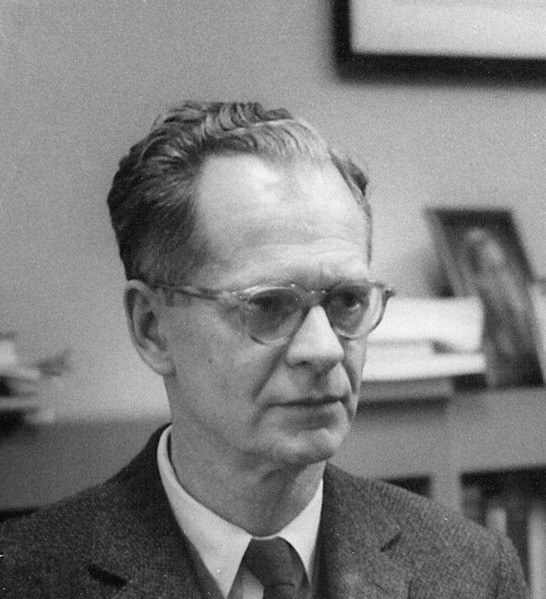
Who was Joseph Wolpe?

Introduction

Joseph Wolpe (20 April 1915 to 4 December 1997 in Los Angeles) was a South African psychiatrist and one of the most influential figures in behaviour therapy.

Wolpe grew up in South Africa, attending Parktown Boys’ High School and obtaining his MD from the University of the Witwatersrand.

In 1956, Wolpe was awarded a Ford Fellowship and spent a year at Stanford University in the Center for Behavioral Sciences, subsequently returning to South Africa but permanently moving to the United States in 1960 when he accepted a position at the University of Virginia.

In 1965, Wolpe accepted a position at Temple University.

One of the most influential experiences in Wolpe’s life was when he enlisted in the South African army as a medical officer. Wolpe was entrusted to treat soldiers who were diagnosed with what was then called “war neurosis” but today is known as post traumatic stress disorder. The mainstream treatment of the time for soldiers was based on psychoanalytic theory, and involved exploring the trauma while taking a hypnotic agent – so-called narcotherapy. It was believed that having the soldiers talk about their repressed experiences openly would effectively cure their neurosis. However, this was not the case. It was this lack of successful treatment outcomes that forced Wolpe, once a dedicated follower of Freud, to question psychoanalytic therapy and search for more effective treatment options. Wolpe is most well known for his reciprocal inhibition techniques, particularly systematic desensitisation, which revolutionised behavioural therapy. A Review of General Psychology survey, published in 2002, ranked Wolpe as the 53rd most cited psychologist of the 20th century, an impressive accomplishment accentuated by the fact that Wolpe was a psychiatrist.

Reciprocal Inhibition

In Wolpe’s search for a more effective way in treating anxiety he developed different reciprocal inhibition techniques, utilising assertiveness training. Reciprocal inhibition can be defined as anxiety being inhibited by a feeling or response that is not compatible with the feeling of anxiety. Wolpe first started using eating as a response to inhibited anxiety in the laboratory cats. He would offer them food while presenting a conditioned fear stimulus. After his experiments in the laboratory he applied reciprocal inhibition to his clients in the form of assertiveness training. The idea behind assertiveness training was that you could not be angry or aggressive while simultaneously assertive at same time. Importantly, Wolpe believed that these techniques would lessen the anxiety producing association. Assertiveness training proved especially useful for clients who had anxiety about social situations. However, assertiveness training did have a potential flaw in the sense that it could not be applied to other kinds of phobias. Wolpe’s use of reciprocal inhibition led to his discovery of systematic desensitisation. He believed that facing your fears did not always result in overcoming them but rather lead to frustration. According to Wolpe, the key to overcoming fears was “by degrees”.

Systematic Desensitisation

Systematic desensitisation is what Wolpe is most famous for. Systematic desensitisation is when the client is exposed to the anxiety-producing stimulus at a low level, and once no anxiety is present a stronger version of the anxiety-producing stimulus is given. This continues until the individual client no longer feels any anxiety towards the stimulus. There are three main steps in using systematic desensitization, following development of a proper case formulation or what Wolpe originally called, “behaviour analysis“. The first step is to teach the client relaxation techniques.

Wolpe received the idea of relaxation from Edmund Jacobson, modifying his muscle relaxation techniques to take less time. Wolpe’s rationale was that one cannot be both relaxed and anxious at the same time. The second step is for the client and the therapist to create a hierarchy of anxieties. The therapist normally has the client make a list of all the things that produce anxiety in all its different forms. Then together, with the therapist, the client makes a hierarchy, starting with what produces the lowest level of anxiety to what produces the most anxiety. Next is to have the client be fully relaxed while imaging the anxiety producing stimulus. Depending on what their reaction is, whether they feel no anxiety or a great amount of anxiety, the stimulus will then be changed to a stronger or weaker one. Systematic desensitisation, though successful, has flaws as well. The patient may give misleading hierarchies, have trouble relaxing, or not be able to adequately imagine the scenarios. Despite this possible flaw, it seems to be most successful.

Achievements

Wolpe’s effect on behavioural therapy is long-lasting and extensive. He received many awards for his work in behavioural science. His awards included the American Psychological Associations Distinguished Scientific Award, the Psi Chi Distinguished Member Award, and the Lifetime Achievement Award from the Association for the Advancement of Behaviour Therapy, where he was the second president. In addition to these awards, Wolpe’s alma mater, University of Witwatersrand, awarded him an honorary doctor of science degree in 1986. Furthermore, Wolpe was a prolific writer, some of his most famous books include, The Practice of Behaviour Therapy and Psychotherapy by Reciprocal Inhibition. Joseph Wolpe’s dedication to psychology is clear in his involvement in the psychology community, a month before his death he was attending conferences and giving lectures at Pepperdine University even though he was retired. Moreover, his theories have lasted well beyond his death.

Wolpe developed the Subjective Units of Disturbance Scale (SUDS) for assessing the level of subjective discomfort or psychological pain. He also created the Subjective Anxiety Scale (SAS) and the Fear Survey Plan that are used in behaviour research and therapy.

Wolpe died in 1997 of mesothelioma.

What is Functional Analysis (Psychology)?

Introduction

Functional analysis in behavioural psychology is the application of the laws of operant and respondent conditioning to establish the relationships between stimuli and responses.

To establish the function of operant behaviour, one typically examines the “four-term contingency”: first by identifying the motivating operations (EO or AO), then identifying the antecedent or trigger of the behaviour, identifying the behaviour itself as it has been operationalised, and identifying the consequence of the behaviour which continues to maintain it.

Functional assessment in behaviour analysis employs principles derived from the natural science of behaviour analysis to determine the “reason”, purpose, or motivation for a behaviour. The most robust form of functional assessment is functional analysis, which involves the direct manipulation, using some experimental design (e.g. a multielement design or a reversal design) of various antecedent and consequent events and measurement of their effects on the behaviour of interest; this is the only method of functional assessment that allows for demonstration of clear cause of behaviour.

Applications in Clinical Psychology

Functional analysis and consequence analysis are commonly used in certain types of psychotherapy to better understand, and in some cases change, behaviour. It is particularly common in behavioural therapies such as behavioural activation, although it is also part of Aaron Beck’s cognitive therapy. In addition, functional analysis modified into a behaviour chain analysis is often used in dialectical behaviour therapy.

There are several advantages to using functional analysis over traditional assessment methods. Firstly, behavioural observation is more reliable than traditional self-report methods. This is because observing the individual from an objective stand point in their regular environment allows the observer to observe both the antecedent and the consequence of the problem behaviour. Secondly, functional analysis is advantageous as it allows for the development of behavioural interventions, either antecedent control or consequence control, specifically designed to reduce a problem behaviour. Thirdly, functional analysis is advantageous for interventions for young children or developmentally delayed children with problem behaviours, who may not be able to answer self-report questions about the reasons for their actions.

Despite these benefits, functional analysis also has some disadvantages. The first that no standard methods for determining function have been determined and meta-analysis shows that different methodologies appear to bias results toward particular functions as well as not effective in improving outcomes. Second, Gresham and colleagues (2004) in a meta-analytic review of JABA articles found that functional assessment did not produce greater effect sizes compared to simple contingency management programmes. However, Gresham et al. combined the three types of functional assessment, of which descriptive assessment and indirect assessment have been reliably found to produce results with limited validity Third, although functional assessment has been conducted with a variety host of populations much of the current functional assessment research has been limited to children with developmental disabilities.

Professional Organisations

The Association for Behavioural and Cognitive Therapies (ABCT) also has an interest group in behaviour analysis, which focuses on the use of behaviour analysis in the school setting including functional analysis.

Doctoral level behaviour analysts who are psychologists belong to the American Psychological Association’s division 25 – Behaviour analysis. APA offers a diplomate in behavioural psychology and school psychology both of which focus on the use of functional analysis in the school setting.

The World Association for Behaviour Analysis offers a certification for clinical behaviour therapy and behavioural consultation, which covers functional analysis.

The UK Society for Behaviour Analysis also provides a forum for behaviour analysts for accreditation, professional development, continuing education and networking, and serves as an advocate body in public debate on issues relating to behaviour analysis. The UK-SBA promotes the ethical and effective application of the principles of behaviour and learning to a wide range of areas including education, rehabilitation and health care, business and the community and is committed to maintaining the availability of high-quality evidence-based professional behaviour analysis practice in the UK. The society also promotes and supports the academic field of behaviour analysis with in the UK both in terms of university-based training and research, and theoretical develop.

What is the Association for Behavioural and Cognitive Therapies?

Introduction

The Association for Behavioural and Cognitive Therapies (ABCT) was founded in 1966.

Its headquarters are in New York City and its membership includes researchers, psychologists, psychiatrists, physicians, social workers, marriage and family therapists, nurses, and other mental-health practitioners and students. These members support, use, and/or disseminate behavioural and cognitive approaches.

Brief History

ABCT was founded in 1966 under the name Association for Advancement of Behavioural Therapies (AABT) by 10 behaviourists who were dissatisfied with the prevailing Freudian/psychoanalytic model (Its founding members include: John Paul Brady, Joseph Cautela, Edward Dengrove, Cyril Franks, Martin Gittelman, Leonard Krasner, Arnold Lazarus, Andrew Salter, Dorothy Susskind, and Joseph Wolpe). The Freudian/psychoanalytic model refers to the Id, Ego, and Superego within each individual as they interpret and interact with the world and those around them. Although the ABCT was not established until 1966, its history begins in the early 1900s with the birth of the behaviourist movement, which was brought about by Pavlov, Watson, Skinner, Thorndike, Hull, Mowrer, and others – scientists who, concerned primarily with observable behaviour, were beginning to experiment with conditioning and learning theory. By the 1950s, two entities – Hans Eysenck’s research group (which included one of AABT’s founders Cyril Franks) at the University of London Institute of Psychiatry, and Joseph Wolpe’s research group (which included another of AABT’s founders, Arnold Lazarus) in South Africa – were conducting important studies that would establish behaviour therapy as a science based on principles of learning. In complete opposition to the psychoanalytic model, “The seminal significance of behaviour therapy was the commitment to apply the principles and procedures of experimental psychology to clinical problems, to rigorously evaluate the effects of therapy, and to ensure that clinical practice was guided by such objective evaluation”.

The first president of the association was Cyril Franks, who also founded the organisation’s flagship journal Behaviour Therapy and was the first editor of the Association for Advancement of Behavioural Therapies Newsletter. The first annual meeting of the association took place in 1967, in Washington, DC, concurrent with the American Psychological Association’s meeting.

An article in the November 1967 issue of the Newsletter, entitled “Behaviour Therapy and Not Behaviour Therapies” (Wilson & Evans, 1967), influenced the association’s first name change from Association for Advancement of Behavioural Therapies to Association for Advancement of Behaviour Therapy because, as the authors argued, “the various techniques of behaviour therapy all derive from learning theory and should not be misinterpreted as different kinds of behaviour therapy…”. This issue remains a debate in the field and within the organization, particularly with the emergence of the term “cognitive behavioural therapies.” This resulted in yet another name change in 2005 to the Association for Behavioural and Cognitive Therapies.

The Association for Advancement of Behavioural Therapies/Association for Behavioural and Cognitive Therapies has been at the forefront of the professional, legal, social, and ethical controversies and dissemination efforts that have accompanied the field’s evolution. The 1970s was perhaps the most “explosive” and controversial decade for the field of behaviour therapy, as it suffered from an overall negative public image and received numerous attacks from the press regarding behaviour modification and its possible unethical uses. In Gerald Davison’s (AABT’s 8th president) public “Statement on Behaviour Modification from the AABT”, he asserted that “it is a serious mistake … to equate behaviour therapy with the use of electric shocks applied to the extremities…” and “a major contribution of behaviour therapy has been a profound commitment to full description of procedures and careful evaluation of their effects”. From this point, AABT became instrumental in enacting legislative guidelines that protected human research subjects, and they also became active in efforts to educate the public.

Mission Statement

The ABCT is an interdisciplinary organisation committed to the advancement of a scientific approach to the understanding and amelioration of problems of the human condition. These aims are achieved through the investigation and application of behavioural, cognitive, prevention, and treatment. While primarily an interest group, ABCT is also active in:

  • Encouraging the development, study, and dissemination of scientific approaches to behavioural health.
  • Promoting the utilisation, expansion, and dissemination of behavioural, cognitive, and other empirically derived practices.
  • Facilitating professional development, interaction, and networking among members.

Professional Activities

Through its membership, publications, convention and education committees, the ABCT conducts a variety of activities to support and disseminate the behavioural and cognitive therapies. The organization produces two quarterly journals, Behaviour Therapy (research-based) and Cognitive and Behavioural Practice (treatment focused), as well as its house periodical, the Behaviour Therapist (eight times per year). The association’s convention is held annually in November. ABCT also produces fact sheets, an assessment series, and training and archival videotapes. The association maintains a website on which can be found a “Find-a-Therapist” search engine and information about behavioural and cognitive therapies. The organisation provides its members with an online clinical directory, over 30 special interest groups, a list serve, a job bank, and an awards and recognition programme. Other offerings available on the website include sample course syllabi, listings of grants available, and a broad range of offerings of interest to mental health researchers.

Mental Health Professionals

The training of mental health professionals has also been a significant priority for the association. Along with its annual meeting, AABT created an “ad hoc review mechanism” in the 1970s through the 1980s whereby a state could receive a review of a behaviour therapy programme. This led to the yearly publication of a widely used resource, “The Directory of Training Programmes”. With growing concerns over quality control and standardisation of practice, the certification of behaviour therapists also became an issue in the 1970s. This debate led to the development of a Diplomate in behaviour therapy at APA and for those behavioural therapy practices from a more radical behavioural perspective, the development of certification in behaviour analysis at the master level.

An ongoing debate within the association concerns what many consider to be a movement away from basic behavioural science as the field has attempted to advance and integrate more and more “new” therapies/specialisations, particularly the addition of cognitive theory and its variety of techniques. John Forsyth, in his special issue of Behaviour Therapy] entitled “Thirty Years of Behaviour Therapy: Promises Kept, Promises Unfulfilled”, summarised this opposition as follows:

“(a) cognition is not behaviour, (b) behaviour principles and theory cannot account for events occurring within the skin, and most important, (c) we therefore need a unique conceptual system to account for how thinking, feeling, and other private events relate to overt human action”.

The field’s desire to maintain its scientific foundations and yet continue to advance and grow, was reflected in its most recent discussion about adding the word “cognitive” to the name of the association.

Many notable scholars have served as president of the association, including Joseph Wolpe, Arnold Lazarus, Nathan Azrin, Steven C. Hayes, and David Barlow. The current executive director of the ABCT is Mary Jane Eimer, CAE. For a wealth of historical specifics (governing bodies, lists of editors, past presidents, award winners, SIGs, and conventions from the past 40 years) see ABCT’s 40th anniversary issue of the Behaviour Therapist.

About Behavioural and Cognitive Therapies

Cognitive and behavioural therapists help people learn to actively cope with, confront, reformulate, and/or change the maladaptive cognitions, behaviours, and symptoms that limit their ability to function, cause emotional distress, and accompany the wide range of mental health disorders. Goal-oriented, time-limited, research-based, and focused on the present, the cognitive and behavioural approach is collaborative. This approach values feedback from the client, and encourages the client to play an active role in setting goals and the overall course and pace of treatment. Importantly, behavioural interventions are characterized by a “direct focus on observable behaviour”. Practitioners teach clients concrete skills and exercises – from breathing retraining, to keeping thought records to behavioural rehearsal – to practice at home and in sessions, with the overall goal of optimal functioning and the ability to engage in life fully.

Because cognitive behavioural therapy (CBT) is based on broad principles of human learning and adaptation, it can be used to accomplish a wide variety of goals. CBT has been applied to issues ranging from depression and anxiety, to the improvement of the quality of parenting, relationships, and personal effectiveness.

Numerous scientific studies and research have documented the helpfulness of CBT programmes for a wide range of concerns throughout the lifespan. These concerns include children’s behaviour problems, health promotion, weight management, pain management, sexual dysfunction, stress, violence and victimisation, serious mental illness, relationship issues, academic problems, substance abuse, bipolar disorder, developmental disabilities, autism spectrum disorders, social phobia, school refusal and school phobia, hair pulling (trichotillomania) and much more. Cognitive-behavioural treatments are subject randomised controlled trials and “have been subjected to more rigorous evaluation using randomised controlled trials than any of the other psychological therapies”. There is discussion of using technology to determine diagnosis and host interventions according to research done by W. Edward Craighead. This would be done using “genetic analysis” and “neuroimaging” to create more individualised treatment plans.

Special Interest Groups

The ABCT has more than 40 special interest groups for its members. These include groups for issues involving African-Americans, Asian-Americans, Hispanics and other ethnic groups such as children and adolescents; couples; gay, lesbian, bisexual and transgender people; students; military personnel; and the criminal justice system. The ABCT works within these groups to overcome addictive behaviours and mental illnesses that may cause negativity in these groups life. A group that the ABCT has supported well is the special interest group of the criminal justice system. The ABCT helps provide the prison system with knowledge of how to more humanely treat those who committed crimes and give people the proper care and attention to become great citizens.

What is the Behaviour Analysis of Child Development?

Introduction

The behavioural analysis of child development originates from John B. Watson’s behaviourism.

Brief History

In 1948, Sidney Bijou took a position as associate professor of psychology at the University of Washington and served as director of the university’s Institute of Child Development. Under his leadership, the Institute added a child development clinic and nursery school classrooms where they conducted research that would later accumulate into the are that would be called “Behaviour Analysis of Child Development”. Skinner’s behavioural approach and Kantor’s interbehavioural approach were adopted in Bijou and Baer’s model. They created a three-stage model of development (basic, foundational, and societal). Bijou and Baer looked at these socially determined stages, as opposed to organising behaviour into change points or cusps (behavioural cusp). In the behavioural model, development is considered a behavioural change. It is dependent on the kind of stimulus and the person’s behavioural and learning function. Behaviour analysis in child development takes a mechanistic, contextual, and pragmatic approach.

From its inception, the behavioural model has focused on prediction and control of the developmental process. The model focuses on the analysis of a behaviour and then synthesizes the action to support the original behaviour. The model was changed after Richard J. Herrnstein studied the matching law of choice behaviour developed by studying of reinforcement in the natural environment. More recently, the model has focused more on behaviour over time and the way that behavioural responses become repetitive. it has become concerned with how behaviour is selected over time and forms into stable patterns of responding. A detailed history of this model was written by Pelaez. In 1995, Henry D. Schlinger, Jr. provided the first behaviour analytic text since Bijou and Baer comprehensively showed how behaviour analysis – a natural science approach to human behaviour – could be used to understand existing research in child development. In addition, the quantitative behavioural developmental model by Commons and Miller is the first behavioural theory and research to address notion similar to stage.

Research Methods

The methods used to analyse behaviour in child development are based on several types of measurements. Single-subject research with a longitudinal study follow-up is a commonly-used approach. Current research is focused on integrating single-subject designs through meta-analysis to determine the effect sizes of behavioural factors in development. Lag sequential analysis has become popular for tracking the stream of behaviour during observations. Group designs are increasingly being used. Model construction research involves latent growth modelling to determine developmental trajectories and structural equation modelling. Rasch analysis is now widely used to show sequentially within a developmental trajectory.

A recent methodological change in the behavioural analytic theory is the use of observational methods combined with lag sequential analysis can determine reinforcement in the natural setting.

Quantitative Behavioural Development

The model of hierarchical complexity is a quantitative analytic theory of development. This model offers an explanation for why certain tasks are acquired earlier than others through developmental sequences and gives an explanation of the biological, cultural, organisational, and individual principles of performance. It quantifies the order of hierarchical complexity of a task based on explicit and mathematical measurements of behaviour.

Research

Contingencies, Uncertainty, and Attachment

The behavioural model of attachment recognises the role of uncertainty in an infant and the child’s limited communication abilities. Contingent relationships are instrumental in the behaviour analytic theory, because much emphasis is put on those actions that produce parents’ responses.

The importance of contingency appears to be highlighted in other developmental theories, but the behavioural model recognises that contingency must be determined by two factors:

  • The efficiency of the action; and
  • That efficiency compared to other tasks that the infant might perform at that point.

Both infants and adults function in their environments by understanding these contingent relationships. Research has shown that contingent relationships lead to emotionally satisfying relationships.

Since 1961, behavioural research has shown that there is relationship between the parents’ responses to separation from the infant and outcomes of a “stranger situation.”. In a study done in 2000, six infants participated in a classic reversal design (refer to single-subject research) study that assessed infant approach rate to a stranger. If attention was based on stranger avoidance, the infant avoided the stranger. If attention was placed on infant approach, the infant approached the stranger.

Recent meta-analytic studies of this model of attachment based on contingency found a moderate effect of contingency on attachment, which increased to a large effect size when the quality of reinforcement was considered. Other research on contingency highlights its effect on the development of both pro-social and anti-social behaviour. These effects can also be furthered by training parents to become more sensitive to children’s behaviours, Meta-analytic research supports the notion that attachment is operant-based learning.

An infant’s sensitivity to contingencies can be affected by biological factors and environment changes. Studies show that being placed in erratic environments with few contingencies may cause a child to have conduct problems and may lead to depression (see Behavioural Development and Depression below). Research continues to look at the effects of learning-based attachment on moral development. Some studies have shown that erratic use of contingencies by parents early in life can produce devastating long-term effects for the child.

Motor Development

Since Watson developed the theory of behaviourism, behaviour analysts have held that motor development represents a conditioning process. This holds that crawling, climbing, and walking displayed by infants represents conditioning of biologically innate reflexes. In this case, the reflex of stepping is the respondent behaviour and these reflexes are environmentally conditioned through experience and practice. This position was criticised by maturation theorists. They believed that the stepping reflex for infants actually disappeared over time and was not “continuous”. By working with a slightly different theoretical model, while still using operant conditioning, Esther Thelen was able to show that children’s stepping reflex disappears as a function of increased physical weight. However, when infants were placed in water, that same stepping reflex returned. This offered a model for the continuity of the stepping reflex and the progressive stimulation model for behaviour analysts.

Infants deprived of physical stimulation or the opportunity to respond were found to have delayed motor development. Under conditions of extra stimulation, the motor behaviour of these children rapidly improved. Some research has shown that the use of a treadmill can be beneficial to children with motor delays including Down syndrome and cerebral palsy. Research on opportunity to respond and the building of motor development continues today.

The behavioural development model of motor activity has produced a number of techniques, including operant-based biofeedback to facilitate development with success. Some of the stimulation methods such as operant-based biofeedback have been applied as treatment to children with cerebral palsy and even spinal injury successfully. Brucker’s group demonstrated that specific operant conditioning-based biofeedback procedures can be effective in establishing more efficient use of remaining and surviving central nervous system cells after injury or after birth complications (like cerebral palsy). While such methods are not a cure and gains tend to be in the moderate range, they do show ability to enhance functioning.

Imitation and Verbal Behavior

Behaviourists have studied verbal behaviour since the 1920s. E.A. Esper (1920) studied associative models of language, which has evolved into the current language interventions of matrix training and recombinative generalisation. Skinner (1957) created a comprehensive taxonomy of language for speakers. Baer, along with Zettle and Haynes (1989), provided a developmental analysis of rule-governed behaviour for the listener. and for the listener Zettle and Hayes (1989) with Don Baer providing a developmental analysis of rule-governed behaviour. According to Skinner, language learning depends on environmental variables, which can be mastered by a child through imitation, practice, and selective reinforcement including automatic reinforcement.

B.F. Skinner was one of the first psychologists to take the role of imitation in verbal behaviour as a serious mechanism for acquisition. He identified echoic behaviour as one of his basic verbal operants, postulating that verbal behaviour was learned by an infant from a verbal community. Skinner’s account takes verbal behaviour beyond an intra-individual process to an inter-individual process. He defined verbal behaviour as “behaviour reinforced through the mediation of others”. Noam Chomsky refuted Skinner’s assumptions.

In the behavioural model, the child is prepared to contact the contingencies to “join” the listener and speaker. At the very core, verbal episodes involve the rotation of the roles as speaker and listener. These kinds of exchanges are called conversational units and have been the focus of research at Columbia’s communication disorders department.

Conversational units is a measure of socialisation because they consist of verbal interactions in which the exchange is reinforced by both the speaker and the listener. H.C. Chu (1998) demonstrated contextual conditions for inducing and expanding conversational units between children with autism and non-handicapped siblings in two separate experiments. The acquisition of conversational units and the expansion of verbal behaviour decrease incidences of physical “aggression” in the Chu study and several other reviews suggest similar effects. The joining of the listener and speaker progresses from listener speaker rotations with others as a likely precedent for the three major components of speaker-as-own listener – say so correspondence, self-talk conversational units, and naming.

Development of Self

Robert Kohelenberg and Mavis Tsai (1991) created a behaviour analytic model accounting for the development of one’s “self”. Their model proposes that verbal processes can be used to form a stable sense of who we are through behavioural processes such as stimulus control. Kohlenberg and Tsai developed functional analytic psychotherapy to treat psychopathological disorders arising from the frequent invalidations of a child’s statements such that “I” does not emerge. Other behaviour analytic models for personality disorders exist. They trace out the complex biological-environmental interaction for the development of avoidant and borderline personality disorders. They focus on Reinforcement sensitivity theory, which states that some individuals are more or less sensitive to reinforcement than others. Nelson-Grey views problematic response classes as being maintained by reinforcing consequences or through rule governance.

Socialisation

Over the last few decades, studies have supported the idea that contingent use of reinforcement and punishment over extended periods of time lead to the development of both pro-social and anti-social behaviours. However research has shown that reinforcement is more effective than punishment when teaching behaviour to a child. It has also been shown that modelling is more effective than “preaching” in developing pro-social behaviour in children. Rewards have also been closely studied in relation to the development of social behaviours in children. The building of self-control, empathy, and cooperation has all implicated rewards as a successful tactic, while sharing has been strongly linked with reinforcement.

The development of social skills in children is largely affected in that classroom setting by both teachers and peers. Reinforcement and punishment play major roles here as well. Peers frequently reinforce each other’s behaviour. One of the major areas that teachers and peers influence is sex-typed behaviour, while peers also largely influence modes of initiating interaction, and aggression. Peers are more likely to punish cross-gender play while at the same time reinforcing play specific to gender. Some studies found that teachers were more likely to reinforce dependent behaviour in females.

Behavioural principles have also been researched in emerging peer groups, focusing on status. Research shows that it takes different social skills to enter groups than it does to maintain or build one’s status in groups. Research also suggests that neglected children are the least interactive and aversive, yet remain relatively unknown in groups. Children suffering from social problems do see an improvement in social skills after behaviour therapy and behaviour modification (refer to applied behaviour analysis). Modelling has been successfully used to increase participation by shy and withdrawn children. Shaping of socially desirable behaviour through positive reinforcement seems to have some of the most positive effects in children experiencing social problems.

Anti-Social Behaviour

In the development of anti-social behaviour, aetiological models for anti-social behaviour show considerable correlation with negative reinforcement and response matching (refer to matching law). Escape conditioning, through the use of coercive behaviour, has a powerful effect on the development and use of future anti-social tactics. The use of anti-social tactics during conflicts can be negatively reinforced and eventually seen as functional for the child in moment to moment interactions. Anti-social behaviours will also develop in children when imitation is reinforced by social approval. If approval is not given by teachers or parents, it can often be given by peers. An example of this is swearing. Imitating a parent, brother, peer, or a character on TV, a child may engage in the anti-social behaviour of swearing. Upon saying it they may be reinforced by those around them which will lead to an increase in the anti-social behaviour. The role of stimulus control has also been extensively explored in the development of anti-social behaviour. Recent behavioural focus in the study of anti-social behaviour has been a focus on rule-governed behaviour. While correspondence for saying and doing has long been an interest for behaviour analysts in normal development and typical socialisation, recent conceptualisations have been built around families that actively train children in anti-social rules, as well as children who fail to develop rule control.

Developmental Depression with Origins in Childhood

Behavioural theory of depression was outlined by Charles Ferster. A later revision was provided by Peter Lewisohn and Hyman Hops. Hops continued the work on the role of negative reinforcement in maintaining depression with Anthony Biglan. Additional factors such as the role of loss of contingent relations through extinction and punishment were taken from early work of Martin Seligman. The most recent summary and conceptual revisions of the behavioural model was provided by Johnathan Kanter. The standard model is that depression has multiple paths to develop. It can be generated by five basic processes, including: lack or loss of positive reinforcement, direct positive or negative reinforcement for depressive behaviour, lack of rule-governed behaviour or too much rule-governed behaviour, and/or too much environmental punishment. For children, some of these variables could set the pattern for lifelong problems. For example, a child whose depressive behaviour functions for negative reinforcement by stopping fighting between parents could develop a lifelong pattern of depressive behaviour in the case of conflicts. Two paths that are particularly important are:

  1. Lack or loss of reinforcement because of missing necessary skills at a developmental cusp point; or
  2. The failure to develop adequate rule-governed behaviour.

For the latter, the child could develop a pattern of always choosing the short-term small immediate reward (i.e. escaping studying for a test) at the expense of the long-term larger reward (passing courses in middle school). The treatment approach that emerged from this research is called behavioural activation.

In addition, use of positive reinforcement has been shown to improve symptoms of depression in children. Reinforcement has also been shown to improve the self-concept in children with depression comorbid with learning difficulties. Rawson and Tabb (1993) used reinforcement with 99 students (90 males and 9 females) aged from 8 to 12 with behaviour disorders in a residential treatment program and showed significant reduction in depression symptoms compared to the control group.

Cognitive Behaviour

As children get older, direct control of contingencies is modified by the presence of rule-governed behaviour. Rules serve as an establishing operation and set a motivational stage as well as a discrimintative stage for behaviour. While the size of the effects on intellectual development are less clear, it appears that stimulation does have a facilitative effect on intellectual ability. However, it is important to be sure not to confuse the enhancing effect with the initial causal effect. Some data exists to show that children with developmental delays take more learning trials to acquire in material.

Learned Units and Developmental Retardation

Behaviour analysts have spent considerable time measuring learning in both the classroom and at home. In these settings, the role of a lack of stimulation has often been evidenced in the development of mild and moderate mental retardation. Recent work has focused on a model of “developmental retardation,”. an area that emphasizes cumulative environmental effects and their role in developmental delays. To measure these developmental delays, subjects are given the opportunity to respond, defined as the instructional antecedent, and success is signified by the appropriate response and/or fluency in responses. Consequently, the learned unit is identified by the opportunity to respond in addition to given reinforcement.

One study employed this model by comparing students’ time of instruction was in affluent schools to time of instruction in lower income schools. Results showed that lower income schools displayed approximately 15 minutes less instruction than more affluent schools due to disruptions in classroom management and behaviour management. Altogether, these disruptions culminated into two years worth of lost instructional time by grade 10. The goal of behaviour analytic research is to provide methods for reducing the overall number of children who fall into the retardation range of development by behavioural engineering.

Hart and Risely (1995, 1999) have completed extensive research on this topic as well. These researchers measured the rates of parent communication with children of the ages of 2-4 years and correlated this information with the IQ scores of the children at age 9. Their analyses revealed that higher parental communication with younger children was positively correlated with higher IQ in older children, even after controlling for race, class, and socio-economic status. Additionally, they concluded a significant change in IQ scores required intervention with at-risk children for approximately 40 hours per week.

Class Formation

The formation of class-like behaviour has also been a significant aspect in the behavioural analysis of development. This research has provided multiple explanations to the development and formation of class-like behaviour, including primary stimulus generalisation, an analysis of abstraction, relational frame theory, stimulus class analysis (sometimes referred to as recombinative generalisation), stimulus equivalence, and response class analysis. Multiple processes for class-like formation provide behaviour analysts with relatively pragmatic explanations for common issues of novelty and generalisation.

Responses are organised based upon the particular form needed to fit the current environmental challenges as well as the functional consequences. An example of large response classes lies in contingency adduction, which is an area that needs much further research, especially with a focus on how large classes of concepts shift. For example, as Piaget observed, individuals have a tendency at the pre-operational stage to have limits in their ability to preserve information. While children’s training in the development of conservation skills has been generally successful, complications have been noted. Behaviour analysts argue that this is largely due to the number of tool skills that need to be developed and integrated. Contingency adduction offers a process by which such skills can be synthesized and which shows why it deserves further attention, particularly by early childhood interventionists.

Autism

Ferster (1961) was the first researcher to posit a behaviour analytic theory for autism. Ferster’s model saw autism as a by-product of social interactions between parent and child. Ferster presented an analysis of how a variety of contingencies of reinforcement between parent and child during early childhood might establish and strengthen a repertoire of behaviours typically seen in children diagnosed with autism. A similar model was proposed by Drash and Tutor (1993), who developed the contingency-shaped or behavioural incompatibility theory of autism. They identified at least six reinforcement paradigms that may contribute to significant deficiencies in verbal behaviour typically characteristic of children diagnosed as autistic. They proposed that each of these paradigms may also create a repertoire of avoidance responses that could contribute to the establishment of a repertoire of behaviour that would be incompatible with the acquisition of age-appropriate verbal behaviour. More recent models attribute autism to neurological and sensory models that are overly worked and subsequently produce the autistic repertoire. Lovaas and Smith (1989) proposed that children with autism have a mismatch between their nervous systems and the environment, while Bijou and Ghezzi (1999) proposed a behavioural interference theory. However, both the environmental mismatch model and the inference model were recently reviewed, and new evidence shows support for the notion that the development of autistic behaviours are due to escape and avoidance of certain types of sensory stimuli. However, most behavioural models of autism remain largely speculative due to limited research efforts.

Role in Education

One of the largest impacts of behaviour analysis of child development is its role in the field of education. In 1968, Siegfried Englemann used operant conditioning techniques in a combination with rule learning to produce the direct instruction curriculum. In addition, Fred S. Keller used similar techniques to develop programmed instruction. B.F. Skinner developed a programmed instruction curriculum for teaching handwriting. One of Skinner’s students, Ogden Lindsley, developed a standardized semilogrithmic chart, the “Standard Behaviour Chart,” now “Standard Celeration Chart,” used to record frequencies of behaviour, and to allow direct visual comparisons of both frequencies and changes in those frequencies (termed “celeration”). The use of this charting tool for analysis of instructional effects or other environmental variables through the direct measurement of learner performance has become known as precision teaching.

Behaviour analysts with a focus on behavioural development form the basis of a movement called positive behaviour support (PBS). PBS has focused on building safe schools.

In education, there are many different kinds of learning that are implemented to improve skills needed for interactions later in life. Examples of this differential learning include social and language skills. According to the NWREL (Northwest Regional Educational Laboratory), too much interaction with technology will hinder a child’s social interactions with others due to its potential to become an addiction and subsequently lead to anti-social behaviour. In terms of language development, children will start to learn and know about 5-20 different words by 18 months old.

Critiques of Behavioural Approach and New Developments

Behaviour analytic theories have been criticized for their focus on the explanation of the acquisition of relatively simple behaviour (i.e. the behaviour of nonhuman species, of infants, and of individuals who are intellectually disabled or autistic) rather than of complex behaviour. Michael Commons continued behaviour analysis’s rejection of mentalism and the substitution of a task analysis of the particular skills to be learned. In his new model, Commons has created a behaviour analytic model of more complex behaviour in line with more contemporary quantitative behaviour analytic models called the model of hierarchical complexity. Commons constructed the model of hierarchical complexity of tasks and their corresponding stages of performance using just three main axioms.

In the study of development, recent work has been generated regarding the combination of behaviour analytic views with dynamical systems theory. The added benefit of this approach is its portrayal of how small patterns of changes in behaviour in terms of principles and mechanisms over time can produce substantial changes in development.

Current research in behaviour analysis attempts to extend the patterns learned in childhood and to determine their impact on adult development.

Professional Organisations

The Association for Behaviour Analysis International has a special interest group for the behaviour analysis of child development.

Doctoral level behaviour analysts who are psychologists belong to American Psychological Association’s division 25: behaviour analysis.

The World Association for Behaviour Analysis has a certification in behaviour therapy. The exam draws questions on behavioural theories of child development as well as behavioural theories of child psychopathology.