
An Overview of Emotional Reasoning

Introduction

Emotional reasoning is a cognitive process by which an individual concludes that their emotional reaction proves something is true, despite contrary empirical evidence. Emotional reasoning creates an ’emotional truth’, which may be in direct conflict with the inverse ‘perceptional truth’. It can create feelings of anxiety, fear, and apprehension in existing stressful situations, and as such, is often associated with or triggered by panic disorder or anxiety disorder. For example, even though a spouse has shown only devotion, a person using emotional reasoning might conclude, “I know my spouse is being unfaithful because I feel jealous.”
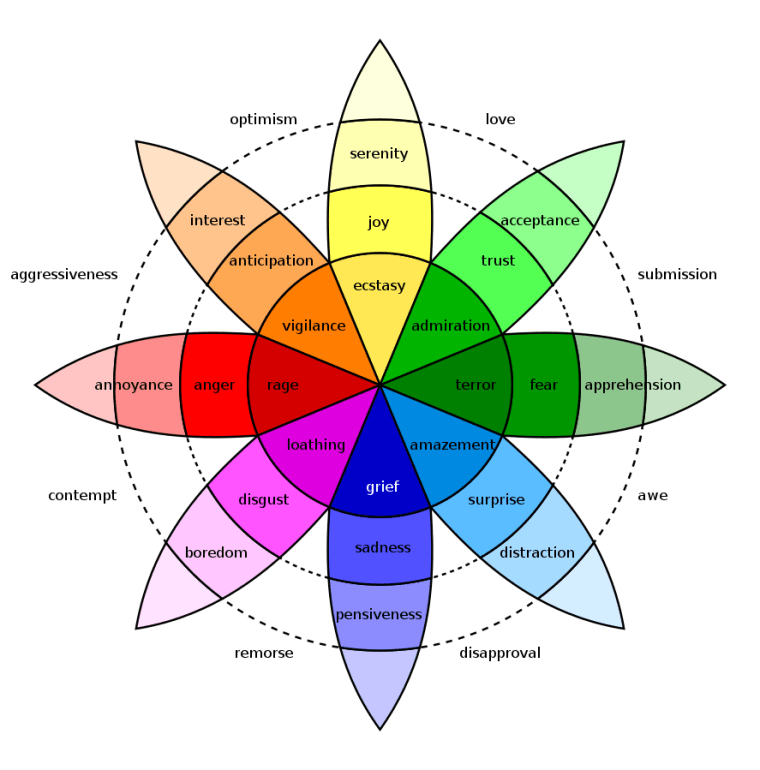
Plutchik Wheel

This process amplifies the effects of other cognitive distortions. For example, a student may feel insecure about their understanding of test material even though they are capable of answering the questions. If said student acts on their insecurity about failing the test, they might make the assumption that they misunderstand the material and therefore may guess answers randomly, causing their own failure in a self-fulfilling prophecy.

Emotional reasoning is related to other similar concepts, such as: motivated reasoning, a type of reasoning wherein individuals reach conclusions from bias instead of empirical motivations; emotional intelligence, which relates to the ways in which individuals use their emotions to understand situations or the information and reach conclusions; and cognitive distortion or cognitive deficiency, wherein individuals misinterpret situations or make decisions without considering a range of consequences.

Refer to Motivated Reasoning and Motivated Forgetting.

Origin

Emotional reasoning, as a concept, was first introduced by psychiatrist Aaron Beck. It was included as a part of Beck’s broader research topic: cognitive distortions and depression. To counteract cognitive distortions, Beck developed a type of therapy formally known as cognitive therapy, which became associated with cognitive-behavioural therapy.

Emotional reasoning had been attributed to automatic thinking, but Beck believed that it stemmed from negative thoughts that were uncontrollable and happened without effort. This reasoning has been commonly accepted over the years. Most recently, a new explanation states that an “activating agent” or sensory trigger from the environment increases emotional arousal. With this increase in arousal, certain areas of the brain are inhibited. The combination of an increase in emotional arousal and the inhibition of parts of the brain leads to emotional reasoning.

Examples

The following are simple examples of emotional reasoning.

EmotionFactsFalse Conclusion
I feel jealousMy spouse is apparently faithful and loving.My spouse is unfaithful, because I wouldn’t feel jealous if my spouse were faithful and loving.
I feel lonelyMy friends and family seem to like me and normally treat me well.I am unlovable, because I wouldn’t feel lonely if I were lovable.
I feel guiltyNeither I nor anyone around me is aware of any wrong I’ve done.I did something wrong, because I wouldn’t feel guilty unless I had done something wrong.
I feel angry at herI can’t think of anything upsetting she did or any harm she caused me.She did something wrong, because I wouldn’t feel angry at her unless she had done something wrong.
I feel stupidMy academic and professional success is typical or better.I am stupid, because I wouldn’t feel stupid or doubt my proven abilities unless I really was stupid.

Treatment

Before seeking professional help, an individual can influence the effect that emotional reasoning has on them based on his or her coping method. Using a proactive, problem-focused coping style is more effective at reducing stress and deterring stressful events. Additionally, having good social support also leads to lower psychological stress. If an individual chooses to seek professional help, a psychologist will often use cognitive-behavioural therapy to teach the patient how to challenge their cognitive distortions, including emotional reasoning. In this approach, the automatic thoughts that control emotional reasoning are identified, studied, and reasoned through by the patient. In doing so, the psychologist hopes to change the automatic thoughts of the patient and reduce the patient’s stress levels. Cognitive behavioural therapy has been generally regarded as the most-effective method of treatment for emotional reasoning.

Most recently, a new therapeutic approach uses the RIGAAR method to reduce emotional stress. RIGAAR is an abbreviation for: rapport building, information gathering, goal setting, accessing resources, agreeing strategies and rehearsing success.

Reducing emotional arousal is also suggested by the human givens approach in order to counter emotional reasoning. High emotional arousal inhibits brain regions necessary for logical complex reasoning. With less emotional arousal, cognitive reasoning is less affected and it is easier for the subject to disassociate reality from emotions.

Factors

Cognitive schemas is one of the factors to cause emotional reasoning. Schema is made of how we look at this world and our real-life experiences. Schema helps us remember the important things or events that happened in our lives. The result of the learning process is the schema, and it is also made by classical and operant conditioning. For example, an individual can develop a schema about terrorists and spiders that are very dangerous. Based on their schema, people can change what they think or how they are biased about the way they perceive things. Information-processing biases of schema impact how a person thinks and remembers, and their understanding of experiences and information. The bias makes a person’s schema automatically access similar content of schema. For example, a person with rat phobia is more likely to visualise or perceive a rat being near them. Schemas also easily connect with schema-central stimuli. For example, when depressed people start to think about negative things, it can be very difficult for them to think of anything positive.

For memory bias, schema can affect an individual’s recollections to cause schema-incongruent memories. For example, if individuals have a schema about how intelligent they are, failure-related recollections have a high chance to be retained in their minds and they become likely to recall positive past events. The schema also make individuals biased through the way that they interpret information. In other words, schema alters their understanding of the information. For example, when people refuse to help low self-esteem children solve a math problem, the children may think they are too stupid to learn how to solve the problem rather than the other people being too busy to help.

Reduction Techniques

Techniques for reducing emotional reasoning include:

  • Validity testing: Patients defend their thoughts and ideas using objective evidence to support their assumptions. If they cannot, they might be exposed to emotional reasoning.
  • Cognitive reversal: Patients are told of a difficult situation that they had in the past, and work with a therapist to help them address and correct their problems. This can prepare the patient for similar situations so that they do not revert to emotional reasoning.
  • Guided discovery: The therapist asks the patients a series of questions designed to help them realise their cognition distortions.
  • Writing in a journal: Patients form a habit of writing in a journal to record the situations they face, emotions and thoughts they experience, and their responses or behaviours to them. The therapist and patient then analyse how the patient’s maladaptive thought patterns influence their behaviours.
  • Homework: Once the patient acquires the ability to perform self-recovery and remember the insights gained from therapy sessions, the patient is tasked with reviewing sessions and reading related books to focus their thoughts and behaviours, which are recorded and reviewed for the next therapy session.
  • Modelling: The therapist could use role-playing to act in different ways in response to imagined situations so that patients could understand and model their behaviour.
  • Systematic positive reinforcement: The behaviour-oriented therapist would use a reward system (systematic positive reinforcement) to motivate patients to reinforce specific behaviours.

Negative memories and stressful life circumstances have a chance to trigger depression. The main factor for causing depression is unresolved life experiences. People who experience emotional reasoning are more likely to connect to depression. Emotion-focused therapy (EFT) is a form of psychotherapy which can help people find a positive perspective of their emotional process. EFT is a research-based treatment that emphasizes emotional change, which is the goal of this therapy. EFT has two different alternative therapies for treatments: cognitive-behavioural therapy (CBT), which emphasizes changing self-defeating thoughts and behaviours; and interpersonal therapy (IPT), which emphasizes changing people’s skills to have better interaction with others.

EFT operates on the understanding that a person’s development is influenced by emotional memories and experiences. The purpose of the therapy is to change the emotional process by resurfacing painful emotional experiences and bringing them into awareness. This process helps patients to differentiate between what they experience and the influence of past experiences on how they feel. This can result in greater self-awareness of what they want in their life and enable better decision-making through reducing emotional reasoning. Another purpose of EFT is to promote emotional intelligence, which is the ability to understand their emotions and perceive emotional information, controlling their behaviour while responding to problems.

Emotion-focused coping is a way to focus on managing one’s emotions to reduce stress and also to reduce the chance to have emotional reasoning. Cognitive therapy is a form of therapy that helps patients recognise their negative thought patterns about themselves and events to revise these thought patterns and change their behaviour. Cognitive-behavioural therapy helps individuals to perform well at cognitive tasks and to help them rethink their situation in a way that can benefit them. The treatment of cognitive-behavioural therapy is through the process of learning and making the change for maladaptive emotions, thoughts, and behaviours.

Implications

If not treated, debilitating effects can occur, the most common being depression. However, emotional reasoning has the potential to be useful when appraising the outside world and not ourselves. How one feels when assessing an object, person or event, can be an instinctual survival response and a way to adapt to the world.

“The amygdala buried deep in the limbic system serves as an early warning device for novelty, precisely so that attention can be mobilized to alert the mind to potential danger and to prepare for a potential of flight or fight.”

This page is based on the copyrighted Wikipedia article < https://en.wikipedia.org/wiki/Emotional_reasoning >; it is used under the Creative Commons Attribution-ShareAlike 3.0 Unported License (CC-BY-SA). You may redistribute it, verbatim or modified, providing that you comply with the terms of the CC-BY-SA.


An Overview of Emotional Contagion

Introduction

Emotional contagion is a form of social contagion that involves the spontaneous spread of emotions and related behaviours. Such emotional convergence can happen from one person to another, or in a larger group. Emotions can be shared across individuals in many ways, both implicitly or explicitly. For instance, conscious reasoning, analysis, and imagination have all been found to contribute to the phenomenon. The behaviour has been found in humans, other primates, dogs, and chickens.

Plutchik Wheel

Emotional contagion is important to personal relationships because it fosters emotional synchrony between individuals. A broader definition of the phenomenon suggested by Schoenewolf is:

“a process in which a person or group influences the emotions or behavior of another person or group through the conscious or unconscious induction of emotion states and behavioral attitudes.”

One view developed by Elaine Hatfield, et al., is that this can be done through automatic mimicry and synchronisation of one’s expressions, vocalisations, postures, and movements with those of another person. When people unconsciously mirror their companions’ expressions of emotion, they come to feel reflections of those companions’ emotions.

In a 1993 paper, Psychologists Elaine Hatfield, John Cacioppo, and Richard Rapson define emotional contagion as “the tendency to automatically mimic and synchronize expressions, vocalizations, postures, and movements with those of another person’s [sic] and, consequently, to converge emotionally”. 

Hatfield, et al., theorise emotional contagion as a two-step process: First, we imitate people (e.g. if someone smiles at you, you smile back). Second, our own emotional experiences change based on the non-verbal signals of emotion that we give off. For example, smiling makes one feel happier, and frowning makes one feel worse. Mimicry seems to be one foundation of emotional movement between people.

Emotional contagion and empathy share similar characteristics, with the exception of the ability to differentiate between personal and pre-personal experiences, a process known as individuation. In The Art of Loving (1956), social psychologist Erich Fromm explores these differences, suggesting that autonomy is necessary for empathy, which is not found in emotional contagion.

Etymology

James Baldwin addressed “emotional contagion” in his 1897 work Social and Ethical Interpretations in Mental Development, though using the term “contagion of feeling”. Various 20th century scholars discussed the phenomena under the heading “social contagion”. The term “emotional contagion” first appeared in Arthur S. Reber’s 1985 The Penguin Dictionary of Psychology.

Influencing Factors

Several factors determine the rate and extent of emotional convergence in a group, including membership stability, mood-regulation norms, task interdependence, and social interdependence. Besides these event-structure properties, there are personal properties of the group’s members, such as openness to receive and transmit feelings, demographic characteristics, and dispositional affect that influence the intensity of emotional contagion.

Research

Research on emotional contagion has been conducted from a variety of perspectives, including organisational, social, familial, developmental, and neurological. While early research suggested that conscious reasoning, analysis, and imagination accounted for emotional contagion, some forms of more primitive emotional contagion are far more subtle, automatic, and universal.

Hatfield, Cacioppo, and Rapson’s 1993 research into emotional contagion reported that people’s conscious assessments of others’ feelings were heavily influenced by what others said. People’s own emotions, however, were more influenced by others’ nonverbal clues as to what they were really feeling. Recognizing emotions and acknowledging their origin can be one way to avoid emotional contagion. Transference of emotions has been studied in a variety of situations and settings, with social and physiological causes being two of the largest areas of research.

In addition to the social contexts discussed above, emotional contagion has been studied within organisations. Schrock, Leaf, and Rohr (2008) say organizations, like societies, have emotion cultures that consist of languages, rituals, and meaning systems, including rules about the feelings workers should, and should not, feel and display. They state that emotion culture is quite similar to “emotion climate”, otherwise known as morale, organisational morale, and corporate morale.  Furthermore, Worline, Wrzesniewski, and Rafaeli (2002): 318  mention that organizations have an overall “emotional capability”, while McColl-Kennedy, and Smith (2006)  examine “emotional contagion” in customer interactions. These terms arguably all attempt to describe a similar phenomenon; each term differs in subtle and somewhat indistinguishable ways.

Controversy

A controversial experiment demonstrating emotional contagion by using the social media platform Facebook was carried out in 2014 on 689,000 users by filtering positive or negative emotional content from their news feeds. The experiment sparked uproar among people who felt the study violated personal privacy. The 2014 publication of a research paper resulting from this experiment, “Experimental evidence of massive-scale emotional contagion through social networks”, a collaboration between Facebook and Cornell University, is described by Tony D. Sampson, Stephen Maddison, and Darren Ellis (2018) as a “disquieting disclosure that corporate social media and Cornell academics were so readily engaged with unethical experiments of this kind.” Tony D. Sampson et al. criticise the notion that “academic researchers can be insulated from ethical guidelines on the protection for human research subjects because they are working with a social media business that has ‘no obligation to conform’ to the principle of ‘obtaining informed consent and allowing participants to opt out’.” A subsequent study confirmed the presence of emotional contagion on Twitter without manipulating users’ timelines.

Beyond the ethical concerns, some scholars criticised the methods and reporting of the Facebook findings. John Grohol, writing for Psych Central, argued that despite its title and claims of “emotional contagion,” this study did not look at emotions at all. Instead, its authors used an application (called “Linguistic Inquiry and Word Count” or LIWC 2007) that simply counted positive and negative words in order to infer users’ sentiments. A shortcoming of the LIWC tool is that it does not understand negations. Hence, the tweet “I am not happy” would be scored as positive: “Since the LIWC 2007 ignores these subtle realities of informal human communication, so do the researchers.” Grohol concluded that given these subtleties, the effect size of the findings are little more than a “statistical blip.”

Kramer et al. (2014) found a 0.07%—that’s not 7 percent, that’s 1/15th of one percent!!—decrease in negative words in people’s status updates when the number of negative posts on their Facebook news feed decreased. Do you know how many words you’d have to read or write before you’ve written one less negative word due to this effect? Probably thousands.

Types

Emotions can be shared and mimicked in many ways. Taken broadly, emotional contagion can be either: implicit, undertaken by the receiver through automatic or self-evaluating processes; or explicit, undertaken by the transmitter through a purposeful manipulation of emotional states, to achieve a desired result.

Implicit

Unlike cognitive contagion, emotional contagion is less conscious and more automatic. It relies mainly on non-verbal communication, although emotional contagion can and does occur via telecommunication. For example, people interacting through e-mails and chats are affected by the other’s emotions, without being able to perceive the non-verbal cues.

One view, proposed by Hatfield and colleagues, describes emotional contagion as a primitive, automatic, and unconscious behaviour that takes place through a series of steps. When a receiver is interacting with a sender, he perceives the emotional expressions of the sender. The receiver automatically mimics those emotional expressions. Through the process of afferent feedback, these new expressions are translated into feeling the emotions the sender feels, thus leading to emotional convergence.

Another view, emanating from social comparison theories, sees emotional contagion as demanding more cognitive effort and being more conscious. According to this view, people engage in social comparison to see if their emotional reaction is congruent with the persons around them. The recipient uses the emotion as a type of social information to understand how he or she should be feeling. People respond differently to positive and negative stimuli; negative events tend to elicit stronger and quicker emotional, behavioural, and cognitive responses than neutral or positive events. So unpleasant emotions are more likely to lead to mood contagion than are pleasant emotions. Another variable is the energy level at which the emotion is displayed. Higher energy draws more attention to it, so the same emotional valence (pleasant or unpleasant) expressed with high energy is likely to lead to more contagion than if expressed with low energy.

Explicit

Aside from the automatic infection of feelings described above, there are also times when others’ emotions are being manipulated by a person or a group in order to achieve something. This can be a result of intentional affective influence by a leader or team member. Suppose this person wants to convince the others of something, he may do so by sweeping them up in his enthusiasm. In such a case, his positive emotions are an act with the purpose of “contaminating” the others’ feelings. A different kind of intentional mood contagion would be, for instance, giving the group a reward or treat, in order to alleviate their feelings.

The discipline of organisational psychology researches aspects of emotional labour. This includes the need to manage emotions so that they are consistent with organisational or occupational display rules, regardless of whether they are discrepant with internal feelings. In regard to emotional contagion, in work settings that require a certain display of emotions, one finds oneself obligated to display, and consequently feel, these emotions. If superficial acting develops into deep acting, emotional contagion is the byproduct of intentional affective impression management.

In Workplaces and Organisations

Intra-Group

Many organisations and workplaces encourage teamwork. Studies conducted by organisational psychologists highlight the benefits of work teams. Emotions come into play and a group emotion is formed.

The group’s emotional state influences factors such as cohesiveness, morale, rapport, and the team’s performance. For this reason, organisations need to take into account the factors that shape the emotional state of the work-teams, in order to harness the beneficial sides and avoid the detrimental sides of the group’s emotion. Managers and team leaders should be cautious with their behaviour, since their emotional influence is greater than that of a “regular” team member: leaders are more emotionally “contagious” than others.

Employee/Customer

The interaction between service employees and customers affects both customers’ assessments of service quality and their relationship with the service provider. Positive affective displays in service interactions are positively associated with important customer outcomes, such as intention to return and to recommend the store to a friend. It is the interest of organisations that their customers be happy, since a happy customer is a satisfied one. Research has shown that the emotional state of the customer is directly influenced by the emotions displayed by the employee/service provider via emotional contagion. But this influence depends on authenticity of the employee’s emotional display, such that if the employee is only surface-acting, the contagion is poor, in which case the beneficial effects will not occur.

Neurological Basis

Vittorio Gallese posits that mirror neurons are responsible for intentional attunement in relation to others. Gallese and colleagues at the University of Parma found a class of neurons in the premotor cortex that discharge either when macaque monkeys execute goal-related hand movements or when they watch others doing the same action. One class of these neurons fires with action execution and observation, and with sound production of the same action. Research in humans shows an activation of the premotor cortex and parietal area of the brain for action perception and execution.

Gallese says humans understand emotions through a simulated shared body state. The observers’ neural activation enables a direct experiential understanding. “Unmediated resonance” is a similar theory by Goldman and Sripada (2004). Empathy can be a product of the functional mechanism in our brain that creates embodied simulation. The other we see or hear becomes the “other self” in our minds. Other researchers have shown that observing someone else’s emotions recruits brain regions involved in:

  1. Experiencing similar emotions; and
  2. Producing similar facial expressions.

This combination indicates that the observer activates:

  1. A representation of the emotional feeling of the other individual which leads to emotional contagion; and
  2. A motor representation of the observed facial expression that could lead to facial mimicry.

In the brain, understanding and sharing other individuals’ emotions would thus be a combination of emotional contagion and facial mimicry. Importantly, more empathic individuals experience more brain activation in emotional regions while witnessing the emotions of other individuals.

Amygdala

The amygdala is one part of the brain that underlies empathy and allows for emotional attunement and creates the pathway for emotional contagion. The basal areas including the brain stem form a tight loop of biological connectedness, re-creating in one person the physiological state of the other. Psychologist Howard Friedman thinks this is why some people can move and inspire others. The use of facial expressions, voices, gestures and body movements transmit emotions to an audience from a speaker.

This page is based on the copyrighted Wikipedia article < https://en.wikipedia.org/wiki/Emotional_contagion >; it is used under the Creative Commons Attribution-ShareAlike 3.0 Unported License (CC-BY-SA). You may redistribute it, verbatim or modified, providing that you comply with the terms of the CC-BY-SA.

An Overview of Social Emotions

Introduction

Social emotions are emotions that depend upon the thoughts, feelings or actions of other people, “as experienced, recalled, anticipated or imagined at first hand”. Examples are embarrassment, guilt, shame, jealousy, envy, coolness, elevation, empathy, and pride. In contrast, basic emotions such as happiness and sadness only require the awareness of one’s own physical state. Therefore, the development of social emotions is tightly linked with the development of social cognition, the ability to imagine other people’s mental states, which generally develops in adolescence. Studies have found that children as young as 2 to 3 years of age can express emotions resembling guilt and remorse. However, while five-year-old children are able to imagine situations in which basic emotions would be felt, the ability to describe situations in which social emotions might be experienced does not appear until seven years of age.

People may not only share emotions with others, but may also experience similar physiological arousal to others if they feel a sense of social connectedness to the other person. A laboratory-based study by Cwir, Car, Walton, and Spencer (2011) showed that, when a participant felt a sense of social connectedness to a stranger (research confederate), the participant experienced similar emotional states and physiological responses to that of the stranger while observing the stranger perform a stressful task.

Social emotions are sometimes called moral emotions, because they play an important role in morality and moral decision making. In neuroeconomics, the role social emotions play in game theory and economic decision-making is just starting to be investigated.

Behavioural Neuroscience

After functional imaging—functional magnetic resonance imaging (fMRI) in particular—became popular roughly a decade ago, researchers have begun to study economic decision-making with this new technology. This allows researchers to investigate, on a neurological level, the role emotions play in decision-making.

Developmental Picture

The ability to describe situations in which a social emotion will be experienced emerges at around age 7, and, by adolescence, the experience of social emotion permeates everyday social exchange. Studies using fMRI have found that different brain regions are involved in different age groups when performing social-cognitive and social-emotional tasks. While brain areas such as medial prefrontal cortex (MPFC), superior temporal sulcus (STS), temporal poles (TP) and precuneus bordering with posterior cingulate cortex are activated in both adults and adolescents when they reason about intentionality of others, the medial PFC is more activated in adolescents and the right STS more in adults. Similar age effects were found with younger participants, such that, when participants perform tasks that involve theory of mind, increase in age is correlated with an increase in activation in the dorsal part of the MPFC and a decrease in the activity in the ventral part of the MPFC were observed.

Studies that compare adults with adolescents in their processing of basic and social emotions also suggest developmental shifts in brain areas being involved. Comparing with adolescents, the left temporal pole has a stronger activity in adults when they read stories that elicit social emotions. The temporal poles are thought to store abstract social knowledge. This suggests that adult might use social semantic knowledge more often when thinking about social-emotional situations than adolescents.

Neuroeconomics

To investigate the function of social emotions in economic behaviours, researchers are interested in the differences in brain regions involved when participants are playing with, or think that they are playing with, another person as opposed to a computer. A study with fMRI found that, for participants who tend to cooperate on two-person “trust and reciprocity” games, believing that they are playing with another participant activated the prefrontal cortex, while believing that they are playing with a computer did not. This difference was not seen with players who tend not to cooperate. The authors interpret this difference as theory of minds that co-operators employ to anticipate the opponents’ strategies. This is an example of the way social decision making differs from other forms of decision making.

In behavioural economics, a heavy criticism is that people do not always act in a fully rational way, as many economic models assume. For example, in the ultimatum game, two players are asked to divide a certain amount of money, say x. One player, called the proposer, decides ratio by which the money gets divided. The other player, called the responder, decides whether or not to accept this offer. If the responder accepts the offer, say, y amount of money, then the proposer gets x-y amount and the responder gets y. But if the responder refuses to accept the offer, both players get nothing. This game is widely studied in behavioural economics. According to the rational agent model, the most rational way for the proposer to act is to make y as small as possible, and the most rational way for the responder to act is to accept the offer, since little amount of money is better than no money. However, what these experiments tend to find is that the proposers tend to offer 40% of x, and offers below 20% would get rejected by the responders. Using fMRI scans, researchers found that social emotions elicited by the offers may play a role in explaining the result. When offers are unfair as opposed to fair, three regions of the brain are active: the dorsolateral prefrontal cortex (DLPFC), the anterior cingulate cortex (ACC), and the insula. The insula is an area active in registering body discomfort. It is activated when people feel, among other things, social exclusion. The authors interpret activity in the insula as the aversive reaction one feels when faced with unfairness, activity in the DLPFC as processing the future reward from keeping the money, and the ACC is an arbiter that weighs these two conflicting inputs to make a decision. Whether or not the offer gets rejected can be predicted (with a correlation of 0.45) by the level of the responder’s insula activity.

Neuroeconomics and social emotions are also tightly linked in the study of punishment. Research using PET scan has found that, when players punish other players, activity in the nucleus accumbens (part of the striatum), a region known for processing rewards derived from actions gets activated. It shows that we not only feel hurtful when we become victims of unfairness, but we also find it psychologically rewarding to punish the wrongdoer, even at a cost to our own utility.

Social or Moral Aspect

Some social emotions are also referred to as moral emotions because of the fundamental role they play in morality. For example, guilt is the discomfort and regret one feels over one’s wrongdoing. It is a social emotion, because it requires the perception that another person is being hurt by this act; and it also has implication in morality, such that the guilty actor, in virtue of feeling distressed and guilty, accepts responsibility for the wrongdoing, which might cause desire to make amends or punish the self.

Not all social emotions are moral emotions. Pride, for instance, is a social emotion which involves the perceived admiration of other people, but research on the role it plays in moral behaviours yields problematic results.

Empathic Response

Empathy is defined by Eisenberg and colleagues as an affective response that stems from the apprehension or comprehension of another’s emotional state or condition and is similar to what the other person is feeling or would be expected to feel. Guilt, which is a social emotion with strong moral implication, is also strongly correlated with empathic responsiveness; whereas shame, an emotion with less moral flavour, is negatively correlated with empathic responsiveness, when controlling for guilt.

Perceived controllability also plays an important role modulating people’s socio-emotional reactions and empathic responses. For example, participants who are asked to evaluate other people’s academic performances are more likely to assign punishments when the low performance is interpreted as low-effort, as opposed to low-ability. Stigmas also elicit more empathic response when they are perceived as uncontrollable (i.e. having a biological origin, such as having certain disease), as opposed to controllable (i.e. having a behavioural origin, such as obesity).

This page is based on the copyrighted Wikipedia article < https://en.wikipedia.org/wiki/Social_emotions >; it is used under the Creative Commons Attribution-ShareAlike 3.0 Unported License (CC-BY-SA). You may redistribute it, verbatim or modified, providing that you comply with the terms of the CC-BY-SA.

What is Emotion Work?

Introduction

Emotion work is understood as the art of trying to change in degree or quality an emotion or feeling.

Emotion work may be defined as the management of one’s own feelings, or work done in an effort to maintain a relationship; there is dispute as to whether emotion work is only work done regulating one’s own emotion, or extends to performing the emotional work for others.

Hochschild

Arlie Russell Hochschild, who introduced the term in 1979, distinguished emotion work – unpaid emotional work that a person undertakes in private life – from emotional labour: emotional work done in a paid work setting. Emotion work has use value and occurs in situations in which people choose to regulate their emotions for their own non-compensated benefit (e.g. in their interactions with family and friends). By contrast, emotional labour has exchange value because it is traded and performed for a wage.

In a later development, Hochschild distinguished between two broad types of emotion work, and among three techniques of emotion work. The two broad types involve evocation and suppression of emotion, while the three techniques of emotion work that Hochschild describes are cognitive, bodily and expressive.

However, the concept (if not the term) has been traced back as far as Aristotle: as Aristotle saw, the problem is not with emotionality, but with the appropriateness of emotion and its expression.

Examples

Examples of emotion work include showing affection, apologizing after an argument, bringing up problems that need to be addressed in an intimate relationship or any kind of interpersonal relationship, and making sure the household runs smoothly.

Emotion work also involves the orientation of self/others to accord with accepted norms of emotional expression: emotion work is often performed by family members and friends, who put pressure on individuals to conform to emotional norms. Arguably, then, an individual’s ultimate obeisance and/or resistance to aspects of emotion regimes are made visible in their emotion work.

Cultural norms often imply that emotion work is reserved for females. There is certainly evidence to the effect that the emotional management that women and men do is asymmetric; and that in general, women come into a marriage groomed for the role of emotional manager.

Criticism

The social theorist Victor Jeleniewski Seidler argues that women’s emotion work is merely another demonstration of false consciousness under patriarchy, and that emotion work, as a concept, has been adopted, adapted or criticised to such an extent that it is in danger of becoming a “catch-all-cliché”.

More broadly, the concept of emotion work has itself been criticised as a wide over-simplification of mental processes such as repression and denial which continually occur in everyday life.

Literary Analogues

Rousseau in The New Heloise suggests that the attempt to master instrumentally one’s affective life always results in a weakening and eventually the fragmentation of one’s identity, even if the emotion work is performed at the demand of ethical principles.

This page is based on the copyrighted Wikipedia article < https://en.wikipedia.org/wiki/Emotion_work >; it is used under the Creative Commons Attribution-ShareAlike 3.0 Unported License (CC-BY-SA). You may redistribute it, verbatim or modified, providing that you comply with the terms of the CC-BY-SA.

What is Emotion Work?

Introduction

Emotion work is understood as the art of trying to change in degree or quality an emotion or feeling.

Emotion work may be defined as the management of one’s own feelings, or work done in an effort to maintain a relationship; there is dispute as to whether emotion work is only work done regulating one’s own emotion, or extends to performing the emotional work for others.

Not to be confused with Emotional Labour and refer to Emotional Self-Regulation.

Hochschild

Arlie Russell Hochschild, who introduced the term in 1979, distinguished emotion work – unpaid emotional work that a person undertakes in private life – from emotional labour: emotional work done in a paid work setting. Emotion work has use value and occurs in situations in which people choose to regulate their emotions for their own non-compensated benefit (e.g., in their interactions with family and friends). By contrast, emotional labour has exchange value because it is traded and performed for a wage.

In a later development, Hochschild distinguished between two broad types of emotion work, and among three techniques of emotion work. The two broad types involve evocation and suppression of emotion, while the three techniques of emotion work that Hochschild describes are cognitive, bodily and expressive.

However, the concept (if not the term) has been traced back as far as Aristotle: as Aristotle saw, the problem is not with emotionality, but with the appropriateness of emotion and its expression.

Examples

Examples of emotion work include showing affection, apologizing after an argument, bringing up problems that need to be addressed in an intimate relationship or any kind of interpersonal relationship, and making sure the household runs smoothly.

Emotion work also involves the orientation of self/others to accord with accepted norms of emotional expression: emotion work is often performed by family members and friends, who put pressure on individuals to conform to emotional norms. Arguably, then, an individual’s ultimate obeisance and/or resistance to aspects of emotion regimes are made visible in their emotion work.

Cultural norms often imply that emotion work is reserved for females. There is certainly evidence to the effect that the emotional management that women and men do is asymmetric; and that in general, women come into a marriage groomed for the role of emotional manager.

Criticism

The social theorist Victor Jeleniewski Seidler argues that women’s emotion work is merely another demonstration of false consciousness under patriarchy, and that emotion work, as a concept, has been adopted, adapted or criticised to such an extent that it is in danger of becoming a “catch-all-cliché”.

More broadly, the concept of emotion work has itself been criticized as a wide over-simplification of mental processes such as repression and denial which continually occur in everyday life.

Literary Analogues

Rousseau in The New Heloise suggests that the attempt to master instrumentally one’s affective life always results in a weakening and eventually the fragmentation of one’s identity, even if the emotion work is performed at the demand of ethical principles.

What is Emotional Labour?

Introduction

Emotional labour is the process of managing feelings and expressions to fulfil the emotional requirements of a job. More specifically, workers are expected to regulate their emotions during interactions with customers, co-workers and managers.

Not to be confused with Emotion Work and refer to Affective Labour.

Roles that have been identified as requiring emotional labour include those involved in public administration, espionage, law, caring for children, medical care, social work; roles in hospitality, and jobs in the media. As particular economies move from a manufacturing to a service-based economy, more workers in a variety of occupational fields are expected to manage their emotions according to employer demands when compared to sixty years ago.

Usage of the term has also been extended to refer to unpaid work that is expected interpersonally, such as taking care of organising holiday events or helping a friend solve their problems.

Definition

The sociologist Arlie Hochschild provides the first definition of emotional labour, which is displaying certain emotions to meet the requirements of a job. The related term emotion work (also called “emotion management”) refers to displaying certain emotions for personal purposes, such as within the private sphere of one’s home or interactions with family and friends. Hochschild identified three emotion regulation strategies:

StrategyDescription
CognitiveWithin cognitive emotion work, one attempts to change images, ideas, or thoughts in hopes of changing the feelings associated with them. For example, one may associate a family picture with feeling happy and think about said picture whenever attempting to feel happy.
BodilyWithin bodily emotion work, one attempts to change physical symptoms in order to create a desired emotion. For example, one may attempt deep breathing in order to reduce anger.
ExpressiveWithin expressive emotion work, one attempts to change expressive gestures to change inner feelings, such as smiling when trying to feel happy.

While emotion work happens within the private sphere, emotional labour is emotion management within the workplace according to employer expectations. Jobs involving emotional labour are defined as those that:

  • Require face-to-face or voice-to-voice contact with the public.
  • Require the worker to produce an emotional state in another person.
  • Allow the employer, through training and supervision, to exercise a degree of control over the emotional activities of employees.

Hochschild (1983) argues that within this commodification process, service workers are estranged from their own feelings in the workplace.

Alternative Usage

The term has been applied in modern contexts to refer to household tasks, specifically unpaid labour that is often expected of women, e.g. planning celebrations or having to remind their partner of chores. The term can also refer to informal counselling, such as providing advice to a friend or helping someone through a breakup. When Hochschild was interviewed about this shifting usage, she expressed that it made the concept blurrier and was sometimes being applied to things that were simply just labour, although how carrying out this labour made a person feel could make it emotional labour as well.

This modern use of the term had originally been introduced by non-professionals of the field and has therefore received criticism by medical and psychological professionals.

Determinants

DeterminantDescription
Societal, Occupational, and Organisational NormsFor example, empirical evidence indicates that in typically “busy” stores there is more legitimacy to express negative emotions than there is in typically “slow” stores, in which employees are expected to behave in accordance with the display rules. Hence, the emotional culture to which one belongs influences the employee’s commitment to those rules.
Dispositional Traits and Inner Feeling on the JobSuch as employees’ emotional expressiveness, which refers to the capability to use facial expressions, voice, gestures, and body movements to transmit emotions; or employees’ level of career identity (the importance of the career role to self-identity), which allows them to express the organisationally-desired emotions more easily (because there is less discrepancy between expressed behaviour and emotional experience when engaged in their work).
Supervisory Regulation of Display RulesSupervisors are likely to be important definers of display rules at the job level, given their direct influence on workers’ beliefs about high-performance expectations. Moreover, supervisors’ impressions of the need to suppress negative emotions on the job influence the employees’ impressions of that display rule.


Surface and deep acting foundational text divided emotional labour into two components:

  • Surface acting: Occurs when employees display the emotions required for a job without changing how they actually feel.
  • Deep acting: Is an effortful process through which employees change their internal feelings to align with organisational expectations, producing more natural and genuine emotional displays.

Although the underlying processes differ, the objective of both is typically to show positive emotions, which are presumed to impact the feelings of customers and bottom-line outcomes (e.g. sales, positive recommendations, and repeat business). However, research generally has shown surface acting is more harmful to employee health. Without a consideration of ethical values, the consequences of emotional work on employees can easily become negative. Business ethics can be used as a guide for employees on how to present feelings that are consistent with ethical values, and can show them how to regulate their feelings more easily and comfortably while working.

Careers

In the past, emotional labour demands and display rules were viewed as a characteristic of particular occupations, such as restaurant workers, cashiers, hospital workers, bill collectors, counsellors, secretaries, and nurses. However, display rules have been conceptualised not only as role requirements of particular occupational groups, but also as interpersonal job demands, which are shared by many kinds of occupations.

Bill Collectors

In 1991, Sutton did an in-depth qualitative study into bill collectors at a collection agency. He found that unlike the other jobs described here where employees need to act cheerful and concerned, bill collectors are selected and socialised to show irritation to most debtors. Specifically, the collection agency hired agents who seemed to be easily aroused. The newly hired agents were then trained on when and how to show varying emotions to different types of debtors. As they worked at the collection agency, they were closely monitored by their supervisors to make sure that they frequently conveyed urgency to debtors.

Bill collectors’ emotional labour consists of not letting angry and hostile debtors make them angry and to not feel guilty about pressuring friendly debtors for money. They coped with angry debtors by publicly showing their anger or making jokes when they got off the phone. They minimised the guilt they felt by staying emotionally detached from the debtors.

Childcare Workers

The skills involved in childcare are often viewed as innate to women, making the components of childcare invisible. However, a number of scholars have not only studied the difficulty and skill required for childcare, but also suggested that the emotional labour of childcare is unique and needs to be studied differently. Performing emotional labour requires the development of emotional capital, and that can only be developed through experience and reflection. Through semi-structured interviews, Edwards (2016) found that there were two components of emotional labour in childcare in addition to Hochschild’s original two: emotional consonance and suppression. Edwards (2016) defined suppression as hiding emotion and emotional consonance as naturally experiencing the same emotion that one is expected to feel for the job.

Food-Industry Workers

Wait Staff

In her 1991 study of waitresses in Philadelphia, Paules examines how these workers assert control and protect their self identity during interactions with customers. In restaurant work, Paules argues, workers’ subordination to customers is reinforced through “cultural symbols that originate from deeply rooted assumptions about service work.” Because the waitresses were not strictly regulated by their employers, waitresses’ interactions with customers were controlled by the waitresses themselves. Although they are stigmatised by the stereotypes and assumptions of servitude surrounding restaurant work, the waitresses studied were not negatively affected by their interactions with customers. To the contrary, they viewed their ability to manage their emotions as a valuable skill that could be used to gain control over customers. Thus, the Philadelphia waitresses took advantage of the lack of employer-regulated emotional labour in order to avoid the potentially negative consequences of emotional labour.

Though Paules highlights the positive consequences of emotional labour for a specific population of waitresses, other scholars have also found negative consequences of emotional labour within the waitressing industry. Through eighteen months of participant observation research, Bayard De Volo (2003) found that casino waitresses are highly monitored and monetarily bribed to perform emotional labour in the workplace. Specifically, Bayard De Volo (2003) argues that through a sexualized environment and a generous tipping system, both casino owners and customers control waitresses’ behaviour and appearance for their own benefit and pleasure. Even though the waitresses have their own forms of individual and collective resistance mechanisms, intense and consistent monitoring of their actions by casino management makes it difficult to change the power dynamics of the casino workplace.

Fast-Food Employees

By using participant observation and interviews, Leidner (1993) examines how employers in fast food restaurants regulate workers’ interactions with customers. According to Leidner (1993), employers attempt to regulate workers’ interactions with customers only under certain conditions. Specifically, when employers attempt to regulate worker-customer interactions, employers believe that “the quality of the interaction is important to the success of the enterprise”, that workers are “unable or unwilling to conduct the interactions appropriately on their own”, and that the “tasks themselves are not too complex or context-dependent.” According to Leidner (1993), regulating employee interactions with customers involves standardizing workers’ personal interactions with customers. At the McDonald’s fast food restaurants in Leidner’s (1993) study, these interactions are strictly scripted, and workers’ compliance with the scripts and regulations are closely monitored.

Along with examining employers’ attempts to regulate employee-customer interactions, Leidner (1993) examines how fast-food workers’ respond to these regulations. According to Leidner (1993), meeting employers’ expectations requires workers to engage in some form of emotional labour. For example, McDonald’s workers are expected to greet customers with a smile and friendly attitude independent of their own mood or temperament at the time. Leidner (1993) suggests that rigid compliance with these expectations is at least potentially damaging to workers’ sense of self and identity. However, Leidner (1993) did not see the negative consequences of emotional labour in the workers she studied. Instead, McDonald’s workers attempted to individualise their responses to customers in small ways. Specifically, they used humour or exaggeration to demonstrate their rebellion against the strict regulation of their employee-customer interactions.

Physicians

According to Larson and Yao (2005), empathy should characterize physicians’ interactions with their patients because, despite advancement in medical technology, the interpersonal relationship between physicians and patients remains essential to quality healthcare. Larson and Yao (2005) argue that physicians consider empathy a form of emotional labour. Specifically, according to Larson and Yao (2005), physicians engage in emotional labour through deep acting by feeling sincere empathy before, during, and after interactions with patients. On the other hand, Larson and Yao (2005) argue that physicians engage in surface acting when they fake empathic behaviours toward the patient. Although Larson and Yao (2005) argue that deep acting is preferred, physicians may rely on surface acting when sincere empathy for patients is impossible. Overall, Larson and Yao (2005) argue that physicians are more effective and enjoy more professional satisfaction when they engage in empathy through deep acting due to emotional labour.

Police Work

According to Martin (1999), police work involves substantial amounts of emotional labour by officers, who must control their own facial and bodily displays of emotion in the presence of other officers and citizens. Although policing is often viewed as stereotypically masculine work that focuses on fighting crime, policing also requires officers to maintain order and provide a variety of interpersonal services. For example, police must have a commanding presence that allows them to act decisively and maintain control in unpredictable situations while having the ability to actively listen and talk to citizens. According to Martin (1999), a police officer who displays too much anger, sympathy, or other emotion while dealing with danger on the job will be viewed by other officers as someone unable to withstand the pressures of police work, due to the sexist views of many police officers. While being able to balance this self-management of emotions in front of other officers, police must also assertively restore order and use effective interpersonal skills to gain citizen trust and compliance. Ultimately, the ability of police officers to effectively engage in emotional labour affects how other officers and citizens view them.

Public Administration

Many scholars argue that the amount of emotional work required between all levels of government is greatest on the local level. It is at the level of cities and counties that the responsibility lies for day to day emergency preparedness, firefighters, law enforcement, public education, public health, and family and children’s services. Citizens in a community expect the same level of satisfaction from their government, as they receive in a customer service-oriented job. This takes a considerate amount of work for both employees and employers in the field of public administration. There are two comparisons that represent emotional labour within public administration, “Rational Work versus Emotion Work”, and “Emotional Labour versus Emotional Intelligence.”

Performance

Many scholars argue that when public administrators perform emotional labour, they are dealing with significantly more sensitive situations than employees in the service industry. The reason for this is because they are on the front lines of the government, and are expected by citizens to serve them quickly and efficiently. When confronted by a citizen or a co-worker, public administrators use emotional sensing to size up the emotional state of the citizen in need. Workers then take stock of their own emotional state in order to make sure that the emotion they are expressing is appropriate to their roles. Simultaneously, they have to determine how to act in order to elicit the desired response from the citizen as well as from co-workers. Public Administrators perform emotional labour through five different strategies: Psychological First Aid, Compartments and Closets, Crazy Calm, Humour, and Common Sense.

Definition: Rational Work vs. Emotion Work

According to Mary Guy, Public administration does not only focus on the business side of administration but on the personal side as well. It is not just about collecting the water bill or land ordinances to construct a new property, it is also about the quality of life and sense of community that is allotted to individuals by their city officials. Rational work is the ability to think cognitively and analytically, while emotional work means to think more practically and with more reason.

Definition: Intelligence vs. Emotional Intelligence

Knowing how to suppress and manage one’s own feelings is known as emotional intelligence. The ability to control one’s emotions and to be able to do this at a high level guarantees one’s own ability to serve those in need. Emotional intelligence is performed while performing emotional labour, and without one the other can not be there.

Gender

Macdonald and Sirianni (1996) use the term “emotional proletariat” to describe service jobs in which “workers exercise emotional labour wherein they are required to display friendliness and deference to customers.” Because of deference, these occupations tend to be stereotyped as female jobs, independent of the actual number of women working the job. According to Macdonald and Sirianni (1996), because deference is a characteristic demanded of all those in disadvantaged structural positions, especially women, when deference is made a job requirement, women are likely to be overrepresented in these jobs. Macdonald and Sirianni (1996) claim that “[i]n no other area of wage labour are the personal characteristics of the workers so strongly associated with the nature of the work.” Thus, according to Macdonald and Sirianna (1996), although all workers employed within the service economy may have a difficult time maintaining their dignity and self-identity due to the demands of emotional labour, such an issue may be especially problematic for women workers.

Emotional labour also affects women by perpetuating occupational segregation and the gender wage gap. Job segregation, which is the systematic tendency for men and women to work in different occupations, is often cited as the reason why women lack equal pay when compared to men. According to Guy and Newman (2004), occupational segregation and ultimately the gender wage gap can at least be partially attributed to emotional labour. Specifically, work-related tasks that require emotional work thought to be natural for women, such as caring and empathizing are requirements of many female-dominated occupations. However, according to Guy and Newman (2004), these feminized work tasks are not a part of formal job descriptions and performance evaluations: “Excluded from job descriptions and performance evaluations, the work is invisible and uncompensated. Public service relies heavily on such skills, yet civil service systems, which are designed on the assumptions of a bygone era, fail to acknowledge and compensate emotional labour.” According to Guy and Newman (2004), women working in positions that require emotional labour in addition to regular work are not compensated for this additional labour because of the sexist notion that the additional labour is to be expected of them by the fact of being a woman.

Implications

Positive affective display in service interactions, such as smiling and conveying friendliness, are positively associated with customer positive feelings, and important outcomes, such as intention to return, intention to recommend a store to others, and perception of overall service quality. There is evidence that emotional labour may lead to employees’ emotional exhaustion and burnout over time, and may also reduce employees’ job satisfaction. That is, higher degree of using emotion regulation on the job is related to higher levels of employees’ emotional exhaustion, and lower levels of employees’ job satisfaction.

There is empirical evidence that higher levels of emotional labour demands are not uniformly rewarded with higher wages. Rather, the reward is dependent on the level of general cognitive demands required by the job. That is, occupations with high cognitive demands evidence wage returns with increasing emotional labour demands; whereas occupations low in cognitive demands evidence a wage “penalty” with increasing emotional labour demands. Additionally, innovations that increase employee empowerment – such as conversion into worker cooperatives, co-managing schemes, or flattened workplace structures – have been found to increase workers’ levels of emotional labour as they take on more workplace responsibilities.

Coping Skills

Coping occurs in response to psychological stress – usually triggered by changes – in an effort to maintain mental health and emotional well-being. Life stressors are often described as negative events (loss of a job). However, positive changes in life (a new job) can also constitute life stressors, thus requiring the use of coping skills to adapt. Coping strategies are the behaviours, thoughts, and emotions that you use to adjust to the changes that occur in your life. The use of coping skills will help a person better themselves in the work place and perform to the best of their ability to achieve success. There are many ways to cope and adapt to changes. Some ways include: sharing emotions with peers, having a healthy social life outside of work, being humorous, and adjusting expectations of self and work. These coping skills will help turn negative emotion to positive and allow for more focus on the public in contrast to oneself.