
An Overview of Emotional Reasoning

Introduction

Emotional reasoning is a cognitive process by which an individual concludes that their emotional reaction proves something is true, despite contrary empirical evidence. Emotional reasoning creates an ’emotional truth’, which may be in direct conflict with the inverse ‘perceptional truth’. It can create feelings of anxiety, fear, and apprehension in existing stressful situations, and as such, is often associated with or triggered by panic disorder or anxiety disorder. For example, even though a spouse has shown only devotion, a person using emotional reasoning might conclude, “I know my spouse is being unfaithful because I feel jealous.”
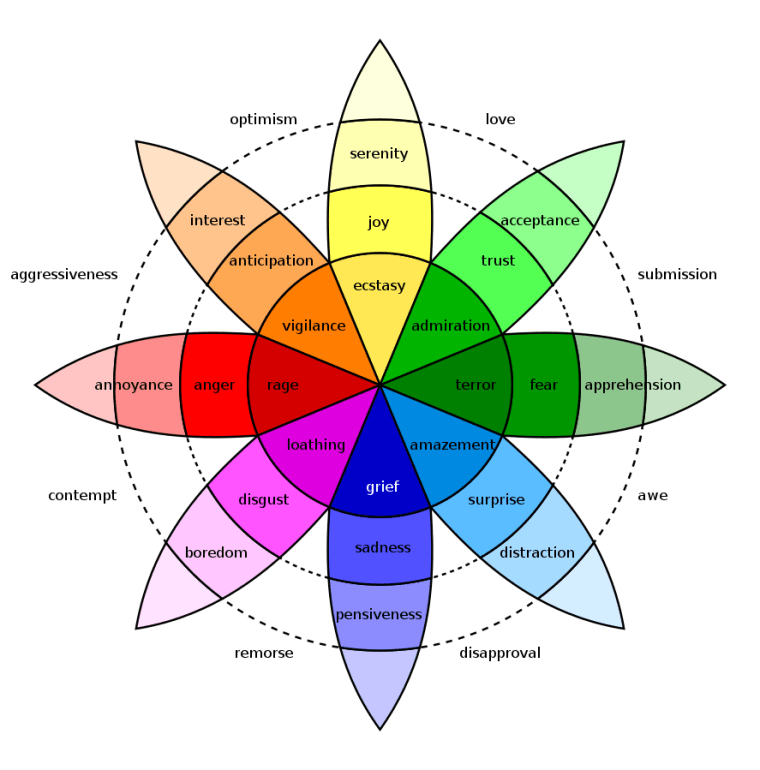
Plutchik Wheel

This process amplifies the effects of other cognitive distortions. For example, a student may feel insecure about their understanding of test material even though they are capable of answering the questions. If said student acts on their insecurity about failing the test, they might make the assumption that they misunderstand the material and therefore may guess answers randomly, causing their own failure in a self-fulfilling prophecy.

Emotional reasoning is related to other similar concepts, such as: motivated reasoning, a type of reasoning wherein individuals reach conclusions from bias instead of empirical motivations; emotional intelligence, which relates to the ways in which individuals use their emotions to understand situations or the information and reach conclusions; and cognitive distortion or cognitive deficiency, wherein individuals misinterpret situations or make decisions without considering a range of consequences.

Refer to Motivated Reasoning and Motivated Forgetting.

Origin

Emotional reasoning, as a concept, was first introduced by psychiatrist Aaron Beck. It was included as a part of Beck’s broader research topic: cognitive distortions and depression. To counteract cognitive distortions, Beck developed a type of therapy formally known as cognitive therapy, which became associated with cognitive-behavioural therapy.

Emotional reasoning had been attributed to automatic thinking, but Beck believed that it stemmed from negative thoughts that were uncontrollable and happened without effort. This reasoning has been commonly accepted over the years. Most recently, a new explanation states that an “activating agent” or sensory trigger from the environment increases emotional arousal. With this increase in arousal, certain areas of the brain are inhibited. The combination of an increase in emotional arousal and the inhibition of parts of the brain leads to emotional reasoning.

Examples

The following are simple examples of emotional reasoning.

EmotionFactsFalse Conclusion
I feel jealousMy spouse is apparently faithful and loving.My spouse is unfaithful, because I wouldn’t feel jealous if my spouse were faithful and loving.
I feel lonelyMy friends and family seem to like me and normally treat me well.I am unlovable, because I wouldn’t feel lonely if I were lovable.
I feel guiltyNeither I nor anyone around me is aware of any wrong I’ve done.I did something wrong, because I wouldn’t feel guilty unless I had done something wrong.
I feel angry at herI can’t think of anything upsetting she did or any harm she caused me.She did something wrong, because I wouldn’t feel angry at her unless she had done something wrong.
I feel stupidMy academic and professional success is typical or better.I am stupid, because I wouldn’t feel stupid or doubt my proven abilities unless I really was stupid.

Treatment

Before seeking professional help, an individual can influence the effect that emotional reasoning has on them based on his or her coping method. Using a proactive, problem-focused coping style is more effective at reducing stress and deterring stressful events. Additionally, having good social support also leads to lower psychological stress. If an individual chooses to seek professional help, a psychologist will often use cognitive-behavioural therapy to teach the patient how to challenge their cognitive distortions, including emotional reasoning. In this approach, the automatic thoughts that control emotional reasoning are identified, studied, and reasoned through by the patient. In doing so, the psychologist hopes to change the automatic thoughts of the patient and reduce the patient’s stress levels. Cognitive behavioural therapy has been generally regarded as the most-effective method of treatment for emotional reasoning.

Most recently, a new therapeutic approach uses the RIGAAR method to reduce emotional stress. RIGAAR is an abbreviation for: rapport building, information gathering, goal setting, accessing resources, agreeing strategies and rehearsing success.

Reducing emotional arousal is also suggested by the human givens approach in order to counter emotional reasoning. High emotional arousal inhibits brain regions necessary for logical complex reasoning. With less emotional arousal, cognitive reasoning is less affected and it is easier for the subject to disassociate reality from emotions.

Factors

Cognitive schemas is one of the factors to cause emotional reasoning. Schema is made of how we look at this world and our real-life experiences. Schema helps us remember the important things or events that happened in our lives. The result of the learning process is the schema, and it is also made by classical and operant conditioning. For example, an individual can develop a schema about terrorists and spiders that are very dangerous. Based on their schema, people can change what they think or how they are biased about the way they perceive things. Information-processing biases of schema impact how a person thinks and remembers, and their understanding of experiences and information. The bias makes a person’s schema automatically access similar content of schema. For example, a person with rat phobia is more likely to visualise or perceive a rat being near them. Schemas also easily connect with schema-central stimuli. For example, when depressed people start to think about negative things, it can be very difficult for them to think of anything positive.

For memory bias, schema can affect an individual’s recollections to cause schema-incongruent memories. For example, if individuals have a schema about how intelligent they are, failure-related recollections have a high chance to be retained in their minds and they become likely to recall positive past events. The schema also make individuals biased through the way that they interpret information. In other words, schema alters their understanding of the information. For example, when people refuse to help low self-esteem children solve a math problem, the children may think they are too stupid to learn how to solve the problem rather than the other people being too busy to help.

Reduction Techniques

Techniques for reducing emotional reasoning include:

  • Validity testing: Patients defend their thoughts and ideas using objective evidence to support their assumptions. If they cannot, they might be exposed to emotional reasoning.
  • Cognitive reversal: Patients are told of a difficult situation that they had in the past, and work with a therapist to help them address and correct their problems. This can prepare the patient for similar situations so that they do not revert to emotional reasoning.
  • Guided discovery: The therapist asks the patients a series of questions designed to help them realise their cognition distortions.
  • Writing in a journal: Patients form a habit of writing in a journal to record the situations they face, emotions and thoughts they experience, and their responses or behaviours to them. The therapist and patient then analyse how the patient’s maladaptive thought patterns influence their behaviours.
  • Homework: Once the patient acquires the ability to perform self-recovery and remember the insights gained from therapy sessions, the patient is tasked with reviewing sessions and reading related books to focus their thoughts and behaviours, which are recorded and reviewed for the next therapy session.
  • Modelling: The therapist could use role-playing to act in different ways in response to imagined situations so that patients could understand and model their behaviour.
  • Systematic positive reinforcement: The behaviour-oriented therapist would use a reward system (systematic positive reinforcement) to motivate patients to reinforce specific behaviours.

Negative memories and stressful life circumstances have a chance to trigger depression. The main factor for causing depression is unresolved life experiences. People who experience emotional reasoning are more likely to connect to depression. Emotion-focused therapy (EFT) is a form of psychotherapy which can help people find a positive perspective of their emotional process. EFT is a research-based treatment that emphasizes emotional change, which is the goal of this therapy. EFT has two different alternative therapies for treatments: cognitive-behavioural therapy (CBT), which emphasizes changing self-defeating thoughts and behaviours; and interpersonal therapy (IPT), which emphasizes changing people’s skills to have better interaction with others.

EFT operates on the understanding that a person’s development is influenced by emotional memories and experiences. The purpose of the therapy is to change the emotional process by resurfacing painful emotional experiences and bringing them into awareness. This process helps patients to differentiate between what they experience and the influence of past experiences on how they feel. This can result in greater self-awareness of what they want in their life and enable better decision-making through reducing emotional reasoning. Another purpose of EFT is to promote emotional intelligence, which is the ability to understand their emotions and perceive emotional information, controlling their behaviour while responding to problems.

Emotion-focused coping is a way to focus on managing one’s emotions to reduce stress and also to reduce the chance to have emotional reasoning. Cognitive therapy is a form of therapy that helps patients recognise their negative thought patterns about themselves and events to revise these thought patterns and change their behaviour. Cognitive-behavioural therapy helps individuals to perform well at cognitive tasks and to help them rethink their situation in a way that can benefit them. The treatment of cognitive-behavioural therapy is through the process of learning and making the change for maladaptive emotions, thoughts, and behaviours.

Implications

If not treated, debilitating effects can occur, the most common being depression. However, emotional reasoning has the potential to be useful when appraising the outside world and not ourselves. How one feels when assessing an object, person or event, can be an instinctual survival response and a way to adapt to the world.

“The amygdala buried deep in the limbic system serves as an early warning device for novelty, precisely so that attention can be mobilized to alert the mind to potential danger and to prepare for a potential of flight or fight.”

This page is based on the copyrighted Wikipedia article < https://en.wikipedia.org/wiki/Emotional_reasoning >; it is used under the Creative Commons Attribution-ShareAlike 3.0 Unported License (CC-BY-SA). You may redistribute it, verbatim or modified, providing that you comply with the terms of the CC-BY-SA.


An Overview of Emotional Contagion

Introduction

Emotional contagion is a form of social contagion that involves the spontaneous spread of emotions and related behaviours. Such emotional convergence can happen from one person to another, or in a larger group. Emotions can be shared across individuals in many ways, both implicitly or explicitly. For instance, conscious reasoning, analysis, and imagination have all been found to contribute to the phenomenon. The behaviour has been found in humans, other primates, dogs, and chickens.

Plutchik Wheel

Emotional contagion is important to personal relationships because it fosters emotional synchrony between individuals. A broader definition of the phenomenon suggested by Schoenewolf is:

“a process in which a person or group influences the emotions or behavior of another person or group through the conscious or unconscious induction of emotion states and behavioral attitudes.”

One view developed by Elaine Hatfield, et al., is that this can be done through automatic mimicry and synchronisation of one’s expressions, vocalisations, postures, and movements with those of another person. When people unconsciously mirror their companions’ expressions of emotion, they come to feel reflections of those companions’ emotions.

In a 1993 paper, Psychologists Elaine Hatfield, John Cacioppo, and Richard Rapson define emotional contagion as “the tendency to automatically mimic and synchronize expressions, vocalizations, postures, and movements with those of another person’s [sic] and, consequently, to converge emotionally”. 

Hatfield, et al., theorise emotional contagion as a two-step process: First, we imitate people (e.g. if someone smiles at you, you smile back). Second, our own emotional experiences change based on the non-verbal signals of emotion that we give off. For example, smiling makes one feel happier, and frowning makes one feel worse. Mimicry seems to be one foundation of emotional movement between people.

Emotional contagion and empathy share similar characteristics, with the exception of the ability to differentiate between personal and pre-personal experiences, a process known as individuation. In The Art of Loving (1956), social psychologist Erich Fromm explores these differences, suggesting that autonomy is necessary for empathy, which is not found in emotional contagion.

Etymology

James Baldwin addressed “emotional contagion” in his 1897 work Social and Ethical Interpretations in Mental Development, though using the term “contagion of feeling”. Various 20th century scholars discussed the phenomena under the heading “social contagion”. The term “emotional contagion” first appeared in Arthur S. Reber’s 1985 The Penguin Dictionary of Psychology.

Influencing Factors

Several factors determine the rate and extent of emotional convergence in a group, including membership stability, mood-regulation norms, task interdependence, and social interdependence. Besides these event-structure properties, there are personal properties of the group’s members, such as openness to receive and transmit feelings, demographic characteristics, and dispositional affect that influence the intensity of emotional contagion.

Research

Research on emotional contagion has been conducted from a variety of perspectives, including organisational, social, familial, developmental, and neurological. While early research suggested that conscious reasoning, analysis, and imagination accounted for emotional contagion, some forms of more primitive emotional contagion are far more subtle, automatic, and universal.

Hatfield, Cacioppo, and Rapson’s 1993 research into emotional contagion reported that people’s conscious assessments of others’ feelings were heavily influenced by what others said. People’s own emotions, however, were more influenced by others’ nonverbal clues as to what they were really feeling. Recognizing emotions and acknowledging their origin can be one way to avoid emotional contagion. Transference of emotions has been studied in a variety of situations and settings, with social and physiological causes being two of the largest areas of research.

In addition to the social contexts discussed above, emotional contagion has been studied within organisations. Schrock, Leaf, and Rohr (2008) say organizations, like societies, have emotion cultures that consist of languages, rituals, and meaning systems, including rules about the feelings workers should, and should not, feel and display. They state that emotion culture is quite similar to “emotion climate”, otherwise known as morale, organisational morale, and corporate morale.  Furthermore, Worline, Wrzesniewski, and Rafaeli (2002): 318  mention that organizations have an overall “emotional capability”, while McColl-Kennedy, and Smith (2006)  examine “emotional contagion” in customer interactions. These terms arguably all attempt to describe a similar phenomenon; each term differs in subtle and somewhat indistinguishable ways.

Controversy

A controversial experiment demonstrating emotional contagion by using the social media platform Facebook was carried out in 2014 on 689,000 users by filtering positive or negative emotional content from their news feeds. The experiment sparked uproar among people who felt the study violated personal privacy. The 2014 publication of a research paper resulting from this experiment, “Experimental evidence of massive-scale emotional contagion through social networks”, a collaboration between Facebook and Cornell University, is described by Tony D. Sampson, Stephen Maddison, and Darren Ellis (2018) as a “disquieting disclosure that corporate social media and Cornell academics were so readily engaged with unethical experiments of this kind.” Tony D. Sampson et al. criticise the notion that “academic researchers can be insulated from ethical guidelines on the protection for human research subjects because they are working with a social media business that has ‘no obligation to conform’ to the principle of ‘obtaining informed consent and allowing participants to opt out’.” A subsequent study confirmed the presence of emotional contagion on Twitter without manipulating users’ timelines.

Beyond the ethical concerns, some scholars criticised the methods and reporting of the Facebook findings. John Grohol, writing for Psych Central, argued that despite its title and claims of “emotional contagion,” this study did not look at emotions at all. Instead, its authors used an application (called “Linguistic Inquiry and Word Count” or LIWC 2007) that simply counted positive and negative words in order to infer users’ sentiments. A shortcoming of the LIWC tool is that it does not understand negations. Hence, the tweet “I am not happy” would be scored as positive: “Since the LIWC 2007 ignores these subtle realities of informal human communication, so do the researchers.” Grohol concluded that given these subtleties, the effect size of the findings are little more than a “statistical blip.”

Kramer et al. (2014) found a 0.07%—that’s not 7 percent, that’s 1/15th of one percent!!—decrease in negative words in people’s status updates when the number of negative posts on their Facebook news feed decreased. Do you know how many words you’d have to read or write before you’ve written one less negative word due to this effect? Probably thousands.

Types

Emotions can be shared and mimicked in many ways. Taken broadly, emotional contagion can be either: implicit, undertaken by the receiver through automatic or self-evaluating processes; or explicit, undertaken by the transmitter through a purposeful manipulation of emotional states, to achieve a desired result.

Implicit

Unlike cognitive contagion, emotional contagion is less conscious and more automatic. It relies mainly on non-verbal communication, although emotional contagion can and does occur via telecommunication. For example, people interacting through e-mails and chats are affected by the other’s emotions, without being able to perceive the non-verbal cues.

One view, proposed by Hatfield and colleagues, describes emotional contagion as a primitive, automatic, and unconscious behaviour that takes place through a series of steps. When a receiver is interacting with a sender, he perceives the emotional expressions of the sender. The receiver automatically mimics those emotional expressions. Through the process of afferent feedback, these new expressions are translated into feeling the emotions the sender feels, thus leading to emotional convergence.

Another view, emanating from social comparison theories, sees emotional contagion as demanding more cognitive effort and being more conscious. According to this view, people engage in social comparison to see if their emotional reaction is congruent with the persons around them. The recipient uses the emotion as a type of social information to understand how he or she should be feeling. People respond differently to positive and negative stimuli; negative events tend to elicit stronger and quicker emotional, behavioural, and cognitive responses than neutral or positive events. So unpleasant emotions are more likely to lead to mood contagion than are pleasant emotions. Another variable is the energy level at which the emotion is displayed. Higher energy draws more attention to it, so the same emotional valence (pleasant or unpleasant) expressed with high energy is likely to lead to more contagion than if expressed with low energy.

Explicit

Aside from the automatic infection of feelings described above, there are also times when others’ emotions are being manipulated by a person or a group in order to achieve something. This can be a result of intentional affective influence by a leader or team member. Suppose this person wants to convince the others of something, he may do so by sweeping them up in his enthusiasm. In such a case, his positive emotions are an act with the purpose of “contaminating” the others’ feelings. A different kind of intentional mood contagion would be, for instance, giving the group a reward or treat, in order to alleviate their feelings.

The discipline of organisational psychology researches aspects of emotional labour. This includes the need to manage emotions so that they are consistent with organisational or occupational display rules, regardless of whether they are discrepant with internal feelings. In regard to emotional contagion, in work settings that require a certain display of emotions, one finds oneself obligated to display, and consequently feel, these emotions. If superficial acting develops into deep acting, emotional contagion is the byproduct of intentional affective impression management.

In Workplaces and Organisations

Intra-Group

Many organisations and workplaces encourage teamwork. Studies conducted by organisational psychologists highlight the benefits of work teams. Emotions come into play and a group emotion is formed.

The group’s emotional state influences factors such as cohesiveness, morale, rapport, and the team’s performance. For this reason, organisations need to take into account the factors that shape the emotional state of the work-teams, in order to harness the beneficial sides and avoid the detrimental sides of the group’s emotion. Managers and team leaders should be cautious with their behaviour, since their emotional influence is greater than that of a “regular” team member: leaders are more emotionally “contagious” than others.

Employee/Customer

The interaction between service employees and customers affects both customers’ assessments of service quality and their relationship with the service provider. Positive affective displays in service interactions are positively associated with important customer outcomes, such as intention to return and to recommend the store to a friend. It is the interest of organisations that their customers be happy, since a happy customer is a satisfied one. Research has shown that the emotional state of the customer is directly influenced by the emotions displayed by the employee/service provider via emotional contagion. But this influence depends on authenticity of the employee’s emotional display, such that if the employee is only surface-acting, the contagion is poor, in which case the beneficial effects will not occur.

Neurological Basis

Vittorio Gallese posits that mirror neurons are responsible for intentional attunement in relation to others. Gallese and colleagues at the University of Parma found a class of neurons in the premotor cortex that discharge either when macaque monkeys execute goal-related hand movements or when they watch others doing the same action. One class of these neurons fires with action execution and observation, and with sound production of the same action. Research in humans shows an activation of the premotor cortex and parietal area of the brain for action perception and execution.

Gallese says humans understand emotions through a simulated shared body state. The observers’ neural activation enables a direct experiential understanding. “Unmediated resonance” is a similar theory by Goldman and Sripada (2004). Empathy can be a product of the functional mechanism in our brain that creates embodied simulation. The other we see or hear becomes the “other self” in our minds. Other researchers have shown that observing someone else’s emotions recruits brain regions involved in:

  1. Experiencing similar emotions; and
  2. Producing similar facial expressions.

This combination indicates that the observer activates:

  1. A representation of the emotional feeling of the other individual which leads to emotional contagion; and
  2. A motor representation of the observed facial expression that could lead to facial mimicry.

In the brain, understanding and sharing other individuals’ emotions would thus be a combination of emotional contagion and facial mimicry. Importantly, more empathic individuals experience more brain activation in emotional regions while witnessing the emotions of other individuals.

Amygdala

The amygdala is one part of the brain that underlies empathy and allows for emotional attunement and creates the pathway for emotional contagion. The basal areas including the brain stem form a tight loop of biological connectedness, re-creating in one person the physiological state of the other. Psychologist Howard Friedman thinks this is why some people can move and inspire others. The use of facial expressions, voices, gestures and body movements transmit emotions to an audience from a speaker.

This page is based on the copyrighted Wikipedia article < https://en.wikipedia.org/wiki/Emotional_contagion >; it is used under the Creative Commons Attribution-ShareAlike 3.0 Unported License (CC-BY-SA). You may redistribute it, verbatim or modified, providing that you comply with the terms of the CC-BY-SA.

What is Emotional Competence?

Introduction

Emotional competence and emotional capital refer to the essential set of personal and social skills to recognise, interpret, and respond constructively to emotions in oneself and others. The term implies an ease around others and determines one’s ability to effectively and successfully lead and express.

Definition

Emotional competence refers to an important set of personal and social skills for identifying, interpreting, and constructively responding to emotions in oneself and others. The term implies ease in getting along with others and determines one’s ability to lead and express effectively and successfully. Psychologists define emotional competence as the ability to monitor one’s own and others’ feelings and emotions and to use this information to guide one’s thinking and actions.

Description

Emotional competence is another term for emotional intelligence. It describes a person’s ability to express their emotions completely freely, and it comes from emotional intelligence, the ability to recognise emotions. Individual’s emotional competence is considered to be an important predictor of their ability to adapt to their environment, and it refers primarily to their ability to identification, understanding, expression, regulation, and use their own and other’s emotions. Emotional competence is often referred to in social contexts, and is considered a capability of recognising their own emotions, as well as those of others and expressing them in socially acceptable ways. Competence is the level of skill at which a person interacts constructively with others. This personal emotional capacity is based on a person’s perception of their emotions and how they affect others, as well as the ability to maintain control and adaptation of emotions.

Brief History

In 1999, Carolyn Saarni wrote a book named The Development of Emotional Competence. Saarni believed that emotional abilities are not innate, but are cultivated and developed through children’s interactions with others, especially family members and peers. Saarni defined emotional capacity as the functional ability of humans to achieve goals after experiencing an emotion-eliciting encounter. She defined emotion as a component of self-efficacy, and she described the use of emotions as a set of skills that lead to the development of emotional capacity.

Examples

  • Understand others: To be aware of other people’s feelings and perspectives
  • Develop others: Be aware of the development needs of others and enhance their capabilities
  • Service orientation: Anticipate, recognise and meet customer needs
  • Leverage diversity: Nurture opportunities through different types of people

Intelligence Quotient and Emotional Quotient

  • Intelligence quotient (IQ): Is a measure of person’s reasoning ability, introduced by the German psychologist Louis William Stern as a qualitative method of assessing individual differences.
  • Emotional quotient (EQ): Is a measure of self-emotional control ability, introduced in American psychologist Peter Salovey in 1991. The emotional quotient is commonly referred to in the field of psychology as emotional intelligence(also known as emotional competence or emotional skills). IQ reflects a person’s cognitive and observational abilities and how quickly they can use reasoning to solve problems. EQ, on the other hand, is an index of a person’s ability to manage their own emotions and to manage the emotions of others.

Daniel Goleman’s Model

In Daniel Goleman’s Emotional Intelligence, he introduced components of EQ:

  • Self-awareness: precise awareness of self emotions
  • Self-regulation: controlled emotional expression
  • Motivation: emotional self-motivation
  • Empathy: adept at modulating the emotional responses of others and helping them to express their emotions
  • Social skills: excellent communication skills
  • Personal Competence
  • Self-Awareness – Know one’s internal states, preferences, resources and intuitions. The competencies in this category include:
    • Emotional Awareness – Recognize one’s emotions and their effects
    • Accurate Self-Assessment – Know one’s strengths and limits
    • Self-Confidence – A strong sense of one’s self-worth and abilities
    • Self-Regulation – Manage one’s internal states, impulses and resources.
  • Social Competence:
    • Empathy – Awareness of others’ feelings, needs and concerns. The competencies in this category include:
      • Understand Others – Sense others’ feelings and perspectives
      • Develop Others – Sense others’ development needs and bolstering their abilities
      • Service Orientation – Anticipate, recognise and meet customers’ needs
      • Leverage Diversity – Cultivate opportunities through different kinds of people
      • Political Awareness – Read a group’s emotional currents and power relationships
  • Emotional intelligence

Emotional Intelligence and the Four-Branch Model

Psychologists see emotional competence as a continuum, ranging from lower levels of emotional competence to perform mental functions to complex emotional competence for personal self-control and management. The higher levels of emotional competence, on the other hand, comprise four branches:

  • Perceive emotions in oneself and others accurately
  • Use emotions to facilitate thinking
  • Understand emotions, emotional language, and the signals conveyed by emotions
  • Manage emotions so as to attain specific goals

Each branch describes a set of skills that make up overall emotional intelligence, ranging from low to high complexity. For example, perceiving emotions usually begins with the ability to perceive basic emotions from faces and vocal tones, and may progress to the accurate perception of emotional blends and the capture and understanding of facial micro-expressions.

Assertiveness

Building up emotional competence is one way of learning to handle manipulative or passive-aggressive behaviour in which the manipulator exploits the feelings of another to try to get what they want.

This page is based on the copyrighted Wikipedia article < https://en.wikipedia.org/wiki/Emotional_competence >; it is used under the Creative Commons Attribution-ShareAlike 3.0 Unported License (CC-BY-SA). You may redistribute it, verbatim or modified, providing that you comply with the terms of the CC-BY-SA.