Melanie Klein (née Reizes; 30 March 1882 to 22 September 1960) was an Austrian-British author and psychoanalyst known for her work in child analysis.
She was the primary figure in the development of object relations theory. Klein suggested that pre-verbal existential anxiety in infancy catalysed the formation of the unconscious, resulting in the unconscious splitting of the world into good and bad idealisations. In her theory, how the child resolves that split depends on the constitution of the child and the character of nurturing the child experiences; the quality of resolution can inform the presence, absence, and/or type of distresses a person experiences later in life.
Life
Melanie Klein in 1952.
Melanie Klein was born into a Jewish family and spent most of her early life in Vienna. She was the fourth and final child of parents Moriz, a doctor, and Libussa Reizes. Educated at the Gymnasium, Klein planned to study medicine. Her family’s loss of wealth caused her to change her plans.
At the age of 21 she married an industrial chemist, Arthur Klein, and soon after gave birth to their first child, Melitta. Her son Hans followed in 1907 and her second son Erich was born in 1914. While she would go on to bear two additional children, Klein suffered from clinical depression, with these pregnancies taking quite a toll on her. This and her unhappy marriage soon led Klein to seek treatment. Shortly after her family moved to Budapest in 1910, Klein began a course of therapy with psychoanalyst Sándor Ferenczi. It was during their time together that Klein expressed interest in the study of psychoanalysis.
Encouraged by Ferenczi, Klein began her studies by observing her own children. Until this time, only minimal documentation existed on the topic of psychoanalysis in children, Klein took advantage of this by developing her “play technique”. Similar to that of free association in adult psychoanalysis, Klein’s play technique sought to interpret the unconscious meaning behind the play and interaction of children.
During 1921, with her marriage failing, Klein moved to Berlin where she joined the Berlin Psycho-Analytic Society under the tutelage of Karl Abraham. Although Abraham supported her pioneering work with children, neither Klein nor her ideas received much support in Berlin. As a divorced woman whose academic qualifications did not even include a bachelor’s degree, Klein was a visible iconoclast within a profession dominated by male physicians. Nevertheless, Klein’s early work had a strong influence on the developing theories and techniques of psychoanalysis, particularly in the UK.
Her theories on human development and defence mechanisms were a source of controversy, as they conflicted with Freud’s theories on development, and caused much discussion in the world of developmental psychology. Around the same time Klein presented her ideas, Anna Freud was doing the very same. The two became unofficial rivals of sorts, amid the protracted debates between the followers of Klein and the followers of Freud. Amid these so-called ‘controversial discussions’, the British Psychoanalytical Society split into three separate training divisions:
Kleinian;
Freudian; and
Independent.
These debates finally ceased with an agreement on a dual approach to instruction in the field of child analysis.
Contributions to Psychoanalysis
Klein was one of the first to use traditional psychoanalysis with young children. She was innovative in both her techniques (such as working with children using toys) and her theories on infant development. Gaining the respect of those in the academic community, Klein established a highly influential training programme in psychoanalysis.
By observing and analysing the play and interactions of children, Klein built onto the work of Freud’s unconscious mind. Her dive into the unconscious mind of the infant yielded the findings of the early Oedipus complex, as well as the developmental roots of the superego.
Klein’s theoretical work incorporates Freud’s belief in the existence of the death pulsation, reflecting the notion that all living organisms are inherently drawn toward an “inorganic” state, and therefore, somehow, towards death. In psychological terms, Eros (properly, the life pulsation), the postulated sustaining and uniting principle of life, is thereby presumed to have a companion force, Thanatos (death pulsation), which seeks to terminate and disintegrate life. Both Freud and Klein regarded these “biomental” forces as the foundations of the psyche. These primary unconscious forces, whose mental matrix is the id, spark the ego – the experiencing self – into activity. Id, ego and superego, to be sure, were merely shorthand terms (similar to the instincts) referring to highly complex and mostly uncharted psychodynamic operations.
Infant Observations
Klein’s work on the importance of observing infants began in 1935 with a public lecture on weaning.
Klein states that mother-infant relationships are built on more than feeding and developing the infant’s attachment; the mother’s attachment and bond with her baby is just as important, if not more. Klein came to this conclusion by using actual observations of herself and mothers that she knew. She described how infants show interest in their mothers’ face, the touch of their mothers’ hands, and the infants’ pleasure in touching their mothers’ breast. The relationship is built on affection that emerges very soon after birth. Klein says that as early as two months, infants show interest in the mother that goes beyond feeding. She observed that the infant will often smile up at the mother and cuddle against her chest. The way the infant reacts and responds to their mother’s attitude and feelings, the love and interest which the infant shows, accounts for an object relation.
Klein also goes on to say that infants recognise the joy that their achievements give their parents. These achievements include crawling and walking. In one observation, Klein says that the infant wishes to evoke love in their mother with their achievements. The infant wishes to give her pleasure. Klein says that the infant notices that their smile makes their mother happy and results in the attention of her. The infant also recognises that their smile may serve a better purpose than their cry.
Klein also talks about the “apathetic” baby. She says that it is easy to mistake a baby that does not particularly dislike their food and cries a little for a happy baby. Development later shows that some of these easy-going babies are not happy. Their lack of crying may be due to some kind of apathy. It is hard to assess a young person’s state of mind without allowing for a great complexity of emotions. When these babies are followed up on we see that a great deal of difficulty appears. These children are often shy of people, and their interest in the external world, play, and learning is inhibited. They are often slow at learning to crawl and walk because there seems to be little incentive. They are often showing signs of neurosis as their development goes on.
Child Analysis
While Freud’s ideas concerning children mostly came from working with adult patients, Klein was innovative in working directly with children, often as young as two years old. Klein saw children’s play as their primary mode of emotional communication. While observing children as they played with toys such as dolls, animals, plasticine or pencils and paper, Klein documented their activities and interactions. She then attempted to interpret the unconscious meaning behind their play. Following Freud, she emphasized the significant role that parental figures played in the child’s fantasy life and concluded that the timing of Freud’s Oedipus complex was incorrect. Contradicting Freud, she proposed that the superego was present from birth.
After exploring ultra-aggressive fantasies of hate, envy, and greed in very young and disturbed children, Melanie Klein proposed a model of the human psyche that linked significant oscillations of state, with the postulated Eros or Thanatos pulsations. She named the state of the mind in which the sustaining principle of life dominates the depressive position. A depressive position is the understanding that good and evil things are one. The fears and worries about the fate of the people destroyed in the child’s fantasy are all in the latter. The child tries to repair his mother through phantasm and behaviour therapy, overcoming his depression and anxiety. He employs phantasies representing love and restoration to restore the others he destroyed. Morality is based on the standpoint of depression. Klein named it the depressive position because the efforts to restore the integrity of the damaged object are accompanied by depression and despair. After all, the child doubts whether it can fix everything it hurts. Many consider this to be her most significant contribution to psychoanalytic philosophy. She later developed her ideas about an earlier developmental psychological state corresponding to the disintegrating tendency of life, which she called the paranoid-schizoid position. Klein coined the term “paranoid-schizoid defence” to emphasize how the child’s worries manifest as persecution fantasies and how he defends himself against persecution by separating. The paranoid-schizoid position develops at birth is a common psychotic condition.
Klein’s insistence on regarding aggression as an important force in its own right when analysing children brought her into conflict with Freud’s daughter Anna Freud, who was one of the other prominent child psychotherapists in continental Europe but who moved to London in 1938 where Klein had been working for several years. Many controversies arose from this conflict, and these are often referred to as the controversial discussions. Battles were played out between the two sides, each presenting scientific papers, working out their respective positions and where they differed, during war-time Britain. A compromise was eventually reached whereby three distinct training groups were formed within the British Psychoanalytical Society, with Anna Freud’s influence remaining largely predominant in the US.
Object Relation Theory
Klein is known to be one of the primary founders of object relations theory. This theory of psychoanalysis is based on the assumption that all individuals have within them an internalised, and primarily unconscious realm of relationships. These relationships refer not only to the world around the individual, but more specifically to other individuals surrounding the subject. Object relation theory focuses primarily on the interaction individuals have with others, how those interactions are internalized, and how these now internalised object relations affect one’s psychological framework. The term “object” refers to the potential embodiment of fear, desire, envy or other comparable emotions. The object and the subject are separated, allowing for a more simplistic approach to addressing the deprived areas of need when used in the clinical setting.
Klein’s approach differed from Anna Freuds ego-psychology approach. Klein explored the interpersonal aspect of the structural model. In the mid-1920s, she thought differently about the first mode of defence. Klein thought it was expulsion while Freud speculated it was repression (Stein, 1990). Klein suggested that the infant could relate – from birth – to its mother, who was deemed either “good” or “bad” and internalised as archaic part-object, thereby developing a phantasy life in the infant. Because of this supposition, Klein’s beliefs required her to proclaim that an ego exists from birth, enabling the infant to relate to others early in life (Likierman & Urban, 1999).
Influence on Feminism
In Dorothy Dinnerstein’s book The Mermaid and the Minotaur (1976) (also published in the UK as The Rocking of the Cradle and the Ruling of the World), drawing from elements of Sigmund Freud’s psychoanalysis, particularly as developed by Klein, Dinnerstein argued that sexism and aggression are both inevitable consequences of child rearing being left exclusively to women. As a solution, Dinnerstein proposed that men and women equally share infant and child care responsibilities. This book became a classic of US second-wave feminism and was later translated into seven languages.
Feminists critical of Klein’s work have drawn attention to an unwarranted assumption of a natural causality connecting sex, gender and desire, stereotypical gender descriptions and in general a prescriptive normative privileging of heterosexual dynamics.
In Popular Culture
Melanie Klein was the subject of a 1988 play by Nicholas Wright, entitled Mrs. Klein. Set in London in 1934, the play involves a conflict between Melanie Klein and her daughter Melitta Schmideberg, after the death of Melanie’s son Hans Klein. The depiction of Melanie Klein is quite unfavorable: the play suggests that Hans’ death was a suicide and also reveals that Klein had analysed these two children. In the original production at the Cottesloe Theatre in London, Gillian Barge played Melanie Klein, with Zoë Wanamaker and Francesca Annis playing the supporting roles. In the 1995 New York revival of the play, Melanie Klein was played by Uta Hagen, who described Melanie Klein as a role that she was meant to play. The play was broadcast on the British radio station BBC 4 in 2008 and revived at the Almeida Theatre in London in October 2009 with Clare Higgins as Melanie Klein.
The indie band Volcano Suns dedicated their first record “The Bright Orange Years” to Klein for her work on childhood aggression.
Scottish author Alexander McCall Smith makes extensive use of Melanie Klein and her theories in his 44 Scotland Street series. One of the characters, Irene, has an obsession with Kleinian theory, and uses it to “guide” her in the upbringing of her son, Bertie.
Alice Miller, born as Alicija Englard (12 January 1923 to 14 April 2010), was a Polish-Swiss psychologist, psychoanalyst and philosopher of Jewish origin, who is noted for her books on parental child abuse, translated into several languages. She was also a noted public intellectual.
Her book The Drama of the Gifted Child caused a sensation and became an international bestseller upon the English publication in 1981. Her views on the consequences of child abuse became highly influential. In her books she departed from psychoanalysis, charging it with being similar to the poisonous pedagogies.
Life
Miller was born in Piotrków Trybunalski, Poland into a Jewish family. She was the oldest daughter of Gutta and Meylech Englard and had a sister, Irena, who was five years younger. From 1931 to 1933 the family lived in Berlin, where nine-year-old Alicija learned the German language. Due to the National Socialists’ seizure of power in Germany in 1933 the family turned back to Piotrków Trybunalski. As a young woman, Miller managed to escape the Jewish Ghetto in Piotrków Trybunalski, where all Jewish inhabitants were interned since October 1939, and survived World War II in Warsaw under the assumed name of Alicja Rostowska. While she was able to smuggle her mother and sister out, in 1941, her father died in the ghetto.
She retained her assumed name Alice Rostovska when she moved to Switzerland in 1946, where she had won a scholarship to the University of Basel.
In 1949 she married Swiss sociologist Andreas Miller, originally a Polish Catholic, with whom she had moved from Poland to Switzerland as students. They divorced in 1973. They had two children, Martin (born 1950) and Julika (born 1956). Shortly after his mother’s death Martin Miller stated in an interview with Der Spiegel that he had been beaten by his authoritarian father during his childhood – in the presence of his mother. Miller first stated that his mother did not intervene and was emotionally abusive. These events happened decades before Alice Miller’s awakening about the dangers of such childrearing methods. Martin also mentioned that his mother was unable to talk with him, despite numerous lengthy conversations, about her wartime experiences, as she was severely burdened by them.
In 1953 Miller gained her doctorate in philosophy, psychology and sociology. Between 1953 and 1960, Miller studied psychoanalysis and practiced it between 1960 and 1980 in Zürich.
In 1980, after having worked as a psychoanalyst and an analyst trainer for 20 years, Miller “stopped practicing and teaching psychoanalysis in order to explore childhood systematically.” She became critical of both Sigmund Freud and Carl Jung. Her first three books originated from research she took upon herself as a response to what she felt were major blind spots in her field. However, by the time her fourth book was published, she no longer believed that psychoanalysis was viable in any respect.[11]
In 1985 Miller wrote about the research from her time as a psychoanalyst: “For twenty years I observed people denying their childhood traumas, idealising their parents and resisting the truth about their childhood by any means.” In 1985 she left Switzerland and moved to Saint-Rémy-de-Provence in Southern France.
In 1986, she was awarded the Janusz Korczak Literary Award for her book Thou Shalt Not Be Aware: Society’s Betrayal of the Child.
In April 1987 Miller announced in an interview with the German magazine Psychologie Heute (Psychology Today) her rejection of psychoanalysis. The following year she cancelled her memberships in both the Swiss Psychoanalytic Society and the International Psychoanalytic Association, because she felt that psychoanalytic theory and practice made it impossible for former victims of child abuse to recognise the violations inflicted on them and to resolve the consequences of the abuse, as they “remained in the old tradition of blaming the child and protecting the parents”.
One of Miller’s last books, Bilder meines Lebens (“Pictures of My Life”), was published in 2006. It is an informal autobiography in which the writer explores her emotional process from painful childhood, through the development of her theories and later insights, told via the display and discussion of 66 of her original paintings, painted in the years 1973-2005.
Between 2005 and her death in 2010, she answered hundreds of readers’ letters on her website, where there are also published articles, flyers and interviews in three languages. Days before her death Alice Miller wrote: “These letters will stay as an important witness also after my death under my copyright”.
Miller died on 14 April 2010, at the age of 87, at her home in Saint-Rémy-de-Provence by suicide after severe illness and diagnosis of advanced-stage pancreatic cancer.
Work
Miller extended the trauma model to include all forms of child abuse, including those that were commonly accepted (such as spanking), which she called poisonous pedagogy, a non-literal translation of Katharina Rutschky’s Schwarze Pädagogik (black or dark pedagogy/imprinting).
Drawing upon the work of psychohistory, Miller analyzed writers Virginia Woolf, Franz Kafka and others to find links between their childhood traumas and the course and outcome of their lives.
The introduction of Miller’s first book, The Drama of the Gifted Child, first published in 1979, contains a line that summarises her core views. In it, she writes:
Experience has taught us that we have only one enduring weapon in our struggle against mental illness: the emotional discovery and emotional acceptance of the truth in the individual and unique history of our childhood.
In the 1990s, Miller strongly supported a new method developed by Konrad Stettbacher, who himself was later charged with incidents of sexual abuse. Miller came to know about Stettbacher and his method from a book by Mariella Mehr titled Steinzeit (Stone Age). Having been strongly impressed by the book, Miller contacted Mehr in order to get the name of the therapist. From that time forward, Miller refused to make therapist or method recommendations. In open letters, Miller explained her decision and how she originally became Stettbacher’s disciple, but in the end she distanced herself from him and his regressive therapies.
In her writings, Miller is careful to clarify that by “abuse” she does not only mean physical violence or sexual abuse, she is also concerned with psychological abuse perpetrated by one or both parents on their child; this is difficult to identify and deal with because the abused person is likely to conceal it from themselves and may not be aware of it until some event, or the onset of depression, requires it to be treated. Miller blamed psychologically abusive parents for the majority of neuroses and psychoses. She maintained that all instances of mental illness, addiction, crime and cultism were ultimately caused by suppressed rage and pain as a result of subconscious childhood trauma that was not resolved emotionally, assisted by a helper, which she came to term an “enlightened witness.” In all cultures, “sparing the parents is our supreme law,” wrote Miller. Even psychiatrists, psychoanalysts and clinical psychologists were unconsciously afraid to blame parents for the mental disorders of their clients, she contended. According to Miller, mental health professionals were also creatures of the poisonous pedagogy internalised in their own childhood. This explained why the Commandment “Honour thy parents” was one of the main targets in Miller’s school of psychology.
Miller called electroconvulsive therapy “a campaign against the act of remembering”. In her book Abbruch der Schweigemauer (The Demolition of Silence), she also criticised psychotherapists’ advice to clients to forgive their abusive parents, arguing that this could only hinder recovery through remembering and feeling childhood pain. It was her contention that the majority of therapists fear this truth and that they work under the influence of interpretations culled from both Western and Oriental religions, which preach forgiveness by the once-mistreated child. She believed that forgiveness did not resolve hatred, but covered it in a dangerous way in the grown adult: displacement on scapegoats, as she discussed in her psycho-biographies of Adolf Hitler and Jürgen Bartsch, both of whom she described as having suffered severe parental abuse.
A common denominator in Miller’s writings is her explanation of why human beings prefer not to know about their own victimisation during childhood: to avoid unbearable pain. She believed that the unconscious command of the individual, not to be aware of how he or she was treated in childhood, led to displacement: the irresistible drive to repeat abusive parenting in the next generation of children or direct unconsciously the unresolved trauma against others (war, terrorism, delinquency), or against him or herself (eating disorders, drug addiction, depression).
The Roots of Violence
According to Alice Miller, worldwide violence has its roots in the fact that children are beaten all over the world, especially during their first years of life, when their brains become structured. She said that the damage caused by this practice is devastating, but unfortunately hardly noticed by society. She argued that as children are forbidden to defend themselves against the violence inflicted on them, they must suppress the natural reactions like rage and fear, and they discharge these strong emotions later as adults against their own children or whole peoples: “child abuse like beating and humiliating not only produces unhappy and confused children, not only destructive teenagers and abusive parents, but thus also a confused, irrationally functioning society”. Miller stated that only through becoming aware of this dynamic can we break the chain of violence.
Jacques Marie Émile Lacan (13 April 1901 to 09 September 1981) was a French psychoanalyst and psychiatrist who has been called “the most controversial psycho-analyst since Freud“. Giving yearly seminars in Paris from 1953 to 1981, Lacan’s work has marked the French and international intellectual landscape, having made a significant impact on continental philosophy and cultural theory in areas such as post-structuralism, critical theory, feminist theory and film theory as well as on psychoanalysis itself.
Lacan took up and discussed the whole range of Freudian concepts emphasising the philosophical dimension of Freud’s thought and applying concepts derived from structuralism in linguistics and anthropology to its development in his own work which he would further augment by employing formulae from predicate logic and topology. Taking this new direction, and introducing controversial innovations in clinical practice, led to expulsion for Lacan and his followers from the International Psychoanalytic Association. In consequence Lacan went on to establish new psychoanalytic institutions to promote and develop his work which he declared to be a “return to Freud” in opposition to prevalent trends in psychoanalysis collusive of adaptation to social norms.
Biography
Early Life
Lacan was born in Paris, the eldest of Émilie and Alfred Lacan’s three children. His father was a successful soap and oils salesman. His mother was ardently Catholic – his younger brother entered a monastery in 1929. Lacan attended the Collège Stanislas between 1907 and 1918. An interest in philosophy led him to a preoccupation with the work of Spinoza, one outcome of which was his abandonment of religious faith for atheism. There were tensions in the family around this issue, and he regretted not persuading his brother to take a different path, but by 1924 his parents had moved to Boulogne and he was living in rooms in Montmartre.
During the early 1920s, Lacan actively engaged with the Parisian literary and artistic avant-garde. Having met James Joyce, he was present at the Parisian bookshop where the first readings of passages from Ulysses in French and English took place, shortly before it was published in 1922. He also had meetings with Charles Maurras, whom he admired as a literary stylist, and he occasionally attended meetings of Action Française (of which Maurras was a leading ideologue), of which he would later be highly critical.
In 1920, after being rejected for military service on the grounds that he was too thin, Lacan entered medical school. Between 1927 and 1931, after completing his studies at the faculty of medicine of the University of Paris, he specialised in psychiatry under the direction of Henri Claude at the Sainte-Anne Hospital, the major psychiatric hospital serving central Paris, at the Infirmary for the Insane of the Police Prefecture under Gaëtan Gatian de Clérambault and also at the Hospital Henri-Rousselle.
1930s
Lacan was involved with the Parisian surrealist movement of the 1930s, associating with André Breton, Georges Bataille, Salvador Dalí, and Pablo Picasso. For a time, he served as Picasso’s personal therapist. He attended the mouvement Psyché that Maryse Choisy founded and published in the Surrealist journal Minotaure. “[Lacan’s] interest in surrealism predated his interest in psychoanalysis,” former Lacanian analyst and biographer Dylan Evans explains, speculating that “perhaps Lacan never really abandoned his early surrealist sympathies, its neo-Romantic view of madness as ‘convulsive beauty’, its celebration of irrationality.” Translator and historian David Macey writes that “the importance of surrealism can hardly be over-stated… to the young Lacan… [who] also shared the surrealists’ taste for scandal and provocation, and viewed provocation as an important element in psycho-analysis itself”.
In 1931, after a second year at the Sainte-Anne Hospital, Lacan was awarded his Diplôme de médecin légiste (a medical examiner’s qualification) and became a licensed forensic psychiatrist. The following year he was awarded his Diplôme d’État de docteur en médecine (roughly equivalent to an M.D. degree) for his thesis “On Paranoiac Psychosis in its Relations to the Personality” (“De la Psychose paranoïaque dans ses rapports avec la personnalité”. Its publication had little immediate impact on French psychoanalysis but it did meet with acclaim amongst Lacan’s circle of surrealist writers and artists. In their only recorded instance of direct communication, Lacan sent a copy of his thesis to Sigmund Freud who acknowledged its receipt with a postcard.
Lacan’s thesis was based on observations of several patients with a primary focus on one female patient whom he called Aimée. Its exhaustive reconstruction of her family history and social relations, on which he based his analysis of her paranoid state of mind, demonstrated his dissatisfaction with traditional psychiatry and the growing influence of Freud on his ideas. Also in 1932, Lacan published a translation of Freud’s 1922 text, “Über einige neurotische Mechanismen bei Eifersucht, Paranoia und Homosexualität” (“Some Neurotic Mechanisms in Jealousy, Paranoia and Homosexuality”) as “De quelques mécanismes névrotiques dans la jalousie, la paranoïa et l’homosexualité” in the Revue française de psychanalyse. In Autumn 1932, Lacan began his training analysis with Rudolph Loewenstein, which was to last until 1938.
In 1934 Lacan became a candidate member of the Société psychanalytique de Paris (SPP). He began his private psychoanalytic practice in 1936 whilst still seeing patients at the Sainte-Anne Hospital, and the same year presented his first analytic report at the Congress of the International Psychoanalytical Association (IPA) in Marienbad on the “Mirror Phase”. The congress chairman, Ernest Jones, terminated the lecture before its conclusion, since he was unwilling to extend Lacan’s stated presentation time. Insulted, Lacan left the congress to witness the Berlin Olympic Games. No copy of the original lecture remains, Lacan having decided not to hand in his text for publication in the conference proceedings.
Lacan’s attendance at Kojève’s lectures on Hegel, given between 1933 and 1939, and which focused on the Phenomenology and the master-slave dialectic in particular, was formative for his subsequent work, initially in his formulation of his theory of the mirror phase, for which he was also indebted to the experimental work on child development of Henri Wallon.
It was Wallon who commissioned from Lacan the last major text of his pre-war period, a contribution to the 1938 Encyclopédie française entitled “La Famille” (reprinted in 1984 as “Les Complexes familiaux dans la formation de l’individu”, Paris: Navarin). 1938 was also the year of Lacan’s accession to full membership (membre titulaire) of the SPP, notwithstanding considerable opposition from many of its senior members who were unimpressed by his recasting of Freudian theory in philosophical terms.
Lacan married Marie-Louise Blondin in January 1934 and in January 1937 they had the first of their three children, a daughter named Caroline. A son, Thibaut, was born in August 1939 and a daughter, Sybille, in November 1940.
1940s
The SPP was disbanded due to Nazi Germany’s occupation of France in 1940. Lacan was called up for military service which he undertook in periods of duty at the Val-de-Grâce military hospital in Paris, whilst at the same time continuing his private psychoanalytic practice. In 1942 he moved into apartments at 5 rue de Lille, which he would occupy until his death. During the war he did not publish any work, turning instead to a study of Chinese for which he obtained a degree from the École spéciale des langues orientales.
In a relationship they formed before the war, Sylvia Bataille (née Maklès), the estranged wife of his friend Georges Bataille, became Lacan’s mistress and, in 1953, his second wife. During the war their relationship was complicated by the threat of deportation for Sylvia, who was Jewish, since this required her to live in the unoccupied territories. Lacan intervened personally with the authorities to obtain papers detailing her family origins, which he destroyed. In 1941 they had a child, Judith. She kept the name Bataille because Lacan wished to delay the announcement of his planned separation and divorce until after the war.
After the war, the SPP recommenced their meetings. In 1945 Lacan visited England for a five-week study trip, where he met the British analysts Ernest Jones, Wilfred Bion and John Rickman. Bion’s analytic work with groups influenced Lacan, contributing to his own subsequent emphasis on study groups as a structure within which to advance theoretical work in psychoanalysis. He published a report of his visit as ‘La Psychiatrique anglaise et la guerre’ (Evolution psychiatrique 1, 1947, pp.293-318).
In 1949, Lacan presented a new paper on the mirror stage, ‘The Mirror-Stage, as Formative of the I, as Revealed in Psychoanalytic Experience’, to the sixteenth IPA congress in Zurich. The same year he set out in the Doctrine de la Commission de l’Enseignement, produced for the Training Commission of the SPP, the protocols for the training of candidates.
1950s
With the purchase in 1951 of a country mansion at Guitrancourt, Lacan established a base for weekend retreats for work, leisure – including extravagant social occasions – and for the accommodation of his vast library. His art collection included Courbet’s L’Origine du monde, which he had concealed in his study by a removable wooden screen on which an abstract representation of the Courbet by the artist André Masson was portrayed.
In 1951, Lacan started to hold a private weekly seminar in Paris in which he inaugurated what he described as “a return to Freud,” whose doctrines were to be re-articulated through a reading of Saussure’s linguistics and Levi-Strauss’s structuralist anthropology. Becoming public in 1953, Lacan’s 27-year-long seminar was highly influential in Parisian cultural life, as well as in psychoanalytic theory and clinical practice.
In January 1953 Lacan was elected president of the SPP. When, at a meeting the following June, a formal motion was passed against him criticising his abandonment of the standard analytic training session for the variable-length session, he immediately resigned his presidency. He and a number of colleagues then resigned from the SPP to form the Société Française de Psychanalyse (SFP). One consequence of this was to eventually deprive the new group of membership of the International Psychoanalytical Association.
Encouraged by the reception of “the return to Freud” and of his report “The Function and Field of Speech and Language in Psychoanalysis,” Lacan began to re-read Freud’s works in relation to contemporary philosophy, linguistics, ethnology, biology, and topology. From 1953 to 1964 at the Sainte-Anne Hospital, he held his Seminars and presented case histories of patients. During this period he wrote the texts that are found in the collection Écrits, which was first published in 1966. In his seventh seminar “The Ethics of Psychoanalysis” (1959-1960), which according to Lewis A. Kirshner “arguably represents the most far-reaching attempt to derive a comprehensive ethical position from psychoanalysis,” Lacan defined the ethical foundations of psychoanalysis and presented his “ethics for our time” – one that would, in the words of Freud, prove to be equal to the tragedy of modern man and to the “discontent of civilization.” At the roots of the ethics is desire: the only promise of analysis is austere, it is the entrance-into-the-I (in French a play on words between l’entrée en je and l’entrée en jeu). “I must come to the place where the id was,” where the analysand discovers, in its absolute nakedness, the truth of his desire. The end of psychoanalysis entails “the purification of desire.” He defended three assertions: that psychoanalysis must have a scientific status; that Freudian ideas have radically changed the concepts of subject, of knowledge, and of desire; and that the analytic field is the only place from which it is possible to question the insufficiencies of science and philosophy.
1960s
Starting in 1962, a complex negotiation took place to determine the status of the SFP within the IPA. Lacan’s practice (with its controversial indeterminate-length sessions) and his critical stance towards psychoanalytic orthodoxy led, in August 1963, to the IPA setting the condition that registration of the SFP was dependent upon the removal of Lacan from the list of SFP analysts. With the SFP’s decision to honour this request in November 1963, Lacan had effectively been stripped of the right to conduct training analyses and thus was constrained to form his own institution in order to accommodate the many candidates who desired to continue their analyses with him. This he did, on 21 June 1964, in the “Founding Act”[20] of what became known as the École Freudienne de Paris (EFP), taking “many representatives of the third generation with him: among them were Maud and Octave Mannoni, Serge Leclaire … and Jean Clavreul”.
With the support of Claude Lévi-Strauss and Louis Althusser, Lacan was appointed lecturer at the École Pratique des Hautes Études. He started with a seminar on The Four Fundamental Concepts of Psychoanalysis in January 1964 in the Dussane room at the École Normale Supérieure. Lacan began to set forth his own approach to psychoanalysis to an audience of colleagues that had joined him from the SFP. His lectures also attracted many of the École Normale’s students. He divided the École Freudienne de Paris into three sections: the section of pure psychoanalysis (training and elaboration of the theory, where members who have been analysed but have not become analysts can participate); the section for applied psychoanalysis (therapeutic and clinical, physicians who either have not started or have not yet completed analysis are welcome); and the section for taking inventory of the Freudian field (concerning the critique of psychoanalytic literature and the analysis of the theoretical relations with related or affiliated sciences). In 1967 he invented the procedure of the Pass, which was added to the statutes after being voted in by the members of the EFP the following year.
1966 saw the publication of Lacan’s collected writings, the Écrits, compiled with an index of concepts by Jacques-Alain Miller. Printed by the prestigious publishing house Éditions du Seuil, the Écrits did much to establish Lacan’s reputation to a wider public. The success of the publication led to a subsequent two-volume edition in 1969.
By the 1960s, Lacan was associated, at least in the public mind, with the far left in France. In May 1968, Lacan voiced his sympathy for the student protests and as a corollary his followers set up a Department of Psychology at the University of Vincennes (Paris VIII). However, Lacan’s unequivocal comments in 1971 on revolutionary ideals in politics draw a sharp line between the actions of some of his followers and his own style of “revolt.”
In 1969, Lacan moved his public seminars to the Faculté de Droit (Panthéon), where he continued to deliver his expositions of analytic theory and practice until the dissolution of his school in 1980.
1970s
Throughout the final decade of his life, Lacan continued his widely followed seminars. During this period, he developed his concepts of masculine and feminine jouissance and placed an increased emphasis on the concept of “the Real” as a point of impossible contradiction in the “symbolic order”. Lacan continued to draw widely on various disciplines, working closely on classical Chinese literature with François Cheng and on the life and work of James Joyce with Jacques Aubert. The growing success of the Écrits, which was translated (in abridged form) into German and English, led to invitations to lecture in Italy, Japan and the United States. He gave lectures in 1975 at Yale, Columbia and MIT.
Last Years
Lacan’s failing health made it difficult for him to meet the demands of the year-long Seminars he had been delivering since the fifties, but his teaching continued into the first year of the eighties. After dissolving his School, the EFP, in January 1980, Lacan travelled to Caracas to found the Freudian Field Institute on 12 July.
The Overture to the Caracas Encounter was to be Lacan’s final public address. His last texts from the spring of 1981 are brief institutional documents pertaining to the newly formed Freudian Field Institute.
Lacan died on 09 September 1981.
Major Concepts
Return to Freud
Lacan’s “return to Freud” emphasizes a renewed attention to the original texts of Freud, and included a radical critique of ego psychology, whereas “Lacan’s quarrel with Object Relations psychoanalysis” was a more muted affair. Here he attempted “to restore to the notion of the Object Relation… the capital of experience that legitimately belongs to it”, building upon what he termed “the hesitant, but controlled work of Melanie Klein… Through her we know the function of the imaginary primordial enclosure formed by the imago of the mother’s body”, as well as upon “the notion of the transitional object, introduced by D.W. Winnicott… a key-point for the explanation of the genesis of fetishism”. Nevertheless, “Lacan systematically questioned those psychoanalytic developments from the 1930s to the 1970s, which were increasingly and almost exclusively focused on the child’s early relations with the mother… the pre-Oedipal or Kleinian mother”; and Lacan’s rereading of Freud – “characteristically, Lacan insists that his return to Freud supplies the only valid model” – formed a basic conceptual starting-point in that oppositional strategy.
Lacan thought that Freud’s ideas of “slips of the tongue”, jokes, and the interpretation of dreams all emphasized the agency of language in subjects’ own constitution of themselves. In “The Instance of the Letter in the Unconscious, or Reason Since Freud,” he proposes that “the unconscious is structured like a language.” The unconscious is not a primitive or archetypal part of the mind separate from the conscious, linguistic ego, he explained, but rather a formation as complex and structurally sophisticated as consciousness itself. One consequence of his idea that the unconscious is structured like a language is that the self is denied any point of reference to which to be “restored” following trauma or a crisis of identity.
André Green objected that “when you read Freud, it is obvious that this proposition doesn’t work for a minute. Freud very clearly opposes the unconscious (which he says is constituted by thing-presentations and nothing else) to the pre-conscious. What is related to language can only belong to the pre-conscious”. Freud certainly contrasted “the presentation of the word and the presentation of the thing… the unconscious presentation is the presentation of the thing alone” in his metapsychology. Dylan Evans, however, in his Dictionary of Lacanian Psychoanalysis, “… takes issue with those who, like André Green, question the linguistic aspect of the unconscious, emphasizing Lacan’s distinction between das Ding and die Sache in Freud’s account of thing-presentation”. Green’s criticism of Lacan also included accusations of intellectual dishonesty, he said, “[He] cheated everybody… the return to Freud was an excuse, it just meant going to Lacan.”
Mirror Stage
Lacan’s first official contribution to psychoanalysis was the mirror stage, which he described as “formative of the function of the ‘I’ as revealed in psychoanalytic experience.” By the early 1950s, he came to regard the mirror stage as more than a moment in the life of the infant; instead, it formed part of the permanent structure of subjectivity. In the “imaginary order”, the subject’s own image permanently catches and captivates the subject. Lacan explains that “the mirror stage is a phenomenon to which I assign a twofold value. In the first place, it has historical value as it marks a decisive turning-point in the mental development of the child. In the second place, it typifies an essential libidinal relationship with the body-image”.
As this concept developed further, the stress fell less on its historical value and more on its structural value. In his fourth seminar, “La relation d’objet”, Lacan states that “the mirror stage is far from a mere phenomenon which occurs in the development of the child. It illustrates the conflictual nature of the dual relationship. “
The mirror stage describes the formation of the ego via the process of objectification, the ego being the result of a conflict between one’s perceived visual appearance and one’s emotional experience. This identification is what Lacan called “alienation”. At six months, the baby still lacks physical co-ordination. The child is able to recognize themselves in a mirror prior to the attainment of control over their bodily movements. The child sees their image as a whole and the synthesis of this image produces a sense of contrast with the lack of co-ordination of the body, which is perceived as a fragmented body. The child experiences this contrast initially as a rivalry with their image, because the wholeness of the image threatens the child with fragmentation – thus the mirror stage gives rise to an aggressive tension between the subject and the image. To resolve this aggressive tension, the child identifies with the image: this primary identification with the counterpart forms the ego. Lacan understood this moment of identification as a moment of jubilation, since it leads to an imaginary sense of mastery; yet when the child compares their own precarious sense of mastery with the omnipotence of the mother, a depressive reaction may accompany the jubilation.
Lacan calls the specular image “orthopaedic”, since it leads the child to anticipate the overcoming of its “real specific prematurity of birth”. The vision of the body as integrated and contained, in opposition to the child’s actual experience of motor incapacity and the sense of his or her body as fragmented, induces a movement from “insufficiency to anticipation”. In other words, the mirror image initiates and then aids, like a crutch, the process of the formation of an integrated sense of self.
In the mirror stage a “misunderstanding” (méconnaissance) constitutes the ego – the “me” (moi) becomes alienated from itself through the introduction of an imaginary dimension to the subject. The mirror stage also has a significant symbolic dimension, due to the presence of the figure of the adult who carries the infant. Having jubilantly assumed the image as their own, the child turns their head towards this adult, who represents the big other, as if to call on the adult to ratify this image.
Other
While Freud uses the term “other”, referring to der Andere (the other person) and das Andere (otherness), Lacan (influenced by the seminar of Alexandre Kojève) theorizes alterity in a manner more closely resembling Hegel’s philosophy.
Lacan often used an algebraic symbology for his concepts: the big other (l’Autre) is designated A, and the little other (l’autre) is designated a. He asserts that an awareness of this distinction is fundamental to analytic practice: “the analyst must be imbued with the difference between A and a, so he can situate himself in the place of Other, and not the other”. Dylan Evans explains that:
The little other is the other who is not really other, but a reflection and projection of the ego. Evans adds that for this reason the symbol a can represent both the little other and the ego in the schema L. It is simultaneously the counterpart and the specular image. The little other is thus entirely inscribed in the imaginary order.
The big other designates radical alterity, an other-ness which transcends the illusory otherness of the imaginary because it cannot be assimilated through identification. Lacan equates this radical alterity with language and the law, and hence the big other is inscribed in the order of the symbolic. Indeed, the big other is the symbolic insofar as it is particularized for each subject. The other is thus both another subject, in its radical alterity and unassimilable uniqueness, and also the symbolic order which mediates the relationship with that other subject.”
For Lacan “the Other must first of all be considered a locus in which speech is constituted,” so that the other as another subject is secondary to the other as symbolic order.[48] We can speak of the other as a subject in a secondary sense only when a subject occupies this position and thereby embodies the other for another subject.
In arguing that speech originates in neither the ego nor in the subject but rather in the other, Lacan stresses that speech and language are beyond the subject’s conscious control. They come from another place, outside of consciousness – “the unconscious is the discourse of the Other”. When conceiving the other as a place, Lacan refers to Freud’s concept of psychical locality, in which the unconscious is described as “the other scene”.
“It is the mother who first occupies the position of the big Other for the child”, Dylan Evans explains, “it is she who receives the child’s primitive cries and retroactively sanctions them as a particular message”. The castration complex is formed when the child discovers that this other is not complete because there is a “lack (manque)” in the other. This means that there is always a signifier missing from the trove of signifiers constituted by the other. Lacan illustrates this incomplete other graphically by striking a bar through the symbol A; hence another name for the castrated, incomplete other is the “barred other”.
Phallus
Feminist thinkers have both utilised and criticised Lacan’s concepts of castration and the phallus. Feminists such as Avital Ronell, Jane Gallop, and Elizabeth Grosz, have interpreted Lacan’s work as opening up new possibilities for feminist theory.
Some feminists have argued that Lacan’s phallocentric analysis provides a useful means of understanding gender biases and imposed roles, while others, most notably Luce Irigaray, accuse Lacan of maintaining the sexist tradition in psychoanalysis. For Irigaray, the phallus does not define a single axis of gender by its presence or absence; instead, gender has two positive poles. Like Irigaray, French philosopher Jacques Derrida, in criticising Lacan’s concept of castration, discusses the phallus in a chiasmus with the hymen, as both one and other.
Three Orders (Plus One)
Lacan considered psychic functions to occur within a universal matrix. The Real, Imaginary and Symbolic are properties of this matrix, which make up part of every psychic function. This is not analogous to Freud’s concept of id, ego and superego since in Freud’s model certain functions takes place within components of the psyche while Lacan thought that all three orders were part of every function. Lacan refined the concept of the orders over decades, resulting in inconsistencies in his writings. He eventually added a fourth component, the sinthome.
The Imaginary
The Imaginary is the field of images and imagination. The main illusions of this order are synthesis, autonomy, duality, and resemblance. Lacan thought that the relationship created within the mirror stage between the ego and the reflected image means that the ego and the Imaginary order itself are places of radical alienation: “alienation is constitutive of the Imaginary order”. This relationship is also narcissistic.
In The Four Fundamental Concepts of Psychoanalysis, Lacan argues that the Symbolic order structures the visual field of the Imaginary, which means that it involves a linguistic dimension. If the signifier is the foundation of the symbolic, the signified and signification are part of the Imaginary order. Language has symbolic and Imaginary connotations – in its Imaginary aspect, language is the “wall of language” that inverts and distorts the discourse of the Other. The Imaginary, however, is rooted in the subject’s relationship with his or her own body (the image of the body). In Fetishism: the Symbolic, the Imaginary and the Real, Lacan argues that in the sexual plane the Imaginary appears as sexual display and courtship love.
Insofar as identification with the analyst is the objective of analysis, Lacan accused major psychoanalytic schools of reducing the practice of psychoanalysis to the Imaginary order. Instead, Lacan proposes the use of the symbolic to dislodge the disabling fixations of the Imaginary – the analyst transforms the images into words. “The use of the Symbolic”, he argued, “is the only way for the analytic process to cross the plane of identification.”
The Symbolic
In his Seminar IV, “La relation d’objet”, Lacan argues that the concepts of “Law” and “Structure” are unthinkable without language – thus the Symbolic is a linguistic dimension. This order is not equivalent to language, however, since language involves the Imaginary and the Real as well. The dimension proper to language in the Symbolic is that of the signifier – that is, a dimension in which elements have no positive existence, but which are constituted by virtue of their mutual differences.
The Symbolic is also the field of radical alterity – that is, the Other; the unconscious is the discourse of this Other. It is the realm of the Law that regulates desire in the Oedipus complex. The Symbolic is the domain of culture as opposed to the Imaginary order of nature. As important elements in the Symbolic, the concepts of death and lack (manque) connive to make of the pleasure principle the regulator of the distance from the Thing (in German, “das Ding an sich”) and the death drive that goes “beyond the pleasure principle by means of repetition” – “the death drive is only a mask of the Symbolic order”.
By working in the Symbolic order, the analyst is able to produce changes in the subjective position of the person undergoing psychoanalysis. These changes will produce imaginary effects because the Imaginary is structured by the Symbolic.
The Real
Lacan’s concept of the Real dates back to 1936 and his doctoral thesis on psychosis. It was a term that was popular at the time, particularly with Émile Meyerson, who referred to it as “an ontological absolute, a true being-in-itself”. Lacan returned to the theme of the Real in 1953 and continued to develop it until his death. The Real, for Lacan, is not synonymous with reality. Not only opposed to the Imaginary, the Real is also exterior to the Symbolic. Unlike the latter, which is constituted in terms of oppositions (i.e. presence/absence), “there is no absence in the Real”. Whereas the Symbolic opposition “presence/absence” implies the possibility that something may be missing from the Symbolic, “the Real is always in its place”. If the Symbolic is a set of differentiated elements (signifiers), the Real in itself is undifferentiated – it bears no fissure. The Symbolic introduces “a cut in the real” in the process of signification: “it is the world of words that creates the world of things – things originally confused in the ‘here and now’ of the all in the process of coming into being”. The Real is that which is outside language and that resists symbolization absolutely. In Seminar XI Lacan defines the Real as “the impossible” because it is impossible to imagine, impossible to integrate into the Symbolic, and impossible to attain. It is this resistance to symbolization that lends the Real its traumatic quality. Finally, the Real is the object of anxiety, insofar as it lacks any possible mediation and is “the essential object which is not an object any longer, but this something faced with which all words cease and all categories fail, the object of anxiety par excellence.”
The Sinthome
The term “sinthome” (French: [sɛ̃tom]) was introduced by Jacques Lacan in his seminar Le sinthome (1975-1976). According to Lacan, sinthome is the Latin way (1495 Rabelais, IV,63) of spelling the Greek origin of the French word symptôme, meaning symptom. The seminar is a continuing elaboration of his topology, extending the previous seminar’s focus (RSI) on the Borromean Knot and an exploration of the writings of James Joyce. Lacan redefines the psychoanalytic symptom in terms of his topology of the subject.
In “Psychoanalysis and its Teachings” (Écrits) Lacan views the symptom as inscribed in a writing process, not as ciphered message which was the traditional notion. In his seminar “L’angoisse” (1962-1963) he states that the symptom does not call for interpretation: in itself it is not a call to the Other but a pure jouissance addressed to no-one. This is a shift from the linguistic definition of the symptom – as a signifier – to his assertion that “the symptom can only be defined as the way in which each subject enjoys (jouit) the unconscious in so far as the unconscious determines the subject”. He goes from conceiving the symptom as a message which can be deciphered by reference to the unconscious structured like a language to seeing it as the trace of the particular modality of the subject’s jouissance.
Desire
Lacan’s concept of desire is related to Hegel’s Begierde, a term that implies a continuous force, and therefore somehow differs from Freud’s concept of Wunsch. Lacan’s desire refers always to unconscious desire because it is unconscious desire that forms the central concern of psychoanalysis.
The aim of psychoanalysis is to lead the analysand to recognize his/her desire and by doing so to uncover the truth about his/her desire. However this is possible only if desire is articulated in speech: “It is only once it is formulated, named in the presence of the other, that desire appears in the full sense of the term.” And again in The Ego in Freud’s Theory and in the Technique of Psychoanalysis: “what is important is to teach the subject to name, to articulate, to bring desire into existence. The subject should come to recognize and to name her/his desire. But it isn’t a question of recognizing something that could be entirely given. In naming it, the subject creates, brings forth, a new presence in the world.” The truth about desire is somehow present in discourse, although discourse is never able to articulate the entire truth about desire; whenever discourse attempts to articulate desire, there is always a leftover or surplus.
Lacan distinguishes desire from need and from demand. Need is a biological instinct where the subject depends on the Other to satisfy its own needs: in order to get the Other’s help, “need” must be articulated in “demand”. But the presence of the Other not only ensures the satisfaction of the “need”, it also represents the Other’s love. Consequently, “demand” acquires a double function: on the one hand, it articulates “need”, and on the other, acts as a “demand for love”. Even after the “need” articulated in demand is satisfied, the “demand for love” remains unsatisfied since the Other cannot provide the unconditional love that the subject seeks. “Desire is neither the appetite for satisfaction, nor the demand for love, but the difference that results from the subtraction of the first from the second.” Desire is a surplus, a leftover, produced by the articulation of need in demand: “desire begins to take shape in the margin in which demand becomes separated from need”. Unlike need, which can be satisfied, desire can never be satisfied: it is constant in its pressure and eternal. The attainment of desire does not consist in being fulfilled but in its reproduction as such. As Slavoj Žižek puts it, “desire’s raison d’être is not to realize its goal, to find full satisfaction, but to reproduce itself as desire”.
Lacan also distinguishes between desire and the drives: desire is one and drives are many. The drives are the partial manifestations of a single force called desire. Lacan’s concept of “objet petit a” is the object of desire, although this object is not that towards which desire tends, but rather the cause of desire. Desire is not a relation to an object but a relation to a lack (manque).
In The Four Fundamental Concepts of Psychoanalysis Lacan argues that “man’s desire is the desire of the Other.” This entails the following:
Desire is the desire of the Other’s desire, meaning that desire is the object of another’s desire and that desire is also desire for recognition. Here Lacan follows Alexandre Kojève, who follows Hegel: for Kojève the subject must risk his own life if he wants to achieve the desired prestige. This desire to be the object of another’s desire is best exemplified in the Oedipus complex, when the subject desires to be the phallus of the mother.
In “The Subversion of the Subject and the Dialectic of Desire in the Freudian Unconscious”, Lacan contends that the subject desires from the point of view of another whereby the object of someone’s desire is an object desired by another one: what makes the object desirable is that it is precisely desired by someone else. Again Lacan follows Kojève. who follows Hegel. This aspect of desire is present in hysteria, for the hysteric is someone who converts another’s desire into his/her own (see Sigmund Freud’s “Fragment of an Analysis of a Case of Hysteria” in SE VII, where Dora desires Frau K because she identifies with Herr K). What matters then in the analysis of a hysteric is not to find out the object of her desire but to discover the subject with whom she identifies.
Désir de l’Autre, which is translated as “desire for the Other” (though it could also be “desire of the Other”). The fundamental desire is the incestuous desire for the mother, the primordial Other.
Desire is “the desire for something else”, since it is impossible to desire what one already has. The object of desire is continually deferred, which is why desire is a metonymy.
Desire appears in the field of the Other – that is, in the unconscious.
Last but not least for Lacan, the first person who occupies the place of the Other is the mother and at first the child is at her mercy. Only when the father articulates desire with the Law by castrating the mother is the subject liberated from desire for the mother.
Drive
Lacan maintains Freud’s distinction between drive (Trieb) and instinct (Instinkt). Drives differ from biological needs because they can never be satisfied and do not aim at an object but rather circle perpetually around it. He argues that the purpose of the drive (Triebziel) is not to reach a goal but to follow its aim, meaning “the way itself” instead of “the final destination” – that is, to circle around the object. The purpose of the drive is to return to its circular path and the true source of jouissance is the repetitive movement of this closed circuit. Lacan posits drives as both cultural and symbolic constructs: to him, “the drive is not a given, something archaic, primordial”. He incorporates the four elements of drives as defined by Freud (pressure, end, object and source) to his theory of the drive’s circuit: the drive originates in the erogenous zone, circles round the object, and returns to the erogenous zone. Three grammatical voices structure this circuit:
The active voice (to see).
The reflexive voice (to see oneself).
The passive voice (to be seen).
The active and reflexive voices are autoerotic – they lack a subject. It is only when the drive completes its circuit with the passive voice that a new subject appears, implying that, prior to that instance, there was no subject. Despite being the “passive” voice, the drive is essentially active: “to make oneself be seen” rather than “to be seen”. The circuit of the drive is the only way for the subject to transgress the pleasure principle.
To Freud sexuality is composed of partial drives (i.e. the oral or the anal drives) each specified by a different erotogenic zone. At first these partial drives function independently (i.e. the polymorphous perversity of children), it is only in puberty that they become organised under the aegis of the genital organs. Lacan accepts the partial nature of drives, but:
He rejects the notion that partial drives can ever attain any complete organisation – the primacy of the genital zone, if achieved, is always precarious; and
He argues that drives are partial in that they represent sexuality only partially and not in the sense that they are a part of the whole. Drives do not represent the reproductive function of sexuality but only the dimension of jouissance.
Lacan identifies four partial drives: the oral drive (the erogenous zones are the lips (the partial object the breast – the verb is “to suck”), the anal drive (the anus and the faeces, “to shit”), the scopic drive (the eyes and the gaze, “to see”) and the invocatory drive (the ears and the voice, “to hear”). The first two drives relate to demand and the last two to desire.
The notion of dualism is maintained throughout Freud’s various reformulations of the drive-theory. From the initial opposition between sexual drives and ego-drives (self-preservation) to the final opposition between the life drives (Lebenstriebe) and the death drives (Todestriebe). Lacan retains Freud’s dualism, but in terms of an opposition between the symbolic and the imaginary and not referred to different kinds of drives. For Lacan all drives are sexual drives, and every drive is a death drive (pulsion de mort) since every drive is excessive, repetitive and destructive.
The drives are closely related to desire, since both originate in the field of the subject. But they are not to be confused: drives are the partial aspects in which desire is realised – desire is one and undivided, whereas the drives are its partial manifestations. A drive is a demand that is not caught up in the dialectical mediation of desire; drive is a “mechanical” insistence that is not ensnared in demand’s dialectical mediation.
Building on Freud’s The Psychopathology of Everyday Life, Lacan long argued that “every unsuccessful act is a successful, not to say ‘well-turned’, discourse”, highlighting as well “sudden transformations of errors into truths, which seemed to be due to nothing more than perseverance”. In a late seminar, he generalised more fully the psychoanalytic discovery of “truth—arising from misunderstanding”, so as to maintain that “the subject is naturally erring… discourse structures alone give him his moorings and reference points, signs identify and orient him; if he neglects, forgets, or loses them, he is condemned to err anew”.
Because of “the alienation to which speaking beings are subjected due to their being in language”, to survive “one must let oneself be taken in by signs and become the dupe of a discourse… [of] fictions organized in to a discourse”. For Lacan, with “masculine knowledge irredeemably an erring”, the individual “must thus allow himself to be fooled by these signs to have a chance of getting his bearings amidst them; he must place and maintain himself in the wake of a discourse… become the dupe of a discourse… les non-dupes errent”.
Lacan comes close here to one of the points where “very occasionally he sounds like Thomas Kuhn (whom he never mentions)”, with Lacan’s “discourse” resembling Kuhn’s “paradigm” seen as “the entire constellation of beliefs, values, techniques, and so on shared by the members of a given community”.
Clinical Contributions
Variable-Length Session
The “variable-length psychoanalytic session” was one of Lacan’s crucial clinical innovations,[88] and a key element in his conflicts with the IPA, to whom his “innovation of reducing the fifty-minute analytic hour to a Delphic seven or eight minutes (or sometimes even to a single oracular parole murmured in the waiting-room)” was unacceptable. Lacan’s variable-length sessions lasted anywhere from a few minutes (or even, if deemed appropriate by the analyst, a few seconds) to several hours.[citation needed] This practice replaced the classical Freudian “fifty minute hour”.
With respect to what he called “the cutting up of the ‘timing'”, Lacan asked the question: “Why make an intervention impossible at this point, which is consequently privileged in this way?” By allowing the analyst’s intervention on timing, the variable-length session removed the patient’s—or, technically, “the analysand’s”—former certainty as to the length of time that they would be on the couch. When Lacan adopted the practice, “the psychoanalytic establishment were scandalized” – and, given that “between 1979 and 1980 he saw an average of ten patients an hour”, it is perhaps not hard to see why: “psychoanalysis reduced to zero”, if no less lucrative.
At the time of his original innovation, Lacan described the issue as concerning “the systematic use of shorter sessions in certain analyses, and in particular in training analyses”; and in practice it was certainly a shortening of the session around the so-called “critical moment” which took place, so that critics wrote that ‘everyone is well aware what is meant by the deceptive phrase “variable length”… sessions systematically reduced to just a few minutes’. Irrespective of the theoretical merits of breaking up patients’ expectations, it was clear that “the Lacanian analyst never wants to ‘shake up’ the routine by keeping them for more rather than less time”. Lacan’s shorter sessions enabled him to take many more clients than therapists using orthodox Freudian methods, and this growth continued as Lacan’s students and followers adopted the same practice.
Accepting the importance of “the critical moment when insight arises”, object relations theory would nonetheless quietly suggest that “if the analyst does not provide the patient with space in which nothing needs to happen there is no space in which something can happen”. Julia Kristeva, if in very different language, would concur that “Lacan, alert to the scandal of the timeless intrinsic to the analytic experience, was mistaken in wanting to ritualize it as a technique of scansion (short sessions)”.
Writings and Writing Style
Most of Lacan’s psychoanalytic writings from the 1940s through to the early 1960s were compiled with an index of concepts by Jacques-Alain Miller in the 1966 collection, titled simply Écrits. Published in French by Éditions du Seuil, they were later issued as a two-volume set (1970/1) with a new “Preface”. A selection of the writings (chosen by Lacan himself) were translated by Alan Sheridan and published by Tavistock Press in 1977. The full 35-text volume appeared for the first time in English in Bruce Fink’s translation published by Norton & Co. (2006). The Écrits were included on the list of 100 most influential books of the 20th century compiled and polled by the broadsheet Le Monde.
Lacan’s writings from the late sixties and seventies (thus subsequent to the 1966 collection) were collected posthumously, along with some early texts from the nineteen thirties, in the Éditions du Seuil volume Autres écrits (2001).
Although most of the texts in Écrits and Autres écrits are closely related to Lacan’s lectures or lessons from his Seminar, more often than not the style is denser than Lacan’s oral delivery, and a clear distinction between the writings and the transcriptions of the oral teaching is evident to the reader.
Jacques-Alain Miller is the sole editor of Lacan’s seminars, which contain the majority of his life’s work. “There has been considerable controversy over the accuracy or otherwise of the transcription and editing”, as well as over “Miller’s refusal to allow any critical or annotated edition to be published”. Despite Lacan’s status as a major figure in the history of psychoanalysis, some of his seminars remain unpublished. Since 1984, Miller has been regularly conducting a series of lectures, “L’orientation lacanienne.” Miller’s teachings have been published in the US by the journal Lacanian Ink.
Lacan’s writing is notoriously difficult, due in part to the repeated Hegelian/Kojèvean allusions, wide theoretical divergences from other psychoanalytic and philosophical theory, and an obscure prose style. For some, “the impenetrability of Lacan’s prose… [is] too often regarded as profundity precisely because it cannot be understood”. Arguably at least, “the imitation of his style by other ‘Lacanian’ commentators” has resulted in “an obscurantist antisystematic tradition in Lacanian literature”.
Although Lacan is a major influence on psychoanalysis in France and parts of Latin America, in the English-speaking world his influence on clinical psychology has been far less and his ideas are best known in the arts and humanities. However, there are Lacanian psychoanalytic societies in both North America and the United Kingdom that carry on his work.
One example of Lacan’s work being practiced in the United States is found in the works of Annie G. Rogers (A Shining Affliction; The Unsayable: The Hidden Language of Trauma), which credit Lacanian theory for many therapeutic insights in successfully treating sexually abused young women. Lacan’s work has also reached Quebec, where The Interdisciplinary Freudian Group for Research and Clinical and Cultural Interventions (GIFRIC) claims that it has used a modified form of Lacanian psychoanalysis in successfully treating psychosis in many of its patients, a task once thought to be unsuited for psychoanalysis, even by psychoanalysts themselves.
Legacy and Criticism
In his introduction to the 1994 Penguin edition of Lacan’s The Four Fundamental Concepts of Psycho-Analysis, translator and historian David Macey describes Lacan as “the most controversial psycho-analyst since Freud”. His ideas had a significant impact on post-structuralism, critical theory, 20th-century French philosophy, film theory, and clinical psychoanalysis.
In Fashionable Nonsense (1997), Alan Sokal and Jean Bricmont criticize Lacan’s use of terms from mathematical fields such as topology, accusing him of “superficial erudition” and of abusing scientific concepts that he does not understand, accusing him of producing statements that are not even wrong. However, they note that they do not want to enter into the debate over the purely psychoanalytic part of Lacan’s work.
Other critics have dismissed Lacan’s work wholesale. François Roustang called it an “incoherent system of pseudo-scientific gibberish”, and quoted linguist Noam Chomsky’s opinion that Lacan was an “amusing and perfectly self-conscious charlatan”. The former Lacanian analyst Dylan Evans (who published a dictionary of Lacanian terms in 1996) eventually dismissed Lacanianism as lacking a sound scientific basis and as harming rather than helping patients, and has criticized Lacan’s followers for treating his writings as “holy writ”. Richard Webster has decried what he sees as Lacan’s obscurity, arrogance, and the resultant “Cult of Lacan”. Others have been more forceful still, describing him as “The Shrink from Hell” and listing the many associates – from lovers and family to colleagues, patients, and editors – left damaged in his wake. Roger Scruton included Lacan in his book Fools, Frauds and Firebrands: Thinkers of the New Left, and named him as the only ‘fool’ included in the book – his other targets merely being misguided or frauds.
His type of charismatic authority has been linked to the many conflicts among his followers and in the analytic schools he was involved with. His intellectual style has also come in for much criticism. Eclectic in his use of sources, Lacan has been seen as concealing his own thought behind the apparent explication of that of others. Thus his “return to Freud” was called by Malcolm Bowie “a complete pattern of dissenting assent to the ideas of Freud . . . Lacan’s argument is conducted on Freud’s behalf and, at the same time, against him”. Bowie has also suggested that Lacan suffered from both a love of system and a deep-seated opposition to all forms of system.
Many feminist thinkers have criticised Lacan’s thought. Philosopher and psychoanalyst Luce Irigaray accuses Lacan of perpetuating phallocentric mastery in philosophical and psychoanalytic discourse. Others have echoed this accusation, seeing Lacan as trapped in the very phallocentric mastery his language ostensibly sought to undermine. The result – Castoriadis would maintain – was to make all thought depend upon himself, and thus to stifle the capacity for independent thought among all those around him.
Their difficulties were only reinforced by what Didier Anzieu described as a kind of teasing lure in Lacan’s discourse; “fundamental truths to be revealed . . . but always at some further point”. This was perhaps an aspect of the sadistic narcissism that feminists especially accused Lacan of. Claims surrounding misogynistic tendencies were further fuelled when his wife Sylvia Lacan referred to her late husband as a “domestic tyrant” during a series of interviews conducted by anthropologist Jamer Hunt.
In a 2012 interview with Veterans Unplugged, Noam Chomsky said: “quite frankly I thought he was a total charlatan. He was just posturing for the television cameras in the way many Paris intellectuals do. Why this is influential, I haven’t the slightest idea. I don’t see anything there that should be influential.”
Works
Selected works published in English listed below. More complete listings can be found at Lacan.com.
Écrits: A Selection, transl. by Alan Sheridan, New York: W.W. Norton & Co., 1977, ISBN 0393300471.
Écrits: The First Complete Edition in English, transl. by Bruce Fink, New York: W.W. Norton & Co., 2006, ISBN 0393329259.
Feminine Sexuality: Jacques Lacan and the école freudienne, edited by Juliet Mitchell and Jacqueline Rose, transl. by Jacqueline Rose, W.W. Norton & Co., New York, 1983, ISBN 0393016331.
My Teaching, transl. by David Macey, Verso, London, 2008, ISBN 9781844672714
The Seminar, Book I. Freud’s Papers on Technique, 1953–1954, edited by Jacques-Alain Miller, transl. by John Forrester, W.W. Norton & Co., New York, 1988, ISBN 0393306976.
The Seminar, Book II. The Ego in Freud’s Theory and in the Technique of Psychoanalysis, 1954–1955, ed. by Jacques-Alain Miller, transl. by Sylvana Tomaselli, W.W. Norton & Co., New York, 1988, ISBN 0393307093.
The Seminar, Book III. The Psychoses, edited by Jacques-Alain Miller, transl. by Russell Grigg, W.W. Norton & Co., New York, 1993, ISBN 0393316122.
The Seminar, Book V. Formations of the Unconscious, edited by Jacques-Alain Miller, transl. by Russell Grigg, Polity Press, New York, 2017, ISBN 0745660371.
The Seminar, Book VII. The Ethics of Psychoanalysis, 1959–1960, ed. by Jacques-Alain Miller, transl. by Dennis Porter, W.W. Norton & Co., New York, 1992, ISBN 0393316130.
The Seminar, Book VIII. Transference, ed. by Jacques-Alain Miller, transl. by Bruce Fink, Polity Press, New York, 2015, ISBN 0745660398.
The Seminar, Book X. Anxiety, 1962–1963, ed. by Jacques-Alain Miller, transl. by A. R. Price, Polity Press, New York, 2014, ISBN 074566041X.
The Seminar, Book XI. The Four Fundamental Concepts of Psychoanalysis, 1964, ed. by Jacques-Alain Miller, transl. by Alan Sheridan, W.W. Norton & Co., New York, 1977, ISBN 0393317757.
The Seminar, Book XVII. The Other Side of Psychoanalysis, ed. by Jacques-Alain Miller, transl. by Russell Grigg, W.W. Norton & Co., New York, 2007, ISBN 0393330400.
The Seminar, Book XIX. …or Worse, ed. by Jacques-Alain Miller, Polity Press, New York, 2018, ISBN 0745682448.
The Seminar, Book XX. Encore: On Feminine Sexuality, the Limits of Love and Knowledge, ed. by Jacques-Alain Miller, transl. by Bruce Fink, W.W. Norton & Co., New York, 1998, ISBN 0393319164.
The Seminar, Book XXIII. The Sinthome, ed. by Jacques-Alain Miller, transl. by A.R. Price, Polity Press, New York, 2016, ISBN 1509510001.
Television/ A Challenge to the Psychoanalytic Establishment, ed. Joan Copjec, trans. Rosalind Krauss, Jeffrey Mehlman, et al., W.W. Norton & Co., New York, 1990, ISBN 0393335674.
Foreclosure (also known as “foreclusion”; French: forclusion) is the English translation of a term that the French psychoanalyst Jacques Lacan introduced into psychoanalysis to identify a specific psychical cause for psychosis.
Brief History
According to Élisabeth Roudinesco, the term was originally introduced into psychology ‘in 1928, when Édouard Pichon published, in Pierre Janet’s review, his article on “The Psychological Significance of Negation in French”: “…[and] borrowed the legal term forclusif to indicate facts that the speaker no longer sees as part of reality’.
According to Christophe Laudou, the term was introduced by Damourette and Pichon.
Freud vs Laforgue
The publication took part against the background of the Twenties dispute between Freud and René Laforgue over scotomisation. ‘If I am not mistaken’, Freud wrote in 1927, ‘Laforgue would say in this case that the boy “scotomises” his perception of the woman’s lack of a penis. A new technical term is justified when it describes a new fact or emphasizes it. This is not the case here’. Freud went on to suggest that if one wanted to ‘reserve the word “Verdrängung” [“repression”] for the affect, then the correct German word for the vicissitude of the idea would be “Verleugnung” [“disavowal”]’.
Lacan’s Introduction of Foreclosure
In 1938 Lacan relates the origin of psychosis to an exclusion of the father from the family structure thereby reducing this structure to a mother-child relationship. Later on, when working on the distinctions between the real, imaginary and symbolic father, he specifies that it is the absence of the symbolic father which is linked to psychosis.
Lacan uses the Freudian term, Verwerfung, which the “Standard Edition” translates as “repudiation”, as a specific defence mechanism different from repression, “Verdrängung”, in which “the ego rejects the incompatible idea together with its affect and behaves as if the idea has never occurred to the ego at all.” In 1954 basing himself on a reading of the “Wolf Man” Lacan identifies Verwerfung as the specific mechanism of psychosis where an element is rejected outside the symbolic order as if it has never existed. In 1956 in his Seminar on Psychoses he translates Verwerfung as forclusion, that is foreclosure. “Let us extract from several of Freud’s texts a term that is sufficiently articulated in them to designate in them a function of the unconscious that is distinct from the repressed. Let us take as demonstrated the essence of my Seminar on the Psychoses, namely, that this term refers to psychosis: this term is Verwerfung (foreclosure)”.
Lacan and Psychosis
The problem Lacan sought to address with the twin tools of foreclosure and the signifier was that of the difference between psychosis and neurosis, as manifested in and indicated by language usage. It was common analytic ground that “when psychotics speak they always have some meanings that are too fixed, and some that are far too loose, they have a different relation to language, and a different way of speaking from neurotics.” Freud, following Bleuler and Jung had pointed to ‘a number of changes in speech…in schizophrenics…words are subjected to the same process as that which makes the dream’. Lacan used foreclosure to explain why.
When Lacan first uses the Freudian concept of Verwerfung (repudiation) in his search for a specific mechanism for psychosis, it is not clear what is repudiated (castration, speech). It is in 1957 in his article “On a question preliminary to any possible treatment of psychosis” that he advances the notion that it is the Name-of-the-Father (a fundamental signifier) that is the object of foreclosure. In this way Lacan combines two of his main themes on the causality of psychosis: the absence of the father and the concept of Verwerfung. This ideas remains central to Lacan’s thinking on psychosis throughout the rest of his work.
Lacan considered the father to play a vital role in breaking the initial mother/child duality and introducing the child to the wider world of culture, language, institutions and social reality – the Symbolic world – the father being “the human being who stands for the law and order that the mother plants in the life of the child…widens the child’s view of the world.” The result in normal development is “proper separation from the mother, as marked out by the Names-of-the-father.” Thus Lacan postulates the existence of a paternal function (the “Name of the Father” or “primordial signifier”) which allows the realm of the Symbolic to be bound to the realms of the Imaginary and the Real. This function prevents the developing child from being engulfed by its mother and allows him/her to emerge as a separate entity in his/her own right. It is a symbol of parental authority (a general symbol that represents the power of father of the Oedipus complex) that brings the child into the realm of the Symbolic by forcing him/her to act and to verbalise as an adult. As a result, the three realms are integrated in a way that is conducive to the creation of meaning and successful communication by means of what Lacan calls a Borromean knot.
When the Name-of-the-Father is foreclosed for a particular subject, it leaves a hole in the Symbolic order which can never be filled. The subject can then be said to have a psychotic structure, even if he shows none of the classical signs of psychosis. When the foreclosed Name-of-the-Father re-appears in the Real, the subject is unable to assimilate it and the result of this collision between the subject and the inassimilable signifier of the Name-of-the-father is the entry into psychosis proper characterized by the onset of hallucinations and/or delusions. In other words, when the paternal function is “foreclosed” from the Symbolic order, the realm of the Symbolic is insufficiently bound to the realm of the Imaginary and failures in meaning may occur (the Borromean knot becomes undone and the three realms completely disconnected), with “a disorder caused at the most personal juncture between the subject and his sense of being alive.” Psychosis is experienced after some environmental sign in the form of a signifier which the individual cannot assimilate is triggered, and this entails that “the Name-of-the-Father, is foreclosed, verworfen, is called into symbolic opposition to the subject.” The fabric of the individual’s reality is ripped apart and no meaningful Symbolic sense can be made of experience. “Absence of transcendence of the Oedipus places the subject under the regime of foreclosure or non-distinction between the symbolic and the real’; and psychotic delusions or hallucinations are the consequent result of the individual’s striving to account for what he/she experiences.
1877 – Otto Gross, Austrian-German psychoanalyst and philosopher (d. 1920).
1922 – Patrick Suppes, American psychologist and philosopher (d. 2014).
People (Deaths)
1917 – Franz Brentano, German philosopher and psychologist (b. 1838).
Otto Gross
Otto Hans Adolf Gross (17 March 1877 to 13 February 1920) was an Austrian psychoanalyst. A maverick early disciple of Sigmund Freud, he later became an anarchist and joined the utopian Ascona community.
His father Hans Gross was a judge turned pioneering criminologist. Otto initially collaborated with him, and then turned against his determinist ideas on character.
A champion of an early form of anti-psychiatry and sexual liberation, he also developed an anarchist form of depth psychology (which rejected the civilising necessity of psychological repression proposed by Freud). He adopted a modified form of the proto-feminist and neo-pagan theories of Johann Jakob Bachofen, with which he attempted to return civilization to a ‘golden age’ of non-hierarchy. Gross was ostracized from the larger psychoanalytic movement, and was not included in histories of the psychoanalytic and psychiatric establishments. He died in poverty.
Greatly influenced by the philosophy of Max Stirner and Friedrich Nietzsche and the political theories of Peter Kropotkin, he in turn influenced D.H. Lawrence (through Gross’s affair with Frieda von Richthofen), Franz Kafka and other artists, including Franz Jung and other founders of Berlin Dada. His influence on psychology was more limited. Carl Jung claimed his entire worldview changed when he attempted to analyse Gross and partially had the tables turned on him.
He became addicted to drugs in South America where he served as a naval doctor. He was hospitalized several times for drug addiction, sometimes losing his guardianship of himself to his father in the process. As a Bohemian drug user from youth, as well as an advocate of free love, he is sometimes credited as a founding grandfather of 20th-century counterculture.
Patrick Suppes
Patrick Colonel Suppes (17 March 1922 to 17 November 2014) was an American philosopher who made significant contributions to philosophy of science, the theory of measurement, the foundations of quantum mechanics, decision theory, psychology and educational technology. He was the Lucie Stern Professor of Philosophy Emeritus at Stanford University and until January 2010 was the Director of the Education Program for Gifted Youth also at Stanford.
Franz Brentano
Franz Clemens Honoratus Hermann Josef Brentano (16 January 1838 to 17 March 1917) was an influential German philosopher, psychologist, and former Catholic priest (withdrawn in 1873 due to the definition of papal infallibility in matters of Faith) whose work strongly influenced not only students Edmund Husserl, Sigmund Freud, Tomáš Masaryk, Rudolf Steiner, Alexius Meinong, Carl Stumpf, Anton Marty, Kazimierz Twardowski, and Christian von Ehrenfels, but many others whose work would follow and make use of his original ideas and concepts.
Four discourses is a concept developed by French psychoanalyst Jacques Lacan. He argued that there were four fundamental types of discourse. He defined four discourses, which he called Master, University, Hysteric and Analyst, and suggested that these relate dynamically to one another.
Diagram depicting all four discourses as a single system.
Lacan’s theory of the four discourses was initially developed in 1969, perhaps in response to the events of social unrest during May 1968 in France, but also through his discovery of what he believed were deficiencies in the orthodox reading of the Oedipus complex. The four discourses theory is presented in his seminar L’envers de la psychanalyse and in Radiophonie, where he starts using “discourse” as a social bond founded in intersubjectivity. He uses the term discourse to stress the transindividual nature of language: speech always implies another subject.
Necessity of Formalising Psychoanalysis
Prior to the development of the four discourses, the primary guideline for clinical psychoanalysis was Freud‘s Oedipus complex. In Lacan’s Seminar of 1969-1970, Lacan argues that the terrifying Oedipal father that Freud invoked was already castrated at the point of intervention. The castration was symbolic rather than physical. In an effort to stem analysts’ tendency to project their own imaginary readings and neurotic fantasies onto psychoanalysis, Lacan worked to formalise psychoanalytic theory with mathematical functions with renewed focus on the semiology of Ferdinand de Saussure. This would ensure only a minimum of teaching is lost when communicated and also provide the conceptual architecture to limit the associations of the analyst.
Four Discourses depicted side by side.
Structure
Discourse, in the first place, refers to a point where speech and language intersect. The four discourses represent the four possible formulations of the symbolic network which social bonds can take and can be expressed as the permutations of a four-term configuration showing the relative positions – the agent, the other, the product and the truth – of four terms, the subject, the master signifier, knowledge and objet petit a.
Positions
Agent (upper left), the speaker of the discourse.
Other (upper right), what the discourse is addressed to.
Product (lower right), what the discourse has created.
Truth (lower left), what the discourse attempted to express.
Variables
Variable
Description
S1
The dominant, ordering and sense giving signifier of a discourse as it is received by the group, community or culture. S1 refers to “the marked circle of the field of the Other,” it is the Master-Signifier. S1 comes into play in a signifying battery conforming the network of knowledge.
S2
What is ordered by or set in motion by S1. It is knowledge, the existing body of knowledge, the knowledge of the time. S2 is the “battery of signifiers, already there” at the place where “one wants to determine the status of a discourse as status of statement,” that is knowledge (savoir).
$
The subject, or person, for Lacan is always barred in the sense that it is incomplete, divided. Just as we can never know the world around us except in the partial refractions of language and the domination of identification, so, too, we can never know ourselves. $ is the subject, marked by the unbroken line (trait unaire) which represents it and is different from the living individual who is not the locus of this subject.
a
The objet petit a or surplus-jouissance. In Lacan’s psychoanalytic theory, objet petit a stands for the unattainable object of desire. It is sometimes called the object cause of desire. Lacan always insisted that the term should remain untranslated, “thus acquiring the status of an algebraic sign”. It is the object-waste or the loss of the object that occurred when the original division of the subject took place—the object that is the cause of desire: the plus-de-jouir.
Four Discourses
Discourse of the Master
We see a barred subject ($) positioned as master signifier’s truth, who’s itself positioned as discourse’s agent for all other signifiers (S2), that illustrates the structure of the dialectic of the master and the slave. The master, (S1) is the agent that puts the other, (S2) to work: the product is a surplus, objet a, that master struggles to appropriate alone. In a modern society, an example of this discourse can be found within so-called “family-like” work environments that tend to hide direct subordination under the mask of “favorable” submission to master’s truth that generates value. The Master’s reach for the truth in principle is fulfilment of his/her castratedness through subject’s work. Based on Hegel’s master–slave dialectic.
Discourse of the University
Knowledge in position of an agent is handed down by the institute which legitimises the master signifier (S1) and knowledge is positioned in the place of discourse’s truth. Impossibility to satisfy one’s need with a knowledge (which is a structural thing) produces a barred subject ($) as discourses sustain, and the cycle repeats itself through the primary subject being slavish to the institution values to fulfil the castratedness. The discourse’s truth “knowledge ” is being positioned aside of this loop and never the direct object of the subject, and the institute controls the subjects’ objet a and defines the subject’s master signifier’s. Pathological symptom of an agent in this discourse is seeking fulfilment of their castratedness through enjoying the castratedness of their subject.
Discourse of the Analyst
The position of an agent – the analyst – is occupied by objet a of the analysand. Analyst’s silence leads to reverse hysterisation, as such the analyst becomes a mirror of question himself to the analysand, thus embodies barred subject’s desire that lets his symptom speak itself through speech and thus be interpreted by the analyst. The master signifier of the analysand emerges as a product of this role. Hidden knowledge, positioned as discourse’s truth (S2) stands for both analyst interpretation technique and knowledge acquired from the subject.
Discourse of the Hysteric
Despite its pathological aura, hysteric’s discourse exhibits the most common mode of speech, blurring the line between clinical image and the otherness of social settings. Object a truth is defined by interrogative nature of subject’s address (Who am I?) as well as tryst for satisfaction of knowledge. This mutually drives the barred subject and turns on the agent’s master signifiers. It leads the agent to produce a new knowledge (discourse’s product) in a futile attempt to provide a barred subject with an answer to fulfil subject’s castratedness (Lacan in Discourse of the Analyst breaks the pathological cycle of it by purposefully leaving the question unanswered, reversing the discourse and putting an analyst in a place of hysteric’s desire). However, object a of the subject is search for the agent’s object a, thus without being a subject like in the ‘Discourse of the University’ the Hysteric ends up gathering knowledge instead of their object a truth.
Relevance for Cultural Studies
Slavoj Žižek uses the theory to explain various cultural artefacts, including Don Giovanni and Parsifal.
1861 – Lou Andreas-Salomé, Russian-German psychoanalyst and author (d. 1937).
1918 – Norman Farberow, American psychologist and academic (d. 2015).
Lou Andreas-Salome
Lou Andreas-Salomé (born either Louise von Salomé or Luíza Gustavovna Salomé or Lioulia von Salomé, Russian: Луиза Густавовна Саломе; 12 February 1861 to 05 February 1937) was a Russian-born psychoanalyst and a well-travelled author, narrator, and essayist from a Russian-German family.
Her diverse intellectual interests led to friendships with a broad array of distinguished thinkers, including Friedrich Nietzsche, Sigmund Freud, Paul Rée, and Rainer Maria Rilke.
Norman Farberow
Norman Louis Farberow (12 February 1918 to 10 September 2015) was an American psychologist, and one of the founding fathers of modern suicidology.
He was among the three founders in 1958 of the Los Angeles Suicide Prevention Centre, which became a base of research into the causes and prevention of suicide.
Martti Olavi Siirala (24 November 1922 to 18 August 2008) was a Finnish psychiatrist, psychoanalyst and philosopher.
He was inspired by psychoanalysis, the anthropological medicine of Viktor von Weizsäcker and the existential philosophy of Martin Heidegger. The outcome was a unique synthesis theory that Siirala called social pathology.
Siirala studied psychoanalysis in Zürich under the guidance of Medard Boss and Gustav Bally. There he met also colleague and lifetime friend Gaetano Benedetti. Siirala was also the founding member of Finnish Therapeia-foundation, an alternative psychoanalytic training institute established 1958. Especially in the early years Siirala was actually the principal of the foundation, both at a theoretical and practical level.
Anthropological Basis
In the tradition of philosophical anthropology man is seen as a unity. No sharp distinction is to be seen between body and soul. Also man is seen as member of his society, believing that one needs contacts to others for his own welfare. Siirala accepted these theses, mostly under the influence of von Weiszäcker.
Siirala saw human illness as meaningful reactions to the patient’s life situations, both present and past. Also Siirala considered bodily and mental illnesses as alternative reactions. Mentally ill people he described as placeless, meaning that they have no real place among other men, their acceptance or respect. The origins of problems of this kind Siirala saw as mostly social.
Handling children with problems in speech development in Medicine in Metamorphosis, Siirala’s attitude comes clear. Here we can think about the symptom of stuttering. From traditional point of view there is child who tries to speak, but some, probably neurological problem disturbs this process. From Siirala’s point it is just that this child stutters, speak this way, and he does this as a total reaction of his whole life situation: ‘A child is born into a family and a national and human network that extends across the generations’.
Social Pathology
In modern psychiatry there is a tradition of returning patient’s illness back to one specific reason. Sometimes this cause is to be found in genetics, sometimes elsewhere. From Siirala’s point of view there is not a single cause but rather a net of causes: hence his opposition to what he called ‘the delusion that we have reduced diseases to mere object-things, entities that can be studied in isolation…the delusion of reductive reification’. Tracking these causes starts from man, but leads to his social environment, in the end to the whole society.
Freud thought psychological symptoms to be overdetermined. It can be said that Siirala took the idea but expanded it to social field. For some patient we may think maybe of genetic fault or traumatic childhood. But we must think also patients parents childhood, the phenomena of transgenerational transmission, the teachers and social workers who have ignored the problem and so on.
Siirala distinguishes two major factors in this collective pathology. The first is the delusional possession of reality. By that Siirala means an attitude where one’s own assumptions are considered the only one, a position where things are already known – so there seems to be no real need to orient towards the subject. Thus for Siirala ‘a central feature of the delusions of the healthy seems to be the unconscious assumption that they possess reality, the criteria of what is worth notice’.
The second is often latent despair, a hopelessness attitude. These factors can be seen for example in the history of psychiatry. Some decades ago it was already known that schizophrenia is an incurable state or condition. Therefore no real therapeutic actions were done, and patients stayed ill: a Self-fulfilling prophecy.
Siirala wrote here about transfer, a social pathological formation of non-articulated life. When there is no room to people to react to problems they encounter, it has effects that harm the whole society. However, these transfers or burdens are not delivered equally. On the contrary, they often fall on the shoulders of this or that particular person, who then becomes ill. Here, Siirala maintains, the mentally or physically ill one – the Identified patient – gets ill for his society. In Siirala’s view, then, ‘many symptoms of schizophrenia may be precipitated by…the people around him, in an attempt to overcome tendencies in him which disturb their view of reality. This, as with many of Siirala’s writings, is disturbing and provocative…[but] can never be healthily ignored’.[4] The corollary is that the real subject of illness is not therefore the particular individual who is driven into isolation – “placelessness” – but the society that has driven him there.
Siirala has accordingly been linked with figures like Harold Searles or Harry Stack Sullivan in his belief that the delusions of patients are ‘expressions that reflect what has been dissociated, hidden, and overlooked in life’. A similar link appears in ‘the psychological literature on Invisible Loyalties (Boszormenyi-Nagi & Spark 1973) and anonymous social burdens (Siirala, M. 1983)’.
Psychotherapy
Siirala calls therapy the new, sharing transfer of social burden. The so-called transference of psychoanalysis is seen not only as projecting feelings to the therapist, but also as the sharing of this burden. Thus ‘in order to be creative, the therapist must identify himself with the patient, share his sufferings so that he attains his goal’. This may also cause some pain to the therapist, but can at the same time make things happen that are at first sight impossible. Epistemologically Siirala stresses that therapist must keep all possibilities open, and not hang on to some preconceived theory like the oedipal theory of psychoanalysis.
In many points Siirala comes close to Ronald David Laing, a famous anti-psychiatrist from the 1960s. Indeed the work, ‘Medicine in Metamorphosis’ was published originally in a series edited by Laing. Both were interested in social origins of schizophrenia. On the other hand, Siirala never stops considering his patients as ill. Also he sees that they need the right kind of psychiatric treatment to gain again some kind of place among other men.
1937 – Lou Andreas-Salomé, Russian-German psychoanalyst and author (b. 1861).
Lou Andreas-Salome
Lou Andreas-Salomé (born either Louise von Salomé or Luíza Gustavovna Salomé or Lioulia von Salomé, Russian: Луиза Густавовна Саломе; 12 February 1861 to 05 February 1937) was a Russian-born psychoanalyst and a well-travelled author, narrator, and essayist from a Russian-German family.
Her diverse intellectual interests led to friendships with a broad array of distinguished thinkers, including Friedrich Nietzsche, Sigmund Freud, Paul Rée, and Rainer Maria Rilke.
1971 – Donald Winnicott, English paediatrician and psychoanalyst (b. 1896).
David Winnicott
Donald Woods Winnicott FRCP (07 April 1896 to 25 January 1971) was an English paediatrician and psychoanalyst who was especially influential in the field of object relations theory and developmental psychology. He was a leading member of the British Independent Group of the British Psychoanalytical Society, President of the British Psychoanalytical Society twice (1956-1959 and 1965-1968), and a close associate of Marion Milner.
Winnicott is best known for his ideas on the true self and false self, the “good enough” parent, and borrowed from his second wife, Clare Winnicott, arguably his chief professional collaborator, the notion of the transitional object. He wrote several books, including Playing and Reality, and over 200 papers.



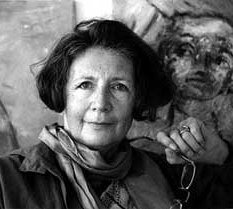
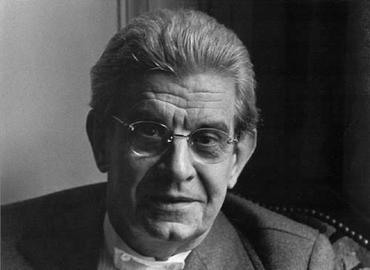
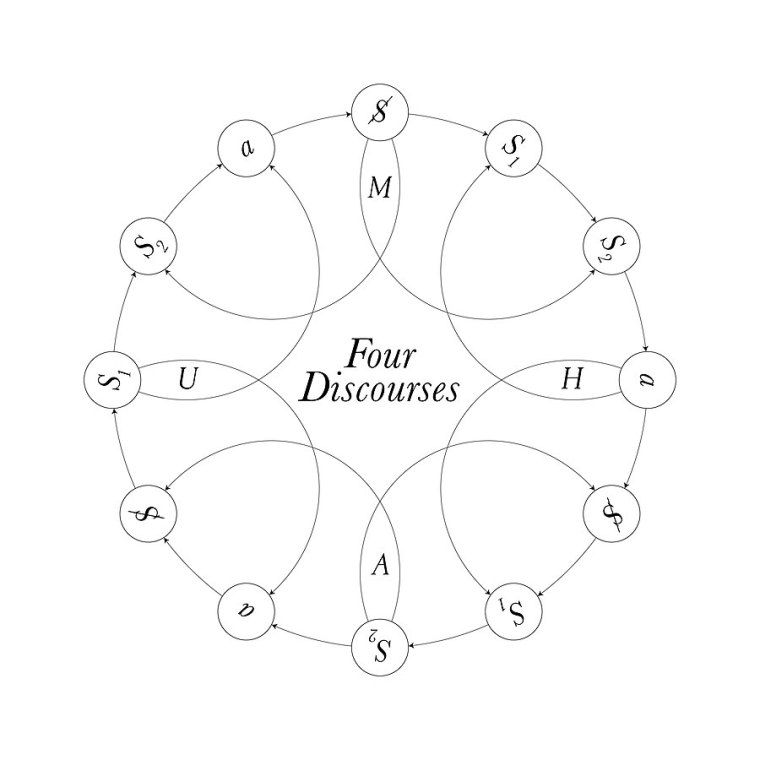
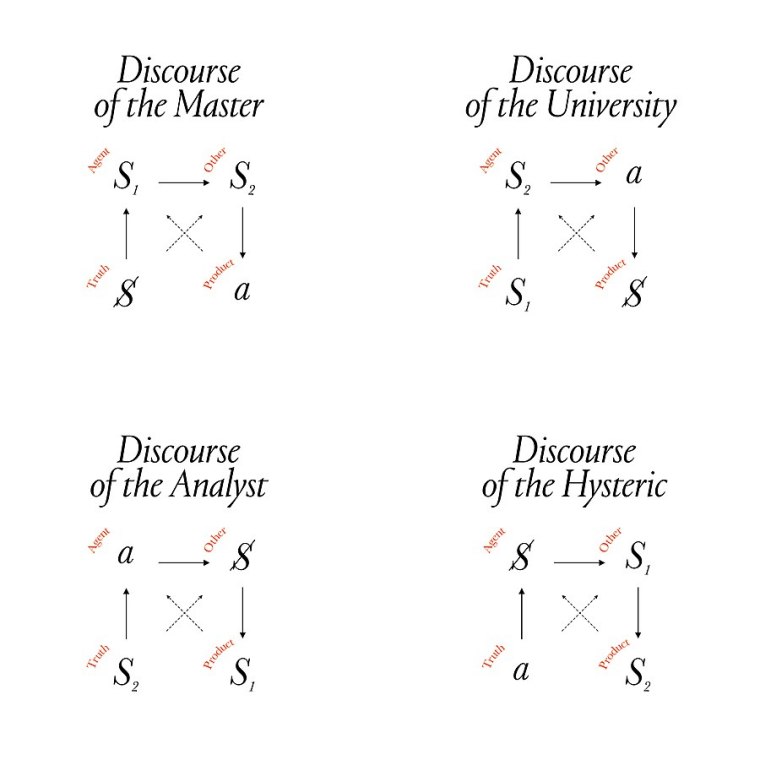
 Mental Health Matters
You must be logged in to post a comment.