The American Psychiatric Association (APA) is the main professional organisation of psychiatrists and trainee psychiatrists in the United States, and the largest psychiatric organiaation in the world. It has more than 38,000 members who are involved in psychiatric practice, research, and academia representing a diverse population of patients in more than 100 countries. The association publishes various journals and pamphlets, as well as the Diagnostic and Statistical Manual of Mental Disorders (DSM). The DSM codifies psychiatric conditions and is used mostly in the United States as a guide for diagnosing mental disorders.
The organisation has its headquarters in Washington, D.C.
Brief History
At a meeting in 1844 in Philadelphia, thirteen superintendents and organisers of insane asylums and hospitals formed the Association of Medical Superintendents of American Institutions for the Insane (AMSAII). The group included Thomas Kirkbride, creator of the asylum model which was used throughout the United States. The group was chartered to focus “primarily on the administration of hospitals and how that affected the care of patients”, as opposed to conducting research or promoting the profession.
In 1893, the organisation changed its name to the American Medico-Psychological Association. In 1921, the association changed that name to the present American Psychiatric Association. The association was incorporated in 1927.
The cover of the publication Semi-Centennial Proceedings of the American Medical Psychological Association, which the association distributed in 1894 at its 50th annual meeting in Philadelphia, contained the first depiction of the association’s official seal. The seal has undergone several changes since that time.
The present seal is a round medallion with a purported likeness of Benjamin Rush’s profile and 13 stars over his head to represent the 13 founders of the organisation. The outer ring contains the words “American Psychiatric Association 1844.” Rush’s name and an MD are below the picture.
An association history of the seal states:
The choice of Rush (1746–1813) for the seal reflects his place in history. …. Rush’s practice of psychiatry was based on bleeding, purging, and the use of the tranquilizer chair and gyrator. By 1844 these practices were considered erroneous and abandoned. Rush, however, was the first American to study mental disorder in a systematic manner, and he is considered the father of American Psychiatry.
In 2015, the association adopted a new logo that depicts the serpent-entwined Rod of Asclepius superimposed over the image of two hemispheres of a human brain. The logo appears next to the words “American Psychiatric Association”, with the word “Psychiatric” in bold type; the tagline “Medical leadership for mind, brain and body” appears below the logo. The association will continue to use the seal bearing Rush’s profile for ceremonial purposes and for some internal documents.
Organisation and Membership
APA is led by the President of the American Psychiatric Association and a board of trustees with an executive committee.
APA reports that its membership is primarily medical specialists who are qualified, or in the process of becoming qualified, as psychiatrists. The basic eligibility requirement is completion of a residency programme in psychiatry accredited by the Residency Review Committee for Psychiatry of the Accreditation Council for Graduate Medical Education (ACGME), the Royal College of Physicians and Surgeons of Canada (RCPS[C]), or the American Osteopathic Association (AOA). Applicants for membership must also hold a valid medical license (with the exception of medical students and residents) and provide one reference who is an APA member.
APA holds an annual conference attended by an American and international audience.
APA is made up of some 76 district associations throughout the country.
Foundation
APA operates a non-profit subsidiary called the American Psychiatric Association Foundation (APAF), offering community-based programs and research initiatives intended to better understand and support issues of mental health. Its strategic partners include the Council of State Governments (CSG) Justice Centre, Substance Abuse and Mental Health Services Administration (SAMHSA) and the National Association of Counties (NACo).
Corporate Alliance
APAF partners with industry organisations to collaborate on mental health research and development through its Corporate Alliance. Current and recent members of the alliance include:
AbbVie
Acadia Pharmaceuticals
Alkermes
Allergan
Bausch Health
Boehringer Ingelheim
Eisai
Indivior
Janssen Pharmaceuticals
Jazz Pharmaceuticals
Lundbeck
Myriad Genetics
Neurocrine Biosciences
Otsuka Pharmaceutical
Pfizer
Sunovion
Takeda Pharmaceutical Company
Donors to the foundation in 2019 include the Austen Riggs Centre, BB&T, Cenveo, McLean Hospital, Menninger Foundation, NeuroStar, Newport Academy, NewYork-Presbyterian Hospital, Sheppard Pratt, and Silver Hill Hospital.
Publications and Campaigns
APA position statements, clinical practice guidelines, and descriptions of its core diagnostic manual (the DSM) are published.
APA publishes several journals focused on different areas of psychiatry, for example, academic, clinical practice, or news.
Top Five Choosing Wisely Recommendations
In coordination with the American Board of Internal Medicine, the APA proposes five recommendations for physicians and patients. The list was compiled by members of the Council on Research and Quality Care. The APA places a primary focus on antipsychotic medications due to a rapid increase in sales, from $9.6 billion in 2004 to $18.5 billion in 2011.
Do not prescribe antipsychotic medications to patients for any indication without appropriate initial evaluation and appropriate ongoing monitoring.
Do not routinely prescribe 2 or more antipsychotic medications concurrently.
Do not prescribe antipsychotic medications as a first-line intervention to treat behavioural and psychological symptoms of dementia.
Do not routinely prescribe antipsychotic medications as a first-line intervention for insomnia in adults.
Do not routinely prescribe antipsychotic medications as a first-line intervention for children or adolescents for any diagnosis other than psychotic disorders.
Notable Figures
Donald Cameron, was president of the American Psychiatric Association in 1952-1953. He conducted coercive experiments widely denounced as unethical, including involuntary electroshock therapy, drug administration, and prolonged confinement and sensory deprivation funded as part of the Central Intelligence Agency Project MKUltra.
Enoch Callaway, psychiatrist, pioneer in biological psychiatry.
Adolf Meyer, former psychiatrist-in-chief at the Johns Hopkins Hospital, was the president of the American Psychiatric Association from 1927 to 1928 and was one of the most influential figures in psychiatry in the first half of the twentieth century.
Mark Ragins: American psychiatrist in the recovery movement, founding member of the Village ISA. He won the 1995 van Ameringen Award for his outstanding contribution to the field of psychiatric rehabilitation and was named a Distinguished Fellow of the American Psychiatric Association in 2006.
Herb Pardes past president and noted figure in American psychiatry.
Robert Spitzer was the chair of the task force of the third edition of the DSM.
Drug Company Ties
In his book Anatomy of an Epidemic (2010), Robert Whitaker described the partnership that has developed between the APA and pharmaceutical companies since the 1980s. APA has come to depend on pharmaceutical money. The drug companies endowed continuing education and psychiatric “grand rounds” at hospitals. They funded a political action committee in 1982 to lobby Congress. The industry helped to pay for the APA’s media training workshops. It was able to turn psychiatrists at top schools into speakers, and although the doctors felt they were independents, they rehearsed their speeches and likely would not be invited back if they discussed drug side effects. “Thought leaders” became the experts quoted in the media. As Marcia Angell wrote in The New England Journal of Medicine (2000), “thought leaders” could agree to be listed as an author of ghostwritten articles, and she cites Thomas Bodenheimer and David Rothman who describe the extent of the drug industry’s involvement with doctors. The New York Times published a summary about antipsychotic medications in October 2010.
In 2008, for the first time, Senator Charles Grassley asked the APA to disclose how much of its annual budget came from drug industry funds. The APA said that industry contributed 28 percent of its budget ($14 million at that time), mainly through paid advertising in APA journals and funds for continuing medical education.
The APA receives additional funding from the pharmaceutical industry through its American Psychiatric Association Foundation (APAF), including Boehringer Ingelheim, Janssen Pharmaceuticals, and Takeda Pharmaceutical Company, among others.
Controversies
In the 1964 election, Fact magazine polled American Psychiatric Association members on whether Barry Goldwater was fit to be president and published “The Unconscious of a Conservative: A Special Issue on the Mind of Barry Goldwater”. This led to a ban on the diagnosis of a public figure by psychiatrists who have not performed an examination or been authorised to release information by the patient. This became the Goldwater rule.
Supported by various funding sources, the APA and its members have played major roles in examining points of contention in the field and addressing uncertainties about psychiatric illness and its treatment, as well as the relationship of individual mental health concerns to those of the community. Controversies have related to anti-psychiatry and disability rights campaigners, who regularly protest at American Psychiatric Association offices or meetings. In 1970, members of the Gay Liberation Front organisation protested the APA conference in San Francisco. In 2003 activists from MindFreedom International staged a 21-day hunger strike, protesting at a perceived unjustified biomedical focus and challenging APA to provide evidence of the widespread claim that mental disorders are due to chemical imbalances in the brain. APA published a position statement in response and the two organisations exchanged views on the evidence.
The APA’s DSM came under criticism from autism specialists Tony Attwood and Simon Baron-Cohen for proposing the elimination of Asperger’s syndrome as a disorder and replacing it with an autism spectrum severity scale. Roy Richard Grinker wrote a controversial editorial for The New York Times expressing support for the proposal.
The APA president in 2005, Steven Sharfstein, praised the pharmaceutical industry but argued that American psychiatry had “allowed the biopsychosocial model to become the bio-bio-bio model” and accepted “kickbacks and bribes” from pharmaceutical companies leading to the over-use of medication and neglect of other approaches.
In 2008 APA was the focus of congressional investigations on how pharmaceutical industry money shapes the practices of non-profit organisations that purport to be independent. The drug industry accounted in 2006 for about 30 percent of the association’s $62.5 million in financing, half through drug advertisements in its journals and meeting exhibits, and the other half sponsoring fellowships, conferences and industry symposiums at its annual meeting. The APA came under increasing scrutiny and questions about conflicts of interest.
The APA president in 2009–10, Alan Schatzberg, was identified as the principal investigator on a federal study into the drug mifepristone for use as an antidepressant being developed by Corcept Therapeutics, a company Schatzberg had created and in which he had several million dollars’ equity.
In 2021, the APA issued an apology for its historical role in perpetuating racism.
This page is based on the copyrighted Wikipedia article < https://en.wikipedia.org/wiki/American_Psychiatric_Association >; it is used under the Creative Commons Attribution-ShareAlike 3.0 Unported License (CC-BY-SA). You may redistribute it, verbatim or modified, providing that you comply with the terms of the CC-BY-SA.
The Alaska Mental Health Enabling Act of 1956 (Public Law 84-830) was an Act of Congress passed to improve mental health care in the United States territory of Alaska. It became the focus of a major political controversy after opponents nicknamed it the “Siberia Bill” and denounced it as being part of a communist plot to hospitalise and brainwash Americans. Campaigners asserted that it was part of an international Jewish, Roman Catholic or psychiatric conspiracy intended to establish United Nations-run concentration camps in the United States.
The legislation in its original form was sponsored by the Democratic Party, but after it ran into opposition, it was rescued by the conservative Republican Senator Barry Goldwater. Under Goldwater’s sponsorship, a version of the legislation without the commitment provisions that were the target of intense opposition from a variety of far-right, anti-Communist and fringe religious groups was passed by the United States Senate. The controversy still plays a prominent role in the Church of Scientology‘s account of its campaign against psychiatry.
The Act succeeded in its initial aim of establishing a mental health care system for Alaska, funded by income from lands allocated to a mental health trust. However, during the 1970s and early 1980s, Alaskan politicians systematically stripped the trust of its lands, transferring the most valuable land to private individuals and state agencies. The asset stripping was eventually ruled to be illegal following several years of litigation, and a reconstituted mental health trust was established in the mid-1980s.
Background
Alaska possessed no mental health treatment facilities prior to the passage of the 1956 Act. At the time of the Act’s passage, Alaska was not a US state, being constituted instead as a territory of the United States. The treatment of the mentally ill was governed by an agreement with the state of Oregon dating back to the turn of the 20th century. On June 6, 1900, the United States Congress enacted a law permitting the government of the then District of Alaska to provide mental health care for Alaskans. In 1904, a contract was signed with Morningside Hospital, privately owned and operated by Henry Waldo Coe in Portland, Oregon, under which Alaskan mental patients would be sent to the hospital for treatment. A commitment regime was established under which a person said to be mentally ill was to be brought before a jury of six people for a ruling on insanity. The patient was routinely sent to prison until his release or transfer to Portland; at no point in this ruling was a medical or psychiatric examination required.
By the 1940s, it was recognised that this arrangement was unsatisfactory. The American Medical Association conducted a series of studies in 1948, followed by a Department of the Interior study in 1950. They highlighted the deficiencies of the program: commitment procedures in Alaska were archaic, and the long trip to Portland had a negative effect on patients and their families. In addition, an audit of the hospital contract found that the Sanatorium Company, which owned the hospital, had been padding its expenses. This had enabled it to make an excess profit of $69,000 per year (equivalent to over $588,000 per year at 2007 prices).
The studies recommended a comprehensive overhaul of the system, with the development of an in-territory mental health programme for Alaska. This proposal was widely supported by the public and politicians. At the start of 1956, in the second session of the 84th Congress, Representative Edith Green (D-Oregon) introduced the Alaska Mental Health Bill (H.R. 6376) in the House of Representatives. The bill had been written by Bob Bartlett, the Congressional Delegate from the Alaska Territory who later became a US Senator. Senator Richard L. Neuberger (D-Oregon) sponsored an equivalent bill, S. 2518, in the Senate.
Details of the Bill
The Alaska Mental Health Bill’s stated purpose was to “transfer from the Federal Government to the Territory of Alaska basic responsibility for the hospitalisation, care and treatment of the mentally ill of Alaska.” In connection with this goal, it aimed:
To modernise procedures for such hospitalisation (including commitment), care, and treatment and to authorise the Territory to modify or supersede such procedures;
To assist in providing for the Territory necessary facilities for a comprehensive mental-health programme in Alaska, including inpatient and outpatient facilities;
To provide for a land grant to the Territory to assist in placing the programme on a firm long-term basis; and
To provide for a ten-year programme, of grants-in-aid to the Territory to enable the Territory gradually to assume the full operating costs of the programme.
The bill provided for a cash grant of $12.5 million (about $94 million at 2007 prices) to be disbursed to the Alaskan government in a number of phases, to fund the construction of mental health facilities in the territory. To meet the ongoing costs of the programme, the bill transferred one million acres (4,000 km2) of federally owned land in Alaska to the ownership of the proposed new Alaska Mental Health Trust as a grant-in-aid—the federal government owned about 99% of the land of Alaska at the time. The trust would then be able to use the assets of the transferred land (principally mineral and forestry rights) to obtain an ongoing revenue stream to fund the Alaskan mental health programme. Similar provisions had applied in other US territories to support the provision of public facilities prior to the achievement of statehood.
In addition, the bill granted the Governor of Alaska authority to enter into reciprocal mental health treatment agreements with the governors of other states. Alaskans who became mentally ill in the lower 48 states would be properly treated locally until they could be returned to Alaska; likewise, citizens of the lower 48 who fell mentally ill in Alaska would receive care there, before being returned to their home states.
The bill was seen as entirely innocuous when it was introduced on 16 January 1956. It enjoyed bipartisan support, and on January 18 it was passed unanimously by the House of Representatives. It then fell to the Senate to consider the equivalent bill in the upper chamber, S. 2518, which was expected to have an equally untroubled passage following hearings scheduled to begin on 20 February.
Controversy
Initial Opposition
In December 1955, a small anti-communist women’s group in Southern California, the American Public Relations Forum (APRF), issued an urgent call to arms in its monthly bulletin. It highlighted the proposed text of the Alaska Mental Health Bill, calling it “one that tops all of them”. The bulletin writers commented: “We could not help remembering that Siberia is very near Alaska and since it is obvious no one needs such a large land grant, we were wondering if it could be an American Siberia.” They said that the bill “takes away all of the rights of the American citizen to ask for a jury trial and protect him[self] from being railroaded to an asylum by a greedy relative or ‘friend’ or, as the Alaska bill states, ‘an interested party’.”
The APRF had a history of opposing mental health legislation; earlier in 1955, it had played a key role in stalling the passage of three mental health bills in the California Assembly. It was part of a wider network of far-right organizations which opposed psychiatry and psychology as being pro-communist, anti-American, anti-Christian and pro-Jewish. The Keep America Committee, another Californian “superpatriot” group, summed up the anti-mental-health mood on the far right in a pamphlet issued in May 1955. Calling “mental hygiene” part of the “unholy three” of the “Communistic World Government”, it declared: “Mental Hygiene is a subtle and diabolical plan of the enemy to transform a free and intelligent people into a cringing horde of zombies”.
The APRF’s membership overlapped with that of the much larger Minute Women of the U.S.A., a nationwide organisation of militant anti-communist housewives which claimed up to 50,000 members across the United States. In mid-January 1956, Minute Woman Leigh F. Burkeland of Van Nuys, California issued a bulletin protesting against the bill. It was mimeographed by the California State Chapter of the Minute Women and mailed across the nation. On 24 January 1956, the strongly anti-statist Santa Ana Register newspaper reprinted Burkeland’s statement under the headline, “Now — Siberia, U.S.A.” Burkeland issued a lurid warning of what the future might hold if the Alaska Mental Health Bill was passed by the Senate:
Is it the purpose of H.R. 6376 to establish a concentration camp for political prisoners under the guise of treatment of mental cases? The answer, based on a study of the bill, indicates that it is entirely within the realm of possibility that we may be establishing in Alaska our own version of the Siberia slave camps run by the Russian government. … This legislation, say its opponents, will place every resident of the United States at the mercy of the whims and fancies of any person with whom they might have a disagreement, causing a charge of ‘mental illness’ to be placed against them, with immediate deportation to SIBERIA, U.S.A!
Further Opposition
After the Santa Ana Register published its article, a nationwide network of activists began a vociferous campaign to torpedo the Alaska Mental Health Bill. The campaigners included, among other groups and individuals, the white supremacist Rev. Gerald L.K. Smith; Women for God and Country; the For America League; the Minute Women of the U.S.A.; the right-wing agitator Dan Smoot; the anti-Catholic former US Army Brigadier General Herbert C. Holdridge; and L. Ron Hubbard’s Church of Scientology, which had been founded only two years earlier.
Increasingly strong statements were made by the bill’s opponents through the course of the spring and summer of 1956. In his 17 February bulletin, Dan Smoot told his subscribers: “I do not doubt that the Alaska Mental Health Act was written by sincere, well-intentioned men. Nonetheless, it fits into a sinister pattern which has been forming ever since the United Nations was organized.” Dr. George A. Snyder of Hollywood sent a letter to all members of Congress in which he demanded an investigation of the Alaska Mental Health Bill’s proponents for “elements of treason against the American people behind the front of the mental health program”. The Keep America Committee of Los Angeles similarly called the proponents of the bill a “conspiratorial gang” that ought to be “investigated, impeached, or at least removed from office” for treason. Retired brigadier general Herbert C. Holdridge sent a public letter to President Dwight Eisenhower on 12 March, in which he called the bill “a dastardly attempt to establish a concentration camp in the Alaskan wastes”. He went on:
This bill establishes a weapon of violence against our citizenry far more wicked than anything ever known in recorded history — far worse than the Siberian prison camps of the Czars or the Communists, or the violence of the Spanish Inquisition … The plot of wickedness revealed in this bill fairly reeks of the evil odor of the black forces of the Jesuits who dominate the Vatican, and, through officiates in our Government, dominate our politics.
For their part, America’s professional health associations (notably the American Medical Association and American Psychiatric Association) came out in favour of the bill. There was some initial opposition from the Association of American Physicians and Surgeons, a small and extremely conservative body which opposed socialized medicine; Dr. L. S. Sprague of Tucson, Arizona said in its March 1956 newsletter that the bill widened the definition of mental health to cover “everything from falling hair to ingrown toenails”. However, the association modified its position after it became clear that the AMA took the opposite view.
By March 1956, it was being said in Washington, D.C. that the amount of correspondence on the bill exceeded anything seen since the previous high-water mark of public controversy, the Lend-Lease Act of 1941. Numerous letter-writers protested to their Congressional representatives that the bill was “anti-religious” or that the land to be transferred to the Alaska Mental Health Trust would be fenced off and used as a concentration camp for the political enemies of various state governors. The well-known broadcaster Fulton Lewis described how he had “received, literally, hundreds of letters protesting bitterly against the bill. I have had telephone calls to the same effect from California, Texas and other parts of the country. Members of Congress report identical reactions.” A letter printed in the Daily Oklahoman newspaper in May 1956 summed up many of the arguments made by opponents of the bill:
The advocates of world government, who regard patriotism as the symptom of a diseased mind, took a step closer to their goal of compulsory asylum ‘cure’ for opponents of UNESCO, when, on January 18, the U.S. House of Representatives passed the Alaska Mental Health Act.
The Act was prepared by the U.S. Department of Justice, Department of the Interior and the socialist-oriented Department of Health, Education and Welfare. It closely follows the Model Code, drafted by the American Psychiatric association, which has been working with the World Health Organization, a specialized agency of the United Nations …
All of you who don’t want members of your family railroaded to an asylum had better start writing your senator, now.
During February and March 1956, hearings were held before the Senate Subcommittee on Territories and Insular Affairs. Proponents and opponents of the bill faced off in a series of tense exchanges, with strong accusations being made against the people and groups involved in the bill’s introduction. Stephanie Williams of the American Public Relations Forum said that the bill would enable Russia to reclaim its former Alaskan territory: “[It] contains nothing to prevent Russia from buying the entire million acres — they already say Alaska belongs to them.”
Mrs. Ernest W. Howard of the Women’s Patriotic Committee on National Defence castigated the slackness of Congress for not picking up on the bill’s perceived dangers: “Those of us who have been in the study and research work of the United Nations, we feel that we are experts in this … you as Senators with all the many commitments and the many requirements, are not able to go into all these things.” John Kaspar, a White Citizens’ Council organiser who had achieved notoriety for starting a race riot in Clinton, Tennessee, declared that “almost one hundred percent of all psychiatric therapy is Jewish and about eighty percent of psychiatrists are Jewish … one particular race is administering this particular thing.” He argued that Jews were nationalists of another country who were attempting to “usurp American nationality”.
Passing the Bill
The arguments of the bill’s opponents attracted little support in the Senate. The Eisenhower administration, the Alaska territorial government and mainstream religious groups were all in favour of the bill. The Alaska Presbyterian Church gave the bill its unanimous support, issuing a statement declaring: “As Christian citizens of Alaska we believe this is a progressive measure for the care and treatment of the mentally ill of Alaska. We deplore the present antiquated methods of handling our mentally ill.” It also urged the National Council of Churches to mobilise support for the bill. An overwhelming majority of senators of both parties were also supportive. The bill’s original author, Alaska Delegate Bob Bartlett, spoke for many of the bill’s proponents when he expressed his bafflement at the response that it had received:
I am completely at a loss in attempting to fathom the reasons why certain individuals and certain groups have now started a letter-writing campaign … to defeat the act. I am sure that if the letter writers would consult the facts, they would join with all others not only in hoping this act would become law but in working for its speedy passage and approval.
Other senators expressed similar mystification at the agitation against the bill. Senator Henry M. Jackson of Washington stated that he was “at a loss” to see how the bill affected religion, as its opponents said. Senator Alan Bible of Nevada, the acting chairman of the Subcommittee on Territories and Insular Affairs, told the bill’s opponents that nothing in the proposed legislation would permit the removal of any non-Alaskan to the territory for confinement.
Republican Senator Barry Goldwater of Arizona proposed an amended bill that removed the commitment procedures in Title I of the House bill and stated that “Nothing in this title shall be construed to authorize the transfer to Alaska, pursuant to any agreement or otherwise, of any mentally ill person who is not a resident of Alaska.” In effect, this eliminated the bill’s most controversial element—the provision for the transfer of mental patients from the lower 48 states to Alaska. The final recommendation of the Senate Committee on Interior and Insular Affairs followed Goldwater’s lead that the bill be amended to strike all the controversial “detailed provisions for commitment, hospitalization, and care of the mentally ill of Alaska” included in Title I of the original House bill. This amended proposal left only the transfer of responsibility for mental health care to the territory of Alaska and the establishment of land grants to support this care. The committee stressed that they were not invalidating the Title I provisions of the original bill but that they had been misunderstood, a recurrent theme in supporters of the bill:
However, the proposed provisions were misunderstood by many persons in parts of the country other than Alaska. Partly as a result of this misunderstanding, but more because the members of the committee are convinced that the people of Alaska are fully capable of drafting their own laws for a mental health program for Alaska, the committee concluded that authority should be vested in them in this field comparable to that of the States and other Territories.
Thus amended, the Senate bill (S. 2973) was passed unanimously by the Senate on 20 July after only ten minutes of debate.
Aftermath
Following the passage of the act, an Alaska Mental Health Trust was set up to administer the land and grants appropriated to fund the Alaskan mental health program. During the 1970s, the issue of the trust’s land became increasingly controversial, with the state coming under increasing pressure to develop the land for private and recreational use. In 1978, the Alaska Legislature passed a law to abolish the trust and transfer the most valuable parcels of lands to private individuals and the government. By 1982, 40,000 acres (160 km2) had been conveyed to municipalities, 50,000 acres (200 km2) transferred to individuals, and slightly over 350,000 acres (1,400 km2) designated as forests, parks or wildlife areas. Around 35% of the land trust remained unencumbered and in state ownership.
In 1982, Alaska resident Vern Weiss filed a lawsuit on behalf of his son, who required mental health services that were not available in Alaska. The case of Weiss v State of Alaska eventually became a class action lawsuit involving a range of mental health care groups. The Alaska Supreme Court ruled in 1985 that the abolition of the trust had been illegal and ordered it to be reconstituted. However, as much of the original land had been transferred away, the parties had to undergo a long and complex series of negotiations to resolve the situation. A final settlement was reached in 1994 in which the trust was reconstituted with 500,000 acres (2,000 km2) of original trust land, 500,000 acres (2,000 km2) of replacement land, and $200 million to replace lost income and assets.
Scientology and the Alaska Mental Health Bill
The Alaska Mental Health Bill plays a major part in the Church of Scientology’s account of its campaign against psychiatry. The Church participated in the campaign against the bill and still refers to it as the “Siberia Bill”. Scientology may also have provided an important piece of the “evidence” which the anti-bill campaigners used — a booklet titled Brain-Washing: A Synthesis of the Russian Textbook on Psychopolitics.
Miscavige on Nightline
Similarly, David Miscavige, the church’s leader, in 1992 told Ted Koppel in an interview on the Nightline programme:
I don’t know if you’re aware that there was a plan in 1955 in this country, Ted, to repeat what was done in Russia. There was going to be a Siberia, USA, set up on a million acres in Alaska to send mental patients. They were going to lessen the commitment laws, you could basically get into an argument with somebody and be sent up there. This sounds very odd. Nobody’s ever heard about it. That’s in no small part thanks to the Church of Scientology. I must say, though, that when that bill was killed in Congress, the war was on with psychiatry where they declared war on us … It was a major, major, major flap for the psychiatrists when it got voted down, because then the slogan around the country began, ‘Siberia, USA,’ and it was really the first time that psychiatry had been denigrated publicly, that they weren’t the science that they had been promoting themselves to be. And they took it upon themselves then to start dealing with anybody who would oppose them.
Conspiracy Theories
In Ron’s Journal 67, Hubbard identified “the people behind the Siberia Bill”, who he asserted were:
less than twelve men. They are members of the Bank of England and other higher financial circles. They own and control newspaper chains, and they are, oddly enough, directors in all the mental health groups in the world which have sprung up. Now these chaps are very interesting fellows: They have fantastically corrupt backgrounds; illegitimate children; government graft; a very unsavory lot. And they apparently, sometime in the rather distant past, had determined on a course of action. Being in control of most of the gold supplies of the planet, they entered upon a program of bringing every government to bankruptcy and under their thumb, so that no government would be able to act politically without their permission.
According to David Miscavige, the bill was the product of a conspiracy by the American Psychiatric Association. In a public address in 1995, he told Scientologists that it was “in 1955 that the agents for the American Psychiatric Association met on Capitol Hill to ram home the infamous Siberia Bill, calling for a secret concentration camp in the wastes of Alaska.” It was “here that Mr. Hubbard, as the leader of a new and dynamic religious movement, knocked that Siberia Bill right out of the ring — inflicting a blow they would never forget.” The assertion that Scientologists defeated the bill is made frequently in Scientology literature. In fact, the original version of the bill with the offending Title I commitment provisions only passed the House of Representatives; it was subsequently amended in conference to strike the commitment portion and retain the transfer of responsibility for mental health care. The revised bill passed easily without further changes.
Contemporary Publications
Contemporary Church publications suggest that although Hubbard was tracking progress of the bill at least as early as February 1956, Scientology did not become involved in the controversy until the start of March 1956, over two months after the American Public Relations Forum had first publicized the bill. A March “Professional Auditor’s Bulletin” issued by Hubbard, who was staying in Dublin at the time, includes a telegram from his Washington-based son L. Ron Hubbard, Jr. and two other Scientologists alerting him to the upcoming February Senate hearings:
HOUSE BILL 6376 PASSED JANUARY 18TH STOP GOES SENATE NEXT WEEK STOP BILL PERMITS ADMISSION OF PERSON TO MENTAL INSTITUTION BY WRITTEN APPLICATION OF INTERESTED PERSON BEFORE JUDICIAL PROCEEDINGS ARE HELD STOP DISPENSES WITH REQUIREMENT THAT PATIENT BE PRESENT AT HEARING STOP ANYONE CAN BE EXCLUDED FROM HEARING STOP BILL PERTAINS TO ALASKA AT MOMENT STOP BILL SETS UP ONE MILLION ACRES SIBERIAL [sic] IN ALASKA FOR INSTITUTIONS STOP LETTER AND BILL FOLLOW STOP WHAT ACTION YOU WANT TAKEN.
Although the church says that Scientologists led the opposition to the bill, the Congressional Record’s account of the Senate hearings into the bill does not mention the church. A contemporary review of the opposition to the bill likewise attributes the lead role elsewhere and to right-wing groups, rather than the “civil liberties” organisations cited by the church:
Only a few organized groups got behind the hue and cry. Most influential was the libertarian Association of Physicians and Surgeons, and Dan Smoot’s newsletter. Right-wing groups bombarded Congress with protests and demands for hearings.
This page is based on the copyrighted Wikipedia article < https://en.wikipedia.org/wiki/Alaska_Mental_Health_Enabling_Act >; it is used under the Creative Commons Attribution-ShareAlike 3.0 Unported License (CC-BY-SA). You may redistribute it, verbatim or modified, providing that you comply with the terms of the CC-BY-SA.
Since the founding of the Church of Scientology in 1954 by L. Ron Hubbard, the relationship between Scientology and psychiatry has been dominated by strong opposition by the organisation against the medical specialty of psychiatry and of psychology with themes relating to this opposition occurring repeatedly throughout Scientology literature and doctrine. According to the Church of Scientology, psychiatry has a long history of improper and abusive care. The group’s views have been disputed, criticised, and condemned by experts in the medical and scientific community and have been a source of public controversy.
L. Ron Hubbard had a complex and changing relationship with psychiatry. He recalled positive experiences with psychiatrists in his youth and requested psychiatric treatment in adulthood. By 1948, Hubbard claimed to volunteer in a psychiatric clinic and two years later published Dianetics: The Modern Science of Mental Health. In 1951, however, Hubbard’s wife Sara Northrup Hollister reportedly consulted psychiatrists who recommended Hubbard be institutionalised; thereafter, Hubbard was increasingly hostile towards psychiatry.
In 1995, Scientologist Lisa McPherson died at Church of Scientology Flag Service Organisation (FSO) at Flag Land Base after leaving a hospital where she refused psychiatric treatment.
In 2003, a man with untreated schizophrenia murdered his mother after his paranoid delusions caused him to become convinced that the Scientology-approved vitamins she was giving him in lieu of effective medication were poisonous.
In 2005, celebrity Scientologist Tom Cruise strongly asserted his public opposition to psychiatry.
L. Ron Hubbard and Psychiatry
L. Ron Hubbard was an American author of science fiction and fantasy stories. Hubbard reported many encounters with psychiatrists from the age of 12 onward.
During World War II, Hubbard was hospitalised; in 1947, Hubbard requested psychiatric treatment and the following year moved with his wife to Savannah, Georgia, where he was reportedly associated with a psychiatric clinic.
In 1950, Hubbard published Dianetics: The Modern Science of Mental Health.
In 1951, it was publicly reported that Hubbard’s wife Sara had been advised by a psychiatrist that Hubbard should be institutionalised for treatment of paranoid schizophrenia. They divorced, and the following year, Hubbard founded Scientology, an anti-psychiatry religious movement.
Hubbard’s beliefs and practices, drawn from a diverse set of sources, influenced numerous offshoots, splinter-groups, and new movements.
Overview
Hubbard’s views on psychiatry evolved over time.
Hubbard spoke positively of his childhood and teen encounters with psychiatrists in the 1920s and 30s. At the age of 12, Hubbard was accompanied by Navy psychiatrist Joseph Thompson on an ocean trip from Seattle to Washington, D.C. Hubbard likewise wrote positively of teenage/young-adult encounters with D.C.-based psychiatrist William Alanson White. Some of Hubbard’s later works included acknowledgements of both Thompson and White, and Hubbard would later claim to have received clinical training from both Thompson and White.
In contrast, Hubbard spoke more critically of his later encounters with psychiatrists and psychiatric institutions. Although Hubbard had written positively of psychiatric hospital superintendent William Alanson White, White’s successor (Winfred Overholser) was singled out for criticism. Hubbard likewise spoke critically of his encounters with a Washington, D.C., institution for the treatment of schizophrenia called “Walnut Lodge” (presumably Chestnut Lodge).
During the Second World War, Hubbard was hospitalised at Oak Knoll Military Hospital. In 1947, Hubbard wrote a letter to the VA requesting psychiatric treatment. The following year, Hubbard and his wife Sara moved to Savannah, Georgia, where Hubbard would later recall having been associated with a charity mental health clinic.
According to Hubbard, he worked as a volunteer helping to treat charity patients during his time in Savannah. While in Savannah, Hubbard began working on a “book of psychology” about “the cause and cure of nervous tension”; the next year, he published Dianetics: The Modern Science of Mental Health.
In 1951, Hubbard’s wife Sara reportedly consulted a psychiatrist who recommended Hubbard be institutionalised. Hubbard initially responded by kidnapping Sara. Thereafter, he took their daughter and fled to Havana. After Sara went public with her story, Hubbard returned her daughter. In his final known encounter with a psychiatrist, Hubbard consulted a practitioner in order to rebut public claims of his own mental illness.
Thereafter, Hubbard was increasingly hostile towards psychiatry. In the 50s, Hubbard sought to identify “Subversive” psychiatrists or other “Potential Subversives”. By the early 70s, Hubbard wrote of having redefined the word “psychiatrist” to mean “an antisocial enemy of the people”.
Hubbard’s Early Encounters with Psychiatry
Hubbard claimed to have personal encounters with several named psychiatrists beginning in his childhood. Some, like Thompson and White, would later be remembered favourably – Hubbard explicitly cited both as sources for his work. Others, such as Overholser and Center, were the subject of scorn.
Joseph Cheesman Thompson
In 1923, Navy medical doctor and psychoanalyst Joseph “Snake” Thompson accompanied Hubbard on a voyage. Hubbard recalled “I traveled with Commander Thompson from Seattle, Washington through the Panama Canal to Washington, D.C. when I was about twelve and knew him during all that time that I was in Washington and later.” Hubbard recalled that “[Thompson’s] friends called him ‘Snake’ and his enemies called him ‘Crazy’. He had lots of both.”[20] In another recording of Hubbard sharing anecdotes from his life, he considered Thompson to be a “very great man” who sparked Hubbard’s interest in “the human mind”. Hubbard said that Thompson told him, “If it’s not true for you, it’s not true.”
In 1952, Hubbard recalled that “I was just a kid and Commander Thompson didn’t have any boy of his own, and he and I just got along fine.” Hubbard continued “Why he [Thompson] took it into his head to start beating Freud into my head, I don’t know. But he did.”
In 1953, Hubbard argued “It’s very odd to realize, as I did one day, that in subsequent years I have approximated to a very remarkable degree the career of Commander Thompson – to show you what an impressed – impressionable boy can have handed to him suddenly.”
In 1954, Hubbard described an encounter with psychiatrists in which playing sports was seen as a positive indicator:
“I knew people, and the people who were trained by these people. And, if there was anything they were in awe of, it was somebody who engaged in sports. So this fellow was phenomenal to them. They knew this was very good somehow or another, but they couldn’t quite put their finger on it. And to this day it is enough to tell a psychiatrist that, and prove to him, that you are very energetic and engaged in sports, to have him dismiss you immediately as being completely sane. Only that’s just, bing. He just says, “Well, I…” He just goes into apathy right at that point. That’s the truth. “The… it was an interesting thing, for instance, to William Allen White. And Commander Thompson. Both of them, where I was concerned, that I wasn’t very interested in sitting around figuring about this stuff and didn’t seem to be terribly interested in the insane.”
Hubbard described later encounters with Thompson: “In 1930 I knew a fellow by the name of Commander Thompson. I had known him before, actually”.
In 1958, Hubbard told an audience: “I have made people feel better by using straight Freudian analysis the way I got it from Commander Thompson who imported it to the US Navy, not via Catherine [sic] Horney”.
Thompson died in 1943, seven years before the publication of Dianetics. Thompson was included in the Acknowledgements section of 1951’s Science of Survival, as was William A. White.
William Alanson White
William Alanson White was an American neurologist and psychiatrist who served as superintendent of St. Elizabeths Hospital. A letter from the Hubbard Association of Scientologists International to the FBI, dated 12 June 1954, claims that Hubbard was trained by both Joseph Thompson and William Alanson White. Hubbard recalled “Dr. William Alanson White, a very fine man. He was head of the big St. Elizabeth’s, the big mental institution there in Washington, D.C., and he had been a friend of mine for quite a while. I had met him through other friends of Dr. Thompson’s”. In a lecture, Hubbard described consulting White about a theoretical calculation of human memory capacity, apparently during Hubbard’s university days. Hubbard recalled that “he [White] used to see me every once in a while”.
In a 1951 lecture, Hubbard described St. Elizabeth’s as “where they sent the naval officers after they had received their fifth contradiction from the Navy Department”.
For two years in the 1920s, White had opened the doors of St. Elizabeths to Alfred Korzybski, enabling Korzybski to directly study mental illness, research that contributed heavily to Korzybski’s 1933 Science and Sanity: An Introduction to Non-Aristotelian Systems and General Semantics. Hubbard cited the relationship between Korzybski and White in his lectures.
White died in 1937, thirteen years before the publication of Dianetics. White was included in the Acknowledgements section of 1951’s Science of Survival, as was Joseph Thompson.
“Walnut Lodge”
For much of the 1920s and 30s, L. Ron Hubbard lived in Washington D.C. In 1932, Hubbard listed the US Naval Hospital in Washington as his address; In 1933, Hubbard listed a P.O. Box in Beallsville, Maryland.
In a 1952 lecture, Hubbard recalls his interaction with staff and patients at a facility specialising in schizophrenia which he calls “Walnut Lodge” (presumably Chestnut Lodge):
there’s a place by the name of Walnut Lodge. I… I… They don’t see anything humorous in that, by the way; it’s Walnut Lodge. […] They… they… they sent three people to see, to… to see me and every one of them was under treatment. And this was their staff. But anyway, very good people there, I’m sure, didn’t happen to meet any. Have some fine patients though. Anyway, they… they treat only schizophrenia. And so they take only schizophrenics. Now how do they get only schizophrenics? Well, anybody sent to Walnut Lodge is a classified schizophrenic. And they take somebody who is a dementia praecox unclassified or a more modern definition, a mania-depressive and they take him from Saint Elizabeth’s and they take him over to Walnut Lodge and he goes onto the books as a schizophrenic. Why? Because Walnut Lodge takes only schizophrenics.
In 1966, Hubbard recalled “Identification by classification. This is a type of thing Psychiatry does all the time. They say this is a Dementia Praecox case. They’ve gotten so idiotic with it now that if someboy goes to Chestnut Lodge… if a person is transferred to Chestnut Lodge, regardless of their symptoms before, they now have schizophrenia.”
Hubbard would return to “Walnut Lodge” in future writings. A 1970 bulletin states that “$2,000 a month for board only is the price at Walnut Lodge in Washington DC, an average place.” In his work Mission Earth, Hubbard writes “Arginal P. Pauper was today committed to Walnut Lodge Nut House”.
Hubbard as Patient
During World War Two, Hubbard was hospitalised at a California military hospital. After his release, he wrote to the Veterans Administration to request further treatment. Thereafter, he and his wife moved to Savannah, Georgia, where he was reportedly associated with a charity mental health clinic.
Oak Knoll Military Hospital
In 1945, Hubbard was a patient at Oak Knoll Military Hospital. Hubbard’s estranged son, L. Ron Hubbard, Jr., later known as Ron DeWolf, would later state that Hubbard received psychiatric treatment during his hospitalisation. Hubbard would later cite his time with psychiatric patients at Oak Knoll “using a park bench as a consulting room” as a major influence on his development of Dianetics.
Request for Psychiatric Treatment
After his discharge, Hubbard sought out psychiatric help to treat his “long periods of moroseness and suicidal inclinations” but reported that he could not afford it. A letter dated 15 October 1947, which Hubbard wrote to the Veterans Administration (VA) begins: “This is a request for treatment”. The letter continues:
After trying and failing for two years to regain my equilibrium in civil life, I am utterly unable to approach anything like my own competence. My last physician informed me that it might be very helpful if I were to be examined and perhaps treated psychiatrically or even by a psychoanalyst. Toward the end of my service I avoided out of pride any mental examinations, hoping that time would balance a mind which I had every reason to suppose was seriously affected. I cannot account for nor rise above long periods of moroseness and suicidal inclinations, and have newly come to realize that I must first triumph above this before I can hope to rehabilitate myself at all. … I cannot, myself, afford such treatment. Would you please help me?
The following year, Hubbard and his wife moved to Savannah, Georgia, where he was associated with a charity psychiatric clinic.
Hubbard as Would-Be Psychologist
After his arrival in Savannah, Hubbard began to describe himself as mental health practitioner, ultimately authoring Dianetics.
Savannah, Georgia Psychiatric Clinic
Beginning in June 1948, the nationally-syndicated wire service United Press ran a story on an American Legion-sponsored psychiatric ward in Savannah, Georgia, which sought to keep mentally-ill war veterans out of jail. That summer, Hubbard was arrested by the San Luis Obispo sheriff on a charge of petty theft for passing a fraudulent check.
In late 1948, Hubbard and his second wife Sara moved from California to Savannah, Georgia, where he would later claim to have “worked” as a “volunteer” in the psychiatric clinic, where he claimed he “processed an awful lot of Negroes”. Hubbard later wrote of having observed a “Dr. Center” in Savannah:
I well recall a conversation I had with a Dr. Center in Savannah, Georgia, in 1949. It well expresses the arrogance and complete contempt for law and order of the psychiatrist.
A man had just called to inquire after his wife who was “under treatment” in Center’s hospital. Center asked him, “Do you have the money…? That’s right, thirty thousand… well you better get it or I’ll have to send your dear wife to the state institution and you know what will happen then!”
I was there doing work on charity patients the local psychiatrists wouldn’t touch. Center had forgotten I was in the room.
In a 1966 interview, Hubbard recalled a man receiving a bill for psychoanalysis: “These people, you know, in psychoanalysis, they worked on somebody for a year just to find out if they could help him and then they charged him about 9000 quid for having not helped him”.
Dianetics
In January 1949, Hubbard wrote that he was working on a “book of psychology” about “the cause and cure of nervous tension”, which he was going to call The Dark Sword, Excalibur or Science of the Mind. In April 1949, Hubbard wrote from Savannah to inform the Gerontological Society at Baltimore City Hospital that he was preparing a paper entitled Certain Discoveries and Researches Leading to the Removal of Early Traumatic Experiences Including Attempted Abortion, Birth Shock and Infant Illnesses and Accidents with an Examination of their Effects Physiological and Psychological and their Potential Influence on Longevity on the Adult Individual with an Account of the Techniques Evolved and Employed. The Society apparently declined involvement.
He also wrote to the American Medical Association and the American Psychiatric Association. These letters, and their responses, have not been published, though Hubbard later said that they had been negative. Hubbard later wrote, “In 1948 I wrote a thesis on an elementary technique of application and submitted it to the medical and psychiatric professions for their use or consideration. The data was not utilized.”
In December 1949, Hubbard composed a letter to publisher John Campbell in which he provided an article entitled “A Criticism of Dianetics” to be published under the pen name Irving R. Kutzman, M.D. (ostensibly an opponent of Dianetic auditing). In his letter to Campbell, Hubbard described synthesizing the opinions of multiple doctors:
The philosophic derivation comments are direct quote from Davies of APA. The comment on operators is direct quote from Craig, MD PhD of Savannah.[53][54] The pre-frontal lobotomy angle (changed only to trans-orbital leukotomy) is a direct quote from Delchamp, MD PhD. You heard nearly all these things repeated by Kahn, MD and he did not diverge in any particular from the standard attitude toward Dianetics, General Semantics (quote on this from Davies of APA), Cybernetics (Boswell, MD) etc. etc. This article would be found by an MD psychiatrist to be a pretty valid statement of their case because they have so stated the case many times.
The following year, Hubbard authored Dianetics: the Modern Science of Mental Health, a handbook for “the psychiatrist, psycho-analyst and intelligent layman”.
By September 1950, the American Psychological Association’s governing body unanimously adopted a resolution advising its members against using Hubbard’s techniques with their patients and leading psychologists spoke out against Dianetics. Thereafter, Hubbard was critical of psychiatry.
Winfred Overholser was superintendent of St. Elizabeths Hospital after 1937. By 1950, he was president of the American Psychiatric Association. In a 1953 lecture, Hubbard claimed:
Doctor Upholstered is in charge of … he’s in charge of the rest home for feeble minded government officials here in Washington, Saint Elizabeths.
In 1972, Hubbard recalled:
he [Overholser] blew the whistle on Dianetics when St. Elizabeth psychiatrists were just beginning to use it and were for the first time getting results on patients at the National Asylum. He forbade them to use it but they disagreed heavily and privately used it for many years under cover. This broke up introducing Dianetics on regular channels – May 1950.
Thereafter a violent and gory attack was mounted. It was begun by Oberholser, went over to George Wash U. Psychology Dept at once and there a student of the first Dianetics class (Dolly Jones) also a psychology student was hypnotized, beaten, told to go crazy, did so and we had to hospitalize her.
[…] He (Oberholser) was a member of the Club.
In another lecture, Hubbard claimed he gave a speech in which he hypnotized the staff of St. Elizabeth’s.
In late 1950, Hubbard criticised mainstream psychiatry but still wrote positively of Sigmund Freud as a fellow persecuted trailblazer, arguing that “to talk of the faults of Freud, as do those who practice psychoanalysis today, is ungenerous. This great pioneer, against the violent objections of medical doctors and the psychiatrists of his day, ventured to put forth the theory that memory was connected with present time behavior” Hubbard elaborated: “Freud was so thoroughly shunned by neurologists of his day and medicine ever since, that only his great literary skill brought his work as far as it has come.”
As late as 1955, Hubbard still identified himself with mental health professions, describing himself as “a writer, a scientist, and a psychologist”.
Attempted Institutionalisation and Aftermath
In 1951, Hubbard’s wife Sara sought advice from a psychiatrist who recommend Hubbard be institutionalised. Upon learning of the plan, Hubbard initially kidnapped Sara; After her release, Hubbard fled to Havana with their young daughter. Hubbard then underwent a public divorce in which his wife publicly alleged that Hubbard had been diagnosed with paranoid schizophrenia. Upon his return to the US, Hubbard consulted with a psychiatrist to rebut public claims of his mental illness.
Sara Consults Psychiatrist
In 1951, Hubbard’s wife Sara went to a psychiatrist to obtain advice about his increasingly violent and irrational behaviour, and was told that he probably needed to be institutionalised and that she was in serious danger. She gave Hubbard an ultimatum: get treatment or she would leave with the baby. He was furious and threatened to kill their daughter Alexis rather than let Northrup care for her. Sara later recalled: “He didn’t want her to be brought up by me because I was in league with the doctors. He thought I had thrown in with the psychiatrists, with the devils.”
In a letter to the Attorney General dated May 1951, Hubbard claims that on “Feb. 25 she [Sara] flew to San Francisco and my general managers Jack Maloney in New Jersey received a phone call from her and Miles Hollister and a psychiatrist named Meyer Zelig in San Francisco that I had gone insane and that they needed money to incarcerate me quickly.”
Two decades later, in 1972, Hubbard would write to followers:
the NY Times Literary Section began an attack and a lot of violent track ran by which included DR. MEYER-ZELIG, a psychiatrist in San Francisco master-minding a kidnapping of me to fly me to St. Louis and be put away. His (Zelig’s) plans miscarried. MILES HOLLISTER, formerly a psych student, got hold of SARA NORTHRUP (really Komknoidominoff) (or ov) and handed her over to Zelig who put her in deep hypnosis, fixated her on the idea I was trying to kill her and spun her in, in which state she has remained since. This caused the final destruction of the HDRF (Hubbard Dianetic Research Foundation) as national press only played up her divorce.
Hubbard Kidnaps Wife, Daughter
On the night of 24 February, 1951, Hubbard allegedly took daughter Alexis while Sara was at a movie theatre. A few hours later, he returned with two of his Dianetics Foundation staff and told Sara, who was now back at her apartment: “We have Alexis and you’ll never see her alive unless you come with us.” She was bundled into the back of a car and driven to San Bernardino, California, where Hubbard attempted to find a doctor to examine his wife and declare her insane. His search was unsuccessful and he released her at Yuma Airport across the state line in Arizona. He promised that he would tell her where Alexis was if she signed a piece of paper saying that she had gone with him voluntarily. She agreed but Hubbard reneged on the deal and flew to Chicago, where he found a psychologist who wrote a favourable report about his mental condition to refute Northrup’s accusations. Rather than telling Northrup where Alexis was, he called her and said that “he had cut [Alexis] into little pieces and dropped the pieces in a river and that he had seen little arms and legs floating down the river and it was my fault, I’d done it because I’d left him.”
From March to May 1951, Hubbard fled to Havana with his infant daughter. According to his estranged son Ronald DeWolf, Hubbard was under psychiatric care at this time.
Public Allegation of Hubbard having ‘Paranoid Schizophrenia’
After her release, Sara filed for divorce, charging Hubbard with causing her “extreme cruelty, great mental anguish and physical suffering”. Her allegations produced more lurid headlines: not only was Hubbard accused of bigamy and kidnapping, but she had been subjected to “systematic torture, including loss of sleep, beatings, and strangulations and scientific experiments”. Because of his “crazy misconduct” she was in “hourly fear of both the life of herself and of her infant daughter, who she has not seen for two months”.
On 23 April 1951, it was publicly reported that Sara had consulted doctors who “concluded that said Hubbard was hopelessly insane, and crazy, and that there was no hope for said Hubbard, or any reason for her to endure further; that competent medical advisers recommended that said Hubbard be committed to a private sanatorium for psychiatric observation and treatment of a mental ailment known as paranoid schizophrenia.” The San Francisco Chronicle coverage used the headline “Ron Hubbard Insane, Says His Wife”.
Hubbard’s lover, Barbara Klowden, recorded in her journal:
He [Hubbard] talked about what he was going to do to psychiatrists.
How he brought psychotic into present time in psychiatrists office and how that psychiatrist said to him “If you think you’ve cured this woman you’re crazy. If you claim to cure people by doing that, if you’re not careful, we’ll lock you up.” He laughed and laughed.
Then, tearing indignantly at chicken leg, he said “They all came to me and said I was a psychotic. Hah. They called me a paranoid. Can you imagine?”
My blood ran cold as he was saying that and it was all I could do to keep from weeping. Wouldn’t it tear your heart out coming from the one you love when you knew all the time was a psychotic and a paranoid?
Psychiatry as Evil
In 1955, Hubbard wrote that “nearly all the backlash in society against Dianetics and Scientology has a common source — the psychiatrist-psychologist-psychoanalyst clique”. In a letter addressed to the FBI dated 11 July, Hubbard reports having been the victim of an “attack made by psychiatrists using evidently Communist connected personnel”.
In 1956, Hubbard wrote an article entitled “A Critique of Psychoanalysis” which embodies Hubbard’s harder stance. Writes Hubbard: “Now and then it becomes necessary to eradicate from a new subject things which it has inherited from an old. And only because this has become necessary am I persuaded to tread upon the toes of the “grandfather” to Dianetics and Scientology.” In the essay, Hubbard admits that from “the earliest beginnings of Dianetics it is possible to trace a considerable psychoanalytic influence.” Hubbard makes a distinction between Dianetics and Scientology writing that “Scientology, unlike Dianetics, is not a psychotherapy. It is therefore from the dominance of Scientology rather than from the viewpoint of Dianetics that one can understand the failings of psychoanalysis, its dangers and the reasons why it did not produce what it should have produced.”
We discover psychoanalysis to have been superseded by tyrannous sadism, practiced by unprincipled men, themselves evidently in the last stages of dementia. This, then, is the end of the trail for psychoanalysis—a world of failure and brutality. Today men who call themselves analysts are merrily sawing out patients’ brains, shocking them with murderous drugs, striking them with high voltages, burying them underneath mounds of ice, placing them in restraints, “sterilizing” them sexually and generally conducting themselves much as their patients would were they given the chance. It is up to us to realize, then, that psychoanalysis in its pure practice is dead the moment the spirit of humanity in which Freud developed the work is betrayed by the handing over of a patient to the merciless misconduct which passes today for treatment.
In 1957, Hubbard founded the “National Academy of American Psychology” which sought to issue a “loyalty oath” to psychologists and psychiatrists. Those who opposed the oath were to be labelled “Subversive” psychiatrists, while those who merely refused to sign the oath would be labelled “Potentially Subversive”.
In 1958, Hubbard wrote that “Destroy is the same as help to a psychiatrist”. His 1958 writings cited “Psychiatry: The Greatest Flub of the Russian Civilization” by Tom Esterbrook; Hubbard’s son would later reveal that Tom Eastebrook was one of Hubbard’s many pen-names.
In 1966 Hubbard declared all-out war on psychiatry, telling Scientologists that “We want at least one bad mark on every psychiatrist in England, a murder, an assault, or a rape or more than one.” He committed the Church of Scientology to the goal of eradicating psychiatry in 1969, announcing that “Our war has been forced to become ‘To take over absolutely the field of mental healing on this planet in all forms.'”
By 1967, Hubbard claimed that psychiatrists were behind a worldwide conspiracy to attack Scientology and create a “world government” run by psychiatrists on behalf of the USSR:
Our enemies are less than twelve men. They are members of the Bank of England and other higher financial circles. They own and control newspaper chains and they, oddly enough, run all the mental health groups in the world that had sprung up […]. Their apparent programme was to use mental health, which is to say psychiatric electric shock and pre-frontal lobotomy, to remove from their path any political dissenters […]. These fellows have gotten nearly every government in the world to owe them considerable quantities of money through various chicaneries and they control, of course, income tax, government finance — [Harold] Wilson, for instance, the current Premier of England, is totally involved with these fellows and talks about nothing else actually.
Referring to psychiatrists as “psychs”, Hubbard wrote of psychiatrists as denying human spirituality and peddling fake cures. He taught that psychiatrists were themselves deeply unethical individuals, committing “extortion, mayhem and murder. Our files are full of evidence on them.”
Hubbard’s efforts to cast the field of psychiatry as the source of all of humanity’s problems are exemplified in a policy letter written in 1971, in which he attempted to redefine the word “psychiatrist” to mean “an antisocial enemy of the people”:
Psychiatry and psychiatrist are easily redefined to mean ‘an antisocial enemy of the people.’ This takes the kill-crazy psychiatrist off the preferred list of professions. This is a good use of the technique [of redefining words] as for a century the psychiatrist has been setting an all-time record for inhumanity to Man.
Anti-psychiatric themes also appear in some of Hubbard’s later fictional works. In Hubbard’s ten-volume series Mission Earth, various characters debate the methods and validity of psychology. In his novel Battlefield Earth, the evil Catrists (a pun on psychiatrists), are described as a group of charlatans claiming to be mental health experts.
The Church of Scientology and Psychiatry
A 1969 book, Believe What You Like, described an attempt by Scientologists to secretly infiltrate the National Association of Mental Health in Britain and turn official policy against mental health treatment. Though they were expelled from the organization after their identity and mission were revealed, the Church of Scientology then filed a number of suits against the NAMH.
When Operation Snow White, a Church of Scientology campaign to purge unfavorable records about Scientology and its founder L. Ron Hubbard, was revealed in 1980, it came to light that Scientology agents of the Guardian’s Office had also conducted a similar campaign against the World Federation for Mental Health and the National Association of Mental Health.
Scientology’s views are expressed by its president in the following quote:
What the Church opposes are brutal, inhumane psychiatric treatments. It does so for three principal reasons: 1) procedures such as electro-shock, drugs and lobotomy injure, maim and destroy people in the guise of help; 2) psychiatry is not a science and has no proven methods to justify the billions of dollars of government funds that are poured into it; and 3) psychiatric theories that man is a mere animal have been used to rationalize, for example, the wholesale slaughter of human beings in World Wars I and II.
An October 2006 article in the Evening Standard underlines the strong opposition of Scientology toward the psychiatric profession:
Up front, David Miscavige is dramatically — and somewhat bizarrely — attacking psychiatrists, his words backed by clips from a Scientology-produced DVD are broadcast on four giant high-definition TV screens and sensationally called: Psychiatry: an industry of death […]. ‘A woman is safer in a park at midnight than on a psychiatrist’s couch’, booms Miscavige, backed by savage graphics of psychiatrists — or ‘psychs’ as he calls them — being machine-gunned out of existence.
The group says that they are near victory in their war against psychiatry. In their treatise Those Who Oppose Scientology, it is stated:
Today, there are 500 Dianeticists and Scientologists to every psychiatrist […] while Scientology is more visible than ever, with churches dotting every continent on Earth and millions of parishioners around the world, one is hard pressed to find even a single psychiatrist with a shingle on his door.
Scientology claims a worldwide membership of more than 8 million, the total of people who have taken the Scientology introductory course. The Church of Scientology claims 3.5 million members in the United States, though an independent survey has found the number of people in the United States would state their religion as ‘Scientology’ is close to 55,000. By comparison, the American Psychiatric Association and the American Psychological Association, which are composed of psychiatrists and psychologists, have 38,000 and 148,000 members respectively.
Mental health care professionals are not concerned that the public will take Citizens Commission on Human Rights (CCHR) materials seriously, because of the organisation’s connection with the church; however, they argue that these materials can have a harmful impact when quoted without attribution.
Except for court trials and media publications and public rallies, published materials have received little notice outside of Scientology and CCHR; of reviews available, few are positive. Psychology professor Benjamin Beit-Hallahmi’s short review of Psychiatrists: The Men Behind Hitler states:
Scientology has attracted much attention through its propaganda effort against what it calls psychiatry. This has involved great expense and organizational effort, carried out through a variety of fronts. If the book Psychiatrists: The Men Behind Hitler (Roder, Kubillus, & Burwell, 1995) is a representative example, and I believe it is, it proves decisively that the campaign is rooted in total paranoia and pathetic ignorance. Reading this book, and I will urge you not to waste too much time doing it, makes clear that the authors simply have no idea what psychiatry is.
The American Psychiatric Association’s Lynn Schultz-Writsel adds:
We have not responded in any way, shape or form. There has not been a hue and cry from members to respond. And anyway, the publication speaks for itself.
Michael Burke, the president of the Kansas Psychiatric Association, said regarding Scientology, “They aren’t really able to support their position with any scientific data, which they tend to ignore. … the public seems to be able to look right past the Scientology hoopla.”
The commercial motivation of Scientology in questioning psychiatry, with their alternative practice, dianetics, has been questioned by Peter W. Huber.
According to Susan Raine in Scientology in Popular Culture (2017), The Church of Scientology’s programs against psychiatry “complicates the movement’s quest for religious legitimacy.” This is because of “the way in which Hubbard tried to replace psychiatry, psychology and other forms of counseling and therapy with Scientology.”
In a 2017 article in The Humanistic Psychologist, John H. Wolfe notes that Scientology has been widely discredited, and describes the ways in which Scientology differs from mainstream psychotherapy. He mentions that Scientology counselling is systematically thorough, meaning it considers a client’s issue individually and thoroughly before moving on to the next one. Wolfe also compares Scientology auditing to the “nondirective therapy” of Carl Rogers, “who stressed the importance of having the client find the client’s own answers, while the counselor refrains from interpretation, but listens with empathic understanding.” Unlike Roger’s technique however, Scientology’s auditors ask leading questions, instead of letting them independently stumble upon answers on their own.
Legal Waivers
Following legal actions involving the Church of Scientology’s relationship with its members, it has become standard practice within the group for members to sign lengthy legal contracts and waivers before engaging in Scientology services. In 2003, a series of media reports examined the legal contracts required by Scientology, which require that, among other things, Scientology followers deny any and all psychiatric care that their doctors may prescribe to them:
I do not believe in or subscribe to psychiatric labels for individuals. It is my strongly held religious belief that all mental problems are spiritual in nature and that there is no such thing as a mentally incompetent person — only those suffering from spiritual upset of one kind or another dramatized by an individual. I reject all psychiatric labels and intend for this Contract to clearly memorialize my desire to be helped exclusively through religious, spiritual means and not through any form of psychiatric treatment, specifically including involuntary commitment based on so-called lack of competence. Under no circumstances, at any time, do I wish to be denied my right to care from members of my religion to the exclusion of psychiatric care or psychiatric directed care, regardless of what any psychiatrist, medical person, designated member of the state or family member may assert supposedly on my behalf.
Citizens Commission on Human Rights
The Citizens Commission on Human Rights (CCHR), an institution set up by Scientology and Thomas Szasz, also claims that the real nature of psychiatry is that of human rights abuse.
In 1966, Hubbard declared all-out war on psychiatry, telling Scientologists that “We want at least one bad mark on every psychiatrist in England, a murder, an assault, or a rape or more than one.” He committed the Church of Scientology to the goal of eradicating psychiatry in 1969, announcing that “Our war has been forced to become ‘To take over absolutely the field of mental healing on this planet in all forms.'”
Not coincidentally, the Church of Scientology founded the Citizens Commission on Human Rights that same year as its primary vehicle for attacking psychiatry. CCHR still quotes Hubbard’s above-cited statement that all psychiatrists are criminals: “There is not one institutional psychiatrist alive who, by ordinary criminal law, could not be arraigned and convicted of extortion, mayhem and murder. Our files are full of evidence on them.”
CCHR has conducted campaigns against Prozac, against electroconvulsive therapy, against Ritalin (and the existence of ADHD) and against various health legislations. CCHR opened an exhibit in their building: Psychiatry: An Industry of Death.
Tom Cruise
Tom Cruise has been highly vocal in attacking the use of psychiatric medication, gaining particular attention for becoming extremely animated on the subject during an interview on Today on 25 June 2005. His position has attracted considerable criticism from psychiatrists and other physicians (American Psychiatric Association and National Mental Health Association), and individuals suffering from depression.
In January 2004, Cruise made the controversial statement “I think psychiatry should be outlawed.” Further controversy erupted in 2005 after he openly criticised actress Brooke Shields for using the drug Paxil (paroxetine), an anti-depressant to which Shields attributes her recovery from postpartum depression after the birth of her first daughter in 2003. Cruise asserted that there is no such thing as a chemical imbalance and that psychiatry is a form of pseudoscience. Shields responded that Cruise “should stick to saving the world from aliens and let women who are experiencing postpartum depression decide what treatment options are best for them”. This led to a heated argument between Matt Lauer and Cruise on NBC’s Today on 24 June 2005.
Medical authorities view Cruise’s comments as furthering the social stigma of mental illness. Shields herself called Cruise’s comments “a disservice to mothers everywhere.” In late August 2006, Cruise apologised in person to Shields for his comments.
Scientology is well known for its opposition to mainstream psychiatry and the psychoactive drugs which are routinely prescribed for treatment. It was reported that Cruise’s anti-psychiatry actions led to a rift with director Steven Spielberg. Spielberg had reportedly mentioned in Cruise’s presence the name of a doctor friend who prescribed psychiatric medication. Shortly thereafter, the doctor’s office was picketed by Scientologists, reportedly angering Spielberg.
Books by Scientologists
Bruce Wiseman from CCHR published the book Psychiatry: The Ultimate Betrayal (Scientology’s Freedom Publications, 1995), in which he portrays psychiatry as creating Adolf Hitler.
The German Scientologists Thomas Roder and Volker Kubillus wrote the book Psychiatrists: the Men Behind Hitler (also published by Scientology’s Freedom Publications, 1995–2001), that advances a conspiracy theory of all-powerful psychiatrists to overwhelm the world.
Death of Lisa McPherson
In 1994, Scientologist Lisa McPherson moved from Dallas, Texas, to Clearwater, Florida, with her employer, AMC Publishing, which was at that time owned by Bennetta Slaughter and operated and staffed primarily by Scientologists. During June 1995, the church placed McPherson in an “introspection rundown” due to perceived mental instability. Lisa completed the rundown, and she attested to the state of Clear in September.
On 18 November 1995, McPherson was involved in a minor car accident. Paramedics initially left her alone because she was ambulatory, but after she began to remove her clothes, the paramedics decided to take her to the hospital. She remarked to the paramedics that she had taken off her clothes in hopes of obtaining counselling. Hospital staff agreed that she was unharmed, but recommended keeping her overnight for observation. Following intervention by fellow Scientologists, McPherson refused psychiatric observation or admission at the hospital and checked herself out after a short evaluation.
Pinellas-Pasco Circuit Judge Frank Quesada concluded:
Lisa McPherson refused psychiatric observation or admission at the hospital; she expressly stated her desire to receive the religious care and assistance from her fellow congregants that she and they wanted her to have.
McPherson was then taken to the Flag Land Base for “rest and relaxation” according to the Church of Scientology, but sworn statements demonstrate that McPherson was brought there for another introspection rundown.
Mark McGarry, an attorney with the Florida Office of the State Attorney, characterised McPherson’s stay at the Flag Land Base as an “isolation watch”:
My understanding now is, from talking to many, many witnesses, the purpose of her being there in the Church, correct me if I’m wrong, she was experiencing some mental problems, and you guys were going to stabilize her through an isolation watch. And after that watch occurred, there was going to be a procedure run on her, and the procedure was an introspection rundown.
The church accommodated McPherson in a cabana and kept a “24 hours’ watch” over her. Detailed logs were kept on McPherson’s day-to-day care. These logs were handwritten on plain white paper. Most of these logs were kept but the logs for the last three days were summarised from the originals and the originals shredded. Brian J. Anderson, the then Commanding Officer of the Church’s Office of Special Affairs (OSA) in Clearwater, said in his sworn statement:
I saw the handwritten notes, gave a cursory look to see if the summary—see if they matched and matched, and I threw the handwritten reports in my shred basket, and I had the report, kept the report.
McPherson’s “care logs” narrate the last seventeen days of her life: she was incoherent and sometimes violent, her nails were cut so she would not scratch herself or the staff, she bruised her fists and feet while hitting the wall. She had trouble sleeping and was being given natural supplements and the drug chloral hydrate to help her sleep. A Church staffer noted that McPherson “looked ill like measles or chicken pox on her face.” On repeated occasions she refused food and protein shakes that the staff offered. On 26 and 30 November and 03 to 04 December, the staff attempted to force feed her, noting that she spat the food out. She was noted to be very weak, not standing up nor on some days moving at all. Scientologists who questioned this handling were told to “butt out”.
On 05 December 1995, the Church staffers contacted David Minkoff, a Scientologist medical doctor who twice prescribed McPherson Valium and chloral hydrate without examining her. They requested for him to prescribe an antibiotic to McPherson because she seemed to have an infection. Minkoff refused and stated that McPherson should be taken to a hospital and he needed to see her before prescribing anything. They objected, expressing fear that McPherson would be put under psychiatric care. Dr. Janice Johnson, a senior medical officer at Flag Land Base who was assigned to care for McPherson, stated that McPherson had been gasping and had laboured breathing while en route. However they passed a total of four hospitals along the way to their ultimate destination. When they arrived at Minkoff’s hospital 45 minutes north of Clearwater, McPherson exhibited no vital signs. Hospital staff attempted to resuscitate her for 20 minutes before declaring her dead.
Jeremy Perkins
On 13 March 2003, Scientologist Jeremy Perkins killed his mother, Elli, by stabbing her 77 times. Jeremy, previously diagnosed with schizophrenia, never received treatment after previous incidents with violence and hallucinations. His mother, active in the Buffalo Church of Scientology, felt that vitamins and Scientology routines were better than psychological counselling and anti-psychotic medication.
Linda Waliki
On 05 July 2007, a 25-year-old Australian woman, Linda Waliki, killed her 52-year-old father Michael, 15-year-old sister Kathryn, and injured her mother Sue with a knife. Her name was released in the print edition of the Sydney Morning Herald, on 07 July 2007. It was previously unreleased due to one of the victims being under age. She was diagnosed with a psychiatric illness, but her parents denied her continued psychiatric treatment due to their Scientology beliefs. Instead they replaced this medication with one specially imported from Scientologists in the United States.
Relations with Anti-Psychiatry Movement
The Citizens Commission on Human Rights was co-founded by anti-psychiatrist Thomas Szasz and the Church of Scientology in 1969. Some anti-psychiatry websites and psychiatric survivors groups have sought to distance themselves from Scientology and the CCHR. In particular, the organisation Mind Freedom has specifically made public statements to emphasise that it is not connected with either CCHR or the Church of Scientology.
Despite sharing notable anti-psychiatry views on some issues with the secular critics, Scientology doctrine does differ in some respects. Scientology has promoted psychiatry-related conspiracy theories, including that psychiatrists were behind the Yugoslav Wars and that 11 September was caused by psychiatrists. Scientologists are committed never to take psychiatric drugs and to reject psychology outright.
The socio-political roots of the movements have different origins. Advocates of the anti-psychiatric world view such as David Cooper, R.D. Laing and Michel Foucault had ties with the political left of the 1960s; Thomas Szasz, with the civil libertarians of the right, as well as an outspoken atheist. Many advocates of the anti-psychiatry movement have stated that they consider the idea of “mental illness” as a convenient and inaccurate label assigned by society rather than an objective biomedical state, rejecting psychiatric terms such as schizophrenia which they may see as stigmatising. By contrast, Hubbard referred to “schizophrenics” in his writings on Scientology theory, and developed the emotional tone scale to, in part, gauge the health of a person’s mental state. Furthermore, in his Science of Survival Hubbard suggested putting people very low on the scale into quarantine, a practice at odds with, for instance, the aim of the American Association for the Abolition of Involuntary Mental Hospitalisation: an organisation co-founded by Szasz to end involuntary commitment.
This page is based on the copyrighted Wikipedia article < https://en.wikipedia.org/wiki/Scientology_and_psychiatry >; it is used under the Creative Commons Attribution-ShareAlike 3.0 Unported License (CC-BY-SA). You may redistribute it, verbatim or modified, providing that you comply with the terms of the CC-BY-SA.
Elizabeth F. Loftus (born 1944) is an American psychologist who is best known in relation to the misinformation effect, false memory and criticism of recovered memory therapies.
Loftus’s research includes the effects of phrasing on the perceptions of automobile crashes, the “lost in the mall” technique and the manipulation of food preferences through the use of false memories. In the Jane Doe case that began in 1997, Loftus and Melvin J. Guyer revealed serious concerns about the background and validity of the initial research. She has also served on the executive council of the Committee for Skeptical Inquiry and was a keynote speaker at the British Psychological Society‘s 2011 annual conference.
As well as her scientific work, Loftus has provided expert testimony or consultation for lawyers in over 300 court cases, including for the legal teams of Ghislaine Maxwell, Harvey Weinstein, Ted Bundy, O.J. Simpson, Angelo Buono and Robert Durst. She has also written many books, including The Myth of Repressed Memory: False Memories & Allegations of Sexual Abuse and Witness for the Defense.
Early Life and Education
Born Elizabeth Fishman on 16 October 1944, Loftus grew up in a Jewish family in Bel Air, California. Her father (Sidney Fishman) was a doctor and her mother (Rebecca Fishman) a librarian. When Loftus was 14 years old, her mother drowned.
She received a Bachelor of Arts degree in mathematics and psychology from the University of California, Los Angeles, in 1966, followed by a master’s and PhD in mathematical psychology from Stanford University in 1967 and 1970 respectively. Her thesis was entitled “An Analysis of the Structural Variables That Determine Problem-Solving Difficulty on a Computer-Based Teletype”.
Career
1970 to 1989
From 1970 to 1973, Loftus was employed as a cognitive psychologist at the New School for Social Research in New York City, after becoming dissatisfied with university work such as calibrating math and word problems for fifth-grade students. At the time, she had also been investigating semantic memory with Professor Jonathan Freedman at Stanford University.
Loftus was employed at the University of Washington from 1973 to 2001, initially as an assistant professor. She shifted from laboratory work to using “real world” situations of criminal court cases.
Around this time, the United States Department of Transportation was offering funding for research into car crashes. Loftus’s first experiment in this area involved showing 45 students videos of car crashes and then asking the students to estimate the speed of the car. Her findings were that the mean estimates of the speeds were 32 mph when the question was phrased as the speed that the cars “collided”, 34 mph when the question was phrased as “hit each other” instead, and 41 mph when the question was phrased as “smashed each other”. Loftus concluded that “these results are consistent with the view that the questions asked subsequent to an event can cause a reconstruction in one’s memory of that event”.
In 1974, Loftus published two articles with her observations about the conflicting eyewitness accounts in a particular murder trial and about the reliability of witness testimony in general. This resulted in several lawyers contacting her about current cases, beginning her career of paid work providing advice to lawyers. Early attempts for Loftus to act as an expert witness for these lawyers were deemed inadmissible by judges, however in June 1975 Loftus presented the first expert witness testimony in Washington State on the topic of eyewitness identification.
1990 to 1996
In 1990, George Franklin was on trial for murdering a young girl 20 years prior. The prosecution’s evidence included eyewitness testimony from Franklin’s daughter that she had witnessed the murder, based on a recovered memory which was unearthed during a therapy session a year before the trial. The defence attorney had a theory that the daughter had never seen the crime and that the testimony was based on a false memory. Loftus was employed by the attorney to provide expert testimony in support of this theory. Loftus referred to an experiment where she showed people video of a crime and then an incorrect television news report about the crime. Afterwards, the viewers had mixed up some events from the original video with those in the news report. Loftus argued that the same must have happened to Franklin’s daughter, causing a “memory” of an event that she had not witnessed.
However, the prosecutor forced Loftus to admit that she had never studied memories like those of Franklin’s daughter. Loftus’s studies found that people could misidentify random perpetrators, not that they could mistakenly accuse their own fathers. It was also not proven that memories could be wholly invented, rather than altered. The prosecution was successful and Franklin was convicted, though the conviction was later overturned on appeal and the prosecution declined to retry Franklin.
In 1991 there were several high-profile court cases of people having recovered memories of having been molested by their parents, which gained Loftus’s attention. She read through several then-current psychology books (The Courage to Heal) which instructed women and therapists in methods of recovering “lost” memories of sexual abuse, and urging therapists to query their clients about childhood incest. Also in 1991, Loftus was deemed an honorary fellow of the British Psychological Society.
Around this time, Loftus’s undergraduate student Jim Coan developed the “lost in the mall” technique. This technique involved Coan giving his younger brother three stories of actual events from his childhood, plus a false story about the brother being lost in a mall. The younger brother believed all stories to be true and provided further details of the false story.
A similar experiment by Loftus found that 25% of subjects believed that they could remember the event which had never taken place; however, this study was criticised by Lynn Crook and Martha Dean based on the ethics of the subject recruitment method used and Kenneth Pope has argued she overgeneralised the findings to draw conclusions about false memories and therapeutic techniques. A later study by Loftus (involving 332 undergraduate students who received course credit for participating) found that approximately one third of students accepted as true a false story about having their ear licked by a drug-addled Pluto character during a childhood visit to Disneyland.
Following the publication of these studies, armed guards accompanied Loftus at lectures. Also, Loftus had previously received death threats after the publication of her 1994 book The Myth of Repressed Memory. The same year, Loftus received an In Praise of Reason award from the Committee for Skeptical Inquiry.
In the 1997 New Hampshire vs Joel Hungerford case, the judge set strict conditions on the admissibility of recovered memory testimony.
1997 to 2000
In 1997, psychiatrists David Corwin and Erna Olafson published a case study of a recovered memory of apparently genuine childhood sexual abuse, which became known as the Jane Doe case. Loftus and Melvin Guyer interviewed Jane’s stepmother who revealed that she was involved in building a case against Jane’s mother in a battle for custody of Jane. Jane contacted the University of Washington and accused Loftus of breaching her privacy. The university put Loftus under investigation, including confiscating her files. The investigation lasted for 21 months, during which time Loftus was not allowed to share her findings. The university cleared Loftus of breaking research protocols, and Loftus and Guyer published their findings in 2002.
Loftus’s invitation to give the keynote address at the New Zealand Psychological Society’s conference in August 2000 provoked the society’s director of scientific affairs, John Read, to resign from his position and for conference attendees to distribute materials critical of Loftus’s work. Loftus stated that she “didn’t wear her best jacket” to give her address for “fear of flying tomatoes”. Prior to the conference, Loftus was the subject of several internet posts by conspiracy theorist Diana Napolis which alleged that Loftus was conspiring to help child molesters.
2001 to Present
By 2001, Loftus had become disappointed with the University of Washington’s unwillingness to stand by her during the controversy involving the Jane Doe case, and she left the university. The same year, Loftus received a William James Fellow Award from the Association for Psychological Science.
From 2001 to 2003, Loftus worked for the University of California, Irvine, (UCI) as a distinguished professor in the department of Criminology, Law and Society and the department of Psychological Science. She was also a fellow in the UCI Department of Cognitive Sciences and the Centre for the Neurobiology of Learning and Memory. Her work included an experiment on 131 undergraduate students in relation to preferences for cookies and strawberry ice cream. The students were given false information that they had become sick from these foods when they were under 10 years old, and were asked before and afterwards to rate the likelihood of this event having occurred.
In 2002, Loftus was ranked 58th in the Review of General Psychology’s list of the 100 most influential psychological researchers of the 20th century. The following year, Loftus received the award for Distinguished Scientific Applications of Psychology from the American Psychological Association (APA). Also in 2003, Loftus was elected a fellow of the American Academy of Arts and Sciences.
In 2003, the Taus v. Loftus case in the Supreme Court of California saw Loftus, Melvin J. Guyer and Skeptical Inquirer magazine being sued by Nicole Taus regarding the article they published about her case. The lawsuit included 21 claims of defamation, invasion of privacy, infliction of emotional distress and fraud. Initially, all but one of the claims was dismissed. The remaining claim was regarding Loftus’ self- misrepresentation as Corwin’s colleague and supervisor while interviewing Taus’s foster mother. In August 2007, the remaining claim was withdrawn by Taus, after reaching an agreement that Loftus’s insurance company would pay a settlement of $7,500 to Nicole Taus. The following year, Loftus published her studies on the case.
In 2004, she attempted to implant a false memory in Alan Alda on Scientific American Frontiers. Alda did not accept the false memory of becoming sick as a child from eating a hard-boiled egg. Loftus stated that Alda’s questionnaire self-correction from “definitely didn’t happen” to “happened” supported the false memory theory. The variance in Alda’s pre- and post-experiment responses was not stated. Loftus attended and was a speaker at the Beyond Belief symposium in November 2006. In 2005, she received the Grawemeyer Award in psychology from the University of Louisville. In 2009, she received the Joseph Priestley Award presented by Dickinson College. In 2010, she received the Scientific Freedom and Responsibility Award from the American Association for the Advancement of Science.
From 2011, Loftus was on the executive council of the Committee for Skeptical Inquiry. Loftus was a keynote speaker at the British Psychological Society’s annual conference in 2011.
In June 2013, Loftus presented at the TEDGlobal Conference in Edinburgh, Scotland. She was also the keynote speaker at the 2013 Psychonomic Society annual meeting. In 2015, Loftus received an honorary doctorate in psychology from Goldsmiths, University of London. In 2016, Loftus received the John Maddox Prize, In 2018, she won the Western Psychological Association’s Lifetime Achievement Award and the University College Dublin’s Ulysses Medal.
In 2022, Loftus made Research.com’s list of world’s top female scientists, ranking at No. 451 in the United States.
The Recovered Memory / False Memory Debate
Elizabeth Loftus has been an active participant in controversies over memory since the last decades of the 20th century, known as the recovered memory / false memory debate, or as the “Memory Wars” (as in the title of the book The Memory Wars).
Loftus was a member of the False Memory Syndrome Foundation Scientific Advisory Board. She along with Peter Freyd, Pamela Freyd and the False Memory Syndrome Foundation have argued that there is sufficient experimental evidence that people distort their memories, that human memory is not usually faithful to objective facts, and that false memories can be implanted in other people through suggestion and recovered-memory therapy. Thus, in many or most cases, the memories of childhood abuse that people recover in psychotherapy, and which are sometimes presented in court, are false memories.
Other scholars and specialists including Bessel van der Kolk, Lenore Terr, Jennifer Freyd and Linda Williams argue that there are well-documented cases of forgetting and later remembering traumatic events that occurred during childhood or adulthood by people in both clinical and non-clinical populations.
Elizabeth Loftus has argued that the concept of memory inhibition or repression is inadequate and that there is no such thing as repressed and later recovered memories of traumatic events. Loftus criticises recovered-memory therapy and in particular Freud’s psychoanalysis for spreading these inadequate concepts.
Richard McNally argues that forgetting of childhood abuse events can be explained by other factors such as ordinary forgetting or nondisclosure and that the theory of a motivational mechanism for forgetting (repression) is unnecessary.
The Diagnostic and Statistical Manual of Mental Disorders, Fifth Edition (DSM-5) and the Eleventh revision of the International Classification of Diseases (ICD-11) do not use the concept of repression but that of dissociative amnesia. Dissociative amnesia is the forgetfulness due to psychological causes, including stress, of certain autobiographical events, which can cover short or long periods. The DSM-5 includes dissociative amnesia as a disorder (a clinical syndrome) and also as a symptom (among others) of post-traumatic stress disorder.
In 1977 Florence Rush argued that Freud’s theory about the Oedipus complex was created to cover up real cases of sexual abuse committed by adults against children. According to this, Freud changed his initially posited seduction theory because he wanted to hide the reality of the traumas that his patients would have suffered. In 1984 Jeffrey Moussaieff Masson published The Assault on Truth, where, like Rush, he argues that Freud covered up the reality of sexual abuse.
Drawing on Rush and Masson, Susie Orbach argues that Freud replaced his theory of seduction and childhood sexual trauma with the theory of the Oedipus complex. Freud changed his views and decided that his patients’ memories of sexual abuse were actually imaginary, neurotic fantasies of unrealised events and Oedipal wishes. This change in Freudian theory was criticised by Sandor Ferenczi and John Bowlby among other mental health specialists.
Phil Mollon claims that Freud was ahead of his time and that the new findings on false memory syndrome confirm the claims Freud made a century ago about imaginary memories.
On the other hand, in addition to Elizabeth Loftus, several reputable modern psychologists and psychiatrists, including Ulric Neisser, Julia Shaw and Daniel Schacter agree that human memory is usually not true to the facts.
The book edited by Robert Belli True and False Recovered Memories. Toward a Reconciliation of the Debate (2012) tries to make a synthesis that takes into account the part of truth and reason that both parts have in the debate.
Involvement in Legal Cases
Loftus has testified in over 300 cases, and consulted on many more. Her legal cases include:
Robert Durst’s 2020 trial for murder: Loftus testified for the defence regarding the killing of Susan Berman.
Ghislaine Maxwell’s 2021 trial for sex-trafficking: Loftus testified for the defence during Maxwell’s trial regarding sex trafficking of under-age girls for Jeffrey Epstein. This was the first case where Loftus claimed that the potential for financial rewards could cause a human brain to create a false traumatic memory; when questioned about the basis of the theory by the jury, Loftus stated “I am not aware of any studies on that, but based on my research, it’s definitely plausible.”
Harvey Weinstein’s 2020 trial for rape and sexual assault: Loftus testified for the defence during Weinstein’s trial for sexual assault of two women.
Loftus has also been involved with the cases of Ted Bundy, O.J. Simpson, Rodney King, Oliver North, Martha Stewart, Lewis Libby, Michael Jackson, the Menéndez brothers and the Oklahoma City bombers.
Personal Life
From 1968 to 1991, Elizabeth was married to fellow psychologist Geoffrey Loftus.
Publications
Loftus has written or co-authored many journal articles and books, including the 1994 book titled The Myth of Repressed Memory.
This page is based on the copyrighted Wikipedia article < https://en.wikipedia.org/wiki/Elizabeth_Loftus >; it is used under the Creative Commons Attribution-ShareAlike 3.0 Unported License (CC-BY-SA). You may redistribute it, verbatim or modified, providing that you comply with the terms of the CC-BY-SA.
The World Network of Users and Survivors of Psychiatry (WNUSP) is an international organisation representing, and led by what it terms “survivors of psychiatry”. As of 2003, over 70 national organisations were members of WNUSP, based in 30 countries. The network seeks to protect and develop the human rights, disability rights, dignity and self-determination of those labelled ‘mentally ill’.
Activities
WNUSP has special consultative status with the United Nations. It contributed to the development of the UN’s Convention on the Rights of Persons with Disabilities. WNUSP has produced a manual to help people use it entitled “Implementation Manual for the United Nations Convention on the Rights of Persons with Disabilities”, edited by Myra Kovary.
WNUSP joined with other organisations to create the International Disability Caucus, which jointly represented organisations of people with disabilities and allies during the CRPD negotiations. WNUSP was part of the steering committee of the IDC, which maintained a principle of respecting the leadership of diverse constituencies on issues affecting them, and also maintained that the convention should be of equal value to all persons with disabilities irrespective of the type of disability or geographical location. Tina Minkowitz, WNUSP’s representative on the IDC steering committee, coordinated the IDC’s work on key articles of the CRPD, including those on legal capacity, liberty, torture and ill-treatment and integrity of the person. Since the adoption and entry into force of the CRPD, WNUSP has worked with other organisations in the International Disability Alliance and its CRPD Forum to guide the interpretation and application of the CRPD on these issues.
In 2007 at a Conference held in Dresden on “Coercive Treatment in Psychiatry: A Comprehensive Review”, the president and other leaders of the World Psychiatric Association met, following a formal request from the World Health Organisation, with several representatives from the user/survivor movement, including Judi Chamberlin (Co-chair of WNUSP), Mary Nettle and Peter Lehmann (Ex-chairs of the European Network of [Ex-] Users and Survivors of Psychiatry), Dorothea Buck (Honorary Chair of the German Federal Organisation of Users and Survivors of Psychiatry, and David Oaks (Director of MindFreedom International).
Salam Gómez and Jolijn Santegoeds are the current Co-Chairpersons of WNUSP.
Current International Representative and former co-chair of WNUSP is Tina Minkowitz, an international advocate and lawyer. She represented WNUSP in the Working Group convened by the UN to produce a draft text of the Convention on the Rights of Persons with Disabilities and contributed to a UN seminar on torture and persons with disabilities that resulted in an important report on the issue by Special Rapporteur on Torture Manfred Nowak in 2008.
Brief History
Since the 1970s, the psychiatric survivors movement has grown from a few scattered self-help groups to a worldwide network engaged in protecting civil rights and facilitation of efforts to provide housing, employment, public education, research, socialisation and advocacy programmes. The term ‘psychiatric survivor’ is used by individuals who identify themselves as having experienced human rights violations in the mental health system. WNUSP was established to further promote this movement and to respond on an international level to the oppression survivors continue to experience.
After initially meeting, in 1991, as the World Federation of Psychiatric Users at the biennial World Federation for Mental Health conference in Mexico, the network’s name was changed to WNUSP in 1997. In 2000, the WNUSP Secretariat was established in Odense, Denmark. In 2001, the network held its First General Assembly in Vancouver, British Columbia, with 34 groups from twelve countries represented, and adopted its governing statutes.
In 2004, the network held its Second General Assembly in Vejle, Denmark with 150 participants from 50 countries attending.
In 2007 WNUSP received ECOSOC special consultative status at the United Nations.
In 2009, WNUSP held its third General Assembly in Kampala, Uganda. It adopted the Kampala Declaration stating its positions on the CRPD, which was later expanded into a longer version adopted by consensus of the board and the participants in the Kampala GA.
ENUSP
The European Network of (Ex-) Users and Survivors of Psychiatry is the most important European NGO of (ex-) users and survivors. Forty-two representatives from 16 European countries met at a conference to found it in the Netherlands in October 1991. Every 2 years, delegates from the ENUSP members in more than 40 European countries meet at a conference where the policies for the coming period are set out. All delegates are (ex-)users and survivors of psychiatry. ENUSP is officially involved in consultations on mental health plans and policies of the European Union, World Health Organisation and other important bodies. Initial funding came from the Dutch government and from the European Commission but has since proved more difficult to secure. ENUSP is involved in commenting and debating declarations, position papers, policy guidelines of the EU, UN, WHO and other important bodies.
Ted Chabasinski (20 March 1937 to Present) is an American psychiatric survivor, human rights activist and attorney who lives in Berkeley, California. At the age of six, he was taken from his foster family’s home and committed to a New York psychiatric facility. Diagnosed with childhood schizophrenia, he underwent intensive electroshock therapy (now termed electroconvulsive therapy or ECT) and remained an inmate in a state psychiatric hospital until the age of seventeen. He subsequently trained as a lawyer and became active in the psychiatric survivors movement. In 1982, he was a leader in an initially successful campaign seeking to ban the use of electroshock in Berkeley, California.
Early Life
Chabasinski was born in New York to a Polish-born immigrant woman. His father was of Russian descent. In the period just before and after Chabasinski’s birth, his birth-mother, who was poor, unmarried and had been given a diagnosis of schizophrenia, was committed to a psychiatric facility. He was subsequently placed in the care of a foster family in the Bronx, New York. While an intelligent child, his social worker from the Foundling Hospital, a Miss Callaghan, thought him withdrawn and suspected that he was exhibiting the initial signs of an incipient schizophrenia. Chabasinski himself attributes this diagnosis to the then widespread opinion that mental illness was hereditary and thus, he contends, the social worker supervising his foster home placement was “looking for symptoms”.
In 1944, at six years of age, Chabasinski, then a shy and withdrawn child, was taken from his foster family and committed to the children’s ward of the psychiatric division of the Bellevue Hospital in Manhattan, New York. While in this ward, known as Unit PQ6, he was brought under the care of the celebrated child psychiatrist Lauretta Bender, now deceased, who is the clinician commonly credited with founding the study of childhood schizophrenia in the United States. She formally diagnosed Chabasinski as suffering from schizophrenia. He was one of the first children ever to receive ECT, which was then given in its unmodified form without either anaesthetic or muscle relaxant. Despite the strenuous protests of his foster parents against the treatment, he underwent ECT under a regressive and experimental protocol where the treatment was given at a more intensive frequency than was the norm for shock therapy. Chabasinski received ECT daily for a period of about three weeks, comprising approximately twenty sessions of the procedure.
Recalling the experience, Chabasinski stated:
I was one of 300 children involved in an experimental program … I remember being dragged down a hallway, thrown on a table and having a handkerchief stuffed in my mouth.
It made me want to die … I remember that they would stick a rag in my mouth so I wouldn’t bite through my tongue and that it took three attendants to hold me down. I knew that in the mornings that I didn’t get any breakfast that I was going to get shock treatment.
I wanted to die but I didn’t really know what death was. I knew that it was something terrible. Maybe I’ll be so tired after the next shock treatment I won’t get up, I won’t ever get up, and I’ll be dead. But I always got up. Something in me beyond my wishes made me put myself together again. I memorized my name, I taught myself to say my name. Teddy, Teddy, I’m Teddy … I’m here, I’m here, in this room, in this hospital. And my mommy’s gone … I would cry and realize how dizzy I was. The world was spinning around me and coming back to it hurt too much. I want to go down, I want to go where the shock treatment is sending me. I want to stop fighting and die…and something made me live, and go on living. I had to remember never to let anyone near me again.
In 1947, Bender published on 98 children aged between four and eleven years old who had been treated in the previous five years with intensive courses of ECT. These children received ECT daily for a typical course of approximately twenty treatments. This formed part of an experimental trend amongst a cadre of psychiatrists to explore the therapeutic impact of intensive regimes of ECT, which is also known as either regressive ECT or annihilation therapy. In the 1950s Bender abandoned ECT as a therapeutic practice for the treatment of children. In the same decade the results of her published work on the use of ECT in children was discredited after a study showing that the condition of the children so treated had either not improved or deteriorated.
Commenting on his experience as part of Bender’s therapeutic program Chabasinski said that, “It really made a mess of me … I went from being a shy kid who read a lot to a terrified kid who cried all the time.” Following his treatment, he spent ten years as an inmate of Rockland State Hospital, a psychiatric facility now known as the Rockland Psychiatric Centre.
Chabasinski was discharged from the Rockland State Hospital at the age of seventeen. He eventually went to college where he qualified as a lawyer.
Activism
Chabasinski has been active in the psychiatric survivors movement since 1971.
The Berkeley Ban
Chabasinski was Chairman of the Coalition to Stop Electroshock which in 1982 qualified an initiative measure, titled Initiative T., for municipal ballot to make the application of electroconvulsive therapy a misdemeanour in Berkeley, California, punishable with a $500 fine or up to six months imprisonment. Chabasinski was the author of the ballot question and, along with fellow psychiatric survivor Leonard Roy Frank, he was a leader in the campaign. The campaign group, supported by human rights organisations such as the Berkeley-based ex-patient group Network Against Psychiatric Assault, consisted of some 250 people approximately half of whom were former psychiatric patients with the majority of the remainder consisting of students from Berkeley and individual doctors who were opposed to ECT. The coalition’s entire campaign fund was in the region of $1,000. The American Psychiatric Association provided funds of $15,000 to campaign against the initiative. 2,500 people petitioned in support of the initiative exceeding the 1,400 signatures required to put the motion on the ballot.
At the time Chabasinski argued that the enforcement of the law governing consent to ECT in psychiatric facilities in the state of California was so lax that a total ban on the procedure was required. He and his fellow campaigners also claimed that ECT was a dangerous and barbaric treatment that could cause either long or short term memory loss, brain damage and that the procedure could even result in death. They also charged that when resident in a psychiatric institution the very concept of informed consent is meaningless.
During the campaign dozens of ex-psychiatric patients gave testimony against electroshock at a Berkeley City Council hearing. Protests were also held outside the Herrick Hospital, then the only facility in Berkeley where ECT was provided. In 1981 that facility administered ECT to 45 individuals. In order to collect and exceed the requisite number of signatures required to place Initiative T. on the ballot paper, members of the coalition campaigned outside supermarkets and went from door to door soliciting support.
The ballot was held on Tuesday 02 November 1982 and the measure passed with 25,380 voters, or 61.7%, supporting the ballot calling for a ban on ECT while 15,756 residents, or 38.2%, voted against the measure. Giving his perspective on why the measure had passed so resoundingly, Chabasinski stated that: “I think it’s a very sympathetic issue … Basically, they’re going ahead and causing brain damage just to subdue people.” Speculating on the possibility of extending the ban across the state of California and alluding to the wider aims behind the campaign he also said: “To be honest, this is one way of having a referendum on mental patients’ rights and the way they are treated”.
In response to the passage of the initiative the American Psychiatric Association asserted that plebiscite was not an appropriate means to arrive at a medical judgement on a complex issue. A spokesman for the association stated: “The voters have passed a law we believe is unnecessary, probably unconstitutional and … dangerous … We hope it will be overturned before doing harm by denying a seriously ill person access in Berkeley to treatment that could be lifesaving,” One of the two doctors who administered ECT at Herrick Hospital, Dr. Martin Rubinstein, contended that the vote to ban the procedure reflected “pathological consumerism” and constituted “another case of the inmates trying to run the asylum”. He further epitomised the ballot result as stemming from “an uninformed electorate [deliberating] on esoteric matters.”
In June 1983 Donald McCullom, an Alameda County Superior Court Judge, issued an injunction on the implementation of the ban on ECT. Initiative T. was overturned shortly thereafter following a successful legal challenge initiated by the American Psychiatric Association, on the constitutionality of the measure.
Other Roles
Chabasinski is the former directing attorney for Mental Health Consumer Concerns, (MHCC), and a former president of the board of Support Coalition International (SCI). He was also a board member of the successor organisation to the SCI, MindFreedom International and for which he acted as an attorney.
Eli Lilly and Zyprexa
In January 2007 Chabasinski acted as the attorney for the late psychiatric survivor activist and author Judi Chamberlin, the medical journalist and author of Mad in America and Anatomy of an Epidemic, Robert Whitaker, and the director of MindFreedom International David Oaks in opposing a motion by Eli Lilly to extend an injunction to conceal documents that revealed that the company had known for the previous decade of the potentially lethal effects of Zyprexa and had engaged in an illegal off-label marketing campaign.
This page is based on the copyrighted Wikipedia article < https://en.wikipedia.org/wiki/Ted_Chabasinski >; it is used under the Creative Commons Attribution-ShareAlike 3.0 Unported License (CC-BY-SA). You may redistribute it, verbatim or modified, providing that you comply with the terms of the CC-BY-SA.
The Alleged Lunatics’ Friend Society was an advocacy group started by former asylum patients and their supporters in 19th-century Britain. The Society campaigned for greater protection against wrongful confinement or cruel and improper treatment, and for reform of the lunacy laws. The Society is recognised today as a pioneer of the psychiatric survivors movement.
Bethlem Royal Hospital Main Building.
Background
There was concern in the United Kingdom in the 19th century about wrongful confinement in private madhouses, or asylums, and the mistreatment of patients, with tales of such abuses appearing in newspapers and magazines. The Madhouses Act 1774 had introduced a process of certification and a system for licensing and inspecting private madhouses, but had been ineffectual in reducing abuses or allaying public anxiety. Doctors in the 19th century were establishing themselves as arbiters of sanity but were reliant on subjective diagnoses and tended to equate insanity with eccentric or immoral behaviour. Public suspicion of their motives was also aroused by the profits that were made from private madhouses.
In 1838, Richard Paternoster, a former civil servant in the East India Company, was discharged after 41 days in a London madhouse (William Finch’s madhouse at Kensington House) having been detained following a disagreement with his father over money. Once free, he published, via his solicitors, a letter in The Times announcing his release. The letter was read by John Perceval, a son of prime minister Spencer Perceval. Perceval had spent three years in two of the most expensive private asylums in England, Brislington House in Bristol, run by Quaker Edward Long Fox, and Ticehurst Asylum in Sussex. His treatment had been brutal in the Brislington House; at Ticehurst the regime was more humane but his release had been delayed. Perceval contacted Paternoster and they were soon joined by several former patients and others: William Bailey (an inventor and business man who had spent several years in madhouses); Lewis Phillips (a glassware manufacturer who had been incarcerated in Thomas Warburton’s asylum); John Parkin (a surgeon and former asylum patient); Captain Richard Saumarez (whose father was the surgeon Richard Saumarez and whose two brothers were Chancery lunatics); and Luke James Hansard (a philanthropist from the family of parliamentary printers). This group was to form the core of the Alleged Lunatics’ Friend Society, although the Society would not be formally founded until 1845.
The group began their campaign by sending letters to the press, lobbying Members of Parliament (MPs) and government officials, and publishing pamphlets. John Perceval was elected to the Board of Poor Law Guardians in the parish of Kensington (although he was opposed to the New Poor Law) and was able to join magistrates on their visits of inspection to asylums. Richard Paternoster and Lewis Phillips brought court cases against the people who had incarcerated them. John Perceval published two books about his experience. Richard Paternoster wrote a series of articles for The Satirist magazine; these were published in 1841 as a book called The Madhouse System.
Formation
On 07 July 1845, Richard Paternoster, John Perceval and a number of others formed the Alleged Lunatics’ Friend Society. A pamphlet published in March the following year set out the aims with which the Society was founded:
At a meeting of several Gentlemen feeling deeply interested in behalf of their fellow-creatures, subjected to confinement as lunatic patients.
It was unanimously resolved: … That this Society is formed for the protection of the British subject from unjust confinement, on the grounds of mental derangement, and for the redress of persons so confined; also for the protection of all persons confined as lunatic patients from cruel and improper treatment. That this Society will receive applications from persons complaining of being unjustly treated, or from their friends, aid them in obtaining legal advice, and otherwise assist and afford them all proper protection.
That the Society will endeavour to procure a reform in the laws and treatment affecting the arrest, detention, and release of persons treated as of unsound mind…
John Perceval was listed as the honorary secretary, Luke James Hansard as treasurer, and Henry F. Richardson as honorary solicitor (Gilbert Bolden would later become the Society’s lawyer). Sixteen vice-presidents included both Tory and Liberal MPs; notable amongst them was the radical MP for Finsbury, Thomas Duncombe. New legislation, championed by Lord Ashley, was being introduced in parliament (the Lunacy Act 1845 and County Asylums Act 1845) and the creation of a formal society put the group in a better position to influence legislators. Four days after the Society was founded Thomas Duncombe spoke in the House of Commons, arguing for the postponement of new legislation pending a select committee of inquiry, and detailing a number of cases of wrongful confinement that had come to the Society’s attention. The legislation however went ahead, and the Society would have to wait until 1859 for an inquiry, although the Society’s supporters in parliament managed to secure a number of clauses to safeguard patients in the 1845 Act.
Although the Society had influential supporters such as Thomas Duncombe and Thomas Wakley (surgeon, radical MP for Finsbury and coroner), they did not gain widespread public support, probably never having more than sixty members and relying upon their own money for funding. A critical article in The Times of 1846 revealed the views and prejudices that the Society would have to counter:
We can scarcely understand what such a society can propose to accomplish … There have been, no doubt, many cases of grievous oppression in which actual lunatics have been treated with cruelty, and those who are only alleged to be insane have been most unlawfully imprisoned … These, however, are evils to be checked by the law and not tampered with … by a body of private individuals … Some of the names we have seen announced suggest to us the possibility that the promoters of this scheme are not altogether free from motives of self-preservation. There is no objection to a set of gentlemen joining together in this manner for their own protection … but we think they should be satisfied to take care of themselves, without tendering their services to all who happen to be in the same position.
John Perceval replied that the law afforded patients insufficient protection, and that the Society existed to give legal advice to individuals and draw the government’s attention to abuses as well as to encourage a more general discussion about the nature of insanity. In response to the article’s reference to the fact that several members of the Society had been patients in asylums, Perceval had this to say:
I would remind the writer of that article, that men are worthy of confidence in the province of their own experience, and as the wisest and best of mankind hold the tenure of their health and reasoning faculties on the will of an Inscrutable Providence, and great wits to madness are allied, he will do well to consider that their fate may be his own, and to assist them in saving others in future from like injustice and cruelties, which the ignorance of the fondest relations may expose patients to, as well as the malice of their enemies.
Social worker Nicholas Hervey, who has written the most extensive history of the Alleged Lunatics’ Friend Society, suggested that a number of factors may have contributed to the lack of wider public support, namely: alignment with radical political circles; endorsement of localist views, rather than support of the Lunacy Commission’s centralism; fearless exposure of upper-class sensibilities regarding privacy on matters concerning insanity, thus alienating wealthy potential supporters; attacks on the new forms of moral treatment in asylums (what John Perceval referred to as “repression by mildness and coaxing”).
Achievements
As well as lobbying parliament and campaigning through the media and public meetings, during the next twenty years or so the Society took up the cases of at least seventy patients, including the following examples:
Dr Edward Peithman was a German tutor who had been falsely imprisoned in Bethlem Hospital for fourteen years after he had tried to gain access to Prince Albert. John Perceval took up his case and, after the Commissioners in Lunacy released him in February 1854, took him home with him to Herne Bay. Dr Peithman promptly tried to speak to Prince Albert again, and was committed to Hanwell Asylum. Again Perceval obtained his release, this time escorting him back to Germany.
Jane Bright was a member of a wealthy Leicestershire family, the Brights of Skeffington Hall. She was seduced by a doctor who took most of her money and left her pregnant. Soon after the birth of her child, her brothers had her committed to Northampton Hospital. On her release she enlisted Gilbert Bolden, the Society’s solicitor, to help her recover the remains of her fortune from her family.
Anne Tottenham was a Chancery lunatic who was removed from the garden of Effra Hall Asylum in Brixton by Admiral Saumarez. This course of action was a rare exception to the Society’s more usual rule of following legal routes to secure the release of patients who had been wrongly confined.
Charles Verity was serving a two-year prison sentence when he was transferred to Northampton Hospital. He contacted John Perceval in 1857 about abuses in the refractory ward and the Society secured an inquiry.396 The Commissioners in Lunacy reported in 1858 that charges of cruelty and ill-usage had been established against attendants and the culprits had been dismissed.
Not all the Society’s cases were successful:
James Hill (father of Octavia Hill) was a Wisbech corn merchant, banker, proprietor of the newspaper the Star of the East and founder of the United Advancement Society. He had been declared bankrupt and had been committed to Kensington House Asylum. After his release in 1851 the Society helped him sue the proprietor of Kensington House, Dr Francis Philps, for wrongful confinement but the case was unsuccessful.
Captain Arthur Childe, son of William Lacon Childe, MP, of Kinlet Hall in Shropshire, was a Chancery lunatic who had been found to be of unsound mind by a lunacy inquisition in 1854. The Society applied on his behalf for another lunacy inquisition in 1855, claiming he was now of sound mind. The Society was unsuccessful; the jury found Captain Childe to be of unsound mind and there was a quarrel about costs.
The Society was successful in drawing attention to abuses in a number of asylums. Notable amongst these was Bethlem Hospital, which, as a charitable institution, had been exempt from inspection under the 1845 Lunacy Act. The help of the Society was enlisted by patients and they persuaded the home secretary to allow the Commissioners in Lunacy to inspect the asylum. The Commissioner’s critical report in 1852 led to reforms. Together with magistrate Purnell Bransby Purnell, the Society ran a campaign to expose abuses in asylums in Gloucestershire.
One of the aims of the Society had always been to persuade parliament to conduct a committee of inquiry into the lunacy laws. This, after numerous petitions, they finally achieved in 1859. John Perceval, Admiral Saumarez, Gilbert Bolden and Anne Tottenham (a patient they had rescued from Effra House Asylum) gave evidence to the committee. The results were disappointing; the committee made a number of recommendations in their 1860 report but these were not put into place.
Legacy
The Society’s activities appear to have come to an end in 1860s. Admiral Saumarez died in 1866, and Gilbert Bolden had a young family and moved to Birmingham. In 1862 John Perceval wrote a letter to the magazine John Bull:
I am sorry to say that this Society is so little supported, in spite of the great good it has done, and is in consequence so entirely disorganised, that I have repeatedly proposed to the committee that we should agree to a dissolution of it, and I have only consented to continue acting with them, and to lend my name to what is rather a myth than a reality, from their representation that however insignificant we were, we had still been able to effect a great deal of good, and might still be further successful.
Nicholas Hervey concluded:
The Society’s importance lies in the wide panorama of ideas it laid before Shaftesbury’s Board. Unrestrained by the traditions of bureaucratic office, it was free to explore a variety of alternatives for care of the insane, many of which were too visionary or impolitic to stand a chance of implementation. The difficulty it faced was the blinkered perspective of the Commission and of Shaftesbury in particular … it would not be an exaggeration of the Society’s worth to say that patients’ rights, asylum care, and medical accountability all suffered with its demise in the 1860s.
The cause for lunacy law reform was taken up by Louisa Lowe’s Lunacy Law Reform Association, whose aims were very similar to those of the Alleged Lunatics’ Friend Society. In more recent years the Society has been recognised as a pioneer of advocacy and the psychiatric survivors movement.
This page is based on the copyrighted Wikipedia article < https://en.wikipedia.org/wiki/Alleged_Lunatics%27_Friend_Society >; it is used under the Creative Commons Attribution-ShareAlike 3.0 Unported License (CC-BY-SA). You may redistribute it, verbatim or modified, providing that you comply with the terms of the CC-BY-SA.
The Duplessis Orphans (French: les Orphelins de Duplessis) were a population of Canadian children wrongly certified as mentally ill by the provincial government of Quebec and confined to psychiatric institutions in the 1940s and 1950s. Many of these children were deliberately miscertified in order to acquire additional subsidies from the federal government. They are named for Maurice Duplessis, who served as Premier of Quebec for five non-consecutive terms between 1936 and 1959. The controversies associated with Duplessis, and particularly the corruption and abuse concerning the Duplessis orphans, have led to the popular historic conception of his term as Premier as La Grande Noirceur (“The Great Darkness”) by its critics.
The Duplessis Orphans have accused both the government of Quebec and the Roman Catholic Church of wrongdoing. The Catholic Church has denied involvement in the scandal, and disputes the claims of those seeking financial compensation for harm done.
It is believed to be the largest case of child abuse in Canadian history outside of the Canadian Indian residential school system.
Background
During the 1940s and 1950s, limited social services were available to residents of Quebec. Before the Quiet Revolution of the 1960s, most of the social services available were provided through the Roman Catholic Church. Among their charges were people considered to be socially vulnerable: those living in poverty, alcoholics or other individuals deemed unable to retain work, unwed mothers, and orphans.
The Catholic Church urged many mothers to admit children to orphanages despite not having been formally orphaned due to their “bastard” status (being born to unwed mothers). Some of these orphanages were operated by Roman Catholic religious institutions, due to a lack of secular investment in social services; they encouraged unwed mothers to leave their children there, so that they might be raised in the Roman Catholic church. Maternity homes for unwed mothers, too, then prevalent, often encouraged the giving up of these “bastard” children.
The Loi sur les Asiles d’aliénés (Lunatic Asylum Act) of 1909 governed mental institution admissions until 1950. The law stated the mentally ill could be committed for three reasons: to care for them, to help them, or as a measure to maintain social order in public and private life. However, the act did not define what a disruption of social order was, leaving the decision to admit patients up to psychiatrists.
The provincial government of Union Nationale Premier Maurice Duplessis received subsidies from the federal government for building hospitals, but received substantially fewer subsidies to support orphanages. Government contributions were only $1.25 a day for orphans, but $2.75 a day for psychiatric patients. This disparity in funding provided a strong financial incentive for reclassification. Under Duplessis, the provincial government was responsible for a significant number of healthy older children being deliberately classified as mentally ill and sent to psychiatric hospitals, based on diagnoses made for fiscal reasons. Duplessis also signed an order-in-council which changed the classification of orphanages into hospitals in order to provide them with federal subsidies.
A commission in the early 1960s investigating mental institutions after Duplessis’ death revealed one-third of the 22,000 patients classified as “mentally ill” were classified as such for the province’s financial benefit, and not due to any real psychiatric deficit. Following the publication of the Bédard report in 1962, the province ceased retaining the institutional notion of “asylum”. When many of the orphans reached adulthood, in light of these institutional changes, they were permitted to leave the facilities.
Impacts on Orphans
Years later, long after these institutions were closed, survivors of the asylums began to speak out about child abuse which they endured at the hands of some staff and medical personnel. Many who have spoken publicly about their experiences claim that they had been abused physically and sexually, and were subjected to lobotomies, electroshock and straitjackets.
In a psychiatric study completed by one of the involved hospitals, middle-aged Duplessis Orphans reported more physical and mental impairments than the control group. In addition, the orphans were less likely to be married or to have a healthy social life. 80% reported they had suffered a traumatic experience between the ages of 7 and 18. Over 50% said they had undergone physical, mental, or sexual abuse. About 78% reported difficulty functioning socially or emotionally in their adult life.
Legal Recourse in the 1990s
By the 1990s, about 3,000 survivors and a large group of supporters formed the Duplessis Orphans Committee, seeking damages from the Quebec provincial government. In March 1999, the provincial government made an offer of approximately CAD$15,000 as full compensation to each of the victims. The offer was rejected and the provincial government was harshly criticised, with Quebec’s ombudsman at the time, Daniel Jacoby, saying that the government’s handling of the affair trivialised the abuse alleged by the victims. In 2001, the claimants received an increased offer from the provincial government for a flat payment of $10,000 per person, plus an additional $1,000 for each year of wrongful confinement to a mental institution. The offer amounted to approximately $25,000 per orphan, but did not include any compensation for alleged victims of sexual or other abuse.
After the offer was accepted by representatives of the Duplessis Orphans Committee, the result was bitterly contested by other members upon learning that under the terms of the settlement, the committee’s lawyer, president, and former public relations official would receive six- to seven-figure payments, in comparison with the paltry amount given to the actual victims. The committee subsequently voted to replace both the president and the public relations official. Critics of the judgment pointed out that three of the bureaucrats running the government’s compensation program were being paid over $1,000 per day for work, whereas the orphans themselves received the same amount of money for an entire year of their confinement.
Seven religious communities were involved in operating some of the facilities: the Sisters of Providence, the Sisters of Mercy, the Grey Nuns of Montreal, the Sisters of Charity of Quebec, the Little Franciscans of Mary, the Brothers of Notre-Dame-de-la-Misericorde, and the Brothers of Charity. When the settlement with the provincial government was reached, the orphans agreed to drop any further legal action against the Catholic Church. This offended some survivors; in 2006, one of the Orphans, Martin Lécuyer, stated:
“It’s important for me, that the Church, the priests, that they recognize they were responsible for the sexual abuse, and the aggression. It’s not for the government to set that peace… It’s an insult, and it’s the biggest proof that the government is an accomplice of the Church.”
Aftermath
In 1999, researchers Léo-Paul Lauzon and Martin Poirier issued a report arguing that both the Quebec provincial government and the Catholic Church made substantial profits by falsely certifying thousands of Quebec orphans as mentally ill during Duplessis’ premiership. The authors made a conservative estimate that religious groups received $70 million in subsidies (measured in 1999 dollars) by claiming the children as “mentally deficient”, while the government saved $37 million simply by having one of its orphanages redesignated from an educational institution to a psychiatric hospital. A representative of a religious order involved with the orphanages accused the authors of making “false assertions”. In 2010, it was estimated that approximately 300–400 of the original Duplessis orphans were still alive.
On 04 March 1999, after a criminal investigation where 240 Duplessis orphans alleged 321 criminal accusations against those in charge of the hospitals, former Quebec Premier Lucien Bouchard declared a public apology to the orphans, but “without blaming or imputing legal responsibility to anyone.”
Fate of Human Remains
In 2004, some Duplessis orphans asked the Quebec government to unearth an abandoned cemetery in the east end of Montreal, which they believed to have held the remains of orphans who may have been the subject of human experimentation. According to testimony by individuals who were at the Cité de St-Jean-de-Dieu insane asylum, the orphans in the asylum’s care were routinely used as non-consensual experimental subjects, and many died as a consequence. The group wanted the government to exhume the bodies so that autopsies may be performed. In November 2010, the Duplessis orphans made their case before the United Nations Human Rights Council. In 2021, preliminary ground-penetrating radar analyses on grounds around former Canadian Indian residential schools allegedly indicated the presence of unmarked graves that could include the remains of Indigenous children that were also mainly administered by Christian churches. This has spurred further calls for the Quebec government and the Catholic Church to excavate former psychiatric hospital sites where the orphans were committed, with a class action lawsuit launched in 2018 denouncing the earlier settlement as “an insult” and not a “true apology” by the government and religious organisations.
This page is based on the copyrighted Wikipedia article < https://en.wikipedia.org/wiki/Duplessis_Orphans >; it is used under the Creative Commons Attribution-ShareAlike 3.0 Unported License (CC-BY-SA). You may redistribute it, verbatim or modified, providing that you comply with the terms of the CC-BY-SA.
The psychiatric survivors movement (more broadly consumer/survivor/ex-patient movement) is a diverse association of individuals who either currently access mental health services (known as consumers or service users), or who have experienced interventions by psychiatry that were unhelpful, harmful, abusive, or illegal.
The psychiatric survivors movement arose out of the civil rights movement of the late 1960s and early 1970s and the personal histories of psychiatric abuse experienced by patients. The key text in the intellectual development of the survivor movement, at least in the US, was Judi Chamberlin’s 1978 text On Our Own: Patient Controlled Alternatives to the Mental Health System. Chamberlin was an ex-patient and co-founder of the Mental Patients’ Liberation Front. Coalescing around the ex-patient newsletter Dendron, in late 1988 leaders from several of the main national and grassroots psychiatric survivor groups felt that an independent, human rights coalition focused on problems in the mental health system was needed. That year the Support Coalition International (SCI) was formed. SCI’s first public action was to stage a counter-conference and protest in New York City, in May, 1990, at the same time as (and directly outside of) the American Psychiatric Association’s annual meeting. In 2005, the SCI changed its name to MindFreedom International with David W. Oaks as its director.
Common themes are “talking back to the power of psychiatry”, rights protection and advocacy, self-determination, and building capacity for lived experience leadership. While activists in the movement may share a collective identity to some extent, views range along a continuum from conservative to radical in relation to psychiatric treatment and levels of resistance or patienthood.
Brief History
Precursors
The modern self-help and advocacy movement in the field of mental health services developed in the 1970s, but former psychiatric patients have been campaigning for centuries to change laws, treatments, services and public policies. “The most persistent critics of psychiatry have always been former mental hospital patients”, although few were able to tell their stories publicly or to openly confront the psychiatric establishment, and those who did so were commonly considered so extreme in their charges that they could seldom gain credibility. In 1620 in England, patients of the notoriously harsh Bethlem Hospital banded together and sent a “Petition of the Poor Distracted People in the House of Bedlam (concerned with conditions for inmates)” to the House of Lords. A number of ex-patients published pamphlets against the system in the 18th century, such as Samuel Bruckshaw (1774), on the “iniquitous abuse of private madhouses”, and William Belcher (1796) with his “Address to humanity, Containing a letter to Dr Munro, a receipt to make a lunatic, and a sketch of a true smiling hyena”. Such reformist efforts were generally opposed by madhouse keepers and medics.
In the late 18th century, moral treatment reforms developed which were originally based in part on the approach of French ex-patient turned hospital-superintendent Jean-Baptiste Pussin and his wife Margueritte. From 1848 in England, the Alleged Lunatics’ Friend Society campaigned for sweeping reforms to the asylum system and abuses of the moral treatment approach. In the United States, The Opal (1851–1860) was a ten volume Journal produced by patients of Utica State Lunatic Asylum in New York, which has been viewed in part as an early liberation movement. Beginning in 1868, Elizabeth Packard, founder of the Anti-Insane Asylum Society, published a series of books and pamphlets describing her experiences in the Illinois insane asylum to which her husband had her committed.
Early 20th Century
A few decades later, another former psychiatric patient, Clifford W. Beers, founded the National Committee on Mental Hygiene, which eventually became the National Mental Health Association. Beers sought to improve the plight of individuals receiving public psychiatric care, particularly those committed to state institutions. His book, A Mind that Found Itself (1908), described his experience with mental illness and the treatment he encountered in mental hospitals. Beers’ work stimulated public interest in more responsible care and treatment. However, while Beers initially blamed psychiatrists for tolerating mistreatment of patients, and envisioned more ex-patient involvement in the movement, he was influenced by Adolf Meyer and the psychiatric establishment, and toned down his hostility as he needed their support for reforms. His reliance on rich donors and his need for approval from experts led him to hand over to psychiatrists the organization he helped establish. In the UK, the National Society for Lunacy Law Reform was established in 1920 by angry ex-patients sick of their experiences and complaints being patronisingly discounted by the authorities who were using medical “window dressing” for essentially custodial and punitive practices. In 1922, ex-patient Rachel Grant-Smith added to calls for reform of the system of neglect and abuse she had suffered by publishing “The Experiences of an Asylum Patient”.
We Are Not Alone (WANA) was founded by a group of patients at Rockland State Hospital in New York (now the Rockland Psychiatric Centre) in the mid to late 1940s, and continued to meet as an ex-patient group. Their goal was to provide support and advice and help others make the difficult transition from hospital to community. At this same time, a young social worker in Detroit, Michigan, was doing some pioneering work with psychiatric patients from the “back wards” of Wayne County Hospital. Prior to the advent of psychotropic medication, patients on the “back wards” were generally considered to be “hopelessly sick.” John H. Beard began his work on these wards with the conviction that these patients were not totally consumed by illness but retained areas of health. This insight led him to involve the patients in such normal activities as picnics, attending a baseball game, dining at a fine restaurant, and then employment. Fountain House had, by now, recognised that the experience of the illness, together with a poor or interrupted work history often denied members the opportunity to obtain employment. Many lived in poverty and never got the chance to even try working on a job.
The hiring of John H. Beard as executive director in 1955 changed all of that. The creation of what we now know to be Transitional Employment transformed Fountain House as many members began venturing from the clubhouse into real jobs for real wages in the community. Importantly, these work opportunities were in integrated settings and not just with other persons with disabilities. The concept of what was normal was pervasive in all of what Fountain House set out to do. Thus, Fountain House became a place of both social and vocational rehabilitation, addressing the disabilities that so often accompany having a serious mental illness and setting the wheels in motion for a life of recovery and not disability.
Originated by crusaders in periods of liberal social change, and appealing not so much to other sufferers as to elite groups with power, when the early reformer’s energy or influence waned, mental patients were again mostly friendless and forgotten.
1950s to 1970s
The 1950s saw the reduction in the use of lobotomy and shock therapy. These used to be associated with concerns and much opposition on grounds of basic morality, harmful effects, or misuse. Towards the 1960s, psychiatric medications came into widespread use and also caused controversy relating to adverse effects and misuse. There were also associated moves away from large psychiatric institutions to community-based services (later to become a full-scale deinstitutionalisation), which sometimes empowered service users, although community-based services were often deficient. There has been some discussion within the field about the usefulness of antipsychotic medications in a world with a decreasing tolerance for institutionalisation:
“With the advent of the modern antipsychotic medications and psychosocial treatments, the great majority are able to live in a range of open settings in the community—with family, in their own apartments, in board-and-care homes, and in halfway houses.”
Coming to the fore in the 1960s, an anti-psychiatry movement challenged the fundamental claims and practices of mainstream psychiatry. The ex-patient movement of this time contributed to, and derived much from, antipsychiatry ideology, but has also been described as having its own agenda, described as humanistic socialism. For a time, the movement shared aims and practices with “radical therapists”, who tended to be Marxist. However, the consumer/survivor/ex-patients gradually felt that the radical therapists did not necessarily share the same goals and were taking over, and they broke away from them in order to maintain independence.
By the 1970s, the women’s movement, gay rights movement, and disability rights movements had emerged. It was in this context that former mental patients began to organize groups with the common goals of fighting for patients’ rights and against forced treatment, stigma and discrimination, and often to promote peer-run services as an alternative to the traditional mental health system. Unlike professional mental health services, which were usually based on the medical model, peer-run services were based on the principle that individuals who have shared similar experiences can help themselves and each other through self-help and mutual support. Many of the individuals who organized these early groups identified themselves as psychiatric survivors. Their groups had names such as Insane Liberation Front and the Network Against Psychiatric Assault. NAPA co-founder Leonard Roy Frank founded (with colleague Wade Hudson) Madness Network News in San Francisco in 1972.
In 1971 the Scottish Union of Mental Patients was founded. In 1973 some of those involved founded the Mental Patients’ Union in London.
Dorothy Weiner and about 10 others, including Tom Wittick, established the Insane Liberation Front in the spring of 1970 in Portland, Oregon. Though it only lasted six months, it had a notable influence in the history of North American ex-patients groups. News that former inmates of mental institutions were organising was carried to other parts of North America. Individuals such as Howard Geld, known as Howie the Harp for his harmonica playing, left Portland where he been involved in ILF to return to his native New York to help found the Mental Patients Liberation Project in 1971. During the early 1970s, groups spread to California, New York, and Boston, which were primarily antipsychiatry, opposed to forced treatment including forced drugging, shock treatment and involuntary committal. In 1972, the first organised group in Canada, the Mental Patients Association, started to publish In A Nutshell, while in the US the first edition of the first national publication by ex-mental patients, Madness Network News, was published in Oakland, continuing until 1986.
Some all-women groups developed around this time such as Women Against Psychiatric Assault, begun in 1975 in San Francisco.
In 1978 Judi Chamberlin’s book On Our Own: Patient Controlled Alternatives to the Mental Health System was published. It became the standard text of the psychiatric survivors movement, and in it Chamberlin coined the word “mentalism.”
The major spokespeople of the movement have been described in generalities as largely white, middle-class and well-educated. It has been suggested that other activists were often more anarchistic and anti-capitalist, felt more cut off from society and more like a minority with more in common with the poor, ethnic minorities, feminists, prisoners & gay rights than with the white middle classes. The leaders were sometimes considered to be merely reformist and, because of their “stratified position” within society, to be uncomprehending of the problems of the poor. The “radicals” saw no sense in seeking solutions within a capitalist system that creates mental problems. However, they were united in considering society and psychiatric domination to be the problem, rather than people designated mentally ill.
Some activists condemned psychiatry under any conditions, voluntary or involuntary, while others believed in the right of people to undergo psychiatric treatment on a voluntary basis. Voluntary psychotherapy, at the time mainly psychoanalysis, did not therefore come under the same severe attack as the somatic therapies. The ex-patients emphasized individual support from other patients; they espoused assertiveness, liberation, and equality; and they advocated user-controlled services as part of a totally voluntary continuum. However, although the movement espoused egalitarianism and opposed the concept of leadership, it is said to have developed a cadre of known, articulate, and literate men and women who did the writing, talking, organizing, and contacting. Very much the product of the rebellious, populist, anti-elitist mood of the 1960s, they strived above all for self-determination and self-reliance. In general, the work of some psychiatrists, as well as the lack of criticism by the psychiatric establishment, was interpreted as an abandonment of a moral commitment to do no harm. There was anger and resentment toward a profession that had the authority to label them as mentally disabled and was perceived as infantilising them and disregarding their wishes.
1980s and 1990s
By the 1980s, individuals who considered themselves “consumers” of mental health services rather than passive “patients” had begun to organise self-help/advocacy groups and peer-run services. While sharing some of the goals of the earlier movement, consumer groups did not seek to abolish the traditional mental health system, which they believed was necessary. Instead, they wanted to reform it and have more choice. Consumer groups encouraged their members to learn as much as possible about the mental health system so that they could gain access to the best services and treatments available. In 1985, the National Mental Health Consumers’ Association was formed in the United States.
A 1986 report on developments in the United States noted that “there are now three national organizations … The ‘conservatives’ have created the National Mental Health Consumers’ Association … The ‘moderates’ have formed the National Alliance of Mental Patients … The ‘radical’ group is called the Network to Abolish Psychiatry”. Many, however, felt that they had survived the psychiatric system and its “treatments” and resented being called consumers. The National Association of Mental Patients in the United States became the National Association of Psychiatric Survivors. “Phoenix Rising: The Voice of the Psychiatrized” was published by ex-inmates (of psychiatric hospitals) in Toronto from 1980 to 1990, known across Canada for its antipsychiatry stance.
In late 1988, leaders from several of the main national and grassroots psychiatric survivor groups decided an independent coalition was needed, and Support Coalition International (SCI) was formed in 1988, later to become MindFreedom International. In addition, the World Network of Users and Survivors of Psychiatry (WNUSP), was founded in 1991 as the World Federation of Psychiatric Users (WFPU), an international organisation of recipients of mental health services.
An emphasis on voluntary involvement in services is said to have presented problems to the movement since, especially in the wake of deinstitutionalisation, community services were fragmented and many individuals in distressed states of mind were being put in prisons or re-institutionalised in community services, or became homeless, often distrusting and resisting any help.
Science journalist Robert Whitaker has concluded that patients rights groups have been speaking out against psychiatric abuses for decades – the torturous treatments, the loss of freedom and dignity, the misuse of seclusion and restraints, the neurological damage caused by drugs – but have been condemned and dismissed by the psychiatric establishment and others. Recipients of mental health services demanded control over their own treatment and sought to influence the mental health system and society’s views.
The Movement Today
In the United States, the number of mental health mutual support groups (MSG), self-help organisations (SHO) (run by and for mental health consumers and/or family members) and consumer-operated services (COS) was estimated in 2002 to be 7,467. In Canada, CSI’s (Consumer Survivor Initiatives) are the preferred term. “In 1991 Ontario led the world in its formal recognition of CSI’s as part of the core services offered within the mental health sector when it began to formally fund CSI’s across the province. Consumer Survivor Initiatives in Ontario Building an Equitable Future’ (2009, p.7). The movement may express a preference for the “survivor” label over the “consumer” label, with more than 60% of ex-patient groups reported to support anti-psychiatry beliefs and considering themselves to be “psychiatric survivors.” There is some variation between the perspective on the consumer/survivor movement coming from psychiatry, anti-psychiatry or consumers/survivors themselves.
The most common terms in Germany are “Psychiatrie-Betroffene” (people afflicted by/confronted with psychiatry) and “Psychiatrie-Erfahrene” (people who have experienced psychiatry). Sometimes the terms are considered as synonymous but sometimes the former emphasizes the violence and negative aspects of psychiatry. The German national association of (ex-)users and survivors of psychiatry is called the Bundesverband Psychiatrie-Erfahrener (BPE).
There are many grassroots self-help groups of consumers/survivors, local and national, all over the world, which are an important cornerstone of empowerment. A considerable obstacle to realising more consumer/survivor alternatives is lack of funding. Alternative consumer/survivor groups like the National Empowerment Centre in the US which receive public funds but question orthodox psychiatric treatment, have often come under attack for receiving public funding[14] and been subject to funding cuts.
As well as advocacy and reform campaigns, the development of self-help and user/survivor controlled services is a central issue. The Runaway-House in Berlin, Germany, is an example. Run by the Organisation for the Protection from Psychiatric Violence, it is an antipsychiatric crisis centre for homeless survivors of psychiatry where the residents can live for a limited amount of time and where half the staff members are survivors of psychiatry themselves. In Helsingborg, Sweden, the Hotel Magnus Stenbock is run by a user/survivor organization “RSMH” that gives users/survivors a possibility to live in their own apartments. It is financed by the Swedish government and run entirely by users. Voice of Soul is a user/survivor organization in Hungary. Creative Routes is a user/survivor organization in London, England, that among other support and advocacy activities puts on an annual “Bonkersfest”.
WNUSP is a consultant organization for the United Nations. After a “long and difficult discussion”, ENUSP and WNUSP (European and World Networks of Users and Survivors of Psychiatry) decided to employ the term (ex-)users and survivors of psychiatry in order to include the identities of the different groups and positions represented in these international NGOs. WNUSP contributed to the development of the UN’s Convention on the Rights of Persons with Disabilities and produced a manual to help people use it entitled “Implementation Manual for the United Nations Convention on the Rights of Persons with Disabilities”, edited by Myra Kovary. ENUSP is consulted by the European Union and World Health Organisation.
In 2007 at a Conference held in Dresden on “Coercive Treatment in Psychiatry: A Comprehensive Review”, the president and other leaders of the World Psychiatric Association met, following a formal request from the World Health Organisation, with four representatives from leading consumer/survivor groups.
The National Coalition for Mental Health Recovery (formerly known as National Coalition for Mental Health Consumer/Survivor Organisations) campaigns in the United States to ensure that consumer/survivors have a major voice in the development and implementation of health care, mental health, and social policies at the state and national levels, empowering people to recover and lead a full life in the community.
The United States Massachusetts-based Freedom Centre provides and promotes alternative and holistic approaches and takes a stand for greater choice and options in treatments and care. The centre and the New York-based Icarus Project (which does not self-identify as a consumer/survivor organisation but has participants that identify as such) have published a Harm Reduction Guide To Coming Off Psychiatric Drugs and were recently a featured charity in Forbes business magazine.
Mad pride events, organised by loosely connected groups in at least seven countries including Australia, South Africa, the United States, Canada, the United Kingdom and Ghana, draw thousands of participants. For some, the objective is to continue the destigmatisation of mental illness. Another wing rejects the need to treat mental afflictions with psychotropic drugs and seeks alternatives to the “care” of the medical establishment. Many members of the movement say they are publicly discussing their own struggles to help those with similar conditions and to inform the general public.
Survivor David Oaks, director of MindFreedom, hosted a monthly radio show and the Freedom Centre initiated a weekly FM radio show now syndicated on the Pacifica Network, Madness Radio, hosted by Freedom Centre co-founder Will Hall.
A new International Coalition of National Consumer/User Organisations was launched in Canada in 2007, called Interrelate.
Impact
Research into consumer/survivor initiatives (CSIs) suggests they can help with social support, empowerment, mental wellbeing, self-management and reduced service use, identity transformation and enhanced quality of life. However, studies have focused on the support and self-help aspects of CSIs, neglecting that many organisations locate the causes of members’ problems in political and social institutions and are involved in activities to address issues of social justice.
A 2006 series of studies in Canada compared individuals who participated in CSIs with those who did not. The two groups were comparable at baseline on a wide range of demographic variables, self-reported psychiatric diagnosis, service use, and outcome measures. After a year and a half, those who had participated in CSIs showed significant improvement in social support and quality of life (daily activities), less days of psychiatric hospitalization, and more were likely to have stayed in employment (paid or volunteer) and/or education. There was no significant difference on measures of community integration and personal empowerment, however. There were some limitations to the findings; although the active and nonactive groups did not differ significantly at baseline on measures of distress or hospitalisation, the active group did have a higher mean score and there may have been a natural pattern of recovery over time for that group (regression to the mean). The authors noted that the apparent positive impacts of consumer-run organisations were achieved at a fraction of the cost of professional community programmes.
Further qualitative studies indicated that CSIs can provide safe environments that are a positive, welcoming place to go; social arenas that provide opportunities to meet and talk with peers; an alternative worldview that provides opportunities for members to participate and contribute; and effective facilitators of community integration that provide opportunities to connect members to the community at large. System-level activism was perceived to result in changes in perceptions by the public and mental health professionals (about mental health or mental illness, the lived experience of consumer/survivors, the legitimacy of their opinions, and the perceived value of CSIs) and in concrete changes in service delivery practice, service planning, public policy, or funding allocations. The authors noted that the evidence indicated that the work benefits other consumers/survivors (present and future), other service providers, the general public, and communities. They also noted that there were various barriers to this, most notably lack of funding, and also that the range of views represented by the CSIs appeared less narrow and more nuanced and complex than previously, and that perhaps the consumer/survivor social movement is at a different place than it was 25 years ago.
A significant theme that has emerged from consumer/survivor work, as well as from some psychiatrists and other mental health professionals, has been a recovery model which seeks to overturn therapeutic pessimism and to support sufferers to forge their own personal journey towards the life they want to live; some argue, however, that it has been used as a cover to blame people for not recovering or to cut public services.
There has also been criticism of the movement. Organised psychiatry often views radical consumerist groups as extremist, as having little scientific foundation and no defined leadership, as “continually trying to restrict the work of psychiatrists and care for the seriously mentally ill”, and as promoting disinformation on the use of involuntary commitment, electroconvulsive therapy, stimulants and antidepressants among children, and neuroleptics among adults. However, opponents consistently argue that psychiatry is territorial and profit-driven and stigmatizes and undermines the self-determination of patients and ex-patients. The movement has also argued against social stigma or mentalism by wider society.
People in the US, led by figures such as psychiatrists E. Fuller Torrey and Sally Satel, and some leaders of the National Alliance on Mental Illness, have lobbied against the funding of consumer/survivor groups that promote antipsychiatry views or promote social and experiential recovery rather than a biomedical model, or who protest against outpatient commitment. Torrey has said the term “psychiatric survivor” used by ex-patients to describe themselves is just political correctness and has blamed them, along with civil rights lawyers, for the deaths of half a million people due to suicides and deaths on the street. His accusations have been described as inflammatory and completely unsubstantiated, however, and issues of self-determination and self-identity has been said to be more complex than that.
This page is based on the copyrighted Wikipedia article < https://en.wikipedia.org/wiki/Psychiatric_survivors_movement >; it is used under the Creative Commons Attribution-ShareAlike 3.0 Unported License (CC-BY-SA). You may redistribute it, verbatim or modified, providing that you comply with the terms of the CC-BY-SA.
Leonard Roy Frank (15 July 1932 to 15 January 2015) was an American human rights activist, psychiatric survivor, editor, writer, aphorist, and lecturer.
Frank lived in San Francisco from 1959 until his death, where he managed an art gallery before he began collecting quotations. It was Leonard Roy Frank who discovered notable artist G. Mark Mulleian in 1969 and displayed his work at the Frank gallery.
Frank graduated from the Wharton School of the University of Pennsylvania in 1954. He then served in the US Army and later sold real estate. In 1962, in San Francisco, Frank was committed to a psychiatric hospital for being ‘paranoid schizophrenic‘ and given insulin shock therapy treatments and dozens of electroconvulsive therapy (ECT) treatments.
By 1972, Frank worked at Madness Network News. In December 1973, he and Wade Hudson founded Network Against Psychiatric Assault (NAPA), a patients’ and survivors’ advocacy group.
Of ECT, Frank wrote: “Over the last thirty-five years I have researched the various shock procedures, particularly electroshock or ECT, have spoken with hundreds of ECT survivors, and have corresponded with many others. From all these sources and my own experience, I have concluded that ECT is a brutal, dehumanising, memory-destroying, intelligence lowering, brain-damaging, brainwashing, life-threatening technique.”
Due to his years of anti-ECT testimony and activism, Linda Andre wrote in Doctors of Deception, “If Marilyn Rice was the Queen of Shock, Leonard Roy Frank was the King.”
The author Peter Lehmann called Frank “one of the important people who helped to develop the theory and practice of French: humanistic antipsychiatry” and mentioned him in Lehmann’s “Expression of Gratitude on the Occasion of the Award of an Honorary Doctoral Degree by the School of Psychology of the Aristotle University of Thessaloniki (Greece), September 28, 2010”.
A published author, Frank compiled numerous books of quotes and passages, as well as writing about his own experiences.
Published Works
The History of Shock Treatment (1978). ISBN 0-9601376-1-0
Influencing Minds: A Reader in Quotations (1994). Feral House. ISBN 978-0-922915-25-5
Electroschock (1996). In Peter Lehmann, Schöne neue Psychiatrie, Vol. 1: Wie Chemie und Strom auf Geist und Psyche wirken (pp. 287–319). Berlin: Antipsychiatrieverlag. ISBN 978-3-925931-09-3.
Random House Webster’s Quotationary (1998). Random House. ISBN 0-679-44850-0
Random House Webster’s Wit and Humor Quotationary (2003). Random House. ISBN 0-375-70931-2
Freedom: Quotes and Passages from the World’s Greatest Freethinkers (2003)
Electroshock: The Case Against (2005). (With Robert F. Morgan, Peter Breggin, John Friedberg, Berton Roueche, Bertram Karon). IPI Publishing. ISBN 0-920702-82-1
Wit: The Greatest Things Ever Said (2009). Random House
Inspiration: The Greatest Things Ever Said (2009). Random House
The Electroshock Quotationary
Love Quotes: 300 Sayings and Poems.
This page is based on the copyrighted Wikipedia article < https://en.wikipedia.org/wiki/Icarus_Project >; it is used under the Creative Commons Attribution-ShareAlike 3.0 Unported License (CC-BY-SA). You may redistribute it, verbatim or modified, providing that you comply with the terms of the CC-BY-SA.





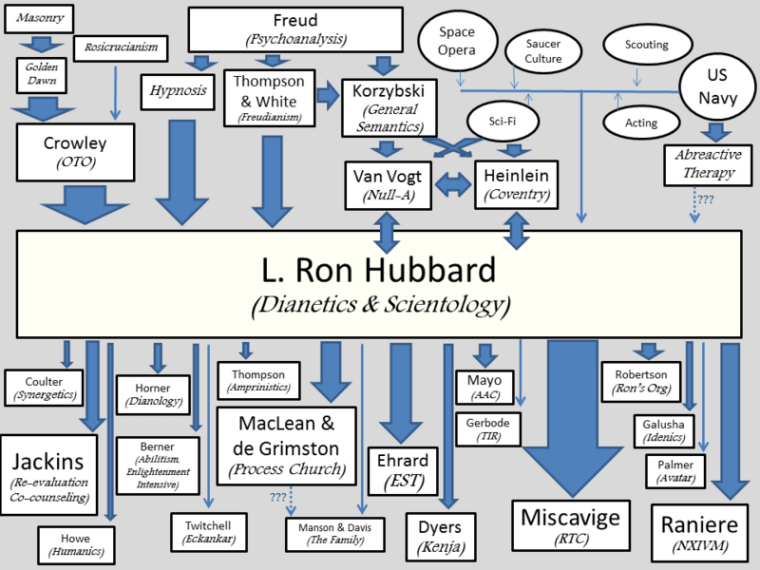







 Mental Health Matters
You must be logged in to post a comment.