What is Light Therapy?

Introduction

Light therapy – or phototherapy, classically referred to as heliotherapy – is a method recognised by scientific medicine for the treatment of various diseases. It includes exposure to outdoor daylight or specific indoor artificial light sources.

Example of light therapy for winter depression.

The care guideline for unipolar depression recommends light therapy especially for depression that follows a seasonal pattern (seasonal affective disorder). There is tentative evidence to support its use to treat depressive disorders that are not seasonally dependent. As a treatment for disorders of the skin, the second kind of light therapy, called ultraviolet light therapy, is meant to treat neurodermatitis, psoriasis, acne vulgaris, eczema and neonatal jaundice.

Brief History

Many ancient cultures practiced various forms of heliotherapy, including people of Ancient Greece, Ancient Egypt, and Ancient Rome. The Inca, Assyrian and early German settlers also worshipped the sun as a health bringing deity. Indian medical literature dating to 1500 BCE describes a treatment combining herbs with natural sunlight to treat non-pigmented skin areas. Buddhist literature from about 200 CE and 10th-century Chinese documents make similar references.

The Faroese physician Niels Finsen is believed to be the father of modern phototherapy. He developed the first artificial light source for this purpose. Finsen used short wavelength light to treat lupus vulgaris, a skin infection caused by Mycobacterium tuberculosis. He thought that the beneficial effect was due to ultraviolet light killing the bacteria, but recent studies showed that his lens and filter system did not allow such short wavelengths to pass through, leading instead to the conclusion that light of approximately 400 nanometers generated reactive oxygen that would kill the bacteria. Finsen also used red light to treat smallpox lesions. He received the Nobel Prize in Physiology or Medicine in 1903. Scientific evidence for some of his treatments is lacking, and later eradication of smallpox and development of antibiotics for tuberculosis rendered light therapy obsolete for these diseases.

From the late nineteenth century until the early 1930s, light therapy was considered an effective and mainstream medical therapy in the UK for conditions such as varicose ulcer, ‘sickly children’ and a wide range of other conditions. Controlled trials by the medical scientist Dora Colebrook, supported by the Medical Research Council, indicated that light therapy was not effective for such a wide range of conditions.

Medical Uses

Skin Conditions

Light therapy treatments for the skin usually involve exposure to ultraviolet light. The exposures can be to a small area of the skin or over the whole body surface, as in a tanning bed. The most common treatment is with narrowband UVB, which has a wavelength of approximately 311-313 nanometers. Exposure to photons (light) at these specific wavelengths enables the body to produce vitamin D. Full body phototherapy can be delivered at a doctor’s office or at home using a large high-power UVB booth. Tanning beds, however, generate mostly UVA light, and only 4% to 10% of tanning bed light is in the UVB spectrum.

Atopic Dermatitis

Light therapy is considered one of the best monotherapy treatments for atopic dermatitis (AD) when applied to patients who have not responded to traditional topical treatments. The therapy offers a wide range of options: UVA1 for acute AD, NB-UVB for chronic AD, and balneophototherapy have proven their efficacy. Patients tolerate the therapy safely but, as in any therapy, there are potential adverse effects and care must be taken in its application, particularly to children.

Psoriasis

For psoriasis, UVB phototherapy has been shown to be effective. A feature of psoriasis is localised inflammation mediated by the immune system. Ultraviolet radiation is known to suppress the immune system and reduce inflammatory responses. Light therapy for skin conditions like psoriasis usually use 313 nanometer UVB though it may use UVA (315-400 nm wavelength) or a broader spectrum UVB (280-315 nm wavelength). UVA combined with psoralen, a drug taken orally, is known as PUVA treatment. In UVB phototherapy the exposure time is very short, seconds to minutes depending on intensity of lamps and the person’s skin pigment and sensitivity.

Vitiligo

About 1% of the human population suffers from vitiligo which causes painless distinct light-coloured patches of the skin on the face, hands, and legs. Phototherapy is an effective treatment because it forces skin cells to manufacture melanin to protect the body from UV damage. Prescribed treatment is generally 3 times a week in a clinic or daily at home. About 1 month usually results in re-pigmentation in the face and neck, and 2-4 months in the hands and legs. Narrowband UVB is more suitable to the face and neck and PUVA is more effective at the hands and legs.]

Acne Vulgaris

As of 2012 evidence for light therapy and lasers in the treatment of acne vulgaris was not sufficient to recommend them. There is moderate evidence for the efficacy of blue and blue-red light therapies in treating mild acne, but most studies are of low quality. While light therapy appears to provide short-term benefit, there is a lack of long-term outcome data or data in those with severe acne.

Cancer

According to the American Cancer Society, there is some evidence that ultraviolet light therapy may be effective in helping treat certain kinds of skin cancer, and ultraviolet blood irradiation therapy is established for this application. However, alternative uses of light for cancer treatment – light box therapy and coloured light therapy – are not supported by evidence. Photodynamic therapy (often with red light) is used to treat certain superficial non-melanoma skin cancers.

Other Skin Conditions

Some types of phototherapy may be effective in the treatment of polymorphous light eruption, cutaneous T-cell lymphoma and lichen planus. Narrowband UVB between 311-313 nanometers is the most common treatment.

Wound Healing

Low level laser therapy has been studied as a potential treatment for chronic wounds, and higher-power lasers have sometimes been successfully used to close acute wounds as an alternative to stitching. However, as of 2012 and due to inconsistent results and the low quality of extant research, reviews in the scientific literature have not supported its widespread application.

Retinal Conditions

There is preliminary evidence that light therapy is an effective treatment for diabetic retinopathy and diabetic macular oedema.

Mood and Sleep Related

Seasonal Affective Disorder

The effectiveness of light therapy for treating seasonal affective disorder (SAD) may be linked to the fact that light therapy makes up for lost sunlight exposure and resets the body’s internal clock. Studies show that light therapy helps reduce the debilitating and depressive behaviours of SAD, such as excessive sleepiness and fatigue, with results lasting for at least 1 month. Light therapy is preferred over antidepressants in the treatment of SAD because it is a relatively safe and easy therapy. Two methods of light therapy, bright light and dawn simulation, have similar success rates in the treatment of SAD.

It is possible that response to light therapy for SAD could be season dependent. Morning therapy has provided the best results because light in the early morning aids in regulating the circadian rhythm. People affected by SAD have low levels of energy and have difficulty concentrating. They usually have a change in appetite and experience trouble sleeping.

A 2007 systematic review by the Swedish agency SBU found insufficient evidence that light therapy was able to alleviate symptoms of depression or seasonal affective disorder. The report recommended that: “Approximately 100 participants are required to establish whether the therapy is moderately more effective than placebo”. Although treatment in light therapy rooms was well established in Sweden, no satisfactory, controlled studies had been published on the subject. This led to the closure of a number of clinics offering light therapy in Sweden.

A Cochrane review conducted in 2019 states the evidence that light therapy’s effectiveness as a treatment for the prevention of seasonal affective disorder is limited, although the risk of adverse effects are minimal. Therefore, the decision to use light therapy should be based on a person’s preference of treatment.

Non-Seasonal Depression

Light therapy has also been suggested in the treatment of non-seasonal depression and other psychiatric mood disturbances, including major depressive disorder, bipolar disorder and postpartum depression. A meta-analysis by the Cochrane Collaboration concluded that “for patients suffering from non-seasonal depression, light therapy offers modest though promising antidepressive efficacy.” A 2008 systematic review concluded that “overall, bright light therapy is an excellent candidate for inclusion into the therapeutic inventory available for the treatment of nonseasonal depression today, as adjuvant therapy to antidepressant medication, or eventually as stand-alone treatment for specific subgroups of depressed patients.” A 2015 review found that supporting evidence for light therapy was limited due to serious methodological flaws.

A 2016 meta-analysis showed that bright light therapy appeared to be efficacious, particularly when administered for 2-5 weeks’ duration and as monotherapy.

Chronic Circadian Rhythm Sleep Disorders (CRSD)

In the management of circadian rhythm disorders such as delayed sleep phase disorder (DSPD), the timing of light exposure is critical. Light exposure administered to the eyes before or after the nadir of the core body temperature rhythm can affect the phase response curve. Use upon awakening may also be effective for non-24-hour sleep-wake disorder. Some users have reported success with lights that turn on shortly before awakening (dawn simulation). Evening use is recommended for people with advanced sleep phase disorder. Some, but not all, totally blind people whose retinae are intact, may benefit from light therapy.

Situational Circadian Rhythm Sleep Disorder (CRSD)

Light therapy has been tested for individuals with shift work sleep disorder and for jet lag.

Sleep Disorder in Parkinson’s Disease

Light therapy has been trialled in treating sleep disorders experienced by patients with Parkinson’s disease.

Sleep Disorder in Alzheimer’s Disease

Studies have shown that daytime and evening light therapy for nursing home patients with Alzheimer’s disease, who often struggle with agitation and fragmented wake/rest cycles effectively led to more consolidated sleep and an increase in circadian rhythm stability.

Neonatal Jaundice (Postnatal Jaundice)

Light therapy is used to treat cases of neonatal jaundice. Bilirubin, a yellow pigment normally formed in the liver during the breakdown of old red blood cells, cannot always be effectively cleared by a neonate’s liver causing neonatal jaundice. Accumulation of excess bilirubin can cause central nervous system damage, and so this buildup of bilirubin must be treated. Phototherapy uses the energy from light to isomerize the bilirubin and consequently transform it into compounds that the newborn can excrete via urine and stools. Bilirubin is most successful absorbing light in the blue region of the visible light spectrum, which falls between 460-490 nm. Therefore light therapy technologies that utilise these blue wavelengths are the most successful at isomerising bilirubin.

Techniques

Photodynamic Therapy

Photodynamic therapy is a form of phototherapy using nontoxic light-sensitive compounds that are exposed selectively to light, whereupon they become toxic to targeted malignant and other diseased cells.

One of the treatments is using blue light with aminolevulinic acid for the treatment of actinic keratosis. This is not a U.S. FDA-approved treatment for acne vulgaris.

Light Boxes

The production of the hormone melatonin, a sleep regulator, is inhibited by light and permitted by darkness as registered by photosensitive ganglion cells in the retina. To some degree, the reverse is true for serotonin, which has been linked to mood disorders. Hence, for the purpose of manipulating melatonin levels or timing, light boxes providing very specific types of artificial illumination to the retina of the eye are effective.

Light therapy uses either a light box which emits up to 10,000 lux of light at a specified distance, much brighter than a customary lamp, or a lower intensity of specific wavelengths of light from the blue (460 nm) to the green (525 nm) areas of the visible spectrum. A 1995 study showed that green light therapy at doses of 350 lux produces melatonin suppression and phase shifts equivalent to 10,000 lux white light therapy, but another study published in May 2010 suggests that the blue light often used for SAD treatment should perhaps be replaced by green or white illumination, because of a possible involvement of the cones in melatonin suppression.

Child patients with external forms of tuberculosis, especially of the bones and joints, laying on beds on a terrace outside Treloar Hospital in Alton, Hampshire, England, in sunlight as part of their light therapy, ca. first half of the 20th century.

Risks and Complications

Ultraviolet

Ultraviolet light causes progressive damage to human skin and erythema even from small doses. This is mediated by genetic damage, collagen damage, as well as destruction of vitamin A and vitamin C in the skin and free radical generation. Ultraviolet light is also known to be a factor in formation of cataracts. Ultraviolet radiation exposure is strongly linked to incidence of skin cancer.

Visible Light

Optical radiation of any kind with enough intensity can cause damage to the eyes and skin including photoconjunctivitis and photokeratitis. Researchers have questioned whether limiting blue light exposure could reduce the risk of age-related macular degeneration. According to the American Academy of Ophthalmology, there is no scientific evidence showing that exposure to blue light emitting devices result in eye damage. According to Harriet Hall, blue light exposure is reported to suppress the production of melatonin, which affects our body’s circadian rhythm and can decrease sleep quality. It is reported that bright light therapy may activate the production of reproductive hormones, such as testosterone, luteinizing hormone, follicle-stimulating hormone, and estradiol.

Modern phototherapy lamps used in the treatment of seasonal affective disorder and sleep disorders either filter out or do not emit ultraviolet light and are considered safe and effective for the intended purpose, as long as photosensitising drugs are not being taken at the same time and in the absence of any existing eye conditions. Light therapy is a mood altering treatment, and just as with drug treatments, there is a possibility of triggering a manic state from a depressive state, causing anxiety and other side effects. While these side effects are usually controllable, it is recommended that patients undertake light therapy under the supervision of an experienced clinician, rather than attempting to self-medicate.

Contraindications to light therapy for seasonal affective disorder include conditions that might render the eyes more vulnerable to phototoxicity, tendency toward mania, photosensitive skin conditions, or use of a photosensitising herb (such as St. John’s wort) or medication. Patients with porphyria should avoid most forms of light therapy. Patients on certain drugs such as methotrexate or chloroquine should use caution with light therapy as there is a chance that these drugs could cause porphyria.

Side effects of light therapy for sleep phase disorders include jumpiness or jitteriness, headache, eye irritation and nausea. Some non-depressive physical complaints, such as poor vision and skin rash or irritation, may improve with light therapy.
What is Institutional Syndrome?

Introduction

In clinical and abnormal psychology, institutionalisation or institutional syndrome refers to deficits or disabilities in social and life skills, which develop after a person has spent a long period living in psychiatric hospitals, prisons or other remote institutions.

In other words, individuals in institutions may be deprived (whether unintentionally or not) of independence and of responsibility, to the point that once they return to “outside life” they are often unable to manage many of its demands; it has also been argued that institutionalised individuals become psychologically more prone to mental health problems.

The term institutionalisation can also be used to describe the process of committing an individual to a mental hospital or prison, or to describe institutional syndrome; thus the phrase “X is institutionalised” may mean either that X has been placed in an institution or that X is suffering the psychological effects of having been in an institution for an extended period of time.

Background

In Europe and North America, the trend of putting the mentally ill into mental hospitals began as early as the 17th century, and hospitals often focused more on “restraining” or controlling inmates than on curing them, although hospital conditions improved somewhat with movements for human treatment, such as moral management. By the mid-20th century, overcrowding in institutions, the failure of institutional treatment to cure most mental illnesses, and the advent of drugs such as Thorazine prompted many hospitals to begin discharging patients in large numbers, in the beginning of the deinstitutionalisation movement (the process of gradually moving people from inpatient care in mental hospitals, to outpatient care).

Deinstitutionalisation did not always result in better treatment, however, and in many ways it helped reveal some of the shortcomings of institutional care, as discharged patients were often unable to take care of themselves, and many ended up homeless or in jail. In other words, many of these patients had become “institutionalised” and were unable to adjust to independent living. One of the first studies to address the issue of institutionalisation directly was British psychiatrist Russell Barton’s 1959 book Institutional Neurosis, which claimed that many symptoms of mental illness (specifically, psychosis) were not physical brain defects as once thought, but were consequences of institutions’ “stripping” (a term probably first used in this context by Erving Goffman) away the “psychological crutches” of their patients.

Since the middle of the 20th century, the problem of institutionalisation has been one of the motivating factors for the increasing popularity of deinstitutionalisation and the growth of community mental health services, since some mental healthcare providers believe that institutional care may create as many problems as it solves.

Romanian children who suffered from severe neglect at a young age were adopted by families. Research reveals that the post-institutional syndrome occurring in these children gave rise to symptoms of autistic behaviour. Studies done on eight Romanian adoptees living in the Netherlands revealed that about one third of the children exhibited behavioural and communication problems resembling that of autism.

Issues for Discharged Patients

Individuals who suffer from institutional syndrome can face several kinds of difficulties upon returning to the community. The lack of independence and responsibility for patients within institutions, along with the ‘depressing’ and ‘dehumanising’ environment, can make it difficult for patients to live and work independently. Furthermore, the experience of being in an institution may often have exacerbated individuals’ illness: proponents of labelling theory claim that individuals who are socially “labelled” as mentally ill suffer stigmatisation and alienation that lead to psychological damage and a lessening of self-esteem, and thus that being placed in a mental health institution can actually cause individuals to become more mentally ill.

What is Infantilisation?

Introduction

Infantilisation is the prolonged treatment of one who has a mental capacity greater than that of a child as though they are a child.

Background

When used in reference to teenagers or adolescents, the term typically suggests that teenagers and their potential are underestimated in modern society, and/or that adolescents are often regarded as though they are younger than their actual age.

Studies have shown that an individual, when infantilised, is overwhelmingly likely to feel disrespected. Such individuals may report a sense of transgression akin to dehumanisation.

There can be an overlap between the terms “infantilisation” and “patronisation”, although infantilisation derives more specifically from a sense of age group or hierarchical seniority on the part of those responsible for infantilisation. The act of infantilising others has been associated with narcissists.

Infantilisation may also refer to a process when a child is being treated in a manner appropriate only for younger children.

In property law, infantilisation is defined as “the restriction of an individual’s or group’s autonomy based on the failure to recognize and respect their full capacity to reason.” When infantilisation is coupled with property takeover, the result is a dignity taking.

There are several examples of dignity takings, including wage theft from undocumented workers where the power imbalance allows employers to rob workers of their agency and avenues for redress; the dispossession of property from African Americans in the South Carolina sea islands by predatory tax buyers who routinely infantilised their victims by overwhelming them with paperwork and timelines to accelerate foreclosures; and the unequal division of matrimonial property in southern Nigeria following divorce that assumes women are less capable of managing property and thus infantilises them.

What is Historical Trauma?

Introduction

Historical trauma (HT), as used by social workers, historians, and psychologists, refers to the cumulative emotional harm of an individual or generation caused by a traumatic experience or event. Historical Trauma Response (HTR) refers to the manifestation of emotions and actions that stem from this perceived trauma.

According to its advocates, HTR is exhibited in a variety of ways, most prominently through substance abuse, which is used as a vehicle for attempting to numb pain. This model seeks to use this to explain other self-destructive behaviour, such as suicidal thoughts and gestures, depression, anxiety, low self-esteem, anger, violence and difficulty recognising and expressing emotions. Many historians and scholars believe the manifestations of violence and abuse in certain communities are directly associated with the unresolved grief that accompanies continued trauma.

Historical trauma, and its manifestations, are seen as an example of Transgenerational trauma (though the existence of transgenerational trauma itself is disputed). For example, a pattern of maternal abandonment of a child might be seen across three generations, or the actions of an abusive parent might be seen in continued abuse across generations. These manifestations can also stem from the trauma of events, such as the witnessing of war, genocide, or death. For these populations that have witnessed these mass level traumas (e.g. war, genocide, colonialism), several generations later these populations tend to have higher rates of disease.

Maria Yellow Horse Brave Heart first developed the concept of historical trauma while working with Lakota communities in the 1980s. Since then, many other researchers have developed the concept and applied it to other populations, such as African Americans and Holocaust survivors.

Brief History of Research

First used by social worker and mental health expert Maria Yellow Horse Brave Heart in the 1980s, scholarship surrounding historical trauma has expanded to fields outside of the Lakota communities Yellow Horse Brave Heart studied. Yellow Horse Brave Heart’s scholarship focused on the ways in which the psychological and emotional traumas of colonisation, relocation, assimilation, and American Indian boarding schools have manifested within generations of the Lakota population. Yellow Horse Brave Heart’s article “Wakiksuyapi: Carrying the Historical Trauma of the Lakota,” published in 2000, compares the effects and manifestations of historical trauma on Holocaust survivors and Native American peoples. Her scholarship concluded that the manifestations of trauma, although produced by different events and actions, are exhibited in similar ways within each afflicted community.

Other significant original research on the mechanisms and transmission of intergenerational trauma has been done by scholars such as Daniel Schechter, whose work builds on the pioneers in this field such as: Judith Kestenberg, Dori Laub, Selma Fraiberg, Alicia Lieberman, Susan Coates, Charles Zeanah, Karlen Lyons-Ruth, Yael Danieli, Rachel Yehuda and others. Although each scholar focuses on a different population – such as Native Americans, African Americans, or Holocaust Survivors – all have concluded that the mechanism and transmission of intergenerational trauma is abundant within communities that experience traumatic events. Daniel Schechter’s work has included the study of experimental interventions that may lead to changes in trauma-associated mental representation and may help in the stopping of intergenerational cycles of violence.

Joy DeGruy’s book, Post Traumatic Slave Syndrome, analyses the manifestation of historical trauma in African-American populations, and its correlation to the lingering effects of slavery. In 2018, Dodging Bullets – Stories from Survivors of Historical Trauma, the first documentary film to chronicle historical trauma in Indian Country, was released. It included interviews with scientist Rachel Yehuda, sociologist Melissa Walls, and Anton Treuer along with first hand testimonies of Dakota, Lakota, Ojibwe and Blackfeet tribal members.

Indigenous Historical Trauma

Maria Yellow Horse Brave Heart first coined the term Indigenous Historical Trauma (IHT) in the 1990s, to characterise the psycho-social legacy of European colonisation in North American Indigenous communities. The broader concept of Historical Trauma was developed from this, and gained footing in the clinical and health science literatures in the first two decades of the 21st century. In 2019, a team of psychologists at the University of Michigan published a systematic review of the literature so far on the relationship between IHT and adverse health outcomes for Indigenous peoples in the United States and Canada.

An example of IHT is the ”Indian boarding schools” created in the 19th century to acculturate Native Americans to European culture. According to one of their advocates Richard Henry Pratt, the intention of these schools was to literally “kill the indian” in the student, “and save the man”. These schools attempted to strip children of their cultural identity by practices such as cutting off their long hair, or forbidding them to speak their native language. After the school year was over, some indigenous children were hired to work for “non-Indian families” and many did not return home to their families.

The fear and loneliness caused by such schools can be readily imagined. But scientific research has consistently found that the stress caused by Indian boarding schools resulted in depression, sexual abuse, and suicidality. Descendants of boarding school survivors may carry this historical trauma for generations, and in the present day, Native American students still face challenges related to their lack of awareness of “psychological injury or harm from ancestral experiences with colonial violence and oppression”. Indeed, people who are unaware of the traumatic experiences their ancestors endured may find themselves involved in continued patterns of substance abuse, violence, physical abuse, verbal abuse, and suicide attempts.

Therefore, the term IHT can be useful to explain emotions and other psychological phenomena experienced by Native Americans today. Identifying IHT helps with recognising the “psychological distress and health disparities” linked to current Indigenous communities.

Manifestation

HT, or HTR, can manifest itself in a variety of psychological ways. However, it is most commonly seen through high rates of substance abuse, alcoholism, depression, anxiety, suicide, domestic violence, and abuse within afflicted communities. The effects and manifestations of trauma are extremely important in understanding the present-day conditions of afflicted populations.

Within Native American communities, high rates of alcoholism and suicide have direct correlation to the violence, mistreatment, and abuses experienced at boarding schools, and the loss of cultural heritage and identity these institutions facilitated. Although many present-day children never experienced these schools first-hand, the “injuries inflicted at Indian boarding schools are continuous and ongoing,” affecting generations of Native peoples and communities.

Countries like Australia and Canada have issued formal apologies for their involvement in the creation and implementation of boarding schools that facilitated and perpetuated historical trauma. Australia’s Bringing Them Home report and Canada’s Truth and Reconciliation Commission (Canada) both detailed the “experiences, impacts, and consequences” of government-sponsored boarding schools on Indigenous communities and children. Both reports also detail the problems facing Indigenous populations today, such as economic and health disparities, and their connection to the historical trauma of colonisation, removal, and forced assimilation.

Author and teacher Thomas Hübl, documenting his experiences working with Germans and Israelis to engage in dialogue around their shared historical and intergenerational trauma, writes:

Whether we refer to a person as victim or victimiser, oppressor or oppressed, it appears that no one, given time, remains untouched by collective suffering. Historical traumas impart their consequences indiscriminately upon child and family, institution and society, custom and culture, value and belief. Collective traumas distort social narratives, rupture national identities, and hinder the development of institutions, communities, and cultures, just as personally experienced trauma has the power to disrupt the psychological development of a growing child.

Treatment

Treatment of HT must repair the afflicted person or communities’ connection with their culture, values, beliefs, and self-image. It takes the forms of individual counselling or therapy, spiritual help, and group or entire community gatherings, which are all important aspects in the foundations of the healing process. Treatment should be aimed at a renewal of destroyed culture, spiritual beliefs, customs, and family connections, and a focus on reaffirming one’s self-image and place within a community. Cultural revitalisation initiatives for treating historical trauma among Native groups in North America include “culture camps,” where individuals live or camp out on their tribe’s traditional lands in order to learn cultural practices that have been lost to them as a result of colonial practices.

Due to the collective and identity-based nature of HT, treatment approaches should be more than solutions to one individual’s problems. Healing must also entail revitalisation of practices and ways of being that are necessary not just for individuals but for the communities they exist within. Relieving personal distress and promoting individual coping are important treatment goals, but successful treatment of HT also depends upon community-wide efforts to ending intergenerational transmission of collective trauma.

Particular attention should be given to the needs and empowerment of peoples who are vulnerable, oppressed, and living in poverty. Social workers and activists should promote social justice and social change with and on behalf of clients, individuals, families, groups, and communities. In order for advocacy to be accurate and helpful to the afflicted populations, social workers should understand the cultural diversity, history, culture, and contemporary realities of clients.

What is the Four Discourses Concept?

Introduction

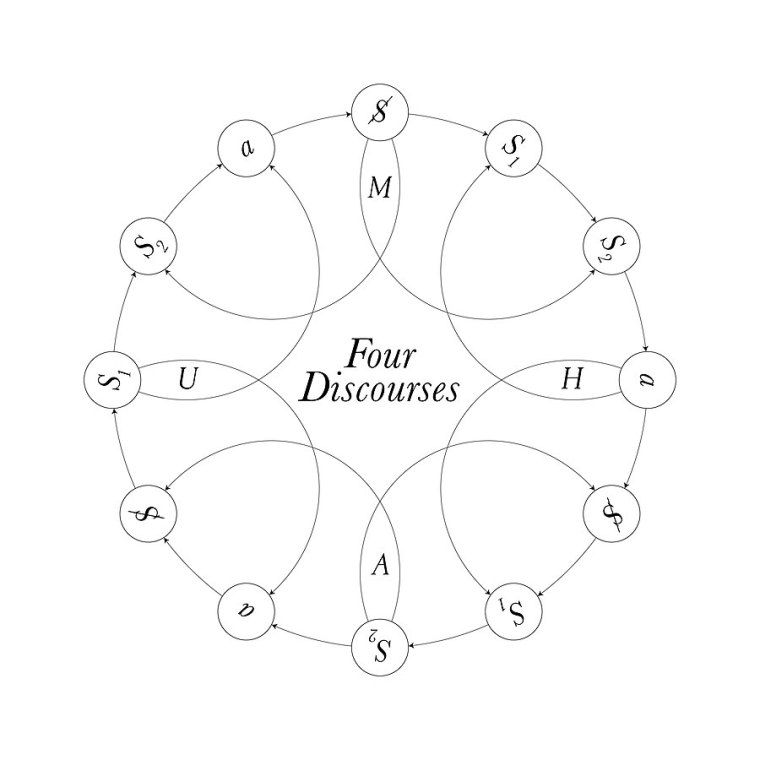
Four discourses is a concept developed by French psychoanalyst Jacques Lacan. He argued that there were four fundamental types of discourse. He defined four discourses, which he called Master, University, Hysteric and Analyst, and suggested that these relate dynamically to one another.

Diagram depicting all four discourses as a single system.

Lacan’s theory of the four discourses was initially developed in 1969, perhaps in response to the events of social unrest during May 1968 in France, but also through his discovery of what he believed were deficiencies in the orthodox reading of the Oedipus complex. The four discourses theory is presented in his seminar L’envers de la psychanalyse and in Radiophonie, where he starts using “discourse” as a social bond founded in intersubjectivity. He uses the term discourse to stress the transindividual nature of language: speech always implies another subject.

Necessity of Formalising Psychoanalysis

Prior to the development of the four discourses, the primary guideline for clinical psychoanalysis was Freud‘s Oedipus complex. In Lacan’s Seminar of 1969-1970, Lacan argues that the terrifying Oedipal father that Freud invoked was already castrated at the point of intervention. The castration was symbolic rather than physical. In an effort to stem analysts’ tendency to project their own imaginary readings and neurotic fantasies onto psychoanalysis, Lacan worked to formalise psychoanalytic theory with mathematical functions with renewed focus on the semiology of Ferdinand de Saussure. This would ensure only a minimum of teaching is lost when communicated and also provide the conceptual architecture to limit the associations of the analyst.

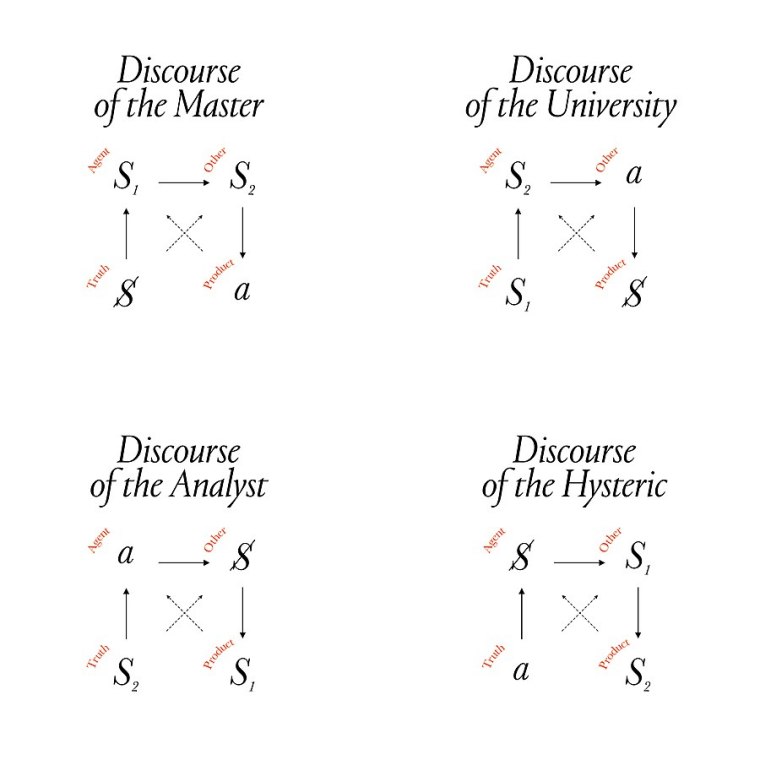
Four Discourses depicted side by side.

Structure

Discourse, in the first place, refers to a point where speech and language intersect. The four discourses represent the four possible formulations of the symbolic network which social bonds can take and can be expressed as the permutations of a four-term configuration showing the relative positions – the agent, the other, the product and the truth – of four terms, the subject, the master signifier, knowledge and objet petit a.

Positions

  • Agent (upper left), the speaker of the discourse.
  • Other (upper right), what the discourse is addressed to.
  • Product (lower right), what the discourse has created.
  • Truth (lower left), what the discourse attempted to express.

Variables

VariableDescription
S1The dominant, ordering and sense giving signifier of a discourse as it is received by the group, community or culture. S1 refers to “the marked circle of the field of the Other,” it is the Master-Signifier. S1 comes into play in a signifying battery conforming the network of knowledge.
S2What is ordered by or set in motion by S1. It is knowledge, the existing body of knowledge, the knowledge of the time. S2 is the “battery of signifiers, already there” at the place where “one wants to determine the status of a discourse as status of statement,” that is knowledge (savoir).
$The subject, or person, for Lacan is always barred in the sense that it is incomplete, divided. Just as we can never know the world around us except in the partial refractions of language and the domination of identification, so, too, we can never know ourselves. $ is the subject, marked by the unbroken line (trait unaire) which represents it and is different from the living individual who is not the locus of this subject.
aThe objet petit a or surplus-jouissance. In Lacan’s psychoanalytic theory, objet petit a stands for the unattainable object of desire. It is sometimes called the object cause of desire. Lacan always insisted that the term should remain untranslated, “thus acquiring the status of an algebraic sign”. It is the object-waste or the loss of the object that occurred when the original division of the subject took place—the object that is the cause of desire: the plus-de-jouir.

Four Discourses

Discourse of the Master

We see a barred subject ($) positioned as master signifier’s truth, who’s itself positioned as discourse’s agent for all other signifiers (S2), that illustrates the structure of the dialectic of the master and the slave. The master, (S1) is the agent that puts the other, (S2) to work: the product is a surplus, objet a, that master struggles to appropriate alone. In a modern society, an example of this discourse can be found within so-called “family-like” work environments that tend to hide direct subordination under the mask of “favorable” submission to master’s truth that generates value. The Master’s reach for the truth in principle is fulfilment of his/her castratedness through subject’s work. Based on Hegel’s master–slave dialectic.

Discourse of the University

Knowledge in position of an agent is handed down by the institute which legitimises the master signifier (S1) and knowledge is positioned in the place of discourse’s truth. Impossibility to satisfy one’s need with a knowledge (which is a structural thing) produces a barred subject ($) as discourses sustain, and the cycle repeats itself through the primary subject being slavish to the institution values to fulfil the castratedness. The discourse’s truth “knowledge ” is being positioned aside of this loop and never the direct object of the subject, and the institute controls the subjects’ objet a and defines the subject’s master signifier’s. Pathological symptom of an agent in this discourse is seeking fulfilment of their castratedness through enjoying the castratedness of their subject.

Discourse of the Analyst

The position of an agent – the analyst – is occupied by objet a of the analysand. Analyst’s silence leads to reverse hysterisation, as such the analyst becomes a mirror of question himself to the analysand, thus embodies barred subject’s desire that lets his symptom speak itself through speech and thus be interpreted by the analyst. The master signifier of the analysand emerges as a product of this role. Hidden knowledge, positioned as discourse’s truth (S2) stands for both analyst interpretation technique and knowledge acquired from the subject.

Discourse of the Hysteric

Despite its pathological aura, hysteric’s discourse exhibits the most common mode of speech, blurring the line between clinical image and the otherness of social settings. Object a truth is defined by interrogative nature of subject’s address (Who am I?) as well as tryst for satisfaction of knowledge. This mutually drives the barred subject and turns on the agent’s master signifiers. It leads the agent to produce a new knowledge (discourse’s product) in a futile attempt to provide a barred subject with an answer to fulfil subject’s castratedness (Lacan in Discourse of the Analyst breaks the pathological cycle of it by purposefully leaving the question unanswered, reversing the discourse and putting an analyst in a place of hysteric’s desire). However, object a of the subject is search for the agent’s object a, thus without being a subject like in the ‘Discourse of the University’ the Hysteric ends up gathering knowledge instead of their object a truth.

Relevance for Cultural Studies

Slavoj Žižek uses the theory to explain various cultural artefacts, including Don Giovanni and Parsifal.

DiscourseDon GiovanniParsifalCharacteristics
MasterDon OttavioAmfortasInauthentic, Inconsistent
UniversityLeporelloKlingsorInauthentic, Consistent
HystericDonna ElviraKundryAuthentic, Inconsistent
AnalystDonna AnnaParsifalAuthentic, Consistent

What is Functional Fixedness?

Introduction

Functional fixedness is a cognitive bias that limits a person to use an object only in the way it is traditionally used.

The concept of functional fixedness originated in Gestalt psychology, a movement in psychology that emphasizes holistic processing. Karl Duncker defined functional fixedness as being a mental block against using an object in a new way that is required to solve a problem. This “block” limits the ability of an individual to use components given to them to complete a task, as they cannot move past the original purpose of those components. For example, if someone needs a paperweight, but they only have a hammer, they may not see how the hammer can be used as a paperweight. Functional fixedness is this inability to see a hammer’s use as anything other than for pounding nails; the person couldn’t think to use the hammer in a way other than in its conventional function.

When tested, 5-year-old children show no signs of functional fixedness. It has been argued that this is because at age 5, any goal to be achieved with an object is equivalent to any other goal. However, by age 7, children have acquired the tendency to treat the originally intended purpose of an object as special.

Examples in Research

Experimental paradigms typically involve solving problems in novel situations in which the subject has the use of a familiar object in an unfamiliar context. The object may be familiar from the subject’s past experience or from previous tasks within an experiment.

Candle Box

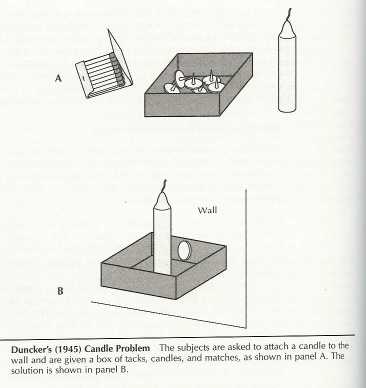
In a classic experiment demonstrating functional fixedness, Duncker (1945) gave participants a candle, a box of thumbtacks, and a book of matches, and asked them to attach the candle to the wall so that it did not drip onto the table below. Duncker found that participants tried to attach the candle directly to the wall with the tacks, or to glue it to the wall by melting it. Very few of them thought of using the inside of the box as a candle-holder and tacking this to the wall. In Duncker’s terms, the participants were “fixated” on the box’s normal function of holding thumbtacks and could not re-conceptualize it in a manner that allowed them to solve the problem. For instance, participants presented with an empty tack box were two times more likely to solve the problem than those presented with the tack box used as a container.

Candle box problem diagram.

More recently, Frank and Ramscar (2003) gave a written version of the candle problem to undergraduates at Stanford University. When the problem was given with identical instructions to those in the original experiment, only 23% of the students were able to solve the problem. For another group of students, the noun phrases such as “box of matches” were underlined, and for a third group, the nouns (e.g. “box”) were underlined. For these two groups, 55% and 47% were able to solve the problem effectively. In a follow-up experiment, all the nouns except “box” were underlined and similar results were produced. The authors concluded that students’ performance was contingent on their representation of the lexical concept “box” rather than instructional manipulations. The ability to overcome functional fixedness was contingent on having a flexible representation of the word box which allows students to see that the box can be used when attaching a candle to a wall.

When Adamson (1952) replicated Duncker’s box experiment, Adamson split participants into 2 experimental groups:

  • Preutilisation; and
  • No preutilisation.

In this experiment, when there is preutilisation, meaning when objects are presented to participants in a traditional manner (materials are in the box, thus using the box as a container), participants are less likely to consider the box for any other use, whereas with no preutilisation (when boxes are presented empty), participants are more likely to think of other uses for the box.

The Two-Cords Problem

Birch and Rabinowitz (1951) adapted the two-cord problem from Norman Maier (1930, 1931), where subjects would be given 2 cords hanging from the ceiling, and 2 heavy objects in the room. They are told they must connect the cords, but they are just far enough apart that one cannot reach the other easily. The solution was to tie one of the heavy objects to a cord and be a weight, and swing the cord as a pendulum, catch the rope as it swings while holding on to the other rope, and then tie them together. The participants are split into 3 groups: Group R, which completes a pre-task of completing an electrical circuit by using a relay, Group S, which completes the circuit with a switch, and Group C which is the control group given no pre-test experience. Group R participants were more likely to use the switch as the weight, and Group S were more likely to use the relay. Both groups did so because their previous experience led them to use the objects a certain way, and functional fixedness did not allow them to see the objects as being used for another purpose.

Barometer Question

The barometer question is an example of an incorrectly designed examination question demonstrating functional fixedness that causes a moral dilemma for the examinator. In its classic form, popularized by American test designer professor Alexander Calandra (1911-2006), the question asked the student to “show how it is possible to determine the height of a tall building with the aid of a barometer?” The examinator was confident that there was one, and only one, correct answer. Contrary to the examinator’s expectations, the student responded with a series of completely different answers. These answers were also correct, yet none of them proved the student’s competence in the specific academic field being tested.

Calandra presented the incident as a real-life, first-person experience that occurred during the Sputnik crisis. Calandra’s essay, “Angels on a Pin”, was published in 1959 in Pride, a magazine of the American College Public Relations Association. It was reprinted in Current Science in 1964, reprinted again in Saturday Review in 1968, and included in the 1969 edition of Calandra’s The Teaching of Elementary Science and Mathematics. In the same year (1969), Calandra’s essay became a subject of an academic discussion. The essay has been referenced frequently since, making its way into books on subjects ranging from teaching, writing skills, workplace counselling, and investment in real estate to chemical industry, computer programming, and integrated circuit design.

Current Conceptual Relevance

Is Functional Fixedness Universal?

Researchers have investigated whether functional fixedness is affected by culture.

In a recent study, preliminary evidence supporting the universality of functional fixedness was found. The study’s purpose was to test if individuals from non-industrialized societies, specifically with low exposure to “high-tech” artefacts, demonstrated functional fixedness. The study tested the Shuar, hunter-horticulturalists of the Amazon region of Ecuador, and compared them to a control group from an industrial culture.

The Shuar community had only been exposed to a limited amount of industrialised artefacts, such as machete, axes, cooking pots, nails, shotguns, and fishhooks, all considered “low-tech”. Two tasks were assessed to participants for the study: the box task, where participants had to build a tower to help a character from a fictional storyline to reach another character with a limited set of varied materials; the spoon task, where participants were also given a problem to solve based on a fictional story of a rabbit that had to cross a river (materials were used to represent settings) and they were given varied materials including a spoon. In the box-task, participants were slower to select the materials than participants in control conditions, but no difference in time to solve the problem was seen. In the spoon task, participants were slower in selection and completion of task. Results showed that Individuals from non-industrial (“technologically sparse cultures”) were susceptible to functional fixedness. They were faster to use artefacts without priming than when design function was explained to them. This occurred even though participants were less exposed to industrialised manufactured artefacts, and that the few artefacts they currently use were used in multiple ways regardless of their design.

“Following the Wrong Footsteps: Fixation Effects of Pictorial Examples in a Design Problem-Solving Task”

Investigators examined in two experiments “whether the inclusion of examples with inappropriate elements, in addition to the instructions for a design problem, would produce fixation effects in students naive to design tasks”. They examined the inclusion of examples of inappropriate elements, by explicitly depicting problematic aspects of the problem presented to the students through example designs. They tested non-expert participants on three problem conditions: with standard instruction, fixated (with inclusion of problematic design), and defixated (inclusion of problematic design accompanied with helpful methods). They were able to support their hypothesis by finding that:

  1. Problematic design examples produce significant fixation effects; and
  2. Fixation effects can be diminished with the use of defixating instructions.

In “The Disposable Spill-Proof Coffee Cup Problem”, adapted from Janson & Smith, 1991, participants were asked to construct as many designs as possible for an inexpensive, disposable, spill-proof coffee cup. Standard condition participants were presented only with instructions. In the fixated condition, participants were presented with instructions, a design, and problems they should be aware of. Finally, in the defixated condition, participants were presented the same as other conditions in addition to suggestions of design elements they should avoid using. The other two problems included building a bike rack, and designing a container for cream cheese.

Techniques to Avoid Functional Fixedness

Overcoming Functional Fixedness in Science Classrooms with Analogical Transfer

Based on the assumption that students are functionally fixed, a study on analogical transfer in the science classroom shed light on significant data that could provide an overcoming technique for functional fixedness. The findings support the fact that students show positive transfer (performance) on problem solving after being presented with analogies of certain structure and format. The present study expanded Duncker’s experiments from 1945 by trying to demonstrate that when students were “presented with a single analogy formatted as a problem, rather than as a story narrative, they would orient the task of problem-solving and facilitate positive transfer”.

A total of 266 freshmen students from a high school science class participated in the study. The experiment was a 2×2 design where conditions: “task contexts” (type and format) vs. “prior knowledge” (specific vs. general) were attested. Students were classified into 5 different groups, where 4 were according to their prior science knowledge (ranging from specific to general), and 1 served as a control group (no analogue presentation). The 4 different groups were then classified into “analogue type and analogue format” conditions, structural or surface types and problem or surface formats.

Inconclusive evidence was found for positive analogical transfer based on prior knowledge; however, groups did demonstrate variability. The problem format and the structural type of analogue presentation showed the highest positive transference to problem solving. The researcher suggested that a well-thought and planned analogy relevant in format and type to the problem-solving task to be completed can be helpful for students to overcome functional fixedness. This study not only brought new knowledge about the human mind at work but also provides important tools for educational purposes and possible changes that teachers can apply as aids to lesson plans.

Uncommitting

One study suggests that functional fixedness can be combated by design decisions from functionally fixed designs so that the essence of the design is kept (Latour, 1994). This helps the subjects who have created functionally fixed designs understand how to go about solving general problems of this type, rather than using the fixed solution for a specific problem. Latour performed an experiment researching this by having software engineers analyse a fairly standard bit of code – the quicksort algorithm – and use it to create a partitioning function. Part of the quicksort algorithm involves partitioning a list into subsets so that it can be sorted; the experimenters wanted to use the code from within the algorithm to just do the partitioning. To do this, they abstracted each block of code in the function, discerning the purpose of it, and deciding if it is needed for the partitioning algorithm. This abstracting allowed them to reuse the code from the quicksort algorithm to create a working partition algorithm without having to design it from scratch.

Overcoming Prototypes

A comprehensive study exploring several classical functional fixedness experiments showed an overlying theme of overcoming prototypes. Those that were successful at completing the tasks had the ability to look beyond the prototype, or the original intention for the item in use. Conversely, those that could not create a successful finished product could not move beyond the original use of the item. This seemed to be the case for functional fixedness categorisation studies as well. Reorganisation into categories of seemingly unrelated items was easier for those that could look beyond intended function. Therefore, there is a need to overcome the prototype in order to avoid functional fixedness. Carnevale (1998) suggests analysing the object and mentally breaking it down into its components. After that is completed, it is essential to explore the possible functions of those parts. In doing so, an individual may familiarise themselves with new ways to use the items that are available to them at the givens. Individuals are therefore thinking creatively and overcoming the prototypes that limit their ability to successfully complete the functional fixedness problem.

The Generic Parts Technique

For each object, you need to decouple its function from its form. McCaffrey (2012) shows a highly effective technique for doing so. As you break an object into its parts, ask yourself two questions. “Can I subdivide the current part further?” If yes, do so. “Does my current description imply a use?” If yes, create a more generic description involving its shape and material. For example, initially I divide a candle into its parts: wick and wax. The word “wick” implies a use: burning to emit light. So, describe it more generically as a string. Since “string” implies a use, I describe it more generically: interwoven fibrous strands. This brings to mind that I could use the wick to make a wig for my hamster. Since “interwoven fibrous strands” does not imply a use, I can stop working on wick and start working on wax. People trained in this technique solved 67% more problems that suffered from functional fixedness than a control group. This technique systematically strips away all the layers of associated uses from an object and its parts.

What is Empathic Concern?

Introduction

Empathic concern refers to other-oriented emotions elicited by and congruent with the perceived welfare of someone in need. These other-oriented emotions include feelings of tenderness, sympathy, compassion, soft-heartedness, and the like.

Empathic concern is often and wrongly confused with empathy. To empathise is to respond to another’s perceived emotional state by experiencing feeling of a similar sort. Empathic concern or sympathy not only include empathising, but also entails having a positive regard or a non-fleeting concern for the other person.

Definition

C. Daniel Batson is one pioneer of the term. His mature definition of the term is “other-oriented emotion elicited by and congruent with the perceived welfare of someone in need”.[4] Batson explains this definition in the following way:

First, “congruent” here refers not to the specific content of the emotion but to the valence—positive when the perceived welfare of the other is positive, negative when the perceived welfare is negative. … Third, as defined, empathic concern is not a single, discrete emotion but includes a whole constellation. It includes feelings of sympathy, compassion, softheartedness, tenderness, sorrow, sadness, upset, distress, concern, and grief. Fourth, empathic concern is other-oriented in the sense that it involves feeling for the other—feeling sympathy for, compassion for, sorry for, distressed for, concerned for, and so on.[4]

Many writers other than Batson use different terms for this construct or very similar constructs. Especially popular – perhaps more popular than “empathic concern” – are sympathy, compassion or pity. Other terms include the tender emotion and sympathetic distress.

Human beings are strongly motivated to be connected to others. In humans and higher mammals, an impulse to care for offspring is almost certainly genetically hard-wired, although modifiable by circumstance.

Evolutionary Origins

At the behavioural level it is evident from the descriptions of comparative psychologists and ethologists that behaviours homologous to empathic concern can be observed in other mammalian species. Notably, a variety of reports on ape empathic reactions suggest that, apart from emotional connectedness, apes have an explicit appreciation of the other’s situation. A good example is consolation, defined as reassurance behaviour by an uninvolved bystander towards one of the combatants in a previous aggressive incident.

Developmental Origins

Empathic concern is thought to emerge later developmental and to require more self-control than either emotional contagion or personal distress. Developmental research indicates a broad range of social competencies children bring to their interpersonal relationships. As early as 2 years of age, they show:

  • The cognitive capacity to interpret, in simple ways, the physical and psychological states of others;
  • The emotional capacity to experience, affectively, the state of others; and
  • The behavioural repertoire that permits the possibility of attempts to alleviate discomfort in others.

Both personal disposition such as temperament and social context contribute to individual differences in concern for others. Some developmental psychologists have hypothesized that empathic concern for others are essential factors inhibiting aggression toward others.

Contribution of Social Psychology

Empathic concern may produce an altruistic motivation to help people. The challenge of demonstrating the existence of altruistic motivation is to show how empathic concern leads to helping in ways that cannot be explained by prevailing theories of egoistic motivation. That is, a clear case needs to be made that it is concern about the other person’s welfare, not a desire to improve one’s own welfare, that primarily drives one’s helping behaviour in a particular situation.

Empirical studies conducted by social psychologist Daniel Batson have demonstrated that empathic concern is felt when one adopts the perspective of another person in need. His work emphasizes the different emotions evoked when imagining another situation from a self-perspective or imagining from another perspective. The former is often associated with personal distress (i.e. feelings of discomfort and anxiety), whereas the latter leads to empathic concern.

Social Neuroscience Evidence

Social neuroscience explores the biological underpinnings of empathic concern and more generally interpersonal sensitivity, using an integrative approach that bridges the biological and social levels. Neural systems, including autonomic functions, that rely on brain stem neuropeptides, such as oxytocin and vasopressin, are plausible correlates for empathic concern. Alternatively, vasopressin might be implicated in situations where a more active strategy is required for an effective response.

An association between executive functions, underpinned by the prefrontal cortex with reciprocal connections with the limbic system, the sense of agency, and empathic concern has been suggested based on lesion studies in neurological patients and functional neuroimaging experiments in healthy individuals.

The difference between imaging self versus imaging other is supported by a series of functional neuroimaging studies of affective processing. For instance, Lamm, Batson and Decety (2007) found that participants reported more empathic concern when imagining the pain of others when adopting another perspective, and more personal distress when imagining themselves to be in pain.

The fMRI scans revealed that imagining self in pain was associated with strong activation in brain areas involved in affective response to threat and pain, including the amygdala, insula and anterior cingulate cortex. Imagine-other instructions produced higher activity in the right temporoparietal junction (or TPJ), which is associated with self-other distinctiveness and the sense of agency.

What is Emotional Aperture?

Introduction

Emotional aperture has been defined as the ability to perceive features of group emotions.

This skill involves the perceptual ability to adjust one’s focus from a single individual’s emotional cues to the broader patterns of shared emotional cues that comprise the emotional composition of the collective.

Background

Some examples of features of group emotions include:

  • The level of variability of emotions among members (i.e. affective diversity);
  • The proportion of positive or negative emotions; and
  • The modal (i.e. most common) emotion present in a group.

The term “emotional aperture” was first defined by the social psychologist, Jeffrey Sanchez-Burks, and organisational theorist, Quy Huy. It has since been referenced in related work such as in psychologist, journalist, and author of the popular book Emotional Intelligence Daniel Goleman’s most recent book “Focus: The Hidden Driver of Excellence.” Academic references to emotional aperture and related work can be found on the references site for the Consortium for Research on Emotional Intelligence in Organisations.

Emotional Aperture abilities have been measured using the emotional aperture measure (EAM). The EAM consists of a series of short movie clip showing groups that have various brief reactions to an unspecified event. Following each movie clip, individuals are asked to report the proportion of individuals that had a positive or negative reaction.

Origin

The construct, emotional aperture, was developed to address the need to expand existing models of individual emotion perception (e.g. emotional intelligence) to take into account the veracity of group-based emotions and their action tendencies.

What is Egosyntonic and Egodystonic?

Introduction

In psychoanalysis, egosyntonic refers to the behaviours, values, and feelings that are in harmony with or acceptable to the needs and goals of the ego, or consistent with one’s ideal self-image.

Egodystonic (or ego alien) is the opposite, referring to thoughts and behaviours (dreams, compulsions, desires, etc.) that are in conflict, or dissonant, with the needs and goals of the ego, or, further, in conflict with a person’s ideal self-image.

Applicability

Abnormal psychology has studied egosyntonic and egodystonic concepts in some detail. Many personality disorders are egosyntonic, which makes their treatment difficult as the patients may not perceive anything wrong and view their perceptions and behaviour as reasonable and appropriate. For example, a person with narcissistic personality disorder has an excessively positive self-regard and rejects suggestions that challenge this viewpoint. This corresponds to the general concept in psychiatry of poor insight. Anorexia nervosa, a difficult-to-treat (formerly considered an Axis I disorder before the release of the DSM 5) characterised by a distorted body image and fear of gaining weight, is also considered egosyntonic because many of its sufferers deny that they have a problem. Problem gambling, however, is only sometimes seen as egosyntonic, depending partly on the reactions of the individual involved and whether they know that their gambling is problematic.

An illustration of the differences between an egodystonic and egosyntonic mental disorder is in comparing obsessive-compulsive disorder (OCD) and obsessive-compulsive personality disorder. OCD is considered to be egodystonic as the thoughts and compulsions experienced or expressed are not consistent with the individual’s self-perception, meaning the patient realises the obsessions are unreasonable and are often distressed by their obsessions. In contrast, obsessive-compulsive personality disorder is egosyntonic, as the patient generally perceives their obsession with orderliness, perfectionism, and control, as reasonable and even desirable.

Freudian Heritage

“Ego syntonic” was introduced as a term in 1914 by Freud in On Narcissism, and remained an important part of his conceptual armoury. Freud saw psychic conflict arising when “the original lagging instincts…come into conflict with the ego (or ego-syntonic instincts)”.

Otto Fenichel distinguished between morbid impulses, which he saw as ego-syntonic, and compulsive symptoms which struck their possessors as ego-alien. Anna Freud stressed how defences which were ego-syntonic were harder to expose than ego-dystonic impulses, because the former are familiar and taken for granted. Heinz Hartmann, and after him ego psychology, also made central use of the twin concepts.

Later psychoanalytic writers emphasised how direct expression of the repressed was ego-dystonic, and indirect expression more ego-syntonic.

What is Displacement Activity?

Introduction

Displacement activities occur when an animal experiences high motivation for two or more conflicting behaviours: the resulting displacement activity is usually unrelated to the competing motivations.

Background

Displacement head-scratching occurs when humans do not know which of two options to choose.

Birds, for example, may peck at grass when uncertain whether to attack or flee from an opponent; similarly, a human may scratch their head when they do not know which of two options to choose. Displacement activities may also occur when animals are prevented from performing a single behaviour for which they are highly motivated. Displacement activities often involve actions which bring comfort to the animal such as scratching, preening, drinking or feeding.

In the assessment of animal welfare, displacement activities are sometimes used as evidence that an animal is highly motivated to perform a behaviour that the environment prevents. One example is that when hungry hens are trained to eat from a particular food dispenser and then find the dispenser blocked, they often begin to pace and preen themselves vigorously. These actions have been interpreted as displacement activities, and similar pacing and preening can be used as evidence of frustration in other situations.

Psychiatrist and primatologist Alfonso Troisi proposed that displacement activities can be used as non-invasive measures of stress in primates. He noted that various non-human primates perform self-directed activities such as grooming and scratching in situations likely to involve anxiety and uncertainty, and that these behaviours are increased by anxiogenic (anxiety-producing) drugs and reduced by anxiolytic (anxiety-reducing) drugs. In humans, he noted that similar self-directed behaviour, together with aimless manipulation of objects (chewing pens, twisting rings), can be used as indicators of “stressful stimuli and may reflect an emotional condition of negative affect”.

More recently the term ‘displacement activity’ has been widely adopted to describe a form of procrastination. It is commonly used in the context of what someone does intentionally to keep themselves busy whilst, at the same time, avoiding doing something else that would be a better use of their time.

Brief History

The subsequent development of research on displacement activities was a direct consequence of Konrad Lorenz’s works on instincts. However, the first mentions of the phenomenon came in 1940 by the two Dutch researchers Nikolaas Tinbergen and Adriaan Kortlandt.

Tinbergen in 1952 noted, for example, that “two skylarks engaged in furious combat [may] suddenly peck at the ground as if they were feeding”, or birds on the point of mating may suddenly begin to preen themselves. Tinbergen adopted the term “displacement activities” because the behaviour appeared to be displaced from one behavioural system into another.

In 1902, in The Little White Bird, J.M. Barrie refers to sheep in Kensington Gardens nibbling the grass in nervous agitation immediately after being shorn, and to Solomon, the wise crow, drinking water when he was frustrated and outwitted in an argument with other birds. Another bird encourages him to drink in order to compose himself. These references to displacement activities in a work of literature indicate that the phenomenon was well recognised at the turn of the twentieth century. A further early description of a displacement activity (though not the use of the term) is by Julian Huxley in 1914.