1940 – Eugene Victor Wolfenstein, American psychoanalyst and theorist (d. 2010).
People (Deaths)
1985 – Jimmy Kinnon, Scottish-American activist, founded Narcotics Anonymous (b. 1911).
Eugene Victor Wolfenstein
Eugene Victor Wolfenstein (09 July 1940 to 15 December 2010) was an American social theorist, practicing psychoanalyst, and a professor of political science at University of California, Los Angeles.
Wolfenstein graduated with his Bachelor of Arts magna cum laude from Columbia College in 1962. He was a member of Phi Beta Kappa.
Wolfenstein received his Master of Arts in political science in 1964 and his Ph.D. in political science in 1965 from Princeton University. Wolfenstein became a professor of political science at UCLA.
He also completed a Ph.D. in psychoanalysis from the Southern California Psychoanalytic Institute in 1984. He was the member of the faculty of the institute from 1988 to 2004. Moreover, he was in private practice from the time he received his degree up to the time of his death.
Jimmy Kinnon
Jimmy kinnon (05 April 1911 to 09 July 1985), commonly known as Jimmy Kinnon or “Jimmy K.”, was the primary founder of Narcotics Anonymous (NA), a worldwide fellowship of recovering addicts.
During his lifetime, he was usually referred to as “Jimmy K.” due to NA’s principle of personal anonymity on the public level. He never referred to himself as the founder of NA, although the record clearly shows that he played a founding role.
Narcotics Anonymous
Narcotics Anonymous (NA), founded in 1953, describes itself as a “nonprofit fellowship or society of men and women for whom drugs had become a major problem.” Narcotics Anonymous uses a 12-step model developed for people with varied substance use disorders and is the second-largest 12-step organization.
As of May 2018 there were more than 70,000 NA meetings in 144 countries.
1857 – Alfred Binet, French psychologist and graphologist (d. 1911).
1921 – John Money, New Zealand psychologist and sexologist, known for his research on gender identity, and responsible for controversial involuntary sex reassignment of David Reimer (d. 2006).
1926 – Elisabeth Kübler-Ross, Swiss-American psychiatrist and author (d. 2004).
People (Deaths)
1939 – Havelock Ellis, English psychologist and author (b. 1859).
Alfred Binet
Alfred Binet (08 July 1857 to 18 October 1911), born Alfredo Binetti, was a French psychologist who invented the first practical IQ test, the Binet–Simon test.
In 1904, the French Ministry of Education asked psychologist Alfred Binet to devise a method that would determine which students did not learn effectively from regular classroom instruction so they could be given remedial work. Along with his collaborator Théodore Simon, Binet published revisions of his test in 1908 and 1911, the last of which appeared just before his death.
John Money
John William Money (08 July 1921 to 07 July 2006) was a New Zealand psychologist, sexologist and author known for his research into sexual identity and biology of gender.
He was controversial for his conduct towards vulnerable patients. He was one of the first researchers to publish theories on the influence of societal constructs of gender on individual formation of gender identity. Money introduced the terms gender identity, gender role and sexual orientation and popularised the term paraphilia. He spent a considerable amount of his career in the United States.
A 1997 academic study criticized Money’s work in many respects, particularly in regard to the involuntary sex-reassignment of the child David Reimer.
Money’s writing has been translated into many languages and includes around 2,000 articles, books, chapters and reviews. He received around 65 honours, awards and degrees in his lifetime. He was also a patron of many famous New Zealand artists, such as Rita Angus and Theo Schoon.
Elisabeth Kubler-Ross
Elisabeth Kübler-Ross (08 July 1926 to 24 August 2004) was a Swiss-American psychiatrist, a pioneer in near-death studies, and author of the internationally best-selling book, On Death and Dying (1969), where she first discussed her theory of the five stages of grief, also known as the “Kübler-Ross model”.
Kübler-Ross was a 2007 inductee into the National Women’s Hall of Fame, was named by Time as one of the “100 Most Important Thinkers” of the 20th century and was the recipient of nineteen honorary degrees. By July 1982, Kübler-Ross taught 125,000 students in death and dying courses in colleges, seminaries, medical schools, hospitals, and social-work institutions. In 1970, she delivered an Ingersoll Lecture at Harvard University on the theme On Death and Dying.
Havelock Ellis
Henry Havelock Ellis (02 February 1859 to 08 July 1939) was an English physician, eugenicist, writer, progressive intellectual and social reformer who studied human sexuality. He co-wrote the first medical textbook in English on homosexuality in 1897, and also published works on a variety of sexual practices and inclinations, as well as on transgender psychology. He is credited with introducing the notions of narcissism and autoeroticism, later adopted by psychoanalysis.
Ellis was among the pioneering investigators of psychedelic drugs and the author of one of the first written reports to the public about an experience with mescaline, which he conducted on himself in 1896. He supported eugenics and served as one of 16 vice-presidents of the Eugenics Society from 1909 to 1912.
1924 – Natalia Bekhtereva, Russian neuroscientist and psychologist (died 2008).
People (Deaths)
2006 – John Money, New Zealand-American psychologist and author (born 1921).
Natalia Bekhtereva
Natalia Petrovna Bekhtereva (Russian: Ната́лья Петро́вна Бе́хтерева; 07 July 1924 to 22 June 2008) was a Soviet and Russian neuroscientist and psychologist who developed neurophysiological approaches to psychology, such as measuring the impulse activity of human neurons.
She was a participant in the documentary films The Call of the Abyss (Russian: Зов бездны) and Storm of Consciousness (Russian: Штурм сознания), which aroused wide public interest. Candidate of Biological Sciences, Doctor of Medicine, Full Professor.
John Money
John William Money (08 July 1921 to 07 July 2006) was a New Zealand psychologist, sexologist and author known for his research into sexual identity and biology of gender.
He was controversial for his conduct towards vulnerable patients. He was one of the first researchers to publish theories on the influence of societal constructs of gender on individual formation of gender identity. Money introduced the terms gender identity, gender role and sexual orientation and popularised the term paraphilia. He spent a considerable amount of his career in the United States.
A 1997 academic study criticised Money’s work in many respects, particularly in regard to the involuntary sex-reassignment of the child David Reimer.
Money’s writing has been translated into many languages and includes around 2,000 articles, books, chapters and reviews. He received around 65 honours, awards and degrees in his lifetime. He was also a patron of many famous New Zealand artists, such as Rita Angus and Theo Schoon.
Adverse childhood experiences (ACEs) encompass various forms of physical and emotional abuse, neglect, and household dysfunction experienced in childhood.
ACEs have been linked to premature death as well as to various health conditions, including those of mental disorders. Toxic stress linked to childhood maltreatment is related to a number of neurological changes in the structure of the brain and its function. The Adverse Childhood Experiences Study, published in 1998, was the first large scale study to look at the relationship between ten categories of adversity in childhood and health outcomes in adulthood. Subsequent research is beginning to identify specific biomarkers associated with different kinds of ACEs.
Long Term Effects
According to the Centre for Youth Wellness website:
“Exposure without a positive buffer, such as a nurturing parent or caregiver, can lead to a Toxic Stress Response in children, which can, in turn, lead to health problems like asthma, poor growth and frequent infections, as well as learning difficulties and behavioral issues. In the long term, exposure to ACEs can also lead to serious health conditions like heart disease, stroke, and cancer later in life.”
Adverse childhood experiences can alter the structural development of neural networks and the biochemistry of neuroendocrine systems (i.e. how the brain regulates the hormonal activity in the body) and may have long-term effects on the body, including speeding up the processes of disease and aging and compromising immune systems.
Adverse childhood experiences are equal to various stresses, and a serious adversity is defined as a trauma. The World Health Organisation (WHO) recognises that prolonged stress in childhood can have life-long implications for the development of many diseases. Moreover, ACEs can disrupt early brain development leading to the possible development of several disorders. WHO has designed a screening questionnaire to be used internationally in order to list adverse effects, and relate them to future developments.
The effects of ACEs goes beyond health and risk taking behaviours with studies reporting that people with high ACEs scores showed less trust in government COVID-19 information and polices.
Health Outcomes in Adulthood
Physical Health
ACEs have been linked to numerous negative health and lifestyle issues into adulthood across multiple countries and regions including the United States, the European Union, South Africa, and Asia. Across all these groups researchers have reported seeing the adoption of higher rates of unhealthy lifestyle behaviour including sexual risk taking, smoking, heavy drinking, and obesity. The associations between these lifestyle issues and ACEs shows a dose response relationship with people having four or more ACEs have significantly more of these lifestyle problems. Physical health problems arise in people with ACEs with a similar dose response relationship. Chronic illnesses such as asthma, arthritis, cardiovascular disease, cancer, diabetes, stroke, and migraines show increased symptom severity in step was exposure to ACEs.
Mental Health
Mental health issues have been well know in the face of childhood trauma. Exposure to ACEs is no different with multiple mental health conditions found to have a dose response relationship with symptom severity and prevalence – including depression, attention-deficit hyperactivity disorder (ADHD), anxiety, suicidality, bipolar disorder and schizophrenia.
Special Populations
Additionally, epigenetic transmission may occur due to stress during pregnancy or during interactions between mother and newborns. Maternal stress, depression, and exposure to partner violence have all been shown to have epigenetic effects on infants.
Implementing Practices
Globally knowledge about the prevalence and consequences of adverse childhood experiences has shifted policy makers and mental health practitioners towards increasing, trauma-informed and resilience-building practices. This work has been over 20 years in the making bringing together research are implemented in communities, education settings, public health departments, social services, faith-based organisations and criminal justice.
Communities
As knowledge about the prevalence and consequences of ACEs increases, more communities seek to integrate trauma-informed and resilience-building practices into their agencies and systems. Indigenous populations show similar patterns of mental and physical health challenges as other minority groups. Interventions have been developed in American Indian tribal communities and have demonstrated that social support and cultural involvement can ameliorate the negative physical health effects of ACEs.
There is a paucity of empirical research documenting the experiences of communities who have attempted to implement information about ACEs and trauma-informed practice into widespread public action. The Matlin et al. (2019) article on Pottstown, Pennsylvania’s process demonstrated the challenges associated with community implementation. The Pottstown Trauma-Informed Community Connection (PTICC) initiative evolved from a series of prior collectives that all had similar goals of creating community resilience in order to prevent and treat ACEs. Over the course of the two-year study, over 230 individuals from nearly 100 organisations attended one training offered by the PTICC, raising the number of engaged public sectors from 2 to 14. Participation in training and events was fairly steady and this was largely due to community networking.
However, the PTICC faced several challenges similar to those predicted by the Building Community Resilience model. These barriers included availability of resources over time, competition for power within the group, and the lack of systemic change needed to support long-term goals. Still, Pottstown has built a trauma-informed community foundation and offers lessons to other communities who have similar goals: start with a dedicated small team, identify community connectors, secure long-term financial backing, and conduct data-informed evaluations throughout.
Other community examples exist, such as Tarpon Springs, Florida which became the first trauma-informed community in 2011. Trauma-informed initiatives in Tarpon Springs include trauma-awareness training for the local housing authority, changes in programs for ex-offenders, and new approaches to educating students with learning difficulties.
Education
ACEs exposure is widespread globally, one study from the National Survey of Children’s Health in the United States reported that approximately 68% of children 0-17 years old had experienced one or more ACEs. The impact of ACEs on children can manifest in difficulties focusing, self regulating, trusting others, and can lead to negative cognitive effects. One study found that a child with 4 or more ACEs was 32 times more likely to be labelled with a behavioural or cognitive problem than a child with no ACEs. Another study by the Area Health Education Centre of Washington State University found that students with at least three ACEs are three times as likely to experience academic failure, six times as likely to have behavioural problems, and five times as likely to have attendance problems. The trauma-informed school movement aims to train teachers and staff to help children self-regulate, and to help families that are having problems that result in children’s normal response to trauma. It also seeks to provide behavioural consequences that will not re-traumatize a child.
Trauma-informed education refers to the specific use of knowledge about trauma and its expression to modify support for children to improve their developmental success. The National Child Traumatic Stress Network (NCTSN) describes a trauma-informed school system as a place where school community members work to provide trauma awareness, knowledge and skills to respond to potentially negative outcomes following traumatic stress. The NCTSN published a study that discussed the ARC (attachment, regulation and competency) model, which other researchers have based their subsequent studies of trauma-informed education practices on. Trauma-sensitive or trauma-informed schooling has become increasingly popular in Washington, Massachusetts, and California in the last 10 years.
Social Services
Social service providers – including welfare systems, housing authorities, homeless shelters, and domestic violence centres – are adopting trauma-informed approaches that help to prevent ACEs or minimize their impact. Utilising tools that screen for trauma can help a social service worker direct their clients to interventions that meet their specific needs. Trauma-informed practices can also help social service providers look at how trauma impacts the whole family.
Trauma-informed approaches can improve child welfare services by:
Openly discussing trauma; and
Addressing parental trauma.
The New Hampshire Division for Children Youth and Families (DCYF) is taking a trauma-informed approach to their foster care services by educating staff about childhood trauma, screening children entering foster care for trauma, using trauma-informed language to mitigate further traumatisation, mentoring birth parents and involving them in collaborative parenting, and training foster parents to be trauma-informed.
Housing authorities are also becoming trauma-informed. Supportive housing can sometimes recreate control and power dynamics associated with clients’ early trauma. This can be reduced through trauma-informed practices, such as training staff to be respectful of clients’ space by scheduling appointments and not letting themselves into clients’ private spaces, and also understanding that an aggressive response may be trauma-related coping strategies. Up to 50% of people with housing insecurity experienced at least four ACEs.
Health Care Services
Screening for or talking about ACEs with parents and children can help to foster healthy physical and psychological development and can help doctors understand the circumstances that children and their parents are facing. By screening for ACEs in children, paediatric doctors and nurses can better understand behavioural problems. Some doctors have questioned whether some behaviours resulting in ADHD diagnoses are in fact reactions to trauma. Children who have experienced four or more ACEs are three times as likely to take ADHD medication when compared with children with less than four ACEs. Screening parents for their ACEs allows doctors to provide the appropriate support to parents who have experienced trauma, helping them to build resilience, foster attachment with their children, and prevent a family cycle of ACEs.
Public Health
Objections to screening for ACEs include the lack of randomised controlled trials that show that such measures can be used to actually improve health outcomes, the scale collapses items and has limited item coverage, there are no standard protocols for how to use the information gathered, and that revisiting negative childhood experiences could be emotionally traumatic. Other obstacles to adoption include that the technique is not taught in medical schools, is not billable, and the nature of the conversation makes some doctors personally uncomfortable. Some public health centres see ACEs as an important way (especially for mothers and children) to target health interventions for individuals during sensitive periods of development early in their life, or even in utero.
Resilience and Resources
Resilience is the ability to adapt or cope in the face of significant adversity and threats such as health problems, stressors experienced in the workplace or home. Resiliency can moderate the relationship of the effects of ACEs and health problem in adulthood. Being able use emotion regulation resources such as cognitive reappraisal and mindfulness people are able to protect themselves from the potential negative effects of stressors, these skills can be taught to people but people living with ACEs score lower on measures of resilience and emotion regulation.
Resilience and access to other resources are protective factors against the effects of exposure to ACEs. Increasing resilience in children can help provide a buffer for those who have been exposed to trauma and have a higher ACE score. People and children who have fostered resiliency have the skills and abilities to embrace behaviours that can foster growth. In childhood, resiliency and attachment security can be fostered from having a caring adult in a child’s life.
Adverse Childhood Experiences Study
The Adverse Childhood Experiences Study (ACE Study) is a research study conducted by the US health maintenance organisation Kaiser Permanente and the Centres for Disease Control and Prevention that was originally published in the American Journal of Preventive Medicine. Participants were recruited to the study between 1995 and 1997 and have since been in long-term follow up for health outcomes. The study has demonstrated an association of ACEs with health and social problems across the lifespan. The study has produced many scientific articles and conference and workshop presentations that examine ACEs.
In the 1980s, the dropout rate of participants at Kaiser Permanente’s obesity clinic in San Diego, California, was about 50%; despite all of the dropouts successfully losing weight under the program. Vincent Felitti, head of Kaiser Permanente’s Department of Preventive Medicine in San Diego, conducted interviews with people who had left the programme, and discovered that a majority of 286 people he interviewed had experienced childhood sexual abuse. The interview findings suggested to Felitti that weight gain might be a coping mechanism for depression, anxiety, and fear.
Felitti and Robert Anda from the Centres for Disease Control and Prevention (CDC) went on to survey childhood trauma experiences of over 17,000 Kaiser Permanente patient volunteers. The 17,337 participants were volunteers from approximately 26,000 consecutive Kaiser Permanente members. About half were female; 74.8% were white; the average age was 57; 75.2% had attended college; all had jobs and good health care, because they were members of the Kaiser health maintenance organisation. Participants were asked about different types of adverse childhood experiences that had been identified in earlier research literature:
Physical abuse.
Sexual abuse.
Emotional abuse.
Physical neglect.
Emotional neglect.
Exposure to domestic violence.
Household substance abuse.
Household mental illness.
Parental separation or divorce.
Incarcerated household member.
Findings
According to the United States’ Substance Abuse and Mental Health Services Administration, the ACE study found that:
Adverse childhood experiences are common.
For example, 28% of study participants reported physical abuse and 21% reported sexual abuse.
Many also reported experiencing a divorce or parental separation, or having a parent with a mental and/or substance use disorder.
Adverse childhood experiences often occur together.
Almost 40% of the original sample reported two or more ACEs and 12.5% experienced four or more.
Because ACEs occur in clusters, many subsequent studies have examined the cumulative effects of ACEs rather than the individual effects of each.
Adverse childhood experiences have a dose-response relationship with many health problems.
As researchers followed participants over time, they discovered that a person’s cumulative ACEs score has a strong, graded relationship to numerous health, social, and behavioural problems throughout their lifespan, including substance use disorders.
Furthermore, many problems related to ACEs tend to be comorbid, or co-occurring.
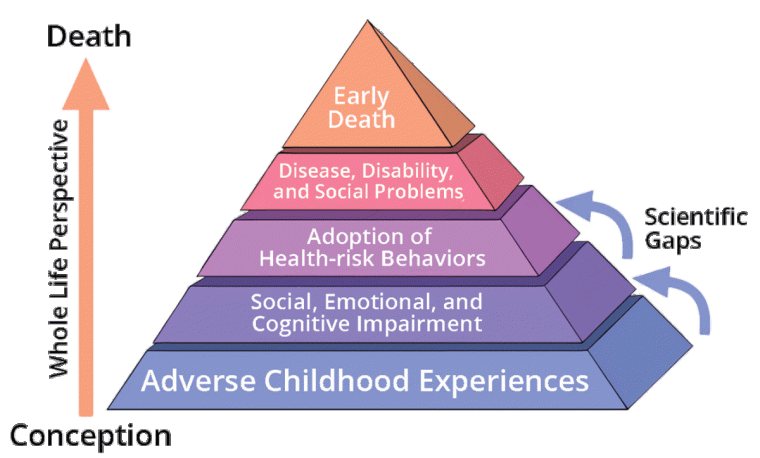
The ACE Pyramid represents the conceptual framework for the ACE Study, which has uncovered how adverse childhood experiences are strongly related to various risk factors for disease throughout the lifespan, according to the CDC.
About two-thirds of individuals reported at least one adverse childhood experience; 87% of individuals who reported one ACE reported at least one additional ACE. The number of ACEs was strongly associated with adulthood high-risk health behaviours such as smoking, alcohol and drug abuse, promiscuity, and severe obesity, and correlated with ill-health including depression, heart disease, cancer, chronic lung disease and shortened lifespan. Compared to an ACE score of zero, having four adverse childhood experiences was associated with a seven-fold (700%) increase in alcoholism, a doubling of risk of being diagnosed with cancer, and a four-fold increase in emphysema; an ACE score above six was associated with a 30-fold (3000%) increase in attempted suicide.
The ACE study’s results suggest that maltreatment and household dysfunction in childhood contribute to health problems decades later. These include chronic diseases – such as heart disease, cancer, stroke, and diabetes – that are the most common causes of death and disability in the United States. These findings are important because they provided a link between the effects of child maltreatment and negative effects later in life which had not been established as clearly before this study.
Subsequent Surveys
The ACE Study has produced more than 50 articles that look at the prevalence and consequences of ACEs. It has been influential in several areas. Subsequent studies have confirmed the high frequency of adverse childhood experiences.
The original study questions have been used to develop a 10-item screening questionnaire. Numerous subsequent surveys have confirmed that adverse childhood experiences are frequent.
The Behavioural Risk Factor Surveillance System (BRFSS) which is ran by the CDC, is an annual survey conducted in waves by groups of individual state and territory health departments.. An expanded ACE survey instrument was included in several US states found each state. Adverse childhood experiences were even more frequent in studies in urban Philadelphia and in a survey of young mothers (mostly younger than 19). Surveys of adverse childhood experiences have been conducted in multiple EU member countries.
This page is based on the copyrighted Wikipedia article < https://en.wikipedia.org/wiki/Adverse_childhood_experiences >; it is used under the Creative Commons Attribution-ShareAlike 3.0 Unported License (CC-BY-SA). You may redistribute it, verbatim or modified, providing that you comply with the terms of the CC-BY-SA.
1929 – Jovan Rašković, Serbian psychiatrist, academic, and politician (d. 1992).
Jovan Raskovic
Jovan Rašković (05 July 1929 to 28 July 1992) was a Croatian Serb psychiatrist, academic and politician.
Rašković was born in Knin in 1929. During World War II, after an Ustasha pogrom which resulted in the deaths of his relatives, he was exiled to Kistanje in Italian-occupied Dalmatia. He passed his secondary school exams in Šibenik, and graduated in Zagreb. He then studied electrical engineering and medicine at the University of Zagreb, where he obtained his diploma and a PhD from the university’s medical school.
In the 1960s, he served as director of Šibenik city hospital and later director of the medical centre. He was one of the founders of the Medical Research Institute of Neurophysiology in Ljubljana. Rašković was a member of the Serbian Academy of Sciences and Arts, the Academy of Medical Sciences of Croatia and a number of psychiatry associations in the United States, Czechoslovakia and Italy. He was a university professor in Zagreb and Ljubljana and a visiting professor at the Universities of Pavia, Rome, Houston and London.
In February 1990, Rašković went into politics and founded and led the Serbian Democratic Party (SDS), which took part in the first Croatian democratic elections. He noticed that there was no equivalent party in Bosnia and Herzegovina so he contacted Radovan Karadžić, a colleague, to suggest for him to establish one.
Although the SDS won relatively few seats in the 1990 elections, it quickly began to increase its power, and Rašković was soon perceived as a leader of Serbs by Franjo Tuđman and his new government. That led to direct negotiations between the two about the future of Serbs in Croatia. During one meeting, Rašković remarked, “Serbs were crazy people”. Tuđman’s chief political advisor, Slaven Letica, had the words secretly taped and leaked the transcript to Croatian media to discredit Rašković among his people and then replace him with someone more acceptable to Croatian government. That backfired, as instead of rejecting Rašković, many Serbs lost any trust in Croatian government and embraced extremism and then armed conflict.
Later in 1990, Rašković was removed from power by “more radical, hard-line Serb nationalists”, who went on to create the Republic of Serbian Krajina. Rašković retired from politics in 1991, after the Plitvice Lakes incident.
Rašković died in Belgrade from a heart attack on 28 July 1992 at the age of 63. He is interred in the Alley of Distinguished Citizens in the Belgrade New Cemetery.
Streets in Trebinje, Prijedor, Banja Luka and Novi Banovci are named in his honour.
1818 – Karl von Vierordt, German physician, psychologist and academic (d. 1884).
1917 – Humphry Osmond, English-American lieutenant and psychiatrist (d. 2004).
Karl von Vierordt
Karl von Vierordt (01 July 1818 to 22 November 1884) was a German physiologist.
Vierordt was born in Lahr, Baden. He studied at the universities of Berlin, Göttingen, Vienna, and Heidelberg, and began a practice in Karlsruhe in 1842. In 1849 he became a professor of theoretical medicine at the University of Tübingen, and in 1853 a professor of physiology.
Vierordt developed techniques and tools for the monitoring of blood circulation. He is credited with the construction of an early “hemotachometer”, an apparatus for monitoring the velocity of blood flow. In 1854, he created a device called a sphygmograph, a mechanism consisting of weights and levers used to estimate blood pressure, and considered to be a forerunner of the modern sphygmomanometer. One of his better known written works was a treatise on the arterial pulse, titled Die Lehre vom Arterienpuls in gesunden und kranken Zuständen.
Vierordt also made substantial contributions to the psychology of time perception, via his book (published in 1868) Der Zeitsinn nach Versuchen, “The experimental study of the time sense”. This reported a large number of experiments on the perception of duration, with the time sense being considered a “general sense” along with the perception of space, in contrast to the “special senses” such as vision and hearing. Included in this book is discussion of, and evidence for, what has come to be known as Vierordt’s Law: roughly the proposition that short durations tend to be overestimated, while long durations tend to be underestimated.
Between these two extremes is a “point of indifference” where the “time sensation”, in Vierordt’s terminology, corresponds exactly to physical time. However, the 1868 book does much more than report this “law” and contains extensive discussions of different methods used to measure duration perception, as well as different sorts of errors that can occur.
Although Vierordt was not the first person to carry out experiments on time perception, his 1868 book involved much more extensive experimentation and discussion than had been carried out until then.
He died in Tübingen, aged 66.
Humphry Osmond
Humphry Fortescue Osmond (01 July 1917 to 06 February 2004) was an English psychiatrist who expatriated to Canada, then moved to work in the United States. He is known for inventing the word psychedelic and for his research into interesting and useful applications for psychedelic drugs. Osmond also explored aspects of the psychology of social environments, in particular how they influenced welfare or recovery in mental institutions.
This page is based on the copyrighted Wikipedia article < https://en.wikipedia.org/wiki/Karl_von_Vierordt >; it is used under the Creative Commons Attribution-ShareAlike 3.0 Unported License (CC-BY-SA). You may redistribute it, verbatim or modified, providing that you comply with the terms of the CC-BY-SA.
1791 – Félix Savart, French physicist and psychologist (d. 1841).
Felix Savart
Félix Savart (30 June 1791 to 16 March 1841, Paris) was a French physicist and mathematician who is primarily known for the Biot–Savart law of electromagnetism, which he discovered together with his colleague Jean-Baptiste Biot.
His main interest was in acoustics and the study of vibrating bodies. A particular interest in the violin led him to create an experimental trapezoidal model. He gave his name to the savart, a unit of measurement for musical intervals, and to Savart’s wheel – a device he used while investigating the range of human hearing.
1948 – Daniel Wegner, Canadian-American psychologist and academic (d. 2013).
People (Deaths)
2012 – Richard Isay, American psychiatrist and author (b. 1934).
Daniel Wegner
Daniel Merton Wegner (28 June 1948 to 05 July 2013) was an American social psychologist.
He was a professor of psychology at Harvard University and a fellow of both the American Association for the Advancement of Science and the American Academy of Arts and Sciences. He was known for applying experimental psychology to the topics of mental control (for example ironic process theory) and conscious will, and for originating the study of transactive memory and action identification. In The Illusion of Conscious Will and other works, he argued that the human sense of free will is an illusion.
Richard Isay
Richard A. Isay (13 December 1934 to 28 June 2012) was an American psychiatrist, psychoanalyst, author and gay activist.
He was a professor of psychiatry at Weill Cornell Medical College and a faculty member of the Columbia University Centre for Psychoanalytic Training and Research. Isay is considered a pioneer who changed the way that psychoanalysts view homosexuality.
1916 – Virginia Satir, American psychotherapist and author (d. 1988).
Virginia Satir
Virginia Satir (26 June 1916 to 10 September 1988) was an American author and psychotherapist, recognised for her approach to family therapy. Her pioneering work in the field of family reconstruction therapy honoured her with the title “Mother of Family Therapy”. Her most well-known books are Conjoint Family Therapy, 1964, Peoplemaking, 1972, and The New Peoplemaking, 1988.
She is also known for creating the Virginia Satir Change Process Model, a psychological model developed through clinical studies. Change management and organisational gurus of the 1990s and 2000s embrace this model to define how change impacts organisations.



 Mental Health Matters
You must be logged in to post a comment.