Posts

What are the Benefits of Exercise in Addiction Recovery?

Whether you are in recovery or not, physical activity and exercise offer various benefits. And, there are several reasons why it is an important element for those in addiction recovery:

  • Increases the rate of abstinence;
  • Eases withdrawal symptoms;
  • Adds structure to the day;
  • Replace triggers;
  • Help you think more clearly;
  • Elevate mood;
  • Increase energy;
  • Better quality and quantity of sleep;
  • Stronger immune system;
  • Boost self-esteem and self-control;
  • Curb or distraction from cravings;
  • Stress reduction;
  • Better overall well-being;
  • Aids in relieving anxiety and depression;
  • Aids in preventing relapse; and
  • Help turn negative emotions into positive results.

On This Day … 21 April [2022]

People (Births)

  • 1936 – James Dobson, American evangelist, psychologist, and author, founded Focus on the Family.

James Dobson

James Clayton Dobson Jr. (born 21 April 1936) is an American evangelical Christian author, psychologist, and founder of Focus on the Family (FOTF), which he led from 1977 until 2010. In the 1980s he was ranked as one of the most influential spokesmen for conservative social positions in American public life. Although never an ordained minister, he was called “the nation’s most influential evangelical leader” by The New York Times while Slate portrayed him as a successor to evangelical leaders Jerry Falwell and Pat Robertson.

As part of his former role in the organisation, he produced the daily radio programme Focus on the Family, which the organisation has said was broadcast in more than a dozen languages and on over 7,000 stations worldwide, and reportedly heard daily by more than 220 million people in 164 countries. Focus on the Family was also carried by about sixty US television stations daily. Dobson also founded the Family Research Council in 1981. He is no longer affiliated with Focus on the Family. Dobson founded Family Talk as a non-profit organisation in 2010 and launched a new radio broadcast, Family Talk with Dr. James Dobson, that began on 03 May 2010, on over 300 stations nationwide.

On This Day … 20 April [2022]

People (Births)

  • 1745 – Philippe Pinel, French physician and psychiatrist (d. 1826).
  • 1915 – Joseph Wolpe, South African psychotherapist and physician (d. 1997).
  • 1920 – Frances Ames, South African neurologist, psychiatrist, and human rights activist (d. 2002).

Philippe Pinel

Philippe Pinel (20 April 1745 to 25 October 1826) was a French physician, precursor of psychiatry and incidentally a zoologist. He was instrumental in the development of a more humane psychological approach to the custody and care of psychiatric patients, referred to today as moral therapy. He worked for the abolition of the shackling of mental patients by chains and, more generally, for the humanisation of their treatment. He also made notable contributions to the classification of mental disorders and has been described by some as “the father of modern psychiatry”.

After the French Revolution, Dr. Pinel changed the way we look at the crazy (or “aliénés”, “alienated” in English) by claiming that they can be understood and cured. An 1809 description of a case that Pinel recorded in the second edition of his textbook on insanity is regarded by some as the earliest evidence for the existence of the form of mental disorder later known as dementia praecox or schizophrenia, although Emil Kraepelin is generally accredited with its first conceptualisation.

“Father of modern psychiatry”, he was credited with the first classification of mental illnesses. He had a great influence on psychiatry and the treatment of the alienated in Europe and the United States.

Joseph Wolpe

Joseph Wolpe (20 April 1915 to 04 December 1997) was a South African psychiatrist and one of the most influential figures in behaviour therapy.

Wolpe grew up in South Africa, attending Parktown Boys’ High School and obtaining his MD from the University of the Witwatersrand.

In 1956, Wolpe was awarded a Ford Fellowship and spent a year at Stanford University in the Centre for Behavioral Sciences, subsequently returning to South Africa but permanently moving to the United States in 1960 when he accepted a position at the University of Virginia.

In 1965, Wolpe accepted a position at Temple University.

One of the most influential experiences in Wolpe’s life was when he enlisted in the South African army as a medical officer. Wolpe was entrusted to treat soldiers who were diagnosed with what was then called “war neurosis” but today is known as post traumatic stress disorder. The mainstream treatment of the time for soldiers was based on psychoanalytic theory, and involved exploring the trauma while taking a hypnotic agent – so-called narcotherapy. It was believed that having the soldiers talk about their repressed experiences openly would effectively cure their neurosis. However, this was not the case. It was this lack of successful treatment outcomes that forced Wolpe, once a dedicated follower of Freud, to question psychoanalytic therapy and search for more effective treatment options. Wolpe is most well known for his reciprocal inhibition techniques, particularly systematic desensitisation, which revolutionised behavioural therapy. A Review of General Psychology survey, published in 2002, ranked Wolpe as the 53rd most cited psychologist of the 20th century, an impressive accomplishment accentuated by the fact that Wolpe was a psychiatrist.

Frances Ames

Frances Rix Ames (20 April 1920 to 11 November 2002) was a South African neurologist, psychiatrist, and human rights activist, best known for leading the medical ethics inquiry into the death of anti-apartheid activist Steve Biko, who died from medical neglect after being tortured in police custody. When the South African Medical and Dental Council (SAMDC) declined to discipline the chief district surgeon and his assistant who treated Biko, Ames and a group of five academics and physicians raised funds and fought an eight-year legal battle against the medical establishment. Ames risked her personal safety and academic career in her pursuit of justice, taking the dispute to the South African Supreme Court, where she eventually won the case in 1985.

Born in Pretoria and raised in poverty in Cape Town, Ames became the first woman to receive a Doctor of Medicine degree from the University of Cape Town in 1964. Ames studied the effects of cannabis on the brain and published several articles on the subject. Seeing the therapeutic benefits of cannabis on patients in her own hospital, she became an early proponent of legalization for medicinal use. She headed the neurology department at Groote Schuur Hospital before retiring in 1985, but continued to lecture at Valkenberg and Alexandra Hospital. After apartheid was dismantled in 1994, Ames testified at the Truth and Reconciliation Commission about her work on the “Biko doctors” medical ethics inquiry. In 1999, Nelson Mandela awarded Ames the Star of South Africa, the country’s highest civilian award, in recognition of her work on behalf of human rights.

On This Day … 19 April [2022]

People (Births)

  • 1874 – Ernst Rüdin, Swiss psychiatrist, geneticist, and eugenicist (d. 1952).

Ernst Rudin

Ernst Rüdin (19 April 1874 to 22 October 1952) was a Swiss-born German psychiatrist, geneticist, eugenicist and Nazi.

Rising to prominence under Emil Kraepelin and assuming his directorship at what is now called the Max Planck Institute of Psychiatry in Munich. While he has been credited as a pioneer of psychiatric inheritance studies, he also argued for, designed, justified and funded the mass sterilisation and clinical killing of adults and children.

On This Day … 18 April [2022]

People (Deaths)

  • 1917 – Vladimir Serbsky, Russian psychiatrist and academic (b. 1858).

Vladimir Serbsky

Vladimir Petrovich Serbsky (Russian: Влади́мир Петро́вич Се́рбский, 26 February 1858 to 18 April 1917) was a Russian psychiatrist and one of the founders of forensic psychiatry in Russia.

The author of The Forensic Psychopathology, Serbsky thought delinquency to have no congenital basis, considering it to be caused by social reasons.

The Central Institute of Forensic Psychiatry was named after Serbsky in 1921. Now the facility is known as the Serbsky Centre (Serbsky State Scientific Centre for Social and Forensic Psychiatry).

On This Day … 17 April [2022]

People (Deaths)

  • 1994 – Roger Wolcott Sperry, American psychologist and biologist, Nobel Prize laureate (b. 1913).

Roger Wolcott Sperry

Roger Wolcott Sperry (20 August 1913 to 17 April 1994) was an American neuropsychologist, neurobiologist and Nobel laureate who, together with David Hunter Hubel and Torsten Nils Wiesel, won the 1981 Nobel Prize in Physiology and Medicine for his work with split-brain research.

A Review of General Psychology survey, published in 2002, ranked Sperry as the 44th most cited psychologist of the 20th century.

On This Day … 16 April [2022]

People (Deaths)

  • 1961 – Carl Hovland, American psychologist and academic (b. 1912).

Carl Hovland

Carl Iver Hovland (12 June 1912 to 16 April 1961) was a psychologist working primarily at Yale University and for the US Army during World War II who studied attitude change and persuasion.

He first reported the sleeper effect after studying the effects of the Frank Capra’s propaganda film Why We Fight on soldiers in the Army. In later studies on this subject, Hovland collaborated with Irving Janis who would later become famous for his theory of groupthink. Hovland also developed social judgement theory of attitude change. Carl Hovland thought that the ability of someone to resist persuasion by a certain group depended on your degree of belonging to the group.

On This Day … 15 April [2022]

People (Deaths)

  • 1920 – Thomas Szasz, Hungarian-American psychiatrist and academic (d. 2012).
  • 1931 – Tomas Tranströmer, Swedish poet, translator, and psychologist Nobel Prize laureate (d. 2015).

Thomas Szasz

Thomas Stephen Szasz (15 April 1920 to 08 September 2012) was a Hungarian-American academic and psychiatrist. He served for most of his career as professor of psychiatry at the State University of New York Upstate Medical University in Syracuse, New York.

A distinguished lifetime fellow of the American Psychiatric Association and a life member of the American Psychoanalytic Association, he was best known as a social critic of the moral and scientific foundations of psychiatry, as what he saw as the social control aims of medicine in modern society, as well as scientism. His books The Myth of Mental Illness (1961) and The Manufacture of Madness (1970) set out some of the arguments most associated with him.

Szasz argued throughout his career that mental illness is a metaphor for human problems in living, and that mental illnesses are not “illnesses” in the sense that physical illnesses are, and that except for a few identifiable brain diseases, there are “neither biological or chemical tests nor biopsy or necropsy findings for verifying DSM diagnoses.”

Szasz maintained throughout his career that he was not anti-psychiatry but rather that he opposed coercive psychiatry. He was a staunch opponent of civil commitment and involuntary psychiatric treatment, but he believed in and practiced psychiatry and psychotherapy between consenting adults.

Tomas Transtromer

Tomas Gösta Tranströmer (15 April 1931 to 26 March 2015) was a Swedish poet, psychologist and translator.

His poems captured the long Swedish winters, the rhythm of the seasons and the palpable, atmospheric beauty of nature. Tranströmer’s work is also characterised by a sense of mystery and wonder underlying the routine of everyday life, a quality which often gives his poems a religious dimension. He has been described as a Christian poet.

Tranströmer is acclaimed as one of the most important Scandinavian writers since the Second World War. Critics praised his poetry for its accessibility, even in translation. His poetry has been translated into over 60 languages. He was the recipient of the 1990 Neustadt International Prize for Literature, the 2004 International Nonino Prize, and the 2011 Nobel Prize in Literature.

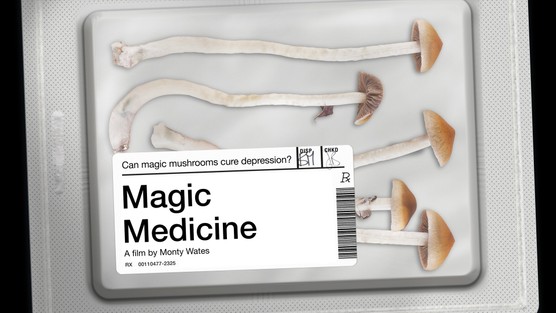
Magic Medicine (2018)

Introduction

Can magic mushrooms cure depression? This documentary follows the first medical trial to explore the use of psilocybin as a treatment for clinical depression.

Outline

In 2012 a team of medical researchers asked themselves, “what would happen if we gave psilocybin (magic mushrooms) to people suffering from severe depression”? It took them three years to get the necessary permissions to find out.

Production & Filming Details

  • Director(s):
    • Monty Wales.
  • Producer(s):
    • Lizzie Gillett.
    • Monty Wales.
  • Writer(s):
    • Monty Wales.
  • Music:
    • Christopher White.
  • Cinematography:
    • Monty Wales.
  • Editor(s):
    • John Mister.
  • Production:
    • Life Cycle Films.
  • Distributor(s):
    • Dartmouth Films (2018) (UK) (theatrical).
  • Release Date: 09 November 2018 (London, UK).
  • Running Time: 79 minutes.
  • Rating: 15.
  • Country: UK.
  • Language: English.

The Psychedelic Drug Trial (2021)

Introduction

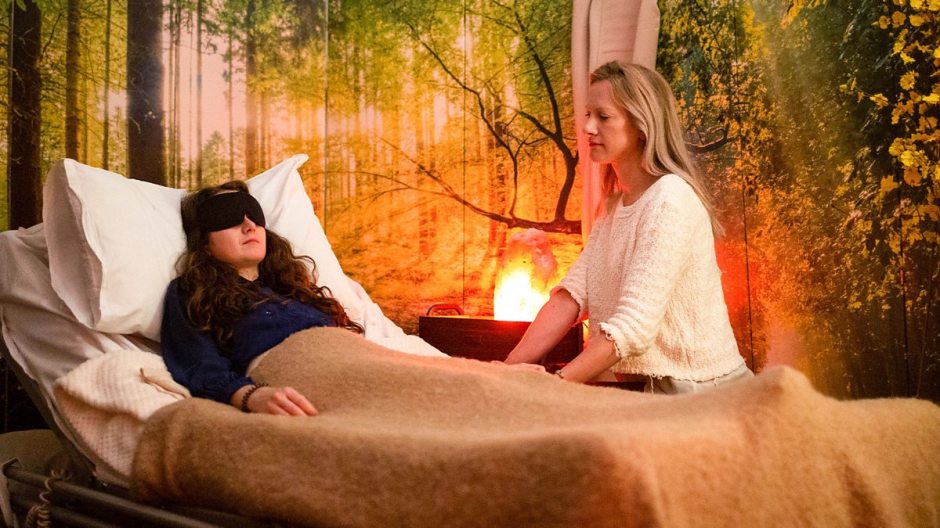
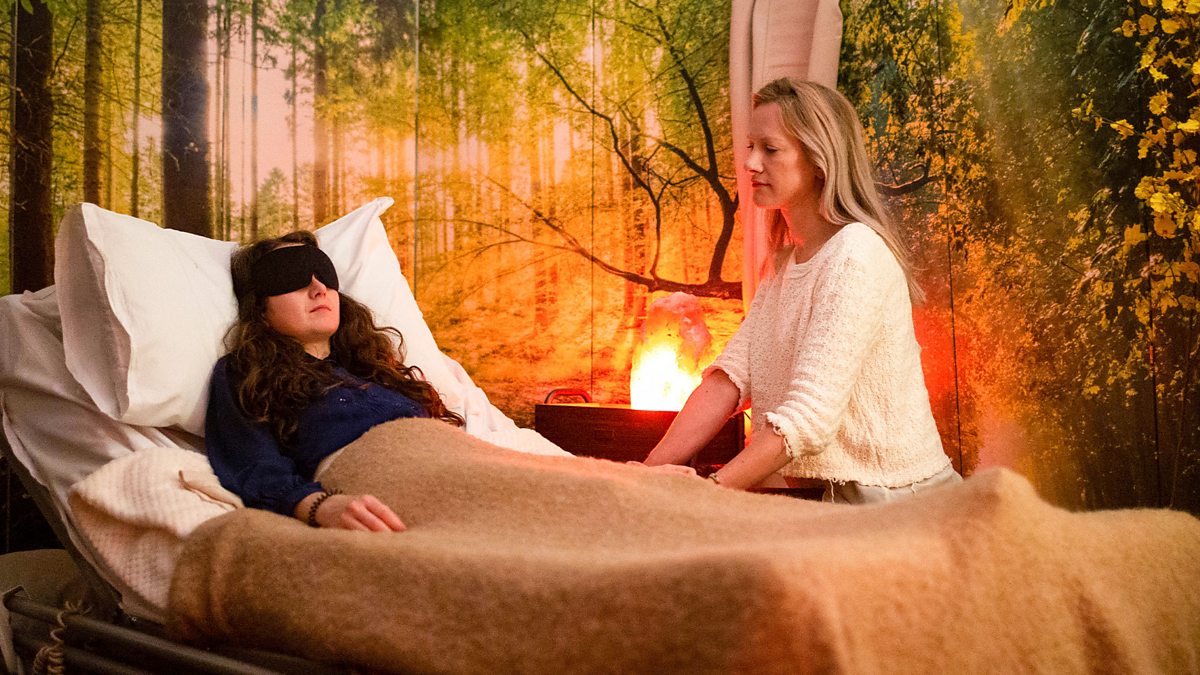
With exclusive access to a ground-breaking trial, this film asks if psychedelic drugs combined with psychological support can help tackle one of the biggest medical challenges we face – depression.

Outline

The Psychedelic Drug Trial has exclusive access to a ground-breaking new trial at Imperial College London. The trial sees, for the first time ever under controlled conditions, a psychedelic drug tested head-to-head against a standard antidepressant as a treatment for depression.

The film follows a pioneering team of scientists and psychotherapists, led by Professor David Nutt, Dr Robin Carhart-Harris and Dr Rosalind Watts, as they compare the effects of psilocybin (the active ingredient of magic mushrooms) with an antidepressant (an SSRI called escitalopram) on a small group of participants with clinical depression. This is scientific research at its most cutting edge. With over seven million people being prescribed antidepressants each year in England alone, this drug trial is an important milestone in understanding a completely different treatment for depression.

Filmed over 16 months, this film explores both the immediate and long-term impacts of the trial on the lives of participants. It investigates whether psychedelic drugs combined with psychological support could help tackle one of the biggest medical challenges faced today and what it takes to conduct research in uncharted scientific territory.

How do psychedelic drugs measure up against the industry-standard antidepressants that have been popular since the 1990s? The empirical results of the trial are explored alongside the participants’ powerful lived experience.

About the Trial

All psychedelic drug use shown in this programme was part of a carefully controlled clinical trial under the supervision of specially trained psychotherapists.

The trial was run by Professor Nutt, Dr Carhart-Harris and Dr Watts and their team at Imperial College from 2019 to 2020. Fifty-nine participants took part, the trial is now finished.

The psychedelic drugs used in the trial are illegal in the UK and not available for medical treatment. You should always consult your doctor before you stop, change or start any new treatment.

Production & Filming Details

  • Director(s):
    • Sam Eastall.
  • Producer(s):
    • Caroline Lai … line producer.
    • Alice Martineau … producer.
    • Anna Murphy … executive producer.
    • Sabine Pusch … edit producer.
    • Caroline Willis … line producer.
  • Writer(s):
  • Music:
  • Cinematography:
    • Richard Jephcote … director of photography.
  • Editor(s):
    • Zoe Davis … editor.
    • Alex Spence … assistant editor.
  • Production:
    • Grain Media.
  • Distributor(s):
    • BBC Two (2021) (UK) (TV).
    • British Broadcasting Corporation (BBC) (2021) (UK) (all media).
  • Release Date: 19 May 2021 (UK).
  • Running Time: 59 minutes.
  • Rating: Unknown.
  • Country: UK.
  • Language: English.