What is a Therapeutic Index?

Introduction

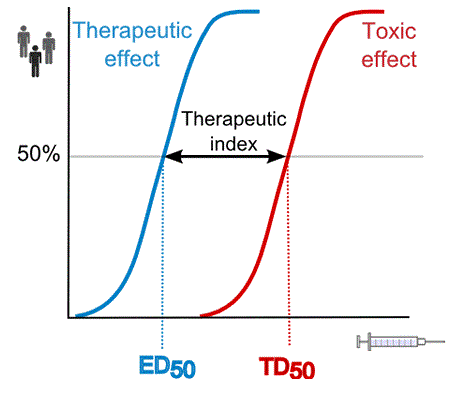
The therapeutic index (TI; also referred to as therapeutic ratio) is a quantitative measurement of the relative safety of a drug.

It is a comparison of the amount of a therapeutic agent that causes the therapeutic effect to the amount that causes toxicity. The related terms therapeutic window or safety window refer to a range of doses which optimize between efficacy and toxicity, achieving the greatest therapeutic benefit without resulting in unacceptable side-effects or toxicity.

Classically, in an established clinical indication setting of an approved drug, TI refers to the ratio of the dose of drug that causes adverse effects at an incidence/severity not compatible with the targeted indication (e.g. toxic dose in 50% of subjects, TD50) to the dose that leads to the desired pharmacological effect (e.g. efficacious dose in 50% of subjects, ED50). In contrast, in a drug development setting TI is calculated based on plasma exposure levels.

In the early days of pharmaceutical toxicology, TI was frequently determined in animals as lethal dose of a drug for 50% of the population (LD50) divided by the minimum effective dose for 50% of the population (ED50). Today, more sophisticated toxicity endpoints are used.

For Humans (TD50 / ED50).

For many drugs, there are severe toxicities that occur at sublethal doses in humans, and these toxicities often limit the maximum dose of a drug. A higher therapeutic index is preferable to a lower one: a patient would have to take a much higher dose of such a drug to reach the toxic threshold than the dose taken to elicit the therapeutic effect.

Generally, a drug or other therapeutic agent with a narrow therapeutic range (i.e. having little difference between toxic and therapeutic doses) may have its dosage adjusted according to measurements of the actual blood levels achieved in the person taking it. This may be achieved through therapeutic drug monitoring (TDM) protocols. TDM is recommended for use in the treatment of psychiatric disorders with lithium due to its narrow therapeutic range.

Terms

  • ED = Effective dose.
  • TD = Toxic dose.
  • LD = Lethal dose.
  • TI = Therapeutic index.
  • TR = Therapeutic ratio.

Therapeutic Index in Drug Development

A high therapeutic index (TI) is preferable for a drug to have a favourable safety and efficacy profile. At early discovery/development stage, the clinical TI of a drug candidate is not known. However, understanding the preliminary TI of a drug candidate is of utmost importance as early as possible since TI is an important indicator of the probability of the successful development of a drug. Recognising drug candidates with potentially suboptimal TI at earliest possible stage helps to initiate mitigation or potentially re-deploy resources.

In a drug development setting, TI is the quantitative relationship between efficacy (pharmacology) and safety (toxicology), without considering the nature of pharmacological or toxicological endpoints themselves. However, to convert a calculated TI to something that is more than just a number, the nature and limitations of pharmacological and/or toxicological endpoints must be considered. Depending on the intended clinical indication, the associated unmet medical need and/or the competitive situation, more or less weight can be given to either the safety or efficacy of a drug candidate with the aim to create a well balanced indication-specific safety vs efficacy profile.

In general, it is the exposure of a given tissue to drug (i.e. drug concentration over time), rather than dose, that drives the pharmacological and toxicological effects. For example, at the same dose there may be marked inter-individual variability in exposure due to polymorphisms in metabolism, DDIs or differences in body weight or environmental factors. These considerations emphasize the importance of using exposure rather than dose for calculating TI. To account for delays between exposure and toxicity, the TI for toxicities that occur after multiple dose administrations should be calculated using the exposure to drug at steady state rather than after administration of a single dose.

A review published by Muller and Milton in Nature Reviews Drug Discovery critically discusses the various aspects of TI determination and interpretation in a translational drug development setting for both small molecules and biotherapeutics.

Range of Therapeutic Indices

The therapeutic index varies widely among substances, even within a related group.

For instance, the opioid painkiller remifentanil is very forgiving, offering a therapeutic index of 33,000:1, while Diazepam, a benzodiazepine sedative-hypnotic and skeletal muscle relaxant, has a less forgiving therapeutic index of 100:1. Morphine is even less so with a therapeutic index of 70.

Less safe are cocaine (a stimulant and local anaesthetic) and ethanol (colloquially, the “alcohol” in alcoholic beverages, a widely available sedative consumed worldwide): the therapeutic indices for these substances are 15:1 and 10:1, respectively.

Even less safe are drugs such as digoxin, a cardiac glycoside; its therapeutic index is approximately 2:1.

Other examples of drugs with a narrow therapeutic range, which may require drug monitoring both to achieve therapeutic levels and to minimise toxicity, include: paracetamol (acetaminophen), dimercaprol, theophylline, warfarin and lithium carbonate.

Some antibiotics and antifungals require monitoring to balance efficacy with minimising adverse effects, including: gentamicin, vancomycin, amphotericin B (nicknamed ‘amphoterrible’ for this very reason), and polymyxin B.

Cancer Radiotherapy

Radiotherapy aims to minimize the size of tumours and kill cancer cells with high energy. The source of high energy arises from x-rays, gamma rays, charged particles and heavy particles. The therapeutic ratio in radiotherapy for cancer treatment is related to the maximum radiation dose by which death of cancer cells is locally controlled and the minimum radiation dose by which cells in normal tissues have low acute and late morbidity. Both of parameters have sigmoidal dose-response curves. Thus, a favourable outcome in dose-response curve is the response of tumour tissue is greater than that of normal tissue to the same dose, meaning that the treatment is effective to tumours and does not cause serious morbidity to normal tissue. Reversely, overlapping response of two tissues is highly likely to cause serious morbidity to normal tissue and ineffective treatment to tumours. The mechanism of radiation therapy is categorised into direct and indirect radiation. Both direct and indirect radiations induce DNA to have a mutation or chromosomal rearrangement during its repair process. Direct radiation creates a free DNA radical from radiation energy deposition that damages DNA. Indirect radiation occurs from radiolysis of water, creating a free hydroxyl radical, hydronium and electron. Then, hydroxyl radical transfers its radical to DNA. Or together with hydronium and electron, a free hydroxyl radical can damage base region of DNA.

Cancer cells have imbalance of signals in cell cycle. G1 and G2/M arrest are found to be major checkpoints by irradiation in human cells. G1 arrest delays repair mechanism before synthesis of DNA in S phase and mitosis in M phase, suggesting key checkpoint to lead survival of cells. G2/M arrest occurs when cells need to repair after S phase before the mitotic entry. It was also known that S phase is the most resistant to radiation and M phase was the most sensitive to radiation. p53, a tumour suppressor protein that plays a role in G1 and G2/M arrest, enabled the understanding of the cell cycle by radiation. For example, irradiation to myeloid leukaemia cell leads to an increase in p53 and a decrease in the level of DNA synthesis. Patients with Ataxia telangiectasia delays have hypersensitivity to radiation due to the delay of accumulation of p53.[9] In this case, cells are able to replicate without repair of their DNA, prone to incidence of cancer. Most cells are in G1 and S phase and irradiation at G2 phase showed increased radiosensitivity and thus G1 arrest has been on focus for therapeutic treatment. Irradiation to a tissue creates response to both irradiated and non-irridiated cells. It was found that even cells up to 50-75 cell diameter distant from irradiated cells have phenotype of enhanced genetic instability such as micronucleation. This suggests the effect of cell-to-cell communication such as paracrine and juxtacrine signalling. Normal cells do not lose DNA repair mechanism whereas cancer cells often lose during radiotherapy. However, the nature of high energy radiation can override the ability of damaged normal cell to repair, leading to cause another risk for carcinogenesis. This suggests a significant risk associated with radiation therapy. Thus, it is desirable to improve the therapeutic ratio during radiotherapy. Employing IG-IMRT, protons and heavy ions are likely to minimise dose to normal tissues by altered fractionation. Molecular targeting to DNA repair pathway can lead to radiosensitisation or radioprotection. Examples are direct and indirect inhibitors on DNA double-strand breaks. Direct inhibitors target proteins (PARP family) and kinases (ATM, DNA-PKCs) that are involved in DNA repair. Indirect inhibitors target proteins tumour cell signalling proteins such as EGFR and insulin growth factor.

The effective therapeutic index can be affected by targeting, in which the therapeutic agent is concentrated in its area of effect. For example, in radiation therapy for cancerous tumours, shaping the radiation beam precisely to the profile of a tumour in the “beam’s eye view” can increase the delivered dose without increasing toxic effects, though such shaping might not change the therapeutic index. Similarly, chemotherapy or radiotherapy with infused or injected agents can be made more efficacious by attaching the agent to an oncophilic substance, as is done in peptide receptor radionuclide therapy for neuroendocrine tumours and in chemoembolisation or radioactive microspheres therapy for liver tumours and metastases. This concentrates the agent in the targeted tissues and lowers its concentration in others, increasing efficacy and lowering toxicity.

Safety Ratio

Sometimes the term safety ratio is used instead, particularly when referring to psychoactive drugs used for non-therapeutic purposes, e.g. recreational use. In such cases, the effective dose is the amount and frequency that produces the desired effect, which can vary, and can be greater or less than the therapeutically effective dose.

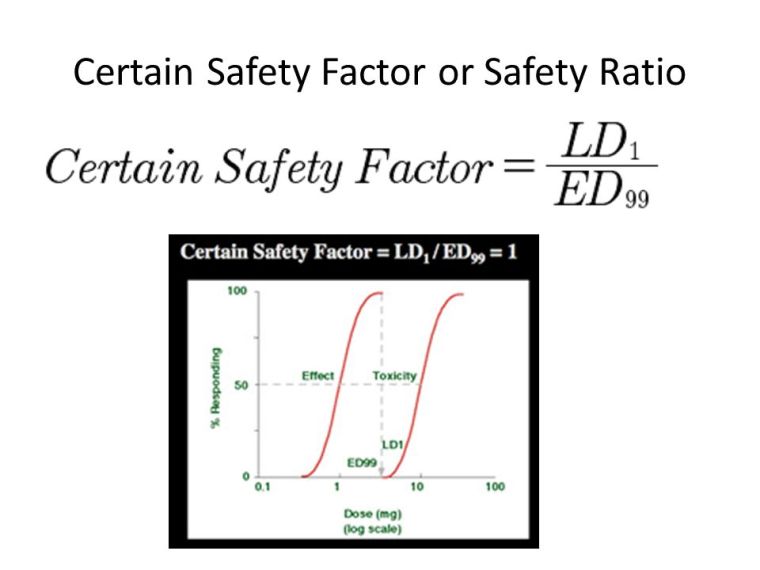
The Certain Safety Factor, also referred to as the Margin of Safety (MOS), is the ratio of the lethal dose to 1% of population to the effective dose to 99% of the population (LD1/ED99). This is a better safety index than the LD50 for materials that have both desirable and undesirable effects, because it factors in the ends of the spectrum where doses may be necessary to produce a response in one person but can, at the same dose, be lethal in another.

Synergistic Effect

A therapeutic index does not consider drug interactions or synergistic effects. For example, the risk associated with benzodiazepines increases significantly when taken with alcohol, opiates, or stimulants when compared with being taken alone. Therapeutic index also does not take into account the ease or difficulty of reaching a toxic or lethal dose. This is more of a consideration for recreational drug users, as the purity can be highly variable.

Protective Index

The protective index is a similar concept, except that it uses TD50 (median toxic dose) in place of LD50. For many substances, toxic effects can occur at levels far below those needed to cause death, and thus the protective index (if toxicity is properly specified) is often more informative about a substance’s relative safety. Nevertheless, the therapeutic index is still useful as it can be considered an upper bound for the protective index, and the former also has the advantages of objectivity and easier comprehension.

Therapeutic Window

The therapeutic window (or pharmaceutical window) of a drug is the range of drug dosages which can treat disease effectively without having toxic effects. Medication with a small therapeutic window must be administered with care and control, frequently measuring blood concentration of the drug, to avoid harm. Medications with narrow therapeutic windows include theophylline, digoxin, lithium, and warfarin.

Optimal Biological Dose

Optimal biological dose (OBD) is the quantity of a drug that will most effectively produce the desired effect while remaining in the range of acceptable toxicity.

Maximum Tolerated Dose

The maximum tolerated dose (MTD) refers to the highest dose of a radiological or pharmacological treatment that will produce the desired effect without unacceptable toxicity. The purpose of administering MTD is to determine whether long-term exposure to a chemical might lead to unacceptable adverse health effects in a population, when the level of exposure is not sufficient to cause premature mortality due to short-term toxic effects. The maximum dose is used, rather than a lower dose, to reduce the number of test subjects (and, among other things, the cost of testing), to detect an effect that might occur only rarely. This type of analysis is also used in establishing chemical residue tolerances in foods. Maximum tolerated dose studies are also done in clinical trials.

MTD is an essential aspect of a drug’s profile. All modern healthcare systems dictate a maximum safe dose for each drug, and generally have numerous safeguards (e.g. insurance quantity limits and government-enforced maximum quantity/time-frame limits) to prevent the prescription and dispensing of quantities exceeding the highest dosage which has been demonstrated to be safe for members of the general patient population.

Patients are often unable to tolerate the theoretical MTD of a drug due to the occurrence of side-effects which are not innately a manifestation of toxicity (not considered to severely threaten a patients health) but cause the patient sufficient distress and/or discomfort to result in non-compliance with treatment. Such examples include emotional “blunting” with antidepressants, pruritus with opiates, and blurred vision with anticholinergics.

What is Temazepam?

Introduction

Temazepam, sold under the brand names Restoril among others, is a medication used to treat insomnia.

Such use should generally be for less than ten days. It is taken by mouth. Effects generally begin within an hour and last for up to eight hours.

Common side effects include sleepiness, anxiety, confusion, and dizziness. Serious side effects may include hallucinations, abuse, anaphylaxis, and suicide. Use is generally not recommended together with opioids. If the dose is rapidly decreased withdrawal may occur. Use during pregnancy or breastfeeding is not recommended. Temazepam is an intermediate acting benzodiazepine and hypnotic. It works by affecting GABA within the brain.

Temazepam was patented in 1962 and came into medical use in 1969. It is available as a generic medication. In 2017, it was the 142nd most commonly prescribed medication in the United States, with more than four million prescriptions.

Brief History

Temazepam was synthesized in 1964, but it came into use in 1981 when its ability to counter insomnia was realised. By the late 1980s, temazepam was one of the most popular and widely prescribed hypnotics on the market and it became one of the most widely prescribed drugs.

Medical Uses

In sleep laboratory studies, temazepam significantly decreased the number of nightly awakenings, but has the drawback of distorting the normal sleep pattern. It is officially indicated for severe insomnia and other severe or disabling sleep disorders. The prescribing guidelines in the UK limit the prescribing of hypnotics to two to four weeks due to concerns of tolerance and dependence.

The United States Air Force uses temazepam as one of the hypnotics approved as a “no-go pill” to help aviators and special-duty personnel sleep in support of mission readiness. “Ground tests” are necessary prior to required authorisation being issued to use the medication in an operational situation, and a 12-hour restriction is imposed on subsequent flight operation. The other hypnotics used as “no-go pills” are zaleplon and zolpidem, which have shorter mandatory recovery periods.

Contraindications

Use of temazepam should be avoided, when possible, in individuals with these conditions:

  • Ataxia (gross lack of coordination of muscle movements).
  • Severe hypoventilation.
  • Acute narrow-angle glaucoma.
  • Severe hepatic deficiencies (hepatitis and liver cirrhosis decrease elimination by a factor of two).
  • Severe renal deficiencies (e.g. patients on dialysis).
  • Sleep apnoea.
  • Severe depression, particularly when accompanied by suicidal tendencies.
  • Acute intoxication with alcohol, narcotics, or other psychoactive substances.
  • Myasthenia gravis (autoimmune disorder causing muscle weakness).
  • Hypersensitivity or allergy to any drug in the benzodiazepine class.

Special Caution Needed

Temazepam should not be used in pregnancy, as it may cause harm to the foetus. The safety and effectiveness of temazepam has not been established in children; therefore, temazepam should generally not be given to individuals under 18 years of age, and should not be used at all in children under six months old. Benzodiazepines also require special caution if used in the elderly, alcohol- or drug-dependent individuals, and individuals with comorbid psychiatric disorders.

Temazepam, similar to other benzodiazepines and nonbenzodiazepine hypnotic drugs, causes impairments in body balance and standing steadiness in individuals who wake up at night or the next morning. Falls and hip fractures are frequently reported. The combination with alcohol increases these impairments. Partial but incomplete tolerance develops to these impairments. The smallest possible effective dose should be used in elderly or very ill patients, as a risk of apnoea and/or cardiac arrest exists. This risk is increased when temazepam is given concomitantly with other drugs that depress the central nervous system (CNS).

Misuse and Dependence

Because benzodiazepines can be abused and lead to dependence, their use should be avoided in people in certain particularly high-risk groups. These groups include people with a history of alcohol or drug dependence, people significantly struggling with their mood or people with longstanding mental health difficulties. If temazepam must be prescribed to people in these groups, they should generally be monitored very closely for signs of misuse and development of dependence.

Adverse Effects

Refer to Benzodiazepine Withdrawal Syndrome.

In September 2020, the US Food and Drug Administration (FDA) required the boxed warning be updated for all benzodiazepine medicines to describe the risks of abuse, misuse, addiction, physical dependence, and withdrawal reactions consistently across all the medicines in the class.

Common

Side effects typical of hypnotic benzodiazepines are related to CNS depression, and include somnolence, sedation, dizziness, fatigue, ataxia, headache, lethargy, impairment of memory and learning, longer reaction time and impairment of motor functions (including coordination problems), slurred speech, decreased physical performance, numbed emotions, reduced alertness, muscle weakness, blurred vision (in higher doses), and inattention. Euphoria was rarely reported with its use. According to the FDA, temazepam had an incidence of euphoria of 1.5%, much more rarely reported than headaches and diarrhoea. Anterograde amnesia may also develop, as may respiratory depression in higher doses.

A 2009 meta-analysis found a 44% higher rate of mild infections, such as pharyngitis or sinusitis, in people taking Temazepam or other hypnotic drugs compared to those taking a placebo.

Less Common

Hyperhydrosis, hypotension, burning eyes, increased appetite, changes in libido, hallucinations, faintness, nystagmus, vomiting, pruritus, gastrointestinal disturbances, nightmares, palpitation and paradoxical reactions including restlessness, aggression, violence, overstimulation and agitation have been reported, but are rare (less than 0.5%).

Before taking temazepam, one should ensure that at least 8 hours are available to dedicate to sleep. Failing to do so can increase the side effects of the drug.

Like all benzodiazepines, the use of this drug in combination with alcohol potentiates the side effects, and can lead to toxicity and death.

Though rare, residual “hangover” effects after night-time administration of temazepam occasionally occur. These include sleepiness, impaired psychomotor and cognitive functions which may persist into the next day, impaired driving ability, and possible increased risks of falls and hip fractures, especially in the elderly.

Tolerance

Chronic or excessive use of temazepam may cause drug tolerance, which can develop rapidly, so this drug is not recommended for long-term use. In 1979, the US Institute of Medicine and the National Institute on Drug Abuse stated that most hypnotics lose their sleep-inducing properties after about three to 14 days. In use longer than one to two weeks, tolerance will rapidly develop towards the ability of temazepam to maintain sleep, resulting in a loss of effectiveness. Some studies have observed tolerance to temazepam after as little as one week’s use. Another study examined the short-term effects of the accumulation of temazepam over seven days in elderly inpatients, and found little tolerance developed during the accumulation of the drug. Other studies examined the use of temazepam over six days and saw no evidence of tolerance. A study in 11 young male subjects showed significant tolerance occurs to temazepam’s thermoregulatory effects and sleep inducing properties after one week of use of 30-mg temazepam. Body temperature is well correlated with the sleep-inducing or insomnia-promoting properties of drugs.

In one study, the drug sensitivity of people who had used temazepam for one to 20 years was no different from that of controls. An additional study, in which at least one of the authors is employed by multiple drug companies, examined the efficacy of temazepam treatment on chronic insomnia over three months, and saw no drug tolerance, with the authors even suggesting the drug might become more effective over time.

Establishing continued efficacy beyond a few weeks can be complicated by the difficulty in distinguishing between the return of the original insomnia complaint and withdrawal or rebound related insomnia. Sleep EEG studies on hypnotic benzodiazepines show tolerance tends to occur completely after one to four weeks with sleep EEG returning to pre-treatment levels. The paper concluded that due to concerns about long-term use involving toxicity, tolerance and dependence, as well as to controversy over long-term efficacy, wise prescribers should restrict benzodiazepines to a few weeks and avoid continuing prescriptions for months or years. A review of the literature found the nonpharmacological treatment options were a more effective treatment option for insomnia due to their sustained improvements in sleep quality.

Physical Dependence

Temazepam, like other benzodiazepine drugs, can cause physical dependence and addiction. Withdrawal from temazepam or other benzodiazepines after regular use often leads to benzodiazepine withdrawal syndrome, which resembles symptoms during alcohol and barbiturate withdrawal. The higher the dose and the longer the drug is taken, the greater the risk of experiencing unpleasant withdrawal symptoms. Withdrawal symptoms can also occur from standard dosages and after short-term use. Abrupt withdrawal from therapeutic doses of temazepam after long-term use may result in a severe benzodiazepine withdrawal syndrome. Gradual and careful reduction of the dosage, preferably with a long-acting benzodiazepine with long half-life active metabolites, such as chlordiazepoxide or diazepam, are recommended to prevent severe withdrawal syndromes from developing. Other hypnotic benzodiazepines are not recommended. A study in rats found temazepam is cross tolerant with barbiturates and is able to effectively substitute for barbiturates and suppress barbiturate withdrawal signs. Rare cases are reported in the medical literature of psychotic states developing after abrupt withdrawal from benzodiazepines, even from therapeutic doses. Antipsychotics increase the severity of benzodiazepine withdrawal effects with an increase in the intensity and severity of convulsions. Patients who were treated in the hospital with temazepam or nitrazepam have continued taking these after leaving the hospital. Hypnotic uses in the hospital were recommended to be limited to five nights’ use only, to avoid the development of withdrawal symptoms such as insomnia.

Interactions

As with other benzodiazepines, temazepam produces additive CNS-depressant effects when co-administered with other medications which themselves produce CNS depression, such as barbiturates, alcohol, opiates, tricyclic antidepressants, nonselective MAO inhibitors, phenothiazines and other antipsychotics, skeletal muscle relaxants, antihistamines, and anaesthetics. Administration of theophylline or aminophylline has been shown to reduce the sedative effects of temazepam and other benzodiazepines.

Unlike many benzodiazepines, pharmacokinetic interactions involving the P450 system have not been observed with temazepam. Temazepam shows no significant interaction with CYP3A4 inhibitors (e.g. itraconazole, erythromycin). Oral contraceptives may decrease the effectiveness of temazepam and speed up its elimination half-life.

Overdose

Refer to Benzodiazepine Overdose.

Overdose (or an excess dose(s)) of temazepam results in increasing CNS effects, including:

  • Somnolence (difficulty staying awake).
  • Mental confusion.
  • Respiratory depression.
  • Hypotension.
  • Impaired motor functions.
  • Impaired or absent reflexes.
  • Impaired coordination.
  • Impaired balance.
  • Dizziness, sedation.
  • Coma.
  • Death.

Temazepam had the highest rate of drug intoxication, including overdose, among common benzodiazepines in cases with and without combination with alcohol in a 1985 study. Temazepam and nitrazepam were the two benzodiazepines most commonly detected in overdose-related deaths in an Australian study of drug deaths. A 1993 British study found temazepam to have the highest number of deaths per million prescriptions among medications commonly prescribed in the 1980s (11.9, versus 5.9 for benzodiazepines overall, taken with or without alcohol).

A 1995 Australian study of patients admitted to hospital after benzodiazepine overdose corroborated these results, and found temazepam overdose much more likely to lead to coma than other benzodiazepines (odds ratio 1.86). The authors noted several factors, such as differences in potency, receptor affinity, and rate of absorption between benzodiazepines, could explain this higher toxicity. Although benzodiazepines have a high therapeutic index, temazepam is one of the more dangerous of this class of drugs. The combination of alcohol and temazepam makes death by alcohol poisoning more likely.

Pharmacology

Temazepam is a white, crystalline substance, very slightly soluble in water, and sparingly soluble in alcohol. Its main pharmacological action is to increase the effect of the neurotransmitter gamma-aminobutyric acid (GABA) at the GABAA receptor. This causes sedation, motor impairment, ataxia, anxiolysis, an anticonvulsant effect, muscle relaxation, and a reinforcing effect. As a medication before surgery, temazepam decreased cortisol in elderly patients. In rats, it triggered the release of vasopressin into paraventricular nucleus of the hypothalamus and decreased the release of ACTH under stress.

Pharmacokinetics

Oral administration of 15 to 45 mg of temazepam in humans resulted in rapid absorption with significant blood levels achieved in fewer than 30 minutes and peak levels at two to three hours. In a single- and multiple-dose absorption, distribution, metabolism, and excretion (ADME) study, using tritium-labelled drug, temazepam was well absorbed and found to have minimal (8%) first-pass drug metabolism. No active metabolites were formed and the only significant metabolite present in blood was the O-conjugate. The unchanged drug was 96% bound to plasma proteins. The blood-level decline of the parent drug was biphasic, with the short half-life ranging from 0.4-0.6 hours and the terminal half-life from 3.5-18.4 hours (mean 8.8 hours), depending on the study population and method of determination.

Temazepam has very good bioavailability, with almost 100% being absorbed following being taken by mouth. The drug is metabolized through conjugation and demethylation prior to excretion. Most of the drug is excreted in the urine, with about 20% appearing in the faeces. The major metabolite was the O-conjugate of temazepam (90%); the O-conjugate of N-desmethyl temazepam was a minor metabolite (7%).

Society and Culture

Recreational Use

Refer to Benzodiazepine Use Disorder.

Temazepam is a drug with a moderate potential for misuse.

Benzodiazepines have been abused orally and intravenously. Different benzodiazepines have different abuse potential; the more rapid the increase in the plasma level following ingestion, the greater the intoxicating effect and the more open to abuse the drug becomes. The speed of onset of action of a particular benzodiazepine correlates well with the ‘popularity’ of that drug for abuse. The two most common reasons for preference were that a benzodiazepine was ‘strong’ and that it gave a good ‘high’.

A 1995 study found that temazepam is more rapidly absorbed and oxazepam is more slowly absorbed than most other benzodiazepines.

A 1985 study found that temazepam and triazolam maintained significantly higher rates of self-injection than a variety of other benzodiazepines. The study tested and compared the abuse liability of temazepam, triazolam, diazepam, lorazepam, oxazepam, flurazepam, alprazolam, chlordiazepoxide, clonazepam, nitrazepam, flunitrazepam, bromazepam, and clorazepate. The study tested self-injection rates on human, baboon, and rat subjects. All test subjects consistently showed a strong preference for temazepam and triazolam over all the rest of the benzodiazepines included in the study.

North America

In North America, temazepam misuse is not widespread. Other benzodiazepines are more commonly prescribed for insomnia. In the United States, temazepam is the fifth-most prescribed benzodiazepine, however there is a major drop off from the top four most prescribed (alprazolam, lorazepam, diazepam, and clonazepam in that order). Individuals abusing benzodiazepines obtain the drug by getting prescriptions from several doctors, forging prescriptions, or buying diverted pharmaceutical products on the illicit market. North America has never had a serious problem with temazepam misuse, but is becoming increasingly vulnerable to the illicit trade of temazepam.

Australia

Temazepam is a Schedule 4 drug and requires a prescription. The drug accounts for most benzodiazepine sought by forgery of prescriptions and through pharmacy burglary in Victoria. Due to rife intravenous abuse, the Australian government decided to put it under a more restrictive schedule than it had been, and since March 2004 temazepam capsules have been withdrawn from the Australian market, leaving only 10 mg tablets available. Benzodiazepines are commonly detected by Customs at different ports and airports, arriving by mail, also found occasionally in the baggage of air passengers, mostly small or medium quantities (up to 200-300 tablets) for personal use. From 2003 to 2006, customs detected about 500 illegal importations of benzodiazepines per year, most frequently diazepam. Quantities varied from single tablets to 2,000 tablets.

United Kingdom

In 1987, temazepam was the most widely abused legal prescription drug in the United Kingdom. The use of benzodiazepines by street-drug abusers was part of a polydrug abuse pattern, but many of those entering treatment facilities were declaring temazepam as their main drug of abuse. Temazepam was the most commonly used benzodiazepine in a study, published 1994, of injecting drug users in seven cities, and had been injected from preparations of capsules, tablets, and syrup. The increase in use of heroin, often mixed with other drugs, which most often included temazepam, diazepam, and alcohol, was a major factor in the increase in drug-related deaths in Glasgow and Edinburgh in 1990-1992. Temazepam use was particularly associated with violent or disorderly behaviours and contact with the police in a 1997 study of young single homeless people in Scotland. The BBC series Panorama featured an episode titled “Temazepam Wars”, dealing with the epidemic of temazepam abuse and directly related crime in Paisley, Scotland. The trend was mocked in the 1995 Black Grape song “Temazi Party” (also called “Tramazi Party”).

Medical Research Issues

The Journal of Clinical Sleep Medicine published a paper expressing concerns about benzodiazepine receptor agonist drugs, the benzodiazepines and the Z-drugs used as hypnotics in humans. The paper cites a systematic review of the medical literature concerning insomnia medications and states almost all trials of sleep disorders and drugs are sponsored by the pharmaceutical industry, while this is not the case in general medicine or psychiatry. It cites another study that “found that the odds ratio for finding results favourable to industry in industry-sponsored trials was 3.6 times as high as in non–industry-sponsored studies”. Issues discussed regarding industry-sponsored studies include: comparison of a drug to a placebo, but not to an alternative treatment; unpublished studies with unfavourable outcomes; and trials organized around a placebo baseline followed by drug treatment, but not counterbalanced with parallel-placebo-controlled studies. Quoting a 1979 report that too little research into hypnotics was independent of the drug manufacturers, the authors conclude, “the public desperately needs an equipoised assessment of hypnotic benefits and risks” and the NIH and VA should provide leadership to that end.

Street Terms

Street terms for temazepam include king kong pills (formerly referred to barbiturates, now more commonly refers to temazepam), jellies, jelly, Edinburgh eccies, tams, terms, mazzies, temazies, tammies, temmies, beans, eggs, green eggs, wobbly eggs, knockouts, hardball, norries, oranges (common term in Australia and New Zealand), rugby balls, ruggers, terminators, red and blue, no-gos, num nums, blackout, green devils, drunk pills, brainwash, mind erasers, neurotrashers, tem-tem’s (combined with buprenorphine), mommy’s big helper, vitamin T, big T, TZ, The Mazepam, Resties (North America) and others.

Availability

Temazepam is available in English-speaking countries under the following brand names:

  • Euhypnos.
  • Normison.
  • Norkotral.
  • Nortem.
  • Remestan.
  • Restoril.
  • Temaze.
  • Temtabs.
  • Tenox.

In Spain, the drug is sold as ‘temzpem’. In Hungary the drug is sold as Signopam.

Legal Status

  • In Austria, temazepam is listed in UN71 Schedule III under the Psychotropic Substances Decree of 1997.
    • The drug is considered to have a high potential for abuse and addiction, but has accepted medical use for the treatment of severe insomnia.
  • In Australia, temazepam is a Schedule 4 – Prescription Only medicine.
    • It is primarily used for the treatment of insomnia, and is also seen as pre-anaesthetic medication.
  • In Canada, temazepam is a Schedule IV controlled substance requiring a registered doctor’s prescription.
  • In Denmark, temazepam is listed as a Class D substance under the Executive Order 698 of 1993 on Euphoric Substances which means it has a high potential for abuse, but is used for medical and scientific purposes.
  • In Finland, temazepam is more tightly controlled than other benzodiazepines.
    • The temazepam product Normison was pulled out of shelves and banned because the liquid inside gelatin capsules had caused a large increase in intravenous temazepam use.
    • The other temazepam product, Tenox, was not affected and remains as prescription medicine.
    • Temazepam intravenous use has not decreased to the level before Normison came to the market.
  • In France, temazepam is listed as a psychotropic substance as are other similar drugs.
    • It is prescribed with a non-renewable prescription (a new doctor visit every time), available only in 7 or 14-pill packaging for one or two weeks.
    • One brand was withdrawn from the market in 2013.
  • In Hong Kong, temazepam is regulated under Schedule 1 of Hong Kong’s Chapter 134 Dangerous Drugs Ordinance.
    • Temazepam can only be used legally by health professionals and for university research purposes.
    • The substance can be given by pharmacists under a prescription.
    • Anyone who supplies the substance without prescription can be fined HKD$10,000.
    • The penalty for trafficking or manufacturing the substance is a $5,000,000-fine and life imprisonment.
    • Possession of the substance for consumption without license from the Department of Health is illegal with a $1,000,000-fine and/or seven years of jail time.
  • In Ireland, temazepam is a Schedule 3 controlled substance with strict restrictions.
  • In the Netherlands, temazepam is available for prescription as 10- or 20-mg tablets and capsules.
    • Formulations of temazepam containing less than 20 mg are included in List 2 of the Opium Law, while formulations containing 20 mg or more of the drug (along with the gel-capsules) are a List 1 substance of the Opium Law, thus subject to more stringent regulation.
    • Besides being used for insomnia, it is also occasionally used as a preanesthetic medication.
  • In Norway, temazepam is not available as a prescription drug.
    • It is regulated as a Class A substance under Norway’s Narcotics Act.
  • In Portugal, temazepam is a Schedule IV controlled drug under Decree-Law 15/93.
  • In Singapore, temazepam is a Class A controlled drug (Schedule I), making it illegal to possess and requiring a private prescription from a licensed physician to be dispensed.
  • In Slovenia, it is regulated as a Group II (Schedule 2) controlled substance under the Production and Trade in Illicit Drugs Act.
  • In South Africa, temazepam is a Schedule 5 drug, requiring a special prescription, and is restricted to 10- to 30-mg doses.
  • In Sweden, temazepam is classed as a “narcotic” drug listed as both a List II (Schedule II) which denotes it is a drug with limited medicinal use and a high risk of addiction, and is also listed as a List V (Schedule V) substance which denotes the drug is prohibited in Sweden under the Narcotics Drugs Act (1968).
    • Temazepam is banned in Sweden and possession and distribution of even small amounts is punishable by a prison sentence and a fine.
  • In Switzerland, temazepam is a Class B controlled substance, like all other benzodiazepines.
    • This means it is a prescription-only drug.
  • In Thailand, temazepam is a Schedule II controlled drug under the Psychotropic Substances Act.
    • Possession and distribution of the drug is illegal.
  • In the United Kingdom, temazepam is a Class C controlled drug under the Misuse of Drugs Act 1971 (Schedule 3 under the Misuse of Drugs Regulations 2001).
    • If prescribed privately (not on the NHS), temazepam is available only by a special controlled drug prescription form (FP10PCD) and pharmacies are obligated to follow special procedures for storage and dispensing.
    • Additionally, all manufacturers in the UK have replaced the gel-capsules with solid tablets.
    • Temazepam requires safe custody and up until June 2015 was exempt from CD prescription requirements.
  • In the United States, Temazepam is currently a Schedule IV drug under the international Convention on Psychotropic Substances of 1971 and is only available by prescription.
    • Specially coded prescriptions may be required in certain states.

What is Zopiclone?

Introduction

Zopiclone, sold under the brand name Imovane among others, is a nonbenzodiazepine used to treat difficulty sleeping.

Zopiclone is molecularly distinct from benzodiazepine drugs and is classed as a cyclopyrrolone. However, zopiclone increases the normal transmission of the neurotransmitter gamma-aminobutyric acid (GABA) in the central nervous system, via modulating benzodiazepine receptors in the same way that benzodiazepine drugs do.

Zopiclone is a sedative. It works by causing a depression or tranquilisation of the central nervous system. After prolonged use, the body can become accustomed to the effects of zopiclone. When the dose is then reduced or the drug is abruptly stopped, withdrawal symptoms may result. These can include a range of symptoms similar to those of benzodiazepine withdrawal. Although withdrawal symptoms from therapeutic doses of zopiclone and its isomers (i.e. eszopiclone) do not typically present with convulsions and are therefore not considered life-threatening, patients may experience such significant agitation or anxiety that they seek emergency medical attention.

In the United States, zopiclone is not commercially available, although its active stereoisomer, eszopiclone is. Zopiclone is a controlled substance in the United States, Japan, Brazil, and some European countries, and may be illegal to possess without a prescription. However, it is readily available in other countries and is not a controlled substance.

Zopiclone is known colloquially as a “Z-drug”. Other Z-drugs include zaleplon and zolpidem and were initially thought to be less addictive than benzodiazepines. However, this appraisal has shifted somewhat in the last few years as cases of addiction and habituation have been presented. Zopiclone is recommended to be taken on a short-term basis, usually no more than a week or two. Daily or continuous use of the drug is not usually advised, and caution must be taken when the compound is used in conjunction with antidepressants, sedatives or other drugs affecting the central nervous system.

Brief History

Zopiclone was developed and first introduced in 1986 by Rhône-Poulenc S.A., now part of Sanofi-Aventis, the main worldwide manufacturer. Initially, it was promoted as an improvement on benzodiazepines, but a recent meta-analysis found it was no better than benzodiazepines in any of the aspects assessed. On 04 April 2005, the US Food and Drug Administration (FDA) listed zopiclone under schedule IV, due to evidence that the drug has addictive properties similar to benzodiazepines.

Zopiclone, as traditionally sold worldwide, is a racemic mixture of two stereoisomers, only one of which is active. In 2005, the pharmaceutical company Sepracor of Marlborough, Massachusetts began marketing the active stereoisomer eszopiclone under the name Lunesta in the United States. This had the consequence of placing what is a generic drug in most of the world under patent control in the United States. Generic forms of Lunesta have since become available in the United States. Zopiclone is currently available off-patent in a number of European countries, as well as Brazil, Canada, and Hong Kong. The eszopiclone/zopiclone difference is in the dosage – the strongest eszopiclone dosage contains 3 mg of the therapeutic stereoisomer, whereas the highest zopiclone dosage (10 mg) contains 5 mg of the active stereoisomer. The two agents have not yet been studied in head-to-head clinical trials to determine the existence of any potential clinical differences (efficacy, side effects, developing dependence on the drug, safety, etc.).

Medical Uses

Zopiclone is used for the short-term treatment of insomnia where sleep initiation or sleep maintenance are prominent symptoms. Long-term use is not recommended, as tolerance, dependence, and addiction can occur. One low-quality study found that zopiclone is ineffective in improving sleep quality or increasing sleep time in shift workers – more research in this area has been recommended.

Specific Populations

Elderly

Zopiclone, similar to other benzodiazepines and nonbenzodiazepine hypnotic drugs, causes impairments in body balance and standing steadiness in individuals who wake up at night or the next morning. Falls and hip fractures are frequently reported. The combination with alcohol consumption increases these impairments. Partial, but incomplete tolerance develops to these impairments. Zopiclone increases postural sway and increases the number of falls in older people, as well as cognitive side effects. Falls are a significant cause of death in older people.

An extensive review of the medical literature regarding the management of insomnia and the elderly found that considerable evidence of the effectiveness and lasting benefits of nondrug treatments for insomnia exist. Compared with the benzodiazepines, the nonbenzodiazepine sedative-hypnotics, such as zopiclone, offer few if any advantages in efficacy or tolerability in elderly persons. Newer agents such as the melatonin receptor agonists may be more suitable and effective for the management of chronic insomnia in elderly people. Long-term use of sedative-hypnotics for insomnia lacks an evidence base and is discouraged for reasons that include concerns about such potential adverse drug effects as cognitive impairment (anterograde amnesia), daytime sedation, motor incoordination, and increased risk of motor vehicle accidents and falls. In addition, the effectiveness and safety of long-term use of nonbenzodiazepine hypnotic drugs remains to be determined.

Liver Disease

Patients with liver disease eliminate zopiclone much more slowly than normal patients and in addition experience exaggerated pharmacological effects of the drug.

Adverse Reactions

Sleeping pills, including zopiclone, have been associated with an increased risk of death. The British National Formulary states adverse reactions as follows: “taste disturbance (some report a metallic like taste); less commonly nausea, vomiting, dizziness, drowsiness, dry mouth, headache; rarely amnesia, confusion, depression, hallucinations, nightmares; very rarely light headedness, incoordination, paradoxical effects […] and sleep-walking also reported”.

Contraindications

Zopiclone causes impaired driving skills similar to those of benzodiazepines. Long-term users of hypnotic drugs for sleep disorders develop only partial tolerance to adverse effects on driving with users of hypnotic drugs even after 1 year of use still showing an increased motor vehicle accident rate. Patients who drive motor vehicles should not take zopiclone unless they stop driving due to a significant increased risk of accidents in zopiclone users. Zopiclone induces impairment of psychomotor function. Driving or operating machinery should be avoided after taking zopiclone as effects can carry over to the next day, including impaired hand eye coordination.

EEG and Sleep

It causes similar alterations on EEG readings and sleep architecture as benzodiazepines and causes disturbances in sleep architecture on withdrawal as part of its rebound effect. Zopiclone reduces both delta waves and the number of high-amplitude delta waves whilst increasing low-amplitude waves. Zopiclone reduces the total amount of time spent in REM sleep as well as delaying its onset. Cognitive behavioural therapy has been found to be superior to zopiclone in the treatment of insomnia and has been found to have lasting effects on sleep quality for at least a year after therapy.

Overdose

Zopiclone is sometimes used as a method of suicide. It has a similar fatality index to that of benzodiazepine drugs, apart from temazepam, which is particularly toxic in overdose. Deaths have occurred from zopiclone overdose, alone or in combination with other drugs. Overdose of zopiclone may present with excessive sedation and depressed respiratory function that may progress to coma and possibly death. Zopiclone combined with alcohol, opiates, or other central nervous system depressants may be even more likely to lead to fatal overdoses. Zopiclone overdosage can be treated with the benzodiazepine receptor antagonist flumazenil, which displaces zopiclone from its binding site on the benzodiazepine receptor, thereby rapidly reversing its effects. Serious effects on the heart may also occur from a zopiclone overdose when combined with piperazine.

Death certificates show the number of zopiclone-related deaths is on the rise. When taken alone, it usually is not fatal, but when mixed with alcohol or other drugs such as opioids, or in patients with respiratory, or hepatic disorders, the risk of a serious and fatal overdose increases.

Interactions

Zopiclone also interacts with trimipramine and caffeine.

Alcohol has an additive effect when combined with zopiclone, enhancing the adverse effects including the overdose potential of zopiclone significantly. Due to these risks and the increased risk for dependence, alcohol should be avoided when using zopiclone.

Erythromycin appears to increase the absorption rate of zopiclone and prolong its elimination half-life, leading to increased plasma levels and more pronounced effects. Itraconazole has a similar effect on zopiclone pharmacokinetics as erythromycin. The elderly may be particularly sensitive to the erythromycin and itraconazole drug interaction with zopiclone. Temporary dosage reduction during combined therapy may be required, especially in the elderly. Rifampicin causes a very notable reduction in half-life of zopiclone and peak plasma levels, which results in a large reduction in the hypnotic effect of zopiclone. Phenytoin and carbamazepine may also provoke similar interactions. Ketoconazole and sulfaphenazole interfere with the metabolism of zopiclone. Nefazodone impairs the metabolism of zopiclone leading to increased zopiclone levels and marked next-day sedation.

Pharmacology

The therapeutic pharmacological properties of zopiclone include hypnotic, anxiolytic, anticonvulsant, and myorelaxant properties. Zopiclone and benzodiazepines bind to the same sites on GABAA-containing receptors, causing an enhancement of the actions of GABA to produce the therapeutic and adverse effects of zopiclone. The metabolite of zopiclone called desmethylzopiclone is also pharmacologically active, although it has predominately anxiolytic properties. One study found some slight selectivity for zopiclone on α1 and α5 subunits, although it is regarded as being unselective in its binding to α1, α2, α3, and α5 GABAA benzodiazepine receptor complexes. Desmethylzopiclone has been found to have partial agonist properties, unlike the parent drug zopiclone, which is a full agonist. The mechanism of action of zopiclone is similar to benzodiazepines, with similar effects on locomotor activity and on dopamine and serotonin turnover. A meta-analysis of randomised controlled clinical trials that compared benzodiazepines to zopiclone or other Z drugs such as zolpidem and zaleplon has found few clear and consistent differences between zopiclone and the benzodiazepines in sleep onset latency, total sleep duration, number of awakenings, quality of sleep, adverse events, tolerance, rebound insomnia, and daytime alertness. Zopiclone is in the cyclopyrrolone family of drugs. Other cyclopyrrolone drugs include suriclone. Zopiclone, although molecularly different from benzodiazepines, shares an almost identical pharmacological profile as benzodiazepines, including anxiolytic properties. Its mechanism of action is by binding to the benzodiazepine site and acting as a full agonist, which in turn positively modulates benzodiazepine-sensitive GABAA receptors and enhances GABA binding at the GABAA receptors to produce zopiclone’s pharmacological properties. In addition to zopiclone’s benzodiazepine pharmacological properties, it also has some barbiturate-like properties.

In EEG studies, zopiclone significantly increases the energy of the beta frequency band and shows characteristics of high-voltage slow waves, desynchronisation of hippocampal theta waves, and an increase in the energy of the delta frequency band. Zopiclone increases both stage 2 and slow-wave sleep (SWS), while zolpidem, an α1-selective compound, increases only SWS and causes no effect on stage 2 sleep. Zopiclone is less selective to the α1 site and has higher affinity to the α2 site than zaleplon. Zopiclone is therefore very similar pharmacologically to benzodiazepines.

Pharmacokinetics

After oral administration, zopiclone is rapidly absorbed, with a bioavailability around 75-80%. Time to peak plasma concentration is 1-2 hours. A high-fat meal preceding zopiclone administration does not change absorption (as measured by AUC), but reduces peak plasma levels and delays its occurrence, thus may delay the onset of therapeutic effects.

The plasma protein-binding of zopiclone has been reported to be weak, between 45 and 80% (mean 52-59%). It is rapidly and widely distributed to body tissues, including the brain, and is excreted in urine, saliva, and breast milk. Zopiclone is partly extensively metabolised in the liver to form an active N-demethylated derivative (N-desmethylzopiclone) and an inactive zopiclone-N-oxide. Hepatic enzymes playing the most significant role in zopiclone metabolism are CYP3A4 and CYP2E1. In addition, about 50% of the administered dose is decarboxylated and excreted via the lungs. In urine, the N-demethyl and N-oxide metabolites account for 30% of the initial dose. Between 7 and 10% of zopiclone is recovered from the urine, indicating extensive metabolism of the drug before excretion. The terminal elimination half-life of zopiclone ranges from 3.5 to 6.5 hours (5 hours on average).

The pharmacokinetics of zopiclone in humans are stereoselective. After oral administration of the racemic mixture, Cmax (time to maximum plasma concentration), area under the plasma time-concentration curve (AUC) and terminal elimination half-life values are higher for the dextrorotatory enantiomers, owing to the slower total clearance and smaller volume of distribution (corrected by the bioavailability), compared with the levorotatory enantiomer. In urine, the concentrations of the dextrorotatory enantiomers of the N-demethyl and N-oxide metabolites are higher than those of the respective antipodes.

The pharmacokinetics of zopiclone are altered by aging and are influenced by renal and hepatic functions. In severe chronic kidney failure, the area under the curve value for zopiclone was larger and the half-life associated with the elimination rate constant longer, but these changes were not considered to be clinically significant. Sex and race have not been found to interact with pharmacokinetics of zopiclone.

Chemistry

The melting point of zopiclone is 178 °C. Zopiclone’s solubility in water, at room temperature (25 °C) are 0.151 mg/mL. The logP value of zopiclone is 0.8.

Detection in Biological Fluids

Zopiclone may be measured in blood, plasma, or urine by chromatographic methods. Plasma concentrations are typically less than 100 μg/l during therapeutic use, but frequently exceed 100 μg/l in automotive vehicle operators arrested for impaired driving ability and may exceed 1000 μg/l in acutely poisoned patients. Post mortem blood concentrations are usually in a range of 0.4-3.9 mg/l in victims of fatal acute overdose.

Society and Culture

Recreational Use

Zopiclone has the potential for non-medical use, dosage escalation, and drug dependence. It is taken orally and sometimes intravenously when used non-medically, and often combined with alcohol to achieve a combined sedative hypnotic – alcohol euphoria. Patients abusing the drug are also at risk of dependence. Withdrawal symptoms can be seen after long-term use of normal doses even after a gradual reduction regimen. The Compendium of Pharmaceuticals and Specialties recommends zopiclone prescriptions not exceed 7 to 10 days, owing to concerns of addiction, tolerance, and physical dependence. Two types of drug misuse can occur: either recreational misuse, wherein the drug is taken to achieve a high, or when the drug is continued long-term against medical advice. Zopiclone may be more addictive than benzodiazepines. Those with a history of substance misuse or mental health disorders may be at an increased risk of high-dose zopiclone misuse. High dose misuse of zopiclone and increasing popularity amongst people who use substances who have been prescribed with zopiclone. The symptoms of zopiclone addiction can include depression, dysphoria, hopelessness, slow thoughts, social isolation, worrying, sexual anhedonia, and nervousness.

Zopiclone and other sedative hypnotic drugs are detected frequently in cases of people suspected of driving under the influence of drugs. Other drugs, including the benzodiazepines and zolpidem, are also found in high numbers of suspected drugged drivers. Many drivers have blood levels far exceeding the therapeutic dose range and often in combination with other alcohol, illegal, or addictive prescription drugs, suggesting a high degree of potential for non-medical use of benzodiazepines, zolpidem, and zopiclone. Zopiclone, which at prescribed doses causes moderate impairment the next day, has been estimated to increase the risk of vehicle accidents by 50%, causing an increase of 503 excess accidents per 100,000 persons. Zaleplon or other non-impairing sleep aids were recommended be used instead of zopiclone to reduce traffic accidents. Zopiclone, as with other hypnotic drugs, is sometimes used to carry out criminal acts such as sexual assaults.

Zopiclone has cross-tolerance with barbiturates and is able to suppress barbiturate withdrawal signs. It is frequently self-administered intravenously in studies on monkeys, suggesting a high risk of addictive potential.

Zopiclone is in the top ten medications obtained using a false prescription in France.

What is Zaleplon?

Introduction

Zaleplon, sold under the brand names Sonata among others, is a sedative-hypnotic, used to treat insomnia. It is a nonbenzodiazepine hypnotic from the pyrazolopyrimidine class.

It is manufactured by King Pharmaceuticals and Gedeon Richter Plc. It has been discontinued in Canada but can be manufactured if a prescription is brought to a compounding pharmacy. It was prescribed rarely in the United Kingdom, with zopiclone being the preferred Z-drug by the National Health Service (NHS) and is now unavailable.

Medical Uses

Zaleplon is slightly effective in insomnia, primarily characterised by difficulty falling asleep. Zaleplon significantly reduces the time required to fall asleep by improving sleep latency and may therefore facilitate sleep induction rather than sleep maintenance. Due to its ultrashort elimination half-life, zaleplon may not be effective in reducing premature awakenings; however, it may be administered to alleviate middle-of-the-night awakenings. However, zaleplon has not been empirically shown to increase total sleep time.

It may result in an impaired ability to drive the next day, though it has proven promising when compared to other sedative/hypnotics and next-day residual sedation. It may have advantages over benzodiazepines with fewer adverse effects.

Neither zaleplon, nor any nonbenzodiazepine hypnotic class medication should be combined with alcohol, as both modulate GABAA receptor sites, and in a synergistic manner increase the chances of fatal respiratory depression and asphyxiation from vomiting.

Special Populations

Zaleplon is not recommended for chronic use in the elderly. The elderly are more sensitive to the adverse effects of zaleplon such as cognitive side effects. Zaleplon may increase the risk of injury among the elderly. It should not be used while in pregnancy or lactation, and in patients with a history of alcohol or drug abuse, psychotic illness or depression, clinicians should devote more attention.

When compared with benzodiazepines, nonbenzodiazepines (including zaleplon) offer few significant advantages in efficacy and tolerability among elderly individuals. Long-term use of sedative/hypnotics for insomnia has traditionally been discouraged for reasons that include concerns about addiction and rebound insomnia, as well to the risk of side effects associated to GABAA agonists, such as cognitive impairment, anterograde amnesia, daytime sedation, musculoskeletal impairment, and subsequently an increased risk of harm to oneself (e.g. falling) and to others (e.g. automotive accidents). Though, quite obviously as the body and brain age, these aforementioned phenomena are expected events, as they occur daily regardless of ingestion of a sedative/hypnotic. Thus, statistically significant and empirical evidence are arguably still absent as dramatic precautions and conclusions are drawn irrespective of the debilitating realities that accompany insomnia and the fact that these medicines do indeed provide assistance to millions of elderly individuals. It is important to distinguish between the extrapolation of potential side effects relative to the vast number of examples, wherein the sedative/hypnotic has proven therapeutically beneficial and appropriate.

In addition, some contend the efficacy and safety of long-term use of these agents remains to be enumerated, but nothing concrete suggests long-term use poses any direct harm to a person. Still, as of today neither benzodiazepines nor nonbenzodiazepines are recommended for the long-term treatment of insomnia.

Adverse Effects

The adverse effects of zaleplon are similar to the adverse effects of benzodiazepines, although with less next-day sedation, and in two studies zaleplon use was found not to cause an increase in traffic accidents, as compared to other hypnotics currently on the market.

Sleeping pills, including zaleplon, have been associated with an increased risk of death.

Available data cannot provide a reliable estimate of the incidence of dependence during treatment at recommended doses of zaleplon (typically 5-20 mg before bed). Other sedative/hypnotics have been associated with various signs and symptoms of a withdrawal syndrome, following abrupt discontinuation, ranging from mild dysphoria and insomnia to more serious cases that include abdominal and muscle cramps, vomiting, sweating, tremors, and convulsions. Following abrupt cessation, the seizure threshold is further lowered, wherein coma and death are possible outcomes if untreated.

Some evidence suggests zaleplon is not as chemically reinforcing and exhibits far fewer rebound effects when compared with other nonbenzodiazepines, or Z-drugs.

Interactions

Cimetidine, rifampicin, and thioridazine cause interactions with zaleplon.

Cimetidine and grapefruit are known to increase blood plasma concentrations of benzodiazepines metabolized by the P450 CYP3A4 liver enzyme (e.g. alprazolam) by extending the time by which the drug leaves the body, effectively extending the half-life and enhancing effects to potentially toxic levels. Thus, given the similarities between zaleplon and benzodiazepines, particularly in effect, and not just chemical structure, it is reasonable to take precautions (e.g. inquire at a pharmacy) before one consumes cimetidine (or grapefruit) while also taking zaleplon.

Pharmacology

Mechanism of Action

Zaleplon is a high-affinity ligand of positive modulator sites of GABAA receptors, which enhances GABAergic inhibition of neurotransmission in the central nervous system. The ultrashort half-life gives zaleplon a unique advantage over other hypnotics because of its lack of next-day residual effects on driving and other performance-related skills. Unlike nonselective benzodiazepine drugs and zopiclone, which distort the sleep pattern, zaleplon appears to induce sleep without disrupting the natural sleep architecture.

A meta-analysis of randomized, controlled clinical trials which compared benzodiazepines against zaleplon or other Z-drugs such as zolpidem, zopiclone, and eszopiclone has found few clear and consistent differences between zaleplon and the benzodiazepines in terms of sleep onset latency, total sleep duration, number of awakenings, quality of sleep, adverse events, tolerance, rebound insomnia, and daytime alertness.

Zaleplon has a pharmacological profile similar to benzodiazepines, characterized by an increase in slow wave deep sleep (SWDS) with rapid onset of hypnotic action. Zaleplon is a full agonist for the benzodiazepine α1 receptor located on the GABAA receptor complex in the body, with lower affinity for the α2 and α3 subsites. It selectively enhances the action of GABA similar to, but more selectively than benzodiazepines. Zaleplon, although not a benzodiazepine, maintains a very similar pharmacological profile nonetheless, known for inducing hypnotic effects by α1 subreceptor sites, anxiolytic and muscle relaxant effects via α2 and α3 subsites, with negligible anticonvulsant properties (via α5 subsite), as zaleplon action is modulated at benzodiazepine receptor sites. The elimination half-life of zaleplon is about 1-1.5 hours. The absorption rate of zaleplon is rapid and the onset of therapeutic effects is typically breached within 5-15 minutes following ingestion.

Zaleplon should be understood as an ultrashort-acting sedative-hypnotic drug for the treatment of insomnia. Zaleplon increases EEG power density in the δ-frequency band and a decrease in the energy of the θ-frequency band.

Pharmacokinetics

Zaleplon is primarily metabolised by aldehyde oxidase, and its half-life can be affected by substances which inhibit or induce aldehyde oxidase. Taken orally, zaleplon reaches full concentration in about one hour. It is extensively metabolised into 5-oxozaleplon and 5-oxodesethylzaleplon (the latter via desethylzaleplon), with less than 1% of it excreted intact in urine.

Chemistry

Pure zaleplon in its solid state is a white to off-white powder with very low solubility in water, as well as low solubility in ethanol and propylene glycol. It has a constant octanol-water partition coefficient of log P = 1.23 in the pH range between 1 and 7.

It is classified as a pyrazolopyrimidine.

Society and Culture

Recreational Use

Zaleplon has the potential to be a drug of recreational use, and has been found to have an addictive potential similar to benzodiazepine and benzodiazepine-like hypnotics. The mind- and judgement-altering effects of zaleplon are similar to those of many benzodiazepines, but the fast-acting nature and short half-life of the chemical mean high doses set on much more quickly and last for short periods of time (usually from 45 to 60 minutes).

Some individuals use a different delivery method than prescribed, such as insufflation, to induce effects faster.

A common effect of recreational zaleplon use is the occurrence of (typically short-lived) hallucinations. Fewer visual and auditory hallucinations/disruptions occur with the use of zaleplon than with other Z-drugs, like zolpidem.[citation needed] Anterograde amnesia can occur and can cause one to lose track of the amount of zaleplon already ingested, prompting the ingesting of more than originally planned. However, continuous ingestion is extremely unlikely precisely because of zaleplon’s quick onset of action.

The combination of alcohol and zaleplon can result in fatal respiratory depression and asphyxiation from vomiting.

Aviation Use

The US Federal Aviation Administration (FAA) allows zaleplon with a 12-hour wait period and no more than twice a week, which makes it the sleep medication with the shortest allowed waiting period after use. The substances with the 2nd shortest period, which is of 24 hours, are zolpidem and ramelteon.

Military Use

The United States Air Force uses zaleplon as one of the hypnotics approved as a “no-go pill” to help aviators and special-duty personnel sleep in support of mission readiness (with a four-hour restriction on subsequent flight operation). “Ground tests” are required prior to authorisation being issued to use the medication in an operational situation. The other hypnotics used as “no-go pills” are temazepam and zolpidem, which both have longer mandatory recovery periods.

What is a Nonbenzodiazepine?

Introduction

Nonbenzodiazepines, sometimes referred to colloquially as Z-drugs (as many of them begin with the letter “z”), are a class of psychoactive drugs that are very benzodiazepine-like in nature.

They are used in the treatment of sleep problems.

Nonbenzodiazepine pharmacodynamics are almost entirely the same as benzodiazepine drugs and therefore exhibit similar benefits, side-effects, and risks. However, nonbenzodiazepines have dissimilar or entirely different chemical structures and are therefore unrelated to benzodiazepines on a molecular level.

Brief History

Z-drugs emerged in the last years of the 1980s and early 1990s, with zopiclone (Imovane) approved by the British National Health Service (NHS) as early as 1989, quickly followed by Sanofi with zolpidem (Ambien). By 1999, King Pharmaceuticals had finalised approval with the US Food and Drug Administration (FDA) to market zaleplon (Sonata, Starnoc) across the US. In 2005, the FDA approved eszopiclone (Lunesta) the (S)-enantiomer of zopiclone. That same year, 2005, the FDA finalised approval for Ambien CR, or extended-release zolpidem. Most recently, in 2012 the FDA approved Intermezzo (zolpidem tartate sublingual), which is marketed for middle-of-the-night insomnia, available in doses only half of the strength of immediate-release zolpidem tartrate to avoid residual next-day sedation.

Classes

Currently, the major chemical classes of nonbenzodiazepines are:

  • Imidazopyridines:
    • Alpidem.
    • Necopidem.
    • Saripidem.
    • Zolpidem (Ambien, Ambien CR, Intermezzo, Zolpimist, Edluar, Ivadal, Sanval, Stilnox, etc.).
  • Pyrazolopyrimidines:
    • Divaplon.
    • Fasiplon.
    • Indiplon.
    • Lorediplon.
    • Ocinaplon.
    • Panadiplon.
    • Taniplon.
    • Zaleplon (Sonata, Starnoc, Andante).
  • Cyclopyrrolones:
    • Eszopiclone (Lunesta, Valnoc, etc.).
    • Pagoclone.
    • Pazinaclone.
    • Suproclone.
    • Suriclone.
    • Zopiclone (Imovane, Zimovane, Somnol, etc.).
  • β-Carbolines:
    • Abecarnil.
    • Gedocarnil.
    • SL-651,498.
    • ZK-93423.
  • Others:
    • CGS-20625.
    • CGS-9896.
    • CL-218,872.
    • ELB-139.
    • GBLD-345.
    • HIE-124.
    • L-838,417.
    • NS-2664.
    • NS-2710.
    • Pipequaline.
    • RWJ-51204.
    • SB-205,384.
    • SL-651,498.
    • SX-3228.
    • TP-003.
    • TP-13.
    • TPA-023.
    • Y-23684.

Pharmacology

The nonbenzodiazepines are positive allosteric modulators of the GABA-A receptor. Like the benzodiazepines, they exert their effects by binding to and activating the benzodiazepine site of the receptor complex. Many of these compounds are subtype selective providing novel anxiolytics with little to no hypnotic and amnesiac effects and novel hypnotics with little or no anxiolytic effects.

Background

Nonbenzodiazepines have demonstrated efficacy in treating sleep disorders. There is some limited evidence that suggests that tolerance to nonbenzodiazepines is slower to develop than with benzodiazepines. However, data is limited so no conclusions can be drawn. Data is also limited into the long-term effects of nonbenzodiazepines. Further research into the safety of nonbenzodiazepines and long-term effectiveness of nonbenzodiazepines has been recommended in a review of the literature. Some differences exist between the Z-drugs, for example tolerance and rebound effects may not occur with zaleplon.

Pharmaceuticals

The first three nonbenzodiazepine drugs to enter the market were the “Z-drugs”, zopiclone, zolpidem and zaleplon. These three drugs are all sedatives used exclusively for the treatment of mild insomnia. They are safer than the older barbiturates especially in overdosage and they may, when compared to the benzodiazepines, have less of a tendency to induce physical dependence and addiction, although these issues can still become a problem. This has led to the Z-drugs becoming widely prescribed for the treatment of insomnia particularly in elderly patients. A little under a third (31%) of all Americans over 65 years of age are taking Z-drugs.

Long-term use is not recommended as tolerance and addiction can occur. A survey of patients using nonbenzodiazepine Z drugs and benzodiazepine hypnotic users found that there was no difference in reports of adverse effects that were reported in over 41% of users and, in fact, Z drug users were more likely to report that they had tried to quit their hypnotic drug and were more likely to want to stop taking Z drugs than benzodiazepine users. Efficacy also did not differ between benzodiazepine and Z drug users.

Side Effects

The Z-drugs are not without disadvantages, and all three compounds are notable for producing side-effects such as pronounced amnesia and more rarely hallucinations, especially when used in large doses. On rare occasions, these drugs can produce a fugue state, wherein the patient sleepwalks and may perform relatively complex actions, including cooking meals or driving cars, while effectively unconscious and with no recollection of the events upon awakening. While this effect is rare (and has also been reported to occur with some of the older sedative drugs such as temazepam and secobarbital), it can be potentially hazardous, and so further development of this class of drugs has continued in an effort to find new compounds with further improved profiles.

Daytime withdrawal-related anxiety can also occur from chronic nightly nonbenzodiazepine hypnotic usage such as with zopiclone.

Side-effects can differ within the drug class due to differences in metabolism and pharmacology. For example, long-acting benzodiazepines have problems of drug accumulation especially in the elderly or those with liver disease, and shorter-acting benzodiazepines have a higher risk of more severe withdrawal symptoms. In the case of the nonbenzodiazepines, zaleplon may be the safest in terms of next-day sedation, and – unlike zolpidem and zopiclone – zaleplon has been found to have no association with increased motor vehicle accidents even when taken for middle-of-the-night insomnia due to its ultrashort elimination half-life.

Increased Risk of Depression

It has been claimed that insomnia causes depression and hypothesized that insomnia medications may help to treat depression. In support of this claim an analysis of data of clinical trials submitted to the US Food and Drug Administration (FDA) concerning the drugs zolpidem, zaleplon, and eszopiclone found that these sedative hypnotic drugs more than doubled the risks of developing depression compared to those taking placebo pills. Hypnotic drugs, therefore, may be contraindicated in patients suffering from or at risk of depression. Hypnotics were found to be more likely to cause depression than to help it. Studies have found that long-term users of sedative hypnotic drugs have a markedly raised suicide risk as well as an overall increased mortality risk. Cognitive-behavioural therapy (CBT) for insomnia, on the other hand, has been found to both improve sleep quality as well as general mental health.

Other Risks

Sleeping pills, including the Z-drugs, have been associated with an increased risk of death.

In older people this family of medications increases the risk of fractures and falls.

The Z-drug zaleplon may have fewer side effects compared to benzodiazepines.

Dependence and Withdrawal Management

Nonbenzodiazepines should not be discontinued abruptly if taken for more than a few weeks due to the risk of rebound withdrawal effects and acute withdrawal reactions, which may resemble those seen during benzodiazepine withdrawal. Treatment usually entails gradually reducing the dosage over a period of weeks or several months depending on the individual, dosage, and length of time the drug has been taken. If this approach fails, a crossover to a benzodiazepine equivalent dose of a long-acting benzodiazepine (such as chlordiazepoxide or more preferably diazepam) can be tried followed by a gradual reduction in dosage. In extreme cases and, in particular, where severe addiction and/or abuse is manifested, an inpatient detoxification may be required, with flumazenil as a possible detoxification tool.

Carcinogenicity

The Journal of Clinical Sleep Medicine published a paper that had carried out a systematic review of the medical literature concerning insomnia medications and raised concerns about benzodiazepine receptor agonist drugs, the benzodiazepines, and the Z-drugs that are used as hypnotics in humans. The review found that almost all trials of sleep disorders and drugs are sponsored by the pharmaceutical industry. It was found that the odds ratio for finding results favourable to industry in industry-sponsored trials was 3.6 times higher than non-industry-sponsored studies and that 24% of authors did not disclose being funded by the drug companies in their published papers when they were funded by the drug companies. The paper found that there is little research into hypnotics that is independent from the drug manufacturers. Also of concern was the lack of focus in industry-sponsored trials on their own results showing that use of hypnotics is correlated with depression.

The author was concerned that there is no discussion of adverse effects of benzodiazepine agonist hypnotics discussed in the medical literature such as significant increased levels of infection, cancers, and increased mortality in trials of hypnotic drugs and an overemphasis on the positive effects. No hypnotic manufacturer has yet tried to refute the epidemiology data that shows that use of their product is correlated with excess mortality. The author stated that “major hypnotic trials is needed to more carefully study potential adverse effects of hypnotics such as daytime impairment, infection, cancer, and death and the resultant balance of benefits and risks.” The author concluded that more independent research into daytime impairment, infection, cancer, and shortening of lives of sedative hypnotic users is needed to find the true balance of benefits and risks of benzodiazepine agonist hypnotic drugs in the treatment of insomnia. Significant increases in skin cancers and tumours are found in clinical trial data of the nonbenzodiazepine hypnotics compared to trial subjects having taken placebo tablets. Other cancers of the brain, lung, bowel, breast, and bladder also occurred. An increase of infections, possibly due to decreased immune function, also occurred in the nonbenzodiazepine users. It has been hypothesised that either depressed immune function or the viral infections themselves were the cause of the increased rates of cancer.

Initially, the FDA was hesitant to approve some of the nonbenzodiazepines due to concerns regarding increases in cancers. The author reported that, due to the fact that the FDA requires reporting of both favourable and unfavourable results of clinical trials, the FDA New Drug Application data is more reliable than the peer-reviewed literature, which is subject to serious bias regarding hypnotics. In 2008, the FDA analysed their data again and confirmed an increased rate of cancers in the randomised trials compared to placebos but concluded that the rate of cancers did not warrant any regulatory action. Later studies on several common hypnotics found that receiving hypnotic prescriptions was associated with greater than threefold increased hazards of death even when prescribed <18 pills/year and that hypnotics cause mortality through the growing US overdose epidemic.

Elderly

Nonbenzodiazepine hypnotic drugs, similar to benzodiazepines, cause impairments in body balance and standing steadiness upon waking; falls and hip fractures are frequently reported. The combination with alcohol increases these impairments. Partial but incomplete tolerance develops to these impairments. In general, nonbenzodiazepines are not recommended for older patients due to the increased risk of falls and fractures. An extensive review of the medical literature regarding the management of insomnia and the elderly found that there is considerable evidence of the effectiveness and lasting benefits of non-drug treatments for insomnia in adults of all age groups and that these interventions are underused. Compared with the benzodiazepines, the nonbenzodiazepine sedative-hypnotics offer little if any advantages in efficacy or tolerability in elderly persons. It was found that newer agents such as the melatonin agonists may be more suitable and effective for the management of chronic insomnia in elderly people. Long-term use of sedative-hypnotics for insomnia lacks an evidence base and is discouraged for reasons that include concerns about such potential adverse drug effects as cognitive impairment (e.g. anterograde amnesia), daytime sedation, motor incoordination, and increased risk of motor vehicle accidents and falls. In addition, the effectiveness and safety of long-term use of these agents remain to be determined. It was concluded that further research is needed to evaluate the long-term effects of treatment and the most appropriate management strategy for elderly persons with chronic insomnia.

Controversy

A review of the literature regarding hypnotics including the nonbenzodiazepine Z drugs concluded that these drugs cause an unjustifiable risk to the individual and to public health and lack evidence of long-term effectiveness due to tolerance. The risks include dependence, accidents, and other adverse effects. Gradual discontinuation of hypnotics leads to improved health without worsening of sleep. It is preferred that they should be prescribed for only a few days at the lowest effective dose and avoided altogether wherever possible in the elderly.

New Compounds

More recently, a range of non-sedating anxiolytic drugs derived from the same structural families as the Z-drugs have been developed, such as alpidem (Ananyxl) and pagoclone, and approved for clinical prescription. Nonbenzodiazepine drugs are much more selective than the older benzodiazepine anxiolytics, producing effective relief of anxiety/panic with little or no sedation, anterograde amnesia, or anticonvulsant effects, and are thus potentially more precise than older, anti-anxiety drugs. However, anxiolytic nonbenzodiazepines are not widely prescribed and many have collapsed after initial clinical trials and consumption halted many projects, including but not limited to alpidem, indiplon, and suriclone.

What are the Long-Term Effects of Benzodiazepine Use?

Introduction

The effects of long-term benzodiazepine use include drug dependence and neurotoxicity as well as the possibility of adverse effects on cognitive function, physical health, and mental health.

Refer to Benzodiazepine Use Disorder, Benzodiazepine Dependence, Benzodiazepine Overdose, and Benzodiazepine Withdrawal Syndrome.

Long term use is sometimes described as use not shorter than three months. Benzodiazepines are generally effective when used therapeutically in the short term, but even then the risk of dependency can be significantly high. There are significant physical, mental and social risks associated with the long-term use of benzodiazepines. Although anxiety can temporarily increase as a withdrawal symptom, there is evidence that a reduction or withdrawal from benzodiazepines can lead in the long run to a reduction of anxiety symptoms. Due to these increasing physical and mental symptoms from long-term use of benzodiazepines, slow withdrawal is recommended for long-term users. Not everyone, however, experiences problems with long-term use.

Some of the symptoms that could possibly occur as a result of a withdrawal from benzodiazepines after long-term use include emotional clouding, flu-like symptoms, suicide, nausea, headaches, dizziness, irritability, lethargy, sleep problems, memory impairment, personality changes, aggression, depression, social deterioration as well as employment difficulties, while others never have any side effects from long-term benzodiazepine use. Abruptly or rapidly stopping benzodiazepines can be dangerous; when withdrawing a gradual reduction in dosage is recommended, under professional supervision.

While benzodiazepines are highly effective in the short term, adverse effects associated with long-term use, including impaired cognitive abilities, memory problems, mood swings, and overdoses when combined with other drugs, may make the risk-benefit ratio unfavourable. In addition, benzodiazepines have reinforcing properties in some individuals and thus are considered to be addictive drugs, especially in individuals that have a “drug-seeking” behaviour; further, a physical dependence can develop after a few weeks or months of use. Many of these adverse effects associated with long-term use of benzodiazepines begin to show improvements three to six months after withdrawal.

Other concerns about the effects associated with long-term benzodiazepine use, in some, include dose escalation, benzodiazepine use disorder, tolerance and benzodiazepine dependence and benzodiazepine withdrawal problems. Both physiological tolerance and dependence can be associated with worsening the adverse effects associated with benzodiazepines. Increased risk of death has been associated with long-term use of benzodiazepines in several studies; however, other studies have not found increased mortality. Due to conflicting findings in studies regarding benzodiazepines and increased risks of death including from cancer, further research in long-term use of benzodiazepines and mortality risk has been recommended; most of the available research has been conducted in prescribed users, even less is known about illicit misusers. The long-term use of benzodiazepines is controversial and has generated significant debate within the medical profession. Views on the nature and severity of problems with long-term use of benzodiazepines differ from expert to expert and even from country to country; some experts even question whether there is any problem with the long-term use of benzodiazepines.

Brief History

Benzodiazepines when introduced in 1961 were widely believed to be safe drugs but as the decades went by increased awareness of adverse effects connected to their long-term use became known. Recommendations for more restrictive medical guidelines followed. Concerns regarding the long-term effects of benzodiazepines have been raised since 1980. These concerns are still not fully answered. A review in 2006 of the literature on use of benzodiazepine and nonbenzodiazepine hypnotics concluded that more research is needed to evaluate the long-term effects of hypnotic drugs. The majority of the problems of benzodiazepines are related to their long-term use rather than their short-term use. There is growing evidence of the harm of long-term use of benzodiazepines, especially at higher doses. In 2007, the Department of Health recommended that individuals on long-term benzodiazepines be monitored at least every 3 months and also recommended against long-term substitution therapy in benzodiazepine drug misusers due to a lack of evidence base for effectiveness and due to the risks of long-term use. The long-term effects of benzodiazepines are very similar to the long-term effects of alcohol consumption (apart from organ toxicity) and other sedative-hypnotics. Withdrawal effects and dependence are almost identical. A report in 1987 by the Royal College of Psychiatrists in Great Britain reported that any benefits of long-term use of benzodiazepines are likely to be far outweighed by the risks of long-term use. Despite this benzodiazepines are still widely prescribed. The socioeconomic costs of the continued widespread prescribing of benzodiazepines is high.

Political Controversy

In 1980, the Medical Research Council (United Kingdom) recommended that research be conducted into the effects of long-term use of benzodiazepines A 2009 British Government parliamentary inquiry recommended that research into the long-term effects of benzodiazepines must be carried out. The view of the Department of Health is that they have made every effort to make doctors aware of the problems associated with the long-term use of benzodiazepines, as well as the dangers of benzodiazepine drug addiction.

In 1980, the Medicines and Healthcare products Regulatory Agency’s Committee on the Safety of Medicines issued guidance restricting the use of benzodiazepines to short-term use and updated and strengthened these warnings in 1988. When asked by Phil Woolas in 1999 whether the Department of Health had any plans to conduct research into the long-term effects of benzodiazepines, the Department replied, saying they have no plans to do so, as benzodiazepines are already restricted to short-term use and monitored by regulatory bodies. In a House of Commons debate, Phil Woolas claimed that there had been a cover-up of problems associated with benzodiazepines because they are of too large of a scale for governments, regulatory bodies, and the pharmaceutical industry to deal with. John Hutton stated in response that the Department of Health took the problems of benzodiazepines extremely seriously and was not sweeping the issue under the carpet. In 2010, the All-Party Parliamentary Group on Involuntary Tranquilliser Addiction filed a complaint with the Equality and Human Rights Commission under the Disability Discrimination Act 1995 against the Department of Health and the Department for Work and Pensions alleging discrimination against people with a benzodiazepine prescription drug dependence as a result of denial of specialised treatment services, exclusion from medical treatment, non-recognition of the protracted benzodiazepine withdrawal syndrome, as well as denial of rehabilitation and back-to-work schemes. Additionally the APPGITA complaint alleged that there is a “virtual prohibition” on the collection of statistical information on benzodiazepines across government departments, whereas with other controlled drugs there are enormous volumes of statistical data. The complaint alleged that the discrimination is deliberate, large scale and that government departments are aware of what they are doing.

Declassified Medical Research Council Meeting

The Medical Research Council (UK) held a closed meeting among top UK medical doctors and representatives from the pharmaceutical industry between the dates of 30 October 1980 and 03 April 1981. The meeting was classified under the Public Records Act 1958 until 2014 but became available in 2005 as a result of the Freedom of Information Act. The meeting was called due to concerns that 10-100,000 people could be dependent; meeting chairman Professor Malcolm Lader later revised this estimate to include approximately half a million members of the British public suspected of being dependent on therapeutic dose levels of benzodiazepines, with about half of those on long-term benzodiazepines. It was reported that benzodiazepines may be the third- or fourth-largest drug problem in the UK (the largest being alcohol and tobacco). The Chairman of the meeting followed up after the meeting with additional information, which was forwarded to the Medical Research Council neuroscience board, raising concerns regarding tests that showed definite cortical atrophy in 2 of 14 individuals tested and borderline abnormality in five others. He felt that, due to the methodology used in assessing the scans, the abnormalities were likely an underestimate, and more refined techniques would be more accurate. Also discussed were findings that tolerance to benzodiazepines can be demonstrated by injecting diazepam into long-term users; in normal subjects, increases in growth hormone occurs, whereas in benzodiazepine-tolerant individuals this effect is blunted. Also raised were findings in animal studies that showed the development of tolerance in the form of a 15 percent reduction in binding capacity of benzodiazepines after seven days administration of high doses of the partial agonist benzodiazepine drug flurazepam and a 50% reduction in binding capacity after 30 days of a low dose of diazepam. The Chairman was concerned that papers soon to be published would “stir the whole matter up” and wanted to be able to say that the Medical Research Council “had matters under consideration if questions were asked in parliament”. The Chairman felt that it “was very important, politically that the MRC should be ‘one step ahead'” and recommended epidemiological studies be funded and carried out by Roche Pharmaceuticals and MRC sponsored research conducted into the biochemical effects of long-term use of benzodiazepines. The meeting aimed to identify issues that were likely to arise, alert the Department of Health to the scale of the problem and identify the pharmacology and nature of benzodiazepine dependence and the volume of benzodiazepines being prescribed. The World Health Organisation (WHO) was also interested in the problem and it was felt the meeting would demonstrate to the WHO that the MRC was taking the issue seriously. Among the psychological effects of long-term use of benzodiazepines discussed was a reduced ability to cope with stress. The Chairman stated that the “withdrawal symptoms from valium were much worse than many other drugs including, e.g., heroin”. It was stated that the likelihood of withdrawing from benzodiazepines was “reduced enormously” if benzodiazepines were prescribed for longer than four months. It was concluded that benzodiazepines are often prescribed inappropriately, for a wide range of conditions and situations. Dr Mason (DHSS) and Dr Moir (SHHD) felt that, due to the large numbers of people using benzodiazepines for long periods of time, it was important to determine the effectiveness and toxicity of benzodiazepines before deciding what regulatory action to take.

Controversy resulted in 2010 when the previously secret files came to light over the fact that the Medical Research Council was warned that benzodiazepines prescribed to millions of patients appeared to cause cerebral atrophy similar to hazardous alcohol use in some patients and failed to carry out larger and more rigorous studies. The Independent on Sunday reported allegations that “scores” of the 1.5 million members of the UK public who use benzodiazepines long-term have symptoms that are consistent with brain damage. It has been described as a “huge scandal” by Jim Dobbin, and legal experts and MPs have predicted a class action lawsuit. A solicitor said she was aware of the past failed litigation against the drug companies and the relevance the documents had to that court case and said it was strange that the documents were kept ‘hidden’ by the MRC.

Professor Lader, who chaired the MRC meeting, declined to speculate as to why the MRC declined to support his request to set up a unit to further research benzodiazepines and why they did not set up a special safety committee to look into these concerns. Professor Lader stated that he regrets not being more proactive on pursuing the issue, stating that he did not want to be labelled as the guy who pushed only issues with benzos. Professor Ashton also submitted proposals for grant-funded research using MRI, EEG, and cognitive testing in a randomized controlled trial to assess whether benzodiazepines cause permanent damage to the brain, but similarly to Professor Lader was turned down by the MRC.

The MRC spokesperson said they accept the conclusions of Professor Lader’s research and said that they fund only research that meets required quality standards of scientific research, and stated that they were and continue to remain receptive to applications for research in this area. No explanation was reported for why the documents were sealed by the Public Records Act.

Jim Dobbin, who chaired the All-Party Parliamentary Group for Involuntary Tranquilliser Addiction, stated that:

Many victims have lasting physical, cognitive and psychological problems even after they have withdrawn. We are seeking legal advice because we believe these documents are the bombshell they have been waiting for. The MRC must justify why there was no proper follow-up to Professor Lader’s research, no safety committee, no study, nothing to further explore the results. We are talking about a huge scandal here.

The legal director of Action Against Medical Accidents said urgent research must be carried out and said that, if the results of larger studies confirm Professor Lader’s research, the government and MRC could be faced with one of the biggest group actions for damages the courts have ever seen, given the large number of people potentially affected. People who report enduring symptoms post-withdrawal such as neurological pain, headaches, cognitive impairment, and memory loss have been left in the dark as to whether these symptoms are drug-induced damage or not due to the MRC’s inaction, it was reported. Professor Lader reported that the results of his research did not surprise his research group given that it was already known that alcohol could cause permanent brain changes.

Class-Action Lawsuit

Benzodiazepines spurred the largest-ever class-action lawsuit against drug manufacturers in the United Kingdom, in the 1980s and early 1990s, involving 14,000 patients and 1,800 law firms that alleged the manufacturers knew of the potential for dependence but intentionally withheld this information from doctors. At the same time, 117 general practitioners and 50 health authorities were sued by patients to recover damages for the harmful effects of dependence and withdrawal. This led some doctors to require a signed consent form from their patients and to recommend that all patients be adequately warned of the risks of dependence and withdrawal before starting treatment with benzodiazepines. The court case against the drug manufacturers never reached a verdict; legal aid had been withdrawn, leading to the collapse of the trial, and there were allegations that the consultant psychiatrists, the expert witnesses, had a conflict of interest. This litigation led to changes in British law, making class-action lawsuits more difficult.

Symptoms

Effects of long-term benzodiazepine use may include disinhibition, impaired concentration and memory, depression, as well as sexual dysfunction. The long-term effects of benzodiazepines may differ from the adverse effects seen after acute administration of benzodiazepines. An analysis of cancer patients found that those who took tranquillisers or sleeping tablets had a substantially poorer quality of life on all measurements conducted, as well as a worse clinical picture of symptomatology. Worsening of symptoms such as fatigue, insomnia, pain, dyspnoea and constipation was found when compared against those who did not take tranquillisers or sleeping tablets. Most individuals who successfully discontinue hypnotic therapy after a gradual taper and do not take benzodiazepines for 6 months have less severe sleep and anxiety problems, are less distressed and have a general feeling of improved health at 6-month follow-up. The use of benzodiazepines for the treatment of anxiety has been found to lead to a significant increase in healthcare costs due to accidents and other adverse effects associated with the long-term use of benzodiazepines.

Cognitive Status

Long-term benzodiazepine use can lead to a generalised impairment of cognition, including sustained attention, verbal learning and memory and psychomotor, visuo-motor and visuo-conceptual abilities. Transient changes in the brain have been found using neuroimaging studies, but no brain abnormalities have been found in patients treated long term with benzodiazepines. When benzodiazepine users cease long-term benzodiazepine therapy, their cognitive function improves in the first six months, although deficits may be permanent or take longer than six months to return to baseline. In the elderly, long-term benzodiazepine therapy is a risk factor for amplifying cognitive decline, although gradual withdrawal is associated with improved cognitive status. A study of alprazolam found that 8 weeks administration of alprazolam resulted in deficits that were detectable after several weeks but not after 3.5 years.

Effect on Sleep

Sleep architecture can be adversely affected by benzodiazepine dependence. Possible adverse effects on sleep include induction or worsening of sleep disordered breathing. Like alcohol, benzodiazepines are commonly used to treat insomnia in the short term (both prescribed and self-medicated), but worsen sleep in the long term. Although benzodiazepines can put people to sleep, while asleep, the drugs disrupt sleep architecture, decreasing sleep time, delayed and decreased REM sleep, increased alpha and beta activity, decreased K complexes and delta activity, and decreased deep slow-wave sleep (i.e. NREM stages 3 and 4, the most restorative part of sleep for both energy and mood).

Mental and Physical Health

The long-term use of benzodiazepines may have a similar effect on the brain as alcohol, and is also implicated in depression, anxiety, post-traumatic stress disorder (PTSD), mania, psychosis, sleep disorders, sexual dysfunction, delirium, and neurocognitive disorders. However a 2016 study found no association between long-term usage and dementia. As with alcohol, the effects of benzodiazepine on neurochemistry, such as decreased levels of serotonin and norepinephrine, are believed to be responsible for their effects on mood and anxiety.[39] Additionally, benzodiazepines can indirectly cause or worsen other psychiatric symptoms (e.g. mood, anxiety, psychosis, irritability) by worsening sleep (i.e. benzodiazepine-induced sleep disorder).

Long-term benzodiazepine use may lead to the creation or exacerbation of physical and mental health conditions, which improve after six or more months of abstinence. After a period of about 3 to 6 months of abstinence after completion of a gradual-reduction regimen, marked improvements in mental and physical wellbeing become apparent. For example, one study of hypnotic users gradually withdrawn from their hypnotic medication reported after six months of abstinence that they had less severe sleep and anxiety problems, were less distressed, and had a general feeling of improved health. Those who remained on hypnotic medication had no improvements in their insomnia, anxiety, or general health ratings. A study found that individuals having withdrawn from benzodiazepines showed a marked reduction in use of medical and mental health services.

Approximately half of patients attending mental health services for conditions including anxiety disorders such as panic disorder or social phobia may be the result of alcohol or benzodiazepine dependence. Sometimes anxiety disorders precede alcohol or benzodiazepine dependence but the alcohol or benzodiazepine dependence often acts to keep the anxiety disorders going and often progressively makes them worse. Many people who are addicted to alcohol or prescribed benzodiazepines decide to quit when it is explained to them they have a choice between ongoing ill mental health or quitting and recovering from their symptoms. It was noted that because every individual has an individual sensitivity level to alcohol or sedative hypnotic drugs, what one person can tolerate without ill health will cause another to suffer very ill health, and that even moderate drinking in sensitive individuals can cause rebound anxiety syndromes and sleep disorders. A person who is suffering the toxic effects of alcohol or benzodiazepines will not benefit from other therapies or medications as they do not address the root cause of the symptoms. Recovery from benzodiazepine dependence tends to take a lot longer than recovery from alcohol, but people can regain their previous good health. A review of the literature regarding benzodiazepine hypnotic drugs concluded that these drugs cause an unjustifiable risk to the individual and to public health. The risks include dependence, accidents and other adverse effects. Gradual discontinuation of hypnotics leads to improved health without worsening of sleep.

Daily users of benzodiazepines are also at a higher risk of experiencing psychotic symptomatology such as delusions and hallucinations. A study found that of 42 patients treated with alprazolam, up to a third of long-term users of the benzodiazepine drug alprazolam (Xanax) develop depression. Studies have shown that long-term use of benzodiazepines and the benzodiazepine receptor agonist nonbenzodiazepine Z drugs are associated with causing depression as well as a markedly raised suicide risk and an overall increased mortality risk.

A study of 50 patients who attended a benzodiazepine withdrawal clinic found that, after several years of chronic benzodiazepine use, a large portion of patients developed health problems including agoraphobia, irritable bowel syndrome, paraesthesia, increasing anxiety, and panic attacks, which were not pre-existing. The mental health and physical health symptoms induced by long-term benzodiazepine use gradually improved significantly over a period of a year following completion of a slow withdrawal. Three of the 50 patients had wrongly been given a preliminary diagnosis of multiple sclerosis when the symptoms were actually due to chronic benzodiazepine use. Ten of the patients had taken drug overdoses whilst on benzodiazepines, despite the fact that only two of the patients had any prior history of depressive symptomatology. After withdrawal, no patients took any further overdoses after one year post-withdrawal. The cause of the deteriorating mental and physical health in a significant proportion of patients was hypothesised to be caused by increasing tolerance where withdrawal-type symptoms emerged, despite the administration of stable prescribed doses. Another theory is that chronic benzodiazepine use causes subtle increasing toxicity, which in turn leads to increasing psychopathology in long-term users of benzodiazepines.

Long-term use of benzodiazepines can induce perceptual disturbances and depersonalisation in some people, even in those taking a stable daily dosage, and it can also become a protracted withdrawal feature of the benzodiazepine withdrawal syndrome.

In addition, chronic use of benzodiazepines is a risk factor for blepharospasm. Drug-induced symptoms that resemble withdrawal-like effects can occur on a set dosage as a result of prolonged use, also documented with barbiturate-like substances, as well as alcohol and benzodiazepines. This demonstrates that the effects from chronic use of benzodiazepine drugs are not unique but occur with other GABAergic sedative hypnotic drugs, i.e. alcohol and barbiturates.

Immune System

Chronic use of benzodiazepines seemed to cause significant immunological disorders in a study of selected outpatients attending a psychopharmacology department. Diazepam and clonazepam have been found to have long-lasting, but not permanent, immunotoxic effects in foetuses of rats. However, single very high doses of diazepam have been found to cause lifelong immunosuppression in neonatal rats. No studies have been done to assess the immunotoxic effects of diazepam in humans; however, high prescribed doses of diazepam, in humans, have been found to be a major risk of pneumonia, based on a study of people with tetanus. It have been proposed that diazepam may cause long-lasting changes to the GABAA receptors with resultant long-lasting disturbances to behaviour, endocrine function and immune function.

Suicide and Self-Harm

Use of prescribed benzodiazepines is associated with an increased rate of attempted and completed suicide. The prosuicidal effects of benzodiazepines are suspected to be due to a psychiatric disturbance caused by side effects or withdrawal symptoms. Because benzodiazepines in general may be associated with increased suicide risk, care should be taken when prescribing, especially to at-risk patients. Depressed adolescents who were taking benzodiazepines were found to have a greatly increased risk of self-harm or suicide, although the sample size was small. The effects of benzodiazepines in individuals under the age of 18 requires further research. Additional caution is required in using benzodiazepines in depressed adolescents. Benzodiazepine dependence often results in an increasingly deteriorating clinical picture, which includes social deterioration leading to comorbid alcohol use disorder and substance use disorder. Benzodiazepine misuse or misuse of other CNS depressants increases the risk of suicide in drug misusers. Benzodiazepine has several risks based on its biochemical function and symptoms associated with this medication like exacerbation of sleep apnoea, sedation, suppression of self-care functions, amnesia and disinhibition are suggested as a possible explanation to the increase in mortality. Studies also demonstrate that an increased mortality associated with benzodiazepine use has been clearly documented among ‘drug misusers’.

Carcinogenicity

There has been some controversy around the possible link between benzodiazepine use and development of cancer; early cohort studies in the 1980s suggested a possible link, but follow-up case-control studies have found no link between benzodiazepines and cancer. In the second U.S. national cancer study in 1982, the American Cancer Society conducted a survey of over 1.1 million participants. A markedly increased risk of cancer was found in users of sleeping pills, mainly benzodiazepines. Fifteen epidemiologic studies have suggested that benzodiazepine or nonbenzodiazepine hypnotic drug use is associated with increased mortality, mainly due to increased cancer death. The cancers included cancer of the brain, lung, bowel, breast, and bladder, and other neoplasms. It has been hypothesised that benzodiazepines depress immune function and increase viral infections and could be the cause or trigger of the increased rate of cancer. While initially US Food and Drug Administration (FDA) reviewers expressed concerns about approving the nonbenzodiazepine Z drugs due to concerns of cancer, ultimately they changed their minds and approved the drugs. A 2017 meta-analysis of multiple observational studies found that benzodiazepine use is associated with increased cancer risk.

Brain Damage

In a study in 1980 in a group of 55 consecutively admitted patients having engaged in non-medical use of exclusively sedatives or hypnotics, neuropsychological performance was significantly lower and signs of intellectual impairment significantly more often diagnosed than in a matched control group taken from the general population. These results suggested a relationship between non-medical use of sedatives or hypnotics and cerebral disorder.

A publication asked in 1981 if lorazepam is more toxic than diazepam.

In a study in 1984, 20 patients having taken long-term benzodiazepines were submitted to brain CT scan examinations. Some scans appeared abnormal. The mean ventricular-brain ratio measured by planimetry was increased over mean values in an age- and sex-matched group of control subjects but was less than that in a group of alcoholics. There was no significant relationship between CT scan appearances and the duration of benzodiazepine therapy. The clinical significance of the findings was unclear.

In 1986, it was presumed that permanent brain damage may result from chronic use of benzodiazepines similar to alcohol-related brain damage.

In 1987, 17 inpatient people who used high doses of benzodiazepines non-medically have anecdotally shown enlarged cerebrospinal fluid spaces with associated cerebral atrophy. Cerebral atrophy reportedly appeared to be dose dependent with low-dose users having less atrophy than higher-dose users.

However, a CT study in 1987 found no evidence of cerebral atrophy in prescribed benzodiazepine users.

In 1989, in a 4- to 6-year follow-up study of 30 inpatient people who used benzodiazepines non-medically, Neuropsychological function was found to be permanently affected in some people long-term high dose non-medical use of benzodiazepines. Brain damage similar to alcoholic brain damage was observed. The CT scan abnormalities showed dilatation of the ventricular system. However, unlike people who consume excessive alcohol, people who use sedative hypnotic agents non-medically showed no evidence of widened cortical sulci. The study concluded that, when cerebral disorder is diagnosed in people who use high doses of sedative hypnotic benzodiazepines, it is often permanent.

A CT study in 1993 investigated brain damage in benzodiazepine users and found no overall differences to a healthy control group.

A study in 2000 found that long-term benzodiazepine therapy does not result in brain abnormalities.

Withdrawal from high-dose use of nitrazepam anecdotally was alleged in 2001 to have caused severe shock of the whole brain with diffuse slow activity on EEG in one patient after 25 years of use. After withdrawal, abnormalities in hypofrontal brain wave patterns persisted beyond the withdrawal syndrome, which suggested to the authors that organic brain damage occurred from chronic high-dose use of nitrazepam.

Professor Heather Ashton, a leading expert on benzodiazepines from Newcastle University Institute of Neuroscience, has stated that there is no structural damage from benzodiazepines, and advocates for further research into long-lasting or possibly permanent symptoms of long-term use of benzodiazepines as of 1996. She has stated that she believes that the most likely explanation for lasting symptoms is persisting but slowly resolving functional changes at the GABAA benzodiazepine receptor level. Newer and more detailed brain scanning technologies such as PET scans and MRI scans had as of 2002 to her knowledge never been used to investigate the question of whether benzodiazepines cause functional or structural brain damage.

A 2018 review of the research found a likely causative role between the use of benzodiazepines and an increased risk of dementia, but the exact nature of the relationship is still a matter of debate.

Special Populations

Neonatal Effects

Benzodiazepines have been found to cause teratogenic malformations. The literature concerning the safety of benzodiazepines in pregnancy is unclear and controversial. Initial concerns regarding benzodiazepines in pregnancy began with alarming findings in animals but these do not necessarily cross over to humans. Conflicting findings have been found in babies exposed to benzodiazepines. A recent analysis of the Swedish Medical Birth Register found an association with preterm births, low birth weight and a moderate increased risk for congenital malformations. An increase in pylorostenosis or alimentary tract atresia was seen. An increase in orofacial clefts was not demonstrated, however, and it was concluded that benzodiazepines are not major teratogens.

Neurodevelopmental disorders and clinical symptoms are commonly found in babies exposed to benzodiazepines in utero. Benzodiazepine-exposed babies have a low birth weight but catch up to normal babies at an early age, but smaller head circumferences found in benzo babies persists. Other adverse effects of benzodiazepines taken during pregnancy are deviating neurodevelopmental and clinical symptoms including craniofacial anomalies, delayed development of pincer grasp, deviations in muscle tone and pattern of movements. Motor impairments in the babies are impeded for up to 1 year after birth. Gross motor development impairments take 18 months to return to normal but fine motor function impairments persist. In addition to the smaller head circumference found in benzodiazepine-exposed babies mental retardation, functional deficits, long-lasting behavioural anomalies, and lower intelligence occurs.

Benzodiazepines, like many other sedative hypnotic drugs, cause apoptotic neuronal cell death. However, benzodiazepines do not cause as severe apoptosis to the developing brain as alcohol does. The prenatal toxicity of benzodiazepines is most likely due to their effects on neurotransmitter systems, cell membranes and protein synthesis. This, however, is complicated in that neuropsychological or neuropsychiatric effects of benzodiazepines, if they occur, may not become apparent until later childhood or even adolescence. A review of the literature found data on long-term follow-up regarding neurobehavioural outcomes is very limited. However, a study was conducted that followed up 550 benzodiazepine-exposed children, which found that, overall, most children developed normally. There was a smaller subset of benzodiazepine-exposed children who were slower to develop, but by four years of age most of this subgroup of children had normalised. There was a small number of benzodiazepine-exposed children who had continuing developmental abnormalities at 4-year follow-up, but it was not possible to conclude whether these deficits were the result of benzodiazepines or whether social and environmental factors explained the continuing deficits.

Concerns regarding whether benzodiazepines during pregnancy cause major malformations, in particular cleft palate, have been hotly debated in the literature. A meta analysis of the data from cohort studies found no link but meta analysis of case-control studies did find a significant increase in major malformations. (However, the cohort studies were homogenous and the case-control studies were heterogeneous, thus reducing the strength of the case-control results). There have also been several reports that suggest that benzodiazepines have the potential to cause a syndrome similar to foetal alcohol syndrome, but this has been disputed by a number of studies. As a result of conflicting findings, use of benzodiazepines during pregnancy is controversial. The best available evidence suggests that benzodiazepines are not a major cause of birth defects, i.e. major malformations or cleft lip or cleft palate.

Elderly

Significant toxicity from benzodiazepines can occur in the elderly as a result of long-term use. Benzodiazepines, along with antihypertensives and drugs affecting the cholinergic system, are the most common cause of drug-induced dementia affecting over 10 percent of patients attending memory clinics. Long-term use of benzodiazepines in the elderly can lead to a pharmacological syndrome with symptoms including drowsiness, ataxia, fatigue, confusion, weakness, dizziness, vertigo, syncope, reversible dementia, depression, impairment of intellect, psychomotor and sexual dysfunction, agitation, auditory and visual hallucinations, paranoid ideation, panic, delirium, depersonalisation, sleepwalking, aggressiveness, orthostatic hypotension and insomnia. Depletion of certain neurotransmitters and cortisol levels and alterations in immune function and biological markers can also occur. Elderly individuals who have been long-term users of benzodiazepines have been found to have a higher incidence of post-operative confusion. Benzodiazepines have been associated with increased body sway in the elderly, which can potentially lead to fatal accidents including falls. Discontinuation of benzodiazepines leads to improvement in the balance of the body and also leads to improvements in cognitive functions in the elderly benzodiazepine hypnotic users without worsening of insomnia.

A review of the evidence has found that whilst long-term use of benzodiazepines impairs memory, its association with causing dementia is not clear and requires further research. A more recent study found that benzodiazepines are associated with an increased risk of dementia and it is recommended that benzodiazepines be avoided in the elderly. A later study, however, found no increase in dementia associated with long-term usage of benzodiazepine.

What is Benzodiazepine Withdrawal Syndrome?

Introduction

Benzodiazepine withdrawal syndrome – often abbreviated to benzo withdrawal or BZD withdrawal – is the cluster of signs and symptoms that emerge when a person who has been taking benzodiazepines, either medically or recreationally, and has developed a physical dependence, undergoes dosage reduction or discontinuation.

Refer to Benzodiazepine Use Disorder, Benzodiazepine Dependence, Benzodiazepine Overdose, and Long-Term Effects of Benzodiazepine Use.

Development of physical dependence and the resulting withdrawal symptoms, some of which may last for years, may result from taking the medication as prescribed. Benzodiazepine withdrawal is characterized by sleep disturbance, irritability, increased tension and anxiety, panic attacks, hand tremor, shaking, sweating, difficulty with concentration, confusion and cognitive difficulty, memory problems, dry retching and nausea, weight loss, palpitations, headache, muscular pain and stiffness, a host of perceptual changes, hallucinations, seizures, psychosis, and increased risk of suicide. Further, these symptoms are notable for the manner in which they wax and wane and vary in severity from day to day or week by week instead of steadily decreasing in a straightforward monotonic manner. This phenomenon is often referred to as “waves” and “windows”.

It is a potentially serious condition, and is complex and often protracted in its course. Long-term benzodiazepine use, defined as daily use for at least three months, is not desirable because of the associated increased risk of dependence, dose escalation, loss of efficacy, increased risk of accidents and falls, particularly for the elderly, as well as cognitive, neurological, and intellectual impairments. Use of short-acting hypnotics, while being effective at initiating sleep, worsens the second half of sleep due to withdrawal effects.

Benzodiazepine withdrawal can be severe and can provoke life-threatening withdrawal symptoms, such as seizures, particularly with abrupt or overly rapid dosage reduction from high doses or long-time use. A severe withdrawal response can nevertheless occur despite gradual dose reduction, or from relatively low doses in short-time users; even after a single large dose in animal models. A minority of individuals will experience a protracted withdrawal syndrome, whose symptoms may persist at a sub-acute level for months or years after cessation of benzodiazepines. The likelihood of developing a protracted withdrawal syndrome can be minimised by a slow, gradual reduction in dosage.

Chronic exposure to benzodiazepines causes neural adaptations that counteract the drug’s effects, leading to tolerance and dependence. Despite taking a constant therapeutic dose, long-term use of benzodiazepines may lead to the emergence of withdrawal-like symptoms, particularly between doses, when patients are treated with shorter-acting benzodiazepines. When the drug is discontinued or the dosage reduced, withdrawal symptoms may appear and remain until the body has reversed the long-term physiological adaptations. These rebound symptoms may be identical to the symptoms for which the drug was initially taken, or may be part of discontinuation symptoms. In severe cases, the withdrawal reaction may exacerbate or resemble serious psychiatric and medical conditions, such as mania, schizophrenia, and, especially at high doses, seizure disorders. Failure to recognise discontinuation symptoms can lead to false evidence for the need to take benzodiazepines, which in turn leads to withdrawal failure and reinstatement of benzodiazepines, often at higher doses.

Awareness of the withdrawal reactions, individualised taper strategies according to withdrawal severity, the addition of alternative strategies such as reassurance and referral to benzodiazepine withdrawal support groups, all increase the success rate of withdrawal.

Signs and Symptoms

Withdrawal effects caused by sedative-hypnotics discontinuation, such as benzodiazepines, barbiturates, or alcohol, can cause serious medical complications. They are cited to be more hazardous to withdraw from than opioids. Users typically receive little advice and support for discontinuation. Some withdrawal symptoms are identical to the symptoms for which the medication was originally prescribed, and can be acute or protracted in duration. Onset of symptoms from long half-life benzodiazepines might be delayed for up to three weeks, although withdrawal symptoms from short-acting ones often present early, usually within 24-48 hours. There may be no fundamental differences in symptoms from either high or low dose discontinuation, but symptoms tend to be more severe from higher doses.

Daytime re-emergence and rebound withdrawal symptoms, sometimes confused with interdose withdrawal, may occur once dependence has set in. ‘Re-emergence’ is the return of symptoms for which the drug was initially prescribed, in contrast, ‘rebound’ symptoms are a return of the symptoms for which the benzodiazepine was initially taken, but at a more intense level than before; whereas ‘interdose withdrawal’ is when a prior dosage of drug wears off and beginnings of an entirely new cycle of withdrawal sets in, the symptoms of which dissipate upon taking the next dosage but after which yet another entirely new cycle of withdrawal begins when that dosage wears off, a new onset of withdrawal between each dosage thus called ‘interdose withdrawal’ and if not properly treated can recur indefinitely in a vicious circle (for which a benzo with a long half life, e.g. diazepam, can be substituted so the drug does not wear off between doses).

Withdrawal symptoms may appear for the first time during dose reduction, and include insomnia, anxiety, distress, weight loss, dizziness, night sweats, shakes, muscle twitches, aphasia, panic attacks, depression, derealization, paranoia, indigestion, diarrhoea, photo phobia etc., and are more commonly associated with short-acting benzodiazepines discontinuation, like triazolam. Daytime symptoms can occur after a few days to a few weeks of administration of nightly benzodiazepines or z-drugs such as zopiclone; withdrawal-related insomnia rebounds worse than baseline, and for rapidly eliminated benzodiazepines, including triazolam and temazepam, this may occur even when used briefly and intermittently, according to a small 1991 study (n=18).

The following symptoms may emerge during gradual or abrupt dosage reduction:

  • Akathisia.
  • Agitation and anxiety, possible terror and panic attacks.
  • Blurred vision.
  • Chest pain.
  • Depersonalisation and derealisation (feelings of unreality).
  • Depression (can be severe), possible suicidal ideation.
  • Dilated pupils.
  • Dizziness.
  • Dry mouth.
  • Dysphoria.
  • Elevation in blood pressure.
  • Fatigue and weakness.
  • Gastrointestinal disturbance (including nausea, diarrhoea, vomiting).
  • Hearing disturbance.
  • Headache.
  • Hot and cold spells.
  • Hyperosmia.
  • Hyperacusis.
  • Hypertension.
  • Hypnagogic hallucinations.
  • Hypochondriasis.
  • Increased sensitivity to touch.
  • Increased urinary frequency.
  • Insomnia.
  • Impaired memory and concentration.
  • Loss of appetite and weight loss.
  • Mild to moderate aphasia.
  • Mood swings.
  • Muscular spasms, cramps, discomfort or fasciculations.
  • Nightmares.
  • Obsessive compulsive disorder (OCD).
  • Paraesthesia.
  • Paranoia.
  • Perspiration.
  • Photophobia.
  • Postural hypotension.
  • REM sleep rebound.
  • Restless legs syndrome.
  • Stiffness.
  • Taste and smell disturbances.
  • Tachycardia.
  • Tinnitus.
  • Tremor.
  • Visual disturbances.

Rapid discontinuation may result in a more serious syndrome.

  • Catatonia, which may result in death.
  • Confusion.
  • Convulsions, which may result in death.
  • Coma.
  • Delirium tremens.
  • Hyperthermia.
  • Mania.
  • Neuroleptic malignant syndrome-like event.
  • Organic brain syndrome.
  • Post-traumatic stress disorder (PTSD).
  • Psychosis.
  • Suicidal ideation or suicide.
  • Violence and aggression.

As withdrawal progresses, patients often find their physical and mental health improves with improved mood and improved cognition.

Mechanism

Refer to Benzodiazepine Dependence.

The neuroadaptive processes involved in tolerance, dependence, and withdrawal mechanisms implicate both the GABAergic and the glutamatergic systems. Gamma-Aminobutyric acid (GABA) is the major inhibitory neurotransmitter of the central nervous system; roughly one-quarter to one-third of synapses use GABA. GABA mediates the influx of chloride ions through ligand-gated chloride channels called GABAA receptors. When chloride enters the nerve cell, the cell membrane potential hyperpolarizes thereby inhibiting depolarisation, or reduction in the firing rate of the post-synaptic nerve cell. Benzodiazepines potentiate the action of GABA, by binding a site between the α and γ subunits of the 5-subunit receptor thereby increasing the frequency of the GABA-gated chloride channel opening in the presence of GABA.

When potentiation is sustained by long-term use, neuroadaptations occur which result in decreased GABAergic response. What is certain is that surface GABAA receptor protein levels are altered in response to benzodiazepine exposure, as is receptor turnover rate. The exact reason for the reduced responsiveness has not been elucidated but down-regulation of the number of receptors has only been observed at some receptor locations including in the pars reticulata of the substantia nigra; down-regulation of the number of receptors or internalization does not appear to be the main mechanism at other locations. Evidence exists for other hypotheses including changes in the receptor conformation, changes in turnover, recycling, or production rates, degree of phosphorylation and receptor gene expression, subunit composition, decreased coupling mechanisms between the GABA and benzodiazepine site, decrease in GABA production, and compensatory increased glutamatergic activity. A unified model hypothesis involves a combination of internalization of the receptor, followed by preferential degradation of certain receptor sub-units, which provides the nuclear activation for changes in receptor gene transcription.

It has been postulated that when benzodiazepines are cleared from the brain, these neuroadaptations are “unmasked”, leading to unopposed excitability of the neuron. Glutamate is the most abundant excitatory neurotransmitter in the vertebrate nervous system. Increased glutamate excitatory activity during withdrawal may lead to sensitisation or kindling of the CNS, possibly leading to worsening cognition and symptomatology and making each subsequent withdrawal period worse. Those who have a prior history of withdrawing from benzodiazepines are found to be less likely to succeed the next time around.

Diagnosis

In severe cases, the withdrawal reaction or protracted withdrawal may exacerbate or resemble serious psychiatric and medical conditions, such as mania, schizophrenia, agitated depression, panic disorder, generalised anxiety disorder, and complex partial seizures and, especially at high doses, seizure disorders. Failure to recognise discontinuation symptoms can lead to false evidence for the need to take benzodiazepines, which in turn leads to withdrawal failure and reinstatement of benzodiazepines, often to higher doses. Pre-existing disorder or other causes typically do not improve, whereas symptoms of protracted withdrawal gradually improve over the ensuing months.

Symptoms may lack a psychological cause and can fluctuate in intensity with periods of good and bad days until eventual recovery.

Prevention

According to the British National Formulary, it is better to withdraw too slowly rather than too quickly from benzodiazepines. The rate of dosage reduction is best carried out so as to minimise the symptoms’ intensity and severity. Anecdotally, a slow rate of reduction may reduce the risk of developing a severe protracted syndrome.

Long half-life benzodiazepines like diazepam or chlordiazepoxide are preferred to minimize rebound effects and are available in low dose forms. Some people may not fully stabilise between dose reductions, even when the rate of reduction is slowed. Such people sometimes simply need to persist as they may not feel better until they have been fully withdrawn from them for a period of time.

Management

Management of benzodiazepine dependence involves considering the person’s age, comorbidity and the pharmacological pathways of benzodiazepines. Psychological interventions may provide a small but significant additional benefit over gradual dose reduction alone at post-cessation and at follow-up. The psychological interventions studied were relaxation training, cognitive-behavioural treatment of insomnia, and self-monitoring of consumption and symptoms, goal-setting, management of withdrawal and coping with anxiety.

There is no standard approach to managing benzodiazepine withdrawal. With sufficient motivation and the proper approach, almost anyone can successfully withdraw from benzodiazepines. However, a prolonged and severe withdrawal syndrome can cause profound disability, which may lead to breakdown of relationships, loss of employment, financial difficulties, as well as more serious adverse effects such as hospitalisation and suicide. As such, long-term users should not be forced to discontinue against their will.

Over-rapid withdrawal, lack of explanation, and failure to reassure individuals that they are experiencing temporary withdrawal symptoms led some people to experience increased panic and fears they are going mad, with some people developing a condition similar to post-traumatic stress disorder as a result. A slow withdrawal regimen, coupled with reassurance from family, friends, and peers improves the outcome. According to a 2015 Cochrane review, cognitive behaviour therapy (CBT) plus taper was effective in achieving discontinuation in the short-term but the effect was not certain after six months.

Medications

While some substitutive pharmacotherapies may have promise, current evidence is insufficient to support their use. Some studies found that the abrupt substitution of substitutive pharmacotherapy was actually less effective than gradual dose reduction alone, and only three studies found benefits of adding melatonin, paroxetine, trazodone, or valproate in conjunction with a gradual dose reduction.

  • Antipsychotics are generally ineffective for benzodiazepine withdrawal-related psychosis.
    • Antipsychotics should be avoided during benzodiazepine withdrawal as they tend to aggravate withdrawal symptoms, including convulsions.
    • Some antipsychotic agents may be riskier than others during withdrawal, especially clozapine, olanzapine or low potency phenothiazines (e.g. chlorpromazine), as they lower the seizure threshold and can worsen withdrawal effects; if used, extreme caution is required.
  • Barbiturates are cross tolerant to benzodiazepines and should generally be avoided; however phenobarbital can be used, as it is relatively safe, see below.
  • Benzodiazepines or cross tolerant drugs should be avoided after discontinuation, even occasionally.
    • These include the nonbenzodiazepines Z-drugs, which have a similar mechanism of action.
    • This is because tolerance to benzodiazepines has been demonstrated to be still present at four months to two years after withdrawal depending on personal biochemistry.
    • Re-exposures to benzodiazepines typically resulted in a reactivation of the tolerance and benzodiazepine withdrawal syndrome.
  • Bupropion, which is used primarily as an antidepressant and smoking cessation aid, is contraindicated in persons experiencing abrupt withdrawal from benzodiazepines or other sedative-hypnotics (e.g. alcohol), due to an increased risk of seizures.
  • Buspirone augmentation was not found to increase the discontinuation success rate.
  • Caffeine may worsen withdrawal symptoms because of its stimulatory properties.
    • At least one animal study has shown some modulation of the benzodiazepine site by caffeine, which produces a lowering of seizure threshold.
  • Carbamazepine, an anticonvulsant, appears to have some beneficial effects in the treatment and management of benzodiazepine withdrawal; however, research is limited and thus the ability of experts to make recommendations on its use for benzodiazepine withdrawal is not possible at present.
  • Ethanol, the primary alcohol in alcoholic beverages, even mild to moderate use, has been found to be a significant predictor of withdrawal failure, probably because of its cross tolerance with benzodiazepines.
  • Flumazenil has been found to stimulate the reversal of tolerance and the normalisation of receptor function. However, further research is needed in the form of randomised trials to demonstrate its role in the treatment of benzodiazepine withdrawal.
    • Flumazenil stimulates the up-regulation and reverses the uncoupling of benzodiazepine receptors to the GABAA receptor, thereby reversing tolerance and reducing withdrawal symptoms and relapse rates.
    • Because of limited research and experience compared to the possible risks involved, the flumazenil detoxification method is controversial and can only be done as an inpatient procedure under medical supervision.
    • Flumazenil was found to be more effective than placebo in reducing feelings of hostility and aggression in patients who had been free of benzodiazepines for 4-266 weeks.
    • This may suggest a role for flumazenil in treating protracted benzodiazepine withdrawal symptoms.
    • A study into the effects of the benzodiazepine receptor antagonist, flumazenil, on benzodiazepine withdrawal symptoms persisting after withdrawal was carried out by Lader and Morton.
    • Study subjects had been benzodiazepine-free for between one month and five years, but all reported persisting withdrawal effects to varying degrees.
    • Persistent symptoms included clouded thinking, tiredness, muscular symptoms such as neck tension, depersonalisation, cramps and shaking and the characteristic perceptual symptoms of benzodiazepine withdrawal, namely, pins and needles feeling, burning skin, pain and subjective sensations of bodily distortion.
    • Therapy with 0.2-2 mg of flumazenil intravenously was found to decrease these symptoms in a placebo-controlled study.
    • This is of interest as benzodiazepine receptor antagonists are neutral and have no clinical effects.
    • The author of the study suggested the most likely explanation is past benzodiazepine use and subsequent tolerance had locked the conformation of the GABA-BZD receptor complex into an inverse agonist conformation, and the antagonist flumazenil resets benzodiazepine receptors to their original sensitivity.
    • Flumazenil was found in this study to be a successful treatment for protracted benzodiazepine withdrawal syndrome, but further research is required.
    • A study by Professor Borg in Sweden produced similar results in patients suffering from protracted withdrawal.
    • In 2007, Hoffmann-La Roche the makers of flumazenil, acknowledged the existence of protracted benzodiazepine withdrawal syndromes, but did not recommended flumazenil to treat the condition.
  • Fluoroquinolone antibiotics have been noted to increase the incidence of a CNS toxicity from 1% in the general population, to 4% in benzodiazepine-dependent population or in those undergoing withdrawal from them.
    • This is probably the result of their GABA antagonistic effects as they have been found to competitively displace benzodiazepines from benzodiazepine receptor sites.
    • This antagonism can precipitate acute withdrawal symptoms, that can persist for weeks or months before subsiding.
    • The symptoms include depression, anxiety, psychosis, paranoia, severe insomnia, paraesthesia, tinnitus, hypersensitivity to light and sound, tremors, status epilepticus, suicidal thoughts and suicide attempt.
    • Fluoroquinolone antibiotics should be contraindicated in patients who are dependent on or in benzodiazepine withdrawal.
    • NSAIDs have some mild GABA antagonistic properties and animal research indicate that some may even displace benzodiazepines from their binding site.
    • However, NSAIDs taken in combination with fluoroquinolones cause a very significant increase in GABA antagonism, GABA toxicity, seizures, and other severe adverse effects.
  • Imidazenil has received some research for management of benzodiazepine withdrawal, but is not currently used in withdrawal.
  • Imipramine was found to statistically increase the discontinuation success rate.
  • Melatonin augmentation was found to statistically increase the discontinuation success rate for people with insomnia.
  • Phenobarbital, (a barbiturate), is used at “detox” or other inpatient facilities to prevent seizures during rapid withdrawal or cold turkey.
    • The phenobarbital is followed by a one- to two-week taper, although a slow taper from phenobarbital is preferred.
    • In a comparison study, a rapid taper using benzodiazepines was found to be superior to a phenobarbital rapid taper.
  • Pregabalin may help reduce the severity of benzodiazepine withdrawal symptoms, and reduce the risk of relapse.
  • Propranolol was not found to increase the discontinuation success rate.
  • SSRI antidepressants have been found to have little value in the treatment of benzodiazepine withdrawal.
  • Trazodone was not found to increase the discontinuation success rate.

Inpatient Treatment

Inpatient drug detox or rehabilitation facilities may be inappropriate for those who have become tolerant or dependent while taking the drug as prescribed, as opposed to recreational use. Such inpatient referrals may be traumatic for these individuals.

Prognosis

Refer to Post-Acute Withdrawal Syndrome (PAWS).

A 2006 meta-analysis found evidence for the efficacy of stepped care: minimal intervention (e.g. send an advisory letter, or meet a large number of patients to advise discontinuation), followed by systematic tapered discontinuation alone without augmentation if the first try was unsuccessful. Cognitive behavioural therapy improved discontinuation success rates for panic disorder, melatonin for insomnia, and flumazenil or sodium valproate for general long-term benzodiazepine use. A ten-year follow-up found that more than half of those who had successfully withdrawn from long-term use were still abstinent two years later and that if they were able to maintain this state at two years, they were likely to maintain this state at the ten-year follow-up. One study found that after one year of abstinence from long-term use of benzodiazepines, cognitive, neurological and intellectual impairments had returned to normal.

Those who had a prior psychiatric diagnosis had a similar success rate from a gradual taper at a two-year follow-up. Withdrawal from benzodiazepines did not lead to an increased use of antidepressants.

Withdrawal Process

It can be too difficult to withdraw from short- or intermediate-acting benzodiazepines because of the intensity of the rebound symptoms felt between doses. Moreover, short-acting benzodiazepines appear to produce a more intense withdrawal syndrome. For this reason, discontinuation is sometimes carried out by first substituting an equivalent dose of a short-acting benzodiazepine with a longer-acting one like diazepam or chlordiazepoxide. Failure to use the correct equivalent amount can precipitate a severe withdrawal reaction. Benzodiazepines with a half-life of more than 24 hours include chlordiazepoxide, diazepam, clobazam, clonazepam, chlorazepinic acid, ketazolam, medazepam, nordazepam, and prazepam. Benzodiazepines with a half-life of less than 24 hours include alprazolam, bromazepam, brotizolam, flunitrazepam, loprazolam, lorazepam, lormetazepam, midazolam, nitrazepam, oxazepam, and temazepam. The resultant equivalent dose is then gradually reduced.

The consensus is to reduce dosage gradually over several weeks, e.g. 4 or more weeks for diazepam doses over 30 mg/day, with the rate determined by the person’s ability to tolerate symptoms. The recommended reduction rates range from 50% of the initial dose every week or so, to 10-25% of the daily dose every 2 weeks. For example, the reduction rate used in the Heather Ashton protocol calls for eliminating 10% of the remaining dose every two to four weeks, depending on the severity and response to reductions with the final dose at 0.5 mg dose of diazepam or 2.5 mg dose of chlordiazepoxide. For most people, discontinuation over 4-6 weeks or 4-8 weeks is suitable. A prolonged period of reduction over many months should be avoided to prevent the withdrawal process from becoming a “morbid focus” for the person.

Duration

After the last dose has been taken, the acute phase of the withdrawal generally lasts for about two months although withdrawal symptoms, even from low-dose use, can persist for six to twelve months gradually improving over that period, however, clinically significant withdrawal symptoms may persist for years, although gradually declining.

A clinical trial of patients taking the benzodiazepine alprazolam for as short as eight weeks triggered protracted symptoms of memory deficits which were still present up to eight weeks after cessation of alprazolam.

Protracted Withdrawal Syndrome

Protracted withdrawal syndrome (or Post-Acute Withdrawal Syndrome, PAWS) refers to symptoms persisting for months or even years. A significant minority of people withdrawing from benzodiazepines, perhaps 10% to 15%, experience a protracted withdrawal syndrome which can sometimes be severe. Symptoms may include tinnitus, psychosis, cognitive deficits, gastrointestinal complaints, insomnia, paraesthesia (tingling and numbness), pain (usually in limbs and extremities), muscle pain, weakness, tension, painful tremor, shaking attacks, jerks, dizziness and blepharospasm and may occur even without a pre-existing history of these symptoms. Tinnitus occurring during dose reduction or discontinuation of benzodiazepines is alleviated by recommencement of benzodiazepines. Dizziness is often reported as being the withdrawal symptom that lasts the longest.

A study testing neuropsychological factors found psychophysiological markers differing from normal, and concluded that protracted withdrawal syndrome was a genuine iatrogenic condition caused by the long-term use. The causes of persisting symptoms are a combination of pharmacological factors such as persisting drug induced receptor changes, psychological factors both caused by the drug and separate from the drug and possibly in some cases, particularly high dose users, structural brain damage or structural neuronal damage. Symptoms continue to improve over time, often to the point where people eventually resume their normal lives, even after years of incapacity.

A slow withdrawal rate significantly reduces the risk of a protracted or severe withdrawal state. Protracted withdrawal symptoms can be punctuated by periods of good days and bad days. When symptoms increase periodically during protracted withdrawal, physiological changes may be present, including dilated pupils as well as an increase in blood pressure and heart rate. The change in symptoms has been proposed to be due to changes in receptor sensitivity for GABA during the process of tolerance reversal. A meta-analysis found cognitive impairments in many areas due to benzodiazepine use show improvements after six months of withdrawal, but significant impairments in most areas may be permanent or may require more than six months to reverse.

Protracted symptoms continue to fade over a period of many months or several years. There is no known cure for protracted benzodiazepine withdrawal syndrome except time, however, the medication flumazenil was found to be more effective than placebo in reducing feelings of hostility and aggression in patients who had been free of benzodiazepines for 4-266 weeks. This may suggest a role for flumazenil in treating protracted benzodiazepine withdrawal symptoms.

Epidemiology

The severity and length of the withdrawal syndrome is likely determined by various factors, including rate of tapering, length of use and dosage size, and possible genetic factors. Those who have a prior history of withdrawing from benzodiazepines may have a sensitized or kindled central nervous system leading to worsening cognition and symptomatology, and making each subsequent withdrawal period worse.

Special Populations

Paediatrics

A neonatal withdrawal syndrome, sometimes severe, can occur when the mother had taken benzodiazepines, especially during the third trimester. Symptoms include hypotonia, apnoeic spells, cyanosis, impaired metabolic responses to cold stress, and seizures. The neonatal benzodiazepine withdrawal syndrome has been reported to persist from hours to months after birth.

A withdrawal syndrome is seen in about 20% of paediatric intensive care unit children after infusions with benzodiazepines or opioids. The likelihood of having the syndrome correlates with total infusion duration and dose, although duration is thought to be more important. Treatment for withdrawal usually involves weaning over a 3- to 21-day period if the infusion lasted for more than a week. Symptoms include tremors, agitation, sleeplessness, inconsolable crying, diarrhoea and sweating. In total, over fifty withdrawal symptoms are listed in this review article. Environmental measures aimed at easing the symptoms of neonates with severe abstinence syndrome had little impact, but providing a quiet sleep environment helped in mild cases.

Pregnancy

Discontinuing benzodiazepines or antidepressants abruptly due to concerns of teratogenic effects of the medications has a high risk of causing serious complications, so is not recommended. For example, abrupt withdrawal of benzodiazepines or antidepressants has a high risk of causing extreme withdrawal symptoms, including suicidal ideation and a severe rebound effect of the return of the underlying disorder if present. This can lead to hospitalisation and potentially, suicide. One study reported one-third of mothers who suddenly discontinued or very rapidly tapered their medications became acutely suicidal due to ‘unbearable symptoms’. One woman had a medical abortion, as she felt she could no longer cope, and another woman used alcohol in a bid to combat the withdrawal symptoms from benzodiazepines. Spontaneous abortions may also result from abrupt withdrawal of psychotropic medications, including benzodiazepines. The study reported physicians generally are not aware of the severe consequences of abrupt withdrawal of psychotropic medications such as benzodiazepines or antidepressants.

Elderly

A study of the elderly who were benzodiazepine dependent found withdrawal could be carried out with few complications and could lead to improvements in sleep and cognitive abilities. At 52 weeks after successful withdrawal, a 22% improvement in cognitive status was found, as well as improved social functioning. Those who remained on benzodiazepines experienced a 5% decline in cognitive abilities, which seemed to be faster than that seen in normal aging, suggesting the longer the intake of benzodiazepines, the worse the cognitive effects become. Some worsening of symptoms were seen in the first few months of benzodiazepine abstinence, but at a 24-week follow-up, elderly subjects were clearly improved compared to those who remained on benzodiazepines. Improvements in sleep were seen at the 24- and 52-week follow-ups. The authors concluded benzodiazepines were not effective in the long term for sleep problems except in suppressing withdrawal-related rebound insomnia. Improvements were seen between 24 and 52 weeks after withdrawal in many factors, including improved sleep and several cognitive and performance abilities. Some cognitive abilities, which are sensitive to benzodiazepines, as well as age, such as episodic memory, did not improve. The authors, however, cited a study in younger patients who at a 3.5-year follow-up showed no memory impairments and speculated that certain memory functions take longer to recover from chronic benzodiazepine use and further improvements in elderly people’s cognitive function may occur beyond 52 weeks after withdrawal. The reason it took 24 weeks for improvements to be seen after cessation of benzodiazepine use was due to the time it takes the brain to adapt to the benzodiazepine-free environment.

At 24 weeks, significant improvements were found, including accuracy of information processing improved, but a decline was seen in those who remained on benzodiazepines. Further improvements were noted at the 52-week follow-up, indicating ongoing improvements with benzodiazepine abstinence. Younger people on benzodiazepines also experience cognitive deterioration in visual-spatial memory but are not as vulnerable as the elderly to the cognitive effects. Improved reaction times were noted at 52 weeks in elderly patients free from benzodiazepines. This is an important function in the elderly, especially if they drive a car due to the increased risk of road traffic accidents in benzodiazepine users. At the 24-week follow-up, 80% of people had successfully withdrawn from benzodiazepines. Part of the success was attributed to the placebo method used for part of the trial which broke the psychological dependence on benzodiazepines when the elderly patients realised they had completed their gradual reduction several weeks previously and had only been taking placebo tablets. This helped reassure them they could sleep without their pills.

The authors also warned of the similarities in pharmacology and mechanism of action of the newer nonbenzodiazepine Z drugs.

The elimination half-life of diazepam and chlordiazepoxide, as well as other long half-life benzodiazepines, is twice as long in the elderly compared to younger individuals. Many doctors do not adjust benzodiazepine dosage according to age in elderly patients.

What is Benzodiazepine Overdose?

Introduction

Benzodiazepine overdose describes the ingestion of one of the drugs in the benzodiazepine class in quantities greater than are recommended or generally practiced.

The most common symptoms of overdose include central nervous system (CNS) depression, impaired balance, ataxia, and slurred speech. Severe symptoms include coma and respiratory depression. Supportive care is the mainstay of treatment of benzodiazepine overdose. There is an antidote, flumazenil, but its use is controversial.

Deaths from single-drug benzodiazepine overdoses occur infrequently, particularly after the point of hospital admission. However, combinations of high doses of benzodiazepines with alcohol, barbiturates, opioids or tricyclic antidepressants are particularly dangerous, and may lead to severe complications such as coma or death. In 2013, benzodiazepines were involved in 31% of the estimated 22,767 deaths from prescription drug overdose in the United States. The US Food and Drug Administration (FDA) has subsequently issued a black box warning regarding concurrent use of benzodiazepines and opioids. Benzodiazepines are one of the most highly prescribed classes of drugs, and they are commonly used in self-poisoning. Over 10 years in the United Kingdom, 1512 fatal poisonings have been attributed to benzodiazepines with or without alcohol. Temazepam was shown to be more toxic than the majority of benzodiazepines. An Australian (1995) study found oxazepam less toxic and less sedative, and temazepam more toxic and more sedative, than most benzodiazepines in overdose.

Refer to Benzodiazepine Use Disorder, Benzodiazepine Dependence, Benzodiazepine Withdrawal Syndrome, and Long-Term Effects of Benzodiazepine Use.

Signs and Symptoms

Following an acute overdose of a benzodiazepine the onset of symptoms is typically rapid with most developing symptoms within 4 hours. Patients initially present with mild to moderate impairment of central nervous system function. Initial signs and symptoms include intoxication, somnolence, diplopia, impaired balance, impaired motor function, anterograde amnesia, ataxia, and slurred speech. Most patients with pure benzodiazepine overdose will usually only exhibit these mild CNS symptoms. Paradoxical reactions such as anxiety, delirium, combativeness, hallucinations, and aggression can also occur following benzodiazepine overdose. Gastrointestinal symptoms such as nausea and vomiting have also been occasionally reported.

Cases of severe overdose have been reported and symptoms displayed might include prolonged deep coma or deep cyclic coma, apnoea, respiratory depression, hypoxemia, hypothermia, hypotension, bradycardia, cardiac arrest, and pulmonary aspiration, with the possibility of death. Severe consequences are rare following overdose of benzodiazepines alone but the severity of overdose is increased significantly if benzodiazepines are taken in overdose in combination with other medications. Significant toxicity may result following recreation drug misuse in conjunction with other CNS depressants such as opioids or alcohol. The duration of symptoms following overdose is usually between 12 and 36 hours in the majority of cases. The majority of drug-related deaths involve misuse of heroin or other opioids in combination with benzodiazepines or other CNS depressant drugs. In most cases of fatal overdose it is likely that lack of opioid tolerance combined with the depressant effects of benzodiazepines is the cause of death.

The symptoms of an overdose such as sleepiness, agitation and ataxia occur much more frequently and severely in children. Hypotonia may also occur in severe cases.

Toxicity

Benzodiazepines have a wide therapeutic index and taken alone in overdose rarely cause severe complications or fatalities. More often than not, a patient who inadvertently takes more than the prescribed dose will simply feel drowsy and fall asleep for a few hours. Benzodiazepines taken in overdose in combination with alcohol, barbiturates, opioids, tricyclic antidepressants, or sedating antipsychotics, anticonvulsants, or antihistamines are particularly dangerous. Additionally, emergency department visits involving benzodiazepines compared to other sedative-hypnotics have much higher odds of hospitalisation, patient transfer, or death. In the case of alcohol and barbiturates, not only do they have an additive effect but they also increase the binding affinity of benzodiazepines to the benzodiazepine binding site, which results in a very significant potentiation of the CNS and respiratory depressant effects. In addition, the elderly and those with chronic illnesses are much more vulnerable to lethal overdose with benzodiazepines. Fatal overdoses can occur at relatively low doses in these individuals.

Comparability

The various benzodiazepines differ in their toxicity since they produce varying levels of sedation in overdose. A 1993 British study of deaths during the 1980s found flurazepam and temazepam more frequently involved in drug-related deaths, causing more deaths per million prescriptions than other benzodiazepines. Flurazepam, now rarely prescribed in the United Kingdom and Australia, had the highest fatal toxicity index of any benzodiazepine (15.0), followed by temazepam (11.9), versus benzodiazepines overall (5.9), taken with or without alcohol. An Australian (1995) study found oxazepam less toxic and less sedative, and temazepam more toxic and more sedative, than most benzodiazepines in overdose. An Australian study (2004) of overdose admissions between 1987 and 2002 found alprazolam, which happens to be the most prescribed benzodiazepine in the US by a large margin, to be more toxic than diazepam and other benzodiazepines. They also cited a review of the Annual Reports of the American Association of Poison Control Centres National Data Collection System, which showed alprazolam was involved in 34 fatal deliberate self-poisonings over 10 years (1992–2001), compared with 30 fatal deliberate self-poisonings involving diazepam. In a New Zealand study (2003) of 200 deaths, Zopiclone, a benzodiazepine receptor agonist, had similar overdose potential as benzodiazepines.

Pathophysiology

Benzodiazepines bind to a specific benzodiazepine receptor, thereby enhancing the effect of the neurotransmitter gamma-aminobutyric acid (GABA) and causing CNS depression. In overdose situations this pharmacological effect is extended leading to a more severe CNS depression and potentially coma or cardiac arrest. Benzodiazepine-overdose-related coma may be characterised by an alpha pattern with the central somatosensory conduction time (CCT) after median nerve stimulation being prolonged and the N20 to be dispersed. Brain-stem auditory evoked potentials demonstrate delayed interpeak latencies (IPLs) I-III, III-V and I-V. Toxic overdoses of benzodiazepines therefore cause prolonged CCT and IPLs.

Diagnosis

The diagnosis of benzodiazepine overdose may be difficult, but is usually made based on the clinical presentation of the patient along with a history of overdose. Obtaining a laboratory test for benzodiazepine blood concentrations can be useful in patients presenting with CNS depression or coma of unknown origin. Techniques available to measure blood concentrations include thin layer chromatography, gas liquid chromatography with or without a mass spectrometer, and radioimmunoassay. Blood benzodiazepine concentrations, however, do not appear to be related to any toxicological effect or predictive of clinical outcome. Blood concentrations are, therefore, used mainly to confirm the diagnosis rather than being useful for the clinical management of the patient.

Treatment

Medical observation and supportive care are the mainstay of treatment of benzodiazepine overdose. Although benzodiazepines are absorbed by activated charcoal, gastric decontamination with activated charcoal is not beneficial in pure benzodiazepine overdose as the risk of adverse effects would outweigh any potential benefit from the procedure. It is recommended only if benzodiazepines have been taken in combination with other drugs that may benefit from decontamination. Gastric lavage (stomach pumping) or whole bowel irrigation are also not recommended. Enhancing elimination of the drug with haemodialysis, hemoperfusion, or forced diuresis is unlikely to be beneficial as these procedures have little effect on the clearance of benzodiazepines due to their large volume of distribution and lipid solubility.

Supportive Measures

Supportive measures include observation of vital signs, especially Glasgow Coma Scale and airway patency. IV access with fluid administration and maintenance of the airway with intubation and artificial ventilation may be required if respiratory depression or pulmonary aspiration occurs. Supportive measures should be put in place prior to administration of any benzodiazepine antagonist in order to protect the patient from both the withdrawal effects and possible complications arising from the benzodiazepine. A determination of possible deliberate overdose should be considered with appropriate scrutiny, and precautions taken to prevent any attempt by the patient to commit further bodily harm. Hypotension is corrected with fluid replacement, although catecholamines such as norepinephrine or dopamine may be required to increase blood pressure. Bradycardia is treated with atropine or an infusion of norepinephrine to increase coronary blood flow and heart rate.

Flumazenil

Flumazenil (Romazicon) is a competitive benzodiazepine receptor antagonist that can be used as an antidote for benzodiazepine overdose. Its use, however, is controversial as it has numerous contraindications. It is contraindicated in patients who are on long-term benzodiazepines, those who have ingested a substance that lowers the seizure threshold, or in patients who have tachycardia, widened QRS complex on ECG, anticholinergic signs, or a history of seizures. Due to these contraindications and the possibility of it causing severe adverse effects including seizures, adverse cardiac effects, and death, in the majority of cases there is no indication for the use of flumazenil in the management of benzodiazepine overdose as the risks in general outweigh any potential benefit of administration. It also has no role in the management of unknown overdoses. In addition, if full airway protection has been achieved, a good outcome is expected, and therefore flumazenil administration is unlikely to be required.

Flumazenil is very effective at reversing the CNS depression associated with benzodiazepines but is less effective at reversing respiratory depression. One study found that only 10% of the patient population presenting with a benzodiazepine overdose are suitable candidates for flumazenil. In this select population who are naïve to and overdose solely on a benzodiazepine, it can be considered. Due to its short half life, the duration of action of flumazenil is usually less than 1 hour, and multiple doses may be needed. When flumazenil is indicated the risks can be reduced or avoided by slow dose titration of flumazenil. Due to risks and its many contraindications, flumazenil should be administered only after discussion with a medical toxicologist.

Epidemiology

In a Swedish (2003) study benzodiazepines were implicated in 39% of suicides by drug poisoning in the elderly 1992-1996. Nitrazepam and flunitrazepam accounted for 90% of benzodiazepine implicated suicides. In cases where benzodiazepines contributed to death, but were not the sole cause, drowning, typically in the bath, was a common method used. Benzodiazepines were the predominant drug class in suicides in this review of Swedish death certificates. In 72% of the cases, benzodiazepines were the only drug consumed. Thus, many of deaths associated with benzodiazepine overdoses may not be a direct result of the toxic effects but either due to being combined with other drugs or used as a tool to complete suicide using a different method, e.g. drowning.

In a Swedish retrospective study of deaths of 1987, in 159 of 1587 autopsy cases benzodiazepines were found. In 44 of these cases the cause of death was natural causes or unclear. The remaining 115 deaths were due to accidents (N = 16), suicide (N = 60), drug addiction (N = 29) or alcoholism (N = 10). In a comparison of suicides and natural deaths, the concentrations both of flunitrazepam and nitrazepam (sleeping medications) were significantly higher among the suicides. In four cases benzodiazepines were the sole cause of death.

In Australia, a study of 16 deaths associated with toxic concentrations of benzodiazepines during the period of 5 years leading up to July 1994 found pre-existing natural disease as a feature of 11 cases; 14 cases were suicides. Cases where other drugs, including ethanol, had contributed to the death were excluded. In the remaining five cases, death was caused solely by benzodiazepines. Nitrazepam and temazepam were the most prevalent drugs detected, followed by oxazepam and flunitrazepam. A review of self poisonings of 12 months 1976-1977 in Auckland, New Zealand, found benzodiazepines implicated in 40% of the cases. A 1993 British study found flurazepam and temazepam to have the highest number of deaths per million prescriptions among medications commonly prescribed in the 1980s. Flurazepam, now rarely prescribed in the United Kingdom and Australia, had the highest fatal toxicity index of any benzodiazepine (15.0) followed by Temazepam (11.9), versus 5.9 for benzodiazepines overall, taken with or without alcohol.

Etizolam overdose deaths are rising – for instance, the National Records of Scotland report on drug-related deaths, implicated 548 deaths from ‘street’ Etizolam in 2018, almost double the number from 2017 (299) and only six years from the first recorded death (in 2012). The 548 deaths were 45% of all drug-related deaths in Scotland in 2018.

What is Benzodiazepine Dependence?

Introduction

Benzodiazepine dependence defines a situation in which one has developed one or more of either tolerance, withdrawal symptoms, drug seeking behaviours, such as continued use despite harmful effects, and maladaptive pattern of substance use.

In the case of benzodiazepine dependence, however, the continued use seems to be associated with the avoidance of unpleasant withdrawal reaction rather than from the pleasurable effects of the drug. Benzodiazepine dependence can develop with long-term use, even at low therapeutic doses, without the described dependence behaviour.

Addiction consists of people misusing or craving the drug not to relieve withdrawal symptoms, but to experience its euphoric or intoxicating effects. It is necessary to distinguish between addiction to and abuse of benzodiazepines and physical dependence on them. The increased GABA inhibition on the neural systems caused by benzodiazepines is counteracted by the body’s development of tolerance to the drug’s effects; the development of tolerance occurs as a result of neuroadaptations, which result in decreased GABA activity and increased excitability of the glutamate system; these adaptations occur as a result of the body trying to overcome the central nervous system depressant effects of the drug to restore homeostasis. When benzodiazepines are stopped, these neuroadaptations are “unmasked” leading to hyper-excitability of the nervous system and the appearance of withdrawal symptoms.

Therapeutic dose dependence is the largest category of people dependent on benzodiazepines. These individuals typically do not escalate their doses to high levels and generally use their medication as intended by their prescriber. Smaller groups include patients escalating their dosage to higher levels and drug misusers as well. Tolerance develops within days or weeks to the anticonvulsant, hypnotic, muscle relaxant and after 4 months there is little evidence that benzodiazepines retain their anxiolytic properties. Some authors, however, disagree and feel that benzodiazepines retain their anxiolytic properties. Long-term benzodiazepine treatment may remain necessary in certain clinical conditions.

Numbers of benzodiazepine prescriptions have been declining, due primarily to concerns of dependence. In the short term, benzodiazepines can be effective drugs for acute anxiety or insomnia. With longer-term use, other therapies, both pharmacological and psychotherapeutic, become more effective. This is in part due to the greater effectiveness over time of other forms of therapy, and also due to the eventual development of pharmacological benzodiazepine tolerance.

Brief History

Previously, physical dependence on benzodiazepines was largely thought to occur only in people on high-therapeutic-dose ranges. Low- or normal-dose dependence was not suspected until the 1970s, and it was not until the early 1980s that it was confirmed. Low-dose dependence has now been clearly demonstrated in both animal studies and human studies, and is a recognized clinical disadvantage of benzodiazepines. Severe withdrawal syndromes can occur from these low doses of benzodiazepines even after gradual dose reduction. An estimated 30-45% of chronic low-dose benzodiazepine users are dependent and it has been recommended that benzodiazepines even at low dosage be prescribed for a maximum of 7-14 days to avoid dependence. As a result, the global trend is toward strict regulations for the prescription of benzodiazepines due to this risk of low-dose dependence.

Some controversy remains, however, in the medical literature as to the exact nature of low-dose dependence and the difficulty in getting patients to discontinue their benzodiazepines, with some papers attributing the problem to predominantly drug-seeking behaviour and drug craving, whereas other papers having found the opposite, attributing the problem to a problem of physical dependence with drug-seeking and craving not being typical of low-dose benzodiazepine users.

Signs and Symptoms

Refer to Benzodiazepine Withdrawal Syndrome.

The signs and symptoms of benzodiazepine dependence include feeling unable to cope without the drug, unsuccessful attempts to cut down or stop benzodiazepine use, tolerance to the effects of benzodiazepines, and withdrawal symptoms when not taking the drug. Some withdrawal symptoms that may appear include anxiety, depressed mood, depersonalisation, derealisation, sleep disturbance, hypersensitivity to touch and pain, tremor, shakiness, muscular aches, pains, twitches, and headache. Benzodiazepine dependence and withdrawal have been associated with suicide and self-harming behaviours, especially in young people. The Department of Health substance misuse guidelines recommend monitoring for mood disorder in those dependent on or withdrawing from benzodiazepines.

Benzodiazepine dependence is a frequent complication for those prescribed for or using for longer than four weeks, with physical dependence and withdrawal symptoms being the most common problem, but also occasionally drug-seeking behaviour. Withdrawal symptoms include anxiety, perceptual disturbances, distortion of all the senses, dysphoria, and, in rare cases, psychosis and epileptic seizures.

Elderly

Long-term use and benzodiazepine dependence is a serious problem in the elderly. Failure to treat benzodiazepine dependence in the elderly can cause serious medical complications. The elderly have less cognitive reserve and are more sensitive to the short (e.g. in between dose withdrawal) and protracted withdrawal effects of benzodiazepines, as well as the side-effects both from short-term and long-term use. This can lead to excessive contact with their doctor. Research has found that withdrawing elderly people from benzodiazepines leads to a significant reduction in doctor visits per year, it is presumed, due to an elimination of drug side-effects and withdrawal effects.

Tobacco and alcohol are the most common substances that elderly people get a dependence on or misuse. The next-most-common substance that elderly people develop a drug dependence to or misuse is benzodiazepines. Drug-induced cognitive problems can have serious consequences for elderly people and can lead to confusional states and “pseudo-dementia”. About 10% of elderly patients referred to memory clinics actually have a drug-induced cause that most often is benzodiazepines. Benzodiazepines have also been linked to an increased risk of road traffic accidents and falls in the elderly. The long-term effects of benzodiazepines are still not fully understood in the elderly or any age group. Long-term benzodiazepine use is associated with attentional and visuospatial functional impairments. Withdrawal from benzodiazepines can lead to improved alertness and decreased forgetfulness in the elderly. Withdrawal led to statistical significant improvements in memory function and performance related skills in those having withdrawn successfully from benzodiazepines, whereas those having remained on benzodiazepines experienced worsening symptoms. People having withdrawn from benzodiazepines also felt their sleep was more refreshing, making statements such as “I feel sharper when I wake up” or “I feel better, more awake”, or “It used to take me an hour to fully wake up.” This suggests that benzodiazepines may actually make insomnia worse in the elderly.

Cause

Tolerance occurs to the muscle-relaxant, anticonvulsant, and sleep-inducing effects of benzodiazepines, and upon cessation a benzodiazepine withdrawal syndrome occurs. This can lead to benzodiazepines being taken for longer than originally intended, as people continue to take the drugs over a long period of time to suppress withdrawal symptoms. Some people use benzodiazepines at very high doses and devote a lot of time to doing so, satisfying the diagnostic criteria in DSM V for substance use disorder. Another group of people include those on low to moderate therapeutic doses of benzodiazepines who do not use their benzodiazepines differently than recommended by their prescriber but develop a physical tolerance and benzodiazepine dependence. A considerable number of individuals using benzodiazepines for insomnia escalate their dosage, sometimes above therapeutically-prescribed dose levels. Tolerance to the anxiolytic effect of benzodiazepines has been clearly demonstrated in rats. In humans, there is little evidence that benzodiazepines retain their anti-anxiety effects beyond four months of continuous treatment; there is evidence that suggests that long-term use of benzodiazepines may actually worsen anxiety, which in turn may lead to dosage escalation, with one study finding 25% of patients escalated their dosage. Some authors, however, consider benzodiazepines to be effective long-term; however, it is more likely that the drugs are acting to prevent rebound anxiety withdrawal effects which can be mistaken as continued drug efficacy. Tolerance to the anticonvulsant and muscle-relaxing effects of benzodiazepines occurs within a few weeks in most patients.

Risk Factors

The risk factors for benzodiazepine dependence are long-term use beyond four weeks, use of high doses, use of potent short-acting benzodiazepines, dependent personalities, and proclivity for substance use. Use of short-acting benzodiazepines leads to repeated withdrawal effects that are alleviated by the next dose, which reinforce in the individual the dependence. A physical dependence develops more quickly with higher potency benzodiazepines such as alprazolam (Xanax) than with lower potency benzodiazepines such as chlordiazepoxide (Librium).

Symptom severity is worse with the use of high doses, or with benzodiazepines of high potency or short half-life. Other cross-tolerant sedative hypnotics, such as barbiturates or alcohol, increase the risk of benzodiazepine dependence. Similar to opioids’ use for pain, therapeutic use of benzodiazepines rarely leads to a substance use disorder.

Refer to Benzodiazepine Overdose and Long-Term Effects of Benzodiazepine Use.

Mechanism

Tolerance and Physical Dependence

Tolerance develops rapidly to the sleep-inducing effects of benzodiazepines. The anticonvulsant and muscle-relaxant effects last for a few weeks before tolerance develops in most individuals. Tolerance results in a desensitization of GABA receptors and an increased sensitization of the excitatory neurotransmitter system, such as NMDA glutamate receptors. These changes occur as a result of the body trying to overcome the drug’s effects. Other changes that occur are the reduction of the number of GABA receptors (downregulation) as well as possibly long-term changes in gene transcription coding of brain cells. The differing speed at which tolerance occurs to the therapeutic effects of benzodiazepines can be explained by the speed of changes in the range of neurotransmitter systems and subsystems that are altered by chronic benzodiazepine use. The various neurotransmitter systems and subsystems may reverse tolerance at different speeds, thus explaining the prolonged nature of some withdrawal symptoms. As a result of a physical dependence that develops due to tolerance, a characteristic benzodiazepine withdrawal syndrome often occurs after removal of the drug or a reduction in dosage. Changes in the expression of neuropeptides such as corticotropin-releasing hormone and neuropeptide Y may play a role in benzodiazepine dependence. Individuals taking daily benzodiazepine drugs have a reduced sensitivity to further additional doses of benzodiazepines. Tolerance to benzodiazepines can be demonstrated by injecting diazepam into long-term users. In normal subjects, increases in growth hormone occurs, whereas, in benzodiazepine-tolerant individuals, this effect is blunted.

Animal studies have shown that repeated withdrawal from benzodiazepines leads to increasingly severe withdrawal symptoms, including an increased risk of seizures; this phenomenon is known as kindling. Kindling phenomena are well established for repeated ethanol (alcohol) withdrawal; alcohol has a very similar mechanism of tolerance and withdrawal to benzodiazepines, involving the GABAA, NMDA, and AMPA receptors.

The shift of benzodiazepine receptors to an inverse agonist state after chronic treatment leads the brain to be more sensitive to excitatory drugs or stimuli. Excessive glutamate activity can result in excitotoxicity, which may result in neurodegeneration. The glutamate receptor subtype NMDA is well known for its role in causing excito-neurotoxicity. The glutamate receptor subtype AMPA is believed to play an important role in neuronal kindling as well as excitotoxicity during withdrawal from alcohol as well as benzodiazepines. It is highly possible that NMDA receptors are involved in the tolerance to some effects of benzodiazepines.

Animal studies have found that glutamergic changes as a result of benzodiazepine use are responsible for a delayed withdrawal syndrome, which in mice peaks 3 days after cessation of benzodiazepines. This was demonstrated by the ability to avoid the withdrawal syndrome by the administration of AMPA antagonists. It is believed that different glutamate subreceptors, e.g. NMDA and AMPA, are responsible for different stages/time points of the withdrawal syndrome. NMDA receptors are upregulated in the brain as a result of benzodiazepine tolerance. AMPA receptors are also involved in benzodiazepine tolerance and withdrawal. A decrease in benzodiazepine binding sites in the brain may also occur as part of benzodiazepine tolerance.

Cross Tolerance

Benzodiazepines share a similar mechanism of action with various sedative compounds that act by enhancing the GABAA receptor. Cross tolerance means that one drug will alleviate the withdrawal effects of another. It also means that tolerance of one drug will result in tolerance of another similarly-acting drug. Benzodiazepines are often used for this reason to detoxify alcohol-dependent patients and can have life-saving properties in preventing or treating severe life-threatening withdrawal syndromes from alcohol, such as delirium tremens. However, although benzodiazepines can be very useful in the acute detoxification of alcoholics, benzodiazepines in themselves act as positive reinforcers in alcoholics, by increasing the desire for alcohol. Low doses of benzodiazepines were found to significantly increase the level of alcohol consumed in alcoholics. Alcoholics dependent on benzodiazepines should not be abruptly withdrawn but be very slowly withdrawn from benzodiazepines, as over-rapid withdrawal is likely to produce severe anxiety or panic, which is well known for being a relapse risk factor in recovering alcoholics.

There is cross tolerance between alcohol, the benzodiazepines, the barbiturates, the nonbenzodiazepine drugs, and corticosteroids, which all act by enhancing the GABAA receptor’s function via modulating the chloride ion channel function of the GABAA receptor.

Neuroactive steroids, e.g. progesterone and its active metabolite allopregnanolone, are positive modulators of the GABAA receptor and are cross tolerant with benzodiazepines. The active metabolite of progesterone has been found to enhance the binding of benzodiazepines to the benzodiazepine binding sites on the GABAA receptor. The cross-tolerance between GABAA receptor positive modulators, including benzodiazepines, occurs because of the similar mechanism of action and the subunit changes that occur from chronic use from one or more of these compounds in expressed receptor isoforms. Abrupt withdrawal from any of these compounds, e.g. barbiturates, benzodiazepines, alcohol, corticosteroids, neuroactive steroids, and nonbenzodiazepines, precipitate similar withdrawal effects characterized by central nervous system hyper-excitability, resulting in symptoms such as increased seizure susceptibility and anxiety. While many of the neuroactive steroids do not produce full tolerance to their therapeutic effects, cross-tolerance to benzodiazepines still occurs as had been demonstrated between the neuroactive steroid ganaxolone and diazepam. Alterations of levels of neuroactive steroids in the body during the menstrual cycle, menopause, pregnancy, and stressful circumstances can lead to a reduction in the effectiveness of benzodiazepines and a reduced therapeutic effect. During withdrawal of neuroactive steroids, benzodiazepines become less effective.

Physiology of Withdrawal

Withdrawal symptoms are a normal response in individuals having chronically used benzodiazepines, and an adverse effect and result of drug tolerance. Symptoms typically emerge when dosage of the drug is reduced. GABA is the second-most-common neurotransmitter in the central nervous system (the most common being glutamate) and by far the most abundant inhibitory neurotransmitter; roughly one-quarter to one-third of synapses use GABA. The use of benzodiazepines has a profound effect on almost every aspect of brain and body function, either directly or indirectly.

Benzodiazepines cause a decrease in norepinephrine (noradrenaline), serotonin, acetylcholine, and dopamine. These neurotransmitters are needed for normal memory, mood, muscle tone and coordination, emotional responses, endocrine gland secretions, heart rate, and blood pressure control. With chronic benzodiazepine use, tolerance develops rapidly to most of its effects, so that, when benzodiazepines are withdrawn, various neurotransmitter systems go into overdrive due to the lack of inhibitory GABA-ergic activity. Withdrawal symptoms then emerge as a result, and persist until the nervous system physically reverses the adaptions (physical dependence) that have occurred in the CNS.

Withdrawal symptoms typically consist of a mirror image of the drug’s effects: Sedative effects and suppression of REM and SWS stages of sleep can be replaced by insomnia, nightmares, and hypnogogic hallucinations; its antianxiety effects are replaced with anxiety and panic; muscle-relaxant effects are replaced with muscular spasms or cramps; and anticonvulsant effects are replaced with seizures, especially in cold turkey or overly-rapid withdrawal.

Benzodiazepine withdrawal represents in part excitotoxicity to brain neurons. Rebound activity of the hypothalamic-pituitary-adrenocortical axis also plays an important role in the severity of benzodiazepine withdrawal. Tolerance and the resultant withdrawal syndrome may be due to alterations in gene expression, which results in long-term changes in the function of the GABAergic neuronal system.

During withdrawal from full or partial agonists, changes occur in benzodiazepine receptor with upregulation of some receptor subtypes and downregulation of other receptor subtypes.

Withdrawal

Refer to Benzodiazepine Withdrawal Syndrome.

Long-term use of benzodiazepines leads to increasing physical and mental health problems, and as a result, discontinuation is recommended for many long-term users. The withdrawal syndrome from benzodiazepines can range from a mild and short-lasting syndrome to a prolonged and severe syndrome. Withdrawal symptoms can lead to continued use of benzodiazepines for many years, long after the original reason for taking benzodiazepines has passed. Many patients know that the benzodiazepines no longer work for them but are unable to discontinue benzodiazepines because of withdrawal symptoms.

Withdrawal symptoms can emerge despite slow reduction but can be reduced by a slower rate of withdrawal. As a result, withdrawal rates have been recommended to be customized to each individual patient. The time needed to withdrawal can vary from a couple of months to a year or more and often depends on length of use, dosage taken, lifestyle, health, and social and environmental stress factors.

Diazepam is often recommended due to its long elimination half-life and also because of its availability in low potency doses. The non-benzodiazepine Z drugs such as zolpidem, zaleplon, and zopiclone should not be used as a replacement for benzodiazepines, as they have a similar mechanism of action and can induce a similar dependence. The pharmacological mechanism of benzodiazepine tolerance and dependence is the internalisation (removal) of receptor site in the brain and changes in gene transcription codes in the brain.

With long-term use and during withdrawal of benzodiazepines, treatment-emergent depression and emotional blunting may emerge and sometimes also suicidal ideation. There is evidence that the higher the dose used the more likely it is benzodiazepine use will induce these feelings. Reducing the dose or discontinuing benzodiazepines may be indicated in such cases. Withdrawal symptoms can persist for quite some time after discontinuing benzodiazepines. Some common protracted withdrawal symptoms include anxiety, depression, insomnia, and physical symptoms such as gastrointestinal, neurologic, and musculoskeletal effects. The protracted withdrawal state may still occur despite slow titration of dosage. It is believed that the protracted withdrawal effects are due to persisting neuroadaptations.

Diagnosis

For a diagnosis of benzodiazepine dependence to be made, the ICD-10 requires that at least 3 of the below criteria are met and that they have been present for at least a month, or, if less than a month, that they appeared repeatedly during a 12-month period.

  • Behavioural, cognitive, and physiological phenomena that are associated with the repeated use and that typically include a strong desire to take the drug.
  • Difficulty controlling use.
  • Continued use despite harmful consequences.
  • Preference given to drug use rather than to other activities and obligations.
  • Increased tolerance to effects of the drug and sometimes a physical withdrawal state.

These diagnostic criteria are good for research purposes, but, in everyday clinical practice, they should be interpreted according to clinical judgement. In clinical practice, benzodiazepine dependence should be suspected in those having used benzodiazepines for longer than a month, in particular, if they are from a high-risk group. The main factors associated with an increased incidence of benzodiazepine dependence include:

  • Dose.
  • Duration.
  • Concomitant use of antidepressants.

Benzodiazepine dependence should be suspected also in individuals having substance use disorders including alcohol, and should be suspected in individuals obtaining their own supplies of benzodiazepines. Benzodiazepine dependence is almost certain in individuals who are members of a tranquiliser self-help group.

Research has found that about 40% of people with a diagnosis of benzodiazepine dependence are not aware that they are dependent on benzodiazepines, whereas about 11% of people judged not to be dependent believe that they are. When assessing a person for benzodiazepine dependence, asking specific questions rather than questions based on concepts is recommended by experts as the best approach of getting a more accurate diagnosis. For example, asking persons if they “think about the medication at times of the day other than when they take the drug” would provide a more meaningful answer than asking “do you think you are psychologically dependent?”. The Benzodiazepine Dependence Self Report Questionnaire is one questionnaire used to assess and diagnose benzodiazepine dependence.

Definition

Benzodiazepine dependence is the condition resulting from repeated use of benzodiazepine drugs. It can include both a physical dependence as well as a psychological dependence and is typified by a withdrawal syndrome upon a fall in blood plasma levels of benzodiazepines, e.g. during dose reduction or abrupt withdrawal.

Prevention

Due to the risk of developing tolerance, dependence, and adverse health effects, such as cognitive impairment, benzodiazepines are indicated for short-term use only – a few weeks, followed by a gradual dose reduction.

The Committee on the Review of Medicines (UK)

The Committee on the Review of Medicines carried out a review into benzodiazepines due to significant concerns of tolerance, drug dependence, benzodiazepine withdrawal problems, and other adverse effects and published the results in the British Medical Journal in March 1980. The committee found that benzodiazepines do not have any antidepressant or analgesic properties and are, therefore, unsuitable treatments for conditions such as depression, tension headaches, and dysmenorrhea. Benzodiazepines are also not beneficial in the treatment of psychosis. The committee also recommended against benzodiazepines for use in the treatment of anxiety or insomnia in children.

The committee was in agreement with the Institute of Medicine (US) and the conclusions of a study carried out by the White House Office of Drug Policy and the National Institute on Drug Abuse (US) that there is little evidence that long-term use of benzodiazepine hypnotics are beneficial in the treatment of insomnia due to the development of tolerance. Benzodiazepines tend to lose their sleep-promoting properties within 3-14 days of continuous use, and, in the treatment of anxiety, the committee found that there was little convincing evidence that benzodiazepines retains efficacy in the treatment of anxiety after 4 months of continuous use due to the development of tolerance.

The committee found that the regular use of benzodiazepines causes the development of dependence characterized by tolerance to the therapeutic effects of benzodiazepines and the development of the benzodiazepine withdrawal syndrome including symptoms such as anxiety, apprehension, tremors, insomnia, nausea, and vomiting upon cessation of benzodiazepine use. Withdrawal symptoms tend to develop within 24 hours upon cessation of short-acting benzodiazepines, and 3-10 days after cessation of longer-acting benzodiazepines. Withdrawal effects could even occur after treatment lasting only 2 weeks at therapeutic dose levels; however, withdrawal effects tend to occur with habitual use beyond 2 weeks and are more likely the higher the dose. The withdrawal symptoms may appear to be similar to the original condition.

The committee recommended that all benzodiazepine treatment be withdrawn gradually and recommended that benzodiazepine treatment be used only in carefully selected patients and that therapy be limited to short-term use only. It was noted in the review that alcohol can potentiate the central nervous system-depressant effects of benzodiazepines and should be avoided. The central nervous system-depressant effects of benzodiazepines may make driving or operating machinery dangerous, and the elderly are more prone to these adverse effects. High single doses or repeated low doses have been reported to produce hypotonia, poor sucking, and hypothermia in the neonate, and irregularities in the foetal heart. The committee recommended that benzodiazepines be avoided in lactation.

The committee recommended that withdrawal from benzodiazepines be gradual, as abrupt withdrawal from high doses of benzodiazepines may cause confusion, toxic psychosis, convulsions, or a condition resembling delirium tremens. Abrupt withdrawal from lower doses may cause depression, nervousness, rebound insomnia, irritability, sweating, and diarrhoea.

The committee also made a mistake concluding:

on the present available evidence, the true addiction potential of benzodiazepines was low. The number dependent on the benzodiazepines in the UK from 1960 to 1977 has been estimated to be 28 persons. This is equivalent to a dependence rate of 5-10 cases per million patient months.

Treatment

Benzodiazepines are regarded as a highly addictive drug class. A psychological and physical dependence can develop in as short as a few weeks but may take years to develop in other individuals. Patients wanting to withdraw from benzodiazepines typically receive little advice or support, and such withdrawal should be by small increments over a period of months.

Benzodiazepines are usually prescribed only short-term, as there is little justification for their prescribing long-term. Some doctors however, disagree and believe long-term use beyond 4 weeks is sometimes justified, although there is little data to support this viewpoint. Such viewpoints are a minority in the medical literature.

There is no evidence that “drug holidays” or periods of abstinence reduced the risk of dependence; there is evidence from animal studies that such an approach does not prevent dependence from happening. Use of short-acting benzodiazepines is associated with interdose withdrawal symptoms. Kindling has clinical relevance with regard to benzodiazepines; for example, there is an increasing shift to use of benzodiazepines with a shorter half-life and intermittent use, which can result in interdose withdrawal and rebound effects.

Cognitive Behavioural Therapy

Cognitive behavioural therapy (CBT) has been found to be more effective for the long-term management of insomnia than sedative hypnotic drugs. No formal withdrawal programmes for benzodiazepines exists with local providers in the UK. Meta-analysis of published data on psychological treatments for insomnia show a success rate between 70 and 80%. A large-scale trial utilising CBT in chronic users of sedative hypnotics including nitrazepam, temazepam, and zopiclone found CBT to be a significantly more effective long-term treatment for chronic insomnia than sedative hypnotic drugs. Persisting improvements in sleep quality, sleep onset latency, increased total sleep, improvements in sleep efficiency, significant improvements in vitality, physical and mental health at 3-, 6-, and 12-month follow-ups were found in those receiving CBT. A marked reduction in total sedative hypnotic drug use was found in those receiving CBT, with 33% reporting zero hypnotic drug use. Age has been found not to be a barrier to successful outcome of CBT. It was concluded that CBT for the management of chronic insomnia is a flexible, practical, and cost-effective treatment, and it was also concluded that CBT leads to a reduction of benzodiazepine drug intake in a significant number of patients.

Chronic use of hypnotic medications is not recommended due to their adverse effects on health and the risk of dependence. A gradual taper is usual clinical course in getting people off of benzodiazepines, but, even with gradual reduction, a large proportion of people fail to stop taking benzodiazepines. The elderly are particularly sensitive to the adverse effects of hypnotic medications. A clinical trial in elderly people dependent on benzodiazepine hypnotics showed that the addition of CBT to a gradual benzodiazepine reduction program increased the success rate of discontinuing benzodiazepine hypnotic drugs from 38% to 77% and at the 12-month follow-up from 24% to 70%. The paper concluded that CBT is an effective tool for reducing hypnotic use in the elderly and reducing the adverse health effects that are associated with hypnotics such as drug dependence, cognitive impairments, and increased road traffic accidents.

A study of patients undergoing benzodiazepine withdrawal who had a diagnosis of generalized anxiety disorder showed that those having received CBT had a very high success rate of discontinuing benzodiazepines compared to those not having receive CBT. This success rate was maintained at the 12-month follow-up. Furthermore, it was found that, in patients having discontinued benzodiazepines, they no longer met the diagnosis of general anxiety disorder, and that the number of patients no longer meeting the diagnosis of general anxiety disorder was higher in the group having received CBT. Thus, CBT can be an effective tool to add to a gradual benzodiazepine dosage reduction programme leading to improved and sustained mental health benefits (although this disputed by some).

Letter to Patients

Sending a letter to patients warning of the adverse effects of long-term use of benzodiazepines and recommending dosage reduction has been found to be successful and a cost-effective strategy in reducing benzodiazepine consumption in general practice. Within a year of the letter’s going out, there was found to be a 17% fall in the number of benzodiazepines being prescribed, with 5% of patients having totally discontinued benzodiazepines. A study in the Netherlands reported a higher success rate by sending a letter to patients who are benzodiazepine-dependent. The results of the Dutch study reported 11.3% of patients discontinuing benzodiazepines completely within a year.

Flumazenil

Flumazenil delivered via slow subcutaneous infusion represents a safe procedure for those withdrawing from long-term, high dose benzodiazepine dependency. It has a low risk of seizures even amongst those who have experienced convulsions when previously attempting benzodiazepine withdrawal.

Epidemiology

Research studies have come to different conclusions on the number of therapeutic dose users who develop a physical dependence and withdrawal syndrome. Researches estimate 20-100% (that’s a wide range) of patients, taking benzodiazepines at therapeutic dosages for the long term, are physically dependent and will experience withdrawal symptoms.

Benzodiazepines can be addictive and induce dependence even at low doses, with 23% becoming addicted within 3 months of use. Benzodiazepine addiction is considered a public health problem. Approximately 68.5% of prescriptions of benzodiazepines originate from local health centres, with psychiatry and general hospitals accounting for 10% each. A survey of general practitioners reported that the reason for initiating benzodiazepines was due to an empathy for the patients suffering and a lack of other therapeutic options rather than patients demanding them. However, long-term use was more commonly at the insistence of the patient, it is presumed, because physical dependence or addiction had developed.

Approximately twice as many women as men are prescribed benzodiazepines. It is believed that this is largely because men typically turned to alcohol to cope with stress and women to prescription drugs. Biased perception of women by male doctors may also play a role in increased prescribing rates to women; however, increased anxiety features in women does not account for the wide gap alone between men and women.

Based on findings in the US from the Treatment Episode Data Set (TEDS), an annual compilation of patient characteristics in substance use disorder treatment facilities in the United States, admissions due to “primary tranquilizer” (including, but not limited to, benzodiazepine-type) drug use increased 79% from 1992 to 2002.

A study published in the British Journal of General Practice in July 2017 found that in a sample taken from a survey conducted in 2014-2015 in Bradford a mean of 0.69% of registered patients had been prescribed benzodiazepines for more than a year. This would suggest that there were around 300,000 long-term users of diazepine in the UK.

Society and Culture

Misuse and Addiction

Refer to Benzodiazepine Use Disorder.

Benzodiazepines are one of the largest classes of illicitly used substances; they are classed as schedule IV controlled drugs because of their recognized medical uses. Across the world the most frequently diverted and non-medically used benzodiazepines include temazepam, diazepam, nimetazepam, nitrazepam, triazolam, flunitrazepam, midazolam, and in the United States alprazolam, clonazepam, and lorazepam.

Benzodiazepines can cause serious addiction problems. A survey of doctors in Senegal found that many doctors feel that their training and knowledge of benzodiazepines is, in general, poor; a study in Dakar found that almost one-fifth of doctors ignored prescribing guidelines regarding short-term use of benzodiazepines, and almost three-quarters of doctors regarded their training and knowledge of benzodiazepines to be inadequate. More training regarding benzodiazepines has been recommended for doctors. Due to the serious concerns of addiction, national governments were recommended to urgently seek to raise knowledge via training about the addictive nature of benzodiazepines and appropriate prescribing of benzodiazepines.

A six-year study on 51 Vietnam veterans who had a substance use disorder related mainly to stimulants (11 people), opiates (26 people), or benzodiazepines (14 people) was carried out to assess psychiatric symptoms related to the specific substances. After six years, people who used opiates had little change in psychiatric symptomatology; five of the people who used stimulants developed psychosis, and eight of the people who used benzodiazepine developed depression. Therefore, long-term benzodiazepine use and dependence seems to carry a negative effect on mental health, with a significant risk of causing depression. Benzodiazepines are also sometimes taken intra-nasally when not recommended for use this way by their prescriber.

In the elderly, alcohol and benzodiazepines are the most commonly used addictive substances, and the elderly population is more susceptible to benzodiazepine withdrawal syndrome and delirium than are younger patients.


What is Benzodiazepine Use Disorder?

Introduction

Benzodiazepine use disorder (BUD), also called misuse or abuse, is the use of benzodiazepines without a prescription, often for recreational purposes, which poses risks of dependence, withdrawal and other long-term effects.

Benzodiazepines are one of the more common prescription drugs used recreationally. When used recreationally benzodiazepines are usually administered orally but sometimes they are taken intranasally or intravenously. Recreational use produces effects similar to alcohol intoxication.

In tests in pentobarbital trained rhesus monkeys benzodiazepines produced effects similar to barbiturates. In a 1991 study, triazolam had the highest self-administration rate in cocaine trained baboons, among the five benzodiazepines examined: alprazolam, bromazepam, chlordiazepoxide, lorazepam, triazolam. A 1985 study found that triazolam and temazepam maintained higher rates of self-injection in both human and animal subjects compared to a variety of other benzodiazepines (others examined: diazepam, lorazepam, oxazepam, flurazepam, alprazolam, chlordiazepoxide, clonazepam, nitrazepam, flunitrazepam, bromazepam, and clorazepate). A 1991 study indicated that diazepam, in particular, had a greater abuse liability among people who were drug abusers than did many of the other benzodiazepines. Some of the available data also suggested that lorazepam and alprazolam are more diazepam-like in having relatively high abuse liability, while oxazepam, halazepam, and possibly chlordiazepoxide, are relatively low in this regard. A 1991-1993 British study found that the hypnotics flurazepam and temazepam were more toxic than average benzodiazepines in overdose. A 1995 study found that temazepam is more rapidly absorbed and oxazepam is more slowly absorbed than most other benzodiazepines. Benzodiazepines have been abused both orally and intravenously. Different benzodiazepines have different abuse potential; the more rapid the increase in the plasma level following ingestion, the greater the intoxicating effect and the more open to abuse the drug becomes. The speed of onset of action of a particular benzodiazepine correlates well with the ‘popularity’ of that drug for abuse. The two most common reasons for preference were that a benzodiazepine was ‘strong’ and that it gave a good ‘high’.

According to Dr. Chris Ford, former clinical director of Substance Misuse Management in General Practice, among drugs of abuse, benzodiazepines are often seen as the ‘bad guys’ by drug and alcohol workers. Illicit users of benzodiazepines have been found to take higher methadone doses, as well as showing more HIV/HCV risk-taking behaviour, greater poly-drug use, higher levels of psychopathology and social dysfunction. However, there is only limited research into the adverse effects of benzodiazepines in drug misusers and further research is needed to demonstrate whether this is the result of cause or effect.

Signs and Symptoms

Refer to Benzodiazepine Withdrawal Syndrome and Benzodiazepine Dependence.

Sedative-hypnotics such as alcohol, benzodiazepines, and the barbiturates are known for the severe physical dependence that they are capable of inducing which can result in severe withdrawal effects. This severe neuroadaptation is even more profound in high dose drug users and misusers. A high degree of tolerance often occurs in chronic benzodiazepine abusers due to the typically high doses they consume which can lead to a severe benzodiazepine dependence. The benzodiazepine withdrawal syndrome seen in chronic high dose benzodiazepine abusers is similar to that seen in therapeutic low dose users but of a more severe nature. Extreme antisocial behaviours in obtaining continued supplies and severe drug-seeking behaviour when withdrawals occur. The severity of the benzodiazepine withdrawal syndrome has been described by one benzodiazepine drug misuser who stated that:

I’d rather withdraw off heroin any day. If I was withdrawing from benzos you could offer me a gram of heroin or just 20mg of diazepam and I’d take the diazepam every time – I’ve never been so frightened in my life.

Benzodiazepines can induce a severe benzodiazepine withdrawal syndrome as well as drug seeking behaviour.

Those who use benzodiazepines intermittently are less likely to develop a dependence and withdrawal symptoms upon dose reduction or cessation of benzodiazepines than those who use benzodiazepines on a daily basis.

Misuse of benzodiazepines is widespread amongst drug misusers; however, many of these people will not require withdrawal management as their use is often restricted to binges or occasional misuse. Benzodiazepine dependence when it occurs requires withdrawal treatment. There is little evidence of benefit from long-term substitution therapy of benzodiazepines, and conversely, there is growing evidence of the harm of long-term use of benzodiazepines, especially higher doses. Therefore, gradual reduction is recommended, titrated against withdrawal symptoms. For withdrawal purposes, stabilisation with a long-acting agent such as diazepam is recommended before commencing withdrawal. Chlordiazepoxide (Librium), a long-acting benzodiazepine, is gaining attention as an alternative to diazepam in substance abusers dependent on benzodiazepines due to its decreased abuse potential. In individuals dependent on benzodiazepines who have been using benzodiazepines long-term, taper regimens of 6-12 months have been recommended and found to be more successful. More rapid detoxifications e.g. of a month are not recommended as they lead to more severe withdrawal symptoms.

Tolerance leads to a reduction in GABA receptors and function; when benzodiazepines are reduced or stopped this leads to an unmasking of these compensatory changes in the nervous system with the appearance of physical and mental withdrawal effects such as anxiety, insomnia, autonomic hyperactivity and possibly seizures.

Common Withdrawal Symptoms

Include the following:

  • Depression.
  • Shaking.
  • Feeling unreal.
  • Appetite loss.
  • Muscle twitching.
  • Memory loss.
  • Motor impairment.
  • Nausea.
  • Muscle pains.
  • Dizziness.
  • Apparent movement of still objects.
  • Feeling faint.
  • Noise sensitivity.
  • Light sensitivity.
  • Peculiar taste.
  • Pins and needles.
  • Touch sensitivity.
  • Sore eyes.
  • Hallucinations.
  • Smell sensitivity.

All sedative-hypnotics, e.g. alcohol, barbiturates, benzodiazepines and Z-drugs have a similar mechanism of action, working on the GABAA receptor complex and are cross tolerant with each other and also have abuse potential. Use of prescription sedative-hypnotics – for example, the nonbenzodiazepine Z-drugs – often leads to a relapse back into substance misuse with one author stating this occurs in over a quarter of those who have achieved abstinence.

Background

Benzodiazepines are a commonly abused class of drugs, although there is debate as to whether certain benzodiazepines have higher abuse potential than others. In animal and human studies the abuse potential of benzodiazepines is classed as moderate in comparison to other drugs of abuse. Benzodiazepines are commonly abused by poly drug users, especially heroin addicts, alcoholics or amphetamine addicts when “coming down”. but sometimes are misused in isolation as the primary drug of misuse. They can be misused to achieve the high that benzodiazepines produce or more commonly they are used to either enhance the effects of other CNS depressant drugs, to stave off withdrawal effects of other drugs or combat the effects of stimulants. As many as 30-50% of alcoholics are also benzodiazepine misusers. Drug abusers often abuse high doses which makes serious benzodiazepine withdrawal symptoms such as psychosis or convulsions more likely to occur during withdrawal.

Benzodiazepine abuse increases risk-taking behaviours such as unprotected sex and sharing of needles amongst intravenous abusers of benzodiazepines. Abuse is also associated with blackouts, memory loss, aggression, violence, and chaotic behaviour associated with paranoia. There is little support for long-term maintenance of benzodiazepine abusers and thus a withdrawal regime is indicated when benzodiazepine abuse becomes a dependence. The main source of illicit benzodiazepines are diverted benzodiazepines obtained originally on prescription; other sources include thefts from pharmacies and pharmaceutical warehouses. Benzodiazepine abuse is steadily increasing and is now a major public health problem. Benzodiazepine abuse is mostly limited to individuals who abuse other drugs, i.e. poly-drug abusers. Most prescribed users do not abuse their medication, however, some high dose prescribed users do become involved with the illicit drug scene. Abuse of benzodiazepines occurs in a wide age range of people and includes teenagers and the old. The abuse potential or drug-liking effects appears to be dose related, with low doses of benzodiazepines having limited drug liking effects but higher doses increasing the abuse potential/drug-liking properties.

Health-Related Complications

Refer to Long-Term Effects of Benzodiazepine Use.

Complications of benzodiazepine abuse include drug-related deaths due to overdose especially in combination with other depressant drugs such as opioids. Other complications include: blackouts and memory loss, paranoia, violence and criminal behaviour, risk-taking sexual behaviour, foetal and neonatal risks if taken in pregnancy, dependence, withdrawal seizures and psychosis. Injection of the drug carries risk of: thrombophlebitis, deep vein thrombosis, deep and superficial abscesses, pulmonary microembolism, rhabdomyolysis, tissue necrosis, gangrene requiring amputation, hepatitis B and C, as well as blood borne infections such as HIV infection (caused by sharing injecting equipment). Long-term use of benzodiazepines can worsen pre-existing depression and anxiety and may potentially also cause dementia with impairments in recent and remote memory functions.

Use is widespread among amphetamine users, with those that use amphetamines and benzodiazepines having greater levels of mental health problems and social deterioration. Benzodiazepine injectors are almost four times more likely to inject using a shared needle than non-benzodiazepine-using injectors. It has been concluded in various studies that benzodiazepine use causes greater levels of risk and psycho-social dysfunction among drug misusers. Poly-drug users who also use benzodiazepines appear to engage in more frequent high-risk behaviours. Those who use stimulant and depressant drugs are more likely to report adverse reactions from stimulant use, more likely to be injecting stimulants and more likely to have been treated for a drug problem than those using stimulant but not depressant drugs.

Risk Factors

Individuals with a substance abuse history are at an increased risk of misusing benzodiazepines.

Several (primary research) studies, even into the last decade, claimed, that individuals with a history of familial abuse of alcohol or who are siblings or children of alcoholics appeared to respond differently to benzodiazepines than so called genetically healthy persons, with males experiencing increased euphoric effects and females having exaggerated responses to the adverse effects of benzodiazepines.

Whilst all benzodiazepines have abuse potential, certain characteristics increase the potential of particular benzodiazepines for abuse. These characteristics are chiefly practical ones – most especially, availability (often based on popular perception of ‘dangerous’ versus ‘non-dangerous’ drugs) through prescribing physicians or illicit distributors. Pharmacological and pharmacokinetic factors are also crucial in determining abuse potentials. A short elimination half-life, high potency and a rapid onset of action are characteristics which increase the abuse potential of benzodiazepines. The following table provides the elimination half-life, approximate equivalent doses, speed of onset of action, and duration of behavioural effects.

Refer to Benzodiazepine Overdose.

Epidemiology

Little attention has focused on the degree that benzodiazepines are abused as a primary drug of choice, but they are frequently abused alongside other drugs of abuse, especially alcohol, stimulants and opiates. The benzodiazepine most commonly abused can vary from country to country and depends on factors including local popularity as well as which benzodiazepines are available. Nitrazepam for example is commonly abused in Nepal and the United Kingdom, whereas in the United States of America where nitrazepam is not available on prescription other benzodiazepines are more commonly abused. In the United Kingdom and Australia there have been epidemics of temazepam abuse. Particular problems with abuse of temazepam are often related to gel capsules being melted and injected and drug-related deaths. Injecting most benzodiazepines is dangerous because of their relative insolubility in water (with the exception of midazolam), leading to potentially serious adverse health consequences for users.

Benzodiazepines are a commonly misused class of drug. A study in Sweden found that benzodiazepines are the most common drug class of forged prescriptions in Sweden. Concentrations of benzodiazepines detected in impaired motor vehicle drivers often exceeding therapeutic doses have been reported in Sweden and in Northern Ireland. One of the hallmarks of problematic benzodiazepine drug misuse is escalation of dose. Most licit prescribed users of benzodiazepines do not escalate their dose of benzodiazepines.

Society and Culture

Drug-Related Crime

Problem benzodiazepine use can be associated with various deviant behaviours, including drug-related crime. In a survey of police detainees carried out by the Australian Government, both legal and illegal users of benzodiazepines were found to be more likely to have lived on the streets, less likely to have been in full-time work and more likely to have used heroin or methamphetamines in the past 30 days from the date of taking part in the survey. Benzodiazepine users were also more likely to be receiving illegal incomes and more likely to have been arrested or imprisoned in the previous year. Benzodiazepines were sometimes reported to be used alone, but most often formed part of a poly drug-using problem. Female users were more likely than men to be using heroin, whereas male users were more likely to report amphetamine use. Benzodiazepine users were more likely than non-users to claim government financial benefits and benzodiazepine users who were also poly-drug users were the most likely to be claiming government financial benefits. Those who reported using benzodiazepines alone were found to be in the mid-range when compared to other drug using patterns in terms of property crimes and criminal breaches. Of the detainees reporting benzodiazepine use, one in five reported injection use, mostly of illicit temazepam, with some who reported injecting prescribed benzodiazepines. The injection was a concern in this survey due to increased health risks. The main problems highlighted in this survey were concerns of dependence, the potential for overdose of benzodiazepines in combination with opiates and the health problems associated with injection of benzodiazepines.

Benzodiazepines are also sometimes used for drug facilitated sexual assaults and robbery, however, alcohol remains the most common drug involved in drug facilitated assaults. The muscle relaxant, disinhibiting and amnesia producing effects of benzodiazepines are the pharmacological properties which make these drugs effective in drug-facilitated crimes. Serial killer Jeffrey Dahmer admitted to using triazolam (Halcion), and occasionally temazepam (Restoril), in order to sedate his victims prior to murdering them.

In a 2017 publication, an analysis of the blood samples of 22 victims of drug-facilitated robberies in Bangladesh revealed that criminals use different mixtures of Benzodiazepines including Lorazepam, Midazolam, Diazepam and Nordiazepam to immobilise and then rob their victims.

Drug Regulation and Enforcement

Europe

Temazepam abuse and seizures have been falling in the UK probably due to its reclassification as Schedule 3 controlled drug with tighter prescribing restrictions and the resultant reduction in availability. A total of 2.75 million temazepam capsules were seized in the Netherlands by authorities between 1996 and 1999. In Northern Ireland statistics of individuals attending drug addiction treatment centres found that benzodiazepines were the 2nd most commonly reported main problem drugs (31% of attendees). Cannabis was the top with 35% of individuals reporting it as their main problem drug. The statistics showed that treatment for benzodiazepines as the main problematic drug had more than doubled from the previous year and was a growing problem in Northern Ireland.

Oceania

Benzodiazepines are common drugs of abuse in Australia and New Zealand, particularly among those who may also be using other illicit drugs. The intravenous use of temazepam poses the greatest threat to those who misuse benzodiazepines. Simultaneous consumption of temazepam with heroin is a potential risk factor of overdose. An Australian study of non-fatal heroin overdoses noted that 26% of heroin users had consumed temazepam at the time of their overdose. This is consistent with an NSW investigation of coronial files from 1992. Temazepam was found in 26% of heroin-related deaths. Temazepam, including tablet formulations, are used intravenously. In an Australian study of 210 heroin users who used temazepam, 48% had injected it. Although abuse of benzodiazepines has decreased over the past few years, temazepam continues to be a major drug of abuse in Australia. In certain states like Victoria and Queensland, temazepam accounts for most benzodiazepine sought by forgery of prescriptions and through pharmacy burglary. Darke, Ross & Hall found that different benzodiazepines have different abuse potential. The more rapid the increase in the plasma level following ingestion, the greater the intoxicating effect and the more open to abuse the drug becomes. The speed of onset of action of a particular benzodiazepine correlates well with the ‘popularity’ of that drug for abuse. The two most common reasons for preference for a benzodiazepine were that it was the ‘strongest’ and that it gave a good ‘high’.

North America

The most frequently abused of the benzodiazepines in both the United States and Canada are alprazolam, clonazepam, lorazepam and diazepam.

East and Southeast Asia

The Central Narcotics Bureau of Singapore seized 94,200 nimetazepam tablets in 2003. This is the largest nimetazepam seizure recorded since nimetazepam became a controlled drug under the Misuse of Drugs Act in 1992. In Singapore nimetazepam is a Class C controlled drug.

In Hong Kong abuse of prescription medicinal preparations continued in 2006 and seizures of midazolam (120,611 tablets), nimetazepam/nitrazepam (17,457 tablets), triazolam (1,071 tablets), diazepam (48,923 tablets) and chlordiazepoxide (5,853 tablets) were made. Heroin addicts used such tablets (crushed and mixed with heroin) to prolong the effect of the narcotic and ease withdrawal symptoms.