

Do Individuals who are Suicidal have Unusual Patterns of Brain Activity?

Individuals who are suicidal seem to have unusual patterns of brain activity.

The differences are not big enough to identify those who may try to kill themselves, however, the researchers hope it will provide them with more information about what may be happening in terms of brain mechanisms (Schmaal et al., 2019).

The finding comes from a review of 131 brain-scan studies, comprising more than 12,000 people. The study looked to see whether there are distinctive patterns of brain activity in those who had made suicide attempts or had been thinking about suicide.

Most of these studies compared individuals with a certain mental health condition, such as depression, who had a history of suicidal behaviour, with a similar group with that condition who had not become suicidal, or with individuals without mental health problems.

The researchers found that two brain networks appear to function differently:

  • The first of these involves areas at the front of the head known as the medial and lateral ventral prefrontal cortex and their connections to regions involved in emotion. This may lead to difficulties regulating emotions.
  • A second involves regions known as the dorsal prefrontal cortex and inferior frontal gyrus system, which play a role in decision making.

However, the differences in these networks may just reflect that individuals who are suicidal are in more distress, rather than indicating specific thoughts of suicide.

Reference

Wilson, C. (2019) Suicidal Behaviour Linked to Two Brain Networks. New Scientist. 07 December 2019, pp.16.

Schmaal, L>, van Harmelen, A-L., Chatzi, V., Lippard, E.T.C., Toenders, Y.J., Averill, L.A., Mazure, C.M. & Plumberg, H.P. (2019) Imaging suicidal thoughts and behaviors: a comprehensive review of 2 decades of neuroimaging studies. Molecular Psychiatry. 25, pp.408-427. https://www.nature.com/articles/s41380-019-0587-x
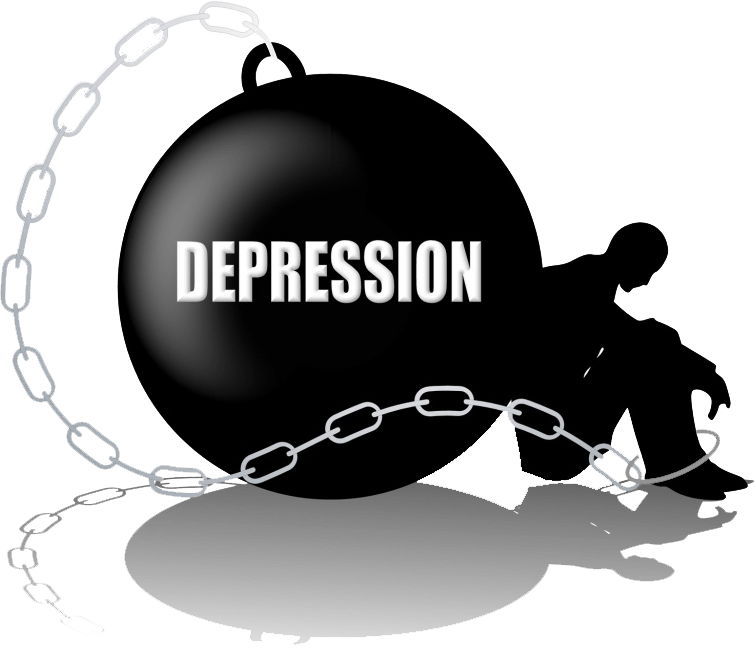
Does Depression Alter Brain Structure?

Research suggests our brain looks different if we have depression.

These differences seem to be caused by depression, rather than precede it.

When neuroscientists compare the brains of individuals with and without depression, there are common dissimilarities.

For example, individuals with depression tend to have a smaller hippocampus, a brain region important in forming memories.

However, it has been difficult to work out whether such differences cause the symptoms of depression or result from the disorder.

To try and find out which, Heather Whalley and her colleagues at the University of Edinburgh made use of two huge genetic databases.

  • Consumer genetic testing company 23andMe holds information on the DNA and depressive symptoms of tens of thousands of individuals; and
  • The UK Biobank collects DNA, lifestyle and behaviour questionnaires and brain scans from thousands more.

Whalley and colleagues used this, as well as earlier research, to create a polygenic risk score (PRS) for depression (A PRS assigns weight to various genetic factors thought to contribute to the risk of a condition).

They made sure the PRS worked by testing it in a separate group of 11,214 people. They then assessed the brain scans and behaviour records of individuals with a PRS that put them at risk of depression. Individuals with higher genetic risk tended to have less white matter in their brains, and it did not seem to function as well. White matter is the tissue that makes up most of our brains.

Whalley and her colleagues then analysed how closely both brain structure and symptoms of depression were related to genetic factors.

Genes are present from birth, so if genetic factors are more closely linked to symptoms, for example, that suggests the symptoms were present before the brain structure differences.

They found that many brain differences appear to be caused by depression. There was one exception: differences in a brain structure called the anterior thalamic radiation appear to come before depression (Shen, Howard & Adams, 2019).

This suggests the genes that puts an individual at risk of depression do so via this structure.

Whalley’s team also found that a combination of childhood trauma and poverty leaves individuals at greatest risk of depression.

Behaviours linked to depression could end up impacting the brain’s white matter connections more generally. It might be that patients with depression do not use some of the brain connections that others would use.

Being socially withdrawn, or focusing more on the negative than the positive, could have an effect. For example, it is known that if we do not use a pathway in the brain, that pathway starts to shrink.

References

Hamzelou, J. (2019) Depression Alters Brain Structure. New Scientist. 19 October 2019, pp.16.

Shen, X., Howard, D.M. & Adams, M.J. (2019) A phenome-wide association and Mendelian Randomisation study of polygenic risk for depression in UK Biobank. Available from World Wide Web: https://www.biorxiv.org/content/10.1101/617969v1. [Accessed: 31 January, 2020].