Who was Samuel Slavson (1890-1981)?

Introduction

Samuel Richard Slavson (25 December 1890 to 05 August 1981) was an American engineer, journalist and teacher, who began to engage in group analysis in 1919. He is considered one of the pioneers of group psychotherapy for his contributions to its recognition as a scientific discipline. Slavson wrote over 20 books and served as the founding president of the American Group Psychotherapy Association (AGPA). He also established children’s group therapy and developed a specific small group model.

Life and Work

Slavson, born Amstislavski, came to New York in 1903 after escaping the Ukrainian pogroms. Early on, he became involved in self-culture clubs for children and young people. While studying to become a civil engineer, he developed youth support programmes, because he believed there was inherent creative potential in every human being. He sympathized with the ideas of progressive education and Freud’s theories, as well as the child guidance movement. He was also a part of the Jewish Board of Guardians in New York, a care centre for girls and boys with developmental disabilities, where he worked from 1934 to 1956. In 1934, he was able to start proving the efficacy of group work with emotional disorders.

In 1943, Slavson published An introduction to Group Therapy, the first and fundamental work on the use of group psychotherapy with children and youth. This work gained wide recognition and was for instance ranked by the Menninger Foundation among the 10 Classics of Psychotherapy. He was a founding member and the first President of the AGPA, which was keen to be well-recognised by psychiatrists; all of the 12 direct successors of the non-medical practitioner Slavson were in fact psychiatrists. Moreover, Slavson – who still exerted substantial influence in the organisation after the end of his presidency in 1940 – strictly ensured that the institution remained classically Freudian, orthodox and in a clear defensive position to Neo-Freudians, existentialists and transactional analysts. Slavson worked as a teacher, supervisor and de facto editor of the International Journal of Group Psychology, at both the national and international level. His was involved in a decades-long controversy and rivalry with Jacob L. Moreno, the founder of psychodrama.

According to Stumm et al. (1992):

“Slavson justified the recognition of group psychotherapy as a scientific discipline, provided fundamental theoretical contributions to this end and established a professional organization in the United States, which laid out binding guidelines for qualified training for the first time.”

Children’s Group Psychotherapy

Slavson is considered the founder of children’s group psychotherapy. He saw games as methods of therapy and used modelling clay, puppet theatres and building blocks. He believed that by these means, children would develop their social skills and strengthen their community spirit. He said that children can change their behaviour while in a group of peers, believing that an otherwise quiet child becomes more open and bold and that a loud child becomes more reserved. He believed children would be able to relate to each other’s problems. Through the group, according to Slavson, a feeling of unity can be created and a sense of identity can become strengthened. Developmentally, he thought this is particularly important for children aged 6 to 7 years.

Small Group Model

After decades of work with children and young people, in the late 1940s Slavson started working with adults as well. His small group model is designed for a maximum of 8 participants and is based on groups homogeneous in terms of age, sex and symptoms. Slavson developed several disorder-specific models, with exact descriptions for clinical use. Distinctions were made between counselling, guidance and psychotherapy. His parent groups around child welfare were particularly well known as well as vita-erg therapy with psychotic women.

In 1964, Slavson put forward a summary of his theoretical developments and practical experience in the volume A Textbook in Analytic Group Psychotherapy. He combined Freud’s theory of psychosexual development with terms from the field of sociology and recognized the human search for relationships and acceptance as a primary need. He saw the group as an “I (ego) therapy” within a collective “we-superego”, which opens up a path out of selfishness and psychological isolation. He is credited for synthesizing the principles of the founding generation of psychoanalytical theory with the requirements of American psychiatry.

Awards

1969 Award from the American Academy of Psychotherapists
1972 Father of group psychotherapy

In Popular Culture

  • A. Klein: He lets them grow. Survey 85 (1949): 75-80
  • Hyman Spotnitz: In tribute to S.R.Slavson. Intern’ Journal of Group Psychotherapy 21 (1971): 402-405
  • Scheidlinger/Schamess: Fifty years of AGPA 1942–1992: An overview. Intern’ Journal of Group Psychotherapy 42 (1992): 1-22

This page is based on the copyrighted Wikipedia article < https://en.wikipedia.org/wiki/Samuel_Slavson >; it is used under the Creative Commons Attribution-ShareAlike 3.0 Unported License (CC-BY-SA). You may redistribute it, verbatim or modified, providing that you comply with the terms of the CC-BY-SA.

What is the American Group Psychotherapy Association?

Introduction

The American Group Psychotherapy Association (AGPA) is a not-for-profit multi-disciplinary organisation dedicated to enhancing the practice, theory and research of group psychotherapy.

Brief History

The inception of the American Group Psychotherapy Association began in 1942 with the actual decision to found the organisation being made in February 1943 during a meeting of the American Orthopsychiatric Association in New York City. The organisation was first named the American Group Therapy Association. In 1952, the name was officially changed to the American Group Psychotherapy Association. Samuel R. Slavson was one of the founders and served as the first president of the AGPA.

Membership

American Group Psychotherapy Association is a national organisation with over 2000 members internationally and 31 affiliate societies. Members come from disciplines such as psychology, creative art therapy, psychiatry, nursing, social work, professional counselling, addictions, and marriage and family therapy. AGPA’s annual meeting attracts approximately 1000 attendees.

Certification

The International Board for Certification of Group Psychotherapists is a not-for-profit corporation formed to function autonomously from AGPA. The International Board for Certification of Group Psychotherapists (IBCGP) awards group therapists certification after they have presented documentation demonstrating the completion of a significant amount of training through coursework, experience, and supervision. A Certified Group Psychotherapist (CGP) is also required to continue lifelong learning by obtaining continuing education credits (CEU’s) in effective leadership of psychotherapy groups.

Organisational Involvement

The diversity of AGPA membership has been actively involved in the promotion of group therapy as an alternative treatment to the public and private sectors. The development of ethical and practice standards. AGPA membership has also responded to the nation’s disasters; for example, September 11 and Hurricane Katrina. AGPA has also developed a set of standards of practice for group therapy for use by practitioners. This resource assists the clinician in the development of evidence-based and best practices. AGPA does not de-certify its members or monitor its membership for quality of practice, instead, they go by the state licensing. The only time an AGPA member would lose their CGP certification is if their license was suspended by their state’s board of psychologists.

This page is based on the copyrighted Wikipedia article < https://en.wikipedia.org/wiki/American_Group_Psychotherapy_Association >; it is used under the Creative Commons Attribution-ShareAlike 3.0 Unported License (CC-BY-SA). You may redistribute it, verbatim or modified, providing that you comply with the terms of the CC-BY-SA.
What is a Therapeutic Community?

Introduction

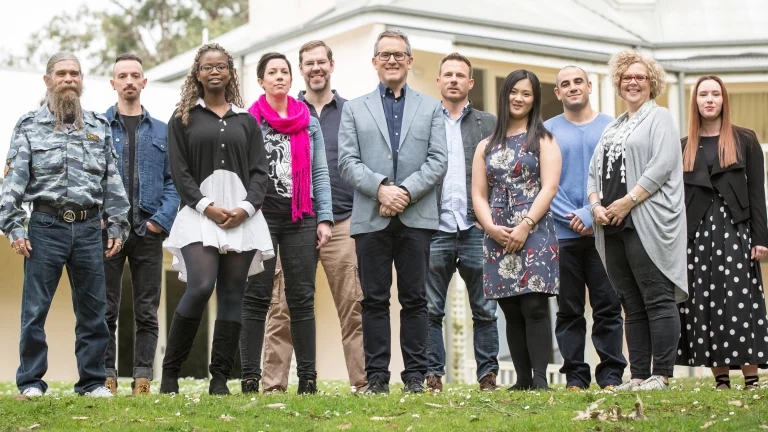
Therapeutic community is a participative, group-based approach to long-term mental illness, personality disorders and drug addiction. The approach was usually residential, with the clients and therapists living together, but increasingly residential units have been superseded by day units. It is based on milieu therapy principles, and includes group psychotherapy as well as practical activities.

Therapeutic communities have gained some reputation for success in rehabilitation and patient satisfaction in the UK and abroad. In the UK, ‘democratic analytic’ therapeutic communities have tended to specialise in the treatment of moderate to severe personality disorders and complex emotional and interpersonal problems. The evolution of therapeutic communities in the US has followed a different path with hierarchically arranged communities (or concept houses) specialising in the treatment of drug and alcohol dependence.

Brief History

Antecedents

There are several antecedents to the therapeutic community movement. One of the earliest is the change in treatment of institutionalised patients in the late 18th century, continuing throughout the 19th century. A major contributor to this change is Philippe Pinel, a French physician who advocated for a more humane treatment of psychiatric patients. In the UK William Tuke founded the Retreat where patients were treated according to humanitarian principles, called moral treatment. Tuke based the treatment of mentally ill people partly on the Quaker ideology. The influence of Quaker principles continues through out the development of the therapeutic community.

Moral treatment focused on a more humane treatment of patients and a stimulating environment that engages them in healthy behaviour. An important distinction between the later therapeutic community is the strong hierarchy in moral treatment facilities. The superintendent had authority over and responsibility of the patients. The patients followed a strict schedule to promote obedience and self-control.

After the First World War, multiple varieties of living-and-learning communities for young adults were established. Examples are the Little Commonwealth school run by Homer Lane and the Q camps initiated by Marjorie Franklin. The Q camps were based on Planned Environmental Therapy, which focused on normally functioning parts of a patient’s personality and use them to deal with difficult social situations. These projects all emphasized shared responsibility and decision-making and participation in the community. What influenced the establishment of these projects were, among others, the developments in psychoanalytic theory in the UK.

United Kingdom

The work conducted by pioneering NZ plastic surgeon Archibald McIndoe at Queen Victoria Hospital and others at Northfield Military Hospital during World War II is considered by many psychiatrists to have been the first example of an intentional therapeutic community. But this story is prone to adopt a origin myth approach. The principles developed at Northfield were also developed and adapted at Civil Resettlement Units established at the end of the war to help returning prisoners of war to adapt back to civilian society and for civilians to adapt to having these men back amongst them.

The term was coined by Thomas Main in his 1946 paper, “The hospital as a therapeutic institution”, and subsequently developed by others including Maxwell Jones, R.D. Laing at the Philadelphia Association, David Cooper at Villa 21, and Joshua Bierer.

Under the influence of Maxwell Jones, Main, Wilmer and others (Caudill 1958; Rapoport 1960), combined with the publications of critiques of the existing mental health system (Greenblatt et al. 1957, Stanton and Schwartz 1954) and the sociopolitical influences that permeated the psychiatric world towards the end of and following the Second World War, the concept of the therapeutic community and its attenuated form – the therapeutic milieu – caught on and dominated the field of inpatient psychiatry throughout the 1960s.

The first development of therapeutic community in a large institution took place at Claybury Hospital under the guidance of Denis Martin and John Pippard. Beginning in 1955 it involved over 2,000 patients and hundreds of staff. The aim of therapeutic communities was a more democratic, user-led form of therapeutic environment, avoiding the authoritarian and demeaning practices of many psychiatric establishments of the time. The central philosophy is that clients are active participants in their own and each other’s mental health treatment and that responsibility for the daily running of the community is shared among the clients and the staff. One phrase commonly used to summarise this treatment philosophy is ‘the Community as Doctor’. ‘TC’s have sometimes eschewed or limited medication in favour of group-based therapies.

The Henderson Hospital first established in 1947 by Maxwell Jones and named after David Henderson evolved the specific concept of Democratic Therapeutic Community (DTC). Admission to and early discharge from the one year of residential treatment was by majority vote and residents of the DTC always held the majority in these votes. No psychotropic medication or one to one therapy sessions were available and so all the work of the DTC was pursued, on the one hand, in small or larger therapy groups or work groups and community meetings, which could be called (by the residents) day or night; and on the other hand, in the unstructured time in between these more formal spaces, in which belonging in and membership of a living community could become in itself a healing experience. The Henderson Hospital DTC became an international centre of excellence for the care of survivors of severe trauma who did not fall under conventional psychiatric classifications and towards the end of the twentieth century it was funded to replicate the treatment model in two other DTCs: Main House in Birmingham and Webb House in Crewe.

The availability of the treatment on the National Health Service in the UK came under threat because of changes in funding systems. Researchers at the University of Oxford and King’s College London studied one of these national Democratic Therapeutic Community services over four years and found external policy ‘steering’ by officials eroded the community’s democratic model of care, which in turn destabilised its well established approach to clinical risk management (this had been jointly developed by clients and staff). Fischer (2012), who studied this community’s development at first hand, described how an ‘intractable conflict’ between embedded and externally imposed management models led to escalating organisational ‘turbulence’, producing an interorganisational crisis which led to the unit’s forced closure. The three ‘Henderson’ DTCs had all closed their doors by 2008.

However, development of ‘mini’ therapeutic communities, meeting for three or fewer days each week and supported out of hours by various forms of ‘service user led informal networks of care’ (for example telephone, texting and physical support), now offers a more resource and cost effective alternative to traditional inpatient therapeutic communities. The most recent exponent, the North Cumbria model, uses a dedicated out of hours website moderated by service users according to therapeutic community principles. This extends the community beyond the face to face ‘therapeutic days’. The website guarantees a safe group-based response not always possible with other systems. The use of ‘starter’ groups as a preparation for entry into therapeutic communities has lowered attrition rates and they now represent a cost-effective model still aimed at producing durable personal and intergenerational effects; this is at odds with the current trend towards the defensive needs of service providers, rather than service users, for less intensive treatments and management of pathways to control risk.

United States

In the late 1960s within the US correctional system, the Asklepion Foundation initiated therapeutic communities in the Marion Federal Penitentiary and other institutions that included clinical intervention based upon Transactional Analysis, the Synanon Game, internal twelve-step programmes and other therapeutic modalities. Some of these programmes lasted into the mid-1980s, such as the House of Thought in the Virginia Correctional system, and were able to demonstrate a reduction of 17% in recidivism in a matched-pair study of drug-abusing felons and sex offenders who participated in the program for one year or more.

Modified therapeutic communities are currently used for substance abuse treatment in correctional facilities of several US states including Pennsylvania, Washington, Colorado, Texas, Delaware, and New York. In New York City, a programme for men is located in the Arthur Kill Correctional Facility on Staten Island and the women’s programme is part of the Bayview Correctional Facility in Manhattan.

Main Ideas

The therapeutic community approach aims to help patients deal with social situations and to change perceptions they have about themselves. Difficult situations are re-enacted and experienced and patients are encouraged to examine and try to learn from them with the help of group and individual therapy. The communities function as a living-and-learning situations, where every interaction can serve as a learning moment.

There is no encompassing definition of what a therapeutic community should be. Some have therefore also argued that it follows a family resemblance. A common conception of therapeutic community is a group of people living together in a non-hierarchical, democratic way that brings psychological awareness of individual as well as group processes. Furthermore, the community has clear boundaries of place, time and roles of the participants. They are democratic because the patients are involved in decision-making to encourage a sense of responsibility. This is fostered by the non-hierarchical structure that tries to minimise dependency on the staff.

A key principle is the creation of a culture of enquiry. Everyone within the community is encouraged to reflect and ask question about themselves and others. In this way the participants are supported by continuous feedback to create better self-awareness.

The therapeutic community approach is informed by systems theory, organisation theory and psychoanalytic practice.

Effectiveness

As an intervention model for drug-using offenders with co-occurring mental health disorders, therapeutic communities may help people reduce drug use and subsequent criminal activity. Research evidence for the effectiveness of therapeutic community treatment is substantial and a demonstration of the cost efficacy of a year of residential therapeutic community treatment was instrumental in funding being granted in the late 1990s for the replication of the Henderson Hospital DTC.

In Popular Culture

  • The Alfred Hitchcock film Spellbound takes place within a therapeutic community called Green Manors.
  • Leonard Cohen and his touring band The Army gave an impromptu concert at the Henderson Hospital DTC in August 1970, just before the Isle of Wight Festival, after being invited by one of the residents.

This page is based on the copyrighted Wikipedia article < https://en.wikipedia.org/wiki/Therapeutic_community >; it is used under the Creative Commons Attribution-ShareAlike 3.0 Unported License (CC-BY-SA). You may redistribute it, verbatim or modified, providing that you comply with the terms of the CC-BY-SA.
A Brief Overview of Hollymoor Hospital

Introduction

Hollymoor Hospital was a psychiatric hospital located at Tessall Lane, Northfield in Birmingham, England, and is famous primarily for the work on group psychotherapy that took place there in the years of the Second World War. It closed in 1994.

Refer to Group Analysis.

History

Construction and Expansion

The hospital, which was designed by William Martin and Frederick Martin using a Compact Arrow layout, was built as an annexe to Rubery Lunatic Asylum by Birmingham Corporation and opened 06 May 1905. During the First World War, Hollymoor was commandeered and became known as the 2nd Birmingham War Hospital.

The Northfield Experiments

During the Second World War, the hospital was again converted to a military hospital in 1940. In April 1942 it became a military psychiatric hospital and became known as Northfield Military Hospital. In 1942, while Northfield was serving as a military hospital, psychoanalysts Wilfred Bion and John Rickman set up the first Northfield experiment. Bion and Rickman were in charge of the training and rehabilitation wing of Northfield, and ran the unit along the principles of group dynamics. Their aim was to improve morale by creating a “good group spirit” (esprit de corps). Though he sounded like a traditional army officer Bion’s means were very unconventional. He was in charge of around one hundred men. He told them that they had to do an hour’s exercise every day and that each had to join a group: “handicrafts, Army courses, carpentry, map-reading, sand-tabling etc…. or form a fresh group if he wanted to do so”. While this may have looked like traditional occupational therapy, the real therapy was the struggle to manage the interpersonal strain of organising things together, rather than simply weaving baskets. Those unable to join a group would have to go to the rest-room, where a nursing orderly would supervise a quiet regime of “reading, writing or games such as draughts… any men who felt unfit for any activity whatever could lie down”. The focus of every day was a meeting of all the men, referred to as a parade.

“.. a parade would be held every day at 12.10 p.m. for making announcements and conducting other business of the training wing. Unknown to the patients, it was intended that this meeting, strictly limited to 30 minutes, should provide an occasion for the men to step outside their framework and look upon its working with the detachment of spectators. In short it was intended to be the first step towards the elaboration of therapeutic seminars. For the first few days little happened; but it was evident that amongst patients a great deal of discussion and thinking was taking place”

The experiment had to close after six weeks as the military authorities did not approve of it and ordered the transfer of Bion and Rickman (who were members of the Royal Army Medical Corps). The second Northfield experiment, which was based on the ideas of Bion and Rickman and used group psychotherapy, was started the following year by Siegmund Foulkes, who was more successful at gaining the support of the military authorities. One of the military psychiatrists involved in the project was Lieutenant Colonel T.F. Main, who coined the term therapeutic community, and saw the potential of the experiments in the development of future therapeutic communities.

Northfield Military Hospital was the setting for Sheila Llewellyn’s novel Walking Wounded, published in 2018.

Decline and Closure

Poet Vernon Scannell was a patient at the hospital in 1947. By 1949 Hollymoor Hospital was recognisably distinct from Rubery Hill Hospital. It held 590 patients, falling slowly to 490 by 1984, and then dropping rapidly to 139 by 1994. After the introduction of Care in the Community in the early 1980s, the hospital went into a period of decline and closed in July 1994. It was subsequently largely demolished.

This page is based on the copyrighted Wikipedia article < https://en.wikipedia.org/wiki/Hollymoor_Hospital >; it is used under the Creative Commons Attribution-ShareAlike 3.0 Unported License (CC-BY-SA). You may redistribute it, verbatim or modified, providing that you comply with the terms of the CC-BY-SA.