On This Day … 19 April [2022]

People (Births)

  • 1874 – Ernst Rüdin, Swiss psychiatrist, geneticist, and eugenicist (d. 1952).

Ernst Rudin

Ernst Rüdin (19 April 1874 to 22 October 1952) was a Swiss-born German psychiatrist, geneticist, eugenicist and Nazi.

Rising to prominence under Emil Kraepelin and assuming his directorship at what is now called the Max Planck Institute of Psychiatry in Munich. While he has been credited as a pioneer of psychiatric inheritance studies, he also argued for, designed, justified and funded the mass sterilisation and clinical killing of adults and children.

On This Day … 18 April [2022]

People (Deaths)

  • 1917 – Vladimir Serbsky, Russian psychiatrist and academic (b. 1858).

Vladimir Serbsky

Vladimir Petrovich Serbsky (Russian: Влади́мир Петро́вич Се́рбский, 26 February 1858 to 18 April 1917) was a Russian psychiatrist and one of the founders of forensic psychiatry in Russia.

The author of The Forensic Psychopathology, Serbsky thought delinquency to have no congenital basis, considering it to be caused by social reasons.

The Central Institute of Forensic Psychiatry was named after Serbsky in 1921. Now the facility is known as the Serbsky Centre (Serbsky State Scientific Centre for Social and Forensic Psychiatry).

On This Day … 15 April [2022]

People (Deaths)

  • 1920 – Thomas Szasz, Hungarian-American psychiatrist and academic (d. 2012).
  • 1931 – Tomas Tranströmer, Swedish poet, translator, and psychologist Nobel Prize laureate (d. 2015).

Thomas Szasz

Thomas Stephen Szasz (15 April 1920 to 08 September 2012) was a Hungarian-American academic and psychiatrist. He served for most of his career as professor of psychiatry at the State University of New York Upstate Medical University in Syracuse, New York.

A distinguished lifetime fellow of the American Psychiatric Association and a life member of the American Psychoanalytic Association, he was best known as a social critic of the moral and scientific foundations of psychiatry, as what he saw as the social control aims of medicine in modern society, as well as scientism. His books The Myth of Mental Illness (1961) and The Manufacture of Madness (1970) set out some of the arguments most associated with him.

Szasz argued throughout his career that mental illness is a metaphor for human problems in living, and that mental illnesses are not “illnesses” in the sense that physical illnesses are, and that except for a few identifiable brain diseases, there are “neither biological or chemical tests nor biopsy or necropsy findings for verifying DSM diagnoses.”

Szasz maintained throughout his career that he was not anti-psychiatry but rather that he opposed coercive psychiatry. He was a staunch opponent of civil commitment and involuntary psychiatric treatment, but he believed in and practiced psychiatry and psychotherapy between consenting adults.

Tomas Transtromer

Tomas Gösta Tranströmer (15 April 1931 to 26 March 2015) was a Swedish poet, psychologist and translator.

His poems captured the long Swedish winters, the rhythm of the seasons and the palpable, atmospheric beauty of nature. Tranströmer’s work is also characterised by a sense of mystery and wonder underlying the routine of everyday life, a quality which often gives his poems a religious dimension. He has been described as a Christian poet.

Tranströmer is acclaimed as one of the most important Scandinavian writers since the Second World War. Critics praised his poetry for its accessibility, even in translation. His poetry has been translated into over 60 languages. He was the recipient of the 1990 Neustadt International Prize for Literature, the 2004 International Nonino Prize, and the 2011 Nobel Prize in Literature.

On This Day … 13 April [2022]

People (Births)

Jacques Lacan

Jacques Marie Émile Lacan (13 April 1901 to 09 September 1981) was a French psychoanalyst and psychiatrist who has been called “the most controversial psycho-analyst since Freud“. Giving yearly seminars in Paris from 1953 to 1981, Lacan’s work has marked the French and international intellectual landscape, having made a significant impact on continental philosophy and cultural theory in areas such as post-structuralism, critical theory, feminist theory and film theory as well as on psychoanalysis itself.

Lacan took up and discussed the whole range of Freudian concepts emphasising the philosophical dimension of Freud’s thought and applying concepts derived from structuralism in linguistics and anthropology to its development in his own work which he would further augment by employing formulae from predicate logic and topology. Taking this new direction, and introducing controversial innovations in clinical practice, led to expulsion for Lacan and his followers from the International Psychoanalytic Association. In consequence Lacan went on to establish new psychoanalytic institutions to promote and develop his work which he declared to be a “return to Freud” in opposition to prevalent trends in psychoanalysis collusive of adaptation to social norms.

Who was Philippe Pinel?

Introduction

Philippe Pinel (20 April 1745 to 25 October 1826) was a French physician, precursor of psychiatry and incidentally a zoologist.

He was instrumental in the development of a more humane psychological approach to the custody and care of psychiatric patients, referred to today as moral therapy. He worked for the abolition of the shackling of mental patients by chains and, more generally, for the humanisation of their treatment. He also made notable contributions to the classification of mental disorders and has been described by some as “the father of modern psychiatry”.

After the French Revolution, Dr. Pinel changed the way we look at the crazy (or “aliénés”, “alienated” in English) by claiming that they can be understood and cured. An 1809 description of a case that Pinel recorded in the second edition of his textbook on insanity is regarded by some as the earliest evidence for the existence of the form of mental disorder later known as dementia praecox or schizophrenia, although Emil Kraepelin is generally accredited with its first conceptualisation.

“Father of modern psychiatry”, he was credited with the first classification of mental illnesses. He had a great influence on psychiatry and the treatment of the alienated in Europe and the United States.

Early Life

Pinel was born in Jonquières, the South of France, in the modern department of Tarn. He was the son and nephew of physicians. After receiving a degree from the faculty of medicine in Toulouse, he studied an additional four years at the Faculty of Medicine of Montpellier. He arrived in Paris in 1778.

He spent fifteen years earning his living as a writer, translator, and editor because the restrictive regulations of the old regime prevented him from practicing medicine in Paris. The faculty did not recognize a degree from a provincial university like Toulouse. He failed twice in a competition which would have awarded him funds to continue his studies. In the second competition, the jury stressed his ‘painful’ mediocrity in all areas of medical knowledge, an assessment seemingly so grossly incompatible with his later intellectual accomplishments that political motives have been suggested. Discouraged, Pinel considered emigrating to America. In 1784 he became editor of the medical journal the Gazette de santé, a four-page weekly. He was also known among natural scientists as a regular contributor to the Journal de physique. He studied mathematics, translated medical works into French, and undertook botanical expeditions.

At about this time he began to develop an intense interest in the study of mental illness. The incentive was a personal one. A friend had developed a ‘nervous melancholy’ that had ‘degenerated into mania’ and resulted in suicide. What Pinel regarded as an unnecessary tragedy due to gross mismanagement seems to have haunted him. It led him to seek employment at one of the best-known private sanatoria for the treatment of insanity in Paris. He remained there for five years prior to the Revolution, gathering observations on insanity and beginning to formulate his views on its nature and treatment.

Pinel was an Ideologue, a disciple of the abbé de Condillac. He was also a clinician who believed that medical truth was derived from clinical experience. Hippocrates was his model.

During the 1780s, Pinel was invited to join the salon of Madame Helvétius. He was in sympathy with the French Revolution. After the revolution, friends he had met at Madame Helvétius’ salon came to power. In August 1793 Pinel was appointed “physician of the infirmeries” at Bicêtre Hospital. At the time it housed about four thousand imprisoned men – criminals, petty offenders, syphilitics, pensioners and about two hundred mental patients. Pinel’s patrons hoped that his appointment would lead to therapeutic initiatives. His experience at the private sanatoria made him a good candidate for the job.

The Bicêtre and Salpêtrière

Soon after his appointment to Bicêtre Hospital, Pinel became interested in the seventh ward where 200 mentally ill men were housed. He asked for a report on these inmates. A few days later, he received a table with comments from the “governor” Jean-Baptiste Pussin. In the 1770s Pussin had been successfully treated for scrofula at Bicêtre; and, following a familiar pattern, he was eventually recruited, along with his wife, Marguerite Jubline, on to the staff of the hospice.

Appreciating Pussin’s outstanding talent, Pinel virtually apprenticed himself to that unschooled but experienced custodian of the insane. His purpose in doing this was to “enrich the medical theory of mental illness with all the insights that the empirical approach affords”. What he observed was a strict nonviolent, nonmedical management of mental patients that came to be called moral treatment or moral management, though psychological might be a more accurate term.

Although Pinel always gave Pussin the credit he deserved, a legend grew up about Pinel single-handedly liberating the insane from their chains at Bicetre. This legend has been commemorated in paintings and prints, and has lived on for 200 years and is repeated in textbooks. In fact, it was Pussin who removed the iron shackles (but sometimes using straitjackets) at Bicêtre in 1797, after Pinel had left for the Salpêtrière. Pinel did remove the chains from patients at the Salpêtrière three years later, after Pussin joined him there. There is some suggestion that the Bicetre myth was actually deliberately fabricated by Pinel’s son, Dr Scipion Pinel, along with Pinel’s foremost pupil, Dr Esquirol. The argument is that they were ‘solidists’, which meant then something akin to biological psychiatry with a focus on brain disease, and were embarrassed by Pinel’s focus on psychological processes. In addition, unlike Philippe, they were both royalists.

While at Bicêtre, Pinel did away with bleeding, purging, and blistering in favour of a therapy that involved close contact with and careful observation of patients. Pinel visited each patient, often several times a day, and took careful notes over two years. He engaged them in lengthy conversations. His objective was to assemble a detailed case history and a natural history of the patient’s illness.

In 1795, Pinel became chief physician of the Hospice de la Salpêtrière, a post that he retained for the rest of his life. The Salpêtrière was, at the time, like a large village, with seven thousand elderly indigent and ailing women, an entrenched bureaucracy, a teeming market and huge infirmaries. Pinel missed Pussin and in 1802 secured his transfer to the Salpêtrière. It has also been noted that a Catholic nursing order actually undertook most of the day to day care and understanding of the patients at Salpêtrière, and there were sometimes power struggles between Pinel and the nurses.

Pinel created an inoculation clinic in his service at the Salpêtrière in 1799, and the first vaccination in Paris was given there in April 1800.

In 1795 Pinel had also been appointed as a professor of medical pathology, a chair that he held for twenty years. He was briefly dismissed from this position in 1822, with ten other professors, suspected of political liberalism, but reinstated as an honorary professor shortly thereafter.

A statue in honour of Pinel now stands outside the Salpêtrière.

Publications

In 1794 Pinel made public his essay ‘Memoir on Madness’, recently called a fundamental text of modern psychiatry. In it Pinel makes the case for the careful psychological study of individuals over time, points out that insanity is not always continuous, and calls for more humanitarian asylum practices.

In 1798 Pinel published an authoritative classification of diseases in his Nosographie philosophique ou méthode de l’analyse appliquée à la médecine. Although he is properly considered one of the founders of psychiatry, this book also establishes him as the last great nosologist of the eighteenth century. While the Nosographie appears completely dated today, it was so popular in its time that it went through six editions between its initial publication and 1818. Pinel based his nosology on ideas of William Cullen, employing the same biologically-inspired terminology of ‘genera’ and ‘species’ of disorder. Pinel’s classification of mental disorder simplified Cullen’s ‘neuroses’ down to four basic types of mental disorder: melancholia, mania (insanity), dementia, and idiotism. Later editions added forms of ‘partial insanity’ where only that of feelings which seem to be affected rather than reasoning ability.

The first mental derangement is called melancholia. The symptoms are described as “taciturnity, a thoughtful pensive air, gloomy suspicions, and a love of solitude.” It is noted that Tiberius and Louis XI were subjected to this temperament. Louis was characterised by the imbalance between the state of bitterness and passion, gloom, love of solitude, and the embarrassment of artistic talents. However, Louis and Tiberius were similar in that they both were deceitful and planned a delusional trip to military sites. Eventually both were exiled, one to the Isle of Rhodes and the other to a province of Belgium. People with melancholia are often immersed with one idea that their whole attention is fixated on. On one hand they stay reserved for many years, withholding friendships and affection while on the other, there are some who make reasonable judgment and overcome the gloomy state.  Melancholia can also express itself in polar opposite forms. The first is distinguished by an exalted sense of self-importance and unrealistic expectations such as attaining riches and power. The second form is marked by deep despair and great depression.  Overall individuals with melancholia generally do not display acts of violence, though they may find it wildly fanciful. Depression and anxiety occurs habitually as well as frequent moroseness of character.  Pinel remarks that melancholia can be explained by drunkenness, abnormalities in the structure of the skull, trauma in the skull, conditions of the skin, various psychological causes such as household disasters and religious extremism, and in women, menstruation and menopause. 

The second mental derangement is called mania without delirium. It is described as madness independent of a disorder that impairs the intellectual faculties. The symptoms are described as perverse and disobedient.  An instance where this type of species of mental derangement occurs where a mechanic, who was confined at the Asylum de Bicetre, experienced violent outbursts of maniacal fury. The paroxysms consisted of a burning sensation located in the abdominal area that was accompanied by constipation and thirst. The symptom spread to the chest, neck, and face area. When it reached the temples, the pulsation of the arteries increased in those areas. The brain was affected to some length but nonetheless, the patient was able to reason and cohere to his ideas. One time the mechanic experienced furious paroxysm at his own house where he warned his wife to flee to avoid death. He also experienced the same periodical fury at the asylum where he plotted against the governor.  The specific character of mania without delirium is that it can either be perpetual or sporadic. However, there was no reasonable change in the cognitive functions of the brain; only pervasive thoughts of fury and a blind tendency to acts of violence.

The third mental derangement is called mania with delirium. It is mainly characterised by indulgence and fury, and affects cognitive functions. Sometimes it may be distinguished by a carefree, gay humour that can venture off path in incoherent and absurd suggestions. Other times it can be distinguished by prideful and imaginary claims to grandeur. Prisoners of this species are highly delusional. For example, they would proclaim having fought an important battle, or witness the prophet Mohammad conjuring wrath in the name of the Almighty. Some declaim ceaselessly with no evidence of things seen or heard while others saw illusions of objects in various forms and colours. Delirium sometimes persists with some degree of frenzied uproar for a period of years, but it can also be constant and the paroxysm of fury repeat at different intervals. The specific character of mania with delirium is the same as mania without delirium in the sense that it can either be continued or cyclical with regular or irregular paroxysms. It is marked by strong nervous excitement, accompanied by a deficit of one or more of the functions of the cognitive abilities with feelings of liveliness, depression or fury.

The fourth mental derangement is called dementia, or otherwise known as the abolition of thinking. The characteristics include thoughtlessness, extreme incorrectness, and wild abnormalities. For instance, a man who had been educated on the ancient nobility was marching on about the beginning of the revolution. He moved restlessly about the house, talking endlessly and shouting passionately on insignificant reasons. Dementia is usually accompanied by raging and rebellious movement, by a quick succession of ideas formed in the mind, and by passionate feelings that are felt and forgotten without attributing it to objects.  Those who are in captive of dementia have lost their memory, even those attributed to their loved ones. Their only memory consists of those in the past. They forget instantaneously things in the present – seen heard or done. Many are irrational because the ideas do not flow coherently.  The characteristic properties of dementia are that there is no judgment value and the ideas are spontaneous with no connection.  The specific character of dementia contains a rapid progression or continual succession of isolated ideas, forgetfulness of previous condition, repetitive acts of exaggeration, decreased responsiveness to external influence, and complete lack of judgement.

The fifth and last mental derangement is called idiotism, or otherwise known as “obliteration of the intellectual faculties and affections.”  This disorder is derived from a variety of causes, such as extravagant and debilitating delight, alcohol abuse, deep sorrow, diligent study, aggressive blows to the head, tumours in the brain, and loss of consciousness due to blockage in vein or artery. Idiotism embodies a variety of forms. One such form is called Cretinism, which is a kind of idiotism that is relative to personal abnormalities. It is well known in the Valais and in parts of Switzerland.   Most people who belong in this group are either deficient in speech or limited to the inarticulate utterances of sounds. Their expressions are emotionless, senses are dazed and motions are mechanical. Idiots also constitute the largest number of patients at hospitals. Individuals who have acute responsiveness can experience a violent shock to the extreme that all the activities of the brain can either be arrested in an action or eradicated completely. Unexpected happiness and exaggerated fear may likely occur as a result of a violent shock.  As mentioned previously, idiotism is the most common among hospital patients and is incurable. At the Bicetre asylum, these patients constitute one fourth of the entire population. Many die after a few days of arrival, having been reduced to states of stupor and weakness. However, some who recover with the progressive regeneration of their strength also regain their intellectual capabilities. Many of the young people that have remained in the state of idiotism for several months or years are attacked by a spasm of active mania between twenty and thirty days.  The specific character of idiotism includes partial or complete extermination of the intellect and affections, apathy, disconnected, inarticulate sounds or impairment of speech, and nonsensical outbursts of passion.

In his book Traité médico-philosophique sur l’aliénation mentale; ou la manie, published in 1801, Pinel discusses his psychologically oriented approach. This book was translated into English by D.D. Davis as a Treatise on Insanity in 1806, although Davis substituted Pinel’s introduction for his own, leaving out among other things Pinel’s strong praise for Alexander Crichton. Pinel’s book had an enormous influence on both French and Anglo-American psychiatrists during the nineteenth century. He meant by alienation that the patient feels like a stranger (alienus) to the world of the ‘sane’. A sympathetic therapist living in that world might be able to journey into the patient’s experience, understand the ‘alienated’, their language, and possibly lead them back into society.

In 1802 Pinel published La Médecine Clinique which was based on his experiences at the Salpêtrière and in which he extended his previous book on classification and disease.

Pinel was elected to the Académie des Sciences in 1804 and was a member of the Académie de Médecine from its founding in 1820. He died in Paris on 25 October 1826.

Clinical Approach

Psychological Understanding

The central and ubiquitous theme of Pinel’s approach to aetiology (causation) and treatment was “moral,” meaning the emotional or the psychological not ethical. He observed and documented the subtleties and nuances of human experience and behaviour, conceiving of people as social animals with imagination.

Pinel noted, for example, that:

“being held in esteem, having honor, dignity, wealth, fame, which though they may be factitious, always distressing and rarely fully satisfied, often give way to the overturning of reason”.

He spoke of avarice, pride, friendship, bigotry, the desire for reputation, for conquest, and vanity. He noted that a state of love could turn to fury and desperation, and that sudden severe reversals in life, such as “from the pleasure of success to an overwhelming idea of failure, from a dignified state—or the belief that one occupies one—to a state of disgrace and being forgotten” can cause mania or ‘mental alienation’. He identified other predisposing psychosocial factors such as an unhappy love affair, domestic grief, devotion to a cause carried to the point of fanaticism, religious fear, the events of the revolution, violent and unhappy passions, exalted ambitions of glory, financial reverses, religious ecstasy, and outbursts of patriotic fervour.

Treatments

Pinel developed specific practical techniques, rather than general concepts and assumptions. He engaged in therapeutic conversations to dissuade patients from delusions. He offered benevolent support and encouragement, although patients who persistently resisted or caused trouble might be threatened with incarceration or punishment if they were not able to control themselves.

Pinel argued that psychological intervention must be tailored to each individual rather than be based solely on the diagnostic category, and that it must be grounded in an understanding of the person’s own perspective and history. He noted that “the treatment of insanity (l’aliénation mentale) without considering the differentiating characteristics of the patients [la distinction des espèces] has been at times superfluous, rarely useful, and often harmful”, describing the partial or complete failures of some psychological approaches, as well as the harm that the usual cruel and harsh treatments caused to patients before they came to his hospital. He saw improvement as often resulting from natural forces within the patient, an improvement that treatment could at best facilitate and at worst interfere with.

Pinel’s approach to medical treatments has been described as ambiguous, complex, and ambivalent. He insisted that psychological techniques should always be tried first, for example:

“even where a violent and destructive maniac could be calmed by a single dose of an antispasmodic [he referred to opium], observation teaches that in a great number of cases, one can obtain a sure and permanent cure by the sole method of expectation, leaving the insane man to his tumultuous excitement… …and [furthermore] seeing, again and again, the unexpected resources of nature left to itself or wisely guided, has rendered me more and more cautious with regard to the use of medications, which I no longer employ—except when the insufficiencies of psychological means have been proven.”

For those cases regarded as psychologically incurable, Pinel would employ baths, showers, opium, camphor and other antispasmodics, as well as vesicants, cauterisation, and bloodletting in certain limited cases only. He also recommended the use of laxatives for the prevention of nervous excitement and relapse.

Pinel often traced mental states to physiological states of the body, and in fact could be said to have practiced psychosomatic medicine. In general, Pinel traced organic causes to the gastrointestinal system and peripheral nervous system more often than to brain dysfunction. This was consistent with his rarely finding gross brain pathology in his post-mortem examinations of psychiatric patients, and his view that such findings that were reported could be correlational rather than causative

Management

Pinel was concerned with a balance between control by authority and individual liberty. He believed in “the art of subjugating and taming the insane” and the effectiveness of “a type of apparatus of fear, of firm and consistent opposition to their dominating and stubbornly held ideas”, but that it must be proportional and motivated only by a desire to keep order and to bring people back to themselves. The straitjacket and a period of seclusion were the only sanctioned punishments. Based on his observations, he believed that those who were considered most dangerous and carried away by their ideas had often been made so by the blows and bad treatment they had received, and that it could be ameliorated by providing space, kindness, consolation, hope, and humour.

Because of the dangers and frustrations that attendants experienced in their work, Pinel put great emphasis on the selection and supervision of attendants in order to establish a custodial setting dedicated to norms of constraint and liberty that would facilitate psychological work. He recommended that recovered patients be employed, arguing that “They are the ones who are most likely to refrain from all inhumane treatment, who will not strike even in retaliation, who can stand up to pleading, menaces, repetitive complaining, etc. and retain their inflexible firmness.” Pinel also emphasized the necessity for leadership that was “thoughtful, philanthropic, courageous, physically imposing, and inventive in the development of manoeuvres or tactics to distract, mollify, and impress” and “devoted to the concept of order without violence”, so that patients are “led most often with kindness, but always with an inflexible firmness.” He noted that his ex-patient and superintendent Pussin had showed him the way in this regard, and had also often been better placed to work with patients and develop techniques due to his greater experience and detailed knowledge of the patients as individuals.

Moral Judgements

Pinel generally expressed warm feelings and respect for his patients, as exemplified by: “I cannot but give enthusiastic witness to their moral qualities. Never, except in romances, have I seen spouses more worthy to be cherished, more tender fathers, passionate lovers, purer or more magnanimous patriots, than I have seen in hospitals for the insane, in their intervals of reasonableness and calm; a man of sensibility may go there any day and take pleasure in scenes of compassion and tenderness”. He argued that otherwise positive character traits could cause a person to be vulnerable to the distressing vicissitudes of life, for example “those persons endowed with a warmth of imagination and a depth of sensitivity, who are capable of experiencing powerful and intense emotions, [since it is they] who are most predisposed to mania”.

Pinel distanced himself from religious views, and in fact considered that excessive religiosity could be harmful.

However, he sometimes took a moral stance himself as to what he considered to be mentally healthy and socially appropriate. Moreover, he sometimes showed a condemnatory tone toward what he considered personal failings or vice, for example noting in 1809: “On one side one sees families which thrive over a course of many years, in the bosom of order and concord, on the other one sees many others, especially in the lower social classes, who offend the eye with the repulsive picture of debauchery, arguments, and shameful distress!”. He goes on to describe this as the most prolific source of alienation needing treatment, adding that while some such examples were a credit to the human race many others are “a disgrace to humanity!”

Influence

Pinel is generally seen as the physician who more than any other transformed the concept of ‘the mad’ into that of patients needing care and understanding, establishing a field that would eventually be called psychiatry. His legacy included improvement of asylum conditions; broadly psychosocial (incl. milieu) therapeutic approaches; history-taking; nosography (the science of the description of syndromes); broadly-numerical assessments of courses of illness and treatment responses; and a record of clinical teaching.

Pinel’s actions took place in the context of the Enlightenment, and a number of others were also reforming asylums along humanitarian lines. For example, Vincenzo Chiarugi, in the 1780s in Italy, removed metal chains from patients but did not enjoy the same renown bestowed on the more explicitly humanitarian Pinel who was so visible from late 18th century revolutionary France. In France, Joseph D’Aquin in Chambéry permitted patients to move about freely and published a book in 1791 urging humanitarian reforms, dedicating the second edition in 1804 to Pinel. The movement as a whole become known as moral treatment or moral management, and influenced asylum development and psychological approaches throughout the Western world.

Pinel’s most important contribution may have been the observation and conviction that there could be sanity and rationality even in cases that seemed on the surface impossible to understand, and that this could appear for periods in response to surrounding events (and not just because of such things as the phase of the moon, a still common assumption and the origin of the term lunatic). The influential philosopher Hegel praised Pinel for this approach.

The right psychical treatment therefore keeps in view the truth that insanity is not an abstract loss of reason (neither in the point of intelligence nor of will and its responsibility), but only derangement, only a contradiction in a still subsisting reason; – just as physical disease is not an abstract, i.e. mere and total, loss of health (if it were that, it would be death), but a contradiction in it. This humane treatment, no less benevolent than reasonable (the services of Pinel towards which deserve the highest acknowledgement), presupposes the patient’s rationality, and in that assumption has the sound basis for dealing with him on this side – just as in the case of bodily disease the physician bases his treatment on the vitality which as such still contains health.

Pinel also started a trend for diagnosing forms of insanity that seemed to occur ‘without delerium’ (confusion, delusions or hallucinations). Pinel called this Manie sans délire, folie raisonnante or folie lucide raisonnante. He described cases who seemed to be overwhelmed by instinctive furious passions but still seemed sane. This was influential in leading to the concept of moral insanity, which became an accepted diagnosis through the second half of the 19th century. Pinel’s main psychiatric heir, Esquirol, built on Pinel’s work and popularised various concepts of monomania.

However, Pinel was also criticised and rejected in some quarters. A new generation favoured pathological anatomy, seeking to locate mental disorders in brain lesions. Pinel undertook comparisons of skull sizes, and considered possible physiological substrates, but he was criticised for his emphasis on psychology and the social environment. Opponents were bolstered by the discovery of tertiary syphilis as the cause of some mental disorder. Pinel’s humanitarian achievements were emphasized and mythologised instead.

With increasing industrialisation, asylums generally became overcrowded, misused, isolated and run-down. The moral treatment principles were often neglected along with the patients. There was recurrent debate over the use of psychological-social oppression even if some physical forces were removed. By the mid-19th century in England, the Alleged Lunatics’ Friend Society was proclaiming the moral treatment approach was achieved “by mildness and coaxing, and by solitary confinement”, treating people like children without rights to make their own decisions.

Similarly in the mid-20th century, Foucault’s influential book, Madness and Civilisation: A History of Insanity in the Age of Reason, also known as History of Madness, focused on Pinel, along with Tuke, as the driving force behind a shift from physical to mental oppression. Foucault argued that the approach simply meant that patients were ignored and verbally isolated, and were worse off than before. They were made to see madness in others and then in themselves until they felt guilt and remorse. The doctor, despite his lack of medical knowledge about the underlying processes, had all powers of authority, and defined insanity. Foucault also suggested that a focus on the rights of patients at Bicetre was partly due to revolutionary concerns that it housed and chained victims of arbitrary or political power, or alternatively that it might be enabling refuge for anti-revolutionary suspects, as well as just ‘the mad’.

Scull argues that the “…manipulations and ambiguous ‘kindness’ of Tuke and Pinel…” may nevertheless have been preferable to the harsh coercion and physical “treatments” of previous generations, though he does recognise its “…less benevolent aspects and its latent potential … for deterioration into a repressive form….” Some have criticised the process of deinstitutionalisation that took place in the 20th century and called for a return to Pinel’s approach, so as not to underestimate the needs that mentally ill people might have for protection and care.

Who was Joseph Wolpe?

Introduction

Joseph Wolpe (20 April 1915 to 4 December 1997 in Los Angeles) was a South African psychiatrist and one of the most influential figures in behaviour therapy.

Wolpe grew up in South Africa, attending Parktown Boys’ High School and obtaining his MD from the University of the Witwatersrand.

In 1956, Wolpe was awarded a Ford Fellowship and spent a year at Stanford University in the Center for Behavioral Sciences, subsequently returning to South Africa but permanently moving to the United States in 1960 when he accepted a position at the University of Virginia.

In 1965, Wolpe accepted a position at Temple University.

One of the most influential experiences in Wolpe’s life was when he enlisted in the South African army as a medical officer. Wolpe was entrusted to treat soldiers who were diagnosed with what was then called “war neurosis” but today is known as post traumatic stress disorder. The mainstream treatment of the time for soldiers was based on psychoanalytic theory, and involved exploring the trauma while taking a hypnotic agent – so-called narcotherapy. It was believed that having the soldiers talk about their repressed experiences openly would effectively cure their neurosis. However, this was not the case. It was this lack of successful treatment outcomes that forced Wolpe, once a dedicated follower of Freud, to question psychoanalytic therapy and search for more effective treatment options. Wolpe is most well known for his reciprocal inhibition techniques, particularly systematic desensitisation, which revolutionised behavioural therapy. A Review of General Psychology survey, published in 2002, ranked Wolpe as the 53rd most cited psychologist of the 20th century, an impressive accomplishment accentuated by the fact that Wolpe was a psychiatrist.

Reciprocal Inhibition

In Wolpe’s search for a more effective way in treating anxiety he developed different reciprocal inhibition techniques, utilising assertiveness training. Reciprocal inhibition can be defined as anxiety being inhibited by a feeling or response that is not compatible with the feeling of anxiety. Wolpe first started using eating as a response to inhibited anxiety in the laboratory cats. He would offer them food while presenting a conditioned fear stimulus. After his experiments in the laboratory he applied reciprocal inhibition to his clients in the form of assertiveness training. The idea behind assertiveness training was that you could not be angry or aggressive while simultaneously assertive at same time. Importantly, Wolpe believed that these techniques would lessen the anxiety producing association. Assertiveness training proved especially useful for clients who had anxiety about social situations. However, assertiveness training did have a potential flaw in the sense that it could not be applied to other kinds of phobias. Wolpe’s use of reciprocal inhibition led to his discovery of systematic desensitisation. He believed that facing your fears did not always result in overcoming them but rather lead to frustration. According to Wolpe, the key to overcoming fears was “by degrees”.

Systematic Desensitisation

Systematic desensitisation is what Wolpe is most famous for. Systematic desensitisation is when the client is exposed to the anxiety-producing stimulus at a low level, and once no anxiety is present a stronger version of the anxiety-producing stimulus is given. This continues until the individual client no longer feels any anxiety towards the stimulus. There are three main steps in using systematic desensitization, following development of a proper case formulation or what Wolpe originally called, “behaviour analysis“. The first step is to teach the client relaxation techniques.

Wolpe received the idea of relaxation from Edmund Jacobson, modifying his muscle relaxation techniques to take less time. Wolpe’s rationale was that one cannot be both relaxed and anxious at the same time. The second step is for the client and the therapist to create a hierarchy of anxieties. The therapist normally has the client make a list of all the things that produce anxiety in all its different forms. Then together, with the therapist, the client makes a hierarchy, starting with what produces the lowest level of anxiety to what produces the most anxiety. Next is to have the client be fully relaxed while imaging the anxiety producing stimulus. Depending on what their reaction is, whether they feel no anxiety or a great amount of anxiety, the stimulus will then be changed to a stronger or weaker one. Systematic desensitisation, though successful, has flaws as well. The patient may give misleading hierarchies, have trouble relaxing, or not be able to adequately imagine the scenarios. Despite this possible flaw, it seems to be most successful.

Achievements

Wolpe’s effect on behavioural therapy is long-lasting and extensive. He received many awards for his work in behavioural science. His awards included the American Psychological Associations Distinguished Scientific Award, the Psi Chi Distinguished Member Award, and the Lifetime Achievement Award from the Association for the Advancement of Behaviour Therapy, where he was the second president. In addition to these awards, Wolpe’s alma mater, University of Witwatersrand, awarded him an honorary doctor of science degree in 1986. Furthermore, Wolpe was a prolific writer, some of his most famous books include, The Practice of Behaviour Therapy and Psychotherapy by Reciprocal Inhibition. Joseph Wolpe’s dedication to psychology is clear in his involvement in the psychology community, a month before his death he was attending conferences and giving lectures at Pepperdine University even though he was retired. Moreover, his theories have lasted well beyond his death.

Wolpe developed the Subjective Units of Disturbance Scale (SUDS) for assessing the level of subjective discomfort or psychological pain. He also created the Subjective Anxiety Scale (SAS) and the Fear Survey Plan that are used in behaviour research and therapy.

Wolpe died in 1997 of mesothelioma.

Who was Frances Ames?

Introduction

Frances Rix Ames (20 April 1920 to 11 November 2002) was a South African neurologist, psychiatrist, and human rights activist, best known for leading the medical ethics inquiry into the death of anti-apartheid activist Steve Biko, who died from medical neglect after being tortured in police custody.

When the South African Medical and Dental Council (SAMDC) declined to discipline the chief district surgeon and his assistant who treated Biko, Ames and a group of five academics and physicians raised funds and fought an eight-year legal battle against the medical establishment. Ames risked her personal safety and academic career in her pursuit of justice, taking the dispute to the South African Supreme Court, where she eventually won the case in 1985.

Born in Pretoria and raised in poverty in Cape Town, Ames became the first woman to receive a Doctor of Medicine degree from the University of Cape Town in 1964. Ames studied the effects of cannabis on the brain and published several articles on the subject. Seeing the therapeutic benefits of cannabis on patients in her own hospital, she became an early proponent of legalization for medicinal use. She headed the neurology department at Groote Schuur Hospital before retiring in 1985, but continued to lecture at Valkenberg and Alexandra Hospital. After apartheid was dismantled in 1994, Ames testified at the Truth and Reconciliation Commission about her work on the “Biko doctors” medical ethics inquiry. In 1999, Nelson Mandela awarded Ames the Star of South Africa, the country’s highest civilian award, in recognition of her work on behalf of human rights.

Early Life

Ames was born at Voortrekkerhoogte in Pretoria, South Africa, on 20 April 1920, to Frank and Georgina Ames, the second of three daughters. Her mother, who was raised in a Boer concentration camp by Ames’ grandmother, a nurse in the Second Boer War, was also a nurse. Ames never knew her father, who left her mother alone to raise three daughters in poverty. With her mother unable to care for her family, Ames spent part of her childhood in a Catholic orphanage where she was stricken with typhoid fever. Her mother later rejoined the family and moved them to Cape Town, where Ames attended the Rustenburg School for Girls. She enrolled at the University of Cape Town (UCT) medical school where she received her MBChB degree in 1942.

Medical Career

In Cape Town, Ames interned at Groote Schuur Hospital; she also worked in the Transkei region as a general practitioner. She earned her MD degree in 1964 from UCT, the first woman to do so. Ames became head of the neurology department at Groote Schuur Hospital in 1976. She was made an associate professor in 1978. Ames retired in 1985, but continued to work part-time at both Valkenberg and Alexandra Hospital as a lecturer in the UCT Psychiatry and Mental Health departments. In 1997, UCT made Ames an associate professor emeritus of neurology; she received an honorary doctorate in medicine from UCT in 2001. According to Pat Sidley of the British Medical Journal, Ames “was never made a full professor, and believed that this was because she was a woman.”

Biko Affair

South African anti-apartheid activist Steve Biko, who had formerly studied medicine at the University of Natal Medical School, was detained by Port Elizabeth security police on 18 August 1977 and held for 20 days. Sometime between 06 and 07 September, Biko was beaten and tortured into a coma. According to allegations by Ames and others, surgeon Ivor Lang, along with chief district surgeon Benjamin Tucker, collaborated with the police and covered up the abuse, leading to Biko’s death from his injuries on 12 September. According to Benatar & Benatar 2012, “there were clear ethical breaches on the part of the doctors who were responsible” for Biko.

When the South African Medical and Dental Council (SAMDC) along with the support of the Medical Association of South Africa (MASA), declined to discipline the district surgeons in Biko’s death, two groups of physicians filed separate formal complaints with the SAMDC regarding the lack of professionalism shown by Biko’s doctors. Both cases made their way to the South African Supreme Court in an attempt to force the SAMDC to conduct a formal inquiry into the medical ethics of Lang and Tucker. One case was filed by Ames, along with Trefor Jenkins and Phillip Tobias of the University of the Witwatersrand; a second case was filed by Dumisani Mzana, Yosuf Veriava of Coronationville Hospital, and Tim Wilson of Alexandra Health Centre.

As Ames and the small group of physicians pursued an inquiry into members of their own profession, Ames was called a whistleblower. Her position at the university was threatened by her superiors and her colleagues asked her to drop the case. By pursuing the case against the Biko doctors, Ames received personal threats and risked her safety. Baldwin-Ragaven et al. note that the medical association “closed ranks in support of colleagues who colluded with the security police in the torture and death of detainees [and] also attempted to silence and discredit those doctors who stood up for human rights and who demanded disciplinary action against their colleagues.”

After eight years, Ames won the case in 1985 when the South African Supreme Court ruled in her favour. With Ames’ help, the case forced the medical regulatory body to reverse their decision. The two doctors who treated Biko were finally disciplined and major medical reforms followed. According to Benatar & Benatar 2012, the case “played an important role in sensitising the medical profession to medical ethical issues in South Africa.”

Cannabis Research

Ames studied the effects of cannabis in 1958, publishing her work in The British Journal of Psychiatry as “A clinical and metabolic study of acute intoxication with Cannabis sativa and its role in the model psychoses”. Her work is cited extensively throughout the cannabis literature. She opposed the War on Drugs and was a proponent of the therapeutic benefits of cannabis, particularly for people with multiple sclerosis (MS). Ames observed first-hand how cannabis (known as dagga in South Africa) relieved spasm in MS patients and helped paraplegics in the spinal injuries ward of her hospital. She continued to study the effects of cannabis in the 1990s, publishing several articles about cannabis-induced euphoria and the effects of cannabis on the brain.

Personal Life

Ames was married to editorial writer David Castle of the Cape Times and they had four sons. She was 47 years old when her husband died unexpectedly in 1967. After her husband’s death, Ames’s housekeeper Rosalina helped raise the family. Ames wrote about the experience in her memoir, Mothering in an Apartheid Society (2002).

Death

Ames struggled with leukaemia for some time. Before her death, she told an interviewer, “I shall go on until I drop.” She continued to work for UCT as a part-time lecturer at Valkenberg Hospital until six weeks before she died at home in Rondebosch on 11 November 2002. Representing UCT’s psychiatry department, Greg McCarthy gave the eulogy at the funeral. Ames was cremated, and according to her wishes, her ashes were combined with hemp seed and dispersed outside of Valkenberg Hospital where her memorial service was held.

Legacy

South African neurosurgeon Colin Froman referred to Ames as the “great and unorthodox protagonist for the medical use of marijuana many years before the current interest in its use as a therapeutic drug”. J.P. van Niekerk of the South African Medical Journal notes that “Frances Ames led by conviction and example” and history eventually justified her action in the Biko affair.

Ames’s work on the Biko affair led to major medical reforms in South Africa, including the disbanding and replacement of the old apartheid-era medical organisations which failed to uphold the medical standards of the profession. According to van Niekerk, “the most enduring lesson for South African medicine was the clarification of the roles of medical practitioners when there is a question of dual responsibilities. This is now embodied inter alia in the SAMA Code of Conduct and in legal interpretations of doctors’ responsibilities”.

Ames testified during the medical hearings at the Truth and Reconciliation Commission in 1997. Archbishop Desmond Tutu honoured Ames as “one of the handful of doctors who stood up to the apartheid regime and brought to book those doctors who had colluded with human rights abuse.” In acknowledgement of her work on behalf of human rights in South Africa, Nelson Mandela awarded Ames the Order of the Star of South Africa in 1999, the highest civilian award in the country.

Who was Ernst Rudin?

Introduction

Ernst Rüdin (19 April 1874 to 22 October 1952) was a Swiss-born German psychiatrist, geneticist, eugenicist and Nazi.

Rising to prominence under Emil Kraepelin and assuming his directorship at what is now called the Max Planck Institute of Psychiatry in Munich. While he has been credited as a pioneer of psychiatric inheritance studies, he also argued for, designed, justified and funded the mass sterilisation and clinical killing of adults and children.

Early Career

Ernst Rudin, Psychiatrist (1)
Ernst Rudin, 1944.

Commencing in 1893, Rüdin studied medicine at universities in several countries, graduating in 1898. At the Burghölzli in Zurich, he worked as assistant to Eugen Bleuler who coined the term ‘schizophrenia’. He completed his PhD, then a psychiatric residency at a Berlin prison. From 1907, he worked at the University of Munich as assistant to Emil Kraepelin, the highly influential psychiatrist who had developed the diagnostic split between ‘dementia praecox’ (‘early dementia’ – reflecting his pessimistic prognosis – renamed schizophrenia) and ‘manic-depressive illness’ (including unipolar depression), and who is considered by many to be the father of modern psychiatric classification. Rüdin became senior lecturer in 1909, as well as senior physician at the Munich Psychiatric Hospital, succeeding Alois Alzheimer.

Kraepelin and Rüdin were both ardent advocates of a theory that the German race was becoming overly ‘domesticated’ and thus degenerating into higher rates of mental illness and other conditions. Fears of degeneration were somewhat common internationally at the time, but the extent to which Rüdin took them may have been unique, and from the very beginning of his career he made continuous efforts to have his research translate into political action. He also repeatedly drew attention to the financial burden of the sick and disabled.

Rüdin developed the concept of “empirical genetic prognosis” of mental disorders. He published influential initial results on the genetics of schizophrenia (known as dementia praecox) in 1916. Rüdin’s data did not show a high enough risk in siblings for schizophrenia to be due to a simple recessive gene as he and Kraepelin thought, but he put forward a two-recessive-gene theory to try to account for this. This has been attributed to a “mistaken belief” that just one or a small number of gene variations caused such conditions. Similarly his own large study on Mood disorders correctly disproved his own theory of simple Mendelian inheritance and also showed environmental causes, but Rüdin simply neglected to publish and continued to advance his eugenic theories. Nevertheless, Rüdin pioneered and refined complex techniques for conducting studies of inheritance, was widely cited in the international literature for decades, and is still regarded as “the father of psychiatric genetics”.

Rüdin was influenced by his then brother-in-law, and long-time friend and colleague, Alfred Ploetz, who was considered the ‘father’ of racial hygiene and indeed had coined the term in 1895. This was a form of eugenics, inspired by social darwinism, which had gained some popularity internationally, as would the voluntary or compulsory sterilisation of psychiatric patients, initially in America. Rüdin campaigned for this early on. At a conference on alcoholism in 1903, he argued for the sterilisation of ‘incurable alcoholics’, but his proposal was roundly defeated. In 1904, he was appointed co-editor in chief of the newly founded Archive for Racial Hygiene and Social Biology, and in 1905 was among the co-founders of the German Society for Racial Hygiene (which soon became International), along with Ploetz. He published an article of his own in Archives in 1910, in which he argued that medical care for the mentally ill, alcoholics, epileptics and others was a distortion of natural laws of natural selection, and medicine should help to clean the genetic pool.

Increasing Influence

In 1917, a new German Institute for Psychiatric Research was established in Munich (known as the DFA in German; renamed the Max Planck Institute of Psychiatry after World War II), designed and driven forward by Emil Kraepelin. The Institute incorporated a Department of Genealogical and Demographic Studies (known as the GDA in German) – the first in the world specialising in psychiatric genetics – and Rüdin was put in charge by overall director Kraepelin. In 1924, the Institute came under the umbrella of the prestigious Kaiser Wilhelm Society. From 1925, Rüdin spent three years as full Professor of Psychology at Basel, Switzerland. He returned to the Institute in 1928, with an expanded departmental budget and new building at 2 Kraepelinstrasse, financed primarily by the American Rockefeller Foundation. The institute soon gained an international reputation as leading psychiatric research, including in hereditary genetics. In 1931, a few years after Kraepelin’s death, Rüdin took over the directorship of the entire Institute as well as remaining head of his department.

Rüdin was among the first to attempt to educate the public about the “dangers” of hereditary defectives and the value of the Nordic race as “culture creators”. By 1920, his colleague Alfred Hoche published, with lawyer Karl Binding, the influential “Allowing the Destruction of Life Unworthy of Living”.

In 1930, Rüdin was a leading German representative at the First International Congress for Mental Hygiene, held in Washington, US, arguing for eugenics. In 1932, he became President of the International Federation of Eugenics Organisations. He was in contact with Carlos Blacker of the British Eugenics Society, and sent him a copy of pre-Nazi voluntary sterilisation laws enacted in Prussia; a precursor to the Nazi forced sterilisation laws that Rüdin is said to have already prepared in his desk drawer.

From 1935 to 1945, he was President of the Society of German Neurologists and Psychiatrists (GDNP), later renamed the German Association for Psychiatry, Psychotherapy and Neurology (DGPPN).

The American Rockefeller Foundation funded numerous international researchers to visit and work at Rüdin’s psychiatric genetics department, even as late as 1939. These included Eliot Slater and Erik Stromgren, considered the founding fathers of psychiatric genetics in Britain and Scandinavia respectively, as well as Franz Josef Kallmann who became a leading figure in twins research in the US after emigrating in 1936. Kallmann had claimed in 1935 that ‘minor anomalies’ in otherwise unaffected relatives of schizophrenics should be grounds for compulsory sterilisation.

Rüdin’s research was also supported with manpower and financing from the German National Socialists.

Nazi Expert

In 1933, Ernst Rüdin, Alfred Ploetz, and several other experts on racial hygiene were brought together to form the Expert Committee on Questions of Population and Racial Policy under Reich Interior Minister Wilhelm Frick. The committee’s ideas were used as a scientific basis to justify the racial policy of Nazi Germany and its “Law for the Prevention of Hereditarily Diseased Offspring” was passed by the German government on 01 January 1934. Rüdin was such an avid proponent that colleagues nicknamed him the “Reichsfuhrer for Sterilisation”

In a speech to the German Society for Rassenhygiene published in 1934, Rüdin recalled the early days of trying to alert the public to the special value of the Nordic race and the dangers of defectives. He stated: “The significance of Rassenhygiene racial hygiene did not become evident to all aware Germans until the political activity of Adolf Hitler and only through his work has our 30-year-long dream of translating Rassenhygiene into action finally become a reality.” Describing it as a ‘duty of honour’ for society to help implement the Nazi policies, Rüdin declared: “Whoever is not physically or mentally fit must not pass on his defects to his children. The state must take care that only the fit produce children. Conversely, it must be regarded as reprehensible to withhold healthy children from the state.”

From early on, Rüdin had been a ‘racial fanatic’ for the purity of the ‘German people’. However, he was also described in 1988 as “not so much a fanatical Nazi as a fanatical geneticist”. His ideas for reducing new cases of schizophrenia would prove a total failure, despite between 73% and 100% of the diagnosed being sterilised or killed.

Rüdin joined the Nazi party in 1937. In 1939, on his 65th birthday, he was awarded a ‘Goethe medal for art and science’ handed to him personally by Hitler, who honoured him as the ‘pioneer of the racial-hygienic measures of the Third Reich’. In 1944, he received a bronze Nazi eagle medal (Adlerschild des Deutschen Reiches), with Hitler calling him the ‘pathfinder in the field of hereditary hygiene’.

In 1942, speaking about ‘euthanasia’, Rüdin emphasised “the value of eliminating young children of clearly inferior quality”. He supported and financially aided the work of Julius Duessen at Heidelberg University with Carl Schneider, clinical research which from the beginning involving killing children.

Post-War Life

At the end of the war in 1945, Rüdin claimed he had only ever engaged in academic science, only ever heard rumours of killings at the nearby insane asylums, and that he hated the Nazis. However, some of his Nazi political activities, scientific justifications, and awards from Hitler were already uncovered in 1945 (as were his lecture handouts praising Nordics and disparaging Jews). Investigative journalist Victor H. Bernstein concluded: “I am sure that Prof. Rüdin never so much as killed a fly in his 74 years. I am also sure he is one of the most evil men in Germany.” Rüdin was stripped of his Swiss citizenship which he had held jointly with German, and two months later was placed under house arrest by the Munich Military Government. However, interned in the US, he was released in 1947 after a ‘denazification’ trial where he was supported by former colleague Kallmann (a eugenicist himself) and famous quantum physicist Max Planck; his only punishment was a 500-mark fine.

Speculation about the reasons for his early release, despite having been considered as a potential criminal defendant for the Nuremberg trials, include the need to restore confidence and order in the German medical profession; his personal and financial connections to prestigious American and British researchers, funding bodies and others; and the fact that he repeatedly cited American eugenic sterilization initiatives to justify his own as legal (indeed the Nuremberg trials carefully avoided highlighting such links in general). Nevertheless, Rüdin has been cited as a more senior and influential architect of Nazi crimes than the physician who was sentenced to death, Karl Brandt, or the infamous Josef Mengele who had attended his lectures and been employed by his Institute.

After Rüdin’s death in 1952, the funeral eulogy was held by Kurt Pohlisch, a close friend who had been professor of psychiatry at Bonn University, director of the second-largest genetics research institute in Germany, and expert Nazi advisor on Action T4.

Rüdin’s connections to the Nazis were a major reason for criticisms of psychiatric genetics in Germany after 1945.

He was survived by his daughter, Edith Zerbin-Rüdin, who became a psychiatric geneticist and eugenicist herself. In 1996, Zerbin-Rüdin, along with Kenneth S. Kendler, published a series of articles on his work which were criticised by others for whitewashing his racist and later Nazi ideologies and activities (Elliot S. Gershon also notes that Zerbin-Rüdin acted as defender and apologist for her father in private conversation and in a transcribed interview published in 1988). Kendler and other leading psychiatric genetic authors have been accused as recently as 2013 of producing revisionist historical accounts of Rüdin and his ‘Munich School’. Three types of account have been identified:

“(A) those who write about German psychiatric genetics in the Nazi period, but either fail to mention Rüdin at all, or cast him in a favorable light; (B) those who acknowledge that Rüdin helped promote eugenic sterilization and/or may have worked with the Nazis, but generally paint a positive picture of Rüdin’s research and fail to mention his participation in the “euthanasia” killing program; and (C) those who have written that Rüdin committed and supported unspeakable atrocities.”

Who was Vladimir Serbsky?

Introduction

Vladimir Petrovich Serbsky (Russian: Влади́мир Петро́вич Се́рбский, 26 February 1858 to 18 April 1917) was a Russian psychiatrist and one of the founders of forensic psychiatry in Russia.

The author of The Forensic Psychopathology, Serbsky thought delinquency to have no congenital basis, considering it to be caused by social reasons.

The Central Institute of Forensic Psychiatry was named after Serbsky in 1921. Now the facility is known as the Serbsky Centre (Serbsky State Scientific Centre for Social and Forensic Psychiatry).

Biography

Vladimir Petrovich Serbsky was born in 1858 in Bogorodsk (now Noginsk, Moscow Region) in the family of a zemstvo doctor.

Vladimir Petrovich Serbsky, Psychiatrist (1)

After Serbsky grew up, his family moved to Moscow, where he studied at the Second Moscow Gymnasium. After graduation he entered the Physics and Mathematics Department of Moscow University, graduating in 1880 with a candidate’s degree. In the same year, he entered the Medical Department of Moscow University. Since he already had a higher education, he was immediately placed into the third year. Serbsky was fascinated by the study of nervous and mental diseases and became one of the students of SS Korsakov. In 1883 Serbsky defended his thesis on “The clinical importance of albuminuria”, for which he received a silver medal.

After graduating from the medical department, Serbsky began medical work under the direction of S.S. Korsakov in the private psychiatric hospital M.F. Bekker. In 1885, Vladimir Petrovich Serbsky was offered to manage a zemstvo psychiatric clinic in the Tambov province; he accepted the offer, leading the clinic until 1887. The local zemstvo offered him a trip to Austria, where he worked for almost a year at the Vienna Psychiatric Clinic under the direction of T. Meinert.

After returning from Austria, Serbsky worked for several months in the Tambov Clinic for the mentally ill, and then returned to Moscow, where he was elected to the position of senior assistant of the Moscow University psychiatric clinic. In 1891, Serbsky defended his thesis, “Forms of mental disorders described under the name of catatonia” for the degree of Doctor of Medicine and in 1892 received the title of privat-docent.

After the death of S.S. Korsakov, Serbsky became the chief psychiatrist in Russia. In 1902 he was appointed extraordinary professor and director of the psychiatric clinic, and in 1903 he headed the Department of Psychiatry of Moscow University, which he directed until 1911.

In 1905, Serbsky made a report in which he showed that the situation created in the country promotes the growth of mental illnesses. After the congress, he published a book in which he considered the role of revolution as a factor influencing the change in the consciousness of a large number of people. Such a position had a negative effect on his relations with the authorities. In 1911, as a sign of protest against the reactionary policy of the Minister of Education L.A. Kasso, Serbsky resigned and in the same year at the First Congress of Russian Psychiatrists and Neuropathologists he spoke against the government’s policy of suppressing rights and freedoms that resulted in the closing of the congress.

In 1913, the English and Scottish societies of psychiatrists elected the scientist their honorary member and were invited to visit Britain. Serbsky accepted the invitation. He was accepted as a famous scientist and public figure. He gave lectures, visited clinics, and advised patients. The University of Edinburgh offered him the position of a professor. He declined it and returned to Russia.

In 1913 Serbsky publicly denounced unsound examination of government-inspired anti-Semitic case M. Bayliss, who was unjustly accused of murdering a boy for ritual purposes.

After the Provisional Government came to power, the new Minister of Education, A.A. Manuilov, sent a letter to Serbsky, in which he invited him to return to Moscow University. The letter came too late, the scientist was already terminally ill. Vladimir Petrovich lived out his last days in poverty, since he retired without earning his pension. Renal failure due to chronic nephritis was gradually aggravated, and on 23 March 1917, Serbsky died. He was buried at the Novodevichy Cemetery.

Scientific Activity

Under the supervision of Serbsky, the Tambov hospital became one of the most advanced institutions of its type in Russia. Straight jackets and leather sleeves were banned in the patients clinic. There was a widespread use of work and entertainment for patients and the main contingent of workers who took part in walks and other festivities consisted of chronic patients.

Serbsky always advocated that patients were treated primarily as people. He repeatedly engaged in arguments with psychiatrist E. Krepelin, who fell back on a formalised diagnosis of mental illness. Considering the big picture of the disease, Serbsky took into account not only mental, but also physical ailments of patients, trying to recreate a picture of their relationships.

Serbsky was the first teacher at Moscow University in 1892 who lectured on forensic psychiatry to students of the law and medical departments.

Serbsky worked on issues of diagnosing the main forms of psychosis. He was the first one to find that some of the painful manifestations observed in adult patients are consequences of their childhood intellectual disorders. Gradually, Serbsky formulated the basic principles of the methodology by which psychiatrists could now determine the degree of the patient’s sanity, that is, the ability to critically evaluate his actions.

Serbsky supported and developed A.W. Freze’s and V.X. Kandinsky’s positions on the significance of the psychological understanding of mental disorders for the correct solution to forensic psychiatric questions. He pointed to the merits of V.X. Kandinsky: “V. X. Kandinsky developed the need to establish the psychological criterion of insanity by law with the greatest conviction- I can only align myself with the views of this talented psychologist.”

Serbsky first proved the inconsistency of K. Kalbaums’s doctrine of catatonia as an independent disease. In 1890 Serbsky found that the catatonic symptom complex can be a consequence of schizophrenia and other psychoses.

In 1895, Serbsky released the first volume of “The Guide to Forensic Psychopathology,” devoted to general theoretical questions and legislation on forensic psychiatry. This covered issues of forensic psychiatric theory and practice, as well as legislation for mental patients. The second volume of the “Guide” was published in 1900. For many decades the book was the desk guide for psychiatrists around the world. In this book, for the first time in the history of science, a description of various forms of malignant schizophrenia was presented. Serbsky succeeded in showing that an accurate diagnosis can be made only on the basis of a comprehensive examination of the patient.

Serbsky proved that from the point of view of psychiatry even a dangerous criminal can be a sick person. In this case, he should be isolated from society and be allowed to heal. The scientist was deeply convinced that in many crimes the environment that influenced the formation of his personality is to blame. He suggested introducing mandatory psychiatric examination for those accused of committing serious crimes. Usually in such cases, death sentences were imposed.

In 1912, Serbsky organised and headed the “Moscow Psychiatric Circle of Small Fridays,” which became one of the first organisational structures composed and led by psychoanalysts (M.M. Asatiani, E. N. Dovbnya, N. Ye. Osipov, O. B. Feltsman and others). He criticised a number of provisions of Freud‘s teachings and the works of Russian psychoanalysts, including his students. At the same time encouraged the discussion of psychoanalytic problems. The discussions were carried out from the first day of the work of the circle.

Serbsky developed a modern form of sponsorship for psychiatric patients, was one of the founders of the Journal of Neuropathology and Psychiatry after S.S. Kosakov and the Russian Union of Psychiatrists and Neuropathologists, he was an active participant in all psychiatric and Pirogov congresses, delivering program papers on problems of forensic psychiatry, participated in many complex and forensically responsible psychiatric examinations in cases that caused great public outcry, boldly defending his own-always clinically sound- opinion.

Scientific Works

  • Serbsky VP Report on the examination of psychiatric institutions in Austria, Switzerland, France, Germany and Russia, submitted to the Tambov Provincial Zemstvo Board. – Tambov, 1886.
  • Serbsky VP Report on the state of the hospital for the mentally ill at Tambov Zemsky hospital, 1886.
  • Serbsky VP About acute forms of insanity // Medical Review, 1885,? 3.
  • Serbsky VP Review of reports on the status of institutions for the mentally ill in Russia for the years 1890-1900 “/ / Medical Review, 1893-1902 gg.
  • Serbsky VP On the project of organizing zemstvo care of the mentally ill Moscow provincial zemstvos. – M., 1893.
  • Serbsky VP Teaching psychiatry for lawyers / / Collection of Jurisprudence, 1893.
  • Serbsky VP On forensic psychiatric examination // Proceedings of the Vth Congress of the Society of Russian Physicians in memory of NI Pirogov.
  • Serbsky VP Judicial psychopathology. Volume I. – M., 1895.
  • Serbsky VP Judicial psychopathology. Volume II. – M., 1900.
  • Serbsky VP On the conditions for placing mentally ill persons who committed crimes in psychiatric hospitals by the definition of the court and their release. International Union of Criminalists. Russian Group / / Journal of the Ministry of Justice, 1901.
  • Serbsky VP On the issue of early dementia (Dementia praecox) // Neuropathology and psychiatry them. S. S. Korsakov, 1902.
  • Serbsky VP Duration, course and outcome of mental illness, 1906.
  • Serbsky VP Recognition of mental illnesses. 1906.
  • Serbsky VP A Guide to the Study of Mental Illnesses. – M., 1906.
  • Serbsky VP Short therapy of mental illnesses. – M., 1911.
  • Serbsky VP Psychiatry. – M., 1912.

Memory

Since 1912 the name of Vladimir Petrovich Serbsky has been carried by the Central Institute of Forensic Psychiatry in Moscow.

Major Works

  • The Forensic Psychopathology (1896-1900).
  • On Dementia praecox (1902).
  • Manual of Study of Mental Diseases (1906).

What is the Myth of Mental Illness (Book)

Introduction

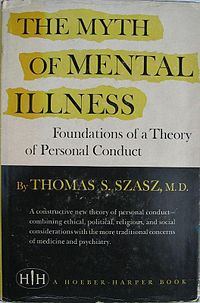
The Myth of Mental Illness 1961
The Myth of Mental Illness 1961.

The Myth of Mental Illness: Foundations of a Theory of Personal Conduct is a 1961 book by the psychiatrist Thomas Szasz, in which the author criticises psychiatry and argues against the concept of mental illness.

It received much publicity, and has become a classic, well known as an argument that “mentally ill” is a label which psychiatrists have used against people “disabled by living” rather than truly having a disease.

Refer to:

  • Game theory: For Szasz, mental illness is best understood through the lens of game theory
  • Neurodiversity: A belief of promoting the acceptance of numerous different brain types typically considered to be mental disorders or illnesses by the scientific community

Background

Szasz writes that he became interested in writing The Myth of Mental Illness in approximately 1950, when, having become established as a psychiatrist, he became convinced that the concept of mental illness was vague and unsatisfactory. He began work on the book in 1954, when he was relieved of the burdens of a full-time psychiatric practice by being called to active duty in the navy. Later in the 1950s, it was rejected by the first publisher to whom Szasz submitted the manuscript. Szasz next sent the manuscript to Paul Hoeber, director of the medical division of Harper & Brothers, who arranged for it to be published.

Summary

Szasz argues that it does not make sense to classify psychological problems as diseases or illnesses, and that speaking of “mental illness” involves a logical or conceptual error. In his view, the term “mental illness” is an inappropriate metaphor and there are no true illnesses of the mind. His position has been characterised as involving a rigid distinction between the physical and the mental.

The legitimacy of psychiatry is questioned by Szasz, who compares it to alchemy and astrology, and argues that it offends the values of autonomy and liberty. Szasz believes that the concept of mental illness is not only logically absurd but has harmful consequences: instead of treating cases of ethical or legal deviation as occasions when a person should be taught personal responsibility, attempts are made to “cure” the deviants, for example by giving them tranquilisers. Psychotherapy is regarded by Szasz as useful not to help people recover from illnesses, but to help them “learn about themselves, others, and life.” Discussing Jean-Martin Charcot and hysteria, Szasz argues that hysteria is an emotional problem and that Charcot’s patients were not really ill.

Reception

The Myth of Mental Illness received much publicity, quickly became a classic, and made Szasz a prominent figure. The book was reviewed in the American Journal of Psychiatry, Journal of Nervous and Mental Disease, Psychosomatic Medicine, Archives of General Psychiatry, Clinical Psychology Review, and Psychologies. Published at a vulnerable moment for psychiatry, when Freudian theorizing was just beginning to fall out of favour and the field was trying to become more medically oriented and empirically based, the book provided an intellectual foundation for mental patient advocates and anti-psychiatry activists. It became well known in the mental health professions and was favourably received by those sceptical of modern psychiatry, but placed Szasz in conflict with many doctors. Soon after The Myth of Mental Illness was published, the Commissioner of the New York State Department of Mental Hygiene demanded, in a letter citing the book, that Szasz be dismissed from his university position because he did not accept the concept of mental illness.

The philosopher Karl Popper, in a 1961 letter to Szasz, called the book admirable and fascinating, adding that, “It is a most important book, and it marks a real revolution.” The psychiatrist David Cooper wrote that The Myth of Mental Illness, like the psychiatrist R.D. Laing’s The Divided Self (1960), proved stimulating in the development of anti-psychiatry, though he noted that neither book is itself an anti-psychiatric work. He described Szasz’s work as “a decisive, carefully documented demystification of psychiatric diagnostic labelling in general.” Socialist author Peter Sedgwick, writing in 1982, commented that in The Myth of Mental Illness, Szasz expounded a “game-playing model of social interaction” which is “zestful and insightful” but “neither particularly uncommon nor particularly iconoclastic by the standards of recent social-psychological theorising.” Sedgwick argued that many of Szasz’s observations are valuable regardless of the validity of Szasz’s rejection of the concept of mental illness, and could easily be accepted by psychotherapists. Although agreeing with Szasz that the assignation of mental illness could undermine individual responsibility, he noted that this did not constitute an objection to the concept itself.

The philosopher Michael Ruse called Szasz the most forceful proponent of the thesis that mental illness is a myth. However, while sympathetic to Szasz, he considered his case over-stated. Ruse criticized Szasz’s arguments on several grounds, maintaining that while the concepts of disease and illness were originally applied only to the physiological realm, they can properly be extended to the mind, and there is no logical absurdity involved in doing so. Kenneth Lewes wrote that The Myth of Mental Illness is the most notable example of the “critique of the institutions of psychiatry and psychoanalysis” that occurred as part of the “general upheaval of values in the 1960s”, though he saw the work as less profound than Michel Foucault’s Madness and Civilization (1961).

The psychiatrist Peter Breggin called The Myth of Mental Illness a seminal work. The author Richard Webster described the book as a well known argument against the tendency of psychiatrists to label people who are “disabled by living” as mentally ill. He observed that while some of Szasz’s arguments are similar to his, he disagreed with Szasz’s view that hysteria was an emotional problem and that Charcot’s patients were not genuinely mentally ill. The lawyer Linda Hirshman wrote that while few psychiatrists adopted the views Szasz expounded in The Myth of Mental Illness, the book helped to encourage a revision of their diagnostic and therapeutic claims. The historian Lillian Faderman called the book the most notable attack on psychiatry published in the 1960s, adding that “Szasz’s insights and critiques would prove invaluable to the homophile movement.”