
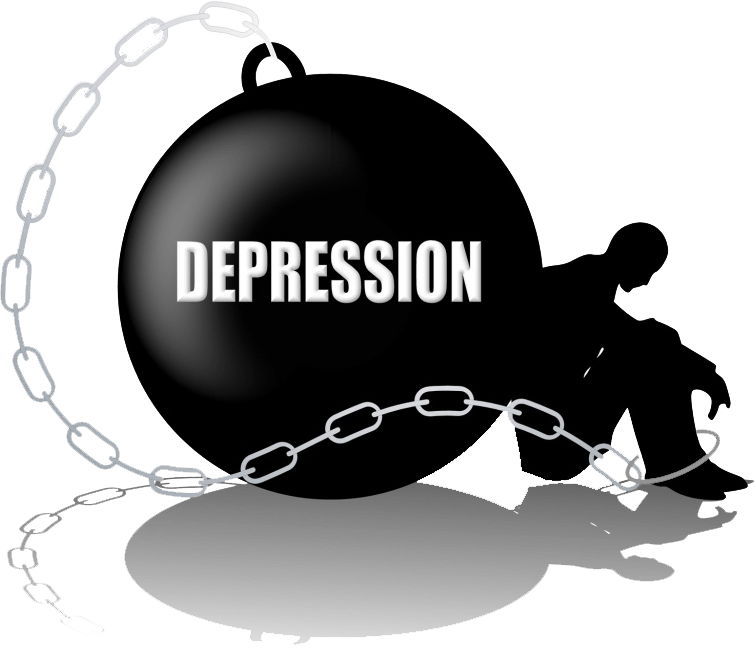
Linking New Interests & Activities with Anxiety & Depression in Retirement for Navy Veterans

Research Paper Title

The impact of socio-demographic features on anxiety and depression amongst navy veterans after retirement: a cross-sectional study.

Background

Retirement from work may trigger various changes in everyday life that affect mental health.

The current cross-sectional study, conducted with 231 veterans, examines the relationship between socio-demographic features and both anxiety and depression in navy veterans after retirement.

Methods

Spielberg’s State-Trait Anxiety Inventory (STAI) was used for anxiety assessment, and the Beck Depression Inventory (BDI) was used for depression assessment.

The analysis was performed with the Statistical Package for Social Sciences (SPSS), version 20.0.

Results

It was found that the mean score of state anxiety was 41 and trait anxiety, 38.

Severe depression was found in 6.5% of the veterans, moderate in 8.3% and mild in 21.7%.

The presence of a serious health problems was an independent predictor of both anxiety and depression’s more serious symptoms.

Conclusions

Inversely, the stability in terms of retirement choice was negatively related to depression, while the development of new interests and activities after retirement was negatively related to both anxiety and depression.

Further, life satisfaction after retirement was a predictor of lower current anxiety levels among veterans.

Reference

Georgantas, D., Tsounis, A., Vidakis, I., Malliarou, M. & Sarafis, P. (2020) The impact of socio-demographic features on anxiety and depression amongst navy veterans after retirement: a cross-sectional study. BMC Rsearch Notes. 13(1), pp.122. doi: 10.1186/s13104-020-04966-x.

Factors Affecting the Usefulness of the Acquired Capability for Suicide Scale among US Military & Veterans

Research Paper Title

Use of the acquired capability for suicide scale (ACSS) among United States military and Veteran samples: A systematic review.

Background

Military personnel and Veterans are at increased risk for suicide.

Theoretical and conceptual arguments have suggested that elevated levels of acquired capability (AC) could be an explanatory factor accounting for this increased risk.

However, empirical research utilising the Acquired Capability for Suicide Scale (ACSS) in military populations has yielded mixed findings.

Methods

To better ascertain what factors are associated with AC, and whether methodological limitations may be contributing to mixed findings, a systematic review was conducted.

Results

A total of 31 articles utilised the ACSS to examine factors associated with AC, including combat history, in US military personnel and Veterans.

Nearly all studies (96.8%) were rated high risk of bias.

Use of the ACSS varied, with seven different iterations utilised.

Nearly all studies examined correlations between the ACSS and sample characteristics, mental health and clinical factors, Interpersonal Theory of Suicide constructs, and/or suicide-specific variables.

Results of higher-level analyses, dominated by cross-sectional designs, often contradicted correlational findings, with inconsistent findings across studies.

Conclusions

Included studies were non-representative of all US military and Veteran populations and may only generalise to these populations.

Due to the high risk of bias, inconsistent use of the ACSS, lack of sample heterogeneity, and variability in factors examined, interpretation of current ACSS empirical data is cautioned.

Suggestions for future research, contextualised by these limitations, are discussed.

Reference

Kramer, E.B., Gaeddert, L.A., Jackson, C.L., Harnke, B. & Nazem, S. (2020) Use of the acquired capability for suicide scale (ACSS) among United States military and Veteran samples: A systematic review. Journal of Affective Disorders. 267, pp.229-242. doi: 10.1016/j.jad.2020.01.153. Epub 2020 Jan 29.

A Leader Suicide Risk Assessment Tool for Mitigating Risk Factors

Research Paper Title

Development of a Leader Tool for Assessing and Mitigating Suicide Risk Factors.

Background

Despite efforts in prevention, suicide rates in the US military remain unchanged. This article describes the development of a tool for leaders to identify and mitigate suicide risk factors.

Methods

A seven-item measure, the Leader Suicide Risk Assessment Tool (LSRAT), was constructed to allow leaders to assess and mitigate suicide drivers. During a 6-month pilot, unit leaders completed the LSRAT for 161 at-risk soldiers. The LSRAT data were compared to clinical data from a subset of these soldiers.

Results

The LSRAT showed good test-retest reliability. The LSRAT scores showed significant correlations with both clinical and screening measures of suicidality. Command actions mitigated or partially mitigated 89% of risk factors identified on the LSRAT.

Conclusions

This study provides initial psychometric data on a tool that prescribes concrete responses to mitigate risk. The LSRAT may be a valid and feasible tool to assist front-line commanders in identifying potential area’s risk mitigation. Synchronisation efforts between commanders, clinicians, and support services are crucial to ensure effective intervention to prevent suicide behaviour.

Reference

Hoyt, T., Repke, D., Barry, D., Baisley, M., Jervis, S., Black, R., McCreight, S., Prendergast, D., Brinton, C. & Amin, R. (2020) Development of a Leader Tool for Assessing and Mitigating Suicide Risk Factors. Military Medicine. 185(Suppl 1), pp.334-341. doi: 10.1093/milmed/usz194.