Camille Laurin (06 May 1922 to 11 March 1999) was a psychiatrist and Parti Québécois (PQ) politician in the Canadian province of Quebec. A MNA member for the riding of Bourget, he is considered the father of Quebec’s language law known informally as “Bill 101”.
Biography
Born in Charlemagne, Quebec, Laurin obtained a degree in psychiatry from the Université de Montréal where he came under the influence of the Roman Catholic priest, Lionel Groulx. After earning his degree, Laurin went to Boston, Massachusetts, in the United States, where he worked at the Psychopathic Department of Boston State Hospital. Following a stint in Paris in 1957, he returned to practice in Quebec. In 1961, he authored the preface of the book Les fous crient au secours, which described the conditions of psychiatric hospitals of the time.
He was one of the early founders of the Quebec sovereignty movement. As a senior cabinet minister in the first PQ government elected in the 1976 Quebec election, he was the guiding force behind Bill 101, the legislation that placed restrictions on the use of English on public signs and in the workplace of large companies, and strengthened the position of French as the only official language in Quebec.
Laurin resigned from his cabinet position on 26 November 1984 because of a disagreement with Lévesque on the future of the sovereignty movement. He resigned from his seat in the National Assembly on 25 January 1985. He was elected once again to the Assembly on 12 September 1994 but did not run in the 1998 election for health reasons.
He died in 1999 after a long battle with cancer.
This page is based on the copyrighted Wikipedia article < https://en.wikipedia.org/wiki/Camille_Laurin >; it is used under the Creative Commons Attribution-ShareAlike 3.0 Unported License (CC-BY-SA). You may redistribute it, verbatim or modified, providing that you comply with the terms of the CC-BY-SA.
C. Sue Carter is an American biologist and behavioural neurobiologist. She is an internationally recognised expert in behavioural neuroendocrinology. In 2014 she was appointed Director of The Kinsey Institute and Rudy Professor of Biology at Indiana University. Carter was the first person to identify the physiological mechanisms responsible for social monogamy.
Background
Carter studied biology at Drury College in Springfield, Missouri. She completed a PhD in Zoology at the University of Arkansas in Fayetteville.
Carter is a Fellow of the American Association for the Advancement of Science.
She is married to Stephen Porges, and has two children: Eric Carter Porges (currently a graduate student at the University of Chicago in Integrative Neuroscience) in Jean Decety’s Social Cognitive Neuroscience Laboratory, and Seth Porges (currently an editor at Maxim magazine in New York City, and previously an editor at Popular Mechanics magazine).
Academic Achievements
Carter studies social bonding, male and female parental behaviour, the social control of stress reactivity and the social control of reproduction, often using animal models such as the socially monogamous prairie vole. Carter’s research focuses on neuropeptide and steroid hormones, including oxytocin, vasopressin, corticotropin-releasing hormone, and oestrogen. Her research program has discovered important new developmental functions for oxytocin and vasopressin, and implicated these hormones in the regulation of long-lasting neural and effects of early social experiences. She also has a long-standing concern regarding the consequences of medical manipulations for human development and parent-child interactions, including the use of “pitocin” – a synthetic version of oxytocin – to induce labour and consequences of breastfeeding for the mother and child.
Most recently she has been examining the role of oxytocin and vasopressin in mental disorders such as autism, schizophrenia, anxiety and depression. Carter is also known for research on the physiological basis of social behaviour, including studies that implicated oxytocin, vasopressin and hormones of the hypothalamic-pituitary-adrenal (“stress”) axis in the traits of monogamy including pair-bond formation. She pioneered the physiological study of socially monogamous mammals, including the prairie vole. In collaboration with zoologist Lowell Getz, Carter documented the occurrence of social monogamy in prairie voles. Her studies in rodents helped to lay the foundation for the studies of behavioural and developmental effects of oxytocin and vasopressin in humans which are in progress. In collaboration with psychiatrist Margaret Altemus she conducted some of the first studies documenting the importance of breastfeeding in the regulation of maternal physiology.
Honours
Carter is a Fellow and Past-President of the International Behavioural Neuroscience Society and a recipient of the Matthew J. Wayner-NNOXe Pharmaceuticals Award for distinguished lifetime contributions to behavioural neuroscience.
Criticism
Author and LGBT activist Dan Savage claimed the announcement of Carter’s appointment to Director of the Kinsey Institute was “packed with bad news for anyone interested in sex research and/or conducting sex research (particularly those conducting sex research at the Kinsey Institute)” and “Carter’s pseudo-scientific/pseudo-empathetic moralizing plays right into the hands of the kind of conservative politicians who have been trying to kill the Kinsey Institute for decades.” Savage criticised Carter’s view that, “I think human sexuality must be viewed in the context of relationships,” countering, “Not all human sexuality exists in the context of relationships. You can argue, if you’re a moralist, that human sexuality should only be expressed in the context of a relationship. But that is a moral position, not a scientific one.”
This page is based on the copyrighted Wikipedia article < https://en.wikipedia.org/wiki/C._Sue_Carter >; it is used under the Creative Commons Attribution-ShareAlike 3.0 Unported License (CC-BY-SA). You may redistribute it, verbatim or modified, providing that you comply with the terms of the CC-BY-SA.
Bruno Bettelheim (28 August 1903 to 13 March 1990) was an Austrian-born psychologist, scholar, public intellectual and writer who spent most of his academic and clinical career in the United States. An early writer on autism, Bettelheim’s work focused on the education of emotionally disturbed children, as well as Freudian psychology more generally. In the US he later gained a position as professor at the University of Chicago and director of the Sonia Shankman Orthogenic School for Disturbed Children, and after 1973 taught at Stanford University.
Bettelheim’s ideas, which grew out of those of Sigmund Freud, theorised that children with behavioural and emotional disorders were not born that way, and could be treated through extended psychoanalytic therapy, treatment that rejected the use of psychotropic drugs and shock therapy. During the 1960s and 1970s he had an international reputation in such fields as autism, child psychiatry, and psychoanalysis.
Some of his work was discredited after his death due to fraudulent academic credentials, allegations of patient abuse, accusations of plagiarism, and lack of oversight by institutions and the psychological community.
Background in Austria
Bruno Bettelheim was born in Vienna, Austria-Hungary, on August 28, 1903. When his father died, Bettelheim left his studies at the University of Vienna to look after his family’s sawmill. Having discharged his obligations to his family’s business, Bettelheim returned as a mature student in his thirties to the University of Vienna. Sources disagree about his education (see Misrepresented credentials section).
Bettelheim’s first wife, Gina, took care of a troubled American child, Patsy, who lived in their home in Vienna for seven years, and who may have been on the autism spectrum.
In the Austrian academic culture of Bettelheim’s time, one could not study the history of art without mastering aspects of psychology. Candidates for the doctoral dissertation in the History of Art in 1938 at Vienna University had to fulfil prerequisites in the formal study of the role of Jungian archetypes in art, and in art as an expression of the unconscious.
Though Jewish by birth, Bettelheim grew up in a secular family. After the Anschluss (political annexation) of Austria on 13 March 1938, the National Socialist (Nazi) authorities sent Austrian Jews and political opponents to the Dachau and Buchenwald concentration camps where many were brutally treated, and tortured or killed. Bettelheim was arrested some two months later on May 28, 1938, and was imprisoned in both these camps for ten and half months before being released on 14 April 1939. While at the Buchenwald camp, he met and befriended the social psychologist Ernst Federn. As a result of an amnesty declared for Adolf Hitler’s birthday (which occurred slightly later on 20 April 1939), Bettelheim and hundreds of other prisoners were released. Bettelheim drew on the experience of the concentration camps for some of his later work.
Life and Career in the United States
Bettelheim arrived by ship as a refugee in New York City in late 1939 to join his wife Gina, who had already emigrated. They divorced because she had become involved with someone else during their separation. He soon moved to Chicago, became a naturalised US citizen in 1944, and married an Austrian woman, Gertrude (‘Trudi’) Weinfeld, also an emigrant from Vienna.
Psychology
The Rockefeller Foundation sponsored a wartime project to help resettle European scholars by circulating their resumes to American universities. Through this process, Ralph Tyler hired Bettelheim to be his research assistant at the University of Chicago from 1939 to 1941 with funding from the Progressive Education Association to evaluate how high schools taught art. Once this funding ran out, Bettelheim found a job at Rockford College, Illinois, where he taught from 1942 to 1944.
In 1943, he published the paper “Individual and Mass Behaviour in Extreme Situations” about his experiences in the concentration camps, a paper which was highly regarded by Dwight Eisenhower among others. Bettelheim claimed he had interviewed 1,500 fellow prisoners, although this was unlikely. He stated that the Viennese psychoanalyst Richard Sterba had analysed him, as well as implying in several of his writings that he had written a PhD dissertation in the philosophy of education. His actual PhD was in art history, and he had only taken three introductory courses in psychology.
Through Ralph Tyler’s recommendation, the University of Chicago appointed Bettelheim as a professor of psychology, as well as director of the Sonia Shankman Orthogenic School for emotionally disturbed children. He held both positions from 1944 until his retirement in 1973. He wrote a number of books on psychology and, for a time, had an international reputation for his work on Sigmund Freud, psychoanalysis, and emotionally disturbed children.
At the Orthogenic School, Bettelheim made changes and set up an environment for milieu therapy, in which children could form strong attachments with adults within a structured but caring environment. He claimed considerable success in treating some of the emotionally disturbed children. He wrote books on both normal and abnormal child psychology, and became a major influence in the field, widely respected during his lifetime. He was noted for his study of feral children, who revert to the animal stage without experiencing the benefits of belonging to a community. He discussed this phenomenon in the book The Informed Heart. Even critics agree that, in his practice, Bettelheim was dedicated to helping these children using methods and practices that would enable them to lead happy lives. It is based on his position that psychotherapy could change humans and that they can adapt to their environment provided they are given proper care and attention.
Bettelheim was elected a Fellow of the American Academy of Arts and Sciences in 1971. After retiring in 1973, he and his wife moved to Portola Valley, California, where he continued to write and taught at Stanford University. His wife died in 1984.
The Uses of Enchantment
Bettelheim analysed fairy tales in terms of Freudian psychology in The Uses of Enchantment (1976). He discussed the emotional and symbolic importance of fairy tales for children, including traditional tales once considered too dark, such as those collected and published by the Brothers Grimm. Bettelheim suggested that traditional fairy tales, with the darkness of abandonment, death, witches, and injuries, allowed children to grapple with their fears in remote, symbolic terms. If they could read and interpret these fairy tales in their own way, he believed, they would get a greater sense of meaning and purpose. Bettelheim thought that by engaging with these socially evolved stories, children would go through emotional growth that would better prepare them for their own futures. In the United States, Bettelheim won two major awards for The Uses of Enchantment: the National Book Critics Circle Award for Criticism and the National Book Award in the category of Contemporary Thought.
However, in 1991, well-supported charges of plagiarism were brought against Bettelheim’s The Uses of Enchantment, primarily that he had copied from Julian Herscher’s 1963 A Psychiatric Study of Fairy Tales (revised ed. 1974).
Death
At the end of his life, Bettelheim had depression. He appeared to have had difficulties with depression for much of his life. In 1990, widowed, in failing physical health, and experiencing the effects of a stroke which impaired his mental abilities and paralysed part of his body, he took his own life. He died on 13 March 1990, in Maryland.
In Popular Culture
Bettelheim was a public intellectual, whose writing and many public appearances in popular media paralleled a growing post WWII interest in psychoanalysis. For instance, he appeared multiple times on The Dick Cavett Show in the 70s to discuss theories of autism and psychoanalysis. Richard Pollak’s biography of Bettelheim argues that such popular appearances shielded his unethical behaviour from scrutiny.
Bettelheim appeared as himself in the 1983 Woody Allen mockumentary Zelig.
A BBC Horizon documentary about Bettelheim was televised in 1987.
Controversies and Scientific Fraud Accusations
Bettelheim’s life and work have come under increasing scrutiny since his death.
Misrepresented Credentials
Though he spent most of his life working in psychology and psychiatry, Bettelheim’s educational background in those fields is murky at best. Sources disagree whether Bettelheim’s PhD was in art history or in philosophy (aesthetics). When he was hired at the University of Chicago, Ralph W. Tyler assumed that he had two PhDs, one in art history and the other in psychology. He also believed, falsely, that Bettelheim was certified to conduct psychoanalysis though Bettelheim never received such certification. A posthumous review of his transcript showed that Bettelheim had only taken three introductory classes in psychology. Bertram Cohler and Jacquelyn Sanders at the Orthogenic School believed Bettelheim had a PhD in art history. In some of his own writings, Bettelheim implied that he had written a dissertation on the philosophy of education.
Determining Bettelheim’s education is complicated by the fact that he routinely embellished or inflated aspects of his own biography. As an example, Bettelheim’s first wife, Gina, took care of a troubled American child, Patsy, who lived in their home in Vienna for seven years. Although Bettelheim later claimed he himself had taken care of the child, there is general agreement that his wife actually provided most of the child care. However sources disagree on whether Patsy was autistic. Bettelheim later claimed that it was Patsy who inspired him to study autism and embellished her into two or even several autistic children in his home.
Additionally, when he applied for a position at Rockford College in Illinois, he claimed in a résumé that he had earned summa cum laude doctorates in philosophy, art history, and psychology, and he made claims that he had run the art department at Lower Austria’s library, that he had published two books on art, that he had excavated Roman antiquities, and that he had engaged in music studies with Arnold Schoenberg. When he applied at the University of Chicago for a professorship and as director of the Orthogenic School, he further claimed that he had training in psychology, experience raising autistic children, and personal encouragement from Sigmund Freud. The University of Chicago biographical sketch of Bettelheim listed a single PhD but no subject area. Posthumous biographies of Bettelheim have investigated these claims and have come to no clear conclusions about his credentials. A review in The Independent (UK) of Sutton’s book stated that Bettelheim “despite claims to the contrary, possessed no psychology qualifications of any sort”. Another review in The New York Times by a different reviewer stated that Bettelheim “began inventing degrees he never earned”. A review in the Chicago Tribune stated “as Pollak demonstrates, Bettelheim was a snake-oil salesman of the first magnitude.”
In a 1997 Weekly Standard article Peter Kramer, clinical professor of psychiatry at Brown University, summarised: “There were snatches of truth in the tall tale, but not many. Bettelheim had earned a non-honors degree in philosophy, he had made acquaintances in the psychoanalytic community, and his first wife had helped raise a troubled child. But, from 1926 to 1938, —the bulk of the ’14 years’ at university—Bettelheim had worked as a lumber dealer in the family business.”
In his 1997 review of Pollak’s book in the Baltimore Sun, Paul R. McHugh, then director of Psychiatry and Behavioural Sciences at Johns Hopkins, stated “Bettelheim—with boldness, energy and luck—exploited American deference to Freudo-Nietzschean mind-sets and interpretation, especially when intoned in accents Viennese.”
Richard Pollak’s 1997 Biography of Bettelheim
In the New York Review of Books, Robert Gottlieb describes Pollak as a “relentlessly negative biographer,” but Gottlieb still writes: “The accusations against Bettelheim fall into several categories. First, he lied; that is, he both exaggerated his successes at the school and falsified aspects of his background, claiming a more elaborate academic and psychoanalytic history in Vienna than he had actually had. There is conclusive evidence to support both charges.” Gottlieb goes on to say that Bettelheim arrived in the United States as a Holocaust survivor and refugee without a job nor even a profession, and writes: “I suspect he said what he thought it was necessary to say, and was then stuck with these claims later on, when he could neither confirm them (since they were false) nor, given his pride, acknowledge that he had lied.”
Richard Pollak’s biography begins with a personal account, for his brother died in an accident while home from Bettelheim’s school on holiday. While playing hide-and-go-seek in a hay loft, the brother fell through a chute covered with hay and hit the concrete floor on the level below. Years later, Pollak hoped to get some information about his brother’s life and sought out Bettelheim. As Pollak recounts, “Bettelheim immediately launched into an attack. The boys’ father, he said, was a simple-minded ‘schlemiel.’ Their mother, he insisted, had rejected Stephen at birth forcing him to develop ‘pseudo-feeble-mindedness’ to cope.” He went on to angrily ask: “What is it about these Jewish mothers, Mr. Pollak?” Bettelheim furthermore insisted the brother had committed suicide and made it look like an accident. Pollak did not believe this.
As a review in the Baltimore Sun states, “The stance of infallibility over matters Pollak knew to be untrue prompted him to wonder about the foundation of Bettelheim’s commanding reputation.”
In a 1997 book review in the New York Times, Sarah Boxer wrote (regarding the plagiarism allegations): “Mr. Pollak gives a damning passage-for-passage comparison of the two [Bettelheim’s book and Heuscher’s earlier book].”
Richard Pollak’s biography, The Creation of Dr. B, portrays Bettelheim as an anti-Semite even though he was raised in a secular Jewish household, and asserts that Bettelheim criticised in others the same cowardice he himself had displayed in the concentration camps.
Pollak’s biography also states that two women reported that Bettelheim had fondled their breasts and those of other female students at the school while he was ostensibly apologising to each for beating her.
A number of reviewers criticised Pollak’s writing style, commenting that his book was motivated by “Vengeance, not malice” or that his book was “curiously unnuanced”, but they still largely agreed with his conclusions.
Plagiarism in Bettelheim’s Uses of Enchantment
In 1991, Alan Dundes published an article in the Journal of American Folklore in which he claimed Bettelheim had engaged in plagiarism in his 1976 The Uses of Enchantment. He argued that Bettelheim had copied from a variety of sources, including Dundes’ own 1967 paper on Cinderella, but most of all from Julius E. Heuscher’s 1963 book A Psychiatric Study of Fairy Tales (revised edition 1974).
On the other hand, Jacquelyn Sanders, who worked with Bettelheim and later became director of the Orthogenic School, stated that she had read Dundes’ article but disagreed with its conclusions:
“I would not call that plagiarism. I think the article is a reasonable scholarly endeavor, and calling it scholarly etiquette is appropriate. It is appropriate that this man deserved to be acknowledged and Bettelheim didn’t… But I would not fail a student for doing that, and I don’t know anybody who would”.
Abusive Treatment of Students
Many students and staff at the school have argued that Bettelheim was abusive, violent, and cruel to them and to others. There are multiple newspaper accounts of abuse, in letters, editorials, articles, and memoirs. A November 1990 Chicago Tribune article states: “Of the 19 alumni of the Orthogenic School interviewed for this story, some are still bitterly angry at Bettelheim, 20 or 30 years after leaving the institution due to the trauma they had suffered under him. Others say their stays did them good, and they express gratitude for having had the opportunity to be at the school. All agree that Bettelheim frequently struck his young and vulnerable patients.”
A particularly evocative example came from Alida Jatich, who lived at the school from 1966 to 1972 from ages twelve to eighteen. She wrote an initially anonymous April 1990 letter to the Chicago Reader in which she stated that she “lived in fear of Bettelheim’s unpredictable temper tantrums, public beatings, hair pulling, wild accusations and threats and abuse in front of classmates and staff. One minute he could be smiling and joking, the next minute he could be exploding.” She added, “In person, he was an evil man who set up his school as a private empire and himself as a demi-god or cultleader.” Jatich said Bettelheim had “bullied, awed, and terrorized” the children at his school, their parents, school staff members, his graduate students, and anyone else who came into contact with him.
Jacquelyn Sanders, who later became director of the Orthogenic School, said she thought it was a case of Bettelheim getting too much success too quickly. “Dr. B got worse once he started getting acclaim,” she said. “He was less able to have any insight into his effect on these kids.”
Conversely, some staff who worked at the Orthogenic School have stated that they saw Bettelheim’s behaviour as being corporal punishment, in line with the standards of the time, and not abuse. As an example, David Zwerdling, who was a counsellor at the school for one year in 1969–70, wrote a Sept. 1990 response to The Washington Post in which he stated:
“I witnessed one occasion when an adolescent boy cursed at a female counselor. Incensed upon learning of this, Dr. Bettelheim proceeded to slap the boy two or three times across the face, while telling him sternly never to speak that way to a woman again. This was the only such incident I observed or heard of during my year at the school… until fairly recently, the near-consensus against corporal punishment in schools did not obtain.”
However, Zwerdling also noted:
“He also was a man who, for whatever reasons, was capable of intense anger on occasion.”
Published books, memoirs, and biographies of Bettelheim have also taken up the question of his treatment of students.
Institutional and Professional Non-responses
Perhaps in part because of Bettelheim’s professional and public stature, there was little effort during his lifetime to curtail his behaviour or intervene on behalf of his victims. His work at the University of Chicago seems to have been given less formal oversight by the university than other research entities under their purview.
A Newsweek article reported that Chicago-area psychiatrists had privately given him the nickname “Brutalheim,” but did nothing to intervene effectively on behalf of students at the school.[
Professionals in the psychiatric and psychological communities likely knew there were allegations of abuse and maltreatment at the Orthogenic School. Howard Gardner, a professor at the Harvard Graduate School of Education, wrote that many professionals knew of Bettelheim’s behaviour but did not confront him for various reasons ranging from “fear about Bettelheim’s legendary capacity for retribution to the solidarity needed among the guild of healers to a feeling that, on balance, Bettelheim’s positive attributes predominated and an unmasking would fuel more malevolent forces.”
Autism Controversy
Behavioural psychology and conditions in children and adolescents was little understood in the mid-twentieth century. The concept of “autism” was first used as a term for schizophrenia. In the 1950s into the 1960s what may be understood as autism in children was regularly also referred to as “childhood psychosis and childhood schizophrenia”. “Psychogenesis”, the theory that childhood disorders had origins in early childhood events or trauma acting on the child from the outside was a prominent theory, and Bettelheim was a prominent proponent of a psychogenic basis for autism. For Bettelheim, the idea that outside forces cause individual behaviour issues can be traced back to his earliest prominent article on the psychology of imprisoned persons. Beginning in the 1960s and into the 1970s, “biogenesis”, the idea that such conditions had an inner-organic or biological basis overtook psychogenesis.
Currently, many of Bettelheim’s theories in which he attributes autism spectrum conditions to parenting style are considered to be discredited, not least because of the controversies relating to his academic and professional qualifications.
Autism spectrum conditions are currently regarded as perhaps having multiple forms with a variety of genetic, epigenetic, and brain development causes influenced by such environmental factors as complications during pregnancy, viral infections, and perhaps even air pollution.
The two biographies by Sutton (1995) and Pollak (1997) awakened interest and focus on Bettelheim’s actual methods as distinct from his public persona. Bettelheim’s theories on the causes of autism have been largely discredited, and his reporting rates of cure have been questioned, with critics stating that his patients were not actually autistic. In a favourable review of Pollak’s biography, Christopher Lehmann-Haupt of The New York Times wrote, “What scanty evidence remains suggests that his patients were not even autistic in the first place.”
In 1997 the psychiatrist Peter Kramer wrote:
“The Ford Foundation was willing to underwrite innovative treatments for autistic children, so Bettelheim labeled his children autistic. Few actually met the definition of the newly minted syndrome.”
Bettelheim believed that autism did not have an organic basis, but resulted when mothers withheld appropriate affection from their children and failed to make a good connection with them. Bettelheim also blamed absent or weak fathers. One of his most famous books, The Empty Fortress (1967), contains a complex and detailed explanation of this dynamic in psychoanalytical and psychological terms. These views were disputed at the time by mothers of autistic children and by researchers. He derived his thinking from the qualitative investigation of clinical cases. He also related the world of autistic children to conditions in concentration camps.
It appears that Leo Kanner first came up with the term “refrigerator mother,” although Bettelheim did a lot to popularize the term. “Although it now seems beyond comprehension that anyone would believe that autism is caused by deep-seated issues arising in early childhood relationships, virtually every psychiatric condition was attributed to parent-child relationships in the 1940s and 1950s, when Freudian psychoanalytic theory was in its heyday.”
In A Good Enough Parent, published in 1987, he had come to the view that children had considerable resilience and that most parents could be “good enough” to help their children make a good start.
Prior to this, Bettelheim subscribed to and became an early prominent proponent of the “refrigerator mother” theory of autism: the theory that autistic behaviours stem from the emotional frigidity of the children’s mothers. He adapted and transformed the Orthogenic School at the University of Chicago as a residential treatment milieu for such children, who he felt would benefit from a “parentectomy”. This marked the apex of autism viewed as a disorder of parenting.
A 2002 book on autism spectrum stated, “At the time, few people knew that Bettelheim had faked his credentials and was using fictional data to support his research.” Michael Rutter has observed, “Many people made a mistake in going from a statement which is undoubtedly true—that there is no evidence that autism has been caused by poor parenting—to the statement that it has been disproven. It has not actually been disproven. It has faded away simply because, on the one hand, of a lack of convincing evidence and on the other hand, an awareness that autism was a neurodevelopmental disorder of some kind.”
In a 1997 review of two books on Bettelheim, Molly Finn wrote “I am the mother of an autistic daughter, and have considered Bettelheim a charlatan since The Empty Fortress, his celebrated study of autism, came out in 1967. I have nothing personal against Bettelheim, if it is not personal to resent being compared to a devouring witch, an infanticidal king, and an SS guard in a concentration camp, or to wonder what could be the basis of Bettelheim’s statement that ‘the precipitating factor in infantile autism is the parent’s wish that his child should not exist.'”
Although Bettelheim foreshadowed the modern interest in the causal influence of genetics in the section Parental Background, he consistently emphasised nurture over nature. For example: “When at last the once totally frozen affects begin to emerge, and a much richer human personality to evolve, then convictions about the psychogenic nature of the disturbance become stronger still.” (On Treatability, p.412. The rates of recovery claimed for the Orthogenic School are set out in Follow-up Data, with a recovery good enough to be considered a ‘cure’ of 43%, pp.414–15).
Subsequently, medical research has provided greater understanding of the biological basis of autism and other illnesses. Scientists such as Bernard Rimland challenged Bettelheim’s view of autism by arguing that autism is a neurodevelopmental issue. As late as 2009, the “refrigerator mother” theory retained some prominent supporters, including the prominent Irish psychologist Tony Humphreys. His theory still enjoys widespread support in France.
In his book Unstrange Minds (2007), Roy Richard Grinker wrote:
Two other books on autism, published at about the same time [as Bettelheim’s Empty Fortress (1967)], got little mention in the press: Bernard Rimland’s Autism: The Syndrome and Its Implications for a Neural Theory of Behavior (1964), which outlined the biological and neurological aspects of autism, and Clara Clairborne Park’s The Siege (1967), a beautifully written memoir of raising an autistic child. Though they were more accurate depictions of autism, they couldn’t compete with Bettelheim. He was simply too good a writer, and with his Viennese accent—the sign of an authentic expert in psychology—too good a self promoter.
Jordynn Jack writes that Bettelheim’s ideas gained currency and became popular in large part because society already tended to blame a mother first and foremost for her child’s difficulties.
Remarks about Jews and the Holocaust
Bettelheim’s experiences during the Holocaust shaped his personal and professional life for years after. His first publication was “Individual and Mass Behaviour in Extreme Situations” derived from his experiences at Dachau and Buchenwald. His later work frequently compared emotionally disturbed childhood to prison or confinement, and according to Sutton, his professional work attempted to operationalize the lessons about human nature he learned during his confinement.
Bettelheim became one of the most prominent defenders of Hannah Arendt’s book Eichmann in Jerusalem. He wrote a positive review for The New Republic. This review prompted a letter from a writer, Harry Golden, who alleged that both Bettelheim and Arendt suffered from “an essentially Jewish phenomenon… self-hatred”.
Bettelheim would later speak critically of Jewish people who were killed during the Holocaust. He has been criticised for promoting the myth that Jews went “like sheep to the slaughter” and for blaming Anne Frank and her family for their own deaths due to not owning firearms, fleeing, or hiding more effectively. In an introduction he wrote to an account by Miklos Nyiszli, Bettelheim stated, discussing Frank, that “Everybody who recognized the obvious knew that the hardest way to go underground was to do it as a family; that to hide as a family made detection by the SS most likely. The Franks, with their excellent connections among gentile Dutch families should have had an easy time hiding out singly, each with a different family. But instead of planning for this, the main principle of their planning was to continue as much as possible with the kind of family life they were accustomed to.”
This page is based on the copyrighted Wikipedia article < https://en.wikipedia.org/wiki/Bruno_Bettelheim >; it is used under the Creative Commons Attribution-ShareAlike 3.0 Unported License (CC-BY-SA). You may redistribute it, verbatim or modified, providing that you comply with the terms of the CC-BY-SA.
Bénédict Augustin Morel (22 November 1809 to 30 March 1873) was a French psychiatrist born in Vienna, Austria. He was an influential figure in the field of degeneration theory during the mid-19th century.
Biography
Morel was born in Vienna, Austria in 1809, of French parents. In the aftermath of the War of the Sixth Coalition Morel was abandoned by his parents, and left with the Luxembourgish Abbé Dupont and his servant Marianne, who raised him.
Morel received his education in Paris, and while a student, supplemented his income by teaching English and German classes. In 1839 he earned his medical doctorate, and two years later became an assistant to psychiatrist Jean-Pierre Falret (1794–1870) at the Salpêtrière in Paris.
Morel’s interest in psychiatry was further enhanced in the mid-1840s when he visited several mental institutions throughout Europe. In 1848 he was appointed director of the Asile d’Aliénés de Maréville at Nancy. Here he introduced reforms towards the welfare of the mentally ill, in particular liberalization of restraining practices. At the Maréville asylum he studied people with mental disabilities, researching their family histories and investigating aspects such as poverty and childhood physical illnesses. In 1856 he was appointed director of the mental asylum at Saint-Yon in Rouen.
Morel, influenced by various pre-Darwinian theories of evolution, particularly those that attributed a powerful role to acclimation, saw mental deficiency as the end stage of a process of mental deterioration. In the 1850s, he developed a theory of “degeneration” in regards to mental problems that take place from early life to adulthood. In 1857 he published Traité des dégénérescences physiques, intellectuelles et morales de l’espèce humaine et des causes qui produisent ces variétés maladives, a treatise in which he explains the nature, causes, and indications of human degeneration. Morel looked for answers to mental illness in heredity, although later on he believed that alcohol and drug usage could also be important factors in the course of mental decline.
Démence Précoce
In the first volume of his Études cliniques (1852) Morel used the term démence précoce in passing to describe the characteristics of a subset of young patients, and he employed the phrase more frequently in his textbook Traité des maladies mentales which was published in 1860. Morel used the term in a descriptive sense and not to define a specific and novel diagnostic category. It was applied as a means of setting apart a group of young men and women who had “stupor.” As such their condition was characterised by a certain torpor, enervation, and disorder of the will and was related to the diagnostic category of melancholia. His understanding of dementia was a traditional and distinctly non-modern one in the sense that he did not conceptualise it as irreversible state.
While some have sought to interpret, if in a qualified fashion, Morel’s reference to démence précoce as amounting to the “discovery” of schizophrenia, others have argued convincingly that Morel’s descriptive use of the term should not be considered in any sense as a precursor to the German psychiatrist Emil Kraepelin’s dementia praecox disease concept. This is due to the fact that their concepts of dementia differed significantly from each other, with Kraepelin employing the more modern sense of the word, and also that Morel was not describing a diagnostic category. Indeed, until the advent of Arnold Pick and Kraepelin, Morel’s term had vanished without a trace and there is little evidence to suggest that either Pick or indeed Kraepelin were even aware of Morel’s use of the term until long after they had published their own disease concepts bearing the same name. As Eugène Minkowski succinctly stated, ‘An abyss separates Morel’s démence précoce from that of Kraepelin.’
Degeneration Theory
Morel is known for creating degeneration theory in the 1850s. He began to develop his theory while he was the director of the mental asylum at Saint-Yon in northern France. In 19th century France, there was an increase in crime, sickness, and mental disorders, which interested Morel. He was determined to identify the underlying causes of this increase. Morel’s Catholic and radical political background greatly shaped his process. Morel noticed that the patients in the mental asylum with intellectual disability also had physical abnormalities like goiters. He was able to expand this idea when he noticed most people in the asylum had unusual physical characteristics. Morel’s degeneration theory was based on the idea that psychological disorders and other behavioural abnormalities were caused by an abnormal constitution. This also meant that he believed that there was a perfect type of human that degenerations altered. He believed that these abnormalities could be inherited and that there was a progressive worsening of the degeneration by generation. These traits were not specified pathologies, but rather an overall abnormality like a highly susceptible nervous system to disturbances from excessive toxins. The first generation started with neurosis, then, in the next generation, mental alienation. After the second generation, the mental alienation led to imbecility. Finally, the fourth generation was destined to be sterile.
In Morel’s theory, degeneration was synonymous with anything that was different from the natural or normal state. These abnormalities were caused by environmental influences like diet, disease, and moral depravities or traits that were passed from generation to generation like alcoholism and living in the slums. Due to the law of progressivity, these degenerations would get worse in each generation to produce more criminals and neurotics with worse degenerations. Over time, the degenerations would progress until later generations (specifically the fourth generation) were so idiotic that they were essentially sterile and the abnormal family would die out. This theory explained why there was an increase in mental disorders and also allowed Morel to relate very different diseases as caused by previous generations because they had become more variable over time. Since there was an increase in mental disorders, Morel believed that society was approaching extinction of the imbeciles. He believed that the most degenerative illness was insanity. Morel was able to categorise degenerations into four main categories:
Hysteria;
Moral insanity;
Imbeciles; and
Idiots.
In 1857, Morel published his degeneration theory in Traité des dégénérescences physiques, intellectuelles et morales de l’espèce humaine et des causes qui produisent ces variétés maladives. In his work, he included images of twelve patients that demonstrated the physical, mental, and moral traits that were evidence of degeneration. Some of these characteristics included altered ear shape, asymmetrical faces, extra digits, and high-domed palates that had psychological representations as well. Morel’s work was well received. It connected psychiatric medicine to general medicine to provide a complete and well-researched cause for a large social problem. It became dominant because it grounded moral treatment, which was questionable in this time period, in science. Morel’s theory also allowed psychiatrists who were unable to help their patients explain why they had not been successful. Degeneration theory meant that there were some psychological disorders that were genetic and could not be cured by a psychiatrist. It also explained all psychological disorders. If a psychiatrist could not find a physical cause of the disease, they could blame it on the individual’s constitution. It quickly spread throughout Europe with key figures spreading the information and using it to explain criminal psychology, personality disorders, and nervous disorders. Wilhem Griesinger introduced Morel’s theory to Germany, Valentin Magnan helped his ideas spread in France, and Cesare Lambroso brought Morel’s theory to Italy. In the 1880s, Morel’s degeneration theory was very important in French psychiatry and the majority of diagnostic certificates in French mental hospitals involved the words mental degeneracy.
Legacy
Morel is regarded as the father of dementia praecox and the degeneration theory. Both of these ideas helped understand mental illness as it was on the rise in 19th and 20th century France. Morel’s degeneration theory gained quick popularity across Europe, which allowed it to shape further scientific developments. It was used as the basis of body typology and disposition theories as well as Lombroso’s theory of anthropological criminology. His theory was highly ideological and provided a scientific rationale for the eugenics programmes used by the Nazis. He is also known for generating research programs to understand the effects of paternal drinking on children. Morel’s degeneration theory is a key influence on Émile Zola’s Les Rougon-Macquart about the environmental influences of violence, prostitution, and other immoral activities on two branches of a family during the Industrial Revolution. In Britain, the degeneration theory bolstered the eugenics and Social Darwinism movement. Karl Pearson and Sidney Webb justified selective breeding and immigration in Britain by trying to prevent the degeneration of the British race. Not all theorists accepted Morel’s work. Sigmund Freud, Karl Jaspers, Adolf Meyer, and Oswald Bumke rejected his ideas. Overall, while Morel’s degeneration theory is considered outdated by modern psychiatrists, Morel is credited with creating the modern biological approach to understanding psychiatric disorders.
This page is based on the copyrighted Wikipedia article < https://en.wikipedia.org/wiki/Benedict_Morel >; it is used under the Creative Commons Attribution-ShareAlike 3.0 Unported License (CC-BY-SA). You may redistribute it, verbatim or modified, providing that you comply with the terms of the CC-BY-SA.
Gregory Zilboorg (Russian: Григорий Зильбург, Ukrainian: Григорій Зільбург) (25 December 1890 to 17 September 1959) was a psychoanalyst and historian of psychiatry who is remembered for situating psychiatry within a broad sociological and humanistic context in his many writings and lectures.
Life and Career
Zilboorg was born into a Jewish family in Kiev, Ukraine on 25 December 1890 and studied medicine in St. Petersburg, where he worked under Vladimir Bekhterev. In 1917, after the February Revolution, he served as secretary to the Ministry of Labor under two prime ministers (Aleksandr Kerenskii and Georgii L’vov). When the Bolsheviks came to power, he fled to Kiev and established a reputation as a political journalist and drama critic.
Zilboorg emigrated to the United States in 1919 and supported himself by lecturing on the Chautauqua circuit and translating literature from Russian to English. Among the works he translated is Evgenii Zamiatin’s novel We, and Leonid Andreyev’s 1915 play He Who Gets Slapped Well received, that translation has been republished 17 times since that initial publication. In 1922 he began studying for his second medical degree, at Columbia University.
After graduating in 1926, he worked at the Bloomingdale Hospital and in 1931 began his psychoanalytic practice in New York City, having first been analysed in Berlin by Franz Alexander. From the 1930s onward, Zilboorg produced several volumes of lasting importance on the history of psychiatry. The Medical Man and the Witch During the Renaissance began as the Noguchi lectures at Johns Hopkins University in 1935. This volume was followed by A History of Medical Psychology in 1941 and Sigmund Freud in 1951. He also produced a series of clinical articles on subjects from the schizoid personality to postpartum depression – he considered the latter as rooted in ambivalence over motherhood and latent sadism[4] – and explored the effects of unresolved conflicts and countertransference effects of the analyst in the analytic situation.
Zilboorg’s patients included George Gershwin, Lillian Hellman, Ralph Ingersoll, Edward M.M. Warburg, Marshall Field, Kay Swift and James Warburg. The musical Lady in the Dark is reportedly based on Moss Hart’s experience of analysis with Zilboorg, who also examined other noted writers including Thomas Merton. Zilboorg married Ray Liebow in 1919 and they had two children (Nancy and Gregory, Jr.). He married Margaret Stone in 1946 and they had three children (Caroline, John and Matthew). His niece was cellist Olga Zilboorg.
Citing Susan Quinn, author Ron Chernow reports that Zilboorg engaged in unethical behavior including financial exploitation of patients. In an interview with Chernow, Edward M. M. Warburg reported that Zilboorg asked him for cash gifts and, in one instance, a mink coat for his wife. A biography written by his daughter, The Life of Gregory Zilboorg (see further reading below) recounts in detail Zilboorg’s spiritual journey, his friendship with the Dominican Noël Mailloux, and his eventual conversion to Roman Catholicism.
Literary Archives
Zilboorg’s papers at the Beinecke Rare Book and Manuscript Library, Yale University, contain manuscripts of several of his publications as well as his personal correspondence with Margaret Stone Zilboorg.
Bibliography
Writings
The passing of the old order in Europe (1920)
The medical man and the witch during the renaissance (1935)
A history of medical psychology (1941)
Mind, Medicine, & Man (1943)
Sigmund Freud (1951)
Psychology of the criminal act and punishment (1954)
Psychoanalysis and Religion (1962)
Translations
He Who Gets Slapped by Leonid Andreyev, translated from the Russian with an introduction (1921)
We by Yevgeny Zamyatin, translated from the Russian (1924)
The criminal, the judge and the public; a psychological analysis by Franz Alexander and Hugo Staub, translated from the German (1931)
Outline of clinical psychoanalysis by Otto Fenichel, translated by Bertram D. Lewin and Gregory Zilboorg (1934)
This page is based on the copyrighted Wikipedia article < https://en.wikipedia.org/wiki/Gregory_Zilboorg >; it is used under the Creative Commons Attribution-ShareAlike 3.0 Unported License (CC-BY-SA). You may redistribute it, verbatim or modified, providing that you comply with the terms of the CC-BY-SA.
Bertram David Lewin (30 November 1896 to 08 January 1971) was an American psychoanalyst who was both an acute clinician and a contributor to theory, particularly to the study of elation, and of the dream screen.
Training and Contributions
Lewin had a training analysis with Franz Alexander in Berlin in the 1920s, before publishing his first analytic article in 1930. This was followed by ten more over the next decade, on subjects ranging from diabetes and claustrophobia to the body as phallus. The main focus of his interest, however, was in manic states, which he saw as characterised by fleeting identifications with a multiple of outside figures.
After the war, he published the fruits of his investigations in The Psychoanalysis of Elation (1951). There he stressed the role of denial in mania – denial particularly of feelings of separation and loss. He also explored the paradox in elation’s dark counterpart, depression, whereby the melancholic in seeking to punish the effigy of their loved one in fact punishes themselves having incorporated this effigy.
By that point he had also published his seminal article (1946) on the dream screen – the backcloth formed from primitive memories of the breast onto which the dream is projected. The concept would be fruitfully followed up both within analysis, and in the context of film theory.
This page is based on the copyrighted Wikipedia article < https://en.wikipedia.org/wiki/Bertram_D._Lewin >; it is used under the Creative Commons Attribution-ShareAlike 3.0 Unported License (CC-BY-SA). You may redistribute it, verbatim or modified, providing that you comply with the terms of the CC-BY-SA.
This page is based on the copyrighted Wikipedia article < https://en.wikipedia.org/wiki/Carol_Ryff >; it is used under the Creative Commons Attribution-ShareAlike 3.0 Unported License (CC-BY-SA). You may redistribute it, verbatim or modified, providing that you comply with the terms of the CC-BY-SA.
The six-factor model of psychological well-being is a theory developed by Carol Ryff which determines six factors which contribute to an individual’s psychological well-being, contentment, and happiness.
Psychological well-being consists of self-acceptance, positive relationships with others, autonomy, environmental mastery, a feeling of purpose and meaning in life, and personal growth and development. Psychological well-being is attained by achieving a state of balance affected by both challenging and rewarding life events.
Measurement
The Ryff Scale of Measurement is a psychometric inventory consisting of two forms (either 54 or 84 items) in which respondents rate statements on a scale of 1 to 6, where 1 indicates strong disagreement and 6 indicates strong agreement. Ryff’s model is not based on merely feeling happy, but is based on Aristotle’s Nicomachean Ethics, “where the goal of life isn’t feeling good, but is instead about living virtuously”.
The Ryff Scale is based on six factors: autonomy, environmental mastery, personal growth, positive relations with others, purpose in life, and self-acceptance. Higher total scores indicate higher psychological well-being. Following are explanations of each criterion, and an example statement from the Ryff Inventory to measure each criterion.
Autonomy: High scores indicate that the respondent is independent and regulates his or her behaviour independent of social pressures. An example statement for this criterion is “I have confidence in my opinions, even if they are contrary to the general consensus”.
Environmental Mastery: High scores indicate that the respondent makes effective use of opportunities and has a sense of mastery in managing environmental factors and activities, including managing everyday affairs and creating situations to benefit personal needs. An example statement for this criterion is “In general, I feel I am in charge of the situation in which I live”.
Personal Growth: High scores indicate that the respondent continues to develop, is welcoming to new experiences, and recognises improvement in behaviour and self over time. An example statement for this criterion is “I think it is important to have new experiences that challenge how you think about yourself and the world”.
Positive Relations with Others: High scores reflect the respondent’s engagement in meaningful relationships with others that include reciprocal empathy, intimacy, and affection. An example statement for this criterion is “People would describe me as a giving person, willing to share my time with others”.
Purpose in Life: High scores reflect the respondent’s strong goal orientation and conviction that life holds meaning. An example statement for this criterion is “Some people wander aimlessly through life, but I am not one of them”.
Self-Acceptance: High scores reflect the respondent’s positive attitude about his or her self. An example statement for this criterion is “I like most aspects of my personality”
Applications and Research Findings
Contributing Factors
Positive Contributing Factors
Positive psychological well-being may emerge from numerous sources. A happy marriage is contributive, for example, as is a satisfying job or a meaningful relationship with another person. When marriages include forgiveness, optimistic expectations, positive thoughts about one’s spouse, and kindness, a marriage significantly improves psychological well-being. A propensity to unrealistic optimism and over-exaggerated self-evaluations can be useful. These positive illusions are especially important when an individual receives threatening negative feedback, as the illusions allow for adaptation in these circumstances to protect psychological well-being and self-confidence. Optimism also can help an individual cope with stresses to their well-being.
Negative Contributing Factors
Psychological well-being can also be affected negatively, as is the case with a degrading and unrewarding work environment, unfulfilling obligations and unsatisfying relationships. Social interaction has a strong effect on well-being as negative social outcomes are more strongly related to well-being than are positive social outcomes. Childhood traumatic experiences diminish psychological well-being throughout adult life, and can damage psychological resilience in children, adolescents, and adults. Perceived stigma also diminished psychological well-being, particularly stigma in relation to obesity and other physical ailments or disabilities.
Extrinsic and Intrinsic Psychological Needs
A study conducted in the early 1990s exploring the relationship between well-being and those aspects of positive functioning that were put forth in Ryff’s model indicates that persons who aspired more for financial success relative to affiliation with others or their community scored lower on various measures of well-being.
Individuals that strive for a life defined by affiliation, intimacy, and contributing to one’s community can be described as aspiring to fulfil their intrinsic psychological needs. In contrast, those individuals who aspire for wealth and material, social recognition, fame, image, or attractiveness can be described as aiming to fulfil their extrinsic psychological needs. The strength of an individual’s intrinsic (relative to extrinsic) aspirations as indicated by rankings of importance correlates with an array of psychological outcomes. Positive correlations have been found with indications of psychological well-being: positive affect, vitality, and self-actualization. Negative correlations have been found with indicators of psychological ill-being: negative affect, depression, and anxiety.
Relations with Others
A more recent study confirming Ryff’s notion of maintaining positive relations with others as a way of leading a meaningful life involved comparing levels of self-reported life satisfaction and subjective well-being (positive/negative affect). Results suggested that individuals whose actions had underlying eudaimonic tendencies as indicated by their self-reports (e.g. “I seek out situations that challenge my skills and abilities”) were found to possess higher subjective well-being and life satisfaction scores compared to participants who did not. Individuals were grouped according to their chosen paths/strategies to happiness as identified by their answers on an Orientation to Happiness Questionnaire. The questionnaire describes and differentiates individuals on the basis of three orientations to happiness which can be pursued, though some individuals do not pursue any.
The “pleasure” orientation describes a path to happiness that is associated with adopting hedonistic life goals to satisfy only one’s extrinsic needs. Engagement and meaning orientations describe a pursuit of happiness that integrates two positive psychology constructs “flow/engagement” and “eudaimonia/meaning”. Both of the latter orientations are also associated with aspiring to meet intrinsic needs for affiliation and community and were amalgamated by Anić and Tončić into a single “eudaimonic” path to happiness that elicited high scores on all measures of well-being and life satisfaction. Importantly, she also produced scales for assessing mental health. This factor structure has been debated, but has generated much research in wellbeing, health, and successful ageing.
Personality
Meta-analytic research shows that psychological well-being scales correlate strongly with all of the Big Five personality traits. Neuroticism is the strongest Big Five predictor of psychological well-being, correlating negatively with psychological well-being. In particular, openness has strong connections with personal growth, agreeableness and extraversion are notably related to positive relations, and conscientiousness is notably related to environmental mastery and purpose in life.
Heritability
Individual differences in both overall Eudaimonia, identified loosely with self-control and in the facets of eudaimonia are heritable. Evidence from one study supports 5 independent genetic mechanisms underlying the Ryff facets of this trait, leading to a genetic construct of eudaimonia in terms of general self-control, and four subsidiary biological mechanisms enabling the psychological capabilities of purpose, agency, growth, and positive social relations.
Wellbeing Therapy
According to Seligman, positive interventions to attain positive human experience should not be at the expense of disregarding human suffering, weakness, and disorder. A therapy based on Ryff’s six elements was developed by Fava and others in these regards.
This page is based on the copyrighted Wikipedia article < https://en.wikipedia.org/wiki/Six-factor_model_of_psychological_well-being >; it is used under the Creative Commons Attribution-ShareAlike 3.0 Unported License (CC-BY-SA). You may redistribute it, verbatim or modified, providing that you comply with the terms of the CC-BY-SA.
Twelve-step programmes are international mutual aid programs supporting recovery from substance addictions, behavioural addictions and compulsions. Developed in the 1930s, the first twelve-step programme, Alcoholics Anonymous (AA), founded by Bill Wilson and Bob Smith, aided its membership to overcome alcoholism. Since that time dozens of other organisations have been derived from AA’s approach to address problems as varied as drug addiction, compulsive gambling, sex, and overeating. All twelve-step programmes utilise a version of AA’s suggested twelve steps first published in the 1939 book Alcoholics Anonymous: The Story of How More Than One Hundred Men Have Recovered from Alcoholism.
As summarised by the American Psychological Association (APA), the process involves the following:
Admitting that one cannot control one’s alcoholism, addiction, or compulsion;
Coming to believe in a Higher Power that can give strength;
Examining past errors with the help of a sponsor (experienced member);
Making amends for these errors;
Learning to live a new life with a new code of behaviour; and
Helping others who suffer from the same alcoholism, addictions, or compulsions.
Overview
Twelve-step methods have been adapted to address a wide range of alcoholism, substance abuse, and dependency problems. Over 200 mutual aid organisations – often known as fellowships—with a worldwide membership of millions have adopted and adapted AA’s 12 Steps and 12 Traditions for recovery. Narcotics Anonymous was formed by addicts who did not relate to the specifics of alcohol dependency.
Demographic preferences related to the addicts’ drug of choice has led to the creation of Cocaine Anonymous, Crystal Meth Anonymous and Marijuana Anonymous. Behavioural issues such as compulsion for or addiction to gambling, crime, food, sex, hoarding, getting into debt and work are addressed in fellowships such as Gamblers Anonymous, Overeaters Anonymous, Sexaholics Anonymous and Debtors Anonymous.
Auxiliary groups such as Al-Anon and Nar-Anon, for friends and family members of alcoholics and addicts, respectively, are part of a response to treating addiction as a disease that is enabled by family systems. Adult Children of Alcoholics (ACA or ACOA) addresses the effects of growing up in an alcoholic or otherwise dysfunctional family. Co-Dependents Anonymous (CoDA) addresses compulsions related to relationships, referred to as co-dependency.
Brief History
Alcoholics Anonymous (AA), the first twelve-step fellowship, was founded in 1935 by Bill Wilson and Dr. Robert Holbrook Smith, known to AA members as “Bill W.” and “Dr. Bob”, in Akron, Ohio. In 1946 they formally established the twelve traditions to help deal with the issues of how various groups could relate and function as membership grew. The practice of remaining anonymous (using only one’s first names) when interacting with the general public was published in the first edition of the AA Big Book.
As AA chapters were increasing in number during the 1930s and 1940s, the guiding principles were gradually defined as the Twelve Traditions. A singleness of purpose emerged as Tradition Five: “Each group has but one primary purpose—to carry its message to the alcoholic who still suffers”. Consequently, drug addicts who do not suffer from the specifics of alcoholism involved in AA hoping for recovery technically are not welcome in “closed” meetings unless they have a desire to stop drinking alcohol.
The principles of AA have been used to form numerous other fellowships specifically designed for those recovering from various pathologies; each emphasizes recovery from the specific malady which brought the sufferer into the fellowship.
The Twelve Steps
The following are the original twelve steps as published by Alcoholics Anonymous:[11]
We admitted we were powerless over alcohol—that our lives had become unmanageable.
Came to believe that a power greater than ourselves could restore us to sanity.
Made a decision to turn our will and our lives over to the care of God as we understood Him.
Made a searching and fearless moral inventory of ourselves.
Admitted to God, to ourselves, and to another human being the exact nature of our wrongs.
Were entirely ready to have God remove all these defects of character.
Humbly asked Him to remove our shortcomings.
Made a list of all persons we had harmed, and became willing to make amends to them all.
Made direct amends to such people wherever possible, except when to do so would injure them or others.
Continued to take personal inventory, and when we were wrong, promptly admitted it.
Sought through prayer and meditation to improve our conscious contact with God as we understood Him, praying only for knowledge of His will for us and the power to carry that out.
Having had a spiritual awakening as the result of these steps, we tried to carry this message to alcoholics and to practice these principles in all our affairs.
Where other twelve-step groups have adapted the AA steps as guiding principles, step one is generally updated to reflect the focus of recovery. For example, in Overeaters Anonymous, the first step reads, “We admitted we were powerless over compulsive overeating—that our lives had become unmanageable.” The third step is also sometimes altered to remove gender-specific pronouns.
The Twelve Traditions
The Twelve Traditions accompany the Twelve Steps. The Traditions provide guidelines for group governance. They were developed in AA in order to help resolve conflicts in the areas of publicity, politics, religion, and finances. Alcoholics Anonymous’ Twelve Traditions are:
Our common welfare should come first; personal recovery depends upon AA unity.
For our group purpose there is but one ultimate authority—a loving God as He may express Himself in our group conscience. Our leaders are but trusted servants; they do not govern.
The only requirement for AA membership is a desire to stop drinking.
Each group should be autonomous except in matters affecting other groups or AA as a whole.
Each group has but one primary purpose—to carry its message to the alcoholic who still suffers.
An AA group ought never endorse, finance, or lend the AA name to any related facility or outside enterprise, lest problems of money, property, and prestige divert us from our primary purpose.
Every AA group ought to be fully self-supporting, declining outside contributions.
Alcoholics Anonymous should remain forever non-professional, but our service centers may employ special workers.
AA, as such, ought never be organised; but we may create service boards or committees directly responsible to those they serve.
Alcoholics Anonymous has no opinion on outside issues; hence the AA name ought never be drawn into public controversy.
Our public relations policy is based on attraction rather than promotion; we need always to maintain personal anonymity at the level of press, radio, and films.
Anonymity is the spiritual foundation of all our traditions, ever reminding us to place principles before personalities.
The Process
In the twelve-step programme, the human structure is symbolically represented in three dimensions: physical, mental, and spiritual. The problems the groups deal with are understood to manifest themselves in each dimension. For addicts and alcoholics, the physical dimension is best described by the allergy-like bodily reaction resulting in the compulsion to continue using substances even when it’s harmful or wanting to quit. The statement in the First Step that the individual is “powerless” over the substance-abuse related behaviour at issue refers to the lack of control over this compulsion, which persists despite any negative consequences that may be endured as a result.
The mental obsession is described as the cognitive processes that cause the individual to repeat the compulsive behaviour after some period of abstinence, either knowing that the result will be an inability to stop or operating under the delusion that the result will be different. The description in the First Step of the life of the alcoholic or addict as “unmanageable” refers to the lack of choice that the mind of the addict or alcoholic affords concerning whether to drink or use again. The illness of the spiritual dimension, or “spiritual malady,” is considered in all twelve-step groups to be self-centeredness. The process of working the steps is intended to replace self-centeredness with a growing moral consciousness and a willingness for self-sacrifice and unselfish constructive action. In twelve-step groups, this is known as a “spiritual awakening.” This should not be confused with abreaction, which produces dramatic, but temporary, changes. As a rule, in twelve-step fellowships, spiritual awakening occurs slowly over a period of time, although there are exceptions where members experience a sudden spiritual awakening.
In accordance with the First Step, twelve-step groups emphasize self-admission by members of the problem they are recovering from. It is in this spirit that members often identify themselves along with an admission of their problem, often as “Hi, I’m [first name only], and I’m an alcoholic”.
Sponsorship
A sponsor is a more experienced person in recovery who guides the less-experienced aspirant (“sponsee”) through the program’s twelve steps. New members in twelve-step programmes are encouraged to secure a relationship with at least one sponsor who both has a sponsor and has taken the twelve steps themselves. Publications from twelve-step fellowships emphasize that sponsorship is a “one on one” non-hierarchical relationship of shared experiences focused on working the Twelve Steps. According to Narcotics Anonymous:
Sponsors share their experience, strength, and hope with their sponsees… A sponsor’s role is not that of a legal adviser, a banker, a parent, a marriage counsellor, or a social worker. Nor is a sponsor a therapist offering some sort of professional advice. A sponsor is simply another addict in recovery who is willing to share his or her journey through the Twelve Steps.
Sponsors and sponsees participate in activities that lead to spiritual growth. Experiences in the programme are often shared by outgoing members with incoming members. This rotation of experience is often considered to have a great spiritual reward. These may include practices such as literature discussion and study, meditation, and writing. Completing the programme usually implies competency to guide newcomers which is often encouraged. Sponsees typically do their Fifth Step, review their moral inventory written as part of the Fourth Step, with their sponsor. The Fifth Step, as well as the Ninth Step, have been compared to confession and penitence. Michel Foucault, a French philosopher, noted such practices produce intrinsic modifications in the person—exonerating, redeeming and purifying them; relieves them of their burden of wrong, liberating them and promising salvation.
The personal nature of the behavioural issues that lead to seeking help in twelve-step fellowships results in a strong relationship between sponsee and sponsor. As the relationship is based on spiritual principles, it is unique and not generally characterised as “friendship”. Fundamentally, the sponsor has the single purpose of helping the sponsee recover from the behavioural problem that brought the sufferer into twelve-step work, which reflexively helps the sponsor recover.
A study of sponsorship as practiced in Alcoholics Anonymous and Narcotics Anonymous found that providing direction and support to other alcoholics and addicts is associated with sustained abstinence for the sponsor, but suggested that there were few short-term benefits for the sponsee’s one-year sustained abstinence rate.
Effectiveness
Alcoholics Anonymous is the largest of all of the twelve-step programmes (from which all other twelve-step programmes are derived), followed by Narcotics Anonymous; the majority of twelve-step members are recovering from addiction to alcohol or other drugs. The majority of twelve-step programmes, however, address illnesses other than substance addiction. For example, the third-largest twelve-step programme, Al-Anon, assists family members and friends of people who have alcoholism and other addictions. About twenty percent of twelve-step programmes are for substance addiction recovery, the other eighty percent address a variety of problems from debt to depression. It would be an error to assume the effectiveness of twelve-step methods at treating problems in one domain translates to all or to another domain.
A 2020 Cochrane review of Alcoholics Anonymous showed that participation in AA resulted in more alcoholics being abstinent from alcohol and for longer periods of time than cognitive behavioural therapy and motivational enhancement therapy, and as effective as these in other measures. The 2020 review did not compare twelve step programmes to the use of disulfiram or naltrexone, though some patients did receive these medications. These medications are considered the standard of care in alcohol use disorder treatment among medical experts and have demonstrated efficacy in randomised controlled trials in promoting alcohol abstinence. A systematic review published in 2017 found that twelve-step programmes for reducing illicit drug use are neither better nor worse than other interventions.
Criticism
In the past, some medical professionals have criticised 12-step programmes as “a cult that relies on God as the mechanism of action” and as lacking any experimental evidence in favour of its efficacy. Ethical and operational issues had prevented robust randomised controlled trials from being conducted comparing 12-step programmes directly to other approaches. More recent studies employing non-randomised and quasi-experimental studies have shown 12-step programmes provide similar benefit compared to motivational enhancement therapy (MET) and cognitive behavioural therapy (CBT), and were more effective in producing continuous abstinence and remission compared to these approaches.
Confidentiality
The Twelve Traditions encourage members to practice the spiritual principle of anonymity in the public media and members are also asked to respect each other’s confidentiality. This is a group norm, however, and not legally mandated; there are no legal consequences to discourage those attending twelve-step groups from revealing information disclosed during meetings. Statutes on group therapy do not encompass those associations that lack a professional therapist or clergyman to whom confidentiality and privilege might apply. Professionals and paraprofessionals who refer patients to these groups, to avoid both civil liability and licensure problems, have been advised that they should alert their patients that, at any time, their statements made in meetings may be disclosed.
Cultural Identity
One review warned of detrimental iatrogenic effects of twelve-step philosophy and labelled the organisations as cults, while another review asserts that these programs bore little semblance to religious cults and that the techniques used appeared beneficial to some. Another study found that a twelve-step program’s focus on self-admission of having a problem increases deviant stigma and strips members of their previous cultural identity, replacing it with the deviant identity. Another study asserts that the prior cultural identity may not be replaced entirely, but rather members found adapted a bicultural identity.
This page is based on the copyrighted Wikipedia article < https://en.wikipedia.org/wiki/Twelve-step_program >; it is used under the Creative Commons Attribution-ShareAlike 3.0 Unported License (CC-BY-SA). You may redistribute it, verbatim or modified, providing that you comply with the terms of the CC-BY-SA.
Self-determination theory (SDT) is a macro theory of human motivation and personality that concerns people’s innate growth tendencies and innate psychological needs. It pertains to the motivation behind people’s choices in the absence of external influences and distractions. SDT focuses on the degree to which human behaviour is self-motivated and self-determined.
In the 1970s, research on SDT evolved from studies comparing intrinsic and extrinsic motives, and from growing understanding of the dominant role that intrinsic motivation played in individual behaviour. It was not until the mid-1980s, when Edward L. Deci and Richard Ryan wrote a book titled Intrinsic Motivation and Self-Determination in Human Behaviour, that SDT was formally introduced and accepted as a sound empirical theory. Since the 2000s, research into practical applications of SDT has increased significantly.
The key research that led to the emergence of SDT included research on intrinsic motivation. Intrinsic motivation refers to initiating an activity because it is interesting and satisfying in itself to do so, as opposed to doing an activity for the purpose of obtaining an external goal (extrinsic motivation). A taxonomy of motivations has been described based on the degree to which they are internalised. Internalisation refers to the active attempt to transform an extrinsic motive into personally endorsed values and thus assimilate behavioural regulations that were originally external.
Edward Deci and Richard Ryan later expanded on the early work differentiating between intrinsic and extrinsic motivation and proposed three main intrinsic needs involved in self-determination. According to Deci and Ryan, three basic psychological needs motivate self-initiated behaviour and specify essential nutrients for individual psychological health and well-being. These needs are said to be the universal and innate need for autonomy, competence, and relatedness.
Self-Determination Theory
Humanistic psychology has been influential in the creation of SDT. Humanistic psychology is interested in looking at a person’s psyche and personal achievement for self-efficacy and self-actualisation. Whether or not an individual’s self-efficacy and self-actualisation are fulfilled can affect their motivation.
To this day, it may be difficult for a parent, coach, mentor, and teacher to motivate and help others complete specific tasks and goals. SDT acknowledges the importance of the interconnection of intrinsic and extrinsic motivations as a means of motivation to achieve a goal. With the acknowledgment of interconnection of motivations, SDT forms the belief that extrinsic motivations and the motivations of others, such as a therapist, may be beneficial. However, it is more important for people to find the “why” behind the desired goal within themselves. According to Sheldon et al., “Therapists who fully endorse self-determination principles acknowledge the limits of their responsibilities because they fully acknowledge that ultimately people must make their own choices” (2003, p.125). One needs to determine their reasons for being motivated and reaching their goal.
SDT comprises The Organismic Dialectic approach, which is a meta-theory, and a formal theory containing mini-theories focusing on the connection between extrinsic and intrinsic motivations within society and an individual. SDT is continually being developed as individuals incorporate the findings of more recent research. As SDT has developed, more mini-theories have been added to what was originally proposed by Deci and Ryan in 1985. Generally, SDT is described as having either five or six mini-theories. The main five mini-theories are cognitive evaluation theory, organismic integration theory, causality orientations theory, basic needs theory, and goal contents theory. The sixth mini-theory that some sources include in SDT is called Relational Motivation Theory.
SDT centres around the belief that human nature shows persistent positive features, with people repeatedly showing effort, agency, and commitment in their lives that the theory calls inherent growth tendencies. “Self-determination also has a more personal and psychology-relevant meaning today: the ability or process of making one’s own choices and controlling one’s own life.” The use of one’s personal agency to determine behaviour and mindset will help an individual’s choices.
Summary of SDT Mini-Theories
Mini-Theory
Outline
Cognitive Evaluation Theory (CET)
1. This explains the relationship between internal motivation and external rewards. 2. According to CET, when external rewards are controlling, when they pressure individuals to act a certain way, they diminish internal motivation. 3. On the other hand, when external motivations are informational and provide feedback about behaviours, they increase internal motivation.
Organismic Integration Theory (OIT)
1. This suggests different types of extrinsic motivations and how they contribute to the socialization of the individual. 2. This mini-theory suggests that people willingly participate in activities and behaviours that they do not find interesting or enjoyable because they are influenced by external motivators. 3. The four types of extrinsic motivations proposed in this theory are external regulation, introjected regulation, identified regulation, and integrated regulation.
Causality Orientations Theory (COT)
1. This explores individual differences in the way people motivate themselves in regards to their personality. 2. COT suggests three orientations toward decision making which are determined by identifying the motivational forces behind an individual’s decisions. 3. Individuals can have an autonomy orientation and make choices according to their own interests and values, they may have a control orientation and make decisions based on the different pressures that they experience from internal and external demands, or they may have an impersonal orientation where they are overcome with feelings of helplessness which are accompanied by a belief that their decisions will not make a difference on the outcome of their lives.
Basic Needs Theory (BNT)
1. This considers three psychological needs that are related to intrinsic motivation, effective functioning, high quality engagement, and psychological well-being. 2. The first psychological need is autonomy or the belief that one can choose their own behaviours and actions. 3. The second psychological need is competence. 4. In this sense, competence is when one is able to work effectively as they master their capacity to interact with the environment. 5. The third psychological need proposed in basic needs theory is relatedness, or the need to form strong relationships or bonds with people who are around an individual.
Goal Contents Theory (GCT)
1. This compares the benefits of intrinsic goals to the negative outcomes of external goals in terms of psychological well-being. 2. Key to this mini-theory is understanding what reasoning lies behind an individual’s goals. 3. Individuals who pursue goals as a way to satisfy their needs have intrinsic goals and over time experience need satisfaction while those who pursue goals in search of validation have external goals and do not experience need satisfaction.
Relationship Motivation Theory (RMT)
1. This examines the importance of relationships. 2. This theory posits that high quality relationships satisfy all three psychological needs described in BNT. 3. Of the three needs, relatedness is impacted the most by high quality relationships but autonomy and competence are satisfied as well. 4. This is because high quality relationships are able to provide individuals with a bond to another person while simultaneously reinforcing their needs for autonomy and competence.
The Organismic Dialectical Perspective
The organismic dialectical perspective sees all humans as active organisms interacting with their environment. People are actively growing, striving to overcome challenges, and creating new experiences. While endeavouring to become unified from within, individuals also become part of social structures. SDT also suggests that people have innate psychological needs that are the basis for self-motivation and personality integration. Through further explanation, people search for fulfilment in their ‘meaning of life’. Discovering the meaning of life constitutes a distinctive desire someone has to find purpose and aim in their lives, which enhances their perception of themselves and their surroundings. Not only does SDT tend to focus on innate psychological needs, it also focuses on the pursuit of goals, the effects of the success in their goals, and the outcome of goals.
Basic Psychological Needs
One mini-theory of SDT includes basic psychological needs theory which proposes three basic psychological needs that must be satisfied to foster well-being and health. These three psychological needs of autonomy, competence, and relatedness are generally universal (i.e. apply across individuals and situations). However, some needs may be more salient than others at certain times and be expressed differently based on time, culture, or experience. SDT identifies three innate needs that, if satisfied, allow optimal function and growth:
Autonomy;
Competence; and
Relatedness.
Autonomy
Desire to be causal agents of one’s own life and act in harmony with one’s integrated self; however, note this does not mean to be independent of others, but rather constitutes a feeling of overall psychological liberty and freedom of internal will. When a person is autonomously motivated their performance, wellness, and engagement is heightened rather than if a person is told what to do (a.k.a. control motivation).
Deci found that offering people extrinsic rewards for behaviour that is intrinsically motivated undermined the intrinsic motivation as they grow less interested in it. Initially intrinsically motivated behaviour becomes controlled by external rewards, which undermines their autonomy. In further research by Amabile, DeJong and Lepper, other external factors also appear to cause a decline in such motivation. For example, it is shown that deadlines restrict and control an individual which decreases their intrinsic motivation in the process.
Situations that give autonomy as opposed to taking it away also have a similar link to motivation. Studies looking at choice have found that increasing a participant’s options and choices increases their intrinsic motivation. Direct evidence for the innate need comes from Lübbecke and Schnedler who find that people are willing to pay money to have caused an outcome themselves. Additionally, satisfaction or frustration of autonomy impacts not only an individual’s motivation, but also their growth. This satisfaction or frustration further affects behaviour, leading to optimal well-being, or unfortunate ill-being.
Competence
Seek to control the outcome and experience mastery.
Deci found that giving people unexpected positive feedback on a task increases their intrinsic motivation to do it, meaning that this was because positive feedback fulfilled people’s need for competence. Additionally, SDT influences the fulfilment of meaning-making, well-being, and finding value within internal growth and motivation. Giving positive feedback on a task served only to increase people’s intrinsic motivation and decreased extrinsic motivation for the task.
Vallerand and Reid found negative feedback has the opposite effect (i.e. decreasing intrinsic motivation by taking away from people’s need for competence). In a study conducted by Felnhofer et al., the level of competence and view of attributing competence is judged in regards to the scope of age differences, gender, and attitude variances of an individual within a given society. The effect of the different variances between individuals subsidise the negative influence that may lead to decreasing intrinsic motivation.
Relatedness
Will to interact with, be connected to, and experience caring for others.
During a study on the relationship between infants’ attachment styles, their exhibition of mastery-oriented behaviour, and their affect during play, Frodi, Bridges and Grolnick failed to find significant effects: “Perhaps somewhat surprising was the finding that the quality of attachment assessed at 12 months failed to significantly predict either mastery motivation, competence, or affect 8 months later, when other investigators have demonstrated an association between similar constructs …” Yet they note that larger sample sizes could be able to uncover such effects: “A comparison of the secure/stable and the insecure/stable groups, however, did suggest that the secure/stable group was superior to the insecure/stable groups on all mastery-related measures. Obviously, replications of all the attachment-motivation relations are needed with different and larger samples.”
Deci and Ryan claim that there are three essential elements of the theory:
Humans are inherently proactive with their potential and mastery of their inner forces (such as drives and emotions);
Humans have an inherent tendency toward growth development and integrated functioning; and
Optimal development and actions are inherent in humans but they do not happen automatically.
In an additional study focusing on the relatedness of adolescents, connection to other individuals’ predisposed behaviours from relatedness satisfaction or frustration. The fulfilment or dissatisfaction of relatedness either promotes necessary psychological functioning or undermines developmental growth through deprivation. Across both study examples, the essential need for nurturing from a social environment goes beyond obvious and simple interactions for adolescents and promotes the actualisation of inherent potential.
If this happens, there are positive consequences (e.g. well-being and growth) but if not, there are negative consequences (e.g. dissatisfaction and deprivation). SDT emphasizes humans’ natural growth toward positive motivation, development, and personal fulfilment. However, this prevents the SDT’s purpose if the basic needs go unfulfilled. Although thwarting of an individual’s basic needs might occur, recent studies argue that such prevention has its own influence on well-being.
Self-determination theory
Article Talk Read Edit View history
Tools From Wikipedia, the free encyclopedia This article is about the psychology theory. For the self-determination in politics, see Self-determination. Part of a series on Psychology
OutlineHistorySubfields Basic psychology Applied psychology Concepts Lists Psychology portal vte Self-determination theory (SDT) is a macro theory of human motivation and personality that concerns people’s innate growth tendencies and innate psychological needs. It pertains to the motivation behind people’s choices in the absence of external influences and distractions. SDT focuses on the degree to which human behavior is self-motivated and self-determined.[1][2][3]
In the 1970s, research on SDT evolved from studies comparing intrinsic and extrinsic motives,[4] and from growing understanding of the dominant role that intrinsic motivation played in individual behavior.[5] It was not until the mid-1980s, when Edward L. Deci and Richard Ryan wrote a book titled Intrinsic Motivation and Self-Determination in Human Behavior,[6] that SDT was formally introduced and accepted as a sound empirical theory. Since the 2000s, research into practical applications of SDT has increased significantly.[7]
The key research that led to the emergence of SDT included research on intrinsic motivation.[8] Intrinsic motivation refers to initiating an activity because it is interesting and satisfying in itself to do so, as opposed to doing an activity for the purpose of obtaining an external goal (extrinsic motivation). A taxonomy of motivations has been described based on the degree to which they are internalized. Internalization refers to the active attempt to transform an extrinsic motive into personally endorsed values and thus assimilate behavioral regulations that were originally external.[9]
Edward Deci and Richard Ryan later expanded on the early work differentiating between intrinsic and extrinsic motivation and proposed three main intrinsic needs involved in self-determination.[10][11] According to Deci and Ryan, three basic psychological needs motivate self-initiated behavior and specify essential nutrients for individual psychological health and well-being. These needs are said to be the universal and innate need for autonomy, competence, and relatedness.[1]
Self-determination theory Humanistic psychology has been influential in the creation of SDT.[12] Humanistic psychology is interested in looking at a person’s psyche and personal achievement for self-efficacy[13] and self-actualization. Whether or not an individual’s self-efficacy and self-actualization are fulfilled can affect their motivation.[14]
To this day, it may be difficult for a parent, coach, mentor, and teacher to motivate and help others complete specific tasks and goals. SDT acknowledges the importance of the interconnection of intrinsic and extrinsic motivations as a means of motivation to achieve a goal. With the acknowledgment of interconnection of motivations, SDT forms the belief that extrinsic motivations and the motivations of others, such as a therapist, may be beneficial. However, it is more important for people to find the “why” behind the desired goal within themselves.[15] According to Sheldon et al., “Therapists who fully endorse self-determination principles acknowledge the limits of their responsibilities because they fully acknowledge that ultimately people must make their own choices” (2003, p. 125).[15] One needs to determine their reasons for being motivated and reaching their goal.
SDT comprises The Organismic Dialectic approach, which is a meta-theory, and a formal theory containing mini-theories focusing on the connection between extrinsic and intrinsic motivations within society and an individual.[16] SDT is continually being developed as individuals incorporate the findings of more recent research. As SDT has developed, more mini-theories have been added to what was originally proposed by Deci and Ryan in 1985. Generally, SDT is described as having either five or six mini-theories. The main five mini-theories are cognitive evaluation theory, organismic integration theory, causality orientations theory, basic needs theory, and goal contents theory.[17][18] The sixth mini-theory that some sources include in SDT is called Relational Motivation Theory.[16]
SDT centers around the belief that human nature shows persistent positive features, with people repeatedly showing effort, agency, and commitment in their lives that the theory calls inherent growth tendencies.[12] “Self-determination also has a more personal and psychology-relevant meaning today: the ability or process of making one’s own choices and controlling one’s own life.”[19] The use of one’s personal agency to determine behavior and mindset will help an individual’s choices.
Summary of the SDT mini-theories Cognitive evaluation theory (CET): explains the relationship between internal motivation and external rewards. According to CET, when external rewards are controlling, when they pressure individuals to act a certain way, they diminish internal motivation. On the other hand, when external motivations are informational and provide feedback about behaviors, they increase internal motivation.[18] Organismic integration theory (OIT): suggests different types of extrinsic motivations and how they contribute to the socialization of the individual. This mini-theory suggests that people willingly participate in activities and behaviors that they do not find interesting or enjoyable because they are influenced by external motivators.[17] The four types of extrinsic motivations proposed in this theory are external regulation, introjected regulation, identified regulation, and integrated regulation.[18] Causality orientations theory (COT): explores individual differences in the way people motivate themselves in regards to their personality.[18] COT suggests three orientations toward decision making which are determined by identifying the motivational forces behind an individual’s decisions. Individuals can have an autonomy orientation and make choices according to their own interests and values, they may have a control orientation and make decisions based on the different pressures that they experience from internal and external demands, or they may have an impersonal orientation where they are overcome with feelings of helplessness which are accompanied by a belief that their decisions will not make a difference on the outcome of their lives.[17] Basic needs theory (BNT): considers three psychological needs that are related to intrinsic motivation, effective functioning, high quality engagement, and psychological well-being. The first psychological need is autonomy or the belief that one can choose their own behaviors and actions. The second psychological need is competence. In this sense, competence is when one is able to work effectively as they master their capacity to interact with the environment. The third psychological need proposed in basic needs theory is relatedness, or the need to form strong relationships or bonds with people who are around an individual.[18] Goal contents theory (GCT): compares the benefits of intrinsic goals to the negative outcomes of external goals in terms of psychological well-being.[18] Key to this mini-theory is understanding what reasoning lies behind an individual’s goals. Individuals who pursue goals as a way to satisfy their needs have intrinsic goals and over time experience need satisfaction while those who pursue goals in search of validation have external goals and do not experience need satisfaction.[17] Relationship motivation theory (RMT): examines the importance of relationships. This theory posits that high quality relationships satisfy all three psychological needs described in BNT. Of the three needs, relatedness is impacted the most by high quality relationships but autonomy and competence are satisfied as well. This is because high quality relationships are able to provide individuals with a bond to another person while simultaneously reinforcing their needs for autonomy and competence.[16] The organismic dialectical perspective The organismic dialectical perspective sees all humans as active organisms interacting with their environment. People are actively growing, striving to overcome challenges, and creating new experiences. While endeavoring to become unified from within, individuals also become part of social structures.[20][21] SDT also suggests that people have innate psychological needs that are the basis for self-motivation and personality integration. Through further explanation, people search for fulfillment in their ‘meaning of life’. Discovering the meaning of life constitutes a distinctive desire someone has to find purpose and aim in their lives, which enhances their perception of themselves and their surroundings.[22] Not only does SDT tend to focus on innate psychological needs, it also focuses on the pursuit of goals, the effects of the success in their goals, and the outcome of goals.[20]
Basic psychological needs One mini-theory of SDT includes basic psychological needs theory which proposes three basic psychological needs that must be satisfied to foster well-being and health.[23] These three psychological needs of autonomy, competence, and relatedness are generally universal (i.e., apply across individuals and situations). However, some needs may be more salient than others at certain times and be expressed differently based on time, culture, or experience. SDT identifies three innate needs that, if satisfied, allow optimal function and growth:
Autonomy[24][25] Desire to be causal agents of one’s own life and act in harmony with one’s integrated self; however, note this does not mean to be independent of others, but rather constitutes a feeling of overall psychological liberty and freedom of internal will. When a person is autonomously motivated their performance, wellness, and engagement is heightened rather than if a person is told what to do (a.k.a. control motivation).[26][27] Deci[28] found that offering people extrinsic rewards for behavior that is intrinsically motivated undermined the intrinsic motivation as they grow less interested in it. Initially intrinsically motivated behavior becomes controlled by external rewards, which undermines their autonomy. In further research by Amabile, DeJong and Lepper,[29] other external factors also appear to cause a decline in such motivation. For example, it is shown that deadlines restrict and control an individual which decreases their intrinsic motivation in the process.
Situations that give autonomy as opposed to taking it away also have a similar link to motivation. Studies looking at choice have found that increasing a participant’s options and choices increases their intrinsic motivation.[30] Direct evidence for the innate need comes from Lübbecke and Schnedler[31] who find that people are willing to pay money to have caused an outcome themselves. Additionally, satisfaction or frustration of autonomy impacts not only an individual’s motivation, but also their growth. This satisfaction or frustration further affects behavior, leading to optimal well-being, or unfortunate ill-being.[27]
Competence[32][33] Seek to control the outcome and experience mastery.[34] Deci[28] found that giving people unexpected positive feedback on a task increases their intrinsic motivation to do it, meaning that this was because positive feedback fulfilled people’s need for competence. Additionally, SDT influences the fulfillment of meaning-making, well-being, and finding value within internal growth and motivation.[35] Giving positive feedback on a task served only to increase people’s intrinsic motivation and decreased extrinsic motivation for the task.
Vallerand and Reid[36] found negative feedback has the opposite effect (i.e., decreasing intrinsic motivation by taking away from people’s need for competence). In a study conducted by Felnhofer et al., the level of competence and view of attributing competence is judged in regards to the scope of age differences, gender, and attitude variances of an individual within a given society. The effect of the different variances between individuals subsidize the negative influence that may lead to decreasing intrinsic motivation.[37]
Relatedness Will to interact with, be connected to, and experience caring for others.[38] See also: Belongingness During a study on the relationship between infants’ attachment styles, their exhibition of mastery-oriented behaviour, and their affect during play, Frodi, Bridges and Grolnick[39] failed to find significant effects: “Perhaps somewhat surprising was the finding that the quality of attachment assessed at 12 months failed to significantly predict either mastery motivation, competence, or affect 8 months later, when other investigators have demonstrated an association between similar constructs …” Yet they note that larger sample sizes could be able to uncover such effects: “A comparison of the secure/stable and the insecure/stable groups, however, did suggest that the secure/stable group was superior to the insecure/stable groups on all mastery-related measures. Obviously, replications of all the attachment-motivation relations are needed with different and larger samples.”
Deci and Ryan claim that there are three essential elements of the theory:[26]
Humans are inherently proactive with their potential and mastery of their inner forces (such as drives and emotions) Humans have an inherent tendency toward growth development and integrated functioning Optimal development and actions are inherent in humans but they do not happen automatically In an additional study focusing on the relatedness of adolescents, connection to other individuals’ predisposed behaviors from relatedness satisfaction or frustration. The fulfillment or dissatisfaction of relatedness either promotes necessary psychological functioning or undermines developmental growth through deprivation. Across both study examples, the essential need for nurturing from a social environment goes beyond obvious and simple interactions for adolescents and promotes the actualization of inherent potential.[40][26]
If this happens, there are positive consequences (e.g. well-being and growth) but if not, there are negative consequences (e.g. dissatisfaction and deprivation). SDT emphasizes humans’ natural growth toward positive motivation, development, and personal fulfillment.[41][42] However, this prevents the SDT’s purpose if the basic needs go unfulfilled. Although thwarting of an individual’s basic needs might occur, recent studies argue that such prevention has its own influence on well-being.[41]
Motivations
SDT claims to offer a different approach to motivation, considering what motivates a person at any given time, rather than viewing motivation as a single concept. SDT makes distinctions between different types of motivation and what results from them. White and deCharms proposed that the need for competence and autonomy is the basis of intrinsic motivation and behaviour. This idea is a link between people’s basic needs and their motivations.
Intrinsic Motivation
Intrinsic motivation is the natural, inherent drive to seek out challenges and new possibilities that SDT associates with cognitive and social development.
Cognitive evaluation theory (CET) is a sub-theory of SDT that specifies factors explaining intrinsic motivation and variability with it and looks at how social and environmental factors help or hinder intrinsic motivations. CET focuses on the needs of competence and autonomy. CET is offered as an explanation of the phenomenon known as motivational “crowding out”.
Claiming social context events like feedback on work or rewards lead to feelings of competence and so enhance intrinsic motivations. Deci found positive feedback enhanced intrinsic motivations and negative feedback diminished it. Vallerand and Reid went further and found that these effects were being mediated by perceived control.
Autonomy, however, must accompany competence for people to see their behaviours as self determined by intrinsic motivation. There must be immediate contextual support for both needs or inner resources based on prior development for this to happen.
CET and intrinsic motivation are also linked to relatedness through the hypothesis that intrinsic motivation flourishes if linked with a sense of security and relatedness. Grolnick and Ryan found lower intrinsic motivation in children who believed their teachers to be uncaring or cold and so not fulfilling their relatedness needs.
There is an interesting correlation between intrinsic motivation and educational performance according to Augustyniak, et al. They studied intrinsic motivation in second year medical students and discovered that students with lower intrinsic motivation had lower test scores and overall grades. They also noted these students lacked interest and enjoyment in their studies. They suggest that it may be beneficial to find out if a student lacks intrinsic motivation when they are younger and it may be possible to develop as they grow up.
Extrinsic Motivation
Extrinsic motivation comes from external sources. Deci and Ryan developed organismic integration theory (OIT) as a sub-theory of SDT to explain the different ways extrinsically motivated behaviour is regulated.
OIT details the different forms of extrinsic motivation and the contexts in which they come about. The context of such motivation concerns the SDT theory as these contexts affect whether the motivations are internalised and so integrated into the sense of self.
OIT describes four different types of extrinsic motivations that often vary in terms of their relative autonomy:
Extrinsic Motivator
Outline
Externally Regulated Behaviour
1. Is the least autonomous, it is performed because of external demand or possible reward. 2. Such actions can be seen to have an externally perceived locus of control.
Introjected Regulation of Behaviour
1. This describes taking on regulations to behaviour but not fully accepting said regulations as your own. 2. Deci and Ryan claim such behaviour normally represents regulation by contingent self-esteem, citing ego involvement as a classic form of introjections. 3. This is the kind of behaviour where people feel motivated to demonstrate ability to maintain self-worth. 4. While this is internally driven, introjected behavior has an external perceived locus of causality or not coming from one’s self. 5. Since the causality of the behavior is perceived as external, the behavior is considered non-self-determined.
Regulation through Identification
1. This a more autonomously driven form of extrinsic motivation. 2. It involves consciously valuing a goal or regulation so that said action is accepted as personally important.
Integrated Regulation
1. Is the most autonomous kind of extrinsic motivation. 2. Occurring when regulations are fully assimilated with self so they are included in a person’s self-evaluations and beliefs on personal needs. 3. Because of this, integrated motivations share qualities with intrinsic motivation but are still classified as extrinsic because the goals that are trying to be achieved are for reasons extrinsic to the self, rather than the inherent enjoyment or interest in the task.
Extrinsically motivated behaviours can be integrated into self. OIT proposes that internalisation is more likely to occur when there is a sense of relatedness.
Ryan, Stiller and Lynch found that children internalize school’s extrinsic regulations when they feel secure and cared for by parents and teachers.
Internalisation of extrinsic motivation is also linked to competence. OIT suggests that feelings of competence in activities should facilitate internalisation of said actions.
Autonomy is particularly important when trying to integrate its regulations into a person’s sense of self. If an external context allows a person to integrate regulation—they must feel competent, related and autonomous. They must also understand the regulation in terms of their other goals to facilitate a sense of autonomy. This was supported by Deci, Eghrari, Patrick and Leone who found in laboratory settings if a person was given a meaningful reason for uninteresting behaviour along with support for their sense of autonomy and relatedness they internalised and integrated their behaviour.
Individual Differences
SDT argues that needs are innate but can be developed in a social context or learned from various life experiences and outside influences. Some people develop stronger needs than others, creating individual differences in the needs of people, whether it be autonomy, relatedness, or competence. However, individual differences within the theory focus on concepts resulting from the degree to which needs have been satisfied or not satisfied. This has the potential to lead to either need satisfaction or need frustration. Depending on which is reached, there can either be positive or negative outcomes, which vary between individual to individual and what their needs may be.
Within SDT there are two general individual difference concepts, causality orientations and life goals, which will be discussed in further detail below.
Causality Orientations
Causality orientations are motivational orientations that refer to the way people interact and adapt to an environment and regulate their behaviour in response to these adaptations; in other words, this is the extent to which people experience feelings related to self-determination across many settings. SDT created three orientations: autonomous, controlled and impersonal. This orientation helps to explain the consequences of these interactions with the environment. The orientation an individual holds dictates how that person will adapt.
Autonomous orientations refer to the results from satisfaction of the basic needs. An individual’s interactions with the environment will be oriented towards trying to satisfy those needs. They will adapt their behaviours in response to the environment that they find themselves in. Certain environments may require more heightened and more conscious effort in order to achieve their needs while others may not. Either way, the individual has oriented themselves and their behaviours, whether consciously or subconsciously, towards achieving their basic needs.
Strong controlled orientations come as a result of competence and relatedness needs but excludes autonomy; there is a link to regulation through both internal and external contingencies. This causes rigid functioning and diminished well-being, which are more negative outcomes rather than positive.
Impersonal orientations come from failure to fulfil all three needs, which leads to poor functioning and ill-being. According to the self-determination theory, each individual has each of these orientations to some extent. This makes it possible to predict their psychological and behavioural outcomes. When needs are satisfied, it has been shown to improve vitality, life satisfaction, and positive affect. On the other hand, need frustration can lead to more negative outcomes, such as emotional exhaustion.
The causality orientations may have various and unique impacts on an individual’s motivation. In one particular study, participants were presented a puzzle and asked to put it together. And, what researchers found was that those who were more oriented towards autonomy would put in more time into solving the puzzle as composed to their counterparts. Feedback was also an important contributing factor to the success and motivation of the participants.
Life Goals
Life goals are long-term goals people use to guide an individual’s activities. They may fit into a variety of different categories and vary from person to person. The period of time that the particular goal will also be different depending on the nature of the goal. Some goals may take decades while other may take a couple years. There have even been instances where a goal can last a lifetime and will not be fully achieved until the individual passes. These goals can be divided into two separate categories:
Intrinsic Aspirations: Contain life goals like affiliation, generativity and personal development.
Extrinsic Aspirations: Have life goals like wealth, fame and attractiveness.
There have been several studies on this subject that chart intrinsic goals being associated with greater health, well-being and performance. Intrinsic motivation has also been shown to be a better motivator, especially in relation to long-term goals as it leaves all motivation to be on an internal basis. It does not rely on external factors, that are typically temporary, to provide the necessary drive to complete a task. With intrinsic aspirations, they would relate to things that are more values rather than material things or have material manifestations, which fits with the examples provided. These life goals can also be related back to the needs that are stronger for the individual and that they are more motivated to satisfy. For example, the goal of affiliation would fit into the category of the need for relatedness. Wealth, on the other hand, would fit more under the category of competence.
The Connection
Both of these aspects can be related to many important aspects in a person’s life. The causality orientations held by an individual will have an impact on their life goals, including the type of goal and if they will be able to achieve it. An example of this is job engagement and its relationship to the number of resources available to employees. The researchers conducting this study found that “the autonomous and impersonal orientations were shown to moderate the relationship between job resources and work engagement; the positive relationship was weaker for both highly autonomy-oriented and highly impersonal-oriented individuals. The interaction between controlled orientation and job resources was insignificant.” So, those in these work environments will have various life goals related to their work. And, depending on their orientation, may be able to better navigate the various aspects related to how well they can perform their job. Learned helplessness may even come into play with the motivation individuals may be.
Classic Studies
Deci (1971): External Rewards on Intrinsic Motivation
Deci studied the effect of extrinsic rewards on intrinsic motivation in two labs and a field experiment. Based on the results from earlier animal and human studies on intrinsic motivation, the author explored two possibilities. In the first two experiments he looked at the effect of extrinsic rewards in terms of a decrease in intrinsic motivation to perform a task. Earlier studies showed contradictory or inconclusive findings regarding decrease in performance on a task following an external reward. The third experiment was based on findings of developmental learning theorists and looked at whether a different type of reward enhances intrinsic motivation to participate in an activity.
Experiment I
This experiment tested the hypothesis that if an individual is intrinsically motivated to perform an activity, introduction of an extrinsic reward decreases the degree of intrinsic motivation to perform the task.
Twenty-four undergraduate psychology students participated in the first laboratory experiment and were assigned to either an experimental (n = 12) or control group (n = 12). Each group participated in three sessions conducted on three different days. During the sessions, participants were engaged in working on a Soma cube puzzle – which the experimenters assumed was an activity college students would be intrinsically motivated to do. The puzzle could be put together to form numerous different configurations. In each session, the participants were shown four different configurations drawn on a piece of paper and were asked to use the puzzle to reproduce the configurations while they were being timed.
The first and third session of the experimental condition were identical to control, but in the second session the participants in the experimental condition were given a dollar for completing each puzzle within time. During the middle of each session, the experimenter left the room for eight minutes and the participants were told that they were free to do whatever they wanted during that time, while the experimenter observed during that period. The amount of time spent working on the puzzle during the free choice period was used to measure motivation.
As Deci expected, when external reward was introduced during session two, the participants spent more time working on the puzzles during the free choice period in comparison to session 1 and when the external reward was removed in the third session, the time spent working on the puzzle dropped lower than the first session. All subjects reported finding the task interesting and enjoyable at the end of each session, providing evidence for the experimenter’s assumption that the task was intrinsically motivating for the college students. The study showed some support of the experimenter’s hypothesis and a trend towards a decrease in intrinsic motivation was seen after money was provided to the participants as an external reward.
Experiment II
The second experiment was a field experiment, similar to laboratory Experiment I, but was conducted in a natural setting.
Eight student workers were observed at a college biweekly newspaper. Four of the students served as a control group and worked on Fridays. The experimental group worked on Tuesdays.
The control and experimental group students were not aware that they were being observed. The 10-week observation was divided into three time periods. The task in this study required the students to write headlines for the newspaper.
During “Time 2”, the students in the experimental group were given 50 cents for each headline they wrote. At the end of Time 2, they were told that in the future the newspaper cannot pay them 50 cent for each headline anymore as the newspaper ran out of the money allocated for that and they were not paid for the headlines during Time 3.
The speed of task completion (headlines) was used as a measure of motivation in this experiment. Absences were used as a measure of attitudes.
To assess the stability of the observed effect, the experimenter observed the students again (Time 4) for two weeks. There was a gap of five weeks between Time 3 and Time 4. Due to absences and change in assignment etc., motivation data was not available for all students. The results of this experiment were similar to Experiment I and monetary reward was found to decrease the intrinsic motivation of the students, supporting Deci’s hypothesis.
Experiment III
Experiment III was also conducted in the laboratory and was identical to Experiment I in all respects except for the kind of external reward provided to the students in the experimental condition during Session 2.
In this experiment, verbal praise was used as an extrinsic reward.
The experimenter hypothesized that a different type of reward—i.e., social approval in the form of verbal reinforcement and positive feedback for performing the task that a person is intrinsically motivated to perform—enhances the degree of external motivation, even after the extrinsic reward is removed.
The results of the experiment III confirmed the hypothesis and the students’ performance increased significantly during the third session in comparison to session one, showing that verbal praise and positive feedback enhances performance in tasks that a person is initially intrinsically motivated to perform. This provides evidence that verbal praise as an external reward increases intrinsic motivation.
The author explained differences between the two types of external rewards as having different effects on intrinsic motivation. When a person is intrinsically motivated to perform a task and money is introduced to work on the task, the individual cognitively re-evaluates the importance of the task and the intrinsic motivation to perform the task (because the individual finds it interesting) shifts to extrinsic motivation and the primary focus changes from enjoying the task to gaining financial reward. However, when verbal praise is provided in a similar situation, it increases intrinsic motivation as it is not evaluated to be controlled by external factors and the person sees the task as an enjoyable task that is performed autonomously. The increase in intrinsic motivation is explained by positive reinforcement and an increase in perceived locus of control to perform the task.
Pritchard et al. (1977): Evaluation of Deci’s Hypothesis
Pritchard et al. conducted a similar study to evaluate Deci’s hypothesis regarding the role of extrinsic rewards on decreasing intrinsic motivation.
Participants were randomly assigned to two groups. A chess-problem task was used in this study. Data was collected in two sessions.
Session I
Participants were asked to complete a background questionnaire that included questions on the amount of time the participant played chess during the week, the number of years that the participant has been playing chess for, amount of enjoyment the participant gets from playing the game, etc.
The participants in both groups were then told that the experimenter needed to enter the information in the computer and for the next 10 minutes the participant were free to do whatever they liked.
The experimenter left the room for 10 minutes. The room had similar chess-problem tasks on the table, some magazines as well as coffee was made available for the participants if they chose to have it.
The time spent on the chess-problem task was observed through a one way mirror by the experimenter during the 10 minute break and was used as a measure of intrinsic motivation. After the experimenter returned, the experimental group was told that there was a monetary reward for the participant who could work on the most chess problems in the given time and that the reward is for this session only and would not be offered during the next session. The control group was not offered a monetary reward.
Session II
The second session was the same for the two groups:
After a filler task, the experimenter left the room for 10 minutes and the time participants spent on the chess-problem task was observed. The experimental group was reminded that there was no reward for the task this time.
After both sessions the participants were required to respond to questionnaires evaluating the task, i.e. to what degree did they find the task interesting. Both groups reported that they found the task interesting.
The results of the study showed that the experimental group showed a significant decrease in time spent on the chess-problem task during the 10-minute free time from session 1 to session 2 in comparison to the group that was not paid, thus confirming the hypothesis presented by Deci that contingent monetary reward for an activity decreases the intrinsic motivation to perform that activity. Other studies were conducted around this time focusing on other types of rewards as well as other external factors that play a role in decreasing intrinsic motivation.
New Developments
Principles of SDT have been applied in many domains of life, e.g. job demands; parenting; teaching; health; including willingness to get vaccinated; morality; and technology design. Besides the domains mentioned above, SDT research has been widely applied to the field of sports.
Exercise and Physical Activity
Murcia et al. looked at the influence of peers on enjoyment in exercise. Specifically, the researchers looked at the effect of motivational climate generated by peers on exercisers by analysing data collected through questionnaires and rating scales. The assessment included evaluation of motivational climate, basic psychological needs satisfaction, levels of self-determination and self-regulation (amotivation, external, introjected, identified and intrinsic regulation) and also the assessment of the level of satisfaction and enjoyment in exercising.
Data analysis revealed that when peers are supportive and there is an emphasis on cooperation, effort, and personal improvement, the climate influences variables like basic psychological needs, motivation, and enjoyment. The task climate positively predicted the three basic psychological needs (competence, autonomy, and relatedness) and so positively predicted self-determined motivation. Task climate and the resulting self-determination were also found to positively influence the level of enjoyment that exercisers experienced during the activity.
Behzadniaa et al. studied how physical education teachers’ autonomy support versus control would relate to students’ wellness, knowledge, performance, and intentions to persist at physical activity beyond the PE classes. The study concluded that, “…perceived autonomy support was positively related to the positive outcomes via need satisfaction and frustration and autonomous motivation, and that perceptions of teachers’ control were related to students’ ill-being (positively) and knowledge (negatively) through need frustration.”
Identified regulation was found to be more consistently associated with regular physical activity than other forms of autonomous motivation, such as intrinsic regulation, which may be triggered by pleasure derived from the activity itself. This may be explained by physical activity often relating to more mundane or repetitive actions. More recent studies suggest that different types of motivation regulate different intensities of physical activity, which may be context dependent. For example, higher frequency of vigorous physical activity was associated with autonomous motivation, but not with controlled motivation in a study in rural Uganda. In an urban disadvantaged South African population, however, an association between moderate physical activity and autonomous motivation was found, but not with vigorous physical activity. The latter study also found the association between the basic psychological needs and more autonomous forms of motivation to be different across different contexts.
Awareness
Awareness has always been associated with autonomous functioning. However, only recently have the SDT researchers incorporated the concept of mindfulness and its relationship with autonomous functioning and emotional well-being into their studies.
Brown and Ryan conducted a series of five experiments to study mindfulness: They defined mindfulness as open, undivided attention to what is happening within and around oneself.
From their experiments, the authors concluded that when people act mindfully, their actions are consistent with their values and interest. Also, there is a possibility that being autonomous and performing an action because it is enjoyable to oneself increases mindful attention to one’s actions.
Vitality and Self-Regulation
Another area of interest for SDT researchers is the relationship between subjective vitality and self-regulation. Ryan and Deci define vitality as energy available to the self, either directly or indirectly, from basic psychological needs. This energy allows individuals to act autonomously.
Many theorists have posited that self-regulation depletes energy but SDT researchers have proposed and demonstrated that only controlled regulation depletes energy, autonomous regulation can actually be vitalising.
Ryan et al. used SDT to explain the effect of weekends on the well-being of adult working population. The study determined that people felt higher well-being on weekends due to greater feelings of autonomy, and feeling closer to others (relatedness), in weekend activities.
Education
In a study by Hyungshim Jang, the capacity of two different theoretical models of motivation were used to explain why an externally provided rationale for doing a particular assignment often helps in a student’s motivation, engagement, and learning during relatively uninteresting learning activities.
Undergraduate students (N = 136; 108 women, 28 men) worked on a relatively uninteresting short lesson after either receiving or not receiving a rationale. Students who received the rationale showed greater interest, work ethic, and determination.
Structural equation modelling was used to test three alternative explanatory models to understand why the rationale produced such benefits:
An identified regulation model based on SDT
An interest regulation model based on interest-enhancing strategies research
An additive model that integrated both models.
The data fit all three models; but only the model based on SDT helped students to engage and learn. Findings show the role that externally provided rationales can play in helping students generate the motivation they need to engage in and learn from uninteresting, but personally important, material.
The importance of these findings to those in the field of education is that when teachers try to find ways to promote student’s motivation during relatively uninteresting learning activities, they can successfully do so by promoting the value of the task. One way teachers can help students value what they may deem “uninteresting” is by providing a rationale that identifies the lesson’s otherwise hidden value, helps students understand why the lesson is genuinely worth their effort, and communicates why the lesson can be expected to be useful to them.
An example of SDT and education are Sudbury Model schools where people decide for themselves how to spend their days. In these schools, students of all ages determine what they do, as well as when, how, and where they do it. This freedom is at the heart of the school; it belongs to the students as their right, not to be violated. The fundamental premises of the school are simple: that all people are curious by nature; that the most efficient, long-lasting, and profound learning takes place when started and pursued by the learner; that all people are creative if they are allowed to develop their unique talents; that age-mixing among students promotes growth in all members of the group; and that freedom is essential to the development of personal responsibility. In practice this means that students initiate all their own activities and create their own environments. The physical plant, the staff, and the equipment are there for the students to use as the need arises. The school provides a setting in which students are independent, are trusted, and are treated as responsible people; and a community in which students are exposed to the complexities of life in the framework of a participatory democracy. Sudbury schools do not perform and do not offer evaluations, assessments, or recommendations, asserting that they do not rate people, and that school is not a judge; comparing students to each other, or to some standard that has been set is for them a violation of the student’s right to privacy and to self-determination. Students decide for themselves how to measure their progress as self-starting learners as a process of self-evaluation: real lifelong learning and the proper educational evaluation for the 21st century, they adduce.
Alcohol Use
According to SDT, individuals who attribute their actions to external circumstances rather than internal mechanisms are far more likely to succumb to peer pressure. In contrast, individuals who consider themselves autonomous tend to be initiators of actions rather than followers. Research examining the relationship between SDT and alcohol use among college students has indicated that individuals with the former criteria for decision making are associated with greater alcohol consumption and drinking as a function of social pressure. For instance, in a study conducted by Knee and Neighbours, external factors in the individuals who claim to not be motivated by internal factors were found to be associated with drinking for extrinsic reasons, and with stronger perceptions of peer pressure, which in turn was related to heavier alcohol use. Given the evidence suggesting a positive association between an outward motivation and drinking, and the potential role of perceived social influence in this association, understanding the precise nature of this relationship seems important. Further, it may be hypothesized that the relationship between self-determination and drinking may be mediated to some extent by the perceived approval of others.
Healthy Eating
Self-determination theory offers an explanatory framework to predict healthy eating and other dietary behaviour. Research on SDT in the domain of eating regulation is still in its early stages and most of these studies were conducted in high income settings. In support of SDT, A recent study in an urban township population in South Africa found that frequency of fruit, vegetable and non-refined starch intake was associated with identified regulation and negatively associated with introjected regulation among people with (pre)diabetes. The same study found perceived competence and relatedness to be positively associated with identified regulation and negatively associated with introjected regulation. In more concrete wording, individuals who experience support from friends or family and who feel competent in maintaining a healthy diet were more likely to become motivated by their own values such as having a good health. Motivation linked to pressure from others or feelings of guilt or shame showed to be negatively associated with maintaining a healthy diet.
Motivational Interviewing
Motivational interviewing (MI) is a popular approach to positive behavioural change. Used initially in the area of addiction (Miller & Rollnick, 2002), it is now used for a wider range of issues. It is a client-centred method that does not persuade or coerce patients to change and instead attempts to explore and resolve their ambivalent feelings, which allows them to choose themselves whether to change or not.
Markland, Ryan, Tobin, and Rollnick believe that SDT provides a framework behind how and the reasons why MI works. They believe that MI provides an autonomy-supportive atmosphere, which allows clients to find their own source of motivation and achieve their own success (in terms of overcoming addiction). Patients randomly assigned to an MI treatment group found the setting to be more autonomy-supportive than those in a regular support group.
Environmental Behaviours
Several studies explored the link between SDT and environmental behaviours to determine the role of intrinsic motivation for environmental behaviour performance and to account for the lack of success of current intervention strategies.
Consumer Behaviour
Self-determination theory identifies a basic psychological need for autonomy as a central feature for understanding effective self-regulation and well-being. As adopting these services increases both individual and collective well-being, research has to delve more deeply into the origins of consumers’ motivations. For this reason aim at augmenting the understanding of how different types of motivation determine consumers’ intention to adopt transformative services. They examine whether Self-Determination Theory (SDT) can be of help in fostering more sustainable food choices by taking a closer look at the relationship between food-related types of motivation and different aspects of meat consumption, based on a survey among 1083 consumers in the Netherlands.
Motivation toward the Environment Scale
Environmental attitudes and knowledge are not good predictors of behaviour. SDT suggests that motivation can predict behaviour performance. Pelletier et al. (1998) constructed a scale of motivation for environmental behaviour, which consists of 4×6 statements (4 statements for each type of motivation on the SDT motivation scale: intrinsic, integrated, identified, introjected, external, and amotivation) responding to a question ‘Why are you doing things for the environment?’. Each item is scored on a 1–7 Likert scale. Utilising MTES, Villacorta (2003) demonstrates a correlation between environmental concerns and intrinsic motivations together with peer and parental support; further, intrinsically motivated behaviours tend to persist longer.
Environmental Motivation
Pelletier et al. (1999) shows that four personal beliefs: helplessness, strategy, capacity, and effort, lead to greater amotivation, while self-determination has an inverse relationship with amotivation. The Amotivation toward the Environment Scale measures the four reasons for amotivation by answering the question ‘Why are you not doing things for the environment?’. The participants rank 16 total statements (four in each category of amotivation) on a 1–7 Likert scale.
Intervention Strategies
Intervention strategies have to be effective in bridging the gap between attitudes and behaviours. Monetary incentives, persuasive communication, and convenience are often successful in the short term, but when the intervention is removed, behaviour is discontinued. In the long run, such intervention strategies are therefore expensive and difficult to maintain.
SDT explains that environmental behaviour that is not motivated intrinsically is not persistent. On the other hand, when self-determination is high, behaviour is more likely to occur repeatedly. The importance of intrinsic motivation is particularly apparent with more difficult behaviours. While they are less likely to be performed in general, people with high internal motivation are more likely to perform them more frequently than people with low intrinsic motivation. 5 Subjects scoring high on intrinsic motivation and supporting ecological well-being also reported a high level of happiness.
According to Osbaldiston and Sheldon (2003), autonomy perceived by an individual leads to an increased frequency of environmental behaviour performance. In their study, 162 university students chose an environmental goal and performed it for a week. Perceived autonomy, success in performing chosen behaviour, and their future intention to continue were measured. The results suggested that people with higher degree of self-perceived autonomy successfully perform behaviours and are more likely to do so in the long term.
Based on the connection between SDT and environmental behaviours, Pelletier et al. suggest that successful intervention should emphasize self-determined motivation for performing environmental behaviours.
Industrial and Organisational Psychology
SDT has been applied to Industrial and organisational psychology.
This page is based on the copyrighted Wikipedia article < https://en.wikipedia.org/wiki/Self-determination_theory >; it is used under the Creative Commons Attribution-ShareAlike 3.0 Unported License (CC-BY-SA). You may redistribute it, verbatim or modified, providing that you comply with the terms of the CC-BY-SA.



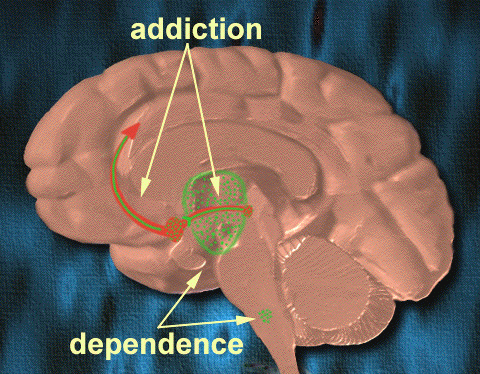


 Mental Health Matters
You must be logged in to post a comment.