Posts

On This Day … 12 November [2022]

People (Deaths)

  • 2012 – Daniel Stern, American psychologist and theorist (b. 1934).

Daniel Stern

Daniel N. Stern (16 August 1934 to 12 November 2012) was a prominent American developmental psychologist and psychoanalyst, specialising in infant development, on which he had written a number of books – most notably The Interpersonal World of the Infant (1985).

Stern’s 1985 and 1995 research and conceptualisation created a bridge between psychoanalysis and research-based developmental models.

What is Liberation (in Pharmacology)?

Introduction

Liberation is the first step in the process by which medication enters the body and liberates the active ingredient that has been administered. The pharmaceutical drug must separate from the vehicle or the excipient that it was mixed with during manufacture. Some authors split the process of liberation into three steps: disintegration, disaggregation and dissolution. A limiting factor in the adsorption of pharmaceutical drugs is the degree to which they are ionised, as cell membranes are relatively impermeable to ionised molecules.

The characteristics of a medication’s excipient play a fundamental role in creating a suitable environment for the correct absorption of a drug. This can mean that the same dose of a drug in different forms can have different bioequivalence, as they yield different plasma concentrations and therefore have different therapeutic effects. Dosage forms with modified release (such as delayed or extended release) allow this difference to be usefully applied.

Dissolution

In a typical situation, a pill taken orally will pass through the oesophagus and into the stomach. As the stomach has an aqueous environment, it is the first place where the pill can dissolve. The rate of dissolution is a key element in controlling the duration of a drug’s effect. For this reason, different forms of the same medication can have the same active ingredients but different dissolution rates. If a drug is administered in a form that is not rapidly dissolved, the drug will be absorbed more gradually over time and its action will have a longer duration. A consequence of this is that patients will comply more closely to a prescribed course of treatment, if the medication does not have to be taken as frequently. In addition, a slow release system will maintain drug concentrations within a therapeutically acceptable range for longer than quicker releasing delivery systems as these result in more pronounced peaks in plasma concentration.

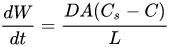
The dissolution rate is described by the Noyes-Whitney equation:

Where:

  • {\frac  {dW}{dt}} is the dissolution rate.
  • A is the solid’s surface area.
  • C is the concentration of the solid in the bulk dissolution medium.
  • C8 is the concentration of the solid in the diffusion layer surrounding the solid.
  • D is the diffusion coefficient.
  • L is the thickness of the diffusion layer.

As the solution is already in a dissolved state, it does not have to go through a dissolution stage before absorption begins.

Ionisation

Cell membranes present a greater barrier to the movement of ionised molecules than non-ionised liposoluble substances. This is particularly important for substances that are weakly amphoteric. The stomach’s acidic pH and the subsequent alkalization in the intestine modifies the degree of ionisation of acids and weak bases depending on a substance’s pKa. The pKa is the pH at which a substance is present at an equilibrium between ionised and non-ionised molecules. The Henderson-Hasselbalch equation is used to calculate pKa.

This page is based on the copyrighted Wikipedia article < https://en.wikipedia.org/wiki/Liberation_(pharmacology) >; it is used under the Creative Commons Attribution-ShareAlike 3.0 Unported License (CC-BY-SA). You may redistribute it, verbatim or modified, providing that you comply with the terms of the CC-BY-SA.

On This Day … 11 November [2022]

People (Deaths)

  • 2002 – Frances Ames, South African neurologist, psychiatrist, and human rights activist (b. 1920).

Frances Ames

Frances Rix Ames (20 April 1920 to 11 November 2002) was a South African neurologist, psychiatrist, and human rights activist, best known for leading the medical ethics inquiry into the death of anti-apartheid activist Steve Biko, who died from medical neglect after being tortured in police custody. When the South African Medical and Dental Council (SAMDC) declined to discipline the chief district surgeon and his assistant who treated Biko, Ames and a group of five academics and physicians raised funds and fought an eight-year legal battle against the medical establishment. Ames risked her personal safety and academic career in her pursuit of justice, taking the dispute to the South African Supreme Court, where she eventually won the case in 1985.

Born in Pretoria and raised in poverty in Cape Town, Ames became the first woman to receive a Doctor of Medicine degree from the University of Cape Town in 1964. Ames studied the effects of cannabis on the brain and published several articles on the subject. Seeing the therapeutic benefits of cannabis on patients in her own hospital, she became an early proponent of legalization for medicinal use. She headed the neurology department at Groote Schuur Hospital before retiring in 1985, but continued to lecture at Valkenberg and Alexandra Hospital. After apartheid was dismantled in 1994, Ames testified at the Truth and Reconciliation Commission about her work on the “Biko doctors” medical ethics inquiry. In 1999, Nelson Mandela awarded Ames the Star of South Africa, the country’s highest civilian award, in recognition of her work on behalf of human rights.

What is a Dosage Form?

Introduction

Dosage forms (also called unit doses) are pharmaceutical drug products in the form in which they are marketed for use, with a specific mixture of active ingredients and inactive components (excipients), in a particular configuration (such as a capsule shell, for example), and apportioned into a particular dose. For example, two products may both be amoxicillin, but one is in 500 mg capsules and another is in 250 mg chewable tablets.

The term unit dose can also sometimes encompass non-reusable packaging as well (especially when each drug product is individually packaged), although the US Food and Drug Administration (FDA) distinguishes that by unit-dose “packaging” or “dispensing”. Depending on the context, multi(ple) unit dose can refer to distinct drug products packaged together, or to a single drug product containing multiple drugs and/or doses. The term dosage form can also sometimes refer only to the pharmaceutical formulation of a drug product’s constituent drug substance(s) and any blends involved, without considering matters beyond that (like how it is ultimately configured as a consumable product such as a capsule, patch, etc.). Because of the somewhat vague boundaries and unclear overlap of these terms and certain variants and qualifiers within the pharmaceutical industry, caution is often advisable when conversing with someone who may be unfamiliar with another person’s use of the term.

Depending on the method/route of administration, dosage forms come in several types. These include many kinds of liquid, solid, and semisolid dosage forms. Common dosage forms include pill, tablet, or capsule, drink or syrup, among many others. In naturopathy, dosages can take the form of decoctions and herbal teas, as well as the more conventional methods previously mentioned. A liquid dosage form is the liquid form of a dose of a chemical compound used as a drug or medication intended for administration or consumption.

The route of administration (ROA) for drug delivery is dependent on the dosage form of the substance in question. Various dosage forms may exist for a single particular drug, since some medical conditions such as being unconscious can restrict ROA. For example, persistent nausea, especially with vomiting, may make it difficult to use an oral dosage form, and in such a case, it may be necessary to use an alternative route such as inhalational, buccal, sublingual, nasal, suppository or parenteral instead. Additionally, a specific dosage form may be a requirement for certain kinds of drugs, as there may be issues with various factors like chemical stability or pharmacokinetics. As an example, insulin cannot be given orally because upon being administered in this manner, it is extensively metabolized in the gastrointestinal tract (GIT) before reaching the blood stream, and is thereby incapable of sufficiently reaching its therapeutic target destinations. The oral and intravenous doses of a drug such as paracetamol will differ for the same reason.

Oral

  • Pills, i.e. tablets or capsules.
  • Liquids such as syrups, solutions, elixers, emulsions, and tinctures.
  • Liquids such as decoctions and herbal teas.
  • Orally disintegrating tablets.
  • Lozenges or candy (electuaries).
  • Thin films (e.g. Listerine Pocketpaks, nitroglycerin) to be placed on top of or underneath the tongue as well as against the cheek.
  • Powders or effervescent powder or tablets, often instructed to be mixed into a food item.
  • Plants or seeds prepared in various ways such as a cannabis edible.
  • Pastes such as high fluoride toothpastes.
  • Gases such as oxygen (can also be delivered through the nose).

Ophthalmic

  • Eye drops.
  • Lotions.
  • Ointments.
  • Emulsions.

Inhalation

  • Aerosolised medication.
  • Dry-powder Inhalers or metered dose inhalers.
  • Nebuliser-administered medication.
  • Smoking.
  • Vaporiser-administered medication.

Unintended Ingredients

Talc is an excipient often used in pharmaceutical tablets that may end up being crushed to a powder against medical advice or for recreational use. Also, illicit drugs that occur as white powder in their pure form are often cut with cheap talc. Natural talc is cheap but contains asbestos while asbestos-free talc is more expensive. Inhaled talc that has asbestos is generally accepted as being able to cause lung cancer if it is inhaled. The evidence about asbestos-free talc is less clear, according to the American Cancer Society.

Injection

  • Parenteral.
  • Intradermally-administered (ID).
  • Subcutaneously-administered (SC).
  • Intramuscularly-administered (IM).
  • Intraosseous administration (IO).
  • Intraperitoneally-administered (IP).
  • intravenously-administered (IV).
  • Intracavernously-administered (ICI).

These are usually solutions and suspensions.

Unintended Ingredients

Safe

Eye drops (normal saline in disposable packages) are distributed to syringe users by needle exchange programs.

Unsafe

The injection of talc from crushed pills has been associated with pulmonary talcosis in intravenous drug users.

Topical

  • Creams, liniments, balms (such as lip balm or antiperspirants and deodorants), lotions, or ointments, etc.
  • Gels and hydrogels.
  • Ear drops.
  • Transdermal and dermal patches to be applied to the skin.
  • Powders.

Unintended Use

  • It is not safe to calculate divided doses by cutting and weighing medical skin patches, because there’s no guarantee that the substance is evenly distributed on the patch surface. For example, fentanyl transdermal patches are designed to slowly release the substance over 3 days. It is well known that cut fentanyl transdermal consumed orally have cause overdoses and deaths.
  • Single blotting papers for illicit drugs injected from solvents in syringes may also cause uneven distribution across the surface.

Other

  • Intravaginal administration:
    • Vaginal rings.
    • Capsules and tablets.
    • Suppositories.
  • Rectal administration (enteral):
    • Suppositories.
    • Suspensions and solutions in the form of enemas.
    • Gels.
  • Urethral.
  • Nasal sprays.

This page is based on the copyrighted Wikipedia article < https://en.wikipedia.org/wiki/Dosage_form >; it is used under the Creative Commons Attribution-ShareAlike 3.0 Unported License (CC-BY-SA). You may redistribute it, verbatim or modified, providing that you comply with the terms of the CC-BY-SA.
What is a Dose (Biochemistry)?

Introduction

A dose is a measured quantity of a medicine, nutrient, or pathogen which is delivered as a unit. The greater the quantity delivered, the larger the dose. Doses are most commonly measured for compounds in medicine. The term is usually applied to the quantity of a drug or other agent administered for therapeutic purposes, but may be used to describe any case where a substance is introduced to the body. In nutrition, the term is usually applied to how much of a specific nutrient is in a person’s diet or in a particular food, meal, or dietary supplement. For bacterial or viral agents, dose typically refers to the amount of the pathogen required to infect a host.

In clinical pharmacology, dose refers to dosage or amount of dose administered to a person, whereas exposure means the time-dependent concentration (often in the circulatory blood or plasma) or concentration-derived parameters such as AUC (area under the concentration curve) and Cmax (peak level of the concentration curve) of the drug after its administrationneeded]. This is in contrast to their interchangeable use in other fields.

Refer to Defined Daily Dose, Prescribed Baily Dose, Maintenance Dose, and Dosage Form.

Factors Affecting Dose

A ‘dose’ of any chemical or biological agent (active ingredient) has several factors which are critical to its effectiveness. The first is concentration, that is, how much of the agent is being administered to the body at once.

Another factor is the duration of exposure. Some drugs or supplements have a slow-release feature in which portions of the medication are metabolized at different times, which changes the impacts the active ingredients have on the body. Some substances are meant to be taken in small doses over large periods of time to maintain a constant level in the body, while others are meant to have a large impact once and be expelled from the body after its work is done. It’s entirely dependent on the function of the drug or supplement.

The route of administration is important as well. Whether a drug is ingested orally, injected into a muscle or vein, absorbed through a mucous membrane, or any of the other types of administration routes, affects how quickly the substance will be metabolized by the body and thus effects the concentration of the active ingredient(s). Dose-response curves may illustrate the relationship of these metabolic effects.

Medicines

Over-the-Counter Medications

In over-the-counter medicines, dosage is based on age. Typically, different doses are recommended for children 6 years and under, children aged 6 to 12 years, and persons 12 years and older, but outside of those ranges the guidance is slim. This can lead to serial under or overdosing, as smaller people take more than they should and larger people take less. Over-the-counter medications are typically accompanied by a set of instructions directing the patient to take a certain small dose, followed by another small dose if their symptoms don’t subside. Under-dosing is a common problem in pharmacy, as predicting an average dose that is effective for all individuals is extremely challenging because body weight and size impacts how the dose acts within the body.

Prescription Drugs

Prescription drug dosage is based typically on body weight. Drugs come with a recommended dose in milligrams or micrograms per kilogram of body weight, and that is used in conjunction with the patient’s body weight to determine a safe dosage. In single dosage scenarios, the patient’s body weight and the drug’s recommended dose per kilogram are used to determine a safe one-time dose. In drugs where multiple doses of treatment are needed in a day, the physician must take into account information regarding the total amount of the drug which is safe to use in one day, and how that should be broken up into intervals for the most effective treatment for the patient. Medication underdosing occurs commonly when physicians write prescriptions for a dosage that is correct for a certain time, but fails to increase the dosage as the patient needs (i.e. weight based dosing in children, or increasing dosages of chemotherapy drugs if a patient’s condition worsens).

Medical Cannabis

Medical cannabis is used to treat the symptoms of a wide variety of diseases and conditions. The dose of cannabis depends on the individual, the condition being treated, and the ratio of cannabidiol (CBD) to tetrahydrocannabinol (THC) in the cannabis. CBD is a chemical component of cannabis that is not intoxicating and used to treat conditions like epilepsy and other neuropsychiatric disorders. THC is a chemical component of cannabis that is psychoactive. It has been used to treat nausea and discomfort in cancer patients receiving chemotherapy treatment. For anxiety, depression, and other mental health ailments, a CBD to THC ratio of 10 to 1 is recommended. For cancer and neurological conditions, a CBD to THC ratio of 1 to 1 is recommended. The correct dosage for a patient is dependent on their individual reaction to both chemicals, and therefore the dosing must be continually adjusted once treatment is initiated to find the right balance.

There is limited consensus throughout the scientific community regarding the effectiveness of medicinal cannabis.

Cancer

Calculating drug dosages for treatment for more serious diseases like cancer is commonly done through measuring the patient’s body surface area. There are approximately 25 different formulae for measuring a patient’s body surface area, none of them exact. Studies show that selecting the best method for an individual patient is a difficult task; consequently, patient often receive too much or too little medication due to their particular physical anomalies. Therefore, these formulas are typically adjusted by what is known as ‘toxicity-adjusting dosing,’ whereby physicians monitor immune suppression and adjust dosing accordingly. Because this strategy of trial and error requires close monitoring, it is inefficient, risky, and cost ineffective. Research into the development of safer and more accurate dosing methods is ongoing.

Ongoing Research

Another approach that’s been investigated recently is dosing on a molecular level, either through conventional delivery systems, nanoparticle delivery, light-triggered delivery, or other less known/used methods. By combining these drugs with a system that detects the concentration of drug particles in the blood, proper dosing could be achieved for each individual patient. Research in this field was initiated with monitoring of small-molecule cocaine levels in undiluted blood serum with electrochemical aptamer-based sensing. DNA aptamers, which are peptides that have with specific target molecules that they search for, fold in response to the molecule when they find it, and this technology was used in a microfluidic detection system to create an electrochemical signal that physicians can read. Researchers tested it on cocaine detection and found that it successfully found trace amounts of cocaine in blood.

This research was expanded upon and led to the creation of a product called MEDIC (microfluidic electrochemical detector for in vivo continuous monitoring) developed by faculty at the University of California at Santa Barbara. MEDIC is an instrument that can continuously determine the concentrations of different molecules in the blood. The blood does not have to be mixed with anything prior to testing to create a ‘serum’ as the first device did. MEDIC can detect a wide variety of drug molecules and biomarkers. In trials, early models of the device failed after about half an hour because the proteins in whole blood clung to the sensors and clogged the components. This problem was solved via a second chamber that allowed a liquid buffer to flow over the sensors with the blood, without mixing or disturbing the blood, so the results remained unchanged. The device is still in clinical trials and actual implementation in medicine is likely years away, however in the interim, its creators estimate that it could also be used in the pharmaceutical industry to allow for better testing in Phase 3 clinical trials.

Vaccines

Vaccinations are typically administered as liquids and dosed in millilitres. Each individual vaccine comes with constraints regarding at what age they should be administered, how many doses must be given, and over what period of time. There are 15 vaccines that the Centres for Disease Control and Prevention recommend every person (in the United States and Canada) receive between birth and 18 years of age to protect against various infectious agents that may affect long-term health. Most vaccines require multiple doses for full immunity, given in recommended intervals depending on the vaccine. There are several typical vaccination routes:

  • Intramuscular: the needle is inserted perpendicular to the skin into the muscle, beneath the skin and (subcutaneous) tissues that rest on top.
  • Subcutaneous: the needle is inserted at a 45-degree angle into the (subcutaneous) tissue between the outer layer of the skin and the muscle.
  • Intranasal: the vaccine is sprayed into the nose and absorbed through the nasal passage.
  • Oral: the vaccine is swallowed and ingested.

Nutrition

For healthy humans, experts recommend daily intake quantities of certain vitamins and minerals. The Food and Nutrition Board, Institute of Medicine, and National Academy of Sciences sets a recommended Dietary Reference Intake (DRI) in several forms:

  • Recommended Dietary Allowance (RDA): average daily intake which adequately meets the nutrient requirements of 97-98% of healthy individuals.
  • Adequate Intake (AI): established when the evidence gathered for an RDA is inconclusive, An AI is assumed to recommend a daily amount to meet nutritional adequacy.
  • Tolerable Upper Intake Level (UL): maximum amount of a nutrient which can be consumed without causing adverse impacts to an individual’s health.

DRIs are established for elements, vitamins, and macronutrients. Common elemental and vitamin dosages are milligrams per day (mg/d) or micrograms per day (μg/d). Common macronutrient dosages are in grams per day (g/d). Dosages for all three are established by both gender and age.

Individuals take vitamin and mineral supplements to promote healthier lifestyles and prevent development of chronic diseases. There is no conclusive evidence linking continued vitamin and mineral supplement intake with longevity of life.

Infectious Dose

The infectious dose of a pathogen is the number of cells required to infect the host. All pathogens have an infectious dose typically given in number of cells. The infectious dose varies by organism and can be dependent on the specific type of strain. Some pathogens can infect a host with only a few cells, while others require millions or billions.

Examples of infectious doses, ranked loosely in increasing order:

  • Enterohemorrhagic E. coli (causes haemorrhaging of the intestines): 10 bacteria cells.
  • Hepatitis A: 10-100 virus particles.
  • Norovirus (commonly called ‘a stomach bug’): 10-100 virus particles.
  • Rotavirus (severe diarrhoea, can be fatal): 10-100 virus particles.
  • Shigella (shigellosis): 500 bacteria cells.
  • Streptococcus pyogenes (Group A strep throat): 1000 bacteria cells.
  • Salmonella: varies by strain, 100-1 billion bacteria cells.
  • Vibrio cholerae (Cholera): 1000-100,000,000 bacteria cells.

Typically, stomach acids can kill bacteria below the infectious dosing range for a given pathogen and keep the host from feeling symptoms or falling ill. Complexes constructed by fat can protect infectious agents from stomach acid, making fatty foods more likely to contain pathogens that successfully infect the host. For individuals with low or reduced stomach acid concentrations, in infectious dosage for a pathogen will be lower than normal.

Rather than being administered by a physician or individual, infectious dosages are transmitted to a person from other persons or the environment, are generally accidental, and result in adverse side effects until the pathogen is defeated by the individual’s immune system or flushed out of the individual’s system by excretory processes.

This page is based on the copyrighted Wikipedia article < https://en.wikipedia.org/wiki/Dose_(biochemistry) >; it is used under the Creative Commons Attribution-ShareAlike 3.0 Unported License (CC-BY-SA). You may redistribute it, verbatim or modified, providing that you comply with the terms of the CC-BY-SA.
On This Day … 09 November [2022]

People (Births)

  • 1939 – Paul Cameron, American psychologist and academic.
  • 2002 – William Schutz, American psychologist and academic (b. 1925).

Paul Cameron

Paul Drummond Cameron (born 09 November 1939) is an American psychologist. Cameron has been designated by the Southern Poverty Law Center as an anti-gay extremist. While employed at various institutions, including the University of Nebraska, he conducted research on passive smoking, but he is best known today for his claims about homosexuality. After a successful 1982 campaign against a gay rights proposal in Lincoln, Nebraska, he established the Institute for the Scientific Investigation of Sexuality (ISIS), now known as the Family Research Institute (FRI). As FRI’s chairman, Cameron has written contentious papers asserting unproven associations between homosexuality and the perpetration of child sexual abuse and reduced life expectancy. These have been heavily criticised and frequently discredited by others in the field.

In 1983, the American Psychological Association expelled Cameron for non-cooperation with an ethics investigation. Position statements issued by the American Sociological Association, Canadian Psychological Association, and the Nebraska Psychological Association accuse Cameron of misrepresenting social science research.

William Schutz

William Schutz (19 December 1925 to 09 November 2002) was an American psychologist.

In 1958, Schutz introduced a theory of interpersonal relations he called Fundamental Interpersonal Relations Orientation (FIRO). According to the theory three dimensions of interpersonal relations were deemed to be necessary and sufficient to explain most human interaction: Inclusion, Control and Affection. These dimensions have been used to assess group dynamics.

Schutz also created FIRO-B, a measurement instrument with scales that assess the behavioural aspects of the three dimensions. His advancement of FIRO Theory beyond the FIRO-B tool was most obvious in the change of the “Affection” scale to the “Openness” scale in the “FIRO Element-B”. This change highlighted his newer theory that behaviour comes from feelings (“FIRO Element-F”) and the self-concept (“FIRO Element-S”). “Underlying the behavior of openness is the feeling of being likable or unlikeable, lovable or unlovable. I find you likable if I like myself in your presence, if you create an atmosphere within which I like myself.”

On This Day … 08 November [2022]

People (Births)

People (Deaths)

  • 2007 – Chad Varah, English priest, founded The Samaritans (b. 1911).

Hermann Rorschach

Hermann Rorschach (08 November 1884 to 02 April 1922) was a Swiss psychiatrist and psychoanalyst.

His education in art helped to spur the development of a set of inkblots that were used experimentally to measure various unconscious parts of the subject’s personality. His method has come to be referred to as the Rorschach test, iterations of which have continued to be used over the years to help identify personality, psychotic, and neurological disorders. Rorschach continued to refine the test until his premature death at age 37.

Chad Varah

Edward Chad Varah CH CBE (12 November 1911 to 08 November 2007) was a British Anglican priest and social activist from England. In 1953, he founded the Samaritans, the world’s first crisis hotline, to provide telephone support to those contemplating suicide.

The Samaritans

Samaritans is a registered charity aimed at providing emotional support to anyone in emotional distress, struggling to cope or at risk of suicide throughout the United Kingdom and the Republic of Ireland, often through its telephone helpline. Its name derives from the biblical Parable of the Good Samaritan although the organisation itself is not religious.

Its international network exists under the name Befrienders Worldwide, which is part of the Volunteer Emotional Support Helplines (VESH) with Lifeline International and the International Federation of Telephone Emergency Services (IFOTES).

What is a Medical Prescription?

Introduction

A prescription, often abbreviated ℞ or Rx, is a formal communication from a physician or other registered health-care professional to a pharmacist, authorising them to dispense a specific prescription drug for a specific patient.

Historically, it was a physician’s instruction to an apothecary listing the materials to be compounded into a treatment – the symbol ℞ (a capital letter R, crossed to indicate abbreviation) comes from the first word of a medieval prescription, Latin: Recipere (“Take thou”), that gave the list of the materials to be compounded.

Brief History

The idea of prescriptions dates back to the beginning of history. So long as there were medications and a writing system to capture directions for preparation and usage, there were prescriptions.

Modern prescriptions are actually extemporaneous prescriptions (from the Latin ex tempore, “at/from the time”), meaning that the prescription is written on the spot for a specific patient with a specific ailment. This is distinguished from a non-extemporaneous prescription that is a generic recipe for a general ailment. Modern prescriptions evolved with the separation of the role of the pharmacists from that of the physician. Today the term extemporaneous prescriptions is reserved for compound prescriptions that requires the pharmacist to mix or compound the medication in the pharmacy for the specific needs of the patient.

Predating modern legal definitions of a prescription, a prescription traditionally is composed of four parts: a superscription, inscription, subscription, and signature.

The superscription section contains the date of the prescription and patient information (name, address, age, etc.). The symbol “℞” separates the superscription from the inscriptions sections. In this arrangement of the prescription, the “℞” is a symbol for recipe or literally the imperative “take!” This is an exhortation to the pharmacist by the medical practitioner, “I want the patient to have the following medication” – in other words, “take the following components and compound this medication for the patient.”

The inscription section defines what is the medication. The inscription section is further composed of one or more of:

  • A basis or chief ingredient intended to cure (curare).
  • An adjuvant to assist its action and make it cure quickly (cito).
  • A corrective to prevent or lessen any undesirable effect (tuto).
  • A vehicle or excipient to make it suitable for administration and pleasant to the patient (jucunde).

The subscription section contains dispensing directions to the pharmacist. This may be compounding instructions or quantities.

The signature section contains directions to the patient and is often abbreviated “Sig.” or “Signa.” It also obviously contains the signature of the prescribing medical practitioner though the word signature has two distinct meanings here and the abbreviations are sometimes used to avoid confusion.

Thus sample prescriptions in modern textbooks are often presented as:

  • Rx: medication.
  • Disp.: dispensing instructions.
  • Sig.: patient instructions.

Format and Definition

For a communication to be accepted as a legal medical prescription, it needs to be filed by a qualified dentist, advanced practice nurse, physician or veterinarian, for whom the medication prescribed is within their scope of practice to prescribe. This is regardless of whether the prescription includes prescription drugs, controlled substances or over-the-counter treatments.

Prescriptions may be entered into an electronic medical record system and transmitted electronically to a pharmacy. Alternatively, a prescription may be handwritten on pre-printed prescription forms that have been assembled into pads, or printed onto similar forms using a computer printer or even on plain paper according to the circumstance. In some cases, a prescription may be transmitted from the physician to the pharmacist orally by telephone. The content of a prescription includes the name and address of the prescribing provider and any other legal requirement such as a registration number (e.g. DEA Number in the United States). Unique for each prescription is the name of the patient. In the United Kingdom and Ireland the patient’s name and address must also be recorded. Each prescription is dated and some jurisdictions may place a time limit on the prescription. In the past, prescriptions contained instructions for the pharmacist to use for compounding the pharmaceutical product but most prescriptions now specify pharmaceutical products that were manufactured and require little or no preparation by the pharmacist. Prescriptions also contain directions for the patient to follow when taking the drug. These directions are printed on the label of the pharmaceutical product.

The word “prescription”, from “pre-” (“before”) and “script” (“writing, written”), refers to the fact that the prescription is an order that must be written down before a drug can be dispensed. Those within the industry will often call prescriptions simply “scripts”.

Contents

Every prescription contains who prescribed the prescription, who the prescription is valid for, and what is prescribed. Some jurisdictions, drug types or patient groups require additional information as explained below.

Drug Equivalence and Non-Substitution

Many brand name drugs have cheaper generic drug substitutes that are therapeutically and biochemically equivalent. Prescriptions will also contain instructions on whether the prescriber will allow the pharmacist to substitute a generic version of the drug. This instruction is communicated in a number of ways. In some jurisdictions, the pre-printed prescription contains two signature lines: one line has “dispense as written” printed underneath; the other line has “substitution permitted” underneath. Some have a pre-printed box “dispense as written” for the prescriber to check off (but this is easily checked off by anyone with access to the prescription). In other jurisdictions, the protocol is for the prescriber to handwrite one of the following phrases: “dispense as written”, “DAW”, “brand necessary”, “do not substitute”, “no substitution”, “medically necessary”, “do not interchange”. In Britain’s National Health Service, doctors are reminded that money spent on branded rather than generic drugs is consequently not available for more deserving cases.

Prescriptions for Children

In some jurisdictions, it may be a legal requirement to include the age of child on the prescription. For paediatric prescriptions some advise the inclusion of the age of the child if the patient is less than twelve and the age and months if less than five. In general, including the age on the prescription is helpful, and adding the weight of the child is also helpful.

Label and Instructions

Prescriptions in the USA often have a “label” box. When checked, the pharmacist is instructed to label the medication and provide information about the prescription itself is given in addition to instructions on taking the medication. Otherwise, the patient is simply given the instructions. Some prescribers further inform the patient and pharmacist by providing the indication for the medication; i.e. what is being treated. This assists the pharmacist in checking for errors as many common medications can be used for multiple medical conditions. Some prescriptions will specify whether and how many “repeats” or “refills” are allowed; that is whether the patient may obtain more of the same medication without getting a new prescription from the medical practitioner. Regulations may restrict some types of drugs from being refilled.

Writing Prescriptions

Legal Capacity to Write Prescriptions

National or local (i.e. US state or Canadian provincial) legislation governs who can write a prescription. In the United States, physicians (either M.D., D.O. or D.P.M.) have the broadest prescriptive authority. All 50 US states and the District of Columbia allow licensed certified Physician Assistants (PAs) prescription authority (with some states, limitations exist to controlled substances). All 50 US states and the District of Columbia, Puerto Rico and Guam allow registered certified nurse practitioners and other advanced practice registered nurses (such as certified nurse-midwives) prescription power (with some states including limitations to controlled substances). Many other healthcare professions also have prescriptive authority related to their area of practice. Veterinarians and dentists have prescribing power in all 50 US states and the District of Columbia. Clinical pharmacists are allowed to prescribe in some US states through the use of a drug formulary or collaboration agreements. Florida pharmacists can write prescriptions for a limited set of drugs. In all US states, optometrists prescribe medications to treat certain eye diseases, and also issue spectacle and contact lens prescriptions for corrective eyewear. Several US states have passed RxP legislation, allowing clinical psychologists who are registered as medical psychologists and have also undergone specialised training in script-writing, to prescribe drugs to treat emotional and mental disorders.

In August 2013, legislative changes in the UK allowed physiotherapists and podiatrists to have independent prescribing rights for licensed medicines that are used to treat conditions within their own area of expertise and competence. In 2018 this was extended to paramedics.

Standing Orders

Some jurisdictions allow certain physicians (sometimes a government official like the state Secretary of Health, sometimes physicians in local clinics or pharmacies) to write “standing orders” that act like a prescription for everyone in the general public. These orders also provide a standard procedure for determining if administration is necessary and details of how it is to be performed safely. These are typically used to authorise certain people to perform preventive, low-risk, or emergency care that would be otherwise logistically cumbersome to authorise for individual patients, including vaccinations, prevention of cavities, birth control, treatment of infectious diseases, and reversal of drug overdoses.

Legibility of Handwritten Prescriptions

Doctors’ handwriting is a reference to the stereotypically illegible handwriting of some medical practitioners, which sometimes causes errors in dispensing. In the US, illegible handwriting has been indirectly responsible for at least 7,000 deaths annually.

There are several theories about the causes of this phenomenon. Some sources say the extreme amount of writing doctors employ during training and at work leads to bad handwriting, whereas others claim that doctors neglect proper handwriting due to medical documents being intended to be read solely by medical professionals, not patients. Others simply classify the handwriting of doctors as a handwriting style. The issue may also have a historical origin, as physicians from Europe-influenced schools have historically used Latin words and abbreviations to convey prescriptions; many of the abbreviations are still widely used in the modern day and could be a source of confusion.

Some jurisdictions have legislatively required prescriptions to be legible – Florida, US specifies “legibly printed or typed” – and the Institute for Safe Medication Practices advocated the elimination of handwritten prescriptions altogether. There have been numerous devices designed to electronically read the handwriting of doctors, including electronic character recognition, keyword spotters, and “postprocessing approaches,” though the gradual shift to electronic health records and electronic prescriptions may alleviate the need for handwritten prescriptions altogether. In Britain’s NHS, remaining paper prescriptions are almost invariably computer printed and electronic (rather than paper) communication between surgery and pharmacy is increasingly the norm.

Conventions for Avoiding Ambiguity

Over the years, prescribers have developed many conventions for prescription-writing, with the goal of avoiding ambiguities or misinterpretation. These include:

  • Careful use of decimal points to avoid ambiguity:
    • Avoiding unnecessary decimal points and trailing zeros, e.g. 5 mL rather than 5.0 mL, 0.5 rather than .50 or 0.50, to avoid possible misinterpretation as 50.
    • Always using leading zeros on decimal numbers less than 1: e.g. 0.5 rather than .5 to avoid misinterpretation as 5.
  • Directions written out in full in English (although some common Latin abbreviations are listed below).
  • Quantities given directly or implied by the frequency and duration of the directions.
  • Where the directions are “as needed”, the quantity should always be specified.
  • Where possible, usage directions should specify times (7 am, 3 pm, 11 pm) rather than simply frequency (three times a day) and especially relationship to meals for orally consumed medication.
  • The use of permanent ink.
  • Avoiding units such as “teaspoons” or “tablespoons”.
  • Writing out numbers as words and numerals (“dispense #30 (thirty)”) as in a bank draft or cheque.
  • The use of the apothecaries’ system or avoirdupois units and symbols of measure – pints (O), ounces (℥), drams (ℨ), scruples (℈), grains (gr), and minims (♏︎) – is discouraged given the potential for confusion. For example, the abbreviation for a grain (“gr”) can be confused with the gram, abbreviated g, and the symbol for minims (♏︎), which looks almost identical to an ‘m’, can be confused with micrograms or metres. Also, the symbols for ounce (℥) and dram (ℨ) can easily be confused with the numeral ‘3’, and the symbol for pint (O) can be easily read as a ‘0’. Given the potential for errors, metric equivalents should always be used.
  • The degree symbol (°), which is commonly used as an abbreviation for hours (e.g., “q 2-4°” for every 2-4 hours), should not be used, since it can be confused with a ‘0’ (zero). Further, the use of the degree symbol for primary, secondary, and tertiary (1°, 2°, and 3°) is discouraged, since the former could be confused with quantities (i.e. 10, 20 and 30, respectively).
  • Micrograms are abbreviated mcg rather than µg (which, if handwritten, could easily be mistaken for mg (milligrams). Even so, pharmacists must be on the alert for inadvertent over- or under-prescribing through a momentary lapse of concentration.

Abbreviations

Many abbreviations are derived from Latin phrases. Hospital pharmacies have more abbreviations, some specific to the hospital. Different jurisdictions follow different conventions on what is abbreviated or not. Prescriptions that do not follow area conventions may be flagged as possible forgeries.

Some abbreviations that are ambiguous, or that in their written form might be confused with something else, are not recommended and should be avoided. These are flagged in the table in the main article. However, all abbreviations carry an increased risk for confusion and misinterpretation and should be used cautiously.

Non-Prescription Drug Prescriptions

Over-the-counter medications and non-controlled medical supplies such as dressings, which do not require a prescription, may also be prescribed. Depending upon a jurisdiction’s medical system, non-prescription drugs may be prescribed because drug benefit plans may reimburse the patient only if the over-the-counter medication is taken at the direction of a qualified medical practitioner. In the countries of the UK, National Health Service (NHS) prescriptions are either free or have a fixed price per item; a prescription may be issued so the patient does not have to purchase the item at commercial price.

Some medical software requires a prescription.

Legislation may define certain equipment as “prescription devices”. Such prescription devices can only be used under the supervision of authorised personnel and such authorisation is typically documented using a prescription. Examples of prescription devices include dental cement (for affixing braces to tooth surfaces), various prostheses, gut sutures, sickle cell tests, cervical cap and ultrasound monitor.

In some jurisdictions, hypodermic syringes are in a special class of their own, regulated as illicit drug use accessories separate from regular medical legislation. Such legislation often allows syringes to be dispensed only with a prescription.

Use of Technology

As a prescription is nothing more than information among a prescriber, pharmacist and patient, information technology can be applied to it. Existing information technology is adequate to print out prescriptions. Hospital information systems in some hospitals do away with prescriptions within the hospital. There are proposals to securely transmit the prescription from the prescriber to the pharmacist using smartcard or the internet. In the UK a project called the Electronic Transfer of Prescriptions (ETP) within the National Programme for IT (NPfIT) is currently piloting such a scheme between prescribers and pharmacies.

Within computerised pharmacies, the information on paper prescriptions is recorded into a database. Afterwards, the paper prescription is archived for storage and legal reasons.

A pharmacy chain is often linked together through corporate headquarters with computer networking. A person who has a prescription filled at one branch can get a refill of that prescription at any other store in the chain, as well as have their information available for new prescriptions at any branch.

Some online pharmacies also offer services to customers over the internet, allowing users to specify the store that they will pick up the medicine from.

Many pharmacies now offer services to ship prescription refills right to the patient’s home. They also offer mail service where you can mail in a new, original prescription and a signed document, and they will ship the filled prescription back to you.

Pharmacy information systems are a potential source of valuable information for pharmaceutical companies as it contains information about the prescriber’s prescribing habits. Prescription data mining of such data is a developing, specialised field.

Many prescribers lack the digitised information systems that reduce prescribing errors. To reduce these errors, some investigators have developed modified prescription forms that prompt the prescriber to provide all the desired elements of a good prescription. The modified forms also contain predefined choices such as common quantities, units and frequencies that the prescriber may circle rather than write out. Such forms are thought to reduce errors, especially omission and handwriting errors and are actively under evaluation.

This page is based on the copyrighted Wikipedia article < https://en.wikipedia.org/wiki/Medical_prescription >; it is used under the Creative Commons Attribution-ShareAlike 3.0 Unported License (CC-BY-SA). You may redistribute it, verbatim or modified, providing that you comply with the terms of the CC-BY-SA.

What is a Prescription Drug?

Introduction

A prescription drug (also prescription medication or prescription medicine) is a pharmaceutical drug that legally requires a medical prescription to be dispensed. In contrast, over-the-counter drugs can be obtained without a prescription. The reason for this difference in substance control is the potential scope of misuse, from drug abuse to practicing medicine without a license and without sufficient education. Different jurisdictions have different definitions of what constitutes a prescription drug.

In North America, ℞, usually printed as “Rx”, is used as an abbreviation of the word “prescription”. It is a contraction of the Latin word “recipe” (an imperative form of “recipere”) meaning “take”. Prescription drugs are often dispensed together with a monograph (in Europe, a Patient Information Leaflet or PIL) that gives detailed information about the drug.

The use of prescription drugs has been increasing since the 1960s.

Regulation

Australia

In Australia, the Standard for the Uniform Scheduling of Medicines and Poisons (SUSMP) governs the manufacture and supply of drugs with several categories:

  • Schedule 1 – Defunct Drug.
  • Schedule 2 – Pharmacy Medicine.
  • Schedule 3 – Pharmacist-Only Medicine.
  • Schedule 4 – Prescription-Only Medicine/Prescription Animal Remedy.
  • Schedule 5 – Caution/Poison.
  • Schedule 6 – Poison.
  • Schedule 7 – Dangerous Poison.
  • Schedule 8 – Controlled Drug (Possession without authority illegal).
  • Schedule 9 – Prohibited Substance (Possession illegal without a license legal only for research purposes).
  • Schedule 10 – Controlled Poison.
  • Unscheduled Substances.

As in other developed countries, the person requiring a prescription drug attends the clinic of a qualified health practitioner, such as a physician, who may write the prescription for the required drug.

Many prescriptions issued by health practitioners in Australia are covered by the Pharmaceutical Benefits Scheme, a scheme that provides subsidised prescription drugs to residents of Australia to ensure that all Australians have affordable and reliable access to a wide range of necessary medicines. When purchasing a drug under the PBS, the consumer pays no more than the patient co-payment contribution, which, as of 01 January 2022, is A$42.50 for general patients. Those covered by government entitlements (low-income earners, welfare recipients, Health Care Card holders, etc.) and or under the Repatriation Pharmaceutical Benefits Scheme (RPBS) have a reduced co-payment, which is A$6.80 in 2022. The co-payments are compulsory and can be discounted by pharmacies up to a maximum of A$1.00 at cost to the pharmacy.

United Kingdom

In the United Kingdom, the Medicines Act 1968 and the Prescription Only Medicines (Human Use) Order 1997 contain regulations that cover the supply of sale, use, prescribing and production of medicines. There are three categories of medicine:

  • Prescription-only medicines (POM), which may be dispensed (sold in the case of a private prescription) by a pharmacist only to those to whom they have been prescribed.
  • Pharmacy medicines (P), which may be sold by a pharmacist without a prescription.
  • General sales list (GSL) medicines, which may be sold without a prescription in any shop.

The possession of a prescription-only medicine without a prescription is legal unless it is covered by the Misuse of Drugs Act 1971.

A patient visits a medical practitioner or dentist, who may prescribe drugs and certain other medical items, such as blood glucose-testing equipment for diabetics. Also, qualified and experienced nurses and pharmacists may be independent prescribers. Both may prescribe all POMs (including controlled drugs), but may not prescribe Schedule 1 controlled drugs, and 3 listed controlled drugs for the treatment of addiction; which is similar to doctors, who require a special license from the Home Office to prescribe schedule 1 drugs. Schedule 1 drugs have little or no medical benefit, hence their limitations on prescribing. District nurses and health visitors have had limited prescribing rights since the mid-1990s; until then, prescriptions for dressings and simple medicines had to be signed by a doctor. Once issued, a prescription is taken by the patient to a pharmacy, which dispenses the medicine.

Most prescriptions are NHS prescriptions, subject to a standard charge that is unrelated to what is dispensed. The NHS prescription fee was increased to £9.15 per item in England on 01 April 2020; prescriptions are free of charge if prescribed and dispensed in Scotland, Wales and Northern Ireland, and for some patients in England, such as inpatients, children, those over 60s or with certain medical conditions, and claimants of certain benefits. The pharmacy charges the NHS the actual cost of the medicine, which may vary from a few pence to hundreds of pounds. A patient can consolidate prescription charges by using a prescription payment certificate (informally a “season ticket”), effectively capping costs at £29.60 per quarter or £105.90 per year.

Outside the NHS, private prescriptions are issued by private medical practitioner and sometimes under the NHS for medicines that are not covered by the NHS. A patient pays the pharmacy the normal price for medicine prescribed outside the NHS.

Survey results published by Ipsos MORI in 2008 found that around 800,000 people in England were not collecting prescriptions or getting them dispensed because of the cost, the same as in 2001.

United States

In the United States, the Federal Food, Drug, and Cosmetic Act defines what substances require a prescription for them to be dispensed by a pharmacy. The federal government authorises physicians (of any specialty), physician assistants, nurse practitioners and other advanced practice nurses, veterinarians, dentists, and optometrists to prescribe any controlled substance. They are then issued unique DEA numbers; many other mental and physical health technicians, including basic-level registered nurses, medical assistants, emergency medical technicians, most psychologists, and social workers, for example, do not have the authority to prescribe any legend drugs or controlled drugs. Legend drugs are another name for drugs requiring a prescription.

The Controlled Substances Act (CSA) was enacted into law by the US Congress of the United States in 1970. It is the federal drug law that regulates manufacture, importation, possession, use, and distribution of controlled substances. The legislation classes these substances into five schedules, with varying qualifications for each schedule. The schedules are designated schedule I, schedule II, schedule III, schedule IV, and schedule V. Many drugs require a prescription, even though they are not a controlled substance.

The safety and the effectiveness of prescription drugs in the US are regulated by the 1987 Prescription Drug Marketing Act (PDMA). The Food and Drug Administration (FDA) is charged with implementing the law.

Misuse or abuse of prescription drugs can lead to adverse drug events, including those due to dangerous drug interactions.

The package insert for a prescription drug contains information about the intended effect of the drug and how it works in the body. It also contains information about side effects, how a patient should take the drug, and cautions for its use, including warnings about allergies.

As a general rule, over-the-counter drugs (OTC) are used to treat a condition that does not need care from a healthcare professional if have been proven to meet higher safety standards for self-medication by patients. Often, a lower strength of a drug will be approved for OTC use, but higher strengths require a prescription to be obtained; a notable case is ibuprofen, which has been widely available as an OTC pain killer since the mid-1980s, but it is available by prescription in doses up to four times the OTC dose for severe pain that is not adequately controlled by the OTC strength.

Herbal preparations, amino acids, vitamins, minerals, and other food supplements are regulated by the FDA as dietary supplements. Because specific health claims cannot be made, the consumer must make informed decisions when purchasing such products.

By law, American pharmacies operated by “membership clubs” such as Costco and Sam’s Club must allow non-members to use their pharmacy services and may not charge more for these services than they charge as their members.

Physicians may legally prescribe drugs for uses other than those specified in the FDA approval, known as off-label use. Drug companies, however, are prohibited from marketing their drugs for off-label uses.

Large US retailers that operate pharmacies and pharmacy chains use inexpensive generic drugs as a way to attract customers into stores. Several chains, including Walmart, Kroger (including subsidiaries such as Dillons), Target, and others, offer $4 monthly prescriptions on select generic drugs as a customer draw. Publix Supermarkets, which has pharmacies in many of their stores, offered free prescriptions on a few older but still effective medications to their customers, the programme ended in 2022. The maximum supply is for 30 days.

Some prescription drugs are commonly abused, particularly those marketed as analgesics, including fentanyl (Duragesic), hydrocodone (Vicodin), oxycodone (OxyContin), oxymorphone (Opana), propoxyphene (Darvon), hydromorphone (Dilaudid), meperidine (Demerol), and diphenoxylate (Lomotil).

Some prescription painkillers have been found to be addictive, and unintentional poisoning deaths in the United States have skyrocketed since the 1990s according to the National Safety Council. Prescriber education guidelines as well as patient education, prescription drug monitoring programs and regulation of pain clinics are regulatory tactics which have been used to curtail opioid use and misuse.

Expiration Date

The expiration date, required in several countries, specifies the date up to which the manufacturer guarantees the full potency and safety of a drug. In the United States, expiration dates are determined by regulations established by the FDA. The FDA advises consumers not to use products after their expiration dates.

A study conducted by the U.S. Food and Drug Administration covered over 100 drugs, prescription and over-the-counter. The results showed that about 90% of them were safe and effective far past their original expiration date. At least one drug worked 15 years after its expiration date. Joel Davis, a former FDA expiration-date compliance chief, said that with a handful of exceptions – notably nitroglycerin, insulin, some liquid antibiotics; outdated tetracyclines can cause Fanconi syndrome – most expired drugs are probably effective.

The American Medical Association (AMA) issued a report and statement on Pharmaceutical Expiration Dates. The Harvard Medical School Family Health Guide notes that, with rare exceptions, “it’s true the effectiveness of a drug may decrease over time, but much of the original potency still remains even a decade after the expiration date”.

The expiration date is the final day that the manufacturer guarantees the full potency and safety of a medication. Drug expiration dates exist on most medication labels, including prescription, over-the-counter (OTC) and dietary (herbal) supplements. US pharmaceutical manufacturers are required by law to place expiration dates on prescription products prior to marketing. For legal and liability reasons, manufacturers will not make recommendations about the stability of drugs past the original expiration date.

Cost

Prices for prescription drugs vary widely around the world. Prescription costs for biosimilar and generic drugs are usually less than brand names, but the cost is different from one pharmacy to another.

Prescription drug prices including generic prices are rising faster than the average rate of inflation. To lower prescription drug costs, some US patients buy medicine in Canada or online.

Generics undergo strict scrutiny to meet the equal efficacy, safety, dosage, strength, stability, and quality of brand name drugs. Generics are developed after the brand name has already been established, and so generic drug approval in many aspects has a shortened approval process because it replicates the brand name drug.

Brand name drugs cost more due to time, money, and resources that drug companies invest in in order to repeat research clinical trials that the FDA requires for the drug to remain in the market. Because drug companies have to invest more in research costs to do this, brand name drug prices are much higher when sold to consumers.

When the patent expires for a brand name drug, generic versions of that drug are produced by other companies and are sold for lower price. By switching to generic prescription drugs, patients can save significant amounts of money: e.g. one study by the FDA showed an example with more than 50% savings of a patient’s overall costs of their prescription drugs.

Drug Cost Containment Strategies in the US

In the United States there are many resources available to patients to lower the costs of medication. These include co-payments, coinsurance, and deductibles. The Medicaid Drug Rebate Programme is another example.

Generic drug programs lower the amount of money patients have to pay when picking up their prescription at the pharmacy. As their name implies, they only cover generic drugs.

Co-pay assistance programmes are programmes that help patients lower the costs of specialty medications; i.e., medications that are on restricted formularies, have limited distribution, and/or have no generic version available. These medications can include drugs for HIV, hepatitis C, and multiple sclerosis. Patient Assistance Programme Centre (RxAssist) has a list of foundations that provide co-pay assistance programmes. It is important to note that co-pay assistance programmes are for under-insured patients. Patients without insurance are not eligible for this resource; however, they may be eligible for patient assistance programmes.

Patient assistance programmes are funded by the manufacturer of the medication. Patients can often apply to these programs through the manufacturer’s website. This type of assistance programme is one of the few options available to uninsured patients.

The out-of-pocket cost for patients enrolled in co-pay assistance or patient assistance programmes is $0. It is a major resource to help lower costs of medications – however, many providers and patients are not aware of these resources.

Environment

Traces of prescription drugs – including antibiotics, anti-convulsants, mood stabilisers and sex hormones – have been detected in drinking water. Pharmaceutically active compounds (PhACs) discarded from human therapy and their metabolites have been found to not be eliminated by sewage treatment plants and have been found at low concentrations in surface waters downstream from those plants. The continuous discarding of incompletely treated water may interact with other environmental chemicals and lead to uncertain ecological effects. Due to most pharmaceuticals being highly soluble, fish and other aquatic organisms are susceptible to their effects. The long term effects of pharmaceuticals in the environment may affect survival and reproduction of such organisms. However, levels of medical drug waste in the water is at a low enough level that it is not a direct concern to human health. However, processes, such as biomagnification, are potential human health concerns.

On the other hand, there is clear evidence of harm to aquatic animals and fauna. Recent advancements in technology have allowed scientists to detect smaller, trace quantities of pharmaceuticals in the ng/ml range. Despite being found such low concentrations, female hormonal contraceptives have been documented to cause feminising effects on male vertebrate species, such as fish, frogs and crocodiles. A promising model has been developed to further study the effects on the aquatic environment. The biological read across model combines the concepts of the mechanism of action (MoA) and adverse outcomes pathway (AOP). In other words, the species being studied needs to have similar mechanisms by which the pharmaceutical acts on the species and reach similar concentrations that would be enough to cause an effect in humans. Studying these relations may give us more quantifiable information on the effects of pharmaceuticals in the environment.

Currently, research is being done on various methods of reducing chemical waste in the environment. In addition, FDA established guidelines in 2007 to inform consumers should dispose of prescription drugs. When medications do not include specific disposal instructions, patients should not flush medications in the toilet, but instead use medication take-back programmes. This aims to reduce the amount of pharmaceutical waste that gets into sewage and landfills. If no take-back programs are available, prescription drugs can be discarded in household trash after they are crushed and/or dissolved and then mixed in a separate container or sealable bag with undesirable substances like cat litter or other unappealing material (to discourage consumption).

This page is based on the copyrighted Wikipedia article < https://en.wikipedia.org/wiki/Prescription_drug >; it is used under the Creative Commons Attribution-ShareAlike 3.0 Unported License (CC-BY-SA). You may redistribute it, verbatim or modified, providing that you comply with the terms of the CC-BY-SA.

What is a Tablet (Pharmacy)?

Introduction

A tablet (also known as a pill) is a pharmaceutical oral dosage form (oral solid dosage, or OSD) or solid unit dosage form. Tablets may be defined as the solid unit dosage form of medicament or medicaments with suitable excipients. It comprises a mixture of active substances and excipients, usually in powder form, pressed or compacted from a powder into a solid dose.

Tablets are prepared either by moulding or by compression. The excipients can include diluents, binders or granulating agents, glidants (flow aids) and lubricants to ensure efficient tabletting; disintegrants to promote tablet break-up in the digestive tract; sweeteners or flavours to enhance taste; and pigments to make the tablets visually attractive or aid in visual identification of an unknown tablet. A polymer coating is often applied to make the tablet smoother and easier to swallow, to control the release rate of the active ingredient, to make it more resistant to the environment (extending its shelf life), or to enhance the tablet’s appearance. Medicinal tablets were originally made in the shape of a disk of whatever colour their components determined, but are now made in many shapes and colours to help distinguish different medicines. Tablets are often stamped with symbols, letters, and numbers, which enable them to be identified. Sizes of tablets to be swallowed range from a few millimetres to about a centimetre.

The compressed tablet is the most popular dosage form in use today. About two-thirds of all prescriptions are dispensed as solid dosage forms, and half of these are compressed tablets. A tablet can be formulated to deliver an accurate dosage to a specific site; it is usually taken orally, but can be administered sublingually, buccally, rectally or intravaginally. The tablet is just one of the many forms that an oral drug can take such as syrups, elixirs, suspensions, and emulsions.

Brief History

Pills are thought to date back to around 1500 BC. Earlier medical recipes, such as those from 4000 BC, were for liquid preparations rather than solids. The first references to pills were found on papyruses in ancient Egypt, and contained bread dough, honey or grease. Medicinal ingredients, such as plant powders or spices, were mixed in and formed by hand to make little balls, or pills. In ancient Greece, such medicines were known as katapotia (“something to be swallowed”), and the Roman scholar Pliny, who lived from 23 to 79 AD, first gave a name to what we now call pills, calling them pilula.

Pills have always been difficult to swallow and efforts long have been made to make them go down easier. In medieval times, people coated pills with slippery plant substances. Another approach, used as recently as the 19th century, was to gild them in gold and silver, although this often meant that they would pass through the digestive tract with no effect. In the 1800s sugar-coating and gelatine-coating was invented, as were gelatine capsules.

In 1843, the British painter and inventor William Brockedon was granted a patent for a machine capable of “Shaping Pills, Lozenges and Black Lead by Pressure in Dies”. The device was capable of compressing powder into a tablet without use of an adhesive.

Types

Pills

A pill was originally defined as a small, round, solid pharmaceutical oral dosage form of medication. The word’s etymology reflects the historical concepts of grinding the ingredients with a mortar and pestle and rolling the resultant paste or dough into lumps to be dried. Today, in its strict sense, the word pill still refers specifically to tablets (including caplets) rather than capsules (which were invented much later), but because a simple hypernym is needed to intuitively cover all such oral dosage forms, the broad sense of the word pill is also widely used and includes both tablets and capsules – colloquially, any solid oral form of medication falls into the “pill” category.

An early example of pills came from Ancient Rome. They were made of the zinc carbonates hydrozincite and smithsonite. The pills were used for sore eyes, and were found aboard a Roman ship that wrecked in 140 BC. However, these tablets were meant to be pressed on the eyes, not swallowed.

Caplets

A caplet is a smooth, coated, oval-shaped medicinal tablet in the general shape of a capsule. Many caplets have an indentation running down the middle so they may be split in half more easily. Since their inception, capsules have been viewed by consumers as the most efficient method of taking medication. For this reason, producers of drugs such as OTC analgesics wanting to emphasize the strength of their product developed the “caplet”, a portmanteau of capsule-shaped tablet, in order to tie this positive association to more efficiently produced tablet pills, as well as being an easier-to-swallow shape than the usual disk-shaped tablet.

Orally Disintegrating Tablets (ODT)

An orally disintegrating tablet or orodispersible tablet (ODT), is a drug dosage form available for a limited range of over-the-counter (OTC) and prescription medications.

Film Coated Tablets (FCT)

A film coated tablet is a drug dosage form available for a limited range of over-the-counter (OTC) and prescription medications. The used films protect the drug substance against denaturation by stomach acid and/or support a delayed (modified) release of the drug substance (“retard effect”). Such tablets should not be damaged or broken.

Tabletting Formulations

In the tablet-pressing process, it is important that all ingredients be fairly dry, powdered or granular, somewhat uniform in particle size, and freely flowing. Mixed particle sized powders segregate during manufacturing operations due to different densities, which can result in tablets with poor drug or active pharmaceutical ingredient (API) content uniformity, but granulation should prevent this. Content uniformity ensures that the same API dose is delivered with each tablet.

Some APIs may be tableted as pure substances, but this is rarely the case; most formulations include excipients. Normally, a pharmacologically inactive ingredient (excipient) termed a binder is added to help hold the tablet together and give it strength. A wide variety of binders may be used, some common ones including lactose, dibasic calcium phosphate, sucrose, corn (maize) starch, microcrystalline cellulose, povidone polyvinylpyrrolidone and modified cellulose (for example hydroxypropyl methylcellulose and hydroxyethylcellulose).

Often, an ingredient is also needed to act as a disintegrant to aid tablet dispersion once swallowed, releasing the API for absorption. Some binders, such as starch and cellulose, are also excellent disintegrants.

Tablet Properties

Tablets can be made in virtually any shape, although requirements of patients and tableting machines mean that most are round, oval or capsule shaped. More unusual shapes have been manufactured but patients find these harder to swallow, and they are more vulnerable to chipping or manufacturing problems.

Tablet diameter and shape are determined by the machine tooling used to produce them – a die plus an upper and a lower punch are required. This is called a station of tooling. The thickness is determined by the amount of tablet material and the position of the punches in relation to each other during compression. Once this is done, we can measure the corresponding pressure applied during compression. The shorter the distance between the punches, thickness, the greater the pressure applied during compression, and sometimes the harder the tablet. Tablets need to be hard enough that they do not break up in the bottle, yet friable enough that they disintegrate in the gastric tract.

Tablets need to be strong enough to resist the stresses of packaging, shipping and handling by the pharmacist and patient. The mechanical strength of tablets is assessed using a combination of simple failure and erosion tests, and more sophisticated engineering tests. The simpler tests are often used for quality control purposes, whereas the more complex tests are used during the design of the formulation and manufacturing process in the research and development phase. Standards for tablet properties are published in the various international pharmacopeias‘ (USP/NF, EP, JP, etc.). The hardness of tablets is the principal measure of mechanical strength. Hardness is tested using a tablet hardness tester. The units for hardness have evolved since the 1930s, but are commonly measured in kilograms per square centimetre. Models of tester include the Monsanto (or Stokes) Hardness Tester from 1930, the Pfizer Hardness Tester from 1950, the Strong Cob Hardness Tester and the Heberlain (or Schleeniger) Hardness Tester.

Lubricants prevent ingredients from clumping together and from sticking to the tablet punches or capsule filling machine. Lubricants also ensure that tablet formation and ejection can occur with low friction between the solid and die wall, as well as between granules, which helps in uniform filling of the die.

Common minerals like talc or silica, and fats, e.g. vegetable stearin, magnesium stearate or stearic acid are the most frequently used lubricants in tablets or hard gelatine capsules.

Manufacturing

Manufacture of the Tableting Blend

In the tablet pressing process, the appropriate amount of active ingredient must be in each tablet. Hence, all the ingredients should be well-mixed. If a sufficiently homogenous mix of the components cannot be obtained with simple blending processes, the ingredients must be granulated prior to compression to assure an even distribution of the active compound in the final tablet. Two basic techniques are used to granulate powders for compression into a tablet: wet granulation and dry granulation. Powders that can be mixed well do not require granulation and can be compressed into tablets through direct compression (“DC”). Direct Compression is desirable as it is quicker. There is less processing, equipment, labour, and energy consumption. However, DC is difficult when a formulation has a high content of poorly compressible active ingredient.

Wet Granulation

Wet granulation is a process of using a liquid binder to lightly agglomerate the powder mixture. The amount of liquid has to be properly controlled, as over-wetting will cause the granules to be too hard and under-wetting will cause them to be too soft and friable. Aqueous solutions have the advantage of being safer to deal with than solvent-based systems but may not be suitable for drugs which are degraded by hydrolysis.

Procedure

  • The active ingredient and excipients are weighed and mixed.
  • The wet granulate is prepared by adding the liquid binder-adhesive to the powder blend and mixing thoroughly. Examples of binders/adhesives include aqueous preparations of corn starch, natural gums such as acacia, cellulose derivatives such as methyl cellulose, gelatine, and povidone.
  • Screening the damp mass through a mesh to form pellets or granules.
  • Drying the granulation. A conventional tray-dryer or fluid-bed dryer are most commonly used.
  • After the granules are dried, they are passed through a screen of smaller size than the one used for the wet mass to create granules of uniform size.

Low shear wet granulation processes use very simple mixing equipment, and can take a considerable time to achieve a uniformly mixed state. High shear wet granulation processes use equipment that mixes the powder and liquid at a very fast rate, and thus speeds up the manufacturing process. Fluid bed granulation is a multiple-step wet granulation process performed in the same vessel to pre-heat, granulate, and dry the powders. It is used because it allows close control of the granulation process.

Dry Granulation

Dry granulation processes create granules by light compaction of the powder blend under low pressures. The compacts so-formed are broken up gently to produce granules (agglomerates). This process is often used when the product to be granulated is sensitive to moisture and heat. Dry granulation can be conducted on a tablet press using slugging tooling or on a roll press called a roller compactor. Dry granulation equipment offers a wide range of pressures to attain proper densification and granule formation. Dry granulation is simpler than wet granulation, therefore the cost is reduced. However, dry granulation often produces a higher percentage of fine granules, which can compromise the quality or create yield problems for the tablet. Dry granulation requires drugs or excipients with cohesive properties, and a ‘dry binder’ may need to be added to the formulation to facilitate the formation of granules.

Hot Melt Extrusion

Hot melt extrusion is utilised in pharmaceutical solid oral dose processing to enable delivery of drugs with poor solubility and bioavailability. Hot melt extrusion has been shown to molecularly disperse poorly soluble drugs in a polymer carrier increasing dissolution rates and bioavailability. The process involves the application of heat, pressure and agitation to mix materials together and ‘extrude’ them through a die. Twin-screw high shear extruders blend materials and simultaneously break up particles. The extruded particles can then be blended and compressed into tablets or filled into capsules.

Granule Lubrication

After granulation, a final lubrication step is used to ensure that the tableting blend does not stick to the equipment during the tableting process. This usually involves low shear blending of the granules with a powdered lubricant, such as magnesium stearate or stearic acid.

Manufacture of the Tablets

Whatever process is used to make the tableting blend, the process of making a tablet by powder compaction is very similar. First, the powder is filled into the die from above. The mass of powder is determined by the position of the lower punch in the die, the cross-sectional area of the die, and the powder density. At this stage, adjustments to the tablet weight are normally made by repositioning the lower punch. After die filling, the upper punch is lowered into the die and the powder is uniaxially compressed to a porosity of between 5 and 20%. The compression can take place in one or two stages (main compression, and, sometimes, pre-compression or tamping) and for commercial production occurs very fast (500-50 mg per tablet). Finally, the upper punch is pulled up and out of the die (decompression), and the tablet is ejected from the die by lifting the lower punch until its upper surface is flush with the top face of the die. This process is repeated for each tablet.

Common problems encountered during tablet manufacturing operations include:

  • Fluctuations in tablet weight, usually caused by uneven powder flow into the die due to poor powder flow properties.
  • Fluctuations in dosage of the Active Pharmaceutical Ingredient, caused by uneven distribution of the API in the tableting blend (either due to poor mixing or separation in process).
  • Sticking of the powder blend to the tablet tooling, due to inadequate lubrication, worn or dirty tooling, or a sticky powder formulation.
  • Capping, lamination or chipping. This is caused by air being compressed with the tablet formulation and then expanding when the punch is released: if this breaks the tablet apart, it can be due to incorrect machine settings, or due to incorrect formulation: either because the tablet formulation is too brittle or not adhesive enough, or because the powder being fed to the tablet press contains too much air (has too low bulk density).
  • Capping can also occur due to high moisture content.

Tablet Compaction Simulator

Tablet formulations are designed and tested using a laboratory machine called a Tablet Compaction Simulator or Powder Compaction Simulator. This is a computer controlled device that can measure the punch positions, punch pressures, friction forces, die wall pressures, and sometimes the tablet internal temperature during the compaction event. Numerous experiments with small quantities of different mixtures can be performed to optimise a formulation. Mathematically corrected punch motions can be programmed to simulate any type and model of production tablet press. Initial quantities of active pharmaceutical ingredients are very expensive to produce, and using a Compaction Simulator reduces the amount of powder required for product development.

Tablet Presses

Tablet presses, also called tableting machines, range from small, inexpensive bench-top models that make one tablet at a time (single-station presses), with only around a half-ton pressure, to large, computerised, industrial models (multi-station rotary presses) that can make hundreds of thousands to millions of tablets an hour with much greater pressure. The tablet press is an essential piece of machinery for any pharmaceutical and nutraceutical manufacturer. Tablet presses must allow the operator to adjust the position of the lower and upper punches accurately, so that the tablet weight, thickness and density/hardness can each be controlled. This is achieved using a series of cams, rollers, or tracks that act on the tablet tooling (punches). Mechanical systems are also incorporated for die filling, and for ejecting and removing the tablets from the press after compression. Pharmaceutical tablet presses are required to be easy to clean and quick to reconfigure with different tooling, because they are usually used to manufacture many different products. There are two main standards of tablet tooling used in pharmaceutical industry: American standard TSM and European standard EU. TSM and EU configurations are similar to each other but cannot be interchanged.

Modern tablet presses reach output volumes of up to 1,700,000 tablets per hour. These huge volumes require frequent in-process quality control for the tablet weight, thickness and hardness. Due to reduce rejects rates and machine down-time, automated tablet testing devices are used on-line with the tablet press or off-line in the IPC-labs.

Tablet Coating

Many tablets today are coated after being pressed. Although sugar-coating was popular in the past, the process has many drawbacks. Modern tablet coatings are polymer and polysaccharide based, with plasticizers and pigments included. Tablet coatings must be stable and strong enough to survive the handling of the tablet, must not make tablets stick together during the coating process, and must follow the fine contours of embossed characters or logos on tablets. Coatings are necessary for tablets that have an unpleasant taste, and a smoother finish makes large tablets easier to swallow. Tablet coatings are also useful to extend the shelf-life of components that are sensitive to moisture or oxidation. Special coatings (for example with pearlescent effects) can enhance brand recognition.

If the active ingredient of a tablet is sensitive to acid, or is irritant to the stomach lining, an enteric coating can be used, which is resistant to stomach acid, and dissolves in the less acidic area of the intestines. Enteric coatings are also used for medicines that can be negatively affected by taking a long time to reach the small intestine, where they are absorbed. Coatings are often chosen to control the rate of dissolution of the drug in the gastrointestinal tract. Some drugs are absorbed better in certain parts of the digestive system. If this part is the stomach, a coating is selected that dissolves quickly and easily in acid. If the rate of absorption is best in the large intestine or colon, a coating is used that is acid resistant and dissolves slowly to ensure that the tablet reaches that point before dispersing. To measure the disintegration time of the tablet coating and the tablet core, automatic disintegration testers are used which are able to determine the complete disintegration process of a tablet by measuring the rest height of the thickness with every upward stroke of the disintegration tester basket.

There are two types of coating machines used in the pharmaceutical industry: coating pans and automatic coaters. Coating pans are used mostly to sugar coat pellets. Automatic coaters are used for all kinds of coatings; they can be equipped with a remote control panel, a dehumidifier, and dust collectors. An explosion-proof design is required for applying coatings that contain alcohol.

Pill-Splitters

It is sometimes necessary to split tablets into halves or quarters. Tablets are easier to break accurately if scored, but there are devices called pill-splitters which cut unscored and scored tablets. Tablets with special coatings (for example enteric coatings or controlled-release coatings) should not be broken before use, as this exposes the tablet core to the digestive juices, circumventing the intended delayed-release effect.

This page is based on the copyrighted Wikipedia article < https://en.wikipedia.org/wiki/Tablet_(pharmacy) >; it is used under the Creative Commons Attribution-ShareAlike 3.0 Unported License (CC-BY-SA). You may redistribute it, verbatim or modified, providing that you comply with the terms of the CC-BY-SA.