Book: Like-Minded – Externalism and Moral Psychology

Book Title:

Like-Minded – Externalism and Moral Psychology.

Author(s): Andrew Sneddon.

Year: 2011.

Edition: First (1st), Illustrated Edition.

Publisher: MIT Press.

Type(s): Hardcover.

Synopsis:

A proposal that the cognitive processes that make us moral agents are partially constituted by features of our external environments. What are the psychological foundations of morality?

Historically, the issue has been framed as one of emotion versus reason. Hume argued that reason is the slave of the passions and so morality must be based on them; Kant argued that moral law is given by rational agents to themselves in virtue of their rationality.

The debate has continued in these terms to the present day. In Like-Minded, Andrew Sneddon argues that “reason” and “passion” do not satisfactorily capture all the important options for explaining the psychological foundations of morality. He proposes a third possibility: that the cognitive processes that make us moral agents are centrally constituted by features of our external environments.

Sneddon calls this the Wide Moral Systems Hypothesis (WMSH). The WMSH fits within an array of positions known as externalism or the Extended Mind Hypothesis, according to which the world outside our bodies is not just input to cognitive processes located within our brains but partially constitutes those processes.

After explaining the WMSH, Sneddon presents a series of more particular hypotheses about distinct aspects of our moral psychology: moral judgment, moral reasoning, the attribution of moral responsibility, and production of action. Sneddon revisits overlooked externalist aspects of moral psychology, noting the integration of agent and environment found in existing research.

With Like-Minded, Sneddon offers an innovative contribution to work in both moral psychology and the Extended Mind Hypothesis.

Book: How Emotions Are Made

Book Title:

How Emotions Are Made – The Secret Life Of The Brain.

Author(s): Lisa Feldman Barrett.

Year: 2017.

Edition: First (1st); Main Market Edition.

Publisher: Macmillan.

Type(s): Hardcover, Paperback, Audiobook, and Kindle.

Synopsis:

When you feel anxious, angry, happy, or surprised, what is really going on inside you? Most scientists would agree that emotions come from specific parts of the brain, and that we feel them whenever they are triggered by the world around us. The thrill of seeing an old friend, the sadness of a tear-jerker movie, the fear of losing someone you love – each of these sensations arises automatically and uncontrollably within us, finding expression on our faces and in our behaviour, and carrying us away with the experience.

This understanding of emotion has been around since Aristotle. But what if it is wrong? In How Your Emotions Are Made, pioneering psychologist Lisa Feldman Barrett draws on the latest scientific evidence to reveal that our ideas about emotion are dramatically, even dangerously, out of date – and that we have been paying the price. Emotions do not exist objectively in nature, Barrett explains, and they are not pre-programmed in our brains and bodies; rather, they are psychological experiences that each of us constructs based on our unique personal history, physiology and environment.

This new view of emotions has serious implications: when judges issue lesser sentences for crimes of passion, when police officers fire at threatening suspects, or when doctors choose between one diagnosis and another, they are all, in some way, relying on the ancient assumption that emotions are hardwired into our brains and bodies. Revising that conception of emotion is not just good science, Barrett shows; it is vital to our wellbeing and the health of society itself.

Book: Holistic Wellness In The NewAge

Book Title:

Holistic Wellness In The NewAge – A Comprehensive Guide To NewAge Healing Practices: Volume 01.

Author(s): Swatika Jain (Editor).

Year: 2015.

Edition: First (1st).

Publisher: CreateSpace Independent Publishing Platform.

Type(s): Paperback and Kindle.

Synopsis:

A Comprehensive Guide To NewAge Healing Practices Tools, Techniques & Real Life Stories By Over 45 Accomplished Master Facilitators In the book “Holistic Wellness In The NewAge” we showcase various therapies in the Mind, Body & Soul domain…

This book covers the various topics of Holistic approach to wellness and the subject of energy medicine.

The publishers invited articles from accomplished healers who have been practicing various NewAge Therapies to contribute with articles supported by testimonials and personal experiences in whatever therapy they excel in..

Book: The History of Emotions

Book Title:

The History of Emotions (Historical Approaches).

Author(s): Rob Boddice.

Year: 2017.

Edition: First (1st).

Publisher: Manchester Unviersity Press.

Type(s): Hardcover, Paperback, and Kindle.

Synopsis:

This book introduces students and professional historians to the main areas of concern in the history of emotions.

It discusses how the emotions intersect with other lines of historical research relating to power, practice, society and morality.

Addressing criticism from within and without the discipline of history, the book offers a rigorous defence of this new approach, demonstrating its potential centrality to historiographical practice, as well as the importance of this kind of historical work for our general understanding of the human brain and the meaning of human experience.

Book: Fully Human – 3 Steps to Grow Your Emotional Fitness in Work, Leadership, and Life

Book Title:

Fully Human – 3 Steps to Grow Your Emotional Fitness in Work, Leadership, and Life.

Author(s): Susan Packard.

Year: 2020.

Edition: First (1st).

Publisher: Tarcherperigee.

Type(s): Hardcover, Paperback, Audiobook, and Kindle.

Synopsis:

HGTV cofounder Susan Packard launches the next chapter in emotional intelligence (EQ), and shows you how to increase your personal satisfaction and productivity – in work and life – via her three-step path toward EQ Fitness.

Emotions can sink us, or they can power us like fuel to succeed. Many of us show up for work, and life, feeling lonely even in a room full of people, or bringing unproductive emotions into work, like anger or fear. You do not have to feel this way. Susan Packard offers an accessible new guidebook to grow your emotional fitness, and it has arrived just in time, as technology is quickly becoming our main interface for communication. No matter where you are in your career, success is an inside job. Packard lays out how to develop interdependent work relationships, and for leaders, how to build healthy company cultures.

Packard introduces us to successful people, and companies, that are rich with ‘connector’ emotions like hope, empathy and trust-building. She tackles unconventional topics, like how workaholism keeps us emotionally adolescent, and how forgiveness belongs in the workplace too. Packard shares her EQ Fit-catalysed success at HGTV and the stories of the executives she coaches in mindfulness and other emerging techniques, and she teaches an ‘inside out’ practice of self-discovery, which helps you uncover unproductive emotions, and dispel them.

The best leaders balance power and grace, and everyone can effectively use resilience – an ability to endure tough situations and make tough decisions, and vulnerability, a willingness to open up, change, and admit when we need help. She offers new tools to bring our strongest emotional selves to work each day.

Book: Panic Free – The 10-Day Program to End Panic, Anxiety, and Claustrophobia

Book Title:

Panic Free – The 10-Day Program to End Panic, Anxiety, and Claustrophobia.

Author(s): Tom Bunn.

Year: 2019.

Edition: First (1ed).

Publisher: New World Library.

Type(s): Audiobook and Kindle.

Synopsis:

What if you could stop panic by tapping into a different part of your brain?

After years of working to help sufferers of panic and anxiety, licensed therapist (and pilot) Tom Bunn discovered a highly effective solution that utilises a part of the brain not affected by the stress hormones that bombard a person experiencing panic.

This “unconscious procedural memory” can be programmed to control panic by preventing the release of stress hormones and activating the parasympathetic nervous system.

This process, outlined in Panic Free, sounds complicated but is not, requiring just ten days and no drugs or doctors.

Bunn includes specific instructions for dealing with common panic triggers, such as airplane travel, bridges, MRIs, and tunnels.

Because panic is profoundly life-limiting, the programme Bunn offers can be a real life-changer.

Book: Overcoming Addiction

Book Title:

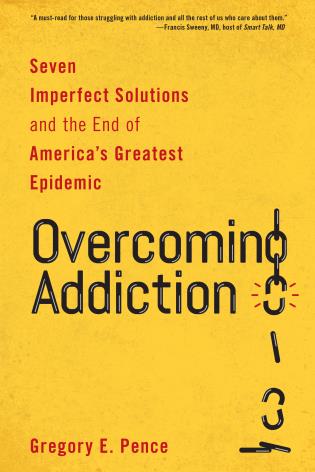
Overcoming Addiction: Seven Imperfect Solutions and the End of America’s Greatest Epidemic.

Author(s): Gregory E. Pence.

Year: 2020.

Edition: First (1ed).

Publisher: Rowman & Littlefield Publishers.

Type(s): Hardcover and Kindle.

Synopsis:

With an estimated 20 million people addicted to drugs or alcohol, North America is in the grip of an unrivalled epidemic. Overcoming Addiction reveals how seemingly contradictory treatment theories must come together to understand and end dangerous substance abuse.

Addiction treatment has become a billion-dollar industry based on innumerable clinical and psychological perspectives. Zealous clinicians and researchers have gathered around the theories, proclaiming each as the sole truth and excluding alternate views. In this book, leading bioethicist Gregory Pence demystifies seven foundational theories of addiction and addiction treatment. From Alcoholics and Narcotics Anonymous to methadone clinics and brain chemistry studies, each method holds foundation beliefs about human nature, free will, and biology. Understanding the diversity of these theories allows us to build a framework for more effective treatment for all addiction types.

For individuals suffering from addiction, their families, and those who devote their lives to ending addiction’s grasp on our society, this book offers a fresh perspective and a framework for long-term solutions.

Book: The Mindful Child

Book Title:

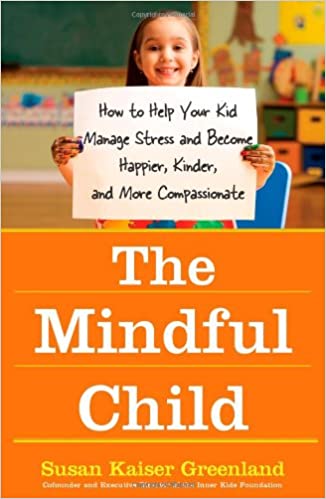
Mindful Child, The – How to Help Your Kid Manage Stress and Become Happier, Kinder, and More Compassionate.

Author(s): Susan Kaiser Greenland.

Year: 2010.

Edition: First (1ed).

Publisher: Atria Books.

Type(s):Paperback, audiobook and Kindle.

Synopsis:

The techniques of mindful awareness have helped millions of adults reduce stress in their lives. Now, children -who are under more pressure than ever before – can learn to protect themselves with these well-established methods adapted for their ages. Based on a programme affiliated with UCLA, The Mindful Child is a groundbreaking book, the first to show parents how to teach these transformative practices to their children.

Mindful awareness works by enabling you to pay closer attention to what is happening within you – your thoughts, feelings, and emotions – so you can better understand what is happening to you.

The Mindful Child extends the vast benefits of mindfulness training to children from four to eighteen years old with age-appropriate exercises, songs, games, and fables that Susan Kaiser Greenland has developed over more than a decade of teaching mindful awareness to kids.

These fun and friendly techniques build kids’ inner and outer awareness and attention, which positively affects their academic performance as well as their social and emotional skills, such as making friends, being compassionate and kind to others, and playing sports, while also providing tools to manage stress and to overcome specific challenges like insomnia, overeating, ADHD, hyper-perfectionism, anxiety, and chronic pain.

When children take a few moments before responding to stressful situations, they allow their own healthy inner compasses to click in and guide them to become more thoughtful, resilient, and empathetic.

The step-by-step process of mental training presented in The Mindful Child provides tools from which all children – and all families – will benefit.

Book: Emotional Freedom Technique For Dummies

Book Title:

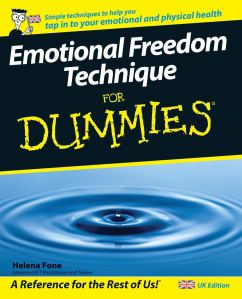
Emotional Freedom Technique For Dummies.

Author(s): Helena Fone.

Year: 2009.

Edition: First (1st) UK Edition.

Publisher: Wiley.

Type(s): Paperback and Kindle.

Synopsis:

A member of the Energy Therapies family – which includes, acupuncture, acupressure and shiatsu – Emotional Freedom Technique is a simple and increasingly popular self- development therapy used to treat a wide range of physical and emotional issues.

Popularised by figures including Paul McKenna, EFT is based on the theory that negative emotions are caused by disturbances in the body’s energy.

Often referred to as acupuncture without needles, EFT involves locating and tapping on meridian points in the body while thinking of a negative emotion and using positive suggestion and thoughts to alter the body’s energy flow, restore balance and reprogramme thought processes.

This no-nonsense guide introduces readers to the theories and methods behind the technique and shows them how to use it to reduce the physical and emotional impact of a wide range of issues including, depression, fears, phobias, anger, addictions, sleeplessness and pain.

It is simple, safe, anyone can practice it at home and with EFT For Dummies readers can banish bad habits for good.

Includes information on: The path to emotional freedom – explaining EFT Understanding your emotions Basic EFT tapping routines Improving emotional health with EFT Practising EFT on yourself and others Helena Fone is a registered EFT practitioner and trainer and an advanced hypnotherapist.

She has a diploma in advanced holistic hypnotherapy and practices CBT and NLP.

What is the Intergenerational Transmission of Risk for PTSD Symptoms & the Roles of Maternal and Child Emotion Dysregulation?

Research Paper Title

Intergenerational transmission of risk for PTSD symptoms in African American children: The roles of maternal and child emotion dysregulation.

Background

Emotion dysregulation is a transdiagnostic risk factor for many mental health disorders and develops in the context of early trauma exposure.

Research suggests inter-generational risk associated with trauma exposure and post-traumatic stress disorder (PTSD), such that maternal trauma experiences and related symptoms can negatively impact child outcomes across development.

The goals of the present study were to examine child and mother correlates of child PTSD symptoms and the unique roles of child and maternal emotion dysregulation in understanding child PTSD symptoms.

Methods

Subjects included 105 African American mother-child dyads from an urban hospital serving primarily low-income minority individuals.

Results

Correlational results showed that child trauma exposure, child emotion dysregulation, maternal depressive symptoms, maternal emotion dysregulation, and potential for maternal child abuse all were significantly associated with child PTSD symptoms (ps < 0.05).

Hierarchical linear regression models revealed that child trauma exposure, maternal depression, and maternal abuse potential accounted for 29% of the variance in child PTSD symptoms (p < 0.001).

Both child emotion dysregulation (Rchange² = 0.14, p < .001) and maternal emotion dysregulation (Rchange² = 0.04, p < .05) were significantly associated with child PTSD symptoms independent of other risk factors and potential for maternal abuse was no longer a significant predictor.

Conclusions

These results suggest that maternal emotion dysregulation may be an important factor in influencing their child’s PTSD symptoms above and beyond child-specific variables.

Both maternal and child emotion dysregulation could be valuable treatment targets for improving maternal mental health and parenting behaviours and bolstering child health outcomes, thus reducing inter-generational transmission of risk associated with trauma.

Reference

Powers, A., Stevens, J.S., O’Banion, D., Stenson, A.F., Kaslow, N., Jovanovic, T. & Bradley, B. (2020) Intergenerational transmission of risk for PTSD symptoms in African American children: The roles of maternal and child emotion dysregulation. Psychological Trauma: Theory, Research, Practice and Policy. doi: 10.1037/tra0000543. [Epub ahead of print].