What is Living Is For Everyone?

Introduction

Living Is For Everyone (LIFE) is a suicide prevention initiative of the Australian Government’s National Suicide Prevention Strategy (NSPS).

Background

The National Suicide Prevention Strategy funds a number of programmes, some jointly funded with the National Mental Health Strategy.

The programmes, which operate in a range of settings, use population-based approaches with an emphasis on community capacity building.

The LIFE initiative has two main components:

  1. The LIFE resources; and
  2. The LIFE website.

The LIFE resources were redeveloped from a 2000 document and published in 2008. They are designed for people working with those at risk of suicide, with the broad intention of reducing the rate at which people take their own lives in Australia.

The LIFE resources have three components:

  1. The LIFE Framework: The Australian reference for suicide prevention activities;
  2. LIFE Research and Evidence: A review of statistics, trends, comparisons and issues in suicide and self-harm prevention; and
  3. LIFE fact sheets: A set of 24 fact sheets that provide summaries and advice about suicide prevention.

You can find the official website here.

What is Suicidal Ideation?

Introduction

Suicidal ideation (or suicidal thoughts) means having thoughts, ideas, or ruminations about the possibility of ending one’s life.

Refer to Coping (Psychology), Suicide Prevention, and Suicide Awareness.

It is not a diagnosis, but is a symptom of some mental disorders and can also occur in response to adverse events without the presence of a mental disorder.

On suicide risk scales, the range of suicidal ideation varies from fleeting thoughts to detailed planning. Passive suicidal ideation is thinking about not wanting to live or imagining being dead. Active suicidal ideation is thinking about different ways to die or forming a plan to die.

Most people who have suicidal thoughts do not go on to make suicide attempts, but suicidal thoughts are considered a risk factor. During 2008-2009, an estimated 8.3 million adults aged 18 and over in the United States, or 3.7% of the adult US population, reported having suicidal thoughts in the previous year. An estimated 2.2 million in the US reported having made suicide plans in 2014. Suicidal thoughts are also common among teenagers.

Suicidal ideation is generally associated with depression and other mood disorders; however, it seems to have associations with many other mental disorders, life events, and family events, all of which may increase the risk of suicidal ideation. Mental health researchers indicate that healthcare systems should provide treatment for individuals with suicidal ideation, regardless of diagnosis, because of the risk for suicidal acts and repeated problems associated with suicidal thoughts. There are a number of treatment options for people who experience suicidal ideation.

Definitions

The ICD-11 describes suicidal ideation as “thoughts, ideas, or ruminations about the possibility of ending one’s life, ranging from thinking that one would be better off dead to formulation of elaborate plans”.

The DSM-5 defines it as “thoughts about self-harm, with deliberate consideration or planning of possible techniques of causing one’s own death”.

The CDC defines suicidal ideation “as thinking about, considering, or planning suicide”.

Terminology

Another term for suicidal ideation is suicidal thoughts.

When someone who has not shown a history of suicidal ideation experiences a sudden and pronounced thought of performing an act which would necessarily lead to their own death, psychologists call this an intrusive thought. A commonly experienced example of this is the high place phenomenon, also referred to as the call of the void. The urge to jump is called “mountain fever” in Brian Biggs’ book Dear Julia.

Euphemisms related to mortal contemplation include internal struggle, voluntary death, and eating one’s gun.

Risk Factors

The risk factors for suicidal ideation can be divided into three categories:

  1. Psychiatric disorders;
  2. Life events; and
  3. Family history.

Psychiatric Disorders

Suicidal ideation is a symptom for many mental disorders and can occur in response to adverse life events without the presence of a mental disorder.

There are several psychiatric disorders that appear to be comorbid with suicidal ideation or considerably increase the risk of suicidal ideation. For example, many individuals with borderline personality disorder exhibit recurrent suicidal behaviour and suicidal thoughts. One study found that 73% of patients with borderline personality disorder have attempted suicide, with the average patient having 3.4 attempts. The following list includes the disorders that have been shown to be the strongest predictors of suicidal ideation. These are not the only disorders that can increase risk of suicidal ideation. The disorders in which risk is increased the greatest include:

Medication Side Effects

Antidepressant medications are commonly used to decrease the symptoms in patients with moderate to severe clinical depression, and some studies indicate a connection between suicidal thoughts and tendencies and taking antidepressants, increasing the risk of suicidal thoughts in some patients.

Some medications, such as selective serotonin re-uptake inhibitors (SSRIs), can have suicidal ideation as a side effect. Moreover, these drugs’ intended effects, can themselves have unintended consequence of an increased individual risk and collective rate of suicidal behaviour: Among the set of persons taking the medication, a subset feel bad enough to want to attempt suicide (or to desire the perceived results of suicide) but are inhibited by depression-induced symptoms, such as lack of energy and motivation, from following through with an attempt. Among this subset, a “sub-subset” may find that the medication alleviates their physiological symptoms (such as lack of energy) and secondary psychological symptoms (e.g. lack of motivation) before or at lower doses than it alleviates their primary psychological symptom of depressed mood. Among this group of persons, the desire for suicide or its effects persists even as major obstacles to suicidal action are removed, with the effect that the incidences of suicide attempt and of completed suicide increase.

In 2003, the US Food and Drug Administration (FDA) issued the agency’s strictest warning for manufacturers of all antidepressants (including tricyclic antidepressants (TCAs) and monoamine oxidase inhibitors (MAOIs) due to their association with suicidal thoughts and behaviours. Further studies disagree with the warning, especially when prescribed for adults, claiming more recent studies are inconclusive in the connection between the drugs and suicidal ideation.

Individuals with anxiety disorders who self-medicate with drugs or alcohol may also have an increased likelihood of suicidal ideation.

Life Events

Life events are strong predictors of increased risk for suicidal ideation. Furthermore, life events can also lead to or be comorbid with the previous listed psychiatric disorders and predict suicidal ideation through those means. Life events that adults and children face can be dissimilar and for this reason, the list of events that increase risk can vary in adults and children. The life events that have been shown to increase risk most significantly are:

  • Alcohol use disorder.
    • Studies have shown that individuals who binge drink, rather than drink socially, tend to have higher rates of suicidal ideation.
    • Certain studies associate those who experience suicidal ideation with higher alcohol consumption.
    • Not only do some studies show that solitary binge drinking can increase suicidal ideation, but there is a positive feedback relationship causing those who have more suicidal ideation to have more drinks per day in a solitary environment.
  • Minoritised gender expression and/or sexuality.
  • Unemployment.
  • Chronic illness or pain.
  • Death of family members or friends.
  • End of a relationship or being rejected by a romantic interest.
  • Major change in life standard (e.g. relocation abroad).
  • Other studies have found that tobacco use is correlated with depression and suicidal ideation.
  • Unplanned pregnancy.
  • Bullying, including cyberbullying and workplace bullying.
  • Previous suicide attempts.
    • Having previously attempted suicide is one of the strongest indicators of future suicidal ideation or suicide attempts.
  • Military experience.
  • Community violence.
  • Undesired changes in body weight.
    • Women: increased BMI increases chance of suicidal ideation.
    • Men: severe decrease in BMI increases chance of suicidal ideation.
      • In general, the obese population has increased odds of suicidal ideation in relation to individuals that are of average-weight.
  • Exposure and attention to suicide related images or words.

Family History

  • Parents with a history of depression.
    • Valenstein et al. studied 340 adult offspring whose parents had depression in the past.
    • They found that 7% of the offspring had suicidal ideation in the previous month alone.
  • Abuse.
    • Childhood: physical, emotional and sexual abuse.
    • Adolescence: physical, emotional and sexual abuse.
  • Family violence.
  • Childhood residential instability.
    • Certain studies associate those who experience suicidal ideation with family disruption.

Relationships with Parents and Friends

According to a study conducted by Ruth X. Liu of San Diego State University, a significant connection was found between the parent-child relationships of adolescents in early, middle and late adolescence and their likelihood of suicidal ideation. The study consisted of measuring relationships between mothers and daughters, fathers and sons, mothers and sons, and fathers and daughters. The relationships between fathers and sons during early and middle adolescence show an inverse relationship to suicidal ideation. Closeness with the father in late adolescence is “significantly related to suicidal ideation”. Liu goes on to explain the relationship found between closeness with the opposite sex parent and the child’s risk of suicidal thoughts. It was found that boys are better protected from suicidal ideation if they are close to their mothers through early and late adolescence; whereas girls are better protected by having a close relationship with their father during middle adolescence.

An article published in 2010 by Zappulla and Pace found that suicidal ideation in adolescent boys is exacerbated by detachment from the parents when depression is already present in the child. Lifetime prevalence estimates of suicidal ideation among nonclinical populations of adolescents generally range from 60% and in many cases its severity increases the risk of completed suicide.

Prevention

Refer to Suicide Prevention.

Early detection and treatment are the best ways to prevent suicidal ideation and suicide attempts.[citation needed] If signs, symptoms, or risk factors are detected early then the individual might seek treatment and help before attempting to take their own life. In a study of individuals who did commit suicide, 91% of them likely suffered from one or more mental illnesses. However, only 35% of those individuals were treated or being treated for a mental illness. This emphasizes the importance of early detection; if a mental illness is detected, it can be treated and controlled to help prevent suicide attempts. Another study investigated strictly suicidal ideation in adolescents. This study found that depression symptoms in adolescents early as 9th grade is a predictor of suicidal ideation. Most people with long-term suicidal ideation do not seek professional help.

The previously mentioned studies point out the difficulty that mental health professionals have in motivating individuals to seek and continue treatment. Ways to increase the number of individuals who seek treatment may include:

  • Increasing the availability of therapy treatment in early stage.
  • Increasing the public’s knowledge on when psychiatric help may be beneficial to them.
  • Those who have adverse life conditions seem to have just as much risk of suicide as those with mental illness.

A study conducted by researchers in Australia set out to determine a course of early detection for suicidal ideation in teens stating that “risks associated with suicidality require an immediate focus on diminishing self-harming cognitions so as to ensure safety before attending to the underlying etiology of the behavior”. A Psychological Distress scale known as the K10 was administered monthly to a random sample of individuals. According to the results among the 9.9% of individuals who reported “psychological distress (all categories)” 5.1% of the same participants reported suicidal ideation. Participants who scored “very high” on the Psychological Distress scale “were 77 times more likely to report suicidal ideation than those in the low category”.

In a one-year study conducted in Finland, 41% of the patients who later committed suicide saw a health care professional, most seeing a psychiatrist. Of those, only 22% discussed suicidal intent on their last office visit. In most of the cases, the office visit took place within a week of the suicide, and most of the victims had a diagnosed depressive disorder.

There are many centers where one can receive aid in the fight against suicidal ideation and suicide. Hemelrijk et al. (2012) found evidence that assisting people with suicidal ideation via the internet versus more direct forms such as phone conversations has a greater effect. In a 2021 research study, Nguyen et al. (2021) propose that maybe the premise that suicidal ideation is a kind of illness has been an obstacle to dealing with suicidal ideation. They use a Bayesian statistical investigation, in conjunction with the mindsponge theory, to explore the processes where mental disorders have played a very minor role and conclude that there are many cases where the suicidal ideation represents a type of cost-benefit analysis for a life/death consideration, and these people may not be called “patients”.

Assessment

Assessment seeks to understand an individual by integrating information from multiple sources such as clinical interviews; medical exams and physiological measures; standardised psychometric tests and questionnaires; structured diagnostic interviews; review of records; and collateral interviews.

Interviews

Psychologists, psychiatrists, and other mental health professionals conduct clinical interviews to ascertain the nature of a patient or client’s difficulties, including any signs or symptoms of illness the person might exhibit.

  • Clinical interviews are “unstructured” in the sense that each clinician develops a particular approach to asking questions, without necessarily following a predefined format.
  • Structured (or semi-structured) interviews prescribe the questions, their order of presentation, “probes” (queries) if a patient’s response is not clear or specific enough, and a method to rate the frequency and intensity of symptoms.

Standardised Psychometric Measures

Refer to Assessment of Suicide Risk.

  • Beck Scale for Suicide Ideation.
  • Nurses’ Global Assessment of Suicide Risk.
  • Suicidal Affect-Behaviour-Cognition Scale (SABCS).
  • Columbia Suicide Severity Rating Scale.

Treatment

Treatment of suicidal ideation can be problematic due to the fact that several medications have actually been linked to increasing or causing suicidal ideation in patients. Therefore, several alternative means of treating suicidal ideation are often used. The main treatments include:

  • Therapy;
  • Hospitalisation;
  • Outpatient treatment; and
  • Medication or other modalities.

Therapy

In psychotherapy a person explores the issues that make them feel suicidal and learns skills to help manage emotions more effectively.

Hospitalisation

Hospitalisation allows the patient to be in a secure, supervised environment to prevent the suicidal ideation from turning into suicide attempts. In most cases, individuals have the freedom to choose which treatment they see fit for themselves. However, there are several circumstances in which individuals can be hospitalised involuntarily. These circumstances are:

  • If an individual poses danger to self or others; and/or
  • If an individual is unable to care for oneself.

Hospitalisation may also be a treatment option if an individual:

  • Has access to lethal means (e.g. a firearm or a stockpile of pills).
  • Does not have social support or people to supervise them.
  • Has a suicide plan.
  • Has symptoms of a psychiatric disorder (e.g. psychosis, mania, etc.).

Outpatient Treatment

Outpatient treatment allows individuals to remain at their place of residence and receive treatment when needed or on a scheduled basis. Being at home may improve quality of life for some patients, because they will have access to their personal belongings, and be able to come and go freely. Before allowing patients the freedom that comes with outpatient treatment, physicians evaluate several factors of the patient. These factors include the patient’s level of social support, impulse control and quality of judgment. After the patient passes the evaluation, they are often asked to consent to a “no-harm contract”. This is a contract formulated by the physician and the family of the patient. Within the contract, the patient agrees not to harm themselves, to continue their visits with the physician, and to contact the physician in times of need. There is some debate as to whether “no-harm” contracts are effective. These patients are then checked on routinely to assure they are maintaining their contract and avoiding dangerous activities (drinking alcohol, driving fast, and not wearing a seat belt, etc.).

Medication

Prescribing medication to treat suicidal ideation can be difficult. One reason for this is that many medications lift patients’ energy levels before lifting their mood. This puts them at greater risk of following through with attempting suicide. Additionally, if a person has a comorbid psychiatric disorder, it may be difficult to find a medication that addresses both the psychiatric disorder and suicidal ideation.

Antidepressants may be effective. Often, SSRIs are used instead of TCAs as the latter typically have greater harm in overdose.

Antidepressants have been shown to be a very effective means of treating suicidal ideation. One correlational study compared mortality rates due to suicide to the use of SSRI antidepressants within certain counties. The counties which had higher SSRI use had a significantly lower number of deaths caused by suicide. Additionally, an experimental study followed depressed patients for one year. During the first six months of that year, the patients were examined for suicidal behaviour including suicidal ideation. The patients were then prescribed antidepressants for the six months following the first six observatory months. During the six months of treatment, experimenters found suicide ideation reduced from 47% of patients down to 14% of patients. Thus, it appears from current research that antidepressants have a helpful effect on the reduction of suicidal ideation.

Although research is largely in favour of the use of antidepressants for the treatment of suicidal ideation, in some cases antidepressants are claimed to be the cause of suicidal ideation. Upon the start of using antidepressants, many clinicians will note that sometimes the sudden onset of suicidal ideation may accompany treatment. This has caused the FDA to issue a warning stating that sometimes the use of antidepressants may actually increase the thoughts of suicidal ideation. Medical studies have found antidepressants help treat cases of suicidal ideation and work especially well with psychological therapy. Lithium reduces the risk of suicide in people with mood disorders. Tentative evidence finds clozapine in people with schizophrenia reduces the risk of suicide.

What is Suicide Awareness?

Introduction

Suicide awareness is a proactive effort to raise awareness around suicidal behaviours.

Refer to Coping (Psychology), Suicide Prevention, and Suicidal Ideation.

It is focused on reducing social stigmas and ambiguity, by bringing attention to suicide statistically and sociologically, and encouraging positive dialogue and engagement as a means to prevent suicide. Suicide awareness is linked to suicide prevention as both address suicide education and the dissemination of information to ultimately decrease the rate of suicide. Awareness is a first stage that can ease the need for prevention.

Awareness signifies a fundamental consciousness of the threat, while prevention focuses on stopping the act. Suicide awareness is not a medical engagement, but a combination of medical, social, emotional and financial counselling. Suicide awareness in adolescents focuses on the age group between 10-24 years, beginning with the onset of puberty.

Stigma and Ambiguity

Stigma is a negative impact that society can often attribute to the suicidal condition, and which can hinder and prevent positive engagement with those demonstrating suicidal behaviour. It can be experienced as self-stigma or cultural, public stigma. Self-stigma is the adverse effect of internalised prejudice, manifesting itself in reduced self-esteem, decreased self-efficacy, and a feeling of “why try” or self-deprecation (undervaluing any attempts to get a job, be social, etc. because of lack of self-worth). It is experienced not only by those facing suicidal thoughts, but also by those directly and indirectly affected such as family members and friends. Public stigma is experienced by prejudice and discrimination through public misuse of stereotypes associated with suicide.

Stigma can create a detrimental barrier for some seeking help. Research has consistently illustrated the physical link between suicide and mental illness, but ignorance and outdated beliefs can sometimes lead to these disorders being identified as a weakness or a lack of willpower. Stigma can prevent survivors of suicide attempts, and those affected by suicide deaths, from reaching out for support from professionals and advocates to make positive change.

Historical Stigma

Historically, suicide has not always been considered a societal taboo. It is critical to understand the historical context in order to raise awareness of suicide’s impact on our current culture.

Suicide was embraced as a philosophical escape by the followers of the Greek philosopher Epicurus when life’s happiness seemed lost. It has been glorified in self-immolation as an act of martyrdom as in the case of Thich Quang Duc who burned himself to death in protest of South Vietnam’s religious policy. Assisted suicide as a release from suffering can be traced back to ancient Roman society. In Jewish culture, there is a reverence for the mass suicide at Masada in the face of attack by the Roman empire, showing how suicide has sometimes had a contradictory relationship with established religion. This indicates a tension between the presentation of suicide in this historical context, and its associations in our current society with personal anguish. Today, suicide is generally perceived as an act of despair or hopelessness, or a criminal act of terrorism (suicide attack). This negative backdrop was seen in Colonial America, where suicides were considered criminal and brought to trial, even if mental illness had been present.

Suicide was identified in Roman Catholicism as a sinful act, with religious burial prohibited until 1983, when the Catholic Church altered the canon law to allow funerals and burials within the church of those who died by suicide. Today, many current societies and religious traditions condemn suicide, especially in Western culture. Public consideration of suicide in our culture is further complicated by society’s struggle to rationalize such cult events as the Jonestown mass suicide. In light of these mixed historical messages, it can be confusing for youth, presented with an academic and historical profile for suicide. The ambiguity of accepted suicide and suicidal behaviour definitions impedes progress with its utilisation of variable terminology.

Public and Cultural Stigma

Today, even though suicide is considered a public health issue by advocates, the general public often still consider it a private shame; a final desperate solution for the emotionally weak. It is stigmatised in the public perception by being associated with weakness, a “cry for attention,” shame, and depression, without understanding the contributing factors. There can be a visceral and emotional reaction to suicide rather than an attempt to understand it. This reaction is based on stereotypes (overgeneralisations about a group: weak or crazy), prejudices (agreement with stereotypical beliefs and related emotional reactions: Sue attempted suicide; ‘I’m afraid of her’), and discrimination (unfair behaviour towards the suicidal individual or group: avoidance; ‘suicidal persons should be locked up’). Erving Goffman defined courtesy stigma as the discrimination, prejudice and stereotypes which family and friends experience as suicide survivors. Public stigma is felt by medical professionals whose clients die by suicide and whose treatment is then questioned by colleagues and in lawsuits, often contributing to their being less inclined to work with suicidal patients. Property can also be stigmatized by suicide: property sellers in certain jurisdictions in the United States, in California for example, are required by law to reveal if a suicide or murder occurred on the premises in the past three years, putting suicide in the same category as homicide. These issues compound and perpetuate the public stigma of suicide, exacerbating the inclination for suicidal individuals, and their family and friends, to bury their experiences, creating a barrier to care.

Emotional Stigma

Emotionally, the negative stigma of suicide is a powerful force creating isolation and exclusion for those in suicidal crisis. The use of stereotypes, discrimination and prejudices can strip the dignity of those experiencing suicidal behaviour. It also has the potential to inhibit compassion from others and to diminish hope. Fear of being socially rejected and labelled suicidal can prevent communication and support. Distress and reduced life satisfaction are directly affected by subjective feelings of being devalued and marginalised. This develops into an internalized stigma; it creates self-stigmatised emotions, self-deprecation and self-actualisation of negative stereotypes, causing further withdrawal, reduction in quality of life and the inhibiting access to care.

This emotional stigma also affects suicide survivors: those suffering a loved one’s loss, stirring up guilt, self-blame, isolation, depression and post-traumatic stress. Subjective experiences of feeling shunned or blamed for an incident can cause those close to the victim to bury the truth of what transpired.

Awareness Factors

Suicide awareness expresses the need for open constructive dialogue as an initial step towards preventing incidents of adolescent suicide. Once the stigmas have been overcome, there is an increased possibility that education, medical care and support can provide a critical framework for those at risk. Lack of information, awareness of professional services, judgement and insensitivity from religious groups, and financial strain have all been identified as barriers to support access for those youth in suicidal crisis. The critical framework is a necessary component to implementing suicide awareness and suicide prevention, and breaking down these barriers.

Protective Factors

Protective factors are characteristics or conditions that may have a positive effect on youth and reduce the possibility of suicide attempts. These factors have not been studied in as much depth as risk factors, so there is less research. They include:

  • Receiving effective mental health care.
  • Positive social connections and support with family and peers provides coping skills.
  • Participation in community and social groups (i.e. religious) that foster resilience.
  • Optimism enables youth to engage and acquire adaptive skills in reinterpreting adverse experiences to find meaning and benefit.
  • Life satisfaction, spiritual wellbeing and belief that a person can survive beyond their pain is protective against suicide.
  • Resiliency based on adaptive coping skills has can reduce suicide risk, and research suggests these skills can be taught.
  • Finding hope can be a key protective factor and a catalyst for the recovery process.

It is important to note, however, that in-depth training is paramount for those involved in any service that looks to the awareness and needs of those touched by suicide.

Social Media

Suicide awareness and prevention have in the past only relied on research from clinical observation. In bringing insights, intimate experience, and real-world wisdom of suicide attempt survivors to the table, professionals, educators, other survivors and suicide attempt survivors can learn firsthand from their “lived experience.”

Media and journalism, when reporting on suicide, have moved forward in their discussion of suicide. The Recommendations for Reporting on Suicide discovered the powerful impact media coverage, newspapers and journalists can have on the perpetuating stigma of suicide, and that it can lead to greater risk of occurrence. The specific rules that media representatives should follow are:

  • Don’t sensationalise the suicide.
  • Don’t talk about the contents of the suicide note, if there is one.
  • Don’t describe the suicide method.
  • Report on suicide as a public health issue.
  • Don’t speculate why the person might have done it.
  • Don’t quote or interview police or first responders about the causes of suicide.
  • Describe suicide as “died by suicide” or “completed” or “killed themselves,” rather than “committed suicide.”
  • Don’t glamorise suicide.

This is to prevent certain types of messaging around suicide that could increase the chances of at-risk youth considering or attempting suicide. This initiative brought awareness to the sensitivity of reporting on suicide in a constructive, destigmatised method of messaging.

Social Agency

Education in a non-threatening environment is critical to a growth in awareness among adolescents. Health education is closely related to health awareness. School can be the best place to implement a suicide education program because it is the pivotal location that brings together the major influences in an adolescent’s life. Pilot programmes for awareness, and coping and resiliency training should be put into place for all adolescent school-aged children to combat life stressors and to encourage healthy communication.

What is Suicide Prevention?

Introduction

Suicide prevention is a collection of efforts to reduce the risk of suicide. These efforts may occur at the individual, relationship, community, and society level. Suicide is often preventable.

Refer to Coping (Psychology), Suicide Awareness, and Suicide Ideation.

Beyond direct interventions to stop an impending suicide, methods may include:

  • Treating mental illness.
  • Improving coping strategies of people who are at risk.
  • Reducing risk factors for suicide, such as poverty and social vulnerability.
  • Giving people hope for a better life after current problems are resolved.
  • Call a suicide hotline number.

General efforts include measures within the realms of medicine, mental health, and public health. Because protective factors such as social support and social engagement – as well as environmental risk factors such as access to lethal means – play a role in suicide, suicide is not solely a medical or mental-health issue.

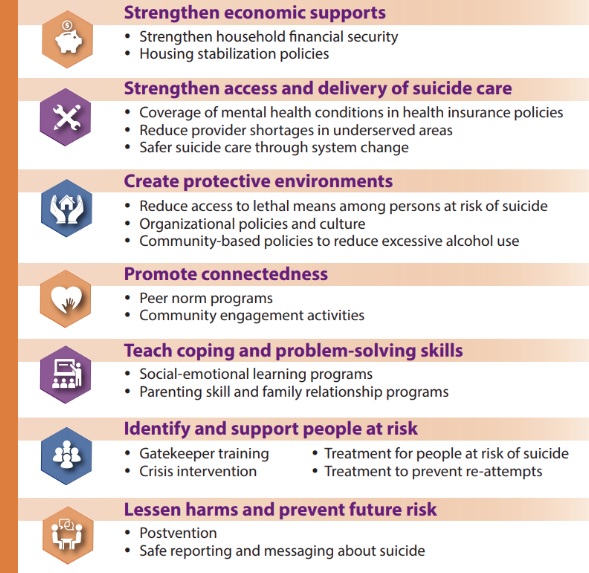
Suicide prevention measures suggested by the US Centres for Disease Control and Prevention.

Interventions

Lethal Mean Reduction

Means reduction ⁠- ⁠reducing the odds that a suicide attempter will use highly lethal means -— ⁠is an important component of suicide prevention. This practice is also called “means restriction”.

It has been demonstrated that restricting lethal means can help reduce suicide rates, as delaying action until the desire to die has passed. In general, strong evidence supports the effectiveness of means restriction in preventing suicides. There is also strong evidence that restricted access at so-called suicide hotspots, such as bridges and cliffs, reduces suicides, whereas other interventions such as placing signs or increasing surveillance at these sites appears less effective. One of the most famous historical examples of means reduction is that of coal gas in the United Kingdom. Until the 1950s, the most common means of suicide in the UK was poisoning by gas inhalation. In 1958, natural gas (virtually free of carbon monoxide) was introduced, and over the next decade, comprised over 50% of gas used. As carbon monoxide in gas decreased, suicides also decreased. The decrease was driven entirely by dramatic decreases in the number of suicides by carbon monoxide poisoning. A 2020 Cochrane review on means restrictions for jumping found tentative evidence of reductions in frequency.

In the United States, firearm access is associated with increased suicide completion. About 85% of attempts with a gun result in death while most other widely used suicide attempt methods result in death less than 5% of the time. Although restrictions on access to firearms have reduced firearm suicide rates in other countries, such restrictions are difficult in the United States because the Second Amendment to the United States Constitution limits restrictions on weapons.

Crises Hotline

Crisis hotlines connect a person in distress to either a volunteer or staff member. This may occur via telephone, text messaging, online chat, or in person. Even though crisis hotlines are common, they have not been well studied. One study found a decrease in psychological pain, hopelessness, and desire to die from the beginning of the call through the next few weeks; however, the desire to die did not decrease long term.

Social Intervention

In the United States, the 2012 National Strategy for Suicide Prevention promotes various specific suicide prevention efforts including:

  • Developing groups led by professionally trained individuals for broad-based support for suicide prevention.
  • Promoting community-based suicide prevention programmes.
  • Screening and reducing at-risk behaviour through psychological resilience programs that promotes optimism and connectedness.
  • Education about suicide, including risk factors, warning signs, stigma related issues and the availability of help through social campaigns.
  • Increasing the proficiency of health and welfare services at responding to people in need. e.g. sponsored training for helping professionals, increased access to community linkages, employing crisis counselling organisations.
  • Reducing domestic violence and substance abuse through legal and empowerment means are long-term strategies.
  • Reducing access to convenient means of suicide and methods of self-harm. e.g. toxic substances, poisons, handguns.
  • Reducing the quantity of dosages supplied in packages of non-prescription medicines e.g. aspirin.
  • School-based competency promoting and skill enhancing programmes.
  • Interventions and usage of ethical surveillance systems targeted at high-risk groups.
  • Improving reporting and portrayals of negative behaviour, suicidal behaviour, mental illness and substance abuse in the entertainment and news media.
  • Research on protective factors & development of effective clinical and professional practices.

Media Guidelines

Recommendations around media reporting of suicide include not sensationalizing the event or attributing it to a single cause. It is also recommended that media messages include suicide prevention messages such as stories of hope and links to further resources. Particular care is recommended when the person who died is famous. Specific details of the method or the location are not recommended.

There; however, is little evidence regarding the benefit of providing resources for those looking for help and the evidence for media guidelines generally is mixed at best.

TV shows and news media may also be able to help prevent suicide by linking suicide with negative outcomes such as pain for the person who has attempted suicide and their survivors, conveying that the majority of people choose something other than suicide in order to solve their problems, avoiding mentioning suicide epidemics, and avoiding presenting authorities or sympathetic, ordinary people as spokespersons for the reasonableness of suicide.

Medication

The medication lithium may be useful in certain situations to reduce the risk of suicide. Specifically it is effective at lowering the risk of suicide in those with bipolar disorder and major depressive disorder. Some antidepressant medications may increase suicidal ideation in some patients under certain conditions.

Counselling

There are multiple talk therapies that reduce suicidal thoughts and behaviours including dialectical behaviour therapy (DBT). Cognitive behaviour therapy for suicide prevention (CBT-SP) is a form of DBT adapted for adolescents at high risk for repeated suicide attempts. The brief intervention and contact technique developed by the World Health Organisation (WHO) also has shown benefit.

The WHO recommends “specific skills should be available in the education system to prevent bullying and violence in and around the school”.

Coping Planning

Coping planning is an strengths-based intervention that aims to meet the needs of people who ask for help, including those experiencing suicidal ideation. By addressing why someone asks for help, the risk assessment and management stays on what the person needs, and the needs assessment focuses on the individual needs of each person. The coping planning approach to suicide prevention draws on the health-focused theory of coping. Coping is normalised as a normal and universal human response to unpleasant emotions and interventions are considered a change continuum of low intensity (e.g. self-soothing) to high intensity support (e.g. professional help). By planning for coping, it supports people who are distressed and provides a sense of belongingness and resilience in treatment of illness. The proactive coping planning approach overcomes implications of ironic process theory. The biopsychosocial strategy of training people in healthy coping improves emotional regulation and decreases memories of unpleasant emotions. A good coping planning strategically reduces the inattentional blindness for a person while developing resilience and regulation strengths.

Strategies

The traditional approach has been to identify the risk factors that increase suicide or self-harm, though meta-analysis studies suggest that suicide risk assessment might not be useful and recommend immediate hospitalization of the person with suicidal feelings as the healthy choice. In 2001, the US Department of Health and Human Services, published the National Strategy for Suicide Prevention, establishing a framework for suicide prevention in the US The document, and its 2012 revision, calls for a public health approach to suicide prevention, focusing on identifying patterns of suicide and suicidal ideation throughout a group or population (as opposed to exploring the history and health conditions that could lead to suicide in a single individual). The ability to recognise warning signs of suicide allows individuals who may be concerned about someone they know to direct them to help.

Suicide gesture and suicidal desire (a vague wish for death without any actual intent to kill oneself) are potentially self-injurious behaviours that a person may use to attain some other ends, like to seek help, punish others, or to receive attention. This behaviour has the potential to aid an individual’s capability for suicide and can be considered as a suicide warning, when the person shows intent through verbal and behavioural signs.

A United States Army suicide prevention poster.

Specific Strategies

Suicide prevention strategies focus on reducing the risk factors and intervening strategically to reduce the level of risk. Risk and protective factors, unique to the individual can be assessed by a qualified mental health professional.

Some of the specific strategies used to address are:

  • Crisis intervention.
  • Structured counselling and psychotherapy.
  • Hospitalisation for those with low adherence to collaboration for help and those who require monitoring and secondary symptom treatment.
  • Supportive therapy like substance abuse treatment, psychotropic medication, Family psychoeducation and Access to emergency phone call care with emergency rooms, suicide prevention hotlines, etc.
  • Restricting access to lethality of suicide means through policies and laws.
  • Creating and using crisis cards, an easy-to-read uncluttered card that describes a list of activities one should follow in crisis until the positive behaviour responses settles in the personality.
  • Person-centred life skills training. e.g. problem solving.
  • Registering with support groups like Alcoholics Anonymous, Suicide Bereavement Support Group, a religious group with flow rituals, etc.
  • Therapeutic recreational therapy that improves mood.
  • Motivating self-care activities like physical exercise’s and meditative relaxation.

Psychotherapies that have shown most successful or evidence based are dialectical behaviour therapy (DBT), which has shown to be helpful in reducing suicide attempts and reducing hospitalisations for suicidal ideation and cognitive behavioural therapy (CBT), which has shown to improve problem-solving and coping abilities.

After a Suicide

Postvention is for people affected by an individual’s suicide. This intervention facilitates grieving, guides to reduce guilt, anxiety, and depression and to decrease the effects of trauma. Bereavement is ruled out and promoted for catharsis and supporting their adaptive capacities before intervening depression and any psychiatric disorders. Postvention is also provided to minimise the risk of imitative or copycat suicides, but there is a lack of evidence based standard protocol. But the general goal of the mental health practitioner is to decrease the likelihood of others identifying with the suicidal behaviour of the deceased as a coping strategy in dealing with adversity.

Risk Assessment

Warning Signs

Warning signs of suicide can allow individuals to direct people who may be considering suicide to get help.

Behaviours that may be warning signs include:

  1. Talking about wanting to die or wanting to kill themselves.
  2. Suicidal ideation: thinking, talking, or writing about suicide, planning for suicide.
  3. Substance abuse.
  4. Feelings of purposelessness.
  5. Anxiety, agitation, being unable to sleep, or sleeping all the time.
  6. Feelings of being trapped.
  7. Feelings of hopelessness.
  8. Social withdrawal.
  9. Displaying extreme mood swings, suddenly changing from sad to very calm or happy.
  10. Recklessness or impulsiveness, taking risks that could lead to death, such as driving extremely fast.
  11. Mood changes including depression.
  12. Feelings of uselessness.
  13. Settling outstanding affairs, giving away prized or valuable possessions, or making amends when they are otherwise not expected to die (as an example, this behaviour would be typical in a terminal cancer patient but not a healthy young adult).
  14. Strong feelings of pain, either emotional or physical considering oneself burdensome.
  15. Increased use of drugs or alcohol.

Additionally, the National Institute for Mental Health includes feeling burdensome, and strong feelings of pain – either emotional or physical – as warning signs that someone may attempt suicide.

Direct Talks

An effective way to assess suicidal thoughts is to talk with the person directly, to ask about depression, and assess suicide plans as to how and when it might be attempted. Contrary to popular misconceptions, talking with people about suicide does not plant the idea in their heads. However, such discussions and questions should be asked with care, concern and compassion. The tactic is to reduce sadness and provide assurance that other people care. The WHO advises to not say everything will be all right nor make the problem seem trivial, nor give false assurances about serious issues. The discussions should be gradual and specifically executed when the person is comfortable about discussing their feelings. ICARE (Identify the thought, Connect with it, Assess evidences for it, Restructure the thought in positive light, Express or provide room for expressing feelings from the restructured thought) is a model of approach used here.

Screening

The US Surgeon General has suggested that screening to detect those at risk of suicide may be one of the most effective means of preventing suicide in children and adolescents. There are various screening tools in the form of self-report questionnaires to help identify those at risk such as the Beck Hopelessness Scale and Is Path Warm?. A number of these self-report questionnaires have been tested and found to be effective for use among adolescents and young adults. There is however a high rate of false-positive identification and those deemed to be at risk should ideally have a follow-up clinical interview. The predictive quality of these screening questionnaires has not been conclusively validated so it is not possible to determine if those identified at risk of suicide will actually die by suicide. Asking about or screening for suicide does not create or increase the risk.

In approximately 75% of completed suicides, the individuals had seen a physician within the year before their death, including 45 to 66% within the prior month. Approximately 33 to 41% of those who completed suicide had contact with mental health services in the prior year, including 20 percent within the prior month. These studies suggest an increased need for effective screening. Many suicide risk assessment measures are not sufficiently validated, and do not include all three core suicidality attributes (i.e. suicidal affect, behaviour, and cognition). A study published by the University of New South Wales has concluded that asking about suicidal thoughts cannot be used as a reliable predictor of suicide risk.

Underlying Condition

The conservative estimate is that 10% of individuals with psychiatric disorders may have an undiagnosed medical condition causing their symptoms, with some estimates stating that upwards of 50% may have an undiagnosed medical condition which if not causing is exacerbating their psychiatric symptoms. Illegal drugs and prescribed medications may also produce psychiatric symptoms. Effective diagnosis and if necessary medical testing which may include neuroimaging to diagnose and treat any such medical conditions or medication side effects may reduce the risk of suicidal ideation as a result of psychiatric symptoms, most often including depression, which are present in up to 90-95% of cases.

Risk Factors

All people can be at risk of suicide. Risk factors that contribute to someone feeling suicidal or making a suicide attempt may include:

  • Depression, other mental disorders, or substance abuse disorder.
  • Certain medical conditions.
  • Chronic pain.
  • A prior suicide attempt.
  • Family history of a mental disorder or substance abuse.
  • Family history of suicide.
  • Family violence, including physical or sexual abuse.
  • Having guns or other firearms in the home.
  • Having recently been released from prison or jail.
  • Being exposed to others’ suicidal behaviour, such as that of family members, peers, or celebrities.
  • Being male.

Support Organisations

Many non-profit organisations exist, such as the American Foundation for Suicide Prevention in the United States, which serve as crisis hotlines; it has benefited from at least one crowd-sourced campaign. The first documented programme aimed at preventing suicide was initiated in 1906 in both New York, the National Save-A-Life League and in London, the Suicide Prevention Department of the Salvation Army.

Suicide prevention interventions fall into two broad categories: prevention targeted at the level of the individual and prevention targeted at the level of the population. To identify, review, and disseminate information about best practices to address specific objectives of the National Strategy Best Practices Registry (BPR) was initiated. The Best Practices Registry of Suicide Prevention Resource Centre is a registry of various suicide intervention programmes maintained by the American Association of Suicide Prevention. The programs are divided, with those in Section I listing evidence-based programmes: interventions which have been subjected to in depth review and for which evidence has demonstrated positive outcomes. Section III programmes have been subjected to review.

If you or someone you know displays sign or symptoms of suicidal thoughts or actions these prevention organisations are available:

  • Befrienders Worldwide.
  • American Foundation for Suicide Prevention.
  • Campaign Against Living Miserably.
  • Crisis Text Line.
  • International Association for Suicide Prevention.
  • The Jed Foundation.
  • National Suicide Prevention Lifeline.
  • Samaritans.
  • SOSAD Ireland.
  • Suicide Prevention Action Network USA.
  • The Trevor Project.
  • Trans Lifeline.

Economics

In the United States it is estimated that an episode of suicide results in costs of about $1.3 million. Money spending on appropriated interventions is estimated to result in a decrease in economic losses that are 2.5 fold greater than the amount spent.

What are the Factors Associated with Suicide in Chinese Adults?

Research Paper Title

Factors associated with suicide risk among Chinese adults: A prospective cohort study of 0.5 million individuals.

Background

Suicide is a leading cause of death in China and accounts for about one-sixth of all suicides worldwide. The objective of this study was to examine the recent distribution of suicide and risk factors for death by suicide. Identifying underlying risk factors could benefit development of evidence-based prevention and intervention programmes.

Methods

The researchers conducted a prospective study, the China Kadoorie Biobank, of 512,715 individuals (41% men, mean age 52 years) from 10 (5 urban, 5 rural) areas which are diverse across China in geographic locations, social economic developmental stages, and prevalence of disease patterns. After the baseline measurements of risk factors during 2004 to 2008, participants were followed up for suicide outcomes including suicide and possible suicide deaths. Risk factors, such as sociodemographic factors and physical and mental health status, were assessed by semi-structured interviews and self-report questionnaires.

Suicide and possible suicide deaths were identified through linkage to the local death registries using ICD-10 codes. The researchers conducted Cox regression to calculate hazard ratios (HRs) for suicide and for possible suicide in sensitivity analyses.

Results

During an average follow-up period of 9.9 years, 520 (101 per 100,000) people died from suicide (51.3% male), and 79.8% of them lived in rural areas. Sociodemographic factors associated with increased suicide risk were male gender (adjusted hazard ratios [aHR] = 1.6 [95% CI 1.4 to 2.0], p < 0.001), older age (1.3 [1.2 to 1.5] by each 10-yr increase, p < 0.001), rural residence (2.6 [2.1 to 3.3], p < 0.001), and single status (1.7 [1.4 to 2.2], p < 0.001). Increased hazards were found for family-related stressful life events (aHR = 1.8 [1.2 to 1.9], p < 0.001) and for major physical illnesses (1.5 [1.3 to 1.9], p < 0.001). There were strong associations of suicide with a history of lifetime mental disorders (aHR = 9.6 [5.9 to 15.6], p < 0.001) and lifetime schizophrenia-spectrum disorders (11.0 [7.1 to 17.0], p < 0.001). Links between suicide risk and depressive disorders (aHR = 2.6 [1.4 to 4.8], p = 0.002) and generalized anxiety disorders (2.6 [1.0 to 7.1], p = 0.056) in the last 12 months, and sleep disorders (1.4 [1.2 to 1.7], p < 0.001) in the past month were also found.

All HRs were adjusted for sociodemographic factors including gender, age, residence, single status, education, and income. The associations with possible suicide deaths were mostly similar to those with suicide deaths, although there was no clear link between possible suicide deaths and psychiatric factors such as depression and generalised anxiety disorders. A limitation of the study is that there is likely underreporting of mental disorders due to the use of self-report information for some diagnostic categories.

Conclusions

In this study, the researchers observed that a range of sociodemographic, lifestyle, stressful life events, physical, and mental health factors were associated with suicide in China. High-risk groups identified were elderly men in rural settings and individuals with mental disorders. These findings could form the basis of targeted approaches to reduce suicide mortality in China.

Reference

Yu, R., Chen, Y., Li, L., Chen, J., Guo, Y., Bian, Z., Lv., Yu, C., Xie., Huang, D., Chen, Z. & Fazel, S. (2021) Factors associated with suicide risk among Chinese adults: A prospective cohort study of 0.5 million individuals. PLoS Med. doi: 10.1371/journal.pmed.1003545. eCollection 2021 Mar.

Overview of Mental Health First Aid

Introduction

Mental health first aid is a training programme that teaches members of the public how to help a person developing a mental health problem (including a substance use problem), experiencing a worsening of an existing mental health problem or in a mental health crisis. Like traditional first aid, mental health first aid does not teach people to treat or diagnose mental health or substance use conditions. Instead, the training teaches people how to offer initial support until appropriate professional help is received or until the crisis resolves.

While first aid for physical health crises is a familiar notion in developed countries, conventional first aid training has not generally incorporated mental health problems.

Refer to Crisis Intervention and Psychological First Aid.

Rationale

Mental health problems are common in the community, so members of the public are likely to have close contact with people affected. However, many people are not well informed about how to recognise mental health problems, how to provide support and what are the best treatments and services available. Furthermore, many people developing mental disorders do not get professional help or delay getting professional help Someone in their social network who is informed about the options available for professional help can assist the person to get appropriate help. In mental health crises, such as a person feeling suicidal, deliberately harming themselves, having a panic attack or being acutely psychotic, someone with appropriate mental health first aid skills can reduce the risk of the person coming to harm.

There is also stigma and discrimination against people with mental health problems, which may be reduced by improving public understanding of their experiences.

Brief History

The Mental Health First Aid Programme was developed in Australia by Betty Kitchener and Anthony Jorm in 2000. Since 2003, this Mental Health First Aid Programme has spread to a number of other countries (Bermuda, Canada, Denmark, England, Finland, France, Germany, Hong Kong, India, Ireland, Japan, Malaysia, Malta, Netherlands, New Zealand, Northern Ireland, Saudi Arabia, Scotland, Sweden, Switzerland, United States, United Arab Emirates, Wales). By 2019, over 3 million people had been trained in mental health first aid worldwide.

Research on Mental Health First Aid Training

A number of studies have been carried out showing the people who are trained in mental health first aid showed improved knowledge, confidence, attitudes and helping behaviour. A meta-analysis of data from 15 evaluation studies concluded that mental health first aid training “increases participants’ knowledge regarding mental health, decreases their negative attitudes, and increases supportive behaviours toward individuals with mental health problems”.

There has been research to develop international guidelines on the best strategies for mental health first aid. Mental health first aid training has been included in the US Substance Abuse and Mental Health Services Administration’s (SAMHSA) National Registry of Evidence-based Programmes and Practices.

By Country

Australia

In Australia, mental health first aid training is run by the not-for-profit charity Mental Health First Aid International (trading as Mental Health First Aid Australia). A range of training courses are offered:

  • Standard Mental Health First Aid is a 12-hour face-to-face course for adults to learn to assist other adults.
    • Culturally adapted versions of this course are available for Chinese and Vietnamese Australians.
    • eLearning and blended versions of the Standard course have been tailored for a range of professional groups, including pharmacists, the legal profession, financial counsellors, medical students and nursing students.
  • Youth Mental Health First Aid is a 14-hour face-to-face course for adults to learn to assist adolescents.
  • Aboriginal and Torres Strait Islander Mental Health First Aid is a 14-hour face-to-face culturally adapted course for adults to learn to assist Aboriginal and Torres Strait Islander adults.
    • It is run by Aboriginal or Torres Strait Islander instructors.
  • Teen Mental Health First Aid is a 3.5-hour classroom-based course that teaches high school students in years 10-12 how to provide mental health first aid to their friends.
  • Older Person Mental Health First Aid is a 12-hour face-to-face course for adults to learn to assist people aged 65 and over.

By 2015, Mental Health First Aid training had been received by over 350,000 people, which is more than 2% of the Australian adult population.

Mental health first aid training programmes in Australia have won a number of awards for excellence including:

  • Gold Achievement Award 2007 – winner of the Mental Health Promotion Mental Illness Prevention Programme or Project category at the MHS Conference.
  • Suicide Prevention Australia – 2005 Life Award.
  • Victorian Public Health Programmes Award for Innovation, 2006.
  • Enterprise and Resourcefulness Award – NSW Aboriginal Health Awards 2010.
  • Silver Achievement Award for Aboriginal and Torres Strait Islander Programme – Mental Health Promotion or Mental Illness Prevention Programme or Project category at the MHS Conference 2010.
  • Silver Achievement Award for Youth Mental Health First Aid Programme – TheMHS, Mental Health Promotion or Mental Illness Prevention Programme Category, 2014.
  • TheMHS Medal (the top award of the Mental Health Service Awards of Australia and New Zealand which “honours a unique and inspiring contribution to Mental Health by an individual or organisation”), 2017.

England

Mental health first aid (MHFA) came to England in 2007 and was developed and launched under the National Institute for Mental Health in England, part of the Department of Health, as part of a national approach to improving public mental health. Mental Health First Aid England was launched as a community interest company in 2009.

MHFA England offer a range of courses:

  • Standard MHFA, a two-day course which qualifies a participant to become a Mental Health First Aider
  • Youth MHFA, a two-day course which qualifies a participant to become a Youth Mental Health First Aider.
    • This course is designed for those who are working, living or interacting with young people.
    • It was first launched in England in 2010 and revised and re-launched in October 2013.
  • Youth MHFA Schools & Colleges, a one-day course which is based on Youth MHFA and designed to fit into school training timetables.
  • Armed Forces MHFA, a two-day course which qualifies participants to become an Armed Forces Mental Health First Aider.
    • This course was designed for the whole Armed Forces community, including veterans, serving personnel and their families.
    • It was launched 2013.
  • MHFA Lite, a three-hour introductory awareness course launched which is based on the Standard MHFA course.
    • MHFA Lite was launched in 2011.
    • There is also a Lite version of the Youth MHFA course.
  • MHFA Instructor Training, a seven-day course accredited by the Royal Society for Public Health to qualify as a Mental Health First Aid instructor who can deliver one or all of the two-day courses (Standard, Youth and Armed Forces).

Since 2007, more than 114,000 Mental Health First Aiders have been trained in England and more than 1,600 people have trained as Mental Health First Aid instructors. The Department of Health encouraged all employers in England to provide mental health first aid training as one of three steps in its 2012 “No Health Without Mental Health: Implementation Framework”. In 2016 Mental Health First Aid was recommended for all workplaces by the charity Business in the Community.

Scotland, Wales, and Northern Ireland have broadly similar courses to the above.

You can find further information on the various UK courses here.

Ireland

In May 2014 Saint John of God Hospital signed a Memorandum of Understanding with MHFA Australia to adapt the course for Ireland and in October 2014 Betty Kitchener came to Saint John of God Hospital to advise on the rollout of the MHFA Ireland Programme.

United States

In 2008, the National Council for Behavioural Health, in partnership with the Missouri Department of Mental Health, brought mental health first aid to the United States. Since 2008, more than 1.5 million people have been trained on the Mental Health First Aid USA course by an instructor base of more than 15,000. There are people trained in mental health first aid in all 50 states, Puerto Rico and Guam. The course is offered to a variety of audiences, including hospital staff, employers and business leaders, faith communities and law enforcement.

In 2012, youth mental health first aid was introduced in the United States to prepare trainees to help youth ages 12-18 that may be developing or experiencing a mental health challenge. Specialised versions of Mental Health First Aid USA including the Veterans, Public Safety, Higher Education, Rural and Older Adults modules and a Spanish version of the Youth and Adult curriculum are also available.

Mental Health First Aid USA was included in President Barack Obama’s plan to reduce gun violence and increase access to mental health services. In 2014, Congress appropriated $15 million to SAMHSA to train teachers and school personnel in youth mental health first aid. In 2015, an additional $15 million was appropriated to support other community organizations serving youth. The Mental Health First Aid Act of 2015 (S. 711/H.R. 1877) had broad bi-partisan support and would authorise $20 million annually for training the American public. Fifteen states have made Mental Health First Aid a priority by appropriating state funds, including Texas which allocated $5 million.

Canada

Mental health first aid debuted in Canada in 2007, and has operated under the leadership of the Mental Health Commission of Canada since early 2010.

MHFA Canada offers a range of courses, which, upon completion, certify a participant in mental health first aid:

  • MHFA Basic, a two-day 12 hour course.
  • MHFA for Adults who Interact with Youth, a two-day 14 hour course.
  • MHFA Seniors, a two-day 14 hour course.
  • MHFA Veteran Community, a two-day 13 hour course.
  • MHFA Northern Peoples, a three-day 18 hour course.
  • MHFA First Nations, a three-day 20 hour course.
  • MHFA Inuit, a three-day 24 hour course.
  • MHFA Police, an eight-hour course including 15-30 minutes online.
  • MHFA Instructor Training, a course which allows the participant to become a Mental Health First Aid instructor.

Different instructor courses are required to become a MHFA Basic, Youth, Seniors, Veteran Community, First Nations or Northern Peoples instructor. The duration of these courses vary from five to six days. First Nations & Northern People versions require two instructors/facilitators to deliver the course.

Since 2007, more than 400,000 Canadians have been trained in Mental Health First Aid, and more than 1,200 people have been trained as instructors.

United Arab Emirates

Mental health first aid debuted in the UAE in December 2017. MHFA UAE operates under the leadership of the Lighthouse Centre for Wellbeing, an out-patient mental health clinic in Dubai composed of more than 25 licensed psychologists. The Lighthouse is the only accredited provider of MHFA in the UAE.

MHFA UAE offers 3 courses:

  • Adult to Adult MHFA, a 12-hour training which qualifies a participant to become a Mental Health First Aider.
    • This course is designed for those who are working, living or interacting with other adults.
  • Adult to Adolescent MHFA, a 14-hour course which qualifies a participant to become a Youth Mental Health First Aider.
    • This course is designed for those who are working, living or interacting with young people.
  • Teen to Teen MHFA, a 4-hour course which qualifies teens to become Teen Mental Health First Aiders.

Book: Reasons to Stay Alive

Book Title:

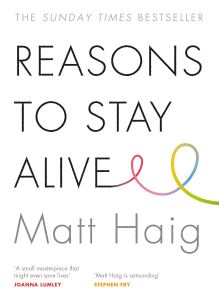
Reasons to Stay Alive.

Author(s): Matt Haig.

Year: 2015.

Edition: First (1st).

Publisher: Canongate Books Ltd.

Type(s): Hardcover, Paperback, Audiobook, and Kindle.

Synopsis:

Aged 24, Matt Haig’s world caved in. He could see no way to go on living. This is the true story of how he came through crisis, triumphed over an illness that almost destroyed him and learned to live again.

A moving, funny and joyous exploration of how to live better, love better and feel more alive, Reasons to Stay Alive is more than a memoir. It is a book about making the most of your time on earth.

“I wrote this book because the oldest clichés remain the truest. Time heals. The bottom of the valley never provides the clearest view. The tunnel does have light at the end of it, even if we haven’t been able to see it . . . Words, just sometimes, really can set you free.”

Book: Suicide Prevention Handbook

Book Title:

Suicide Prevention Handbook: A Mental Health Guide For Saving Lives.

Author(s): Ben Oakley.

Year: 2020.

Edition: First (1st).

Publisher: Independently Published.

Type(s): Paperback and Kindle.

Synopsis:

The book includes our detailed four-step guide for suicide prevention:

  • Warning Signs include social signs, personal signs and planning signs.
  • Risk Factors include isolation and social inequality, violence or abuse, self-harm and mental health disorders.
  • Intervention includes social intervention, personal intervention including exactly what to say to start a mental health conversation and how to seek help.
  • Coping Strategies include distraction, grounding and relaxation.

With real-world examples and concrete ways of how to help yourself or another.

Many mental health advocates and organisations recommend you talk about mental health but they don’t tell you how to get the conversation started. This book provides you with Conversation Starters, Direct Questions, Indirect Questions, Example Lists, Guidance and ways to move a conversation from negative emotions to positive ones.

Along with the extensive four-step suicide prevention handbook, there is a guide to writing your own suicide prevention life plan with tips on creating priorities, goals, action plans and how to write it.

You’ll also find a list of UK mental health organisations, what not to say, myths debunked and a series of essays about the misconception of man.

Supreme Movement is a mental health awareness social enterprise in the United Kingdom whose mission is to raise awareness of mental health issues, specifically suicide and self-harm among males.

Ben Oakley is an established non-fiction author, researcher, mental health advocate and founder of Supreme Movement.

Book: Critical Suicidology

Book Title:

Critical Suicidology: Transforming Suicide Research and Prevention for the 21st Century.

Author(s): Jennifer White, Ian Marsh, Michael J. Kral, and Jonathan Morris (Editors).

Year: 2015.

Edition: First (1st).

Publisher: UBC Press.

Type(s): Paperback and EPUB.

Synopsis:

This book is a must-read for practitioners, policy makers, and researchers working in mental health services, psychology, counselling, social work, psychiatry, medicine, philosophy, sociology, suicidology, feminism, anthropology, critical disability studies, and cultural studies.

World Suicide Prevention Day

Introduction

World Suicide Prevention Day (WSPD) is an awareness day observed on 10 September every year, in order to provide worldwide commitment and action to prevent suicides, with various activities around the world since 2003.

The International Association for Suicide Prevention (IASP) collaborates with the World Health Organisation (WHO) and the World Federation for Mental Health (WFMH) to host World Suicide Prevention Day.

In 2011 an estimated 40 countries held awareness events to mark the occasion. According to WHO’s Mental health Atlas released in 2014, no low-income country reported having a national suicide prevention strategy, while less than 10% of lower-middle income countries, and almost a third of upper-middle and high-income countries had.

On its first event in 2003, the 1999 WHO’s global suicide prevention initiative is mentioned with regards to the main strategy for its implementation, requiring:

  1. “The organisation of global, regional and national multi-sectoral activities to increase awareness about suicidal behaviours and how to effectively prevent them.”
  2. “The strengthening of countries’s capabilities to develop and evaluate national policies and plans for suicide prevention.”

As of recent WHO releases, challenges represented by social stigma, the taboo to openly discuss suicide, and low availability of data are still to date obstacles leading to poor data quality for both suicide and suicide attempts: “given the sensitivity of suicide – and the illegality of suicidal behaviour in some countries – it is likely that under-reporting and misclassification are greater problems for suicide than for most other causes of death.”

Background

An estimated one million people per year die by suicide or about one person in 10,000 (1.4% of all deaths), or “a death every 40 seconds or about 3,000 every day”. As of 2004 the number of people who die by suicide is expected to reach 1.5 million per year by 2020.

On average, three male suicides are reported for every female one, consistently across different age groups and in almost every country in the world. “Conversely, rates of suicide attempts tend to be 2-3 times higher in women than in men, although the gender gap has narrowed in recent years.” More people die from suicide than from murder and war; it is the 13th leading cause of death worldwide. According to the WHO there are twenty people who have a suicide attempt for every one that is fatal, at a rate approximately one every three seconds. Suicide is the “most common cause of death for people aged 15 – 24.”

According to the WHO, suicide accounts for nearly half of all violent deaths in the world. Brian Mishara, IASP president, noted that, “more people kill themselves than die in all wars, terrorist acts and interpersonal violence combined.” As of 2008, the WHO refers the widest number of suicides occur in the age group 15 – 29, while the lowest in the 80+ although representing as well the one with the highest rate (per 100,000) of all age groups, with 27.8 suicides and 60.1 for females and males respectively. In 2015 the reported global age-standardised rate is 10.7 per 100,000.

Social norms play a significant role in the development of suicidal behaviours. Late 19th century’s sociological studies recorded first ever observations on suicide: with statistics of the time at hand, sociologists mentioned the effects of industrialisation as in relations between new urbanised communities and vulnerability to self-destructive behaviour, suggesting social pressures have effects on suicide. Today, differences in suicidal behaviour among different countries can be significant.

Themes

  • 2003 – Suicide Can Be Prevented!.
  • 2004 – Saving Lives, Restoring Hope.
  • 2005 – Prevention of Suicide is Everybody’s Business.
  • 2006 – With Understanding New Hope.
  • 2007 – Suicide prevention across the Life Span.
  • 2008 – Think Globally, Plan Nationally, Act Locally.
  • 2009 – Suicide Prevention in Different Cultures.
  • 2010 – Families, Community Systems and Suicide.
  • 2011 – Preventing Suicide in Multicultural Societies.
  • 2012 – Suicide Prevention across the Globe: Strengthening Protective Factors and Instilling Hope.
  • 2013 – Stigma: A Major Barrier to Suicide Prevention.
  • 2014 – Light a candle near a Window.
  • 2015 – Preventing Suicide: Reaching Out and Saving Lives.
  • 2016 – Connect, Communicate, Care.
  • 2017 – Take a Minute, Change a Life.
  • 2018 – Working Together to Prevent Suicide.
  • 2019 – Working Together to Prevent Suicide.
  • 2020 – Working Together to Prevent Suicide.

Priorities

Suicide prevention’s priorities, as declared on the 2012 World Suicide Prevention Day event, are stated below:

  • We need to continue to research suicide and non-fatal suicidal behaviour, addressing both risk and protective factors.
  • We need to develop and implement awareness campaigns, with the aim of increasing awareness of suicidal behaviours in the community, incorporating evidence on both risk and protective factors.
  • We need to target our efforts not only to reduce risk factors but also to strengthen protective factor, especially in childhood and adolescence.
  • We need to train health care professionals to better understand evidence-based risk and protective factors associated with suicidal behaviour.
  • We need to combine primary, secondary and tertiary prevention.
  • We need to increase use of and adherence to treatments shown to be effective in treating diverse conditions; and to prioritise research into effectiveness of treatments aimed at reducing self-harm and suicide risk.
  • We need to increase the availability of mental health resources and to reduce barriers to accessing care.
  • We need to disseminate research evidence about suicide prevention to policy makers at international, national and local levels.
  • We need to reduce stigma and promote mental health literacy among the general population and health care professionals.
  • We need to reach people who do not seek help, and hence do not receive treatment when they are in need of it.
  • We need to ensure sustained funding for suicide research and prevention.
  • We need to influence governments to develop suicide prevention strategies for all countries and to support the implementation of those strategies that have been demonstrated to save lives.

Factors

Suicide has a number of complex and interrelated and underlying contributing factors … that can contribute to the feelings of pain and hopelessness. Having access to means to kill oneself – most typically firearms, medicines and poisons – is also a risk factor.

The main suicide triggers are:

  • Poverty;
  • Unemployment;
  • The loss of a loved one;
  • Arguments; and
  • Legal or work-related problems.

Suicide results from many complex sociocultural factors and is more likely to occur during periods of socioeconomic, family and individual crisis (e.g. loss of a loved one, unemployment, sexual orientation, difficulties with developing one’s identity, disassociation from one’s community or other social/belief group, and honour).

In richer countries, three times as many men die of suicide than women do, but in low- and middle-income countries the male-to-female ratio is much lower at 1.5 men to each woman.

In the United States, for example, males are four times more likely to die from suicide than are females. However, females are more likely to attempt suicide than are males.

The disparity in suicide rates has been partly explained by the use of more lethal means and the experience of more aggression and higher intent to die in men than women.

Physical and especially mental health disabling issues such as depression, are among the most common of the long list of complex and interrelated factors, ranging from financial problems to the experience of abuse, aggression, exploitation and mistreatment, that can contribute to the feelings of pain and hopelessness underling suicide. Usually substances and alcohol abuse also play a role.

Prevention strategies generally emphasise public awareness towards social stigma and suicidal behaviours.

Cultural and Religious Attitudes

In much of the world, suicide is stigmatised and condemned for religious or cultural reasons.

In some countries, suicidal behaviour is a criminal offence punishable by law. Suicide is therefore often a secretive act surrounded by taboo, and may be unrecognised, misclassified or deliberately hidden in official records of death.

Stigma, particularly surrounding mental disorders and suicide, means many people thinking of taking their own life or who have attempted suicide are not seeking help and are therefore not getting the help they need.

The prevention of suicide has not been adequately addressed due to a lack of awareness of suicide as a major public health problem and the taboo in many societies to openly discuss it.

Raising community awareness and breaking down the taboo is important for countries to make progress in preventing suicide.

Links