Book: Introducing Counselling: A Practical Guide

Book Title:

Introducing Counselling: A Practical Guide.

Author(s): Alastair Ross.

Year: 2013.

Edition: First (1st), UK Edition.

Publisher: Icon Books Ltd.

Type(s): Paperback and Kindle.

Synopsis:

Introducing Counselling: A Practical Guide is an accessible and practical route into counselling techniques. What is it? How does it work? And how can it change your life?

With expert advice on everything from the ethics of counselling to identifying steps forward, this book offers an invaluable guide to anyone who is interested in counselling others, or in having counselling themselves. Introducing Practical Guides bring you the world’s greatest theories and research to improve your life, your skills and your well-being.

Packed full of straightforward, realistic advice that has immediate results, Practical Guides are engineered by experts in their fields to help you achieve your goals.

Book: Constructive Psychotherapy

Book Title:

Constructive Psychotherapy: A Practical Guide: Practices, Processes and Personal Revolutions.

Author(s): Michael J. Mahoney.

Year: 2003.

Edition: First (1st).

Publisher: Guildford Press.

Type(s): Hardcover and Paperback.

Synopsis:

An invaluable teaching text and clinical resource, this is a book about how to do psychotherapy – how to apply the science of change to the complexities of helping people develop new meanings in their lives.

Explaining constructivist principles and illuminating what a skilled clinician actually does in day-to-day practice, Michael J. Mahoney shows how to nurture the therapeutic relationship while implementing such creative interventions as centering techniques, problem solving, pattern work, meditation and embodiment exercises, drama and dream work, and spiritual exploration.

Appendices feature reproducible client forms, handouts, and other useful materials.

Book: Basics of Psychotherapy

Book Title:

Basics of Psychotherapy: A Practical Guide to Improving Clinical Success.

Author(s): Richard B. Makover.

Year: 2017.

Edition: First (1st), Illustrated Edition.

Publisher: American Psychiatric Association Publishing.

Type(s): Paperback.

Synopsis:

Today’s psychotherapists come from many disciplines – psychiatry, psychology, social work, psychiatric nursing, and a variety of counseling professions – but they are united by a common goal: to deliver an effective therapeutic service to those in need.

Psychotherapy texts usually focus on a single methodology or perhaps survey a variety of treatments. What many clinicians may need instead is an examination of the core principles, ideas, and practices that underlie and unify the hundreds of therapies in current use. Basics of Psychotherapy meets this need with a thorough examination of these common elements and of how they function to promote successful outcomes. The challenges to successful practice have never been greater: the demand for psychotherapy services often outstrips the supply, third-party and government payers continue to call for lower costs, computer-based therapies threaten to compete with human resources, and clinicians of all types confront the illusory appeal of using drugs to achieve quick fixes. In this difficult environment, successful practitioners must provide efficient and effective therapeutic results.

Each central chapter takes up a fundamental topic and examines it in detail: What is psychotherapy? What is the psychotherapy relationship? What is an initial evaluation? What is a formulation? What is a treatment plan? Other chapters review the essential technical aspects common to any psychotherapy and provide valuable advice on how to deal with typical clinical challenges. Throughout the book, Dr. Makover emphasizes the importance of the therapeutic alliance – what it is, what supports it, how to maintain it, how to repair it when necessary – and the collaborative partnership between therapist and patient that must exist for any treatment to succeed.

The book concludes with a discussion of career development and of how self-directed learning can build a collection of skills and capacities that will meet every practice challenge. Clinicians who understand the foundations of psychotherapy covered in this book will be more efficient and effective, regardless of which approach they chose to employ. Basics of Psychotherapy is written in a clear, straightforward style that reads easily and conveys its ideas with engaging simplicity. Every point is skillfully illustrated by clinical examples. Scripted excerpts of therapy sessions not only reproduce the dialogue; they also contain notes and commentary that explain exactly what is happening between therapist and patient. Tables and illustrations summarise the topics explained in the text. This practical and up-to-date book should be of use to the beginning therapist and the experienced clinician alike.

Book: Psychotherapy – A Practical Guide

Book Title:

Psychotherapy – A Practical Guide.

Author(s): Jeffrey Smith.

Year: 2016.

Edition: First (1st).

Publisher: Springer.

Type(s): Paperback and Kindle.

Synopsis:

This title combines the many schools of thought on psychotherapy into one reader-friendly guide that coaches psychotherapists through the various techniques needed as the field expands. Unlike any other book on the market, this text considers all of the simultaneous advances in the field, including the neurobiology of emotions, the importance of the therapeutic relationship, mindfulness meditation, and the role of the body in healing. Written with genuine respect for all traditions from CBT to psychodynamics, the book unifies views of psychopathology and cure based on the notion of the mind-brain as an organ of affect regulation. The book accounts for the tasks that characterize psychotherapist activity in all therapies, how they are performed, and how they result in therapeutic change. The book also reviews the various pathologies seen in general practice and guides the reader to the specific therapist-patient interactions needed for their resolution.

With its big-picture focus on clinical practice, Psychotherapy: A Practical Guide is a concise resource for students, psychotherapists, psychologists, residents, and all who seek to integrate what is new in psychotherapy.

Book: Psychology of the Future – Lessons from Modern Consciousness Research.

Book Title:

Psychology of the Future – Lessons from Modern Consciousness Research.

Author(s): Stanislav Grof.

Year: 2000.

Edition: First (1st), Illustrated Edition.

Publisher: State University of New York Press.

Type(s): Hardcover and Paperback.

Synopsis:

Summarizes Grof’s experiences and observations from more than forty years of research into non-ordinary states of consciousness.

This accessible and comprehensive overview of the work of Stanislav Grof, one of the founders of transpersonal psychology, was specifically written to acquaint newcomers with his work.

Serving as a summation of his career and previous works, this entirely new book is the source to introduce Grof’s enormous contributions to the fields of psychiatry and psychology, especially his central concept of holotropic experience, where holotropic signifies “moving toward wholeness.”

Grof maintains that the current basic assumptions and concepts of psychology and psychiatry require a radical revision based on the intensive and systematic research of holotropic experience. He suggests that a radical inner transformation of humanity and a rise to a higher level of consciousness might be humankind’s only real hope for the future.

Book: Overcoming Panic Attacks

Book Title:

Overcoming Panic Attacks – Effective Strategies for Facing Anxiety and Taking Charge of Your Life.

Author(s): David Shanley, PsyD.

Year: 2020.

Edition: First (1st).

Publisher: Rockridge Press.

Type(s): Paperback and Kindle.

Synopsis:

Prevail over panic attacks – evidence-based strategies for getting your life back

Whether you are new to having panic attacks or have suffered from them for many years, you can free yourself from the grip they have on your life. Overcoming Panic Attacks is filled with effective strategies that offer you different ways of thinking, feeling, and behaving so you can increase your flexibility in uncomfortable situations and go after the life you want.

Drawing from his personal experience, expertise, and clinical work, Dr. David Shanley unpacks the mystery around panic attacks across many different life situations and offers you hope and tangible strategies to effectively manage your panic attacks.

Overcoming Panic Attacks includes:

  • Evidence-based strategies: Discover practical strategies based on cognitive behavioural therapy (CBT) and acceptance and commitment therapy (ACT).
  • Anxiety vs. panic: Learn the important differences between anxiety and panic, including detailed symptoms and experiences of each.
  • Go deeper: Explore helpful suggestions on how to take some of the strategies to the next level by turning inward to complete more in-depth exercises.

Reduce the frequency and severity of your panic attacks with these scientifically supported strategies so you can get back to feeling and functioning like yourself again.

Book: Out of My Mind

Book Title:

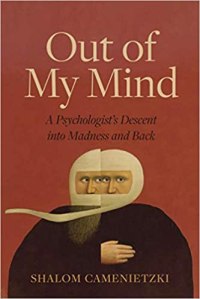
Out of My Mind: A Psychologist’s Descent into Madness and Back.

Author(s): Shalom Camenietzki.

Year: 2020.

Edition: First (1st).

Publisher: University of Regina Press.

Type(s): Hardcover and Kindle.

Synopsis:

On paper, psychologist Dr. Shalom Camenietzski seemed to have it all – a beautiful family, a thriving practice, and supportive friends and colleagues.

But in reality, he lived a life of turmoil – obsessive daydreams of taking his life, flamboyant periods of mania, disturbing acts of violence against his wife and son, and various episodes of psychosis, one of which would see him speeding his car the wrong way up Toronto’s Gardiner Expressway.

Able to understand the clinical profile of his bipolar disorder, he was nonetheless powerless to stop it.

A fascinating account of a “”mentally disordered healer,”” Out of My Mind reveals the strengths and fallibilities of traditional psychotherapies and shows how Dr. Camenietzki finally obtained a symptom-free life.

Book: NLP Dark Psychology

Book Title:

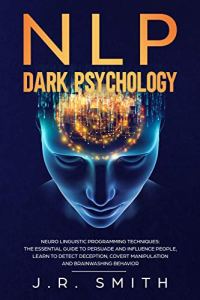
NLP Dark Psychology – Neuro-Linguistic Programming Techniques: The Essential Guide To Persuade and Influence People, Learn to Detect Deception, Covert Manipulation and Brainwashing Behaviour.

Author(s): J.R. Smith.

Year: 2020.

Edition: First (1st).

Publisher: Independently Published.

Type(s): Paperback, Audiobook, and Kindle.

Synopsis:

Has it come to your realisation that some people have the ability to dupe others using manipulative techniques and can as well get tricked by others using many secrets of dark psychology?

Some has the ability to victimise other people by preying on them. Whereas many restrain from this tendency, there are those who act on these instincts.

In this book you can discover Dark Psychology Techniques that are used by people to influence, manipulate, and coerce others to get whatsoever they want.

For so many years now, the concept of mind control has existed, and people have shown both fear and fascination of what would take place if an individual would control their thoughts and minds and lead them to do things that are against their wish and will.

There have been conspiracy theories on how government officials, as well as other influential persons, use their talents and capacities to control actions of the minorities and small groups.

Inside the book, you will come across interesting topics such as:

  • How We Receive Information.
  • The Animalistic Nature of the Brain.
  • The Dark Side of Manipulation.
  • How People Use Our Map of Reality Against Us.
  • Examples of Manipulation We Can Find in Our Day-To-Day Lives
  • Simple Mind Control Techniques to Use.
  • Personalities Likely to Manipulate.
  • Why Reframing is so Important.
  • NLP and Depression.
  • NLP and Anxiety.
  • Different Ways That You Are Persuaded Subliminally.

This is just a tiny fraction of what you will discover

Each of the mind control tactics works in a different way.

In the modern world, dark psychology is among the most powerful forces used by the most influential people to manipulate others.

People who are uninformed are in the danger of having it used against them.

Just imagine how different your life would be if you could get prospective customers, colleagues, employees, investors, friends, and literally anyone to do what you want them to do without you having to beg, cajole, or threaten.

So even if you have tried to learn these skills before but still feel lost and frustrated, this guide will give you the practical tools and knowledge to read and understand people in a way few others ever will.

Book: New Handbook of Mathematical Psychology – Volume 02

Book Title:

New Handbook of Mathematical Psychology – Volume 02: Modelling and Measurement.

Author(s): William H. Batchelder, Hans Colonius, and Ehtibar N. Dzhafarov (Editors).

Year: 2018.

Edition: First (1st).

Publisher: Cambridge University Press.

Type(s): Hardcover and Kindle.

Synopsis:

The field of mathematical psychology began in the 1950s and includes both psychological theorizing, in which mathematics plays a key role, and applied mathematics motivated by substantive problems in psychology.

Central to its success was the publication of the first Handbook of Mathematical Psychology in the 1960s. The psychological sciences have since expanded to include new areas of research, and significant advances have been made in both traditional psychological domains and in the applications of the computational sciences to psychology.

Upholding the rigor of the original Handbook, the New Handbook of Mathematical Psychology reflects the current state of the field by exploring the mathematical and computational foundations of new developments over the last half-century.

The second volume focuses on areas of mathematics that are used in constructing models of cognitive phenomena and decision making, and on the role of measurement in psychology.

Book: New Handbook of Mathematical Psychology – Volume 01

Book Title:

New Handbook of Mathematical Psychology – Volume 01: Foundation and Methodology.

Author(s): William H. Batchelder, Hans Colonius, Ehtibar N. Dzhafarov, and Jay Myung (Editors).

Year: 2016.

Edition: First (1st), Illustrated Edition.

Publisher: Cambridge University Press.

Type(s): Hardcover, Paperback and Kindle.

Synopsis:

The field of mathematical psychology began in the 1950s and includes both psychological theorising, in which mathematics plays a key role, and applied mathematics, motivated by substantive problems in psychology.

Central to its success was the publication of the first Handbook of Mathematical Psychology in the 1960s. The psychological sciences have since expanded to include new areas of research, and significant advances have been made in both traditional psychological domains and in the applications of the computational sciences to psychology.

Upholding the rigor of the first title in this field to be published, the New Handbook of Mathematical Psychology reflects the current state of the field by exploring the mathematical and computational foundations of new developments over the last half-century.

This first volume focuses on select mathematical ideas, theories, and modeling approaches to form a foundational treatment of mathematical psychology.