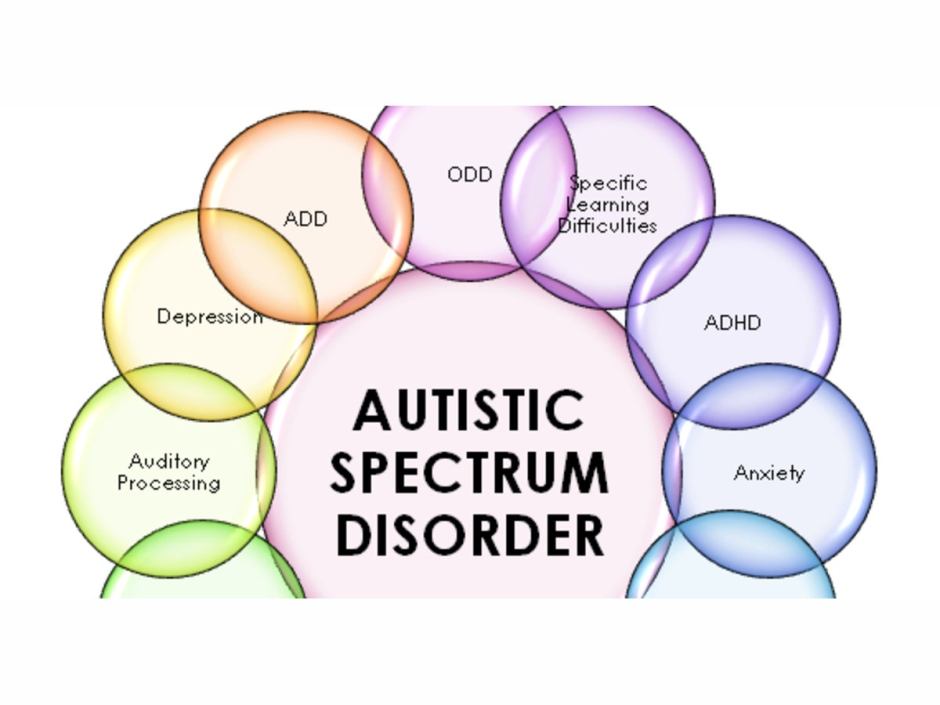
What is World Autism Awareness Day?

Introduction

World Autism Awareness Day is an internationally recognised day on 02 April every year, encouraging Member States of the United Nations (UN) to take measures to raise awareness about people with autistic spectrum disorders including autism and Asperger syndrome throughout the world.

Background

It was designated by the UN General Assembly resolution (A/RES/62/139).

World Autism Awareness Day”, passed in council on 01 November 2007, and adopted on 18 December 2007. It was proposed by the UN representative from Qatar, Her Highness Sheikha Mozah Bint Nasser Al-Missned, Consort of His Highness Sheikh Hamad Bin Khalifa Al-Thani, the Emir of the State of Qatar, and supported by all member states.

This resolution was passed and adopted without a vote in the UN General Assembly, mainly as a supplement to previous UN initiatives to improve human rights.

World Autism Day is one of only seven official health-specific UN Days. The day itself brings individual autism organisations together all around the world to aid in things like research, diagnoses, treatment, and acceptance for those with a developmental path affected by autism.

Components

The original resolution had four main components:

  • The establishment of the second day of April as World Autism Awareness Day, beginning in 2008.
  • Invitation to Member States and other relevant organisations to the UN or the international societal system, including non-governmental organisations and the private sector, to create initiatives to raise public awareness of autism.
  • Encourages Member States to raise awareness of autism on all levels in society.
  • Asks the UN Secretary-General to deliver this message to member states and all other UN organisations.

Themes

For the past years, each World Autism Awareness Day has focused on a specific theme determined by the UN:

  • 2012: “Launch of Official UN “Awareness Raising” Stamp”.
  • 2013: “Celebrating the ability within the disability of autism”.
  • 2014: “Opening Doors to Inclusive Education”.
  • 2015: “Employment: The Autism Advantage”.
  • 2016: “Autism and the 2030 Agenda: Inclusion and Neurodiversity”.
  • 2017: “Toward Autonomy and Self-Determination”.
  • 2018: “Empowering Women and Girls with Autism”.
  • 2019: “Assistive Technologies, Active Participation”.
  • 2020: “The Transition to Adulthood”.

Notable Initiatives

Onesie Wednesday

In 2014, WAAD coincided with Onesie Wednesday, a day created by the National Autistic Society to encourage people in England, Wales and Northern Ireland to show their support for anyone on the autistic spectrum. By wearing a onesie or pyjamas, participants are saying, “it’s all right to be different”.

Outcomes

United States

In a 2015 Presidential Proclamation, President Obama highlighted some of the initiatives that the US government was taking to bring rights to those with autism and to bring awareness to the disorder. He highlighted things like The Affordable Care Act, which prohibits health insurance companies from denying coverage based on a pre-existing condition such as autism. He also pointed out the recent Autism CARES Act of 2014, which provides higher level training for those who are serving citizens on the autism spectrum.

What is the International Day of Happiness?

The International Day of Happiness is celebrated throughout the world on the 20th of March. It was established by the United Nations General Assembly on 28 June 2012.

Assembly Resolution A/RES/66/281 states in pertinent part:

The General Assembly,[…] Conscious that the pursuit of happiness is a fundamental human goal,[…] Recognizing also the need for a more inclusive, equitable and balanced approach to economic growth that promotes sustainable development, poverty eradication, happiness and the well-being of all peoples, Decides to proclaim 20 March the International Day of Happiness, Invites all Member States, organizations of the United Nations system and other international and regional organizations, as well as civil society, including non-governmental organizations and individuals, to observe the International Day of Happiness in an appropriate manner, including through education and public awareness-raising activities[…] (United Nations General Assembly, Resolution adopted by the General Assembly on 28 June 2012).

What Causes Addiction?

What causes addiction?

Easy, right? Drugs cause addiction. But maybe it is not that simple.

Again, watched this on the introductory peer support course I am attending, definitely challenges the generally accepted convention of addiction.

This video is adapted from Johann Hari’s New York Times best-selling book ‘Chasing The Scream: The First and Last Days of the War on Drugs.’

For more information, and to take a quiz to see what you know about addiction, go to http://www.chasingthescream.com.

New Mental Health Care App for RN Families

Royal Navy families can now access mental health support online.

The Naval Families Federation has launched a 12-month pilot scheme to provide free access to the Headspace app for families of regular and reserve RN personnel.

Working with support from Navy Command and the Royal Navy Family and People Support organisation, 3,000 licences have been bought.

To access the offer, the family member should visit www.nff.org.uk/headspace where they will be guided through the verification process.

Lockdown Loneliness on Rise for Military Community

Services’ charity SSAFA says its helpline for Forces personnel past and present – and their families – has seen an 80% increase in calls during the pandemic.

Its free and confidential Forcesline service saw requests for befriending and support from those feeling isolated by lockdown rise dramatically, with more than 300 people turning to the charity for help.

Forcesline acts as a ‘front door’ to the wider support services offered by the charity and beyond. The helpline can act as a telling indicator for the overall well-being of the military community: currently serving (regulars and reserves), veterans and their families.

The Forcesline team say that the other most pressing issues throughout the pandemic have been:

  • Mental health;
  • Urgent assistance with food;
  • Emergency need for housing;
  • Lack of human contact; and
  • The breakdown of relationships.

If you think the helpline could be useful, it is available 9am-5pm Monday to Friday on freephone 0800 731 4880 or via a live webchat service at ssafa.org.uk/forcesline.

Reference

Navy News. (2020) Lockdown Loneliness on the Rise. Navy News. October 2020, pp.27.

The Stigma of Weakness

The head of the Army’s mental health engagement team has called on the chain of command to better recognise that “vulnerability is not a failure”.

Colonel Tim Boughton said more should be done to tackle the stigma that admitting to difficulties is to show weakness. rguing that physical fitness is indivisible from mental fitness, the officer urged commanders to continue to drive the change in culture.

“Authentic leadership acknowledges that failure is progress if you learn from it,” he said. “Our darkest moments often lead to periods of greatest strength. “As a commander you have a legal and moral duty of care for your subordinates. Think from the perspective of a soldier or junior officer – it can be a lonely place and they may rely on you for confidential advice within the regiment.”

Describing how he believes organisational change can be achieved, Colonel Boughton emphasised that leaders at all levels should allow others to make mistakes and improve, be aware of the emotional environment in their unit and establish shared values by encouraging honest conversations on mental health.

He added: “Resilience starts with a choice – to give in or move forward and become stronger. Self awareness gives you the tools to influence your situation and control it.”

Reference

Soldier. (2020) Strength from Failure. Soldier. November 2020, pp. 10.

What is the Association between PTSD & Cancer?

Research Paper Title

Post-Traumatic Stress Symptoms among Lithuanian Parents Raising Children with Cancer.

Background

The study aims to evaluate post-traumatic stress symptom expression among Lithuanian parents raising children with cancer, including social, demographic, and medical factors, and to determine their significance for the risk of developing post-traumatic stress disorder.

Methods

The study was carried out in two major Lithuanian hospitals treating children with oncologic diseases. The cross-sectional study included 195 parents, out of which 151 were mothers (77.4%) and 44 were fathers (22.6%). Post-traumatic stress symptoms were assessed using the Impact of Event Scale-Revised. To collect the sociodemographic, childhood cancer, and treatment data, we developed a questionnaire that was completed by the parents. Main study results were obtained using multiple linear regression.

Results

A total of 75.4% of parents caring for children with cancer had pronounced symptoms of post-traumatic stress disorder. The female gender (β = 0.83, p < 0.001) was associated with an increased manifestation of symptoms, whilst higher parental education (β = -0.21, p = 0.034) and the absence of relapse (β = -0.48, p < 0.001) of the child’s disease reduced post-traumatic stress symptom expression.

Conclusions

Obtained results confirmed that experiencing a child’s cancer diagnosis and treatment is extremely stressful for many parents. This event may lead to impaired mental health and increased post-traumatic stress disorder (PTSD) risk; hence, it is necessary to provide better support and assistance to parents of children with cancer.

Reference

Baniene, I. & Zemaitiene, N. (2020) Post-Traumatic Stress Symptoms among Lithuanian Parents Raising Children with Cancer. Children (Basel, Switzerland). 7(9), pp.116. doi: 10.3390/children7090116.

What is the Association of Urbanicity with Schizophrenia & Related Mortality in China?

Research Paper Title

Association of Urbanicity with Schizophrenia and Related Mortality in China: Association de l’urbanicité avec la schizophrénie et la mortalité qui y est reliée en Chine.

Background

Although higher prevalence of schizophrenia in Chinese urban areas was observed, studies focused on the association between schizophrenia and urbanicity were less in China. Using a national representative population-based data set, this study aimed to investigate the relationship between urbanicity and schizophrenia and its related mortality among adults aged 18 years old and above in China.

Methods

Data were obtained from the Second China National Sample Survey on Disability in 2006 and follow-up studies from 2007 to 2010 each year. We restricted our analysis to 1,909,205 participants aged 18 years or older and the 2,071 schizophrenia patients with information of survival and all-caused mortality of the follow-up surveys from 2007 to 2010.

Schizophrenia was ascertained according to the International Statistical Classification of Diseases, 10th Revision. The degree of urbanicity and the region of residence were used to be the proxies of urbanicity. Of these, the degree of urbanicity measured by the ratio of non-agricultural population to total population and the region of residence measured by six categorical variables (first-tier cities, first-tier city suburbs, second-tier cities, second-tier city suburbs, other city areas, and rural areas).

Logistics regression models and restricted polynomial splines were used to examine the linear/nonlinear relationship between urbanicity and the risk of schizophrenia. Cox proportional hazards regression models were used to test the role of urbanicity on mortality risk of schizophrenia patients.

Results

10% increase in the degree of urbanicity was associated with increased risk of schizophrenia (OR = 1.44; 95% CI, 1.32 to 1.57). The nonlinear model further confirmed the association between the degree of urbanicity and the risk of schizophrenia. This association existed sex difference, as the level of urbanicity increased, schizophrenia risk of males grew faster than the risk of females. The hazard ratio (HR) of mortality in schizophrenia patients decreased with the elevated of urbanicity level, with a HR of 0.42 (95% CI, 0.21 to 0.84).

Conclusions

This research suggested that incremental changes in the degree of urbanicity linked to higher risk of schizophrenia, and as the degree of urbanicity elevated, the risk of schizophrenia increased more for men than for women. Additionally, the researchers found that schizophrenia patients in higher degree of urbanicity areas had lower risk of mortality.

These findings contributed to the literature on schizophrenia in developing nations under a non-Western context and indicates that strategies to improve mental health conditions are needed in the progress of urbanicity.

Reference

Luo, Y., Pang, L., Guo, C., Zhang, L. & Zheng, X. (2020) Association of Urbanicity with Schizophrenia and Related Mortality in China: Association de l’urbanicité avec la schizophrénie et la mortalité qui y est reliée en Chine. Canadian Journal of Psychiatry. doi: 10.1177/0706743720954059. Online ahead of print.