Posts

What is Valproate?

Introduction

Valproate and its valproic acid, sodium valproate, and valproate semisodium forms are medications primarily used to treat epilepsy and bipolar disorder and prevent migraine headaches. They are useful for the prevention of seizures in those with absence seizures, partial seizures, and generalised seizures. They can be given intravenously or by mouth, and the tablet forms exist in both long- and short-acting formulations.

Common side effects of valproate include nausea, vomiting, sleepiness, and dry mouth. Serious side effects can include liver failure, and regular monitoring of liver function tests is therefore recommended. Other serious risks include pancreatitis and an increased suicide risk. Valproate is known to cause serious abnormalities in babies if taken during pregnancy, and as such it is not typically recommended for women of childbearing age who have migraines.

Valproate’s precise mechanism of action is unclear. Proposed mechanisms include affecting GABA levels, blocking voltage-gated sodium channels, and inhibiting histone deacetylases. Valproic acid is a branched short-chain fatty acid (SCFA) made from valeric acid.

Valproate was first made in 1881 and came into medical use in 1962. It is on the World Health Organisation’s (WHO’s) List of Essential Medicines and is available as a generic medication. It is marketed under the brand names Depakote, among others. In 2018, it was the 131st most commonly prescribed medication in the United States, with more than 5 million prescriptions.

Brief History

Valproic acid was first synthesized in 1882 by Beverly S. Burton as an analogue of valeric acid, found naturally in valerian. Valproic acid is a carboxylic acid, a clear liquid at room temperature. For many decades, its only use was in laboratories as a “metabolically inert” solvent for organic compounds. In 1962, the French researcher Pierre Eymard serendipitously discovered the anticonvulsant properties of valproic acid while using it as a vehicle for a number of other compounds that were being screened for anti-seizure activity. He found it prevented pentylenetetrazol-induced convulsions in laboratory rats. It was approved as an antiepileptic drug in 1967 in France and has become the most widely prescribed antiepileptic drug worldwide. Valproic acid has also been used for migraine prophylaxis and bipolar disorder.

Terminology

Valproic acid (VPA) is an organic weak acid. The conjugate base is valproate. The sodium salt of the acid is sodium valproate and a coordination complex of the two is known as valproate semisodium.

Medical Uses

It is used primarily to treat epilepsy and bipolar disorder. It is also used to prevent migraine headaches.

Epilepsy

Valproate has a broad spectrum of anticonvulsant activity, although it is primarily used as a first-line treatment for tonic-clonic seizures, absence seizures and myoclonic seizures and as a second-line treatment for partial seizures and infantile spasms. It has also been successfully given intravenously to treat status epilepticus.

Mental Illness

Bipolar Disorder

Valproate products are also used to treat manic or mixed episodes of bipolar disorder.

Schizophrenia

A 2016 systematic review compared the efficacy of valproate as an add-on for people with schizophrenia.

There is limited evidence that adding valproate to antipsychotics may be effective for overall response and also for specific symptoms, especially in terms of excitement and aggression. Valproate was associated with a number of adverse events among which sedation and dizziness appeared more frequently than in the control groups.

Dopamine Dysregulation Syndrome

Based upon five case reports, valproic acid may have efficacy in controlling the symptoms of the dopamine dysregulation syndrome that arise from the treatment of Parkinson’s disease with levodopa.

Migraines

Valproate is also used to prevent migraine headaches. Because this medication can be potentially harmful to the fetus, valproate should be considered for those able to become pregnant only after the risks have been discussed.

Other

The medication has been tested in the treatment of AIDS and cancer, owing to its histone-deacetylase-inhibiting effects.

Adverse Effects

Most common adverse effects include:

  • Nausea (22%).
  • Drowsiness (19%).
  • Dizziness (12%).
  • Vomiting (12%).
  • Weakness (10%).

Serious adverse effects include:

  • Bleeding.
  • Low blood platelets.
  • Encephalopathy.
  • Suicidal behaviour and thoughts.
  • Low body temperature.

Valproic acid has a black box warning for hepatotoxicity, pancreatitis, and foetal abnormalities.

There is evidence that valproic acid may cause premature growth plate ossification in children and adolescents, resulting in decreased height. Valproic acid can also cause mydriasis, a dilation of the pupils. There is evidence that shows valproic acid may increase the chance of polycystic ovary syndrome (PCOS) in women with epilepsy or bipolar disorder. Studies have shown this risk of PCOS is higher in women with epilepsy compared to those with bipolar disorder. Weight gain is also possible.

Pregnancy

Valproate causes birth defects; exposure during pregnancy is associated with about three times as many major abnormalities as usual, mainly spina bifida with the risks being related to the strength of medication used and use of more than one drug. More rarely, with several other defects, including a “valproate syndrome”. Characteristics of this valproate syndrome include facial features that tend to evolve with age, including a triangle-shaped forehead, tall forehead with bifrontal narrowing, epicanthic folds, medial deficiency of eyebrows, flat nasal bridge, broad nasal root, anteverted nares, shallow philtrum, long upper lip and thin vermillion borders, thick lower lip and small downturned mouth. While developmental delay is usually associated with altered physical characteristics (dysmorphic features), this is not always the case.

Children of mothers taking valproate during pregnancy are at risk for lower IQs. Maternal valproate use during pregnancy increased the probability of autism in the offspring compared to mothers not taking valproate from 1.5% to 4.4%. A 2005 study found rates of autism among children exposed to sodium valproate before birth in the cohort studied were 8.9%. The normal incidence for autism in the general population is estimated at less than one percent. A 2009 study found that the 3-year-old children of pregnant women taking valproate had an IQ nine points lower than that of a well-matched control group. However, further research in older children and adults is needed.

Sodium valproate has been associated with paroxysmal tonic upgaze of childhood, also known as Ouvrier–Billson syndrome, from childhood or foetal exposure. This condition resolved after discontinuing valproate therapy.

Women who intend to become pregnant should switch to a different medication if possible, or decrease their dose of valproate. Women who become pregnant while taking valproate should be warned that it causes birth defects and cognitive impairment in the newborn, especially at high doses (although valproate is sometimes the only drug that can control seizures, and seizures in pregnancy could have worse outcomes for the foetus than exposure to valproate). Studies have shown that taking folic acid supplements can reduce the risk of congenital neural tube defects. The use of valproate for migraine or bipolar disorder during pregnancy is contraindicated in the European Union, and the medicines are not recommended for epilepsy during pregnancy unless there is no other effective treatment available.

Elderly

Valproate in elderly people with dementia caused increased sleepiness. More people stopped the medication for this reason. Additional side effects of weight loss and decreased food intake was also associated in one half of people who become sleepy.

Contraindications

Contraindications include:

  • Pre-existing acute or chronic liver dysfunction or family history of severe liver inflammation (hepatitis), particularly medicine related.
  • Known hypersensitivity to valproate or any of the ingredients used in the preparation.
  • Urea cycle disorders.
  • Hepatic porphyria.
  • Hepatotoxicity.
  • Mitochondrial disease.
  • Pancreatitis.
  • Porphyria.

Interactions

Valproate inhibits CYP2C9, glucuronyl transferase, and epoxide hydrolase and is highly protein bound and hence may interact with drugs that are substrates for any of these enzymes or are highly protein bound themselves. It may also potentiate the CNS depressant effects of alcohol. It should not be given in conjunction with other antiepileptics due to the potential for reduced clearance of other antiepileptics (including carbamazepine, lamotrigine, phenytoin and phenobarbitone) and itself. It may also interact with:

  • Aspirin: may increase valproate concentrations. May also interfere with valproate’s metabolism.
  • Benzodiazepines: may cause CNS depression and there are possible pharmacokinetic interactions.
  • Carbapenem antibiotics: reduces valproate levels, potentially leading to seizures.
  • Cimetidine: inhibits valproate’s metabolism in the liver, leading to increased valproate concentrations.
  • Erythromycin: inhibits valproate’s metabolism in the liver, leading to increased valproate concentrations.
  • Ethosuximide: may increase ethosuximide concentrations and lead to toxicity.
  • Felbamate: may increase plasma concentrations of valproate.
  • Mefloquine: may increase valproate metabolism combined with the direct epileptogenic effects of mefloquine.
  • Oral contraceptives: may reduce plasma concentrations of valproate.
  • Primidone: may accelerate metabolism of valproate, leading to a decline of serum levels and potential breakthrough seizure.
  • Rifampin: increases the clearance of valproate, leading to decreased valproate concentrations
  • Warfarin: may increase warfarin concentration and prolong bleeding time.
  • Zidovudine: may increase zidovudine serum concentration and lead to toxicity.

Overdose and Toxicity

Excessive amounts of valproic acid can result in sleepiness, tremor, stupor, respiratory depression, coma, metabolic acidosis, and death. In general, serum or plasma valproic acid concentrations are in a range of 20-100 mg/l during controlled therapy, but may reach 150-1500 mg/l following acute poisoning. Monitoring of the serum level is often accomplished using commercial immunoassay techniques, although some laboratories employ gas or liquid chromatography. In contrast to other antiepileptic drugs, at present there is little favourable evidence for salivary therapeutic drug monitoring. Salivary levels of valproic acid correlate poorly with serum levels, partly due to valproate’s weak acid property (pKa of 4.9).

In severe intoxication, hemoperfusion or hemofiltration can be an effective means of hastening elimination of the drug from the body. Supportive therapy should be given to all patients experiencing an overdose and urine output should be monitored. Supplemental L-carnitine is indicated in patients having an acute overdose and also prophylactically in high risk patients. Acetyl-L-carnitine lowers hyperammonemia less markedly than L-carnitine.

Pharmacology

Pharmacodynamics

Although the mechanism of action of valproate is not fully understood, traditionally, its anticonvulsant effect has been attributed to the blockade of voltage-gated sodium channels and increased brain levels of gamma-aminobutyric acid (GABA). The GABAergic effect is also believed to contribute towards the anti-manic properties of valproate. In animals, sodium valproate raises cerebral and cerebellar levels of the inhibitory synaptic neurotransmitter, GABA, possibly by inhibiting GABA degradative enzymes, such as GABA transaminase, succinate-semialdehyde dehydrogenase and by inhibiting the re-uptake of GABA by neuronal cells.

Prevention of neurotransmitter-induced hyperexcitability of nerve cells, via Kv7.2 channel and AKAP5, may also contribute to its mechanism. Also, it has been shown to protect against a seizure-induced reduction in phosphatidylinositol (3,4,5)-trisphosphate (PIP3) as a potential therapeutic mechanism.

It also has histone-deacetylase-inhibiting effects. The inhibition of histone deacetylase, by promoting more transcriptionally active chromatin structures, likely presents the epigenetic mechanism for regulation of many of the neuroprotective effects attributed to valproic acid. Intermediate molecules mediating these effects include VEGF, BDNF, and GDNF.

Endocrine Actions

Valproic acid has been found to be an antagonist of the androgen and progesterone receptors, and hence as a nonsteroidal antiandrogen and antiprogestogen, at concentrations much lower than therapeutic serum levels. In addition, the drug has been identified as a potent aromatase inhibitor, and suppresses oestrogen concentrations. These actions are likely to be involved in the reproductive endocrine disturbances seen with valproic acid treatment.

Valproic acid has been found to directly stimulate androgen biosynthesis in the gonads via inhibition of histone deacetylases and has been associated with hyperandrogenism in women and increased 4-androstenedione levels in men. High rates of polycystic ovary syndrome and menstrual disorders have also been observed in women treated with valproic acid.

Metabolism

The vast majority of valproate metabolism occurs in the liver. In adult patients taking valproate alone, 30-50% of an administered dose is excreted in urine as a glucuronide conjugate. The other major pathway in the metabolism of valproate is mitochondrial beta-oxidation, which typically accounts for over 40% of an administered dose. Typically, less than 20% of an administered dose is eliminated by other oxidative mechanisms. Less than 3% of an administered dose of valproate is excreted unchanged (i.e. as valproate) in urine.

Valproate is known to be metabolized by the Cytochrome P450 enzymes: CYP2A6, CYP2B6, CYP2C9, and CYP3A5. It is also known to be metabolised by the UDP-glucuronosyltransferase enzymes: UGT1A3, UGT1A4, UGT1A6, UGT1A8, UGT1A9, UGT1A10, UGT2B7, and UGT2B15.[70] Some of the known metabolites of valproate by these enzymes and uncharacterized enzymes include: 2-ene-valproic acid, 3Z-ene-valproic acid, 3E-ene-valproic acid, 4-ene-valproic acid, valproic acid β-O-glucuronide, 3-oxovalproic acid, 3-hydroxyvalproic acid, 4-hydroxyvalproic acid, 5-hydroxyvalproic acid, and valproyl-CoA, among others.

Chemistry

Valproic acid is a branched short-chain fatty acid and the 2-n-propyl derivative of valeric acid.

Society and Culture

Valproate is available as a generic medication.

Off-Label Uses

In 2012, pharmaceutical company Abbott paid $1.6 billion in fines to US federal and state governments for illegal promotion of off-label uses for Depakote, including the sedation of elderly nursing home residents.

Some studies have suggested that valproate may reopen the critical period for learning absolute pitch and possibly other skills such as language.

Formulations

Valproate exists in two main molecular variants: sodium valproate and valproic acid without sodium (often implied by simply valproate). A mixture between these two is termed semisodium valproate. It is unclear whether there is any difference in efficacy between these variants, except from the fact that about 10% more mass of sodium valproate is needed than valproic acid without sodium to compensate for the sodium itself.

Brand Names of Valproic Acid

Branded products include:

  • Absenor (Orion Corporation Finland).
  • Convulex (G.L. Pharma GmbH Austria).
  • Depakene (Abbott Laboratories in US and Canada).
  • Depakine (Sanofi Aventis France).
  • Depakine (Sanofi Synthelabo Romania).
  • Depalept (Sanofi Aventis Israel).
  • Deprakine (Sanofi Aventis Finland).
  • Encorate (Sun Pharmaceuticals India).
  • Epival (Abbott Laboratories US and Canada).
  • Epilim (Sanofi Synthelabo Australia and South Africa).
  • Stavzor (Noven Pharmaceuticals Inc.).
  • Valcote (Abbott Laboratories Argentina).
  • Valpakine (Sanofi Aventis Brazil).
  • Orfiril (Desitin Arzneimittel GmbH Norway).

Brand names of sodium valproate

  • Portugal:
    • Tablets – Diplexil-R by Bial.
  • United States:
    • Intravenous injection – Depacon by Abbott Laboratories.
    • Syrup – Depakene by Abbott Laboratories. (Note Depakene capsules are valproic acid).
    • Depakote tablets are a mixture of sodium valproate and valproic acid.
    • Tablets – Eliaxim by Bial.
  • Australia:
    • Epilim Crushable Tablets Sanofi.
    • Epilim Sugar Free Liquid Sanofi.
    • Epilim Syrup Sanofi.
    • Epilim Tablets Sanofi.
    • Sodium Valproate Sandoz Tablets Sanofi.
    • Valpro Tablets Alphapharm.
    • Valproate Winthrop Tablets Sanofi.
    • Valprease tablets Sigma.
  • New Zealand:
    • Epilim by Sanofi-Aventis.
  • UK:
    • Depakote Tablets (as in USA).
    • Tablets – Orlept by Wockhardt and Epilim by Sanofi.
    • Oral solution – Orlept Sugar Free by Wockhardt and Epilim by Sanofi.
    • Syrup – Epilim by Sanofi-Aventis.
    • Intravenous injection – Epilim Intravenous by Sanofi.
    • Extended release tablets – Epilim Chrono by Sanofi is a combination of sodium valproate and valproic acid in a 2.3:1 ratio.
    • Enteric-coated tablets – Epilim EC200 by Sanofi is a 200-mg sodium valproate enteric-coated tablet.
  • UK Only:
    • Capsules – Episenta prolonged release by Beacon.
    • Sachets – Episenta prolonged release by Beacon.
    • Intravenous solution for injection – Episenta solution for injection by Beacon.
  • Germany, Switzerland, Norway, Finland, Sweden:
    • Tablets – Orfiril by Desitin Pharmaceuticals.
    • Intravenous injection – Orfiril IV by Desitin Pharmaceuticals.
  • South Africa:
    • Syrup – Convulex by Byk Madaus.
    • Tablets – Epilim by Sanofi-synthelabo.
  • Malaysia:
    • Tablets – Epilim by Sanofi-Aventis..
  • Romania:
    • Companies are SANOFI-AVENTIS FRANCE, GEROT PHARMAZEUTIKA GMBH and DESITIN ARZNEIMITTEL GMBH.
    • Types are Syrup, Extended release mini tablets, Gastric resistant coated tablets, Gastric resistant soft capsules, Extended release capsules, Extended release tablets and Extended release coated tablets.
  • Canada:
    • Intravenous injection – Epival or Epiject by Abbott Laboratories.
    • Syrup – Depakene by Abbott Laboratories its generic formulations include Apo-Valproic and ratio-Valproic.
  • Japan:
    • Tablets – Depakene by Kyowa Hakko Kirin.
    • Extended release tablets – Depakene-R by Kyowa Hakko Kogyo and Selenica-R by Kowa.
    • Syrup – Depakene by Kyowa Hakko Kogyo.
  • Europe:
    • In much of Europe, Dépakine and Depakine Chrono (tablets) are equivalent to Epilim and Epilim Chrono above.
  • Taiwan:
    • Tablets (white round tablet) – Depakine (Chinese: 帝拔癲; pinyin: di-ba-dian) by Sanofi Winthrop Industrie (France)>
  • Iran:
    • Tablets – Epival 200 (enteric coated tablet) and Epival 500 (extended release tablet) by Iran Najo.
    • Slow release tablets – Depakine Chrono by Sanofi Winthrop Industrie (France).
  • Israel:
    • Depalept and Depalept Chrono (extended release tablets) are equivalent to Epilim and Epilim Chrono above. Manufactured and distributed by Sanofi-Aventis.
  • India, Russia and CIS countries:
    • Valparin Chrono by Torrent Pharmaceuticals India.
    • Valprol CR by Intas Pharmaceutical (India).
    • Encorate Chrono by Sun Pharmaceutical (India).
    • Serven Chrono by Leeven APL Biotech (India).

Brand Names of Valproate Semisodium

  • Brazil – Depakote by Abbott Laboratories and Torval CR by Torrent do Brasil.
  • Canada – Epival by Abbott Laboratories.
  • Mexico – Epival and Epival ER (extended release) by Abbott Laboratories.
  • United Kingdom – Depakote (for psychiatric conditions) and Epilim (for epilepsy) by Sanofi-Aventis and generics.
  • United States – Depakote and Depakote ER (extended release) by Abbott Laboratories and generics.
  • India – Valance and Valance OD by Abbott Healthcare Pvt Ltd, Divalid ER by Linux laboratories Pvt Ltd, Valex ER by Sigmund Promedica, Dicorate by Sun Pharma.
  • Germany – Ergenyl Chrono by Sanofi-Aventis and generics.
  • Chile – Valcote and Valcote ER by Abbott Laboratories.
  • France and other European countries — Depakote.
  • Peru – Divalprax by AC Farma Laboratories.
  • China – Diprate OD.

On This Day … 26 July

People (Births)

Carl Jung

Carl Gustav Jung, born Karl Gustav Jung (26 July 1875 to 06 June 1961), was a Swiss psychiatrist and psychoanalyst who founded analytical psychology. Jung’s work has been influential in the fields of psychiatry, anthropology, archaeology, literature, philosophy, psychology and religious studies. Jung worked as a research scientist at the famous Burghölzli hospital, under Eugen Bleuler. During this time, he came to the attention of Sigmund Freud, the founder of psychoanalysis. The two men conducted a lengthy correspondence and collaborated, for a while, on a joint vision of human psychology.

Freud saw the younger Jung as the heir he had been seeking to take forward his “new science” of psychoanalysis and to this end secured his appointment as President of his newly founded International Psychoanalytical Association. Jung’s research and personal vision, however, made it impossible for him to follow his older colleague’s doctrine and a schism became inevitable. This division was personally painful for Jung and resulted in the establishment of Jung’s analytical psychology as a comprehensive system separate from psychoanalysis.

Among the central concepts of analytical psychology is individuation – the lifelong psychological process of differentiation of the self out of each individual’s conscious and unconscious elements. Jung considered it to be the main task of human development. He created some of the best known psychological concepts, including synchronicity, archetypal phenomena, the collective unconscious, the psychological complex and extraversion and introversion.

Jung was also an artist, craftsman, builder and a prolific writer. Many of his works were not published until after his death and some are still awaiting publication.

Glynis Breakwell

Dame Glynis Marie Breakwell DBE DL FRSA FAcSS (born West Bromwich, 26 July 1952) is the former Vice-Chancellor of the University of Bath in Bath. She is a social psychologist and an active public policy adviser and researcher specialising in leadership, identity process and risk management. In January 2014 she was listed in the Science Council’s list of ‘100 leading UK practising scientists’.

Breakwell has been a Fellow of the British Psychological Society since 1987 and an Honorary Fellow since 2006. She is a chartered health psychologist and in 2002 was elected an Academician of the Academy of Social Sciences.

Breakwell was appointed Dame Commander of the Order of the British Empire in the 2012 New Year Honours for services to higher education. She is also a Deputy Lieutenant of the County of Somerset.

On This Day … 24 July

People (Deaths)

  • 2007 – Albert Ellis, American psychologist and author (b. 1913).
  • 2013 – Virginia E. Johnson, American psychologist and sexologist (b. 1925).

Albert Ellis

Albert Ellis (27 September 1913 to 24 July 2007) was an American psychologist and psychotherapist who founded Rational Emotive Behaviour Therapy (REBT). He held MA and PhD degrees in clinical psychology from Columbia University, and was certified by the American Board of Professional Psychology (ABPP). He also founded, and was the President of, the New York City-based Albert Ellis Institute. He is generally considered to be one of the originators of the cognitive revolutionary paradigm shift in psychotherapy and an early proponent and developer of cognitive-behavioural therapies.

Based on a 1982 professional survey of US and Canadian psychologists, he was considered the second most influential psychotherapist in history (Carl Rogers ranked first in the survey; Sigmund Freud was ranked third). Psychology Today noted that, “No individual—not even Freud himself—has had a greater impact on modern psychotherapy.”

Virginia E. Johnson

Virginia E. Johnson, born Mary Virginia Eshelman (11 February 1925 to 24 July 2013), was an American sexologist, best known as a member of the Masters and Johnson sexuality research team. Along with her partner, William H. Masters, she pioneered research into the nature of human sexual response and the diagnosis and treatment of sexual dysfunctions and disorders from 1957 until the 1990s.

On This Day … 23 July

People (Births)

  • 1933 – Benedict Groeschel, American priest, psychologist, and talk show host (d. 2014).

Benedict Groeschel

Benedict Joseph Groeschel, C.F.R. (23 July 1933 to 03 October 2014) was an American Franciscan friar, Catholic priest, retreat master, author, psychologist, activist, and television host. He hosted the television talk programme Sunday Night Prime (originally Sunday Night Live) broadcast on the Eternal Word Television Network, as well as several serial religious specials.

He founded the Office for Spiritual Development for the Roman Catholic Archdiocese of New York. He was Associate Director of the Trinity Retreat House for clergy and executive director of St. Francis House. He was professor of pastoral psychology at St. Joseph’s Seminary in New York and an adjunct professor at the Institute for Psychological Sciences in Arlington, Virginia. He was one of the founders of the Franciscan Friars of the Renewal and among his close friends were Mother Teresa, Mother Angelica and Alice von Hildebrand.

What is Zuclopenthixol?

Introduction

Zuclopenthixol (brand names Cisordinol, Clopixol and others), also known as zuclopentixol, is a medication used to treat schizophrenia and other psychoses.

It is classed, pharmacologically, as a typical antipsychotic. Chemically it is a thioxanthene. It is the cis-isomer of clopenthixol (Sordinol, Ciatyl). Clopenthixol was introduced in 1961, while zuclopenthixol was introduced in 1978.

Zuclopenthixol is a D1 and D2 antagonist, α1-adrenergic and 5-HT2 antagonist. While it is approved for use in Australia, Canada, Ireland, India, New Zealand, Singapore, South Africa and the UK it is not approved for use in the United States.

Brief History

Zuclopenthixol was introduced by Lundbeck in 1978.

Medical Uses

Available Forms

Zuclopenthixol is available in three major preparations:

  1. As zuclopenthixol decanoate (Clopixol Depot, Cisordinol Depot), it is a long-acting intramuscular (IM) injection.
    1. Its main use is as a long-acting injection given every two or three weeks to people with schizophrenia who have a poor compliance with medication and suffer frequent relapses of illness.
    2. There is some evidence it may be more helpful in managing aggressive behaviour.
  2. As zuclopenthixol acetate (Clopixol-Acuphase, Cisordinol-Acutard), it is a shorter-acting intramuscular injection used in the acute sedation of psychotic inpatients.
    1. The effect peaks at 48-72 hours providing 2-3 days of sedation.
  3. As zuclopenthixol dihydrochloride (Clopixol, Cisordinol), it is a tablet used in the treatment of schizophrenia in those who are compliant with oral medication.

It is also used in the treatment of acute bipolar mania.

Dosing

As a long-acting injection, zuclopenthixol decanoate comes in a 200 mg and 500 mg ampoule. Doses can vary from 50 mg weekly to the maximum licensed dose of 600 mg weekly. In general, the lowest effective dose to prevent relapse is preferred. The interval may be shorter as a patient starts on the medication before extending to 3 weekly intervals subsequently. The dose should be reviewed and reduced if side effects occur, though in the short-term an anticholinergic medication benztropine may be helpful for tremor and stiffness, while diazepam may be helpful for akathisia. 100 mg of zuclopenthixol decanoate is roughly equivalent to 20 mg of flupentixol decanoate or 12.5 mg of fluphenazine decanoate.

In acutely psychotic and agitated inpatients, 50-200 mg of zuclopenthixol acetate may be given for a calming effect over the subsequent three days, with a maximum dose of 400 mg in total to be given. As it is a long-acting medication, care must be taken not to give an excessive dose.

In oral form zuclopenthixol is available in 10, 25 and 40 mg tablets, with a dose range of 20-60 mg daily.

Side Effects

Chronic administration of zuclopenthixol (30 mg/kg/day for two years) in rats resulted in small, but significant, increases in the incidence of thyroid parafollicular carcinomas and, in females, of mammary adenocarcinomas and of pancreatic islet cell adenomas and carcinomas. An increase in the incidence of mammary adenocarcinomas is a common finding for D2 antagonists which increase prolactin secretion when administered to rats. An increase in the incidence of pancreatic islet cell tumours has been observed for some other D2 antagonists. The physiological differences between rats and humans with regard to prolactin make the clinical significance of these findings unclear.

Withdrawal syndrome: Abrupt cessation of therapy may cause acute withdrawal symptoms (eg, nausea, vomiting, or insomnia). Symptoms usually begin in 1 to 4 days of withdrawal and subside within 1 to 2 weeks.

Other permanent side effects are similar to many other typical antipsychotics, namely extrapyramidal symptoms as a result of dopamine blockade in subcortical areas of the brain. This may result in symptoms similar to those seen in Parkinson’s disease and include a restlessness and inability to sit still known as akathisia, a slow tremor and stiffness of the limbs. Zuclopenthixol is thought to be more sedating than the related flupentixol, though possibly less likely to induce extrapyramidal symptoms than other typical depots. As with other dopamine antagonists, zuclopenthixol may sometimes elevate prolactin levels; this may occasionally result in amenorrhoea or galactorrhoea in severe cases. Neuroleptic malignant syndrome is a rare but potentially fatal side effect. Any unexpected deterioration in mental state with confusion and muscle stiffness should be seen by a physician.

Zuclopenthixol decanoate induces a transient dose-dependent sedation. However, if the patient is switched to maintenance treatment with zuclopenthixol decanoate from oral zuclopenthixol or from IM zuclopenthixol acetate the sedation will be no problem. Tolerance to the unspecific sedative effect develops rapidly.

  • Very common Adverse Effects (≥10% incidence):
    • Dry Mouth.
    • Somnolence.
    • Akathisia.
    • Hyperkinesia.
    • Hypokinesia.
  • Common (1%≤incidence≤10%):
    • Tachycardia.
    • Palpitations.
    • Vertigo.
    • Accommodation disorder.
    • Vision abnormal.
    • Salivary hypersecretion.
    • Constipation.
    • Vomiting.
    • Dyspepsia.
    • Diarrhoea.
    • Asthenia.
    • Fatigue.
    • Malaise.
    • Pain (at the injection site).
    • Increased appetite.
    • Weight gain.
    • Myalgia.
    • Tremor.
    • Dystonia.
    • Hypertonia.
    • Dizziness.
    • Headache.
    • Paraesthesia.
    • Disturbance in attention.
    • Amnesia.
    • Gait abnormal.
    • Insomnia.
    • Depression.
    • Anxiety.
    • Nervousness.
    • Abnormal dreams.
    • Agitation.
    • Libido decreased.
    • Nasal congestion.
    • Dyspnoea.
    • Hyperhidrosis.
    • Pruritus.
  • Uncommon (0.1%≤incidence≤1%):
    • Hyperacusis.
    • Tinnitus.
    • Oculogyration.
    • Mydriasis.
    • Abdominal pain.
    • Nausea.
    • Flatulence.
    • Thirst.
    • Injection site reaction.
    • Hypothermia.
    • Pyrexia.
    • Liver function test abnormal.
    • Decreased appetite.
    • Weight loss.
    • Muscle rigidity.
    • Trismus.
    • Torticollis.
    • Tardive dyskinesia.
    • Hyperreflexia.
    • Dyskinesia.
    • Parkinsonism.
    • Syncope.
    • Ataxia.
    • Speech disorder.
    • Hypotonia.
    • Convulsion.
    • Migraine.
    • Apathy.
    • Nightmare.
    • Libido increased.
    • Confusional state.
    • Ejaculation failure.
    • Erectile dysfunction.
    • Female orgasmic disorder.
    • Vulvovaginal.
    • Dryness.
    • Rash.
    • Photosensitivity reaction.
    • Pigmentation disorder.
    • Seborrhoea.
    • Dermatitis.
    • Purpura.
    • Hypotension.
    • Hot flush.
  • Rare (0.01%≤incidence≤0.1%):
    • Thrombocytopenia.
    • Neutropenia.
    • Leukopenia.
    • Agranulocytosis.
    • Electrocardiogram QT prolonged.
    • Hyperprolactinaemia.
    • Hypersensitivity.
    • Anaphylactic reaction.
    • Hyperglycaemia.
    • Glucose tolerance impaired.
    • Hyperlipidaemia.
    • Gynaecomastia.
    • Galactorrhoea.
    • Amenorrhoea.
    • Priapism.
    • Withdrawal symptoms.
  • Very rare (incidence<0.01%):
    • Cholestatic hepatitis.
    • Jaundice.
    • Neuroleptic malignant syndrome.
    • Venous thromboembolism.

Pharmacology

Pharmacodynamics

Zuclopenthixol antagonises both dopamine D1 and D2 receptors, α1-adrenoceptors and 5-HT2 receptors with a high affinity, but has no affinity for cholinergic muscarine receptors. It weakly antagonises the histamine (H1) receptor but has no α2-adrenoceptor blocking activity.

Evidence from in vitro work and clinical sources (i.e. therapeutic drug monitoring databases) suggests that both CYP2D6 and CYP3A4 play important roles in zuclopenthixol metabolism.

What is Ziprasidone?

Introduction

Ziprasidone, sold under the brand name Geodon among others, is an atypical antipsychotic used to treat schizophrenia and bipolar disorder.

It may be used by mouth and by injection into a muscle (IM). The IM form may be used for acute agitation in people with schizophrenia.

Common side effects include dizziness, drowsiness, dry mouth, and twitches. Although it can also cause weight gain, the risk is much lower than for other atypical antipsychotics. How it works is not entirely clear but is believed to involve effects on serotonin and dopamine in the brain.

Ziprasidone was approved for medical use in the United States in 2001. The pills are made up of the hydrochloride salt, ziprasidone hydrochloride. The intramuscular form is the mesylate, ziprasidone mesylate trihydrate, and is provided as a lyophilised powder. In 2017, it was the 261st most commonly prescribed medication in the United States, with more than one million prescriptions.

Brief History

Ziprasidone is chemically similar to risperidone, of which it is a structural analogue. It was first synthesized in 1987 at the Pfizer central research campus in Groton, Connecticut.

Phase I trials started in 1995. In 1998 ziprasidone was approved in Sweden. After the FDA raised concerns about long QT syndrome, more clinical trials were conducted and submitted to the FDA, which approved the drug on 05 February 2001.

Medical Uses

Ziprasidone is approved by the US Food and Drug Administration (FDA) for the treatment of schizophrenia as well as acute mania and mixed states associated with bipolar disorder. Its intramuscular injection form is approved for acute agitation in schizophrenic patients for whom treatment with just ziprasidone is appropriate.

In a 2013 study in a comparison of 15 antipsychotic drugs in effectiveness in treating schizophrenic symptoms, ziprasidone demonstrated mild-standard effectiveness. 15% more effective than lurasidone and iloperidone, approximately as effective as chlorpromazine and asenapine, and 9-13% less effective than haloperidol, quetiapine, and aripiprazole. Ziprasidone is effective in the treatment of schizophrenia, though evidence from the CATIE trials suggests it is less effective than olanzapine, and equally as effective compared to quetiapine. There are higher discontinuation rates for lower doses of ziprasidone, which are also less effective than higher doses.

Adverse Effects

Ziprasidone (and all other second generation antipsychotics (SGAs)) received a black box warning due to increased mortality in elderly patients with dementia-related psychosis.

Sleepiness and headache are very common adverse effects (>10%).

Common adverse effects (1-10%), include producing too much saliva or having dry mouth, runny nose, respiratory disorders or coughing, nausea and vomiting, stomach aches, constipation or diarrhoea, loss of appetite, weight gain (but the smallest risk for weight gain compared to other antipsychotics), rashes, fast heart beats, blood pressure falling when standing up quickly, muscle pain, weakness, twitches, dizziness, and anxiety. Extrapyramidal symptoms are also common and include tremor, dystonia (sustained or repetitive muscle contractions), akathisia (the feeling of a need to be in motion), parkinsonism, and muscle rigidity; in a 2013 meta-analysis of 15 antipsychotic drugs, ziprasidone ranked 8th for such side effects.

Ziprasidone is known to cause activation into mania in some bipolar patients.

This medication can cause birth defects, according to animal studies, although this side effect has not been confirmed in humans.

Recently, the FDA required the manufacturers of some atypical antipsychotics to include a warning about the risk of hyperglycaemia and Type II diabetes with atypical antipsychotics. Some evidence suggests that ziprasidone does not cause insulin resistance to the degree of other atypical antipsychotics, such as olanzapine. Weight gain is also less of a concern with ziprasidone compared to other atypical antipsychotics. In fact, in a trial of long term therapy with ziprasidone, overweight patients (BMI > 27) actually had a mean weight loss overall. According to the manufacturer insert, ziprasidone caused an average weight gain of 2.2 kg (4.8 lbs), which is significantly lower than other atypical antipsychotics, making this medication better for patients that are concerned about their weight. In December 2014, the FDA warned that ziprasidone could cause a potentially fatal skin reaction, Drug Reaction with Eosinophilia and Systemic Symptoms, although this was believed to occur only rarely.

Discontinuation

The British National Formulary recommends a gradual withdrawal when discontinuing antipsychotics to avoid acute withdrawal syndrome or rapid relapse. Symptoms of withdrawal commonly include nausea, vomiting, and loss of appetite. Other symptoms may include restlessness, increased sweating, and trouble sleeping. Less commonly there may be a feeling of the world spinning, numbness, or muscle pains. Symptoms generally resolve after a short period of time.

There is tentative evidence that discontinuation of antipsychotics can result in psychosis. It may also result in reoccurrence of the condition that is being treated. Rarely tardive dyskinesia can occur when the medication is stopped.

Pharmacology

Pharmacodynamics

Correspondence to Clinical Effects

Ziprasidone mostly affects the receptors of dopamine (D2), serotonin (5-HT2A, partially 5-HT1A, 5-HT2C, and 5-HT1D) and epinephrine/norepinephrine (α1) to a high degree, while of histamine (H1) – moderately. It also somewhat inhibits reuptake of serotonin and norepinephrine, though not dopamine.

Ziprasidone’s efficacy in treating the positive symptoms of schizophrenia is believed to be mediated primarily via antagonism of the dopamine receptors, specifically D2. Blockade of the 5-HT2A receptor may also play a role in its effectiveness against positive symptoms, though the significance of this property in antipsychotic drugs is still debated among researchers. Blockade of 5-HT2A and 5-HT2C and activation of 5-HT1A as well as inhibition of the reuptake of serotonin and norepinephrine may all contribute to its ability to alleviate negative symptoms. The relatively weak antagonistic actions of ziprasidone on the α1-adrenergic receptor likely in part explains some of its side effects, such as orthostatic hypotension. Unlike many other antipsychotics, ziprasidone has no significant affinity for the mACh receptors, and as such lacks any anticholinergic side effects. Like most other antipsychotics, ziprasidone is sedating due primarily to serotonin and dopamine blockade.

Pharmacokinetics

The systemic bioavailability of ziprasidone is 100% when administered intramuscularly and 60% when administered orally without food.

After a single dose intramuscular administration, the peak serum concentration typically occurs at about 60 minutes after the dose is administered, or earlier. Steady state plasma concentrations are achieved within one to three days. Exposure increases in a dose-related manner and following three days of intramuscular dosing, little accumulation is observed.

The bioavailability of the drug is reduced by approximately 50% if a meal is not eaten before Ziprasidone ingestion.

Ziprasidone is hepatically metabolized by aldehyde oxidase; minor metabolism occurs via cytochrome P450 3A4 (CYP3A4). Medications that induce (e.g. carbamazepine) or inhibit (e.g. ketoconazole) CYP3A4 have been shown to decrease and increase, respectively, blood levels of ziprasidone.

Its biological half-life time is 10 hours at doses of 80-120 milligrams.

Society and Culture

Lawsuit

In September 2009, the US Justice Department announced that Pfizer had been ordered to pay a historic fine of $2.3 billion as a penalty for fraudulent marketing of several drugs, including Geodon. Pfizer had illegally promoted Geodon and submitted false claims to government health care programs for uses that were not medically accepted indications. The civil settlement also resolves allegations that Pfizer paid kickbacks to health care providers to induce them to prescribe Geodon, as well as other drugs. This was the largest civil fraud settlement in history against a pharmaceutical company.

What is a Neurotransmitter?

Introduction

Neurotransmitters are chemical messengers that transmit a signal from a neuron across the synapse to a target cell, which can be a different neuron, muscle cell, or gland cell. Neurotransmitters are chemical substances made by the neuron specifically to transmit a message.

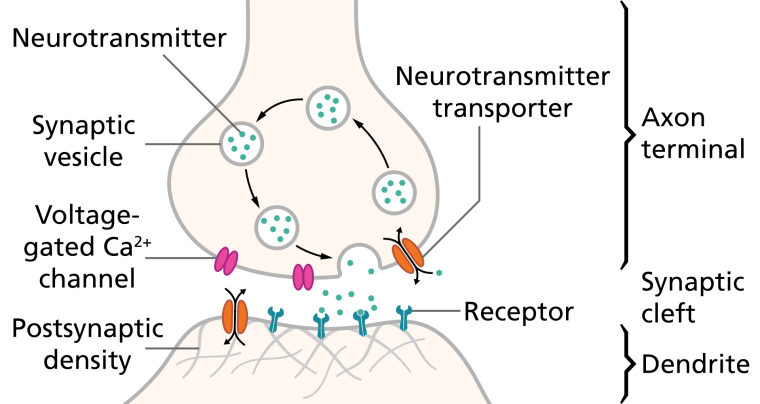
Neurotransmitters are released from synaptic vesicles in synapses into the synaptic cleft, where they are received by neurotransmitter receptors on the target cell. Many neurotransmitters are synthesized from simple and plentiful precursors such as amino acids, which are readily available and only require a small number of biosynthetic steps for conversion. Neurotransmitters are essential to the function of complex neural systems. The exact number of unique neurotransmitters in humans is unknown, but more than 500 have been identified.

Structure of a typical chemical synapse.

Mechanism

Neurotransmitters are stored in synaptic vesicles, clustered close to the cell membrane at the axon terminal of the presynaptic neuron. Neurotransmitters are released into and diffuse across the synaptic cleft, where they bind to specific receptors on the membrane of the postsynaptic neuron. Binding of neurotransmitters may influence the postsynaptic neuron in either an excitation or inhibitory way, depolarising or repolarising it respectively.

Most of the neurotransmitters are about the size of a single amino acid; however, some neurotransmitters may be the size of larger proteins or peptides. A released neurotransmitter is typically available in the synaptic cleft for a short time before it is metabolised by enzymes, pulled back into the presynaptic neuron through reuptake, or bound to a postsynaptic receptor. Nevertheless, short-term exposure of the receptor to a neurotransmitter is typically sufficient for causing a postsynaptic response by way of synaptic transmission.

Generally, a neurotransmitter is released at the presynaptic terminal in response to a threshold action potential or graded electrical potential in the presynaptic neuron. However, low level ‘baseline’ release also occurs without electrical stimulation.

Discovery

Until the early 20th century, scientists assumed that the majority of synaptic communication in the brain was electrical. However, through histological examinations by Ramón y Cajal, a 20 to 40 nm gap between neurons, known today as the synaptic cleft, was discovered. The presence of such a gap suggested communication via chemical messengers traversing the synaptic cleft, and in 1921 German pharmacologist Otto Loewi confirmed that neurons can communicate by releasing chemicals. Through a series of experiments involving the vagus nerves of frogs, Loewi was able to manually slow the heart rate of frogs by controlling the amount of saline solution present around the vagus nerve. Upon completion of this experiment, Loewi asserted that sympathetic regulation of cardiac function can be mediated through changes in chemical concentrations. Furthermore, Otto Loewi is credited with discovering acetylcholine (ACh) – the first known neurotransmitter.

Identification

There are four main criteria for identifying neurotransmitters:

  1. The chemical must be synthesized in the neuron or otherwise be present in it.
  2. When the neuron is active, the chemical must be released and produce a response in some targets.
  3. The same response must be obtained when the chemical is experimentally placed on the target.
  4. A mechanism must exist for removing the chemical from its site of activation after its work is done.

However, given advances in pharmacology, genetics, and chemical neuroanatomy, the term “neurotransmitter” can be applied to chemicals that:

  • Carry messages between neurons via influence on the postsynaptic membrane.
  • Have little or no effect on membrane voltage, but have a common carrying function such as changing the structure of the synapse.
  • Communicate by sending reverse-direction messages that affect the release or reuptake of transmitters.

The anatomical localisation of neurotransmitters is typically determined using immunocytochemical techniques, which identify the location of either the transmitter substances themselves or of the enzymes that are involved in their synthesis. Immunocytochemical techniques have also revealed that many transmitters, particularly the neuropeptides, are co-localised, that is, a neuron may release more than one transmitter from its synaptic terminal. Various techniques and experiments such as staining, stimulating, and collecting can be used to identify neurotransmitters throughout the central nervous system.

Types

There are many different ways to classify neurotransmitters. Dividing them into amino acids, peptides, and monoamines is sufficient for some classification purposes.

Major neurotransmitters:

  • Amino acids: glutamate, aspartate, D-serine, gamma-Aminobutyric acid (GABA), and glycine.
  • Gasotransmitters: nitric oxide (NO), carbon monoxide (CO), and hydrogen sulfide (H2S).
  • Monoamines: dopamine (DA), norepinephrine (noradrenaline; NE, NA), epinephrine (adrenaline), histamine, and serotonin (SER, 5-HT).
    • Catecholamines: dopamine, norepinephrine (noradrenaline), and epinephrine (adrenaline).
  • Trace amines: phenethylamine, N-methylphenethylamine, tyramine, 3-iodothyronamine, octopamine, tryptamine, etc.
  • Peptides: oxytocin, somatostatin, substance P, cocaine and amphetamine regulated transcript, and opioid peptides.
  • Purines: adenosine triphosphate (ATP) and adenosine.
  • Others: acetylcholine (ACh), anandamide, etc.

In addition, over 50 neuroactive peptides have been found, and new ones are discovered regularly. Many of these are co-released along with a small-molecule transmitter. Nevertheless, in some cases, a peptide is the primary transmitter at a synapse. Beta-Endorphin is a relatively well-known example of a peptide neurotransmitter because it engages in highly specific interactions with opioid receptors in the central nervous system.

Single ions (such as synaptically released zinc) are also considered neurotransmitters by some, as well as some gaseous molecules such as nitric oxide (NO), carbon monoxide (CO), and hydrogen sulfide (H2S). The gases are produced in the neural cytoplasm and are immediately diffused through the cell membrane into the extracellular fluid and into nearby cells to stimulate production of second messengers. Soluble gas neurotransmitters are difficult to study, as they act rapidly and are immediately broken down, existing for only a few seconds.

The most prevalent transmitter is glutamate, which is excitatory at well over 90% of the synapses in the human brain. The next most prevalent is gamma-Aminobutyric Acid (GABA) which is inhibitory at more than 90% of the synapses that do not use glutamate. Although other transmitters are used in fewer synapses, they may be very important functionally: the great majority of psychoactive drugs exert their effects by altering the actions of some neurotransmitter systems, often acting through transmitters other than glutamate or GABA. Addictive drugs such as cocaine and amphetamines exert their effects primarily on the dopamine system. The addictive opiate drugs exert their effects primarily as functional analogues of opioid peptides, which, in turn, regulate dopamine levels.

Actions

Neurons form elaborate networks through which nerve impulses – action potentials – travel. Each neuron has as many as 15,000 connections with neighbouring neurons.

Neurons do not touch each other (except in the case of an electrical synapse through a gap junction); instead, neurons interact at contact points called synapses: a junction within two nerve cells, consisting of a miniature gap within which impulses are carried by a neurotransmitter. A neuron transports its information by way of a nerve impulse called an action potential. When an action potential arrives at the synapse’s presynaptic terminal button, it may stimulate the release of neurotransmitters. These neurotransmitters are released into the synaptic cleft to bind onto the receptors of the postsynaptic membrane and influence another cell, either in an inhibitory or excitatory way. The next neuron may be connected to many more neurons, and if the total of excitatory influences minus inhibitory influences is great enough, it will also “fire”. That is to say, it will create a new action potential at its axon hillock, releasing neurotransmitters and passing on the information to yet another neighbouring neuron.

Excitatory and Inhibitory

A neurotransmitter can influence the function of a neuron through a remarkable number of mechanisms. In its direct actions in influencing a neuron’s electrical excitability, however, a neurotransmitter acts in only one of two ways: excitatory or inhibitory. A neurotransmitter influences trans-membrane ion flow either to increase (excitatory) or to decrease (inhibitory) the probability that the cell with which it comes in contact will produce an action potential. Thus, despite the wide variety of synapses, they all convey messages of only these two types, and they are labelled as such. Type I synapses are excitatory in their actions, whereas type II synapses are inhibitory. Each type has a different appearance and is located on different parts of the neurons under its influence.

Type I (excitatory) synapses are typically located on the shafts or the spines of dendrites, whereas type II (inhibitory) synapses are typically located on a cell body. In addition, Type I synapses have round synaptic vesicles, whereas the vesicles of type II synapses are flattened. The material on the presynaptic and post-synaptic membranes is denser in a Type I synapse than it is in a type II, and the type I synaptic cleft is wider. Finally, the active zone on a Type I synapse is larger than that on a Type II synapse.

The different locations of type I and type II synapses divide a neuron into two zones: an excitatory dendritic tree and an inhibitory cell body. From an inhibitory perspective, excitation comes in over the dendrites and spreads to the axon hillock to trigger an action potential. If the message is to be stopped, it is best stopped by applying inhibition on the cell body, close to the axon hillock where the action potential originates. Another way to conceptualize excitatory-inhibitory interaction is to picture excitation overcoming inhibition. If the cell body is normally in an inhibited state, the only way to generate an action potential at the axon hillock is to reduce the cell body’s inhibition. In this “open the gates” strategy, the excitatory message is like a racehorse ready to run down the track, but first, the inhibitory starting gate must be removed.

Examples of Important Neurotransmitter Actions

As explained above, the only direct action of a neurotransmitter is to activate a receptor. Therefore, the effects of a neurotransmitter system depend on the connections of the neurons that use the transmitter, and the chemical properties of the receptors that the transmitter binds to.

Here are a few examples of important neurotransmitter actions:

  • Glutamate is used at the great majority of fast excitatory synapses in the brain and spinal cord. It is also used at most synapses that are “modifiable”, i.e. capable of increasing or decreasing in strength.
    • Modifiable synapses are thought to be the main memory-storage elements in the brain.
    • Excessive glutamate release can overstimulate the brain and lead to excitotoxicity causing cell death resulting in seizures or strokes.
    • Excitotoxicity has been implicated in certain chronic diseases including ischemic stroke, epilepsy, amyotrophic lateral sclerosis, Alzheimer’s disease, Huntington disease, and Parkinson’s disease.
  • GABA is used at the great majority of fast inhibitory synapses in virtually every part of the brain.
    • Many sedative/tranquilizing drugs act by enhancing the effects of GABA.
    • Correspondingly, glycine is the inhibitory transmitter in the spinal cord.
  • Acetylcholine was the first neurotransmitter discovered in the peripheral and central nervous systems.
    • It activates skeletal muscles in the somatic nervous system and may either excite or inhibit internal organs in the autonomic system.
    • It is distinguished as the transmitter at the neuromuscular junction connecting motor nerves to muscles.
    • The paralytic arrow-poison curare acts by blocking transmission at these synapses.
    • Acetylcholine also operates in many regions of the brain, but using different types of receptors, including nicotinic and muscarinic receptors.
  • Dopamine has a number of important functions in the brain; this includes regulation of motor behaviour, pleasures related to motivation and also emotional arousal.
    • It plays a critical role in the reward system; Parkinson’s disease has been linked to low levels of dopamine and schizophrenia has been linked to high levels of dopamine.
  • Serotonin is a monoamine neurotransmitter.
    • Most is produced by and found in the intestine (approximately 90%), and the remainder in central nervous system neurons.
    • It functions to regulate appetite, sleep, memory and learning, temperature, mood, behaviour, muscle contraction, and function of the cardiovascular system and endocrine system.
    • It is speculated to have a role in depression, as some depressed patients are seen to have lower concentrations of metabolites of serotonin in their cerebrospinal fluid and brain tissue.
  • Norepinephrine which is synthesized in the central nervous system and sympathetic nerves, modulates the responses of the autonomic nervous system, the sleep patterns, focus and alertness.
    • It is synthesized from tyrosine.
  • Epinephrine which is also synthesized from tyrosine is released in the adrenal glands and the brainstem.
    • It plays a role in sleep, with one’s ability to become and stay alert, and the fight-or-flight response.
  • Histamine works with the central nervous system (CNS), specifically the hypothalamus (tuberomammillary nucleus) and CNS mast cells.

Brain Neurotransmitter Systems

Neurons expressing certain types of neurotransmitters sometimes form distinct systems, where activation of the system affects large volumes of the brain, called volume transmission. Major neurotransmitter systems include the noradrenaline (norepinephrine) system, the dopamine system, the serotonin system, and the cholinergic system, among others. Trace amines have a modulatory effect on neurotransmission in monoamine pathways (i.e. dopamine, norepinephrine, and serotonin pathways) throughout the brain via signalling through trace amine-associated receptor 1.

Drug Effects

Understanding the effects of drugs on neurotransmitters comprises a significant portion of research initiatives in the field of neuroscience. Most neuroscientists involved in this field of research believe that such efforts may further advance our understanding of the circuits responsible for various neurological diseases and disorders, as well as ways to effectively treat and someday possibly prevent or cure such illnesses.

Drugs can influence behaviour by altering neurotransmitter activity. For instance, drugs can decrease the rate of synthesis of neurotransmitters by affecting the synthetic enzyme(s) for that neurotransmitter. When neurotransmitter syntheses are blocked, the amount of neurotransmitters available for release becomes substantially lower, resulting in a decrease in neurotransmitter activity. Some drugs block or stimulate the release of specific neurotransmitters. Alternatively, drugs can prevent neurotransmitter storage in synaptic vesicles by causing the synaptic vesicle membranes to leak. Drugs that prevent a neurotransmitter from binding to its receptor are called receptor antagonists. For example, drugs used to treat patients with schizophrenia such as haloperidol, chlorpromazine, and clozapine are antagonists at receptors in the brain for dopamine. Other drugs act by binding to a receptor and mimicking the normal neurotransmitter. Such drugs are called receptor agonists. An example of a receptor agonist is morphine, an opiate that mimics effects of the endogenous neurotransmitter β-endorphin to relieve pain. Other drugs interfere with the deactivation of a neurotransmitter after it has been released, thereby prolonging the action of a neurotransmitter. This can be accomplished by blocking re-uptake or inhibiting degradative enzymes. Lastly, drugs can also prevent an action potential from occurring, blocking neuronal activity throughout the central and peripheral nervous system. Drugs such as tetrodotoxin that block neural activity are typically lethal.

Drugs targeting the neurotransmitter of major systems affect the whole system, which can explain the complexity of action of some drugs. Cocaine, for example, blocks the re-uptake of dopamine back into the presynaptic neuron, leaving the neurotransmitter molecules in the synaptic gap for an extended period of time. Since the dopamine remains in the synapse longer, the neurotransmitter continues to bind to the receptors on the postsynaptic neuron, eliciting a pleasurable emotional response. Physical addiction to cocaine may result from prolonged exposure to excess dopamine in the synapses, which leads to the downregulation of some post-synaptic receptors. After the effects of the drug wear off, an individual can become depressed due to decreased probability of the neurotransmitter binding to a receptor. Fluoxetine is a selective serotonin re-uptake inhibitor (SSRI), which blocks re-uptake of serotonin by the presynaptic cell which increases the amount of serotonin present at the synapse and furthermore allows it to remain there longer, providing potential for the effect of naturally released serotonin. AMPT prevents the conversion of tyrosine to L-DOPA, the precursor to dopamine; reserpine prevents dopamine storage within vesicles; and deprenyl inhibits monoamine oxidase (MAO)-B and thus increases dopamine levels.

Agonists

An agonist is a chemical capable of binding to a receptor, such as a neurotransmitter receptor, and initiating the same reaction typically produced by the binding of the endogenous substance. An agonist of a neurotransmitter will thus initiate the same receptor response as the transmitter. In neurons, an agonist drug may activate neurotransmitter receptors either directly or indirectly. Direct-binding agonists can be further characterized as full agonists, partial agonists, inverse agonists.

Direct agonists act similar to a neurotransmitter by binding directly to its associated receptor site(s), which may be located on the presynaptic neuron or postsynaptic neuron, or both. Typically, neurotransmitter receptors are located on the postsynaptic neuron, while neurotransmitter autoreceptors are located on the presynaptic neuron, as is the case for monoamine neurotransmitters; in some cases, a neurotransmitter utilises retrograde neurotransmission, a type of feedback signalling in neurons where the neurotransmitter is released postsynaptically and binds to target receptors located on the presynaptic neuron. Nicotine, a compound found in tobacco, is a direct agonist of most nicotinic acetylcholine receptors, mainly located in cholinergic neurons. Opiates, such as morphine, heroin, hydrocodone, oxycodone, codeine, and methadone, are μ-opioid receptor agonists; this action mediates their euphoriant and pain relieving properties.

Indirect agonists increase the binding of neurotransmitters at their target receptors by stimulating the release or preventing the reuptake of neurotransmitters. Some indirect agonists trigger neurotransmitter release and prevent neurotransmitter reuptake. Amphetamine, for example, is an indirect agonist of postsynaptic dopamine, norepinephrine, and serotonin receptors in each their respective neurons; it produces both neurotransmitter release into the presynaptic neuron and subsequently the synaptic cleft and prevents their reuptake from the synaptic cleft by activating TAAR1, a presynaptic G protein-coupled receptor, and binding to a site on VMAT2, a type of monoamine transporter located on synaptic vesicles within monoamine neurons.

Antagonists

An antagonist is a chemical that acts within the body to reduce the physiological activity of another chemical substance (as an opiate); especially one that opposes the action on the nervous system of a drug or a substance occurring naturally in the body by combining with and blocking its nervous receptor.

There are two main types of antagonist: direct-acting Antagonist and indirect-acting Antagonists:

  • Direct-acting antagonist- which takes up space present on receptors which are otherwise taken up by neurotransmitters themselves.
    • This results in neurotransmitters being blocked from binding to the receptors. The most common is called Atropine.
  • Indirect-acting antagonist- drugs that inhibit the release/production of neurotransmitters (e.g., Reserpine).

Drug Antagonists

An antagonist drug is one that attaches (or binds) to a site called a receptor without activating that receptor to produce a biological response. It is therefore said to have no intrinsic activity. An antagonist may also be called a receptor “blocker” because they block the effect of an agonist at the site. The pharmacological effects of an antagonist, therefore, result in preventing the corresponding receptor site’s agonists (e.g. drugs, hormones, neurotransmitters) from binding to and activating it. Antagonists may be “competitive” or “irreversible”.

A competitive antagonist competes with an agonist for binding to the receptor. As the concentration of antagonist increases, the binding of the agonist is progressively inhibited, resulting in a decrease in the physiological response. High concentration of an antagonist can completely inhibit the response. This inhibition can be reversed, however, by an increase of the concentration of the agonist, since the agonist and antagonist compete for binding to the receptor. Competitive antagonists, therefore, can be characterised as shifting the dose–response relationship for the agonist to the right. In the presence of a competitive antagonist, it takes an increased concentration of the agonist to produce the same response observed in the absence of the antagonist.

An irreversible antagonist binds so strongly to the receptor as to render the receptor unavailable for binding to the agonist. Irreversible antagonists may even form covalent chemical bonds with the receptor. In either case, if the concentration of the irreversible antagonist is high enough, the number of unbound receptors remaining for agonist binding may be so low that even high concentrations of the agonist do not produce the maximum biological response.

Precursors

While intake of neurotransmitter precursors does increase neurotransmitter synthesis, evidence is mixed as to whether neurotransmitter release and postsynaptic receptor firing is increased. Even with increased neurotransmitter release, it is unclear whether this will result in a long-term increase in neurotransmitter signal strength, since the nervous system can adapt to changes such as increased neurotransmitter synthesis and may therefore maintain constant firing. Some neurotransmitters may have a role in depression and there is some evidence to suggest that intake of precursors of these neurotransmitters may be useful in the treatment of mild and moderate depression.

Catecholamine and Trace Amine Precursors

L-DOPA, a precursor of dopamine that crosses the blood–brain barrier, is used in the treatment of Parkinson’s disease. For depressed patients where low activity of the neurotransmitter norepinephrine is implicated, there is only little evidence for benefit of neurotransmitter precursor administration. L-phenylalanine and L-tyrosine are both precursors for dopamine, norepinephrine, and epinephrine. These conversions require vitamin B6, vitamin C, and S-adenosylmethionine. A few studies suggest potential antidepressant effects of L-phenylalanine and L-tyrosine, but there is much room for further research in this area.

Serotonin Precursors

Administration of L-tryptophan, a precursor for serotonin, is seen to double the production of serotonin in the brain. It is significantly more effective than a placebo in the treatment of mild and moderate depression. This conversion requires vitamin C.[24] 5-hydroxytryptophan (5-HTP), also a precursor for serotonin, is more effective than a placebo.

Diseases and Disorders

Diseases and disorders may also affect specific neurotransmitter systems. The following are disorders involved in either an increase, decrease, or imbalance of certain neurotransmitters.

Dopamine

For example, problems in producing dopamine (mainly in the substantia nigra) can result in Parkinson’s disease, a disorder that affects a person’s ability to move as they want to, resulting in stiffness, tremors or shaking, and other symptoms. Some studies suggest that having too little or too much dopamine or problems using dopamine in the thinking and feeling regions of the brain may play a role in disorders like schizophrenia or attention deficit hyperactivity disorder (ADHD). Dopamine is also involved in addiction and drug use, as most recreational drugs cause an influx of dopamine in the brain (especially opioid and methamphetamines) that produces a pleasurable feeling, which is why users constantly crave drugs.

Serotonin

Similarly, after some research suggested that drugs that block the recycling, or reuptake, of serotonin seemed to help some people diagnosed with depression, it was theorized that people with depression might have lower-than-normal serotonin levels. Though widely popularized, this theory was not borne out in subsequent research. Therefore, selective serotonin reuptake inhibitors (SSRIs) are used to increase the amounts of serotonin in synapses.

Glutamate

Furthermore, problems with producing or using glutamate have been suggestively and tentatively linked to many mental disorders, including autism, obsessive compulsive disorder (OCD), schizophrenia, and depression. Having too much glutamate has been linked to neurological diseases such as Parkinson’s disease, multiple sclerosis, Alzheimer’s disease, stroke, and ALS (amyotrophic lateral sclerosis).

Neurotransmitter Imbalance

Generally, there are no scientifically established “norms” for appropriate levels or “balances” of different neurotransmitters. It is in most cases pragmatically impossible to even measure levels of neurotransmitters in a brain or body at any distinct moments in time. Neurotransmitters regulate each other’s release, and weak consistent imbalances in this mutual regulation were linked to temperament in healthy people. Strong imbalances or disruptions to neurotransmitter systems have been associated with many diseases and mental disorders. These include Parkinson’s, depression, insomnia, Attention Deficit Hyperactivity Disorder (ADHD), anxiety, memory loss, dramatic changes in weight and addictions. Chronic physical or emotional stress can be a contributor to neurotransmitter system changes. Genetics also plays a role in neurotransmitter activities. Apart from recreational use, medications that directly and indirectly interact with one or more transmitter or its receptor are commonly prescribed for psychiatric and psychological issues. Notably, drugs interacting with serotonin and norepinephrine are prescribed to patients with problems such as depression and anxiety – though the notion that there is much solid medical evidence to support such interventions has been widely criticised. Studies shown that dopamine imbalance has an influence on multiple sclerosis and other neurological disorders

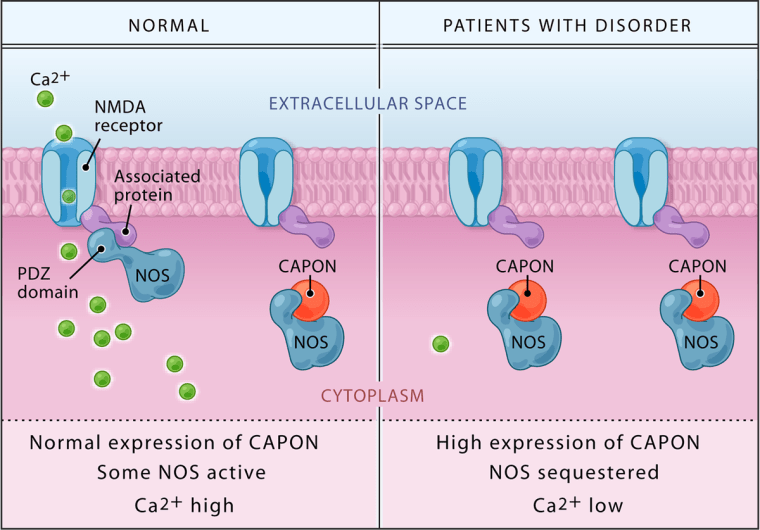
CAPON Binds Nitric Oxide Synthase, Regulating NMDA Receptor–Mediated Glutamate Neurotransmission.

Elimination of Neurotransmitters

A neurotransmitter must be broken down once it reaches the post-synaptic cell to prevent further excitatory or inhibitory signal transduction. This allows new signals to be produced from the adjacent nerve cells. When the neurotransmitter has been secreted into the synaptic cleft, it binds to specific receptors on the postsynaptic cell, thereby generating a postsynaptic electrical signal. The transmitter must then be removed rapidly to enable the postsynaptic cell to engage in another cycle of neurotransmitter release, binding, and signal generation. Neurotransmitters are terminated in three different ways:

  • Diffusion:
    • The neurotransmitter detaches from receptor, drifting out of the synaptic cleft, here it becomes absorbed by glial cells.
  • Enzyme degradation:
    • Special chemicals called enzymes break it down.
    • Usually, astrocytes absorb the excess neurotransmitters and pass them on to enzymes or pump them directly into the presynaptic neuron.
  • Reuptake:
    • Re-absorption of a neurotransmitter into the neuron.
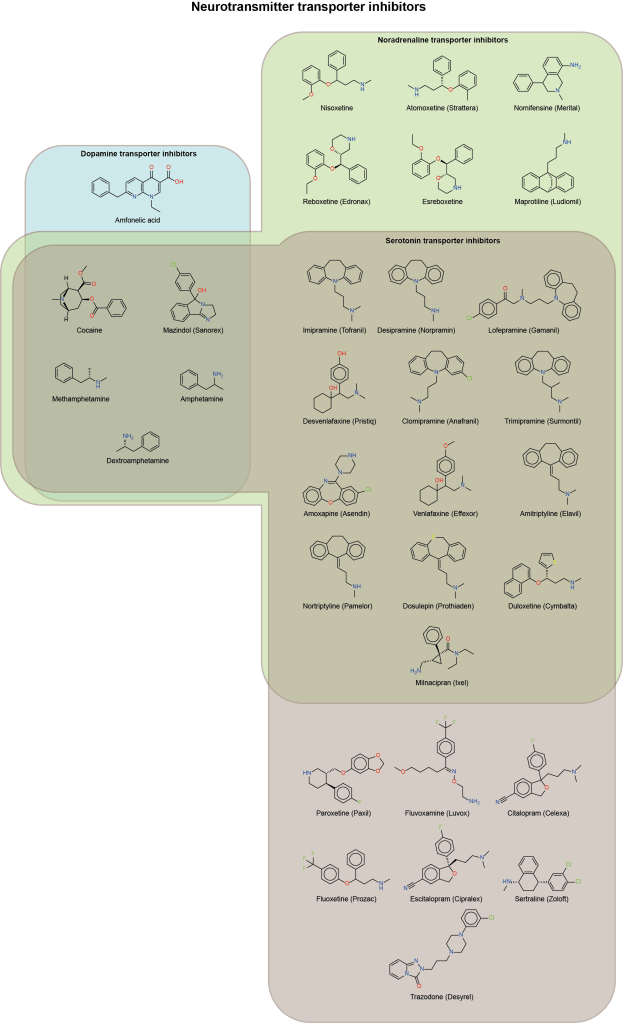
    • Transporters, or membrane transport proteins, pump neurotransmitters from the synaptic cleft back into axon terminals (the presynaptic neuron) where they are stored.

For example, choline is taken up and recycled by the pre-synaptic neuron to synthesize more ACh. Other neurotransmitters such as dopamine are able to diffuse away from their targeted synaptic junctions and are eliminated from the body via the kidneys, or destroyed in the liver. Each neurotransmitter has very specific degradation pathways at regulatory points, which may be targeted by the body’s regulatory system or drugs.

Neurotransmitter Transporter Inhibitors

Neurotransmitter Transporter Inhibitors.

On This Day … 22 July

People (Births)

  • 1881 – Augusta Fox Bronner, American psychologist, specialist in juvenile psychology (d. 1966).
  • 1893 – Karl Menninger, American psychiatrist and author (d. 1990).

People (Deaths)

  • 2012 – George Armitage Miller, American psychologist and academic (b. 1920).

Augusta Fox Bronner

Augusta Fox Bronner (22 July 1881 to 11 December 1966) was an American psychologist, best known for her work in juvenile psychology. She co-directed the first child guidance clinic, and her research shaped psychological theories about the causes behind child delinquency, emphasizing the need to focus on social and environmental factors over inherited traits.

In 1913, while taking a summer course at Harvard University, Bronner met Chicago neurologist and professor William Healy. Healy was equally interested in the study of child delinquency, and subsequently hired Bronner to work as a psychologist at his Chicago Juvenile Psychopathic Institute. In 1914, the institute was renamed the Psychopathic Clinic of the Juvenile Court, and Bronner soon became the assistant director. Bronner and Healy proceeded to shape the study and treatment of delinquent youth, contributing to the scientific understanding that most juvenile crime stemmed from “mental repressions, social conflicts, and family relations”, not hereditary factors. Among other research, Bronner identified that delinquency often arose as a result of placing children with learning disabilities or special abilities in the wrong kinds of educational environments.

In 1917, Bronner and Healy took up new positions at the Judge Baker Foundation of Boston (later the Judge Baker Children’s Centre), a new publicly funded child guidance clinic attached to the Boston juvenile court. Bronner handled most of the psychological examinations of youth, as well as interviews with girls and the youngest children. In 1927, Bronner and Healy wrote the influential Manual of Individual Mental Tests and Testing, a comprehensive guide to assessing a patient’s mental state. Although Healy was originally given the full position of director, with Bronner acting as assistant director, Bronner eventually became co-director of the Foundation in 1930. The Judge Baker Foundation soon became a model for other child guidance clinics across the country, with its co-directors developing important psychiatric practices such as the “team” method, in which psychologists worked together with social workers and physicians to treat a patient.

On 19 November 1930, Bronner and Healy were invited by President Herbert Hoover to attend the White House Conference on Child Health and Protection.

During the 1930s, Bronner also worked briefly in New Haven, Connecticut, as Director of the short-lived Research Institute of Human Relations at Yale University. She was president of the American Orthopsychiatric Association in 1932.

Karl Menninger

Karl Augustus Menninger (22 July 1893 to 18 July 1990) was an American psychiatrist and a member of the Menninger family of psychiatrists who founded the Menninger Foundation and the Menninger Clinic in Topeka, Kansas.

Beginning with an internship in Kansas City, Menninger worked at the Boston Psychopathic Hospital and taught at Harvard Medical School. In 1919, he returned to Topeka where, together with his father, he founded the Menninger Clinic. By 1925, they had attracted enough investors, including brother William C. Menninger, to build the Menninger Sanitarium. His book, The Human Mind, which explained the science of psychiatry, was published in 1930.

The Menninger Foundation was established in 1941. After World War II, Karl Menninger was instrumental in founding the Winter Veterans Administration Hospital, in Topeka. It became the largest psychiatric training centre in the world. He was among the first members of the Society for General Systems Research.

In 1946 he founded the Menninger School of Psychiatry. It was renamed in his honour in 1985 as the Karl Menninger School of Psychiatry and Mental Health Science. In 1952, Karl Targownik, who would become one of his closest friends, joined the Clinic.

George Armitage Miller

George Armitage Miller (03 February 1920 to 22 July 2012) was an American psychologist who was one of the founders of cognitive psychology, and more broadly, of cognitive science. He also contributed to the birth of psycholinguistics. Miller wrote several books and directed the development of WordNet, an online word-linkage database usable by computer programmes. He authored the paper, “The Magical Number Seven, Plus or Minus Two,” in which he observed that many different experimental findings considered together reveal the presence of an average limit of seven for human short-term memory capacity. This paper is frequently cited by psychologists and in the wider culture. Miller won numerous awards, including the National Medal of Science.

Miller began his career when the reigning theory in psychology was behaviourism, which eschewed the study of mental processes and focused on observable behaviour. Rejecting this approach, Miller devised experimental techniques and mathematical methods to analyse mental processes, focusing particularly on speech and language. Working mostly at Harvard University, MIT and Princeton University, he went on to become one of the founders of psycholinguistics and was one of the key figures in founding the broader new field of cognitive science, circa 1978. He collaborated and co-authored work with other figures in cognitive science and psycholinguistics, such as Noam Chomsky. For moving psychology into the realm of mental processes and for aligning that move with information theory, computation theory, and linguistics, Miller is considered one of the great twentieth-century psychologists. A Review of General Psychology survey, published in 2002, ranked Miller as the 20th most cited psychologist of that era.

What is an Atypical Antipsychotic?

Introduction

The atypical antipsychotics (AAP), also known as second generation antipsychotics (SGAs) and serotonin-dopamine antagonists (SDAs), are a group of antipsychotic drugs (antipsychotic drugs in general are also known as major tranquilisers and neuroleptics, although the latter is usually reserved for the typical antipsychotics) largely introduced after the 1970s and used to treat psychiatric conditions.

Some atypical antipsychotics have received regulatory approval (e.g. by the Food and Drug Administration (FDA) of the US, the Therapeutic Goods Administration (TGA) of Australia, the Medical and Healthcare Products Regulatory Agency (MHRA) of the UK) for schizophrenia, bipolar disorder, autism, and as an adjunct in major depressive disorder.

Both generations of medication tend to block receptors in the brain’s dopamine pathways. Atypicals are less likely than haloperidol – the most widely used typical antipsychotic – to cause extrapyramidal motor control disabilities in patients such as unsteady Parkinson’s disease-type movements, body rigidity, and involuntary tremors. However, only a few of the atypicals have been demonstrated to be superior to lesser-used, low-potency first-generation antipsychotics in this regard.

As experience with these agents has grown, several studies have questioned the utility of broadly characterising antipsychotic drugs as “atypical/second generation” as opposed to “first generation,” noting that each agent has its own efficacy and side-effect profile. It has been argued that a more nuanced view in which the needs of individual patients are matched to the properties of individual drugs is more appropriate. Although atypical antipsychotics are thought to be safer than typical antipsychotics, they still have severe side effects, including tardive dyskinesia (a serious movement disorder), neuroleptic malignant syndrome, and increased risk of stroke, sudden cardiac death, blood clots, and diabetes. Significant weight gain may occur. Critics have argued that “the time has come to abandon the terms first-generation and second-generation antipsychotics, as they do not merit this distinction.”

Brief History

The first major tranquiliser or antipsychotic medication, chlorpromazine (Thorazine), a typical antipsychotic, was discovered in 1951 and introduced into clinical practice shortly thereafter. Clozapine (Clozaril), an atypical antipsychotic, fell out of favour due to concerns over drug-induced agranulocytosis. Following research indicating its effectiveness in treatment-resistant schizophrenia and the development of an adverse event monitoring system, clozapine re-emerged as a viable antipsychotic. According to Barker (2003), the three most-accepted atypical drugs are clozapine, risperidone, and olanzapine. However, he goes on to explain that clozapine is usually the last resort when other drugs fail. Clozapine can cause agranulocytosis (a decreased number of white blood cells), requiring blood monitoring for the patient. Despite the effectiveness of clozapine for treatment-resistant schizophrenia, agents with a more favourable side-effect profile were sought-after for widespread use. During the 1990s, olanzapine, risperidone, and quetiapine were introduced, with ziprasidone and aripiprazole following in the early 2000s. The atypical anti-psychotic paliperidone was approved by the FDA in late 2006.

The atypical antipsychotics have found favour among clinicians and are now considered to be first-line treatments for schizophrenia and are gradually replacing the typical antipsychotics. In the past, most researchers have agreed that the defining characteristics of atypical antipsychotics are the decreased incidence of extrapyramidal side effects (EPS) and an absence of sustained prolactin elevation.

The terminology can still be imprecise. The definition of “atypicality” was based upon the absence of extrapyramidal side effects, but there is now a clear understanding that atypical antipsychotics can still induce these effects (though to a lesser degree than typical antipsychotics). Recent literature focuses more upon specific pharmacological actions and less upon categorization of an agent as “typical” or “atypical”. There is no clear dividing line between the typical and atypical antipsychotics therefore categorisation based on the action is difficult.

More recent research is questioning the notion that second-generation antipsychotics are superior to first generation typical anti-psychotics. Using a number of parameters to assess quality of life, Manchester University researchers found that typical antipsychotics were no worse than atypical antipsychotics. The research was funded by the National Health Service (NHS) of the UK. Because each medication (whether first or second generation) has its own profile of desirable and adverse effects, a neuropsychopharmacologist may recommend one of the older (“typical” or first generation) or newer (“atypical” or second generation) antipsychotics alone or in combination with other medications, based on the symptom profile, response pattern, and adverse effects history of the individual patient.

Medical Uses

Atypical antipsychotics are typically used to treat schizophrenia or bipolar disorder. They are also frequently used to treat agitation associated with dementia, anxiety disorder, autism spectrum disorder, and obsessive-compulsive disorder (an off-label use). In dementia, they should only be considered after other treatments have failed and if the patient is a risk to themselves and/or others.

Schizophrenia

The first-line psychiatric treatment for schizophrenia is antipsychotic medication, which can reduce the positive symptoms of schizophrenia in about 8-15 days. Antipsychotics only appear to improve secondary negative symptoms of schizophrenia in the short term and may worsen negative symptoms overall. Overall there is no good evidence that atypical antipsychotics have any therapeutic benefit for treating the negative symptoms of schizophrenia.

There is very little evidence on which to base a risk and benefit assessment of using antipsychotics for long-term treatment.

The choice of which antipsychotic to use for a specific patient is based on benefits, risks, and costs. It is debatable whether, as a class, typical or atypical antipsychotics are better. Both have equal drop-out and symptom relapse rates when typicals are used at low to moderate dosages. There is a good response in 40-50% of patients, a partial response in 30-40%, and treatment resistance (failure of symptoms to respond satisfactorily after six weeks to two of three different antipsychotics) in the remaining 20%. Clozapine is considered a first choice treatment for treatment resistant schizophrenia, especially in the short term; in the longer-terms the risks of adverse effects complicate the choice. In turn, olanzapine, risperidone, and aripiprazole have been recommended for the treatment of first-episode psychosis.

Efficacy in the Treatment of Schizophrenia

The utility of broadly grouping the antipsychotics into first generation and atypical categories has been challenged. It has been argued that a more nuanced view, matching the properties of individual drugs to the needs of specific patients is preferable. While the atypical (second-generation) antipsychotics were marketed as offering greater efficacy in reducing psychotic symptoms while reducing side effects (and extrapyramidal symptoms in particular) than typical medications, the results showing these effects often lacked robustness, and the assumption was increasingly challenged even as atypical prescriptions were soaring. In 2005 the US government body NIMH (National Institute for Mental Health) published the results of a major independent (not funded by the pharmaceutical companies) multi-site, double-blind study (the CATIE project). This study compared several atypical antipsychotics to an older, mid-potency typical antipsychotic, perphenazine, among 1,493 persons with schizophrenia. The study found that only olanzapine outperformed perphenazine in discontinuation rate (the rate at which people stopped taking it due to its effects). The authors noted an apparent superior efficacy of olanzapine to the other drugs in terms of reduction in psychopathology and rate of hospitalizations, but olanzapine was associated with relatively severe metabolic effects such as a major weight gain problem (averaging 9.4 lbs over 18 months) and increases in glucose, cholesterol, and triglycerides. No other atypical studied (risperidone, quetiapine, and ziprasidone) did better than the typical perphenazine on the measures used, nor did they produce fewer adverse effects than the typical antipsychotic perphenazine (a result supported by a meta-analysis by Leucht et al. published in The Lancet), although more patients discontinued perphenazine owing to extrapyramidal effects compared to the atypical agents (8% vs. 2% to 4%, P=0.002). A phase 2 part of this CATIE study roughly replicated these findings. Compliance has not been shown to be different between the two types. Overall evaluations of the CATIE and other studies have led many researchers to question the first-line prescribing of atypicals over typicals, or even to question the distinction between the two classes.

It has been suggested that there is no validity to the term “second-generation antipsychotic drugs” and that the drugs that currently occupy this category are not identical to each other in mechanism, efficacy, and side-effect profiles.

Bipolar Disorder

In bipolar disorder, SGAs are most commonly used to rapidly control acute mania and mixed episodes, often in conjunction with mood stabilizers (which tend to have a delayed onset of action in such cases) such as lithium and valproate. In milder cases of mania or mixed episodes, mood stabiliser monotherapy may be attempted first. SGAs are also used to treat other aspects of the disorder (such as acute bipolar depression or as a prophylactic treatment) as adjuncts or as a monotherapy, depending on the drug. Both quetiapine and olanzapine have demonstrated significant efficacy in all three treatment phases of bipolar disorder. Lurasidone (trade name Latuda) has demonstrated some efficacy in the acute depressive phase of bipolar disorder.

Major Depressive Disorder

In non-psychotic major depressive disorder (MDD), some SGAs have demonstrated significant efficacy as adjunctive agents; and, such agents include:

  • Aripiprazole.
  • Brexpiprazole.
  • Olanzapine.
  • Quetiapine.
  • Ziprasidone.

Whereas only quetiapine has demonstrated efficacy as a monotherapy in non-psychotic MDD. Olanzapine/fluoxetine is an efficacious treatment in both psychotic and non-psychotic MDD.

Aripiprazole, brexpiprazole, olanzapine, and quetiapine have been approved as adjunct treatment for MDD by the FDA in the United States. Quetiapine and lurasidone have been approved, as monotherapies, for bipolar depression, but as of present, lurasidone has not been approved for MDD.

Autism

Both risperidone and aripiprazole have received FDA labelling for autism.

Dementia and Alzheimer’s Disease

Between May 2007 and April 2008, Dementia and Alzheimer’s together accounted for 28% of atypical antipsychotic use in patients aged 65 or older. The FDA requires that all atypical antipsychotics carry a black box warning that the medication has been associated with an increased risk of mortality in elderly patients. In 2005, the FDA issued an advisory warning of an increased risk of death when atypical antipsychotics are used in dementia. In the subsequent 5 years, the use of atypical antipsychotics to treat dementia decreased by nearly 50%.

Adverse Effects

The side effects reportedly associated with the various atypical antipsychotics vary and are medication-specific. Generally speaking, atypical antipsychotics are widely believed to have a lower likelihood for the development of tardive dyskinesia than the typical antipsychotics. However, tardive dyskinesia typically develops after long-term (possibly decades) use of antipsychotics. It is not clear if atypical antipsychotics, having been in use for a relatively short time, produce a lower incidence of tardive dyskinesia.

Some of the other side effects that have been suggested is that atypical antipsychotics increase the risk of cardiovascular disease. The research that Kabinoff et al. found that the increase in cardiovascular disease is seen regardless of the treatment they receive, instead it is caused by many different factors such as lifestyle or diet.

Sexual side effects have also been reported when taking atypical antipsychotics. In males antipsychotics reduce sexual interest, impair sexual performance with the main difficulties being failure to ejaculate. In females there may be abnormal menstrual cycles and infertility. In both males and females the breasts may become enlarged and a fluid will sometimes ooze from the nipples. Sexual adverse effects caused by some anti-psychotics are a result of an increase of prolactin. Sulpiride and Amisulpiride, as well as Risperdone and paliperidone (to a lesser extent) cause a high increase of prolactin.

In April 2005, the FDA issued an advisory and subsequent black box warning regarding the risks of atypical anti psychotic use among elderly patients with dementia. The FDA advisory was associated with decreases in the use of atypical antipsychotics, especially among elderly patients with dementia. Subsequent research reports confirmed the mortality risks associated with the use of both conventional and atypical antipsychotics to treat patients with dementia. Consequently, in 2008 the FDA issued although a black box warning for classical neuroleptics. Data on treatment efficacies are strongest for atypical antipsychotics. Adverse effects in patients with dementia include an increased risk of mortality and cerebrovascular events, as well as metabolic effects, extrapyramidal symptoms, falls, cognitive worsening, cardiac arrhythmia, and pneumonia. Conventional antipsychotics may pose an even greater safety risk. No clear efficacy evidence exists to support the use of alternative psychotropic classes (e.g. antidepressants, anticonvulsants).

Atypical antipsychotics may also cause anhedonia.

Drug-Induced OCD

Many different types of medication can create/induce pure OCD in patients that have never had symptoms before. A new chapter about OCD in the DSM-5 (2013) now specifically includes drug-induced OCD.

Atypical antipsychotics (second generation antipsychotics), such as olanzapine (Zyprexa), have been proven to induce de-novo OCD in patients.

Tardive Dyskinesia

All of the atypical antipsychotics warn about the possibility of tardive dyskinesia in their package inserts and in the PDR. It is not possible to truly know the risks of tardive dyskinesia when taking atypicals, because tardive dyskinesia can take many decades to develop and the atypical antipsychotics are not old enough to have been tested over a long enough period of time to determine all of the long-term risks. One hypothesis as to why atypicals have a lower risk of tardive dyskinesia is because they are much less fat-soluble than the typical antipsychotics and because they are readily released from D2 receptor and brain tissue. The typical antipsychotics remain attached to the D2 receptors and accumulate in the brain tissue which may lead to TD.

Both typical and atypical antipsychotics can cause tardive dyskinesia. According to one study, rates are lower with the atypicals at 3.9% per year as opposed to the typicals at 5.5% per year.

Metabolism

Recently, metabolic concerns have been of grave concern to clinicians, patients and the FDA. In 2003, the FDA required all manufacturers of atypical antipsychotics to change their labelling to include a warning about the risks of hyperglycaemia and diabetes with atypical antipsychotics. It must also be pointed out that although all atypicals must carry the warning on their labelling, some evidence shows that atypicals are not equal in their effects on weight and insulin sensitivity. The general consensus is that clozapine and olanzapine are associated with the greatest effects on weight gain and decreased insulin sensitivity, followed by risperidone and quetiapine. Ziprasidone and aripiprazole are thought to have the smallest effects on weight and insulin resistance, but clinical experience with these newer agents is not as developed as that with the older agents. The mechanism of these adverse effects is not completely understood but it is believed to result from a complex interaction between a number of pharmacologic actions of these drugs. Their effects on weight are believed to mostly derive from their actions on the H1 and 5-HT2C receptors, while their effects on insulin sensitivity are believed to be the result of a combination of their effects on body weight (as increased body mass is known to be a risk factor for insulin resistance) and their antagonistic effects on the M3receptor. Some of the newer agents, however, such as risperidone and its metabolite paliperidone, ziprasidone, lurasidone, aripiprazole, asenapine and iloperidone have clinically-insignificant effects on the M3 receptor and appear to carry a lower risk of insulin resistance. Whereas clozapine, olanzapine and quetiapine (indirectly via its active metabolite, norquetiapine) all antagonise the M3 receptor at therapeutic-relevant concentrations.

Recent evidence suggests a role of the α1 adrenoceptor and 5-HT2A receptor in the metabolic effects of atypical antipsychotics. The 5-HT2A receptor, however, is also believed to play a crucial role in the therapeutic advantages of atypical antipsychotics over their predecessors, the typical antipsychotics.

A study by Sernyak and colleagues found that the prevalence of diabetes in atypical antipsychotic treatments was statistically significantly higher than that of conventional treatment. The authors of this study suggest that it is a causal relationship the Kabinoff et al. suggest the findings only suggest a temporal association. Kabinoff et al. suggest that there is insufficient data from large studies to demonstrate a consistent or significant difference in the risk of insulin resistance during treatment with various atypical antipsychotics.

Discontinuation

The British National Formulary recommends a gradual withdrawal when discontinuing antipsychotics to avoid acute withdrawal syndrome or rapid relapse. Symptoms of withdrawal commonly include nausea, vomiting, and loss of appetite. Other symptoms may include restlessness, increased sweating, and trouble sleeping. Less commonly there may be a feeling of the world spinning, numbness, or muscle pains. Symptoms generally resolve after a short period of time.

There is tentative evidence that discontinuation of antipsychotics can result in psychosis. It may also result in reoccurrence of the condition that is being treated. Rarely tardive dyskinesia can occur when the medication is stopped.

Pharmacology

Pharmacodynamics

The atypical antipsychotics integrate with the serotonin (5-HT), norepinephrine (α, β), and dopamine (D) receptors in order to effectively treat schizophrenia.

D2 Receptor: Hyperactive dopaminergic activity on D2 receptors in the mesolimbic pathway is responsible for the positive symptoms of schizophrenia (hallucinations, delusions, paranoia). After taking an antipsychotic, antagonism of D2 receptors occurs throughout the entire brain, leading to a number of deleterious side effects from D2 receptor antagonism throughout the entire dopamine pathway system. Unfortunately, it’s not possible to affect D2 receptors only in the mesolimbic pathway. Fortunately, 5-HT2A receptor antagonism reverses these side effects to some extent. Reducing D2 dopaminergic activity in the mesolimbic pathway also results in an anhedonic effect, reducing pleasure, motivation, and the salience of one’s life experience. In the mesocortical pathway to the DLPFC and VMPFC, endogenous D2 receptor dopamine activity is sometimes low in schizophrenia, resulting in cognitive, affective, and, broadly, the negative symptoms of schizophrenia. D2 receptor antagonism here further compounds these problems. In the nigrostriatal pathway, D2 receptor antagonism results in extrapyramidal symptoms. If this antagonism occurs long enough, symptoms of EPS may become permanent, even if antipsychotic use is discontinued. In the tuberoinfundibular pathway, D2 receptor antagonism results in elevated prolactin. If prolactin levels become high enough, hyperprolactinaemia may occur, resulting in sexual dysfunction, weight gain, more rapid demineralisation of bones, and possibly galactorrhea and amenorrhea.

5-HT2A Receptor: When serotonin is released on to postsynaptic 5-HT2A receptors, the dopamine neuron is inhibited, thus acting as a brake on dopamine release. This brake is disrupted through action of a 5-HT2A antagonist, which disinhibits the dopamine neuron, stimulating dopamine release. The result of this is that dopamine competes with antipsychotic D2 antagonistic action at D2 receptors, thereby reducing antagonistic binding there and eliminating or lowering D2 antagonistic effects in several pathways of the dopamine system. In the nigrostratial pathway, it reduces EPS. In the tuberoinfundibular pathway, it reduces or eliminates prolactin elevation. Dopamine release in the mesolimbic pathway from 5-HT2A antagonism does not appear to be as robust as in the other pathways of the dopamine system, thereby accounting for why atypical antipsychotics still retain part of their efficacy against the positive symptoms of schizophrenia through their D2 antagonism. When 5-HT2A antagonistic agent particles occupy 5-HT2A receptors in the mesocortical pathway and in the prefrontal cortex, the negative symptoms of schizophrenia, affective symptoms, and cognitive deficits and abnormalities are treated and reduced. Furthermore, 5-HT2A receptor antagonism blocks the serotonergic excitation of cortical pyramidal cells, reducing glutamate release, which in turn lowers hyperactive dopaminergic D2 receptor activity in the mesolimbic pathway, reducing or eliminating the positive symptoms of schizophrenia.

Some effects of 5-HT1A receptor activation include decreased aggressive behaviour/ideation, increased sociability, and decreased anxiety and depression. 5-HT2C activation blocks dopamine and inhibits norepinephrine release. Blockade of the 5-HT2C receptor increases serotonin, releasing norepinephrine and dopamine within the brain. But neuronal reuptake of norepinephrine is limited sharply by some antipsychotics, for example ziprasidone. Increased norepinephrine can cause increased glucose levels, which is to say blood sugar levels. Increased blood sugar levels by increased norepinephrine causes hunger in many humans, which is why weight gain occurs with some antipsychotics if the norepinephrine is not inhibited. Inhibition of norepinephrine stabilises mood in humans. 5-HT6 receptor antagonists improve cognition, learning, and memory. The 5-HT7 receptor is very potent for the mitigation of bipolar conditions and also yields an antidepressant effect. The antipsychotics asenapine, lurasidone, risperidone, and aripiprazole are very potent at the 5-HT7 receptor. Antagonistic affinity for the H1 receptor also has an antidepressant effect. H1 antagonism blocks serotonin and norepinephrine reuptake. Patients with increased histamine levels have been observed to have lower serotonin levels. However, the H1 receptor is linked to weight gain. To have partial agonism at the 5-HT1A receptor can yield absence of weight gain in an antipsychotic. This is very relevant for ziprasidone, but it creates a risk for a prolonged QTc interval. On the other hand, blockade of the 5-HT3 receptor removes the risk for a prolonged QTc interval, but then creates a larger risk for weight gain. Relation to the 5-HT3 receptor increases caloric uptake and glucose, which is seen in clozapine and olanzapine. Other ways for dopamine to resolve is to have agonism at both the D2 receptor and 5-HT1A receptor, which normalises the dopamine level in the brain. This occurs with haloperidol and aripiprazole.

Whether the anhedonic, loss of pleasure and motivation effect resulting from dopamine insufficiency or blockade at D2 receptors in the mesolimbic pathway, which is mediated in some part by antipsychotics (and despite dopamine release in the mesocortical pathway from 5-HT2A antagonism, which is seen in atypical antipsychotics), or the positive mood, mood stabilisation, and cognitive improvement effect resulting from atypical antipsychotic serotonergic activity is greater for the overall quality of life effect of an atypical antipsychotic is a question that is variable between individual experience and the atypical antipsychotic(s) being used.

Terms

Inhibition. Disinhibition: The opposite process of inhibition, the turning on of a biological function. Release: Causes the appropriate neurotransmitters to be discharged in vesicles into the synapse where they attempt to bind to and activate a receptor. Downregulation and Upregulation.

Pharmacokinetics

Atypical antipsychotics are most commonly administered orally. Antipsychotics can also be injected, but this method is not as common. They are lipid-soluble, are readily absorbed from the digestive tract, and can easily pass the blood-brain barrier and placental barriers. Once in the brain, the antipsychotics work at the synapse by binding to the receptor. Antipsychotics are completely metabolised in the body and the metabolites are excreted in urine. These drugs have relatively long half-lives. Each drug has a different half-life, but the occupancy of the D2 receptor falls off within 24 hours with atypical antipsychotics, while lasting over 24 hours for the typical antipsychotics. This may explain why relapse into psychosis happens quicker with atypical antipsychotics than with typical antipsychotics, as the drug is excreted faster and is no longer working in the brain. Physical dependence with these drugs is very rare. However, if the drug is abruptly discontinued, psychotic symptoms, movement disorders, and sleep difficulty may be observed. It is possible that withdrawal is rarely seen because the AAP are stored in body fat tissues and slowly released.

Society and Culture

Between May 2007 and April 2008, 5.5 million Americans filled at least one prescription for an atypical antipsychotic. In patients under the age of 65, 71% of patients were prescribed an atypical antipsychotic to treat Schizophrenia or Bipolar Disorder where this dropped to 38% in patients aged 65 or above.

What is Zolpidem?

Introduction

Zolpidem, sold under the brand name Ambien, among others, is a medication primarily used for the short-term treatment of sleeping problems. Guidelines recommend that it be used only after cognitive behavioural therapy (CBT) for insomnia and behavioural changes, such as sleep hygiene, have been tried. It decreases the time to sleep onset by about fifteen minutes and at larger doses helps people stay asleep longer. It is taken by mouth and is available in conventional tablets, sublingual tablets, or oral spray.

Common side effects include daytime sleepiness, headache, nausea, and diarrhoea. Other side effects include memory problems, hallucinations, and substance abuse. The previously recommended dose was decreased in 2013, by the US Food and Drug Administration (FDA), to the immediate-release 10 mg for men, and 5 mg for women, in an attempt to reduce next-day somnolence. Newer extended-release formulations include the 6.25 mg for women, and 12.5 mg or 6.25 mg for men, which also cause next-day somnolence when used in higher doses. Additionally, driving the next morning is not recommended with either higher doses or the long-acting formulation. While flumazenil, a GABAA-receptor antagonist, can reverse zolpidem’s effects, usually supportive care is all that is recommended in overdose.

Zolpidem is a nonbenzodiazepine Z drug which acts as a sedative and hypnotic. Zolpidem is a GABAA receptor agonist of the imidazopyridine class. It works by increasing GABA effects in the central nervous system by binding to GABAA receptors at the same location as benzodiazepines. It generally has a half-life of two to three hours. This, however, is increased in those with liver problems.

Zolpidem was approved for medical use in the United States in 1992. It became available as a generic medication in 2007. Zolpidem is a Schedule IV controlled substance under the Controlled Substances Act of 1970 (CSA). More than ten million prescriptions are filled a year in the United States, making it one of the most commonly used treatments for sleeping problems. In 2018, it was the 60th most commonly prescribed medication in the United States, with more than 12 million prescriptions.

Brief History

Zolpidem was used in Europe starting in 1988, and was brought to market there by Synthelabo. Synthalabo and Searle collaborated to bring it to market in the US, and it was approved in the United States in 1992 under the brand name “Ambien”. It became available as a generic medication in 2007.

In 2015, the American Geriatrics Society said that zolpidem, eszopiclone, and zaleplon met the Beers criteria and should be avoided in individuals 65 and over “because of their association with harms balanced with their minimal efficacy in treating insomnia.” The AGS stated the strength of the recommendation that older adults avoid zolpidem is “strong” and the quality of evidence supporting it is “moderate.”

Medical Uses

Zolpidem is labelled for short-term (usually about two to six weeks) treatment of insomnia at the lowest possible dose. It may be used for both improving sleep onset, sleep onset latency, and staying asleep.

Guidelines from the UK’s National Institute for Health and Care Excellence (NICE), the European Sleep Research Society, and the American College of Physicians recommend medication for insomnia (including possibly zolpidem) only as a second line treatment after non-pharmacological treatment options have been tried (e.g. CBT for insomnia). This is based in part on a 2012 review which found that zolpidem’s effectiveness is nearly as much due to psychological effects as to the medication itself.

A lower-dose version (3.5 mg for men and 1.75 mg for women) is given as a tablet under the tongue and used for middle-of-the-night awakenings. It can be taken if there are at least 4 hours between the time of administration and when the person must be awake.

Contraindications

Zolpidem should not be taken by people with obstructive sleep apnoea, myasthenia gravis, severe liver disease, respiratory depression; or by children, or people with psychotic illnesses. It should not be taken by people who are or have been addicted to other substances.

Use of zolpidem may impair driving skills with a resultant increased risk of road traffic accidents. This adverse effect is not unique to zolpidem, but also occurs with other hypnotic drugs. Caution should be exercised by motor vehicle drivers. In 2013, the FDA recommended the dose for women be reduced and that prescribers should consider lower doses for men due to impaired function the day after taking the drug.

Zolpidem should not be prescribed to older people, who are more sensitive to the effects of hypnotics including zolpidem and are at an increased risk of falls and adverse cognitive effects, such as delirium and neurocognitive disorder.

Zolpidem has not been assigned to a pregnancy category by the FDA. Animal studies have revealed evidence of incomplete ossification and increased intrauterine foetal death at doses greater than seven times the maximum recommended human dose or higher; however, teratogenicity was not observed at any dose level. There are no controlled data in human pregnancy. In one case report, zolpidem was found in cord blood at delivery. Zolpidem is recommended for use during pregnancy only when benefits outweigh risks.

Adverse Effects

The most common adverse effects of:

  • Short-term use include headache (reported by 7% of people in clinical trials), drowsiness (2%), dizziness (1%), and diarrhoea (1%); and
  • Long-term use included drowsiness (8%), dizziness (5%), allergy (4%), sinusitis (4%), back pain (3%), diarrhoea (3%), drugged feeling (3%), dry mouth (3%), lethargy (3%), sore throat (3%), abdominal pain (2%), constipation (2%), heart palpitations (2%), lightheadedness (2%), rash (2%), abnormal dreams (1%), amnesia (1%), chest pain (1%), depression (1%), flu-like symptoms (1%), and sleep disorder (1%).

Zolpidem increases risk of depression, falls and bone fracture, poor driving, suppressed respiration, and has been associated with an increased risk of death. Upper and lower respiratory infections are also common (experienced by between 1 and 10% of people).

Residual ‘hangover’ effects, such as sleepiness and impaired psychomotor and cognitive function, may persist into the day following night-time administration. Such effects may impair the ability of users to drive safely and increase risks of falls and hip fractures. Around 3% of people taking zolpidem are likely to break a bone as a result of a fall due to impaired coordination caused by the drug.

Some users have reported unexplained sleepwalking while using zolpidem, as well as sleep driving, night eating syndrome while asleep, and performing other daily tasks while sleeping. Research by Australia’s National Prescribing Service found these events occur mostly after the first dose taken, or within a few days of starting therapy. In February 2008, the Australian Therapeutic Goods Administration attached a boxed warning concerning this adverse effect.

Tolerance, Dependence, and Withdrawal

As zolpidem is associated with drug tolerance and substance dependence, its prescription guidelines are only for severe insomnia and short periods of use at the lowest effective dose. Tolerance to the effects of zolpidem can develop in some people in just a few weeks. Abrupt withdrawal may cause delirium, seizures, or other adverse effects, especially if used for prolonged periods and at high doses. When drug tolerance and physical dependence to zolpidem develop, treatment usually entails a gradual dose reduction over a period of months to minimise withdrawal symptoms, which can resemble those seen during benzodiazepine withdrawal. Failing that, an alternative method may be necessary for some people, such as a switch to a benzodiazepine equivalent dose of a longer-acting benzodiazepine drug, as for diazepam or chlordiazepoxide, followed by a gradual reduction in dose of the long-acting benzodiazepine. In people who are difficult to treat, an inpatient flumazenil administration allows for rapid competitive binding of flumazenil to GABAA-receptor as an antagonist, thus stopping (a effectively detoxifying) zolpidem from being able to bind as an agonist on GABAA-receptor; slowly drug dependence or addiction to zolpidem will wane.

Alcohol has cross tolerance with GABAA receptor positive allosteric modulators, such as the benzodiazepines and the nonbenzodiazepine drugs. For this reason, alcoholics or recovering alcoholics may be at increased risk of physical dependency or abuse of zolpidem. It is not typically prescribed in people with a history of alcoholism, recreational drug use, physical dependency, or psychological dependency on sedative-hypnotic drugs. A 2014 review found evidence of drug-seeking behaviour, with prescriptions for zolpidem making up 20% of falsified or forged prescriptions.

Rodent studies of the tolerance-inducing properties have shown that zolpidem has less tolerance-producing potential than benzodiazepines, but in primates, the tolerance-producing potential of zolpidem was the same as seen with benzodiazepines.

Overdose

Overdose can lead to coma or death. When overdose occurs, there are often other drugs in the person’s system.

Zolpidem overdose can be treated with the GABAA receptor antagonist flumazenil, which displaces zolpidem from its binding site on the GABAA receptor to rapidly reverse the effects of the zolpidem. It is unknown if dialysis is helpful.

Detection in Body Fluids

Zolpidem may be quantitated in blood or plasma to confirm a diagnosis of poisoning in people who are hospitalized, to provide evidence in an impaired driving arrest, or to assist in a medicolegal death investigation. Blood or plasma zolpidem concentrations are usually in a range of 30-300 μg/l in persons receiving the drug therapeutically, 100-700 μg/l in those arrested for impaired driving, and 1000-7000 μg/l in victims of acute overdosage. Analytical techniques, in general, involve gas or liquid chromatography.

Pharmacology

Mechanism of Action

Zolpidem is a ligand of high-affinity positive modulator sites of GABAA receptors, which enhances GABAergic inhibition of neurotransmission in the central nervous system. It selectively binds to α1 subunits of this pentameric ion channel. Accordingly, it has strong hypnotic properties and weak anxiolytic, myorelaxant, and anticonvulsant properties. Opposed to diazepam, zolpidem is able to bind to binary αβ GABA receptors, where it was shown to bind to the α1–α1 subunit interface. Zolpidem has about 10-fold lower affinity for the α2- and α3- subunits than for α1, and no appreciable affinity for α5 subunit-containing receptors. ω1 type GABAA receptors are the α1-containing GABAA receptors and are found primarily in the brain, the ω2 receptors are those that contain the α2-, α3-, α4-, α5-, or α6 subunits, and are found primarily in the spine. Thus, zolpidem favours binding to GABAA receptors located in the brain rather the spine. Zolpidem has no affinity for γ1 and γ3 subunit-containing receptors and, like the vast majority of benzodiazepine-like drugs, it lacks affinity for receptors containing α4 and α6. Zolpidem modulates the receptor presumably by inducing a receptor conformation that enables an increased binding strength of the orthosteric agonist GABA towards its cognate receptor without affecting desensitization or peak currents.

Like zaleplon, zolpidem may increase slow wave sleep but cause no effect on stage 2 sleep. A meta-analysis that compared benzodiazepines against nonbenzodiazepines has shown few consistent differences between zolpidem and benzodiazepines in terms of sleep onset latency, total sleep duration, number of awakenings, quality of sleep, adverse events, tolerance, rebound insomnia, and daytime alertness.

Interactions

People should not consume alcohol while taking zolpidem, and should not be prescribed opioid drugs nor take such illicit drugs recreationally. Opioids can also increase the risk of becoming psychologically dependent on zolpidem. Use of opioids with zolpidem increases the risk of respiratory depression and death. the FDA is advising that the opioid addiction medications buprenorphine and methadone should not be withheld from patients taking benzodiazepines or other drugs that depress the central nervous system (CNS).

Next day sedation can be worsened if people take zolpidem while they are also taking antipsychotics, other sedatives, anxiolytics, antidepressant agents, antiepileptic drugs, and antihistamines. Some people taking antidepressants have had visual hallucinations when they also took zolpidem.

Cytochrome P450 inhibitors, particularly CYP3A4 and CYP1A2 inhibitors, fluvoxamine and ciprofloxacin will increase the effects of a given dose of zolpidem.

Cytochrome P450 activators like St. John’s Wort may decrease the activity of zolpidem.

Chemistry

Three syntheses of zolpidem are common. 4-methylacetophenone is used as a common precursor. This is brominated and reacted with 2-amino-5-methylpyridine to give the imidazopyridine. From here the reactions use a variety of reagents to complete the synthesis, either involving thionyl chloride or sodium cyanide. These reagents are challenging to handle and require thorough safety assessments. Though such safety procedures are common in industry, they make clandestine manufacture difficult.

A number of major side-products of the sodium cyanide reaction have been characterised and include dimers and mannich products.

Society and Culture

Prescriptions in the US for all sleeping pills (including zolpidem) steadily declined from around 57 million tablets in 2013, to around 47 million in 2017, possibly in relation to concern about prescribing addictive drugs in the midst of the opioid crisis.

Military Use

The United States Air Force uses zolpidem as one of the hypnotics approved as a “no-go pill” (with a six-hour restriction on subsequent flight operation) to help aviators and special duty personnel sleep in support of mission readiness. (The other hypnotics used are temazepam and zaleplon.) “Ground tests” are required prior to authorization issued to use the medication in an operational situation.

Recreational Use

Zolpidem has potential for either medical misuse when the drug is continued long term without or against medical advice, or for recreational use when the drug is taken to achieve a “high”. The transition from medical use of zolpidem to high-dose addiction or drug dependence can occur with use, but some believe it may be more likely when used without a doctor’s recommendation to continue using it, when physiological drug tolerance leads to higher doses than the usual 5 mg or 10 mg, when consumed through inhalation or injection, or when taken for purposes other than as a sleep aid. Recreational use is more prevalent in those having been dependent on other drugs in the past, but tolerance and drug dependence can still sometimes occur in those without a history of drug dependence. Chronic users of high doses are more likely to develop physical dependence on the drug, which may cause severe withdrawal symptoms, including seizures, if abrupt withdrawal from zolpidem occurs.

Other drugs, including the benzodiazepines and zopiclone, are also found in high numbers of suspected drugged drivers. Many drivers have blood levels far exceeding the therapeutic dose range, suggesting a high degree of excessive-use potential for benzodiazepines, zolpidem and zopiclone. US Congressman Patrick J. Kennedy says that he was using zolpidem (Ambien) and promethazine (Phenergan) when caught driving erratically at 3 a.m. “I simply do not remember getting out of bed, being pulled over by the police, or being cited for three driving infractions,” Kennedy said.

Nonmedical use of zolpidem is increasingly common in the US, Canada, and the UK. Some users have reported decreased anxiety, mild euphoria, perceptual changes, visual distortions, and hallucinations. Zolpidem was used by Australian Olympic swimmers at the London Olympics in 2012, leading to controversy.

Regulation

For the stated reason of its potential for recreational use and dependence, zolpidem (along with the other benzodiazepine-like Z-drugs) is a Schedule IV substance under the Controlled Substances Act in the US. The United States patent for zolpidem was held by the French pharmaceutical corporation Sanofi-Aventis.

Use in Crime

The Z-drugs including zolpidem have been used as date rape drugs. Zolpidem is available legally by prescription, and broadly prescribed unlike other date rape drugs: gamma-hydroxybutyrate (GHB), which is used to treat a rare form of narcolepsy, or flunitrazepam (Rohypnol), which is only prescribed as a second-line choice for insomnia. Zolpidem can typically be detected in bodily fluids for 36 hours, though it may be possible to detect it by hair testing much later, which is due to the short elimination half-life of 2.5-3 hours. This use of the drug was highlighted during proceedings against Darren Sharper, who was accused of using the tablets he was prescribed to facilitate a series of rapes.

Sleepwalking

Zolpidem received widespread media coverage in Australia after the death of a student who fell 20 metres (66 ft) from the Sydney Harbour Bridge while under the influence of zolpidem.

Brands

As of September 2018, zolpidem was marketed under many brands: Adorma, Albapax, Ambien, Atrimon, Belbien, Bikalm, Cymerion, Dactive, Dalparan, Damixan, Dormeben, Dormilam, Dormilan, Dormizol, Eanox, Edluar, Flazinil, Fulsadem, Hypnogen, Hypnonorm, Intermezzo, Inzofresh, Ivadal, Ivedal, Le Tan, Lioram, Lunata, Medploz, Mondeal, Myslee, Nasen, Niterest, Nocte, Nottem, Noxidem, Noxizol, Nuo Bin, Nytamel, Nyxe, Olpitric, Onirex, Opsycon, Patz, Polsen, Sanval, Semi-Nax, Sleepman, Somex, Somidem, Somit, Somnil, Somnipax, Somnipron, Somno, Somnogen, Somnor, Sonirem, Sove, Soza, Stilnoct, Stilnox, Stilpidem, Stimin, Sublinox, Sucedal, Sumenan, Vicknox, Viradex, Xentic, Zasan, Zaviana, Ziohex, Zipsoon, Zodem, Zodenox, Zodium, Zodorm, Zolcent, Zoldem, Zoldorm, Zoldox, Zolep, Zolfresh, Zolip, Zolman, Zolmia, Zolnox, Zolnoxs, Zolodorm, Zolnyt, Zolpeduar, Zolpel, Zolpi, Zolpi-Q, Zolpic, Zolpidem, Zolpidem tartrate, Zolpidemi tartras, Zolpidemtartraat, Zolpidemtartrat, Zolpidemum, Zolpigen, Zolpihexal, Zolpimist, Zolpineo, Zolpinox, Zolpirest, Zolpistar, Zolpitop, Zolpitrac, Zolpium, Zolprem, Zolsana, Zolta, Zoltar, Zolway, Zomnia, Zonadin, Zonoct, Zopid, Zopidem, Zopim, and Zorimin.

Research

While cases of zolpidem improving aphasia in people with stroke have been described, use for this purpose has unclear benefit. Zolpidem has also been studied in persistent vegetative states with unclear effect. A 2017 systematic review concluded that while there is preliminary evidence of benefit for treating disorders of movement and consciousness other than insomnia (including Parkinson’s disease), more research is needed. More recent research has found zolpidem treatment to be effective in the short term, but only in a small proportion of cases (estimated at around 5%) and only when the brain injury is of a specific type. Tolerance to the beneficial effects also develops rapidly, and so for these reasons while zolpidem may sometimes be used as a “last resort” treatment, it has numerous disadvantages and research continues into novel treatments that might provide the same kind of benefits in a larger proportion of patients, and with a more sustained benefit.

Animal studies in FDA files for zolpidem showed a dose dependent increase in some types of tumours, although the studies were too small to reach statistical significance. Some observational epidemiological studies have found a correlation between use of benzodiazepines and certain hypnotics including zolpidem and an increased risk of getting cancer, but others have found no correlation; a 2017 meta-analysis of such studies found a correlation, stating that use of hypnotics was associated with a 29% increased risk of cancer, and that “zolpidem use showed the strongest risk of cancer” with an estimated 34% increased risk, but noted that the results were tentative because some of the studies failed to control for confounders like cigarette smoking and alcohol use, and some of the studies analysed were case-controls, which are more prone to some forms of bias. Similarly, a meta-analysis of benzodiazepine drugs also shows their use is associated with increased risk of cancer.