Posts

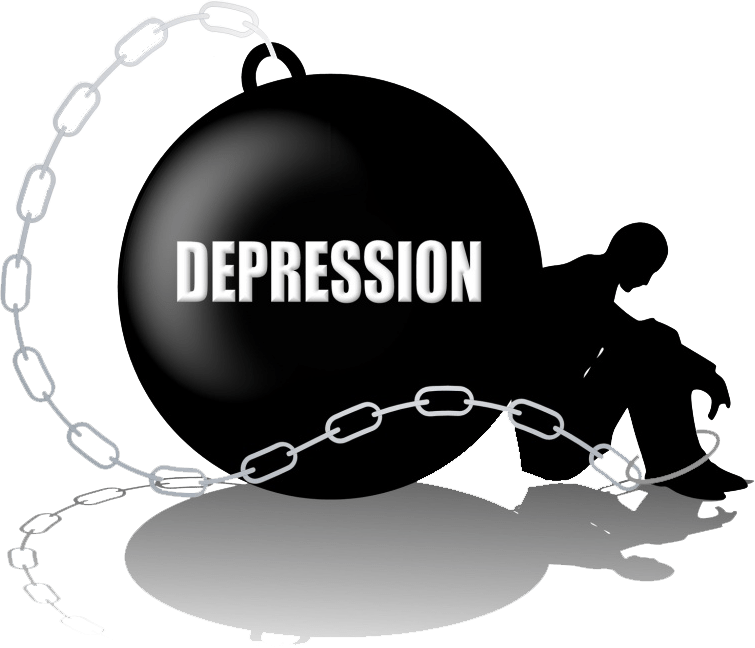
Does Depression Alter Brain Structure?

Research suggests our brain looks different if we have depression.

These differences seem to be caused by depression, rather than precede it.

When neuroscientists compare the brains of individuals with and without depression, there are common dissimilarities.

For example, individuals with depression tend to have a smaller hippocampus, a brain region important in forming memories.

However, it has been difficult to work out whether such differences cause the symptoms of depression or result from the disorder.

To try and find out which, Heather Whalley and her colleagues at the University of Edinburgh made use of two huge genetic databases.

  • Consumer genetic testing company 23andMe holds information on the DNA and depressive symptoms of tens of thousands of individuals; and
  • The UK Biobank collects DNA, lifestyle and behaviour questionnaires and brain scans from thousands more.

Whalley and colleagues used this, as well as earlier research, to create a polygenic risk score (PRS) for depression (A PRS assigns weight to various genetic factors thought to contribute to the risk of a condition).

They made sure the PRS worked by testing it in a separate group of 11,214 people. They then assessed the brain scans and behaviour records of individuals with a PRS that put them at risk of depression. Individuals with higher genetic risk tended to have less white matter in their brains, and it did not seem to function as well. White matter is the tissue that makes up most of our brains.

Whalley and her colleagues then analysed how closely both brain structure and symptoms of depression were related to genetic factors.

Genes are present from birth, so if genetic factors are more closely linked to symptoms, for example, that suggests the symptoms were present before the brain structure differences.

They found that many brain differences appear to be caused by depression. There was one exception: differences in a brain structure called the anterior thalamic radiation appear to come before depression (Shen, Howard & Adams, 2019).

This suggests the genes that puts an individual at risk of depression do so via this structure.

Whalley’s team also found that a combination of childhood trauma and poverty leaves individuals at greatest risk of depression.

Behaviours linked to depression could end up impacting the brain’s white matter connections more generally. It might be that patients with depression do not use some of the brain connections that others would use.

Being socially withdrawn, or focusing more on the negative than the positive, could have an effect. For example, it is known that if we do not use a pathway in the brain, that pathway starts to shrink.

References

Hamzelou, J. (2019) Depression Alters Brain Structure. New Scientist. 19 October 2019, pp.16.

Shen, X., Howard, D.M. & Adams, M.J. (2019) A phenome-wide association and Mendelian Randomisation study of polygenic risk for depression in UK Biobank. Available from World Wide Web: https://www.biorxiv.org/content/10.1101/617969v1. [Accessed: 31 January, 2020].


Can CBD Capsules Treat Cannabis Addiction?

For individuals who are addicted to cannabis, one treatment option may be, paradoxically, to take pills that contain an extract of the drug.

The first test of the idea has found that indiviudals taking capsules of this extract, known as cannabidiol (CBD), nearly halved the amount of cannabis they smoked, according to recent research.

Cannabis is often seen as a soft drug, but according to one estimate about one in 10 people can become addicted, getting withdrawal symptoms such as anxiety when they try to stop using it.

The number of individuals seeking treatment because they can not quit smoking cannabis has been rising in the past decade, linked with use of the more potent form known as skunk.

There are two main psychoactive substances in cannabis:

  • The first is CBD; and
  • The second is the compound is tetrahydrocannabinol (THC).

THC is responsible for the drug’s high and, while THC tends to increase anxiety, CBD calms – it gets rid of eh toxic effects of THC.

In a recent study, Val Curran and her colleagues at the University College London, ran a trial in which participants took CBD for four weeks to alleviate withdrawal symptoms to help them quit smoking cannabis.

The trial involved 82 individuals classed as severely addicted to the drug, who were given one of three different doses of CBD in capsule form or a placebo (they all, also, had psychological support).

  • The middle dose of 400 milligrams worked best – after six months, it halved the amount of cannabis each individual used compared with placebo, as shown by tests for THC in their urine.
    • The 400 milligram dose also more than doubled the number of days when individuals had no THC in their urine.
  • The highest dose of 800 milligrams was slightly less effective than the middle one.
  • The lowest dose did not work.

A previous study has shown that individuals can also be helped to quit smoking cannabis by treatment with Sativex, a cannabis extract with both CBD and THC, deployed in a similar way to nicotine replacement therapy for tobacco users.

Academics suggest there could be advantages to using CBD alone. CBD has a variety of anti-addictive properties.

Researchers are also investigating CBD as a treatment for alcohol addiction. Two of the main features during alcohol detoxification are:

  • Severe anxiety; and
  • Risk of seizures.

It is believed that CBD has very strong anxiety-reducing properties, but this is still being researched.

Curran’s study also found preliminary evidence that CBD may help individuals to give up smoking tobacco.

CBD supplements are increasingly sold in pharmacies and health food shops as remedies for a range of illnesses, but at much lower doses than those used in Curran’s trial.

Many of the health claims made for them are not (currently) based on evidence. Therefore the current advice is that anyone who cannot stop smoking cannabis should seek medical assistance.

Reference

New Scientist. (2019) CBD Capsules May Treat Cannabis Addiction. New Scientist. 19 October 2019, pp.9.

Are Community-Based Psychiatric Services Essential to Mental Health?

Research Paper Title

The Relationship Between Hospital and Community Psychiatry: Complements, Not Substitutes?

Background

Community-based psychiatric services are essential to mental health.

For decades, researchers, advocates, and policy makers have presumed that expanding the supply of these services hinges on reducing the supply of hospital-based care.

Cross-national data from the World Health Organisation call this presumption into question.

Community and hospital psychiatry appear to be complements, not substitutes.

Reference

Perera, I.M. (2020) The Relationship Between Hospital and Community Psychiatry: Complements, Not Substitutes? Psychiatric Services (Washington, D.C.). doi: 10.1176/appi.ps.201900086. [Epub ahead of print].

Rehabilitation Programmes: Interventions & Evidence

Research Paper Title

Addressing Severe Mental Illness Rehabilitation in Colombia, Costa Rica, and Peru.

Background

Many Latin American countries face the challenge of caring for a growing number of people with severe mental illnesses while promoting deinstitutionalisation and community-based care.

This article presents an overview of current policies that aim to reform the mental health care system and advance the employment of people with disabilities in Colombia, Costa Rica, and Peru.

Methods

The authors conducted a thematic analysis by using public records and semi-structured interviews with stakeholders.

Results

The authors found evidence of supported employment programmes for vulnerable populations, including people with disabilities, but found that the programs did not include people with severe mental illnesses.

Five relevant themes were found to hamper progress in psychiatric vocational rehabilitation services:

  1. Rigid labour markets;
  2. Insufficient advocacy;
  3. Public subsidies that create conflicting incentives;
  4. Lack of deinstitutionalised models; and
  5. Lack of reimbursement for evidence-based psychiatric rehabilitation interventions.

Policy reforms in these countries have promoted the use of medical interventions to treat people with severe mental illnesses but not the use of evidence-based rehabilitation programmes to facilitate community integration and functional recovery.

Conclusions

Because these countries have other supported employment programmes for people with non-psychiatric disabilities, they are well positioned to pilot individual placement and support to accelerate full community integration among individuals with severe mental illnesses.

Reference

Cubillos, L., Muñoz, J., Caballero, J., Mendoza, M., Pulido, A., Carpio, K., Udutha, A.K., Botero, C., Borrero, E., Rodríguez, D., Cutipe, Y., Emeny, R., Schifferdecker, K. & Torrey, W.C. (2020) Addressing Severe Mental Illness Rehabilitation in Colombia, Costa Rica, and Peru. Psychiatric Services (Washington, D.C.). doi: 10.1176/appi.ps.201900306. [Epub ahead of print].

Children: Foster Care & Mental Health

Research Paper Title

A Comparison Study of Primary Care Utilisation and Mental Health Disorder Diagnoses Among Children In and Out of Foster Care on Medicaid.

Background

The purpose of this study was to compare the utilisation of primary care services and presence of mental health disorder diagnoses among children in foster care to children on Medicaid not in foster care in a large health system.

Methods

The data for this study were analysed from a clinical database of a multi-practice paediatric health system in Houston, Texas.

The sample included more than 95 000 children covered by Medicaid who had at least one primary care visit during the 2-year study period.

Results & Conclusions

The results of the study demonstrated that children not in foster care had a greater number of primary care visits and the odds of having >3 visits were significantly lower for children in foster care with a mental health disorder diagnosis.

Additionally, more than a quarter of children in foster care had a diagnosis of a mental health disorder, compared with 15% of children not in foster care.

Reference

Keefe, R.J., Van Horne, B.S., Cain, C.M., Budolfson, K., Thompson, R. & Greeley, C.S. (2020) A Comparison Study of Primary Care Utilization and Mental Health Disorder Diagnoses Among Children In and Out of Foster Care on Medicaid. Clinical Pediatrics. doi: 10.1177/0009922819898182. [Epub ahead of print].

Feeling the Pain: Substance Misuse & Generalised Anxiety Disorder

Research Paper Title

An Examination of Comorbid Generalized Anxiety Disorder and Chronic Pain on Substance Misuse in a Canadian Population-Based Survey.

Background

Chronic pain and generalized anxiety disorder (GAD) are co-occurring, and both conditions are independently associated with substance misuse.

However, limited research has examined the impact of comorbid GAD and chronic pain on substance misuse.

The aim of this article was to examine the associations between comorbid GAD and chronic pain conditions compared to GAD only with non-medical opioid use, drug abuse/dependence, and alcohol abuse/dependence in a Canadian, population-based sample.

Methods

Data came from the 2012 Canadian Community Health Survey-Mental Health (N = 25,113). Multiple logistic regressions assessed the associations between comorbid GAD and chronic pain conditions (migraine, back pain, and arthritis) on substance misuse.

Results

Comorbid GAD + back pain and GAD + migraine were associated with increased odds of non-medical opioid use compared to GAD only.

However, the relationship was no longer significant after controlling for additional chronic pain conditions.

No significant relationship was found between GAD + chronic pain conditions with drug or alcohol abuse/dependence.

Conclusions

Comorbid GAD + back pain and GAD + migraine have a unique association with non-medical opioid use in Canadians compared to GAD only, and chronic pain multi-morbidity may be driving this relationship.

Results emphasise the need for screening for substance misuse and prescription access in the context of GAD and comorbid chronic pain.

Reference

Bilevicius, E., Sommer, J.L., Keough, M.T. & El-Gabalawy, R. (2020) An Examination of Comorbid Generalized Anxiety Disorder and Chronic Pain on Substance Misuse in a Canadian Population-Based Survey. Canadian Journal of Psychiatry. doi: 10.1177/0706743719895340. [Epub ahead of print].

Meditation & Mindfulness

“Explain your work in one easy paragraph.

I am a Buddhist monk who teaches meditation and mindfulness. I’m interested in the application of Buddhist philosophy to the problems of modern life. Meditation is training for the mind, helping us become less controlled by stressful thoughts and emotions. Mindfulness brings the benefits of meditation into daily life. I am also interested in the interface between Buddhism and science, and I frequently collaborate with neuroscientists and medics.

How did you become a monk?

I had an extreme burnout 26 years ago due to high levels of stress, and I went to a Buddhist monastery to find answers. I loved it so much, I decided to remain a monk.

Did you have to overcome any particular challenges to get where you are today?

I used to have bouts of depression and anxiety, so my journey has involved quite a few rocky patches. I do, however, feel that these struggles have helped me to grow and discover valuable knowledge that I can share with others.” (Thubten, 2019, p.56).

Reference

Thubten, G. (2019) The Back Pages: The Q&A. New Scientist. 05 October 2019.

Eco-Anxiety, Like Climate Change, is on the Rise

If the prospect of climate change makes you stressed, anxious or depressed, you are not alone.

With reports of some children becoming terrified by climate change and the protest group Extinction Rebellion holding ‘grief-tending workshops’, there is an increasing awareness of so-called eco-anxiety.

A UK Council for Psychotherapy conference met in London on 19 October 2019 to discuss how best to manage such anxiety.

While there is little quantitative evidence about eco-anxiety yet, here are eight approaches that commentators suggest may help.

1. Live More in Alignment with your Values

  • The effect of individual actions can be very small, but changing how you live to be more compatible with your ideals can help with eco-anxiety.
  • You could eat less meat and dairy, drive less and stop buying and disposing of so many items, for example.

2. Give your Hone an Energy Health Check

  • Household energy use accounts for 14% cent of total UK greenhouse gas emissions.
  • Reducing your home’s energy use can help you take some ownership of your consumption.
  • Make sure you have good insulation and draught-proof windows and doors, and try putting on an extra layer of clothing rather than turning up your heating.

3. Cut Back on Flying

  • The Swedish concept of flygskam (“flight shame”) has recently gained wider attention, but a minority is responsible for the lion’s share of emissions from flights.
  • A 2014 analysis found that 15% of adults in the UK account for 70% of flights taken, so it is those who take three or more flights a year who will make the most difference by cutting back.
  • If taking fewer flights could put your job at risk, try switching from business class to standard, as this uses a plane’s capacity more efficiently.

4. Do not Feel Ashamed

  • In relation to flygskam, billions of people fly.
  • Your individual actions are not actually capable of solving climate change.
  • While altering how you live and travel may help you by letting your life be more aligned with your values, you
  • should not feel ashamed for not being able to fully comply with these.
  • The systems in which we are all enmeshed essentially force us to harm the planet, and yet we (can) put all that shame on our own shoulders.

5. Focus on Changing Systems, Not Yourself

  • Accepting that we cannot get where we want to be through individual action can have therapeutic benefits.
  • A complete narcissistic focus on the self is not healthy.
  • Instead, you can have a much more meaningful impact by working with others to lobby governments.
  • For example by:
    • Letting your MP, local councillors, and and mayor know that you think action on climate change is important; and
    • Writing to your bank or pension provider to ask if you can opt out of funds that invest in fossil fuels.

6. Find Like-Minded People

  • Find a community of like-minded individuals so you can express and share your feelings of eco-anxiety.
  • Saying that you can not solve climate change alone and joining a group of some kind will help you to make friends.
  • Socialisation is an important aspect in mental health.

7. Protect and Nurture Local Green Spaces

  • Getting involved in community environment projects may help your mental health, as well as being good for the planet.
  • Green spaces absorb carbon dioxide, cool down urban areas in hot weather, reduce flood risk, and provide habitats for wildlife.
  • Additionally, a recent study found that spending 2 hours a week outdoors in nature is linked to better health and well-being.
  • Make an excuse to find some time outside every day.

8. Bring Others with You

  • Consider the importance of talking about your experiences – the challenges as well as the positives – and bringing other people along with you.
  • Talking about the practical things people can do in their day-to-day lives can give them some sense of control back, which can really improve people’s well-being.

Benzodiazepine & Prescribing Behaviour

Research Paper Title

An Intervention to Decrease Benzodiazepine Prescribing by Providers in an Urban Clinic.

Background

The objective of this quality improvement project was to decrease the amount of benzodiazepines (BZDs) prescribed by providers at a Midwestern university outpatient clinic.

Methods

Clinic providers participated in a brief, live educational intervention combining academic detailing (i.e., the provision of current evidence about BZD) and pharmaceutical detailing (i.e., a sales technique borrowed from pharmaceutical companies).

A 1% decrease in BZD prescribing was set as the measure of success.

Using data from the electronic medical record, the monthly average of BZD prescriptions written within calendar year 2017 (before project launch) was compared to the number written 30 days after the intervention.

Results

Following the intervention, an 80% reduction in BZD prescribing was calculated.

Conclusions

Combined academic and pharmaceutical detailing could be an effective way to change prescribing behaviour in this provider population.

Further investigation is needed to ascertain whether the change in prescribing behaviour can be sustained, and that no harm is being done to patients who are currently dependent on BZD medications.

Reference

Platt, L., Savage, T.A. & Rajagopal, N. (2020) An Intervention to Decrease Benzodiazepine Prescribing by Providers in an Urban Clinic. Journal of Psychosocial Nursing and Mental Health Services. 58(1), pp.39-45. doi: 10.3928/02793695-20191218-08.

Talking about Benzodiazepine Use with Patients

Research Paper Title

Let’s Talk About Benzodiazepine Use: Inpatient Psychiatric Nurses Initiating the Conversation.

Background

Inpatient psychiatric nurses regularly dispense pro re nata (PRN) medication to individuals during their psychiatric hospitalisation.

International studies indicate that 66% to 90% of patients receive PRN medications during hospitalisation, a large percentage of which are benzodiazepines (BZDs).

Although clear opportunities exist for nursing intervention to reduce BZD use, there is little recent US literature on inpatient psychiatric nurses’ proactive approach to the issue.

The current article examines the factors that support BZD use during inpatient hospitalisation, including nurses’ attitudes around BZD use, the perceived effectiveness of the medication to address difficult situations, and the barriers to using alternative nonpharmacological methods.

Suggestions are presented for how nurses might begin dialogues with patients around BZD use and alternative strategies to manage distress.

It is recommended that the specialty initiate a research agenda for reducing BZD use during inpatient psychiatric treatment and champion the issue as a focus for systematic improvement efforts.

Reference

Delaney, K.R. (2020) Let’s Talk About Benzodiazepine Use: Inpatient Psychiatric Nurses Initiating the Conversation.