Book: Shyness – What it is, What to Do About it

1990 Edition cover

Book Title:

Shyness – What it is, What to Do About it.

Author(s): Philip G. Zambardo.

Year: 1977.

Edition: First (1st).

Publisher: London: Addison-Wesley Publishing Company.

Type(s): Hardcover.

Synopsis:

Here is a startling and sometimes disturbing book about a problem that touches the lives of all of us — shyness.

Based on five years of scientific research by Stanford University psychologist Philip G. Zimbardo, this book examines how and why people become shy.

You will read about the roles parents, teachers, spouses, and society play in generating shyness. And you 11 learn how the famous (Carol Burnett, Lawrence Welk, Melvin Belli, Barbara Walters, and others) and the not-so-famous cope with this common problem.

Dr. Zimbardo also provides successful techniques developed at his Stanford University Shyness Clinic for overcoming your own shyness and for helping othersdeal effectively with this often devastating problem.

Book: How Emotions Are Made

Book Title:

How Emotions Are Made – The Secret Life Of The Brain.

Author(s): Lisa Feldman Barrett.

Year: 2017.

Edition: First (1st); Main Market Edition.

Publisher: Macmillan.

Type(s): Hardcover, Paperback, Audiobook, and Kindle.

Synopsis:

When you feel anxious, angry, happy, or surprised, what is really going on inside you? Most scientists would agree that emotions come from specific parts of the brain, and that we feel them whenever they are triggered by the world around us. The thrill of seeing an old friend, the sadness of a tear-jerker movie, the fear of losing someone you love – each of these sensations arises automatically and uncontrollably within us, finding expression on our faces and in our behaviour, and carrying us away with the experience.

This understanding of emotion has been around since Aristotle. But what if it is wrong? In How Your Emotions Are Made, pioneering psychologist Lisa Feldman Barrett draws on the latest scientific evidence to reveal that our ideas about emotion are dramatically, even dangerously, out of date – and that we have been paying the price. Emotions do not exist objectively in nature, Barrett explains, and they are not pre-programmed in our brains and bodies; rather, they are psychological experiences that each of us constructs based on our unique personal history, physiology and environment.

This new view of emotions has serious implications: when judges issue lesser sentences for crimes of passion, when police officers fire at threatening suspects, or when doctors choose between one diagnosis and another, they are all, in some way, relying on the ancient assumption that emotions are hardwired into our brains and bodies. Revising that conception of emotion is not just good science, Barrett shows; it is vital to our wellbeing and the health of society itself.

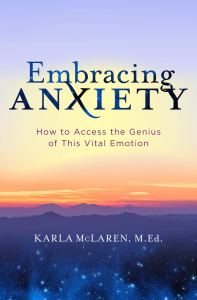
Book: Embracing Anxiety – How to Access the Genius of This Vital Emotion

Book Title:

Embracing Anxiety – How to Access the Genius of This Vital Emotion.

Author(s): Karla McLaren.

Year: 2020.

Edition: First (1ed).

Publisher: Sounds True.

Type(s): Paperback and Kindle.

Synopsis:

An in-depth guide for engaging with anxiety–not as an affliction, but as an essential source of foresight, intuition, and energy for completing your tasks and projects.

If you are facing anxiety, you’ve probably got one thing on your mind – how to make it go away. But what if this challenging emotion were actually trying to help?

When we ignore or repress our anxiety,” teaches Karla McLaren, it can overwhelm us. But when we learn to welcome it with skill, we can access its remarkable gifts.

Engaged with wisely, anxiety is your task completion ally – it helps you to focus, plan, take action, and fulfill your goals. With Embracing Anxiety, you will join this acclaimed educator and researcher to explore:

  • Principles and practices to befriend your anxiety at every level of intensity (before it overwhelms you).
  • Strategies to engage with anxiety as a source of foresight, conscientiousness, and motivation.
  • Why fear, confusion, and panic are not the same as anxiety, and tools to work with each effectively.
  • How anxiety blends with anger, depression, and other emotions, and how to clarify these compounded states.
  • Using McLaren’s Conscious Questioning practice to engage with anxiety and garner its insights.
  • How to embrace procrastination and get things done.

When you identify, listen to, and act on anxiety skillfully, you support its purpose, teaches McLaren, and allow it to recede naturally until it is needed again. With Embracing Anxiety, you’ll learn how to get this powerful emotion on your side.

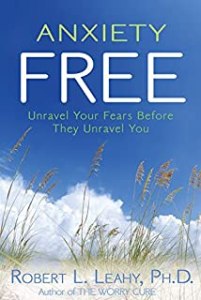
Book: Anxiety Free – Unravel Your Fears Before They Unravel You

300300

Book Title:

Anxiety Free – Unravel Your Fears Before They Unravel You.

Author(s): Robert L. Leahy, PhD.

Year: 2009.

Edition: First (1st).

Publisher: Hay House UK.

Type(s): Hardcover, Paperback, Audiobook, and Kindle.

Synopsis:

Dr. Robert L. Leahy’s techniques to treat negativity and improve mental health have been proven easy, effective and popular by many people worldwide, while his books have been translated into eleven languages and are a valuable source used throughout the world in training other behavioural therapists.

His latest book Anxiety Free presents his simple and powerful techniques for coping with anxiety and worry in a straightforward and engaging manner, and can help you overcome your fear and doubt – permanently.

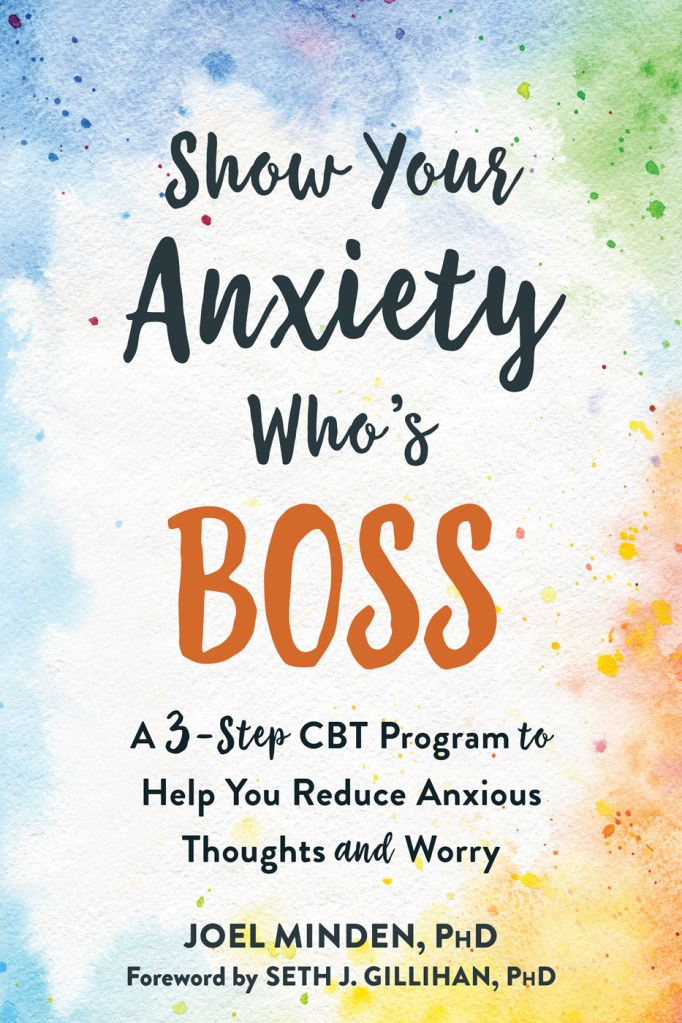
Book: Show Your Anxiety Who’s Boss

Book Title:

Show Your Anxiety Who’s Boss: a 3-Step CBT Programme to Help You Reduce Anxious Thoughts and Worry.

Author(s): Joel Minden PhD.

Year: 2020.

Edition: First (1ed).

Publisher: New Harbinger Publications.

Type(s): Paperback.

Synopsis:

Outsmart your anxiety with a ridiculously easy, three-step approach!

Is your anxiety running your life? Does it tell you where you can go, and when? Does it keep you trapped in a bubble of fear and panic? Anxiety can happen anytime, anywhere – and that is why you need simple, in-the-moment skills to stay grounded when worry takes hold. This accessible guide will help you gain the upper hand, show your anxiety who’s boss, and start living the life that you were always meant to live.

In Show Your Anxiety Who’s Boss, you will find a simple and direct three-step approach grounded in cognitive behavioural therapy (CBT) to help you gain understanding and authority over your anxious thoughts and rumination, bounce back from stress and minor setbacks, and accept what you just can’t know for sure. With this powerful guide, you will learn to:

  • Make peace with uncertainty.
  • Stop avoiding situations.
  • Accept and redirect anxious thoughts – so you can get on with your life.

If you’re ready to live a full and vital life without your anxiety constantly getting in the way, this straightforward guide will show you how to get back on track. It’s as easy as 1, 2, 3.

Treatment of Anxiety Disorders

When treating anxiety disorders, there are a number of things to consider:

  • Treatment of the cause if appropriate;
  • Psychotherapy;
  • Drug therapy; and/or
  • Treatment of other active disorders.

Accurate diagnosis is important because treatment varies from one anxiety disorder to another.

Additionally, anxiety disorders must be distinguished from anxiety that occurs in many other mental health disorders, which involve different treatment approaches.

If the cause is another medical disorder or a drug, medical professionals aim to correct the cause rather than treat the symptoms of anxiety.

Anxiety should subside after the physical disorder is treated or the drug has been stopped long enough for any withdrawal symptoms to abate.

If anxiety remains, anti-anxiety drugs or psychotherapy (such as behavioural therapy) is used.

For individuals who are dying, certain strong pain relievers, such as morphine, may relieve both pain and anxiety.

If an anxiety disorder is diagnosed, drug therapy or psychotherapy (such as behavioral therapy), alone or in combination, can significantly relieve the distress and dysfunction for most individuals.

Benzodiazepines (such as diazepam) are commonly prescribed for acute anxiety.

For many individuals, antidepressants, such as selective serotonin reuptake inhibitors (SSRIs), work as well for anxiety disorders as they do for depression.

Specific treatments depend on which anxiety disorder is diagnosed.

All of the anxiety disorders can occur along with other psychiatric conditions.

For example, anxiety disorders often occur along with an alcohol use disorder.

It is important to treat all of these conditions as soon as possible.

Treating the alcohol use disorder without treating the anxiety is unlikely to be effective since the individual may be using alcohol to treat the anxiety.

On the other hand, treating the anxiety without addressing the alcohol disorder may be unsuccessful because daily changes in the amount of alcohol in the blood can cause levels of anxiety to fluctuate.

Diagnosis of Anxiety Disorders

A diagnosis of anxiety disorder is via a medical professional’s evaluation, based on specific criteria.

Deciding when anxiety is severe enough to be considered a disorder can be complicated.

Individual ability to tolerate anxiety varies, and determining what constitutes abnormal anxiety can be difficult.

Medical professionals usually use the following specific established criteria:

  • Anxiety is very distressing.
  • Anxiety interferes with functioning.
  • Anxiety is long-lasting or keeps coming back

Medical professionals look for other disorders that may be causing anxiety, such as depression or a sleep disturbance.

They may also ask whether relatives have had similar symptoms, because anxiety disorders tend to run in families.

Medical professionals also do a physical examination. Blood and other tests may be done to check for other medical disorders that can cause anxiety.

Symptoms of Anxiety Disorders

Anxiety can arise suddenly, as in panic, or gradually over minutes, hours, or days.

Anxiety can last for any length of time, from a few seconds to years.

It ranges in intensity from barely noticeable qualms to a full-blown panic attack, which may cause shortness of breath, dizziness, an increased heart rate, and trembling (tremor).

Anxiety disorders can be so distressing and interfere so much with an individual’s life that they can lead to depression.

Individuals may develop a substance use disorder.

Individuals who have an anxiety disorder (except for certain very specific phobias, such as fear of spiders) are at least twice as likely to have depression as those without an anxiety disorder.

Sometimes individuals with depression develop an anxiety disorder.

Causes of Anxiety Disorders (Physical Disorder or Drug)

Anxiety can also be caused by a general medical disorder or the use or discontinuation (withdrawal) of a drug.

General medical disorders that can cause anxiety include the following:

  • Heart disorders, such as:
    • Heart failure; and
    • Abnormal heart rhythms (arrhythmias)
  • Hormonal (endocrine) disorders, such as:
    • An overactive adrenal gland (hyperadrenocorticism); or
    • Thyroid gland (hyperthyroidism); or
    • A hormone-secreting tumour called a pheochromocytoma.
  • Lung (respiratory) disorders, such as:
    • Asthma; and
    • Chronic obstructive pulmonary disease (COPD).

Even fever can cause anxiety.

Anxiety may occur in dying people as a result of fear of death, pain, and difficulty breathing.

Drugs that can trigger anxiety include the following:

  • Alcohol;
  • Stimulants (such as amphetamines);
  • Caffeine;
  • Cocaine;
  • Many prescription drugs, such as corticosteroids; and
  • Some over-the-counter weight-loss products, such as those containing:
    • The herbal product guarana;
    • Caffeine; or
    • Both.

Withdrawal from alcohol or sedatives, such as benzodiazepines (used to treat anxiety disorders), can cause anxiety and other symptoms, such as insomnia and restlessness.

Causes of Anxiety Disorders

The causes of anxiety disorders are not fully known, but the following may be involved:

  • Genetic factors (including a family history of an anxiety disorder);
  • Environment (such as experiencing a traumatic event or stress);
  • Psychologic makeup; and/or
  • A physical condition.

An anxiety disorder can be triggered by environmental stresses, such as the breakup of a significant relationship or exposure to a life-threatening disaster.

When an individual’s response to stresses is inappropriate or an individual is overwhelmed by events, an anxiety disorder can arise. For example, some individuals find speaking before a group exhilarating. But others dread it, becoming anxious with symptoms such as sweating, fear, a rapid heart rate, and tremor. Such individuals may avoid speaking even in a small group.

Anxiety tends to run in families. Doctors think some of this tendency may be inherited, but some is probably learned by living with anxious individuals.

Did You Know?

  • Anxiety disorders are the most common type of mental health disorder.
  • Individuals with an anxiety disorder are more likely than other individuals to have depression.