Book: Raising Generation Rx

Book Title:

Raising Generation Rx – Mothering Kids with Invisible Disabilities in an Age of Inequality.

Author(s): Linda M. Blum.

Year: 2015.

Edition: First (1ed).

Publisher: American Psychiatric Association Publishing.

Type(s): Hardcover, Paperback and Kindle.

Synopsis:

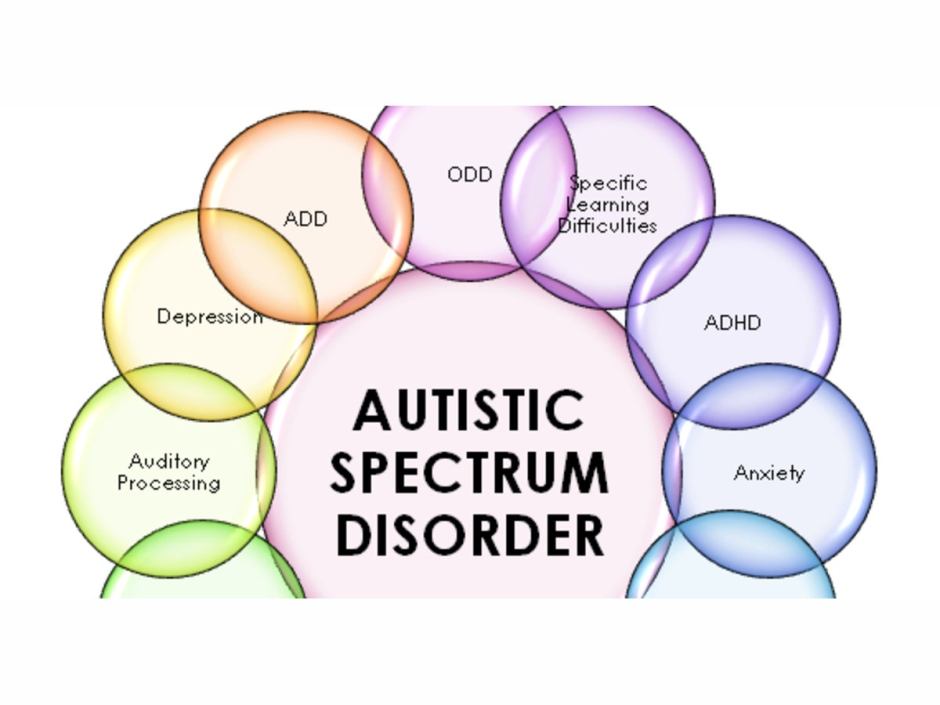
Recent years have seen an explosion in the number of children diagnosed with “invisible disabilities” such as ADHD, mood and conduct disorders, and high-functioning autism spectrum disorders. Whether they are viewed as biological problems in brain wiring or as results of the increasing medicalisation of childhood, the burden of dealing with the day-to-day trials and complex medical and educational decisions falls almost entirely on mothers. Yet few ask how these mothers make sense of their children’s troubles, and to what extent they feel responsibility or blame. Raising Generation Rx offers a groundbreaking study that situates mothers’ experiences within an age of neuroscientific breakthrough, a high-stakes knowledge-based economy, cutbacks in public services and decent jobs, and increased global competition and racialised class and gender inequality.

Through in-depth interviews, observations of parents’ meetings, and analyses of popular advice, Linda Blum examines the experiences of diverse mothers coping with the challenges of their children’s “invisible disabilities” in the face of daunting social, economic, and political realities. She reveals how mothers in widely varied households learn to advocate for their children in the dense bureaucracies of the educational and medical systems; wrestle with anguishing decisions about the use of psychoactive medications; and live with the inescapable blame and stigma in their communities.


Autistic Pride Day (18 June)

Autistic Pride Day, originally an Aspies for Freedom initiative, is a pride celebration for autistic people held on 18 June each year.

Autistic pride recognises the importance of pride for autistic people and its role in bringing about positive changes in the broader society.

Autistic Pride

On 18 June every year, organisations around the world celebrate Autistic Pride Day, with events around the world, to connect with one another through autistic events and demonstrate to allistic people (those not on the autism spectrum) that autistic people are unique individuals who should not be seen as cases for treatment.

Autistic Pride Day was first celebrated in 2005 by Aspies for Freedom (AFF) and it quickly became a global event which is celebrated widely online and offline. AFF modelled the celebration on the gay pride movement. According to Kabie Brook, the co-founder of Autism Rights Group Highland (ARGH), “the most important thing to note about the day is that it is an autistic community event: it originated from and is still led by autistic people ourselves”, i.e. it is not a day for other charities or organisations to promote themselves or stifle autistic people. The rainbow infinity symbol is used as the symbol of this day, representing “diversity with infinite variations and infinite possibilities”.

During gay pride and other LGBTQ events, a rainbow flag is used featuring a white infinity symbol on a tri-colour background. LGBT+ autistic charity Twainbow oversaw the selection and online voting in 2015. Due to various reasons a rainbow infinity symbol is sometimes used.

Autistic pride points out that autistic people have always been an important part of human culture. Being autistic is a form of neurodiversity. As with all forms of neurodiversity, most of the challenges autistic people face come from other people’s attitudes about autism and a lack of supports and accommodations (ableism), rather than being essential to the autistic condition. For instance, according to Larry Arnold and Gareth Nelson, many autism-related organisations promote feelings of pity for parents, rather than fostering understanding. Autistic activists have contributed to a shift in attitudes away from the notion that autism is a deviation from the norm that must be treated or cured. Autistic self-advocacy organisations, which are led and run by autistics, are a key force in the movement for autistic acceptance and autistic pride.

New Scientist magazine released an article entitled “Autistic and proud” on the first Autistic Pride Day that discussed the idea.

Themes

  • 2005 Acceptance not cure – main event of 2005 was in Brasília, capital of Brazil.
  • 2006 Celebrate Neurodiversity – main events of 2006 were an Autistic Pride Summer Camp in Germany and an event at the Scienceworks Museum in Melbourne, Australia.
  • 2007 Autistics Speak. It’s time to listen.
  • 2008 Without a theme.
  • 2009 Without a theme.
  • 2010 Perspectives, not fear.
  • 2011 Recognize, Respect, Include.
  • 2012 No theme – main event of 2012 was in Herzliya Park, in Israel.
  • 2013 No theme – main event of 2013 was in Sacher Park, in Jerusalem, Israel.
  • 2015 No theme – main events were in Reading, UK, Hyde Park in London, UK, and Haifa, Israel.
  • 2016 No theme – main events were in Reading, UK, Hyde Park in London, UK, Manchester UK, and Ramat HaSharon, Israel, Nebraska.
  • 2017 No theme – main events were in Hyde Park, London, U.K., Reading U.K., Manchester UK and Modiin, Israel, and Nebraska.
  • 2018 No theme – main events were in Hyde Park, London, U.K., Reading U.K., Manchester UK and Tel Aviv, Israel.
  • 2019 No theme – main events were in Hyde Park, London, U.K., Reading U.K., Manchester UK, Paris, France, Lincoln, Nebraska, and for the first time, an Autistic Pride march in Galway, Ireland.

Can Testing by Questionnaire Guide Decisions to Refer Adults in Mental Health Services to Autism Diagnostic Services?

Research Paper Title

Testing adults by questionnaire for social and communication disorders, including autism spectrum disorders, in an adult mental health service population.

Background

Autism is difficult to identify in adults due to lack of validated self-report questionnaires.

The researchers compared the effectiveness of the autism-spectrum quotient (AQ) and the Ritvo autism-Asperger’s diagnostic scale-revised (RAADS-R) questionnaires in adult mental health services in two English counties.

Methods

A sub-sample of adults who completed the AQ and RAADS-R were invited to take part in an autism diagnostic observation schedule (ADOS Module 4) assessment with probability of selection weighted by scores on the questionnaires.

Results

There were 364 men and 374 women who consented to take part. Recorded diagnoses were most commonly mood disorders (44%) and mental and behavioural disorders due to alcohol/substance misuse (19%), and 4.8% (95% CI [2.9, 7.5]) were identified with autism (ADOS Module 4 10+).

One had a pre-existing diagnosis of autism; five (26%) had borderline personality disorders (all female) and three (17%) had mood disorders.

The AQ and RAADS-R had fair test accuracy (area under receiver operating characteristic [ROC] curve 0.77 and 0.79, respectively).

AQ sensitivity was 0.79 (95% CI [0.54, 0.94]) and specificity was 0.77 (95% CI [0.65, 0.86]); RAADS-R sensitivity was 0.75 (95% CI [0.48, 0.93]) and specificity was 0.71 (95% CI [0.60, 0.81]).

Conclusions

The AQ and RAADS-R can guide decisions to refer adults in mental health services to autism diagnostic services.

Reference

Brugha, T., Tyrer, F., Leaver, A., Lewis, S., Seaton, S., Morgan, Z., Tromans, S. & van Rensburg, K. (2020) Testing adults by questionnaire for social and communication disorders, including autism spectrum disorders, in an adult mental health service population. International Journal of Methods in Psychiatric Research. 29(1):e1814. doi: 10.1002/mpr.1814. Epub 2020 Jan 10.