Considering Drug-Associated Contexts in Substance Use Disorders and Treatment Development.

Research Paper Title

Considering Drug-Associated Contexts in Substance Use Disorders and Treatment Development.

Background

Environmental contexts that are reliably associated with the use of pharmacologically active substances are hypothesized to contribute to substance use disorders.

In this review, the researchers provide an updated summary of parallel pre-clinical and human studies that support this hypothesis.

Methods

Research conducted in rats shows that environmental contexts that are reliably paired with drug use can renew extinguished drug-seeking behaviour and amplify responding elicited by discrete, drug-predictive cues.

Akin to drug-associated contexts, interoceptive drug stimuli produced by the psychopharmacological effects of drugs can also influence learning and memory processes that play a role in substance use disorders.

Results

Findings from human laboratory studies show that drug-associated contexts, including social stimuli, can have profound effects on cue reactivity, drug use, and drug-related cognitive expectancies.

This translationally relevant research supports the idea that treatments for substance use disorders could be improved by considering drug-associated contexts as a factor in treatment interventions.

The researchers conclude this review with ideas for how to integrate drug-associated contexts into treatment-oriented research based on 4 approaches:

  • Pharmacology;
  • Brain stimulation;
  • Mindfulness-based relapse prevention; and
  • Cognitive behavioural group therapy.

Throughout, the researchers focus on alcohol- and tobacco-related research, which are two of the most prevalent and commonly misused drugs worldwide for which there are known treatments.

Reference

LeCocq, M.R., Randall, P.A., Besheer, J. & Chaudhri, N. (2020) Considering Drug-Associated Contexts in Substance Use Disorders and Treatment Development. Neurotherapeutics. 17(1), pp.43-54. doi: 10.1007/s13311-019-00824-2.

10 Strategies for Evoking ‘Change Talk’

1. Ask Evocative Questions

Ask evocative, open-ended questions, to which the answers are likely to be change talk:

  • “Why would you want to make this change?”
  • “What makes you willing to stop / start _____?”
  • “What are the three best reasons for you to do this?”
  • “Why is it important for you to make these changes?”
  • “So, what do you think that you will do from here?”

2. Explore the Decisional Balance

Help the person to explore the advantages and disadvantages of making changes:

  • “What are the good things about ________?”
  • “What are the not-so-good things about ________?”
  • “What are the benefits of stopping / changing ___?”

3. Ask for Elaboration

When a change talk theme emerges, ask for more detail:

  • “How has this impacted on your health/relationships/family?”
  • “In what ways?”
  • “Tell me more about …”

4. Ask for Examples

When a ‘change talk’ theme emerges, ask for specific examples:

  • “When was the last time that happened?”
  • “Can you give me an example?”
  • “What else?”

5. Look Back

Ask about a time before the current concern emerged:

  • “How were things different or better then?”

6. Look Forward

Ask:

  • “What might happen if things continue as they are?” or
  • “How would you like your life to be in five years’ time?”

Try the ‘Miracle Question’:

  • “If you were 100% successful in making the changes you want to make, what would be different?”

7. Query Extremes

  • Ask “What are the best things that might happen if you do make this change?” or
  • “What are the worst things that might happen if you do not make this change?”

8. Use Change Rulers

Ask

  • “On a scale of nought to ten, how important is it for you to make this change – where nought is not at all important and ten is extremely important?”

Follow up with:

  • “Why are you at _ and not at _ [lower number than they stated]? What might need to happen so that you could move from _ to _ [higher number]?”

Instead of:

  • “How important is …?” you could ask “How much do you want to …?” or
  • “How confident are you that you can …?” or
  • “How committed are you to …?”

Avoid asking:

  • “How ready are you to …?”

It can be confusing because it combines the competing components of:

  • Desire;
  • Ability;
  • Reason(s); and
  • Need.

9. Explore Goals and Values

Explore what a person’s guiding values are.

What do they want in life?

How does the person’s behaviour fit with their goals and values?

Does it help to achieve goals, interfere with them or is it irrelevant?

10. Come Alongside

Try explicitly siding with the negative (continuing and not changing) side of ambivalence:

  • “Perhaps smoking weed is so important to you that you will not give it up, no matter what the cost.”

11 Tips for Encouraging Motivation to Change

  • Do I listen more than I talk? Or am I talking more than I am listening?
  • Do I keep myself sensitive and open to a person’s issues, whatever they may be? Or am I talking about what I think the problem is?
  • Do I invite a person to talk about and explore their own feelings for change? Or am I jumping to conclusions and possible solutions?
  • Do I encourage a person to talk about their reasons for not changing? Or am I forcing them to talk only about change?
  • Do I ask permission to give my feedback? Or am I presuming that my ideas are what they want to hear?
  • Do I reassure a person that ambivalence to change is normal? Or am I telling them to take action and push ahead for a solution?
  • Do I help a person identify successes and challenges from their past and relate them to present change effects? Or am I encouraging them to ignore or get stuck on old stories?
  • Do I seek to understand a person? Or am I spending a lot of time trying to convince them to understand me and my ideas?
  • Do I summarise for a person what I am hearing? Or am I just summarising what I think?
  • Do I value a person’s opinion more than my own? Or am I giving more value to my viewpoint?
  • Do I remind myself that a person is capable of making their own choices? Or am I assuming that they are not capable of making good choices?

Book: Working with Emotion

Book Title:

Working With Emotion in Psychodynamic, Cognitive Behaviour, and Emotion-Focused Psychotherapy.

Author(s): Leslie S. Greenberg, Norka T. Malberg, and Michael A. Tompkins.

Year: 2019.

Edition: First (1st).

Publisher: American Psychological Assocation.

Type(s): Paperback and Kindle.

Synopsis:

The authors of this volume investigate the role of emotion in the development and maintenance of psychological problems, and in effecting psychological change.

They examine emotion as it is conceptualised and used in three of the most widely practised approaches today–psychodynamic, cognitive behaviour, and emotion-focused psychotherapy.

In each chapter, the authors discuss the impact of emotion on child development and learning, the relationship between emotion and motivation, and the ways in which emotion can be harnessed in treatment to improve psychological functioning and strengthen interpersonal relationships.

Clinical vignettes show readers how to arouse, identify, and channel emotions in therapy, while also utilising emotion to develop and maintain an effective therapeutic alliance.

Book: The PTSD Behavioural Activation Workbook

Book Title:

The PTSD Behavioral Activation Workbook: Activities to Help You Rebuild Your Life from Post-Traumatic Stress Disorder (A New Harbinger Self-Help Workbook).

Author(s): Matthew Jakupcak (PhD), Amy W Wagner (PhD), Christopher R. Martell (PhD), and Matthew T Tull (PhD).

Year: 2020.

Edition: First (1st).

Publisher: New Harbinger Publications; Workbook Edition.

Type(s): Paperback and Kindle.

Synopsis:

If you suffer from post-traumatic stress disorder (PTSD), reliving the past through trauma-focused treatments may be too painful a place to start. Behavioural activation – the powerful treatment method outlined in this workbook – provides an essential foundation for recovery by shifting the focus of your trauma to the things in life that give you true fulfilment, joy, and value. This way, you can envision the kind of future you want to have, and move forward in your treatment to pursue that future.

With this breakthrough workbook, you will learn to replace unproductive coping strategies – such as avoidance – with activities that you find pleasant and meaningful. You’ll find an overview of behavioural activation: what it is, why it works, and how you can implement it into your life to begin healing the wounds of your past and paving the way for a bright future full of possibility.

If you have experienced trauma, you need real tools to help you manage your pain and jumpstart your recovery. With this compassionate and evidence-based workbook, you will find actionable solutions to help you begin healing and take that next needed step toward wellness, wholeness, and peace.

Emotional Indicators of Urban Green Space Behaviour

Research Paper Title

Sitting or Walking? Analyzing the Neural Emotional Indicators of Urban Green Space Behavior with Mobile EEG.

Background

There is a close relationship between urban green space and the physical and mental health of individuals.

Most previous studies have discussed the impact of the structure of green space and its elements.

This study focused on the emotional changes caused by common behaviours in urban green space (walking and sitting).

Methods

The researchers recruited 40 college students and randomly assigned them to walking and sitting groups (20 students per group).

The two groups performed the same 8-min high-pressure learning task indoors and then performed 8-min recovery activities in a simulated urban green space (a bamboo-lawn space).

They used the Emotiv EPOC+ EEG headset to dynamically measure six neural emotional parameters:

  • ‘Engagement’;
  • ‘Valence’;
  • ‘Meditation’;
  • ‘Frustration’;
  • ‘Focus’; and
  • ‘Excitement’.

The researchers also conducted a pretest and post-test and used analysis of covariance (ANCOVA) to analyse the post-test data (with the pretest data as covariates).

Results

The results of the comparison of the two behaviours showed that the ‘valence’ and ‘meditation’ values of the walking group were higher than those of the sitting group, which suggests that walking in urban green space is more favourable for stress reduction.

The sitting group had a higher “focus” value than did the walking group, which suggests that sitting in urban green space is better for attention restoration.

Conclusions

The results of this study can provide guidance for urban green space planning and design as well as health guidance for urban residents.

Reference

Lin, W., Chen, Q., Jiang, M., Tao, J., Liu, Z., Zhang, X., Wu, L., Xu, S., Kang, Y. & Zeng, Q. (2020) Sitting or Walking? Analyzing the Neural Emotional Indicators of Urban Green Space Behavior with Mobile EEG. Journal of Urban Health. doi: 10.1007/s11524-019-00407-8. [Epub ahead of print].

Training Community Mental Health: Local Trainers vs Master Trainers

Research Paper Title

Evaluating a Train-the-Trainer Approach for Increasing EBP Training Capacity in Community Mental Health.

Background

Research suggests the train-the-trainer (TtT) model may be an effective approach to training community mental health providers in evidence-based practice (EBP).

Methods

This study compared pre- and post-training consultation outcomes as well as standardised measures of trainer attributes and behaviours between university-based master trainers and experienced community-based supervisors, trained under the TtT approach.

Results

Findings suggest local and master trainers are equivalent in terms of clinical teaching effectiveness and trainee-perceived charisma.

Conclusions

Master trainers may have higher trainee-perceived credibility, but training and consultation outcomes are equivalent across the types of trainers, with the exception of behavioural problems where clinicians trained by local trainers and master trainers saw significantly greater growth than those who received training and consultation by master trainers.

Reference

Triplett, N.S., Sedlar, G., Berliner, L., Jungbluth, N., Boyd, M. & Dorsey, S. (2020) Evaluating a Train-the-Trainer Approach for Increasing EBP Training Capacity in Community Mental Health. The Journal of Behavioral Health Services & Research. doi: 10.1007/s11414-019-09676-2. [Epub ahead of print].

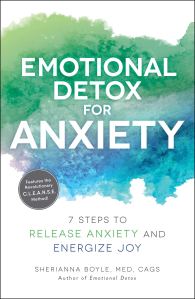
Book: Emotional Detox for Anxiety

Book Title:

Emotional Detox for Anxiety: 7 Steps to Release Anxiety and Energize Joy.

Author(s): Sherianna Boyle.

Year: 2019.

Edition: One.

Publisher: Adams Media.

Type(s): Paperback, Kindle, and Audiobook.

Synopsis:

Most of us view a detox as a physical experience, but what we do not realise is that it is not just our physical bodies that need to be cleansed in order to return to a healthy state.

When we are unable to process our stress and worries, they can become toxic to ourselves and those around us. Wellness expert and author of Emotional Detox, Sherianna Boyle modifies the revolutionary C.L.E.A.N.S.E method to guide you through the 7 steps to a successful anxiety detox.

The 7 steps include:

  • Clear;
  • Look Inward;
  • Emit;
  • Activate Joy;
  • Nourish;
  • Surrender; and
  • Ease.

Experiencing reactions to worries, stress, and doubt can put obstacles in our path to a happy and fulfilled life.

An anxiety detox is a systematic and mindful way to purge these harmful thoughts. Once freed from this burden, an anxiety detox returns us to our joyful, carefree state.

Emotional Detox for Anxiety is a reset for the soul, flushing out negative feelings, clearing a path for new habits and behaviours, and energising you to accept peace, acceptance, and pure joy.

Does Depression Alter Brain Structure?

Research suggests our brain looks different if we have depression.

These differences seem to be caused by depression, rather than precede it.

When neuroscientists compare the brains of individuals with and without depression, there are common dissimilarities.

For example, individuals with depression tend to have a smaller hippocampus, a brain region important in forming memories.

However, it has been difficult to work out whether such differences cause the symptoms of depression or result from the disorder.

To try and find out which, Heather Whalley and her colleagues at the University of Edinburgh made use of two huge genetic databases.

  • Consumer genetic testing company 23andMe holds information on the DNA and depressive symptoms of tens of thousands of individuals; and
  • The UK Biobank collects DNA, lifestyle and behaviour questionnaires and brain scans from thousands more.

Whalley and colleagues used this, as well as earlier research, to create a polygenic risk score (PRS) for depression (A PRS assigns weight to various genetic factors thought to contribute to the risk of a condition).

They made sure the PRS worked by testing it in a separate group of 11,214 people. They then assessed the brain scans and behaviour records of individuals with a PRS that put them at risk of depression. Individuals with higher genetic risk tended to have less white matter in their brains, and it did not seem to function as well. White matter is the tissue that makes up most of our brains.

Whalley and her colleagues then analysed how closely both brain structure and symptoms of depression were related to genetic factors.

Genes are present from birth, so if genetic factors are more closely linked to symptoms, for example, that suggests the symptoms were present before the brain structure differences.

They found that many brain differences appear to be caused by depression. There was one exception: differences in a brain structure called the anterior thalamic radiation appear to come before depression (Shen, Howard & Adams, 2019).

This suggests the genes that puts an individual at risk of depression do so via this structure.

Whalley’s team also found that a combination of childhood trauma and poverty leaves individuals at greatest risk of depression.

Behaviours linked to depression could end up impacting the brain’s white matter connections more generally. It might be that patients with depression do not use some of the brain connections that others would use.

Being socially withdrawn, or focusing more on the negative than the positive, could have an effect. For example, it is known that if we do not use a pathway in the brain, that pathway starts to shrink.

References

Hamzelou, J. (2019) Depression Alters Brain Structure. New Scientist. 19 October 2019, pp.16.

Shen, X., Howard, D.M. & Adams, M.J. (2019) A phenome-wide association and Mendelian Randomisation study of polygenic risk for depression in UK Biobank. Available from World Wide Web: https://www.biorxiv.org/content/10.1101/617969v1. [Accessed: 31 January, 2020].

MedSupport: Patient Perceptions & Perceived Support

Research Paper Title

Enabling patients to cope with psychotropic medication in mental health care: Evaluation and reports of the new inventory MedSupport.

Background

This cross sectional study examined patients’ perceptions of professional support regarding use of psychotropic medication in a specialist mental health care setting.

The aims were to evaluate reliability and validity of the MedSupport inventory, and investigate possible associations between MedSupport scores and patient characteristics.

Methods

A cross-sectional study was performed. The patients completed the MedSupport, a newly developed self-reported 6 item questionnaire on a Likert scale ranged 1 to 5 (1 = strongly disagree to 5 = strongly agree), and the Beliefs about Medicines Questionnaire.

Diagnosis and treatment information were obtained at the clinical visits and from patient records.

Among the 992 patients recruited, 567 patients (57%) used psychotropic medications, and 514 (91%) of these completed the MedSupport and were included in the study.

Results

The MedSupport showed an adequate internal consistency (Cronbach alpha.87; 95% CI.86-89) and a convergent validity toward the available variables.

The MedSupport mean score was 3.8 (standard deviation.9, median 3.8).

Increasing age and the experience of stronger needs for psychotropic medication were associated with perception of more support to cope with medication, whereas higher concern toward use of psychotropic medication was associated with perception of less support.

Patients diagnosed with behavioural and emotional disorders, onset in childhood and adolescence perceived more support than patients with Mood disorders.

Conclusions

The MedSupport inventory was suitable for assessing the patients’ perceived support from health care service regarding their medication.

Awareness of differences in patients’ perceptions might enable the service to provide special measures for patients who perceive insufficient medication support.

Reference

Drivenes, K., Vederhus, J.K., Haaland, V.Ø., Ruud, T., Hauge, Y.L., Regevik, H., Falk, R.S. & Tanum, L. (2020) Enabling patients to cope with psychotropic medication in mental health care: Evaluation and reports of the new inventory MedSupport. Medicine (Baltimore). 99(1):e18635. doi: 10.1097/MD.0000000000018635.