

Everything is going to be alright, maybe not today but eventually.

Everything is going to be alright, maybe not today but eventually.

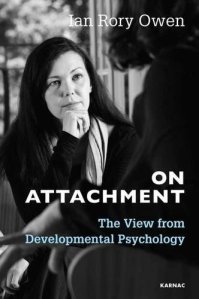
Book Title:
On Attachment – The View From Developmental Psychology.
Author(s): Ian Rory Owen.
Year: 2017.
Edition: First (1st).
Publisher: Routledge.
Type(s): Hardcover, Paperback, and Kindle.
Synopsis:
Attachment theory occupies an integrative position between psychodynamic therapy and various perspectives within empirical psychology.
Since therapy began, its way of thinking has been to interpret mental processes in relation to meaningful psychological objects between children and parents, partners, friends, and within individual therapy.
This volume summarises the research literature relating to attachment theory in developmental psychology in order to clarify conclusions that support practice.
The ideas of Sigmund Freud and John Bowlby are used to reinvigorate psychodynamic practice.

Book Title:
Holistic Wellness In The NewAge – A Comprehensive Guide To NewAge Healing Practices: Volume 01.
Author(s): Swatika Jain (Editor).
Year: 2015.
Edition: First (1st).
Publisher: CreateSpace Independent Publishing Platform.
Type(s): Paperback and Kindle.
Synopsis:
A Comprehensive Guide To NewAge Healing Practices Tools, Techniques & Real Life Stories By Over 45 Accomplished Master Facilitators In the book “Holistic Wellness In The NewAge” we showcase various therapies in the Mind, Body & Soul domain…
This book covers the various topics of Holistic approach to wellness and the subject of energy medicine.
The publishers invited articles from accomplished healers who have been practicing various NewAge Therapies to contribute with articles supported by testimonials and personal experiences in whatever therapy they excel in..

Book Title:
The History of Emotions (Historical Approaches).
Author(s): Rob Boddice.
Year: 2017.
Edition: First (1st).
Publisher: Manchester Unviersity Press.
Type(s): Hardcover, Paperback, and Kindle.
Synopsis:
This book introduces students and professional historians to the main areas of concern in the history of emotions.
It discusses how the emotions intersect with other lines of historical research relating to power, practice, society and morality.
Addressing criticism from within and without the discipline of history, the book offers a rigorous defence of this new approach, demonstrating its potential centrality to historiographical practice, as well as the importance of this kind of historical work for our general understanding of the human brain and the meaning of human experience.

Book Title:
Panic Free – The 10-Day Program to End Panic, Anxiety, and Claustrophobia.
Author(s): Tom Bunn.
Year: 2019.
Edition: First (1ed).
Publisher: New World Library.
Type(s): Audiobook and Kindle.
Synopsis:
What if you could stop panic by tapping into a different part of your brain?
After years of working to help sufferers of panic and anxiety, licensed therapist (and pilot) Tom Bunn discovered a highly effective solution that utilises a part of the brain not affected by the stress hormones that bombard a person experiencing panic.
This “unconscious procedural memory” can be programmed to control panic by preventing the release of stress hormones and activating the parasympathetic nervous system.
This process, outlined in Panic Free, sounds complicated but is not, requiring just ten days and no drugs or doctors.
Bunn includes specific instructions for dealing with common panic triggers, such as airplane travel, bridges, MRIs, and tunnels.
Because panic is profoundly life-limiting, the programme Bunn offers can be a real life-changer.
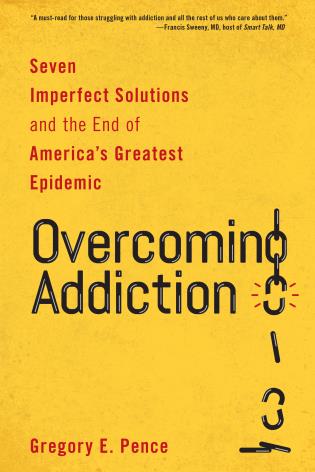
Book Title:
Overcoming Addiction: Seven Imperfect Solutions and the End of America’s Greatest Epidemic.
Author(s): Gregory E. Pence.
Year: 2020.
Edition: First (1ed).
Publisher: Rowman & Littlefield Publishers.
Type(s): Hardcover and Kindle.
Synopsis:
With an estimated 20 million people addicted to drugs or alcohol, North America is in the grip of an unrivalled epidemic. Overcoming Addiction reveals how seemingly contradictory treatment theories must come together to understand and end dangerous substance abuse.
Addiction treatment has become a billion-dollar industry based on innumerable clinical and psychological perspectives. Zealous clinicians and researchers have gathered around the theories, proclaiming each as the sole truth and excluding alternate views. In this book, leading bioethicist Gregory Pence demystifies seven foundational theories of addiction and addiction treatment. From Alcoholics and Narcotics Anonymous to methadone clinics and brain chemistry studies, each method holds foundation beliefs about human nature, free will, and biology. Understanding the diversity of these theories allows us to build a framework for more effective treatment for all addiction types.
For individuals suffering from addiction, their families, and those who devote their lives to ending addiction’s grasp on our society, this book offers a fresh perspective and a framework for long-term solutions.
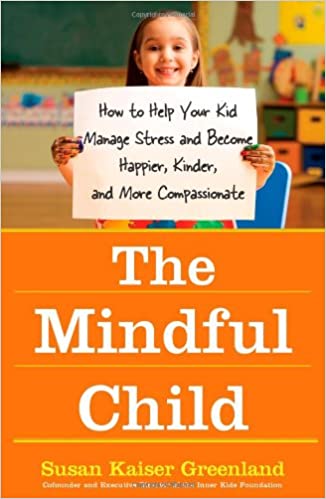
Book Title:
Mindful Child, The – How to Help Your Kid Manage Stress and Become Happier, Kinder, and More Compassionate.
Author(s): Susan Kaiser Greenland.
Year: 2010.
Edition: First (1ed).
Publisher: Atria Books.
Type(s):Paperback, audiobook and Kindle.
Synopsis:
The techniques of mindful awareness have helped millions of adults reduce stress in their lives. Now, children -who are under more pressure than ever before – can learn to protect themselves with these well-established methods adapted for their ages. Based on a programme affiliated with UCLA, The Mindful Child is a groundbreaking book, the first to show parents how to teach these transformative practices to their children.
Mindful awareness works by enabling you to pay closer attention to what is happening within you – your thoughts, feelings, and emotions – so you can better understand what is happening to you.
The Mindful Child extends the vast benefits of mindfulness training to children from four to eighteen years old with age-appropriate exercises, songs, games, and fables that Susan Kaiser Greenland has developed over more than a decade of teaching mindful awareness to kids.
These fun and friendly techniques build kids’ inner and outer awareness and attention, which positively affects their academic performance as well as their social and emotional skills, such as making friends, being compassionate and kind to others, and playing sports, while also providing tools to manage stress and to overcome specific challenges like insomnia, overeating, ADHD, hyper-perfectionism, anxiety, and chronic pain.
When children take a few moments before responding to stressful situations, they allow their own healthy inner compasses to click in and guide them to become more thoughtful, resilient, and empathetic.
The step-by-step process of mental training presented in The Mindful Child provides tools from which all children – and all families – will benefit.
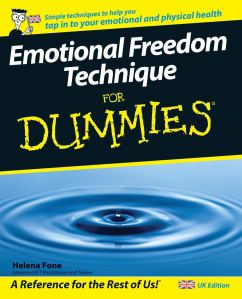
Book Title:
Emotional Freedom Technique For Dummies.
Author(s): Helena Fone.
Year: 2009.
Edition: First (1st) UK Edition.
Publisher: Wiley.
Type(s): Paperback and Kindle.
Synopsis:
A member of the Energy Therapies family – which includes, acupuncture, acupressure and shiatsu – Emotional Freedom Technique is a simple and increasingly popular self- development therapy used to treat a wide range of physical and emotional issues.
Popularised by figures including Paul McKenna, EFT is based on the theory that negative emotions are caused by disturbances in the body’s energy.
Often referred to as acupuncture without needles, EFT involves locating and tapping on meridian points in the body while thinking of a negative emotion and using positive suggestion and thoughts to alter the body’s energy flow, restore balance and reprogramme thought processes.
This no-nonsense guide introduces readers to the theories and methods behind the technique and shows them how to use it to reduce the physical and emotional impact of a wide range of issues including, depression, fears, phobias, anger, addictions, sleeplessness and pain.
It is simple, safe, anyone can practice it at home and with EFT For Dummies readers can banish bad habits for good.
Includes information on: The path to emotional freedom – explaining EFT Understanding your emotions Basic EFT tapping routines Improving emotional health with EFT Practising EFT on yourself and others Helena Fone is a registered EFT practitioner and trainer and an advanced hypnotherapist.
She has a diploma in advanced holistic hypnotherapy and practices CBT and NLP.

Research Paper Title
Intergenerational transmission of risk for PTSD symptoms in African American children: The roles of maternal and child emotion dysregulation.
Background
Emotion dysregulation is a transdiagnostic risk factor for many mental health disorders and develops in the context of early trauma exposure.
Research suggests inter-generational risk associated with trauma exposure and post-traumatic stress disorder (PTSD), such that maternal trauma experiences and related symptoms can negatively impact child outcomes across development.
The goals of the present study were to examine child and mother correlates of child PTSD symptoms and the unique roles of child and maternal emotion dysregulation in understanding child PTSD symptoms.
Methods
Subjects included 105 African American mother-child dyads from an urban hospital serving primarily low-income minority individuals.
Results
Correlational results showed that child trauma exposure, child emotion dysregulation, maternal depressive symptoms, maternal emotion dysregulation, and potential for maternal child abuse all were significantly associated with child PTSD symptoms (ps < 0.05).
Hierarchical linear regression models revealed that child trauma exposure, maternal depression, and maternal abuse potential accounted for 29% of the variance in child PTSD symptoms (p < 0.001).
Both child emotion dysregulation (Rchange² = 0.14, p < .001) and maternal emotion dysregulation (Rchange² = 0.04, p < .05) were significantly associated with child PTSD symptoms independent of other risk factors and potential for maternal abuse was no longer a significant predictor.
Conclusions
These results suggest that maternal emotion dysregulation may be an important factor in influencing their child’s PTSD symptoms above and beyond child-specific variables.
Both maternal and child emotion dysregulation could be valuable treatment targets for improving maternal mental health and parenting behaviours and bolstering child health outcomes, thus reducing inter-generational transmission of risk associated with trauma.
Reference
Powers, A., Stevens, J.S., O’Banion, D., Stenson, A.F., Kaslow, N., Jovanovic, T. & Bradley, B. (2020) Intergenerational transmission of risk for PTSD symptoms in African American children: The roles of maternal and child emotion dysregulation. Psychological Trauma: Theory, Research, Practice and Policy. doi: 10.1037/tra0000543. [Epub ahead of print].
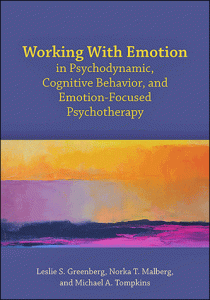
Book Title:
Working With Emotion in Psychodynamic, Cognitive Behaviour, and Emotion-Focused Psychotherapy.
Author(s): Leslie S. Greenberg, Norka T. Malberg, and Michael A. Tompkins.
Year: 2019.
Edition: First (1st).
Publisher: American Psychological Assocation.
Type(s): Paperback and Kindle.
Synopsis:
The authors of this volume investigate the role of emotion in the development and maintenance of psychological problems, and in effecting psychological change.
They examine emotion as it is conceptualised and used in three of the most widely practised approaches today–psychodynamic, cognitive behaviour, and emotion-focused psychotherapy.
In each chapter, the authors discuss the impact of emotion on child development and learning, the relationship between emotion and motivation, and the ways in which emotion can be harnessed in treatment to improve psychological functioning and strengthen interpersonal relationships.
Clinical vignettes show readers how to arouse, identify, and channel emotions in therapy, while also utilising emotion to develop and maintain an effective therapeutic alliance.
 Mental Health Matters
You must be logged in to post a comment.