On This Day … 24 February

People (Births)

  • 1900 – Irmgard Bartenieff, German-American dancer and physical therapist, leading pioneer of dance therapy (d. 1981).

Irmgard Bartenieff

Irmgard Bartenieff (1900 to 1981) was a dance theorist, dancer, choreographer, physical therapist, and a leading pioneer of dance therapy. A student of Rudolf Laban, she pursued cross-cultural dance analysis, and generated a new vision of possibilities for human movement and movement training. From her experiences applying Laban’s concepts of dynamism, three-dimensional movement and mobilization to the rehabilitation of people affected by polio in the 1940s, she went on to develop her own set of movement methods and exercises, known as Bartenieff Fundamentals.

Bartenieff incorporated Laban’s spatial concepts into the mechanical anatomical activity of physical therapy, in order to enhance maximal functioning. In physical therapy, that meant thinking in terms of movement in space, rather than by strengthening muscle groups alone. The introduction of spatial concepts required an awareness of intent on the part of the patient as well, that activated the patient’s will and thus connected the patient’s independent participation to his or her own recovery. “There is no such thing as pure “physical therapy” or pure “mental” therapy. They are continuously interrelated.”

Bartenieff’s presentation of herself was quiet and, according to herself, she did not feel comfortable marketing her skills and knowledge. Not until June 1981, a few months before she died, did her name appear in the institute’s title: Laban/Bartenieff Institute of Movement Studies (LIMS), a change initiated by the Board of Directors in her honour.

Dance Therapy

She held a position of dance therapy research assistant (1957-1967) to Dr. Israel Zwerling at the Day Hospital Unit of Albert Einstein College of Medicine. Zwerling, a psychiatrist […] was very receptive to further exploration of dance as a therapeutic tool for defusing aggression and anxiety. What particularly reinforced his interest in her was that she had a vocabulary and a notation for recording observations of movement. This became a vital factor in daily observations through the one-way screen, especially of family and therapeutic groups.

Dance therapy was then an emerging field of adjunctive therapy. Bartenieff’s special contribution was in bringing Laban’s work to a field very much in need of movement documentation: [It] provided a method of movement analysis and a system of notation which placed dance therapists on their own professional ground, giving them a language for describing patients’ movements, and eliminating the need to rely on less accurate jargon borrowed from other disciplines.

On This Day … 23 February

People (Births)

  • 1883 – Karl Jaspers, German-Swiss psychiatrist and philosopher (d. 1969).

Karl Jaspers

Karl Theodor Jaspers (23 February 1883 to 26 February 1969) was a German-Swiss psychiatrist and philosopher who had a strong influence on modern theology, psychiatry, and philosophy. After being trained in and practicing psychiatry, Jaspers turned to philosophical inquiry and attempted to discover an innovative philosophical system. He was often viewed as a major exponent of existentialism in Germany, though he did not accept the label.

Jaspers earned his medical doctorate from the University of Heidelberg medical school in 1908 and began work at a psychiatric hospital in Heidelberg under Franz Nissl, successor of Emil Kraepelin and Karl Bonhoeffer, and Karl Wilmans. Jaspers became dissatisfied with the way the medical community of the time approached the study of mental illness and gave himself the task of improving the psychiatric approach. In 1913 Jaspers habilitated at the philosophical faculty of the Heidelberg University and gained there in 1914 a post as a psychology teacher. The post later became a permanent philosophical one, and Jaspers never returned to clinical practice. During this time Jaspers was a close friend of the Weber family (Max Weber also having held a professorship at Heidelberg).

In 1921, at the age of 38, Jaspers turned from psychology to philosophy, expanding on themes he had developed in his psychiatric works. He became a philosopher, in Germany and Europe.

After the Nazi seizure of power in 1933, Jaspers was considered to have a “Jewish taint” (jüdische Versippung, in the jargon of the time) due to his Jewish wife, and was forced to retire from teaching in 1937. In 1938 he fell under a publication ban as well. Many of his long-time friends stood by him, however, and he was able to continue his studies and research without being totally isolated. But he and his wife were under constant threat of removal to a concentration camp until 30 March 1945, when Heidelberg was liberated by American troops.

In 1948 Jaspers moved to the University of Basel in Switzerland. In 1963 he was awarded the honorary citizenship of the city of Oldenburg in recognition of his outstanding scientific achievements and services to occidental culture. He remained prominent in the philosophical community and became a naturalized citizen of Switzerland living in Basel until his death on his wife’s 90th birthday in 1969.

Book: Psychotherapy in Later Life

Book Title:

Psychotherapy in Later Life.

Author(s): Rajesh R. Tampi, Brandon Yarns, Kristina F. Zdanys, and Deena J. Tampi (Editors).

Year: 2020.

Edition: First (1st).

Publisher: Cambridge University Press.

Type(s): Paperback and Kindle.

Synopsis:

Psychotherapy in Later Life is a practical how-to-guide for psychiatrists, psychologists and mental health workers on choosing and delivering evidence-based psychological therapies to older adults.

It covers all the main evidence-based psychological therapies such as cognitive behavioural therapy (CBT) and interpersonal psychotherapy (IPT), as well as specialist topics such as combining psychotherapy with pharmacological treatments, working with diverse populations and individual versus group therapy.

The World Health Organisation estimates that over the next four decades, the proportion of the world’s older adults will nearly double, from 12% to 22%, and that one in five older adults has a diagnosable mental health disorder.

Given the increasing number of older adults requiring mental health treatment, incorporating talking therapies into treatment plans is key to tackling issues related to polypharmacy, medication interactions and side effects. Written by experts in geriatric mental health, this book provides the most authoritative information on the use of psychotherapy in older adults.

On This Day … 21 February

People (Births)

  • 1892 – Harry Stack Sullivan, American psychiatrist and psychoanalyst (d. 1949).
  • 1914 – Jean Tatlock, American psychiatrist and physician (d. 1944).
  • 1961 – Elliot Hirshman, American psychologist and academic.

Harry Stack Sullivan

Herbert “Harry” Stack Sullivan (21 February 1892 to 14 January 1949) was an American Neo-Freudian psychiatrist and psychoanalyst who held that “personality can never be isolated from the complex interpersonal relationships in which [a] person lives” and that “[t]he field of psychiatry is the field of interpersonal relations under any and all circumstances in which [such] relations exist”. Having studied therapists Sigmund Freud, Adolf Meyer, and William Alanson White, he devoted years of clinical and research work to helping people with psychotic illness.

Jean Tatlock

Jean Frances Tatlock (21 February 1914 to 04 January 1944) was an American psychiatrist and physician. She was a member of the Communist Party of the United States of America and was a reporter and writer for the party’s publication Western Worker. She is most widely known for her romantic relationship with Robert Oppenheimer, the director of the Manhattan Project’s Los Alamos Laboratory during World War II.

The daughter of John Strong Perry Tatlock, a prominent Old English philologist and an expert on Geoffrey Chaucer, Tatlock was a graduate of Vassar College and the Stanford Medical School, where she studied to become a psychiatrist. Tatlock began seeing Oppenheimer in 1936, when she was a graduate student at Stanford and Oppenheimer was a professor of physics at the University of California, Berkeley. As a result of their relationship and her membership of the Communist Party, she was placed under surveillance by the FBI and her phone was tapped.

She suffered from clinical depression and committed suicide on 04 January 1944.

Elliot Hirshman

Elliot Lee Hirshman (21 February 1961) is an American psychologist and academic who is the president of Stevenson University in Owings Mills, Maryland since 03 July 2017. Prior to Stevenson University he served as president at San Diego State University and served as the provost and senior vice president of the University of Maryland, Baltimore County.

On This Day … 15 February

People (Births)

  • 1856 – Emil Kraepelin, German psychiatrist and academic (d. 1926).
  • 1940 – Vaino Vahing, Estonian psychiatrist, author, and playwright (d. 2008).

Emil Kraepelin

Emil Wilhelm Georg Magnus Kraepelin (15 February 1856 to 7 October 1926) was a German psychiatrist. H. J. Eysenck’s Encyclopaedia of Psychology identifies him as the founder of modern scientific psychiatry, psychopharmacology and psychiatric genetics.

Kraepelin believed the chief origin of psychiatric disease to be biological and genetic malfunction. His theories dominated psychiatry at the start of the 20th century and, despite the later psychodynamic influence of Sigmund Freud and his disciples, enjoyed a revival at century’s end. While he proclaimed his own high clinical standards of gathering information “by means of expert analysis of individual cases”, he also drew on reported observations of officials not trained in psychiatry.

His textbooks do not contain detailed case histories of individuals but mosaic-like compilations of typical statements and behaviours from patients with a specific diagnosis. He has been described as “a scientific manager” and “a political operator”, who developed “a large-scale, clinically oriented, epidemiological research programme”.

Vaino Bahing

Vaino Vahing (15 February 1940 to 23 March 2008), was an Estonian writer, prosaist, psychiatrist and playwright. Starting from 1973, he was a member of Estonian Writers Union.

Vaino Vahing has written many articles about psychiatry, but also literature – novels, books and plays with psychiatric and autobiographical influence. He has played in several Estonian films.

On This Day … 13 February

People (Deaths)

  • 1964 – Werner Heyde, German psychiatrist and academic (b. 1902).

Werner Heyde

Werner Heyde (aka Fritz Sawade) (25 April 1902 to 13 February 1964) was a German psychiatrist. He was one of the main organisers of Nazi Germany’s T-4 Euthanasia Programme.

Early Life

Heyde was born in Forst (Lausitz), on 22 May 1902, and completed his Abitur in 1920. From 1922-1925, he studied medicine in Berlin, Freiburg, Marburg, Rostock and Würzburg and after short placements at the General Hospital in Cottbus and the sanatorium Berlin-Wittenau became assistant doctor at the Universitätsnervenklinik (university psychiatric hospital) in Würzburg. He obtained his licence to practice medicine in 1926, having completed all courses throughout his studies with top marks.

Career until 1945

In 1933, Heyde made the acquaintance of Theodor Eicke, and became a member of the NSDAP. One year later, he was appointed director of the polyclinic in Würzburg. In 1935, he entered the SS as medical officer with the rank of SS-Hauptsturmführer, and became commander of the medical unit in the SS-Totenkopfverbände. There he was responsible for establishing a system of psychiatric and eugenic examinations and research in concentration camps, and for the organisation of the T-4 Euthanasia Program. Additionally, he also worked as a psychiatric consultant for the Gestapo. He also was leader of the Rassenpolitisches Amt in Würzburg, Seelbergstraße 8, 97080 Würzburg. Later he was accompanied by his Rassenpolitisches Amt assistant, Mr. Johannes Riedmiller aka Kurt Riethmüller aka Hans Riedmüller/Hans Riedmiller.

In 1938, he was appointed chief of staff of the medical department in the SS-Hauptamt (headquarters); in 1939, he became professor for psychiatry and neurology at the University of Würzburg, and from 1940 on he also was director of the psychiatric hospital.

He was replaced as head of the T4 programme by Paul Nitsche in 1941, but continued his involvement as member of the “department Brack” (after the end of World War II, it was never found out what his role there was).

He worked at Buchenwald, Dachau concentration camp and Sachsenhausen concentration camps.

In 1944, he was awarded the SS-Totenkopfring, and before the end of the war and reached the rank of SS-Standartenführer (Colonel).

Life after 1945

After World War II, Heyde was interned and imprisoned, but escaped in 1947. He went underground using the alias Fritz Sawade and continued practicing as a sports physician and psychiatrist in Flensburg. Many friends and associates knew about his real identity, but remained silent even as he was an expert witness in court cases.

His true identity was revealed in the course of a private quarrel, and on 11 November 1959 Heyde surrendered to police in Frankfurt after 13 years as a fugitive. On 13 February 1964, five days before his trial was to start, Heyde hanged himself at the prison in Butzbach.

Literature

  • Klee, Ernst, Das Personenlexikon zum Dritten Reich. S. Fischer Verlag 2003. ISBN 3-10-039309-0.
  • Godau-Schüttke, Klaus-Detlev, Die Heyde/Sawade-Affäre. Nomos Verlagsgesellschaft 1998. ISBN 3-7890-5717-7.

Films

  • 1963 (GDR): The Heyde-Sawade Affair (Category: biography/drama) (Produced in the DEFA-studios for movies, Potsdam, Babelsberg/Eastern Germany. Produced by Bernhard Gelbe; script by Wolfgang Luderer, Walter Jupé and Friedrich Karl Kaul and directed by Wolfgang Luderer. Available via the Foundation German TV and Broadcast Arkhive Babelsberg. Arkhive-No. IDNR 03581. Length: 101 minutes, First run: 03 June 1963 in the television programme No.1 of the German Democratic Republic).

Paintings

In 1965, German artist Gerhard Richter painted Herr Heyde, based on a photo of Heyde’s 1959 arrest.

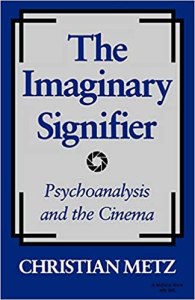
Book: Psychoanalysis and the Cinema- The Imaginary Signifier

Book Title:

Psychoanalysis and the Cinema- The Imaginary Signifier.

Author(s): Christian Metz.

Year: 1984.

Edition: First (1st).

Publisher: Palgrave Macmillan.

Type(s): Hardcover and Paperback.

Synopsis:

In the first half of the book Metz explores a number of aspects of the psychological anchoring of cinema as a social institution.

In the second half, he shifts his approach…to look at the operations of meaning in the film text, at the figures of image and sound concatenation. Thus he is led to consideration of metaphor and metonymy in film, this involving a detailed account of these two figures as they appear in psychoanalysis and linguistics.

Book: Psychiatric Diagnosis and Classification

Book Title:

Psychiatric Diagnosis and Classification.

Author(s): Mario Maj, Wolfgang Gaebel, Juan Jose Lopez-Ibor, and Norman Sartorius (Editors).

Year: 2002.

Edition: First (1st).

Publisher: Wiley-Blackwell.

Type(s): Hardcover and Kindle.

Synopsis:

This book provides an overview of the strengths and limitations of the currently available systems for the diagnosis and classification of mental disorders, in particular the DSM-IV and the ICD-10, and of the prospects for future developments. Among the covered issues are: The impact of biological research The diagnosis of mental disorders in primary care The usefulness and limitations of the concept of comorbidity in psychiatry The role of understanding and empathy in the diagnostic process The ethical, legal and social aspects of psychiatric classification Psychiatric Diagnosis & Classification provides a comprehensive picture of the current state of available diagnostic and classificatory systems in psychiatry and the improvements that are needed.

On This Day … 08 February

People (Deaths)

  • 1964 – Ernst Kretschmer, German psychiatrist and author (b. 1888).
  • 2007 – Ian Stevenson, Canadian-American psychiatrist and academic (b. 1918).

Ernst Kretschmer

Ernst Kretschmer (08 October 1888 to 08 February 1964) was a German psychiatrist who researched the human constitution and established a typology.

Life

Kretschmer was born in Wüstenrot near Heilbronn. He attended Cannstatt Gymnasium, one of the oldest Latin schools in Stuttgart area. From 1906 to 1912 he studied theology, medicine, and philosophy at the universities of Tübingen, Munich and Hamburg. From 1913 he was assistant of Robert Gaupp in Tübingen, where he received his habilitation in 1918. He continued as assistant medical director until 1926.

In 1926 he became the director of the psychiatric clinic at Marburg University.

Kretschmer was a founding member of the International General Medical Society for Psychotherapy (AÄGP) which was founded on 12 January 1927. He was the president of AÄGP from 1929. In 1933 he resigned from the AÄGP for political reasons.

From 1946 until 1959, Kretschmer was the director of the psychiatric clinic of the University of Tübingen. He died, aged 75, in Tübingen.

Cooperating with the Nazis

After he resigned from the AÄGP, he started to support the SS and signed the “Vow of allegiance of the professors of the German universities and high-schools to Adolf Hitler and the National Socialistic state.” (German: “Bekenntnis der Professoren an den deutschen Universitäten und Hochschulen zu Adolf Hitler und dem nationalsozialistischen Staat”).

Persistent Vegetative State and Sensitive Paranoia Research

Kretschmer was the first to describe the persistent vegetative state which has also been called Kretschmer’s syndrome. Another medical term coined after him is Kretschmer’s sensitive paranoia. This classification has the merit of singling out “a type of paranoia that was unknown” prior to Kretschmer, and which “does not resemble the stereotypical image […] of sthenic paranoia”. Furthermore, between 1915 and 1921 he developed a differential diagnosis between schizophrenia and manic depression.

Ian Stevenson

Ian Pretyman Stevenson (31 October 1918 to 08 February 2007) was a Canadian-born American psychiatrist. He worked for the University of Virginia School of Medicine for fifty years, as chair of the department of psychiatry from 1957 to 1967, Carlson Professor of Psychiatry from 1967 to 2001, and Research Professor of Psychiatry from 2002 until his death.

As founder and director of the university’s Division of Perceptual Studies, which investigates the paranormal, Stevenson became known for his research into cases he considered suggestive of reincarnation, the idea that emotions, memories, and even physical bodily features can be transferred from one life to another. Over a period of forty years in international fieldwork, he investigated three thousand cases of children who claimed to remember past lives. His position was that certain phobias, philias, unusual abilities and illnesses could not be fully explained by heredity or the environment. He believed that, in addition to genetics and the environment, reincarnation might possibly provide a third, contributing factor.

Stevenson helped found the Society for Scientific Exploration in 1982 and was the author of around three hundred papers and fourteen books on reincarnation, including Twenty Cases Suggestive of Reincarnation (1966), Cases of the Reincarnation Type (four volumes, 1975-1983) and European Cases of the Reincarnation Type (2003). His most ambitious work was the 2,268-page, two-volume Reincarnation and Biology: A Contribution to the Etiology of Birthmarks and Birth Defects (1997). This reported two hundred cases in which birthmarks and birth defects seemed to correspond in some way to a wound on the deceased person whose life the child recalled. He wrote a shorter version of the same research for the general reader, Where Reincarnation and Biology Intersect (1997).

Reaction to his work was mixed. In an obituary for Stevenson in The New York Times, Margalit Fox wrote that Stevenson’s supporters saw him as a misunderstood genius but that most scientists had simply ignored his research and that his detractors regarded him as earnest but gullible. His life and work became the subject of three supportive books, Old Souls: The Scientific Search for Proof of Past Lives (1999) by Tom Shroder, a Washington Post journalist, Life Before Life (2005) by Jim B. Tucker, a psychiatrist and colleague at the University of Virginia, and Science, the Self, and Survival after Death (2012), by Emily Williams Kelly. Critics, particularly the philosophers C.T.K. Chari (1909-1993) and Paul Edwards (1923-2004), raised a number of issues, including claims that the children or parents interviewed by Stevenson had deceived him, that he had asked them leading questions, that he had often worked through translators who believed what the interviewees were saying, and that his conclusions were undermined by confirmation bias, where cases not supportive of his hypothesis were not presented as counting against it.

On This Day … 06 February

People (Births)

  • 1839 – Eduard Hitzig, German neurologist and psychiatrist (d. 1907).
  • 1852 – C. Lloyd Morgan, English zoologist and psychologist (d. 1936).

People (Deaths)

  • 2012 – David Rosenhan, American psychologist and academic (b. 1929).

Eduard Hitzig

Eduard Hitzig (06 February 1838 to 20 August 1907) was a German neurologist and neuropsychiatrist of Jewish ancestry born in Berlin.

He studied medicine at the Universities of Berlin and Würzburg under the instruction of famous men such as Emil Du Bois-Reymond (1818-1896), Rudolf Virchow (1821-1902), Moritz Heinrich Romberg (1795-1873), and Karl Friedrich Otto Westphal (1833-1890). He received his doctorate in 1862 and subsequently worked in Berlin and Würzburg. In 1875, he became director of the Burghölzli asylum, as well as professor of psychiatry at the University of Zurich. In 1885, Hitzig became a professor at the University of Halle where he remained until his retirement in 1903.

Hitzig is remembered for his work concerning the interaction between electric current and the brain. In 1870, Hitzig, assisted by anatomist Gustav Fritsch (1837-1927), applied electricity via a thin probe to the exposed cerebral cortex of a dog without anaesthesia. They performed these studies at the home of Fritsch because the University of Berlin would not allow such experimentation in their laboratories. What Hitzig and Fritsch had discovered is that electrical stimulation of different areas of the cerebrum caused involuntary muscular contractions of specific parts of the dog’s body. They identified the brain’s “motor strip”, a vertical strip of brain tissue on the cerebrum in the back of the frontal lobe, which controls different muscles in the body. In 1870, Hitzig published his findings in an essay called Ueber die elektrische Erregbarkeit des Grosshirns (On the Electrical Excitability of the Cerebrum). This experimentation was considered the first time anyone had done any localised study regarding the brain and electric current.

However this was not the first time Hitzig had experienced the interaction between the brain and electricity; earlier in his career as a physician working with the Prussian Army, he experimented on wounded soldiers whose skulls were fractured by bullets. Hitzig noticed that applying a small electric current to the brains of these soldiers caused involuntary muscular movement.

Hitzig and Fritsch’s work opened the door to further localized testing of the brain by many others including Scottish neurologist, David Ferrier.

C. Lloyd Morgan

Conwy Lloyd Morgan, FRS (06 February 1852 to 06 March 1936) was a British ethologist and psychologist. He is remembered for his theory of emergent evolution, and for the experimental approach to animal psychology now known as Morgan’s Canon, a principle that played a major role in behaviourism, insisting that higher mental faculties should only be considered as explanations if lower faculties could not explain a behaviour.

David Rosenhan

David L. Rosenhan (22 November 1929 to 06 February 2012) was an American psychologist. He is best known for the Rosenhan experiment, a study challenging the validity of psychiatry diagnoses.

Rosenhan received his Bachelor of Arts degree in mathematics in 1951 from Yeshiva College, his master’s degree in economics in 1953 and his doctorate in psychology in 1958, both from Columbia University. As further described in his obituary published by the American Psychological Association (APA), “Rosenhan was a pioneer in applying psychological methods to the practice of law, including the examination of expert witnesses, jury selection, and jury deliberation.” He was:

a professor of law and of psychology at Stanford University from 1971 until his retirement in 1998… Before joining the Stanford Law School faculty, he was a member of the faculties of Swarthmore College, Princeton University, Haverford College, and the University of Pennsylvania. He also served as a research psychologist at the Educational Testing Service.

He later became a professor emeritus in law and psychology at Stanford University. Rosenhan was a fellow of the American Association for the Advancement of Science and various psychological societies, including the APA,[1] and had been a visiting fellow at Wolfson College at Oxford University.[citation needed]

Rosenhan died on 06 February 2012, at the age of 82.