Book: Psychology in Black and White

Book Title:

Psychology in Black and White – The Project Of A Theory-Driven Science.

Author(s): Sergio Salvatore.

Year: 2015.

Edition: Reprint Edition.

Publisher: Information Age Publishing.

Type(s): Hardcover, Paperback, and Kindle.

Synopsis:

This book is long awaited within the contemporarily creative field of cultural psychologies.

It is a theoretical synthesis that is at the level of innovations that Sigmund Freud, James Mark Baldwin, William Stern, Kurt Lewin, Jean Piaget, Lev Vygotsky and Jan Smedslund have brought into psychology over the past century.

Here we can observe a creative solution to integrating cultural psychology with the rich traditions of psychodynamic perspectives, without repeating the conceptual impasses in which many psychoanalytic perspectives have become caught.

Book: Psychology and the Conduct of Everyday Life

Book Title:

Psychology and the Conduct of Everyday Life.

Author(s): Ernst Schraube (editor) and Charlotte Hojholt (contributor).

Year: 2015.

Edition: First (1st).

Publisher: Routledge.

Type(s): Hardcover, Paperback, and Kindle.

Synopsis:

Psychology and the Conduct of Everyday Life moves psychological theory and research practice out of the laboratory and into the everyday world. Drawing on recent developments across the social and human sciences, it examines how people live as active subjects within the contexts of their everyday lives, using this as an analytical basis for understanding the dilemmas and contradictions people face in contemporary society.

Early chapters gather the latest empirical research to explore the significance of context as a cross-disciplinary critical tool; they include a study of homeless Māori men reaffirming their cultural identity via gardening, and a look at how the dilemmas faced by children in difficult situations can provide insights into social conflict at school. Later chapters examine the interplay between everyday life around the world and contemporary global phenomena such as the rise of the debt economy, the hegemony of the labour market, and the increased reliance on digital technology in educational settings. The book concludes with a consideration of how social psychology can deepen our understanding of how we conduct our lives, and offer possibilities for collective work on the resolution of social conflict.

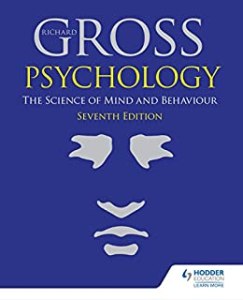
Book: Psychology: The Science of Mind and Behaviour

Book Title:

Psychology: The Science of Mind and Behaviour.

Author(s): Richard Gross.

Year: 2015.

Edition: Eighth (8th).

Publisher: Hodder Education, UK Edition.

Type(s): Paperback and Kindle.

Synopsis:

Provides the essential foundation for psychology students, this is a revised and updated version of the most trusted introduction written by the bestselling psychology author Richard Gross.

Psychology: The Science of Mind and Behaviour has helped over half a million students worldwide.

It is the essential introduction to psychology, covering all students need to know to understand and evaluate classic and contemporary topics.

  • Enables students to easily access psychological theories and research with colourful, user-friendly content and useful features including summaries, critical discussion and research updates.
  • Helps students to understand the research process with contributions from leading psychologists including Elizabeth Loftus, Alex Haslam and David Canter.
  • Ensures students are up to date with the latest issues and debates with this fully updated edition.

Book: Mental Health Atlas 2017

Book Title:

Mental Health Atlas 2017.

Author(s): World Health Organisation (WHO).

Year: 2017.

Edition: Denoted by year.

Publisher: WHO.

Type(s): Paperback and digital.

Synopsis:

The Mental Health Atlas series is considered the most comprehensive resource on global information on mental health and an important tool for developing and planning mental health services within countries and regions.

The Mental Health Atlas 2017 acquires new importance as it includes information and data on the progress towards the achievement of objectives and targets of the Comprehensive Mental Health Action Plan 2013–2020.

You can a download a free copy of the Mental Health Atlas 2017 here.

Book: Mastering the World of Psychology

Book Title:

Mastering the World of Psychology.

Author(s): Samuel E. Wood, Ellen Green Wood, and Denise Boyd.

Year: 2019.

Edition: Sixth (6th).

Publisher: Pearson.

Type(s): Hardcover, Paperback, and Kindle.

Synopsis:

Mastering the World of Psychology, 5ed, provides students with more support than ever before, thanks to the Survey, Question, Read, Recite, and Review Learning Method, or SQ3R, which is integrated throughout the text. SQ3R shows students the relationship between psychological theory and learning. It is the strongest and most comprehensive programme for measuring progress and attaining successful outcomes in Introductory Psychology.

MyPsychLab is an integral part of the Wood/Wood/Boyd program. Engaging activities and assessments provide a teaching and learning system that measures students’ success. With MyPsychLab, students can watch videos on psychological research and applications, participate in virtual classic experiments, and develop critical thinking skills through writing.

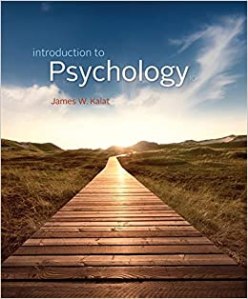
Book: Introduction to Psychology

Book Title:

Introduction to Psychology.

Author(s): James W. Kalat.

Year: 2017.

Edition: Eleventh (11th).

Publisher: Cengage Learning.

Type(s): Paperback and Kindle.

Synopsis:

James Kalat’s best-selling Introduction to Psychology does far more than cover major theories and studies; it teaches you how to become better at evaluating information.

Hands-on “Try It Yourself” activities and summaries of real research encourage you to ask yourself, “How was this conclusion reached?” and “Does the evidence really support it?”

Students praise this streamlined, visually appealing text, which invites you to interact with psychological ideas and expands your preconceived ideas about the field of psychology.

As a result, you will become a savvier consumer of information, not only during your college experience but also as you venture into your post-college life.

With his friendly writing style and many learning tools, Kalat puts you at ease and enables you to participate actively in what you are studying.

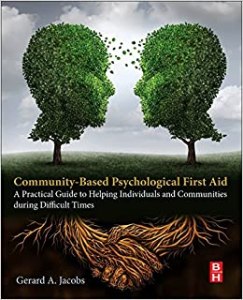
Book: Community-Based Psychological First Aid

Book Title:

Community-Based Psychological First Aid: A Practical Guide to Helping Individuals and Communities during Difficult Times.

Author(s): Gerard A. Jacobs.

Year: 2016.

Edition: First (1st).

Publisher: Butterworth-Heinemann.

Type(s): Paperback and Kindle.

Synopsis:

Community-Based Psychological First Aid: A Practical Guide to Helping Individuals and Communities during Difficult Times presents a practical method for helping those in need in difficult times.

No advanced training in psychology is needed to use it. Injuries from disasters, terrorist events, and civil unrest are not just physical.

These events also cause psychological trauma that can do lasting damage.

Psychological First Aid (PFA) draws on human resilience and aims to reduce stress systems and help those affected recover.

It is not professional psychotherapy, and those providing this kind of aid do not need a degree to help.

Gerard Jacobs has developed this community-based method of delivering PFA over 20 years and has taught it in over 30 countries.

Along with the easy-to-follow method, Jacobs includes examples of how this works in action in different situations, and presents scenarios to practice.

Unique in its approach of community engagement to train community members to help each other, this guide is an excellent resource for local emergency managers to engage in whole community emergency management.

Book: Cognitive Psychology for Dummies

Book Title:

Cognitive Psychology for Dummies.

Author(s): Peter J. Hills and Michael Pake.

Year: 2016.

Edition: First (1st).

Publisher: Wiley.

Type(s): Paperback, Audiobook, and Kindle.

Synopsis:

Demystify the core concepts of cognitive psychology.

Written specifically for psychology students and not other academics – Cognitive Psychology For Dummies is an accessible and entertaining introduction to the field. Unlike the dense and jargon-laden content found in most psychology textbooks, this practical guide provides readers with easy-to-understand explanations of the fundamental elements of cognitive psychology so that they are able obtain a firm grasp of the material.

Cognitive Psychology For Dummies follows the structure of a typical university course, which makes it the perfect supplement for students in need of a clear and enjoyable overview of the topic.

The complexities of a field that explores internal mental processes including the study of how people perceive, remember, think, speak, and solve problems can be overwhelming for first-year psychology students.

This practical resource cuts through the academic-speak to provide a clear understanding of the most important elements of cognitive psychology.

  • Obtain a practical understanding of the core concepts of cognitive psychology.
  • Supplement required course reading with clear and easy-to-understand overviews.
  • Gain confidence in your ability to apply your knowledge of cognitive psychology.
  • Prepare for upcoming exams or topic discussions.

Cognitive Psychology For Dummies is the perfect resource for psychology students who need a clear and readable overview of the core concepts of cognitive psychology.

Book: The Big Disconnect – Protecting Childhood And Family Relationships In The Digital Age

Book Title:

The Big Disconnect – Protecting Childhood And Family Relationships In The Digital Age.

Author(s): Catherine Steiner-Adair.

Year: 2013.

Edition: First (1st).

Publisher: Harper.

Type(s): Hardcover and Paperback.

Synopsis:

Clinical psychologist Catherine Steiner-Adair takes an in-depth look at how the Internet and the digital revolution are profoundly changing childhood and family dynamics, and offers solutions parents can use to successfully shepherd their children through the technological wilderness.

As the focus of the family has turned to the glow of the screen – children constantly texting their friends or going online to do homework; parents working online around the clock – everyday life is undergoing a massive transformation. Easy access to the Internet and social media has erased the boundaries that protect children from damaging exposure to excessive marketing and the unsavoury aspects of adult culture. Parents often feel they are losing a meaningful connection with their children. Children are feeling lonely and alienated. The digital world is here to stay, but what are families losing with technology’s gain?

As renowned clinical psychologist Catherine Steiner-Adair explains, families are in crisis as they face this issue, and even more so than they realise. Not only do chronic tech distractions have deep and lasting effects but children also desperately need parents to provide what tech cannot: close, significant interactions with the adults in their lives. Drawing on real-life stories from her clinical work with children and parents and her consulting work with educators and experts across the country, Steiner-Adair offers insights and advice that can help parents achieve greater understanding, authority, and confidence as they engage with the tech revolution unfolding in their living rooms.

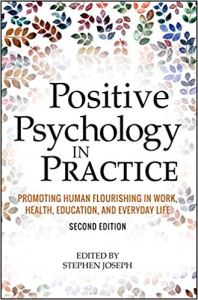
Book: Positive Psychology in Practice

Book Title:

Positive Psychology in Practice: Promoting Human Flourishing in Work, Health, Education, and Everyday Life.

Author(s): Stephen Joseph (Editor).

Year: 2015.

Edition: Second (2nd).

Publisher: John Wiley & Sons.

Type(s): Hardcover and Kindle.

Synopsis:

The best minds in positive psychology survey the state of the field Positive Psychology in Practice, Second Edition moves beyond the theoretical to show how positive psychology is being used in real-world settings, and the new directions emerging in the field.

An international team of contributors representing the best and brightest in the discipline review the latest research, discuss how the findings are being used in practice, explore new ideas for application, and discuss focus points for future research.

This updated edition contains new chapters that explore the intersection between positive psychology and humanistic psychology, salugenesis, hedonism, and eudaimonism, and more, with deep discussion of how the field is integrating with the new areas of self-help, life coaching, social work, rehabilitation psychology, and recovery-oriented service systems.

This book explores the challenges and opportunities in the field, providing readers with the latest research and consensus on practical application. * Get up to date on the latest research and practice findings * Integrate positive psychology into assessments, life coaching, and other therapies * Learn how positive psychology is being used in schools * Explore possible directions for new research to push the field forward Positive psychology is being used in areas as diverse as clinical, counselling, forensic, health, educational, and industrial/organisational settings, in a wide variety of interventions and applications.

Psychologists and other mental health professionals who want to promote human flourishing and well-being will find the second edition of Positive Psychology in Practice to be an informative, comprehensive guide.