Book: Mindfulness Meditation in Psychotherapy

Book Title:

Mindfulness Meditation In Psychotherapy – An Integrated Model For Clinicians.

Author(s): Steven A. Alper, MSW LCSW.

Year: 2016.

Edition: First (1st), Illustrated Edition.

Publisher: Context Press.

Type(s): Hardcover, Paperback, and Kindle.

Synopsis:

Embodying mindfulness allows both therapists and clients to make the most of treatment sessions. More than just a guide to techniques and benefits, this book provides a comprehensive understanding of mindfulness meditation, and shows how to effectively incorporate mindfulness into every aspect of the therapeutic process.

Mindfulness is not simply a therapeutic tool that can be used at a specific time. If you are a psychotherapist interested in implementing mindfulness practices into your therapy sessions, you must first embody a mindful presence yourself. In Mindfulness Meditation in Psychotherapy, psychotherapist Steven Alper presents the mindfulness pyramid model, an easy-to-use reference approach for integrating mindfulness into the very fabric of your therapy sessions – in every action you take.

A therapist’s mindfulness practice and the mindful activity during sessions forms the foundation of clients’ mindfulness practice. This practical guide will help demystify mindfulness meditation; elaborate on the psychotherapeutic benefits of practices such as body scan, breath awareness, sitting meditation, and lovingkindness; and offer helpful strategies for teaching formal and informal mindfulness skills to clients. This book conceptualises and explores the applicability of mindfulness and delves into the many ways in which mindfulness can manifest in psychotherapy.

This is a must-have resource for any therapist interested in honing their own mindfulness practice and incorporating mindfulness in treatment sessions.
Book: Cognitive Behavioural Therapy Workbook For Dummies

Book Title:

Cognitive Behavioural Therapy Workbook For Dummies.

Author(s): Rhena Branch and Rob Wilson, PhD.

Year: 2012.

Edition: Second (2nd).

Publisher: John Wiley and Sons Inc.

Type(s): Paperback and Kindle.

Synopsis:

Dozens of practical exercises and easy to perform techniques for banishing negative thoughts before they take hold.

Whether you are trying to overcome anxiety and depression, boost self-esteem, beat addiction, lose weight, or simply improve your outlook, cognitive behavioural therapy (CBT) offers a practical, sensible approach to mastering your thoughts and thinking constructively.

In this updated and expanded edition of the companion workbook to their bestselling Cognitive Behavioural Therapy For Dummies, professional therapists Rhena Branch and Rob Wilson show you, step-by-step, how to put the lessons provided in their book into practice. Inside you will find a huge number of hands-on exercises and techniques to help you remove roadblocks to change and regain control over your life.

Cognitive Behavioural Therapy Workbook For Dummies, Second Edition:

  • Develops the ideas and concepts that presented in the bestselling Cognitive Behavioural Therapy For Dummies, Second Edition and provides exercises to put those ideas into practice
  • Features a range of hands-on CBT exercises and techniques for beating anxiety or depression, boosting your self-esteem, losing weight, or simply improving your outlook on life

Book: Cognitive Behavioural Therapy For Dummies

Book Title:

Cognitive Behavioural Therapy For Dummies.

Author(s): Rhena Branch and Rob Wilson, PhD.

Year: 2019.

Edition: Third (3rd).

Publisher: Joh Wiley and Sons Inc.

Type(s):Paperback.

Synopsis:

Retrain your thinking and your life with these simple, scientifically proven techniques! Cognitive behavioral therapy, or CBT for short, is often cited as the gold standard of psychotherapy. Its techniques allow you to identify the negative thought processes that hold you back and exchange them for new, productive ones that can change your life.

Increasingly popular among healthcare professionals, the CBT approach can be used by anyone to overcome common problems ranging from depression or anxiety to more complex disorders like OCD, PTSD and addiction. CBT can also be used to simply developing a healthier, more productive outlook on life.

This book shows you how you can easily incorporate the techniques of CBT into your day-to-day life and produce tangible results. You will learn how to take your negative thoughts to boot camp and retrain them, establishing new habits that tackle your toxic thoughts and retool your awareness, allowing you be free of the weight of past negative thinking biases.

  • Move on: take a fresh look at your past and maybe even overcome it.
  • Mellow out: relax yourself through techniques that reduce anger and stress Lighten up: read practical advice on healthy attitudes for living and ways to nourish optimism.
  • Look again: discover how to overcome low self-esteem and body image issues Whatever the issue, do not let your negative thoughts have the last say.

On This Day … 15 September

People (Deaths)

  • 2014 – Jürg Schubiger, Swiss psychotherapist and author (b. 1936).

Introduction

Jürg Schubiger (14 October 1936 to 15 September 2014) was a Swiss psychotherapist and writer of children’s books.

He won the Deutscher Jugendliteraturpreis (German Youth Literature Award) in 1996 for Als die Welt noch jung war.

For his “lasting contribution” as a children’s writer Schubiger received the biennial Hans Christian Andersen Medal in 2008. The award conferred by the International Board on Books for Young People is the highest recognition available to a writer or illustrator of children’s books.

Background

  • Schubiger was born in Zürich and raised in Winterthur, Switzerland.
  • He graduated from the University of Zürich in German Studies, Psychology and Philosophy.
  • He wrote his PhD thesis on Franz Kafka.
  • He most recently lived in Zürich.
  • Schubiger died in 2014, aged 77, four weeks and one day before his 78th birthday.

Works

Children’s

  • Dieser Hund heißt Himmel. Tag- und Nachtgeschichten. Illustrated by Klaus Steffens. Beltz & Gelberg, Weinheim 1978, ISBN 3-407-80541-1.
  • Das Löwengebrüll. Märchen, Geschichten. Beltz & Gelberg, Weinheim 1988, ISBN 3-407-80190-4.
  • Als die Welt noch jung war. Beltz & Gelberg, Weinheim 1995, ISBN 3-407-79653-6; Taschenbuch ebd. 2000, ISBN 3-407-78393-0.
  • When the World was New: Stories Annick Press Ltd., 1996, ISBN 978-1-55037-500-8.
  • Mutter, Vater, ich und sie. Erzählung. Beltz & Gelberg, Weinheim 1997, ISBN 3-407-79748-6; Taschenbuch ebd. 2001, ISBN 3-407-78479-1.
  • Wo ist das Meer? Geschichten. Beltz & Gelberg, Weinheim 2000, ISBN 3-407-79806-7; Taschenbuch ebd. 2003, ISBN 3-407-78554-2.
  • Seltsame Abenteuer des Don Quijote. Aufbau, Berlin 2003, ISBN 3-351-04046-6.
  • Die Geschichte von Wilhelm Tell. Nagel & Kimche, München 2003, ISBN 3-312-00942-1; DTV, München 2006, ISBN 3-423-62268-7.
  • Aller Anfang (with Franz Hohler). Beltz & Gelberg, Weinheim 2006, ISBN 3-407-79914-4.
  • Der weiße und der schwarze Bär. Hammer, Wuppertal 2007, ISBN 978-3-7795-0078-0.
  • Zebra, Zecke, Zauberwort (with Isabel Pin). Hammer, Wuppertal 2009, ISBN 978-3-7795-0226-5.
  • Der Wind hat Geburtstag. Hammer, Wuppertal 2010, ISBN 978-3-7795-0282-1.
  • De Strubelpeter. Mundartfassung. Elfundzehn, Eglisau 2010, ISBN 978-3-905769-20-3.

Prose

  • Barbara. Erzählung. Tschudy, St. Gallen 1956.
  • Guten Morgen. Eine Erzählung. Tschudy, St. Gallen 1958.
  • Die vorgezeigten Dinge. Geschichten. Zytglogge [de], Gümligen 1972, ISBN 3-7296-0010-9.
  • Haus der Nonna: Eine Kindheit in Tessin (with Joli Schubiger-Cedraschi). Huber, Frauenfeld 1980; überarbeitete Neuausgabe: Limmat, Zürich 1996, ISBN 3-85791-270-7.
  • Unerwartet grün. Luchterhand, Darmstadt 1983, ISBN 3-472-86564-4.
  • Hin- und Hergeschichten (with Franz Hohler). Nagel & Kimche, Zürich 1986, ISBN 3-312-00118-8; Fischer Taschenbuch, Frankfurt am Main 1989, ISBN 3-596-29258-1.
  • Hinterlassene Schuhe. Novel. Nagel & Kimche, Zürich 1989, ISBN 3-312-00142-0.
  • Haller und Helen. Novel. Haymon, Innsbruck 2002, ISBN 3-85218-396-0.
  • Das Ausland. Hammer, Wuppertal 2003, ISBN 3-87294-929-2.
  • Du stehst in meinen Leben herum. Journal zu zweit (mit Renate Schubiger). Zytglogge [de], Oberhofen 2004, ISBN 3-7296-0681-6.
  • Die kleine Liebe. Novel. Haymon, Innsbruck 2008, ISBN 978-3-85218-558-3.

Eating Disorders: Linking Self, Other, & Gaze

Research Paper Title

The Pathogenic and Therapeutic Potential of the Gaze of the Other in the Clinic of “Eating Disorders”.

Background

Building on the optical-coenaesthetic disproportion model of so-called eating disorders, this paper provides a framework for the psychotherapy of people affected by these conditions.

This model characterises “eating disorders” as disorders of embodiment and identity, where a sense of unfamiliarity with one’s own flesh, experienced as shifting and incomprehensible, leads to an impairment in the constitution of the Self and thus of one’s own identity.

Since there is a deficit of the coenaesthetic experience of the embodied Self, greater importance is assumed by body perception conveyed from without. To these persons, their corporeality is principally given as a body-object “to be seen” from a third-person perspective, rather than as a body-subject “to be felt” from a first-person perspective.

The Other’s look serves as an optical prosthesis to cope with dis-coenaesthesia and as a device through which these persons can define themselves. They are unable to accept the hiatus between “being a body” and “having a body,” constitutively present in every human being, forcibly trying to recouple it, and finally ending up objectifying themselves to succeed.

The external foundation of the Self thus takes the form of a constriction one can never be completely free of. Psychotherapy should thus accompany persons affected by eating disorders in their encounter with the miscarried dialectic between feeling oneself from within and seeing oneself from without through the gaze of the Other, so keenly feared by people desperately in search of self-control.

Tactfully, the clinician accompanies the patient in taking a stance towards their symptom as the outcome of this miscarried dialectics, which is one premise for overcoming it.

The clinician’s gaze becomes the herald of recognition, allowing the patient to feel accepted in terms of their individuality. Feeling themselves touched by a gaze that waives its alienating potential in order to signify acceptance reactivates the identity-forming dialectics. Their body is thus revealed as the receiver of gazes, but also rediscovers its own possibility for self-determination starting out from these gazes.

This intersubjective resonance between the clinician’s gaze and the patient reactivates the identity-making dialectics between body-subject and body-object, creating the relational premises for overcoming the symptom.

Reference

Esposito, C.M. & Stanghellini, G. (2020) The Pathogenic and Therapeutic Potential of the Gaze of the Other in the Clinic of “Eating Disorders”. Psychopathology. 1-7. doi: 10.1159/000509625. Online ahead of print.

The Challenges & Opportunities for Counselling & Psychotherapy in the Aftermath of COIV-19.

Research Paper Title

Counselling and psychotherapy post-COVID-19.

Background

The researchers consider how the prolonged, complex and uncertain aftermath of the COVID-19 crisis will present challenges and opportunities for counselling and psychotherapy.

Increased mental strain on populations, individuals and professionals is likely to be compounded by further constraints in therapeutic resources.

Nevertheless, emerging needs and priorities will offer ground for systems thinking in linking the application of a range of therapeutic frameworks, theories to address global challenges, integration of counselling and psychotherapy into new sectors, service models for the most vulnerable, use of digital approaches, support mechanisms for professionals and interdisciplinary research.

Reference

Vostanis, P & Bell, C.A. (2020) Counselling and psychotherapy post-COVID-19. Counselling and Psychotherapy Research. doi: 10.1002/capr.12325. Online ahead of print.

Book: States of Consciousness – Models for Psychology & Psychotherapy

Book Title:

States of Consciousness – Models for Psychology & Psychotherapy.

Author(s): Andrzej Kokoszka.

Year: 2006.

Edition: 1ed.

Publisher: Springer-Verlag New York Inc.

Type(s): Hardcover and Paperback.

Synopsis:

Consciousness has always been a particularly elusive concept and one vigorously argued in the scientific community. This new volume takes on the task of defining normal and altered consciousness in their most relevant clinical terms.

In States of Consciousness, Andrzej Kokoszka expands on the pioneering work of JH Jackson, offering contemporary models for studying consciousness as it applies to both pathology and normal altered states, eg, relaxation, sleep, meditation, and hypnosis. He makes clear distinctions between the neuroscientific and psychiatric components of consciousness; at the same time, his theories are rooted firmly in the biopsychosocial approach.

Highlights:

  • Historical overview of studies of consciousness and its altered states.
  • Evolutionary/dynamic model of consciousness and information processing, based on the structure and principles of cell behaviour.
  • Comparison of altered states of consciousness in healthy persons and patients with schizophrenia.
  • New perspectives on the role of consciousness in pathology.
  • Case illustration of altered states in a patient with Post-traumatic Stress Disorder, integrating neurobiological, cognitive-behavioural, and psychodynamic data.
  • Applications of the model in clinical practice.

States of Consciousness lends itself to theoretical and practical, research and classroom use. It is relevant to a range of scientists and practitioners in cognition, clinical psychology, social psychology, and neuropsychology The book’s scope and the author’s attention to detail make it a work of great versatility, much like consciousness itself.

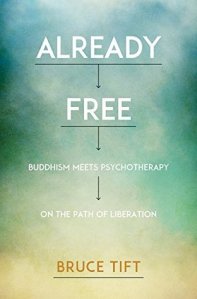
Book: Already Free: Buddhism Meets Psychotherapy on the Path of Liberation

Book Title:

Already Free: Buddhism Meets Psychotherapy on the Path of Liberation.

Author(s): Bruce Lift.

Year: 2011.

Edition: First (1st).

Publisher: Sounds True.

Type(s): Audiobook and Kindle.

Synopsis:

Different Paths, Different Strengths

Freedom from unnecessary suffering is the goal of both Buddhism and modern psychotherapy, yet each approaches this intention from a very different perspective. “Buddhist practice helps us awaken to a well-being that is independent of our circumstances,” explains Bruce Tift, “while Western psychotherapy helps us bring our disowned experience into awareness in order to live in a more skillful and satisfying way.” On Already Free, this therapist and Buddhist practitioner opens a fresh dialogue between these two perspectives, and explores how each provides us with essential keys to experiencing full presence and aliveness.

Practical Tools and Wisdom from the Eastern and Western Traditions

Buddhism gives us powerful tools for breaking free of our own identity drama and our fascination with day-to-day problems, yet it does not address how early childhood experience shapes our adult lives. Western psychotherapy provides a wide range of proven techniques for understanding and untangling the development of our neurotic patterns, but it is only beginning to recognise the powerful impact of exploring awareness itself. “These two approaches sometimes contradict and sometimes support each other,” Tift explains. “When used together, they can help us open to all of life in all its richness, its disturbances, and its inherent completeness.”With a keen understanding of the wisdom of East and West, and a special focus on working with intimate relationships as a pathway to spiritual awakening, Bruce Tift presents seven immersive sessions of insights, wisdom, and practical instruction for realising the fundamental freedom that is your birthright.

Highlights

The Developmental Approach – why we still use our childhood survival skills after we outgrow them The Fruitional Approach – Buddhist wisdom on finding liberation without resolving our historic issues Relationships and Awakening – practices for couples to develop “healthy intimacy” and welcome connection and separateness Why we use “neurotic organisation” to limit our life experience, and how to challenge this self-perpetuating process.

E-Therapy & Training Future Psychiatrists

Research Paper Title

Therapy and E-therapy – Preparing Future Psychiatrists in the Era of Apps and Chatbots.

Background

In both Canada and the USA, residency includes learning about psychotherapy.

The Royal College of Physicians and Surgeons of Canada mentions several psychotherapies in its training objectives and states that residents must “demonstrate proficiency in assessing suitability for and prescribing and delivering” such treatments, including cognitive behavioural therapy.

The Accreditation Council for Graduate Medical Education (ACGME) in the USA sets out competency frameworks and assessments for psychotherapy in psychiatry post-graduate education.

Yet on neither side of the 49th parallel is there mention of e-therapies in training requirements.

Read the full article using the link below.

Reference

Gratzer, D. & Goldbloom, D. (2020) Therapy and E-therapy – Preparing Future Psychiatrists in the Era of Apps and Chatbots. Academic Psychiatry. https://link.springer.com/article/10.1007%2Fs40596-019-01170-3.

Book: Working with Emotion

Book Title:

Working With Emotion in Psychodynamic, Cognitive Behaviour, and Emotion-Focused Psychotherapy.

Author(s): Leslie S. Greenberg, Norka T. Malberg, and Michael A. Tompkins.

Year: 2019.

Edition: First (1st).

Publisher: American Psychological Assocation.

Type(s): Paperback and Kindle.

Synopsis:

The authors of this volume investigate the role of emotion in the development and maintenance of psychological problems, and in effecting psychological change.

They examine emotion as it is conceptualised and used in three of the most widely practised approaches today–psychodynamic, cognitive behaviour, and emotion-focused psychotherapy.

In each chapter, the authors discuss the impact of emotion on child development and learning, the relationship between emotion and motivation, and the ways in which emotion can be harnessed in treatment to improve psychological functioning and strengthen interpersonal relationships.

Clinical vignettes show readers how to arouse, identify, and channel emotions in therapy, while also utilising emotion to develop and maintain an effective therapeutic alliance.