Book: Acceptance and Commitment Therapy (A.C.T.)

Book Title:

Acceptance and Commitment Therapy (A.C.T.): Workbook to Get Out From Anxiety, Relieve Depression, and Break Free From Stress and Worry, for a Newfound Mental Health.

Author(s): Gerald Paul Clifford.

Year: 2020.

Edition: First (1st).

Publisher: Independently Published.

Type(s): Paperback and Kindle.

Synopsis:

Life can present many challenges, some of which can be incredibly difficult to overcome. When these more troubling challenges arise, it can feel impossible to know how to navigate them and the many experiences they bring.

You may feel worried about your thoughts, emotions, behaviours, or all three. Especially when these parts of your experience seem hijacked by anxiety, anger, fear, frustration, depression, or other difficult emotions, it can be overwhelming to navigate them and the many behavioural experiences they bring.

Acceptance and Commitment Therapy (A.C.T) is a type of psychotherapy that relies on talk therapy techniques to assist you with achieving a more functional state in your life. By adjusting your perspective, increasing your awareness, and taking intentional action, you deepen your ability to recognise and navigate your emotions.

What are the Current Trends in Therapy for Mental Disorders in Adolescence?

Research Paper Title

Mental disorders in adolescence: current trends in therapy.

Background

On the basis of the high prevalence for behavioural problems and mental disorders in adolescence and its persistence into adulthood it is tested whether and based upon which emphasis this topic is considered in the recent discussion on psychotherapy.

Therefore, a bibliometric analysis is given that summarizes the issue in the 2011 and 2012 volumes of representative German child and adolescent psychological and psychiatric journals.

The focus lies on conduct disorder, depression, deliberate self-harm, dissociative disorder, and post traumatic stress disorder.

Reference

de Vries, U., Lehmkuhl, G. & Petermann, F. (2020) Mental disorders in adolescence: current trends in therapy.

Book: A Beginner’s Guide to Being Mental: An A-Z

Book Title:

A Beginner’s Guide to Being Mental: An A-Z.

Author(s): Natasha Devon.

Year: 2018.

Edition: First (1st), Main Market Edition.

Publisher: Blue Bird.

Type(s): Paperback, Audiobook and Kindle.

Synopsis:

‘Am I normal?’
‘What’s an anxiety disorder?’
‘Does therapy work?’

These are just a few of the questions Natasha Devon is asked as she travels the UK campaigning for better mental health awareness and provision. Here, Natasha calls upon experts in the fields of psychology, neuroscience and anthropology to debunk and demystify the full spectrum of mental health. From A (Anxiety) to Z (Zero F**ks Given – or the art of having high self-esteem) via everything from body image and gender to differentiating ‘sadness’ from ‘depression’.

Statistically, one in three of us will experience symptoms of a mental illness during our lifetimes. Yet all of us have a brain, and so we ALL have mental health – regardless of age, sexuality, race or background. The past few years have seen an explosion in awareness, yet it seems there is still widespread confusion. A Beginner’s Guide to Being Mental is for anyone who wants to have this essential conversation, written as only Natasha – with her combination of expertise, personal experience and humour – knows how.

Book: Mental Health Workbook

Book Title:

Mental Health Workbook: 4 Books In 1: How to Use Neuroscience and Cognitive Behavioural Therapy to Declutter Your Mind, Stop Overthinking and Quickly Overcome Anxiety, Worry and Panic Attacks.

Author(s): Edward Scott.

Year: 2020.

Edition: First (1st).

Publisher: Saturno Lecca.

Type(s): Hardcover, Paperback, and Kindle.

Synopsis:

Want to learn more about neuroscience paired with cognitive behavioural therapy? Would you like to figure out how to clear your mind by stopping stress, stopping overthinking, overcoming anxiety, worries and panic attacks? If so, read on!

The Cognitive behavioural therapy has been shown to be effective in relieving symptoms in a wide range of mental health problems, ranging from addiction to schizophrenia, along with almost everything in between. It has been shown to be useful for longer than drugs and other forms of therapy.

Excessive thinking can be a side effect of some nervousness problems; however, it can also be an indication of simply being overwhelmed.

One of the most important reasons you want to clear your mind is because it is already playing a negative role in your life. Living with constant negative thoughts and intense fears can cause someone to crave a way to relieve pain or develop unhealthy habits that could get worse.

Anxiety is linked to many other mental illnesses, especially depression!

The main focus of this book is to follow the steps which will improve your thinking

This book covers the following topics

  • What is cognitive behavioural therapy?
  • Stages of cognitive behavioural therapy
  • Definition of excessive thinking.
  • How to identify if you are an excessive thinker.
  • The relationship between excessive thinking, anxiety and stress.
  • Health Benefits of Decluttering.
  • Usual remedy in localised deep breathing.
  • Believe in your self-esteem.
  • And many more.

Before learning the exercises that eliminate negative thinking, you should understand why you have these thoughts.

In fact, the stress caused by information overload, endless options and physical clutter can trigger various mental health problems, including depression, anxiety, and panic attacks. Do you want to know how to prevent them?

Book: Cognitive Analytic Therapy and the Politics of Mental Health

Book Title:

Cognitive Analytic Therapy and the Politics of Mental Health.

Author(s): Rachel Pollard and Julie Lloyd (Editors).

Year: 2018.

Edition: First (1st).

Publisher: Routledge.

Type(s): Hardcover, Paperback, and Kindle.

Synopsis:

Cognitive Analytic Therapy and the Politics of Mental Health provides an overview of the development of cognitive analytic therapy (CAT), and illuminates how the political context affects the way in which therapists consider their work and facilitates their practice.

This book examines how CAT contributes to wider debates over ‘the politics of mental health’. With contributions from those working in services – including adult mental health, learning disabilities and child and adolescent therapists – the writers consider how contemporary politics devolves responsibility for mental illness onto those suffering distress. The evolving political and social attitudes clients bring to therapy are also addressed in several chapters, and there is a focus on groups in society who have been marginalized and neglected in mental and physical health services.

Cognitive Analytic Therapy and the Politics of Mental Health offers a fresh understanding of the contemporary politics of mental health that will be of interest to all therapists and mental health professionals.

Book: Cognitive Analytic Supervision

Book Title:

Cognitive Analytic Supervision: A Relational Approach.

Author(s): Deborah Pickvance (Editor).

Year: 2016.

Edition: First (1st).

Publisher: Routledge.

Type(s): Hardcover, Paperback, and Kindle.

Synopsis:

Cognitive Analytic Supervision: A relational approach is the first book to present a cognitive analytic perspective on psychotherapy supervision. This edited collection of original chapters reflects the ways in which CAT therapists and supervisors have developed the model and used it in diverse settings. It is a significant contribution to the literature on relational psychotherapy supervision, written by established CAT supervisors, trainers and therapists who, together, have an enormous amount of professional and clinical experience.
The book covers important areas such as:

  • The relational theory and practice of CAT supervision.
  • A cognitive analytic conceptualisation of narcissistic difficulties.
  • Intercultural issues in supervision (based on CAT training experience in India).
  • Ethical and clinical dilemmas in supervision.
  • Supervision of consultancy work.

Cognitive Analytic Supervision will be of interest to CAT supervisors, therapists and trainee supervisors, as well as supervisors and therapists working in other therapeutic models, in particular those with a relational approach. This book may be a useful bridge into relationally informed supervision for therapists who do not have an explicitly relational focus.

Book: Cognitive Analytic Therapy

Book Title:

Cognitive Analytic Therapy: Distinctive Features (Psychotherapy and Counselling Distinctive Features).

Author(s): Claire Corbridge, Laura Brummer, and Philippa Coid.

Year: 2017.

Edition: First (1st).

Publisher: Routledge.

Type(s): Hardcover, Paperback, and Kindle.

Synopsis:

Cognitive Analytic Therapy: Distinctive Features offers an introduction to what is distinctive about this increasingly popular method. Written by three Cognitive Analytic Therapists, with many years’ experience, it provides an accessible, bitesize overview of this increasingly used psychological therapy. Using the popular Distinctive Features format, this book describes 15 theoretical features and 15 practical techniques of Cognitive Analytic Therapy.

Cognitive Analytic Therapy will be a valuable source for students, professionals in training and practising therapists, as well as other psychotherapists, counsellors and mental health professionals wishing to learn more about the distinctive features of this important therapy.

Book: Cognitive Analytic Therapy and Borderline Personality Disorder

Book Title:

Cognitive Analytic Therapy and Borderline Personality Disorder : The Model and the Method

Author(s): Anthony Ryle.

Year: 1997.

Edition: First (1st).

Publisher: John Wiley & Sons.

Type(s): Paperback and Kindle.

Synopsis:

Borderline Personality Disorder patients are impulsive, unstable and destructive, hurting themselves and those around them, including those who seek to help them. This has resulted in a widespread reluctance to treat them and a pessimism about treatment.

In the experience of the authors this pessimism is unjustified, because for many patients a relatively brief intervention can be effective in cost-benefit terms as well as human terms. The interventions illustrated here have been used to treat outpatients for 15 years.

The results indicate that treatments can achieve clinically significant changes in the course of 16 24 sessions, in a substantial proportion of patients. While CAT shares some ideas and methods with other approaches, it introduces many new features and is uniquely integrated at both the theoretical and practical level. The early joint reformulation of patients problems serves to contain destructiveness and to create a working alliance. Also, the use of reformulation to teach self-reflection and avoid collusive responses from the therapist, throughout the therapy, represents a powerful new technique.

The book offers a critical appraisal of current ideas and practices, contrasting with these the ways in which CAT mobilises the patient s own resources. The authors argue that CAT should have a place in any service seeking to help these difficult patients.

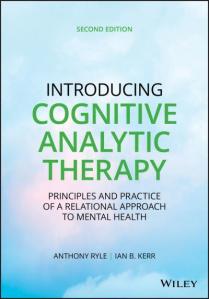
Book: Introducing Cognitive Analytic Therapy

Book Title:

Introducing Cognitive Analytic Therapy: Principles and Practice of a Relational Approach to Mental Health.

Author(s): Anthony Ryle and Ian B. Kerr.

Year: 2020.

Edition: Second (2nd).

Publisher: Wiley.

Type(s): Paperback and Kindle.

Synopsis:

Cognitive Analytic Therapy (CAT) is an increasingly popular approach to therapy that is now widely recognised as a genuinely integrative and fundamentally relational model of psychotherapy. This new edition of the definitive text to CAT offers a systematic and comprehensive introduction to its origins, development, and practice. It also provides a fully updated overview of developments in the theory, research, and applications of CAT, including clarification and re-statement of basic concepts, such as reciprocal roles and reciprocal role procedures, as well as extensions into new areas of expertise.

Introducing Cognitive Analytic Therapy: Principles and Practice of a Relational Approach to Mental Health, 2nd Edition starts with a brief account of the scope and focus of CAT and how it evolved and explains the main features of its practice. It next offers a brief account of a relatively straightforward therapy to give readers a sense of the unfolding structure and style of a time-limited CAT. Following that are chapters that consider the normal and abnormal development of the Self and that introduce influential concepts from Vygotskian, Bakhtinian and developmental psychology. Subsequent chapters describe selection and assessment; reformulation; the course of therapy; the ‘ideal model’ of therapist activity and its relation to the supervision of therapists; applications of CAT in various patient groups and settings and in treating personality type disorders; use in ‘reflective practice’; a CAT perspective on the ‘difficult’ patient; and systemic and ‘contextual’ approaches.

  • Presents an updated introduction and overview of the principles and practice of cognitive analytic therapy (CAT).
  • Updates the first edition with developments from the last decade, in which CAT theory has deepened and the approach has been applied to new patient groups and extended far beyond its roots.
  • Includes detailed, applicable ‘how to’ descriptions of CAT in practice.
  • Includes references to CAT published works and suggestions for further reading within each chapter.
  • Includes a glossary of terms and several appendices containing the CAT Psychotherapy File; a summary of CAT competences extracted from Roth and Pilling; the Personality Structure Questionnaire; and a description of repertory grid basics and their use in CAT.
  • Co-written by the creator of the CAT model, Anthony Ryle, in collaboration with leading CAT practitioner, trainer, and researcher, Ian B. Kerr.

Introducing Cognitive Analytic Therapy is the definitive book for CAT practitioners and CAT trainees at skills, practitioner, and psychotherapy levels. It should also be of considerable interest and relevance to mental health professionals of all orientations, including clinical psychologists, psychiatrists, counselors, mental health nurses, to those working in forensic and various institutional settings, and to a range of other health care and social work professionals.

On This Day … 16 October

People (Births)

  • 1888 – Paul Popenoe, American founder of relationship counselling (d. 1979).

People (Deaths)

  • 2015 – James W. Fowler, American psychologist and academic (b. 1940).

Paul Popenoe

Paul Bowman Popenoe (16 October 1888 to 19 June 1979) was an American agricultural explorer and eugenicist.

He was an influential advocate of the compulsory sterilisation of the mentally ill and the mentally disabled, and the father of relationship counselling in the US.

What is Relationship Counselling?

Couples therapy (also known couples’ counselling, marriage counselling, or marriage therapy) attempts to improve romantic relationships and resolve interpersonal conflicts.

Marriage counselling originated in Germany in the 1920s as part of the eugenics movement. The first institutes for marriage counselling in the United States began in the 1930s, partly in response to Germany’s medically directed, racial purification marriage counselling centres. It was promoted by prominent American eugenicists such as Paul Popenoe, who directed the American Institute of Family Relations until 1976, and Robert Latou Dickinson and by birth control advocates such as Abraham and Hannah Stone who wrote A Marriage Manual in 1935 and were involved with Planned Parenthood. Other founders in the United States include Lena Levine and Margaret Sanger.

It wasn’t until the 1950s that therapists began treating psychological problems in the context of the family. Relationship counselling as a discrete, professional service is thus a recent phenomenon. Until the late 20th century, the work of relationship counselling was informally fulfilled by close friends, family members, or local religious leaders. Psychiatrists, psychologists, counsellors and social workers have historically dealt primarily with individual psychological problems in a medical and psychoanalytic framework. In many less technologically advanced cultures around the world today, the institution of family, the village or group elders fulfil the work of relationship counselling. Today marriage mentoring mirrors those cultures.

With increasing modernisation or westernisation in many parts of the world and the continuous shift towards isolated nuclear families, the trend is towards trained and accredited relationship counsellors or couple therapists. Sometimes volunteers are trained by either the government or social service institutions to help those who are in need of family or marital counselling. Many communities and government departments have their own team of trained voluntary and professional relationship counsellors. Similar services are operated by many universities and colleges, sometimes staffed by volunteers from among the student peer group. Some large companies maintain a full-time professional counselling staff to facilitate smoother interactions between corporate employees, to minimize the negative effects that personal difficulties might have on work performance.

Increasingly there is a trend toward professional certification and government registration of these services. This is in part due to the presence of duty of care issues and the consequences of the counsellor or therapist’s services being provided in a fiduciary relationship.

James W. Fowler

James William Fowler III (1940–2015) was an American theologian who was Professor of Theology and Human Development at Emory University. He was director of both the Centre for Research on Faith and Moral Development and the Centre for Ethics until he retired in 2005. He was a minister in the United Methodist Church.

Life and Career

Fowler was born in Reidsville, North Carolina, on 12 October 1940, the son of a Methodist minister. In 1977, Fowler was appointed Associate Professor of Theology and Human Development at the Candler School of Theology at Emory University. He was later named Charles Howard Candler Professor of Theology and Human Development. He died on 16 October 2015.

He published Stages of Faith: The Psychology of Human Development and the Quest for Meaning in 1981.

Stages of Faith

He is best known for his book Stages of Faith, published in 1981, in which he sought to develop the idea of a developmental process in “human faith”.

These stages of faith development were along the lines of Jean Piaget’s theory of cognitive development and Lawrence Kohlberg’s stages of moral development.

  • Stage 0:
    • “Primal or Undifferentiated” faith (birth to 2 years), is characterised by an early learning of the safety of their environment (i.e. warm, safe and secure vs. hurt, neglect and abuse).
    • If consistent nurture is experienced, one will develop a sense of trust and safety about the universe and the divine.
    • Conversely, negative experiences will cause one to develop distrust with the universe and the divine.
    • Transition to the next stage begins with integration of thought and language which facilitates the use of symbols in speech and play.
  • Stage 1:
    • “Intuitive-Projective” faith (ages of three to seven), is characterized by the psyche’s unprotected exposure to the Unconscious, and marked by a relative fluidity of thought patterns.
    • Religion is learned mainly through experiences, stories, images, and the people that one comes in contact with.
  • Stage 2:
    • “Mythic-Literal” faith (mostly in school children), stage two persons have a strong belief in the justice and reciprocity of the universe, and their deities are almost always anthropomorphic.
    • During this time metaphors and symbolic language are often misunderstood and are taken literally.
  • Stage 3:
    • “Synthetic-Conventional” faith (arising in adolescence; aged 12 to adulthood) characterized by conformity to authority and the religious development of a personal identity.
    • Any conflicts with one’s beliefs are ignored at this stage due to the fear of threat from inconsistencies.
  • Stage 4:
    • “Individuative-Reflective” faith (usually mid-twenties to late thirties) a stage of angst and struggle.
    • The individual takes personal responsibility for his or her beliefs and feelings.
    • As one is able to reflect on one’s own beliefs, there is an openness to a new complexity of faith, but this also increases the awareness of conflicts in one’s belief.
  • Stage 5:
    • “Conjunctive” faith (mid-life crisis) acknowledges paradox and transcendence relating reality behind the symbols of inherited systems.
    • The individual resolves conflicts from previous stages by a complex understanding of a multidimensional, interdependent “truth” that cannot be explained by any particular statement.
  • Stage 6:
    • “Universalising” faith, or what some might call “enlightenment”.
    • The individual would treat any person with compassion as he or she views people as from a universal community, and should be treated with universal principles of love and justice.

Empirical Research

Fowler’s model has inspired a considerable body of empirical research into faith development, although little of such research was ever conducted by Fowler himself. A useful tool here has been Gary Leak’s Faith Development Scale, or FDS, which has been subject to factor analysis by Leak.