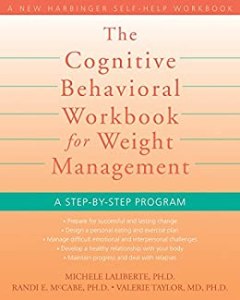
Book: The Cognitive Behavioural Workbook for Weight Management

Book Title:

The Cognitive Behavioural Workbook for Weight Management: A Step-by-Step Programme (A New Harbinger Self-Help Workbook).

Author(s): Michele Laliberte, Randi E. McCabe, and Valerie Taylor.

Year: 2009.

Edition: First (1st), Illutstrated Edition.

Publisher: New Harbinger Publications.

Type(s): Paperback and Kindle.

Synopsis:

We all think we know what we have to do to manage our weight, and blame ourselves when we do not meet the goals we have set. In reality, we need to understand the biology behind the body’s regulation of weight to achieve the control we are hoping for. And we need strategies for overcoming obstacles: the stress of daily life, emotional upsets, and people who sabotage our efforts or attack our self-esteem.

The Cognitive Behavioural Workbook for Weight Management is a different kind of weight management guide that focuses on helping you stay disciplined and dedicated to your weight management goals by using cognitive behavioural therapy. This approach has been used by therapists for years to treat a diverse range of mental health conditions, and researchers have found that it also helps people make healthy changes that last.

This workbook includes exercises and worksheets to help you design a customised weight management strategy most likely to be effective for you based on the habits and lifestyle you have now. You’ll set specific goals to improve your body image and your health, and follow a realistic weight management plan designed specifically for you. It is possible to feel good about yourself as you work toward a healthier lifestyle. This book will show you how.

Learn to:

  • Manage situational, emotional, and interpersonal eating triggers.
  • Overcome body image difficulties and critical thoughts.
  • Make changes toward weight management that you actually enjoy.
  • Use support from friends and family to bolster success.
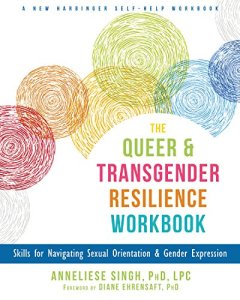
Book: The Queer and Transgender Resilience Workbook

Book Title:

The Queer and Transgender Resilience Workbook: Skills for Navigating Sexual Orientation and Gender Expression (New Harbinger Self-Help Workbook).

Author(s): Anneliese A. Singh (PhD, LPC) and Diane Ehrensaft (PhD).

Year: 2018.

Edition: First (1st) Workbook Edition.

Publisher: New Harbinger Publications.

Type(s): Paperback and eTextbook.

Synopsis:

How can you build unshakable confidence and resilience in a world still filled with ignorance, inequality, and discrimination? The Queer and Transgender Resilience Workbook will teach you how to challenge internalised negative messages, handle stress, build a community of support, and embrace your true self.

Resilience is a key ingredient for psychological health and wellness. It’s what gives people the psychological strength to cope with everyday stress, as well as major setbacks. For many people, stressful events may include job loss, financial problems, illness, natural disasters, medical emergencies, divorce, or the death of a loved one. But if you are queer or gender non-conforming, life stresses may also include discrimination in housing and health care, employment barriers, homelessness, family rejection, physical attacks or threats, and general unfair treatment and oppression – all of which lead to overwhelming feelings of hopelessness and powerlessness. So, how can you gain resilience in a society that is so often toxic and unwelcoming?

In this important workbook, you will discover how to cultivate the key components of resilience: holding a positive view of yourself and your abilities; knowing your worth and cultivating a strong sense of self-esteem; effectively utilising resources; being assertive and creating a support community; fostering hope and growth within yourself, and finding the strength to help others. Once you know how to tap into your personal resilience, you’ll have an unlimited well you can draw from to navigate everyday challenges.

By learning to challenge internalised negative messages and remove obstacles from your life, you can build the resilience you need to embrace your truest self in an imperfect world.

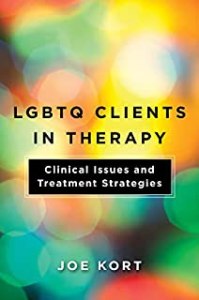
Book: LGBT Clients in Therapy

Book Title:

LGBTQ Clients in Therapy: Clinical Issues and Treatment Strategies.

Author(s): Joe Kort.

Year: 2018.

Edition: First (1st).

Publisher: W.W. Norton & Company.

Type(s): Paperback and Kindle.

Synopsis:

All the answers clinicians need to work effectively with LGBTQ clients.

A therapist who treats LGBTQ clients often must be more than “gay friendly.” Clinical experience, scientific research, and cultural understanding are advancing rapidly, and the task of being LGBTQ informed is ever-changing in today’s world.

This book covers topics such as how to avoid making the common mistake of believing that “a couple is a couple,” thus treating LGBTQ couples the same as their heterosexual counterparts; how to treat clients struggling in “mixed” orientation marriages and relationships (straight and LGBTQ spouses in the same couple); and how to work with all clients who have non-heteronormative sexual behaviours and practices. Perhaps most importantly, the book discusses covert cultural sexual abuse (the trauma suffered from having to suppress one’s own sexual and gender identity) as well as the difficult process of coming out to family and friends.

A therapist’s job is to help clients and their identities through their own lens and not anyone else’s – especially the therapist’s. The gay affirmative principles put forward in this book will help you build a stronger relationship with your LGBTQ clients and become the go-to therapist in your area.

Book: Good Morning, Monster

Book Title:

Good Morning, Monster – A Therapist Shares Five Heroic Stories of Emotional Recovery.

Author(s): Catherine Gildiner.

Year: 2020.

Edition: First (1st).

Publisher: St. Martin’s Press.

Type(s): Hardcover, Paperback, Audiobook, and Kindle.

Synopsis:

In this fascinating narrative, therapist Catherine Gildiner’s presents five of what she calls her most heroic and memorable patients. Among them: a successful, first generation Chinese immigrant musician suffering sexual dysfunction; a young woman whose father abandoned her at age nine with her younger siblings in an isolated cottage in the depth of winter; and a glamorous workaholic whose narcissistic, negligent mother greeted her each morning of her childhood with “Good morning, Monster.”

Each patient presents a mystery, one that will only be unpacked over years. They seek Gildiner’s help to overcome an immediate challenge in their lives, but discover that the source of their suffering has been long buried.

As in such recent classics as The Glass Castle and Educated, each patient embodies self-reflection, stoicism, perseverance, and forgiveness as they work unflinchingly to face the truth. Gildiner’s account of her journeys with them is moving, insightful, and sometimes very funny. Good Morning Monster offers an almost novelistic, behind-the-scenes look into the therapist’s office, illustrating how the process can heal even the most unimaginable wounds.

Book: Essential Art Therapy Exercises

Book Title:

Essential Art Therapy Exercises: Effective Techniques to Manage Anxiety, Depression, and PTSD.

Author(s): Leah Guzman.

Year: 2020.

Edition: First (1st).

Publisher: Rockridge Press.

Type(s): Paperback and Kindle.

Synopsis:

Process difficult thoughts and feelings with art therapy

Essential Art Therapy Exercises shows you how creating art can help ease depression, anxiety, PTSD, and life’s other challenges. Art therapy activities like drawing, painting, and sculpting will help you better understand your state of mind in order to gain control over your emotions and improve your self-esteem.

From drawing a representation of your favourite song, to writing affirmations and taking photos to match, these therapeutic exercises will help you overcome the mindsets that are holding you back and lead you toward inner peace. Some take only five minutes, others up to an hour, but all of them explore a range of artistic mediums, so you can choose exactly what works for you.

Essential Art Therapy Exercises offers:

  • The art of getting better – These sophisticated exercises are a springboard for insight, self-expression, mindfulness, acceptance, and self-compassion.
  • Insights and questions – Every activity describes its benefits and offers thoughtful prompts to help you get the most out of each experience.
  • No experience required – You do not need to be an artist to use art therapy. It is about the experience of creating-without worry or judgement.

Book: The Anxiety Toolkit

Book Title:

Anxiety Toolkit, The – Strategies for Fine-Tuning Your Mind and Moving Past Your Stuck Points.

Author(s): Alice Boyes, PhD.

Year: 2015.

Edition: First (1st).

Publisher: End of line Clearance Book.

Type(s): Paperback.

Synopsis:

Do you overthink before taking action? Are you prone to making negative predictions? Do you worry about the worst that could happen? Do you take negative feedback very hard? Are you self-critical? Does anything less than perfect performance feel like failure?

If any of these issues resonate with you, you are probably suffering from some degree of anxiety, and you’re not alone. The good news: while reducing your anxiety level to zero is not possible or useful (anxiety can actually be helpful!), you can learn to successfully manage symptoms – such as excessive rumination, hesitation, fear of criticism and paralysing perfection.

In The Anxiety Toolkit, Dr. Alice Boyes translates powerful, evidence-based tools used in therapy clinics into tips and tricks you can employ in everyday life. Whether you have an anxiety disorder, or are just anxiety-prone by nature, you will discover how anxiety works, strategies to help you cope with common anxiety ‘stuck’ points and a confidence that – anxious or not – you have all the tools you need to succeed in life and work.

Book: Brief Counselling: A Practical Integrative Approach

Book Title:

Brief Counselling: A Practical Integrative Approach.

Author(s): Colin Feltham and Wendy Dryden.

Year: 2006.

Edition: Second (2ed).

Publisher: Open University Press.

Type(s): Paperback and Kindle.

Synopsis:

Almost two thirds of counsellors and psychotherapists work with clients in up to twenty sessions each: this book reflects that reality and the challenges involved.

The bestselling first edition of this book, by two of the UK’s leading counsellor trainers and academics, was praised by trainers and tutors for its accessibility, comprehensiveness and practicality. It was also a leading contribution to the movement towards time-conscious counselling and to an understanding of the therapeutic alliance across time.

The second edition has been thoroughly updated to include significant recent professional developments and new thinking in the counselling field. Additions include more detailed discussion of:

  • Assessment.
  • Contracting.
  • Very brief counselling.
  • Clinical reasoning.
  • Clients’ modalities.
  • Technical repertoire.
  • Depression and realism.
  • Supervision of brief counselling.

In the rapidly maturing profession of counselling, this book’s sensitivity to time as a precious resource, clients’ perceptions, evidence-based guidelines and integration of some of the best thinking from several counselling models make it an ideal core text for beginners and reflective practitioners. Thoughtful and busy practitioners in primary care, employee counselling, educational, voluntary and private practice settings will find many immediately helpful ideas and examples in this classic text.

Book: Working with Sexual Issues in Psychotherapy

Book Title:

Working with Sexual Issues in Psychotherapy: A Practical Guide Using a Systemic Social Constructionist Framework (Basic Texts in Counselling and Psychotherapy).

Author(s): Desa Markovic.

Year: 2017.

Edition: First (1st).

Publisher: Red Globe Press.

Type(s): Paperback and Kindle.

Synopsis:

Whilst many psychotherapists work skilfully and creatively with the subject of sex, the lack of professional support systems such as training and supervision mean that the topic is often still treated as taboo in the psychotherapy room.

This secretive treatment may increase clients feelings of shame and embarrassment, thus mirroring the confusing views on sexuality in society and leading to the onset and development of sexual dysfunctions.

Bringing the medical perspective of sexology together with systemic psychotherapy informed by social constructionism, this timely book seeks to fill the gap in psychotherapy literature, research and training by providing a theoretical framework, as well as practical guidance, for effective therapeutic interventions in working with sex and sexual relationships in clinical practice.

Exploring topics such as sexual prejudice, the significance of sexual diversity and the assessment and treatment of sexual dysfunctions, enriched with a wealth of engaging case studies, Working with Sexual Issues in Psychotherapy is a fascinating and important read both for students new to this complex topic, and for practitioners looking for a comprehensive source of reference.

Book: Introducing Counselling: A Practical Guide

Book Title:

Introducing Counselling: A Practical Guide.

Author(s): Alastair Ross.

Year: 2013.

Edition: First (1st), UK Edition.

Publisher: Icon Books Ltd.

Type(s): Paperback and Kindle.

Synopsis:

Introducing Counselling: A Practical Guide is an accessible and practical route into counselling techniques. What is it? How does it work? And how can it change your life?

With expert advice on everything from the ethics of counselling to identifying steps forward, this book offers an invaluable guide to anyone who is interested in counselling others, or in having counselling themselves. Introducing Practical Guides bring you the world’s greatest theories and research to improve your life, your skills and your well-being.

Packed full of straightforward, realistic advice that has immediate results, Practical Guides are engineered by experts in their fields to help you achieve your goals.

Book: Constructive Psychotherapy

Book Title:

Constructive Psychotherapy: A Practical Guide: Practices, Processes and Personal Revolutions.

Author(s): Michael J. Mahoney.

Year: 2003.

Edition: First (1st).

Publisher: Guildford Press.

Type(s): Hardcover and Paperback.

Synopsis:

An invaluable teaching text and clinical resource, this is a book about how to do psychotherapy – how to apply the science of change to the complexities of helping people develop new meanings in their lives.

Explaining constructivist principles and illuminating what a skilled clinician actually does in day-to-day practice, Michael J. Mahoney shows how to nurture the therapeutic relationship while implementing such creative interventions as centering techniques, problem solving, pattern work, meditation and embodiment exercises, drama and dream work, and spiritual exploration.

Appendices feature reproducible client forms, handouts, and other useful materials.