What is Tacrine?

Introduction

Tacrine is a centrally acting acetylcholinesterase inhibitor and indirect cholinergic agonist (parasympathomimetic).

It was the first centrally acting cholinesterase inhibitor approved for the treatment of Alzheimer’s disease, and was marketed under the trade name Cognex. Tacrine was first synthesised by Adrien Albert at the University of Sydney in 1949. It also acts as a histamine N-methyltransferase inhibitor.

Clinical Use

Tacrine was the prototypical cholinesterase inhibitor for the treatment of Alzheimer’s disease. William K. Summers received a patent for this use in 1989. Studies found that it may have a small beneficial effect on cognition and other clinical measures, though study data was limited and the clinical relevance of these findings was unclear.

Tacrine has been discontinued in the US in 2013, due to concerns over safety.

Tacrine was also described as an analeptic agent used to promote mental alertness.

Adverse Effects

  • Very common (>10% incidence) adverse effects include:
    • Increased LFTs.
    • Nausea.
    • Vomiting.
    • Diarrhoea.
    • Headache.
    • Dizziness.
  • Common (1-10% incidence) adverse effects include:
    • Indigestion.
    • Belching.
    • Abdominal pain.
    • Myalgia – muscle pain.
    • Confusion.
    • Ataxia – decreased control over bodily movements.
    • Insomnia.
    • Rhinitis.
    • Rash.
    • Fatigue.
    • Weight loss.
    • Constipation.
    • Somnolence.
    • Tremor.
    • Anxiety.
    • Urinary incontinence.
    • Hallucinations.
    • Agitation.
    • Conjunctivitis (a link to tacrine treatment has not been conclusively proven).
    • Diaphoresis – sweating.
  • Uncommon/rare (<1% incidence) adverse effects include:
    • Hepatotoxicity (that is toxic effects on the liver).
    • Ototoxicity (hearing/ear damage; a link to tacrine treatment has not been conclusively proven).
    • Seizures.
    • Agranulocytosis (a link between treatment and this adverse effect has not been proven) – a potentially fatal drop in white blood cells, the body’s immune/defensive cells.
    • Taste changes.
  • Unknown incidence adverse effects include:
    • Urinary tract infection.
    • Delirium.
    • Other optic effects such as glaucoma, cataracts, etc. (also not conclusively linked to tacrine treatment).
    • Depression.
    • Suicidal ideation and behaviour.
    • Hypotension.
    • Bradycardia.

Overdose

As stated above, overdosage of tacrine may give rise to severe side effects such as nausea, vomiting, salivation, sweating, bradycardia, hypotension, collapse, and convulsions. Atropine is a popular treatment for overdose.

Pharmacokinetics

Major form of metabolism is in the liver via hydroxylation of benzylic carbon by CYP1A2. This forms the major metabolite 1-hydroxy-tacrine (velnacrine) which is still active.

What is Thioridazine?

Introduction

Thioridazine (Mellaril or Melleril) is a first generation antipsychotic drug belonging to the phenothiazine drug group and was previously widely used in the treatment of schizophrenia and psychosis.

The branded product was withdrawn worldwide in 2005 because it caused severe cardiac arrhythmias. However, generic versions are still available in the US.

Brief History

The manufacturer Novartis/Sandoz/Wander of the brands of thioridazine, Mellaril in the US and Canada and Melleril in Europe, discontinued the drug worldwide in June 2005.

Indications

Thioridazine was voluntarily discontinued by its manufacturer, Novartis, worldwide because it caused severe cardiac arrhythmias.

Its primary use in medicine was the treatment of schizophrenia. It was also tried with some success as a treatment for various psychiatric symptoms seen in people with dementia, but chronic use of thioridazine and other anti-psychotics in people with dementia is not recommended.

Side Effects

Thioridazine prolongs the QTc interval in a dose-dependent manner. It produces significantly less extrapyramidal side effects than most first-generation antipsychotics. Its use, along with the use of other typical antipsychotics, has been associated with degenerative retinopathies. It has a higher propensity for causing anticholinergic side effects coupled with a lower propensity for causing extrapyramidal side effects and sedation than chlorpromazine, but also has a higher incidence of hypotension and cardiotoxicity. It is also known to possess a relatively high liability for causing orthostatic hypotension compared to other antipsychotics. Similarly to other first-generation antipsychotics it has a relatively high liability for causing prolactin elevation. It is moderate risk for causing weight gain. As with all antipsychotics thioridazine has been linked to cases of tardive dyskinesia (an often permanent neurological disorder characterised by slow, repetitive, purposeless and involuntary movements, most often of the facial muscles, that is usually brought on by years of continued treatment with antipsychotics, especially the first-generation (or typical) antipsychotics such as thioridazine) and neuroleptic malignant syndrome (a potentially fatal complication of antipsychotic treatment). Blood dyscrasias such as agranulocytosis, leukopenia and neutropenia are possible with thioridazine treatment. Thioridazine is also associated with abnormal retinal pigmentation after many years of use. Thioridazine has been correlated to rare instances of clinically apparent acute cholestatic liver injury.

Metabolism

Thioridazine is a racemic compound with two enantiomers, both of which are metabolised, according to Eap et al., by CYP2D6 into (S)- and (R)-thioridazine-2-sulfoxide, better known as mesoridazine, and into (S)- and (R)-thioridazine-5-sulfoxide. Mesoridazine is in turn metabolized into sulforidazine. Thioridazine is an inhibitor of CYP1A2 and CYP3A4.

Antibiotic Activity

Thioridazine is known to kill extensively drug-resistant tuberculosis and to make methicillin-resistant Staphylococcus aureus sensitive to β-lactam antibiotics. A possible mechanism of action for the drug’s antibiotic activity is via the inhibition of bacterial secretion pumps. The β-lactam antibiotic resistance is due to the secretion β-lactamase a protein that destroys antibiotics. If the bacteria cannot secrete the β-lactamase, then the antibiotic will be effective.

What is Tranylcypromine/Trifluoperazine?

Introduction

Tranylcypromine/trifluoperazine (brand names Parstelin, Parmodalin, Jatrosom N, Stelapar) is a combination formulation of the monoamine oxidase inhibitor antidepressant drug tranylcypromine and the typical antipsychotic drug trifluoperazine that has been used in the treatment of major depressive disorder.

It contains 10 mg tranylcypromine and 1 mg trifluoperazine.

The drug has been in clinical use since at least 1961. It is still available in Italy with the name of Parmodalin.

What is Trifluoperazine?

Introduction

Trifluoperazine, sold under a number of brand names, is a typical antipsychotic primarily used to treat schizophrenia.

It may also be used short term in those with generalised anxiety disorder but is less preferred to benzodiazepines. It is of the phenothiazine chemical class.

Medical Uses

Schizophrenia

Trifluoperazine is an effective antipsychotic for people with schizophrenia. There is low-quality evidence that trifluoperazine increases the chance of being improved when compared to placebo when people are followed up for 19 weeks. There is low-quality evidence that trifluoperazine reduces the risk of relapse when compared with placebo when people are followed for 5 months. As of 2014 there was no good evidence for a difference between trifluoperazine and placebo with respect to the risk of experiencing intensified symptoms over a 16-week period nor in reducing significant agitation or distress.

There is no good evidence that trifluoperazine is more effective for schizophrenia than lower-potency antipsychotics like chlorpromazine, chlorprothixene, thioridazine and levomepromazine, but trifluoperazine appears to cause more adverse effects than these drugs.

Other

It appears to be effective for people with generalised anxiety disorder but the benefit-risk ratio was unclear as of 2005.

It has been experimentally used as a drug to kill eukaryotic pathogens in humans.

Side Effects

Its use in many parts of the world has declined because of highly frequent and severe early and late tardive dyskinesia, a type of extrapyramidal symptom. The annual development rate of tardive dyskinesia may be as high as 4%.

A 2004 meta-analysis of the studies on trifluoperazine found that it is more likely than placebo to cause extrapyramidal side effects such as akathisia, dystonia, and Parkinsonism. It is also more likely to cause somnolence and anticholinergic side effects such as red eye and xerostomia (dry mouth). All antipsychotics can cause the rare and sometimes fatal neuroleptic malignant syndrome. Trifluoperazine can lower the seizure threshold. The antimuscarinic action of trifluoperazine can cause excessive dilation of the pupils (mydriasis), which increases the chances of patients with hyperopia developing glaucoma.

Contraindications

Trifluoperazine is contraindicated in CNS depression, coma, and blood dyscrasias. Trifluoperazine should be used with caution in patients suffering from renal or hepatic impairment.

Mechanism of Action

Trifluoperazine has central antiadrenergic, antidopaminergic, and minimal anticholinergic effects. It is believed to work by blockading dopamine D1 and D2 receptors in the mesocortical and mesolimbic pathways, relieving or minimising such symptoms of schizophrenia as hallucinations, delusions, and disorganised thought and speech.

Names

Brand names include Eskazinyl, Eskazine, Jatroneural, Modalina, Stelazine, Stilizan, Terfluzine, Trifluoperaz, Triftazin.

In the United Kingdom and some other countries, trifluoperazine is sold and marketed under the brand ‘Stelazine’.

The drug is sold as tablet, liquid and ‘Trifluoperazine-injectable USP’ for deep intramuscular short-term use. GP studying pharmacological data has indicated cases of neck vertebrae irreversible fusing leading to NHS preparations being predominantly of the liquid form trifluoperazine as opposed to the tablet form as in Stela zine etc.

In the past, trifluoperazine was used in fixed combinations with the MAO inhibitor (antidepressant) tranylcypromine (tranylcypromine/trifluoperazine) to attenuate the strong stimulating effects of this antidepressant. This combination was sold under the brand name Jatrosom N. Likewise a combination with amobarbital (potent sedative/hypnotic agent) for the amelioration of psychoneurosis and insomnia existed under the brand name Jalonac. In Italy the first combination is still available, sold under the brand name Parmodalin (10 mg of tranylcypromine and 1 mg of trifluoperazine).

What is an Anxiolytic?

Introduction

An anxiolytic (also anti-panic or anti-anxiety agent) is a medication or other intervention that reduces anxiety.

This effect is in contrast to anxiogenic agents which increase anxiety. Anxiolytic medications are used for the treatment of anxiety disorder and its related psychological and physical symptoms.

Medications

Barbiturates

Barbiturates are powerful anxiolytics but the risk of abuse and addiction is high. Many experts consider these drugs obsolete for treating anxiety but valuable for the short-term treatment of severe insomnia, though only after benzodiazepines or non-benzodiazepines have failed.

Benzodiazepines

Benzodiazepines are prescribed to quell panic attacks. Benzodiazepines are also prescribed in tandem with an antidepressant for the latent period of efficacy associated with many ADs for anxiety disorder. There is risk of benzodiazepine withdrawal and rebound syndrome if BZDs are rapidly discontinued. Tolerance and dependence may occur. The risk of abuse in this class of medication is smaller than in that of barbiturates. Cognitive and behavioural adverse effects are possible.

Benzodiazepines include: Alprazolam (Xanax), Bromazepam, Chlordiazepoxide (Librium), Clonazepam (Klonopin), Diazepam (Valium), Lorazepam (Ativan), Oxazepam, Temazepam, and Triazolam.

Antidepressants

Antidepressant medications can reduce anxiety. The SSRIs paroxetine and lexapro and SNRIs venlafaxine and duloxetine are US Food and Drug Administration (FDA) approved to treat generalised anxiety disorder.

Selective Serotonin Reuptake Inhibitors

Selective serotonin reuptake inhibitors (SSRIs) are a class of medications used in the treatment of depression, anxiety disorders, OCD and some personality disorders. SSRIs can increase anxiety initially due to negative feedback through the serotonergic autoreceptors, for this reason a concurrent benzodiazepine can be used until the anxiolytic effect of the SSRI occurs.

Serotonin-Norepinephrine Reuptake Inhibitors

Serotonin-norepinephrine reuptake inhibitor (SNRIs) include venlafaxine and duloxetine drugs. Venlafaxine, in extended release form, and duloxetine, are indicated for the treatment of GAD. SNRIs are as effective as SSRIs in the treatment of anxiety disorders.

Tricyclic Antidepressants

Tricyclic antidepressants (TCAs) have anxiolytic effects; however, side effects are often more troubling or severe and overdose is dangerous. They’re effective, but they’ve generally been replaced by antidepressants that cause fewer adverse effects. Examples include imipramine, doxepin, amitriptyline, nortriptyline and desipramine.

Tetracyclic Antidepressant

Tetracyclic antidepressants, such as Mirtazapine, have demonstrated anxiolytic effect comparable to SSRIs while rarely causing or exacerbating anxiety. Mirtazapine’s anxiety reduction tends to occur significantly faster than SSRIs.

Monoamine Oxidase Inhibitors

Monoamine oxidase inhibitors (MAOIs) are first generation antidepressants effective for anxiety treatment but their dietary restrictions, adverse effect profile and availability of newer medications have limited their use. MAOIs include phenelzine, isocarboxazid and tranylcypromine. Pyrazidol is a reversible MAOI that lacks dietary restriction.

Sympatholytics

Sympatholytics are a group of anti-hypertensives which inhibit activity of the sympathetic nervous system. Beta blockers reduce anxiety by decreasing heart rate and preventing shaking. Beta blockers include propranolol, oxprenolol, and metoprolol. The Alpha-1 agonist prazosin could be effective for PTSD. The Alpha-2 agonists clonidine and guanfacine have demonstrated both anxiolytic and anxiogenic effects.

Miscellaneous

Buspirone

Buspirone (Buspar) is a 5-HT1A receptor agonist used to treated generalised anxiety disorder. If an individual has taken a benzodiazepine, buspirone will be less effective.

Pregabalin

Pregabalin (Lyrica) produces anxiolytic effect after one week of use comparable to lorazepam, alprazolam, and venlafaxine with more consistent psychic and somatic anxiety reduction. Unlike BZDs, it does not disrupt sleep architecture nor does it cause cognitive or psychomotor impairment.

Hydroxyzine

Hydroxyzine (Atarax) is an antihistamine originally approved for clinical use by the FDA in 1956. Hydroxyzine has a calming effect which helps ameliorate anxiety. Hydroxyzine efficacy is comparable to benzodiazepines in the treatment of generalised anxiety disorder. Hydroxyzine is typically only used for short term anxiety relief.

Phenibut

Phenibut (Anvifen, Fenibut, Noofen) is an anxiolytic used in Russia. Phenibut is a GABAB receptor agonist, as well as an antagonist at α2δ subunit-containing voltage-dependent calcium channels (VDCCs), similarly to gabapentinoids like gabapentin and pregabalin. The medication is not approved by the FDA for use in the United States, but is sold online as a supplement.

Mebicar

Mebicar is an anxiolytic produced in Latvia and used in Eastern Europe. Mebicar has an effect on the structure of limbic-reticular activity, particularly on the hypothalamus, as well as on all 4 basic neuromediator systems – γ aminobutyric acid (GABA), choline, serotonin and adrenergic activity. Mebicar decreases noradrenaline, increases serotonin, and exerts no effect on dopamine.

Fabomotizole

Fabomotizole (Afobazole) is an anxiolytic drug launched in Russia in the early 2000s. Its mechanism of action is poorly defined, with GABAergic, NGF and BDNF release promoting, MT1 receptor agonism, MT3 receptor antagonism, and sigma agonism thought to have some involvement.

Bromantane

Bromantane is a stimulant drug with anxiolytic properties developed in Russia during the late 1980s. Bromantane acts mainly by facilitating the biosynthesis of dopamine, through indirect genomic upregulation of relevant enzymes (tyrosine hydroxylase (TH) and aromatic L-amino acid decarboxylase (AAAD).

Emoxypine

Emoxypine is an antioxidant that is also a purported anxiolytic. Its chemical structure resembles that of pyridoxine, a form of vitamin B6.

Menthyl Isovalerate

Menthyl isovalerate is a flavouring food additive marketed as a sedative and anxiolytic drug in Russia under the name Validol.

Racetams

Some racetam based drugs such as aniracetam can have an antianxiety effect.

Etifoxine

Having similar anxiolytic effects as benzodiazepine drugs, etifoxine does not produce the same levels of sedation and ataxia. Further, etifoxine does not affect memory and vigilance, and does not induce rebound anxiety, drug dependence, or withdrawal symptoms.

Alcohol

Ethanol is sometimes used as an anxiolytic by self-medication. fMRI can measure the anxiolytic effects of alcohol in the human brain.

Alternatives to Medication

Cognitive behavioural therapy (CBT) is an effective treatment for panic disorder, social anxiety disorder, generalized anxiety disorder, and obsessive-compulsive disorder, while exposure therapy is the recommended treatment for anxiety related phobias. Healthcare providers can guide those with anxiety disorder by referring them to self-help resources. Sometimes medication is combined with psychotherapy but research has not found a benefit of combined pharmacotherapy and psychotherapy versus monotherapy.

If CBT is found ineffective, both the Canadian and American medical associations then suggest the use of a potent, long lasting benzodiazepine such as clonazepam and an antidepressant, usually Prozac for its effectiveness.

What is a Monoamine Oxidase Inhibitor?

Introduction

Monoamine oxidase inhibitors (MAOIs) are a class of drugs that inhibit the activity of one or both monoamine oxidase enzymes: monoamine oxidase A (MAO-A) and monoamine oxidase B (MAO-B).

They are best known as highly efficacious antidepressants, as well as effective therapeutic agents for panic disorder and social phobia. They are particularly effective in treatment-resistant depression and atypical depression. They are also used in the treatment of Parkinson’s disease and several other disorders.

Reversible inhibitors of monoamine oxidase A (RIMAs) are a subclass of MAOIs that selectively and reversibly inhibit the MAO-A enzyme. RIMAs are used clinically in the treatment of depression and dysthymia. Due to their reversibility, they are safer in single-drug overdose than the older, irreversible MAOIs, and weaker in increasing the monoamines important in depressive disorder. RIMAs have not gained widespread market share in the United States.

New research into MAOIs indicates that much of the concern over their supposed dangerous dietary side effects stems from misconceptions and misinformation, and that they are still underutilised despite demonstrated efficacy. New research also questions the validity of the perceived severity of dietary reactions, which has been based on outdated research. Despite this, many psychiatrists, who have little or no knowledge of and experience with monoamine oxidase inhibitors (and are thus unaware of their significant benefits), still reserve them as a last line of treatment, used only when other classes of antidepressant drugs (for example, selective serotonin reuptake inhibitors (SSRIs) and tricyclic antidepressants) have failed.

Brief History

MAOIs started off due to the serendipitous discovery that iproniazid was a potent MAO inhibitor (MAOI). Originally intended for the treatment of tuberculosis, in 1952, iproniazid’s antidepressant properties were discovered when researchers noted that the depressed patients given iproniazid experienced a relief of their depression. Subsequent in vitro work led to the discovery that it inhibited MAO and eventually to the monoamine theory of depression. MAOIs became widely used as antidepressants in the early 1950s. The discovery of the 2 isoenzymes of MAO has led to the development of selective MAOIs that may have a more favourable side-effect profile.

The older MAOIs’ heyday was mostly between the years 1957 and 1970. The initial popularity of the ‘classic’ non-selective irreversible MAO inhibitors began to wane due to their serious interactions with sympathomimetic drugs and tyramine-containing foods that could lead to dangerous hypertensive emergencies. As a result, the use by medical practitioners of these older MAOIs declined. When scientists discovered that there are two different MAO enzymes (MAO-A and MAO-B), they developed selective compounds for MAO-B, (for example, selegiline, which is used for Parkinson’s disease), to reduce the side-effects and serious interactions. Further improvement occurred with the development of compounds (moclobemide and toloxatone) that not only are selective but cause reversible MAO-A inhibition and a reduction in dietary and drug interactions. Moclobemide, was the first reversible inhibitor of MAO-A to enter widespread clinical practice.

A transdermal patch form of the MAOI selegiline, called Emsam, was approved for use in depression by the US Food and Drug Administration (FDA) on 28 February 2006.

Medical Uses

MAOIs have been found to be effective in the treatment of panic disorder with agoraphobia, social phobia, atypical depression or mixed anxiety disorder and depression, bulimia, and post-traumatic stress disorder, as well as borderline personality disorder, and obsessive compulsive disorder (OCD). MAOIs appear to be particularly effective in the management of bipolar depression according to a retrospective-analysis from 2009. There are reports of MAOI efficacy in OCD, trichotillomania, body dysmorphic disorder, and avoidant personality disorder, but these reports are from uncontrolled case reports.

MAOIs can also be used in the treatment of Parkinson’s disease by targeting MAO-B in particular (therefore affecting dopaminergic neurons), as well as providing an alternative for migraine prophylaxis. Inhibition of both MAO-A and MAO-B is used in the treatment of clinical depression and anxiety.

MAOIs appear to be particularly indicated for outpatients with dysthymia complicated by panic disorder or hysteroid dysphoria.

Newer MAOIs such as selegiline (typically used in the treatment of Parkinson’s disease) and the reversible MAOI moclobemide provide a safer alternative and are now sometimes used as first-line therapy.

Side Effects

Hypertensive Crisis

People taking MAOIs generally need to change their diets to limit or avoid foods and beverages containing tyramine, which is found in products such as cheese, soy sauce, and salami. If large amounts of tyramine are consumed, they may suffer a hypertensive crisis, which can be fatal. Examples of foods and beverages with potentially high levels of tyramine include animal liver and fermented substances, such as alcoholic beverages and aged cheeses. Excessive concentrations of tyramine in blood plasma can lead to hypertensive crisis by increasing the release of norepinephrine (NE), which causes blood vessels to constrict by activating alpha-1 adrenergic receptors. Ordinarily, MAO-A would destroy the excess NE; when MAO-A is inhibited, however, NE levels get too high, leading to dangerous increases in blood pressure.

RIMAs are displaced from MAO-A in the presence of tyramine, rather than inhibiting its breakdown in the liver as general MAOIs do. Additionally, MAO-B remains free and continues to metabolise tyramine in the stomach, although this is less significant than the liver action. Thus, RIMAs are unlikely to elicit tyramine-mediated hypertensive crisis; moreover, dietary modifications are not usually necessary when taking a reversible inhibitor of MAO-A (i.e. moclobemide) or low doses of selective MAO-B inhibitors (e.g. selegiline 6 mg/24 hours transdermal patch).

Drug Interactions

The most significant risk associated with the use of MAOIs is the potential for drug interactions with over-the-counter, prescription, or illegally obtained medications, and some dietary supplements (e.g. St. John’s wort, tryptophan). It is vital that a doctor supervise such combinations to avoid adverse reactions. For this reason, many users carry an MAOI-card, which lets emergency medical personnel know what drugs to avoid (e.g. adrenaline (epinephrine) dosage should be reduced by 75%, and duration is extended).

Tryptophan supplements should not be consumed with MAOIs as the potentially fatal serotonin syndrome may result.

MAOIs should not be combined with other psychoactive substances (antidepressants, painkillers, stimulants, including prescribed, OTC and illegally acquired drugs, etc.) except under expert care. Certain combinations can cause lethal reactions, common examples including SSRIs, tricyclics, MDMA, meperidine, tramadol, and dextromethorphan. Drugs that affect the release or reuptake of epinephrine, norepinephrine, or dopamine typically need to be administered at lower doses due to the resulting potentiated and prolonged effect. MAOIs also interact with tobacco-containing products (e.g. cigarettes) and may potentiate the effects of certain compounds in tobacco. This may be reflected in the difficulty of smoking cessation, as tobacco contains naturally occurring MAOI compounds in addition to the nicotine.

While safer than general MAOIs, RIMAs still possess significant and potentially serious drug interactions with many common drugs; in particular, they can cause serotonin syndrome or hypertensive crisis when combined with almost any antidepressant or stimulant, common migraine medications, certain herbs, or most cold medicines (including decongestants, antihistamines, and cough syrup).

Ocular alpha-2 agonists such as brimonidine and apraclonidine are glaucoma medications which reduce intraocular pressure by decreasing aqueous production. These alpha-2 agonists should not be given with oral MAOIs due to the risk of hypertensive crisis.

Withdrawal

Antidepressants including MAOIs have some dependence-producing effects, the most notable one being a discontinuation syndrome, which may be severe especially if MAOIs are discontinued abruptly or too rapidly. The dependence-producing potential of MAOIs or antidepressants in general is not as significant as benzodiazepines, however. Discontinuation symptoms can be managed by a gradual reduction in dosage over a period of weeks, months or years to minimise or prevent withdrawal symptoms.

MAOIs, as with most antidepressant medication, may not alter the course of the disorder in a significant, permanent way, so it is possible that discontinuation can return the patient to the pre-treatment state. This consideration complicates prescribing between a MAOI and a SSRI, because it is necessary to clear the system completely of one drug before starting another. One physician organisation recommends the dose to be tapered down over a minimum of four weeks, followed by a two week washout period. The result is that a depressed patient will have to bear the depression without chemical help during the drug-free interval. This may be preferable to risking the effects of an interaction between the two drugs.

Interactions

The MAOIs are infamous for their numerous drug interactions, including the following kinds of substances:

  • Substances that are metabolised by monoamine oxidase, as they can be boosted by up to several-fold.
  • Substances that increase serotonin, norepinephrine, or dopamine activity, as too much of any of these neurochemicals can result in severe acute consequences, including serotonin syndrome, hypertensive crisis, and psychosis, respectively.

Such substances that can react with MAOIs include:

  • Phenethylamines: 2C-B, mescaline, phenethylamine (PEA), etc.
    • Amphetamines: amphetamine, MDMA, dextroamphetamine, methamphetamine, DOM, etc.
  • Tryptamines: DMT (MAOIs prevent oxidisation of DMT in the digestive tract, which renders it biologically inert. This allows it to be absorbed in the stomach and small intestine, allowing one to experience the effects of DMT by taking it orally i.e. by Ayahuasca. This anti-oxidation effect can also be observed when administering DMT by inhalation, and it can serve to potentiate the length of the experience.)
  • Norepinephrine, and/or dopamine reuptake inhibitors:
    • Serotonin-norepinephrine reuptake inhibitors (SNRIs): desvenlafaxine, duloxetine, milnacipran, venlafaxine.
    • Norepinephrine-dopamine reuptake inhibitors (NDRIs): amineptine, bupropion, methylphenidate, nomifensine.
    • Norepinephrine reuptake inhibitors (NRIs): atomoxetine, mazindol, reboxetine.
    • Tricyclic antidepressants (TCAs): amitriptyline, butriptyline, clomipramine, desipramine, dosulepin, doxepin, imipramine, lofepramine, nortriptyline, protriptyline, trimipramine.
    • Tetracyclic antidepressants (TeCAs): amoxapine, maprotiline.
    • Phenylpiperidine derivative opioids: meperidine/pethidine, tramadol, methadone, fentanyl, dextropropoxyphene, propoxyphene.
    • Others: brompheniramine, chlorpheniramine, cocaine, cyclobenzaprine, dextromethorphan (DXM), ketamine, MDPV, nefazodone, phencyclidine (PCP), pheniramine, sibutramine, trazodone
  • Serotonin, norepinephrine, and/or dopamine releasers: 4-methylaminorex (4-MAR), amphetamine, benzphetamine, cathine, cathinone, diethylcathinone, ephedrine, levmetamfetamine, lisdexamfetamine, MDMA (“Ecstasy”), methamphetamine, pemoline, phendimetrazine, phenethylamine (PEA), phentermine, propylhexedrine, pseudoephedrine, phenylephrine, tyramine.
  • Local and general anaesthetic in surgery and dentistry, in particular those containing epinephrine. There is no universally taught or accepted practice regarding dentistry and use of MAOIs such as phenelzine, and therefore it is vital to inform all clinicians, especially dentists, of the potential effect of MAOIs and local anaesthesia. In preparation for dental work, withdrawal from phenelzine is specifically advised; since this takes two weeks, however, it is not always a desirable or practical option. Dentists using local anaesthesia are advised to use a non-epinephrine anaesthetic such as mepivacaine at a level of 3%. Specific attention should be paid to blood pressure during the procedure, and the level of the anaesthetic should be regularly and appropriately topped-up, for non-epinephrine anaesthetics take longer to come into effect and wear off faster. Patients taking phenelzine are advised to notify their psychiatrist prior to any dental treatment.
  • Certain other supplements may exhibit below-therapeutic-level MAOI activity: Hypericum perforatum (“St John’s wort”), inositol, Rhodiola rosea, S-adenosyl-L-methionine (SAMe).
  • Antibiotics such as linezolid.
  • Other monoamine oxidase inhibitors.

Mechanism of Action

MAOIs act by inhibiting the activity of monoamine oxidase, thus preventing the breakdown of monoamine neurotransmitters and thereby increasing their availability. There are two isoforms of monoamine oxidase, MAO-A and MAO-B. MAO-A preferentially deaminates serotonin, melatonin, epinephrine, and norepinephrine. MAO-B preferentially deaminates phenethylamine and certain other trace amines; in contrast, MAO-A preferentially deaminates other trace amines, like tyramine, whereas dopamine is equally deaminated by both types.

Reversibility

The early MAOIs covalently bound to the monoamine oxidase enzymes, thus inhibiting them irreversibly; the bound enzyme could not function and thus enzyme activity was blocked until the cell made new enzymes. The enzymes turn over approximately every two weeks. A few newer MAOIs, a notable one being moclobemide, are reversible, meaning that they are able to detach from the enzyme to facilitate usual catabolism of the substrate. The level of inhibition in this way is governed by the concentrations of the substrate and the MAOI.

Harmaline found in Peganum harmala, Banisteriopsis caapi, and Passiflora incarnata is a reversible inhibitor of monoamine oxidase A (RIMA).

Selectivity

In addition to reversibility, MAOIs differ by their selectivity of the MAO enzyme subtype. Some MAOIs inhibit both MAO-A and MAO-B equally, other MAOIs have been developed to target one over the other.

MAO-A inhibition reduces the breakdown of primarily serotonin, norepinephrine, and dopamine; selective inhibition of MAO-A allows for tyramine to be metabolised via MAO-B. Agents that act on serotonin if taken with another serotonin-enhancing agent may result in a potentially fatal interaction called serotonin syndrome or with irreversible and unselective inhibitors (such as older MAOIs), of MAO a hypertensive crisis as a result of tyramine food interactions is particularly problematic with older MAOIs. Tyramine is broken down by MAO-A and MAO-B, therefore inhibiting this action may result in its excessive build-up, so diet must be monitored for tyramine intake.

MAO-B inhibition reduces the breakdown mainly of dopamine and phenethylamine so there are no dietary restrictions associated with this. MAO-B would also metabolize tyramine, as the only differences between dopamine, phenethylamine, and tyramine are two phenylhydroxyl groups on carbons 3 and 4. The 4-OH would not be a steric hindrance to MAO-B on tyramine. Selegiline is selective for MAO-B at low doses, but non-selective at higher doses.

List of MAO Inhibiting Drugs

Marketed MAOIs

  • Nonselective MAO-A/MAO-B inhibitors.
    • Hydrazine (antidepressant).
      • Isocarboxazid (Marplan).
      • Hydracarbazine.
      • Phenelzine (Nardil).
    • Non-hydrazines.
      • Tranylcypromine (Parnate, Jatrosom).
  • Selective MAO-A inhibitors.
    • Bifemelane (Alnert, Celeport) (available in Japan).
    • Moclobemide (Aurorix, Manerix).
    • Pirlindole (Pirazidol) (available in Russia).
  • Selective MAO-B inhibitors.
    • Rasagiline (Azilect).
    • Selegiline (Deprenyl, Eldepryl, Emsam, Zelapar).
    • Safinamide (Xadago).

Linezolid is an antibiotic drug with weak, reversible MAO-inhibiting activity.

Methylene blue, the antidote indicated for drug-induced methemoglobinemia, among a plethora of other off-label uses, is a highly potent, reversible MAO inhibitor.

MAOIs that have been Withdrawn from the Market

  • Nonselective MAO-A/MAO-B inhibitors:
    • Hydrazines.
      • Benmoxin (Nerusil, Neuralex).
      • Iproclozide (Sursum).
      • Iproniazid (Marsilid, Iprozid, Ipronid, Rivivol, Propilniazida) (discontinued worldwide except for France).
      • Mebanazine (Actomol).
      • Nialamide (Niamid).
      • Octamoxin (Ximaol, Nimaol).
      • Pheniprazine (Catron).
      • Phenoxypropazine (Drazine).
      • Pivalylbenzhydrazine (Tersavid).
      • Safrazine (Safra) (discontinued worldwide except for Japan).
    • Non-hydrazines.
      • Caroxazone (Surodil, Timostenil).
  • Selective MAO-A inhibitors:
    • Minaprine (Cantor).
    • Toloxatone (Humoryl).

List of RIMAs

  • Marketed pharmaceuticals:
    • Moclobemide (Aurorix, Manerix).
  • Other pharmaceuticals.
    • Brofaromine (Consonar).
    • Caroxazone (Surodil, Timostenil).
    • Eprobemide (Befol).
    • Methylene blue.
    • Metralindole (Inkazan).
    • Minaprine (Cantor).
    • Pirlindole (Pirazidol).
  • Naturally occurring RIMAs in plants:
    • Curcumin (selectivity for MAO-A and reliability of research on curcumin are disputed).
    • Harmaline.
    • Harmine.
  • Research compounds:
    • Amiflamine (FLA-336).
    • Befloxatone (MD-370,503).
    • Cimoxatone (MD-780,515).
    • Esuprone.
    • Sercloremine (CGP-4718-A).
    • Tetrindole.
    • CX157 (TriRima).

What is a Therapeutic Index?

Introduction

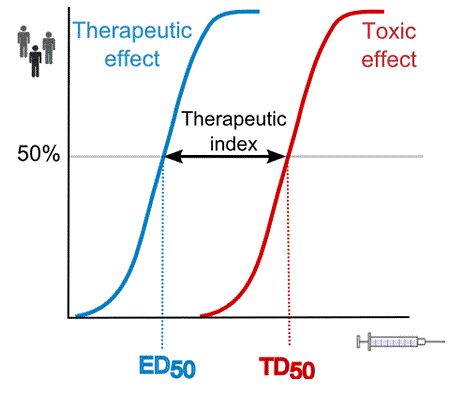
The therapeutic index (TI; also referred to as therapeutic ratio) is a quantitative measurement of the relative safety of a drug.

It is a comparison of the amount of a therapeutic agent that causes the therapeutic effect to the amount that causes toxicity. The related terms therapeutic window or safety window refer to a range of doses which optimize between efficacy and toxicity, achieving the greatest therapeutic benefit without resulting in unacceptable side-effects or toxicity.

Classically, in an established clinical indication setting of an approved drug, TI refers to the ratio of the dose of drug that causes adverse effects at an incidence/severity not compatible with the targeted indication (e.g. toxic dose in 50% of subjects, TD50) to the dose that leads to the desired pharmacological effect (e.g. efficacious dose in 50% of subjects, ED50). In contrast, in a drug development setting TI is calculated based on plasma exposure levels.

In the early days of pharmaceutical toxicology, TI was frequently determined in animals as lethal dose of a drug for 50% of the population (LD50) divided by the minimum effective dose for 50% of the population (ED50). Today, more sophisticated toxicity endpoints are used.

For Humans (TD50 / ED50).

For many drugs, there are severe toxicities that occur at sublethal doses in humans, and these toxicities often limit the maximum dose of a drug. A higher therapeutic index is preferable to a lower one: a patient would have to take a much higher dose of such a drug to reach the toxic threshold than the dose taken to elicit the therapeutic effect.

Generally, a drug or other therapeutic agent with a narrow therapeutic range (i.e. having little difference between toxic and therapeutic doses) may have its dosage adjusted according to measurements of the actual blood levels achieved in the person taking it. This may be achieved through therapeutic drug monitoring (TDM) protocols. TDM is recommended for use in the treatment of psychiatric disorders with lithium due to its narrow therapeutic range.

Terms

  • ED = Effective dose.
  • TD = Toxic dose.
  • LD = Lethal dose.
  • TI = Therapeutic index.
  • TR = Therapeutic ratio.

Therapeutic Index in Drug Development

A high therapeutic index (TI) is preferable for a drug to have a favourable safety and efficacy profile. At early discovery/development stage, the clinical TI of a drug candidate is not known. However, understanding the preliminary TI of a drug candidate is of utmost importance as early as possible since TI is an important indicator of the probability of the successful development of a drug. Recognising drug candidates with potentially suboptimal TI at earliest possible stage helps to initiate mitigation or potentially re-deploy resources.

In a drug development setting, TI is the quantitative relationship between efficacy (pharmacology) and safety (toxicology), without considering the nature of pharmacological or toxicological endpoints themselves. However, to convert a calculated TI to something that is more than just a number, the nature and limitations of pharmacological and/or toxicological endpoints must be considered. Depending on the intended clinical indication, the associated unmet medical need and/or the competitive situation, more or less weight can be given to either the safety or efficacy of a drug candidate with the aim to create a well balanced indication-specific safety vs efficacy profile.

In general, it is the exposure of a given tissue to drug (i.e. drug concentration over time), rather than dose, that drives the pharmacological and toxicological effects. For example, at the same dose there may be marked inter-individual variability in exposure due to polymorphisms in metabolism, DDIs or differences in body weight or environmental factors. These considerations emphasize the importance of using exposure rather than dose for calculating TI. To account for delays between exposure and toxicity, the TI for toxicities that occur after multiple dose administrations should be calculated using the exposure to drug at steady state rather than after administration of a single dose.

A review published by Muller and Milton in Nature Reviews Drug Discovery critically discusses the various aspects of TI determination and interpretation in a translational drug development setting for both small molecules and biotherapeutics.

Range of Therapeutic Indices

The therapeutic index varies widely among substances, even within a related group.

For instance, the opioid painkiller remifentanil is very forgiving, offering a therapeutic index of 33,000:1, while Diazepam, a benzodiazepine sedative-hypnotic and skeletal muscle relaxant, has a less forgiving therapeutic index of 100:1. Morphine is even less so with a therapeutic index of 70.

Less safe are cocaine (a stimulant and local anaesthetic) and ethanol (colloquially, the “alcohol” in alcoholic beverages, a widely available sedative consumed worldwide): the therapeutic indices for these substances are 15:1 and 10:1, respectively.

Even less safe are drugs such as digoxin, a cardiac glycoside; its therapeutic index is approximately 2:1.

Other examples of drugs with a narrow therapeutic range, which may require drug monitoring both to achieve therapeutic levels and to minimise toxicity, include: paracetamol (acetaminophen), dimercaprol, theophylline, warfarin and lithium carbonate.

Some antibiotics and antifungals require monitoring to balance efficacy with minimising adverse effects, including: gentamicin, vancomycin, amphotericin B (nicknamed ‘amphoterrible’ for this very reason), and polymyxin B.

Cancer Radiotherapy

Radiotherapy aims to minimize the size of tumours and kill cancer cells with high energy. The source of high energy arises from x-rays, gamma rays, charged particles and heavy particles. The therapeutic ratio in radiotherapy for cancer treatment is related to the maximum radiation dose by which death of cancer cells is locally controlled and the minimum radiation dose by which cells in normal tissues have low acute and late morbidity. Both of parameters have sigmoidal dose-response curves. Thus, a favourable outcome in dose-response curve is the response of tumour tissue is greater than that of normal tissue to the same dose, meaning that the treatment is effective to tumours and does not cause serious morbidity to normal tissue. Reversely, overlapping response of two tissues is highly likely to cause serious morbidity to normal tissue and ineffective treatment to tumours. The mechanism of radiation therapy is categorised into direct and indirect radiation. Both direct and indirect radiations induce DNA to have a mutation or chromosomal rearrangement during its repair process. Direct radiation creates a free DNA radical from radiation energy deposition that damages DNA. Indirect radiation occurs from radiolysis of water, creating a free hydroxyl radical, hydronium and electron. Then, hydroxyl radical transfers its radical to DNA. Or together with hydronium and electron, a free hydroxyl radical can damage base region of DNA.

Cancer cells have imbalance of signals in cell cycle. G1 and G2/M arrest are found to be major checkpoints by irradiation in human cells. G1 arrest delays repair mechanism before synthesis of DNA in S phase and mitosis in M phase, suggesting key checkpoint to lead survival of cells. G2/M arrest occurs when cells need to repair after S phase before the mitotic entry. It was also known that S phase is the most resistant to radiation and M phase was the most sensitive to radiation. p53, a tumour suppressor protein that plays a role in G1 and G2/M arrest, enabled the understanding of the cell cycle by radiation. For example, irradiation to myeloid leukaemia cell leads to an increase in p53 and a decrease in the level of DNA synthesis. Patients with Ataxia telangiectasia delays have hypersensitivity to radiation due to the delay of accumulation of p53.[9] In this case, cells are able to replicate without repair of their DNA, prone to incidence of cancer. Most cells are in G1 and S phase and irradiation at G2 phase showed increased radiosensitivity and thus G1 arrest has been on focus for therapeutic treatment. Irradiation to a tissue creates response to both irradiated and non-irridiated cells. It was found that even cells up to 50-75 cell diameter distant from irradiated cells have phenotype of enhanced genetic instability such as micronucleation. This suggests the effect of cell-to-cell communication such as paracrine and juxtacrine signalling. Normal cells do not lose DNA repair mechanism whereas cancer cells often lose during radiotherapy. However, the nature of high energy radiation can override the ability of damaged normal cell to repair, leading to cause another risk for carcinogenesis. This suggests a significant risk associated with radiation therapy. Thus, it is desirable to improve the therapeutic ratio during radiotherapy. Employing IG-IMRT, protons and heavy ions are likely to minimise dose to normal tissues by altered fractionation. Molecular targeting to DNA repair pathway can lead to radiosensitisation or radioprotection. Examples are direct and indirect inhibitors on DNA double-strand breaks. Direct inhibitors target proteins (PARP family) and kinases (ATM, DNA-PKCs) that are involved in DNA repair. Indirect inhibitors target proteins tumour cell signalling proteins such as EGFR and insulin growth factor.

The effective therapeutic index can be affected by targeting, in which the therapeutic agent is concentrated in its area of effect. For example, in radiation therapy for cancerous tumours, shaping the radiation beam precisely to the profile of a tumour in the “beam’s eye view” can increase the delivered dose without increasing toxic effects, though such shaping might not change the therapeutic index. Similarly, chemotherapy or radiotherapy with infused or injected agents can be made more efficacious by attaching the agent to an oncophilic substance, as is done in peptide receptor radionuclide therapy for neuroendocrine tumours and in chemoembolisation or radioactive microspheres therapy for liver tumours and metastases. This concentrates the agent in the targeted tissues and lowers its concentration in others, increasing efficacy and lowering toxicity.

Safety Ratio

Sometimes the term safety ratio is used instead, particularly when referring to psychoactive drugs used for non-therapeutic purposes, e.g. recreational use. In such cases, the effective dose is the amount and frequency that produces the desired effect, which can vary, and can be greater or less than the therapeutically effective dose.

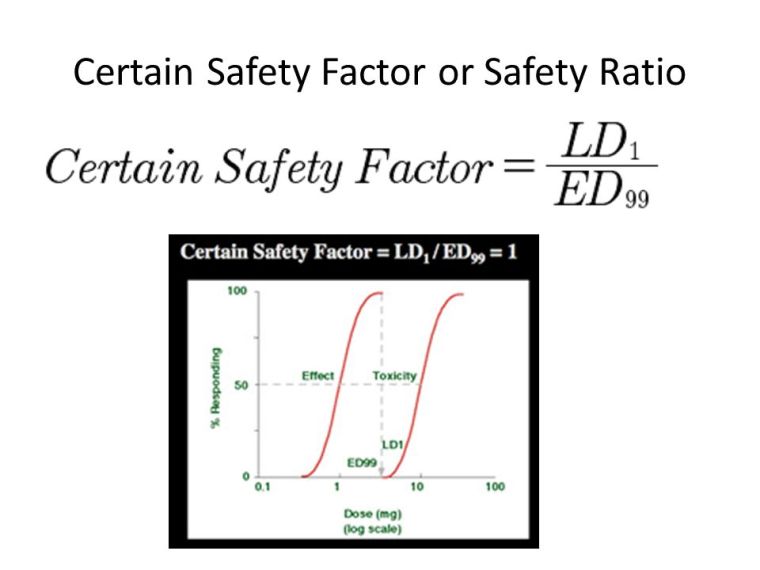
The Certain Safety Factor, also referred to as the Margin of Safety (MOS), is the ratio of the lethal dose to 1% of population to the effective dose to 99% of the population (LD1/ED99). This is a better safety index than the LD50 for materials that have both desirable and undesirable effects, because it factors in the ends of the spectrum where doses may be necessary to produce a response in one person but can, at the same dose, be lethal in another.

Synergistic Effect

A therapeutic index does not consider drug interactions or synergistic effects. For example, the risk associated with benzodiazepines increases significantly when taken with alcohol, opiates, or stimulants when compared with being taken alone. Therapeutic index also does not take into account the ease or difficulty of reaching a toxic or lethal dose. This is more of a consideration for recreational drug users, as the purity can be highly variable.

Protective Index

The protective index is a similar concept, except that it uses TD50 (median toxic dose) in place of LD50. For many substances, toxic effects can occur at levels far below those needed to cause death, and thus the protective index (if toxicity is properly specified) is often more informative about a substance’s relative safety. Nevertheless, the therapeutic index is still useful as it can be considered an upper bound for the protective index, and the former also has the advantages of objectivity and easier comprehension.

Therapeutic Window

The therapeutic window (or pharmaceutical window) of a drug is the range of drug dosages which can treat disease effectively without having toxic effects. Medication with a small therapeutic window must be administered with care and control, frequently measuring blood concentration of the drug, to avoid harm. Medications with narrow therapeutic windows include theophylline, digoxin, lithium, and warfarin.

Optimal Biological Dose

Optimal biological dose (OBD) is the quantity of a drug that will most effectively produce the desired effect while remaining in the range of acceptable toxicity.

Maximum Tolerated Dose

The maximum tolerated dose (MTD) refers to the highest dose of a radiological or pharmacological treatment that will produce the desired effect without unacceptable toxicity. The purpose of administering MTD is to determine whether long-term exposure to a chemical might lead to unacceptable adverse health effects in a population, when the level of exposure is not sufficient to cause premature mortality due to short-term toxic effects. The maximum dose is used, rather than a lower dose, to reduce the number of test subjects (and, among other things, the cost of testing), to detect an effect that might occur only rarely. This type of analysis is also used in establishing chemical residue tolerances in foods. Maximum tolerated dose studies are also done in clinical trials.

MTD is an essential aspect of a drug’s profile. All modern healthcare systems dictate a maximum safe dose for each drug, and generally have numerous safeguards (e.g. insurance quantity limits and government-enforced maximum quantity/time-frame limits) to prevent the prescription and dispensing of quantities exceeding the highest dosage which has been demonstrated to be safe for members of the general patient population.

Patients are often unable to tolerate the theoretical MTD of a drug due to the occurrence of side-effects which are not innately a manifestation of toxicity (not considered to severely threaten a patients health) but cause the patient sufficient distress and/or discomfort to result in non-compliance with treatment. Such examples include emotional “blunting” with antidepressants, pruritus with opiates, and blurred vision with anticholinergics.

What is Temazepam?

Introduction

Temazepam, sold under the brand names Restoril among others, is a medication used to treat insomnia.

Such use should generally be for less than ten days. It is taken by mouth. Effects generally begin within an hour and last for up to eight hours.

Common side effects include sleepiness, anxiety, confusion, and dizziness. Serious side effects may include hallucinations, abuse, anaphylaxis, and suicide. Use is generally not recommended together with opioids. If the dose is rapidly decreased withdrawal may occur. Use during pregnancy or breastfeeding is not recommended. Temazepam is an intermediate acting benzodiazepine and hypnotic. It works by affecting GABA within the brain.

Temazepam was patented in 1962 and came into medical use in 1969. It is available as a generic medication. In 2017, it was the 142nd most commonly prescribed medication in the United States, with more than four million prescriptions.

Brief History

Temazepam was synthesized in 1964, but it came into use in 1981 when its ability to counter insomnia was realised. By the late 1980s, temazepam was one of the most popular and widely prescribed hypnotics on the market and it became one of the most widely prescribed drugs.

Medical Uses

In sleep laboratory studies, temazepam significantly decreased the number of nightly awakenings, but has the drawback of distorting the normal sleep pattern. It is officially indicated for severe insomnia and other severe or disabling sleep disorders. The prescribing guidelines in the UK limit the prescribing of hypnotics to two to four weeks due to concerns of tolerance and dependence.

The United States Air Force uses temazepam as one of the hypnotics approved as a “no-go pill” to help aviators and special-duty personnel sleep in support of mission readiness. “Ground tests” are necessary prior to required authorisation being issued to use the medication in an operational situation, and a 12-hour restriction is imposed on subsequent flight operation. The other hypnotics used as “no-go pills” are zaleplon and zolpidem, which have shorter mandatory recovery periods.

Contraindications

Use of temazepam should be avoided, when possible, in individuals with these conditions:

  • Ataxia (gross lack of coordination of muscle movements).
  • Severe hypoventilation.
  • Acute narrow-angle glaucoma.
  • Severe hepatic deficiencies (hepatitis and liver cirrhosis decrease elimination by a factor of two).
  • Severe renal deficiencies (e.g. patients on dialysis).
  • Sleep apnoea.
  • Severe depression, particularly when accompanied by suicidal tendencies.
  • Acute intoxication with alcohol, narcotics, or other psychoactive substances.
  • Myasthenia gravis (autoimmune disorder causing muscle weakness).
  • Hypersensitivity or allergy to any drug in the benzodiazepine class.

Special Caution Needed

Temazepam should not be used in pregnancy, as it may cause harm to the foetus. The safety and effectiveness of temazepam has not been established in children; therefore, temazepam should generally not be given to individuals under 18 years of age, and should not be used at all in children under six months old. Benzodiazepines also require special caution if used in the elderly, alcohol- or drug-dependent individuals, and individuals with comorbid psychiatric disorders.

Temazepam, similar to other benzodiazepines and nonbenzodiazepine hypnotic drugs, causes impairments in body balance and standing steadiness in individuals who wake up at night or the next morning. Falls and hip fractures are frequently reported. The combination with alcohol increases these impairments. Partial but incomplete tolerance develops to these impairments. The smallest possible effective dose should be used in elderly or very ill patients, as a risk of apnoea and/or cardiac arrest exists. This risk is increased when temazepam is given concomitantly with other drugs that depress the central nervous system (CNS).

Misuse and Dependence

Because benzodiazepines can be abused and lead to dependence, their use should be avoided in people in certain particularly high-risk groups. These groups include people with a history of alcohol or drug dependence, people significantly struggling with their mood or people with longstanding mental health difficulties. If temazepam must be prescribed to people in these groups, they should generally be monitored very closely for signs of misuse and development of dependence.

Adverse Effects

Refer to Benzodiazepine Withdrawal Syndrome.

In September 2020, the US Food and Drug Administration (FDA) required the boxed warning be updated for all benzodiazepine medicines to describe the risks of abuse, misuse, addiction, physical dependence, and withdrawal reactions consistently across all the medicines in the class.

Common

Side effects typical of hypnotic benzodiazepines are related to CNS depression, and include somnolence, sedation, dizziness, fatigue, ataxia, headache, lethargy, impairment of memory and learning, longer reaction time and impairment of motor functions (including coordination problems), slurred speech, decreased physical performance, numbed emotions, reduced alertness, muscle weakness, blurred vision (in higher doses), and inattention. Euphoria was rarely reported with its use. According to the FDA, temazepam had an incidence of euphoria of 1.5%, much more rarely reported than headaches and diarrhoea. Anterograde amnesia may also develop, as may respiratory depression in higher doses.

A 2009 meta-analysis found a 44% higher rate of mild infections, such as pharyngitis or sinusitis, in people taking Temazepam or other hypnotic drugs compared to those taking a placebo.

Less Common

Hyperhydrosis, hypotension, burning eyes, increased appetite, changes in libido, hallucinations, faintness, nystagmus, vomiting, pruritus, gastrointestinal disturbances, nightmares, palpitation and paradoxical reactions including restlessness, aggression, violence, overstimulation and agitation have been reported, but are rare (less than 0.5%).

Before taking temazepam, one should ensure that at least 8 hours are available to dedicate to sleep. Failing to do so can increase the side effects of the drug.

Like all benzodiazepines, the use of this drug in combination with alcohol potentiates the side effects, and can lead to toxicity and death.

Though rare, residual “hangover” effects after night-time administration of temazepam occasionally occur. These include sleepiness, impaired psychomotor and cognitive functions which may persist into the next day, impaired driving ability, and possible increased risks of falls and hip fractures, especially in the elderly.

Tolerance

Chronic or excessive use of temazepam may cause drug tolerance, which can develop rapidly, so this drug is not recommended for long-term use. In 1979, the US Institute of Medicine and the National Institute on Drug Abuse stated that most hypnotics lose their sleep-inducing properties after about three to 14 days. In use longer than one to two weeks, tolerance will rapidly develop towards the ability of temazepam to maintain sleep, resulting in a loss of effectiveness. Some studies have observed tolerance to temazepam after as little as one week’s use. Another study examined the short-term effects of the accumulation of temazepam over seven days in elderly inpatients, and found little tolerance developed during the accumulation of the drug. Other studies examined the use of temazepam over six days and saw no evidence of tolerance. A study in 11 young male subjects showed significant tolerance occurs to temazepam’s thermoregulatory effects and sleep inducing properties after one week of use of 30-mg temazepam. Body temperature is well correlated with the sleep-inducing or insomnia-promoting properties of drugs.

In one study, the drug sensitivity of people who had used temazepam for one to 20 years was no different from that of controls. An additional study, in which at least one of the authors is employed by multiple drug companies, examined the efficacy of temazepam treatment on chronic insomnia over three months, and saw no drug tolerance, with the authors even suggesting the drug might become more effective over time.

Establishing continued efficacy beyond a few weeks can be complicated by the difficulty in distinguishing between the return of the original insomnia complaint and withdrawal or rebound related insomnia. Sleep EEG studies on hypnotic benzodiazepines show tolerance tends to occur completely after one to four weeks with sleep EEG returning to pre-treatment levels. The paper concluded that due to concerns about long-term use involving toxicity, tolerance and dependence, as well as to controversy over long-term efficacy, wise prescribers should restrict benzodiazepines to a few weeks and avoid continuing prescriptions for months or years. A review of the literature found the nonpharmacological treatment options were a more effective treatment option for insomnia due to their sustained improvements in sleep quality.

Physical Dependence

Temazepam, like other benzodiazepine drugs, can cause physical dependence and addiction. Withdrawal from temazepam or other benzodiazepines after regular use often leads to benzodiazepine withdrawal syndrome, which resembles symptoms during alcohol and barbiturate withdrawal. The higher the dose and the longer the drug is taken, the greater the risk of experiencing unpleasant withdrawal symptoms. Withdrawal symptoms can also occur from standard dosages and after short-term use. Abrupt withdrawal from therapeutic doses of temazepam after long-term use may result in a severe benzodiazepine withdrawal syndrome. Gradual and careful reduction of the dosage, preferably with a long-acting benzodiazepine with long half-life active metabolites, such as chlordiazepoxide or diazepam, are recommended to prevent severe withdrawal syndromes from developing. Other hypnotic benzodiazepines are not recommended. A study in rats found temazepam is cross tolerant with barbiturates and is able to effectively substitute for barbiturates and suppress barbiturate withdrawal signs. Rare cases are reported in the medical literature of psychotic states developing after abrupt withdrawal from benzodiazepines, even from therapeutic doses. Antipsychotics increase the severity of benzodiazepine withdrawal effects with an increase in the intensity and severity of convulsions. Patients who were treated in the hospital with temazepam or nitrazepam have continued taking these after leaving the hospital. Hypnotic uses in the hospital were recommended to be limited to five nights’ use only, to avoid the development of withdrawal symptoms such as insomnia.

Interactions

As with other benzodiazepines, temazepam produces additive CNS-depressant effects when co-administered with other medications which themselves produce CNS depression, such as barbiturates, alcohol, opiates, tricyclic antidepressants, nonselective MAO inhibitors, phenothiazines and other antipsychotics, skeletal muscle relaxants, antihistamines, and anaesthetics. Administration of theophylline or aminophylline has been shown to reduce the sedative effects of temazepam and other benzodiazepines.

Unlike many benzodiazepines, pharmacokinetic interactions involving the P450 system have not been observed with temazepam. Temazepam shows no significant interaction with CYP3A4 inhibitors (e.g. itraconazole, erythromycin). Oral contraceptives may decrease the effectiveness of temazepam and speed up its elimination half-life.

Overdose

Refer to Benzodiazepine Overdose.

Overdose (or an excess dose(s)) of temazepam results in increasing CNS effects, including:

  • Somnolence (difficulty staying awake).
  • Mental confusion.
  • Respiratory depression.
  • Hypotension.
  • Impaired motor functions.
  • Impaired or absent reflexes.
  • Impaired coordination.
  • Impaired balance.
  • Dizziness, sedation.
  • Coma.
  • Death.

Temazepam had the highest rate of drug intoxication, including overdose, among common benzodiazepines in cases with and without combination with alcohol in a 1985 study. Temazepam and nitrazepam were the two benzodiazepines most commonly detected in overdose-related deaths in an Australian study of drug deaths. A 1993 British study found temazepam to have the highest number of deaths per million prescriptions among medications commonly prescribed in the 1980s (11.9, versus 5.9 for benzodiazepines overall, taken with or without alcohol).

A 1995 Australian study of patients admitted to hospital after benzodiazepine overdose corroborated these results, and found temazepam overdose much more likely to lead to coma than other benzodiazepines (odds ratio 1.86). The authors noted several factors, such as differences in potency, receptor affinity, and rate of absorption between benzodiazepines, could explain this higher toxicity. Although benzodiazepines have a high therapeutic index, temazepam is one of the more dangerous of this class of drugs. The combination of alcohol and temazepam makes death by alcohol poisoning more likely.

Pharmacology

Temazepam is a white, crystalline substance, very slightly soluble in water, and sparingly soluble in alcohol. Its main pharmacological action is to increase the effect of the neurotransmitter gamma-aminobutyric acid (GABA) at the GABAA receptor. This causes sedation, motor impairment, ataxia, anxiolysis, an anticonvulsant effect, muscle relaxation, and a reinforcing effect. As a medication before surgery, temazepam decreased cortisol in elderly patients. In rats, it triggered the release of vasopressin into paraventricular nucleus of the hypothalamus and decreased the release of ACTH under stress.

Pharmacokinetics

Oral administration of 15 to 45 mg of temazepam in humans resulted in rapid absorption with significant blood levels achieved in fewer than 30 minutes and peak levels at two to three hours. In a single- and multiple-dose absorption, distribution, metabolism, and excretion (ADME) study, using tritium-labelled drug, temazepam was well absorbed and found to have minimal (8%) first-pass drug metabolism. No active metabolites were formed and the only significant metabolite present in blood was the O-conjugate. The unchanged drug was 96% bound to plasma proteins. The blood-level decline of the parent drug was biphasic, with the short half-life ranging from 0.4-0.6 hours and the terminal half-life from 3.5-18.4 hours (mean 8.8 hours), depending on the study population and method of determination.

Temazepam has very good bioavailability, with almost 100% being absorbed following being taken by mouth. The drug is metabolized through conjugation and demethylation prior to excretion. Most of the drug is excreted in the urine, with about 20% appearing in the faeces. The major metabolite was the O-conjugate of temazepam (90%); the O-conjugate of N-desmethyl temazepam was a minor metabolite (7%).

Society and Culture

Recreational Use

Refer to Benzodiazepine Use Disorder.

Temazepam is a drug with a moderate potential for misuse.

Benzodiazepines have been abused orally and intravenously. Different benzodiazepines have different abuse potential; the more rapid the increase in the plasma level following ingestion, the greater the intoxicating effect and the more open to abuse the drug becomes. The speed of onset of action of a particular benzodiazepine correlates well with the ‘popularity’ of that drug for abuse. The two most common reasons for preference were that a benzodiazepine was ‘strong’ and that it gave a good ‘high’.

A 1995 study found that temazepam is more rapidly absorbed and oxazepam is more slowly absorbed than most other benzodiazepines.

A 1985 study found that temazepam and triazolam maintained significantly higher rates of self-injection than a variety of other benzodiazepines. The study tested and compared the abuse liability of temazepam, triazolam, diazepam, lorazepam, oxazepam, flurazepam, alprazolam, chlordiazepoxide, clonazepam, nitrazepam, flunitrazepam, bromazepam, and clorazepate. The study tested self-injection rates on human, baboon, and rat subjects. All test subjects consistently showed a strong preference for temazepam and triazolam over all the rest of the benzodiazepines included in the study.

North America

In North America, temazepam misuse is not widespread. Other benzodiazepines are more commonly prescribed for insomnia. In the United States, temazepam is the fifth-most prescribed benzodiazepine, however there is a major drop off from the top four most prescribed (alprazolam, lorazepam, diazepam, and clonazepam in that order). Individuals abusing benzodiazepines obtain the drug by getting prescriptions from several doctors, forging prescriptions, or buying diverted pharmaceutical products on the illicit market. North America has never had a serious problem with temazepam misuse, but is becoming increasingly vulnerable to the illicit trade of temazepam.

Australia

Temazepam is a Schedule 4 drug and requires a prescription. The drug accounts for most benzodiazepine sought by forgery of prescriptions and through pharmacy burglary in Victoria. Due to rife intravenous abuse, the Australian government decided to put it under a more restrictive schedule than it had been, and since March 2004 temazepam capsules have been withdrawn from the Australian market, leaving only 10 mg tablets available. Benzodiazepines are commonly detected by Customs at different ports and airports, arriving by mail, also found occasionally in the baggage of air passengers, mostly small or medium quantities (up to 200-300 tablets) for personal use. From 2003 to 2006, customs detected about 500 illegal importations of benzodiazepines per year, most frequently diazepam. Quantities varied from single tablets to 2,000 tablets.

United Kingdom

In 1987, temazepam was the most widely abused legal prescription drug in the United Kingdom. The use of benzodiazepines by street-drug abusers was part of a polydrug abuse pattern, but many of those entering treatment facilities were declaring temazepam as their main drug of abuse. Temazepam was the most commonly used benzodiazepine in a study, published 1994, of injecting drug users in seven cities, and had been injected from preparations of capsules, tablets, and syrup. The increase in use of heroin, often mixed with other drugs, which most often included temazepam, diazepam, and alcohol, was a major factor in the increase in drug-related deaths in Glasgow and Edinburgh in 1990-1992. Temazepam use was particularly associated with violent or disorderly behaviours and contact with the police in a 1997 study of young single homeless people in Scotland. The BBC series Panorama featured an episode titled “Temazepam Wars”, dealing with the epidemic of temazepam abuse and directly related crime in Paisley, Scotland. The trend was mocked in the 1995 Black Grape song “Temazi Party” (also called “Tramazi Party”).

Medical Research Issues

The Journal of Clinical Sleep Medicine published a paper expressing concerns about benzodiazepine receptor agonist drugs, the benzodiazepines and the Z-drugs used as hypnotics in humans. The paper cites a systematic review of the medical literature concerning insomnia medications and states almost all trials of sleep disorders and drugs are sponsored by the pharmaceutical industry, while this is not the case in general medicine or psychiatry. It cites another study that “found that the odds ratio for finding results favourable to industry in industry-sponsored trials was 3.6 times as high as in non–industry-sponsored studies”. Issues discussed regarding industry-sponsored studies include: comparison of a drug to a placebo, but not to an alternative treatment; unpublished studies with unfavourable outcomes; and trials organized around a placebo baseline followed by drug treatment, but not counterbalanced with parallel-placebo-controlled studies. Quoting a 1979 report that too little research into hypnotics was independent of the drug manufacturers, the authors conclude, “the public desperately needs an equipoised assessment of hypnotic benefits and risks” and the NIH and VA should provide leadership to that end.

Street Terms

Street terms for temazepam include king kong pills (formerly referred to barbiturates, now more commonly refers to temazepam), jellies, jelly, Edinburgh eccies, tams, terms, mazzies, temazies, tammies, temmies, beans, eggs, green eggs, wobbly eggs, knockouts, hardball, norries, oranges (common term in Australia and New Zealand), rugby balls, ruggers, terminators, red and blue, no-gos, num nums, blackout, green devils, drunk pills, brainwash, mind erasers, neurotrashers, tem-tem’s (combined with buprenorphine), mommy’s big helper, vitamin T, big T, TZ, The Mazepam, Resties (North America) and others.

Availability

Temazepam is available in English-speaking countries under the following brand names:

  • Euhypnos.
  • Normison.
  • Norkotral.
  • Nortem.
  • Remestan.
  • Restoril.
  • Temaze.
  • Temtabs.
  • Tenox.

In Spain, the drug is sold as ‘temzpem’. In Hungary the drug is sold as Signopam.

Legal Status

  • In Austria, temazepam is listed in UN71 Schedule III under the Psychotropic Substances Decree of 1997.
    • The drug is considered to have a high potential for abuse and addiction, but has accepted medical use for the treatment of severe insomnia.
  • In Australia, temazepam is a Schedule 4 – Prescription Only medicine.
    • It is primarily used for the treatment of insomnia, and is also seen as pre-anaesthetic medication.
  • In Canada, temazepam is a Schedule IV controlled substance requiring a registered doctor’s prescription.
  • In Denmark, temazepam is listed as a Class D substance under the Executive Order 698 of 1993 on Euphoric Substances which means it has a high potential for abuse, but is used for medical and scientific purposes.
  • In Finland, temazepam is more tightly controlled than other benzodiazepines.
    • The temazepam product Normison was pulled out of shelves and banned because the liquid inside gelatin capsules had caused a large increase in intravenous temazepam use.
    • The other temazepam product, Tenox, was not affected and remains as prescription medicine.
    • Temazepam intravenous use has not decreased to the level before Normison came to the market.
  • In France, temazepam is listed as a psychotropic substance as are other similar drugs.
    • It is prescribed with a non-renewable prescription (a new doctor visit every time), available only in 7 or 14-pill packaging for one or two weeks.
    • One brand was withdrawn from the market in 2013.
  • In Hong Kong, temazepam is regulated under Schedule 1 of Hong Kong’s Chapter 134 Dangerous Drugs Ordinance.
    • Temazepam can only be used legally by health professionals and for university research purposes.
    • The substance can be given by pharmacists under a prescription.
    • Anyone who supplies the substance without prescription can be fined HKD$10,000.
    • The penalty for trafficking or manufacturing the substance is a $5,000,000-fine and life imprisonment.
    • Possession of the substance for consumption without license from the Department of Health is illegal with a $1,000,000-fine and/or seven years of jail time.
  • In Ireland, temazepam is a Schedule 3 controlled substance with strict restrictions.
  • In the Netherlands, temazepam is available for prescription as 10- or 20-mg tablets and capsules.
    • Formulations of temazepam containing less than 20 mg are included in List 2 of the Opium Law, while formulations containing 20 mg or more of the drug (along with the gel-capsules) are a List 1 substance of the Opium Law, thus subject to more stringent regulation.
    • Besides being used for insomnia, it is also occasionally used as a preanesthetic medication.
  • In Norway, temazepam is not available as a prescription drug.
    • It is regulated as a Class A substance under Norway’s Narcotics Act.
  • In Portugal, temazepam is a Schedule IV controlled drug under Decree-Law 15/93.
  • In Singapore, temazepam is a Class A controlled drug (Schedule I), making it illegal to possess and requiring a private prescription from a licensed physician to be dispensed.
  • In Slovenia, it is regulated as a Group II (Schedule 2) controlled substance under the Production and Trade in Illicit Drugs Act.
  • In South Africa, temazepam is a Schedule 5 drug, requiring a special prescription, and is restricted to 10- to 30-mg doses.
  • In Sweden, temazepam is classed as a “narcotic” drug listed as both a List II (Schedule II) which denotes it is a drug with limited medicinal use and a high risk of addiction, and is also listed as a List V (Schedule V) substance which denotes the drug is prohibited in Sweden under the Narcotics Drugs Act (1968).
    • Temazepam is banned in Sweden and possession and distribution of even small amounts is punishable by a prison sentence and a fine.
  • In Switzerland, temazepam is a Class B controlled substance, like all other benzodiazepines.
    • This means it is a prescription-only drug.
  • In Thailand, temazepam is a Schedule II controlled drug under the Psychotropic Substances Act.
    • Possession and distribution of the drug is illegal.
  • In the United Kingdom, temazepam is a Class C controlled drug under the Misuse of Drugs Act 1971 (Schedule 3 under the Misuse of Drugs Regulations 2001).
    • If prescribed privately (not on the NHS), temazepam is available only by a special controlled drug prescription form (FP10PCD) and pharmacies are obligated to follow special procedures for storage and dispensing.
    • Additionally, all manufacturers in the UK have replaced the gel-capsules with solid tablets.
    • Temazepam requires safe custody and up until June 2015 was exempt from CD prescription requirements.
  • In the United States, Temazepam is currently a Schedule IV drug under the international Convention on Psychotropic Substances of 1971 and is only available by prescription.
    • Specially coded prescriptions may be required in certain states.

What is Tranylcypromine?

Introduction

Tranylcypromine (sold under the trade name Parnate among others) is a monoamine oxidase inhibitor (MAOI); more specifically, tranylcypromine acts as nonselective and irreversible inhibitor of the enzyme monoamine oxidase (MAO).

It is used as an antidepressant and anxiolytic agent in the clinical treatment of mood and anxiety disorders, respectively.

Tranylcypromine is a propylamine formed from the cyclisation of amphetamine’s side chain; therefore, it is classified as a substituted amphetamine.

Brief History

Tranylcypromine was originally developed as an analogue of amphetamine. Although it was first synthesized in 1948, its MAOI action was not discovered until 1959. Precisely because tranylcypromine was not, like isoniazid and iproniazid, a hydrazine derivative, its clinical interest increased enormously, as it was thought it might have a more acceptable therapeutic index than previous MAOIs.

The drug was introduced by Smith, Kline and French in the United Kingdom in 1960, and approved in the United States in 1961. It was withdrawn from the market in February 1964 due to a number of patient deaths involving hypertensive crises with intracranial bleeding. However, it was reintroduced later that year with more limited indications and specific warnings of the risks.

Medical Uses

Tranylcypromine is used to treat major depressive disorder, including atypical depression, especially when there is an anxiety component, typically as a second-line treatment. It is also used in depression that is not responsive to reuptake inhibitor antidepressants, such as the SSRIs, TCAs, or bupropion.

Contraindications

Contraindications include:

  • Porphyria.
  • Cardiovascular or cerebrovascular disease.
  • Pheochromocytoma.
  • Tyramine, found in several foods, is metabolized by MAO. Ingestion and absorption of tyramine causes extensive release of norepinephrine, which can rapidly increase blood pressure to the point of causing hypertensive crisis.
  • Concomitant use of serotonin-enhancing drugs, including SSRIs, serotonergic TCAs, dextromethorphan, and meperidine may cause serotonin syndrome.
  • Concomitant use of MRAs, including fenfluramine, amphetamine, and pseudoephedrine may cause toxicity via serotonin syndrome or hypertensive crisis.
  • L-DOPA given without carbidopa may cause hypertensive crisis.

Dietary Restrictions

Tyramine is a common component in many foods, and is normally rapidly metabolised by MAO-A. Individuals not taking MAOIs may consume at least 2 grams of tyramine in a meal and not experience an increase in blood pressure, whereas those taking MAOIs such as tranylcypromine may experience a sharp increase in blood pressure following consumption of as little as 10 mg of tyramine, which can lead to hypertensive crisis.

Foods containing tyramine include aged cheeses, cured meats, tofu and certain red wines. Some, such as yeast extracts, contain enough tyramine to be potentially fatal in a single serving. Spoiled food is also likely to contain dangerous levels of tyramine.

Adverse Effects

Incidence of Adverse Effects

  • Very common (>10% incidence) adverse effects include:
    • Dizziness secondary to orthostatic hypotension (17%).
  • Common (1-10% incidence) adverse effects include:
    • Tachycardia (5-10%).
    • Hypomania (7%).
    • Paresthesia (5%).
    • Weight loss (2%).
    • Confusion (2%).
    • Dry mouth (2%).
    • Sexual function disorders (2%).
    • Hypertension (1-2 hours after ingestion) (2%).
    • Rash (2%).
    • Urinary retention (2%).
  • Other (unknown incidence) adverse effects include:
    • Increased/decreased appetite.
    • Blood dyscrasias.
    • Chest pain.
    • Diarrhoea.
    • Oedema.
    • Hallucinations.
    • Hyperreflexia.
    • Insomnia.
    • Jaundice.
    • Leg cramps.
    • Myalgia.
    • Palpitations.
    • Sensation of cold.
    • Suicidal ideation.
    • Tremor.

Of note, there has not been found to be a correlation between sex and age below 65 regarding incidence of adverse effects.

Tranylcypromine is not associated with weight gain and has a low risk for hepatotoxicity compared to the hydrazine MAOIs.

It is generally recommended that MAOIs be discontinued prior to anaesthesia; however, this creates a risk of recurrent depression. In a retrospective observational cohort study, patients on tranylcypromine undergoing general anaesthesia had a lower incidence of intraoperative hypotension, while there was no difference between patients not taking an MAOI regarding intraoperative incidence of bradycardia, tachycardia, or hypertension. The use of indirect sympathomimetic drugs or drugs affecting serotonin reuptake, such as meperidine or dextromethorphan poses a risk for hypertension and serotonin syndrome respectively; alternative agents are recommended. Other studies have come to similar conclusions. Pharmacokinetic interactions with anaesthetics are unlikely, given that tranylcypromine is a high-affinity substrate for CYP2A6 and does not inhibit CYP enzymes at therapeutic concentrations.

Tranylcypromine abuse has been reported at doses ranging from 120-600 mg per day. It is thought that higher doses have more amphetamine-like effects and abuse is promoted by the fast onset and short half-life of tranylcypromine.

Cases of suicidal ideation and suicidal behaviours have been reported during tranylcypromine therapy or early after treatment discontinuation.

Symptoms of tranylcypromine overdose are generally more intense manifestations of its usual effects.

Interactions

In addition to contraindicated concomitant medications, tranylcypromine inhibits CYP2A6, which may reduce the metabolism and increase the toxicity of substrates of this enzyme, such as:

  • Dexmedetomidine.
  • Nicotine.
  • TSNAs (found in cured tobacco products, including cigarettes).
  • Valproate.

Norepinephrine reuptake inhibitors prevent neuronal uptake of tyramine and may reduce its pressor effects.

Pharmacology

Pharmacodynamics

Tranylcypromine acts as a nonselective and irreversible inhibitor of monoamine oxidase. Regarding the isoforms of monoamine oxidase, it shows slight preference for the MAOB isoenzyme over MAOA. This leads to an increase in the availability of monoamines, such as serotonin, norepinephrine, and dopamine, as well as a marked increase in the availability of trace amines, such as tryptamine, octopamine, and phenethylamine. The clinical relevance of increased trace amine availability is unclear.

It may also act as a norepinephrine reuptake inhibitor at higher therapeutic doses. Compared to amphetamine, tranylcypromine shows low potency as a dopamine releasing agent, with even weaker potency for norepinephrine and serotonin release.

Tranylcypromine has also been shown to inhibit the histone demethylase, BHC110/LSD1. Tranylcypromine inhibits this enzyme with an IC50 < 2 μM, thus acting as a small molecule inhibitor of histone demethylation with an effect to de-repress the transcriptional activity of BHC110/LSD1 target genes. The clinical relevance of this effect is unknown.

Tranylcypromine has been found to inhibit CYP46A1 at nanomolar concentrations. The clinical relevance of this effect is unknown.

Pharmacokinetics

Tranylcypromine reaches its maximum concentration (tmax) within 1-2 hours. After a 20 mg dose, plasma concentrations reach at most 50-200 ng/mL. While its half-life is only about 2 hours, its pharmacodynamic effects last several days to weeks due to irreversible inhibition of MAO.

Metabolites of tranylcypromine include 4-hydroxytranylcypromine, N-acetyltranylcypromine, and N-acetyl-4-hydroxytranylcypromine, which are less potent MAO inhibitors than tranylcypromine itself. Amphetamine was once thought to be a metabolite of tranylcypromine, but has not been shown to be.

Tranylcypromine inhibits CYP2A6 at therapeutic concentrations.

Research

Tranylcypromine is known to inhibit LSD1, an enzyme that selectively demethylates two lysines found on histone H3. Genes promoted downstream of LSD1 are involved in cancer cell growth and metastasis, and several tumour cells express high levels of LSD1. Tranylcypromine analogues with more potent and selective LSD1 inhibitory activity are being researched in the potential treatment of cancers.

Tranylcypromine may have neuroprotective properties applicable to the treatment of Parkinson’s disease, similar to the MAO-B inhibitors selegiline and rasagiline. As of 2017, only one clinical trial in Parkinsonian patients has been conducted, which found some improvement initially and only slight worsening of symptoms after a 1.5 year follow-up.

What is Trimipramine?

Introduction

Trimipramine, sold under the brand name Surmontil among others, is a tricyclic antidepressant (TCA) which is used to treat depression.

It has also been used for its sedative, anxiolytic, and weak antipsychotic effects in the treatment of insomnia, anxiety disorders, and psychosis, respectively. The drug is described as an atypical or “second-generation” TCA because, unlike other TCAs, it seems to be a fairly weak monoamine reuptake inhibitor. Similarly to other TCAs however, trimipramine does have antihistamine, antiserotonergic, antiadrenergic, antidopaminergic, and anticholinergic activities.

Brief History

Trimipramine was developed by Rhône-Poulenc. It was patented in 1959 and first appeared in the literature in 1961. The drug was first introduced for medical use in 1966, in Europe. It was not introduced in the United States until later in 1979 or 1980.

Medical Uses

Trimipramine’s primary use in medicine is in the treatment of major depressive disorder, especially where sedation is helpful due to its prominent sedative effects. The drug is also an effective anxiolytic, and can be used in the treatment of anxiety. In addition to depression and anxiety, trimipramine is effective in the treatment of insomnia, and unlike most other hypnotics, does not alter the normal sleep architecture. In particular, it does not suppress REM sleep, and dreams are said to “brighten” during treatment. Trimipramine also has some weak antipsychotic effects with a profile of activity described as similar to that of clozapine, and may be useful in the treatment of psychotic symptoms such as in delusional depression or schizophrenia.

Contraindications

Contraindications include:

  • Recent myocardial infarction.
  • Any degree of heart block or other cardiac arrhythmias.
  • Mania.
  • Severe liver disease.
  • During breastfeeding.
  • Hypersensitivity to trimipramine or to any of the excipients.

Side Effects

The side effects of trimipramine have been said to be similar to those of other tertiary amine TCAs, with a preponderance of anticholinergic and sedative effects. However, trimipramine has also been said to be associated with a different side effect profile compared to other TCAs and in general with fewer side effects, chiefly due to its lack of norepinephrine reuptake inhibition and relatively lower anticholinergic effects (although it is still a potent anticholinergic). Somnolence is the most common side effect of the drug. Dry mouth is the most common anticholinergic side effect, but others like constipation, urinary retention, and blurred vision are also present.

It is described as being associated with minimal or no orthostatic hypotension, at least in comparison to clomipramine, in spite of its potent and comparable activity as an alpha-1 blocker. However, it has also been said to have a rate of orthostatic hypotension similar to that of other TCAs. Trimipramine is said to be less epileptogenic than other TCAs, although seizures have still been reported in association with it. It is also less cardiotoxic than other TCAs and cardiotoxicity is said to be minimal, with a “very favourable profile”.

List of Side Effects

Common adverse effects include:

  • Sedation:
    • Especially common with trimipramine compared to the other TCAs.
  • Anticholinergic effects including:
    • Dry mouth.
    • Blurred vision.
    • Mydriasis.
    • Decreased lacrimation.
    • Constipation.
    • Urinary hesitancy or retention.
    • Reduced GI motility.
    • Tachycardia (high heart rate).
    • Anticholinergic delirium (particularly in the elderly and in Parkinson’s disease).
  • Weight gain.
  • Orthostatic hypotension.
  • Sexual dysfunction including impotence, loss of libido and other sexual adverse effects.
  • Tremor.
  • Dizziness.
  • Sweating.
  • Anxiety.
  • Insomnia.
  • Agitation.
  • Rash.

Adverse effects with an unknown incidence includes:

  • Confusion.
  • Nausea.
  • Vomiting.
  • Extrapyramidal side effects (e.g. parkinsonism, dystonia, etc.).
  • Tinnitus.
  • Paraesthesia.
  • ECG changes.
  • Increased liver function tests.

Rare adverse effects include:

  • Seizures.
  • Syndrome of inappropriate secretion of antidiuretic hormone.
  • Blood dyscrasias including:
    • Agranulocytosis.
    • Thrombocytopenia.
    • Eosinophilia.
    • Leukopenia.
  • Myocardial infarction.
  • Heart block.
  • QTc interval prolongation.
  • Sudden cardiac death.
  • Depression worsening.
  • Suicidal ideation.

Overdose

Refer to Tricyclic Antidepressant Overdose.

Compared to other TCAs, trimipramine is relatively safe in overdose, although it is more dangerous than the selective serotonin reuptake inhibitors (SSRIs) and serotonin-norepinephrine reuptake inhibitors (SNRIs) but less dangerous than bupropion in cases of overdose.

Interactions

Trimipramine should not be given with sympathomimetic agents such as epinephrine (adrenaline), ephedrine, isoprenaline, norepinephrine (noradrenaline), phenylephrine and phenylpropanolamine.

Barbiturates may increase the rate of metabolism. Trimipramine should be administered with care in patients receiving therapy for hyperthyrodism.

Genotoxicity

Heavy exposure to any tricyclic antidepressants was associated with an elevated rate ratio for breast cancer 11–15 years later. However, on tests done on Drosophila melanogaster, nongenotoxic TCAs (amitriptyline, maprotiline, nortriptyline, and protriptyline), and genotoxic TCAs (amoxapine, clomipramine, desipramine, doxepin, imipramine, and trimipramine) were identified.

Pharmacology

Pharmacodynamics

The mechanism of action of trimipramine in terms of its antidepressant effects differs from that of other TCAs and is not fully clear. The mechanism of action of its anxiolytic effects is similarly unclear. Trimipramine is a very weak reuptake inhibitor of serotonin, norepinephrine, and dopamine (see below), and unlike most other TCAs, has been claimed to be devoid of clinically significant monoamine reuptake inhibition. The effects of the drug are thought to be mainly due to receptor antagonism as follows:

  • Very strong: H1.
  • Strong: 5-HT2A, α1-adrenergic.
  • Moderate: D2, mACh.
  • Weak: 5-HT2C, D1, α2-adrenergic.

In spite of its atypical nature and different profile of activity, trimipramine has been shown in head-to-head clinical studies to possess equivalent effectiveness to other antidepressants, including but not limited to other TCAs (e.g. amitriptyline, imipramine, doxepin, amineptine), tetracyclic antidepressants (TeCAs) (e.g. maprotiline), monoamine oxidase inhibitors (MAOIs) (e.g. phenelzine, isocarboxazid), and selective serotonin reuptake inhibitors (e.g. fluoxetine). In addition, trimipramine has been found to possess greater anxiolytic effects than other TCAs such as amitriptyline and doxepin in head-to-head comparisons. Indeed, its prominent anxiolytic effects have been said to distinguish it from most other TCAs. The atypicality of trimipramine in relation to its lack of monoamine reuptake inhibition is described as challenging the monoamine hypothesis of depression.

The major metabolite of trimipramine, desmethyltrimipramine, is considered to possess pharmacological activity similar to that of other demethylated tertiary amine TCA variants.

Monoamine Reuptake Inhibition

Studies have generally found only very weak inhibition of serotonin and norepinephrine reuptake with trimipramine, and the drug has been described by various authors as devoid of monoamine reuptake inhibition. Richelson & Pfenning (1984) found a relatively high Ki for the NET of 510 nM in rat brain synaptosomes and Tatsumi et al. (1997) found a relatively high KD of 149 nM for the SERT in human HEK293 cells, but other authors and a more recent study with an improved design have not had the same findings. In the most recent study, by Haenisch et al. (2011), the researchers suggested that the discrepant findings from the Tatsumi et al. study were due to methodological differences, in particular the use of radioligand binding in isolated membranes (KD) to study interactions as opposed to actual functional reuptake inhibition (IC50).

Trimipramine is extensively metabolized, so its metabolites may contribute to its pharmacology, including potentially to monoamine reuptake inhibition. In what was the only study to date to have assessed the activity profiles of the metabolites of trimipramine, Haenisch et al. (2011) assayed desmethyltrimipramine, 2-hydroxytrimipramine, and trimipramine-N-oxide in addition to trimipramine and found that these metabolites showed IC50 values for the SERT, NET, and DAT similar to those of trimipramine (see table to the right). Like other secondary amine TCAs, desmethyltrimipramine was slightly more potent than trimipramine in its norepinephrine reuptake inhibition but less potent in its inhibition of serotonin reuptake. However, desmethyltrimipramine still showed only very weak inhibition of the NET.

Therapeutic concentrations of trimipramine are between 0.5 and 1.2 μM (150-350 ng/mL) and hence significant monoamine reuptake inhibition would not be expected with it or its metabolites. However, these concentrations are nearly 2-fold higher if the active metabolites of trimipramine are also considered, and studies of other TCAs have found that they cross the blood-brain barrier and accumulate in the brain to levels of up to 10-fold those in the periphery. As such, trimipramine and its metabolites might at least partially inhibit reuptake of serotonin and/or norepinephrine, though not of dopamine, at therapeutic concentrations, and this could be hypothesized to contribute at least in part to its antidepressant effects. This is relevant as Haenisch et al. has stated that these are the only actions known at present which could explain or at least contribute to the antidepressant effects of trimipramine. That said, blockade of the 5-HT2A, 5-HT2C, and α2-adrenergic receptors, as with mirtazapine, has also been implicated in antidepressant effects.

In any case, there is also clinical and animal evidence that trimipramine does not inhibit the reuptake of monoamines. Unlike other TCAs, it does not downregulate β3-adrenergic receptors, which is likely the reason that it does not cause orthostatic hypotension. It can be safely combined with MAOIs apparently without risk of serotonin syndrome or hypertensive crisis. Indeed, in rabbits, whereas hyperpyrexia (a symptom of serotonin syndrome) occurs with imipramine and an MAOI and to a lesser extent with amitriptyline and an MAOI, it does not occur at all with trimipramine and an MAOI, likely due to trimipramine’s lack of serotonin reuptake inhibition.

Antihistamine Activity

Trimipramine is a very potent antihistamine; it has the third highest affinity for the H1 receptor (Ki = 0.27 nM) after mirtazapine (Ki = 0.14 nM) and doxepin (Ki = 0.24 nM) among the TCAs and tetracyclic antidepressants (TeCAs). The TeCA mianserin (Ki = 0.40) and the TCA amitriptyline (Ki = 1.0) are also very potent H1 receptor antagonists, whereas other TCAs and TeCAs are less potent. These TCAs and TeCAs, including trimipramine, are far more potent than the standard antihistamine diphenhydramine (approximately 800 times for doxepin and 250 times for trimipramine), and are among the most potent antihistamines available.

Trimipramine is also an antagonist of the H2 receptor with lower potency and has been found to be effective in the treatment of duodenal ulcers.

As a Hypnotic

Blockade of the H1 receptor is responsible for the sedative effects of trimipramine and other TCAs and their effectiveness in the treatment of insomnia.

Most antidepressants suppress REM sleep, in parallel with their alleviation of depressive symptoms (although suppression of REM sleep is not required for antidepressant effects). This includes TCAs (e.g. amitriptyline, nortriptyline), TeCAs (e.g. mianserin, maprotiline), MAOIs (e.g. clorgiline, pargyline), and SSRIs (e.g. fluoxetine, zimelidine, indalpine). Trimipramine is unique in that it is an exception and produces antidepressant effects without compromising or otherwise affecting REM sleep. Even long-term treatment with trimipramine for up to 2 years has not been found to suppress REM sleep. In addition, trimipramine has been found to decrease nocturnal cortisol levels to normal and to normalize cortisol response in depressed patients; hence, it normalizes the hypothalamic-pituitary-adrenal axis, whereas imipramine and other antidepressants tend to increase nocturnal cortisol secretion.

In clinical studies, trimipramine has been found in doses of 50 to 200 mg/day to significantly increase sleep efficiency and total sleep time and to decrease waking time for up to 3 weeks in patients with insomnia. It also improved subjectively perceived sleep quality and well-being during daytime. Monitoring of patients upon discontinuation of trimipramine found that it did not cause rebound insomnia or worsening of sleep quality in subjective evaluations of sleep, although objective measurements found total sleep time below baseline in a subset of patients during trimipramine withdrawal.

Antidopaminergic Activity

Trimipramine is a weak but significant antagonist of the dopamine D1 and D2 receptors, and also binds to the D4 receptor (Ki = 275 nM). Its affinities for various monoamine receptors including the D2 and 5-HT2A receptors closely resemble those of the atypical antipsychotic clozapine. In accordance, high doses of trimipramine have been found to have antipsychotic effects in schizophrenic patients, notably without causing extrapyramidal symptoms, and trimipramine has recently been found to be effective in reducing psychotic symptoms in patients with delusional depression. The lack of extrapyramidal symptoms with trimipramine may be related to its affinity for the D4 receptor, these both being properties it shares with clozapine. Unlike other TCAs, but reminiscent of antipsychotics, trimipramine has been found to markedly increase plasma prolactin levels (a marker of D2 receptor antagonism) at a dose of 75 mg/day and to increase nocturnal prolactin secretion at doses of 75 and 200 mg/day. These findings are suggestive of important antidopaminergic actions of trimipramine.

Unlike various other TCAs, trimipramine shows marked antagonism of presynaptic dopamine autoreceptors, potentially resulting in increased dopaminergic neurotransmission. This effect has also been observed with low-potency tricyclic antipsychotics like thioridazine and chlorprothixene. Notably, these two antipsychotics have been claimed many times to also possess antidepressant effects. As such, blockade of inhibitory dopamine autoreceptors and hence facilitation of dopaminergic signalling could be involved in the antidepressant effects of trimipramine. However, other authors have attributed the claimed antidepressant effects of antipsychotics like the two previously mentioned to α2-adrenergic receptor antagonism, although trimipramine specifically has only weak affinity for this receptor. Aside from antidepressant effects, low doses of antipsychotics have been found to increase REM sleep, and so dopamine autoreceptor antagonism could be involved in the unique effects of trimipramine in terms of REM sleep and sleep architecture.

Pharmacokinetics

The time to peak concentrations following a dose is 2 to 4 hours. The typical antidepressant therapeutic range of trimipramine concentrations is 150 to 300 ng/mL. The terminal half-life of trimipramine has been variously reported to be as little as 8 hours (in plasma) and as long as 24 hours. In any case, the terminal half-life of trimipramine is described as shorter than that of other TCAs, which makes it ideal for use in the treatment of insomnia.

Trimipramine is a racemic compound with two enantiomers. CYP2C19 is responsible for the demethylation of (D)- and (L)-trimipramine to (D)- (L)-desmethyltrimipramine, respectively, and CYP2D6 is responsible for the 2-hydroxylation of (D)- and (L)-desmethyltrimipramine to (D)- and (L)-2-hydroxydesmethyltrimipramine, respectively. CYP2D6 also metabolises (L)-trimipramine into (L)-2-hydroxytrimipramine.

Chemistry

Trimipramine is a tricyclic compound, specifically a dibenzazepine, and possesses three rings fused together with a side chain attached in its chemical structure. Other dibenzazepine TCAs include imipramine, desipramine, and clomipramine. Trimipramine is a derivative of imipramine with a methyl group added to its side chain and is also known as 2′-methylimipramine or β-methylimipramine. The tri- prefix in its name may allude to the fact that its side chain features three methyl groups. Trimipramine is a tertiary amine TCA, with its side chain-demethylated metabolite desmethyltrimipramine being a secondary amine. Other tertiary amine TCAs include amitriptyline, imipramine, clomipramine, dosulepin (dothiepin), and doxepin. The chemical name of trimipramine is 3-(10,11-dihydro-5H-dibenzo[b,f]azepin-5-yl)-N,N,2-trimethylpropan-1-amine and its free base form has a chemical formula of C20H26N2 with a molecular weight of 294.434 g/mol. The drug is used commercially as the maleate salt. The CAS Registry Number of the free base is 739-71-9 and of the maleate is 521-78-8.

Society and Culture

Generic Names

Trimipramine is the generic name of the drug and its INN, USAN, BAN, and DCF, while trimipramine maleate is its USAN, USP, BANM, and JAN. Its generic name in Latin is trimipraminum, in German is trimipramin, and in Spanish is trimipramina.

Brand Names

Trimipramine is marketed throughout the world mainly under the brand name Surmontil. Other notable brand names of trimipramine have included Herphonal, Rhotrimine, Sapilent, Stangyl, and Tydamine.

Availability

Trimipramine is no longer marketed in Australia, though it was previously.