

What is a Serotonin-Norepinephrine Reuptake Inhibitor?

Introduction

Serotonin-norepinephrine reuptake inhibitors (SNRIs) are a class of antidepressant drugs that treat major depressive disorder (MDD), anxiety disorders, obsessive-compulsive disorder (OCD), social phobia, attention-deficit hyperactivity disorder (ADHD), chronic neuropathic pain, fibromyalgia syndrome (FMS), and menopausal symptoms. SNRIs are monoamine reuptake inhibitors; specifically, they inhibit the reuptake of serotonin and norepinephrine. These neurotransmitters are thought to play an important role in mood regulation. SNRIs can be contrasted with the more widely used selective serotonin reuptake inhibitors (SSRIs), which act upon serotonin only.

The human serotonin transporter (SERT) and norepinephrine transporter (NET) are membrane transport proteins that are responsible for the reuptake of serotonin and norepinephrine from the synaptic cleft back into the presynaptic nerve terminal. Dual inhibition of serotonin and norepinephrine reuptake can offer advantages over other antidepressant drugs by treating a wider range of symptoms. They can be especially useful in concomitant chronic or neuropathic pain.

SNRIs, along with SSRIs and norepinephrine reuptake inhibitors (NRIs), are second-generation antidepressants. Over the past two decades, second-generation antidepressants have simply replaced first-generation antidepressants, such as tricyclic antidepressants (TCAs) and monoamine oxidase inhibitors (MAOIs), as the drugs of choice for the treatment of MDD due to their improved tolerability and safety profile.

Medications

There are eight FDA approved SNRIs in the United States, with venlafaxine being the first drug to be developed in 1993 and levomilnacipran being the latest drug to be developed in 2013. The drugs vary by their other medical uses, chemical structure, adverse effects, and efficacy.

  • Atomoxetine.
  • Desvenlafaxine.
  • Duloxetine.
  • Levomilnacipran.
  • Milnacipran.
  • Sibutramine.
  • Tramadol.
  • Venlafaxine.

Brief History

Refer to Development and Discovery of SSRI Drugs.

In 1952, iproniazid, an antimycobacterial agent, was discovered to have psychoactive properties while researched as a possible treatment for tuberculosis. Researchers noted that patients given iproniazid became cheerful, more optimistic, and more physically active. Soon after its development, iproniazid and related substances were shown to slow enzymatic breakdown of serotonin, dopamine, and norepinephrine via inhibition of the enzyme monoamine oxidase. For this reason, this class of drugs became known as monoamine oxidase inhibitors, or MAOIs. During this time development of distinctively different antidepressant agents was also researched. Imipramine became the first clinically useful tricyclic antidepressant (TCA). Imipramine was found to affect numerous neurotransmitter systems and to block the reuptake of norepinephrine and serotonin from the synapse, therefore increasing the levels of these neurotransmitters. Use of MAOIs and TCAs gave major advances in treatment of depression but their use was limited by unpleasant side effects and significant safety and toxicity issues.

Throughout the 1960s and 1970s, the catecholamine hypothesis of emotion and its relation to depression was of wide interest and that the decreased levels of certain neurotransmitters, such as norepinephrine, serotonin, and dopamine might play a role in the pathogenesis of depression. This led to the development of fluoxetine, the first SSRI. The improved safety and tolerability profile of the SSRIs in patients with MDD, compared with TCAs and MAOIs, represented yet another important advance in the treatment of depression.

Since the late 1980s, SSRIs have dominated the antidepressant drug market. Today, there is increased interest in antidepressant drugs with broader mechanisms of action that may offer improvements in efficacy and tolerability. In 1993, a new drug was introduced to the US market called venlafaxine, a SNRI. Venlafaxine was the first compound described in a new class of antidepressive substances called phenylethylamines. These substances are unrelated to TCA and other SSRIs. Venlafaxine blocks the neuronal reuptake of serotonin, noradrenaline, and, to a lesser extent, dopamine in the central nervous system. In contrast with several other antidepressant drugs, venlafaxine can induce a rapid onset of action mainly due to a subsequent norepinephrine reuptake inhibition.

Mechanism of Action

Monoamines are connected to the pathophysiology of depression. Symptoms may occur because concentrations of neurotransmitters, such as norepinephrine and serotonin, are insufficient, leading to downstream changes. Medications for depression affect the transmission of serotonin, norepinephrine, and dopamine. Older and more unselective antidepressants like TCAs and MAOIs inhibit the reuptake or metabolism of norepinephrine and serotonin in the brain, which results in higher concentrations of neurotransmitters. Antidepressants that have dual mechanisms of action inhibit the reuptake of both serotonin and norepinephrine and, in some cases, inhibit with weak effect the reuptake of dopamine. Antidepressants affect variable neuronal receptors like muscarinic-cholinergic, α1- and α2-adrenergic, and H1-histaminergic receptors, and sodium channels in the cardiac muscle, leading to decreased cardiac conduction and cardiotoxicity {source needed}. Selectivity of antidepressant agents are based on the neurotransmitters that are thought to influence symptoms of depression. Drugs that selectively block the reuptake of serotonin and norepinephrine effectively treat depression and are better tolerated than TCAs. TCAs have comprehensive effects on various neurotransmitters receptors, which leads to lack of tolerability and increased risk of toxicity.

Tricyclic Antidepressants

TCAs were the first medications that had dual mechanism of action. The mechanism of action of tricyclic secondary amine antidepressants is only partly understood. TCAs have dual inhibition effects on norepinephrine reuptake transporters and serotonin reuptake transporters. Increased norepinephrine and serotonin concentrations are obtained by inhibiting both of these transporter proteins. TCAs have substantially more affinity for norepinephrine reuptake proteins than the SSRIs. This is because of a formation of secondary amine TCA metabolites.

In addition, the TCAs interact with adrenergic receptors. This interaction seems to be critical for increased availability of norepinephrine in or near the synaptic clefts. Actions of imipramine-like tricyclic antidepressants have complex, secondary adaptions to their initial and sustained actions as inhibitors of norepinephrine transport and variable blockade of serotonin transport.

Norepinephrine interacts with postsynaptic α and β adrenergic receptor subtypes and presynaptic α2 autoreceptors. The α2 receptors include presynaptic autoreceptors which limit the neurophysiological activity of noradrenergic neurons in the central nervous system. Formation of norepinephrine is reduced by autoreceptors through the rate-limiting enzyme tyrosine hydroxylase, an effect mediated by decreased cyclic AMP-mediated phosphorylation-activation of the enzyme. α2 receptors also cause decreased intracellular cyclic AMP expression which results in smooth muscle relaxation or decreased secretion.

TCAs activate a negative feedback mechanism through their effects on presynaptic receptors. One probable explanation for the effects on decreased neurotransmitter release is that, as the receptors activate, inhibition of neurotransmitter release occurs (including suppression of voltage-gated Ca2+ currents and activation of G protein-coupled receptor-operated K+ currents). Repeated exposure of agents with this type of mechanism leads to inhibition of neurotransmitter release, but repeated administration of TCAs finally leads to decreased responses by α2 receptors. The desensitization of these responses may be due to increased exposure to endogenous norepinephrine or from the prolonged occupation of the norepinephrine transport mechanisms (via an allosteric effect). The adaptation allows the presynaptic synthesis and secretion of norepinephrine to return to, or even exceed, normal levels of norepinephrine in the synaptic clefts. Overall, inhibition of norepinephrine reuptake induced by TCAs leads to decreased rates of neuron firing (mediated through α2 autoreceptors), metabolic activity, and release of neurotransmitters.

TCAs do not block dopamine transport directly but might facilitate dopaminergic effects indirectly by inhibiting dopamine transport into noradrenergic terminals of the cerebral cortex. Because they affect so many different receptors, TCAs have adverse effects, poor tolerability, and an increased risk of toxicity.

Selective Serotonin Reuptake Inhibitors

Selective serotonin reuptake inhibitors (SSRIs) selectively inhibit the reuptake of serotonin and are a widely used group of antidepressants. With increased receptor selectivity compared to TCAs, undesired effects such as poor tolerability are avoided. Serotonin is synthesized from an amino acid called L-tryptophan. Active transport system regulates the uptake of tryptophan across the blood-brain barrier. Serotonergic pathways are classified into two main ways in the brain: the ascending projections from the medial and dorsal raphe and the descending projections from the caudal raphe into the spinal cord.

Selective Norepinephrine Reuptake Inhibitors

Noradrenergic neurons are located in two major regions in the brain. These regions are locus coeruleus and lateral tegmental. With administration of SNRIs, neuronal activity in locus coeruleus region is induced because of increased concentration of norepinephrine in the synaptic cleft. This results in activation of α2 adrenergic receptors, as discussed previously.

Assays have shown that SNRIs have insignificant penchant for mACh, α1 and α2 adrenergic, or H1 receptors.

Dual Serotonin and Norepinephrine Reuptake Inhibitors

Agents with dual serotonin and norepinephrine reuptake inhibition (SNRIs) are sometimes called non-tricyclic serotonin and norepinephrine reuptake inhibitors. Clinical studies suggest that compounds that increase the concentration in the synaptic cleft of both norepinephrine and serotonin are more successful than single acting agents in the treatment of depression, but the data is not conclusive whether SNRIs are a more effective treatment option over SSRIs for depression. Dual reuptake inhibitors have low affinity at neuronal receptors of the other neurotransmitters, which have low adverse effects compared with the TCAs. Nontricyclic antidepressants have improved potency and onset action acceleration in antidepressant response than SSRIs alone, which give the impression that synergism is an efficient property in mediating antidepressant activity.

The non-tricyclic SNRIs have several important differences that are based on pharmacokinetics, metabolism to active metabolites, inhibition of CYP isoforms, effect of drug-drug interactions, and the half-life of the nontricyclic SNRIs.

Combination of mechanisms of action in a single active agent is an important development in psychopharmacology.

Structure Activity Relationship (SAR)

Aryloxypropanamine Scaffold

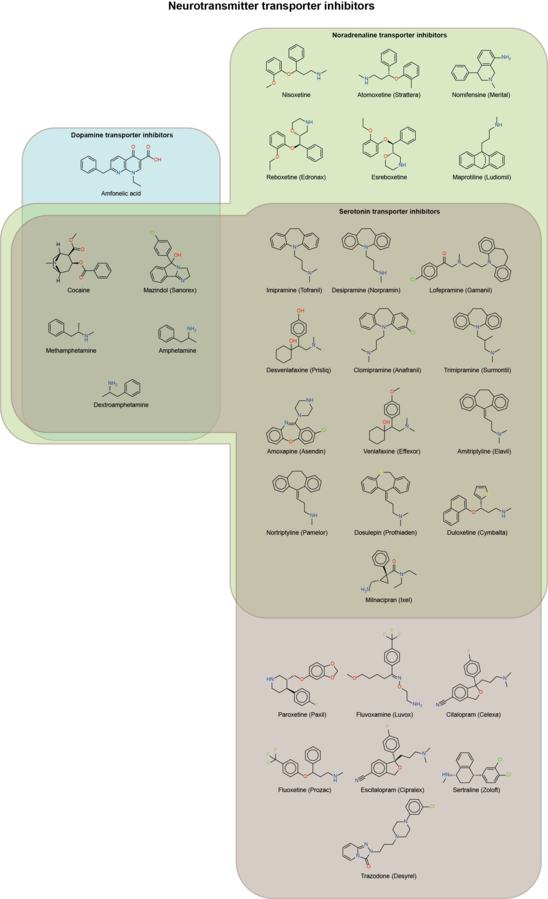
Several reuptake inhibitors contain an aryloxypropanamine scaffold. This structural motif has potential for high affinity binding to biogenic amine transports. Drugs containing an aryloxypropanamine scaffold have selectivity profile for norepinephrine and serotonin transporters that depends on the substitution pattern of the aryloxy ring. Selective NRIs contain a substituent in 2′ position of the aryloxy ring but SSRIs contain a substituent in 4′ position of the aryloxy ring. Atomoxetine, nisoxetine and reboxetine all have a substitution group in the 2′ position and are selective NRIs while compounds that have a substitution group in the 4′ position (like fluoxetine and paroxetine) are SSRIs. Duloxetine contains a phenyl group fused at the 2′ and 3′ positions, therefore it has dual selective norepinephrine and serotonin reuptake inhibitory effects and has similar potencies for the both transporters. The nature of the aromatic substituent also has a significant influence on the activity and selectivity of the compounds as inhibitors of the serotonin or the norepinephrine transporters.

Cycloalkanol Ethylamine Scaffold

Venlafaxine and desvenlafaxine contain a cycloalkanol ethylamine scaffold. Increasing the electron-withdrawing nature of the aromatic ring provides a more potent inhibitory effect of norepinephrine uptake and improves the selectivity for norepinephrine over the serotonin transporter. Effects of chloro, methoxy and trifluoromethyl substituents in the aromatic ring of cycloalkanol ethylamine scaffold were tested. The results showed that the strongest electron-withdrawing m-trifluoromethyl analogue exhibited the most potent inhibitory effect of norepinephrine and the most selectivity over serotonin uptake. WY-46824, a piperazine-containing derivative, has shown norepinephrine and dopamine reuptake inhibition. Further synthesis and testing identified WAY-256805, a potent norepinephrine reuptake inhibitor that exhibited excellent selectivity and was efficacious in animal models of depression, pain, and thermoregulatory dysfunction.

Milnacipran

Milnacipran is structurally different from other SNRIs. The SAR of milnacipran derivatives at transporter level is still largely unclear and is based on in vivo efficacy that was reported in 1987. N-methylation of milnacipran in substituent group R4 and R5 reduces the norepinephrine and serotonin activity. Researches on different secondary amides in substitution groups R6 and R7 showed that π electrons play an important role in the interaction between transporters and ligands. A phenyl group in substituent R6 showed effect on norepinephrine transporters. Substituent groups in R6 and R7 with allylic double bond showed significant improved effect on both norepinephrine and serotonin transporters. Studies show that introducing a 2-methyl group in substituent R3, the potency at norepinephrine and serotonin transporters are almost abolished. Methyl groups in substituent groups R1 and R2 also abolish the potency at norepinephrine and serotonin transporters. Researchers found that replacing one of the ethyl groups of milnacipran with an allyl moiety increases the norepinephrine potency. The pharmacophore of milnacipran derivatives is still largely unclear.

The conformation of milnacipran is an important part of its pharmacophore. Changing the SAR in milnacipran changes the stereochemistry of the compound and affects the norepinephrine and serotonin concentration. Milnacipran is marketed as a racemic mixture. Effects of milnacipran reside in the (1S,2R)-isomer and substitution of the phenyl group in the (1S,2R)-isomer has negative impact on norepinephrine concentration. Milnacipran has low molecular weight and low lipophilicity. Because of these properties, milnacipran exhibits almost ideal pharmacokinetics in humans such as high bioavailability, low inter-subject variability, limited liver enzyme interaction, moderate tissue distribution and a reasonably long elimination half-life. Milnacipran’s lack of drug-drug interactions via cytochrome P450 enzymes is thought to be an attractive feature because many of the central nervous system drugs are highly lipophilic and are mainly eliminated by liver enzymes.

Future Development of SAR

The application of an aryloxypropanamine scaffold has generated a number of potent MAOIs. Before the development of duloxetine, the exploration of aryloxypropanamine SAR resulted in the identification of fluoxetine and atomoxetine. The same motif can be found in reboxetine where it is constrained in a morpholine ring system. Some studies have been made where the oxygen in reboxetine is replaced by sulfur to give arylthiomethyl morpholine. Some of the arylthiomethyl morpholine derivatives maintain potent levels of serotonin and norepinephrine reuptake inhibition. Dual serotonin and norepinephrine reuptake inhibition resides in different enantiomers for arylthiomethyl morpholine scaffold. Possible drug candidates with dual serotonin and norepinephrine reuptake inhibitory activity have also been derived from piperazine, 3-amino-pyrrolidine and benzylamine templates.

Clinical Trials

Depression

Several studies have shown that antidepressant drugs which have combined serotonergic and noradrenergic activity are generally more effective than SSRIs, which act upon serotonin reuptake by itself. Serotonergic-noradrenergic antidepressant drugs may have a modest efficacy advantage compared to SSRIs in treating major depressive disorder (MDD), but are slightly less well tolerated. Further research is needed to examine the possible differences of efficacy in specific MDD sub-populations or for specific MDD symptoms, between these classes of antidepressant drugs.

Analgesic

Data from clinical trials have indicated that SNRIs might have pain relieving properties. Although the perception and transmission of pain stimuli in the central nervous system have not been fully elucidated, extensive data support a role for serotonin and norepinephrine in the modulation of pain. Findings from clinical trials in humans have shown these antidepressants can to reduce pain and functional impairment in central and neuropathic pain conditions. This property of SNRIs might be used to reduce doses of other pain relieving medication and lower the frequency of safety, limited efficacy and tolerability issues. Clinical research data have shown in patients with GAD that the SNRI duloxetine is significantly more effective than placebo in reducing pain-related symptoms of GAD, after short-term and long-term treatment. However, findings suggested that such symptoms of physical pain reoccur in relapse situations, which indicates a need for ongoing treatment in patients with GAD and concurrent painful physical symptoms.

Indications

SNRIs have been tested for treatment of the following conditions:

Pharmacology

Route of Administration

SNRIs are delivered orally, usually in the form of capsules or tablets. It is recommended to take SNRIs in the morning with breakfast, which does not affect drug levels, but may help with certain side effects. Norepinephrine has activating effects in the body and therefore can cause insomnia in some patients if taken at bedtime. SNRIs can also cause nausea, which is usually mild and goes away within a few weeks of treatment, but taking the medication with food can help alleviate this. The drugs themselves are usually a fine crystalline powder that diffuses into the body during digestion.

Dosage

Dosages vary depending on the SNRI used due to varying potencies of the drug in question as well as multiple strengths for each drug.

Mode of Action

The condition for which SNRIs are mostly indicated, major depressive disorder, is thought to be mainly caused by decreased levels of serotonin and norepinephrine in the synaptic cleft, causing erratic signalling. Based on the monoamine hypothesis of depression, which asserts that decreased concentrations of monoamine neurotransmitters leads to depressive symptoms, the following relations were determined: “Norepinephrine may be related to alertness and energy as well as anxiety, attention, and interest in life; [lack of] serotonin to anxiety, obsessions, and compulsions; and dopamine to attention, motivation, pleasure, and reward, as well as interest in life.” SNRIs work by inhibiting the reuptake of the neurotransmitters serotonin and norepinephrine. This results in increased extracellular concentrations of serotonin and norepinephrine and, consequently, an increase in neurotransmission. Most SNRIs including venlafaxine, desvenlafaxine, and duloxetine, are several fold more selective for serotonin over norepinephrine, while milnacipran is three times more selective for norepinephrine than serotonin. Elevation of norepinephrine levels is thought to be necessary for an antidepressant to be effective against neuropathic pain, a property shared with the older tricyclic antidepressants (TCAs), but not with the SSRIs.

Recent studies have shown that depression may be linked to increased inflammatory response, thus attempts at finding an additional mechanism for SNRIs have been made. Studies have shown that SNRIs as well as SSRIs have significant anti-inflammatory action on microglia in addition to their effect on serotonin and norepinephrine levels. As such, it is possible that an additional mechanism of these drugs that acts in combination with the previously understood mechanism exist. The implication behind these findings suggests use of SNRIs as potential anti-inflammatories following brain injury or any other disease where swelling of the brain is an issue. However, regardless of the mechanism, the efficacy of these drugs in treating the diseases for which they have been indicated has been proven, both clinically and in practice.

Pharmacodynamics

Most SNRIs function alongside primary metabolites and secondary metabolites in order to inhibit reuptake of serotonin, norepinepherine, and marginal amounts of dopamine. For example, venlafaxine works alongside its primary metabolite O-desmethylvenlafaxine to strongly inhibit serotonin and norepinephrine reuptake in the brain. The evidence also suggests that dopamine and norepinepherine behave in a co-transportational manner, due to the inactivation of dopamine by norepinephrine reuptake in the frontal cortex, an area of the brain largely lacking in dopamine transporters. This effect of SNRIs results in increased dopamine neurotransmission, in addition to the increases in serotonin and norepinephrine activity. Furthermore, because SNRIs are extremely selective, they have no measurable effects on other, unintended receptors, in contrast to monoamine oxidase inhibition. Pharmaceutical tests have determined that use of both SNRIs or SSRIs can generate significant anti-inflammatory action on microglia, as well.

Pharmacokinetics

The half-life of venlafaxine is about 5 hours, and with once-daily dosing, steady-state concentration is achieved after about 3 days, though its active metabolite desvenlafaxine lasts longer. The half-life of desvenlafaxine is about 11 hours, and steady-state concentrations are achieved after 4 to 5 days. The half-life of duloxetine is about 12 hours (range: 8-17 hours), and steady-state is achieved after about 3 days. Milnacipran has a half-life of about 6 to 8 hours, and steady-state levels are reached within 36 to 48 hours.

Contraindications

SNRIs are contraindicated in patients taking MAOIs within the last two weeks due to the increased risk of serotonin syndrome, which can be life-threatening.[65] Other drugs and substances that should be avoided due to increased risk of serotonin syndrome when combined with an SNRI include: other anti-depressants, anti-convulsants, analgesics, antiemetic agents, anti-migraine medications, methylene blue, linezolid, Lithium, St. John’s worts, ecstasy, and LSD. Signs and symptoms of serotonin syndrome include: hyperthermia, rigidity, myoclonus, autonomic instability with fluctuating vital signs, and mental status changes that include extreme agitation progressing to delirium and coma.

Due to the effects of increased norepinephrine levels and, therefore, higher noradrenergic activity, pre-existing hypertension should be controlled before treatment with SNRIs and blood pressure periodically monitored throughout treatment. Duloxetine has also been associated with cases of liver failure and should not be prescribed to patients with chronic alcohol use or liver disease. Studies have found that Duloxetine can increase liver function tests three times above their upper normal limit. Patients suffering from coronary artery disease should caution the use of SNRIs. Furthermore, due to some SNRIs’ actions on obesity, patients with major eating disorders such as anorexia nervosa or bulimia should not be prescribed SNRIs. Duloxetine and milnacipran are also contraindicated in patients with uncontrolled narrow-angle glaucoma, as they have been shown to increase incidence of mydriasis.

Side Effects

Because the SNRIs and SSRIs act in similar ways to elevate serotonin levels, they share many side effects, though to varying degrees. The most common side effects include nausea/vomiting, sweating, loss of appetite, dizziness, headache, increase in suicidal thoughts, and sexual dysfunction. Elevation of norepinephrine levels can sometimes cause anxiety, mildly elevated pulse, and elevated blood pressure. However, norepinephrine-selective antidepressants, such as reboxetine and desipramine, have successfully treated anxiety disorders. People at risk for hypertension and heart disease should monitor their blood pressure. The side effects of upset stomach may be decreased by taking SNRIs with food.

Sexual Dysfunction

SNRIs, similarly to SSRIs, can cause several types of sexual dysfunction, such as erectile dysfunction, decreased libido, sexual anhedonia, and anorgasmia. The two common sexual side effects are diminished interest in sex (libido) and difficulty reaching climax (anorgasmia), which are usually somewhat milder with SNRIs compared to SSRIs. To manage sexual dysfunction, studies have shown that switching to or augmenting with bupropion or adding a PDE5 Inhibitor have decreased symptoms of sexual dysfunction. Studies have shown that PDE5 Inhibitors, such as sildenafil (Viagra), tadalafil (Cialis), vardenafil (Levitra), and avanafil (Stendra), have sometimes been helpful to decrease the sexual dysfunction, including erectile dysfunction, although they have been shown to be more effective in men than women.

Serotonin Syndrome

A serious, but rare, side effect of SNRIs is serotonin syndrome, which is caused by an excess of serotonin in the body. Serotonin syndrome can be caused by taking multiple serotonergic drugs, such as SSRIs or SNRIs. Other drugs that contribute to serotonin syndrome include MAO inhibitors, linezolid, tedizolid, methylene blue, procarbazine, amphetamines, clomipramine, and more. Early symptoms of serotonin syndrome may include nausea, vomiting, diarrhoea, sweating, agitation, confusion, muscle rigidity, dilated pupils, hyperthermia, rigidity, and goose bumps. More severe symptoms include fever, seizures, irregular heartbeat, delirium, and coma. If signs or symptoms arise, discontinue treatment with serotonergic agents immediately. It is recommended to washout 4 to 5 half-lives of the serotonergic agent before using an MAO inhibitor.

Bleeding

Some studies suggest there are risks of upper gastrointestinal bleeding, especially venlafaxine, due to impairment of platelet aggregation and depletion of platelet serotonin levels. Similarly to SSRIs, SNRIs may interact with anticoagulants, like warfarin. Currently, there is more evidence of SSRIs having higher risk of bleeding than SNRIs. Studies have suggested caution when using SNRIs or SSRIs with high doses of nonsteroidal anti-inflammatory drugs (NSAIDs), such as ibuprofen or naproxen due to an increased risk of upper GI bleeding.

Precautions

Starting an SNRI Regimen

Due to the extreme changes in noradrenergic activity produced from norepinephrine and serotonin reuptake inhibition, patients that are just starting an SNRI regimen are usually given lower doses than their expected final dosing to allow the body to acclimate to the drug’s effects. As the patient continues along at low doses without any side-effects, the dose is incrementally increased until the patient sees improvement in symptoms without detrimental side-effects.

Discontinuation Syndrome

As with SSRIs, the abrupt discontinuation of an SNRI usually leads to withdrawal, or “discontinuation syndrome“, which could include states of anxiety and other symptoms. Therefore, it is recommended that users seeking to discontinue an SNRI slowly taper the dose under the supervision of a professional. Discontinuation syndrome has been reported to be markedly worse for venlafaxine when compared to other SNRIs. As such, as tramadol is related to venlafaxine, the same conditions apply. This is likely due to venlafaxine’s relatively short half-life and therefore rapid clearance upon discontinuation. In some cases, switching from venlafaxine to fluoxetine, a long-acting SSRI, and then tapering off fluoxetine, may be recommended to reduce discontinuation symptoms. Signs and symptoms of withdrawal from abrupt cessation of an SNRI include dizziness, anxiety, insomnia, nausea, sweating, and flu-like symptoms, such as lethargy and malaise.

Overdose

Causes

Overdosing on SNRIs can be caused by either drug combinations or excessive amounts of the drug itself. Venlafaxine is marginally more toxic in overdose than duloxetine or the SSRIs. Risk of overdose is increased in patients taking multiple serotonergic agents or interacting agents.

Symptoms

Symptoms of SNRI overdose, whether it be a mixed drug interaction or the drug alone, vary in intensity and incidence based on the amount of medicine taken and the individuals sensitivity to SNRI treatment. Possible symptoms may include:

  • Somnolence.
  • Coma.
  • Serotonin syndrome.
  • Seizures.
  • Syncope.
  • Tachycardia.
  • Hypotension.
  • Hypertension.
  • Hyperthermia.
  • Vomiting.

Management

Overdose is usually treated symptomatically, especially in the case of serotonin syndrome, which requires treatment with cyproheptadine and temperature control based on the progression of the serotonin toxicity. Patients are often monitored for vitals and airways cleared to ensure that they are receiving adequate levels of oxygen. Another option is to use activated carbon in the GI tract in order to absorb excess neurotransmitter. It is important to consider drug interactions when dealing with overdose patients, as separate symptoms can arise.

Comparison to SSRIs

Because SNRIs were developed more recently than SSRIs, there are relatively few of them. However, the SNRIs are among the most widely used antidepressants today. In 2009, Cymbalta and Effexor were the 11th- and 12th-most-prescribed branded drugs in the United States, respectively. This translates to the 2nd- and 3rd-most-common antidepressants, behind Lexapro (escitalopram), an SSRI. In some studies, SNRIs demonstrated slightly higher antidepressant efficacy than the SSRIs (response rates 63.6% versus 59.3%). However, in one study escitalopram had a superior efficacy profile to venlafaxine.

Special Populations

Pregnancy

Currently, no antidepressants are FDA approved during pregnancy. All SSRIs and SNRIs are Category C, except paroxetine, which is Category D since it has shown association with congenital heart disorders. Use of antidepressants during pregnancy may result in foetus abnormalities affecting functional development of the brain and behaviour. Untreated depression may also affect birth outcomes, so it is recommended to discuss options with a provider to weigh the risks and benefits.

Paediatrics

SSRIs and SNRIs have been shown to be effective in treating major depressive disorder and anxiety in paediatric populations. However, there is a risk of increased suicidality in paediatric populations for treatment of major depressive disorder, especially with venlafaxine. Fluoxetine is the only antidepressant that is approved for child/adolescent major depressive disorder.

Geriatrics

Most antidepressants, including SNRIs, are safe and effective in the geriatric population. Decisions are often based on co-morbid conditions, drug interactions, and patient tolerance. Due to differences in body composition and metabolism, starting doses are often half that of the recommended dose for younger adults.
What is a Selective Serotonin Reuptake Inhibitor?

Introduction

Selective serotonin reuptake inhibitors (SSRIs) are a class of drugs that are typically used as antidepressants in the treatment of major depressive disorder, anxiety disorders, and other psychological conditions.

SSRIs increase the extracellular level of the neurotransmitter serotonin by limiting its reabsorption (reuptake) into the presynaptic cell. They have varying degrees of selectivity for the other monoamine transporters, with pure SSRIs having strong affinity for the serotonin transporter and only weak affinity for the norepinephrine and dopamine transporters.

SSRIs are the most widely prescribed antidepressants in many countries. The efficacy of SSRIs in mild or moderate cases of depression has been disputed and may be outweighed by side effects, especially in adolescent populations.

Refer to Serotonin-Norepinephrine Reuptake Inhibitor (SNRI).

Brief History

Refer to Development and discovery of SSRI Drugs.

Fluoxetine was introduced in 1987 and was the first major SSRI to be marketed.

Medical Uses

The main indication for SSRIs is major depressive disorder (MDD); however, they are frequently prescribed for anxiety disorders, such as social anxiety disorder, generalised anxiety disorder (GAD), panic disorder, obsessive-compulsive disorder (OCD), eating disorders, chronic pain, and, in some cases, for posttraumatic stress disorder (PTSD). They are also frequently used to treat depersonalisation disorder, although with varying results.

Depression

Antidepressants are recommended by the UK National Institute for Health and Care Excellence (NICE) as a first-line treatment of severe depression and for the treatment of mild-to-moderate depression that persists after conservative measures such as cognitive therapy. They recommend against their routine use in those who have chronic health problems and mild depression.

There has been controversy regarding the efficacy of SSRIs in treating depression depending on its severity and duration.

  • Two meta-analyses published in 2008 (Kirsch) and 2010 (Fournier) found that in mild and moderate depression, the effect of SSRIs is small or none compared to placebo, while in very severe depression the effect of SSRIs is between “relatively small” and “substantial”. The 2008 meta-analysis combined 35 clinical trials submitted to the Food and Drug Administration (FDA) before licensing of four newer antidepressants (including the SSRIs paroxetine and fluoxetine, the non-SSRI antidepressant nefazodone, and the serotonin and norepinephrine reuptake inhibitor (SNRI) venlafaxine). The authors attributed the relationship between severity and efficacy to a reduction of the placebo effect in severely depressed patients, rather than an increase in the effect of the medication. Some researchers have questioned the statistical basis of this study suggesting that it underestimates the effect size of antidepressants.
  • A 2012 meta-analysis of fluoxetine and venlafaxine concluded that statistically and clinically significant treatment effects were observed for each drug relative to placebo irrespective of baseline depression severity; some of the authors however disclosed substantial relationships with pharmaceutical industries.
  • A 2017 systematic review stated that “SSRIs versus placebo seem to have statistically significant effects on depressive symptoms, but the clinical significance of these effects seems questionable and all trials were at high risk of bias. Furthermore, SSRIs versus placebo significantly increase the risk of both serious and non-serious adverse events. Our results show that the harmful effects of SSRIs versus placebo for major depressive disorder seem to outweigh any potentially small beneficial effects”. Fredrik Hieronymus et al. criticised the review as inaccurate and misleading, but they also disclosed multiple ties to pharmaceutical industries.

In 2018, a systematic review and network meta-analysis comparing the efficacy and acceptability of 21 antidepressant drugs showed escitalopram to be one of the most effective.

In children, there are concerns around the quality of the evidence on the meaningfulness of benefits seen. If a medication is used, fluoxetine appears to be first line.

Social Anxiety Disorder

Some SSRIs are effective for social anxiety disorder, although their effects on symptoms is not always robust and their use is sometimes rejected in favour of psychological therapies. Paroxetine was the first drug to be approved for social anxiety disorder and it is considered effective for this disorder, sertraline and fluvoxamine were later approved for it, too, escitalopram and citalopram are used off label with acceptable efficacy, while fluoxetine is not considered to be effective for this disorder.

Post-Traumatic Stress Disorder

PTSD is relatively hard to treat and generally treatment is not highly effective; SSRIs are no exception. They are not very effective for this disorder and only two SSRI are US Food and Drug Administration (FDA) approved for this condition, paroxetine and sertraline. Paroxetine has slightly higher response and remission rates for PTSD than sertraline, but both are not fully effective for many patients. Fluoxetine is used off label, but with mixed results, venlafaxine, an SNRI, is considered somewhat effective, although used off label, too. Fluvoxamine, escitalopram and citalopram are not well tested in this disorder. Paroxetine remains the most suitable drug for PTSD as of now, but with limited benefits.

Generalised Anxiety Disorder

SSRIs are recommended by NICE for the treatment of GAD that has failed to respond to conservative measures such as education and self-help activities. GAD is a common disorder of which the central feature is excessive worry about a number of different events. Key symptoms include excessive anxiety about multiple events and issues, and difficulty controlling worrisome thoughts that persists for at least 6 months.

Antidepressants provide a modest-to-moderate reduction in anxiety in GAD, and are superior to placebo in treating GAD. The efficacy of different antidepressants is similar.

Obsessive-Compulsive Disorder

In Canada, SSRIs are a first-line treatment of adult OCD. In the UK, they are first-line treatment only with moderate to severe functional impairment and as second line treatment for those with mild impairment, though, as of early 2019, this recommendation is being reviewed. In children, SSRIs can be considered a second line therapy in those with moderate-to-severe impairment, with close monitoring for psychiatric adverse effects. SSRIs, especially fluvoxamine, which is the first one to be FDA approved for OCD, are efficacious in its treatment; patients treated with SSRIs are about twice as likely to respond to treatment as those treated with placebo. Efficacy has been demonstrated both in short-term treatment trials of 6 to 24 weeks and in discontinuation trials of 28 to 52 weeks duration.

Panic Disorder

Paroxetine CR was superior to placebo on the primary outcome measure. In a 10-wk randomised controlled, double-blind trial escitalopram was more effective than placebo. Fluvoxamine has shown positive results. However, evidence for their effectiveness and acceptability is unclear.

Eating Disorders

Antidepressants are recommended as an alternative or additional first step to self-help programs in the treatment of bulimia nervosa. SSRIs (fluoxetine in particular) are preferred over other anti-depressants due to their acceptability, tolerability, and superior reduction of symptoms in short-term trials. Long-term efficacy remains poorly characterised.

Similar recommendations apply to binge eating disorder. SSRIs provide short-term reductions in binge eating behaviour, but have not been associated with significant weight loss.

Clinical trials have generated mostly negative results for the use of SSRIs in the treatment of anorexia nervosa. Treatment guidelines from the National Institute of Health and Clinical Excellence recommend against the use of SSRIs in this disorder. Those from the American Psychiatric Association note that SSRIs confer no advantage regarding weight gain, but that they may be used for the treatment of co-existing depressive, anxiety, or OCD.

Stroke Recovery

SSRIs have been used off-label in the treatment of stroke patients, including those with and without symptoms of depression. A 2019 meta-analysis of randomised, controlled clinical trials found a statistically significant effect of SSRIs on dependence, neurological deficit, depression, and anxiety but the studies had a high risk of bias. No reliable evidence points to their routine use to promote recovery following stroke. Thrombosis risk is reduced because SSRIs limit serotonin availability to platelets, so benefits, such as stroke recovery, of reduced clotting go up, with SSRIs.

Premature Ejaculation

SSRIs are effective for the treatment of premature ejaculation. Taking SSRIs on a chronic, daily basis is more effective than taking them prior to sexual activity. The increased efficacy of treatment when taking SSRIs on a daily basis is consistent with clinical observations that the therapeutic effects of SSRIs generally take several weeks to emerge. Sexual dysfunction ranging from decreased libido to anorgasmia is usually considered to be a significantly distressing side effect which may lead to noncompliance in patients receiving SSRIs. However, for those suffering from premature ejaculation, this very same side effect becomes the desired effect.

Other Uses

SSRIs such as sertraline have been found to be effective in decreasing anger.

Side Effects

Side effects vary among the individual drugs of this class and may include:

  • Increased risk of bone fractures.
  • Akathisia.
  • Suicidal ideation (thoughts of suicide) and other risks (see below).

Sexual Dysfunction

SSRIs can cause various types of sexual dysfunction such as anorgasmia, erectile dysfunction, diminished libido, genital numbness, and sexual anhedonia (pleasureless orgasm). Sexual problems are common with SSRIs. While initial trials showed side effects in 5-15% of users (based on spontaneous reporting by users), later studies (based on asking patients directly) have shown side effect rates from 36% to 98%. Poor sexual function is also one of the most common reasons people stop the medication.

In some cases, symptoms of sexual dysfunction may persist after discontinuation of SSRIs. This combination of symptoms is sometimes referred to as Post-SSRI Sexual Dysfunction (PSSD). On the 11 June 2019 the Pharmacovigilance Risk Assessment Committee of the European Medicines Agency concluded that a possible relationship exists between SSRI use and persistent sexual dysfunction after cessation of use. The committee concluded that a warning should be added to the label of SSRIs and SNRIs regarding this possible risk.

The mechanism by which SSRIs may cause sexual side effects is not well understood as of 2021. The range of possible mechanisms includes:

  • Nonspecific neurological effects (e.g. sedation) that globally impair behaviour including sexual function;
  • Specific effects on brain systems mediating sexual function;
  • Specific effects on peripheral tissues and organs, such as the penis, that mediate sexual function; and
  • Direct or indirect effects on hormones mediating sexual function.

Management strategies include: for erectile dysfunction the addition of a PDE5 inhibitor such as sildenafil; for decreased libido, possibly adding or switching to bupropion; and for overall sexual dysfunction, switching to nefazodone.

A number of non-SSRI drugs are not associated with sexual side effects (such as bupropion, mirtazapine, tianeptine, agomelatine and moclobemide).

Several studies have suggested that SSRIs may adversely affect semen quality.

While trazodone (an antidepressant with alpha adrenergic receptor blockade) is a notorious cause of priapism, cases of priapism have also been reported with certain SSRIs (e.g. fluoxetine, citalopram).

Violence

Researcher David Healy and others have reviewed available data, concluding that SSRIs increase violent acts, in adults and children, both on therapy and during withdrawal. This view is also shared by some patient activist groups.

Vision

Acute narrow-angle glaucoma is the most common and important ocular side effect of SSRIs, and often goes misdiagnosed.

Cardiac

SSRIs do not appear to affect the risk of coronary heart disease (CHD) in those without a previous diagnosis of CHD. A large cohort study suggested no substantial increase in the risk of cardiac malformations attributable to SSRI usage during the first trimester of pregnancy. A number of large studies of people without known pre-existing heart disease have reported no EKG changes related to SSRI use. The recommended maximum daily dose of citalopram and escitalopram was reduced due to concerns with QT prolongation. In overdose, fluoxetine has been reported to cause sinus tachycardia, myocardial infarction, junctional rhythms and trigeminy. Some authors have suggested electrocardiographic monitoring in patients with severe pre-existing cardiovascular disease who are taking SSRIs.

Bleeding

SSRIs directly increase the risk of abnormal bleeding by lowering platelet serotonin levels, which are essential to platelet-driven haemostasis. SSRIs interact with anticoagulants, like warfarin, and antiplatelet drugs, like aspirin. This includes an increased risk of GI bleeding, and post operative bleeding. The relative risk of intracranial bleeding is increased, but the absolute risk is very low. SSRIs are known to cause platelet dysfunction. This risk is greater in those who are also on anticoagulants, antiplatelet agents and NSAIDs (nonsteroidal anti-inflammatory drugs), as well as with the co-existence of underlying diseases such as cirrhosis of the liver or liver failure.

Fracture Risk

Evidence from longitudinal, cross-sectional, and prospective cohort studies suggests an association between SSRI usage at therapeutic doses and a decrease in bone mineral density, as well as increased fracture risk, a relationship that appears to persist even with adjuvant bisphosphonate therapy. However, because the relationship between SSRIs and fractures is based on observational data as opposed to prospective trials, the phenomenon is not definitively causal. There also appears to be an increase in fracture-inducing falls with SSRI use, suggesting the need for increased attention to fall risk in elderly patients using the medication. The loss of bone density does not appear to occur in younger patients taking SSRIs.

Bruxism

SSRI and SNRI antidepressants may cause jaw pain/jaw spasm reversible syndrome (although it is not common). Buspirone appears to be successful in treating bruxism on SSRI/SNRI induced jaw clenching.

Discontinuation Syndrome

Refer to (SSRI) Antidepressant Discontinuation Syndrome.

Serotonin reuptake inhibitors should not be abruptly discontinued after extended therapy, and whenever possible, should be tapered over several weeks to minimise discontinuation-related symptoms which may include nausea, headache, dizziness, chills, body aches, paraesthesia’s, insomnia, and brain zaps. Paroxetine may produce discontinuation-related symptoms at a greater rate than other SSRIs, though qualitatively similar effects have been reported for all SSRIs. Discontinuation effects appear to be less for fluoxetine, perhaps owing to its long half-life and the natural tapering effect associated with its slow clearance from the body. One strategy for minimizing SSRI discontinuation symptoms is to switch the patient to fluoxetine and then taper and discontinue the fluoxetine.

Serotonin Syndrome

Refer to Serotonin Syndrome.

Serotonin syndrome is typically caused by the use of two or more serotonergic drugs, including SSRIs. Serotonin syndrome is a condition that can range from mild (most common) to deadly. Mild symptoms may consist of increased heart rate, shivering, sweating, dilated pupils, myoclonus (intermittent jerking or twitching), as well as overresponsive reflexes. Concomitant use of an SSRI or selective norepinephrine reuptake inhibitor for depression with a triptan for migraine does not appear to heighten the risk of the serotonin syndrome. The prognosis in a hospital setting is generally good if correctly diagnosed. Treatment consists of discontinuing any serotonergic drugs as well as supportive care to manage agitation and hyperthermia, usually with benzodiazepines.

Suicide Risk

Children and Adolescents

Meta analyses of short duration randomized clinical trials have found that SSRI use is related to a higher risk of suicidal behaviour in children and adolescents. For instance, a 2004 FDA analysis of clinical trials on children with major depressive disorder found statistically significant increases of the risks of “possible suicidal ideation and suicidal behavior” by about 80%, and of agitation and hostility by about 130%. According to the FDA, the heightened risk of suicidality is within the first one to two months of treatments. NICE places the excess risk in the “early stages of treatment”. The European Psychiatric Association places the excess risk in the first two weeks of treatment and, based on a combination of epidemiological, prospective cohort, medical claims, and randomized clinical trial data, concludes that a protective effect dominates after this early period. A 2014 Cochrane review found that at six to nine months, suicidal ideation remained higher in children treated with antidepressants compared to those treated with psychological therapy.

A recent comparison of aggression and hostility occurring during treatment with fluoxetine to placebo in children and adolescents found that no significant difference between the fluoxetine group and a placebo group. There is also evidence that higher rates of SSRI prescriptions are associated with lower rates of suicide in children, though since the evidence is correlational, the true nature of the relationship is unclear.

In 2004, the Medicines and Healthcare products Regulatory Agency (MHRA) in the United Kingdom judged fluoxetine (Prozac) to be the only antidepressant that offered a favourable risk-benefit ratio in children with depression, though it was also associated with a slight increase in the risk of self-harm and suicidal ideation. Only two SSRIs are licensed for use with children in the UK, sertraline (Zoloft) and fluvoxamine (Luvox), and only for the treatment of OCD. Fluoxetine is not licensed for this use.

Adults

It is unclear whether SSRIs affect the risk of suicidal behaviour in adults.

  • A 2005 meta-analysis of drug company data found no evidence that SSRIs increased the risk of suicide; however, important protective or hazardous effects could not be excluded.
  • A 2005 review observed that suicide attempts are increased in those who use SSRIs as compared to placebo and compared to therapeutic interventions other than tricyclic antidepressants. No difference risk of suicide attempts was detected between SSRIs versus tricyclic antidepressants.
  • On the other hand, a 2006 review suggests that the widespread use of antidepressants in the new “SSRI-era” appears to have led to a highly significant decline in suicide rates in most countries with traditionally high baseline suicide rates. The decline is particularly striking for women who, compared with men, seek more help for depression. Recent clinical data on large samples in the US too have revealed a protective effect of antidepressant against suicide.
  • A 2006 meta-analysis of random controlled trials suggests that SSRIs increase suicide ideation compared with placebo. However, the observational studies suggest that SSRIs did not increase suicide risk more than older antidepressants. The researchers stated that if SSRIs increase suicide risk in some patients, the number of additional deaths is very small because ecological studies have generally found that suicide mortality has declined (or at least not increased) as SSRI use has increased.
  • An additional meta-analysis by the FDA in 2006 found an age-related effect of SSRI’s. Among adults younger than 25 years, results indicated that there was a higher risk for suicidal behaviour. For adults between 25 and 64, the effect appears neutral on suicidal behaviour but possibly protective for suicidal behaviour for adults between the ages of 25 and 64. For adults older than 64, SSRI’s seem to reduce the risk of both suicidal behaviour.
  • In 2016 a study criticised the effects of the FDA Black Box suicide warning inclusion in the prescription. The authors discussed the suicide rates might increase also as a consequence of the warning.

Pregnancy and Breastfeeding

SSRI use in pregnancy has been associated with a variety of risks with varying degrees of proof of causation. As depression is independently associated with negative pregnancy outcomes, determining the extent to which observed associations between antidepressant use and specific adverse outcomes reflects a causative relationship has been difficult in some cases. In other cases, the attribution of adverse outcomes to antidepressant exposure seems fairly clear.

SSRI use in pregnancy is associated with an increased risk of spontaneous abortion of about 1.7-fold. Use is also associated preterm birth.

A systematic review of the risk of major birth defects in antidepressant-exposed pregnancies found a small increase (3% to 24%) in the risk of major malformations and a risk of cardiovascular birth defects that did not differ from non-exposed pregnancies. Other studies have found an increased risk of cardiovascular birth defects among depressed mothers not undergoing SSRI treatment, suggesting the possibility of ascertainment bias, e.g. that worried mothers may pursue more aggressive testing of their infants. Another study found no increase in cardiovascular birth defects and a 27% increased risk of major malformations in SSRI exposed pregnancies.

The FDA issued a statement on 19 July 2006 stating nursing mothers on SSRIs must discuss treatment with their physicians. However, the medical literature on the safety of SSRIs has determined that some SSRIs like Sertraline and Paroxetine are considered safe for breastfeeding.

Neonatal Abstinence Syndrome

Several studies have documented neonatal abstinence syndrome, a syndrome of neurological, gastrointestinal, autonomic, endocrine and/or respiratory symptoms among a large minority of infants with intrauterine exposure. These syndromes are short-lived, but insufficient long-term data is available to determine whether there are long-term effects.

Persistent Pulmonary Hypertension

Persistent pulmonary hypertension (PPHN) is a serious and life-threatening, but very rare, lung condition that occurs soon after birth of the newborn. Newborn babies with PPHN have high pressure in their lung blood vessels and are not able to get enough oxygen into their bloodstream. About 1 to 2 babies per 1000 babies born in the US develop PPHN shortly after birth, and often they need intensive medical care. It is associated with about a 25% risk of significant long-term neurological deficits. A 2014 meta analysis found no increased risk of persistent pulmonary hypertension associated with exposure to SSRI’s in early pregnancy and a slight increase in risk associates with exposure late in pregnancy; “an estimated 286 to 351 women would need to be treated with an SSRI in late pregnancy to result in an average of one additional case of persistent pulmonary hypertension of the newborn.”. A review published in 2012 reached conclusions very similar to those of the 2014 study.

Neuropsychiatric Effects in Offspring

According to a 2015 review available data found that “some signal exists suggesting that antenatal exposure to SSRIs may increase the risk of ASDs (autism spectrum disorders)” even though a large cohort study published in 2013 and a cohort study using data from Finland’s national register between the years 1996 and 2010 and published in 2016 found no significant association between SSRI use and autism in offspring. The 2016 Finland study also found no association with ADHD, but did find an association with increased rates of depression diagnoses in early adolescence.

Overdose

Refer to Serotonin Syndrome.

SSRIs appear safer in overdose when compared with traditional antidepressants, such as the tricyclic antidepressants. This relative safety is supported both by case series and studies of deaths per numbers of prescriptions. However, case reports of SSRI poisoning have indicated that severe toxicity can occur and deaths have been reported following massive single ingestions, although this is exceedingly uncommon when compared to the tricyclic antidepressants.

Because of the wide therapeutic index of the SSRIs, most patients will have mild or no symptoms following moderate overdoses. The most commonly reported severe effect following SSRI overdose is serotonin syndrome; serotonin toxicity is usually associated with very high overdoses or multiple drug ingestion. Other reported significant effects include coma, seizures, and cardiac toxicity.

Bipolar Switch

In adults and children suffering from bipolar disorder, SSRIs may cause a bipolar switch from depression into hypomania/mania. When taken with mood stabilisers, the risk of switching is not increased, however when taking SSRI’s as a monotherapy, the risk of switching may be twice or three times that of the average. The changes are not often easy to detect and require monitoring by family and mental health professionals. This switch might happen even with no prior (hypo)manic episodes and might therefore not be foreseen by the psychiatrist.

Interactions

The following drugs may precipitate serotonin syndrome in people on SSRIs:

  • Linezolid.
  • Monoamine oxidase inhibitors (MAOIs) including moclobemide, phenelzine, tranylcypromine, selegiline and methylene blue.
  • Lithium.
  • Sibutramine.
  • MDMA (ecstasy).
  • Dextromethorphan.
  • Tramadol.
  • 5-HTP.
  • Pethidine/meperidine.
  • St. John’s wort.
  • Yohimbe.
  • Tricyclic antidepressants (TCAs).
  • Serotonin-norepinephrine reuptake inhibitors (SNRIs).
  • Buspirone.
  • Triptan.
  • Mirtazapine.

Painkillers of the NSAIDs drug family may interfere and reduce efficiency of SSRIs and may compound the increased risk of gastrointestinal bleeds caused by SSRI use. NSAIDs include:

  • Aspirin.
  • Ibuprofen (Advil, Nurofen).
  • Naproxen (Aleve).

There are a number of potential pharmacokinetic interactions between the various individual SSRIs and other medications. Most of these arise from the fact that every SSRI has the ability to inhibit certain P450 cytochromes.

Drug NameCYP1A2CYP2C9CYP2C19CYP2D6CYP3A4CYP2B6
Citalopram+00+00
Escitalopram000+00
Fluoxetine++++/+++++++
Fluvoxamine+++++++++++
Paroxetine++++++++++
Sertraline+++/+++++

Legend:

  • 0 = no inhibition.
  • + = mild inhibition.
  • ++ = moderate inhibition.
  • +++ = strong inhibition.

The CYP2D6 enzyme is entirely responsible for the metabolism of hydrocodone, codeine and dihydrocodeine to their active metabolites (hydromorphone, morphine, and dihydromorphine, respectively), which in turn undergo phase 2 glucuronidation. These opioids (and to a lesser extent oxycodone, tramadol, and methadone) have interaction potential with SSRIs. The concomitant use of some SSRIs (paroxetine and fluoxetine) with codeine may decrease the plasma concentration of active metabolite morphine, which may result in reduced analgesic efficacy.

Another important interaction of certain SSRIs involves paroxetine, a potent inhibitor of CYP2D6, and tamoxifen, an agent used commonly in the treatment and prevention of breast cancer. Tamoxifen is a prodrug that is metabolised by the hepatic cytochrome P450 enzyme system, especially CYP2D6, to its active metabolites. Concomitant use of paroxetine and tamoxifen in women with breast cancer is associated with a higher risk of death, as much as a 91% in women who used it the longest.

List of SSRIs

Marketed

  • Antidepressants
    • Citalopram (Celexa).
    • Escitalopram (Lexapro).
    • Fluoxetine (Prozac).
    • Fluvoxamine (Luvox).
    • Paroxetine (Paxil).
    • Sertraline (Zoloft).
  • Others:
    • Dapoxetine (Priligy).

Discontinued

  • Antidepressants:
    • Indalpine (Upstène).
    • Zimelidine (Zelmid).

Never Marketed

  • Antidepressants:
    • Alaproclate (GEA-654).
    • Centpropazine.
    • Cericlamine (JO-1017).
    • Femoxetine (Malexil; FG-4963).
    • Ifoxetine (CGP-15210).
    • Omiloxetine.
    • Panuramine (WY-26002).
    • Pirandamine (AY-23713).
    • Seproxetine ((S)-norfluoxetine).

Related Drugs

Although described as SNRIs, duloxetine (Cymbalta), venlafaxine (Effexor), and desvenlafaxine (Pristiq) are in fact relatively selective as serotonin reuptake inhibitors (SRIs). They are about at least 10-fold selective for inhibition of serotonin reuptake over norepinephrine reuptake. The selectivity ratios are approximately 1:30 for venlafaxine, 1:10 for duloxetine, and 1:14 for desvenlafaxine. At low doses, these SNRIs act mostly as SSRIs; only at higher doses do they also prominently inhibit norepinephrine reuptake. Milnacipran (Ixel, Savella) and its stereoisomer levomilnacipran (Fetzima) are the only widely marketed SNRIs that inhibit serotonin and norepinephrine to similar degrees, both with ratios close to 1:1.

Vilazodone (Viibryd) and vortioxetine (Trintellix) are SRIs that also act as modulators of serotonin receptors and are described as serotonin modulators and stimulators (SMS). Vilazodone is a 5-HT1A receptor partial agonist while vortioxetine is a 5-HT1A receptor agonist and 5-HT3 and 5-HT7 receptor antagonist. Litoxetine (SL 81-0385) and lubazodone (YM-992, YM-35995) are similar drugs that were never marketed. They are SRIs and litoxetine is also a 5-HT3 receptor antagonist while lubazodone is also a 5-HT2A receptor antagonist.

Mechanism of Action

Serotonin Reuptake Inhibition

In the brain, messages are passed from a nerve cell to another via a chemical synapse, a small gap between the cells. The presynaptic cell that sends the information releases neurotransmitters including serotonin into that gap. The neurotransmitters are then recognised by receptors on the surface of the recipient postsynaptic cell, which upon this stimulation, in turn, relays the signal. About 10% of the neurotransmitters are lost in this process; the other 90% are released from the receptors and taken up again by monoamine transporters into the sending presynaptic cell, a process called reuptake.

SSRIs inhibit the reuptake of serotonin. As a result, the serotonin stays in the synaptic gap longer than it normally would, and may repeatedly stimulate the receptors of the recipient cell. In the short run, this leads to an increase in signalling across synapses in which serotonin serves as the primary neurotransmitter. On chronic dosing, the increased occupancy of post-synaptic serotonin receptors signals the pre-synaptic neuron to synthesize and release less serotonin. Serotonin levels within the synapse drop, then rise again, ultimately leading to downregulation of post-synaptic serotonin receptors. Other, indirect effects may include increased norepinephrine output, increased neuronal cyclic AMP levels, and increased levels of regulatory factors such as BDNF and CREB. Owing to the lack of a widely accepted comprehensive theory of the biology of mood disorders, there is no widely accepted theory of how these changes lead to the mood-elevating and anti-anxiety effects of SSRIs. Any direct effects of SSRIs are limited by their inability to cross the blood-brain barrier; their effects on serotonin blood levels, which take weeks to take effect, appear to be largely responsible for their slow-to-appear psychiatric effects.

Sigma Receptor Ligands

In addition to their actions as reuptake inhibitors of serotonin, some SSRIs are also, coincidentally, ligands of the sigma receptors. Fluvoxamine is an agonist of the σ1 receptor, while sertraline is an antagonist of the σ1 receptor, and paroxetine does not significantly interact with the σ1 receptor. None of the SSRIs have significant affinity for the σ2 receptor, and the SNRIs, unlike the SSRIs, do not interact with either of the sigma receptors. Fluvoxamine has by far the strongest activity of the SSRIs at the σ1 receptor. High occupancy of the σ1 receptor by clinical dosages of fluvoxamine has been observed in the human brain in positron emission tomography (PET) research. It is thought that agonism of the σ1 receptor by fluvoxamine may have beneficial effects on cognition. In contrast to fluvoxamine, the relevance of the σ1 receptor in the actions of the other SSRIs is uncertain and questionable due to their very low affinity for the receptor relative to the SERT.

MedicationSERTσ1σ1σ2σ1 / SERT
Citalopram1.16292-404Agonist5,410252-348
Escitalopram2.5288AgonistNDND
Fluoxetine0.81191-240Agonist16,100296-365
Fluvoxamine2.217-36Agonist8,4397.7-16.4
Paroxetine0.13≥1,893ND22,870≥14,562
Sertraline0.2932-57Antagonist5,297110-197
Values are Ki (nM). The smaller the value, the more strongly the drug binds to the site.

Anti-Inflammatory Effects

The role of inflammation and the immune system in depression has been extensively studied. The evidence supporting this link has been shown in numerous studies over the past ten years. Nationwide studies and meta-analyses of smaller cohort studies have uncovered a correlation between pre-existing inflammatory conditions such as type 1 diabetes, rheumatoid arthritis (RA), or hepatitis, and an increased risk of depression. Data also shows that using pro-inflammatory agents in the treatment of diseases like melanoma can lead to depression. Several meta-analytical studies have found increased levels of proinflammatory cytokines and chemokines in depressed patients. This link has led scientists to investigate the effects of antidepressants on the immune system.

SSRIs were originally invented with the goal of increasing levels of available serotonin in the extracellular spaces. However, the delayed response between when patients first begin SSRI treatment to when they see effects has led scientists to believe that other molecules are involved in the efficacy of these drugs. To investigate the apparent anti-inflammatory effects of SSRIs, both Kohler et al. and Więdłocha et al. conducted meta-analyses which have shown that after antidepressant treatment the levels of cytokines associated with inflammation are decreased. A large cohort study conducted by researchers in the Netherlands investigated the association between depressive disorders, symptoms, and antidepressants with inflammation. The study showed decreased levels of interleukin (IL)-6, a cytokine that has proinflammatory effects, in patients taking SSRIs compared to non-medicated patients.

Treatment with SSRIs has shown reduced production of inflammatory cytokines such as IL-1β, tumour necrosis factor (TNF)-α, IL-6, and interferon (IFN)-γ, which leads to a decrease in inflammation levels and subsequently a decrease in the activation level of the immune response. These inflammatory cytokines have been shown to activate microglia which are specialised macrophages that reside in the brain. Macrophages are a subset of immune cells responsible for host defence in the innate immune system. Macrophages can release cytokines and other chemicals to cause an inflammatory response. Peripheral inflammation can induce an inflammatory response in microglia and can cause neuroinflammation. SSRIs inhibit proinflammatory cytokine production which leads to less activation of microglia and peripheral macrophages. SSRIs not only inhibit the production of these proinflammatory cytokines, they also have been shown to upregulate anti-inflammatory cytokines such as IL-10. Taken together, this reduces the overall inflammatory immune response.

In addition to affecting cytokine production, there is evidence that treatment with SSRIs has effects on the proliferation and viability of immune system cells involved in both innate and adaptive immunity. Evidence shows that SSRIs can inhibit proliferation in T-cells, which are important cells for adaptive immunity and can induce inflammation. SSRIs can also induce apoptosis, programmed cell death, in T-cells. The full mechanism of action for the anti-inflammatory effects of SSRIs is not fully known. However, there is evidence for various pathways to have a hand in the mechanism. One such possible mechanism is the increased levels of cyclic adenosine monophosphate (cAMP) as a result of interference with activation of protein kinase A (PKA), a cAMP dependent protein. Other possible pathways include interference with calcium ion channels, or inducing cell death pathways like MAPK and Notch signalling pathway.

The anti-inflammatory effects of SSRIs have prompted studies of the efficacy of SSRIs in the treatment of autoimmune diseases such as multiple sclerosis, RA, inflammatory bowel diseases, and septic shock. These studies have been performed in animal models but have shown consistent immune regulatory effects. Fluoxetine, an SSRI, has also shown efficacy in animal models of graft vs. host disease. SSRIs have also been used successfully as pain relievers in patients undergoing oncology treatment. The effectiveness of this has been hypothesized to be at least in part due to the anti-inflammatory effects of SSRIs.

Pharmacogenetics

Refer to Pharmacogenetics.

Large bodies of research are devoted to using genetic markers to predict whether patients will respond to SSRIs or have side effects that will cause their discontinuation, although these tests are not yet ready for widespread clinical use.

Versus TCAs

SSRIs are described as ‘selective’ because they affect only the reuptake pumps responsible for serotonin, as opposed to earlier antidepressants, which affect other monoamine neurotransmitters as well, and as a result, SSRIs have fewer side effects.

There appears to be no significant difference in effectiveness between SSRIs and tricyclic antidepressants, which were the most commonly used class of antidepressants before the development of SSRIs. However, SSRIs have the important advantage that their toxic dose is high, and, therefore, they are much more difficult to use as a means to commit suicide. Further, they have fewer and milder side effects. Tricyclic antidepressants also have a higher risk of serious cardiovascular side effects, which SSRIs lack.

SSRIs act on signal pathways such as cyclic adenosine monophosphate (cAMP) on the postsynaptic neuronal cell, which leads to the release of brain-derived neurotrophic factor (BDNF). BDNF enhances the growth and survival of cortical neurons and synapses.

Controversy

Refer to Biopsychiatry Controversy and Biological Psychiatry.

A study examining publication of results from FDA-evaluated antidepressants concluded that those with favourable results were much more likely to be published than those with negative results. Furthermore, an investigation of 185 meta-analyses on antidepressants found that 79% of them had authors affiliated in some way to pharmaceutical companies and that they were reluctant to report caveats for antidepressants.

David Healy has argued that warning signs were available for many years prior to regulatory authorities moving to put warnings on antidepressant labels that they might cause suicidal thoughts. At the time these warnings were added, others argued that the evidence for harm remained unpersuasive and others continued to do so after the warnings were added.

What is Bupropion?

Introduction

Bupropion, sold under the brand names Wellbutrin and Zyban among others, is an atypical antidepressant primarily used to treat major depressive disorder and to support smoking cessation. Bupropion is an effective antidepressant on its own, but it is also popular as an add-on medication in the cases of incomplete response to the first-line selective serotonin reuptake inhibitor (SSRI) antidepressant. Bupropion has several features that distinguish it from other antidepressants: it does not usually cause sexual dysfunction; it is not associated with weight gain and sleepiness, and it is more effective than SSRIs at improving symptoms of hypersomnia and fatigue.

Common adverse effects of bupropion with the greatest difference from placebo are dry mouth, nausea, constipation, insomnia, anxiety, tremor, and excessive sweating. Raised blood pressure is notable. Rare but serious side effects include seizure, liver toxicity, psychosis, and risk of overdose. Bupropion use during pregnancy may be associated with increased odds of congenital heart defects.

Bupropion acts as a norepinephrine-dopamine reuptake inhibitor and a nicotinic receptor antagonist. Chemically, it is an aminoketone that belongs to the class of substituted cathinones and more generally that of substituted amphetamines and substituted phenethylamines.

Bupropion was invented by Nariman Mehta, who worked at Burroughs Wellcome, in 1969. It was first approved for medical use in the United States in 1985. Bupropion was originally called by the generic name amfebutamone, before being renamed in 2000. In 2018, it was the 27th most commonly prescribed medication in the United States, with more than 24 million prescriptions.

Brief History

Bupropion was invented by Nariman Mehta of Burroughs Wellcome (now GlaxoSmithKline) in 1969, and the US patent for it was granted in 1974. It was approved by the US Food and Drug Administration (FDA) as an antidepressant on 30 December 1985, and marketed under the name Wellbutrin.[19][95] However, a significant incidence of seizures at the originally recommended dosage (400-600 mg/day) caused the withdrawal of the drug in 1986. Subsequently, the risk of seizures was found to be highly dose-dependent, and bupropion was re-introduced to the market in 1989 with a lower maximum recommended daily dose of 450 mg/day.

In 1996, the FDA approved a sustained-release formulation of alcohol-resistant bupropion called Wellbutrin SR, intended to be taken twice a day (as compared with three times a day for immediate-release Wellbutrin). In 2003, the FDA approved another sustained-release formulation called Wellbutrin XL, intended for once-daily dosing. Wellbutrin SR and XL are available in generic form in the United States and Canada. In 1997, bupropion was approved by the FDA for use as a smoking cessation aid under the name Zyban. In 2006, Wellbutrin XL was similarly approved as a treatment for seasonal affective disorder.

In France, marketing authorisation was granted for Zyban on 03 August 2001, with a maximum daily dose of 300 mg; only sustained-release bupropion is available, and only as a smoking cessation aid.

On 11 October 2007, two providers of consumer information on nutritional products and supplements, ConsumerLab.com and The People’s Pharmacy, released the results of comparative tests of different brands of bupropion. The People’s Pharmacy received multiple reports of increased side effects and decreased efficacy of generic bupropion, which prompted it to ask ConsumerLab.com to test the products in question. The tests showed that “one of a few generic versions of Wellbutrin XL 300 mg, sold as Budeprion XL 300 mg, didn’t perform the same as the brand-name pill in the lab.” The FDA investigated these complaints and concluded that Budeprion XL is equivalent to Wellbutrin XL in regard to bioavailability of bupropion and its main active metabolite hydroxybupropion. The FDA also said that coincidental natural mood variation is the most likely explanation for the apparent worsening of depression after the switch from Wellbutrin XL to Budeprion XL. On 03 October 2012, however, the FDA reversed this opinion, announcing that “Budeprion XL 300 mg fails to demonstrate therapeutic equivalence to Wellbutrin XL 300 mg.” The FDA did not test the bioequivalence of any of the other generic versions of Wellbutrin XL 300 mg, but requested that the four manufacturers submit data on this question to the FDA by March 2013. As of October 2013 the FDA has made determinations on the formulations from some manufacturers not being bioequivalent.

In April 2008, the FDA approved a formulation of bupropion as a hydrobromide salt instead of a hydrochloride salt, to be sold under the name Aplenzin by Sanofi-Aventis.

In 2009, the FDA issued a health advisory warning that the prescription of bupropion for smoking cessation has been associated with reports about unusual behaviour changes, agitation and hostility. Some people, according to the advisory, have become depressed or have had their depression worsen, have had thoughts about suicide or dying, or have attempted suicide. This advisory was based on a review of anti-smoking products that identified 75 reports of “suicidal adverse events” for bupropion over ten years. Based on the results of follow-up trials this warning was removed in 2016.

In 2012, the US Justice Department announced that GlaxoSmithKline had agreed to plead guilty and pay a $3-billion fine, in part for promoting the unapproved use of Wellbutrin for weight loss and sexual dysfunction.

In 2017, the European Medicines Agency recommended suspending a number of nationally approved medicines due to misrepresentation of bioequivalence study data by Micro Therapeutic Research Labs in India. The products recommended for suspension included several 300 mg modified-release Bupropion tablets.

Medical Uses

Depression

A majority of controlled clinical trials support efficacy of bupropion for the treatment of depression. However, the overall quality of the evidence is low, with one meta-analysis, for example, finding a small effect size of bupropion in depression and another finding a large effect size. Comparative head-to-head clinical trials indicate that bupropion is similar in response rate against depression to fluoxetine, sertraline, paroxetine, and venlafaxine; meanwhile remission rate tends to favour buproprion.

Given over the fall and winter months, bupropion prevents development of depression in those who suffer from recurring seasonal affective disorder: 15% of participants on bupropion experienced a major depressive episode vs 27% of those on placebo. Bupropion also improves depression in bipolar disorder, with the efficacy and risk of affective switch being similar to other antidepressants.

Bupropion has several features that distinguish it from other antidepressants: for instance, unlike the majority of antidepressants, it does not usually cause sexual dysfunction, and the occurrence of sexual side effects is not different from placebo. Bupropion treatment is not associated with weight gain; on the contrary, the majority of studies observed significant weight loss in bupropion-treated participants. Bupropion treatment also is not associated with the sleepiness that may be produced by other antidepressants. Bupropion is more effective than selective serotonin reuptake inhibitors (SSRIs) at improving symptoms of hypersomnia and fatigue in depressed patients. There appears to be a modest advantage for the SSRIs compared to bupropion in the treatment of depression with high anxiety; they are equivalent for the depression with moderate or low anxiety.

The addition of bupropion to a prescribed SSRI is a common strategy when people do not respond to the SSRI, and it is supported by clinical trials; however, it appears to be inferior to the addition of atypical antipsychotic aripiprazole.

Smoking Cessation

Prescribed as an aid for smoking cessation bupropion reduces the severity of craving for tobacco and withdrawal symptoms such as depressed mood, irritability, difficulty concentrating, and increased appetite. Initially, bupropion slows the weight gain that often occurs in the first weeks after quitting smoking. With time, however, this effect becomes negligible.

The bupropion treatment course lasts for seven to twelve weeks, with the patient halting the use of tobacco about ten days into the course. After the course, the effectiveness of bupropion for maintaining abstinence from smoking declines over time, from 37% of tobacco abstinence at 3 months to 20% at one year. It is unclear whether extending bupropion treatment helps to prevent relapse of smoking.

Overall, six months after the therapy, bupropion increases the likelihood of quitting smoking by approximately 1.6 fold as compared to placebo. In this respect, bupropion is as effective as nicotine replacement therapy but inferior to varenicline. Combining bupropion and nicotine replacement therapy does not improve the quitting rate.

In children and adolescents, the use of bupropion for smoking cessation does not appear to offer any significant benefits. The evidence for its use to aid smoking cessation in pregnant women is insufficient.

Attention Deficit Hyperactivity Disorder

The treatment of ADHD is not an approved indication of bupropion, and it is not mentioned in the current (2019) guideline on the ADHD treatment from the American Academy of Paediatrics. Systematic reviews of bupropion for the treatment of ADHD in both adults and children note that bupropion may be effective for ADHD but warn that this conclusion has to be interpreted with caution, because clinical trials were of low quality due to small sizes and risk of bias.

Sexual Dysfunction

Bupropion is less likely than other antidepressants to cause sexual dysfunction. A range of studies indicate that bupropion not only produces fewer sexual side effects than other antidepressants but can actually help to alleviate sexual dysfunction including sexual dysfunction induced by SSRI antidepressants. There have also been small studies suggesting that bupropion or a bupropion/trazodone combination may improve some measures of sexual function in women who have hypoactive sexual desire disorder (HSDD) and are not depressed. According to an expert consensus recommendation from the International Society for the Study of Women’s Sexual Health, bupropion can be considered as an off-label treatment for HSDD despite limited safety and efficacy data.

Obesity

Bupropion, when used for treating obesity over a period of 6 to 12 months, results in an average weight loss of 2.7 kg (5.9 lbs) over placebo. This is not much different from the weight loss produced by several other weight-loss medications such as sibutramine or orlistat. The combination drug naltrexone/bupropion has been approved by the US Food and Drug Administration (FDA) for the treatment of obesity.

Other Uses

Bupropion is not effective in the treatment of cocaine dependence, but it is showing promise in reducing drug use in light methamphetamine users. Based on studies indicating that bupropion lowers the level of the inflammatory mediator TNF-alpha, there have been suggestions that it might be useful in treating inflammatory bowel disease, psoriasis, and other autoimmune conditions, but very little clinical evidence is available. Bupropion is not effective in treating chronic low back pain.

Contraindications

The drug label advises that bupropion should not be prescribed to individuals with epilepsy or other conditions that lower the seizure threshold, such as anorexia nervosa, bulimia nervosa, benzodiazepine or alcohol withdrawal. It should be avoided in individuals who are taking monoamine oxidase inhibitors (MAOIs). When switching from MAOIs to bupropion, it is important to include a washout period of about two weeks between the medications. The label recommends that caution should be exercised when treating people with liver damage, severe kidney disease, and severe hypertension, and in children, adolescents and young adults due to the increased risk of suicidal ideation.

Side Effects

The common adverse effects of bupropion with the greatest difference from placebo are dry mouth, nausea, constipation, insomnia, anxiety, tremor, and excessive sweating. Bupropion has highest incidence of insomnia of all second-generation antidepressants, bar desvenlafaxine. It is also associated with about 20% increased risk of headache.

Bupropion raises systolic blood pressure by 6 mm Hg and the heart rate by 7 beats per minute. The prescribing information notes that hypertension, sometimes severe, is observed in some people taking bupropion, both with and without pre-existing hypertension. Safety of bupropion in people with cardiovascular conditions and its general cardiovascular safety profile remain unclear due to the lack of data.

Seizure is a rare but serious adverse effect of bupropion. It is strongly dose-dependent: for the immediate release preparation, the seizure incidence is 0.4% at the dose 300-450 mg per day; the incidence climbs almost ten-fold for the higher than recommended dose of 600 mg. For comparison, the incidence of unprovoked seizure in the general population is 0.07 to 0.09%, and the risk of seizure for a variety of other antidepressants is generally between 0 and 0.5% at the recommended doses.

Cases of liver toxicity leading to death or liver transplantation have been reported for bupropion. It is considered to be one of several antidepressants with greater risk of hepatotoxicity.

The prescribing information warns about bupropion triggering an angle-closure glaucoma attack. On the other hand, bupropion may decrease the risk of development of open angle glaucoma.

Bupropion use by mothers in the first trimester of pregnancy is associated with 23% increase of the odds in congenital heart defects in their children.

Psychiatric

The FDA requires all antidepressants, including bupropion, to carry a boxed warning stating that antidepressants may increase the risk of suicide in persons younger than 25. This warning is based on a statistical analysis conducted by the FDA which found a 2-fold increase in suicidal thought and behaviour in children and adolescents, and 1.5-fold increase in the 18-24 age group. For this analysis the FDA combined the results of 295 trials of 11 antidepressants in order to obtain statistically significant results. Considered in isolation, bupropion was not statistically different from placebo.

Bupropion prescribed for smoking cessation results in 25% increase of the risk of psychiatric side effects, in particular, anxiety (about 40% increase) and insomnia (about 80% increase). The evidence is insufficient to determine whether bupropion is associated with suicides or suicidal behaviour.

In rare cases, bupropion-induced psychosis may develop. It is associated with higher doses of bupropion; many cases described are at higher than recommended doses. Concurrent antipsychotic medication appears to be protective. In most cases the psychotic symptoms are eliminated by reducing the dose, ceasing treatment or adding antipsychotic medication.

Although studies are lacking, a handful of case reports suggest that abrupt discontinuation of bupropion may cause antidepressant discontinuation syndrome.

Overdose

Bupropion is considered moderately dangerous in overdose. According to an analysis of US National Poison Data System, adjusted for the number of prescriptions, bupropion and venlafaxine are the two new generation antidepressants (that is excluding tricyclic antidepressants) that result in the highest mortality and morbidity. For significant overdoses, seizures have been reported in about a third of all cases; other serious effects include hallucinations, loss of consciousness, and abnormal heart rhythms. When bupropion was one of several kinds of pills taken in an overdose, fever, muscle rigidity, muscle damage, hypertension or hypotension, stupor, coma, and respiratory failure have been reported. While most people recover, some people have died, and before they died suffered multiple uncontrolled seizures and heart attacks.

Interactions

Since bupropion is metabolised to hydroxybupropion by the enzyme CYP2B6, drug interactions with CYP2B6 inhibitors are possible: this includes such medications as paroxetine, sertraline, norfluoxetine (active metabolite of fluoxetine), diazepam, clopidogrel, and orphenadrine. The expected result is the increase of bupropion and decrease of hydroxybupropion blood concentration. The reverse effect (decrease of bupropion and increase of hydroxybupropion) can be expected with CYP2B6 inducers such as carbamazepine, clotrimazole, rifampicin, ritonavir, St John’s wort, and phenobarbital. Indeed, carbamazepine decreases exposure to bupropion by 90% and increases exposure to hydroxybupropion by 94%. Ritonavir, lopinavir/ritonavir, and efavirenz have been shown to decrease levels of bupropion and/or its metabolites. Ticlopidine and clopidogrel, both potent CYP2B6 inhibitors, have been found to considerably increase bupropion levels as well as decrease levels of its metabolite hydroxybupropion.

Bupropion and its metabolites are inhibitors of CYP2D6, with hydroxybupropion responsible for most of the inhibition. Additionally, bupropion and its metabolites may decrease expression of CYP2D6 in the liver. The end effect is a significant slowing of the clearance of other drugs metabolised by this enzyme. For instance, bupropion has been found to increase area-under-the-curve of desipramine, a CYP2D6 substrate, by 5-fold. Bupropion has also been found to increase levels of atomoxetine by 5.1-fold, while decreasing the exposure to its main metabolite by 1.5-fold. As another example, the ratio of dextromethorphan (a drug that is mainly metabolized by CYP2D6) to its major metabolite dextrorphan increased approximately 35-fold when it was administered to people being treated with 300 mg/day bupropion. When people on bupropion are given MDMA, about 30% increase of exposure to both drugs is observed, with enhanced mood but decreased heart rate effects of MDMA. Interactions with other CYP2D6 substrates, such as metoprolol, imipramine, nortriptyline, venlafaxine, and nebivolol have also been reported. However, in a notable exception, bupropion does not affect the concentrations of CYP2D6 substrates fluoxetine and paroxetine.

Bupropion lowers the seizure threshold, and therefore can potentially interact with other medications that also lower it, such as antipsychotics, tricyclic antidepressants, theophylline, and systemic corticosteroids. The prescribing information recommends minimising the use of alcohol, since in rare cases bupropion reduces alcohol tolerance.

Caution should be observed when combining bupropion with a monoamine oxidase inhibitor (MAOI), as it may result in hypertensive crisis.

Pharmacology

Pharmacodynamics and Mechanism of Action

The mechanism of action of bupropion is unclear but believed to be related to the fact that bupropion is a norepinephrine-dopamine reuptake inhibitor and antagonist of several nicotinic receptors. It is uncertain if it is a norepinephrine-dopamine releasing agent. Pharmacological actions of bupropion, to a significant degree, are due to its active metabolites hydroxybupropion, threo-hydrobupropion, and erythro-hydrobupropion that are present in the blood plasma at comparable or higher levels. Overall action of these metabolites, and particularly one enantiomer S,S-hydroxybupropion, is also characterised by inhibition of norepinephrine and dopamine reuptake and nicotinic antagonism. The occupancy of dopamine transporter (DAT) by bupropion and its metabolites in the human brain as measured by positron emission tomography is 6-35%.

Bupropion also weakly inhibits the α1 adrenergic receptor, with IC50 of 16μM.

Pharmacokinetics

After oral administration, bupropion is rapidly and completely absorbed reaching the peak blood plasma concentration after 1.5 hours (tmax). Sustained release (SR) and extended release (XL) formulations have been designed to slow down absorption resulting in tmax of 3 hours and 5 hours, respectively. Absolute bioavailability of bupropion is unknown but is presumed to be low, at 5-20%, due to the first-pass metabolism. As for the relative biovailability of the formulations, XL formulation has lower bioavailability (68%) compared to SR formulation and immediate release bupropion.

Bupropion is metabolized in the body by a variety of pathways. The oxidative pathways are by cytochrome P450 isoenzymes CYP2B6 leading to R,R- and S,S-hydroxybupropion and, to a lesser degree, CYP2C19 leading to 4′-hydroxybupropion. The reductive pathways are by 11β-hydroxysteroid dehydrogenase type 1 in the liver and AKR7A2/AKR7A3 in the intestine leading to threo-hydrobupropion and by yet unknown enzyme leading to erythro-hydrobupropion.

The metabolism of bupropion is highly variable: the effective doses of bupropion received by persons who ingest the same amount of the drug may differ by as much as 5.5 times (with a half-life of 12-30 hours), while the effective doses of hydroxybupropion may differ by as much as 7.5 times (with a half-life of 15-25 hours). Based on this, some researchers have advocated monitoring of the blood level of bupropion and hydroxybupropion.

Chemistry

Bupropion is an aminoketone that belongs to the class of substituted cathinones and the more general class of substituted phenethylamines. The clinically used bupropion is racemic, that is a mixture of two enantiomers: S-bupropion and R-bupropion. Although the optical isomers on bupropion can be separated, they rapidly racemize under physiological conditions.

There have been reported cases of false-positive urine amphetamine tests in persons taking bupropion.

Synthesis

It is synthesized in two chemical steps starting from 3′-chloro-propiophenone. The alpha position adjacent to the ketone is first brominated followed by nucleophilic displacement of the resulting alpha-bromoketone with t-butylamine and treated with hydrochloric acid to give bupropion as the hydrochloride salt in 75-85% overall yield.

Society and Culture

Recreational Use

While bupropion demonstrates some potential for misuse, this potential is less than of other commonly used stimulants, being limited by features of bupropion’s pharmacology. Bupropion misuse is uncommon. There have been a number of anecdotal and case-study reports of bupropion abuse, but the bulk of evidence indicates that the subjective effects of bupropion via the oral route are markedly different from those of addictive stimulants such as cocaine or amphetamine. That said, bupropion, via non-conventional routes of administration (e.g. injection, insufflation), is reported to be abused in the United States and Canada, notably in prisons.

Legal Status

In Russia bupropion is banned as a narcotic drug, yet not per se but rather as a derivative of methcathinone. In Australia and the UK, smoking cessation is the only licensed use of bupropion.

What is Benzodiazepine?

Introduction

Benzodiazepines (BZD, BDZ, BZs), sometimes called “benzos”, are a class of psychoactive drugs whose core chemical structure is the fusion of a benzene ring and a diazepine ring. As depressants – drugs which lower brain activity – they are prescribed to treat conditions such as anxiety, insomnia, seizures. The first benzodiazepine, chlordiazepoxide (Librium), was discovered accidentally by Leo Sternbach in 1955 and was made available in 1960 by Hoffmann-La Roche, which soon followed with diazepam (Valium) in 1963. By 1977, benzodiazepines were the most prescribed medications globally; the introduction of selective serotonin reuptake inhibitors (SSRIs), among other factors, decreased rates of prescription, but they remain frequently used worldwide.

Benzodiazepines are depressants that enhance the effect of the neurotransmitter gamma-aminobutyric acid (GABA) at the GABAA receptor, resulting in sedative, hypnotic (sleep-inducing), anxiolytic (anti-anxiety), anticonvulsant, and muscle relaxant properties. High doses of many shorter-acting benzodiazepines may also cause anterograde amnesia and dissociation. These properties make benzodiazepines useful in treating anxiety, insomnia, agitation, seizures, muscle spasms, alcohol withdrawal and as a premedication for medical or dental procedures. Benzodiazepines are categorised as short, intermediary, or long-acting. Short- and intermediate-acting benzodiazepines are preferred for the treatment of insomnia; longer-acting benzodiazepines are recommended for the treatment of anxiety.

Benzodiazepines are generally viewed as safe and effective for short-term use – about two to four weeks – although cognitive impairment and paradoxical effects such as aggression or behavioural disinhibition can occur. A minority of people have paradoxical reactions such as worsened agitation or panic when they stop taking benzodiazepines. Benzodiazepines are associated with an increased risk of suicide due to aggression, impulsivity, and negative withdrawal effects. Long-term use is controversial because of concerns about decreasing effectiveness, physical dependence, benzodiazepine withdrawal syndrome, and an increased risk of dementia and cancer. In the long-term, stopping benzodiazepines often leads to improved physical and mental health. The elderly are at an increased risk of both short- and long-term adverse effects, and as a result, all benzodiazepines are listed in the Beers List of inappropriate medications for older adults. There is controversy concerning the safety of benzodiazepines in pregnancy. While they are not major teratogens, uncertainty remains as to whether they cause cleft palate in a small number of babies and whether neurobehavioural effects occur as a result of prenatal exposure; they are known to cause withdrawal symptoms in the newborn.

Taken in overdose, benzodiazepines can cause dangerous deep unconsciousness, but they are less toxic than their predecessors, the barbiturates, and death rarely results when a benzodiazepine is the only drug taken. Combined with other central nervous system (CNS) depressants such as alcohol and opioids, the potential for toxicity and fatal overdose increases. Benzodiazepines are commonly misused and taken in combination with other addictive substances.

Brief History

The first benzodiazepine, chlordiazepoxide (Librium), was synthesized in 1955 by Leo Sternbach while working at Hoffmann-La Roche on the development of tranquilisers. The pharmacological properties of the compounds prepared initially were disappointing, and Sternbach abandoned the project. Two years later, in April 1957, co-worker Earl Reeder noticed a “nicely crystalline” compound left over from the discontinued project while spring-cleaning in the lab. This compound, later named chlordiazepoxide, had not been tested in 1955 because of Sternbach’s focus on other issues. Expecting pharmacology results to be negative, and hoping to publish the chemistry-related findings, researchers submitted it for a standard battery of animal tests. The compound showed very strong sedative, anticonvulsant, and muscle relaxant effects. These impressive clinical findings led to its speedy introduction throughout the world in 1960 under the brand name Librium. Following chlordiazepoxide, diazepam marketed by Hoffmann-La Roche under the brand name Valium in 1963, and for a while the two were the most commercially successful drugs. The introduction of benzodiazepines led to a decrease in the prescription of barbiturates, and by the 1970s they had largely replaced the older drugs for sedative and hypnotic uses.

The new group of drugs was initially greeted with optimism by the medical profession, but gradually concerns arose; in particular, the risk of dependence became evident in the 1980s. Benzodiazepines have a unique history in that they were responsible for the largest-ever class-action lawsuit against drug manufacturers in the UK, involving 14,000 patients and 1,800 law firms that alleged the manufacturers knew of the dependence potential but intentionally withheld this information from doctors. At the same time, 117 general practitioners and 50 health authorities were sued by patients to recover damages for the harmful effects of dependence and withdrawal. This led some doctors to require a signed consent form from their patients and to recommend that all patients be adequately warned of the risks of dependence and withdrawal before starting treatment with benzodiazepines. The court case against the drug manufacturers never reached a verdict; legal aid had been withdrawn and there were allegations that the expert witnesses (the consultant psychiatrists) had a conflict of interest. The court case fell through, at a cost of £30 million, and led to more cautious funding through legal aid for future cases. This made future class action lawsuits less likely to succeed, due to the high cost from financing a smaller number of cases, and increasing charges for losing the case for each person involved.

Although antidepressants with anxiolytic properties have been introduced, and there is increasing awareness of the adverse effects of benzodiazepines, prescriptions for short-term anxiety relief have not significantly dropped. For treatment of insomnia, benzodiazepines are now less popular than nonbenzodiazepines, which include zolpidem, zaleplon and eszopiclone. Nonbenzodiazepines are molecularly distinct, but nonetheless, they work on the same benzodiazepine receptors and produce similar sedative effects.

Benzodiazepines have been detected in plant specimens and brain samples of animals not exposed to synthetic sources, including a human brain from the 1940s. However, it is unclear whether these compounds are biosynthesized by microbes or by plants and animals themselves. A microbial biosynthetic pathway has been proposed.

Medical Uses

Benzodiazepines possess psycholeptic, sedative, hypnotic, anxiolytic, anticonvulsant, muscle relaxant, and amnesic actions, which are useful in a variety of indications such as alcohol dependence, seizures, anxiety disorders, panic, agitation, and insomnia. Most are administered orally; however, they can also be given intravenously, intramuscularly, or rectally. In general, benzodiazepines are well tolerated and are safe and effective drugs in the short term for a wide range of conditions. Tolerance can develop to their effects and there is also a risk of dependence, and upon discontinuation a withdrawal syndrome may occur. These factors, combined with other possible secondary effects after prolonged use such as psychomotor, cognitive, or memory impairments, limit their long-term applicability. The effects of long-term use or misuse include the tendency to cause or worsen cognitive deficits, depression, and anxiety. The College of Physicians and Surgeons of British Columbia recommends discontinuing the usage of benzodiazepines in those on opioids and those who have used them long term. Benzodiazepines can have serious adverse health outcomes, and these findings support clinical and regulatory efforts to reduce usage, especially in combination with non-benzodiazepine receptor agonists.

Panic Disorder

Because of their effectiveness, tolerability, and rapid onset of anxiolytic action, benzodiazepines are frequently used for the treatment of anxiety associated with panic disorder. However, there is disagreement among expert bodies regarding the long-term use of benzodiazepines for panic disorder. The views range from those holding benzodiazepines are not effective long-term and should be reserved for treatment-resistant cases to those holding they are as effective in the long term as selective serotonin reuptake inhibitors (SSRIs).

The American Psychiatric Association (APA) guidelines note that, in general, benzodiazepines are well tolerated, and their use for the initial treatment for panic disorder is strongly supported by numerous controlled trials. APA states that there is insufficient evidence to recommend any of the established panic disorder treatments over another. The choice of treatment between benzodiazepines, SSRIs, serotonin-norepinephrine reuptake inhibitors (SNRIs), tricyclic antidepressants, and psychotherapy should be based on the patient’s history, preference, and other individual characteristics. SSRIs are likely to be the best choice of pharmacotherapy for many patients with panic disorder, but benzodiazepines are also often used, and some studies suggest that these medications are still used with greater frequency than the SSRIs. One advantage of benzodiazepines is that they alleviate the anxiety symptoms much faster than antidepressants, and therefore may be preferred in patients for whom rapid symptom control is critical. However, this advantage is offset by the possibility of developing benzodiazepine dependence. The APA does not recommend benzodiazepines for persons with depressive symptoms or a recent history of substance use disorder. The APA guidelines state that, in general, pharmacotherapy of panic disorder should be continued for at least a year, and that clinical experience supports continuing benzodiazepine treatment to prevent recurrence. Although major concerns about benzodiazepine tolerance and withdrawal have been raised, there is no evidence for significant dose escalation in patients using benzodiazepines long-term. For many such patients, stable doses of benzodiazepines retain their efficacy over several years.

Guidelines issued by the UK-based National Institute for Health and Clinical Excellence (NICE), carried out a systematic review using different methodology and came to a different conclusion. They questioned the accuracy of studies that were not placebo-controlled. And, based on the findings of placebo-controlled studies, they do not recommend use of benzodiazepines beyond two to four weeks, as tolerance and physical dependence develop rapidly, with withdrawal symptoms including rebound anxiety occurring after six weeks or more of use. Nevertheless, benzodiazepines are still prescribed for long-term treatment of anxiety disorders, although specific antidepressants and psychological therapies are recommended as the first-line treatment options with the anticonvulsant drug pregabalin indicated as a second- or third-line treatment and suitable for long-term use. NICE stated that long-term use of benzodiazepines for panic disorder with or without agoraphobia is an unlicensed indication, does not have long-term efficacy, and is, therefore, not recommended by clinical guidelines. Psychological therapies such as cognitive behavioural therapy (CBT) are recommended as a first-line therapy for panic disorder; benzodiazepine use has been found to interfere with therapeutic gains from these therapies.

Benzodiazepines are usually administered orally; however, very occasionally lorazepam or diazepam may be given intravenously for the treatment of panic attacks.

Generalised Anxiety Disorder

Benzodiazepines have robust efficacy in the short-term management of generalised anxiety disorder (GAD), but were not shown effective in producing long-term improvement overall. According to NICE, benzodiazepines can be used in the immediate management of GAD, if necessary. However, they should not usually be given for longer than 2-4 weeks. The only medications NICE recommends for the longer term management of GAD are antidepressants.

Likewise, Canadian Psychiatric Association (CPA) recommends benzodiazepines alprazolam, bromazepam, lorazepam, and diazepam only as a second-line choice, if the treatment with two different antidepressants was unsuccessful. Although they are second-line agents, benzodiazepines can be used for a limited time to relieve severe anxiety and agitation. CPA guidelines note that after 4-6 weeks the effect of benzodiazepines may decrease to the level of placebo, and that benzodiazepines are less effective than antidepressants in alleviating ruminative worry, the core symptom of GAD. However, in some cases, a prolonged treatment with benzodiazepines as the add-on to an antidepressant may be justified.

A 2015 review found a larger effect with medications than talk therapy. Medications with benefit include serotonin-noradrenaline reuptake inhibitors (SNRIs), benzodiazepines, and selective serotonin reuptake inhibitors.

Insomnia

Benzodiazepines can be useful for short-term treatment of insomnia. Their use beyond 2 to 4 weeks is not recommended due to the risk of dependence. The Committee on Safety of Medicines report recommended that where long-term use of benzodiazepines for insomnia is indicated then treatment should be intermittent wherever possible. It is preferred that benzodiazepines be taken intermittently and at the lowest effective dose. They improve sleep-related problems by shortening the time spent in bed before falling asleep, prolonging the sleep time, and, in general, reducing wakefulness. However, they worsen sleep quality by increasing light sleep and decreasing deep sleep. Other drawbacks of hypnotics, including benzodiazepines, are possible tolerance to their effects, rebound insomnia, and reduced slow-wave sleep and a withdrawal period typified by rebound insomnia and a prolonged period of anxiety and agitation.

The list of benzodiazepines approved for the treatment of insomnia is fairly similar among most countries, but which benzodiazepines are officially designated as first-line hypnotics prescribed for the treatment of insomnia varies between countries. Longer-acting benzodiazepines such as nitrazepam and diazepam have residual effects that may persist into the next day and are, in general, not recommended.

Since the release of non benzodiazepines in 1992 in response to safety concerns, individuals with insomnia and other sleep disorders have increasingly been prescribed nonbenzodiazepines (2.3% in 1993 to 13.7% of Americans in 2010), less often prescribed benzodiazepines (23.5% in 1993 to 10.8% in 2010). It is not clear as to whether the new non benzodiazepine hypnotics (Z-drugs) are better than the short-acting benzodiazepines. The efficacy of these two groups of medications is similar. According to the US Agency for Healthcare Research and Quality, indirect comparison indicates that side-effects from benzodiazepines may be about twice as frequent as from nonbenzodiazepines. Some experts suggest using nonbenzodiazepines preferentially as a first-line long-term treatment of insomnia. However, NICE did not find any convincing evidence in favour of Z-drugs. NICE review pointed out that short-acting Z-drugs were inappropriately compared in clinical trials with long-acting benzodiazepines. There have been no trials comparing short-acting Z-drugs with appropriate doses of short-acting benzodiazepines. Based on this, NICE recommended choosing the hypnotic based on cost and the patient’s preference.

Older adults should not use benzodiazepines to treat insomnia unless other treatments have failed. When benzodiazepines are used, patients, their caretakers, and their physician should discuss the increased risk of harms, including evidence that shows twice the incidence of traffic collisions among driving patients, and falls and hip fracture for older patients.

Seizures

Prolonged convulsive epileptic seizures are a medical emergency that can usually be dealt with effectively by administering fast-acting benzodiazepines, which are potent anticonvulsants. In a hospital environment, intravenous clonazepam, lorazepam, and diazepam are first-line choices. In the community, intravenous administration is not practical and so rectal diazepam or buccal midazolam are used, with a preference for midazolam as its administration is easier and more socially acceptable.

When benzodiazepines were first introduced, they were enthusiastically adopted for treating all forms of epilepsy. However, drowsiness and tolerance become problems with continued use and none are now considered first-line choices for long-term epilepsy therapy. Clobazam is widely used by specialist epilepsy clinics worldwide and clonazepam is popular in the Netherlands, Belgium and France. Clobazam was approved for use in the United States in 2011. In the UK, both clobazam and clonazepam are second-line choices for treating many forms of epilepsy. Clobazam also has a useful role for very short-term seizure prophylaxis and in catamenial epilepsy. Discontinuation after long-term use in epilepsy requires additional caution because of the risks of rebound seizures. Therefore, the dose is slowly tapered over a period of up to six months or longer.

Alcohol Withdrawal

Chlordiazepoxide is the most commonly used benzodiazepine for alcohol detoxification, but diazepam may be used as an alternative. Both are used in the detoxification of individuals who are motivated to stop drinking, and are prescribed for a short period of time to reduce the risks of developing tolerance and dependence to the benzodiazepine medication itself. The benzodiazepines with a longer half-life make detoxification more tolerable, and dangerous (and potentially lethal) alcohol withdrawal effects are less likely to occur. On the other hand, short-acting benzodiazepines may lead to breakthrough seizures, and are, therefore, not recommended for detoxification in an outpatient setting. Oxazepam and lorazepam are often used in patients at risk of drug accumulation, in particular, the elderly and those with cirrhosis, because they are metabolised differently from other benzodiazepines, through conjugation.

Benzodiazepines are the preferred choice in the management of alcohol withdrawal syndrome, in particular, for the prevention and treatment of the dangerous complication of seizures and in subduing severe delirium. Lorazepam is the only benzodiazepine with predictable intramuscular absorption and it is the most effective in preventing and controlling acute seizures.

Anxiety

Benzodiazepines are sometimes used in the treatment of acute anxiety, as they bring about rapid and marked relief of symptoms in most individuals; however, they are not recommended beyond 2-4 weeks of use due to risks of tolerance and dependence and a lack of long-term effectiveness. As for insomnia, they may also be used on an irregular/”as-needed” basis, such as in cases where said anxiety is at its worst. Compared to other pharmacological treatments, benzodiazepines are twice as likely to lead to a relapse of the underlying condition upon discontinuation. Psychological therapies and other pharmacological therapies are recommended for the long-term treatment of GAD. Antidepressants have higher remission rates and are, in general, safe and effective in the short and long term.

Other Indications

Benzodiazepines are often prescribed for a wide range of conditions:

  • They can sedate patients receiving mechanical ventilation or those in extreme distress. Caution is exercised in this situation due to the risk of respiratory depression, and it is recommended that benzodiazepine overdose treatment facilities should be available. They have also been found to increase the likelihood of later PTSD after people have been removed from ventilators.
  • Benzodiazepines are indicated in the management of breathlessness (shortness of breath) in advanced diseases, in particular where other treatments have failed to adequately control symptoms.
  • Benzodiazepines are effective as medication given a couple of hours before surgery to relieve anxiety. They also produce amnesia, which can be useful, as patients may not remember unpleasantness from the procedure. They are also used in patients with dental phobia as well as some ophthalmic procedures like refractive surgery; although such use is controversial and only recommended for those who are very anxious. Midazolam is the most commonly prescribed for this use because of its strong sedative actions and fast recovery time, as well as its water solubility, which reduces pain upon injection. Diazepam and lorazepam are sometimes used. Lorazepam has particularly marked amnesic properties that may make it more effective when amnesia is the desired effect.
  • Benzodiazepines are well known for their strong muscle-relaxing properties and can be useful in the treatment of muscle spasms, although tolerance often develops to their muscle relaxant effects. Baclofen or tizanidine are sometimes used as an alternative to benzodiazepines. Tizanidine has been found to have superior tolerability compared to diazepam and baclofen.
  • Benzodiazepines are also used to treat the acute panic caused by hallucinogen intoxication. Benzodiazepines are also used to calm the acutely agitated individual and can, if required, be given via an intramuscular injection. They can sometimes be effective in the short-term treatment of psychiatric emergencies such as acute psychosis as in schizophrenia or mania, bringing about rapid tranquillisation and sedation until the effects of lithium or neuroleptics (antipsychotics) take effect. Lorazepam is most commonly used but clonazepam is sometimes prescribed for acute psychosis or mania; their long-term use is not recommended due to risks of dependence. Further research investigating the use of benzodiazepines alone and in combination with antipsychotic medications for treating acute psychosis is warranted.
  • Clonazepam, a benzodiazepine is used to treat many forms of parasomnia. Rapid eye movement behaviour disorder responds well to low doses of clonazepam. Restless legs syndrome can be treated using clonazepam as a third line treatment option as the use of clonazepam is still investigational.
  • Benzodiazepines are sometimes used for obsessive-compulsive disorder (OCD), although they are generally believed ineffective for this indication. Effectiveness was, however, found in one small study. Benzodiazepines can be considered as a treatment option in treatment resistant cases.
  • Antipsychotics are generally a first-line treatment for delirium; however, when delirium is caused by alcohol or sedative hypnotic withdrawal, benzodiazepines are a first-line treatment.
  • There is some evidence that low doses of benzodiazepines reduce adverse effects of electroconvulsive therapy.

Contraindications

Because of their muscle relaxant action, benzodiazepines may cause respiratory depression in susceptible individuals. For that reason, they are contraindicated in people with myasthenia gravis, sleep apnoea, bronchitis, and COPD. Caution is required when benzodiazepines are used in people with personality disorders or intellectual disability because of frequent paradoxical reactions. In major depression, they may precipitate suicidal tendencies and are sometimes used for suicidal overdoses. Individuals with a history of excessive alcohol use or non-medical use of opioids or barbiturates should avoid benzodiazepines, as there is a risk of life-threatening interactions with these drugs.

Pregnancy

In the United States, the Food and Drug Administration (FDA) has categorised benzodiazepines into either category D or X meaning potential for harm in the unborn has been demonstrated.

Exposure to benzodiazepines during pregnancy has been associated with a slightly increased (from 0.06 to 0.07%) risk of cleft palate in newborns, a controversial conclusion as some studies find no association between benzodiazepines and cleft palate. Their use by expectant mothers shortly before the delivery may result in a floppy infant syndrome, with the newborns suffering from hypotonia, hypothermia, lethargy, and breathing and feeding difficulties. Cases of neonatal withdrawal syndrome have been described in infants chronically exposed to benzodiazepines in utero. This syndrome may be hard to recognise, as it starts several days after delivery, for example, as late as 21 days for chlordiazepoxide. The symptoms include tremors, hypertonia, hyperreflexia, hyperactivity, and vomiting and may last for up to three to six months. Tapering down the dose during pregnancy may lessen its severity. If used in pregnancy, those benzodiazepines with a better and longer safety record, such as diazepam or chlordiazepoxide, are recommended over potentially more harmful benzodiazepines, such as temazepam or triazolam. Using the lowest effective dose for the shortest period of time minimises the risks to the unborn child.

Elderly

The benefits of benzodiazepines are least and the risks are greatest in the elderly. They are listed as a potentially inappropriate medication for older adults by the American Geriatrics Society. The elderly are at an increased risk of dependence and are more sensitive to the adverse effects such as memory problems, daytime sedation, impaired motor coordination, and increased risk of motor vehicle accidents and falls, and an increased risk of hip fractures. The long-term effects of benzodiazepines and benzodiazepine dependence in the elderly can resemble dementia, depression, or anxiety syndromes, and progressively worsens over time. Adverse effects on cognition can be mistaken for the effects of old age. The benefits of withdrawal include improved cognition, alertness, mobility, reduced risk incontinence, and a reduced risk of falls and fractures. The success of gradual-tapering benzodiazepines is as great in the elderly as in younger people. Benzodiazepines should be prescribed to the elderly only with caution and only for a short period at low doses. Short to intermediate-acting benzodiazepines are preferred in the elderly such as oxazepam and temazepam. The high potency benzodiazepines alprazolam and triazolam and long-acting benzodiazepines are not recommended in the elderly due to increased adverse effects. Nonbenzodiazepines such as zaleplon and zolpidem and low doses of sedating antidepressants are sometimes used as alternatives to benzodiazepines.

Long-term use of benzodiazepines is associated with increased risk of cognitive impairment and dementia, and reduction in prescribing levels is likely to reduce dementia risk. The association of a past history of benzodiazepine use and cognitive decline is unclear, with some studies reporting a lower risk of cognitive decline in former users, some finding no association and some indicating an increased risk of cognitive decline.

Benzodiazepines are sometimes prescribed to treat behavioural symptoms of dementia. However, like antidepressants, they have little evidence of effectiveness, although antipsychotics have shown some benefit. Cognitive impairing effects of benzodiazepines that occur frequently in the elderly can also worsen dementia.

Adverse Effects

The most common side-effects of benzodiazepines are related to their sedating and muscle-relaxing action. They include drowsiness, dizziness, and decreased alertness and concentration. Lack of coordination may result in falls and injuries, in particular, in the elderly. Another result is impairment of driving skills and increased likelihood of road traffic accidents. Decreased libido and erection problems are a common side effect. Depression and disinhibition may emerge. Hypotension and suppressed breathing (hypoventilation) may be encountered with intravenous use. Less common side effects include nausea and changes in appetite, blurred vision, confusion, euphoria, depersonalisation and nightmares. Cases of liver toxicity have been described but are very rare.

The long-term effects of benzodiazepine use can include cognitive impairment as well as affective and behavioural problems. Feelings of turmoil, difficulty in thinking constructively, loss of sex-drive, agoraphobia and social phobia, increasing anxiety and depression, loss of interest in leisure pursuits and interests, and an inability to experience or express feelings can also occur. Not everyone, however, experiences problems with long-term use. Additionally, an altered perception of self, environment and relationships may occur.

Compared to other sedative-hypnotics, visits to the hospital involving benzodiazepines had a 66% greater odds of a serious adverse health outcome. This included hospitalisation, patient transfer, or death, and visits involving a combination of benzodiazepines and non-benzodiapine receptor agonists had almost four-times increased odds of a serious health outcome.

In September 2020, the FDA required the boxed warning be updated for all benzodiazepine medicines to describe the risks of abuse, misuse, addiction, physical dependence, and withdrawal reactions consistently across all the medicines in the class.

Cognitive Effects

The short-term use of benzodiazepines adversely affects multiple areas of cognition, the most notable one being that it interferes with the formation and consolidation of memories of new material and may induce complete anterograde amnesia. However, researchers hold contrary opinions regarding the effects of long-term administration. One view is that many of the short-term effects continue into the long-term and may even worsen, and are not resolved after stopping benzodiazepine usage. Another view maintains that cognitive deficits in chronic benzodiazepine users occur only for a short period after the dose, or that the anxiety disorder is the cause of these deficits.

While the definitive studies are lacking, the former view received support from a 2004 meta-analysis of 13 small studies. This meta-analysis found that long-term use of benzodiazepines was associated with moderate to large adverse effects on all areas of cognition, with visuospatial memory being the most commonly detected impairment. Some of the other impairments reported were decreased IQ, visiomotor coordination, information processing, verbal learning and concentration. The authors of the meta-analysis and a later reviewer noted that the applicability of this meta-analysis is limited because the subjects were taken mostly from withdrawal clinics; the coexisting drug, alcohol use, and psychiatric disorders were not defined; and several of the included studies conducted the cognitive measurements during the withdrawal period.

Paradoxical Effects

Paradoxical reactions, such as increased seizures in epileptics, aggression, violence, impulsivity, irritability and suicidal behaviour sometimes occur. These reactions have been explained as consequences of disinhibition and the subsequent loss of control over socially unacceptable behaviour. Paradoxical reactions are rare in the general population, with an incidence rate below 1% and similar to placebo. However, they occur with greater frequency in recreational abusers, individuals with borderline personality disorder, children, and patients on high-dosage regimes. In these groups, impulse control problems are perhaps the most important risk factor for disinhibition; learning disabilities and neurological disorders are also significant risks. Most reports of disinhibition involve high doses of high-potency benzodiazepines. Paradoxical effects may also appear after chronic use of benzodiazepines.

Long-Term Worsening of Psychiatric Symptoms

While benzodiazepines may have short-term benefits for anxiety, sleep and agitation in some patients, long-term (i.e. greater than 2-4 weeks) use can result in a worsening of the very symptoms the medications are meant to treat. Potential explanations include exacerbating cognitive problems that are already common in anxiety disorders, causing or worsening depression and suicidality, disrupting sleep architecture by inhibiting deep stage sleep, withdrawal symptoms or rebound symptoms in between doses mimicking or exacerbating underlying anxiety or sleep disorders, inhibiting the benefits of psychotherapy by inhibiting memory consolidation and reducing fear extinction, and reducing coping with trauma/stress and increasing vulnerability to future stress. Anxiety, insomnia and irritability may be temporarily exacerbated during withdrawal, but psychiatric symptoms after discontinuation are usually less than even while taking benzodiazepines. Functioning significantly improves within 1 year of discontinuation.

Physical Dependence, Withdrawal and Post-Withdrawal Syndromes

Tolerance

The main problem of the chronic use of benzodiazepines is the development of tolerance and dependence. Tolerance manifests itself as diminished pharmacological effect and develops relatively quickly to the sedative, hypnotic, anticonvulsant, and muscle relaxant actions of benzodiazepines. Tolerance to anti-anxiety effects develops more slowly with little evidence of continued effectiveness beyond four to six months of continued use. In general, tolerance to the amnesic effects does not occur. However, controversy exists as to tolerance to the anxiolytic effects with some evidence that benzodiazepines retain efficacy and opposing evidence from a systematic review of the literature that tolerance frequently occurs and some evidence that anxiety may worsen with long-term use. The question of tolerance to the amnesic effects of benzodiazepines is, likewise, unclear. Some evidence suggests that partial tolerance does develop, and that, “memory impairment is limited to a narrow window within 90 minutes after each dose”.

A major disadvantage of benzodiazepines that tolerance to therapeutic effects develops relatively quickly while many adverse effects persist. Tolerance develops to hypnotic and myorelexant effects within days to weeks, and to anticonvulsant and anxiolytic effects within weeks to months. Therefore, benzodiazepines are unlikely to be effective long-term treatments for sleep and anxiety. While BZD therapeutic effects disappear with tolerance, depression and impulsivity with high suicidal risk commonly persist. Several studies have confirmed that long-term benzodiazepines are not significantly different from placebo for sleep or anxiety. This may explain why patients commonly increase doses over time and many eventually take more than one type of benzodiazepine after the first loses effectiveness. Additionally, because tolerance to benzodiazepine sedating effects develops more quickly than does tolerance to brainstem depressant effects, those taking more benzodiazepines to achieve desired effects may suffer sudden respiratory depression, hypotension or death. Most patients with anxiety disorders and PTSD have symptoms that persist for at least several months, making tolerance to therapeutic effects a distinct problem for them and necessitating the need for more effective long-term treatment (e.g. psychotherapy, serotonergic antidepressants).

Withdrawal Symptoms and Management

Discontinuation of benzodiazepines or abrupt reduction of the dose, even after a relatively short course of treatment (two to four weeks), may result in two groups of symptoms – rebound and withdrawal. Rebound symptoms are the return of the symptoms for which the patient was treated but worse than before. Withdrawal symptoms are the new symptoms that occur when the benzodiazepine is stopped. They are the main sign of physical dependence.

The most frequent symptoms of withdrawal from benzodiazepines are insomnia, gastric problems, tremors, agitation, fearfulness, and muscle spasms. The less frequent effects are irritability, sweating, depersonalisation, derealisation, hypersensitivity to stimuli, depression, suicidal behaviour, psychosis, seizures, and delirium tremens. Severe symptoms usually occur as a result of abrupt or over-rapid withdrawal. Abrupt withdrawal can be dangerous, therefore a gradual reduction regimen is recommended.

Symptoms may also occur during a gradual dosage reduction, but are typically less severe and may persist as part of a protracted withdrawal syndrome for months after cessation of benzodiazepines. Approximately 10% of patients experience a notable protracted withdrawal syndrome, which can persist for many months or in some cases a year or longer. Protracted symptoms tend to resemble those seen during the first couple of months of withdrawal but usually are of a sub-acute level of severity. Such symptoms do gradually lessen over time, eventually disappearing altogether.

Benzodiazepines have a reputation with patients and doctors for causing a severe and traumatic withdrawal; however, this is in large part due to the withdrawal process being poorly managed. Over-rapid withdrawal from benzodiazepines increases the severity of the withdrawal syndrome and increases the failure rate. A slow and gradual withdrawal customised to the individual and, if indicated, psychological support is the most effective way of managing the withdrawal. Opinion as to the time needed to complete withdrawal ranges from four weeks to several years. A goal of less than six months has been suggested, but due to factors such as dosage and type of benzodiazepine, reasons for prescription, lifestyle, personality, environmental stresses, and amount of available support, a year or more may be needed to withdraw.

Withdrawal is best managed by transferring the physically dependent patient to an equivalent dose of diazepam because it has the longest half-life of all of the benzodiazepines, is metabolised into long-acting active metabolites and is available in low-potency tablets, which can be quartered for smaller doses. A further benefit is that it is available in liquid form, which allows for even smaller reductions. Chlordiazepoxide, which also has a long half-life and long-acting active metabolites, can be used as an alternative.

Nonbenzodiazepines are contraindicated during benzodiazepine withdrawal as they are cross tolerant with benzodiazepines and can induce dependence. Alcohol is also cross tolerant with benzodiazepines and more toxic and thus caution is needed to avoid replacing one dependence with another. During withdrawal, fluoroquinolone-based antibiotics are best avoided if possible; they displace benzodiazepines from their binding site and reduce GABA function and, thus, may aggravate withdrawal symptoms. Antipsychotics are not recommended for benzodiazepine withdrawal (or other CNS depressant withdrawal states) especially clozapine, olanzapine or low potency phenothiazines e.g. chlorpromazine as they lower the seizure threshold and can worsen withdrawal effects; if used extreme caution is required.

Withdrawal from long term benzodiazepines is beneficial for most individuals. Withdrawal of benzodiazepines from long-term users, in general, leads to improved physical and mental health particularly in the elderly; although some long term users report continued benefit from taking benzodiazepines, this may be the result of suppression of withdrawal effects.

Controversial Associations

Beyond the well established link between benzodiazepines and psychomotor impairment resulting in motor vehicle accidents and falls leading to fracture; research in the 2000s and 2010s has raised the association between benzodiazepines (and Z-drugs) and other, as of yet unproven, adverse effects including dementia, cancer, infections, pancreatitis and respiratory disease exacerbations.

Dementia

A number of studies have drawn an association between long-term benzodiazepine use and neuro-degenerative disease, particularly Alzheimer’s disease. It has been determined that long-term use of benzodiazepines is associated with increased dementia risk, even after controlling for protopathic bias.

Infections

Some observational studies have detected significant associations between benzodiazepines and respiratory infections such as pneumonia where others have not. A large meta-analysis of pre-marketing randomized controlled trials on the pharmacologically related Z-Drugs suggest a small increase in infection risk as well. An immunodeficiency effect from the action of benzodiazepines on GABA-A receptors has been postulated from animal studies.

Cancer

A Meta-analysis of observational studies has determined an association between benzodiazepine use and cancer, though the risk across different agents and different cancers varied significantly. In terms of experimental basic science evidence, an analysis of carcinogenetic and genotoxicity data for various benzodiazepines has suggested a small possibility of carcinogenesis for a small number of benzodiazepines.

Pancreatitis

The evidence suggesting a link between benzodiazepines (and Z-Drugs) and pancreatic inflammation is very sparse and limited to a few observational studies from Taiwan. A criticism of confounding can be applied to these findings as with the other controversial associations above. Further well-designed research from other populations as well as a biologically plausible mechanism is required to confirm this association.

Overdose

Although benzodiazepines are much safer in overdose than their predecessors, the barbiturates, they can still cause problems in overdose. Taken alone, they rarely cause severe complications in overdose; statistics in England showed that benzodiazepines were responsible for 3.8% of all deaths by poisoning from a single drug. However, combining these drugs with alcohol, opiates or tricyclic antidepressants markedly raises the toxicity. The elderly are more sensitive to the side effects of benzodiazepines, and poisoning may even occur from their long-term use. The various benzodiazepines differ in their toxicity; temazepam appears most toxic in overdose and when used with other drugs. The symptoms of a benzodiazepine overdose may include; drowsiness, slurred speech, nystagmus, hypotension, ataxia, coma, respiratory depression, and cardiorespiratory arrest.

A reversal agent for benzodiazepines exists, flumazenil (Anexate). Its use as an antidote is not routinely recommended because of the high risk of resedation and seizures. In a double-blind, placebo-controlled trial of 326 people, 4 people had serious adverse events and 61% became resedated following the use of flumazenil. Numerous contraindications to its use exist. It is contraindicated in people with a history of long-term use of benzodiazepines, those having ingested a substance that lowers the seizure threshold or may cause an arrhythmia, and in those with abnormal vital signs. One study found that only 10% of the people presenting with a benzodiazepine overdose are suitable candidates for treatment with flumazenil.

Interactions

Individual benzodiazepines may have different interactions with certain drugs. Depending on their metabolism pathway, benzodiazepines can be divided roughly into two groups. The largest group consists of those that are metabolised by cytochrome P450 (CYP450) enzymes and possess significant potential for interactions with other drugs. The other group comprises those that are metabolised through glucuronidation, such as lorazepam, oxazepam, and temazepam, and, in general, have few drug interactions.

Many drugs, including oral contraceptives, some antibiotics, antidepressants, and antifungal agents, inhibit cytochrome enzymes in the liver. They reduce the rate of elimination of the benzodiazepines that are metabolized by CYP450, leading to possibly excessive drug accumulation and increased side-effects. In contrast, drugs that induce cytochrome P450 enzymes, such as St John’s wort, the antibiotic rifampicin, and the anticonvulsants carbamazepine and phenytoin, accelerate elimination of many benzodiazepines and decrease their action. Taking benzodiazepines with alcohol, opioids and other central nervous system depressants potentiates their action. This often results in increased sedation, impaired motor coordination, suppressed breathing, and other adverse effects that have potential to be lethal. Antacids can slow down absorption of some benzodiazepines; however, this effect is marginal and inconsistent.

Pharmacology

Pharmacodynamics

Benzodiazepines work by increasing the effectiveness of the endogenous chemical, GABA, to decrease the excitability of neurons. This reduces the communication between neurons and, therefore, has a calming effect on many of the functions of the brain.

GABA controls the excitability of neurons by binding to the GABAA receptor. The GABAA receptor is a protein complex located in the synapses between neurons. All GABAA receptors contain an ion channel that conducts chloride ions across neuronal cell membranes and two binding sites for the neurotransmitter gamma-aminobutyric acid (GABA), while a subset of GABAA receptor complexes also contain a single binding site for benzodiazepines. Binding of benzodiazepines to this receptor complex does not alter binding of GABA. Unlike other positive allosteric modulators that increase ligand binding, benzodiazepine binding acts as a positive allosteric modulator by increasing the total conduction of chloride ions across the neuronal cell membrane when GABA is already bound to its receptor. This increased chloride ion influx hyperpolarizes the neuron’s membrane potential. As a result, the difference between resting potential and threshold potential is increased and firing is less likely. Different GABAA receptor subtypes have varying distributions within different regions of the brain and, therefore, control distinct neuronal circuits. Hence, activation of different GABAA receptor subtypes by benzodiazepines may result in distinct pharmacological actions. In terms of the mechanism of action of benzodiazepines, their similarities are too great to separate them into individual categories such as anxiolytic or hypnotic. For example, a hypnotic administered in low doses produces anxiety-relieving effects, whereas a benzodiazepine marketed as an anti-anxiety drug at higher doses induces sleep.

The subset of GABAA receptors that also bind benzodiazepines are referred to as benzodiazepine receptors (BzR). The GABAA receptor is a heteromer composed of five subunits, the most common ones being two αs, two βs, and one γ (α2β2γ1). For each subunit, many subtypes exist (α1–6, β1–3, and γ1–3). GABAA receptors that are made up of different combinations of subunit subtypes have different properties, different distributions in the brain and different activities relative to pharmacological and clinical effects. Benzodiazepines bind at the interface of the α and γ subunits on the GABAA receptor. Binding also requires that alpha subunits contain a histidine amino acid residue, (i.e., α1, α2, α3, and α5 containing GABAA receptors). For this reason, benzodiazepines show no affinity for GABAA receptors containing α4 and α6 subunits with an arginine instead of a histidine residue. Once bound to the benzodiazepine receptor, the benzodiazepine ligand locks the benzodiazepine receptor into a conformation in which it has a greater affinity for the GABA neurotransmitter. This increases the frequency of the opening of the associated chloride ion channel and hyperpolarizes the membrane of the associated neuron. The inhibitory effect of the available GABA is potentiated, leading to sedative and anxiolytic effects. For instance, those ligands with high activity at the α1 are associated with stronger hypnotic effects, whereas those with higher affinity for GABAA receptors containing α2 and/or α3 subunits have good anti-anxiety activity.

The benzodiazepine class of drugs also interact with peripheral benzodiazepine receptors. Peripheral benzodiazepine receptors are present in peripheral nervous system tissues, glial cells, and to a lesser extent the central nervous system. These peripheral receptors are not structurally related or coupled to GABAA receptors. They modulate the immune system and are involved in the body response to injury. Benzodiazepines also function as weak adenosine reuptake inhibitors. It has been suggested that some of their anticonvulsant, anxiolytic, and muscle relaxant effects may be in part mediated by this action. Benzodiazepines have binding sites in the periphery, however their effects on muscle tone is not mediated through these peripheral receptors. The peripheral binding sites for benzodiazepines are present in immune cells and gastrointestinal tract.

Pharmacokinetics

A benzodiazepine can be placed into one of three groups by its elimination half-life, or time it takes for the body to eliminate half of the dose. Some benzodiazepines have long-acting active metabolites, such as diazepam and chlordiazepoxide, which are metabolised into desmethyldiazepam. Desmethyldiazepam has a half-life of 36-200 hours, and flurazepam, with the main active metabolite of desalkylflurazepam, with a half-life of 40-250 hours. These long-acting metabolites are partial agonists.

  • Short-acting compounds have a median half-life of 1-12 hours. They have few residual effects if taken before bedtime, rebound insomnia may occur upon discontinuation, and they might cause daytime withdrawal symptoms such as next day rebound anxiety with prolonged usage. Examples are brotizolam, midazolam, and triazolam.
  • Intermediate-acting compounds have a median half-life of 12-40 hours. They may have some residual effects in the first half of the day if used as a hypnotic. Rebound insomnia, however, is more common upon discontinuation of intermediate-acting benzodiazepines than longer-acting benzodiazepines. Examples are alprazolam, estazolam, flunitrazepam, clonazepam, lormetazepam, lorazepam, nitrazepam, and temazepam.
  • Long-acting compounds have a half-life of 40-250 hours. They have a risk of accumulation in the elderly and in individuals with severely impaired liver function, but they have a reduced severity of rebound effects and withdrawal. Examples are diazepam, clorazepate, chlordiazepoxide, and flurazepam.

Chemistry

Benzodiazepines share a similar chemical structure, and their effects in humans are mainly produced by the allosteric modification of a specific kind of neurotransmitter receptor, the GABAA receptor, which increases the overall conductance of these inhibitory channels; this results in the various therapeutic effects as well as adverse effects of benzodiazepines. Other less important modes of action are also known.

The term benzodiazepine is the chemical name for the heterocyclic ring system (see figure to the right), which is a fusion between the benzene and diazepine ring systems. Under Hantzsch-Widman nomenclature, a diazepine is a heterocycle with two nitrogen atoms, five carbon atom and the maximum possible number of cumulative double bonds. The “benzo” prefix indicates the benzene ring fused onto the diazepine ring.

Benzodiazepine drugs are substituted 1,4-benzodiazepines, although the chemical term can refer to many other compounds that do not have useful pharmacological properties. Different benzodiazepine drugs have different side groups attached to this central structure. The different side groups affect the binding of the molecule to the GABAA receptor and so modulate the pharmacological properties. Many of the pharmacologically active “classical” benzodiazepine drugs contain the 5-phenyl-1H-benzo diazepin-2(3H)-one substructure. Benzodiazepines have been found to mimic protein reverse turns structurally, which enable them with their biological activity in many cases.

Nonbenzodiazepines also bind to the benzodiazepine binding site on the GABAA receptor and possess similar pharmacological properties. While the nonbenzodiazepines are by definition structurally unrelated to the benzodiazepines, both classes of drugs possess a common pharmacophore, which explains their binding to a common receptor site.

Types

  • 2-keto compounds:
    • Clorazepate, diazepam, flurazepam, halazepam, prazepam, and others.
  • 3-hydroxy compounds:
    • Lorazepam, lormetazepam, oxazepam, temazepam.
  • 7-nitro compounds:
    • Clonazepam, flunitrazepam, nimetazepam, nitrazepam.
  • Triazolo compounds:
    • Adinazolam, alprazolam, estazolam, triazolam.
  • Imidazo compounds:
    • Climazolam, loprazolam, midazolam.
  • 1,5-benzodiazepines:
    • Clobazam.

Society and Culture

Legal Status

In the United States, benzodiazepines are Schedule IV drugs under the Federal Controlled Substances Act, even when not on the market (for example, nitrazepam and bromazepam). Flunitrazepam is subject to more stringent regulations in certain states and temazepam prescriptions require specially coded pads in certain states.

In Canada, possession of benzodiazepines is legal for personal use. All benzodiazepines are categorised as Schedule IV substances under the Controlled Drugs and Substances Act. Since 2000, benzodiazepines have been classed as targeted substances, meaning that additional regulations exist especially affecting pharmacists’ records. Since approximately 2014, Health Canada, the Canadian Medical Association and provincial Colleges of Physicians and Surgeons have been issuing progressively stricter guidelines for the prescription of benzodiazepines, especially for the elderly (e.g. College of Physicians and Surgeons of British Columbia). Many of these guidelines are not readily available to the public.

In the United Kingdom, the benzodiazepines are Class C controlled drugs, carrying the maximum penalty of 7 years imprisonment, an unlimited fine or both for possession and a maximum penalty of 14 years imprisonment an unlimited fine or both for supplying benzodiazepines to others.

In the Netherlands, since October 1993, benzodiazepines, including formulations containing less than 20 mg of temazepam, are all placed on List 2 of the Opium Law. A prescription is needed for possession of all benzodiazepines. Temazepam formulations containing 20 mg or greater of the drug are placed on List 1, thus requiring doctors to write prescriptions in the List 1 format.

In East Asia and Southeast Asia, temazepam and nimetazepam are often heavily controlled and restricted. In certain countries, triazolam, flunitrazepam, flutoprazepam and midazolam are also restricted or controlled to certain degrees. In Hong Kong, all benzodiazepines are regulated under Schedule 1 of Hong Kong’s Chapter 134 Dangerous Drugs Ordinance. Previously only brotizolam, flunitrazepam and triazolam were classed as dangerous drugs.

Internationally, benzodiazepines are categorized as Schedule IV controlled drugs, apart from flunitrazepam, which is a Schedule III drug under the Convention on Psychotropic Substances.

Recreational Use

Benzodiazepines are considered major addictive substances. Non-medical benzodiazepine use is mostly limited to individuals who use other substances, i.e. people who engage in polysubstance use. On the international scene, benzodiazepines are categorized as Schedule IV controlled drugs by the INCB, apart from flunitrazepam, which is a Schedule III drug under the Convention on Psychotropic Substances. Some variation in drug scheduling exists in individual countries; for example, in the UK, midazolam and temazepam are Schedule III controlled drugs.

British law requires that temazepam (but not midazolam) be stored in safe custody. Safe custody requirements ensures that pharmacists and doctors holding stock of temazepam must store it in securely fixed double-locked steel safety cabinets and maintain a written register, which must be bound and contain separate entries for temazepam and must be written in ink with no use of correction fluid (although a written register is not required for temazepam in the UK). Disposal of expired stock must be witnessed by a designated inspector (either a local drug-enforcement police officer or official from health authority). Benzodiazepine use ranges from occasional binges on large doses, to chronic and compulsive drug use of high doses.

Benzodiazepines are commonly used recreationally by poly-drug users. Mortality is higher among poly-drug users that also use benzodiazepines. Heavy alcohol use also increases mortality among poly-drug users. Dependence and tolerance, often coupled with dosage escalation, to benzodiazepines can develop rapidly among drug misusers; withdrawal syndrome may appear after as little as three weeks of continuous use. Long-term use has the potential to cause both physical and psychological dependence and severe withdrawal symptoms such as depression, anxiety (often to the point of panic attacks), and agoraphobia. Benzodiazepines and, in particular, temazepam are sometimes used intravenously, which, if done incorrectly or in an unsterile manner, can lead to medical complications including abscesses, cellulitis, thrombophlebitis, arterial puncture, deep vein thrombosis, and gangrene. Sharing syringes and needles for this purpose also brings up the possibility of transmission of hepatitis, HIV, and other diseases. Benzodiazepines are also misused intranasally, which may have additional health consequences. Once benzodiazepine dependence has been established, a clinician usually converts the patient to an equivalent dose of diazepam before beginning a gradual reduction program.

A 1999-2005 Australian police survey of detainees reported preliminary findings that self-reported users of benzodiazepines were less likely than non-user detainees to work full-time and more likely to receive government benefits, use methamphetamine or heroin, and be arrested or imprisoned. Benzodiazepines are sometimes used for criminal purposes; they serve to incapacitate a victim in cases of drug assisted rape or robbery.

Overall, anecdotal evidence suggests that temazepam may be the most psychologically habit-forming (addictive) benzodiazepine. Non-medical temazepam use reached epidemic proportions in some parts of the world, in particular, in Europe and Australia, and is a major addictive substance in many Southeast Asian countries. This led authorities of various countries to place temazepam under a more restrictive legal status. Some countries, such as Sweden, banned the drug outright. Temazepam also has certain pharmacokinetic properties of absorption, distribution, elimination, and clearance that make it more apt to non-medical use compared to many other benzodiazepines.

Veterinary Use

Benzodiazepines are used in veterinary practice in the treatment of various disorders and conditions. As in humans, they are used in the first-line management of seizures, status epilepticus, and tetanus, and as maintenance therapy in epilepsy (in particular, in cats). They are widely used in small and large animals (including horses, swine, cattle and exotic and wild animals) for their anxiolytic and sedative effects, as pre-medication before surgery, for induction of anaesthesia and as adjuncts to anaesthesia.

What is Tricyclic Antidepressant Overdose?

Introduction

Tricyclic antidepressant overdose is poisoning caused by excessive medication of the tricyclic antidepressant (TCA) type.

Symptoms may include elevated body temperature, blurred vision, dilated pupils, sleepiness, confusion, seizures, rapid heart rate, and cardiac arrest. If symptoms have not occurred within six hours of exposure they are unlikely to occur.

TCA overdose may occur by accident or purposefully in an attempt to cause death. The toxic dose depends on the specific TCA. Most are non-toxic at less than 5 mg/kg except for desipramine, nortriptyline, and trimipramine, which are generally non-toxic at less than 2.5 mg/kg. In small children one or two pills can be fatal. An electrocardiogram (ECG) should be included in the assessment when there is concern of an overdose.

In overdose activated charcoal is often recommended. People should not be forced to vomit. In those who have a wide QRS complex (> 100 ms) sodium bicarbonate is recommended. If seizures occur benzodiazepines should be given. In those with low blood pressure intravenous fluids and norepinephrine may be used. The use of intravenous lipid emulsion may also be tried.

In the early 2000s TCAs were one of the most common cause of poisoning. In the United States in 2004 there was more than 12,000 cases. In the United Kingdom they resulted in about 270 deaths a year. An overdose from TCAs was first reported in 1959.

Signs and Symptoms

The peripheral autonomic nervous system, central nervous system and the heart are the main systems that are affected following overdose. Initial or mild symptoms typically develop within 2 hours and include tachycardia, drowsiness, a dry mouth, nausea and vomiting, urinary retention, confusion, agitation, and headache. More severe complications include hypotension, cardiac rhythm disturbances, hallucinations, and seizures. Electrocardiogram (ECG) abnormalities are frequent and a wide variety of cardiac dysrhythmias can occur, the most common being sinus tachycardia and intraventricular conduction delay resulting in prolongation of the QRS complex and the PR/QT intervals. Seizures, cardiac dysrhythmias, and apnoea are the most important life-threatening complications.

Cause

Tricyclics have a narrow therapeutic index, i.e. the therapeutic dose is close to the toxic dose. Factors that increase the risk of toxicity include advancing age, cardiac status, and concomitant use of other drugs. However, serum drug levels are not useful for evaluating risk of arrhythmia or seizure in tricyclic overdose.

Pathophysiology

Most of the toxic effects of TCAs are caused by four major pharmacological effects. TCAs have anticholinergic effects, cause excessive blockade of norepinephrine reuptake at the preganglionic synapse, direct alpha adrenergic blockade, and importantly they block sodium membrane channels with slowing of membrane depolarization, thus having quinidine-like effects on the myocardium.

Diagnosis

A specific blood test to verify toxicity is not typically available. An electrocardiogram (ECG) should be included in the assessment when there is concern of an overdose.

Treatment

People with symptoms are usually monitored in an intensive care unit for a minimum of 12 hours, with close attention paid to maintenance of the airways, along with monitoring of blood pressure, arterial pH, and continuous ECG monitoring. Supportive therapy is given if necessary, including respiratory assistance and maintenance of body temperature. Once a person has had a normal ECG for more than 24 hours they are generally medically clear.

Decontamination

Initial treatment of an acute overdose includes gastric decontamination. This is achieved by giving activated charcoal, which adsorbs the drug in the gastrointestinal tract either by mouth or via a nasogastric tube. Activated charcoal is most useful if given within 1 to 2 hours of ingestion. Other decontamination methods such as stomach pumps, ipecac induced emesis, or whole bowel irrigation are generally not recommended in TCA poisoning. Stomach pumps may be considered within an hour of ingestion but evidence to support the practice is poor.

Medication

Administration of intravenous sodium bicarbonate as an antidote has been shown to be an effective treatment for resolving the metabolic acidosis and cardiovascular complications of TCA poisoning. If sodium bicarbonate therapy fails to improve cardiac symptoms, conventional antidysrhythmic drugs or magnesium can be used to reverse any cardiac abnormalities. However, no benefit has been shown from Class 1 antiarrhythmic drugs; it appears they worsen the sodium channel blockade, slow conduction velocity, and depress contractility and should be avoided in TCA poisoning. Low blood pressure is initially treated with fluids along with bicarbonate to reverse metabolic acidosis (if present), if the blood pressure remains low despite fluids then further measures such as the administration of epinephrine, norepinephrine, or dopamine can be used to increase blood pressure.

Another potentially severe symptom is seizures: Seizures often resolve without treatment but administration of a benzodiazepine or other anticonvulsive may be required for persistent muscular overactivity. There is no role for physostigmine in the treatment of tricyclic toxicity as it may increase cardiac toxicity and cause seizures. In cases of severe TCA overdose that are refractory to conventional therapy, intravenous lipid emulsion therapy has been reported to improve signs and symptoms in moribund patients suffering from toxicities involving several types of lipophilic substances, therefore lipids may have a role in treating severe cases of refractory TCA overdose.

Dialysis

Tricyclic antidepressants are highly protein bound and have a large volume of distribution; therefore removal of these compounds from the blood with haemodialysis, hemoperfusion or other techniques are unlikely to be of any significant benefit.

Epidemiology

Studies in the 1990s in Australia and the United Kingdom showed that between 8 and 12% of drug overdoses were following TCA ingestion. TCAs may be involved in up to 33% of all fatal poisonings, second only to analgesics. Another study reported 95% of deaths from antidepressants in England and Wales between 1993 and 1997 were associated with tricyclic antidepressants, particularly dothiepin and amitriptyline. It was determined there were 5.3 deaths per 100,000 prescriptions. Sodium channel blockers such as Dilantin should not be used in the treatment of TCA overdose as the Na+ blockade will increase the QTI.

What is Desipramine

Introduction

Desipramine, sold under the brand name Norpramin among others, is a tricyclic antidepressant (TCA) used in the treatment of depression.

It acts as a relatively selective norepinephrine reuptake inhibitor (SNRI), though it does also have other activities such as weak serotonin reuptake inhibitory, α1-blocking, antihistamine, and anticholinergic effects. The drug is not considered a first-line treatment for depression since the introduction of selective serotonin reuptake inhibitor (SSRI) antidepressants, which have fewer side effects and are safer in overdose.

Refer to Demexiptiline and Depramine (not to be confused with).

Brief History

Desipramine was developed by Geigy. It first appeared in the literature in 1959 and was patented in 1962. The drug was first introduced for the treatment of depression in 1963 or 1964.

Medical Uses

Desipramine is primarily used for the treatment of depression. It may also be useful to treat symptoms of attention-deficit hyperactivity disorder (ADHD). Evidence of benefit is only in the short term, and with concerns of side effects its overall usefulness is not clear. Desipramine at very low doses is also used to help reduce the pain associated with functional dyspepsia. It has also been tried, albeit with little evidence of effectiveness, in the treatment of cocaine dependence. Evidence for usefulness in neuropathic pain is also poor.

Side Effects

Desipramine tends to be less sedating than other TCAs and tends to produce fewer anticholinergic effects such as dry mouth, constipation, urinary retention, blurred vision, and cognitive or memory impairments.

Overdose

Refer to Tricyclic Antidepressant Overdose.

Desipramine is particularly toxic in cases of overdose, compared to other antidepressants. Any overdose or suspected overdose of desipramine is considered to be a medical emergency and can result in death without prompt medical intervention.

Pharmacology

Pharmacodynamics

Desipramine is a very potent and relatively selective norepinephrine reuptake inhibitor (NRI), which is thought to enhance noradrenergic neurotransmission Based on one study, it has the highest affinity for the norepinephrine transporter (NET) of any other TCA, and is said to be the most noradrenergic and the most selective for the NET of the TCAs. The observed effectiveness of desipramine in the treatment of ADHD was the basis for the development of the selective NRI atomoxetine and its use in ADHD.

Desipramine has the weakest antihistamine and anticholinergic effects of the TCAs. It tends to be slightly activating/stimulating rather than sedating, unlike most others TCAs. Whereas other TCAs are useful for treating insomnia, desipramine can cause insomnia as a side effect due to its activating properties. The drug is also not associated with weight gain, in contrast to many other TCAs. Secondary amine TCAs like desipramine and nortriptyline have a lower risk of orthostatic hypotension than other TCAs, although desipramine can still cause moderate orthostatic hypotension.

Pharmacokinetics

Desipramine is the major metabolite of imipramine and lofepramine.

Chemistry

Desipramine is a tricyclic compound, specifically a dibenzazepine, and possesses three rings fused together with a side chain attached in its chemical structure. Other dibenzazepine TCAs include imipramine (N-methyldesipramine), clomipramine, trimipramine, and lofepramine (N-(4-chlorobenzoylmethyl)desipramine). Desipramine is a secondary amine TCA, with its N-methylated parent imipramine being a tertiary amine. Other secondary amine TCAs include nortriptyline and protriptyline. The chemical name of desipramine is 3-(10,11-dihydro-5H-dibenzo[b,f]azepin-5-yl)-N-methylpropan-1-amine and its free base form has a chemical formula of C18H22N2 with a molecular weight of 266.381 g/mol. The drug is used commercially mostly as the hydrochloride salt; the dibudinate salt is or has been used for intramuscular injection in Argentina (brand name Nebril) and the free base form is not used. The CAS Registry Number of the free base is 50-47-5, of the hydrochloride is 58-28-6, and of the dibudinate is 62265-06-9.

Society and Culture

Generic Names

Desipramine is the generic name of the drug and its INN and BAN, while desipramine hydrochloride is its USAN, USP, BAN, and JAN. Its generic name in French and its DCF are désipramine, in Spanish and Italian and its DCIT are desipramina, in German is desipramin, and in Latin is desipraminum.

Brand Names

Desipramine is or has been marketed throughout the world under a variety of brand names, including Irene, Nebril, Norpramin, Pertofran, Pertofrane, Pertrofran, and Petylyl among others.

What is Diazepam?

Introduction

Diazepam, first marketed as Valium, is a medicine of the benzodiazepine family that acts as an anxiolytic.

It is commonly used to treat a range of conditions, including anxiety, seizures, alcohol withdrawal syndrome, benzodiazepine withdrawal syndrome, muscle spasms, insomnia, and restless legs syndrome. It may also be used to cause memory loss during certain medical procedures. It can be taken by mouth, inserted into the rectum, injected into muscle, injected into a vein or used as a nasal spray. When given into a vein, effects begin in one to five minutes and last up to an hour. By mouth, effects begin after 15 to 60 minutes.

Common side effects include sleepiness and trouble with coordination. Serious side effects are rare. They include suicide, decreased breathing, and an increased risk of seizures if used too frequently in those with epilepsy. Occasionally, excitement or agitation may occur. Long term use can result in tolerance, dependence, and withdrawal symptoms on dose reduction. Abrupt stopping after long-term use can be potentially dangerous. After stopping, cognitive problems may persist for six months or longer. It is not recommended during pregnancy or breastfeeding. Its mechanism of action is by increasing the effect of the neurotransmitter gamma-aminobutyric acid (GABA).

Diazepam was patented in 1959 by Hoffmann-La Roche. It has been one of the most frequently prescribed medications in the world since its launch in 1963. In the United States it was the highest selling medication between 1968 and 1982, selling more than 2 billion tablets in 1978 alone. In 2018, it was the 115th most commonly prescribed medication in the United States, with more than 6 million prescriptions. In 1985 the patent ended, and there are more than 500 brands available on the market. It is on the World Health Organisation’s List of Essential Medicines.

Brief History

Diazepam was the second benzodiazepine invented by Leo Sternbach of Hoffmann-La Roche at the company’s Nutley, New Jersey, facility following chlordiazepoxide (Librium), which was approved for use in 1960. Released in 1963 as an improved version of Librium, diazepam became incredibly popular, helping Roche to become a pharmaceutical industry giant. It is 2.5 times more potent than its predecessor, which it quickly surpassed in terms of sales. After this initial success, other pharmaceutical companies began to introduce other benzodiazepine derivatives.

The benzodiazepines gained popularity among medical professionals as an improvement over barbiturates, which have a comparatively narrow therapeutic index, and are far more sedative at therapeutic doses. The benzodiazepines are also far less dangerous; death rarely results from diazepam overdose, except in cases where it is consumed with large amounts of other depressants (such as alcohol or opioids). Benzodiazepine drugs such as diazepam initially had widespread public support, but with time the view changed to one of growing criticism and calls for restrictions on their prescription.

Marketed by Roche using an advertising campaign conceived by the William Douglas McAdams Agency under the leadership of Arthur Sackler, diazepam was the top-selling pharmaceutical in the United States from 1969 to 1982, with peak annual sales in 1978 of 2.3 billion tablets. Diazepam, along with oxazepam, nitrazepam and temazepam, represents 82% of the benzodiazepine market in Australia. While psychiatrists continue to prescribe diazepam for the short-term relief of anxiety, neurology has taken the lead in prescribing diazepam for the palliative treatment of certain types of epilepsy and spastic activity, for example, forms of paresis. It is also the first line of defence for a rare disorder called stiff-person syndrome.

Medical Uses

Diazepam is mainly used to treat anxiety, insomnia, panic attacks and symptoms of acute alcohol withdrawal. It is also used as a premedication for inducing sedation, anxiolysis, or amnesia before certain medical procedures (e.g. endoscopy). In 2020, it was approved for use in the United States as a nasal spray to interrupt seizure activity in people with epilepsy. Diazepam is the most commonly used benzodiazepine for “tapering” benzodiazepine dependence due to the drug’s comparatively long half-life, allowing for more efficient dose reduction. Benzodiazepines have a relatively low toxicity in overdose.

Diazepam has a number of uses including:

  • Treatment of anxiety, panic attacks, and states of agitation.
  • Treatment of neurovegetative symptoms associated with vertigo.
  • Treatment of the symptoms of alcohol, opiate, and benzodiazepine withdrawal.
  • Short-term treatment of insomnia.
  • Treatment of muscle spasms.
  • Treatment of tetanus, together with other measures of intensive treatment.
  • Adjunctive treatment of spastic muscular paresis (paraplegia/tetraplegia) caused by cerebral or spinal cord conditions such as stroke, multiple sclerosis, or spinal cord injury (long-term treatment is coupled with other rehabilitative measures).
  • Palliative treatment of stiff person syndrome.
  • Pre- or postoperative sedation, anxiolysis or amnesia (e.g. before endoscopic or surgical procedures).
  • Treatment of complications with a hallucinogen crisis and stimulant overdoses and psychosis, such as LSD, cocaine, or methamphetamine.

Used in treatment of organophosphate poisoning and reduces the risk of seizure induced brain and cardiac damage.

  • Preventive treatment of oxygen toxicity during hyperbaric oxygen therapy.

Dosages should be determined on an individual basis, depending on the condition being treated, severity of symptoms, patient body weight, and any other conditions the person may have.

Seizures

Intravenous diazepam or lorazepam are first-line treatments for status epilepticus. However, intravenous lorazepam has advantages over intravenous diazepam, including a higher rate of terminating seizures and a more prolonged anticonvulsant effect. Diazepam gel was better than placebo gel in reducing the risk of non-cessation of seizures. Diazepam is rarely used for the long-term treatment of epilepsy because tolerance to its anticonvulsant effects usually develops within six to 12 months of treatment, effectively rendering it useless for that purpose.

The anticonvulsant effects of diazepam can help in the treatment of seizures due to a drug overdose or chemical toxicity as a result of exposure to sarin, VX, or soman (or other organophosphate poisons), lindane, chloroquine, physostigmine, or pyrethroids.

Diazepam is sometimes used intermittently for the prevention of febrile seizures that may occur in children under five years of age. Recurrence rates are reduced, but side effects are common. Long-term use of diazepam for the management of epilepsy is not recommended; however, a subgroup of individuals with treatment-resistant epilepsy benefit from long-term benzodiazepines, and for such individuals, clorazepate has been recommended due to its slower onset of tolerance to the anticonvulsant effects.

Alcohol Withdrawal

Because of its relatively long duration of action, and evidence of safety and efficacy, diazepam is preferred over other benzodiazepines for treatment of persons experiencing moderate to severe alcohol withdrawal. An exception to this is when a medication is required intramuscular in which case either lorazepam or midazolam is recommended.

Other

Diazepam is used for the emergency treatment of eclampsia, when IV magnesium sulfate and blood-pressure control measures have failed. Benzodiazepines do not have any pain-relieving properties themselves, and are generally recommended to avoid in individuals with pain. However, benzodiazepines such as diazepam can be used for their muscle-relaxant properties to alleviate pain caused by muscle spasms and various dystonias, including blepharospasm. Tolerance often develops to the muscle relaxant effects of benzodiazepines such as diazepam. Baclofen or tizanidine is sometimes used as an alternative to diazepam.

Availability

Diazepam is marketed in over 500 brands throughout the world. It is supplied in oral, injectable, inhalation, and rectal forms.

The United States military employs a specialised diazepam preparation known as Convulsive Antidote, Nerve Agent (CANA), which contains diazepam. One CANA kit is typically issued to service members, along with three Mark I NAAK kits, when operating in circumstances where chemical weapons in the form of nerve agents are considered a potential hazard. Both of these kits deliver drugs using autoinjectors. They are intended for use in “buddy aid” or “self aid” administration of the drugs in the field prior to decontamination and delivery of the patient to definitive medical care.

Contraindications

Use of diazepam should be avoided, when possible, in individuals with:

  • Ataxia.
  • Severe hypoventilation.
  • Acute narrow-angle glaucoma.
  • Severe hepatic deficiencies (hepatitis and liver cirrhosis decrease elimination by a factor of two).
  • Severe renal deficiencies (for example, patients on dialysis).
  • Liver disorders.
  • Severe sleep apnoea.
  • Severe depression, particularly when accompanied by suicidal tendencies.
  • Psychosis.
  • Pregnancy or breast feeding.
  • Caution required in elderly or debilitated patients.
  • Coma or shock.
  • Abrupt discontinuation of therapy.
  • Acute intoxication with alcohol, narcotics, or other psychoactive substances (with the exception of hallucinogens or some stimulants, where it is occasionally used as a treatment for overdose).
  • History of alcohol or drug dependence.
  • Myasthenia gravis, an autoimmune disorder causing marked fatiguability.
  • Hypersensitivity or allergy to any drug in the benzodiazepine class.

Caution

  • Benzodiazepine abuse and misuse should be guarded against when prescribed to those with alcohol or drug dependencies or who have psychiatric disorders.
  • Paediatric patients.
    • Less than 18 years of age, this treatment is usually not indicated, except for treatment of epilepsy, and pre- or postoperative treatment. The smallest possible effective dose should be used for this group of patients.
    • Under 6 months of age, safety and effectiveness have not been established; diazepam should not be given to those in this age group.
  • Elderly and very ill patients can possibly suffer apnoea or cardiac arrest. Concomitant use of other central nervous system depressants increases this risk. The smallest possible effective dose should be used for this group of people. The elderly metabolise benzodiazepines much more slowly than younger adults, and are also more sensitive to the effects of benzodiazepines, even at similar blood plasma levels. Doses of diazepam are recommended to be about half of those given to younger people, and treatment limited to a maximum of two weeks. Long-acting benzodiazepines such as diazepam are not recommended for the elderly. Diazepam can also be dangerous in geriatric patients owing to a significant increased risk of falls.
  • Intravenous or intramuscular injections in hypotensive people or those in shock should be administered carefully and vital signs should be monitored.
  • Benzodiazepines such as diazepam are lipophilic and rapidly penetrate membranes, so rapidly cross over into the placenta with significant uptake of the drug. Use of benzodiazepines including diazepam in late pregnancy, especially high doses, can result in floppy infant syndrome. Diazepam when taken late in pregnancy, during the third trimester, causes a definite risk of a severe benzodiazepine withdrawal syndrome in the neonate with symptoms including hypotonia, and reluctance to suck, to apnoeic spells, cyanosis, and impaired metabolic responses to cold stress. Floppy infant syndrome and sedation in the newborn may also occur. Symptoms of floppy infant syndrome and the neonatal benzodiazepine withdrawal syndrome have been reported to persist from hours to months after birth.

Adverse Effects

Adverse effects of benzodiazepines such as diazepam include anterograde amnesia, confusion (especially pronounced in higher doses) and sedation. The elderly are more prone to adverse effects of diazepam, such as confusion, amnesia, ataxia, and hangover effects, as well as falls. Long-term use of benzodiazepines such as diazepam is associated with drug tolerance, benzodiazepine dependence, and benzodiazepine withdrawal syndrome. Like other benzodiazepines, diazepam can impair short-term memory and learning of new information. While benzodiazepine drugs such as diazepam can cause anterograde amnesia, they do not cause retrograde amnesia; information learned before using benzodiazepines is not impaired. Tolerance to the cognitively impairing effects of benzodiazepines does not tend to develop with long-term use, and the elderly are more sensitive to them. Additionally, after cessation of benzodiazepines, cognitive deficits may persist for at least six months; it is unclear whether these impairments take longer than six months to abate or if they are permanent. Benzodiazepines may also cause or worsen depression. Infusions or repeated intravenous injections of diazepam when managing seizures, for example, may lead to drug toxicity, including respiratory depression, sedation and hypotension. Drug tolerance may also develop to infusions of diazepam if it is given for longer than 24 hours. Sedatives and sleeping pills, including diazepam, have been associated with an increased risk of death.

In September 2020, the US Food and Drug Administration (FDA) required the boxed warning be updated for all benzodiazepine medicines to describe the risks of abuse, misuse, addiction, physical dependence, and withdrawal reactions consistently across all the medicines in the class.

Diazepam has a range of side effects common to most benzodiazepines, including:

  • Suppression of REM sleep and Slow wave sleep.
  • Impaired motor function.
    • Impaired coordination.
    • Impaired balance.
    • Dizziness.
  • Reflex tachycardia.

Less commonly, paradoxical side effects can occur, including nervousness, irritability, excitement, worsening of seizures, insomnia, muscle cramps, changes in libido, and in some cases, rage and violence. These adverse reactions are more likely to occur in children, the elderly, and individuals with a history of a substance use disorder, such as an alcohol use disorder, or a history of aggressive behaviour. In some people, diazepam may increase the propensity toward self-harming behaviours and, in extreme cases, may provoke suicidal tendencies or acts. Very rarely dystonia can occur.

Diazepam may impair the ability to drive vehicles or operate machinery. The impairment is worsened by consumption of alcohol, because both act as central nervous system depressants.

During the course of therapy, tolerance to the sedative effects usually develops, but not to the anxiolytic and myorelaxant effects.

Patients with severe attacks of apnoea during sleep may suffer respiratory depression (hypoventilation), leading to respiratory arrest and death.

Diazepam in doses of 5 mg or more causes significant deterioration in alertness performance combined with increased feelings of sleepiness.

Tolerance and Dependence

Diazepam, as with other benzodiazepine drugs, can cause tolerance, physical dependence, substance use disorder, and benzodiazepine withdrawal syndrome. Withdrawal from diazepam or other benzodiazepines often leads to withdrawal symptoms similar to those seen during barbiturate or alcohol withdrawal. The higher the dose and the longer the drug is taken, the greater the risk of experiencing unpleasant withdrawal symptoms.

Withdrawal symptoms can occur from standard dosages and also after short-term use, and can range from insomnia and anxiety to more serious symptoms, including seizures and psychosis. Withdrawal symptoms can sometimes resemble pre-existing conditions and be misdiagnosed. Diazepam may produce less intense withdrawal symptoms due to its long elimination half-life.

Benzodiazepine treatment should be discontinued as soon as possible by a slow and gradual dose reduction regimen. Tolerance develops to the therapeutic effects of benzodiazepines; for example tolerance occurs to the anticonvulsant effects and as a result benzodiazepines are not generally recommended for the long-term management of epilepsy. Dose increases may overcome the effects of tolerance, but tolerance may then develop to the higher dose and adverse effects may increase. The mechanism of tolerance to benzodiazepines includes uncoupling of receptor sites, alterations in gene expression, down-regulation of receptor sites, and desensitisation of receptor sites to the effect of GABA. About one-third of individuals who take benzodiazepines for longer than four weeks become dependent and experience withdrawal syndrome on cessation.

Differences in rates of withdrawal (50-100%) vary depending on the patient sample. For example, a random sample of long-term benzodiazepine users typically finds around 50% experience few or no withdrawal symptoms, with the other 50% experiencing notable withdrawal symptoms. Certain select patient groups show a higher rate of notable withdrawal symptoms, up to 100%.

Rebound anxiety, more severe than baseline anxiety, is also a common withdrawal symptom when discontinuing diazepam or other benzodiazepines. Diazepam is therefore only recommended for short-term therapy at the lowest possible dose owing to risks of severe withdrawal problems from low doses even after gradual reduction. The risk of pharmacological dependence on diazepam is significant, and patients experience symptoms of benzodiazepine withdrawal syndrome if it is taken for six weeks or longer. In humans, tolerance to the anticonvulsant effects of diazepam occurs frequently.

Dependence

Improper or excessive use of diazepam can lead to dependence. At a particularly high risk for diazepam misuse, substance use disorder or dependence are:

  • People with a history of a substance use disorder or substance dependence. Diazepam increases craving for alcohol in problem alcohol consumers. Diazepam also increases the volume of alcohol consumed by problem drinkers.
  • People with severe personality disorders, such as borderline personality disorder.

Patients from the aforementioned groups should be monitored very closely during therapy for signs of abuse and development of dependence. Therapy should be discontinued if any of these signs are noted, although if dependence has developed, therapy must still be discontinued gradually to avoid severe withdrawal symptoms. Long-term therapy in such instances is not recommended.

People suspected of being dependent on benzodiazepine drugs should be very gradually tapered off the drug. Withdrawals can be life-threatening, particularly when excessive doses have been taken for extended periods of time. Equal prudence should be used whether dependence has occurred in therapeutic or recreational contexts.

Diazepam is a good choice for tapering for those using high doses of other benzodiazepines since it has a long half-life thus withdrawal symptoms are tolerable. The process is very slow (usually from 14 to 28 weeks) but is considered safe when done appropriately.

Overdose

An individual who has consumed too much diazepam typically displays one or more of these symptoms in a period of approximately four hours immediately following a suspected overdose:

  • Drowsiness.
  • Mental confusion.
  • Hypotension.
  • Impaired motor functions.
    • Impaired reflexes.
    • Impaired coordination.
    • Impaired balance.
    • Dizziness.
  • Coma.

Although not usually fatal when taken alone, a diazepam overdose is considered a medical emergency and generally requires the immediate attention of medical personnel. The antidote for an overdose of diazepam (or any other benzodiazepine) is flumazenil (Anexate). This drug is only used in cases with severe respiratory depression or cardiovascular complications. Because flumazenil is a short-acting drug, and the effects of diazepam can last for days, several doses of flumazenil may be necessary. Artificial respiration and stabilization of cardiovascular functions may also be necessary. Though not routinely indicated, activated charcoal can be used for decontamination of the stomach following a diazepam overdose. Emesis is contraindicated. Dialysis is minimally effective. Hypotension may be treated with levarterenol or metaraminol.

The oral LD50 (lethal dose in 50% of the population) of diazepam is 720 mg/kg in mice and 1240 mg/kg in rats. D.J. Greenblatt and colleagues reported in 1978 on two patients who had taken 500 and 2000 mg of diazepam, respectively, went into moderately deep comas, and were discharged within 48 hours without having experienced any important complications, in spite of having high concentrations of diazepam and its metabolites desmethyldiazepam, oxazepam, and temazepam, according to samples taken in the hospital and as follow-up.

Overdoses of diazepam with alcohol, opiates or other depressants may be fatal.

Interactions

If diazepam is administered concomitantly with other drugs, attention should be paid to the possible pharmacological interactions. Particular care should be taken with drugs that potentiate the effects of diazepam, such as barbiturates, phenothiazines, opioids, and antidepressants.

Diazepam does not increase or decrease hepatic enzyme activity, and does not alter the metabolism of other compounds. No evidence would suggest diazepam alters its own metabolism with chronic administration.

Agents with an effect on hepatic cytochrome P450 pathways or conjugation can alter the rate of diazepam metabolism. These interactions would be expected to be most significant with long-term diazepam therapy, and their clinical significance is variable.

  • Diazepam increases the central depressive effects of alcohol, other hypnotics/sedatives (e.g. barbiturates), other muscle relaxants, certain antidepressants, sedative antihistamines, opioids, and antipsychotics, as well as anticonvulsants such as phenobarbital, phenytoin, and carbamazepine. The euphoriant effects of opioids may be increased, leading to increased risk of psychological dependence.
  • Cimetidine, omeprazole, oxcarbazepine, ticlopidine, topiramate, ketoconazole, itraconazole, disulfiram, fluvoxamine, isoniazid, erythromycin, probenecid, propranolol, imipramine, ciprofloxacin, fluoxetine, and valproic acid prolong the action of diazepam by inhibiting its elimination.
  • Alcohol in combination with diazepam may cause a synergistic enhancement of the hypotensive properties of benzodiazepines and alcohol.
  • Oral contraceptives significantly decrease the elimination of desmethyldiazepam, a major metabolite of diazepam.
  • Rifampin, phenytoin, carbamazepine, and phenobarbital increase the metabolism of diazepam, thus decreasing drug levels and effects. Dexamethasone and St John’s wort also increase the metabolism of diazepam.
  • Diazepam increases the serum levels of phenobarbital.
  • Nefazodone can cause increased blood levels of benzodiazepines.
  • Cisapride may enhance the absorption, and therefore the sedative activity, of diazepam.
  • Small doses of theophylline may inhibit the action of diazepam.
  • Diazepam may block the action of levodopa (used in the treatment of Parkinson’s disease).
  • Diazepam may alter digoxin serum concentrations.
  • Other drugs that may have interactions with diazepam include antipsychotics (e.g. chlorpromazine), MAO inhibitors, and ranitidine.
  • Because it acts on the GABA receptor, the herb valerian may produce an adverse effect.
  • Foods that acidify the urine can lead to faster absorption and elimination of diazepam, reducing drug levels and activity.
  • Foods that alkalinise the urine can lead to slower absorption and elimination of diazepam, increasing drug levels and activity.
  • Reports conflict as to whether food in general has any effects on the absorption and activity of orally administered diazepam.

Pharmacology

Diazepam is a long-acting “classical” benzodiazepine. Other classical benzodiazepines include chlordiazepoxide, clonazepam, lorazepam, oxazepam, nitrazepam, temazepam, flurazepam, bromazepam, and clorazepate. Diazepam has anticonvulsant properties. Benzodiazepines act via micromolar benzodiazepine binding sites as calcium channel blockers and significantly inhibit depolarisation-sensitive calcium uptake in rat nerve cell preparations.

Diazepam inhibits acetylcholine release in mouse hippocampal synaptosomes. This has been found by measuring sodium-dependent high-affinity choline uptake in mouse brain cells in vitro, after pretreatment of the mice with diazepam in vivo. This may play a role in explaining diazepam’s anticonvulsant properties.

Diazepam binds with high affinity to glial cells in animal cell cultures. Diazepam at high doses has been found to decrease histamine turnover in mouse brain via diazepam’s action at the benzodiazepine-GABA receptor complex. Diazepam also decreases prolactin release in rats.

Mechanism of Action

Benzodiazepines are positive allosteric modulators of the GABA type A receptors (GABAA). The GABAA receptors are ligand-gated chloride-selective ion channels that are activated by GABA, the major inhibitory neurotransmitter in the brain. Binding of benzodiazepines to this receptor complex promotes the binding of GABA, which in turn increases the total conduction of chloride ions across the neuronal cell membrane. This increased chloride ion influx hyperpolarises the neuron’s membrane potential. As a result, the difference between resting potential and threshold potential is increased and firing is less likely. As a result, the arousal of the cortical and limbic systems in the central nervous system is reduced.

The GABAA receptor is a heteromer composed of five subunits, the most common ones being two αs, two βs, and one γ (α2β2γ). For each subunit, many subtypes exist (α1–6, β1–3, and γ1–3). GABAA receptors containing the α1 subunit mediate the sedative, the anterograde amnesic, and partly the anticonvulsive effects of diazepam. GABAA receptors containing α2 mediate the anxiolytic actions and to a large degree the myorelaxant effects. GABAA receptors containing α3 and α5 also contribute to benzodiazepines myorelaxant actions, whereas GABAA receptors comprising the α5 subunit were shown to modulate the temporal and spatial memory effects of benzodiazepines. Diazepam is not the only drug to target these GABAA receptors. Drugs such as flumazenil also bind to GABAA to induce their effects.

Diazepam appears to act on areas of the limbic system, thalamus, and hypothalamus, inducing anxiolytic effects. Benzodiazepine drugs including diazepam increase the inhibitory processes in the cerebral cortex.

The anticonvulsant properties of diazepam and other benzodiazepines may be in part or entirely due to binding to voltage-dependent sodium channels rather than benzodiazepine receptors. Sustained repetitive firing seems limited by benzodiazepines’ effect of slowing recovery of sodium channels from inactivation.

The muscle relaxant properties of diazepam are produced via inhibition of polysynaptic pathways in the spinal cord.

Pharmacokinetics

Diazepam can be administered orally, intravenously (must be diluted, as it is painful and damaging to veins), intramuscularly (IM), or as a suppository.

The onset of action is one to five minutes for IV administration and 15-30 minutes for IM administration. The duration of diazepam’s peak pharmacological effects is 15 minutes to one hour for both routes of administration. The half-life of diazepam in general is 30-56 hours. Peak plasma levels occur between 30 and 90 minutes after oral administration and between 30 and 60 minutes after intramuscular administration; after rectal administration, peak plasma levels occur after 10 to 45 minutes. Diazepam is highly protein-bound, with 96 to 99% of the absorbed drug being protein-bound. The distribution half-life of diazepam is two to 13 minutes.

Diazepam is highly lipid-soluble, and is widely distributed throughout the body after administration. It easily crosses both the blood-brain barrier and the placenta, and is excreted into breast milk. After absorption, diazepam is redistributed into muscle and adipose tissue. Continual daily doses of diazepam quickly build to a high concentration in the body (mainly in adipose tissue), far in excess of the actual dose for any given day.

Diazepam is stored preferentially in some organs, including the heart. Absorption by any administered route and the risk of accumulation is significantly increased in the neonate, and withdrawal of diazepam during pregnancy and breast feeding is clinically justified.

Diazepam undergoes oxidative metabolism by demethylation (CYP 2C9, 2C19, 2B6, 3A4, and 3A5), hydroxylation (CYP 3A4 and 2C19) and glucuronidation in the liver as part of the cytochrome P450 enzyme system. It has several pharmacologically active metabolites. The main active metabolite of diazepam is desmethyldiazepam (also known as nordazepam or nordiazepam). Its other active metabolites include the minor active metabolites temazepam and oxazepam. These metabolites are conjugated with glucuronide, and are excreted primarily in the urine. Because of these active metabolites, the serum values of diazepam alone are not useful in predicting the effects of the drug. Diazepam has a biphasic half-life of about one to three days, and two to seven days for the active metabolite desmethyldiazepam. Most of the drug is metabolised; very little diazepam is excreted unchanged. The elimination half-life of diazepam and also the active metabolite desmethyldiazepam increases significantly in the elderly, which may result in prolonged action, as well as accumulation of the drug during repeated administration.

Physical and Chemical Properties

Diazepam is a 1,4-benzodiazepine. Diazepam occurs as solid white or yellow crystals with a melting point of 131.5 to 134.5 °C. It is odorless, and has a slightly bitter taste. The British Pharmacopoeia lists it as being very slightly soluble in water, soluble in alcohol, and freely soluble in chloroform. The United States Pharmacopoeia lists diazepam as soluble 1 in 16 ethyl alcohol, 1 in 2 of chloroform, 1 in 39 ether, and practically insoluble in water. The pH of diazepam is neutral (i.e., pH = 7). Due to additives such as benzoic acid/benzoate in the injectable form. Diazepam has a shelf life of five years for oral tablets and three years for IV/IM solutions. Diazepam should be stored at room temperature (15-30 °C). The solution for parenteral injection should be protected from light and kept from freezing. The oral forms should be stored in air-tight containers and protected from light.

Diazepam can absorb into plastics, so liquid preparations should not be kept in plastic bottles or syringes, etc. As such, it can leach into the plastic bags and tubing used for intravenous infusions. Absorption appears to depend on several factors, such as temperature, concentration, flow rates, and tube length. Diazepam should not be administered if a precipitate has formed and does not dissolve.

Detection in Body Fluids

Diazepam may be quantified in blood or plasma to confirm a diagnosis of poisoning in hospitalized patients, provide evidence in an impaired driving arrest, or to assist in a medicolegal death investigation. Blood or plasma diazepam concentrations are usually in a range of 0.1-1.0 mg/l in persons receiving the drug therapeutically. Most commercial immunoassays for the benzodiazepine class of drugs cross-react with diazepam, but confirmation and quantitation are usually performed using chromatographic techniques.

Society and Culture

Recreational Use

Diazepam is a medication with a high risk of misuse and can cause drug dependence. Urgent action by national governments has been recommended to improve prescribing patterns of benzodiazepines such as diazepam. A single dose of diazepam modulates the dopamine system in similar ways to how morphine and alcohol modulate the dopaminergic pathways. Between 50 and 64% of rats will self-administer diazepam. Diazepam has been shown to be able to substitute for the behavioural effects of barbiturates in a primate study. Diazepam has been found as an adulterant in heroin.

Diazepam drug misuse can occur either through recreational misuse where the drug is taken to achieve a high or when the drug is continued long term against medical advice.

Sometimes, it is used by stimulant users to “come down” and sleep and to help control the urge to binge. These users often escalate dosage from 2 to 25 times the therapeutic dose of 5 to 10 mg.

A large-scale study in the US, conducted by SAMHSA, using data from 2011, determined benzodiazepines were present in 28.7% of emergency department visits involving nonmedical use of pharmaceuticals. In this regard, benzodiazepines are second only to opiates, the study found in 39.2% of visits. About 29.3% of drug-related suicide attempts involve benzodiazepines, making them the most frequently represented class in drug-related suicide attempts. Males misuse benzodiazepines as commonly as females.

Benzodiazepines, including diazepam, nitrazepam, and flunitrazepam, account for the largest volume of forged drug prescriptions in Sweden, a total of 52% of drug forgeries being for benzodiazepines.

Diazepam was detected in 26% of cases of people suspected of driving under the influence of drugs in Sweden, and its active metabolite nordazepam was detected in 28% of cases. Other benzodiazepines and zolpidem and zopiclone also were found in high numbers. Many drivers had blood levels far exceeding the therapeutic dose range, suggesting a high degree of potential for misuse for benzodiazepines, zolpidem, and zopiclone. In Northern Ireland, in cases where drugs were detected in samples from impaired drivers who were not impaired by alcohol, benzodiazepines were found in 87% of cases. Diazepam was the most commonly detected benzodiazepine.

Legal Status

Diazepam is regulated in most countries as a prescription drug.

  • International: Diazepam is a Schedule IV controlled drug under the Convention on Psychotropic Substances.
  • UK: Classified as a controlled drug, listed under Schedule IV, Part I (CD Benz POM) of the Misuse of Drugs Regulations 2001, allowing possession with a valid prescription. The Misuse of Drugs Act 1971 makes it illegal to possess the drug without a prescription, and for such purposes it is classified as a Class C drug.
  • Germany: Classified as a prescription drug, or in high dosage as a restricted drug (Betäubungsmittelgesetz, Anlage III).
  • Australia: Diazepam is Schedule 4 substance under the Poisons Standard (June 2018). A schedule 4 drug is outlined in the Poisons Act 1964 as, “Substances, the use or supply of which should be by or on the order of persons permitted by State or Territory legislation to prescribe and should be available from a pharmacist on prescription.”
  • United States: Diazepam is controlled as a Schedule IV substance under the Controlled Substances Act of 1970.

Judicial Executions

The states of California and Florida offer diazepam to condemned inmates as a pre-execution sedative as part of their lethal injection program, although the state of California has not executed a prisoner since 2006. In August 2018, Nebraska used diazepam as part of the drug combination used to execute Carey Dean Moore, the first death row inmate executed in Nebraska in over 21 years.

Veterinary Uses

Diazepam is used as a short-term sedative and anxiolytic for cats and dogs, sometimes used as an appetite stimulant. It can also be used to stop seizures in dogs and cats.

What is Duloxetine?

Introduction

Duloxetine, sold under the brand name Cymbalta among others, is a medication used to treat major depressive disorder, generalised anxiety disorder, fibromyalgia, and neuropathic pain. It is taken by mouth.

Common side effects include dry mouth, nausea, feeling tired, dizziness, agitation, sexual problems, and increased sweating. Severe side effects include an increased risk of suicide, serotonin syndrome, mania, and liver problems. Antidepressant withdrawal syndrome may occur if stopped. There are concerns that use during the later part of pregnancy can harm the baby. It is a serotonin-norepinephrine reuptake inhibitor (SNRI). How it works is not entirely clear.

Duloxetine was approved for medical use in the United States and in the European Union in 2004. It is available as a generic medication. In 2018, it was the 36th most commonly prescribed medication in the United States, with more than 21 million prescriptions.

Brief History

Duloxetine was created by Eli Lilly and Company researchers. David Robertson; David Wong, a co-discoverer of fluoxetine; and Joseph Krushinski are listed as inventors on the patent application filed in 1986 and granted in 1990. The first publication on the discovery of the racemic form of duloxetine known as LY227942, was made in 1988. The (+)-enantiomer, assigned LY248686, was chosen for further studies, because it inhibited serotonin reuptake in rat synaptosomes to twice the degree of the (–)-enantiomer. This molecule was subsequently named duloxetine.

In 2001, Lilly filed a New Drug Application (NDA) for duloxetine with the US Food and Drug Administration (FDA). In 2003, however, the FDA “recommended this application as not approvable from the manufacturing and control standpoint” because of “significant cGMP (current Good Manufacturing Practice) violations at the finished product manufacturing facility” of Eli Lilly in Indianapolis. Additionally, “potential liver toxicity” and QTc interval prolongation appeared as a concern. The FDA experts concluded that “duloxetine can cause hepatotoxicity in the form of transaminase elevations. It may also be a factor in causing more severe liver injury, but there are no cases in the NDA database that clearly demonstrate this. Use of duloxetine in the presence of ethanol may potentiate the deleterious effect of ethanol on the liver.” The FDA also recommended “routine blood pressure monitoring” at the new highest recommended dose of 120 mg, “where 24% patients had one or more blood pressure readings of 140/90 vs. 9% of placebo patients.”

After the manufacturing issues were resolved, the liver toxicity warning included in the prescribing information, and the follow-up studies showed that duloxetine does not cause QTc interval prolongation, duloxetine was approved by the FDA for depression and diabetic neuropathy in 2004. In 2007, Health Canada approved duloxetine for the treatment of depression and diabetic peripheral neuropathic pain.

Duloxetine was approved for use of stress urinary incontinence (SUI) in the EU in 2004. In 2005, Lilly withdrew the duloxetine application for stress urinary incontinence (SUI) in the US, stating that discussions with the FDA indicated “the agency is not prepared at this time to grant approval … based on the data package submitted.” A year later Lilly abandoned the pursuit of this indication in the US market.

The FDA approved duloxetine for the treatment of generalised anxiety disorder in February 2007.

Cymbalta generated sales of nearly US$5 billion in 2012, with United States of that in the US, but its patent protection terminated 01 January 2014. Lilly received a six-month extension beyond 30 June 2013, after testing for the treatment of depression in adolescents, which may produce US$1.5 billion in added sales.

The first generic duloxetine was marketed by Dr. Reddy.

Medical Uses

The main uses of duloxetine are in major depressive disorder, generalised anxiety disorder, neuropathic pain, chronic musculoskeletal pain, and fibromyalgia.

Duloxetine is recommended as a first-line agent for the treatment of chemotherapy-induced neuropathy by the American Society of Clinical Oncology, as a first-line therapy for fibromyalgia in the presence of mood disorders by the German Interdisciplinary Association for Pain Therapy, as a Grade B recommendation for the treatment of diabetic neuropathy by the American Association for Neurology and as a level A recommendation in certain neuropathic states by the European Federation of Neurological Societies.

A 2014 Cochrane review concluded that duloxetine is beneficial in the treatment of diabetic neuropathy and fibromyalgia but that more comparative studies with other medicines are needed. The French medical journal Prescrire concluded that duloxetine is no better than other available agents and has a greater risk of side effects.

Major Depressive Disorder

Duloxetine was approved for the treatment of major depression in 2004. While duloxetine has demonstrated improvement in depression-related symptoms compared to placebo, comparisons of duloxetine to other antidepressant medications have been less successful. A 2012 Cochrane Review did not find greater efficacy of duloxetine compared to SSRIs and newer antidepressants. Additionally, the review found evidence that duloxetine has increased side effects and reduced tolerability compared to other antidepressants. It thus did not recommend duloxetine as a first line treatment for major depressive disorder, given the (then) high cost of duloxetine compared to inexpensive off-patent antidepressants and lack of increased efficacy. Duloxetine appears less tolerable than some other antidepressants. Generic duloxetine became available in 2013.

Generalised Anxiety Disorder

Duloxetine is more effective than placebo in the treatment of generalised anxiety disorder (GAD). A review from the Annals of Internal Medicine lists duloxetine among the first line drug treatments, however, along with citalopram, escitalopram, sertraline, paroxetine, and venlafaxine.

Diabetic Neuropathy

Duloxetine was approved for the pain associated with diabetic peripheral neuropathy (DPN), based on the positive results of two clinical trials. The average daily pain was measured using an 11-point scale, and duloxetine treatment resulted in an additional 1-1.7 points decrease of pain as compared with placebo. At least 50% pain relief was achieved in 40-45% of the duloxetine patients vs. 20-22% of placebo patients. Pain decreased by more than 90%, in 9-14% of duloxetine patients vs. 2-4% of placebo patients. Most of the response was achieved in the first two weeks on the medication. Duloxetine slightly increased the fasting serum glucose; this effect was deemed to be of “minimal clinical significance”, however.

The comparative efficacy of duloxetine and established pain-relief medications for DPN is unclear. A systematic review noted that tricyclic antidepressants (imipramine and amitriptyline), traditional anticonvulsants and opioids have better efficacy than duloxetine. Duloxetine, tricyclic antidepressants and anticonvulsants have similar tolerability while the opioids caused more side effects. Another review in Prescrire International considered the moderate pain relief achieved with duloxetine to be clinically insignificant and the results of the clinical trials unconvincing. The reviewer saw no reason to prescribe duloxetine in practice. The comparative data collected by reviewers in BMC Neurology indicated that amitriptyline, other tricyclic antidepressants and venlafaxine may be more effective. The authors noted that the evidence in favour of duloxetine is much more solid, however. A Cochrane review concluded that the evidence in support of duloxetine’s efficacy in treating painful diabetic neuropathy was adequate, and that further trials should focus on comparisons with other medications.

Fibromyalgia and Chronic Pain

A review of duloxetine found that it reduced pain and fatigue, and improved physical and mental performance compared to placebo.

The FDA approved the drug for the treatment of fibromyalgia in June 2008.

It may be useful for chronic pain from osteoarthritis.

On 04 November 2010, the FDA approved duloxetine to treat chronic musculoskeletal pain, including discomfort from osteoarthritis and chronic lower back pain.

Stress Urinary Incontinence

Duloxetine failed to receive US approval for stress urinary incontinence amid concerns over liver toxicity and suicidal events; it was approved for this use in the UK, however, where it is recommended as an add-on medication in stress urinary incontinence instead of surgery.

The safety and utility of duloxetine in the treatment of incontinence has been evaluated in a series of meta analyses and practice guidelines.

  • A 2017 meta-analysis found that harms are at least as great if not greater than the benefits.
  • A 2013 meta-analysis concluded that duloxetine decreased incontinence episodes more than placebo with people about 56% more likely than placebo to experience a 50% decrease in episodes. Adverse effects were experienced by 83% of duloxetine-treated subjects and by 45% of placebo-treated subjects.
  • A 2012 review and practice guideline published by the European Association of Urology concluded that the clinical trial data provides Grade 1a evidence that duloxetine improves but does not cure urinary incontinence, and that it causes a high rate of gastrointestinal side effects (mainly nausea and vomiting) leading to a high rate of treatment discontinuation.
  • The National Institute for Clinical and Health Excellence recommends (as of September 2013) that duloxetine not be routinely offered as first line treatment, and that it only be offered as second line therapy in women wishing to avoid therapy. The guideline further states that women should be counselled regarding the drug’s side effects.

Contraindications

The following contraindications are listed by the manufacturer:

  • Hypersensitivity: duloxetine is contraindicated in patients with a known hypersensitivity to duloxetine or any of the inactive ingredients.
  • Monoamine oxidase inhibitors (MAOIs): concomitant use in patients taking MAOIs is contraindicated.
  • Uncontrolled narrow-angle glaucoma: in clinical trials, Cymbalta use was associated with an increased risk of mydriasis (dilation of the pupil); therefore, its use should be avoided in patients with uncontrolled narrow-angle glaucoma, in which mydriasis can cause sudden worsening.
  • Central nervous system (CNS) acting drugs: given the primary CNS effects of duloxetine, it should be used with caution when it is taken in combination with or substituted for other centrally acting drugs, including those with a similar mechanism of action.
  • Duloxetine and thioridazine should not be co-administered.
  • In addition, the FDA has reported on life-threatening drug interactions that may be possible when co-administered with triptans and other drugs acting on serotonin pathways leading to increased risk for serotonin syndrome.

Adverse Effects

Nausea, somnolence, insomnia, and dizziness are the main side effects, reported by about 10% to 20% of patients.

In a trial for major depressive disorder (MDD), the most commonly reported treatment-emergent adverse events among duloxetine-treated patients were nausea (34.7%), dry mouth (22.7%), headache (20.0%) and dizziness (18.7%), and except for headache, these were reported significantly more often than in the placebo group. In a long-term study of fibromyalgia patients receiving duloxetine, frequency and type of adverse effects was similar to that reported in the MDD trial above. Side effects tended to be mild-to-moderate, and tended to decrease in intensity over time.

In four clinical trials of duloxetine for the treatment of MDD, sexual dysfunction occurred significantly more frequently in patients treated with duloxetine than those treated with placebo, and this difference occurred only in men. Specifically, common side effects include difficulty becoming aroused, lack of interest in sex, and anorgasmia (trouble achieving orgasm). Loss of or decreased response to sexual stimuli and ejaculatory anhedonia are also reported. Frequency of treatment-emergent sexual dysfunction were similar for duloxetine and SSRIs when compared in a 6-month observational study in depressed patients. Rates of sexual dysfunction in MDD patients treated with duloxetine vs escitalopram did not differ significantly at 4, 8, and 12 weeks of treatment, although the trend favoured duloxetine (33.3% of duloxetine patients experienced sexual side effects compared to 43.6% of those receiving escitalopram and 25% of those receiving placebo).

Discontinuation Syndrome

During marketing of other SSRIs and SNRIs, there have been spontaneous reports of adverse events occurring upon discontinuation of these drugs, particularly when abrupt, including the following: dysphoric mood, irritability, agitation, dizziness, sensory disturbances (e.g. paraesthesia’s such as brain zap electric shock sensations), anxiety, confusion, headache, lethargy, emotional lability, insomnia, hypomania, tinnitus, and seizures. The withdrawal syndrome from duloxetine resembles the SSRI discontinuation syndrome.

When discontinuing treatment with duloxetine, the manufacturer recommends a gradual reduction in the dose, rather than abrupt cessation, whenever possible. If intolerable symptoms occur following a decrease in the dose or upon discontinuation of treatment, then resuming the previously prescribed dose may be considered. Subsequently, the physician may continue decreasing the dose but at a more gradual rate.

In placebo-controlled clinical trials of up to nine weeks’ duration of patients with MDD, a systematic evaluation of discontinuation symptoms in patients taking duloxetine following abrupt discontinuation found the following symptoms occurring at a rate greater than or equal to 2% and at a significantly higher rate in duloxetine-treated patients compared to those discontinuing from placebo: dizziness, nausea, headache, paraesthesia, vomiting, irritability, and nightmare.

Suicidality

In the United States all antidepressants, including duloxetine carry a black box warning stating that antidepressants may increase the risk of suicide in persons younger than 25. This warning is based on statistical analyses conducted by two independent groups of the FDA experts that found a 2-fold increase of the suicidal ideation and behaviour in children and adolescents, and 1.5-fold increase of suicidality in the 18-24 age group. To obtain statistically significant results the FDA combined the results of 295 trials of 11 antidepressants for psychiatric indications. As suicidal ideation and behaviour in clinical trials are rare, the results for any drug taken separately usually do not reach statistical significance.

In 2005, the United States FDA released a public health advisory noting that there had been eleven reports of suicide attempts and three reports of suicidality within the mostly middle-aged women participating in the open label extension trials of duloxetine for the treatment of stress urinary incontinence (SUI). The FDA described the potential role of confounding social stressors “unclear”. The suicide attempt rate in the SUI study population (based on 9,400 patients) was calculated to be 400 per 100,000 person years. This rate is greater than the suicide attempt rate among middle-aged US women that has been reported in published studies, i.e. 150 to 160 per 100,000 person years. In addition, one death from suicide was reported in a Cymbalta clinical pharmacology study in a healthy female volunteer without SUI. No increase in suicidality was reported in controlled trials of Cymbalta for depression or diabetic neuropathic pain.

Post-Marketing Reports

Reported adverse events that were temporally correlated to duloxetine therapy include rash, reported rarely, and the following adverse events, reported very rarely: alanine aminotransferase increased, alkaline phosphatase increased, anaphylactic reaction, angioneurotic edema, aspartate aminotransferase increased, bilirubin increased, glaucoma, hepatotoxicity, hyponatremia, jaundice, orthostatic hypotension (especially at the initiation of treatment), Stevens-Johnson syndrome, syncope (especially at initiation of treatment), and urticaria.

Pharmacology

Mechanism of Action

Duloxetine inhibits the reuptake of serotonin and norepinephrine (NE) in the central nervous system. Duloxetine increases dopamine (DA) specifically in the prefrontal cortex, where there are few DA reuptake pumps, via the inhibition of NE reuptake pumps (NET), which is believed to mediate reuptake of DA and NE. Duloxetine has no significant affinity for dopaminergic, cholinergic, histaminergic, opioid, glutamate, and GABA reuptake transporters, however, and can therefore be considered to be a selective reuptake inhibitor at the 5-HT and NE transporters. Duloxetine undergoes extensive metabolism, but the major circulating metabolites do not contribute significantly to the pharmacologic activity.

In vitro binding studies using synaptosomal preparations isolated from rat cerebral cortex indicated that duloxetine was approximately 3 fold more potent at inhibiting serotonin uptake than norepinephrine uptake.

Major depressive disorder is believed to be due in part to an increase in pro-inflammatory cytokines within the central nervous system. Antidepressants including ones with a similar mechanism of action as duloxetine, i.e. serotonin metabolism inhibition, cause a decrease in proinflammatory cytokine activity and an increase in anti-inflammatory cytokines; this mechanism may apply to duloxetine in its effect on depression but research on cytokines specific to duloxetine therapy is lacking.

The analgesic properties of duloxetine in the treatment of diabetic neuropathy and central pain syndromes such as fibromyalgia are believed to be due to sodium ion channel blockade.

Pharmacokinetics

  • Absorption: Duloxetine is acid labile, and is formulated with enteric coating to prevent degradation in the stomach. Duloxetine has good oral bioavailability, averaging 50% after one 60 mg dose. There is an average 2-hour lag until absorption begins with maximum plasma concentrations occurring about 6 hours post dose. Food does not affect the Cmax of duloxetine, but delays the time to reach peak concentration from 6 to 10 hours.
  • Distribution: Duloxetine is highly bound (>90%) to proteins in human plasma, binding primarily to albumin and α1-acid glycoprotein. Volume of distribution is 1640L.
  • Metabolism: Duloxetine undergoes predominately hepatic metabolism via two cytochrome P450 isozymes, CYP2D6 and CYP1A2. Circulating metabolites are pharmacologically inactive. Duloxetine is a moderate CYP2D6 inhibitor.
  • Elimination: Administered in healthy young male subjects at doses between 20-40 mg twice a day, had a half-life of 12.5 hours and its pharmacokinetics are dose proportional over the therapeutic range. Steady-state is usually achieved after 3 days. Only trace amounts (<1%) of unchanged duloxetine are present in the urine and most of the dose (approx. 70%) appears in the urine as metabolites of duloxetine with about 20% excreted in the faeces.

Smoking is associated with a decrease in duloxetine concentration.