2008 – Robert E. Valett, American psychologist, teacher, and author (b. 1927).
Robert E. Valett
Robert E. Valett (22 November 1927 to 14 November 2008) was an American psychology professor who wrote more than 20 books primarily focused on educational psychology.
He earned the distinguished psychologist award from the San Joaquin Psychological Association and was a president of the California Association of School Psychologists.
Edcuation
Valett attended Clinton High School while also achieving the rank of Eagle Scout in the Boy Scouts of America. During World War 2, he served in the U.S. Navy Medical Corps. He then did his undergraduate work at the University of Iowa and George Williams College. Valett went on to earn an MA from the University of Chicago (1951) and an (Ed.D.) in educational psychology from the University of California in Los Angeles.
Career
Valett was a professor of psychology at Orange Coast College in Costa Mesa, Ca., and the University of Canterbury in New Zealand and taught psychology from 1970 to 1992 at California State University, Fresno where he was named Professor Emeritus. He authored several books on learning disabilities, child development, dyslexia and attention disorders/hyperactivity. He received the distinguished psychologist award from the San Joaquin Psychological Association in 1982 and served as president of the California Association of School Psychologists from 1971 to 1972.
The National Mental Health Development Unit (NMHDU) was a governmental organisation in England charged with supporting the implementation of mental health policy.
The unit worked to achieve this by advising on best practice for improving mental health and mental health services. NMHDU closed on 31 March 2011.
The NMHDU was funded by the Department of Health and the National Health Service, and aimed to work in partnership with the NHS’s strategic health authorities and all stakeholders. The unit was launched in 2009, following the abolition of the National Institute for Mental Health in England (NIMHE). The director of the NIMHE, Ian MacPherson, became the director of the NMHDU.
The Unit had several specific programmes of activity, including to support the Improving Access to Psychological Therapies (IAPT) scheme. The Unit also supported the government’s strategy for mental health, New Horizons, which was published in December 2009 following the end of the National Service Framework plans.
A mental health trust provides health and social care services for people with mental health disorders in England.
There are 54 mental health trusts. They are commissioned and funded by clinical commissioning groups (CCG).
Patients usually access the services of mental health trusts through their general practitioner (GP; primary care medical doctor) or via a stay in hospital. Most of the services are for people who live in the region, although there may be specialist services for the whole of the UK or services that accept national referrals. Mental Health Trusts may or may not provide inpatient psychiatric hospital services themselves (they may form part of a general hospital run by a hospital trust). The various trusts work together and with local authorities and voluntary organisations to provide care.
Services
Services provided by mental health trusts vary but typically include:
Counselling sessions – one-to-one or in a group.
Courses – such as on how to deal with stress, anger, and bereavement. Courses may also be available for carers of those with mental health disorders.
Resources – such as leaflets and books on mental health issues.
Psychotherapy – treatment sessions with a therapist. Commonly cognitive behavioural therapy.
Family support – providing support to the family, friends, and carers of those with a mental health problem.
Community drug and alcohol clinics – helping people to cope with addiction.
Community mental health houses – supported housing to help people live in the community.
If more specialist hospital treatment is required, Mental Health Trusts will help with rehabilitation back into the community (social inclusion). Trusts may operate community mental health teams, which may include Crisis Resolution and Home Treatment, assertive outreach and early intervention services.
The Mental Health Act 1983, Mental Health Act 2007 and Mental Capacity Act 2005 cover the rights, assessment and treatment of people diagnosed with a mental disorder who are judged as requiring to be detained (“sectioned”) or treated against their will. A mental health trust will typically have a Mental Health Act team responsible for ensuring that the Act is administered correctly, including to protect the rights of inpatients, or of service users in the community who may now be under community treatment orders. The Care Quality Commission is the body with overall national responsibility for inspecting and regulating the operation of the mental health act by the regional trusts.
Capacity
According to the British Medical Association (BMA) the number of beds for psychiatric patients was reduced by 44% between 2001 and 2017. An average of 726 mental health patients were placed in institutions away from their home area in 2016.
Children of school age are normally treated through Child and Adolescent Mental Health Services (CAMHS), usually organised by local government area. Young people who become psychiatric in-patients frequently are treated in adult wards due to lack of beds in wards that are suitable for people of their ages. Young people frequently stay in hospital wards when they are fit for discharge because the mental health support facilities they need are not available where they live.
List of MHTs These are the mental health trusts in the NHS in England in 2017 (note that many have NHS Foundation Trust status – a type of trust that has more independence from government):
2gether NHS Foundation Trust.
5 Boroughs Partnership NHS Foundation Trust.
Avon and Wiltshire Mental Health Partnership NHS Trust.
Barnet, Enfield and Haringey Mental Health NHS Trust.
Berkshire Healthcare NHS Foundation Trust.
Birmingham and Solihull Mental Health NHS Foundation Trust.
Bradford District Care Trust.
Cambridgeshire and Peterborough NHS Foundation Trust.
Camden and Islington NHS Foundation Trust.
Central and North West London NHS Foundation Trust.
Cheshire and Wirral Partnership NHS Foundation Trust.
Cornwall Partnership NHS Foundation Trust.
Coventry and Warwickshire Partnership NHS Trust.
Cumbria, Northumberland, Tyne and Wear NHS Foundation Trust.
Derbyshire Healthcare NHS Foundation Trust.
Devon Partnership NHS Trust.
Dorset HealthCare University NHS Foundation Trust.
Dudley and Walsall Mental Health Partnership NHS Trust.
East London NHS Foundation Trust.
Greater Manchester Mental Health NHS Foundation Trust.
Humber NHS Foundation Trust.
Isle of Wight NHS Trust.
Kent and Medway NHS and Social Care Partnership Trust.
Lancashire Care NHS Foundation Trust.
Leeds and York Partnership NHS Foundation Trust.
Leicestershire Partnership NHS Trust.
Lincolnshire Partnership NHS Foundation Trust.
Mersey Care NHS Trust.
Norfolk and Suffolk NHS Foundation Trust.
North East London NHS Foundation Trust.
North Essex Partnership University NHS Foundation Trust.
North Staffordshire Combined Healthcare NHS Trust.
Northamptonshire Healthcare NHS Foundation Trust.
North Cumbria Integrated Care NHS Foundation Trust.
Nottinghamshire Healthcare NHS Trust.
Oxford Health NHS Foundation Trust.
Oxleas NHS Foundation Trust.
Pennine Care NHS Foundation Trust.
Rotherham Doncaster and South Humber NHS Foundation Trust.
Sheffield Health & Social Care NHS Foundation Trust.
Somerset Partnership NHS Foundation Trust.
South Essex Partnership University NHS Foundation Trust.
South London and Maudsley NHS Foundation Trust.
South Staffordshire and Shropshire Healthcare NHS Foundation Trust.
South West London and St George’s Mental Health NHS Trust.
South West Yorkshire Partnership NHS Foundation Trust.
Southern Health NHS Foundation Trust.
Surrey and Borders Partnership NHS Foundation Trust.
The Mental Health Association of San Francisco (MHA-SF) is a charitable organisation which deals with mental health education, advocacy, research, and service in San Francisco.
It was established as the San Francisco Mental Hygiene Society in 1947. The present name was adopted in 1957.
The San Francisco-based organisation is one of 320 affiliates of Mental Health America (formerly known as the National Mental Health Association) throughout the United States and an affiliate of the Mental Health Association in California.
It has received core funding from The California Endowment.
Lormetazepam, sold under the brand name Noctamid among others, is a drug which is a short to intermediate acting 3-hydroxy benzodiazepine derivative and temazepam analogue. It possesses hypnotic, anxiolytic, anticonvulsant, sedative, and skeletal muscle relaxant properties.
It was patented in 1961 and came into medical use in 1980. Lormetazepam is not approved for sale in the United States or Canada. It is licensed in the UK as 0.5 and 1 mg tablets for short-term treatment (2-4 weeks) of moderately severe insomnia. It is licensed in the Netherlands as 1 and 2 mg tablets, under the brand names Loramet and Noctamid and as generic, available from several manufacturers. It is sold in Poland as Noctofer. A Dutch analysis stated that lormetazepam could be suitable to be included in drug prescribing formularies, although zolpidem, zopiclone, and temazepam appear better.
Medical Uses
Lormetazepam is considered a hypnotic benzodiazepine and is officially indicated for moderate to severe insomnia. Lormetazepam is a short-acting benzodiazepine and is sometimes used in patients who have difficulty in maintaining sleep or falling asleep. Hypnotics should only be used on a short-term basis or, in those with chronic insomnia, on an occasional basis.
Side Effects
Side effects of lormetazepam are similar to those of other hypnotic benzodiazepines and can for the most part be regarded as a class effect. In a sleep study, 1 mg lormetazepam increased total sleep time, reduced wakefulness, but did not alter REM sleep. However, at 2 mg doses, there were significant increases in stage 3 sleep and reductions in REM sleep. Rebound effects have been reported after chronic use including rebound REM. In one clinical trial with patients who had prior experience with older hypnotics temazepam and nitrazepam, most preferred lormetazepam due to less heavy sedation, amnesia, and residual effects. Some side effects, including drowsiness, amnesia, and respiratory depression, are increased when lormetazepam is combined with other drugs with similar effects, e.g. alcohol and nonbenzodiazepine drugs.
Although lormetazepam has been associated with adversely affecting immediate and delayed recall memory functions, studies have shown that lormetazepam’s amnesic properties may be lesser compared to other hypnotic benzodiazepines. For example, in a 1984 study comparing the amnesic effects of lormetazepam to temazepam and flurazepam showed that amnesia was smallest after lormetazepam and greatest after temazepam, which had produced greater amnesia than both lormetazepam and flurazepam by a significant margin.
Side effects of lormetazepam include:
Somnolence.
Paradoxical increase in aggression.
Lightheadedness.
Confusion.
Muscle weakness.
Ataxia (particularly in the elderly).
Anterograde amnesia.
Headache.
Vertigo.
Hypotension.
Salivation changes.
Gastro-intestinal disturbances.
Visual disturbances.
Dysarthria.
Tremor.
Changes in libido.
Incontinence.
Urinary retention.
Blood disorders and jaundice.
Skin reactions.
Dependence and withdrawal reactions.
Residual “hangover” effects after nighttime administration of lormetazepam such as sleepiness, impaired psychomotor and cognitive functions may persist into the next day which may impair the ability of users to drive safely and increase risks of falls and hip fractures.
Benzodiazepines require special precaution if used during pregnancy, in children, in alcohol- or drug-dependent individuals and individuals with comorbid psychiatric disorders. Lormetazepam may be unsuitable for the elderly due to residual effects on memory and body sway which may result in falls. Lormetazepam causes impaired driving skills, thus caution is required in individuals who drive or operate machinery.
Tolerance, Dependence, and Withdrawal
The risks of tolerance, dependence, and withdrawal are very low when the drug is used for 2-4 weeks only, and lormetazepam is generally a safe and effective drug when used for no longer than 2-4 weeks. Some sleep disturbance in the form of rebound insomnia can, however, occur even after short-term usage of 7 days. Those with a history of addiction may be at increased risk of problems of tolerance and dependence especially those with a past history of dependency on sedative hypnotic drugs.
Lormetazepam as with other benzodiazepines is generally only recommended for short-term use (2-4 weeks) due to tolerance and loss of efficacy. Tolerance to and loss of the sedative effects of benzodiazepine hypnotics can occur within 14 days of regular use. Some studies however suggest such treatments retain their effectiveness in the long term – such a lack of consistency in the findings of many studies could be due to the variation of responses to benzodiazepine treatment.
Dependence is the medical term for addiction. Dependence can either be psychological and/or physical. Psychological dependence can manifest itself as a reliance on a drug to cope with everyday life or in the form of craving. Physical dependence occurs due to physiological adaptations occurring as the body attempts to overcome the drugs effects which is known as tolerance and the continuing need to take the drug to avoid or suppress withdrawal symptoms which can sometimes resemble the original condition being treated. When the dose or the drug is discontinued withdrawal symptoms typically occur. Lormetazepam as with all other benzodiazepines produces both physical and psychological dependence but the main problem of concern is physical dependence which appears in the form of the benzodiazepine withdrawal syndrome after the dosage is reduced or the drug is stopped completely. The dependence induced by lormetazepam is related to changes in the sensitivity of the GABA-BZD receptor complex.
Withdrawal symptoms which can occur from stopping benzodiazepines such as lormetazepam can include:
Withdrawal symptoms typically subside after 4-8 weeks but in approximately 10-15% of individuals symptoms can persist for many months and in rare cases years. Some “Withdrawal Symptoms” can emerge despite a constant dosage with the body needing extra dosage in order to feel normal. This is sometimes associated with dosage escalation.
Lormetazepam has a short to intermediate half-life of approximately 10-12 hours. Shorter acting benzodiazepine compounds are generally associated with a more intense and immediate withdrawal reaction compared to longer acting benzodiazepines. For this reason it is generally recommended to cross from lormetazepam to an equivalent dose of diazepam to gradually taper the dosage.
Pharmacology
The bioavailability of lormetazepam was found to be 80%.
Lormetazepam and other benzodiazepine drugs act as positive modulators at the GABAA benzodiazepine receptor complex. Lormetazepam binds to the benzodiazepine receptor which in turn enhances the effect of the GABAA receptor producing its therapeutic effects as well as adverse effects. When lormetazepam binds to the benzodiazepine receptor sites in sufficient quantities it produces sedation which is used clinically as a therapeutic treatment for insomnia. Lormetazepam alters the brain electrical activity which has been studied via EEG readings. Lormetazepam appears to be more selective in the type of benzodiazepine receptor it binds to showing a higher affinity for the omega 1 receptor which is responsible for sedation. Changes in EEG can therefore be used to measure the sedative sleep promoting properties of lormetazepam.
Trade Names
Trade names include Aldosomnil, Dilamet, Ergocalm, Loramet, Loretam, Metatop, Minias, Noctamid, Noctamide, Noctofer, Nocton, Pronoctan, Sedaben, and Stilaze.
Stereochemistry
Lormetazepam has a stereocenter and two enantiomers. Medications are racemates.
The Kristin Brooks Hope Center (KBHC), a 501(c)(3) public benefit corporation, was founded on 20 May 1998, by H. Reese Butler II after the death of his wife, Kristin Brooks Rossell Butler, who died by suicide in 1998.
Realising an urgency in this high profile public health crisis, which kills more than 34,000 Americans per year, KBHC was founded by her survivor with funds from the death benefit provided by her employer. Kristin suffered severe postpartum psychosis (PPP) after losing her unborn child on 05 December 1997. Her struggle with PPP was brought on by the prescription drug Zoloft which resulted in an SSRI syndrome. KBHC is more commonly known as the creator of the first network of suicide hotlines in the United States networked under the toll free number 1-800-SUICIDE (784-2433).
Brief History
H. Reese Butler II started the Kristin Brooks Hope Centre after he received a check from his wife’s employer which was a death benefit amounting to one years salary. The amount was $34,017. Reese decided to donate the money to an organisation focused on preventing suicide as a result of postpartum depression or psychosis. Upon learning there was no such organisation in 1998 he decided donate it to an organisation that ran a national suicide hotline for people in crisis. Upon learning that in 1998 there was no national suicide hotline linking the more than 800 community based suicide crisis hotlines he founded the Kristin Brooks Hope Centre and began linking those community crisis hotlines through 1-888-SUICIDE (784-2433). 1-888-SUICIDE and 1-800-SUICIDE (784-2433) were both part of the National Hopeline Network from its activation 16 September 1998, until the FCC temporarily reassigned it in January 2006. The US Surgeon General David Satcher dedicated 1-888-SUICIDE (784-2433) on 07 May 1999, during a press conference organised by H. Reese Butler II. The event was filmed by Dempsey Rice, a Brooklyn based filmmaker (Daughter One Productions), for a project she was working on for HBO. The press event wrapped up with Jock Bartley, founding member of Firefall, singing “Call On Me” written for a 1998 compilation CD to benefit the Colorado based Pikes Peak Mental Health Crisis Centre. Bartley introduced H. Reese Butler II to Jonathan Cain of Journey with the hopes of creating a benefit concert to pay the phone bill for 1-800-SUICIDE (784-2433). The concert took place on 12 November 1999, at the Warfield in San Francisco. It was called “Reason to Live” and featured Firefall as the opening act with Journey headlining. Bev Cobain, cousin to Kurt Cobain and author of the book “When Nothing Matters Anymore” was the Master of Ceremonies for the concert.
HELP Grant
During the three year federal grant known as the HELP Project, two separate studies to determine the effectiveness of suicide hotlines were conducted using 1-800-SUICIDE (784-2433) to conduct the evaluations. In the credits for the Mishara led study he specifically thanks Reese Butler, the Kristin Brooks Hope Centre staff, Jerry Reed, and the Directors and helpers at the crisis centres who participated in this study.
1894 – Thorleif Schjelderup-Ebbe, Norwegian zoologist and comparative psychologist (d. 1976).
People (Deaths)
2012 – Daniel Stern, American psychologist and theorist (b. 1934).
Thorleif Schjelderup-Ebbe
Thorleif Schjelderup-Ebbe (12 November 1894 to 08 June 1976) was a Norwegian zoologist and comparative psychologist.
Thorleif Schjelderup-Ebbe described the pecking order of hens in his PhD dissertation of 1921. The work in his dissertation was partly based on his observations of his own chickens that he had recorded since the age of 10. The dominance hierarchy of chickens and other birds that he studied led him to the observation that these birds had established the order in which individuals would be allowed to get to food while others would have to wait for their turn.
Daniel Stern
Daniel N. Stern (16 August 1934 to 12 November 2012) was a prominent American psychiatrist and psychoanalytic theorist, specializing in infant development, on which he had written a number of books – most notably The Interpersonal World of the Infant (1985).
He went to Harvard University as an undergraduate, from 1952 to 1956. He then attended Albert Einstein College of Medicine, completing his M.D. in 1960.
He continued his educational career doing research at the NIH in psychopharmacology from 1962 to 1964. In 1964, Stern decided to specialise in psychiatric care, completing his residency at Columbia University College of Physicians and Surgeons. In 1972 he started a psychoanalytic education at Columbia University Centre for Psychoanalytic Training and Research.
For more than 30 years, he worked in research and practice as well in developmental psychology and psychodynamic psychotherapy.
In his research, he dedicated his time to the observation of infants and to clinical reconstruction of early experiences. His efforts continue to contribute to currently existing developmental theories.
He was well known as an expert researcher of early affective mother-child bonding. Research and discoveries on the field of affective bonding was one of his leading activities.
Stern’s 1985 and 1995 research and conceptualisation created a bridge between psychoanalysis and research-based developmental models.
Before his death, Stern was an honorary professor in Psychology at the University of Geneva, adjunct professor in the department of Psychiatry at the Cornell University Medical School and a lecturer at the Columbia University Centre for Psychoanalytic Training and Research.
Imitation (from Latin imitatio, “a copying, imitation”) is a behaviour whereby an individual observes and replicates another’s behaviour.
Imitation is also a form of social learning that leads to the “development of traditions, and ultimately our culture. It allows for the transfer of information (behaviours, customs, etc.) between individuals and down generations without the need for genetic inheritance.” The word imitation can be applied in many contexts, ranging from animal training to politics. The term generally refers to conscious behaviour; subconscious imitation is termed mirroring.
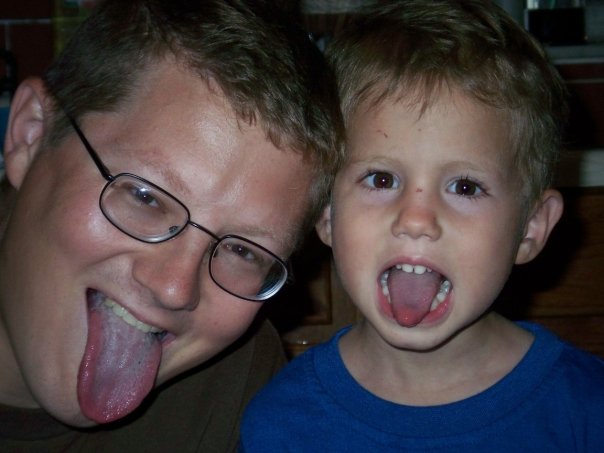
A toddler imitates his father.
Anthropology and Social Sciences
In anthropology, some theories hold that all cultures imitate ideas from one of a few original cultures or several cultures whose influence overlaps geographically. Evolutionary diffusion theory holds that cultures influence one another, but that similar ideas can be developed in isolation.
Scholars, as well as popular authors, have argued that the role of imitation in humans is unique among animals. However, this claim has been recently challenged by scientific research which observed social learning and imitative abilities in animals.
Psychologist Kenneth Kaye showed that infants’ ability to match the sounds or gestures of an adult depends on an interactive process of turn-taking over many successive trials, in which adults’ instinctive behaviour plays as great a role as that of the infant. These writers assume that evolution would have selected imitative abilities as fit because those who were good at it had a wider arsenal of learned behaviour at their disposal, including tool-making and language.
However, research also suggests that imitative behaviours and other social learning processes are only selected for when outnumbered or accompanied by asocial learning processes: an over-saturation of imitation and imitating individuals leads humans to collectively copy inefficient strategies and evolutionarily maladaptive behaviours, thereby reduce flexibility to new environmental contexts that require adaptation. Research suggests imitative social learning hinders the acquisition of knowledge in novel environments and in situations where asocial learning is faster and more advantageous.
In the mid-20th century, social scientists began to study how and why people imitate ideas. Everett Rogers pioneered innovation diffusion studies, identifying factors in adoption and profiles of adopters of ideas. Imitation mechanisms play a central role in both analytical and empirical models of collective human behaviour.
Neuroscience
We are capable of imitating movements, actions, skills, behaviours, gestures, pantomimes, mimics, vocalizations, sounds, speech, etc. and that we have particular “imitation systems” in the brain is old neurological knowledge dating back to Hugo Karl Liepmann. Liepmann’s model 1908 “Das hierarchische Modell der Handlungsplanung” (the hierarchical model of action planning) is still valid. On studying the cerebral localisation of function, Liepmann postulated that planned or commanded actions were prepared in the parietal lobe of the brain’s dominant hemisphere, and also frontally. His most important pioneering work is when extensively studying patients with lesions in these brain areas, he discovered that the patients lost (among other things) the ability to imitate. He was the one who coined the term “apraxia” and differentiated between ideational and ideomotor apraxia. It is in this basic and wider frame of classical neurological knowledge that the discovery of the mirror neuron has to be seen. Though mirror neurons were first discovered in macaques, their discovery also relates to humans.
Human brain studies using FMRI (Functional magnetic resonance imaging) revealed a network of regions in the inferior frontal cortex and inferior parietal cortex which are typically activated during imitation tasks. It has been suggested that these regions contain mirror neurons similar to the mirror neurons recorded in the macaque monkey. However, it is not clear if macaques spontaneously imitate each other in the wild.
Neurologist V.S. Ramachandran argues that the evolution of mirror neurons were important in the human acquisition of complex skills such as language and believes the discovery of mirror neurons to be a most important advance in neuroscience. However, little evidence directly supports the theory that mirror neuron activity is involved in cognitive functions such as empathy or learning by imitation.
Evidence is accumulating that bottlenose dolphins employ imitation to learn hunting and other skills from other dolphins.
Japanese monkeys have been seen to spontaneously begin washing potatoes after seeing humans washing them.
Mirror Neuron System
Research has been conducted to locate where in the brain specific parts and neurological systems are activated when humans imitate behaviours and actions of others, discovering a mirror neuron system. This neuron system allows a person to observe and then recreate the actions of others. Mirror neurons are premotor and parietal cells in the macaque brain that fire when the animal performs a goal directed action and when it sees others performing the same action.” Evidence suggests that the mirror neuron system also allows people to comprehend and understand the intentions and emotions of others. Problems of the mirror neuron system may be correlated with the social inadequacies of autism. There have been many studies done showing that children with autism, compared with typically developing children, demonstrate reduced activity in the frontal mirror neuron system area when observing or imitating facial emotional expressions. Of course, the higher the severity of the disease, the lower the activity in the mirror neuron system is.
Animal Behaviour
Scientists debate whether animals can consciously imitate the unconscious incitement from sentinel animals, whether imitation is uniquely human, or whether humans do a complex version of what other animals do. The current controversy is partly definitional. Thorndike uses “learning to do an act from seeing it done.” It has two major shortcomings: first, by using “seeing” it restricts imitation to the visual domain and excludes, e.g. vocal imitation and, second, it would also include mechanisms such as priming, contagious behaviour and social facilitation, which most scientist distinguish as separate forms of observational learning. Thorpe suggested defining imitation as “the copying of a novel or otherwise improbable act or utterance, or some act for which there is clearly no instinctive tendency.” This definition is favoured by many scholars, though questions have been raised how strictly the term “novel” has to be interpreted and how exactly a performed act has to match the demonstration to count as a copy.
In 1952 Hayes & Hayes used the “do-as-I-do” procedure to demonstrate the imitative abilities of their trained chimpanzee “Viki.” Their study was repeatedly criticised for its subjective interpretations of their subjects’ responses. Replications of this study found much lower matching degrees between subjects and models. However, imitation research focusing on the copying fidelity got new momentum from a study by Voelkl and Huber. They analysed the motion trajectories of both model and observer monkeys and found a high matching degree in their movement patterns.
Paralleling these studies, comparative psychologists provided tools or apparatuses that could be handled in different ways. Heyes and co-workers reported evidence for imitation in rats that pushed a lever in the same direction as their models, though later on they withdrew their claims due to methodological problems in their original setup. By trying to design a testing paradigm that is less arbitrary than pushing a lever to the left or to the right, Custance and co-workers introduced the “artificial fruit” paradigm, where a small object could be opened in different ways to retrieve food placed inside – not unlike a hard-shelled fruit. Using this paradigm, scientists reported evidence for imitation in monkeys and apes. There remains a problem with such tool (or apparatus) use studies: what animals might learn in such studies need not be the actual behaviour patterns (i.e. the actions) that were observed. Instead they might learn about some effects in the environment (i.e. how the tool moves, or how the apparatus works). This type of observational learning, which focuses on results, not actions, has been dubbed emulation (refer to Emulation (observational learning)).
An article was written by Carl Zimmer, he looked into a study being done by Derek lyons, he was focusing on human evolution, so he started to study a chimpanzee. He first started with showing the chimp how to retrieve food from a box, So they had the scientist go in a demonstrate how to retrieve the food from the box. The chimp soon caught on and did exactly what the scientist just did. They wanted to see if the chimpanzees brain functioned just like humans brain so they related this same exact study to 16 children and they did the same procedure and once the children seen how it was done, they followed the same steps.
Imitation in Animals
Imitation in animals is a study in the field of social learning where learning behaviour is observed in animals specifically how animals learn and adapt through imitation. Ethologists can classify imitation in animals by the learning of certain behaviours from conspecifics. More specifically, these behaviours are usually unique to the species and can be complex in nature and can benefit the individuals survival.
Some scientists believe true imitation is only produced by humans, arguing that simple learning though sight is not enough to sustain as a being who can truly imitate. Thorpe defines true imitation as “the copying of a novel or otherwise improbable act or utterance, or some act for which there is clearly no instinctive tendency,” which is highly debated for its portrayal of imitation as a mindless repeating act. True imitation is produced when behavioural, visual and vocal imitation is achieved, not just the simple reproduction of exclusive behaviours. Imitation is not a simple reproduction of what one sees; rather it incorporates intention and purpose. Animal imitation can range from survival purpose; imitating as a function of surviving or adapting, to unknown possible curiosity, which vary between different animals and produce different results depending on the measured intelligence of the animal.
There is considerable evidence to support true imitation in animals. Experiments performed on apes, birds and more specifically the Japanese quail have provided positive results to imitating behaviour, demonstrating imitation of opaque behaviour. However the problem that lies is in the discrepancies between what is considered true imitation in behaviour. Birds have demonstrated visual imitation, where the animal simply does as it sees. Studies on apes however have proven more advanced results in imitation, being able to remember and learn from what they imitate. Studies have demonstrated far more positive results with behavioural imitation in primates and birds than any other type of animal. Imitation in non primate mammals and other animals have been proven difficult to conclude solid positive results for and poses a difficult question to scientists on why that is so.
Theories
There are two types of theories of imitation, transformational and associative. Transformational theories suggest that the information that is required to display certain behaviour is created internally through cognitive processes and observing these behaviours provides incentive to duplicate them. Meaning we already have the codes to recreate any behaviour and observing it results in its replication. Bandura’s “social cognitive theory” is one example of a transformational theory. Associative, or sometimes referred to as “contiguity”, theories suggest that the information required to display certain behaviours does not come from within ourselves but solely from our surroundings and experiences. Unfortunately these theories have not yet provided testable predictions in the field of social learning in animals and have yet to conclude strong results.
New Developments
There have been three major developments in the field of animal imitation. The first, behavioural ecologists and experimental psychologists found there to be adaptive patterns in behaviours in different vertebrate species in biologically important situations. The second, primatologists and comparative psychologists have found imperative evidence that suggest true learning through imitation in animals. The third, population biologists and behavioural ecologists created experiments that demand animals to depend on social learning in certain manipulated environments.
Child Development
Developmental psychologist Jean Piaget noted that children in a developmental phase he called the sensorimotor stage (a period which lasts up to the first two years of a child) begin to imitate observed actions. This is an important stage in the development of a child because the child is beginning to think symbolically, associating behaviours with actions, thus setting the child up for the development of further symbolic thinking. Imitative learning also plays a crucial role in the development of cognitive and social communication behaviours, such as language, play, and joint attention. Imitation serves as both a learning and a social function because new skills and knowledge are acquired, and communication skills are improved by interacting in social and emotional exchanges. It is shown, however, that “children with autism exhibit significant deficits in imitation that are associated with impairments in other social communication skills.” To help children with autism, reciprocal imitation training (RIT) is used. It is a naturalistic imitation intervention that helps teach the social benefits of imitation during play by increasing child responsiveness and by increasing imitative language.
Reinforcement learning, both positive and negative, and punishment, are used by people that children imitate to either promote or discontinue behaviour. If a child imitates a certain type of behaviour or action and the consequences are rewarding, the child is very likely to continue performing the same behaviour or action. The behaviour “has been reinforced (i.e. strengthened)”. However, if the imitation is not accepted and approved by others, then the behaviour will be weakened.
Naturally, children are surrounded by many different types of people that influence their actions and behaviours, including parents, family members, teachers, peers, and even characters on television programs. These different types of individuals that are observed are called models. According to Saul McLeod, “these models provide examples of masculine and feminine behaviour to observe and imitate.” Children imitate the behaviour they have observed from others, regardless of the gender of the person and whether or not the behaviour is gender appropriate. However, it has been proven that children will reproduce the behaviour that “its society deems appropriate for its sex.”
Infants
Infants have the ability to reveal an understanding of certain outcomes before they occur, therefore in this sense they can somewhat imitate what they have perceived. Andrew N. Meltzoff, ran a series of tasks involving 14-month-old infants to imitate actions they perceived from adults. In this gathering he had concluded that the infants, before trying to reproduce the actions they wish to imitate, some how revealed an understanding of the intended goal even though they failed to replicate the result wished to be imitated. These task implicated that the infants knew the goal intended. Gergely, Bekkering, and Király (2002) figured that infants not only understand the intended goal but also the intentions of the person they were trying to imitate engaging in “rational imitation”, as described by Tomasello, Carpenter and others.
It has long been claimed that newborn humans imitate bodily gestures and facial expressions as soon as their first few days of life. For example, in a study conducted at the Mailman Centre for Child Development at the University of Miami Medical School, 74 newborn babies (with a mean age of 36 hours) were tested to see if they were able to imitate a smile, a frown and a pout, and a wide-open mouth and eyes. An observer stood behind the experimenter (so he/she couldn’t see what facial expressions were being made by the experimenter) and watched only the babies’ facial expressions, recording their results. Just by looking only at the babies’ faces, the observer was more often able to correctly guess what facial expression was being presented to the child by the experimenter. After the results were calculated, “the researchers concluded that…babies have an innate ability to compare an expression they see with their own sense of muscular feedback from making the movements to match that expression.”
However, the idea that imitation is an inborn ability has been recently challenged. A research group from the University of Queensland in Australia carried out the largest-ever longitudinal study of neonatal imitation in humans. One hundred and nine newborns were shown a variety of gestures including tongue protrusion, mouth opening, happy and sad facial expressions, at four time points between one week and 9 weeks of age. The results failed to reveal compelling evidence that newborns imitate: Infants were just as likely to produce matching and non-matching gestures in response to what they saw.
At around eight months, infants will start to copy their child care providers’ movements when playing pat-a-cake and peek-a-boo, as well as imitating familiar gestures, such as clapping hands together or patting a doll’s back. At around 18 months, infants will then begin to imitate simple actions they observe adults doing, such as taking a toy phone out of a purse and saying “hello”, pretending to sweep with a child-sized broom, as well as imitating using a toy hammer.
Toddlers
At around 30-36 months, toddlers will start to imitate their parents by pretending to get ready for work and school and saying the last word(s) of what an adult just said. For example, toddlers may say “bowl” or “a bowl” after they hear someone say, “That’s a bowl.” They may also imitate the way family members communicate by using the same gestures and words. For example, a toddler will say, “Mommy bye-bye” after the father says, “Mommy went bye-bye.”
Toddlers love to imitate their parents and help when they can; imitation helps toddlers learn, and through their experiences lasting impressions are made. 12 to 36-month-olds learn by doing, not by watching, and so it is often recommended to be a good role model and caretaker by showing them simple tasks like putting on socks or holding a spoon.
Duke developmental psychologist Carol Eckerman did a study on toddlers imitating toddlers and found that at the age of 2 children involve themselves in imitation play to communicate with one another. This can be seen within a culture or across different cultures. 3 common imitative patterns Eckerman found were reciprocal imitation, follow-the-leader and lead-follow.
Kenneth Kaye’s “apprenticeship” theory of imitation rejected assumptions that other authors had made about its development. His research showed that there is no one simple imitation skill with its own course of development. What changes is the type of behaviour imitated.
An important agenda for infancy is the progressive imitation of higher levels of use of signs, until the ultimate achievement of symbols. The principal role played by parents in this process is their provision of salient models within the facilitating frames that channel the infant’s attention and organise his imitative efforts.
Gender and Age Differences
Imitation and imitative behaviours do not manifest ubiquitously and evenly in all human individuals, some individuals rely more on imitated information than others. Although imitation is very useful when it comes to cognitive learning with toddlers, research has shown that there are some gender and age differences when it comes to imitation. Research done to judge imitation in toddlers 2-3 years old shows that when faced with certain conditions “2-year-olds displayed more motor imitation than 3-year-olds, and 3-year-olds displayed more verbal-reality imitation than 2-year-olds. Boys displayed more motor imitation than girls.”
No other research is more controversial pertaining gender differences in toddler imitation than renowned psychologist, Bandura’s, bobo doll experiments. The goal of the experiment was to see what happens to toddlers when exposed to aggressive and non aggressive adults, would the toddlers imitate the behaviour of the adults and if so, which gender is more likely to imitate the aggressive adult. In the beginning of the experiment Bandura had several predictions that actually came true. Children exposed to violent adults will imitate the actions of that adult when the adult is not present, boys who had observed an adult of the opposite sex act aggressively are less likely to act violently than those who witnessed a male adult act violently. In fact ‘boys who observed an adult male behaving violently were more influenced than those who had observed a female model behaviour aggressively’. One fascinating observation was that while boys are likely to imitate physical acts of violence, girls are likely to imitate verbal acts of violence.
Negative Imitation
Imitation plays such a major role on how a toddler interprets the world. So much of a child’s understanding is derived from imitation, due to lack of verbal skill imitation is a toddlers way of communication with the world. It is what connects them to the communicating world, as they continue to grow they begin to learn more and more. That is why it is crucial for parents to be cautious as to how they act and behave around their toddlers. Imitation is the toddlers way of confirming and dis-conforming socially acceptable actions in our society. Actions like washing dishes, cleaning up the house and doing chores are actions you want your toddlers to imitate. Imitating negative things is something that is never beyond young toddlers. If they are exposed to cursing and violence, it is going to be what the child views as the norm of his or her world, remember imitation is the ‘mental activity that helps to formulate the conceptions of the world for toddlers’ Hay et al. (1991), when a toddler sees something so often he or she will form his or her reality around that action. So it is important for parents to be careful what they say or do in front of their children.
Autism
Children with autism exhibit significant impairment in imitation skills. Imitation deficits have been reported on a variety of tasks including symbolic and non-symbolic body movements, symbolic and functional object use, vocalisations, and facial expressions. In contrast, typically-developing children can copy a broad range of novel (as well as familiar) rules from a very early age. Problems with imitation discriminate children with autism from those with other developmental disorders as early as age 2 and continue into adulthood.
However, recent research suggests that people affected with forms of High Functioning Autism easily interact with one another by using a more analytically-centred communication approach rather than an imitative cue-based approach, suggesting that reduced imitative capabilities don’t affect abilities for expressive social behaviour but only the understanding of said social behaviour: Social communication is not negatively affected when said communication involves less or no imitation. Children with Autism may have significant problems understanding typical social communication not because of inherent social deficits, but because of differences in communication style which affect reciprocal understanding.
Individuals with Autism are also shown to possess increased analytical, cognitive and visual processing, suggesting people with autism have no true impairments in observing the actions of others but may decide not to imitate them because they do not analytically understand them.
Imitation plays a crucial role in the development of cognitive and social communication behaviours, such as language, play, and joint attention. Children with autism exhibit significant deficits in imitation that are associated with impairments in other social communication skills. It is unclear whether imitation is mediating these relationships directly, or whether they are due to some other developmental variable that is also reflected in the measurement of imitation skills.
Automatic Imitation
The automatic imitation comes very fast when a stimulus is given to replicate. The imitation can match the commands with the visual stimulus (compatible) or it cannot match the commands with the visual stimulus (incompatible). For example: ‘Simon Says’, a game played with children where they are told to follow the commands given by the adult. In this game, the adult gives the commands and shows the actions; the commands given can either match the action to be done or it will not match the action. The children who imitate the adult who has given the command with the correct action will stay in the game. The children who imitate the command with the wrong action will go out of the game, and this is where the child’s automatic imitation comes into play. Psychologically, the visual stimulus being looked upon by the child is being imitated faster than the imitation of the command. In addition, the response times were faster in compatible scenarios than in incompatible scenarios.
Children are surrounded by many different people, day by day. Their parents make a big impact on them, and usually what the children do is what they have seen their parent do. In this article they found that a child, simply watching its mother sweep the floor, right after soon picks up on it and starts to imitate the mother by sweeping the floor. By the children imitating, they are really teaching themselves how to do things without instruction from the parent or guardian. Toddlers love to play the game of house. They picked up on this game of house by television, school or at home; they play the game how they see it. The kids imitate their parents or anybody in their family. In the article it says it is so easy for them to pick up on the things they see on an everyday basis.
Over-Imitation
Over-imitation is “the tendency of young children to copy all of an adult model’s actions, even components that are irrelevant for the task at hand.” According to this human and cross-cultural phenomenon, a child has a strong tendency to automatically encode the deliberate action of an adult as causally meaningful even when the child observes evidence that proves that its performance is unnecessary. It is suggested that over-imitation “may be critical to the transmission of human culture.”
However, another study suggests that children don’t just “blindly follow the crowd” since they can also be just as discriminating as adults in choosing whether an unnecessary action should be copied or not. They may imitate additional but unnecessary steps to a novel process if the adult demonstrations are all the same. However, in cases where one out of four adults showed a better technique, only 40% actually copied the extra step, as described by Evans, Carpenter and others.
Deferred Imitation
Piaget coined the term deferred imitation and suggested that it arises out of the child’s increasing ability to “form mental representations of behaviour performed by others.” Deferred imitation is also “the ability to reproduce a previously witnessed action or sequence of actions in the absence of current perceptual support for the action.” Instead of copying what is currently occurring, individuals repeat the action or behaviour later on. It appears that infants show an improving ability for deferred imitation as they get older, especially by 24 months. By 24 months, infants are able to imitate action sequences after a delay of up to three months, meaning that “they’re able to generalise knowledge they have gained from one test environment to another and from one test object to another.”
A child’s deferred imitation ability “to form mental representations of actions occurring in everyday life and their knowledge of communicative gestures” has also been linked to earlier productive language development. Between 9 (preverbal period) and 16 months (verbal period), deferred imitation performance on a standard actions-on-objects task was consistent in one longitudinal study testing participants’ ability to complete a target action, with high achievers at 9 months remaining so at 16 months. Gestural development at 9 months was also linked to productive language at 16 months. Researchers now believe that early deferred imitation ability is indicative of early declarative memory, also considered a predictor of productive language development.
Hallucinogen persisting perception disorder (HPPD) is a chronic and non-psychotic disorder in which a person experiences apparent lasting or persistent visual hallucinations or perceptual distortions after a previous hallucinogenic drug experience, usually lacking the same feelings of intoxication or mental alteration experienced while on the drug.
The hallucinations and perceptual changes themselves are usually not intense or impairing and consist of visual snow, trails and after images (palinopsia), light fractals on flat surfaces, intensified colours or other psychedelic visuals. People who have never previously taken drugs have also reported some visual anomalies associated with HPPD (such as floaters and visual snow).
To be diagnosed, the disorder must cause distress or impairment in work or everyday life. Symptoms often get worse when focused on.
Brief History
In 1898, the English writer and intellectual Havelock Ellis reported a heightened sensitivity to “the more delicate phenomena of light and shade and colour” for a prolonged period of time after consuming the psychedelic drug mescaline. This may have been one of the first recorded cases of what would later be called “HPPD”. However, mild residual effects or “afterglows” from these types of drugs are not necessarily unusual nor indicative of what can be classified as a disorder like HPPD since distress to the individual is usually a requirement for diagnosis.
HPPD Subtypes
According to a 2016 review, there are two theorized subtypes of the condition. Type 1 HPPD is where people experience random, brief flashbacks. Type 2 HPPD entails experiencing persistent changes to vision, which may vary in intensity. This model has faced scrutiny however due to “flashbacks” often being considered a separate affliction and not always a perceptual one.
Cause
HPPD is not related to psychosis due to the fact those affected by the disorder can easily distinguish their visual disturbances from reality. The only certain cause of HPPD is prior use of hallucinogens. Some evidence points to phenethylamines carrying a slightly greater risk than lysergamides or tryptamines. There are no known risk factors, and what might trigger any specific disturbing hallucination is not known. Some sort of disinhibition of visual processing may be involved. It has been suggested MDMA (ecstasy) use with other drugs is linked to the development of HPPD.
Diagnosis
HPPD is a DSM-5 diagnosis with diagnostic code 292.89 (F16.983). For the diagnosis to be made, other psychological, psychiatric, or neurological conditions must be ruled out and it must cause distress in everyday life.
Treatment
As of September 2021 there is still no good evidence of any specific medicinal treatment as being commonly effective for HPPD.
Avoiding any additional use of psychoactive drugs (including cannabis and alcohol) from an early stage of the disorder seems to be an effective way for many sufferers to achieve recovery, as these substances apparently worsen the condition over time.
Some prescription drugs (lamotrigine, clonazepam, levetiracetam and others) have been known to relieve symptoms for some, but worsen symptoms or create dependencies for others.
Antipsychotic drugs and SSRIs have also been reported to help some people temporarily but worsen symptoms for others.
Some sufferers have reported benefits from prolonged water fasting, medications like acetylcysteine and lithium, and from supplements like tyrosine, ashwagandha and lion’s mane, although some users report lion’s mane and ashwagandha as having potentially negative effects or creating dependencies.
Sunglasses and talk therapy might also help those who are dealing with HPPD, but in general it seems that maintaining sobriety from all psychoactive substances is still the best solution available for this condition.
Prevalence
The prevalence of HPPD was unknown as of 2021. Estimates in the 1960s and 1970s were around 1 in 20 for intermittent HPPD among regular users of hallucinogens. In a 2010 study of psychedelic users, 23.9% reported constant HPPD-like effects, however only 4.2% considered seeking treatment due to the severity. It is not clear how common chronic HPPD may be, but one estimate in the 1990s was that 1 in 50,000 regular users might have chronic hallucinations.
Society and Culture
In the second episode of the first season of the 2014 series True Detective (“Seeing Things”), primary character Rustin Cohle (Matthew McConaughey) is depicted as having symptoms similar to HPPD such as light tracers as a result of “neurological damage” from substance use.
American journalist Andrew Callaghan, former host of the internet series All Gas No Brakes, revealed during a 2021 interview with Vice News that he has a HPPD diagnosis as a result of excessive psilocybin use at a young age. Describing his symptoms, he noted that he experiences persistent visual snow and palinopsia.
1743 – Carl Peter Thunberg, Swedish botanist, entomologist, and psychologist (d. 1828).
1891 – Grunya Sukhareva, Ukrainian-Russian psychiatrist and university lecturer (d. 1981).
People (Deaths)
2002 – Frances Ames, South African neurologist, psychiatrist, and human rights activist (b. 1920).
Carl Peter Thunberg
Carl Peter Thunberg, also known as Karl Peter von Thunberg, Carl Pehr Thunberg, or Carl Per Thunberg (11 November 1743 to 08 August 1828), was a Swedish naturalist and an “apostle” of Carl Linnaeus.
After studying under Linnaeus at Uppsala University, he spent seven years travelling in southern Africa and Asia, collecting and describing many plants and animals new to European science, and observing local cultures. He has been called “the father of South African botany”, “pioneer of Occidental Medicine in Japan”, and the “Japanese Linnaeus”.
Grunya Sukhareva
Grunya Efimovna Sukhareva (11 November 1891 to 26 April 1981) was a Soviet child psychiatrist.
She was the first to publish a detailed description of autistic symptoms in 1925. The original paper was in Russian and published in German a year later. Sula Wolff translated it in 1996 for the English-speaking world.
She initially used the term “schizoid psychopathy”, “schizoid” meaning “eccentric” at the time, but later replaced it with “autistic (pathological avoidant) psychopathy” to describe the clinical picture of autism. The article was created almost two decades before the case reports of Hans Asperger and Leo Kanner, which were published while Sukhareva’s pioneering work remained unnoticed. This is possibly because of various political and language barriers at the time. Her name was transliterated as “Ssucharewa” when her papers appeared in Germany, and the autism researcher Hans Asperger likely chose not to cite her work, due to his affiliation with the Nazi Party and her Jewish heritage.
Frances Ames
Frances Rix Ames (20 April 1920 to 11 November 2002) was a South African neurologist, psychiatrist, and human rights activist, best known for leading the medical ethics inquiry into the death of anti-apartheid activist Steve Biko, who died from medical neglect after being tortured in police custody.
When the South African Medical and Dental Council (SAMDC) declined to discipline the chief district surgeon and his assistant who treated Biko, Ames and a group of five academics and physicians raised funds and fought an eight-year legal battle against the medical establishment. Ames risked her personal safety and academic career in her pursuit of justice, taking the dispute to the South African Supreme Court, where she eventually won the case in 1985.
Born in Pretoria and raised in poverty in Cape Town, Ames became the first woman to receive a Doctor of Medicine degree from the University of Cape Town in 1964. Ames studied the effects of cannabis on the brain and published several articles on the subject. Seeing the therapeutic benefits of cannabis on patients in her own hospital, she became an early proponent of legalisation for medicinal use. She headed the neurology department at Groote Schuur Hospital before retiring in 1985, but continued to lecture at Valkenberg and Alexandra Hospital. After apartheid was dismantled in 1994, Ames testified at the Truth and Reconciliation Commission about her work on the “Biko doctors” medical ethics inquiry. In 1999, Nelson Mandela awarded Ames the Star of South Africa, the country’s highest civilian award, in recognition of her work on behalf of human rights.



 Mental Health Matters
You must be logged in to post a comment.