Posts

Book: Man Down: A Guide for Men on Mental Health

Book Title:

Man Down: A Guide for Men on Mental Health.

Author(s): Charlie Hoare.

Year: 2020.

Edition: First (1st).

Publisher: Vie.

Type(s): Paperback, Audiobook, and Kindle.

Synopsis:

How often do you put on a ‘coping’ front, when in reality you are troubled with insecurities and anxieties?

Do you find it difficult to open up about how you’re feeling?

You might be surprised to learn that you are not alone, and that many men find it challenging to talk about their worries.

From tips on how to reach out, to advice on navigating mental health issues, this volume is full of guidance on how to look out for your well-being. Topics covered include:

  • Anxiety and depression.
  • Stress.
  • Suicidal thoughts.
  • Dealing with traditional gender expectations.
  • Self-care and mindfulness methods.
  • How to open up and communicate.
  • Where to seek help.

With personal experiences and insights, this book will improve your awareness of mental health, offer tools and techniques to enable you to manage it better, and help you to live a happier, healthier life.

On This Day … 26 November

People (Births)

  • 1895 – Bill W., American activist, co-founded Alcoholics Anonymous (d. 1971).
  • 1936 – Margaret Boden, English computer scientist and psychologist.

People (Deaths)

  • 1987 – J. P. Guilford, American psychologist and academic (b. 1897).

Bill Wilson

William Griffith Wilson (26 November 1895 to 24 January 1971), also known as Bill Wilson or Bill W., was the co-founder of Alcoholics Anonymous (AA).

AA is an international mutual aid fellowship with about 2 million members worldwide belonging to approximately 10,000 groups, associations, organizations, cooperatives, and fellowships of alcoholics helping other alcoholics achieve and maintain sobriety.

Following AA’s Twelfth Tradition of anonymity, Wilson is commonly known as “Bill W.” or “Bill.” In order to communicate among one another, members of “AA” will often ask those who appear to be suffering or having a relapse from alcoholism if they are “friends of Bill”. Although this question can be confusing, because “Bill” is a common name, it does provide a means of establishing a rapport with those who are familiar with the saying and in need of help. After Wilson’s death in 1971, and amidst much controversy within the fellowship, his full name was included in obituaries by journalists who were unaware of the significance of maintaining anonymity within the organisation.

Wilson’s sobriety from alcohol, which he maintained until his death, began 11 December 1934. In 1955 Wilson turned over control of AA to a board of trustees. Wilson died of emphysema complicated by pneumonia in 1971. In 1999 Time listed him as “Bill W.: The Healer” in the Time 100: The Most Important People of the Century.

Margaret Boden

Margaret Ann Boden, OBE, ScD, FBA (born 26 November 1936) is a Research Professor of Cognitive Science in the Department of Informatics at the University of Sussex, where her work embraces the fields of artificial intelligence, psychology, philosophy, and cognitive and computer science.

Boden was appointed lecturer in philosophy at the University of Birmingham in 1959. She became a Harkness Fellow at Harvard University from 1962 to 1964, then returned to Birmingham for a year before moving to a lectureship in philosophy and psychology at Sussex University in 1965, where she was later appointed as Reader then Professor in 1980. She was awarded a PhD in social psychology (specialism: cognitive studies) by Harvard in 1968.

She credits reading “Plans and the Structure of Behaviour” by George A. Miller with giving her the realisation that computer programming approaches could be applied to the whole of psychology.

Boden became Dean of the School of Social Sciences in 1985. Two years later she became the founding Dean of the University of Sussex’s School of Cognitive and Computing Sciences (COGS), precursor of the university’s current Department of Informatics. Since 1997 she has been a Research Professor of Cognitive Science in the Department of Informatics, where her work encompasses the fields of artificial intelligence, psychology, philosophy, and cognitive and computer science.

Boden became a Fellow of the British Academy in 1983 and served as its vice-president from 1989 to 1991.[9] Boden is a member of the editorial board for The Rutherford Journal.

In 2001 Boden was awarded an OBE for her services in the field of cognitive science. The same year she was also awarded an honorary Doctor of Science from the University of Sussex. She also received an honorary degree from the University of Bristol. A PhD Scholarship that is awarded annually by the Department of Informatics at the University of Sussex was named in her honour.

J.P. Guildford

Joy Paul Guilford (07 March 1897 to 26 November 1987) was an American psychologist best remembered for his psychometric study of human intelligence, including the distinction between convergent and divergent production.

Developing the views of L.L. Thurstone, Guilford rejected Charles Spearman’s view that intelligence could be characterised in a single numerical parameter. He proposed that three dimensions were necessary for accurate description: operations, content, and products. A Review of General Psychology survey, published in 2002, ranked Guilford as the 27th most cited psychologist of the 20th century.

Do Brain “Globalopathies” Cause Mental Disorders?

Research Paper Title

Brain “Globalopathies” Cause Mental Disorders.

Background

“Consciousness” “mood,” “identity” and “personality” are all emergent properties from whole-brain organisations; these are typically disturbed in psychiatric disorders.

This work proposes that the underlying etiopathology of mental disorders originates from disturbances to global brain dynamics, or “Globalopathies” that are divided into three major interdependent types:

  1. “Resting-State Networkpathies,” in personality disorders;
  2. “Entropiathies” in mood disorders; and
  3. “Connectopathies” in psychosis and schizophrenia spectrum disorders.

Novel approaches of processing signals from the brain are beginning to reveal brain organization in health and disease. For example a “small world network” has been described for optimal brain functions and breakdown of that organisation might underlie relevant psychiatric manifestations.

A novel diagnostic reformulation can be generated based on pathologies of whole brain organisations, such new brain related diagnostic nosology is testable and thus can be validated.

Once validated Globalopathies can provide for “Global-therapies” i.e., interventions that can reorganise the brain and cure psychiatric disorders.

The technology for such interventions is becoming available.

Reference

Peled, A. (2020) Brain “Globalopathies” cause mental disorders. Medical Hypotheses. 81(6), pp.1046-1055. doi: 10.1016/j.mehy.2013.09.032. Epub 2013 Oct 5.

Book: Wellbeing at Work: How to Design, Implement and Evaluate an Effective Strategy

Book Title:

Wellbeing at Work: How to Design, Implement and Evaluate an Effective Strategy.

Author(s): Ian Hesketh and Cary Cooper.

Year: 2019.

Edition: First (1st).

Publisher: Kogan Page.

Type(s): Hardcover, Paperback and Kindle.

Synopsis:

Stress at work is rising year on year, long hours are becoming the norm and presenteeism is increasing across all industries. This is not only having a detrimental effect on employee health, happiness and productivity, but is also impacting the bottom line. HR professionals are uniquely placed to manage this modern workplace crisis by implementing a wellbeing strategy.

Wellbeing at Work is an essential, practical guide to designing and implementing an effective strategy that will reduce employee anxiety, increase staff engagement and improve overall performance.

Written by leading experts in the field, Wellbeing at Work takes readers through the entire process, from explaining why a wellbeing strategy is necessary in a fast-changing world of work and technological transformation to building momentum around it, and monitoring, measuring and evaluating its impact. The book also identifies common pitfalls and problems, and how to avoid them, explores important legislative considerations and provides example exercises and tools to use throughout the process.

Full of advice, tips and insights from real-world case studies, this is the only book you will need to create a happier, more productive and more profitable organisation

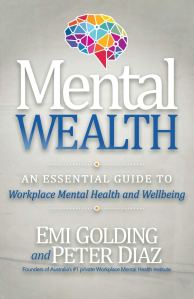
Book: Mental Wealth: An Essential Guide to Workplace Mental Health and Wellbeing

Book Title:

Mental Wealth: An Essential Guide to Workplace Mental Health and Wellbeing.

Author(s): Emi Golding and Peter Diaz.

Year: 2019.

Edition: First (1st).

Publisher: Morgan James Publishing.

Type(s): Paperback and Kindle.

Synopsis:

Mental Wealth reveals an approach to workplace mental health and wellbeing that is proven to actually get results.

Despite having a huge impact on the productivity, profitability, and culture of organizations, there is very little guidance currently provided to managers and leaders on how to effectively manage workplace mental health and wellbeing. What does exist is often focused on the legal aspects of minimizing risk that it misses the psychology of workplace mental health and high performance and actually ends up creating risk for workplaces.

Mental Wealth is a guide for managers and leaders on how to manage employees who may be experiencing mental health issues in the workplace. Founders of the Workplace Mental Health Institute, Peter Diaz and Emi Golding, provide an essential foundation for addressing workplace mental health. Some of the essential foundations discussed include dispelling myths about workplace mental health, the factors that cause and contribute to mental health issues, the impact those factors are having on workplaces, the benefits of addressing mental health appropriately, and 7 Pillars for a mentally Wealthy Workplace. Mental Wealth also includes case studies and practical strategies that can be implemented for immediate results.

Book: Emotional Fitness: A-Z for Positive Mental Health

Book Title:

Emotional Fitness: A-Z for Positive Mental Health.

Author(s): Clare Davis.

Year: 2020.

Edition: First (1st).

Publisher: Independently Published.

Type(s): Paperback and Kindle.

Synopsis:

We all have our ‘ups’ and ‘downs’ in life, reacting to events emotionally. This book outlines 26 easy ways to improve your emotional fitness, with plenty of practical activities to help you put the theory into practice. We should work on our emotional fitness on a daily basis, learning to manage them. Using preventative measures will enable you to manage your emotions before you get to the stage of not coping.

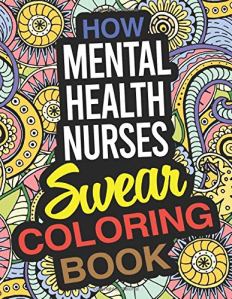
Book: How Mental Health Nurses Swear Colouring Book

Book Title:

How Mental Health Nurses Swear Colouring Book: A Mental Health Nurse Colouring Book.

Author(s): Carol Cook.

Year: 2019.

Edition: First (1st).

Publisher: Independently Published.

Type(s): Paperback.

Synopsis:

This irreverent and sweary colouring book features laugh-out-loud funny and original designs that are perfect for taking the stress out of work, relationships, family gatherings, and other unnecessarily stressful situations.

Provides HOURS of colouring FUN, at home, in the car, or when trying not to swear out loud(!).

FEATURES:

  • 50 High Quality Original Colouring Pages.
  • 100 Pages, High Quality Paper.
  • Large Page size 8.5×11 Inches for easy use.
  • Perfect humorous gift for family, friends, co-workers, parties, stocking stuffer, and gift exchanges.

Great as a gift or for yourself!

Give the gift of laughter.

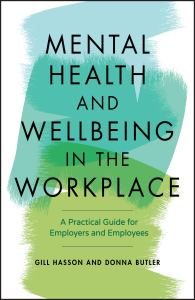
Book: Mental Health and Wellbeing in the Workplace

Book Title:

Mental Health and Wellbeing in the Workplace: A Practical Guide for Employers and Employees.

Author(s): Gill Hasson and Donna Butler.

Year: 2020.

Edition: First (1st).

Publisher: Capstone.

Type(s): Paperback, Audiobook, and Kindle.

Synopsis:

Provides guidance for both employers and staff on promoting positive mental health and supporting those experiencing mental ill health in the workplace

The importance of good mental health and wellbeing in the workplace is a subject of increased public awareness and governmental attention. The Department of Health advises that one in four people will experience a mental health issue at some point in their lives. Although a number of recent developments and initiatives have raised the profile of this crucial issue, employers are experiencing challenges in promoting the mental health and wellbeing of their employees. Wellbeing & Mental Health in the Workplace contains expert guidance for improving mental health and supporting those experiencing mental ill health.

This comprehensive book addresses the range of issues surrounding mental health and wellbeing in work environments – providing all involved with informative and practical assistance. Authors Gill Hasson and Donna Butler examine changing workplace environment for improved wellbeing, shifting employer and employee attitudes on mental health, possible solutions to current and future challenges and more. Detailed, real-world case studies illustrate a variety of associated concerns from both employer and employee perspectives. This important guide:

  • Explains why understanding mental health important and its impact on businesses and employees.
  • Discusses why and how to promote mental health in the workplace and the importance of having an effective ‘wellbeing strategy’.
  • Provides guidance on managing staff experiencing mental ill health.
  • Addresses dealing with employee stress and anxiety.
  • Features resources for further support if experiencing mental health issues.

Wellbeing & Mental Health in the Workplace is a valuable resource for those in the workplace wanting to look after their physical and mental wellbeing, and those looking for guidance in managing staff with mental health issues.

On This Day … 25 November

People (Births)

  • 1938 – Erol Güngör, Turkish sociologist and psychologist (d. 1983).

Erol Güngör

Erol Güngör (25 November 1938 to 24 April 1983) was a Turkish sociologist, psychologist, and writer.

Career

After spending a period in the Faculty of Law, Güngör graduated from the Faculty of Literature and Social Sciences of Istanbul University in 1961. He received his PhD. in 1965 with a thesis titled “Kelâmî (Verbal) Yapılarda Estetik Organizasyon”. Kenneth Hammond invited him to visit the University of Colorado. He became an associate professor with his thesis titled “Şahıslar arası Ihtilafların Çözümünde Lisanın Rolü” in 1970. He became an academic in the Faculty of Literature and Social Sciences of Istanbul University in 1975. He eventually became the president of Selçuk University in 1982.

He mostly studied culture, personality, customs, people and religion. He focused on the identity and cultural problems which Turkish people have faced in the last 150 years.