Posts

With Regard to Mental Health & Substance Use Disorders what is the Reality of Youth in Custody?

Research Paper Title

Mental health and substance use disorders: The reality of youth in custody.

Background

Young offenders experience a higher prevalence of mental health disorders and substance use disorders than the general population, estimated to be between 70% and 90% (Indig et al. 2011; Kenny et al., 2006; Lader et al., 2000; Teplin et al., 2002). In addition, comorbidities affect many young offenders, with over 60% presenting with two or more disorders (Justice Health & Forensic Mental Health Network and Juvenile Justice NSW, 2015). The prevalence of mental health disorders is higher among females, with young female offenders more likely to be diagnosed with anxiety and depressive disorders, as well as substance‐induced disorders (Justice Health & Forensic Mental Health Network and Juvenile Justice NSW, 2015).

Aboriginal and Torres Strait Islander youth are over‐represented within the juvenile justice system. In a report by the Australian Institute of Health and Welfare, it was found that 50% of young offenders in 2016-2017 identified as Aboriginal and/or Torres Strait Islander (Australian Institute of Health and Welfare 2018). Mental health and substance use disorders are the most common non‐communicable diseases among this group with 33% reporting high to very high levels of psychological distress (Azzopardi et al. 2018). Furthermore, there is evidence to suggest that poor family cohesion and the presence of adverse events in this group of adolescents are a reliable predictor of negative mental health outcomes (Young et al. 2016).

A recent Australian study reported the strongest predictor of incarceration and re‐incarceration was problematic alcohol and drug use (Indig et al., 2016). Indig et al. found that young people who were heavy drinkers were seven times more likely to have been previously incarcerated and three times more likely to be re‐incarcerated within 18 months. Indig et al. (2016) also found that illicit substance use was a consistent predictor of incarceration and re‐incarceration.

In addition to issues with drugs and alcohol, many incarcerated young people also report experiencing adverse childhood experiences during their childhood years with as many as 90% reporting at least one traumatic event (Ford et al., 2012). A recent Australian study found that 60% of young offenders reported a history of child abuse or neglect, 20% met the criteria for posttraumatic stress disorder (PTSD) (Moore et al. 2013). A history of adverse childhood experiences is the main predictor of a diagnosis of PTSD (Moore et al. 2013). Evidence suggests a link between exposure to adverse childhood experiences and the occurrence of various mental health difficulties among young offenders (McReynolds & Wasserman, 2011; Wasserman & McReynolds, 2011; Wilson et al., 2009).

It is unfortunate that many troubled youth are not recognized as being distressed or having mental health difficulties, and so do not have access to appropriate mental health care. Furthermore, these young people and their families may have very low levels of mental health literacy. However, once these young people come to the attention of the justice system, we have an opportunity to raise mental health literacy and provide appropriate services. There is a need for programmes and services that address mental health and substance use issues to assist young people improve their health outcomes and reduce their offending behaviours. Programmes such as monthly recovery management check‐ups in the first 90 days postrelease could help to achieve this outcome (Indig et al., 2016).

Given the high rate of adverse childhood experiences in incarcerated youth and the known link to PTSD, we need to ensure that services are informed by a trauma informed approach (Moore et al. 2013). There is also an identified need to invest in prevention and early intervention for young people. Currently, there are diversion programmes offered within the local court system in NSW for adult offenders exhibiting mental health (Statewide Community & Court Liaison Service) or substance use disorders (Magistrates Early Referral Into Treatment (MERIT)). However, these programmes are not available to offenders under the age of 18 years and adolescent diversion programmes are not routinely or diversely available to young people residing outside of the Sydney metropolitan area.

The mental health and substance use issues affecting young offenders challenge us to respond with effective interventions. Mental health nurses have an important role to play in improving the services and interventions available to these young people. Changes have been made to services for young offenders but more needs to be done. Research has shown that diversion and treatment services delivered in the community using a trauma informed approach are more effective in this population (Dierkhising et al. 2013). Moving forward, mental health nurses have an opportunity to take the lead in this important area.

Reference

Usher, K., Douglas, L. & Jackson, D. (2020) Mental health and substance use disorders: The reality of youth in custody. International Journal of Mental Health Nursing. 28(3). https://doi.org/10.1111/inm.12597.

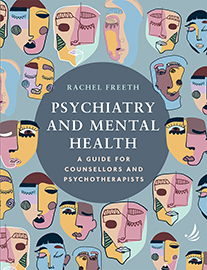
Book: Psychiatry and Mental Health

Book Title:

Psychiatry and Mental Health: A guide for counsellors and psychotherapists.

Author(s): Rachel Freeth.

Year: 2020.

Edition: First (1st).

Publisher: PCCS Books.

Type(s): Paperback and Kindle.

Synopsis:

Increasingly, counsellors and psychotherapists are working with people who have been diagnosed with a mental disorder and are required to understand and navigate the mental health system. Counselling training rarely covers the fields of psychiatry and mental disorder in detail and there are few reliable resources on which they can draw.

This comprehensive guide to psychiatry and the mental health system, written by a psychiatrist and counsellor, aims to fill that gap.

The book is intended for counsellors and psychotherapists but will be helpful to others in the mental health field. It explains the organisation and delivery of mental health services in the UK, the theories and concepts underpinning the practice of psychiatry, the medical model of psychiatric diagnosis and treatment, the main forms of mental disorder, how to work therapeutically with people with a diagnosed mental disorder and how to work with risk of suicide and self-harm.

The text is designed to support continuing professional development and training and includes activities, points for learning/discussion and comprehensive references.

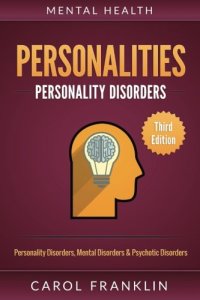
Book: Mental Health: Personalities

Book Title:

Mental Health: Personalities: Personality Disorders, Mental Disorders & Psychotic Disorders (Bipolar, Mood Disorders, Mental Illness, Mental Disorders, Narcissist, Histrionic, Borderline Personality).

Author(s): Carol Franklin.

Year: 2015.

Edition: Third (3rd).

Publisher: CreateSpace Independent Publishing Platform.

Type(s): Paperback and Kindle.

Synopsis:

At some point in your life you will probably start to think you are losing your mind, or that someone you know is in danger of losing theirs. The truth is that modern life is extremely stressful; there are many demands on your time and never enough hours in the day.

However, being at the end of your tether, worn out and overwhelmed is not the same as having a mental disorder. In fact mental health covers a wide range of illnesses including those which most people are aware of, such as Schizophrenia (which is classed as a psychotic disorder). What you may not be aware of is the number of people who have personality disorders and the reasons for these disorders. Most people are not diagnosed until into their twenties and symptoms will naturally reduce in their forties or fifties.

Knowing the difference between the various mental illnesses is essential to ensure you know when a friend or loved one needs professional help as opposed to just your care and attention. This book will guide you through the differences between personality disorders, mental disorders and psychotic disorders.

It will help you to understand the different elements of a personality and how you can test your friends to find out which personality type they are. It will even enlighten you as to the basic traits of each of the sixteen personality types, according to the Myers Briggs Personality test.

Reading this book will enlighten you as to the names and details of the nine main personality disorders, how to recognize the symptoms of each of these disorders and the best way to treat them. It is important to use this book as a guide to understanding these illnesses and to learn the best way to help and support anyone you know who is suffering from a personality disorder. However, a diagnosis must always be confirmed by a medical professional who will ensure treatment is available.

Many people who have a mental health issue will not recognise the issue in themselves; this book will ensure you understand each condition and can help your loved one to get the appropriate treatment.

Everyone deserves the chance to have a happy, fulfilling and balanced life. Read this and help those around you have that chance!

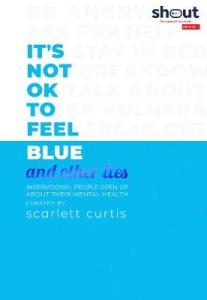
Book: It’s Not OK to Feel Blue (and other lies)

Book Title:

It’s Not OK to Feel Blue (and other lies): Inspirational people open up about their mental health.

Author(s): Scarlett Curtis.

Year: 2020.

Edition: First (1st).

Publisher: Penguin.

Type(s): Hardcover, Paperback, Audiobook, and Kindle.

Synopsis:

Everyone has a mental health. So we asked:

What does yours mean to you?

THE RESULT IS EXTRAORDINARY.

Over 60 people have shared their stories. Powerful, funny, moving, this book is here to tell you:

It’s OK.

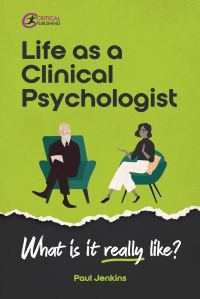
Book: Life as a Clinical Psychologist

Book Title:

Life as a clinical psychologist: What is it really like?

Author(s): Paul Jenkins.

Year: 2020.

Edition: First (1st).

Publisher: Critical Publishing.

Type(s): Paperback and Kindle.

Synopsis:

Considering a career as a Clinical Psychologist? This book is an ideal, jargon-free introduction for those wishing to find out more about working in this demanding but rewarding mental health profession.

An accessible text that invites you to think critically about whether becoming a Clinical Psychologist is right for you, questioning and challenging your views and providing an honest perspective of life as a clinical psychologist.

Written from personal experience of over 10 years working in applied psychology, with a unique knowledge of the practice, theory, and application of Clinical Psychology, Paul Jenkins provides a first-hand perspective, blending anecdotes with factual advice on the clinical academic culture. It is also packed with case studies which highlight a range of different career pathways (including in other mental health fields) and includes coverage of post-qualification life to gives the reader a sense of the career you can have after training.

Book: Mental Health Emergencies

Book Title:

Mental Health Emergencies: A Guide to Recognising and Handling Mental Health Crises.

Author(s): Nick Benas and Michele Hart (LCSW).

Year: 2017.

Edition: First (1st).

Publisher: Hatherleigh Press.

Type(s): Paperback and Kindle.

Synopsis:

One in three people will deal with some kind of mental health concern during their lifetime and odds of knowing a loved one dealing with problems in mental health is even greater.

Mental Health First Aid is a comprehensive guide that provides an overview of the most common mental health problems as well as provide expert guidance on more serious problems such as self-injury, eating disorders, substance abuse, psychosis and attempted suicides.

On This Day … 24 November

People (Births)

  • 1932 – Claudio Naranjo, Chilean psychiatrist.
  • 1954 – Margaret Wetherell, English psychologist and academic.

Claudio Naranjo

Claudio Benjamín Naranjo Cohen (24 November 1932 to 12 July 2019) was a Chilean-born psychiatrist of Arabic/Moorish, Spanish and Jewish descent who is considered a pioneer in integrating psychotherapy and the spiritual traditions.

He was one of the three successors named by Fritz Perls (founder of Gestalt Therapy), a principal developer of Enneagram of Personality theories and a founder of the Seekers After Truth Institute.

He was also an elder statesman of the US and global human potential movement and the spiritual renaissance of the late 20th century.

He was the author of various books.

Margaret Wetherell

Margaret Wetherell (born 24 November 1954), is a prominent academic in the area of discourse analysis.

Her 1987 book, Discourse and Social Psychology: Beyond Attitudes and Behaviour, cowritten with Jonathan Potter, was very influential, particularly in social psychology, though also in other fields (e.g. Wood & Kroger, 2000).

While discourse analysis has many different meanings, Wetherell’s approach has been quite catholic in line with other anglophone discourse analysts like Gilbert & Mulkay (1984).

Wetherell is currently Professor of Social Psychology at the Open University in the United Kingdom, and in 2010/11 led a collaboration on identity funded by the UK Economic and Social Research Council (ESRC).

The Current Debate on Whether Somatoform Disorders are Mental Disorders

Research Paper Title

Are somatoform disorders ‘mental disorders’? A contribution to the current debate.

Background

During the last 2 years, a debate has started over whether the somatoform symptoms/medically unexplained symptoms are wrongly placed under the category of mental disorders (section F in International classification of diseases-10 and in Diagnostic and statistical manual for mental disorders-IV).

Recent Findings

Most experts on medically unexplained symptoms agree that there is a substantial need for revision of the diagnoses of somatoform disorders. While some authors suggest moving the somatoform disorders from axis I to axis III, others suggest improving the classification of these syndromes on axis I, such as by using empirically derived criteria and by introducing psychological descriptors which justify the categorisation as a mental disorder.

In contrast to the situation when the last version of Diagnostic and statistical manual for mental disorders was published, new empirical data has shown some psychological and behavioural characteristics of patients with somatoform symptoms. These and other empirically founded approaches can be landmarks for the revision of this section in Diagnostic and statistical manual for mental disorders-V and International classification of diseases-11.

Summary

The classification of somatoform disorders as ‘mental disorders’ could be justified if empirically founded psychological and behavioural characteristics are included into the classification process.

Attention focusing, symptom catastrophising, and symptom expectation are outlined as possible examples of involved psychological processes.

Reference

Rief, W. & Isaac, M. (2020) Are somatoform disorders ‘mental disorders’? A contribution to the current debate. Current Opinion in Psychiatry. 20(2), pp.143-146. doi: 10.1097/YCO.0b013e3280346999.

The Stigma of Weakness

The head of the Army’s mental health engagement team has called on the chain of command to better recognise that “vulnerability is not a failure”.

Colonel Tim Boughton said more should be done to tackle the stigma that admitting to difficulties is to show weakness. rguing that physical fitness is indivisible from mental fitness, the officer urged commanders to continue to drive the change in culture.

“Authentic leadership acknowledges that failure is progress if you learn from it,” he said. “Our darkest moments often lead to periods of greatest strength. “As a commander you have a legal and moral duty of care for your subordinates. Think from the perspective of a soldier or junior officer – it can be a lonely place and they may rely on you for confidential advice within the regiment.”

Describing how he believes organisational change can be achieved, Colonel Boughton emphasised that leaders at all levels should allow others to make mistakes and improve, be aware of the emotional environment in their unit and establish shared values by encouraging honest conversations on mental health.

He added: “Resilience starts with a choice – to give in or move forward and become stronger. Self awareness gives you the tools to influence your situation and control it.”

Reference

Soldier. (2020) Strength from Failure. Soldier. November 2020, pp. 10.

Book: Way from Chaos to a Better Life

Book Title:

Way from Chaos to a Better Life: Developing Mental health and Recovering from a Mental Illness: By a Survivor’s Inside-Out Persepctive.

Author(s): Henri Kulm.

Year: 2020.

Edition: First (1st).

Publisher: Independently Published.

Type(s): Paperback and Kindle.

Synopsis:

My name is Henri. I was born in 1990 in the capital of Estonia, Tallinn and I have lived there my entire life. I have been diagnosed with schizoaffective disorder, mixed type. This means that I must cope with psychotic episodes and mood disturbances (symptoms of schizophrenia and bipolar disorder). I have been struck by the illness more seriously twice: the first blow was, when I was 22 years old, and the second one was, when I was 25 years old. I have gotten my education by finishing a bachelors and master's degree in energetics and now, I work full-timely in that area. I have gotten my training from Tallinn Mental Health Centre and Loov Ruum Koolitused OÜ to be a licensed experience counsellor and I have been involved in the following activities during my work at Tallinn Mental Health Centre: Individual and group counselling, sharing experience story, conducting trainings, representing organization in media. In the training process, I decided to write deeply about my experience recovering from a major mental illness and I want share that with you. Experience counsellor is a person, who has been diagnosed with a mental illness, but has recovered well. He/she can tell his/her experience with the illness from inside and share things, what a psychiatrist or a psychologist might not know. Because the speciality of the sufferers illness is different in every case, the experience counsellor does not give concrete advice, but encourages and supports basing on his/her experience. Despite the risk of possible negative attitudes from society, I wish to publish this book, because after my first psychotic episode and first treatment in the psychiatric hospital, I fell into the zero point of life. It took a lot of time and work to get out of that zero point and now, I can say that I am satisfied with my life. I have been able to live a full life, start and finish a master’s degree, work full timely in my area and be a licensed experience counsellor. I wish to help people with mental illnesses to recover from a mental illness, to re-establish life quality and develop mental health. I wish to show that recovery from a major mental illness is possible. This book might also be useful to people, who are mentally well, but wish to gain more insight of what a mental illness is all about. This book might also be useful to professionals of mental health.