Posts

The Consultant (2022)

Introduction

The Consultant is a thriller TV series by director Ignacio Maiso.

Outline

A psychiatrist relives all of his past fears with the arrival of three new patients.

Cast

  • John-Christian Bateman … David
  • Rebecca Calienda … Sharon
  • Katie Dalton … Kate
  • Gareth Lawrence … Mike
  • Alex Reece … John
  • David Stock … John
  • Sindri Swan … Delivery guy

Production & Filming Details

  • Director(s):
    • Ignacio Maiso
  • Producer(s):
    • Agustin Maiso … executive producer
    • Ignacio Maiso … executive producer
    • Danny Mounsey … producer
    • David Stock … associate producer
  • Writer(s):
    • Ignacio Maiso
  • Music:
    • Ben Cook
  • Cinematography:
    • Milos Moore
  • Editor(s):
    • Chiraag Patel
  • Production:
    • Tractorni Productions
  • Distributor(s):
  • Release Date: 26 October 2022 (Internet).
  • Running Time: 97 minutes.
  • Rating: Unknown.
  • Country: UK.
  • Language: English.

Currently unavailable.

An Overview of Happiness Economics

Introduction

The economics of happiness or happiness economics is the theoretical, qualitative and quantitative study of happiness and quality of life, including positive and negative affects, well-being, life satisfaction and related concepts – typically tying economics more closely than usual with other social sciences, like sociology and psychology, as well as physical health. It typically treats subjective happiness-related measures, as well as more objective quality of life indices, rather than wealth, income or profit, as something to be maximised.

Refer to Psychometrics, Well-Being Contributing Factors, and Quality of Life.

The field has grown substantially since the late 20th century, for example by the development of methods, surveys and indices to measure happiness and related concepts, as well as quality of life. Happiness findings have been described as a challenge to the theory and practice of economics. Nevertheless, furthering gross national happiness, as well as a specified Index to measure it, has been adopted explicitly in the Constitution of Bhutan in 2008, to guide its economic governance.

Subject Classifications

The subject may be categorised in various ways, depending on specificity, intersection, and cross-classification. For example, within the Journal of Economic Literature classification codes, it has been categorized under:

  • Welfare economics at JEL: D63 – Equity, Justice, Inequality, and Other Normative Criteria and Measurement
  • Health, education, and welfare at JEL: I31 – General Welfare; Basic needs; Living standards; Quality of life; Happiness
  • Demographic economics at JEL:J18 – Public policy.

Metrology

Given its very nature, reported happiness is subjective. It is difficult to compare one person’s happiness with another’s. It can be especially difficult to compare happiness across cultures. However, many happiness economists believe they have solved this comparison problem. Cross-sections of large data samples across nations and time demonstrate consistent patterns in the determinants of happiness.

Happiness is typically measured using subjective measures – e.g. self-reported surveys – and/or objective measures. One concern has always been the accuracy and reliability of people’s responses to happiness surveys. Objective measures such as lifespan, income, and education are often used as well as or instead of subjectively reported happiness, though this assumes that they generally produce happiness, which while plausible may not necessarily be the case. The terms quality of life or well-being are often used to encompass these more objective measures.

Macro-econometric happiness has been gauged by some as Gross National Happiness, following Sicco Mansholt’s 1972 introduction of the measure, and by others as a Genuine Wealth index. Anielski in 2008 wrote a reference definition on how to measure five types of capital:

  1. Human;
  2. Social;
  3. Natural;
  4. Built; and
  5. Financial.

Happiness, well-being, or satisfaction with life, was seen as unmeasurable in classical and neo-classical economics. Van Praag was the first person who organized large surveys in order to explicitly measure welfare derived from income. He did this with the Income Evaluation Question (IEQ). This approach is called the Leyden School. It is named after the Dutch university where this approach was developed. Other researchers included Arie Kapteyn and Aldi Hagenaars.

Some scientists claim that happiness can be measured both subjectively and objectively by observing the joy centre of the brain lit up with advanced imaging, although this raises philosophical issues, for example about whether this can be treated as more reliable than reported subjective happiness.

Determinants

GDP and GNP

Typically national financial measures, such as gross domestic product (GDP) and gross national product (GNP), have been used as a measure of successful policy. There is a significant association between GDP and happiness, with citizens in wealthier nations being happier than those in poorer nations. In 2002, researchers argued that this relationship extends only to an average GDP per capita of about $15,000. In the 2000s, several studies have obtained the opposite result, so this Easterlin paradox is controversial.

Individual Income

Historically, economists have said that well-being is a simple function of income. However, it has been found that once wealth reaches a subsistence level, its effectiveness as a generator of well-being is greatly diminished. Happiness economists hope to change the way governments view well-being and how to most effectively govern and allocate resources given this paradox.

In 2010, Daniel Kahneman and Angus Deaton found that higher earners generally reported better life satisfaction, but people’s day-to-day emotional well-being only rose with earnings until a threshold annual household pre-tax income of $75,000.

Other factors have been suggested as making people happier than money. A short term course of psychological therapy is 32 times more cost effective at increasing happiness than simply increasing income.

Scholars at the University of Virginia, University of British Columbia and Harvard University released a study in 2011 after examining numerous academic paper in response to an apparent contradiction: “When asked to take stock of their lives, people with more money report being a good deal more satisfied. But when asked how happy they are at the moment, people with more money are barely different than those with less.” Published in the Journal of Consumer Psychology, the study is entitled “If Money Doesn’t Make You Happy, Then You Probably Aren’t Spending It Right” and included the following eight general recommendations:

  • Spend money on “experiences” rather than goods.
  • Donate money to others, including charities, rather than spending it solely on oneself.
  • Spend small amounts of money on many small, temporary pleasures rather than less often on larger ones.
  • Don’t spend money on “extended warranties and other forms of overpriced insurance.”
  • Adjust one’s mindset to “pay now, consume later,” instead of “consume now, pay later.”
  • Exercise circumspection about the day-to-day consequences of a purchase beforehand.
  • Rather than buying products that provide the “best deal,” make purchases based on what will facilitate well-being.
  • Seek out the opinions of other people who have prior experience of a product before purchasing it.

In their “Unhappy Cities” paper, Edward Glaeser, Joshua Gottlieb and Oren Ziv examined the self-reported subjective well-being of people living in American metropolitan areas, particularly in relation to the notion that “individuals make trade-offs among competing objectives, including but not limited to happiness.” The researchers findings revealed that people living in metropolitan areas where lower levels of happiness are reported are receiving higher real wages, and they suggest in their conclusion that “humans are quite understandably willing to sacrifice both happiness and life satisfaction if the price is right.”

Social Security

Ruut Veenhoven claimed that social security payments do not seem to add to happiness. This may be due to the fact that non-self-earned income (e.g., from a lottery) does not add to happiness in general either. Happiness may be the mind’s reward for a useful action. However, Johan Norberg of CIS, a free enterprise economy think tank, presents a hypothesis that as people who think that they themselves control their lives are happier, paternalist institutions may decrease happiness.

An alternative perspective focuses on the role of the welfare state as an institution that improves quality of life not only by increasing the extent to which basic human needs are met, but also by promoting greater control of one’s life by limiting the degree to which individuals find themselves at the mercy of impersonal market forces that are indifferent to the fate of individuals. This is the argument suggested by the US political scientist Benjamin Radcliff, who has presented a series of papers in peer-reviewed scholarly journals demonstrating that a more generous welfare state contributes to higher levels of life satisfaction, and does so to rich and poor alike.

Employment

Generally, the well-being of those who are employed is higher than those who are unemployed. Employment itself may not increase subjective well-being, but facilitates activities that do (such as supporting a family, philanthropy, and education). While work does increase well-being through providing income, income level is not as indicative of subjective well-being as other benefits related to employment. Feelings of autonomy and mastery, found in higher levels in the employed than unemployed, are stronger predictors of subjective well-being than wealth.

When personal preference and the amount of time spent working do not align, both men and women experience a decrease in subjective well-being. The negative effect of working more or working less than preferred has been found across multiple studies, most finding that working more than preferred (over-employed) is more detrimental, but some found that working less (under-employed) is more detrimental. Most individuals’ levels of subjective well-being returned to “normal” (level previous to time mismatch) within one year. Levels remained lower only when individuals worked more hours than preferred for a period of two years or more, which may indicate that it is more detrimental to be over-employed than under-employed in the long-term.

Employment status effects are not confined to the individual. Being unemployed can have detrimental effects on a spouse’s subjective well-being, compared to being employed or not working (and not looking for work). Partner life satisfaction is inversely related to the number of hours their partner is underemployed. When both partners are underemployed, the life-satisfaction of men is more greatly diminished than women. However, just being in a relationship reduces the impact unemployment has on the subjective well-being of an individual. On a broad scale, high rates of unemployment negatively affect the subjective well-being of the employed.

Becoming self-employed can increase subjective well-being, given the right conditions. Those who leave work to become self-employed report greater life satisfaction than those who work for others or become self-employed after unemployment; this effect increases over time. Those who are self-employed and have employees of their own report higher life-satisfaction than those who are self-employed without employees, and women who are self-employed without employees report a higher life satisfaction than men in the same condition.

The effects of retirement on subjective well-being vary depending on personal and cultural factors. Subjective well-being can remain stable for those who retire from work voluntarily, but declines for those who are involuntarily retired. In countries with an average social norm to work, the well-being of men increases after retirement, and the well-being of retired women is at the same level as women who are homemakers or work outside the home. In countries with a strong social norm to work, retirement negatively impacts the well-being of men and women.

Relationships and Children

In the 1970s, women typically reported higher subjective well-being than did men. By 2009, declines in reported female happiness had eroded a gender gap.

In rich societies, where a rise in income does not equate to an increase in levels of subjective well-being, personal relationships are the determining factors of happiness.

Glaeser, Gottlieb and Ziv suggest in their conclusion that the happiness trade-offs that individuals seem willing to make aligns with the tendency of parents to report less happiness, as they sacrifice their personal well-being for the “price” of having children.

Freedom and Control

There is a significant correlation between feeling in control of one’s own life and happiness levels.

A study conducted at the University of Zurich suggested that democracy and federalism bring well-being to individuals. It concluded that the more direct political participation possibilities available to citizens raises their subjective well-being. Two reasons were given for this finding. First, a more active role for citizens enables better monitoring of professional politicians by citizens, which leads to greater satisfaction with government output. Second, the ability for citizens to get involved in and have control over the political process, independently increases well-being.

American psychologist Barry Schwartz argues in his book The Paradox of Choice that too many consumer and lifestyle choices can produce anxiety and unhappiness due to analysis paralysis and raised expectations of satisfaction.

Religious Diversity

National cross-sectional data suggest an inverse relationship between religious diversity and happiness, possibly by facilitating more bonding (and less bridging) social capital.

Happiness and Leisure

Much of the research regarding happiness and leisure relies on subjective well-being (SWB) as an appropriate measure of happiness. Research has demonstrated a wide variety of contributing and resulting factors in the relationship between leisure and happiness. These include psychological mechanisms, and the types and characteristics of leisure activities that result in the greatest levels of subjective happiness. Specifically, leisure may trigger five core psychological mechanisms including detachment-recovery from work, autonomy in leisure, mastery of leisure activities, meaning-making in leisure activities, and social affiliation in leisure (DRAMMA). Leisure activities that are physical, relational, and performed outdoors are correlated with greater feelings of satisfaction with free time. Research across 33 different countries shows that individuals who feel they strengthen social relationships and work on personal development during leisure time are happier than others. Furthermore, shopping, reading books, attending cultural events, getting together with relatives, listening to music and attending sporting events is associated with higher levels of happiness. Spending time on the internet or watching TV is not associated with higher levels of happiness as compared to these other activities.

Research has shown that culture influences how we measure happiness and leisure. While SWB is a commonly used measure of happiness in North America and Europe, this may not be the case internationally. Quality of life (QOL) may be a better measure of happiness and leisure in Asian countries, especially Korea. Countries such as China and Japan may require a different measurement of happiness, as societal differences may influence the concept of happiness (i.e. economic variables, cultural practices, and social networks) beyond what QOL is able to measure. There seem to be some differences in leisure preference cross-culturally. Within the Croatian culture, family related leisure activities may enhance SWB across a large spectrum of ages ranging from adolescent to older adults, in both women and men. Active socializing and visiting cultural events are also associated with high levels of SWB across varying age and gender. Italians seem to prefer social conceptions of leisure as opposed to individualistic conceptions. Although different groups of individuals may prefer varying types and amount of leisure activity, this variability is likely due to the differing motivations and goals that an individual intends to fulfil with their leisure time.

Research suggests that specific leisure interventions enhance feelings of SWB. This is both a top-down and bottom-up effect, in that leisure satisfaction causally affects SWB, and SWB causally affects leisure satisfaction. This bi-directional effect is stronger in retired individuals than in working individuals. Furthermore, it appears that satisfaction with our leisure at least partially explains the relationship between our engagement in leisure and our SWB. Broadly speaking, researchers classify leisure into active (e.g. volunteering, socialising, sports and fitness) and passive leisure (e.g. watching television and listening to the radio). Among older adults, passive leisure activities and personal leisure activities (e.g. sleeping, eating, and bathing) correlate with higher levels of SWB and feelings of relaxation than active leisure activities. Thus, although significant evidence has demonstrated that active leisure is associated with higher levels of SWB, or happiness, this may not be the case with older populations.

Both regular and irregular involvement in sports leisure can result in heightened SWB. Serious, or systematic involvement in certain leisure activities, such as taekwondo, correlates with personal growth and a sense of happiness. Additionally, more irregular (e.g. seasonal) sports activities, such as skiing, are also correlated with high SWB. Furthermore, the relationship between pleasure and skiing is thought to be caused in part by a sense of flow and involvement with the activity. Leisure activities, such as meeting with friends, participating in sports, and going on vacation trips, positively correlate with life satisfaction. It may also be true that going on a vacation makes our lives seem better, but does not necessarily make us happier in the long term. Research regarding vacationing or taking a holiday trip is mixed. Although the reported effects are mostly small, some evidence points to higher levels of SWB, or happiness, after taking a holiday.

Economic Security

Poverty alleviation are associated with happier populations. According to the latest systematic review of the economic literature on life satisfaction: Volatile or high inflation is bad for a population’s well-being, particularly those with a right-wing political orientation. That suggests the impact of disruptions to economic security are in part mediated or modified by beliefs about economic security.

Political Stability

The Voxeu analysis of the economic determinants of happiness found that life satisfaction explains the largest share of an existing government’s vote share, followed by economic growth, which itself explains six times as much as employment and twice as much as inflation.

Economic Freedom

Individualistic societies have happier populations. Institutes of economic freedom are associated with increases wealth inequality but does not necessarily contribute to decreases in aggregate well-being or subjective well-being at the population level. In fact, income inequality enhances global well-being. There is some debate over whether living in poor neighbours make one happier. And, living among rich neighbours can dull the happiness that comes from wealth. This is purported to work by way of an upward or downward comparison effect (Keeping up with the Joneses). The balance of evidence[citation needed] is trending in favour of the hypothesis that living in poor neighbourhoods makes one less happy, and living in rich neighbourhoods actually makes one happier, in the United States. While social status matters, a balance of factors like amenities, safe areas, well maintained housing, turn the tide in favour of the argument that richer neighbours are happier neighbours.

Democracy

“The right to participate in the political process, measured by the extent of direct democratic rights across regions, is strongly correlated with subjective well-being (Frey and Stutzer, 2002) … a potential mechanism that explains this relationship is the perception of procedural fairness and social mobility.” Institutions and well-being, democracy and federalism are associated with a happier population. Correspondingly, political engagement and activism have associated health benefits. On the other hand, some non-democratic countries such as China and Saudi Arabia top the Ipsos list of countries where the citizenry is most happy with their government’s direction. That suggests that voting preferences may not translate well into overall satisfaction with the government’s direction. In any case, both of these factors revealed preference and domain specific satisfaction rather than overall subjective well being.

Economic Development

Historically, economists thought economic growth was unrelated to population level well-being, a phenomenon labelled the Easterlin paradox. More robust research has identified that there is a link between economic development and the wellbeing of the population. A 2017 meta-analysis suggests that the impact of infrastructure expenditure on economic growth varies considerably. So, one cannot assume an infrastructure project will yield welfare benefits. The paper does not investigate or elaborate on any modifiable variables that might predict the value of a project. However, government spending on roads and primary industries is the best value target for transport spending, according to a 2013 meta-analysis.7% (+/−3%) per annum discount rates are typically applied as the discount rate on public infrastructure projects in Australia. Smaller real discount rates are used internationally to calculate the social return on investment by governments.

Alternative Approach: Economic Consequences of Happiness

While the mainstream happiness economics has focused on identifying the determinants of happiness, an alternative approach in the discipline examines instead what are the economic consequences of happiness. Happiness may act as a determinant of economic outcomes: it increases productivity, predicts one’s future income and affects labour market performance. There is a growing number of studies justifying the so-called “happy-productive worker” thesis. The positive and causal impact of happiness on an individual’s productivity has been established in experimental studies.

Timeline of Developments

The idea that happiness is important to a society is not new. Many other prominent intellectuals, philosophers and political leaders throughout history, including Aristotle, Confucius, and Plato, incorporated happiness into their work.

“Happiness is the meaning and the purpose of life, the whole aim and end of human existence.” (Aristotle,350 B.C.).

Thomas Jefferson put the “pursuit of happiness” on the same level as life and liberty in the United States’ Declaration of Independence. Jeremy Bentham believed that public policy should attempt to maximize happiness, and he even attempted to estimate a “hedonic calculus”. In the US, there is no explicit policy that requires the rulers to develop the physical and mental well-being of the citizens or hold the government agencies accountable for their performance against specific measures or metrics of well-being. Until 1972 there was no formal government policy, anywhere in the world, that placed happiness and well-being as a main criterion for public policy decision making.

The following is a chronological list of happiness economics and well-being indices:

  • 1789 – France adopts the Declaration: It emphasizes happiness as a fundamental right and universal goal.
  • 1972 – Bhutan’s former king, Jigme Singye Wangchuck, introduced the Gross National Happiness (GNH) philosophy and its four development pillars at an international conference.
  • 2005 – Med Jones of the International Institute of Management introduced the first GNH Index and Global GNH Index Survey. The GNH Index, also known as Gross National Well-being (GNW) Index framework served as the first integrated objective (economic) and subjective (happiness) socioeconomic development framework. Prior to the GNH Index, there were few development indices that improved upon the gross domestic product (GDP), but did not measure happiness. For example, the Genuine Progress Indicator was focused on the environmental cost of economic development, then later (in 2006) it was updated to include similar measures to the GNH Index. Another development index is the Human Development Index (HDI) that originally focused on literacy and education but also did not measure happiness. The HDI now measures three basic dimensions of human development, health (as measured by life expectancy at birth), overall knowledge level (as measured by the literacy rate), and standard of living (as measured by GDP per capita for a given year). Among the criticisms of the HDI is the complaint that it is a mixture of stock measures (life expectancy at birth and literacy rate) and a flow measure (GDP per capita for a given year). To overcome this criticism, Hou, Walsh, and Zhang (2015) proposed a new index called HDIF (Human Development Index Flow), in which they replaced life expectancy at birth by the under-five mortality rate (for a given year), and they also replaced the literacy rate by the gross primary school enrolment ratio for a given year). They calculated both the HDI and the HDIF for many countries and found that “the HDIF and the HDI tend to converge for wealthy countries and diverge for poor countries, especially those with low HDI rankings”. The development performance of poor countries improved using the HDIF while the performance of the wealthy countries declined.
  • 2006 – The Genuine Progress Indicator was updated from a green measurement system to a broader concept that included quantitative measurement of well-being and happiness. The new measure is motivated by the philosophy of the GNH and the same notion of that subjective measures like well-being are more relevant and important than more objective measures like consumption. It is not measured directly, but only by means of the factors which are believed to lead to it.
  • 2007 – Thailand releases Green and Happiness Index (GHI).
  • 2008 – French President Nicolas Sarkozy launched a Happiness Initiative similar to GNH, calling for the inclusion of happiness and well-being among the criteria for national governance policies. He commissioned three prominent economists, Joseph Stiglitz (US), Amartya Sen (India), Jean-Paul Fitoussi (France), to publish a report calling for a global “statistical system which goes beyond commercial activity to measure personal well-being.” Later it was described as gross domestic happiness (GDH). The GDH Index is similar to the GNH Index of 2005.
  • 2008 – The goal of furthering gross national happiness, as well as a specified GNH Index to measure this, are instituted explicitly in the Constitution of Bhutan, to guide its government, on 18 July 2008. The included index is used to measure the collective happiness and well-being of the population.
  • 2009 – In the United States, the Gallup poll system launched the happiness survey collecting data on national scale. The Gallup Well-Being Index was modelled after the GNH Index framework of 2005. The Well-Being Index score is an average of six sub-indexes which measure life evaluation, emotional health, work environment, physical health, healthy behaviours, and access to basic necessities. In October 2009, the US scored 66.1/100.
  • 2010 – The concept was taken seriously, as the Centre for Bhutan Studies, under the leadership of Karma Ura, developed a sophisticated survey instrument to measure the population’s general level of well-being. Two Canadians, Michael and Martha Pennock played a major role in developing the Bhutanese survey, which took a six- to seven-hour interview to complete. They developed a shorter international version of the survey which has been used in their home region of Victoria, BC, as well as in Brazil. The Pennocks also collaborated with Ura in the production of a policy lens which is used by the Bhutanese GNH Commission for anticipating the impact of policy initiatives upon the levels of gross national happiness in Bhutan.
  • 2010 – The Center for Bhutan Studies further defined the original four pillars with greater specificity into eight general contributors to happiness, which make up the Bhutan GNH Index: 1) physical, mental and spiritual health; 2) time-balance; 3) social and community vitality; 4) cultural vitality; 5) education; 6) living standards; 7) good governance; and 8) ecological vitality.
  • 2010 – The Oxford Poverty and Human Development Initiative OPHI at the University of Oxford in UK, launched the Multidimensional Poverty Index (MPI) for the United Nations Development Programme, (UNDP). Similar to the GNH Index of 2005, OPHI promotes collection and analysis of data on five dimensions including Quality of work, Empowerment, Physical safety, Ability to go about without shame, Psychological wellbeing.
  • 2011 – UN General Assembly Resolution 65/309, titled “Happiness: towards a holistic approach to development”
  • 2011 – The Organisation for Economic Co-operation and Development (OECD) launched “Better Life Index” (BLI).
  • 2011 – The United Nations released its first edition of the now annual World Happiness Report.
  • 2011 – Canadian Index of Wellbeing Network (CIW Network) released The Canadian Index of Wellbeing (CIW).
  • 2011 – The Israeli newspaper Haaretz published an article suggesting that western GDP economics is an incomplete development model and called for the adoption of Bhutan’s GNH philosophy and Jones’ GNH Index in Israel.
  • 2011 – Chuluun Togtokh criticized the HDI in an article published in Nature, calling for a revised HDI, writing that “The revised index should include each nation’s per capita carbon emissions, and so become a Human Sustainable Development Index (HSDI).” Bravo (2014) provided details of how the HSDI was computed and proposed an amended HSDI by including the proportion of forested area in each country. He argued that this proposed indicator “represents an important measure of the capacity of the natural system to provide fundamental ecological services.”
  • 2012 – In a report prepared for the US Congressman Hansen Clarke, R, researchers Ben Beachy and Juston Zorn, at John F. Kennedy School of Government in Harvard University, recommended that “the Congress should prescribe the broad parameters of new, carefully designed supplemental national indicators; it should launch a bipartisan commission of experts to address unresolved methodological issues, and include alternative indicators.” They proposed that the government can use the survey results to see which well-being dimensions are least satisfied and which districts and demographic groups are most deficient, so as to allocate resources accordingly. The report list the Gross National Happiness Index and its seven measurement area as one of the main frameworks to consider.
  • 2012 – Professor Peter T. Coleman, a director of the International Centre for Cooperation and Conflict Resolution at Columbia University, suggested that Jones’ GNH Index initiative could inform the Global Peace Index Initiative GPI.
  • 2012 – South Korea launched Happiness Index citing the GNH Index framework.
  • 2012 – The government of Goa, India, published a strategy for socioeconomic development citing the GNH Index as a model for measuring happiness.
  • 2012 – The city of Seattle in Washington, launched its own happiness index initiative, emphasizing measures similar to the GNH Index.
  • 2013 – The Social Progress Index SPI was launched by Michael Porter
  • 2013 – The president of Singapore, Tony Tan, proposed that in addition to building up substantial financial reserves, Singapore needed to focus on building up its “social reserves”, a concept that appears to have parallels to GNH.
  • 2013 – Economist Karol Jan Borowiecki motivates that well-being indices can be obtained from the way people communicate, as is established in psychology, and compiles the first well-being indices covering the life-time of a person.
  • 2013 – A joint commission led by the Conseil économique et social, the Conseil supérieur pour un développement durable and the Observatoire de la Compétitivité introduces a set of indicators measuring the quality of life in Luxembourg. The conclusions of the commission are summarised in a document titled “Projet PIBien-être”, which identifies 64 indicators belonging to 11 different domains to assess quality of life in Luxembourg.
  • 2014 – The government of Dubai launched its localized Happiness Index to measure the public’s contentment and satisfaction with different government services.
  • 2014 – The United Kingdom launched its own well-being and happiness statistics.
  • 2015 – Within the “Projet PIBien-être” launched in 2013, STATEC (National Institute of Statistics and Economic Studies of the Grand Duchy of Luxembourg) presents a preliminary analysis of the “Luxembourgish Index of Well-being” (LIW), a first proposal of synthetic indicator measuring the quality of life in Luxembourg. The presentation entitled “Preliminary Assessment of Quality of Life in Luxembourg” was delivered by Marcin Piekałkiewicz on 16 December 2015.
  • 2017 – The Minderoo Foundation launched the Global Slavery Index, providing a map of the estimated prevalence of modern slavery. The information allows an objective comparison and assessment of both the problem and adequacy of the response in 167 countries.

Related Studies

The Satisfaction with Life Index is an attempt to show the average self-reported happiness in different nations. This is an example of a recent trend to use direct measures of happiness, such as surveys asking people how happy they are, as an alternative to traditional measures of policy success such as GDP or GNP. Some studies suggest that happiness can be measured effectively. The Inter-American Development Bank (IDB), published in November 2008 a major study on happiness economics in Latin America and the Caribbean.

There are also several examples of measures that include self-reported happiness as one variable. Happy Life Years, a concept brought by Dutch sociologist Ruut Veenhoven, combines self-reported happiness with life expectancy. The Happy Planet Index combines it with life expectancy and ecological footprint.

Gross National Happiness (GNH) is a concept introduced by the King of Bhutan in 1972 as an alternative to GDP. Several countries have already developed or are in the process of developing such an index. Bhutan’s index has led that country to limit the amount of deforestation it will allow and to require that all tourists to its nation must spend US$200. Allegedly, low-budget tourism and deforestation lead to unhappiness.

After the military coup of 2006, Thailand also instituted an index. The stated promise of the new Prime Minister Surayud Chulanont is to make the Thai people not only richer but happier as well. Much like GDP results, Thailand releases monthly GNH data. The Thai GNH index is based on a 1–10 scale with 10 being the happiest. As of 13 May 2007, the Thai GNH measured 5.1 points. The index uses poll data from the population surveying various satisfaction factors such as security, public utilities, good governance, trade, social justice, allocation of resources, education and community problems.

Australia, China, France and the United Kingdom are also coming up with indexes to measure national happiness. The UK began to measure national wellbeing in 2012. North Korea also announced an international Happiness Index in 2011 through Korean Central Television. North Korea itself came in second, behind #1 China. Canada released the Canadian Index of Wellbeing (CIW) in 2011 to track changes in wellbeing. The CIW has adopted the following working definition of wellbeing: The presence of the highest possible quality of life in its full breadth of expression focused on but not necessarily exclusive to good living standards, robust health, a sustainable environment, vital communities, an educated populace, balanced time use, high levels of democratic participation, and access to and participation in leisure and culture.

Ecuador’s and Bolivia’s new constitutions state the indigenous concept of “good life” (“buen vivir” in Spanish, “sumak kawsay” in Quichua, and “suma qamaña” in Aymara) as the goal of sustainable development.

Neoclassical Economics

Neoclassical, as well as classical economics, are not subsumed under the term happiness economics although the original goal was to increase the happiness of the people. Classical and neoclassical economics are stages in the development of welfare economics and are characterised by mathematical modelling. Happiness economics represents a radical break with this tradition. The measurement of subjective happiness respectively life satisfaction by means of survey research across nations and time (in addition to objective measures like lifespan, wealth, security etc.) marks the beginning of happiness economics.

Criticism

Some have suggested that establishing happiness as a metric is only meant to serve political goals. Recently there has been concern that happiness research could be used to advance authoritarian aims. As a result, some participants at a happiness conference in Rome have suggested that happiness research should not be used as a matter of public policy but rather used to inform individuals.

Even on the individual level, there is discussion on how much effect external forces can have on happiness. Less than 3% of an individual’s level of happiness comes from external sources such as employment, education level, marital status, and socioeconomic status. To go along with this, four of the Big Five Personality Traits are substantially associated with life satisfaction, openness to experience is not associated. Having high levels of internal locus of control leads to higher reported levels of happiness.

Even when happiness can be affected by external sources, it has high hedonic adaptation, some specific events such as an increase in income, disability, unemployment, and loss (bereavement) only have short-term (about a year) effects on a person’s overall happiness and after a while happiness may return to levels similar to unaffected peers.

What has the most influence over happiness are internal factors such as genetics, personality traits, and internal locus of control. It is theorised that 50% of the variation in happiness levels is from genetic sources and is known as the genetic set point. The genetic set point is assumed to be stable over time, fixed, and immune to influence or control. This goes along with findings that well-being surveys have a naturally positive baseline.

With such strong internal forces on happiness, it is hard to have an effect on a person’s happiness externally. This in turn lends itself back to the idea that establishing a happiness metric is only for political gain and has little other use. To support this even further it is believed that a country aggregate level of SWB can account for more variance in government vote share than standard macroeconomic variables, such as income and employment.

Technical Issues

According to Bond and Lang (2018), the results are skewed due to the fact that the respondents have to “round” their true happiness to the scale of, e.g., 3 or 7 alternatives (e.g. very happy, pretty happy, not too happy). This “rounding error” may cause a less happy group seem happier, in the average. This would not be the case if the happiness of both groups would be normally distributed with the same variance, but that is usually not the case, based on their results. For some not-implausible log-normal assumptions on the scale, typical results can be reversed to the opposite results.

They also show that the “reporting function” seems to be different for different groups and even for the same individual at different times. For example, when a person becomes disabled, they soon start to lower their threshold for a given answer (e.g. “pretty happy”). That is, they give a higher answer than they would have given at the same happiness state before becoming disabled.

This page is based on the copyrighted Wikipedia article < https://en.wikipedia.org/wiki/Happiness_economics >; it is used under the Creative Commons Attribution-ShareAlike 3.0 Unported License (CC-BY-SA). You may redistribute it, verbatim or modified, providing that you comply with the terms of the CC-BY-SA.

An Overview of Opponent-Process Theory

Introduction

Opponent-process theory is a psychological and neurological model that accounts for a wide range of behaviours, including colour vision. This model was first proposed in 1878 by Ewald Hering, a German physiologist, and later expanded by Richard Solomon, a 20th-century psychologist.

Opponent-process theory of drug addiction.

Visual Perception

The opponent-process theory was first developed by Ewald Hering. He noted that there are colour combinations that we never see, such as reddish-green or bluish-yellow. Opponent-process theory suggests that colour perception is controlled by the activity of three opponent systems. In the theory, he postulated about three independent receptor types which all have opposing pairs: white and black, blue and yellow, and red and green.

These three pairs produce combinations of colours for us through the opponent process. Furthermore, according to this theory, for each of these three pairs, three types of chemicals in the retina exist, in which two types of chemical reactions can occur. These reactions would yield one member of the pair in their building up phase, or anabolic process, whereas they would yield the other member while in a destructive phase, or a catabolic process.

The colours in each pair oppose each other. Red-green receptors cannot send messages about both colours at the same time. This theory also explains negative afterimages; once a stimulus of a certain colour is presented, the opponent colour is perceived after the stimulus is removed because the anabolic and catabolic processes are reversed. For example, red creates a positive (or excitatory) response while green creates a negative (or inhibitory) response. These responses are controlled by opponent neurons, which are neurons that have an excitatory response to some wavelengths and an inhibitory response to wavelengths in the opponent part of the spectrum.

According to this theory, colour blindness is due to the lack of a particular chemical in the eye. The positive after-image occurs after we stare at a brightly illuminated image on a regularly lighted surface and the image varies with increases and decreases in the light intensity of the background.

The veracity of this theory, however, has recently been challenged. The main evidence for this theory derived from recordings of retinal and thalamic (LGN) cells, which were excited by one colour and suppressed by another. Based on these oppositions, the cells were called “Blue-yellow”, “Green-red” and “black-white” opponent cells. In a recent review of the literature, Pridmore notes that the definition of the colour ‘green’ has been very subjective and inconsistent and that most recordings of retinal and thalamic (LGN) neurons were of Red-cyan colour, and some of Green-magenta colour. As these colours are complementary and not opponent, he proposed naming these neurons as complementary cells.

A-Process

A-process refers to the one of the emotional internal processes or responses of the opponent-process theory. The A-process is largely responsible for the initial, usually fast and immediate, emotional reaction to a stimulus. The theory considers it a primary process which may be affectively positive or negative, but never neutral. The theory also proposes that this process automatically causes a B-process, which is subjectively and physiologically opposite in direction to the A-process.

There is a peak response to any emotional stimulus which usually occurs rapidly, usually out of shock, but lasts only as long as the stimulus is present. In a physiological sense, the a-process is where the pupils dilate, the heart rate increases, and the adrenaline rushes.

A- and B-Processes

The A- and B-processes are consequently and temporarily linked but were believed to depend on different neurobiological mechanisms. B-Process, the other part of opponent-process theory, occurs after the initial shock, or emotion and is evoked after a short delay. A-process and B-process overlap in somewhat of an intermediate area. While A-process is still in effect, B-process starts to rise, ultimately levelling out a-process’ initial spike in emotion. A-process ends once the stimulus is terminated, leaves, or ends. Physiologically, this is where breathing returns to normal, pulse slows back to its normal rate, and heart rate starts to drop. The B-process can be thought of as the “after-reaction”. Once B-process has ended, the body returns to homeostasis and emotions return to baseline.

Research on the brain mechanisms of drug addiction showed how the A-process is equated with the pleasure derived from drugs and once it weakens, it is followed by the strengthening of the B-process, which are the withdrawal symptoms.

Motivation and Emotion

Richard Solomon developed a motivational theory based on opponent processes. Basically he states that every process that has an affective balance (i.e. is pleasant or unpleasant) is followed by a secondary, “opponent process”. This opponent process sets in after the primary process is quieted. With repeated exposure, the primary process becomes weaker while the opponent process is strengthened.

The most important contribution is Solomon’s findings on work motivation and addictive behaviour. According to opponent-process theory, drug addiction is the result of an emotional pairing of pleasure and the emotional symptoms associated with withdrawal. At the beginning of drug or any substance use, there are high levels of pleasure and low levels of withdrawal. Over time, however, as the levels of pleasure from using the drug decrease, the levels of withdrawal symptoms increase.

The theory was supported in a study Solomon conducted along with J.D. Corbit in 1974, in which the researchers analysed the emotions of skydivers. It was found that beginners have greater levels of fear than more experienced skydivers, but less pleasure upon landing. However, as the skydivers kept on jumping, there was an increase in pleasure and a decrease in fear. A similar experiment was done with dogs. Dogs were put into a so-called Pavlov harness and were shocked with electricity for 10 seconds. This shock was the stimulus of the experiment. In the initial stage (consisting of the first few stimuli) the dogs experienced terror and panic. Then, when they stopped the stimuli, the dogs became stealthy and cautious. The experiment continued, and after many stimuli, the dogs went from unhappy to joyful and happy after the shocks stopped altogether. In the opponent-process model, this is the result of a shift over time from fear to pleasure in the fear-pleasure emotion pair.

Another example of opponent processes is the use of nicotine. In the terms of Hedonism, one process (the initial process) is a hedonic reaction that is prompted by the use of nicotine. The user gains positive feelings through the inhalation of nicotine. This is then counteracted, or opposed, by the second, drug-opposite effect (the opponent process). The drug-opposite effect holds hedonic properties that are negative, which would be the decrease in positive feelings gained by the inhalation of nicotine. The counteraction takes place after the initial hedonic response as a means to restore homeostasis. In short, the use of nicotine jumpstarts an initial, pleasurable response. It is then counteracted by the opponent process that brings one back to their original level of homeostasis. The negative feelings begin to take hold again, which in this case would be the craving of nicotine. Repeated use of the substance will continue to strengthen the opponent process, but the feelings gained through the initial process will remain constant. This dynamic explains tolerance, which is the increase in the amount of drug/substance that is needed to overcome the opponent process that is increasing in strength. This also explains withdrawal syndrome, which occurs by the negative, drug-opposite effects remaining after the initial, pleasurable process dies out.

Leo Hurvich and Dorothea Jameson proposed a neurological model of a general theory of neurological opponent processing in 1974. This led to Ronald C. Blue & Wanda E. Blue’s general model of Correlational Holographic Opponent Processing. This model proposes that habituation is a neurological holographic wavelet interference of opponent processes that explains learning, vision, hearing, taste, balance, smell, motivation, and emotions.

Beyond addictive behaviour, opponent-process theory can in principle explain why processes (i.e. situations or subjective states) that are aversive and unpleasant can still be rewarding. For instance, after being exposed to a stressful situation (cold pressor test), human participants showed greater physiological signs of well-being than those in the control condition. Self-report measures and subjective ratings show that relief from physical pain can induce pleasant feelings, and a reduction of negative affect. Accordingly, opponent-process theory can also help to explain psychopathological behaviour such as non-suicidal self-injury.

This page is based on the copyrighted Wikipedia article < https://en.wikipedia.org/wiki/Opponent-process_theory#Motivation_and_emotion >; it is used under the Creative Commons Attribution-ShareAlike 3.0 Unported License (CC-BY-SA). You may redistribute it, verbatim or modified, providing that you comply with the terms of the CC-BY-SA.

What is Negativity Bias?

Introduction

The negativity bias, also known as the negativity effect, is a cognitive bias that, even when of equal intensity, things of a more negative nature (e.g. unpleasant thoughts, emotions, or social interactions; harmful/traumatic events) have a greater effect on one’s psychological state and processes than neutral or positive things.

In other words, something very positive will generally have less of an impact on a person’s behaviour and cognition than something equally emotional but negative. The negativity bias has been investigated within many different domains, including the formation of impressions and general evaluations; attention, learning, and memory; and decision-making and risk considerations.

Refer to Positivity Offset.

Explanations

Paul Rozin and Edward Royzman proposed four elements of the negativity bias in order to explain its manifestation: negative potency, steeper negative gradients, negativity dominance, and negative differentiation.

Negative potency refers to the notion that, while possibly of equal magnitude or emotionality, negative and positive items/events/etc. are not equally salient. Rozin and Royzman note that this characteristic of the negativity bias is only empirically demonstrable in situations with inherent measurability, such as comparing how positively or negatively a change in temperature is interpreted.

With respect to positive and negative gradients, it appears to be the case that negative events are thought to be perceived as increasingly more negative than positive events are increasingly positive the closer one gets (spatially or temporally) to the affective event itself. In other words, there is a steeper negative gradient than positive gradient. For example, the negative experience of an impending dental surgery is perceived as increasingly more negative the closer one gets to the date of surgery than the positive experience of an impending party is perceived as increasingly more positive the closer one gets to the date of celebration (assuming for the sake of this example that these events are equally positive and negative). Rozin and Royzman argue that this characteristic is distinct from that of negative potency because there appears to be evidence of steeper negative slopes relative to positive slopes even when potency itself is low.

Negativity dominance describes the tendency for the combination of positive and negative items/events/etc. to skew towards an overall more negative interpretation than would be suggested by the summation of the individual positive and negative components. Phrasing in more Gestalt-friendly terms, the whole is more negative than the sum of its parts.

Negative differentiation is consistent with evidence suggesting that the conceptualization of negativity is more elaborate and complex than that of positivity. For instance, research indicates that negative vocabulary is more richly descriptive of the affective experience than that of positive vocabulary. Furthermore, there appear to be more terms employed to indicate negative emotions than positive emotions. The notion of negative differentiation is consistent with the mobilisation-minimisation hypothesis, which posits that negative events, as a consequence of this complexity, require a greater mobilisation of cognitive resources to deal with the affective experience and a greater effort to minimise the consequences.

Evidence

Social Judgements and Impression Formation

Most of the early evidence suggesting a negativity bias stems from research on social judgments and impression formation, in which it became clear that negative information was typically more heavily weighted when participants were tasked with forming comprehensive evaluations and impressions of other target individuals. Generally speaking, when people are presented with a range of trait information about a target individual, the traits are neither “averaged” nor “summed” to reach a final impression. When these traits differ in terms of their positivity and negativity, negative traits disproportionately impact the final impression. This is specifically in line with the notion of negativity dominance (refer to “Explanations” above).

As an example, a famous study by Leon Festinger and colleagues investigated critical factors in predicting friendship formation; the researchers concluded that whether or not people became friends was most strongly predicted by their proximity to one another. Ebbesen, Kjos, and Konecni, however, demonstrated that proximity itself does not predict friendship formation; rather, proximity serves to amplify the information that is relevant to the decision of either forming or not forming a friendship. Negative information is just as amplified as positive information by proximity. As negative information tends to outweigh positive information, proximity may predict a failure to form friendships even more so than successful friendship formation.

One explanation that has been put forth as to why such a negativity bias is demonstrated in social judgements is that people may generally consider negative information to be more diagnostic of an individual’s character than positive information, that it is more useful than positive information in forming an overall impression. This is supported by indications of higher confidence in the accuracy of one’s formed impression when it was formed more on the basis of negative traits than positive traits. People consider negative information to be more important to impression formation and, when it is available to them, they are subsequently more confident.

An oft-cited paradox, a dishonest person can sometimes act honestly while still being considered to be predominantly dishonest; on the other hand, an honest person who sometimes does dishonest things will likely be reclassified as a dishonest person. It is expected that a dishonest person will occasionally be honest, but this honesty will not counteract the prior demonstrations of dishonesty. Honesty is considered more easily tarnished by acts of dishonesty. Honesty itself would then be not diagnostic of an honest nature, only the absence of dishonesty.

The presumption that negative information has greater diagnostic accuracy is also evident in voting patterns. Voting behaviours have been shown to be more affected or motivated by negative information than positive: people tend to be more motivated to vote against a candidate because of negative information than they are to vote for a candidate because of positive information. As noted by researcher Jill Klein, “character weaknesses were more important than strengths in determining…the ultimate vote”.

This diagnostic preference for negative traits over positive traits is thought to be a consequence of behavioural expectations: there is a general expectation that, owing to social requirements and regulations, people will generally behave positively and exhibit positive traits. Contrastingly, negative behaviours/traits are more unexpected and, thus, more salient when they are exhibited. The relatively greater salience of negative events or information means they ultimately play a greater role in the judgement process.

Attribution of Intentions

Studies reported in a paper in the Journal of Experimental Psychology: General by Carey Morewedge (2009) found that people exhibit a negativity bias in attribution of external agency, such that they are more likely to attribute negative outcomes to the intentions of another person than similar neutral and positive outcomes. In laboratory experiments, Morewedge found that participants were more likely to believe that a partner had influenced the outcome of a gamble in when the participants lost money than won money, even when the probability of winning and losing money was held even. This bias is not limited to adults. Children also appear to be more likely to attribute negative events to intentional causes than similarly positive events.

Cognition

As addressed by negative differentiation, negative information seems to require greater information processing resources and activity than does positive information; people tend to think and reason more about negative events than positive events. Neurological differences also point to greater processing of negative information: participants exhibit greater event-related potentials when reading about, or viewing photographs of, people performing negative acts that were incongruent with their traits than when reading about incongruent positive acts. This additional processing leads to differences between positive and negative information in attention, learning, and memory.

Attention

A number of studies have suggested that negativity is essentially an attention magnet. For example, when tasked with forming an impression of presented target individuals, participants spent longer looking at negative photographs than they did looking at positive photographs. Similarly, participants registered more eye blinks when studying negative words than positive words (blinking rate has been positively linked to cognitive activity). Also, people were found to show greater orienting responses following negative than positive outcomes, including larger increases in pupil diameter, heart rate, and peripheral arterial tone.

Importantly, this preferential attendance to negative information is evident even when the affective nature of the stimuli is irrelevant to the task itself. The automatic vigilance hypothesis has been investigated using a modified Stroop task. Participants were presented with a series of positive and negative personality traits in several different colours; as each trait appeared on the screen, participants were to name the colour as quickly as possible. Even though the positive and negative elements of the words were immaterial to the colour-naming task, participants were slower to name the colour of negative traits than they were positive traits. This difference in response latencies indicates that greater attention was devoted to processing the trait itself when it was negative.

Aside from studies of eye blinks and colour naming, Baumeister and colleagues noted in their review of bad events versus good events that there is also easily accessible, real-world evidence for this attentional bias: bad news sells more papers and the bulk of successful novels are full of negative events and turmoil. When taken in conjunction with the laboratory-based experiments, there is strong support for the notion that negative information generally has a stronger pull on attention than does positive information.

Learning and Memory

Learning and memory are direct consequences of attentional processing: the more attention is directed or devoted toward something, the more likely it is that it will be later learned and remembered. Research concerning the effects of punishment and reward on learning suggests that punishment for incorrect responses is more effective in enhancing learning than are rewards for correct responses—learning occurs more quickly following bad events than good events.

Drs. Pratto and John addressed the effects of affective information on incidental memory as well as attention using their modified Stroop paradigm (see section concerning “Attention”). Not only were participants slower to name the colours of negative traits, they also exhibited better incidental memory for the presented negative traits than they did for the positive traits, regardless of the proportion of negative to positive traits in the stimuli set.

Intentional memory is also impacted by the stimuli’s negative or positive quality. When studying both positive and negative behaviours, participants tend to recall more negative behaviours during a later memory test than they do positive behaviours, even after controlling for serial position effects. There is also evidence that people exhibit better recognition memory and source memory for negative information.

When asked to recall a recent emotional event, people tend to report negative events more often than they report positive events, and this is thought to be because these negative memories are more salient than are the positive memories. People also tend to underestimate how frequently they experience positive affect, in that they more often forget the positively emotional experiences than they forget negatively emotional experiences.

Decision-Making

Studies of the negativity bias have also been related to research within the domain of decision-making, specifically as it relates to risk aversion or loss aversion. When presented with a situation in which a person stands to either gain something or lose something depending on the outcome, potential costs were argued to be more heavily considered than potential gains. The greater consideration of losses (i.e. negative outcomes) is in line with the principle of negative potency as proposed by Rozin and Royzman. This issue of negativity and loss aversion as it relates to decision-making is most notably addressed by Drs. Daniel Kahneman’s and Amos Tversky’s prospect theory.

However, it is worth noting that Rozin and Royzman were never able to find loss aversion in decision making. They wrote, “in particular, strict gain and loss of money does not reliably demonstrate loss aversion”. This is consistent with the findings of a recent review of more than 40 studies of loss aversion focusing on decision problems with equal sized gains and losses. In their review, Yechiam and Hochman (2013) did find a positive effect of losses on performance, autonomic arousal, and response time in decision tasks, which they suggested is due to the effect of losses on attention. This was labelled by them as loss attention.

Politics

Research points to a correlation between political affiliation and negativity bias, where conservatives are more sensitive to negative stimuli and therefore tend to lean towards right-leaning ideology which considers threat reduction and social-order to be its main focus. Individuals with lower negativity bias tend to lean towards liberal political policies such as pluralism and are accepting of diverse social groups which by proxy could threaten social structure and cause greater risk of unrest.

Lifespan Development

Infancy

Although most of the research concerning the negativity bias has been conducted with adults (particularly undergraduate students), there have been a small number of infant studies also suggesting negativity biases.

Infants are thought to interpret ambiguous situations on the basis of how others around them react. When an adult (e.g. experimenter, mother) displays reactions of happiness, fear, or neutrality towards target toys, infants tend to approach the toy associated with the negative reaction significantly less than the neutral and positive toys. Furthermore, there was greater evidence of neural activity when the infants were shown pictures of the “negative” toy than when shown the “positive” and “neutral” toys. Although recent work with 3-month-olds suggests a negativity bias in social evaluations, as well, there is also work suggesting a potential positivity bias in attention to emotional expressions in infants younger than 7 months. A review of the literature conducted by Drs. Amrisha Vaish, Tobias Grossman, and Amanda Woodward suggests the negativity bias may emerge during the second half of an infant’s first year, although the authors also note that research on the negativity bias and affective information has been woefully neglected within the developmental literature.

Aging and Older Adults

Some research indicates that older adults may display, at least in certain situations, a positivity bias or positivity effect. Proposed by Dr. Laura Carstensen and colleagues, the socioemotional selectivity theory outlines a shift in goals and emotion regulation tendencies with advancing age, resulting in a preference for positive information over negative information. Aside from the evidence in favour of a positivity bias, though, there have still been many documented cases of older adults displaying a negativity bias.

This page is based on the copyrighted Wikipedia article < https://en.wikipedia.org/wiki/Negativity_bias >; it is used under the Creative Commons Attribution-ShareAlike 3.0 Unported License (CC-BY-SA). You may redistribute it, verbatim or modified, providing that you comply with the terms of the CC-BY-SA.

What is Positivity Offset?

Introduction

In psychology, the positivity offset is a phenomenon where people tend to interpret neutral situations as mildly positive, and rate their lives as good, most of the time. The positivity offset stands in notable asymmetry to the negativity bias.

Refer to Hedonic Treadmill and Negativity Bias.

Similarities and Differences to Negativity Bias

Two studies were presented within a single study that looked at the difference between positivity offset and negative bias to see if it is good or bad for some people. The first study measured an individual’s reactions to different stimuli such as pictures, sounds, and words. The results from this study have also seen evidence, in comparison to other studies, that the positivity offset is in favour of positive stimuli over negative stimuli. The opposite effect is true for negative bias. An interesting observation that was made in this study was that positivity offset and negative bias was predicted in different behaviours rather than from established measures focused on personality. The second study sought to replicate the findings and compare those to the findings that have been found in other studies. The result of this study has also found evidence to suggest that positivity offset is preferred when the affective level input is not significant, whereas negative bias is favoured when the level of input is significant. One of the keys to understanding both the positivity offset and the negative bias is that the inputs of both are not meant to be separate, but both exist within the affective input level. The affective input level is a process to see what effect a certain stimulus has on an individual.

Two measures that have been used to look at the validity of both positivity offset and negative bias are based on judgement and personality. The measure of judgement focused on if there was a connection between locations of both spatial and affect. In other words, they measure to see if an individual understands what the stimulus is and how it affects them. The personality measure, on the other hand, speculates whether an individual defines a stimulus as being either positive or negative.

Positivity Offset and Negativity Bias in Depression

Regarding depression, there has been evidence to suggest that there is a connection between positivity offset and negative bias affecting the way that stimuli are perceived. The negative bias had a stronger influence than the positivity offset when the participants were depressed. For those who were healthy individuals, the results of both positivity offset, and negative bias were the same. This suggests that the positivity offset occurs when someone’s mind is considered to be healthy. The researchers go on to mention that their results regarding those individuals who were on the depressed side showed evidence that pleasing or neutral stimuli as being less positive compared to the results of the healthy individuals. The results of this study do show similarity to that of other studies in that positive emotions are not likely found in those who are in a depressed state. Those who are depressed may have an aversive side, but their motivational side to do things is not there. The concepts of both positivity offset and negative bias can also be analysed from an element of positive valence.

It is proposed that if this element is defined as being inactive, then there will be more assessments of stimuli that are perceived as being negative rather than as positive. While there may be more ratings with the negative stimuli, at the same time, assessments for positive stimuli of positive valence are hindered. This is the case even with stimuli that are in the middle that is perceived with positivity offset.

In Perception

Social neuroscience researcher John Cacioppo has assembled evidence that people typically see their surroundings as positive, whenever a clear threat is not present. Because of the positivity offset, people are motivated to explore and engage with their surroundings, instead of being balanced inactive between approach and avoidance.

In Life Satisfaction

Across most cultures, nations, and groups of people, the average and median ratings of life satisfaction are not neutral, as one might expect, but mildly positive.

Groups of people who do not show a positivity offset include people with depression, people in severe poverty, and people who live in perpetually threatening situations. However, many groups of people that outsiders would not expect to show the positivity offset do, such as people with paraplegia and spinal injury, very elderly people, and people with many chronic illnesses. In some cases these individuals never become as satisfied or happy with their lives as before their illness or injury, but over time (generally approximately two years), they still stabilise at a level substantially above neutral. That is, they judge themselves overall as satisfied or happy and not dissatisfied or unhappy.

Many of the major psychological publications on life satisfaction ratings have come from Ed Diener and colleagues. This empirical work gathered life-satisfaction judgements from many modern and traditional cultures worldwide.

This page is based on the copyrighted Wikipedia article < https://en.wikipedia.org/wiki/Positivity_offset >; it is used under the Creative Commons Attribution-ShareAlike 3.0 Unported License (CC-BY-SA). You may redistribute it, verbatim or modified, providing that you comply with the terms of the CC-BY-SA.
What is a Hedonic Treadmill?

Introduction

The hedonic treadmill, also known as hedonic adaptation, is the observed tendency of humans to quickly return to a relatively stable level of happiness despite major positive or negative events or life changes.

According to this theory, as a person makes more money, expectations and desires rise in tandem, which results in no permanent gain in happiness. Philip Brickman and Donald T. Campbell coined the term in their essay “Hedonic Relativism and Planning the Good Society” (1971). The hedonic treadmill viewpoint suggests that wealth does not increase the level of happiness.

Refer to Positivity Offset.

Overview

Hedonic adaptation is a process or mechanism that reduces the affective impact of emotional events. Generally, hedonic adaptation involves a happiness “set point”, whereby humans generally maintain a constant level of happiness throughout their lives, despite events that occur in their environment. The process of hedonic adaptation is often conceptualised as a treadmill, since no matter how hard one tries to gain an increase in happiness, one will remain in the same place.

Hedonic adaptation can occur in a variety of ways. Generally, the process involves cognitive changes, such as shifting values, goals, attention and interpretation of a situation. Further, neurochemical processes desensitise overstimulated hedonic pathways in the brain, which possibly prevents persistently high levels of intense positive or negative feelings. The process of adaptation can also occur through the tendency of humans to construct elaborate rationales for considering themselves deprived through a process social theorist Gregg Easterbrook calls “abundance denial”.

Major Theoretical Approaches

Behavioural/Psychological Approach

“Hedonic treadmill” is a term coined by Brickman and Campbell in their article, “Hedonic Relativism and Planning the Good Society” (1971), describing the tendency of people to keep a fairly stable baseline level of happiness despite external events and fluctuations in demographic circumstances. The idea of relative happiness had been around for decades when in 1978 Brickman, et al., began to approach hedonic pleasure within the framework of Helson’s adaptation level theory, which holds that perception of stimulation is dependent upon comparison of former stimulations. The hedonic treadmill functions similarly to most adaptations that serve to protect and enhance perception. In the case of hedonics, the sensitization or desensitization to circumstances or environment can redirect motivation. This reorientation functions to protect against complacency, but also to accept unchangeable circumstances, and redirect efforts towards more effective goals. Frederick and Lowenstein classify three types of processes in hedonic adaptation: shifting adaptation levels, desensitisation, and sensitisation. Shifting adaptation levels occurs when a person experiences a shift in what is perceived as a “neutral” stimulus, but maintains sensitivity to stimulus differences. For example, if Sam gets a raise he will initially be happier, and then habituate to the larger salary and return to his happiness set point. But he will still be pleased when he gets a holiday bonus. Desensitisation decreases sensitivity in general, which reduces sensitivity to change. Those who have lived in war zones for extended periods of time may become desensitised to the destruction that happens on a daily basis, and be less affected by the occurrence of serious injuries or losses that may once have been shocking and upsetting. Sensitization is an increase of hedonic response from continuous exposure, such as the increased pleasure and selectivity of connoisseurs for wine, or food.

Brickman, Coates, and Janoff-Bulman were among the first to investigate the hedonic treadmill in their 1978 study, “Lottery Winners and Accident Victims: Is Happiness Relative?”. Lottery winners and paraplegics were compared to a control group and as predicted, comparison (with past experiences and current communities) and habituation (to new circumstances) affected levels of happiness such that after the initial impact of the extremely positive or negative events, happiness levels typically went back to the average levels. This interview-based study, while not longitudinal, was the beginning of a now large body of work exploring the relativity of happiness.

Brickman and Campbell originally implied that everyone returns to the same neutral set point after a significantly emotional life event. In the literature review, “Beyond the Hedonic Treadmill, Revising the Adaptation Theory of Well-Being” (2006), Diener, Lucas, and Scollon concluded that people are not hedonically neutral, and that individuals have different set points which are at least partially heritable. They also concluded that individuals may have more than one happiness set point, such as a life satisfaction set point and a subjective well-being set point, and that because of this, one’s level of happiness is not just one given set point but can vary within a given range. Diener and colleagues point to longitudinal and cross-sectional research to argue that happiness set point can change, and lastly that individuals vary in the rate and extent of adaptation they exhibit to change in circumstance.

Empirical Studies

In a longitudinal study conducted by Mancini, Bonnano, and Clark, people showed individual differences in how they responded to significant life events, such as marriage, divorce and widowhood. They recognised that some individuals do experience substantial changes to their hedonic set point over time, though most others do not, and argue that happiness set point can be relatively stable throughout the course of an individual’s life, but the life satisfaction and subjective well-being set points are more variable.

Similarly, the longitudinal study conducted by Fujita and Diener (2005) described the life satisfaction set point as a “soft baseline”. This means that for most people, this baseline is similar to their happiness baseline. Typically, life satisfaction will hover around a set point for the majority of their lives and not change dramatically. However, for about a quarter of the population this set point is not stable, and does indeed move in response to a major life event. Other longitudinal data has shown that subjective well-being set points do change over time, and that adaptation is not necessarily inevitable. In his archival data analysis, Lucas found evidence that it is possible for someone’s subjective well-being set point to change drastically, such as in the case of individuals who acquire a severe, long term disability. However, as Diener, Lucas, and Scollon point out, the amount of fluctuation a person experiences around their set point is largely dependent on the individual’s ability to adapt.

After following over a thousand sets of twins for 10 years, Lykken and Tellegen (1996) concluded that almost 50% of our happiness levels are determined by genetics. Headey and Wearing (1989) suggested that our position on the spectrum of the stable personality traits (neuroticism, extraversion, and openness to experience) accounts for how we experience and perceive life events, and indirectly contributes to our happiness levels. Research on happiness has spanned decades and crossed cultures in order to test the true limits of our hedonic set point.

In large panel studies, divorce, death of a spouse, unemployment, disability, and similar events have been shown to change the long-term subjective well-being, even though some adaptation does occur and inborn factors affect this.

In the aforementioned Brickman study (1978), researchers interviewed 22 lottery winners and 29 paraplegics to determine their change in happiness levels due to their given event (winning lottery or becoming paralysed). The event in the case of lottery winners had taken place between one month and one and a half years before the study, and in the case of paraplegics between a month and a year. The group of lottery winners reported being similarly happy before and after the event, and expected to have a similar level of happiness in a couple of years. These findings show that having a large monetary gain had no effect on their baseline level of happiness, for both present and expected happiness in the future. They found that the paraplegics reported having a higher level of happiness in the past than the rest (due to a nostalgia effect), a lower level of happiness at the time of the study than the rest (although still above the middle point of the scale, that is, they reported being more happy than unhappy) and, surprisingly, they also expected to have similar levels of happiness than the rest in a couple of years. One must note that the paraplegics did have an initial decrease in life happiness, but the key to their findings is that they expected to eventually return to their baseline in time.

In a newer study (2007), winning a medium-sized lottery prize had a lasting mental wellbeing effect of 1.4 GHQ points on Britons even two years after the event.

Some research suggests that resilience to suffering is partly due to a decreased fear response in the amygdala and increased levels of BDNF in the brain. New genetic research have found that changing a gene could increase intelligence and resilience to depressing and traumatising events. This could have crucial benefits for those with anxiety and PTSD.

Recent research reveals certain types of brain training can increase brain size. The hippocampus volume can affect mood, hedonic setpoints, and some forms of memory. A smaller hippocampus has been linked to depression and dysthymia. Certain activities and environmental factors can reset the hedonic setpoint and also grow the hippocampus to an extent. London taxi drivers’ hippocampi grow on the job, and the drivers have a better memory than those who did not become taxi drivers. In particular, the posterior hippocampus seemed to be the most important for enhanced mood and memory.

Lucas, Clark, Georgellis, and Diener (2003) researched changes in baseline level of well-being due to changes in marital status, the birth of first child, and the loss of employment. While they found that a negative life event can have a greater impact on a person’s psychological state and happiness set point than a positive event, they concluded that people completely adapt, finally returning to their baseline level of well-being, after divorce, losing a spouse, the birth of a child, and for women losing their job. They did not find a return to baseline for marriage or for layoffs in men. This study also illustrated that the amount of adaptation depends on the individual.

Wildeman, Turney, and Schnittker (2014) studied the effects of imprisonment on one’s baseline level of well-being. They researched how being in jail affects one’s level of happiness both short term (while in prison) and long term (after being released). They found that being in prison has negative effects on one’s baseline well-being; in other words one’s baseline of happiness is lower in prison than when not in prison. Once people were released from prison, they were able to bounce back to their previous level of happiness.

Silver (1982) researched the effects of a traumatic accident on one’s baseline level of happiness. Silver found that accident victims were able to return to a happiness set point after a period of time. For eight weeks, Silver followed accident victims who had sustained severe spinal cord injuries. About a week after their accident, Silver observed that the victims were experiencing much stronger negative emotions than positive ones. By the eighth and final week, the victims’ positive emotions outweighed their negative ones. The results of this study suggest that regardless of whether the life event is significantly negative or positive, people will almost always return to their happiness baseline.

Fujita and Diener (2005) studied the stability of one’s level of subjective well-being over time and found that for most people, there is a relatively small range in which their level of satisfaction varies. They asked a panel of 3,608 German residents to rate their current and overall satisfaction with life on a scale of 0–10, once a year for seventeen years. Only 25% of participants exhibited shifts in their level of life satisfaction over the course of the study, with just 9% of participants having experienced significant changes. They also found that those with a higher mean level of life satisfaction had more stable levels of life satisfaction than those with lower levels of satisfaction.

Applications

Happiness Set Point

The concept of the happiness set point (proposed by Sonja Lyubomirsky) can be applied in clinical psychology to help patients return to their hedonic set point when negative events happen. Determining when someone is mentally distant from their happiness set point and what events trigger those changes can be extremely helpful in treating conditions such as depression. When a change occurs, clinical psychologists work with patients to recover from the depressive spell and return to their hedonic set point more quickly. Because acts of kindness often promote long-term well-being, one treatment method is to provide patients with different altruistic activities that can help a person raise his or her hedonic set point. This can in turn be helpful in reducing reckless habits in the pursuit of well-being. Further, helping patients understand that long-term happiness is relatively stable throughout one’s life can help to ease anxiety surrounding impactful events.

Resilience Research

Hedonic adaptation is also relevant to resilience research. Resilience is a “class of phenomena characterised by patterns of positive adaptation in the context of significant adversity or risk,” meaning that resilience is largely the ability for one to remain at their hedonic setpoint while going through negative experiences. Psychologists have identified various factors that contribute to a person being resilient, such as positive attachment relationships (see Attachment Theory), positive self-perceptions, self-regulatory skills (see Emotional self-regulation), ties to prosocial organisations (refer to prosocial behaviour (or intent to benefit others)), and a positive outlook on life.

Critical Views

One critical point made regarding humans’ individual set point is to understand it may simply be a genetic tendency and not a completely determined criterion for happiness, and it can still be influenced. In a study on moderate to excessive drug intake on rats, Ahmed and Koob (1998) sought to demonstrate that the use of mind-altering drugs such as cocaine could change an individual’s hedonic set point. Their findings suggest that drug usage and addiction lead to neurochemical adaptations whereby a person needs more of that substance to feel the same levels of pleasure. Thus, drug abuse can have lasting impacts on one’s hedonic set point, both in terms of overall happiness and with regard to pleasure felt from drug usage.

Genetic roots of the hedonic set point are also disputed. Sosis (2014) has argued the “hedonic treadmill” interpretation of twin studies depends on dubious assumptions. Pairs of identical twins raised apart are not necessarily raised in substantially different environments. The similarities between twins (such as intelligence or beauty) may invoke similar reactions from the environment. Thus, we might see a notable similarity in happiness levels between twins even though there are no happiness genes governing affect levels.

Further, hedonic adaptation may be a more common phenomenon when dealing with positive events as opposed to negative ones. Negativity bias, where people tend to focus more on negative emotions than positive emotions, can be an obstacle in raising one’s happiness set point. Negative emotions often require more attention and are generally remembered better, overshadowing any positive experiences that may even outnumber negative experiences. Given that negative events hold more psychological power than positive ones, it may be difficult to create lasting positive change.

Headey (2008) concluded that an internal locus of control and having “positive” personality traits (notably low neuroticism) are the two most significant factors affecting one’s subjective well-being. Headey also found that adopting “non-zero sum” goals, those which enrich one’s relationships with others and with society as a whole (i.e. family-oriented and altruistic goals), increase the level of subjective well-being. Conversely, attaching importance to zero-sum life goals (career success, wealth, and social status) will have a small but nevertheless statistically significant negative impact on people’s overall subjective well-being (even though the size of a household’s disposable income does have a small, positive impact on subjective well-being). Duration of one’s education seems to have no direct bearing on life satisfaction. And, contradicting set point theory, Headey found no return to homeostasis after sustaining a disability or developing a chronic illness. These disabling events are permanent, and thus according to cognitive model of depression, may contribute to depressive thoughts and increase neuroticism (another factor found by Headey to diminish subjective well-being). Disability appears to be the single most important factor affecting human subjective well-being. The impact of disability on subjective well-being is almost twice as large as that of the second strongest factor affecting life satisfaction – the personality trait of neuroticism.

This page is based on the copyrighted Wikipedia article < https://en.wikipedia.org/wiki/Hedonic_treadmill >; it is used under the Creative Commons Attribution-ShareAlike 3.0 Unported License (CC-BY-SA). You may redistribute it, verbatim or modified, providing that you comply with the terms of the CC-BY-SA.
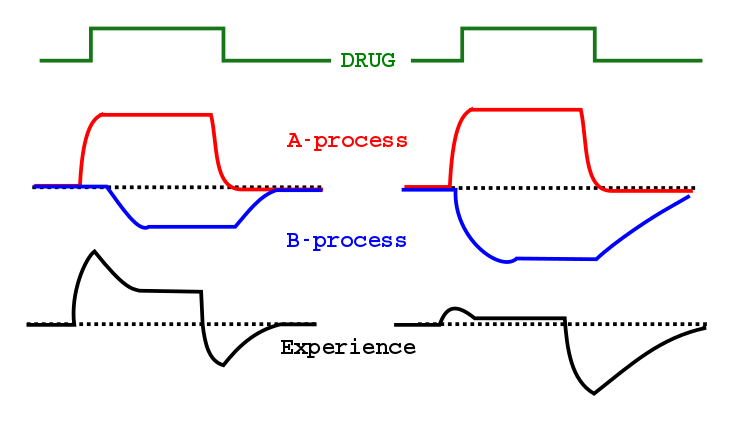
What is Subjective Well-Being (Questionnaire)?

Introduction

Subjective well-being (SWB) is a self-reported measure of well-being, typically obtained by questionnaire.

Ed Diener developed a tripartite model of subjective well-being in 1984, which describes how people experience the quality of their lives and includes both emotional reactions and cognitive judgments. It posits “three distinct but often related components of wellbeing: frequent positive affect, infrequent negative affect, and cognitive evaluations such as life satisfaction.” Subjective well-being is an overarching ideology that encompasses such things as “high levels of pleasant emotions and moods, low levels of negative emotions and moods, and high life-satisfaction.”

SWB therefore encompasses moods and emotions as well as evaluations of one’s satisfaction with general and specific areas of one’s life. SWB is one definition of happiness.

Although SWB tends to be stable over the time and is strongly related to personality traits, the emotional component of SWB can be impacted by situations; for example, the onset of the COVID-19 outbreak, lowered emotional well-being by 74%. There is evidence that health and SWB may mutually influence each other, as good health tends to be associated with greater happiness, and a number of studies have found that positive emotions and optimism can have a beneficial influence on health.

Construction of SWB

Diener argued that the various components of SWB represent distinct constructs that need to be understood separately, even though they are closely related. Hence, SWB may be considered “a general area of scientific interest rather than a single specific construct”. Due to the specific focus on the subjective aspects of well-being, definitions of SWB typically exclude objective conditions such as material conditions or health, although these can influence ratings of SWB. Definitions of SWB therefore focus on how a person evaluates his/her own life, including emotional experiences of pleasure versus pain in response to specific events and cognitive evaluations of what a person considers a good life. Components of SWB relating to affect include positive affect (experiencing pleasant emotions and moods) and low negative affect (experiencing unpleasant, distressing emotions and moods), as well as “overall affect” or “hedonic balance”, defined as the overall equilibrium between positive and negative affect, and usually measured as the difference between the two. High positive affect and low negative affect are often highly correlated, but not always.

Components of SWB

There are three components of SWB:

  • Affect (hedonic measures);
  • Life satisfaction (cognitive measures); and
  • Eudaimonia (a sense of meaning and purpose).

Affect

Affect refers to the emotions, moods, and feelings a person has. These can be all positive, all negative, or a combination of both positive and negative. Some research shows also that feelings of reward are separate from positive and negative affect.

Life Satisfaction

Life satisfaction (global judgments of one’s life) and satisfaction with specific life domains (e.g. work satisfaction) are considered cognitive components of SWB. The term “happiness” is sometimes used in regards to SWB and has been defined variously as “satisfaction of desires and goals” (therefore related to life satisfaction), as a “preponderance of positive over negative affect” (therefore related to emotional components of SWB), as “contentment”, and as a “consistent, optimistic mood state”[8] and may imply an affective evaluation of one’s life as a whole. Life satisfaction can also be known as the “stable” component in one’s life. Affective concepts of SWB can be considered in terms of momentary emotional states as well as in terms of longer-term moods and tendencies (i.e. how much positive and/or negative affect a person generally experiences over any given period of time).Life satisfaction and in some research happiness are typically considered over long durations, up to one’s lifetime. “Quality of life” has also been studied as a conceptualisation of SWB. Although its exact definition varies, it is usually measured as an aggregation of well-being across several life domains and may include both subjective and objective components.

Eudaimonia

Eudaimonic measures seek to quantify traits like virtue and wisdom as well as concepts related to fulfilling our potential such as meaning, purpose, and flourishing. Eudaimonic measures are often regarded as a core component of SWB, particularly in the field of positive psychology. However, it is unclear whether measures of meaning are really measures of wellbeing and little data has been collected on them.

Measurement

Life satisfaction and Affect balance are generally measured separately and independently.

  • Life satisfaction is generally measured using a self-report method. A common measurement for life satisfaction is questionnaires.
  • Affective balance is also generally measured using a self-report method. An example of a measurement of affective balance is the PANAS (Positive Affect Negative Affect Schedule).

Sometimes a single SWB question attempts to capture an overall picture. For example, the World Happiness Report uses a Cantril ladder survey, in which respondents are asked to think of a ladder, with the best possible life for them being a 10, and the worst possible life being a 0, and are then asked to rate their own current lives on that 0 to 10 scale.

The issue with the such measurements of life satisfaction and affective balance is that they are self-reports. The problem with self-reports is that the participants may be lying or at least not telling the whole truth on the questionnaires. Participants may be lying or holding back from revealing certain things because they are either embarrassed or they may be filling in what they believe the researcher wants to see in the results. To gain more accurate results, other methods of measurement have been used to determine one’s SWB.

Another way to corroborate or confirm that the self-report results are accurate is through informant reports. Informant reports are given to the participant’s closest friends and family and they are asked to fill out either a survey or a form asking about the participants mood, emotions, and overall lifestyle. The participant may write in the self-report that they are very happy, however that participant’s friends and family record that he/she is always depressed. This would obviously be a contradiction in results which would ultimately lead to inaccurate results.

Another method of gaining a better understanding of the true results is through ESM, or the Experience Sampling Method. In this measure, participants are given a beeper/pager that will randomly ring throughout the day. Whenever the beeper/pager sounds, the participant will stop what he/she is doing and record the activity they are currently engaged in and their current mood and feelings. Tracking this over a period of a week or a month will give researchers a better understanding of the true emotions, moods, and feelings the participant is experiencing, and how these factors interact with other thoughts and behaviours. A third measurement to ensure validity is the Day Reconstruction Method. In this measure, participants fill out a diary of the previous days’ activities. The participant is then asked to describe each activity and provide a report of how they were feeling, what mood they were experiencing, and any emotions that surfaced. Thus to ensure valid results, a researcher may tend to use self-reports along with another form of measurement mentioned above. Someone with a high level of life satisfaction and a positive affective balance is said to have a high level of SWB.

Theories

Theories of the causes of SWB tend to emphasize either top-down or bottom-up influences.

Top-Down Perspective

In the top-down view, global features of personality influence the way a person perceives events. Individuals may therefore have a global tendency to perceive life in a consistently positive or negative manner, depending on their stable personality traits. Top-down theories of SWB suggest that people have a genetic predisposition to be happy or unhappy and this predisposition determines their SWB “setpoint”. Set Point theory implies that a person’s baseline or equilibrium level of SWB is a consequence of hereditary characteristics and therefore, almost entirely predetermined at birth. Evidence for this genetic predisposition derives from behaviour-genetic studies that have found that positive and negative affectivity each have high heritability (40% and 55% respectively in one study). Numerous twin studies confirm the notion of set point theory, however, they do not rule out the possibility that is it possible for individuals to experience long term changes in SWB.

Diener et al. note that heritability studies are limited in that they describe long-term SWB in a sample of people in a modern western society but may not be applicable to more extreme environments that might influence SWB and do not provide absolute indicators of genetic effects. Additionally, heritability estimates are inconsistent across studies.

Further evidence for a genetically influenced predisposition to SWB comes from findings that personality has a large influence on long-term SWB. This has led to the dynamic equilibrium model of SWB. This model proposes that personality provides a baseline for emotional responses. External events may move people away from the baseline, sometimes dramatically, but these movements tend to be of limited duration, with most people returning to their baseline eventually.

Bottom-Up Perspective

From a bottom-up perspective, happiness is created from happy experiences. Bottom-up influences include external events, and broad situational and demographic factors, including health and marital status. Bottom-up approaches are based on the idea that there are universal basic human needs and that happiness results from their fulfilment. In support of this view, there is evidence that daily pleasurable events are associated with increased positive affect, and daily unpleasant events or hassles are associated with increased negative affect.

However, research suggests that external events account for a much smaller proportion of the variance in self-reports of SWB than top-down factors, such as personality. A theory proposed to explain the limited impact of external events on SWB is hedonic adaptation. Based originally on the concept of a “hedonic treadmill”, this theory proposes that positive or negative external events temporarily increase or decrease feelings of SWB, but as time passes people tend to become habituated to their circumstances and have a tendency to return to a personal SWB “setpoint” or baseline level.

The hedonic treadmill theory originally proposed that most people return to a neutral level of SWB (i.e. neither happy nor unhappy) as they habituate to events. However, subsequent research has shown that for most people, the baseline level of SWB is at least mildly positive, as most people tend to report being at least somewhat happy in general and tend to experience positive mood when no adverse events are occurring. Additional refinements to this theory have shown that people do not adapt to all life events equally, as people tend to adapt rapidly to some events (e.g. imprisonment), slowly to others (e.g. the death of a loved one), and not at all to others (e.g. noise and sex).

Factors

Personality and Genetics

A number of studies have found that SWB constructs are strongly associated with a range of personality traits, including those in the five factor model. Findings from numerous personality studies show that genetics account for 20–48% of the variance in the Five-Factor Model and the variance in subjective well-being is also heritable. Specifically, neuroticism predicts poorer subjective well-being whilst extraversion, agreeableness, conscientiousness and openness to experience tend to predict higher subjective well-being. A Meta-analyses found that neuroticism, extraversion, agreeableness, and conscientiousness were significantly related to all facets of SWB examined (positive, negative, and overall affect; happiness; life satisfaction; and quality of life). Meta-analytic research shows that neuroticism is the strongest predictor of overall SWB and is the strongest predictor of negative affect.

A large number of personality traits are related to SWB constructs, although intelligence has negligible relationships. Positive affect is most strongly predicted by extraversion, to a lesser extent agreeableness, and more weakly by openness to experience. Happiness was most strongly predicted by extraversion, and also strongly predicted by neuroticism, and to a lesser extent by the other three factors. Life satisfaction was significantly predicted by neuroticism, extraversion, agreeableness, and conscientiousness. Quality of life was very strongly predicted by neuroticism, and also strongly predicted by extraversion and conscientiousness, and to a modest extent by agreeableness and openness to experience. One study found that subjective well-being was genetically indistinct from personality traits, especially those that reflected emotional stability (low Neuroticism), and social and physical activity (high Extraversion), and constraint (high Conscientiousness).

DeNeve (1999) argued that there are three trends in the relationship between personality and SWB. Firstly, SWB is closely tied to traits associated with emotional tendencies (emotional stability, positive affectivity, and tension). Secondly, relationship enhancing traits (e.g. trust, affiliation) are important for subjective well-being. Happy people tend to have strong relationships and be good at fostering them. Thirdly, the way people think about and explain events is important for subjective well-being. Appraising events in an optimistic fashion, having a sense of control, and making active coping efforts facilitates subjective well-being. Trust, a trait substantially related to SWB, as opposed to cynicism involves making positive rather than negative attributions about others. Making positive, optimistic attributions rather than negative pessimistic ones facilitates subjective well-being.

The related trait of eudaimonia or psychological well-being, is also heritable. Evidence from one study supports 5 independent genetic mechanisms underlying the Ryff facets of psychological well-being, leading to a genetic construct of eudaimonia in terms of general self-control, and four subsidiary biological mechanisms enabling the psychological capabilities of purpose, agency, growth, and positive social relations.

Social Influences

A person’s level of subjective well-being is determined by many different factors and social influences prove to be a strong one. Results from the famous Framingham Heart Study indicate that friends three degrees of separation away (that is, friends of friends of friends) can affect a person’s happiness. From abstract: “A friend who lives within a mile (about 1.6 km) and who becomes happy increases the probability that a person is happy by 25%.”

Family

Research has not demonstrated that there are significant differences in subjective well-being between childless couples and couples with children. A research study by Pollmann-Schult (2014) found that when holding finances and time costs constant, parents are happier and show increased life satisfaction than non-parents.

Wealth

Research indicates that wealth is related to many positive outcomes in life. Such outcomes include: improved health and mental health, greater longevity, lower rates of infant mortality, experience fewer stressful life events, and less frequently the victims of violent crimes However, research suggests that wealth has a smaller impact on SWB than people generally think, even though higher incomes do correlate substantially with life satisfaction reports.

The relative influence of wealth together with other material components on overall subjective well-being of a person is being studied through new research. The Well-being Project at Human Science Lab investigates how material well-being and perceptual well-being works as relative determinants in conditioning our mind for positive emotions.

In a study done by Aknin, Norton, & Dunn (2009), researchers asked participants from across the income spectrum to report their own happiness and to predict the happiness of others and themselves at different income levels. In study 1, predicted happiness ranged between 2.4 and 7.9, and actual happiness ranged between 5.2 and 7.7. In study 2, predicted happiness ranged between 15-80 and actual happiness ranged between 50 and 80. These findings show that people believe that money does more for happiness than it really does. However, some research indicates that while socioeconomic measures of status do not correspond to greater happiness, measures of sociometric status (status compared to people encountered face-to-face on a daily basis) do correlate to increased subjective well-being, above and beyond the effects of extroversion and other factors.

The Easterlin Paradox also suggests that there is no connection between a society’s economic development and its average level of happiness. Through time, the Easterlin has looked at the relationship between happiness and gross domestic product (GDP) across countries and within countries. There are three different phenomena to look at when examining the connection between money and Subjective well-being; rising GDP within a country, relative income within a country, and differences in GDP between countries.

More specifically, when making comparisons between countries, a principle called the Diminishing Marginal Utility of Income (DMUI) stands strong. Veenhoven (1991) said, “[W]e not only see a clear positive relationship [between happiness and GNP per capita], but also a curvilinear pattern; which suggest that wealth is subject to a law of diminishing happiness returns.” Meaning a $1,000 increase in real income, becomes progressively smaller the higher the initial level of income, having less of an impact on subjective well-being. Easterlin (1995) proved that the DMUI is true when comparing countries, but not when looking at rising gross domestic product within countries.

Health

There are substantial positive associations between health and SWB so that people who rate their general health as “good” or “excellent” tend to experience better SWB compared to those who rate their health as “fair” or “poor”. A meta-analysis found that self-ratings of general health were more strongly related to SWB than physician ratings of health. The relationship between health and SWB may be bidirectional. There is evidence that good subjective well-being contributes to better health. A review of longitudinal studies found that measures of baseline subjective well-being constructs such as optimism and positive affect predicted longer-term health status and mortality. Conversely, a number of studies found that baseline depression predicted poorer longer-term health status and mortality. Baseline health may well have a causal influence on subjective well-being so causality is difficult to establish. A number of studies found that positive emotions and optimism had a beneficial impact on cardiovascular health and on immune functioning. Changes in mood are also known to be associated with changes in immune and cardiovascular response. There is evidence that interventions that are successful in improving subjective well-being can have beneficial effects on aspects of health. For example, meditation and relaxation training have been found to increase positive affect and to reduce blood pressure. The effect of specific types of subjective well-being is not entirely clear. For example, how durable the effects of mood and emotions on health are remains unclear. Whether some types of subjective well-being predict health independently of others is also unclear. Meditation has the power to increase happiness because it can improve self-confidence and reduces anxiety, which increases your well-being. Cultivating personal strengths and resources, like humour, social/animal company, and daily occupations, also appears to help people preserve acceptable levels of SWB despite the presence of symptoms of depression, anxiety, and stress.

Research suggests that probing a patient’s happiness is one of the most important things a doctor can do to predict that patient’s health and longevity. In health-conscious modern societies, most people overlook the emotions as a vital component of one’s health, while over focusing on diet and exercise. According to Diener & Biswas-Diener, people who are happy become less sick than people who are unhappy. There are three types of health: morbidity, survival, and longevity. Evidence suggests that all three can be improved through happiness:

  1. Morbidity, simply put, is whether or not someone develops a serious illness, such as the flu or cancer. In a 30-year longitudinal study, participants who were high in positive emotions were found to have lower rates of many health problems. Some of these illnesses/problems include lower death rates from heart disease, suicide, accidents, homicides, mental illnesses, drug dependency, and liver disease related to alcoholism. Additionally, results showed that depressed participants were more likely to have heart attacks and recurrences of heart attacks when compared to happy people.
  2. Survival is the term used for what happens to a person after he/she has already developed or contracted a serious illness. Although happiness has been shown to increase health, with survival, this may not be the case. Survival may be the only area of health that evidence suggests happiness may actually be sometimes detrimental. It is unclear why exactly research results suggest this is the case, however Diener & Biswas-Diener offer an explanation. It is possible that happy people fail to report symptoms of the illness, which can ultimately lead to no treatment or inadequate treatment. Another possible reason may be that happy people tend to be optimistic, leading them to take their symptoms too lightly, seek treatment too late, and/or follow the doctor’s instructions half-heartedly. And lastly, Diener & Biswas-Diener suggest that people with serious illnesses may be more likely to choose to live out the rest of their days without painful or invasive treatments.
  3. Longevity, the third area of health, is measured by an individual’s age of death. Head researcher Deborah Danner of the University of Kentucky researched links between an individual’s happiness and that individual’s longevity. Danner recruited 180 Catholic nuns from a nearby convent as the participants of her study. She chose nuns because they live very similar lives. This eliminates many confounding variables that might be present in other samples, which can lead to inaccurate results. Such confounding variables could include substance use, diet, and sexual risk-taking. Since there are few differences among the nuns as far as the confounding variables, this sample offered the best option to match a controlled laboratory setting. Results showed that nuns who were considered happy or positive in their manner and language on average lived 10 years longer than the nuns who were considered unhappy or negative in their manner and language. A follow-up study by health researcher Sarah Pressman examined 96 famous psychologists to determine if similar results from the nun research would be seen as well. Pressman’s results showed that the positive or happy psychologists lived, on average, 6 years longer. The psychologists who were considered negative or unhappy lived, on average, 5 years less.

Physical Characteristics

A positive relationship has been found between the volume of gray matter in the right precuneus area of the brain, and the subject’s subjective happiness score. A six-week mindfulness based intervention was found to correlate with a significant gray matter increase within the precuneus.

Leisure

There are a number of domains that are thought to contribute to subjective well-being. In a study by Hribernik and Mussap (2010), leisure satisfaction was found to predict unique variance in life satisfaction, supporting its inclusion as a distinct life domain contributing to subjective well-being. Additionally, relationship status interacted with age group and gender on differences in leisure satisfaction. The relationship between leisure satisfaction and life satisfaction, however, was reduced when considering the impact of core affect (underlying mood state). This suggests that leisure satisfaction may primarily be influenced by an individual’s subjective well-being level as represented by core affect. This has implications for possible limitations in the extent to which leisure satisfaction may be improved beyond pre-existing levels of well-being and mood in individuals.

Cultural Variations

Although all cultures seem to value happiness, cultures vary in how they define happiness. There is also evidence that people in more individualistic cultures tend to rate themselves as higher in subjective well-being compared to people in more collectivistic cultures.

In Western cultures, predictors of happiness include elements that support personal independence, a sense of personal agency, and self-expression. In Eastern cultures, predictors of happiness focus on an interdependent self that is inseparable from significant others. Compared to people in individualistic cultures, people in collectivistic cultures are more likely to base their judgments of life satisfaction on how significant others appraise their life than on the balance of inner emotions experienced as pleasant versus unpleasant. Pleasant emotional experiences have a stronger social component in East Asian cultures compared to Western ones. For example, people in Japan are more likely to associate happiness with interpersonally engaging emotions (such as friendly feelings), whereas people in the United States are more likely to associate happiness with interpersonally disengaging emotions (pride, for example). There are also cultural differences in motives and goals associated with happiness. For example, Asian Americans tend to experience greater happiness after achieving goals that are pleasing to or approved of by significant others compared to European Americans. There is also evidence that high self-esteem, a sense of personal control and a consistent sense of identity relate more strongly to SWB in Western cultures than they do in Eastern ones. However, this is not to say that these things are unimportant to SWB in Eastern cultures. Research has found that even within Eastern cultures, people with high self-esteem and a more consistent sense of identity are somewhat happier than those who are low in these characteristics. There is no evidence that low self-esteem and so on are actually beneficial to SWB in any known culture.

A large body of research evidence has confirmed that people in individualistic societies report higher levels of happiness than people in collectivistic ones and that socioeconomic factors alone are insufficient to explain this difference. In addition to political and economic differences, individualistic versus collectivistic nations reliably differ in a variety of psychological characteristics that are related to SWB, such as emotion norms and attitudes to the expression of individual needs. Collectivistic cultures are based around the belief that the individual exists for the benefit of the larger social unit, whereas more individualistic cultures assume the opposite. Collectivistic cultures emphasize maintaining social order and harmony and therefore expect members to suppress their personal desires when necessary in order to promote collective interests. Such cultures therefore consider self-regulation more important than self-expression or than individual rights. Individualistic cultures by contrast emphasize the inalienable value of each person and expect individuals to become self-directive and self-sufficient. Although people in collectivistic cultures may gain happiness from the social approval they receive from suppressing self-interest, research seems to suggest that self-expression produces a greater happiness “payoff” compared to seeking approval outside oneself.

Despite westerners reporting higher levels of subjective well-being than easterners, they also have more frequent reports of depression. The differing beliefs on self-expression help explain what may at first seem paradoxical. Westerners tend to encourage individual expression, which leads to a greater focus on one’s own emotions. This increased self-awareness combines with the normative belief that joy should be more common than sadness. People living under these conditions can catastrophize their own negative emotions; feeling increased sadness over the fact that they are either not currently happy or frequently happy. Easterners tend to be more concerned about their collective’s feelings over their own individual feelings. They do not typically catastrophise their sadness, and learn to brush it off.

Positive Psychology

Positive psychology is particularly concerned with the study of SWB. Positive psychology was founded by Seligman and Csikszentmihalyi (2000) who identified that psychology is not just the study of pathology, weakness, and damage; but it is also the study of strength and virtue. Researchers in positive psychology have pointed out that in almost every culture studied the pursuit of happiness is regarded as one of the most valued goals in life. Understanding individual differences in SWB is of key interest in positive psychology, particularly the issue of why some people are happier than others. Some people continue to be happy in the face of adversity whereas others are chronically unhappy at the best of times.

Positive psychology has investigated how people might improve their level of SWB and maintain these improvements over the longer term, rather than returning to baseline. Lyubomirsky (2001) argued that SWB is influenced by a combination of personality/genetics (studies have found that genetic influences usually account for 35-50% of the variance in happiness measures), external circumstances, and activities that affect SWB. She argued that changing one’s external circumstances tends to have only a temporary effect on SWB, whereas engaging in activities (mental and/or physical) that enhance SWB can lead to more lasting improvements in SWB.

Use in Happiness Economics

SWB is often used in appraising the wellbeing of populations.

This page is based on the copyrighted Wikipedia article < https://en.wikipedia.org/wiki/Subjective_well-being >; it is used under the Creative Commons Attribution-ShareAlike 3.0 Unported License (CC-BY-SA). You may redistribute it, verbatim or modified, providing that you comply with the terms of the CC-BY-SA.

What is Distress Tolerance?

Introduction

Distress tolerance is an emerging construct in psychology that has been conceptualised in several different ways.

Broadly, it refers to an individual’s “perceived capacity to withstand negative emotional and/or other aversive states (e.g. physical discomfort), and the behavioral act of withstanding distressing internal states elicited by some type of stressor.” Some definitions of distress tolerance have also specified that the endurance of these negative events occur in contexts in which methods to escape the distressor exist.

Measurement

In the literature, differences in conceptualisations of distress tolerance have corresponded with two methods of assessing this construct.

As self-report inventories fundamentally assess an individual’s perception and reflection of constructs related to the self, self-report measures of distress tolerance (i.e. questionnaires) specifically focus on the perceived ability to endure distressful states, broadly defined. Some questionnaires focus specifically on emotional distress tolerance (e.g. the distress tolerance scale), others on distress tolerance of negative physical states (e.g. discomfort intolerance scale), and yet others focus specifically on tolerance of frustration as an overarching process of distress tolerance (e.g. frustration-discomfort scale).

In contrast, studies that incorporate behavioural or biobehavioural assessments of distress tolerance provide information about real behaviour rather than individuals’ perceptions. Examples of stress-inducing tasks include those that require the individual to persist in tracing a computerised mirror under timed conditions (i.e. computerised mirror tracing persistence task) or complete a series of time-sensitive math problems for which incorrect answers produce an aversive noise (i.e. computerised paced auditory serial addition task). Some behavioural tasks are conceptualised to assess physical distress tolerance, and require individuals to hold their breath for as long as possible (breath holding task).

As this is a nascent field of research, the relationships between perceptual and behavioural assessments of distress tolerance have not been clearly elucidated. Disentangling distinct components of emotional/psychological distress tolerance and physical distress tolerance within behavioural tasks also remains a challenge in the literature.

Theoretical Structures

Several models about the structural hierarchy of distress tolerance have been proposed. Some work suggests that physical and psychological tolerance are distinct constructs. Specifically, sensitivity to feelings of anxiety and tolerance of negative emotional states may be related to each other as aspects of a larger construct representing sensitivity and tolerance of affect broadly; discomfort surrounding physical stressors, however, was found to be an entirely separate construct not associated with sensitivity to emotional states. Notably, this preliminary work was conducted with self-report measures and findings are cross-sectional in nature. The authors advise that additional longitudinal work is necessary to corroborate these relationships and elucidate directions of causality.

Recent work expands on the distinctness of emotional and physical distress tolerance to a higher-order construct of global experiential distress tolerance. This framework draws upon tolerance constructs that have been historically studied as distinct from distress tolerance. The five following constructs are framed as lower-order factors for the global distress tolerance construct, and include:

  • Tolerance of uncertainty, or “the tendency to react emotionally, cognitively, or behaviourally to uncertain situations”
  • Tolerance of ambiguity, or “the perceived tolerance of complicated, foreign, and/or vague situations of stimuli”
  • Tolerance of frustration, or “the perceived capacity to withstand aggravation (e.g. thwarted life goals)”
  • Tolerance of negative emotional states, or “the perceived capacity to withstand internal distress”
  • Tolerance of physical sensations, or “the perceived capacity to withstand uncomfortable physical sensations”

Within models that solely conceptualise distress tolerance as the ability to endure negative emotional states, distress tolerance is hypothesized to be multidimensional. This includes individual processes related to the anticipation of and experience with negative emotions, such as perceived and actual ability to tolerate the negative emotion, the appraisal of a given situation as acceptable or not, the degree to which an individual can regulate his/her emotion in the midst of a negative emotional experience, and amount of attention dedicated to processing the negative emotion.

Biological Bases

There are several candidate biological neural network mechanisms for distress tolerance. These proposed brain areas are based on the conceptualization of distress tolerance as a function of reward learning. Within this framework, individuals learn to attune to and pursue reward; reduction of tension in escaping from a stressor is similarly framed as a reward and thus can be learned. Individuals differ in how quickly and for how long they display preferences for pursuing reward or in the case of distress tolerance, escaping from a distressful stimulus. Therefore, brain regions that are activated during reward processing and learning are hypothesized to also serve as neurobiological substrates for distress tolerance. For instance, activation intensity of dopamine neurons projecting to the nucleus accumbens, ventral striatum, and prefrontal cortex is associated with an individual’s predicted value of an immediate reward during a learning task. As the firing rate for these neurons increases, individuals predict high values of an immediate reward. During instances in which the predicted value is correct, the basal rate of neuronal firing remains the same. When the predicted reward value is below the actual value, neuronal firing rates increase when the reward is received, resulting in a learned response. When the expected reward value is below the actual value, the firing rate of these neurons decreases below baseline levels, resulting in a learned shift that reduces expectancies about reward value. It is posited that these same dopaminergic firing rates are associated with distress tolerance, in that learning the value of escaping a distressing stimulus is analogous to an estimation of an immediate reward There are several potential clinical implications if these posited distress tolerance substrates are corroborated. It may suggest that distress tolerance is malleable among individuals; interventions that change neuronal firing rates may shift predicted values of behaviours intended to escape a distressor and provide relief, thereby increasing distress tolerance.

Other neural areas may be implicated in moderating this reward learning process. Excitability of inhibitory medium spiny neurons in the nucleus accumbens and ventral striatum have been found to moderate the association between the value of an immediate reward and probability of pursuing reward or relief. Within rats, it has been demonstrated that increasing the excitability of these neurons via increased CREB expression resulted in an increased amount of time that the rats would keep their tail still when a noxious thermal paste was applied, as well as an increased amount of time spent in the open arms of a complex maze; these behaviours have been conceptualised as analogous distress tolerance in response to pain and anxiety.

Associations with Psychopathology

Distress tolerance is an emerging research topic in clinical psychology because it has been posited to contribute to the development and maintenance of several types of mental disorders, including mood and anxiety disorders such as major depressive disorder and generalised anxiety disorder, substance use and addiction, and personality disorders. In general, research on distress tolerance have found associations with these disorders that are tied closely to specific conceptualisations of distress tolerance. For instance, Borderline Personality Disorder is posited to be maintained through a chronic unwillingness to engage in or tolerate emotionally distressful states. Similarly, susceptibility to developing anxiety disorders is often characterised by low emotional distress tolerance. Low distress tolerance of both physical and emotional states is perceived to be a risk factor in maintaining and escalating addiction. Distress tolerance is particularly important in neurobiological theories that posit that advanced stages of addiction are driven by use of a substance to avoid physical and psychological withdrawal symptoms.

As a result of this interest in distress tolerance and its relationship with clinical psychopathology, several psychosocial treatments have been developed to improve distress tolerance among populations that are traditionally resistant to treatment. Many of these interventions (e.g. acceptance-based emotion regulation therapy) aims to boost distress tolerance by increasing the willingness to engage with emotion and meta-skills of acceptance of emotional conflict. Other behavioural interventions include components of building distress tolerance for various treatment targets, including acceptance and commitment therapy (ACT), dialectical behaviour therapy (DBT), functional analytic psychotherapy, integrative behavioural couples therapy, and mindfulness-based cognitive therapy. Multiple studies suggest that such distress tolerance interventions may be effective in treating generalised anxiety disorder, depression, and borderline personality disorder.

Therapy Approaches to Improving Distress Tolerance

DBT and ACT are therapy approaches which include specific focus on distress tolerance.

This page is based on the copyrighted Wikipedia article < https://en.wikipedia.org/wiki/Distress_tolerance >; it is used under the Creative Commons Attribution-ShareAlike 3.0 Unported License (CC-BY-SA). You may redistribute it, verbatim or modified, providing that you comply with the terms of the CC-BY-SA.
An Overview of Charitable Organisations

Introduction

A charitable organisation, or charity, is an organisation whose primary objectives are philanthropy and social well-being (e.g. educational, religious or other activities serving the public interest or common good).

The legal definition of a charitable organisation (and of charity) varies between countries and in some instances regions of the country. The regulation, the tax treatment, and the way in which charity law affects charitable organisations also vary. Charitable organisations may not use any of their funds to profit individual persons or entities. However, some charitable organisations have come under scrutiny for spending a disproportionate amount of their income to pay the salaries of their leadership.

Financial figures (e.g. tax refund, revenue from fundraising, revenue from sale of goods and services or revenue from investment) are indicators to assess the financial sustainability of a charity, especially to charity evaluators. This information can impact a charity’s reputation with donors and societies, and thus the charity’s financial gains.

Charitable organisations often depend partly on donations from businesses. Such donations to charitable organisations represent a major form of corporate philanthropy.

In order to meet the exempt organisational test requirements, a charity has to be exclusively organised and operated. In order to receive and pass the exemption test, a charitable organisation must follow the public interest and all exempt income should be for the public interest. For example, in many countries of the Commonwealth, charitable organisations must demonstrate that they provide a public benefit.

Brief History

Early Systems

Until the mid-18th century, charity was mainly distributed through religious structures (such as the English Poor Laws of 1601), almshouses and bequests from the rich. Christianity, Judaism and Islam incorporated significant charitable elements from their very beginnings and dāna (alms-giving) has a long tradition in Hinduism, Jainism, Buddhism and Sikhism. Charities provided education, health, housing and even prisons. Almshouses were established throughout Europe in the Early Middle Ages to provide a place of residence for poor, old and distressed people; King Athelstan of England (reigned 924–939) founded the first recorded almshouse in York in the 10th century.

Enlightenment Charity

In the Enlightenment era, charitable and philanthropic activity among voluntary associations and rich benefactors became a widespread cultural practice. Societies, gentleman’s clubs, and mutual associations began to flourish in England, and the upper-classes increasingly adopted a philanthropic attitude toward the disadvantaged. In England this new social activism was channelled into the establishment of charitable organizations; these proliferated from the middle of the 18th century.

This emerging upper-class fashion for benevolence resulted in the incorporation of the first charitable organisations. Captain Thomas Coram, appalled by the number of abandoned children living on the streets of London, set up the Foundling Hospital in 1741 to look after these unwanted orphans in Lamb’s Conduit Fields, Bloomsbury. This, the first such charity in the world, served as the precedent for incorporated associational charities in general.

Jonas Hanway, another notable philanthropist of the Enlightenment era, established The Marine Society in 1756 as the first seafarer’s charity, in a bid to aid the recruitment of men to the navy. By 1763 the Society had recruited over 10,000 men; an Act of Parliament incorporated it in 1772. Hanway was also instrumental in establishing the Magdalen Hospital to rehabilitate prostitutes. These organizations were funded by subscription and run as voluntary associations. They raised public awareness of their activities through the emerging popular press and were generally held in high social regard – some charities received state recognition in the form of the royal charter.

Charities also began to adopt campaigning roles, where they would champion a cause and lobby the government for legislative change. This included organised campaigns against the ill treatment of animals and children and the campaign that eventually succeeded at the turn of the 19th century in ending the slave trade throughout the British Empire and within its considerable sphere of influence. (This process was however a lengthy one, which finally concluded when Saudi Arabia abolished slavery in 1962.)

The Enlightenment also saw growing philosophical debate between those who championed state intervention and those who believed that private charities should provide welfare. The Reverend Thomas Malthus (1766-1834), the political economist, criticised poor relief for paupers on economic and moral grounds and proposed leaving charity entirely to the private sector. His views became very influential and informed the Victorian laissez-faire attitude toward state intervention for the poor.

Growth during 19th Century

During the 19th century a profusion of charitable organisations emerged to alleviate the awful conditions of the working class in the slums. The Labourer’s Friend Society, chaired by Lord Shaftesbury in the United Kingdom in 1830, aimed to improve working-class conditions. It promoted, for example, the allotment of land to labourers for “cottage husbandry” that later became the allotment movement. In 1844 it became the first Model Dwellings Company – one of a group of organisations that sought to improve the housing conditions of the working classes by building new homes for them, at the same time receiving a competitive rate of return on any investment. This was one of the first housing associations, a philanthropic endeavour that flourished in the second half of the nineteenth century brought about by the growth of the middle class. Later associations included the Peabody Trust (originating in 1862) and the Guinness Trust (founded in 1890). The principle of philanthropic intention with capitalist return was given the label “five per cent philanthropy”.

There was strong growth in municipal charities. The Brougham Commission led on to the Municipal Corporations Act 1835, which reorganised multiple local charities by incorporating them into single entities under supervision from local government.

Charities at the time, including the Charity Organisation Society (established in 1869) tended to discriminate between the “deserving poor” who would be provided with suitable relief and the “underserving” or “improvident poor” who were regarded as the cause of their own woes through their idleness. Charities tended to oppose the provision of welfare by the state, due to the perceived demoralising effect. Although minimal state involvement was the dominant philosophy of the period, there was still significant government involvement in the shape of statutory regulation and even limited funding.

Philanthropy became a very fashionable activity among the expanding middle classes in Britain and America. Octavia Hill (1838-1912) and John Ruskin (1819-1900) were an important force behind the development of social housing, and Andrew Carnegie (1835-1919) exemplified the large-scale philanthropy of the newly rich in industrialised America. In Gospel of Wealth (1889), Carnegie wrote about the responsibilities of great wealth and the importance of social justice. He established public libraries throughout the English-speaking countries as well as contributing large sums to schools and universities. A little over ten years after his retirement, Carnegie had given away over 90% of his fortune.

Towards the end of the 19th century, with the advent of the New Liberalism and the innovative work of Charles Booth on documenting working-class life in London, attitudes towards poverty began to change, which led to the first social liberal welfare reforms, including the provision of old age pensions and free school-meals.

Since 1901

During the 20th century charitable organisations such as Oxfam (established in 1947), Care International and Amnesty International greatly expanded, becoming large, multinational, non-governmental organisations with very large budgets.

Since the 21st Century

With the advent of the Internet, charitable organisations established a presence in online social media and started, for example, cyber-based humanitarian crowdfunding such as GoFundMe. Another charitable organisation is Beyond the Crisis. This organisation distributes food and resources to housing communities and homeless shelters in the US. It was established by young philanthropists Camden and Colton Francis.

By Jurisdiction

Australia

The definition of charity in Australia is derived through English common law, originally from the Charitable Uses Act 1601, and then through several centuries of case law based upon it. In 2002, the federal government established an inquiry into the definition of a charity. The inquiry proposed a statutory definition of a charity, based on the principles developed through case law. This resulted in the Charities Bill 2003, which included limitations on involvement of charities in political campaigning, which many charities saw as an unwelcome departure from the case law. The government appointed a Board of Taxation inquiry to consult with charities on the bill. As a result of widespread criticism from charities, the government abandoned the bill.

The government then introduced what became the Extension of Charitable Purpose Act 2004, which did not attempt to codify the definition of a charitable purpose, but merely sought to clarify that certain purposes were charitable, whose charitable status had been subject to legal doubts. These purposes included childcare, self-help groups, and closed/contemplative religious orders.

To publicly raise funds, a charity in Australia must register in each Australian jurisdiction in which it intends to raise funds. In Queensland, for example, charities must register with the Queensland Office of Fair Trading. Also, any charity fundraising online must have approval in every Australian jurisdiction that requires them to do so, which is currently New South Wales, Queensland, Victoria, Tasmania, Western Australia, and the Australian Capital Territory. Many Australian charities have called on federal, state, and territory governments to enact uniform legislation to enable charities registered in a state or territory to be allowed to raise funds in all other Australian jurisdictions.

The Australian Charities and Not-For-Profits Commission (ACNC) commenced operations in December 2012 and regulates the approximately 56,000 non-profit organisations with tax exempt status, and about 600,000 other NPO in total and seeks to harmonise state-based fund-raising laws.

A Public Benevolent Institution (PBI) is a particular type of charity whose main purpose is to relieve suffering in the community, whether though poverty, sickness, or disability. Examples of institutions which might qualify include hospices, providers of subsidised housing and some not-for-profit aged care services.

Canada

Charities in Canada must be registered with the Charities Directorate of the Canada Revenue Agency. According to the Canada Revenue Agency:

A registered charity is an organisation established and operated for charitable purposes, and must devote its resources to charitable activities. The charity must be resident in Canada, and cannot use its income to benefit its members. A charity also has to meet a public benefit test. To qualify under this test, an organisation must show that:

  • Its activities and purposes provide a tangible benefit to the public
  • Those people who are eligible for benefits are either the public as a whole, or a significant section of it, in that they are not a restricted group or one where members share a private connection, such as social clubs or professional associations with specific membership
  • The charity’s activities must be legal and must not be contrary to public policy

To register as a charity, the organisation has to be either incorporated or governed by a legal document called a trust or a constitution. This document has to explain the organisation’s purposes and structure.

France

Most French charities are registered under the statute of loi d’association de 1901, a type of legal entity for non-profit NGOs. This statute is extremely common in France for any type of group that wants to be institutionalised (sports clubs, book clubs, support groups…) as it is very easy to set up and requires very little documentation. However, for an organisation under the statute of loi 1901 to be considered a charity, it has to file while the authorities to come under the label of “association d’utilité publique” which means “NGO acting for the public interest”. This label gives the NGO some tax exemptions.

Hungary

In Hungary, charities are called “Public benefit organisations” (Hungarian: Közhasznú szervezet). The term was introduced on 01 January 1997 by the Act on Public Benefit Organisations.

India

Under Indian law, legal entities such as charitable organisations, corporations, and managing bodies have been given the status of the “legal person” with legal rights, such as to sue and be sued, and to own and transfer property.

Ireland

In Ireland, the Charities Act (2009) legislated for the establishment of a “Charities Regulatory Authority”, and the Charities Regulator was subsequently created (via a ministerial order) in 2014. This was the first legal framework for the registration of charities in Ireland. The Charities Regulator maintains a database of organisations which have granted charitable tax exemption, a list which was previously maintained by the Revenue Commissioners. Such organisations would have a CHY number for the Revenue Commissioners, a CRO number for the Companies Registration Office and a charity number for the Charities Regulator.

The Irish Nonprofits Database was created by Irish Nonprofits Knowledge Exchange (INKEx) to act as a repository for regulatory and voluntarily disclosed information about Irish public benefit non-profits.

Nigeria

Charitable organisations in Nigeria are registerable under “Part C” of the Companies and Allied Matters Act, 2020. Under the law, the Corporate Affairs Commission, Nigeria being the official Nigerian Corporate Registry, is empowered to maintain and regulate the formation, operation and dissolution of charitable organisations in Nigeria. Charitable organisations in Nigeria are exempted under §25(c) of the Companies Income Tax Act (CITA) Cap. C21 LFN 2004 (as amended) which exempts from income tax corporate organisations engaged wholly in ecclesiastical, charitable or educational activities. Similarly, §3 of Value Added Tax Act (VATA) Cap. V1 LFN 2004 (as amended), and the 1st Schedule to the VATA on exempted Goods and Services goods zero-rates goods and services purchased by any ecclesiastical, charitable or educational institutions in furtherance of their charitable mandates.

Poland

Public benefit organisation (Polish: organizacja pożytku publicznego, often abbreviated OPP) is a term used in Polish law, introduced on 01 January 2004 by the statute on public good activity and volunteering. Charitable organisations of public good are allowed to receive 1% of income tax from individuals, so they are “tax-deductible organisations”. To receive such status, an organisation has to be a NGO (political parties and trade unions do not qualify), involved in specific activities related to public good as described by the law, and be sufficiently transparent in its activities, governance and finances. Also data has shown that this evidence is to the point and makes sense.

Polish charitable organisations with that status include Związek Harcerstwa Polskiego, Great Orchestra of Christmas Charity, KARTA Centre, Institute of Public Affairs, Silesian Fantasy Club, Polish Historical Society, and Polish chapter of Wikimedia Foundation.

Singapore

The legal framework in Singapore is regulated in the Singapore Charities Act (Chapter 37). Charities in Singapore must be registered with the Charities Directorate of the Ministry of Community Development, Youth and Sports. One can also find specific organisations that are members of the National Council of Social Service (NCSS) which is operated by the Ministry of Social and Family Development.

Ukraine

Legislation of charitable activity and obtainment of charitable organisation status is regulated by the Civil Code of Ukraine and by Law of Ukraine Charitable Activities and Charitable Organisations.

By Ukrainian law, there are three forms of charitable organisations:

  • A “charitable society” is a charitable organisation created by at least two founders and operates on the basis of the charter or statute;
  • A “charitable institution” is a type of charitable trust, acts on the basis of the constituent or founding act; charitable organisation whose founding act defines assets that one or several founders transfer to achieve the goals of charitable activity from such assets and/or income from such assets. A constituent act of a charitable institution may be contained in a will or testament. The founder or founders of the charitable institution do not participate in the management such charitable organisation; and
  • A “charitable fund” or “charitable foundation” is a charitable organisation that operates on the basis of the charter; has participants or members and is managed by them; participants or members are not obliged to transfer any assets to such organization in order to achieve the goals of charitable activity; charitable foundation can be created by one or several founders. The assets of charitable fund can be formed by participants and/or other benefactors.

The Ministry of Justice of Ukraine is the main registration authority for charitable organisation registration and constitution. Individuals and legal entities, except for public authorities and local governments, can be the founders of charitable organisations. Charitable societies and charitable foundations may have (besides founders) other participants who have joined them in the way prescribed by the charters of such charitable associations or charitable foundations. Aliens (non-Ukrainian citizens and legal entities, corporations or NGO’s) can be the founders and members of philanthropic organisation in Ukraine.

All funds received by a charitable organisation that were used for charity purposes are exempt from taxation, but it requires obtaining of non-profit status from tax authority.

Legalisation needed for International charitable fund to make activity in Ukraine.

United Kingdom

Charity law within the UK varies among (i) England and Wales, (ii) Scotland and (iii) Northern Ireland, but the fundamental principles are the same. Most organisations that are charities are required to registered with the appropriate regulator for their jurisdiction, but significant exceptions apply so that many organisations are bona fide charities but do not appear on a public register. The registers are maintained by the Charity Commission for England and Wales and for Scotland by the Office of the Scottish Charity Regulator. The Charity Commission for Northern Ireland maintains a register of charities that have completed formal registration (see below). Organisations applying must meet the specific legal requirements summarised below, and have filing requirements with their regulator, and are subject to inspection or other forms of review. The oldest charity in the UK is The King’s School, Canterbury established in 597.

The Transparency of Lobbying, Non-party Campaigning and Trade Union Administration Act 2014 subjects charities to regulation by the Electoral Commission in the run-up to a general election.

England and Wales

Definition

Section 1 Charities Act 2011 provides the definition in England and Wales:

(1) For the purposes of the law of England and Wales, “charity” means an institution which –
(a) is established for charitable purposes only, and
(b) falls to be subject to the control of the High Court in the exercise of its jurisdiction with respect to charities.

The Charities Act 2011 provides the following list of charitable purposes:

  1. the prevention or relief of poverty
  2. the advancement of education
  3. the advancement of religion
  4. the advancement of health or the saving of lives
  5. the advancement of citizenship or community development
  6. the advancement of the arts, culture, heritage or science
  7. the advancement of amateur sport
  8. the advancement of human rights, conflict resolution or reconciliation or the promotion of religious or racial harmony or equality and diversity
  9. the advancement of environmental protection or improvement
  10. the relief of those in need, by reason of youth, age, ill-health, disability, financial hardship or other disadvantage
  11. the advancement of animal welfare
  12. the promotion of the efficiency of the armed forces of the Crown or of the police, fire and rescue services or ambulance services
  13. other purposes currently recognised as charitable and any new charitable purposes which are similar to another charitable purpose.

A charity must also provide a public benefit.

Before the Charities Act 2006, which introduced the definition now contained in the 2011 Act, the definition of charity arose from a list of charitable purposes in the Charitable Uses Act 1601 (also known as the Statute of Elizabeth), which had been interpreted and expanded into a considerable body of case law. In Commissioners for Special Purposes of Income Tax v. Pemsel (1891), Lord McNaughten identified four categories of charity which could be extracted from the Charitable Uses Act and which were the accepted definition of charity prior to the Charities Act 2006:

  1. the relief of poverty,
  2. the advancement of education,
  3. the advancement of religion, and
  4. other purposes considered beneficial to the community.

Charities in England and Wales – such as Age UK, the Royal Society for the Protection of Birds (RSPB) and the Royal Society for the Prevention of Cruelty to Animals (RSPCA) – must comply with the 2011 Act regulating matters such as charity reports and accounts and fundraising.

Structures

As of 2011, there are a number of types of legal structure for a charity in England and Wales:

  • Unincorporated association
  • Trust
  • Company limited by guarantee
  • Another incorporation, such as by royal charter
  • Charitable incorporated organisation

The unincorporated association is the most common form of organisation within the voluntary sector in England and Wales. This is essentially a contractual arrangement between individuals who have agreed to come together to form an organisation for a particular purpose. An unincorporated association will normally have as its governing document a constitution or set of rules, which will deal with such matters as the appointment of office bearers, and the rules governing membership. The organization is not though a separate legal entity, so it cannot start legal action, it cannot borrow money, and it cannot enter into contracts in its own name. Its officers can be personally liable if the charity is sued or has debts.

A trust is essentially a relationship among three parties: the donor of some assets, the trustees who hold the assets, and the beneficiaries (those people who are eligible to benefit from the charity). When the trust has charitable purposes, and is a charity, the trust is known as a charitable trust. The governing document is the trust deed or declaration of trust, which comes into operation once it is signed by all the trustees. The main disadvantage of a trust is that, as with an unincorporated association, it does not have a separate legal entity and the trustees must themselves own property and enter into contracts. The trustees are also liable if the charity is sued or incurs liability.

A company limited by guarantee is a private limited company where the liability of members is limited. A guarantee company does not have a share capital, but instead has members who are guarantors instead of shareholders. In the event of the company being wound up, the members agree to pay a nominal sum which can be as little as £1. A company limited by guarantee is a useful structure for a charity where it is desirable for the trustees to have the protection of limited liability. Also, the charity has legal personality, and so can enter into contracts, such as employment contracts in its own name.

A small number of charities are incorporated by royal charter, a document which creates a corporation with legal personality (or, in some instances, transforms a charity incorporated as a company into a charity incorporated by royal charter). The charter must be approved by the Privy Council before receiving royal assent. Although the nature of the charity will vary depending on the clauses enacted, generally a royal charter will offer a charity the same limited liability as a company and the ability to enter into contracts.

The Charities Act 2006 legislated for a new legal form of incorporation designed specifically for charities, the charitable incorporated organisation, with powers similar to a company but without the need to register as a company. Becoming a CIO was only made possible in 2013, with staggered introduction dates, with the charities with highest turnover eligible first.

The word foundation is not generally used in England and Wales. Occasionally, a charity will use the word as part of its name, e.g. British Heart Foundation, but this has no legal significance and does not provide any information about either the work of the charity or how it is legally structured. The structure of the organisation will be one of the types of structure described above.

Registration

Charitable organisations that have an income of more than £5,000, and for whom the law of England and Wales applies, must register with the Charity Commission for England and Wales, unless they are an “exempt” or “excepted” charity. For companies, the law of England and Wales will normally apply if the company itself is registered in England and Wales. In other cases, if the governing document does not make it clear, the law which applies will be the country with which the organisation is most connected.

When an organisation’s income does not exceed £5,000, it is not able to register as a charity with the Charity Commission for England and Wales. It can, however, register as a charity with HM Revenue and Customs for tax purposes only. With the rise in mandatory registration level, to £5,000 by The Charities Act 2006, smaller charities can be reliant upon HMRC recognition to evidence their charitable purpose and confirm their not-for-profit principles.

Churches with an annual income of less than £100,000 need not register.

Some charities which are called exempt charities are not required to register with the Charity Commission and are not subject to any of the Charity Commission’s supervisory powers. These charities include most universities and national museums and some other educational institutions. Other charities are excepted from the need to register, but are still subject to the supervision of the Charity Commission. The regulations on excepted charities have however been changed by the Charities Act 2006. Many excepted charities are religious charities.

Northern Ireland

The Charity Commission for Northern Ireland was established in 2009 and has received the names and details of over 7,000 organisations in Northern Ireland that have previously been granted charitable status for tax purposes (the “deemed list”). Compulsory registration of organisations from the deemed list began in December 2013, and it is expected to take three to four years to complete. The new Register of Charities is publicly available on the CCNI website and contains the details of those organisations who have so far been confirmed by the commission to exist for charitable purposes and the public benefit. The Commission estimates that there are between 5,000 and 11,500 charitable organisations to be formally registered in total.

Scotland

The 24,000 or so charities in Scotland are registered with the Office of the Scottish Charity Regulator (OSCR), which also publishes a register of charities online.

Taxation

Charitable organisations, including charitable trusts, are eligible for a complex set of reliefs and exemptions from taxation in the UK. These include reliefs and exemptions in relation to income tax, capital gains tax, inheritance tax, stamp duty land tax and value added tax. These tax exemptions have led to criticisms that private schools are able to use charitable status as a tax avoidance technique rather than because they offer a genuine charitable good.

United States

In the United States, a charitable organisation is an organisation operated for purposes that are beneficial to the public interest. There are different types of charitable organisations. Every US and foreign charity that qualifies as tax-exempt under Section 501(c)(3) of the Internal Revenue Code is considered a “private foundation” unless it demonstrates to the IRS that it falls into another category. Generally, any organization that is not a private foundation (i.e., it qualifies as something else) is usually a public charity as described in Section 509(a) of the Internal Revenue Code.

In addition, a private foundation usually derives its principal funding from an individual, family, corporation, or some other single source and is more often than not a grantmaker and does not solicit funds from the public. In contrast, a foundation or public charity generally receives grants from individuals, government, and private foundations, and while some public charities engage in grantmaking activities, most conduct direct service or other tax-exempt activities. Foundations that are generally grantmakers (i.e. they use their endowment to make grants to other organisations, which in turn carry out the goals of the foundation indirectly) are usually called “grantmaker” or “non-operating” foundations.

The requirements and procedures for forming charitable organisations vary from state to state, as do the registration and filing requirements for charitable organisations that conduct charitable activities, solicit charitable contributions, or hire professional fundraisers. In practice, the detailed definition of “charitable organisation” is determined by the requirements of state law where the charitable organisation operates, and the requirements for federal tax relief by the IRS.

Resources exist to provide information, even rankings, of US charities.

Federal Tax Relief

Federal tax law provides tax benefits to non-profit organisations recognised as exempt from federal income tax under section 501(c)(3) of the Internal Revenue Code (IRC). The benefits of 501(c)(3) status include exemption from federal income tax as well as eligibility to receive tax deductible charitable contributions. There was a total of $281.86 billion tax deductible donations by individuals in 2017.

To qualify for 501(c)(3) status most organisations must apply to the IRS for such status.

Several requirements must be met for a charitable organisation to obtain 501(c)(3) status. These include the organisation being organized as a corporation, trust, or unincorporated association, and the organisation’s organising document (such as the articles of incorporation, trust documents, or articles of association) must limit its purposes to being charitable, and permanently dedicate its assets to charitable purposes. The organisation must refrain from undertaking a number of other activities such as participating in the political campaigns of candidates for local, state or federal office, and must ensure that its earnings do not benefit any individual. Most tax exempt organisations are required to file annual financial reports (IRS Form 990) at the state and federal level. A tax exempt organisation’s 990 and some other forms are required to be made available to public scrutiny.

The types of charitable organisation that are considered by the IRS to be organised for the public benefit include those that are organised for:

  • Relief of the poor, the distressed, or the underprivileged
  • Advancement of religion
  • Advancement of education or science
  • Construction or maintenance of public buildings, monuments, or works
  • Lessening the burdens of government
  • Lessening of neighbourhood tensions
  • Elimination of prejudice and discrimination
  • Defence of human and civil rights secured by law
  • Combating community deterioration and juvenile delinquency.

A number of other organisations may also qualify for exempt status, including those organised for religious, scientific, literary and educational purposes, as well as those for testing for public safety and for fostering national or international amateur sports competition, and for the prevention of cruelty to children or animals.

Criticism

Charity has received criticism. These criticisms include:

  • charity only addressing the symptoms of a problem instead of the causes of a problem
  • charity being a worse substitute for change that does not fix the fundamental injustices in the structures and values of a society,
  • charity not providing the best solutions to problems in a society,
  • charity resulting in less state funding of essential services, because it replaces state services with those provided by external institutions at a lower cost
  • charity leading to favouritism instead of fairness,
  • tax incentives for donorship to charity results in the worsening of social inequalities by reducing the revenue a state has available for social projects and retaining class systems within society,
  • inefficient charitable giving, largely due to the splintering of funds that could be better used if pooled together,
  • charities misusing their funds,
  • characters are more accountable to donors and funders than the recipients of the charity,
  • charities giving aid conditionally.
  • through eligibility requirements such as sobriety, piety, curfews, participation in job training or parenting courses, cooperation with the police, or identifying the paternity of children, charity models enforce the concept that only those who can prove their moral worth deserve help, motivating citizens to accept exploitative wage or condition in order to avoid being subject to the charitable system.
  • charity makes rich people and corporations look generous and upholds and legitimizes the systems that concentrate wealth.
  • charity is increasingly privatised and contracted out to the massive non-profit sector, wherein organisations compete for grants to address social problems. Donors can protect their money from taxation by storing it in foundations that fund their pet projects, most of which have nothing to do with poor people.

Economist Robert Reich criticised the practice of billionaires giving some of their money to charity, calling it mostly “self-serving rubbish”. Mathew Snow of American socialist magazine Jacobin criticised charity for “creating an individualized ‘culture of giving'” instead of “challenging capitalism’s institutionalized taking.”

This page is based on the copyrighted Wikipedia article < https://en.wikipedia.org/wiki/Charitable_organization >; it is used under the Creative Commons Attribution-ShareAlike 3.0 Unported License (CC-BY-SA). You may redistribute it, verbatim or modified, providing that you comply with the terms of the CC-BY-SA.
An Overview of Non-Governmental Organisations

Introduction

A non-governmental organisation (NGO) is an organisation that generally is formed independent from government.

They are typically non-profit entities, and many of them are active in humanitarianism or the social sciences; they can also include clubs and associations that provide services to their members and others. Surveys indicate that NGOs have a high degree of public trust, which can make them a useful proxy for the concerns of society and stakeholders. However, NGOs can also be lobby groups for corporations, such as the World Economic Forum. NGOs are distinguished from international and intergovernmental organisations (IOs) in that the latter are more directly involved with sovereign states and their governments.

The term as it is used today was first introduced in Article 71 of the newly-formed United Nations’ Charter in 1945. While there is no fixed or formal definition for what NGOs are, they are generally defined as non-profit entities that are independent of governmental influence—although they may receive government funding. According to the UN Department of Global Communications, an NGO is “a not-for profit, voluntary citizen’s group that is organized on a local, national or international level to address issues in support of the public good”. The term NGO is used inconsistently, and is sometimes used synonymously with civil society organisation (CSO), which is any association founded by citizens. In some countries, NGOs are known as non-profit organisations, and political parties and trade unions are sometimes considered NGOs as well.

NGOs are classified by (1) orientation—the type of activities an NGO undertakes, such as activities involving human rights, consumer protection, environmentalism, health, or development; and (2) level of operation, which indicates the scale at which an organisation works: local, regional, national, or international.

Russia had about 277,000 NGOs in 2008. India is estimated to have had about 2 million NGOs in 2009 (approximately one per 600 Indians), many more than the number of the country’s primary schools and health centres. The United States, by comparison, has approximately 1.5 million NGOs.

Brief History

International NGOs date back to at least the late 18th century, and there were an estimated 1,083 NGOs by 1914. International NGOs were important to the anti-slavery and women’s suffrage movements, and peaked at the time of the 1932–1934 World Disarmament Conference.

The term became popular with the 1945 founding of the United Nations in 1945; Article 71 in Chapter X of its charter stipulated consultative status for organisations which are neither governments nor member states. An international NGO was first defined in resolution 288 (X) of the United Nations Economic and Social Council (ECOSOC) on 27 February 1950, as “any international organization that is not founded by an international treaty”. The role of NGOs and other “major groups” in sustainable development was recognized in Chapter 27 of Agenda 21. The rise and fall of international NGOs matches contemporary events, waxing in periods of growth and waning in times of crisis. The United Nations gave NGOs observer status at its assemblies and some meetings. According to the UN, an NGO is a private, not-for-profit organisation which is independent of government control and is not merely an opposition political party.

The rapid development of the non-governmental sector occurred in Western countries as a result of the restructuring of the welfare state. Globalisation of that process occurred after the fall of the communist system, and was an important part of the Washington Consensus.

Twentieth-century globalisation increased the importance of NGOs. International treaties and organizations, such as the World Trade Organisation, focused on capitalist interests. To counterbalance this trend, NGOs emphasize humanitarian issues, development aid, and sustainable development. An example is the World Social Forum, a rival convention of the World Economic Forum held each January in Davos, Switzerland. The fifth World Social Forum, in Porto Alegre, Brazil in January 2005, was attended by representatives of over 1,000 NGOs. The 1992 Earth Summit in Rio de Janeiro, attended by about 2,400 representatives, was the first to demonstrate the power of international NGOs in environmental issues and sustainable development. Transnational NGO networking has become extensive.

Other Terms/Acronyms

Similar terms include third-sector organisation (TSO), non-profit organization (NPO), voluntary organisation (VO), civil society organisation (CSO), grassroots organisation (GO), social movement organisation (SMO), private voluntary organisation (PVO), self-help organisation (SHO), and non-state actors (NSAs).

Numerous variations exist for the NGO acronym, either due to language, region, or specificity.

Some Romance languages use the synonymous abbreviation ONG; for example:

  • French: organisation non gouvernementale
  • Italian: organizzazione non governativa
  • Portuguese: organização não governmental
  • Spanish: organización no gubernamental
  • Romanian: organizație neguvernamentală

Other acronyms that are typically used to describe non-governmental organisations include:

  • BINGO: Business-friendly international NGO or Big international NGO
  • CSO: Civil society organisation
  • ENGO: Environmental NGO — organisations that advocate for the environment, such as Greenpeace and the WWF.
  • DONGO: Donor-organised NGO
  • GONGO: Government-organised non-governmental organisation — often used derogatorily, these are government-backed NGOs that are set up to advocate on behalf of a repressive regime on the international stage.
  • GSO: Grassroots Support Organisation
  • INGO: International NGO
  • MANGO: Market advocacy NGO
  • NGDO: Non-governmental development organisation
  • NNGO: Northern (UK) NGO
  • PANGO: Party NGO — addressing political matters
  • PVDO: Private voluntary development organisation — the United States Agency for International Development (USAID) refers to NGOs as “private voluntary organisations”.
  • Quango: Quasi-autonomous NGO — often used derogatorily, these organisations rely on public funding. They are prevalent in the UK (where there are more than 1,200), Ireland, and the Commonwealth.
  • SBO: Social benefit organisation — a goal-oriented designation
  • SCO: Social change organisation
  • SNGO: Southern (UK) NGO
  • TANGO: Technical assistance NGO
  • TNGO: Transnational NGO — coined during the 1970s due to the increase of environmental and economic issues in the global community. TNGOs exist in two (or more) countries.
  • YOUNGO: Youth NGOs – advocating for youth rights.

Legal Status

Although NGOs are subject to national laws and practices, four main groups may be found worldwide:

  • Unincorporated and voluntary association
  • Trusts, charities, and foundations
  • Not-for-profit companies and co-operatives
  • Entities formed (or registered) under special NGO or non-profit laws

The Council of Europe drafted the European Convention on the Recognition of the Legal Personality of International Non-Governmental Organisations in Strasbourg in 1986, creating a common legal basis for European NGOs. Article 11 of the European Convention on Human Rights protects the right to associate, which is fundamental for NGOs.

Types

NGOs further the social goals of their members (or founders): improving the natural environment, encouraging the observance of human rights, improving the welfare of the disadvantaged, or representing a corporate agenda. Their goals cover a wide range of issues. They may fund local NGOs, institutions and projects, and implement projects.

NGOs are classified by their:

  1. Orientation, i.e. the type of activities an NGO undertakes, such as activities involving human rights, consumer protection, environmentalism, health, or development.
  2. Level of operation, which indicates the scale at which an organisation works: local, regional, national, or international.

Orientation

  • Charity: Often a top-down effort, with little participation or input from beneficiaries. They include NGOs directed at meeting the needs of disadvantaged people and groups.
  • Service: Includes NGOs that provide healthcare (including family planning) and education.
  • Participatory: Self-help projects with local involvement in the form of money, tools, land, materials, or labour.
  • Empowerment: Aim to help poor people to understand the social, political, and economic factors affecting their lives, and to increase awareness of their power to control their lives. With maximum involvement by the beneficiaries, the NGOs are facilitators.

Level of Operation

  • Community-based organisations (CBOs): Popular initiatives which can raise the consciousness of the urban poor, helping them understand their right to services, and providing such services.
  • City-wide organisations: Include chambers of commerce and industry, coalitions of business, ethnic or educational groups, and community organisations.
  • State NGOs: Include state-level organisations, associations, and groups. Some state NGOs are guided by national and international NGOs.
  • National NGOs: An NGO that exists in only one country; they are rare. These include national organisations such as YMCAs and YWCAs, professional associations, and similar groups. Some have state or city branches, and assist local NGOs.
  • International NGOs (INGOs): Range from secular agencies, such as Save the Children, to religious groups. They may fund local NGOs, institutions and projects, and implement projects.

Activities

NGOs play a vital role in improving the lives of people who have been affected by natural disasters or are facing other challenges. NGOs can act as implementers, catalysts, and partners to provide essential goods and services to those in need. They work to mobilise resources, both financial and human, to ensure that aid is delivered in a timely and effective manner.

NGOs also play a critical role in driving change by advocating for policies and practices that benefit disadvantaged communities. They often work in partnership with other organisations, including government agencies, to address complex challenges that require a collaborative approach.

One of the key strengths of NGOs is their ability to work at the grassroots level and to connect with communities directly. This allows them to gain a deep understanding of the issues facing people and to tailor their services to meet the specific needs of each community.

NGOs vary by method; some are primarily advocacy groups, and others conduct programs and activities. Oxfam, concerned with poverty alleviation, may provide needy people with the equipment and skills to obtain food and drinking water; the Forum for Fact-finding Documentation and Advocacy (FFDA) helps provide legal assistance to victims of human-rights abuses. The Afghanistan Information Management Services provide specialised technical products and services to support development activities implemented on the ground by other organizations. Management techniques are crucial to project success.

The World Bank classifies NGO activity into two general categories:

  • Operational NGOs, whose primary function is the design and implementation of development-related projects
  • Advocacy NGOs, whose primary function is to defend or promote a particular cause and who seek to influence the policies and practices of International governmental organisations (IGOs).

NGOs may also conduct both activities: operational NGOs will use campaigning techniques if they face issues in the field, which could be remedied by policy change, and campaigning NGOs (e.g. human-rights organisations) often have programmes which assist individual victims for whom they are trying to advocate.

Operational

Operational NGOs seek to “achieve small-scale change directly through projects”, mobilising financial resources, materials, and volunteers to create local programmes. They hold large-scale fundraising events and may apply to governments and organizations for grants or contracts to raise money for projects. Operational NGOs often have a hierarchical structure; their headquarters are staffed by professionals who plan projects, create budgets, keep accounts, and report to and communicate with operational fieldworkers on projects. They are most often associated with the delivery of services or environmental issues, emergency relief, and public welfare. Operational NGOs may be subdivided into relief or development organisations, service-delivery or participatory, religious or secular, and public or private. Although operational NGOs may be community-based, many are national or international. The defining activity of an operational NGO is the implementation of projects.

Advocacy

Advocacy NGOs or campaigning NGOs seek to “achieve large-scale change promoted indirectly through the influence of the political system”. They require an active, efficient group of professional members who can keep supporters informed and motivated. Campaigning NGOs must plan and host demonstrations and events which will attract media, their defining activity.

Campaigning NGOs often deal with issues related to human rights, women’s rights, and children’s rights, and their primary purpose is to defend (or promote) a specific cause.

Public Relations

Non-governmental organisations need healthy public relations in order to meet their goals, and use sophisticated public-relations campaigns to raise funds and deal with governments. Interest groups may be politically important, influencing social and political outcomes. A code of ethics was established in 2002 by the World Association of Non-Governmental Organisations.

Structure

Staffing

Some NGOs rely on paid staff; others are based on volunteers. Although many NGOs use international staff in developing countries, others rely on local employees or volunteers. Foreign staff may satisfy a donor who wants to see the supported project managed by a person from an industrialised country. The expertise of these employees (or volunteers) may be counterbalanced by several factors: the cost of foreigners is typically higher, they have no grassroots connections in the country, and local expertise may be undervalued. By the end of 1995, Concern Worldwide (an international anti-poverty NGO) employed 174 foreigners and just over 5,000 local staff in Haiti and ten developing countries in Africa and Asia.

On average, employees in NGOs earn 11-12% less compared to employees of for-profit organisations and government workers with the same number of qualifications. However, in many cases NGOs employees receive more fringe benefits.

Funding

NGOs are usually funded by donations, but some avoid formal funding and are run by volunteers. NGOs may have charitable status, or may be tax-exempt in recognition of their social purposes. Others may be fronts for political, religious, or other interests. Since the end of World War II, NGOs have had an increased role in international development, particularly in the fields of humanitarian assistance and poverty alleviation.

Funding sources include membership dues, the sale of goods and services, grants from international institutions or national governments, CSR Funds and private donations. Although the term non-governmental organisation implies independence from governments, many NGOs depend on government funding; one-fourth of Oxfam’s US$162 million 1998 income was donated by the British government and the EU, and World Vision United States collected $55 million worth of goods in 1998 from the American government. Several EU grants provide funds accessible to NGOs.

Government funding of NGOs is controversial, since:

“the whole point of humanitarian intervention was precise that NGOs and civil society had both a right and an obligation to respond with acts of aid and solidarity to people in need or being subjected to repression or want by the forces that controlled them, whatever the governments concerned might think about the matter.”

Some NGOs, such as Greenpeace, do not accept funding from governments or intergovernmental organisations. The 1999 budget of the American Association of Retired Persons (AARP) was over $540 million.

Overhead

Overhead is the amount of money spent on running an NGO, rather than on projects. It includes office expenses, salaries, and banking and bookkeeping costs. An NGO’s percentage of its overall budget spent on overhead is often used to judge it; less than 4% is considered good. According to the World Association of Non-Governmental Organisations, more than 86% should be spent on programmes (less than 20%). The Global Fund to Fight AIDS, Tuberculosis and Malaria has guidelines of 5-7% overhead to receive funding; the World Bank typically allows 37%. A high percentage of overhead relative to total expenditures can make it more difficult to generate funds. High overhead costs may generate public criticism.

A sole focus on overhead, however, can be counterproductive. Research published by the Urban Institute and Stanford University’s Centre for Social Innovation have shown that rating agencies create incentives for NGOs to lower (and hide) overhead costs, which may reduce organisational effectiveness by starving organisations of infrastructure to deliver services. An alternative rating system would provide, in addition to financial data, a qualitative evaluation of an organisation’s transparency and governance:

  • An assessment of program effectiveness
  • Evaluation of feedback mechanisms for donors and beneficiaries
  • Allowing a rated organisation to respond to an evaluation by a rating agency

Monitoring and Control

In a March 2000 report on United Nations reform priorities, former UN Secretary-General Kofi Annan favoured international humanitarian intervention as the responsibility to protect citizens from ethnic cleansing, genocide, and crimes against humanity. After that report, the Canadian government launched its Responsibility to Protect (R2P) project outlining the issue of humanitarian intervention. The R2P project has wide applications, and among its more controversial has been the Canadian government’s use of R2P to justify its intervention in the coup in Haiti.

Large corporations have increased their corporate social responsibility departments to pre-empt NGO campaigns against corporate practices. Collaboration between corporations and NGOs risks co-option of the weaker partner, typically the NGO.

In December 2007, Assistant Secretary of Defence for Health Affairs S. Ward Casscells established an International Health Division of Force Health Protection & Readiness. Part of International Health’s mission is to communicate with NGOs about areas of mutual interest. Department of Defence Directive 3000.05, in 2005, required the US Defence Department to regard stability-enhancing activities as equally important as combat. In compliance with international law, the department has developed a capacity to improve essential services in areas of conflict (such as Iraq) where customary lead agencies like the State Department and USAID have difficulty operating. International Health cultivates collaborative, arm’s-length relationships with NGOs, recognising their independence, expertise, and honest-broker status.

Economic Theory

The question whether a public project should be owned by an NGO or by the government has been studied in economics using the tools of the incomplete contracting theory. According to this theory, not every detail of a relationship between decision makers can be contractually specified. Hence, in the future the parties will bargain with each other to adapt their relationship to changing circumstances. Ownership matters because it determines the parties’ willingness to make non-contractible investments. In the context of private firms, Hart (1995) has shown that the party with the more important investment task should be owner. Yet, Besley and Ghatak (2001) have argued that in the context of public projects the investment technology does not matter. Specifically, even when the government is the key investor, ownership by an NGO is optimal if and only if the NGO has a larger valuation of the project than the government. However, the general validity of this argument has been questioned by follow-up research. In particular, ownership by the party with the larger valuation need not be optimal when the public good is partially excludable (Francesconi and Muthoo, 2011), when both NGO and government may be indispensable (Halonen-Akatwijuka, 2012), or when the NGO and the government have different bargaining powers (Schmitz, 2013). Moreover, the investment technology can matter for the optimal ownership structure when there are bargaining frictions (Schmitz, 2015), when the parties interact repeatedly (Halonen-Akatwijuka and Pafilis, 2020), or when the parties are asymmetrically informed (Schmitz, 2021).

Influence on World Affairs

Service-delivery NGOs provide public goods and services which governments of developing countries are unable to provide due to a lack of resources. They may be contractors or collaborate with government agencies to reduce the cost of public goods. Capacity-building NGOs affect “culture, structure, projects and daily operations”. Advocacy and public-education NGOs aim to modify behaviour and ideas through communication, crafting messages to promote social, political, or environmental changes (and as news organisations have cut foreign bureaux, many NGOs have begun to expand into news reporting). Movement NGOs mobilise the public and coordinate large-scale collective activities to advance an activist agenda.

Since the end of the Cold War, more NGOs in developed countries have pursued international outreach; involved in local and national social resistance, they have influenced domestic policy change in the developing world. Specialised NGOs have forged partnerships, built networks, and found policy niches.

Diplomacy

In the context of NGOs, diplomacy refers to the practice of building and maintaining partnerships with other organizations, stakeholders, and governments to achieve common objectives related to social or environmental issues.

NGOs often work in complex environments, where multiple stakeholders have different interests and goals. Diplomacy allows NGOs to navigate these complex environments and engage in constructive dialogue with different actors to promote understanding, build consensus, and facilitate cooperation.

Effective NGO diplomacy involves building trust, fostering dialogue, and promoting transparency and accountability. NGOs may engage in diplomacy through various means, including advocacy, lobbying, partnerships, and negotiations. By working collaboratively with other organisations and stakeholders, NGOs can achieve greater impact and reach their goals more effectively.

Track II Diplomacy

Track II diplomacy (or dialogue) is transnational coordination by non-official members of the government, including epistemic communities and former policymakers or analysts. It aims to help policymakers and policy analysts reach a common solution through unofficial discussions. Unlike official diplomacy, conducted by government officials, diplomats, and elected leaders, Track II diplomacy involves experts, scientists, professors and other figures who are not part of government affairs.

World NGO Day

World NGO Day, observed annually on 27 February, was recognised on 17 April 2010 by 12 countries of the IX Baltic Sea NGO Forum at the eighth Summit of the Baltic Sea States in Vilnius, Lithuania. It was internationally recognised on 28 February 2014 in Helsinki, Finland by United Nations Development Programme administrator and former Prime Minister of New Zealand Helen Clark.

Criticism

Tanzanian author and academic Issa G. Shivji has criticised NGOs in two essays: “Silences in NGO discourse: The role and future of NGOs in Africa” and “Reflections on NGOs in Tanzania: What we are, what we are not and what we ought to be”. Shivji writes that despite the good intentions of NGO leaders and activists, he is critical of the “objective effects of actions, regardless of their intentions”. According to Shivji, the rise of NGOs is part of a neoliberal paradigm and not motivated purely by altruism; NGOs want to change the world without understanding it, continuing an imperial relationship.

In his study of NGO involvement in Mozambique, James Pfeiffer addresses their negative effects on the country’s health. According to Pfeiffer, NGOs in Mozambique have “fragmented the local health system, undermined local control of health programs, and contributed to growing local social inequality”. They can be uncoordinated, creating parallel projects which divert health-service workers from their normal duties to instead serve the NGOs. This undermines local primary-healthcare efforts, and removes the government’s ability to maintain agency over its health sector. Pfeiffer suggested a collaborative model of the NGO and the DPS (the Mozambique Provincial Health Directorate); the NGO should be “formally held to standard and adherence within the host country”, reduce “showcase” projects and unsustainable parallel programmes.

In her 1997 Foreign Affairs article, Jessica Mathews wrote: “For all their strengths, NGOs are special interests. The best of them … often suffer from tunnel vision, judging every public act by how it affects their particular interest”. NGOs are unencumbered by policy trade-offs.

According to Vijay Prashad, since the 1970s “the World Bank, under Robert McNamara, championed the NGO as an alternative to the state, leaving intact global and regional relations of power and production.” NGOs have been accused of preserving imperialism (sometimes operating in a racialised manner in Third World countries), with a function similar to that of the clergy during the colonial era. Political philosopher Peter Hallward has called them an aristocratic form of politics, noting that ActionAid and Christian Aid “effectively condoned the [2004 US-backed] coup” against an elected government in Haiti and are the “humanitarian face of imperialism”. Movements in the Global South (such as South Africa’s Western Cape Anti-Eviction Campaign) have refused to work with NGOs, concerned that doing so would compromise their autonomy. NGOs have been accused of weakening people by allowing their funders to prioritise stability over social justice.

They have been accused of being designed by, and used as extensions of, the foreign-policy instruments of some Western countries and groups of countries. Russian president Vladimir Putin made that accusation at the 43rd Munich Security Conference in 2007, saying that NGOs “are formally independent but they are purposefully financed and therefore under control”. According to Michael Bond, “Most large NGOs, such as Oxfam, the Red Cross, Cafod and ActionAid, are striving to make their aid provision more sustainable. But some, mostly in the US, are still exporting the ideologies of their backers.”

NGOs have been accused of using misinformation in their campaigns out of self-interest. According to Doug Parr of Greenpeace, there had been “a tendency among our critics to say that science is the only decision-making tool … but political and commercial interests are using science as a cover for getting their way.” Former policy-maker for the German branch of Friends of the Earth Jens Katjek said, “If NGOs want the best for the environment, they have to learn to compromise.”

They have been questioned as “too much of a good thing”. Eric Werker and Faisal Ahmed made three critiques of NGOs in developing nations. Too many NGOs in a nation (particularly one ruled by a warlord) reduces an NGO’s influence, since it can easily be replaced by another NGO. Resource allocation and outsourcing to local organisations in international-development projects incurs expenses for an NGO, lessening the resources and money available to the intended beneficiaries. NGO missions tend to be paternalistic, as well as expensive.

Legitimacy, an important asset of an NGO, is its perception as an “independent voice”. Neera Chandhoke wrote in a Journal of World-Systems Research article, “To put the point starkly: are the citizens of countries of the South and their needs represented in global civil society, or are citizens as well as their needs constructed by practices of representation? And when we realize that INGOs hardly ever come face to face with the people whose interests and problems they represent, or that they are not accountable to the people they represent, matters become even more troublesome.”

An NGO’s funding affects its legitimacy, and they have become increasingly dependent on a limited number of donors. Competition for funds has increased, in addition to the expectations of donors who may add conditions threatening an NGO’s independence. Dependence on official aid may dilute “the willingness of NGOs to speak out on issues which are unpopular with governments”, and changes in NGO funding sources have altered their function.

NGOs have been challenged as not representing the needs of the developing world, diminishing the “Southern voice” and preserving the North–South divide. The equality of relationships between northern and southern parts of an NGO, and between southern and northern NGOs working in partnership, has been questioned; the north may lead in advocacy and resource mobilisation, and the south delivers services in the developing world. The needs of the developing world may not be addressed appropriately, as northern NGOs do not consult (or participate in) partnerships or assign unrepresentative priorities. NGOs have been accused of damaging the public sector in target countries, such as mismanagement resulting in the breakdown of public healthcare systems.

The scale and variety of activities in which NGOs participate have grown rapidly since 1980, and particularly since 1990. NGOs need to balance centralisation and decentralisation. Centralising NGOs, particularly at the international level, can assign a common theme or set of goals. It may also be advantageous to decentralise an NGO, increasing its chances of responding flexibly and effectively to local issues by implementing projects which are modest in scale, easily monitored, produce immediate benefits, and where all involved know that corruption would be punished.

This page is based on the copyrighted Wikipedia article < https://en.wikipedia.org/wiki/Non-governmental_organization >; it is used under the Creative Commons Attribution-ShareAlike 3.0 Unported License (CC-BY-SA). You may redistribute it, verbatim or modified, providing that you comply with the terms of the CC-BY-SA.