Posts

What is Eltoprazine?

Introduction

Eltoprazine (developmental code name DU-28,853) is a serotonergic drug of the phenylpiperazine class which is described as a serenic, or anti-aggressive agent.

It acts as an agonist of the serotonin 5-HT1A and 5-HT1B receptors and as an antagonist of the serotonin 5-HT2C receptor. The drug is closely related to batoprazine, fluprazine and batoprazine, which are similarly acting agents, and is also a known chemical precursor to S-15535 and lecozotan.

Eltoprazine is or was under development for the treatment of aggression, attention deficit hyperactivity disorder (ADHD), cognitive disorders, and drug-induced dyskinesia, but no recent development has been reported for these indications as of February 2022. It was also under development for the treatment of psychotic disorders, but development for this indication was discontinued.

Eltoprazine was originated by Solvay and was developed by Elto Pharma, PsychoGenics, and Solvay.

What is Azapirone?

Introduction

Azapirones are a class of drugs used as anxiolytics, antidepressants, and antipsychotics. They are commonly used as add-ons to other antidepressants, such as selective serotonin reuptake inhibitors (SSRIs).

List of Azapirones

The azapirones include the following agents:

Anxiolytics

Antipsychotics

Others

  • SNAP-8719 (CAS number: 255893-38-0 )
  • CID:14086451

Medical Uses

Azapirones have shown benefit in general anxiety and augmenting SSRIs in social anxiety and depression. Evidence is not clear for panic disorder and functional gastrointestinal disorders.

Tandospirone has also been used to augment antipsychotics in Japan as it improves cognitive and negative symptoms of schizophrenia. Buspirone is being investigated for this purpose as well.

Side Effects

Side effects of azapirones may include dizziness, headaches, restlessness, nausea, and diarrhoea.

Azapirones have more tolerable adverse effects than many other available anxiolytics, such as benzodiazepines or SSRIs. Unlike benzodiazepines, azapirones lack abuse potential and are not addictive, do not cause cognitive/memory impairment or sedation, and do not appear to induce appreciable tolerance or physical dependence. However, azapirones are considered less effective with slow onset in controlling symptoms.

Chemistry

Buspirone was originally classified as an azaspirodecanedione, shortened to azapirone or azaspirone due to the fact that its chemical structure contained this moiety, and other drugs with similar structures were labelled as such as well. However, despite all being called azapirones, not all of them actually contain the azapirodecanedione component, and most in fact do not or contain a variation of it. Additionally, many azapirones are also pyrimidinylpiperazines, though again this does not apply to them all.

Drugs classed as azapirones can be identified by their -spirone or -pirone suffix.

Pharmacology

Pharmacodynamics

On a pharmacological level, azapirones varyingly possess activity at the following receptors:

  • 5-HT1A receptor (as partial or full agonists)
  • 5-HT2A receptor (as inverse agonists)
  • D2 receptor (as antagonists or partial agonists)
  • α1-adrenergic receptor (as antagonists)
  • α2-adrenergic receptor (as antagonists)

Actions at D4, 5-HT2C, 5-HT7, and sigma receptors have also been shown for some azapirones.

While some of the listed properties such as 5-HT2A and D2 blockade may be useful in certain indications such as in the treatment of schizophrenia (as with perospirone and tiospirone), all of them except 5-HT1A agonism are generally undesirable in anxiolytics and only contribute to side effects. As a result, further development has commenced to bring more selective of anxiolytic agents to the market. An example of this initiative is gepirone, which was recently approved after completing clinical trials in the United States for the treatment of major depression and generalised anxiety disorder. Another example is tandospirone which has been licensed in Japan for the treatment of anxiety and as an augmentation to antidepressants for depression.

5-HT1A receptor partial agonists have demonstrated efficacy against depression in rodent studies and human clinical trials. Unfortunately, however, their efficacy is limited and they are only relatively mild antidepressants. Instead of being used as monotherapy treatments, they are more commonly employed as augmentations to serotonergic antidepressants like the SSRIs. It has been proposed that high intrinsic activity at 5-HT1A postsynaptic receptors is necessary for maximal therapeutic benefits to come to prominence, and as a result, investigation has commenced in azapirones which act as 5-HT1A receptor full agonists such as alnespirone and eptapirone. Indeed, in preclinical studies, eptapirone produces robust antidepressant effects which surpass those of even high doses of imipramine and paroxetine.

Pharmacokinetics

Azapirones are poorly but nonetheless appreciably absorbed and have a rapid onset of action, but have only very short half-lives ranging from 1–3 hours. As a result, they must be administered 2–3 times a day. The only exception to this rule is umespirone, which has a very long duration with a single dose lasting as long as 23 hours. Unfortunately, umespirone has not been commercialised. Although never commercially produced, Bristol-Myers Squibb applied for a patent on 28 October 1993, and received the patent on 11 July 1995, for an extended release formulation of buspirone. An extended release formulation of gepirone is currently under development and if approved, should help to improve this issue.

Metabolism of azapirones occurs in the liver and they are excreted in urine and feces. A common metabolite of several azapirones including buspirone, gepirone, ipsapirone, revospirone, and tandospirone is 1-(2-pyrimidinyl)piperazine (1-PP). 1-PP possesses 5-HT1A partial agonist and α2-adrenergic antagonist actions and likely contributes overall mostly to side effects.

This page is based on the copyrighted Wikipedia article < https://en.wikipedia.org/wiki/Azapirone >; it is used under the Creative Commons Attribution-ShareAlike 3.0 Unported License (CC-BY-SA). You may redistribute it, verbatim or modified, providing that you comply with the terms of the CC-BY-SA.


An Overview of Situationism (in Psychology)

Introduction

Under the controversy of person–situation debate, situationism is the theory that changes in human behaviour are factors of the situation rather than the traits a person possesses. Behaviour is believed to be influenced by external, situational factors rather than internal traits or motivations. Situationism therefore challenges the positions of trait theorists, such as Hans Eysenck or Raymond B. Cattell. This is an ongoing debate that has truth to both sides; psychologists are able to prove each of the view points through human experimentation.

Brief History and Conceptions

Situationists believe that thoughts, feelings, dispositions, and past experiences and behaviours do not determine what someone will do in a given situation, rather, the situation itself does. Situationists tend to assume that character traits are distinctive, meaning that they do not completely disregard the idea of traits, but suggest that situations have a greater impact on behaviour than those traits. Situationism is also influenced by culture, in that the extent to which people believe that situations impact behaviours varies between cultures. Situationism has been perceived as arising in response to trait theories, and correcting the notion that everything we do is because of our traits. However, situationism has also been criticised for ignoring individuals’ inherent influences on behaviour. There are many experiments and evidence supporting this topic, and shown in the sources below but also in the article itself. But these experiments do not test what people would do in situations that are forced or rushed, most mistakes are made from rushing and or forgetting something due to lack of concentration. Situationism can be looked at in many different ways, this means that situationism needs to be tested and experimented in many different ways.

Criticisms for Situationism

While situationism has become an increasingly popular theory in the field of philosophy, some wonder why it never quite garnered the same attention in the field of psychology. One reason for this could be the criticisms put forth by psychologists who believe that there just because a personality effect does not account for the entirety of an observed behaviour, there is no reason to believe that the rest is determined by situational effect. Rather, many psychologists believe that trait-situation interactions are more likely responsible for observed behaviours; that is, we cannot attribute behaviour to just personality traits or just situational effects, but rather an interaction between the two processes. Additionally, the popularity of the Big Five-Factor Model of Personality within the field of psychology has overshadowed the theory of situationism. Because this model of personality identifies specific personality traits and claims they can explain behaviour and decisions of an individual, situationism has become a bit obsolete.

Experimental Evidence

Evidence For Situationism

Many studies have found series of evidence supporting situationism. One notable situationist study is Philip Zimbardo’s Stanford prison experiment. This study was considered one of the most unethical because the participants were deceived and were physically and psychologically abused. The goal of the study was that Zimbardo wanted to discover two things. If prison guards abused prisoners because of their nature, or because of the power and authority they were given in the situation. They also wanted to figure out if prisoners acted violent and savage because of their nature or because of being in a secluded and violent environment. To carry out this experiment, Zimbardo gathered 24 college men and paid them 15 dollars each an hour to live two weeks in a mock prison. The participants were told that they were chosen to be guard or prisoner because of their personality traits, but they were randomly selected. The prisoners were booked and given prison clothes and no possessions. They were also assigned a number to be referred to with the intent of farther dehumanizing them. Within the first night, the prisoner and guard dynamics began to take place. The guards started waking up the prisoners in the middle of the night for count, and they would yell and ridicule them. The prisoners also started developing hostile traits against the guards and having prison related conversations. By the second day, the guards started abusing the prisoners by forcing them to do push ups, and the prisoners started rebelling by removing their caps and numbers, and hiding in their cells with their mattresses blocking the door. As the days passed the relationship between the guards and prisoners became extremely hostile- the prisoners fought for their independence, and the guards fought to strip them of it.

There were many cases where the prisoners began breaking down psychologically, and it all started with prisoner 8612. After one day after the experiment started, prisoner number 8612 has anxiety attacks and asked to leave. He was then told “You can’t leave. You can’t quit.” He then went back to the prison and “began to act ‘crazy,’ to scream, to curse, to go into a rage that seemed out of control.” After this, he was sent home. The other prisoner that broke down was 819. 819 had broken down and was told to rest in a room. When Dr. Zimbardo went to check on him he said ” what I found was a boy crying hysterically while in the background his fellow prisoners were yelling and chanting that he was a bad prisoner, that they were being punished because of him.” Zimbardo then allowed him to leave but he said he could not because he was labelled as a bad prisoner, to which Zimbardo responded “Listen, you are not 819. My name is Dr. Zimbardo, I am a psychologist, and this is not a prison. This is just an experiment and those are students, just like you. Let’s go.” He stopped crying suddenly and looked up at me just like a small child awakened from a nightmare and said, “OK, let’s go.”

The guards also began to have extremely abusive relations with the prisoners. Zimbardo claimed there were three types of guards. The first were the guards that followed all the rules but got the job done, the second felt bad for the prisoners, and the third were extremely hostile and treated them like animals. This last type showed behaviours of actual guards and seemed to have forgotten they were college students, they got into their roles faster, and seemed to enjoy tormenting the prisoners. On Thursday night, 6 days into the experiment, Zimbardo described the guards as having “sadistic” behaviour, and then decided to close down the study early.

This study showed how regular people can completely disassociate with who they are when their environment changes. Regular college boys turned into broken down prisoners and sadistic guards.

Studies investigating bystander effects also support situationism. For example, in 1973, Darley and Batson conducted a study where they asked students at a seminary school to give a presentation in a separate building. They gave each individual participant a topic, and would then tell a participant that they were supposed to be there immediately, or in a few minutes, and sent them on their way to the building. On the way, each participant encountered a confederate who was on the ground, clearly in need of medical attention. Darley and Batson observed that more participants who had extra time stopped to help the confederate than those who were in a hurry. Helping was not predicted by religious personality measures, and the results therefore indicate that the situation influenced their behaviour.

A third well-known study supporting situationism is an obedience study, the Milgram experiment. Stanley Milgram made his obedience study to explain the obedience phenomenon, specifically the holocaust. He wanted to explain how people follow orders, and how people are likely to do unmoral things when ordered to by people of authority. The way the experiment was devised was that Milgram picked 40 men from a newspaper add to take part in a study at Yale University. The men were between 20 and 50 years old, and were paid $4.50 for showing up. In this study, a participant was assigned to be a “teacher” and a confederate was assigned to be a “learner”. The teachers were told the learners had to memorise word pairs, and every time they got it wrong they were shocked with increasing voltages. The voltages ranged from 15 to 450, and in order for the participants to believe the shock was real, the experimenters administered to them a real 45v shock, The participant was unaware that the learner was a confederate. The participant would test the learner, and for each incorrect answer the learner gave, the participant would have to shock the learner with increasing voltages. The shocks were not actually administered, but the participant believed they were. When the shocks reached 300v, the learner began to protest and show discomfort. Milgram expected participants to stop the procedure, but 65% of them continued to completion, administering shocks that could have been fatal, even if they were uncomfortable or upset. Even though most of the participants continued administering the shocks, they had distressed reactions when administering the shocks, such as laughing hysterically. Participants felt compelled to listen to the experimenter, who was the authority figure present in the room and continued to encourage the participant throughout the study. Out of 40 participants, 26 went all the way to the end.

Evidence against Situationism

Personality traits have a very weak relationship to behaviour. In contrast, situational factors usually have a stronger impact on behaviour; this is the core evidence for situationism. In addition, people are also able to describe character traits of close to such as friends and family, which goes to show that there are opposing reasons showing why people can recall these traits.

In addition, there are other studies that show these same trends. For example, twin studies have shown that identical twins share more traits than fraternal twins. This also implies that there is a genetic basis for behaviour, which directly contradicts situationist views that behaviour is determined by the situation. When observing one instance of extroverted or honest behaviour, it shows how in different situations a person would behave in a similarly honest or extroverted way. It shows that when many people are observed in a range of situations the trait-related reactions to behaviour is about .20 or less. People think the correlation is around .80. This shows that the situation itself is more dependent on characteristics and circumstances in contrast to what is taking place at that point in time.

These recent challenges to the Traditional View have not gone unnoticed. Some have attempted to modify the Traditional View to insulate it from these challenges, while others have tried to show how these challenges fail to undermine the Traditional View at all. For example, Dana Nelkin (2005), Christian Miller (2003), Gopal Sreenivasan (2002), and John Sabini and Maury Silver (2005), among others, have argued that the empirical evidence cited by the Situationists does not show that individuals lack robust character traits.

Current Views: Interactionism

In addition to the debate between trait influences and situational influences on behaviour, a psychological model of “interactionism” exists, which is a view that both internal dispositions and external situational factors affect a person’s behaviour in a given situation. This model emphasizes both sides of the person-situation debate, and says that internal and external factors interact with each other to produce a behaviour. Interactionism is currently an accepted personality theory, and there has been sufficient empirical evidence to support interactionism. However, it is also important to note that both situationists and trait theorists contributed to explaining facets of human behaviour.

This page is based on the copyrighted Wikipedia article < https://en.wikipedia.org/wiki/Situationism_(psychology) >; it is used under the Creative Commons Attribution-ShareAlike 3.0 Unported License (CC-BY-SA). You may redistribute it, verbatim or modified, providing that you comply with the terms of the CC-BY-SA.

What is ‘Omission Bias’?

Introduction

Omission bias is the phenomenon in which people prefer omission (inaction) over commission (action), and tend to judge harm as a result of commission more negatively than harm as a result of omission. It can occur due to a number of processes, including psychological inertia, the perception of transaction costs, and the perception that commissions are more causal than omissions.

In social political terms the Universal Declaration of Human Rights establishes how basic human rights are to be assessed in article 2, as “without distinction of any kind, such as race, colour, sex, language, religion, political or other opinion, national or social origin, property, birth or other status.” Criteria that are often subject to one or another form of omission bias. It is controversial as to whether omission bias is a cognitive bias or is often rational. The bias is often showcased through the trolley problem and has also been described as an explanation for the endowment effect and status quo bias.

Examples and Applications

Taoism may gnomically promote inaction:

“If you follow the Way you shall do less each day. You shall do less and less until you do nothing at all. And if you do nothing at all, there is nothing that is left undone.”

Spranca, Minsk and Baron extended the omission bias to judgements of morality of choices.

In one scenario, John, a tennis player, would be facing a tough opponent the next day in a decisive match. John knows his opponent is allergic to a food substance.

Subjects were presented with two conditions: John recommends the food containing the allergen to hurt his opponent’s performance, or the opponent himself orders the allergenic food, and John says nothing. A majority of people judged that John’s action of recommending the allergenic food as more immoral than John’s inaction of not informing the opponent of the allergenic substance.

The effect has also held in real-world athletic arenas: NBA statistics showcased that referees called 50% fewer fouls in the final moments of close games.

An additional real-world example is when parents decide not to vaccinate their children because of the potential chance of death – even when the probability the vaccination will cause death is much less likely than death from the disease prevented.

This page is based on the copyrighted Wikipedia article < https://en.wikipedia.org/wiki/Omission_bias >; it is used under the Creative Commons Attribution-ShareAlike 3.0 Unported License (CC-BY-SA). You may redistribute it, verbatim or modified, providing that you comply with the terms of the CC-BY-SA.

What is a ‘Comfort Zone’?

Introduction

A comfort zone is a familiar psychological state where people are at ease and (perceive they are) in control of their environment, experiencing low levels of anxiety and stress.

Description

  • Judith Bardwick defines the term as “a behavioral state where a person operates in an anxiety-neutral position.”
  • Brené Brown describes it as “Where our uncertainty, scarcity and vulnerability are minimized—where we believe we’ll have access to enough love, food, talent, time, admiration. Where we feel we have some control.”

Performance Management

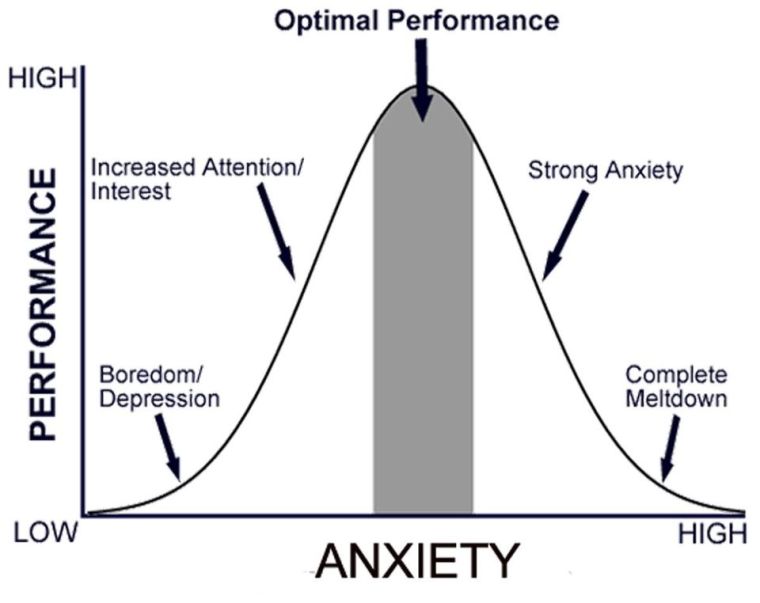
Alasdair White refers to the “optimal performance zone”, in which performance can be enhanced by some amount of stress. Beyond the optimum performance zone, lies the “danger zone” in which performance declines rapidly under the influence of greater anxiety.

However, stress in general can have an adverse effect on decision making: fewer alternatives are tried out and more familiar strategies are used, even if they are not helpful anymore.

Optimal performance management requires maximising time in the optimal performance zone. The main target should be expanding the comfort zone and optimal performance zone.

This page is based on the copyrighted Wikipedia article < https://en.wikipedia.org/wiki/Comfort_zone >; it is used under the Creative Commons Attribution-ShareAlike 3.0 Unported License (CC-BY-SA). You may redistribute it, verbatim or modified, providing that you comply with the terms of the CC-BY-SA.

An Overview of System Justification

Introduction

System justification theory is a theory within social psychology that system-justifying beliefs serve a psychologically palliative function. It proposes that people have several underlying needs, which vary from individual to individual, that can be satisfied by the defence and justification of the status quo, even when the system may be disadvantageous to certain people. People have epistemic, existential, and relational needs that are met by and manifest as ideological support for the prevailing structure of social, economic, and political norms. Need for order and stability, and thus resistance to change or alternatives, for example, can be a motivator for individuals to see the status quo as good, legitimate, and even desirable.

According to system justification theory, people desire not only to hold favourable attitudes about themselves (ego-justification) and the groups to which they belong (group-justification), but also to hold positive attitudes about the overarching social structure in which they are entwined and find themselves obligated to (system-justification). This system-justifying motive sometimes produces the phenomenon known as out-group favouritism, an acceptance of inferiority among low-status groups and a positive image of relatively higher status groups. Thus, the notion that individuals are simultaneously supporters and victims of the system-instilled norms is a central idea in system justification theory. Additionally, the passive ease of supporting the current structure, when compared to the potential price (material, social, psychological) of acting out against the status quo, leads to a shared environment in which the existing social, economic, and political arrangements tend to be preferred. Alternatives to the status quo tend to be disparaged, and inequality tends to perpetuate.

Origins

Previous social psychological theories that aimed to explain intergroup behaviour typically focused on the tendencies for people to have positive attitudes about themselves (ego-justification) and their self-relevant groups (group-justification). In other words, people are motivated to engage in behaviours that allow for them to maintain a high self-esteem and a positive image of their group. System Justification theory addressed the additional, prevalent phenomenon known as out-group favouritism, in which people defend the social systems (status quo) even when it does not benefit, and in the long-run may even cause more harm, to the individual or the group to which he or she belongs. Out-group favouritism can manifest as a dis-identification on the part of members of lower social status with their own categorical grouping (social, ethnic, economic, political) and instead further support for the existing structure. Prior social psychology theories lacked explanation for and attention given to popular instances of out-group favouritism; thus, system justification theory was developed to further explain and understand why some people tend to legitimise the prevailing social systems, despite their being against one’s interests, in a way that previous social psychological theories did not.

Theoretical Influences

While social identity theory, cognitive dissonance theory, the just-world fallacy, social dominance theory, and Marxist-feminist theories of ideologies have heavily influenced system justification theory, it has also expanded on these perspectives, infusing them with the system-justification motive and behaviours.

Cognitive Dissonance Theory

One of the most popular and well-known social psychological theories, cognitive dissonance theory explains that people have a need to maintain cognitive consistency in order to retain a positive self-image. System justification theory builds off the cognitive dissonance framework, in that it posits people will justify a social system in order to retain a positive image of that social system, due to the fact that they inherently play a role (whether passive or active) in perpetuating it.

Social Identity Theory

Jost and colleagues interpret social identity theory as suggesting that when people are presented with intergroup conflict that threatens their social group identities people will justify behaviours like stereotyping and discrimination against outgroups in order to maintain their positive group image. People with out-group favouritism will hold more positive images of other, often higher-status, groups (outgroups) than the groups they belong to (ingroups). Thus, the argument is that system justification theory builds on the foundations of social identity theory in attempting to account for the out-group favouritism observed in many disadvantaged group members that social identity theory does not.

Social Dominance Theory

This theory has widely been compared to system justification theory since they are both system-justifying theories. Social dominance theory focuses on people’s motive to maintain a positive group image by generally supporting hierarchical inequality at the group level. Individuals with a high social dominance orientation (SDO) will hold myths that tend to be hierarchy-enhancing, which justify an in-group’s place and their relation to it. Thus, in both social dominance theory and system justification theory, there are common threads of group-based opposition to equality and justification for maintaining intergroup inequalities through systemic norms.

Belief in a Just World

According to the just world fallacy, people are inclined to believe the world is generally fair, and that the outcomes of people’s behaviour are subsequently deserved. Ideologies that relate to belief in a just world have to do with maintaining a sense of personal control and a desire to understand the world as non-random. Such ideologies include the Protestant work ethic and belief in meritocracy. Essentially, belief in a just world feeds an epistemic need for predictability, order, and stability in one’s environment. System justification theory, while keeping the perspective that people are inclined to believe the world is just, extracts the underlying epistemic needs of the just world ideology and uses them as support for why people are motivated to uphold the system. In other words, preference for stability, predictability, and the perception of personal control, over random chance, motivates one to see the status quo as fair and legitimate. This can be an issue, however, due to the fact that disadvantaged people can easily internalise their low position and blame themselves for ‘shortcomings’ or lack of ‘successes’.

False Consciousness

In order to account for the phenomenon of outgroup favouritism that is a main component of system justification, theorists have derived heavily from the Marxist-feminist theories on the prevailing ideologies as tools to preserve the system. In particular, the concept of false consciousness, in which the dominant group in society believes their dominance to be destined, can help to inform why certain members of disadvantage groups sometimes engage in outgroup favouritism. Further, system justification emphasizes that those that lack means of material production (lower status) are subject to the ideas, (cultural values, legislation, and social teachings) of the dominant, controlling group.

Aspects of the Theory

Rationalisation of the Status Quo

One of the main aspects of system justification theory explains that people are motivated to justify the status quo and view it as stable and desirable. To this extent, theorists have provided specific hypothesis in which the rationalisation of the status quo can manifest. One consequence of the system-justifying motivation, is the rationalisation of desirability of likely versus less-likely events.

Since people will be inclined to make sure their preferences are congruent with the status quo, in situations of inevitability, people are more likely to endorse the status quo as a coping mechanism for dealing with unpleasant realities. In essence, people will judge events that are more likely as more desirable than events that are less likely. Anticipatory rationalization studies completed during the 2000 American presidential election demonstrate how future candidate endorsement and desirability is dependent on the likelihood of that candidate winning. When subjects of both the Republican and Democratic parties were told, for example, that it was probable that one candidate would win over the other, people of both parties tended to rationalise support for the more likely winner. System justification for seemingly inevitable and unavoidable outcomes serves as a stress or dissonance reducer and provides psychological and emotional consolation, as well as allowing the individual to feel a sense of control over external events.

Another way people rationalise the status quo is through the use of stereotypes. When people perceive threats to the predominant system, they are more inclined to cling to and back the existing structure, and one way of doing so is by means of endorsing stereotypes that rationalise inequality. If one considers oneself a member of a higher social status group (economic standing, race, gender) he or she will hold favourable stereotypes about their group and less positive ones toward lower-status outgroups. As perceived legitimacy of the system or threat to it increases, members of both disadvantaged and advantaged groups will be more motivated to utilise stereotypes as explanatory rationalisations (no matter how weak) for unequal status differences. Those that belong to disadvantaged groups will tend to associate positive characteristics (favourable stereotypes) to high-status members and lead low-status group members to minimise negative feelings about their low status. Thus, stereotype endorsement as system justification is consensual and holds a palliative function. This is true for both the ingroup and outgroup. Stereotypes also deflect blame of unfair status differences from the system and instead, attribute inequality to group traits or characteristics. Such rationalisation for inequality via stereotyping is said to be what makes political conservatives happier than liberals. In a 2012 research study on the connection of system justification beliefs and ambivalent sexism, researchers found that benevolent sexism beliefs related to higher life satisfaction through system justification. That is, both men and women may be motivated to hold benevolent sexism beliefs because such beliefs may help to promote the notion that the status quo is fair, which in turn can maintain life satisfaction.

Outgroup Favouritism

In contrast to ingroup favouritism, which holds that people have a motivation to regard the social groups that they belong in more positively than other groups, outgroup favouritism is when people tend to regard groups to which they do not belong more positively than the groups to which they are members. System justification theorists argue that this is an example or manifestation of how some people have unconsciously absorbed, processed, and attempted to cope with existing inequalities—more specifically, one’s own disadvantaged position in the social hierarchy. Because people have a tendency to justify the status quo (which usually consists of inequality among groups) and believe that it is fair and legitimate, certain people from low-status groups will accept, internalise, and hence perpetuate that inequality.

Criticisms of outgroup favouritism have suggested observations of this in disadvantaged group members are simply manifestations of more general demand characteristics or social norms that encourage low-status groups to evaluate other groups more positively. In response to this, system justification theorists introduced both implicit and explicit measures of outgroup favouritism. It was found that low-status group members still exhibited outgroup favouritism (i.e. preference for other groups) on both implicit and explicit measures, and they displayed higher instances of outgroup favouritism on implicit measures than on explicit (self-reported) measures. In contrast, people from high-status groups were found to display ingroup favouritism more on implicit measures.

Thus, it is expected that when motivation to justify the system or status quo increases and it is perceived to be more legitimate, high-status group members will also display increased ingroup favouritism, while low status group members will display increased outgroup favouritism. Researchers have also linked political conservatism with system justification, in that conservatism is associated with upholding tradition and resistance to change, which is similar to justifying the status quo (or current state of social, political, and economic norms). Along this vein, system justification theorists hold that high-status group members will engage in increased ingroup favouritism the more politically conservative they are, while low-status group members will display increased outgroup favouritism the more politically conservative they are.

Depressed Entitlement

Research on wage disparities between men and women have found that women often believe they are paid less than men because they do not deserve equal pay. This depressed entitlement was first thought as the manifestation of women internalising the low status of their gender compared to men. Subsequent research has found depressed entitlement occur across contexts in which gender was not a variable. System justification theorists have suggested that depressed entitlement is another general example of how individuals of low-status groups absorb their inferiority in order to justify the status quo. As such, system justification holds that low-status group members regardless of context will be more likely to display instances of depressed entitlement than high-status group members. This will also be seen more among low-status group members for completed work as opposed to work not yet completed.

Ego, Group, and System Justification Motives

As previously stated, people are motivated by the desire for ego-justification and group-justification to view themselves and their group positively (which can manifest through feelings of self-esteem and value). The system-justification motive is people’s desire to view the system or status quo in a favourable light as legitimate and fair. Among high-status group members, all three of these motives are congruent with one another. The need to believe the system is just and fair is easy for high-status group members because they are the groups benefiting from the system and status quo. Therefore, as the advantaged groups, holding positive regard for the self and group corresponds readily with believing the status quo is legitimate.

In particular, as system justification motives increase for high-status group members, ingroup ambivalence will decrease, levels of self-esteem will increase, and depression and neuroticism levels will decrease. For low-status groups, the ego-justification and group-justification motives come into conflict with the system-justification motive. If low-status group members have a desire to believe the status quo and prevailing system is fair and legitimate, then this would conflict with the motivation of these individuals to maintain positive self and group images. Theorists posit that this conflict of justification motives creates conflicting or mixed attitudes in low-status groups as a result of being the disadvantaged group that does not necessarily benefit from the status quo.

As system justification motives increase for low-status group members, ingroup ambivalence will increase and occur at stronger levels compared to high-status groups, levels of self-esteem will decrease, and depression and neuroticism levels will increase. Moreover, researchers suggest that when ego and group justification motives are particularly decreased, system-justification motives will increase.

Enhanced System Justification among the Disadvantaged

Based on cognitive dissonance theory that holds people have a need to reduce dissonance and maintain cognitive consistency, system justification theory explains that people are motivated to rationalise and justify instances of inequality in order to preserve and defend the legitimacy of the system. Because people have this need to believe the current prevailing system is legitimate and the way it is for a reason, when presented with instances where this might threaten that, people sometimes respond with more justifications to maintain the legitimacy of the system or status quo.

Compensatory Stereotypes

Research has found that compensatory stereotypes might lead to increased justification of the status quo. That is, stereotypes that have components that would offset the negative aspects of the stereotypes would allow people to more easily explain or justify the inequality of the prevailing system. One of the more common examples is the compensatory stereotype of “poor but happy” or “rich but miserable.” Stereotypes like these that incorporate a positive aspect to counterbalance the negative aspect would lead people to increase their justification of the status quo. Other findings suggested that these compensatory stereotypes are preferred by those with more left-leaning political ideologies, while those with more right-leaning political ideologies preferred non-complementary stereotypes that simply rationalised inequality rather than compensated for it. But that overall, conservatives were more likely to have increased system justification tendencies than liberals.

Consequences of system Justification

Consequences of people’s motivation to legitimise the status quo are wide-ranging. In needing to believe that the current or prevailing systems are fair and just, results in people justifying the existing inequalities within it. Research on system justification theory has been applied to many different social and political contexts that have found the theory has implications for general social change, social policies, and specific communities. Research has found that people with increased system justification motives are more resistant to change, and thus an implication of this would be greater difficulty to move towards policies, governments, authority figures, and hierarchies that reflect equality.

Research suggests that system justification motives reduce emotional distress in people that would otherwise result in demands for amendments to perceived injustices or inequalities. Specifically, moral outrage, guilt, and frustration are reduced when system justification motives increase. This has shown to result in less support for social policies that redistribute resources in the aim for equality.

In developing countries, in which group inequalities are most evident, researchers were interested in testing the claim of system justification theory that when inequalities are more visible, this will result in greater justification of the status quo. Researchers visited the most impoverished areas of Bolivia, and found that children (aged 10–15) who were members of low-status groups legitimised the Bolivian government as sufficiently meeting the needs of the people more so than children from high-status groups. Observing system-justification motives in low-status groups located in one of the most impoverished countries implies there will be less support for social change in a country that arguably needs it the most.

In the aftermath of Hurricane Katrina in 2005, there were different reactions to the devastation it brought to communities as well as the government’s relief efforts. Researchers who have studied these reactions, found that the slow and inefficient response of relief efforts were perceived by some to expose “governmental shortcomings, call into question the legitimacy of agency leadership, and highlight racial inequality in America.” These perceptions indirectly brought a threat to the legitimacy of the US government (i.e. the system). As a result of this system threat, researchers found that people tended to restore legitimacy to the system through utilising stereotypes and victim blaming. In particular, since the majority of the communities affected by Hurricane Katrina were generally low-income and composed mostly of minorities, some people used stereotypes to blame the victims for their misfortune and restore legitimacy to the government. Researchers explained how this could have consequences for the victims and the restoration of their homes and communities. Increased system justification, and increased victim blaming could be detrimental in providing the victims the resources needed to work towards repairing the damage caused by Hurricane Katrina.

Critiques

Social Identity Theory Debate

This debate arose from social identity theorists who countered a critique of social identity theory by system justification theorists. System justification theorists argued that the theoretical conception of system justification theory derived, in part, from limitations of social identity theory. In particular, system justification theorists have argued that social identity theory does not fully account for outgroup favouritism, and that it is more able to explain ingroup favouritism. Advocates for social identity theory have argued that this critique is more a result of lack of research on outgroup favouritism rather than a limitation of social identity theory’s theoretical framework.

More recently, social identity theorists have put forward a social identity model of system attitudes (SIMSA), which offers several explanations for system justification that refer to social identity motives rather than a separate system justification motive. In 2019, a series of position and reply articles were published by proponents of both system justification theory and SIMSA in the debate section of the British Journal of Social Psychology. In 2023, this debate continued in the European Review of Social Psychology, with (a) a target article by Rubin et al. that expanded on SIMSA, (b) a rejoinder by Jost et al. that criticised this target article, and (c) a second article by Rubin et al. that responded to Jost et al.’s criticisms.

Relation to Status Quo Bias

Another critique is that system justification theory is too similar and indistinguishable to status quo bias. Given that both deal directly with upholding and legitimising the status quo, this critique is not unfounded. But system justification theory differs from the status quo bias in that it is predominately motivational rather than cognitive. Generally, the status quo bias refers to a tendency to prefer the default or established option when making choices. In contrast, system justification posits that people need and want to see prevailing social systems as fair and just. The motivational component of system justification means that its effects are exacerbated when people are under psychological threat or when they feel their outcomes are especially dependent on the system that is being justified.

Current Research

Congruent with a broader trend toward neuroscience, current research on system justification has tested to see how this manifests in the brain. Findings by researchers have shown that people with more conservative ideologies differed in certain brain structures, which was associated with sensitivity to threat and response conflict. Specifically, those who were more conservative were “associated with greater neural sensitivity to threat and larger amygdala volume, as well as less sensitivity to response conflict and smaller anterior cingulate volume,” compared to those who were more liberal. This research is currently exploratory and has not yet determined the direction of the relations to ideology and brain structures.

Recent findings by researchers have shown that system justification motives to legitimise the status quo was found in young children. Through utilising the developmental psychological theory and data, children as early as age 5 were found to have basic understandings of their ingroup and the status of their ingroup. System justification motives were also observed in that children from low-status groups were found to display implicit outgroup favouritism. Research on system justification in young children remains a current trend.

Utopian thinking has been proposed as an effective way to overcome system justification. Thinking about an ideal society can decrease system justification and increase collective action intentions by increasing hope and abstraction.

A recent large-scale cross-cultural assessment of competing system justification hypotheses was conducted amongst 42 countries, where the researchers set out to assess the accuracy of system justification theory when compared to social identity theory and social dominance theory across cultures. They found that on average the self- and group-interest arguments of social identity and social dominance theories were more accurate across cultures.

This page is based on the copyrighted Wikipedia article < https://en.wikipedia.org/wiki/System_justification >; it is used under the Creative Commons Attribution-ShareAlike 3.0 Unported License (CC-BY-SA). You may redistribute it, verbatim or modified, providing that you comply with the terms of the CC-BY-SA.

An Overview of Status Quo Bias

Introduction

A status quo bias or default bias is a cognitive bias which results from a preference for the maintenance of one’s existing state of affairs. The current baseline (or status quo) is taken as a reference point, and any change from that baseline is perceived as a loss or gain. Corresponding to different alternatives, this current baseline or default option is perceived and evaluated by individuals as a positive.

Status quo bias should be distinguished from a rational preference for the status quo, as when the current state of affairs is objectively superior to the available alternatives, or when imperfect information is a significant problem. A large body of evidence, however, shows that status quo bias frequently affects human decision-making. Status quo bias should also be distinguished from psychological inertia, which refers to a lack of intervention in the current course of affairs.

The bias intersects with other non-rational cognitive processes such as loss aversion, in which losses comparative to gains are weighed to a greater extent. Further non-rational cognitive processes include existence bias, endowment effect, longevity, mere exposure, and regret avoidance. Experimental evidence for the detection of status quo bias is seen through the use of the reversal test. A vast amount of experimental and field examples exist. Behaviour in regard to economics, retirement plans, health, and ethical choices show evidence of the status quo bias.

Examples

Status quo experiments have been conducted over many fields with Kahneman, Thaler, and Knetsch (1991) creating experiments on the endowment effect, loss aversion and status quo bias. Experiments have also been conducted on the effect of status quo bias on contributions to retirement plans and Fevrier & Gay (2004) study on status quo bias in organ donations consent.

TypeOutline
Questionnaire1. Samuelson and Zeckhauser (1988) demonstrated status quo bias using a questionnaire in which subjects faced a series of decision problems, which were alternately framed to be with and without a pre-existing status quo position.
2. Subjects tended to remain with the status quo when such a position was offered to them.
3. Results of the experiment further show that status quo bias advantage relatively increases with the number of alternatives given within the choice set.
4. Furthermore, a weaker bias resulted from when the individual exhibited a strong discernible preference for a chosen alternative.
Hypothetical Choice Tasks1. Samuelson and Zeckhauser (1988) gave subjects a hypothetical choice task in the following “neutral” version, in which no status quo was defined: “You are a serious reader of the financial pages but until recently you have had few funds to invest.
2. That is when you inherited a large sum of money from your great-uncle.
3. You are considering different portfolios.
4. Your choices are to invest in: a moderate-risk company, a high-risk company, treasury bills, municipal bonds.”
5. Other subjects were presented with the same problem but with one of the options designated as the status quo.
6. In this case, the opening passage continued: “A significant portion of this portfolio is invested in a moderate risk company … (The tax and broker commission consequences of any changes are insignificant.)”
7. The result was that an alternative became much more popular when it was designated as the status quo.
Electric Power Consumers1. California electric power consumers were asked about their preferences regarding trade-offs between service reliability and rates.
2. The respondents fell into two groups, one with much more reliable service than the other.
3. Each group was asked to state a preference among six combinations of reliability and rates, with one of the combinations designated as the status quo.
4. A strong bias to the status quo was observed.
5. Of those in the high-reliability group, 60.2% chose the status quo, whereas a mere 5.7% chose the low-reliability option that the other group had been experiencing, despite its lower rates.
6. Similarly, of those in the low reliability group, 58.3 chose their low-reliability status quo, and only 5.8 chose the high-reliability option.
Automotive Insurance Consumers1. The US states of New Jersey and Pennsylvania inadvertently ran a real-life experiment providing evidence of status quo bias in the early 1990s.
2. As part of tort law reform programs, citizens were offered two options for their automotive insurance: an expensive option giving them full right to sue and a less expensive option with restricted rights to sue.
3. In New Jersey the cheaper insurance was the default and in Pennsylvania the expensive insurance was the default.
4. Johnson, Hershey, Meszaros and Kunreuther (1993) conducted a questionnaire to test whether consumers will stay with the default option for car insurance.
5. They found that only 20% of New Jersey drivers changed from the default option and got the more expensive option.
6. Also, only 25% of Pennsylvanian drivers changed from the default option and got the cheaper insurance.
7.Therefore, framing and status quo bias can have significant financial consequences.
General Practitioners1. Boonen, Donkers and Schut created two discrete choice experiments for Dutch residents to conclude a consumer’s preference for general practitioners and whether they would leave their current practitioner.
2. The Dutch health care system was chosen as general practitioners play the role of a gatekeeper.
3. The experiment was conducted to investigate the effect of status quo bias on a consumer’s decision to leave their current practitioner, with knowledge of other practitioners and their current relationship with their practitioner determining the role status quo bias plays.
4. Continued below.

Through the questionnaire it was shown that respondents were aware of the lack of added benefit aligned with their current general practitioner and were aware of the quality differences between potential practitioners. 35% of respondents were willing to a pay a co-payment to stay with their current general practitioner, while only 30% were willing to switch to another practitioner in exchange for a financial gain. These consumers were willing to pay a considerable amount to continue going to their current practitioner up to €17.32. For general practitioners the value assigned by the consumer to staying with their current one exceeded the total value assigned to all other attributes tested such as discounts or a certificate of quality.

Within the discrete choice experiment the respondents were offered a choice between their current practitioner and a hypothetical provider with identical attributes. The respondents were 40% more likely to choose their current practitioner than if both options were hypothetical providers, which would result in the probability being 50% for both. It was found that status quo bias had a massive impact on which general practitioner the respondents would choose. Despite consumers being offered positive financial incentives, qualitative incentives or the addition of negative financial incentives respondents were still extremely hesitant to switch from their current practitioner. The impact of status quo bias was determined as making attempts to channel consumers away from the general practitioner they are currently seeing a daunting task.

Explanations

Status quo bias has been attributed to a combination of loss aversion and the endowment effect, two ideas relevant to prospect theory. An individual weighs the potential losses of switching from the status quo more heavily than the potential gains; this is due to the prospect theory value function being steeper in the loss domain. As a result, the individual will prefer not to switch at all. In other words, we tend to oppose change unless the benefits outweigh the risks. However, the status quo bias is maintained even in the absence of gain/loss framing: for example, when subjects were asked to choose the colour of their new car, they tended towards one colour arbitrarily framed as the status quo. Loss aversion, therefore, cannot wholly explain the status quo bias, with other potential causes including regret avoidance, transaction costs and psychological commitment.

Rational Routes to Status Quo Maintenance

A status quo bias can also be a rational route if there are cognitive or informational limitations.

Informational Limitations

Decision outcomes are rarely certain, nor is the utility they may bring. Because some errors are more costly than others (Haselton & Nettle, 2006), sticking with what worked in the past is a safe option, as long as previous decisions are “good enough”.

Cognitive Limitations

Cognitive limitations of status quo bias involve the cognitive cost of choice, in which decisions are more susceptible to postponement as increased alternatives are added to the choice set. Moreover, mental effort needed to maintain status quo alternatives would often be lesser and easier, resulting in a superior choice’s benefit being outweighed by decision-making cognitive costs. Consequently, maintenance of current or previous state of affairs would be regarded as the easier alternative.

Irrational Routes

The irrational maintenance of the status quo bias links and confounds many cognitive biases.

Existence Bias

An assumption of longevity and goodness are part of the status quo bias. People treat existence as a prima facie case for goodness, aesthetic and longevity increases this preference. The status quo bias affects people’s preferences; people report preferences for what they are likely rather than unlikely to receive. People simply assume, with little reason or deliberation, the goodness of existing states.

Longevity is a corollary of the existence bias: if existence is good, longer existence should be better. This thinking resembles quasi-evolutionary notions of “survival of the fittest”, and also the augmentation principle in attribution theory.

Psychological inertia is another reason used to explain a bias towards the status quo. Another explanation is fear of regret in making a wrong decision, i.e. If we choose a partner, when we think there could be someone better out there.

Mere Exposure

Mere exposure is an explanation for the status quo bias. Existing states are encountered more frequently than non-existent states and because of this they will be perceived as more true and evaluated more preferably. One way to increase liking for something is repeated exposure over time.

Loss Aversion

Loss aversion also leads to greater regret for action than for inaction; more regret is experienced when a decision changes the status quo than when it maintains it. Together these forces provide an advantage for the status quo; people are motivated to do nothing or to maintain current or previous decisions. Change is avoided, and decision makers stick with what has been done in the past.

Changes from the status quo will typically involve both gains and losses, with the change having good overall consequences if the gains outweigh these losses. A tendency to overemphasize the avoidance of losses will thus favour retaining the status quo, resulting in a status quo bias. Even though choosing the status quo may entail forfeiting certain positive consequences, when these are represented as forfeited “gains” they are psychologically given less weight than the “losses” that would be incurred if the status quo were changed.

The loss aversion explanation for the status quo bias has been challenged by David Gal and Derek Rucker who argue that evidence for loss aversion (i.e. a tendency to avoid losses more than to pursue gains) is confounded with a tendency towards inertia (a tendency to avoid intervention more than to intervene in the course of affairs). Inertia, in this sense, is related to omission bias, except it need not be a bias but might be perfectly rational behaviour stemming from transaction costs or lack of incentive to intervene due to fuzzy preferences.

Omission Bias

Omission bias may account for some of the findings previously ascribed to status quo bias. Omission bias is diagnosed when a decision maker prefers a harmful outcome that results from an omission to a less harmful outcome that results from an action.

Overall implications of a study conducted by Ilana Ritov and Jonathan Baron, regarding status quo and omission biases, reveal that omission bias may further be diagnosed when the decision maker is unwilling to take preference from any of the available options given to them, thus enabling reduction of the number of decisions where utility comparison and weight is unavoidable.

Detection

The reversal test: when a proposal to change a certain parameter is thought to have bad overall consequences, consider a change to the same parameter in the opposite direction. If this is also thought to have bad overall consequences, then the onus is on those who reach these conclusions to explain why our position cannot be improved through changes to this parameter. If they are unable to do so, then we have reason to suspect that they suffer from status quo bias. The rationale of the reversal test is: if a continuous parameter admits of a wide range of possible values, only a tiny subset of which can be local optima, then it is prima facie implausible that the actual value of that parameter should just happen to be at one of these rare local optima.

Neural Activity

A study found that erroneous status quo rejections have a greater neural impact than erroneous status quo acceptances. This asymmetry in the genesis of regret might drive the status quo bias on subsequent decisions.

A study was done using a visual detection task in which subjects tended to favour the default when making difficult, but not easy, decisions. This bias was suboptimal in that more errors were made when the default was accepted. A selective increase in sub-thalamic nucleus (STN) activity was found when the status quo was rejected in the face of heightened decision difficulty. Analysis of effective connectivity showed that inferior frontal cortex, a region more active for difficult decisions, exerted an enhanced modulatory influence on the STN during switches away from the status quo.

Research by University College London scientists that examines the neural pathways involved in ‘status quo bias’ in the human brain and found that the more difficult the decision we face, the more likely we are not to act. The study, published in Proceedings of the National Academy of Sciences (PNAS), looked at the decision-making of participants taking part in a tennis ‘line judgement’ game while their brains were scanned using functional MRI (fMRI). The 16 study participants were asked to look at a cross between two tramlines on a screen while holding down a ‘default’ key. They then saw a ball land in the court and had to make a decision as to whether it was in or out. On each trial, the computer signalled which was the current default option – ‘in’ or ‘out’. The participants continued to hold down the key to accept the default and had to release it and change to another key to reject the default. The results showed a consistent bias towards the default, which led to errors. As the task became more difficult, the bias became even more pronounced. The fMRI scans showed that a region of the brain known as the sub-thalamic nucleus (STN) was more active in the cases when the default was rejected. Also, greater flow of information was seen from a separate region sensitive to difficulty (the prefrontal cortex) to the STN. This indicates that the STN plays a key role in overcoming status quo bias when the decision is difficult.

Behavioural Economics and the Default Position

Against this background, two behavioural economists devised an opt-out plan to help employees of a particular company build their retirement savings. In an opt-out plan, the employees are automatically enrolled unless they explicitly ask to be excluded. They found evidence for status quo bias and other associated effects. The impact of defaults on decision making due to status quo bias is not purely due to subconscious bias, as it has been found that even when disclosing the intent of the default to consumers, the effect of the default is not reduced.

An experiment conducted by Sen Geng, regarding status quo bias and decision time allocation, reveal that individuals allocate more attention to default options in comparison to alternatives. This is due to individuals who are mainly risk-averse who seek to attain greater expected utility and decreased subjective uncertainty in making their decision. Furthermore, by optimally allocating more time and asymmetric attention to default options or positions, the individual’s estimate of the default’s value is consequently more precise than estimates of alternatives. This behaviour thus reflects the individual’s asymmetric choice error, and is therefore an indication of status quo bias.

Conflict

Status-quo educational bias can be both a barrier to political progress and a threat to the state’s legitimacy and argue that the values of stability, compliance, and patriotism underpin important reasons for status quo bias that appeal not to the substantive merits of existing institutions but merely to the fact that those institutions are the status quo.

Relevant Fields

The status quo bias is seen in important real life decisions; it has been found to be prominent in data on selections of health care plans and retirement programmes.

Politics

There is a belief that preference for the status quo represents a core component of conservative ideology in societies where government power is limited and laws restricting actions of individuals exist. Conversely, in liberal societies, movements to impose restrictions on individuals or governments are met with widespread opposition by those that favour the status quo. Regardless of the type of society, the bias tends to hinder progressive movements in the absence of a reaction or backlash against the powers that be.

Ethics

Status quo bias may be responsible for much of the opposition to human enhancement in general and to genetic cognitive enhancement in particular. Some ethicists argue, however, that status quo bias may not be irrational in such cases. The rationality of status quo bias is also an important question in the ethics of disability.

Education

Education can (sometimes unintentionally) encourage children’s belief in the substantive merits of a particular existing law or political institution, where the effect does not derive from an improvement in their ability or critical thinking about that law or institution. However, this biasing effect is not automatically illegitimate or counterproductive: a balance between social inculcation and openness needs to be maintained.

Given that educational curriculums are developed by Governments and delivered by individuals with their own political thoughts and feelings, the content delivered may be inadvertently affected by bias. When Governments implement certain policies, they become the status quo and are then presented as such to children in the education system. Whether through intentional or unintentional means, when learning about a topic, educators may favour the status quo. They may simply not know the full extent of the arguments against the status quo or may not be able to present an unbiased account of each side because of their personal biases.

Health

An experiment to determine if a status-quo bias, toward current medication even when better alternatives are offered—, exists in a stated-choice study among asthma patients who take prescription combination maintenance medications. The results of this study indicate that the status quo bias may exist in stated-choice studies, especially with medications that patients must take daily such as asthma maintenance medications. Stated-choice practitioners should include a current medication in choice surveys to control for this bias.

Retirement Plans

A study in 1986 examined the effect of status quo bias on those planning their retirement savings when given the yearly choice between two investment funds. Participants were able to choose how to proportionally split their retirement savings between the two funds at the beginning of each year. After each year, they were able to amend their chose split without switching costs as their preferences changed. Even though the two funds had vastly different returns in both absolute and relative terms, the majority of participants never switched the preferences across the trial period. Status quo bias was also more evident in older participants as they preferred to stay with their original investment, rather than switching as new information came to light.

In Negotiation

Korobkin’s has studied a link between negotiation and status quo bias in 1998. In this studies shows that in negotiating contracts favour inaction that exist in situations in which a legal standard and defaults from contracts will administer absent action. This involves a biased opinion opposed to alternative solutions. Heifetz’s and Segev’s study in 2004 found support for existence of a toughness bias. It is like so-called endowment effect which affects seller’s behaviour.

Price Management

Status quo bias provides a maintenance role in the theory-practice gap in price management, and is revealed in Dominic Bergers’ research regarding status quo bias and its individual differences from a price management perspective. He identified status quo bias as a possible influencer of 22 rationality deficits identified and explained by Rullkötter (2009), and is further attributed to deficits within Simon and Fassnacht’s (2016) price management process phases. Status quo bias remained as an underlying possible cause of 16 of the 22 rationality deficits. Examples of these can be seen within the analysis phase and implementation phase of price management processes.

Bergers reveal that status quo bias within the former price management process phase potentially led to complete reliance on external information sources that existed traditionally. This bias, through a price management perspective, can be demonstrated when monitoring competitor’s pricing. In the latter phase, status quo bias potentially led to the final price being determined by decentralised staff, which is potentially perpetuated by existing system profitability within price management practices.

Mutual Fund Market

An empirical study conducted by Alexandre Kempf and Stefan Ruenzi examined the presence of status quo bias within the US equity mutual fund market, and the extent in which this depends on the number of alternatives given. Using real data obtained from the US mutual fund market, this study reveals status quo bias influences fund investors, in which a stronger correlation for positive dependence of status quo bias was found when the number of alternatives was larger, and therefore confirms Samuelson and Zeckhauser (1988) experimental results.

Economic Research

Status quo bias has a significant impact on economics research and policy creation. Anchoring and adjustment theory in economics is where people’s decision-making and outcome are affected by their initial reference point. The reference point for a consumer is usually the status quo. Status quo bias results in the default option to be better understood by consumers compared to alternatives options. This results in the status quo option providing less uncertainty and higher expected utility for risk-averse decision makers. Status quo bias is compounded by loss aversion theory where consumers see disadvantages as larger than advantages when making decision away from the reference point. Economics can also describe the effect of loss aversion graphically with a consumer’s utility function for losses having a negative and 2 times steeper curve than the utility function for gains. Therefore, they perceive the negative effect of a loss as more significant and will stay with status quo. Consumers choosing the status quo goes against rational consumer choice theory as they are not maximising their utility. Rational consumer choice theory underpins many economic decisions by defining a set of rules for consumer behaviour. Therefore, status quo bias has substantial implications in economic theory.

This page is based on the copyrighted Wikipedia article < https://en.wikipedia.org/wiki/Status_quo_bias >; it is used under the Creative Commons Attribution-ShareAlike 3.0 Unported License (CC-BY-SA). You may redistribute it, verbatim or modified, providing that you comply with the terms of the CC-BY-SA.

An Overview of Social Inertia

Introduction

In psychology and sociology, social inertia or cultural inertia is the resistance to change or the permanence of stable relationships possibly outdated in societies or social groups. Social inertia is the opposite of social change.

Refer to Psychological Inertia and Knowledge Inertia.

Overview

The idea of social inertia can be traced back to French sociologist Pierre Bourdieu. According to Bourdieu, each person occupies a position in a social space, which consists of his or her social class as well as social relationships and social networks. Through the individual’s engagement in the social space, he or she develops a set of behaviours, lifestyle and habits (which Bourdieu referred to as habitus) which often serve to maintain the status quo. Thus, people are encouraged to “accept the social world as it is, to take it for granted, rather than to rebel against it, to counterpose to it different, even antagonistic, possibles.” This can explain the continuity of the social order through time.

Sociologists have examined how economic and cultural heritage is transmitted across generations, which can lead to strong social inertia even during times of social progress. In particular, Bourdieu found in his studies of Algeria that even during times of rapid economic change, cultural and symbolic factors limited the flexibility of the society to quickly adapt to change.

Therefore, social inertia has been used to explain how dominant social classes maintain their status and privilege over time. Currently, this is a hotly debated topic in the US. While President Barack Obama reaffirmed America’s commitment to equal opportunity in his second inaugural address, Nobel laureate Joseph E. Stiglitz believes it is a myth that modern society offers equal opportunity and high social mobility through mechanisms such as formal education.

Examples

In the Culture of Honour

An example of social inertia in the culture of the US is the culture of honour which exists in parts of the South and West. In the culture of honour, violence is seen as an acceptable way of responding to insults or threats to a person’s self, family, property, or reputation. Some psychologists and historians believe that the culture of honour arose as a way of enforcing order on the frontier, when the South and West were first being settled and there was inadequate law enforcement and little social order. According to this hypothesis, herding (which is a solitary activity) should be more closely tied to the culture of honour than farming (which is a cooperative activity). However, some scholars have not found support for this. When researchers examined the relationship between agricultural practices in the rural South and the white male homicide rates in those areas, they did not find that homicide rates were higher in counties that were hilly and arid and therefore more suitable for herding vs. farming. They concluded that homicide rates did not support the herding vs. farming hypothesis for the culture of honour. Therefore, religion and poverty have been offered as alternative explanations for the origins of the culture of honour.

Even though the economic and social circumstances of the South and West have since changed, the culture of honour persists due to social inertia. It has become a social norm in southern and western culture, and these norms persist even when economies change.

In Creative Labour

In a 2013 journal article in the Journal of Sociology, sociologist Scott Brook applied the theory of social inertia to the field of creative labour. Specifically, Brook was concerned with why so many students would continue to seek degrees in creative fields (such as the arts and creative writing), even when the oversupply of labour meant that many students were unable to find employment in those fields after graduation. Even if they were able to find employment, they earned less than their peers with non-creative degrees. Scott used Bourdieu’s notion of social inertia to suggest that students who were drawn to the non-commercial nature of creative fields came from families with low socioeconomic status and whose parents had not been able to develop a career themselves. Students followed in their parents’ footsteps by choosing educational pursuits which were less likely to lead to high-earning careers, thus leading to social inertia in income across generations.

In Collaborations

Social inertia has been used as a way of studying collaborations and interactions between people. Specifically, social inertia has been defined as a measurement of how likely people are to continue collaborating with previous partners or members of the same team. An analysis of large-scale, complex networks such as the IMDb showed that two types of “extreme” collaboration behaviours appeared more than average – some people collaborate with the same partners over and over again, while others change partners frequently.

In Attitudes and Attitude Change

Psychological studies on attitudes and attitude change have found that participants are reluctant to reduce their confidence in an estimate that they have made even after they receive new information that goes against their original estimate. Researchers have hypothesized that this “inertia effect” is due to participants’ psychological commitment to their initial judgements.

In Romantic Relationships

Some psychological studies have shown that premarital cohabitation (living together before marriage) is associated with an increased risk of divorce, and this has been termed the cohabitation effect. Researchers believe that one reason for this effect is that living together increases the inertia of the relationship – i.e. the likelihood that a couple will continue to stay together vs. break up. Inertia in cohabiting couples occurs because living together imposes constraints on a relationship (a shared lease, etc.) that make relationships harder to end. Therefore, a cohabiting couple may stay together even if they are not compatible. Because living together represents an ambiguous form of commitment compared with marriage, cohabiting may not increase the levels of dedication in either partner. Partners may “slide” into marriage through cohabitation instead of making a firm decision to commit to each other, leading to problems in the marriage in the future.

However, the research on whether higher divorce rates are due to the cohabitation effect are mixed. For example, researchers have found that the relationship between cohabitation and divorce also depends on factors such as when the couple was married (for example, marriages which take place after 1996 do not show the cohabitation effect), their race/ethnicity, and their marriage plans at the time of cohabitation. Other studies have found that what has been called the cohabitation effect is entirely attributable to other factors.

In Animal Behaviour

The term social inertia was used by A.M. Guhl in 1968 to describe dominance hierarchies in animal groups. Studies of animal behaviour have found that groups of animals can form social orders or social hierarchies that are relatively fixed and stable. For example, chickens establish a social order within the group based on pecking behaviours. Even when some of the chickens were treated with an androgen to increase their aggressiveness, the established social order suppressed their exhibition of aggressive behaviours so that social order was maintained.

This same effect has been found in other birds as well as in invertebrates such as social wasps and the burying beetle N. orbicollis. Researchers theorise that this lack of change in social hierarchies even under the influence of aggression hormones is due to the effects of familiarity – animals learn their place in the social hierarchy of a group within the first few encounters with other group members. This will cause low-ranking animals treated with aggression hormones to behave aggressively towards animals from other groups but not towards dominant members of their own group.

Related Concepts

Cultural Inertia

The psychologist Michael Zarate has coined the term “cultural inertia” to refer to reactions to social change, such as those caused by immigration. Cultural inertia is defined as the desire to avoid cultural change, and also the desire for change to continue once it is already occurring. Within the cultural inertia framework, the dominant group is stable and resists cultural change, while subordinate groups desire cultural changes which incorporate their cultural traditions so that they do not have to assimilate into the dominant culture. In the context of the US and immigration, the framework suggests that white majority members resist the cultural change that occurs from immigration, while immigrant groups try to enact change in US culture.

Cultural inertia is related to social psychological theories such as the instrumental model of group conflict, acculturative fit, and system justification theory. It is a contributor to intergroup prejudice due to groups’ fear of cultural change.

This page is based on the copyrighted Wikipedia article < https://en.wikipedia.org/wiki/Social_inertia >; it is used under the Creative Commons Attribution-ShareAlike 3.0 Unported License (CC-BY-SA). You may redistribute it, verbatim or modified, providing that you comply with the terms of the CC-BY-SA.

An Overview of Knowledge Inertia

Introduction

Knowledge inertia (KI) is a concept in knowledge management. The term initially proposed by Shu-hsien Liao comprises a two dimensional model which incorporates experience inertia and learning inertia. Later, another dimension—the dimension of thinking inertia—has been added based on the theoretical exploration of the existing concepts of experience inertia and learning inertia.

One of the central problems in knowledge management related to organisational learning is to deal with “inertia”. Besides, individuals may also exhibit a natural tendency of inertia when facing problems during utilisation of knowledge. Inertia in technical jargon means inactivity or torpor. Inertia in organisational learning context may be referred to as a slowdown in organisational learning-related activities. In fact, there are many other kinds of organisational inertia: e.g., innovation inertia, workforce inertia, productivity inertia, decision inertia, emotional inertia besides others that have different meanings in their own individual contexts. Some organisation theorists have adopted the definition proposed by Liao (2002) to extend its further use in organisational learning studies.

Refer to Psychological Inertia and Social Inertia.

Definition

Knowledge inertia (KI) may be defined as a problem solving strategy using old, redundant, stagnant knowledge and past experience without recourse to new knowledge and experience. Inertia is a concept in physics that is used to explain the state of an object either remaining in stationary or uniform motion. Organisational theorists adopted this concept of inertia and applied it to different contexts which resulted in the emergence of diverse concepts – such as, for example, organisational inertia, consumer inertia, outsourcing inertia, and cognitive inertia. Some organisational theorists have adopted the definition proposed by Liao (2002) to extend its further use in organisational learning studies. Not every instances of knowledge inertia result in gloomy of negative outcome: one study suggested that knowledge inertia could positively affect a firm’s product innovation.

The Concept

Knowledge inertia stems from the use of routine problem solving procedures that involves the utilisation of redundant, stagnant knowledge and past experience without any recourse to new knowledge and thinking processes. Different methodologies exist for diverse types of knowledge that could be applied to manage knowledge efficiently. Since KI is a component of knowledge management, it is essential to consider the circulation of various knowledge types in avoiding inertia. The theory of KI supposedly studies the extent to which an organisation’s ability on problem solving is inhibited. Numerous factors could be attributed as enablers or inhibitors of the abilities on problem solving of an individual or an organisation. Knowledge inertia applicable in the context of problem solving, therefore, may require inputs from all these diverse knowledge types, or it may require learning, new thinking, and experience. Emergence of new ideas to supplement the existing knowledge and assimilation of the same could be of help in avoiding the use of stagnant, outdated information while attempting to solve problems.

This page is based on the copyrighted Wikipedia article < https://en.wikipedia.org/wiki/Knowledge_inertia&gt;; it is used under the Creative Commons Attribution-ShareAlike 3.0 Unported License (CC-BY-SA). You may redistribute it, verbatim or modified, providing that you comply with the terms of the CC-BY-SA.