Book: Cognitive Behavioural Therapy

Book Title:

Cognitive Behavioral Therapy: A Comprehensive Guide to Using CBT to Overcome Depression, Anxiety, Intrusive Thoughts, and Rewiring Your Brain to Regain Control Over Your Emotions and Life.

Author(s): Stuart Watson.

Year: 2020 (Hardcover) and 2019 (Kindle).

Edition: One.

Publisher: Ationa Publications.

Type(s): Hardcover, Paperback, Kindle and Audiobook.

Synopsis:

If you’re looking for an effective method to treat anxiety, depression, phobias and more, then keep reading…

Cognitive-behavioural therapy, otherwise known as “CBT,” is an incredibly well-known therapy method within the field of psychology. Yet, unless you work within this field you likely know very little about CBT, how it works, and why it is one of the best therapy methods around.

In this book you will learn about the amazing affects this therapy has been proven to have. You can learn how to use CBT from within your own home, helping to treat anxiety, depression, post-traumatic stress disorder, panic disorder, obsessive-compulsive disorder, and more. No longer do you have to suffer in silence, simply existing through life. You can learn to heal and begin to actually live a full life again.

Whether you have been diagnosed with social anxiety disorder, major depression, post-traumatic stress disorder, or simply are struggling throughout your daily life without a diagnosis, CBT can help. While it is always best to go to a professional and receive a diagnosis of your condition, you can also use the tools of CBT independently at home, with or without an official diagnosis.

You can learn to better understand your mind, overcome intrusive thoughts, cope with daily stress, and transform your negative thought patterns into something more positive. CBT is truly transformative, and with a little daily effort, you could possibly change your entire life for the better.

The following are some of the critical things explored in the book:

  • The Basic Premise of CBT and how it Can Benefit You in Daily Life.
  • The Fascinating History of CBT.
  • 16 Common Mistakes and Myths about CBT.
  • An In-Depth Look into What CBT Can Treat and Why it Works.
  • The Key Principles of CBT.
  • Overcoming Anxiety and Depression Step-By-Step.
  • 3 Alternative CBT Approaches.
  • Discover 7 Inspiring Tales of CBT Success.
  • And so much more.

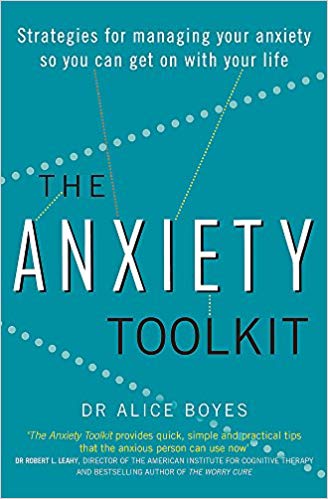
Book: The Anxiety Toolkit

Book Title: The Anxiety Toolkit: Strategies for Managing your Anxiety so you can Get on with Your Life.

Author(s): Dr. Alice Boyes.

Year: 2015.

Edition: First.

Publisher: Piatkus.

Synopsis:

Do you overthink before taking action? Are you prone to making negative predictions? Do you worry about the worst that could happen? Do you take negative feedback very hard? Are you self-critical? Does anything less than perfect performance feel like failure?

If any of these issues resonate with you, you’re probably suffering from some degree of anxiety, and you are not alone. The good news: while reducing your anxiety level to zero is not possible or useful (anxiety can actually be helpful!), you can learn to successfully manage symptoms – such as excessive rumination, hesitation, fear of criticism and paralysing perfection.

In The Anxiety Toolkit, Dr Alice Boyes translates powerful, evidence-based tools used in therapy clinics into tips and tricks you can employ in everyday life. Whether you have an anxiety disorder, or are just anxiety-prone by nature, you will discover how anxiety works, strategies to help you cope with common anxiety ‘stuck’ points and a confidence that – anxious or not – you have all the tools you need to succeed in life and work.

Book: The Anxiety Solution

Book Title: The Anxiety Solution: A Quieter Mind, A Calmer You.

Author(s): Chloe Bortheridge.

Year: 2017.

Edition: First.

Publisher: Michael Joseph.

Synopsis:

This is a book for anyone experiencing anxiety – at home, in school or at work, in social situations or on their own – one that will benefit everyone from worried mums to stressed teens.

The Anxiety Solution is a simple and inspiring guide to reducing anxiety from former sufferer and qualified clinical hypnotherapist, and host of The Calmer You podcast, Chloe Brotheridge.

Chloe will help you understand why we feel anxious and will equip you with techniques to help manage the symptoms and start living a happier, more confident life. Based on the latest scientific research and her unique programme which has already helped hundreds of clients, The Anxiety Solution will show you how to regain control of your life.

‘I know what it’s like to be stuck in a cycle of anxiety. I used to feel as though fear and worry were a permanent part of who I was . . . but I’m here to tell you that it doesn’t have to be this way. The truth is, your natural state is one of calmness and confidence – and I’m going to teach you how to get there.’

If you want to spend less time worrying, this book is the solution for you. You’ll be surprised how quickly you can be back in control and able to enjoy your life once again.

Is Anxiety in People with Rheumatoid Arthritis Associated with Increased Disease Activity & Worse Quality of Life?

Research Paper Title

The association between anxiety and disease activity and quality of life in rheumatoid arthritis: a systematic review and meta-analysis.

Background

In people with rheumatoid arthritis (RA), mental health problems are common, but often not recognized or treated, contributing to increased morbidity and mortality.

Most studies examining the impact of mental health problems in RA have focused on depression.

The researchers aimed to determine the association between anxiety, and disease activity and quality of life (QoL) in people with RA.

Methods

A systematic review and meta-analysis were performed. A protocol was registered with PROSPERO (CRD2-17062580).

Databases (Web of Science, PsycINFO, CINAHL, Embase, Medline) were searched for studies examining the association between anxiety and disease activity and QoL, in adults with RA, from inception to February 2019.

Primary outcome measures were DAS28 and SF-36.

Eligibility screening and data extraction were completed by two reviewers.

Disagreements were resolved by discussion or a third reviewer.

Quality assessment was carried out using the Newcastle-Ottawa Scale.

Results

From 7712 unique citations, 60 articles were assessed for eligibility.

The final review included 20 studies involving 7452 people with RA (14 cross-sectional, 6 cohort).

Eleven examined disease activity, 6 reported QoL outcome measures and 3 included both.

Anxiety was associated with increased disease activity and worse QoL.

Meta-analysis showed anxiety to be correlated with increased DAS28 scores (r = 0.23, CI 0.14, 0.31) and reduced physical (r = - 0.39, CI - 0.57, - 0.20) and mental QoL (- 0.50, CI - 0.57, - 0.43).

Conclusions

Anxiety in people with RA is associated with increased disease activity and worse QoL.

Improved recognition and management of comorbid anxiety may help to improve outcomes for people with RA.

Key Points:

  • This is the first systematic review and meta-analysis to examine the relationship between anxiety and disease activity and QoL in people with RA.
  • Anxiety was associated with higher disease activity both cross-sectionally and at up to 12-month follow-up.
  • Anxiety may have a more significant impact on disease activity in early RA, highlighting the importance of early recognition and management of co-morbid anxiety.
  • People with anxiety had poorer self-reported physical and mental QoL, although there was some heterogeneity in study findings, particularly for physical QoL (I2 = 78.5%).

Reference

Machin, A.R., Babatunde, O., Haththotuwa, R., Scott, I. Blagojevic-Bucknall, M., Corp, N., Chew-Graham, C.A. & Hider, S.L. (2020) The association between anxiety and disease activity and quality of life in rheumatoid arthritis: a systematic review and meta-analysis. Clinical Rheumatology. doi: 10.1007/s10067-019-04900-y. [Epub ahead of print].

Eco-Anxiety, Like Climate Change, is on the Rise

If the prospect of climate change makes you stressed, anxious or depressed, you are not alone.

With reports of some children becoming terrified by climate change and the protest group Extinction Rebellion holding ‘grief-tending workshops’, there is an increasing awareness of so-called eco-anxiety.

A UK Council for Psychotherapy conference met in London on 19 October 2019 to discuss how best to manage such anxiety.

While there is little quantitative evidence about eco-anxiety yet, here are eight approaches that commentators suggest may help.

1. Live More in Alignment with your Values

  • The effect of individual actions can be very small, but changing how you live to be more compatible with your ideals can help with eco-anxiety.
  • You could eat less meat and dairy, drive less and stop buying and disposing of so many items, for example.

2. Give your Hone an Energy Health Check

  • Household energy use accounts for 14% cent of total UK greenhouse gas emissions.
  • Reducing your home’s energy use can help you take some ownership of your consumption.
  • Make sure you have good insulation and draught-proof windows and doors, and try putting on an extra layer of clothing rather than turning up your heating.

3. Cut Back on Flying

  • The Swedish concept of flygskam (“flight shame”) has recently gained wider attention, but a minority is responsible for the lion’s share of emissions from flights.
  • A 2014 analysis found that 15% of adults in the UK account for 70% of flights taken, so it is those who take three or more flights a year who will make the most difference by cutting back.
  • If taking fewer flights could put your job at risk, try switching from business class to standard, as this uses a plane’s capacity more efficiently.

4. Do not Feel Ashamed

  • In relation to flygskam, billions of people fly.
  • Your individual actions are not actually capable of solving climate change.
  • While altering how you live and travel may help you by letting your life be more aligned with your values, you
  • should not feel ashamed for not being able to fully comply with these.
  • The systems in which we are all enmeshed essentially force us to harm the planet, and yet we (can) put all that shame on our own shoulders.

5. Focus on Changing Systems, Not Yourself

  • Accepting that we cannot get where we want to be through individual action can have therapeutic benefits.
  • A complete narcissistic focus on the self is not healthy.
  • Instead, you can have a much more meaningful impact by working with others to lobby governments.
  • For example by:
    • Letting your MP, local councillors, and and mayor know that you think action on climate change is important; and
    • Writing to your bank or pension provider to ask if you can opt out of funds that invest in fossil fuels.

6. Find Like-Minded People

  • Find a community of like-minded individuals so you can express and share your feelings of eco-anxiety.
  • Saying that you can not solve climate change alone and joining a group of some kind will help you to make friends.
  • Socialisation is an important aspect in mental health.

7. Protect and Nurture Local Green Spaces

  • Getting involved in community environment projects may help your mental health, as well as being good for the planet.
  • Green spaces absorb carbon dioxide, cool down urban areas in hot weather, reduce flood risk, and provide habitats for wildlife.
  • Additionally, a recent study found that spending 2 hours a week outdoors in nature is linked to better health and well-being.
  • Make an excuse to find some time outside every day.

8. Bring Others with You

  • Consider the importance of talking about your experiences – the challenges as well as the positives – and bringing other people along with you.
  • Talking about the practical things people can do in their day-to-day lives can give them some sense of control back, which can really improve people’s well-being.

Slash Anxiety, Depression, & Stress Levels with a Whole Foods Diet

For those already struggling with their New Year eating resolutions, they may be happy to hear that it can take under a month to see improvements in how they feel after adopting a healthy diet.

A randomised control study, conducted by researchers at Macquarie University in Australia, found that when depressed university students, aged between 17 and 35, switched from a processed diet to a whole foods diet anxiety, depression, and stress levels were slashed.

The whole foods diet included (per day):

  • Two or three servings of fruit.
  • Five portions of vegetables.
  • Three servings each of wholegrains and lean protein.
  • Two tablespoons of olive oil.
  • One teaspoon of turmeric or cinnamon.

Sleeplessness & Anxiety, Get Some NREM

While a sleepless night can result in a 30% rise in anxiety levels, deep sleep could actually be a remedy against anxiety according to researchers at the University of California.

The researchers found that when the brain is in deep sleep (aka non-rapid eye movement or NREM) it has a calming effect on individuals with anxiety disorders.

MRI scans and other methods were used to measure brain activity in participants.

The results revealed that sleeplessness shuts down the brain’s medial prefrontal cortex – this helps to keep emotions in check.

However, a full night of slumber helps to restore prefrontal changes.

Overview of Trauma- & Stress-Related Disorders

Trauma- and stress-related disorders result from exposure to a traumatic or stressful event.

Specific disorders include acute stress disorder (ASD) and post-traumatic stress disorder (PTSD). These disorders cause similar symptoms but differ in how long they last.

  • ASD:
    • Typically begins immediately after the event.
    • Lasts from 3 days to 1 month.
  • PTSD:
    • Lasts for more than 1 month.
    • It may develop as a continuation of acute stress disorder or develop separately up to 6 months after the event.

Although depression and anxiety are often prominent, individuals with trauma-related disorders often have a wide variety of symptoms that may not obviously seem related to the traumatic event.

For example, individuals may:

  • Act aggressively;
  • Be unable to experience pleasure; and/or
  • Feel restless, discontented, angry, numb, or disconnected from themselves and others.

Treatment of Anxiety Disorders

When treating anxiety disorders, there are a number of things to consider:

  • Treatment of the cause if appropriate;
  • Psychotherapy;
  • Drug therapy; and/or
  • Treatment of other active disorders.

Accurate diagnosis is important because treatment varies from one anxiety disorder to another.

Additionally, anxiety disorders must be distinguished from anxiety that occurs in many other mental health disorders, which involve different treatment approaches.

If the cause is another medical disorder or a drug, medical professionals aim to correct the cause rather than treat the symptoms of anxiety.

Anxiety should subside after the physical disorder is treated or the drug has been stopped long enough for any withdrawal symptoms to abate.

If anxiety remains, anti-anxiety drugs or psychotherapy (such as behavioural therapy) is used.

For individuals who are dying, certain strong pain relievers, such as morphine, may relieve both pain and anxiety.

If an anxiety disorder is diagnosed, drug therapy or psychotherapy (such as behavioral therapy), alone or in combination, can significantly relieve the distress and dysfunction for most individuals.

Benzodiazepines (such as diazepam) are commonly prescribed for acute anxiety.

For many individuals, antidepressants, such as selective serotonin reuptake inhibitors (SSRIs), work as well for anxiety disorders as they do for depression.

Specific treatments depend on which anxiety disorder is diagnosed.

All of the anxiety disorders can occur along with other psychiatric conditions.

For example, anxiety disorders often occur along with an alcohol use disorder.

It is important to treat all of these conditions as soon as possible.

Treating the alcohol use disorder without treating the anxiety is unlikely to be effective since the individual may be using alcohol to treat the anxiety.

On the other hand, treating the anxiety without addressing the alcohol disorder may be unsuccessful because daily changes in the amount of alcohol in the blood can cause levels of anxiety to fluctuate.

Diagnosis of Anxiety Disorders

A diagnosis of anxiety disorder is via a medical professional’s evaluation, based on specific criteria.

Deciding when anxiety is severe enough to be considered a disorder can be complicated.

Individual ability to tolerate anxiety varies, and determining what constitutes abnormal anxiety can be difficult.

Medical professionals usually use the following specific established criteria:

  • Anxiety is very distressing.
  • Anxiety interferes with functioning.
  • Anxiety is long-lasting or keeps coming back

Medical professionals look for other disorders that may be causing anxiety, such as depression or a sleep disturbance.

They may also ask whether relatives have had similar symptoms, because anxiety disorders tend to run in families.

Medical professionals also do a physical examination. Blood and other tests may be done to check for other medical disorders that can cause anxiety.