Book: Together Apart – The Psychology of COVID-19

Book Title:

Together Apart – The Psychology of COVID-19.

Author(s): Jolanda Jetten, Stephen D. Reicher, S. Alexander Haslam, and Tegan Cruwys.

Year: 2020.

Edition: First (1st).

Publisher: SAGE Publications Ltd.

Type(s): Paperback and Kindle.

Synopsis:

Written by leading social psychologists with expertise in leadership, health and emergency behaviour – who have also played an important role in advising governments on COVID-19 – this book provides a broad but integrated analysis of the psychology of COVID-19

It explores the response to COVID-19 through the lens of social identity theory, drawing from insights provided by four decades of research. Starting from the premise that an effective response to the pandemic depends upon people coming together and supporting each other as members of a common community, the book helps us to understand emerging processes related to social (dis)connectedness, collective behaviour and the societal effects of COVID-19. In this it shows how psychological theory can help us better understand, and respond to, the events shaping the world in 2020.

Considering key topics such as:

  • Leadership.
  • Communication.
  • Risk perception.
  • Social isolation.
  • Mental health.
  • Inequality.
  • Misinformation.
  • Prejudice and racism.
  • Behaviour change.
  • Social Disorder.

This book offers the foundation on which future analysis, intervention and policy can be built.

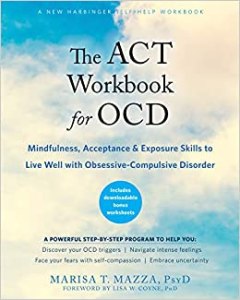
Book: The ACT Workbook for OCD

Book Title:

The ACT Workbook for OCD: Mindfulness, Acceptance, and Exposure Skills to Live Well with Obsessive-Compulsive Disorder.

Author(s): Marisa T. Mazza.

Year: 2020.

Edition: First (1st), Workbook Edition.

Publisher: New Harbinger.

Type(s): Paperback and Kindle.

Synopsis:

Stand up to your OCD! The ACT Workbook for OCD combines evidence-based acceptance and commitment therapy (ACT) with exposure and response prevention (ERP) for the most up-to-date, effective treatment for obsessive-compulsive disorder (OCD).

If you are one of the millions of people who suffer from OCD, you may experience obsessive, intrusive, or even disturbing thoughts. You may engage in compulsive or ritualistic behaviours, such as checking to make sure you have locked the front door, or endlessly washing your hands for fear of germs or contamination. And you may be tempted to give up if treatment just does not work for you.

Whether you have just received a diagnosis, or have suffered for years, this workbook can help. Using the powerful and proven-effective treatments in this guide, you will learn what type of OCD you suffer from (such as harm OCD), how to identify the underlying mechanisms of your OCD, move through triggering incidents while staying present and connected to your values, be more aware and flexible, tolerate uncertainty, and commit to behaviours that ultimately allow you to lead a full, rewarding life.

Once you realise what really matters to you, you will find the motivation needed to start on the path to psychological well-being.

If you are ready to be courageous, take a risk, and stand up to your OCD symptoms, this workbook can help guide you, every step of the way.

Addictions: Broken Brain Model vs Systems-Level Perspective

Research Paper Title

Curing the broken brain model of addiction: Neurorehabilitation from a systems perspective.

Background

The dominant biomedical perspective on addictions has been that they are chronic brain diseases.

While the authors acknowledge that the brains of people with addictions differ from those without, they argue that the “broken brain” model of addiction has important limitations. They propose that a systems-level perspective more effectively captures the integrated architecture of the embodied and situated human mind and brain in relation to the development of addictions. This more dynamic conceptualisation places addiction in the broader context of the addicted brain that drives behaviour, where the addicted brain is the substrate of the addicted mind, that in turn is situated in a physical and socio-cultural environment.

From this perspective, neurorehabilitation should shift from a “broken-brain” to a systems theoretical framework, which includes high-level concepts related to the physical and social environment, motivation, self-image, and the meaning of alternative activities, which in turn will dynamically influence subsequent brain adaptations. The authors call this integrated approach system-oriented neurorehabilitation.

They illustrate their proposal by showing the link between addiction and the architecture of the embodied brain, including a systems-level perspective on classical conditioning, which has been successfully translated into neurorehabilitation. Central to this example is the notion that the human brain makes predictions on future states as well as expected (or counterfactual) errors, in the context of its goals.

The authors advocate system-oriented neurorehabilitation of addiction where the patients’ goals are central in targeted, personalised assessment and intervention.

Reference

Wiers, R.W. & Verschure, P. (2020) Curing the broken brain model of addiction: Neurorehabilitation from a systems perspective. Addictive Behaviors. doi: 10.1016/j.addbeh.2020.106602. Online ahead of print.

On This Day … 13 September

Events

  • 1848 – Vermont railroad worker Phineas Gage survives an iron rod 1 1⁄4 inches (3.2 cm) in diameter being driven through his brain; the reported effects on his behaviour and personality stimulate discussion of the nature of the brain and its functions.

People (Deaths)

  • 1999 – Benjamin Bloom, American psychologist and academic (b. 1913).

Developing a Behavioural Health Readiness & Suicide Risk Reduction Review for Military Personnel

Research Paper Title

Development of the US Army’s Suicide Prevention Leadership Tool: The Behavioural Health Readiness and Suicide Risk Reduction Review (R4).

Background

Although numerous efforts have aimed to reduce suicides in the US Army, completion rates have remained elevated.

Army leaders play an important role in supporting soldiers at risk of suicide, but existing suicide-prevention tools tailored to leaders are limited and not empirically validated.

The purpose of this article is to describe the process used to develop the Behavioral Health Readiness and Suicide Risk Reduction Review (R4) tools for Army leaders that are currently undergoing empirical validation with two US Army divisions.

Methods

Consistent with a Secretary of the Army directive, approximately 76 interviews and focus groups were conducted with Army leaders and subject matter experts (SMEs) to obtain feedback regarding existing practices for suicide risk management, leader tools, and institutional considerations.

In addition, reviews of the empirical literature regarding predictors of suicide and best practices for the development of practice guidelines were conducted. Qualitative feedback, empirical predictors of suicide, and design considerations were integrated to develop the R4 tools.

A second series of 11 interviews and focus groups with Army leaders and SMEs was also conducted to validate the design and obtain feedback regarding the R4 tools.

Results

Leaders described preferences for:

  • Tool processes (e.g. incorporating engaged leadership, including multiple risk identification methods);
  • Formatting (e.g. one page);
  • Organisation (e.g. low-intermediate-high risk scoring system);
  • Content (e.g. excluding other considerations related to vehicle safety, including readiness implications); and
  • Implementation (e.g. accounting for leadership judgement, tailoring process to specific leadership echelons, consideration of institutional barriers).

Evidence-based predictors of suicide risk and practice guideline considerations (e.g. design) were integrated with leadership feedback to develop the R4 tools that were tailored to specific leadership echelons.

Leaders provided positive feedback regarding the R4 tools and described the importance of accounting for potential institutional barriers to implementation. This feedback was addressed by including recommendations regarding the implementation of standardized support meetings between different echelons of leadership.

Conclusions

The R4 development process entailed the simultaneous integration of leadership feedback with evidence-based predictors of suicide risk and design considerations.

Thus, the development of these tools builds upon previous Army leadership tools by specifically tailoring elements of those tools to accommodate leader preferences, accounting for potential implementation barriers (e.g. institutional factors), and empirically evaluating the implementation of those tools.

Future studies should consider utilising a similar process to develop empirically based resources that are more likely to be incorporated into the routine practice of leaders supporting soldiers at risk of suicide, very often located at the company level and below.

Reference

Curley, J.M., Penix, E.A., Srinivasan, J., Sarmiento, D.S., McFarling, L.H., Newman, J.B. & Wheeler, L.A. (2020) Development of the U.S. Army’s Suicide Prevention Leadership Tool: The Behavioral Health Readiness and Suicide Risk Reduction Review (R4). Military Medicine. 185(5-6), pp.e668-e677. doi: 10.1093/milmed/usz380.

Book: Stand Strong – You Can Overcome Bullying

Book Title:

Stand Strong – You Can Overcome Bullying (and Other Stuff That Keeps You Down).

Author(s): Nick Vujicic.

Year: 2015.

Edition: Reprint Edition.

Publisher: WaterBrook.

Type(s): Hardcover, Paperback, Audiobook, and Kindle.

Synopsis:

In Stand Strong Nick Vujicic gives you strategies for developing a “bully defense system” so you can handle bullies of all kinds, by building your strength from the inside out.

With no arms, no legs, and no defence, Nick Vujicic has experienced bullying of all kinds for being “different.” He knows what it feels like to be picked on and pushed around. But Nick learned that he doesn’t have to play the bully’s game – and neither do you. No bully can define who you are, and in Stand Strong, Nick shows how you too can overcome and rise above bullying.

Find out how to:

  • Turn being bullied into a great opportunity (yes, really!).
  • Create a safety zone within yourself.
  • Establish strong values that no bully can shake.
  • Deal with cyber bullies.
  • Develop a spiritual foundation to stay strong against bullying.
  • Monitor your emotions and control your response to them.
  • Help others who are being bullied.

Are you facing the unwanted attention of a bully? You can stand up to the challenge, because you have greater power over your feelings and your life than you may think! Just ask Nick – the man with no arms or legs … and “a ridiculously good life.”

Book: From Bud to Brain – A Psychiatrists View of Marijuana

Book Title:

From Bud to Brain: A Psychiatrists View of Marijuana.

Author(s): Timmen L. Cermak.

Year: 2020.

Edition: First (1ed).

Publisher: Cambridge University Press.

Type(s): Paperback and Kindle.

Synopsis:

The trend toward liberalising medical and recreational marijuana use is increasing the obligation on clinicians to provide useful information to the public.

This book summarises the science all healthcare professionals need to know in order to provide objective and relevant information to a variety of patients, from recreational and medicinal users to those who use regularly, and to adolescents and worried parents.

The author brings two and a half decades of studying cannabinoid research, and over forty years’ experience in psychiatric and addiction medicine practice, to shed light on the interaction between marijuana and the brain.

Topics range from how marijuana produces pleasurable sensations, relaxation and novelty (the ‘high’), to emerging medical uses, effects of regular use, addiction, and policy.

Principles of motivational interviewing are outlined to help clinicians engage patients in meaningful, non-judgmental conversations about their experiences with marijuana.

An invaluable guide for physicians, nurses, psychologists, therapists, and counsellors.

Book: Cognitive Behavioural Therapy Workbook For Dummies

Book Title:

Cognitive Behavioural Therapy Workbook For Dummies.

Author(s): Rhena Branch and Rob Wilson.

Year: 2012.

Edition: Second (2ed).

Publisher: For Dummies.

Type(s): Paperback and Kindle.

Synopsis:

Whether you are trying to overcome anxiety and depression, boost self-esteem, beat addiction, lose weight, or simply improve your outlook, cognitive behavioural therapy (CBT) offers a practical, sensible approach to mastering your thoughts and thinking constructively. In this updated and expanded edition of the companion workbook to their bestselling Cognitive Behavioural Therapy For Dummies, professional therapists Rhena Branch and Rob Wilson show you, step-by-step, how to put the lessons provided in their book into practice. Inside you’ll find a huge number of hands-on exercises and techniques to help you remove roadblocks to change and regain control over your life.

Cognitive Behavioural Therapy Workbook For Dummies, Second Edition:

  • Develops the ideas and concepts that presented in the book and provides exercises to put those ideas into practice.
  • Features a range of hands-on CBT exercises and techniques for beating anxiety or depression, boosting your self-esteem, losing weight, or simply improving your outlook on life.

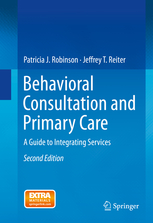
Book: Behavioural Consultation and Primary Care

Book Title:

Behavioural Consultation & Primary Care – A Guide to Integrating Services.

Author(s): Patricia J. Robinson and Jeffrey T. Reiter.

Year: 2016.

Edition: Second (2ed).

Publisher: Springer.

Type(s): Hardcover, Paperback and Kindle.

Synopsis:

2007, First Edition

The Primary Care Behavioural Health (PCBH) model is emerging as the future of integration between mental health and primary care services. The first book to detail the model, Behavioural Consultation and Primary Care explains in hands-on terms how to achieve truly integrated care. From starting up a new PCBH service to evaluating its outcome, clinicians and medical administrators alike will value in this up-to-the-minute resource.

2016, Second Edition

In this 2nd edition, Robinson and Reiter give us an updated blueprint for full integration of behavioural health and primary care in practice. They review the compelling rationale, but their real contribution is telling us exactly how to think about it and how to do it. This latest book is a must for anyone interested in population health and the nuts and bolts of full integration through using the Primary Care Behavioural Health Consultation model.

The best-selling guide to integrating behavioral health services into primary care is now updated, expanded and better than ever!

Integration is exploding in growth, and it is moving inexorably toward the model outlined here. To keep pace, this revised text is a must for primary care clinicians and administrators. It is also essential reading for graduate classes in a variety of disciplines, including social work, psychology, and medicine.

This updated edition includes:

  • A refined presentation of the PCBH model.
  • The latest terms, trends and innovations in primary care.
  • Comprehensive strategies and resource lists for hiring and training new Behavioural Health Consultants (BHC).
  • Step-by-step guidance for implementing the PCBH model.
  • A plethora of evolved practice tools, including new Core Competency Tools for BHCs and primary care providers.
  • Sample interventions for behaviourally influenced problems.
  • The use of “Third Wave” behaviour therapies in primary care.
  • Detailed programme evaluation instructions and tools.
  • The latest on financing integrated care.
  • An entire chapter on understanding and addressing the prescription drug abuse epidemic.
  • Experienced guidance on ethical issues in the PCBH model.
  • Improved patient education handouts.

With all of the changes in health care, the potential for the PCBH model to improve primary care – and the health of the population – is greater than ever.

This book should be the first read for anyone interested in realising the potential of integration.

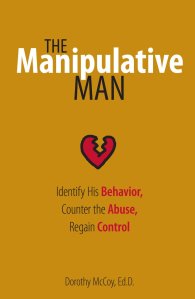
Book: The Manipulative Man: Identify His Behaviour, Counter the Abuse, Regain Control

Book Title:

The Manipulative Man: Identify His Behaviour, Counter the Abuse, Regain Control.

Author(s): Dorothy McCoy.

Year: 2006.

Edition: First (1st).

Publisher: Adams Media.

Type(s): Paperback and Kindle.

Synopsis:

Conventional wisdom says that women are the manipulative ones – but tell that to the thousands of desperate women suffering at the hands of a manipulative man. Men can be just as sneaky, passive-aggressive, needy, underhanded, whiny, guilt-inducing, and emotionally demanding as women are accused of being – and more so!

As any woman in love with a manipulative man can tell you, it is not easy to get past his charm and your guilt to a place where you can see your relationship for what it is – out of balance, extraordinarily stressful, emotionally exhausting, and potentially dangerous. The Manipulative Man is a groundbreaking prescription for dealing with the manipulative men in your life by using:

  • Tests to help you determine if you are involved with a mama’s boy, narcissist, sociopath, or even a psychopath.
  • Techniques for defining and setting boundaries with your man;.
  • Tools to help you improve their relationship.
  • And more!

In The Manipulative Man, acclaimed psychotherapist Dr. Dorothy McCoy shows you how to identify the type of manipulative man you are involved with, deal with the issues his behaviour provokes, and, ultimately, salvage the relationship – or move on.