Linking Environmental Factors and Mental Health

Research Paper Title

From Family Surroundings to Intestinal Flora, A Literature Review Concerning Epigenetic Processes in Psychiatric Disorders.

Background

Some behaviours or psychiatric conditions seem to be inherited from parents or explain by family environment.

The researchers hypothesised interactions between epigenetic processes, inflammatory response and gut microbiota with family surroundings or environmental characteristics.

Methods

The researchers searched in literature interactions between epigenetic processes and psychiatric disorders with a special interest for environmental factors such as traumatic or stress events, family relationships and also gut microbiota.

They searched on Pubmed, PsycINFO, PsycARTICLES and Sciencedirect articles with the keywords psychiatric disorders, epigenome, microbiome and family relationships.

Results

Some gene polymorphisms interact with negative environment and lead to psychiatric disorders.

Negative environment is correlated with different epigenetic modifications in genes implicated in mental health. Gut microbiota diversity affect host epigenetic.

Animal studies showed evidences for a transgenerational transmission of epigenetic characteristics.

Conclusions

The findings support the hypothesis that epigenetic mediate gene-environment interactions and psychiatric disorders.

Several environmental characteristics such as traumatic life events, family adversity, psychological stress or internal environment such as gut microbiota diversity and diet showed an impact on epigenetic.

These epigenetic modifications are also correlated with neurophysiological, inflammatory or hypothalamic-pituitary-adrenal axis dysregulations.

Reference

Dubois, T., Reynaert, C., Jacques, D., Lepiece, B. & Zdanowicz, N. (2020) From Family Surroundings to Intestinal Flora, A Literature Review Concerning Epigenetic Processes in Psychiatric Disorders. Psychiatria Danubina. 32(Suppl 1), pp.158-163.

The Nurse-Patient Relationship: Aggressive Behaviour in a Mental Health Setting

Research Paper Title

Aggressive Behaviour: Nurse-Patient Relationship in Mental Health Setting.

Background

Mental disorder is known to be as a loss of existential paradigm; individual’s functioning is lacking in all areas. Therefore, it is difficult to point out what the patients exactly need because their needs are set on a broad range of a difficult boundary.

The level of care that follows will be complex and multifactorial because nursing will challenge the interaction with the individual as a whole: behaviours and relations with family members.

At this stage exploring interpersonal conflicts, with past and present aggression behaviours will be crucial.

Methods

The aim of this paper is to investigate the professional experience in a work context where the patient’s clinical condition poses a daily challenge from a physical and emotional perspective.

Narrative investigation is performed here in order to explore the psychological load of the professional’s psychological experience and its implication in facing aggressive situations.

Moreover, this investigation highlights the importance of some professional and personal resources that can be made available to the operator.

Results

These tools could improve the understanding of the subjective experience of acute events guiding the individual through an exploration of the phenomenology of what happened decreasing the intimate stress load.

Conclusions

A constant updating, the knowledge of de-escalation techniques and sharing the experience in dedicated settings could be important allies in the management of risk events.

Reference

Moriconi, S., Balducci, P.M. & Tortorella, A. (2020) Aggressive Behavior: Nurse-Patient Relationship in Mental Health Setting. Pyschiatria Danubina. 32(Suppl 1), pp.207-209.

Developing a Behavioural Health Readiness & Suicide Risk Reduction Review for Military Personnel

Research Paper Title

Development of the US Army’s Suicide Prevention Leadership Tool: The Behavioural Health Readiness and Suicide Risk Reduction Review (R4).

Background

Although numerous efforts have aimed to reduce suicides in the US Army, completion rates have remained elevated.

Army leaders play an important role in supporting soldiers at risk of suicide, but existing suicide-prevention tools tailored to leaders are limited and not empirically validated.

The purpose of this article is to describe the process used to develop the Behavioral Health Readiness and Suicide Risk Reduction Review (R4) tools for Army leaders that are currently undergoing empirical validation with two US Army divisions.

Methods

Consistent with a Secretary of the Army directive, approximately 76 interviews and focus groups were conducted with Army leaders and subject matter experts (SMEs) to obtain feedback regarding existing practices for suicide risk management, leader tools, and institutional considerations.

In addition, reviews of the empirical literature regarding predictors of suicide and best practices for the development of practice guidelines were conducted. Qualitative feedback, empirical predictors of suicide, and design considerations were integrated to develop the R4 tools.

A second series of 11 interviews and focus groups with Army leaders and SMEs was also conducted to validate the design and obtain feedback regarding the R4 tools.

Results

Leaders described preferences for:

  • Tool processes (e.g. incorporating engaged leadership, including multiple risk identification methods);
  • Formatting (e.g. one page);
  • Organisation (e.g. low-intermediate-high risk scoring system);
  • Content (e.g. excluding other considerations related to vehicle safety, including readiness implications); and
  • Implementation (e.g. accounting for leadership judgement, tailoring process to specific leadership echelons, consideration of institutional barriers).

Evidence-based predictors of suicide risk and practice guideline considerations (e.g. design) were integrated with leadership feedback to develop the R4 tools that were tailored to specific leadership echelons.

Leaders provided positive feedback regarding the R4 tools and described the importance of accounting for potential institutional barriers to implementation. This feedback was addressed by including recommendations regarding the implementation of standardized support meetings between different echelons of leadership.

Conclusions

The R4 development process entailed the simultaneous integration of leadership feedback with evidence-based predictors of suicide risk and design considerations.

Thus, the development of these tools builds upon previous Army leadership tools by specifically tailoring elements of those tools to accommodate leader preferences, accounting for potential implementation barriers (e.g. institutional factors), and empirically evaluating the implementation of those tools.

Future studies should consider utilising a similar process to develop empirically based resources that are more likely to be incorporated into the routine practice of leaders supporting soldiers at risk of suicide, very often located at the company level and below.

Reference

Curley, J.M., Penix, E.A., Srinivasan, J., Sarmiento, D.S., McFarling, L.H., Newman, J.B. & Wheeler, L.A. (2020) Development of the U.S. Army’s Suicide Prevention Leadership Tool: The Behavioral Health Readiness and Suicide Risk Reduction Review (R4). Military Medicine. 185(5-6), pp.e668-e677. doi: 10.1093/milmed/usz380.

Book: Stand Strong – You Can Overcome Bullying

Book Title:

Stand Strong – You Can Overcome Bullying (and Other Stuff That Keeps You Down).

Author(s): Nick Vujicic.

Year: 2015.

Edition: Reprint Edition.

Publisher: WaterBrook.

Type(s): Hardcover, Paperback, Audiobook, and Kindle.

Synopsis:

In Stand Strong Nick Vujicic gives you strategies for developing a “bully defense system” so you can handle bullies of all kinds, by building your strength from the inside out.

With no arms, no legs, and no defence, Nick Vujicic has experienced bullying of all kinds for being “different.” He knows what it feels like to be picked on and pushed around. But Nick learned that he doesn’t have to play the bully’s game – and neither do you. No bully can define who you are, and in Stand Strong, Nick shows how you too can overcome and rise above bullying.

Find out how to:

  • Turn being bullied into a great opportunity (yes, really!).
  • Create a safety zone within yourself.
  • Establish strong values that no bully can shake.
  • Deal with cyber bullies.
  • Develop a spiritual foundation to stay strong against bullying.
  • Monitor your emotions and control your response to them.
  • Help others who are being bullied.

Are you facing the unwanted attention of a bully? You can stand up to the challenge, because you have greater power over your feelings and your life than you may think! Just ask Nick – the man with no arms or legs … and “a ridiculously good life.”

Book: From Bud to Brain – A Psychiatrists View of Marijuana

Book Title:

From Bud to Brain: A Psychiatrists View of Marijuana.

Author(s): Timmen L. Cermak.

Year: 2020.

Edition: First (1ed).

Publisher: Cambridge University Press.

Type(s): Paperback and Kindle.

Synopsis:

The trend toward liberalising medical and recreational marijuana use is increasing the obligation on clinicians to provide useful information to the public.

This book summarises the science all healthcare professionals need to know in order to provide objective and relevant information to a variety of patients, from recreational and medicinal users to those who use regularly, and to adolescents and worried parents.

The author brings two and a half decades of studying cannabinoid research, and over forty years’ experience in psychiatric and addiction medicine practice, to shed light on the interaction between marijuana and the brain.

Topics range from how marijuana produces pleasurable sensations, relaxation and novelty (the ‘high’), to emerging medical uses, effects of regular use, addiction, and policy.

Principles of motivational interviewing are outlined to help clinicians engage patients in meaningful, non-judgmental conversations about their experiences with marijuana.

An invaluable guide for physicians, nurses, psychologists, therapists, and counsellors.

Book: Cognitive Behavioural Therapy Workbook For Dummies

Book Title:

Cognitive Behavioural Therapy Workbook For Dummies.

Author(s): Rhena Branch and Rob Wilson.

Year: 2012.

Edition: Second (2ed).

Publisher: For Dummies.

Type(s): Paperback and Kindle.

Synopsis:

Whether you are trying to overcome anxiety and depression, boost self-esteem, beat addiction, lose weight, or simply improve your outlook, cognitive behavioural therapy (CBT) offers a practical, sensible approach to mastering your thoughts and thinking constructively. In this updated and expanded edition of the companion workbook to their bestselling Cognitive Behavioural Therapy For Dummies, professional therapists Rhena Branch and Rob Wilson show you, step-by-step, how to put the lessons provided in their book into practice. Inside you’ll find a huge number of hands-on exercises and techniques to help you remove roadblocks to change and regain control over your life.

Cognitive Behavioural Therapy Workbook For Dummies, Second Edition:

  • Develops the ideas and concepts that presented in the book and provides exercises to put those ideas into practice.
  • Features a range of hands-on CBT exercises and techniques for beating anxiety or depression, boosting your self-esteem, losing weight, or simply improving your outlook on life.

Book: Behavioural Consultation and Primary Care

Book Title:

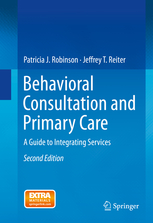
Behavioural Consultation & Primary Care – A Guide to Integrating Services.

Author(s): Patricia J. Robinson and Jeffrey T. Reiter.

Year: 2016.

Edition: Second (2ed).

Publisher: Springer.

Type(s): Hardcover, Paperback and Kindle.

Synopsis:

2007, First Edition

The Primary Care Behavioural Health (PCBH) model is emerging as the future of integration between mental health and primary care services. The first book to detail the model, Behavioural Consultation and Primary Care explains in hands-on terms how to achieve truly integrated care. From starting up a new PCBH service to evaluating its outcome, clinicians and medical administrators alike will value in this up-to-the-minute resource.

2016, Second Edition

In this 2nd edition, Robinson and Reiter give us an updated blueprint for full integration of behavioural health and primary care in practice. They review the compelling rationale, but their real contribution is telling us exactly how to think about it and how to do it. This latest book is a must for anyone interested in population health and the nuts and bolts of full integration through using the Primary Care Behavioural Health Consultation model.

The best-selling guide to integrating behavioral health services into primary care is now updated, expanded and better than ever!

Integration is exploding in growth, and it is moving inexorably toward the model outlined here. To keep pace, this revised text is a must for primary care clinicians and administrators. It is also essential reading for graduate classes in a variety of disciplines, including social work, psychology, and medicine.

This updated edition includes:

  • A refined presentation of the PCBH model.
  • The latest terms, trends and innovations in primary care.
  • Comprehensive strategies and resource lists for hiring and training new Behavioural Health Consultants (BHC).
  • Step-by-step guidance for implementing the PCBH model.
  • A plethora of evolved practice tools, including new Core Competency Tools for BHCs and primary care providers.
  • Sample interventions for behaviourally influenced problems.
  • The use of “Third Wave” behaviour therapies in primary care.
  • Detailed programme evaluation instructions and tools.
  • The latest on financing integrated care.
  • An entire chapter on understanding and addressing the prescription drug abuse epidemic.
  • Experienced guidance on ethical issues in the PCBH model.
  • Improved patient education handouts.

With all of the changes in health care, the potential for the PCBH model to improve primary care – and the health of the population – is greater than ever.

This book should be the first read for anyone interested in realising the potential of integration.

Book: The Anxiety Workbook for Kids

Book Title:

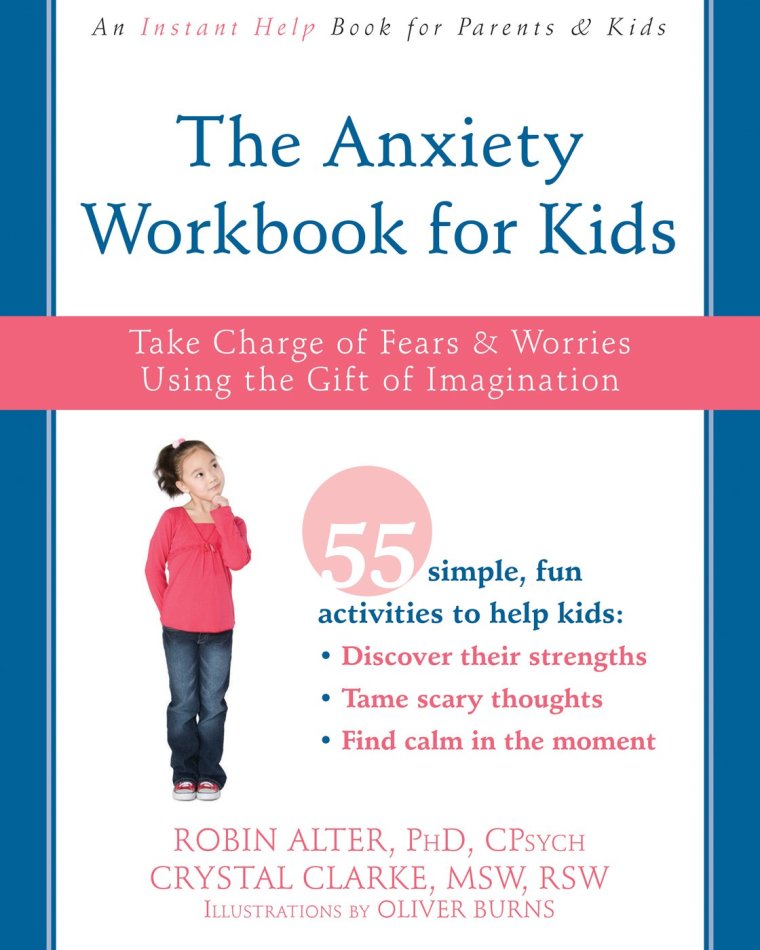
The Anxiety Workbook for Kids – Take Charge of Fears & Worries Using the Gift of Imagination.

Author(s): Robin Alter PhD and Crystal Clarke MSW.

Year: 2016.

Edition: First (1ed).

Publisher: New Harbinger; Workbook Edition.

Type(s): Paperback and Kindle.

Synopsis:

Millions of children suffer from anxiety, which can be extremely limiting, causing kids to miss school, opt out of activities with friends, and refuse to speak or participate in a variety of situations. Furthermore, children who are diagnosed with anxiety or brought into therapy often feel embarrassed about not being “normal.” Focusing on the problem of anxiety can stress kids out and make them feel ashamed. But when the focus is on their strengths and their vivid imaginations, children are empowered to face their anxiety head-on.

The Anxiety Workbook for Kids is a fun and unique workbook grounded in evidence-based CBT and designed to help children understand their anxious thoughts within a positive framework-a perspective that will allow kids to see themselves as the highly imaginative individuals they are, and actually appreciate the role imagination plays in their anxiety. With this workbook, children will learn that, just as they are capable of envisioning vivid scenarios that fuel their anxiety, they are capable of using their imagination to move away from anxious thoughts and become the boss of their own worries.

With engaging CBT-based activities, games, and illustrations-and with a focus on imagination training and developing skills like problem solving, assertiveness, positive thinking, body awareness, relaxation, and mindfulness-this book will help kids stand up to the “worry bully” and harness the power of their imagination for good.

Mental Health & COVID-19: Psychological Impacts that Merit Consideration now Rather than Later

Research Paper Title

Mental health in the COVID-19 pandemic.

Background

During any outbreak of an infectious disease, the population’s psychological reactions play a critical role in shaping both spread of the disease and the occurrence of emotional distress and social disorder during and after the outbreak. Despite this fact, sufficient resources are typically not provided to manage or attenuate pandemics’ effects on mental health and well-being. While this might be understandable in the acute phase of an outbreak, when health systems prioritise testing, reducing transmission and critical patient care, psychological and psychiatric needs should not be overlooked during any phase of pandemic management.

There are many reasons for this. It is known that psychological factors play an important role in adherence to public health measures (such as vaccination) and in how people cope with the threat of infection and consequent losses. These are clearly crucial issues to consider in the management of any infectious disease, including COVID-19. Psychological reactions to pandemics include maladaptive behaviours, emotional distress and defensive responses. People who are prone to psychological problems are especially vulnerable.

All of these features are in clear evidence during the current COVID-19 pandemic. One study of 1,210 respondents from 194 cities in China in January and February 2020 found that:

  • 54% of respondents rated the psychological impact of the COVID-19 outbreak as moderate or severe;
  • 29% reported moderate to severe anxiety symptoms; and
  • 17% reported moderate to severe depressive symptoms.

Notwithstanding possible response bias, these are very high proportions – and it is likely that some people are at even greater risk. During the 2009 H1N1 influenza outbreak (‘swine flu’), a study of mental health patients found that children and patients with neurotic and somatoform disorders were significantly over-represented among those expressing moderate or severe concerns.

Against this background, and as the COVID-19 pandemic continues to spread around the world, the authors hypothesise a number of psychological impacts that merit consideration now rather than later.

In the first instance, it should be recognised that, even in the normal course of events, people with established mental illness have a lower life expectancy and poorer physical health outcomes than the general population. As a result, people with pre-existing mental health and substance use disorders will be at increased risk of infection with COVID-19, increased risk of having problems accessing testing and treatment and increased risk of negative physical and psychological effects stemming from the pandemic.

Second, we anticipate a considerable increase in anxiety and depressive symptoms among people who do not have pre-existing mental health conditions, with some experiencing post-traumatic stress disorder in due course. There is already evidence that this possibility has been under-recognised in China during the current pandemic.

Third, it can be anticipated that health and social care professionals will be at particular risk of psychological symptoms, especially if they work in public health, primary care, emergency services, emergency departments and intensive or critical care. The World Health Organisation has formally recognised this risk to healthcare workers, so more needs to be done to manage anxiety and stress in this group and, in the longer term, help prevent burnout, depression and post-traumatic stress disorder.

There are several steps that can and should be taken now to minimise the psychological and psychiatric effects of the COVID-19 pandemic.

First, while it might be ostensibly attractive to re-deploy mental health professionals to work in other areas of healthcare, this should be avoided. Such a move would almost certainly worsen outcomes overall and place people with mental illness at disproportionate risk of deterioration in physical and mental health. If anything, this group needs enhanced care at this time.

Second, the authors recommend the provision of targeted psychological interventions for communities affected by COVID-19, particular supports for people at high risk of psychological morbidity, enhanced awareness and diagnosis of mental disorders (especially in primary care and emergency departments) and improved access to psychological interventions (especially those delivered online and through smartphone technologies). These measures can help diminish or prevent future psychiatric morbidity.

Finally, there is a need for particular focus on frontline workers including, but not limited to, healthcare staff. In the USA, the Centres for Disease Control and Prevention offer valuable advice for healthcare workers in order to reduce secondary traumatic stress reactions, including increased awareness of symptoms, taking breaks from work, engaging in self-care, taking breaks from media coverage and asking for help. This kind of advice needs to be underpinned by awareness of this risk among employers, enhanced peer-support and practical assistance for healthcare workers who find themselves exhausted, stressed and feeling excessive personal responsibility for clinical outcomes during what appears to be the largest pandemic of our times.

Even in this emergency circumstance, or especially in this emergency circumstance, we neglect mental health at our peril and to our long-term detriment.

Reference

Cullen, W., Gulati, G. & Kelly, B.D. (2020) Mental Health in the COVID-19 Pandemic. QJM: An International Journal of Medicine. 113(5), pp.311-312.

Book: Understanding Motivation and Emotion

Book Title:

Understanding Motivation and Emotion.

Author(s): Johnmarshall Reeve.

Year: 2018.

Edition: Seventh (7th).

Publisher: John Wiley and Sons.

Type(s): Paperback and Kindle.

Synopsis:

Understanding Motivation and Emotion helps readers understand motivation; where it comes from, how and why it changes over time, and how motivation can be increased. The book also shows how to apply the principles of motivation in applied settings, such as in schools, in the workplace, on the athletic field, in counselling, and in one’s own personal life.

Reeve’s engaging writing captures the excitement of recent advances in the field to show the reader what contemporary motivation psychologists are excited about. He also uses effective examples and explains how motivation study can be applied to readers’ daily lives.

By combining a strong theoretical foundation with current research and practical applications, Reeve provides readers with a valuable tool for understanding why people do what they do and why people feel what they feel.