Book: Psychotherapy – A Practical Guide

Book Title:

Psychotherapy: A Practical Guide.

Author(s): Jeffery Smith.

Year: 2016.

Edition: First (1st).

Publisher: Springer.

Type(s): Paperback and Kindle.

Synopsis:

This title combines the many schools of thought on psychotherapy into one reader-friendly guide that coaches psychotherapists through the various techniques needed as the field expands.

Unlike any other book on the market, this text considers all of the simultaneous advances in the field, including the neurobiology of emotions, the importance of the therapeutic relationship, mindfulness meditation, and the role of the body in healing.

Written with genuine respect for all traditions from CBT to psychodynamics, the book unifies views of psychopathology and cure based on the notion of the mind-brain as an organ of affect regulation.

The book accounts for the tasks that characterise psychotherapist activity in all therapies, how they are performed, and how they result in therapeutic change.

The book also reviews the various pathologies seen in general practice and guides the reader to the specific therapist-patient interactions needed for their resolution.

With its big-picture focus on clinical practice, Psychotherapy: A Practical Guide is a concise resource for students, psychotherapists, psychologists, residents, and all who seek to integrate what is new in psychotherapy.
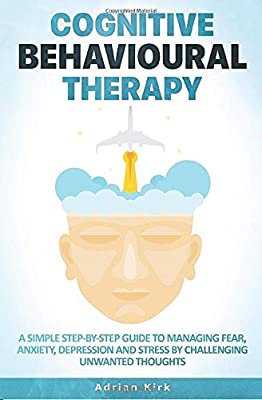
Book: Cognitive Behavioural Therapy

Book Title:

Cognitive Behavioural Therapy: A Simple Step-by-Step Guide to Managing Fear, Anxiety, Depression and Stress by Challenging Unwanted Thoughts.

Author(s): Adrian Kirk.

Year: 2019.

Edition: One.

Publisher: Independently Published.

Type(s): Paperback and Kindle.

Synopsis:

Do you want to significantly improve the way you behave around others by refining your thought patterns?

Do you want to be able to interpret life events from another person’s perspective to help you understand others?

This book will help you achieve those goals!

Many of us interprets information that we receive differently, whether it is at work or elsewhere. As a result, we end up having to deal with problems that others might not understand or even see. This is where Cognitive Behavioural Therapy comes in!

Inside this book, Cognitive Behavioural Therapy: A Simple step-by-step Guide to Managing Fear, Anxiety, Depression and Stress by Challenging Unwanted Thoughts, you will find new ideas and strategies to help you improve the way you approach problems, with chapters that include:

  • Understanding the root causes of your thought pattern.
  • Identifying and challenging your worst nightmares.
  • Setting realistic goals and how to stay on track.
  • Applying exercises to combat unwanted thought.
  • And much more…

This book is ideal for anyone who has never heard of cognitive behavioural therapy before, or for those who are not getting the most from the ones they are currently practising.

Whichever it is, Cognitive Behavioural Therapy: A Simple step-by-step Guide to Managing Fear, Anxiety, Depression and Stress by Challenging Unwanted Thoughts is the book which will provide a platform for success like no other!

Book: Cognitive Behavioural Therapy

Book Title:

Cognitive Behavioral Therapy: A Comprehensive Guide to Using CBT to Overcome Depression, Anxiety, Intrusive Thoughts, and Rewiring Your Brain to Regain Control Over Your Emotions and Life.

Author(s): Stuart Watson.

Year: 2020 (Hardcover) and 2019 (Kindle).

Edition: One.

Publisher: Ationa Publications.

Type(s): Hardcover, Paperback, Kindle and Audiobook.

Synopsis:

If you’re looking for an effective method to treat anxiety, depression, phobias and more, then keep reading…

Cognitive-behavioural therapy, otherwise known as “CBT,” is an incredibly well-known therapy method within the field of psychology. Yet, unless you work within this field you likely know very little about CBT, how it works, and why it is one of the best therapy methods around.

In this book you will learn about the amazing affects this therapy has been proven to have. You can learn how to use CBT from within your own home, helping to treat anxiety, depression, post-traumatic stress disorder, panic disorder, obsessive-compulsive disorder, and more. No longer do you have to suffer in silence, simply existing through life. You can learn to heal and begin to actually live a full life again.

Whether you have been diagnosed with social anxiety disorder, major depression, post-traumatic stress disorder, or simply are struggling throughout your daily life without a diagnosis, CBT can help. While it is always best to go to a professional and receive a diagnosis of your condition, you can also use the tools of CBT independently at home, with or without an official diagnosis.

You can learn to better understand your mind, overcome intrusive thoughts, cope with daily stress, and transform your negative thought patterns into something more positive. CBT is truly transformative, and with a little daily effort, you could possibly change your entire life for the better.

The following are some of the critical things explored in the book:

  • The Basic Premise of CBT and how it Can Benefit You in Daily Life.
  • The Fascinating History of CBT.
  • 16 Common Mistakes and Myths about CBT.
  • An In-Depth Look into What CBT Can Treat and Why it Works.
  • The Key Principles of CBT.
  • Overcoming Anxiety and Depression Step-By-Step.
  • 3 Alternative CBT Approaches.
  • Discover 7 Inspiring Tales of CBT Success.
  • And so much more.

Book: Cognitive Behaviour Therapy Foundations for Practice.

Book Title:

Cognitive Behaviour Therapy Foundations for Practice.

Author(s): Frank Wills and Diana Sanders.

Year: 2012.

Edition: Third.

Publisher: SAGE Publications Ltd.

Synopsis:

In their established introduction to contemporary CBT theory and practice, Diana Sanders and Frank Wills show how therapeutic change takes place across a network of cognitive, emotional and behavioural functioning.

They explain the central concepts of CBT and illustrate – with numerous case examples – how these can effectively be put into practice at each stage of the therapeutic process.

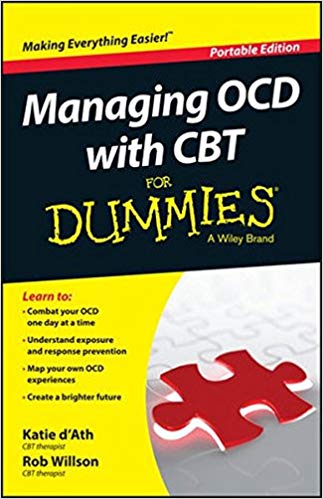
Book: Managing OCD with CBT For Dummies

Book Title:

Managing OCD with CBT for Dummies.

Author(s): Katie D’Ath and Rob Wilson.

Year: 2016.

Edition: First.

Publisher: Wiley Publishing, Inc.

Synopsis:

Break the chains of OCD with Cognitive Behavioural Therapy.

Are you suffering from Obsessive Compulsive Disorder (OCD)? You’re not alone. Whether you’ve tried countless treatments or are seeking help for the first time, this expert, accessible guide is your beacon of hope for breaking the chains of this crippling disorder. Managing OCD with CBT For Dummies uses mindfulness-based Cognitive Behavioural Therapy (CBT) to eradicate OCD from your day-to-day life. Through clear and sensitive direction, you’ll find out how to identify and correct negative thought patterns, confront your problems with positive solutions and recognise the power of cognitive thinking.

Once a term only used by psychologists and counsellors, CBT is now in common use and has become the preferred treatment method for a variety of psychological issues, including anxiety and depression, self-esteem, eating disorders, addiction, and many others. If you are planning on trying it on its own or in conjunction with other types of therapies, you’ll be heartened to know that a staggering 75% of people with OCD are significantly helped by CBT – which is why it remains the treatment of choice for tackling the disorder by the National Institute for Health and Clinical Excellence (NICE).

  • Demonstrates how CBT encourages new thinking patterns to combat destructive thought tendencies.
  • Explains the causes and symptoms of OCD.
  • Shows you how to use CBT to modify everyday thoughts and behaviours with the aim of positively influencing your emotions.
  • Illustrates the importance of facing your fears and offers positive strategies on exposure therapy.

There’s no need to let OCD continue to control your life. This how-to guide helps you break down the negative patterns that have been keeping you hostage―and allows you to build a positive future free of the hold of OCD.