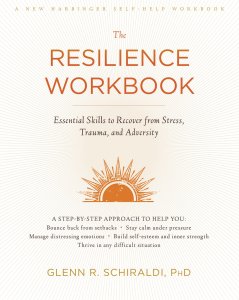
Book: The Resilience Workbook

Book Title:

The Resilience Workbook – Essential Skills to Recover from Stress, Trauma, and Adversity.

Author(s): Glenn R. Schiraldi (PhD).

Year: 2017.

Edition: First (1st), Illustrated Edition.

Publisher: New Harbinger.

Type(s): Paperback and Kindle.

Synopsis:

What is resilience, and how can you build it? In The Resilience Workbook, Glenn Schiraldi-author of The Self-Esteem Workbook-offers invaluable insight and outlines essential skills to help you bounce back from setbacks and cultivate a growth mindset.

Why do some people sail through life’s storms, while others are knocked down? Resilience is the key. Resilience is the ability to recover from difficult experiences, such as death of loved one, job loss, serious illness, terrorist attacks, or even just daily stressors and challenges. Resilience is the strength of body, mind, and character that enables people to respond well to adversity. In short, resilience is the cornerstone of mental health.

Combining evidence-based approaches including positive psychology, cognitive behavioural therapy (CBT), acceptance and commitment therapy (ACT), mindfulness, and relaxation, The Resilience Workbook will show you how to bounce back and thrive in any difficult situation. You will learn how to harness the power of your brain’s natural neuroplasticity; manage strong, distressing emotions; and improve mood and overall well-being. You will also discover powerful skills to help you prevent and recover from stress-related conditions like post-traumatic stress disorder (PTSD), anxiety, depression, anger, and substance abuse disorders.

When the going gets tough, you need real, proven-effective skills to manage your stress and heal from setbacks. The comprehensive and practical exercises in this workbook will help you cultivate resilience, stay calm under pressure, and face all of life’s challenges.

What is Generalised Anxiety Disorder (GAD)?

Introduction

Generalised anxiety disorder (GAD) is an anxiety disorder characterised by excessive, uncontrollable and often irrational worry about events or activities. Worry often interferes with daily functioning, and sufferers are overly concerned about everyday matters such as health, finances, death, family, relationship concerns, or work difficulties. Symptoms may include excessive worry, restlessness, trouble sleeping, exhaustion, irritability, sweating, and trembling.

Symptoms must be consistent and ongoing, persisting at least six months, for a formal diagnosis of GAD. Individuals with GAD often suffer from other disorders including other psychiatric disorders (e.g. major depressive disorder), substance use disorder, obesity, and may have a history of trauma or family with GAD. Clinicians use screening tools such as the GAD-7 and GAD-2 questionnaires to determine if individuals may have GAD and warrant formal evaluation for the disorder. Additionally, sometimes screening tools may enable clinicians to evaluate the severity of GAD symptoms.

GAD is believed to have a hereditary or genetic basis (e.g. first-degree relatives of an individual who has GAD are themselves more likely to have GAD) but the exact nature of this relationship is not fully appreciated. Genetic studies of individuals who have anxiety disorders (including GAD) suggest that the hereditary contribution to developing anxiety disorders is only approximately 30-40%, which suggests that environmental factors may be more important to determining whether an individual develops GAD.

The pathophysiology of GAD implicates several regions of the brain that mediate the processing of stimuli associated with fear, anxiety, memory, and emotion (i.e. the amygdala, insula and the frontal cortex). It has been suggested that individuals with GAD have greater amygdala and medial prefrontal cortex (mPFC) activity in response to stimuli than individuals who do not have GAD. However, the relationship between GAD and activity levels in other parts of the frontal cortex is the subject of ongoing research with some literature suggesting greater activation in specific regions for individuals who have GAD but where other research suggests decreased activation levels in individuals who have GAD as compared to individuals who do not have GAD.

Traditional treatment modalities include variations on psychotherapy (e.g. cognitive-behavioural therapy (CBT)) and pharmacological intervention (e.g. citalopram, escitalopram, sertraline, duloxetine, and venlafaxine). CBT and selective serotonin reuptake inhibitors (SSRIs) are the respectively predominant psychological and pharmacological treatment modalities; other treatments (e.g. selective norepinephrine reuptake inhibitors (SNRIs)) are often considered depending on individual response to therapy. Areas of active investigation include the usefulness of complementary and alternative medications (CAMs), exercise, therapeutic massage and other interventions that have been proposed for study.

Estimates regarding prevalence of GAD or lifetime risk (i.e. lifetime morbid risk (LMR)) for GAD vary depending upon which criteria are used for diagnosing GAD (e.g. DSM-5 vs ICD-10) although estimates do not vary widely between diagnostic criteria. In general, ICD-10 is more inclusive than DSM-5, so estimates regarding prevalence and lifetime risk tend to be greater using ICD-10. In regard to prevalence, in a given year, about two (2%) percent of adults in the United States and Europe have been suggested to suffer GAD. However, the risk of developing GAD at any point in life has been estimated at 9.0%. Although it is possible to experience a single episode of GAD during one’s life, most people who experience GAD experience it repeatedly over the course of their lives as a chronic or ongoing condition. GAD is diagnosed twice as frequently in women as in men.

Diagnosis

DSM-5 Criteria

The diagnostic criteria for GAD as defined by the Diagnostic and Statistical Manual of Mental Disorders (DSM-5) (2013), published by the American Psychiatric Association, are paraphrased as follows:

  1. “Excessive anxiety or worry” experienced most days over at least six (6) month and which involve a plurality of concerns.
  2. Inability to manage worry.
  3. At least three (3) of the following occur:
    • Restlessness.
    • Fatigability.
    • Problems concentrating.
    • Irritability.
    • Muscle tension.
    • Difficulty with sleep.
    • Note that in children, only one (1) of the above items is required.
  4. One experiences significant distress in functioning (e.g. work, school, social life).
  5. Symptoms are not due to drug abuse, prescription medication or other medical condition(s).
  6. Symptoms do not fit better with another psychiatric condition such as panic disorder.

No major changes to GAD have occurred since publication of the Diagnostic and Statistical Manual of Mental Disorders (2004); minor changes include wording of diagnostic criteria.

ICD-10 Criteria

The 10th revision of the International Statistical Classification of Disease (ICD-10) provides a different set of diagnostic criteria for GAD than the DSM-5 criteria described above. In particular, ICD-10 allows diagnosis of GAD as follows:

  • A period of at least six months with prominent tension, worry, and feelings of apprehension, about everyday events and problems.
  • At least four symptoms out of the following list of items must be present, of which at least one from items (1) to (4).
    • Autonomic arousal symptoms:
      • (1) Palpitations or pounding heart, or accelerated heart rate.
      • (2) Sweating.
      • (3) Trembling or shaking.
      • (4) Dry mouth (not due to medication or dehydration).
    • Symptoms concerning chest and abdomen:
      • (5) Difficulty breathing.
      • (6) Feeling of choking.
      • (7) Chest pain or discomfort.
      • (8) Nausea or abdominal distress (e.g. churning in the stomach).
    • Symptoms concerning brain and mind:
      • (9) Feeling dizzy, unsteady, faint or light-headed.
      • (10) Feelings that objects are unreal (derealization), or that one’s self is distant or “not really here” (depersonalization).
      • (11) Fear of losing control, going crazy, or passing out.
      • (12) Fear of dying.
    • General symptoms:
      • (13) Hot flashes or cold chills.
      • (14) Numbness or tingling sensations.
    • Symptoms of tension:
      • (15) Muscle tension or aches and pains.
      • (16) Restlessness and inability to relax.
      • (17) Feeling keyed up, or on edge, or of mental tension.
      • (18) A sensation of a lump in the throat or difficulty with swallowing.
    • Other non-specific symptoms:
      • (19) Exaggerated response to minor surprises or being startled.
      • (20) Difficulty in concentrating or mind going blank, because of worrying or anxiety.
      • (21) Persistent irritability.
      • (22) Difficulty getting to sleep because of worrying.
  • The disorder does not meet the criteria for panic disorder (F41.0), phobic anxiety disorders (F40.-), obsessive-compulsive disorder (F42.-) or hypochondriacal disorder (F45.2).
  • Most commonly used exclusion criteria: not sustained by a physical disorder, such as hyperthyroidism, an organic mental disorder (F0) or psychoactive substance-related disorder (F1), such as excess consumption of amphetamine-like substances, or withdrawal from benzodiazepines.[21]

See ICD-10 F41.1

Note: For children different ICD-10 criteria may be applied for diagnosing GAD (see F93.80).

History of Diagnostic Criteria

The American Psychiatric Association introduced GAD as a diagnosis in the DSM-III in 1980, when anxiety neurosis was split into GAD and panic disorder. The definition in the DSM-III required uncontrollable and diffuse anxiety or worry that is excessive and unrealistic and persists for 1 month or longer. High rates in comorbidity of GAD and major depression led many commentators to suggest that GAD would be better conceptualised as an aspect of major depression instead of an independent disorder. Many critics stated that the diagnostic features of this disorder were not well established until the DSM-III-R. Since comorbidity of GAD and other disorders decreased with time, the DSM-III-R changed the time requirement for a GAD diagnosis to 6 months or longer. The DSM-IV changed the definition of excessive worry and the number of associated psychophysiological symptoms required for a diagnosis. Another aspect of the diagnosis the DSM-IV clarified was what constitutes a symptom as occurring “often”. The DSM-IV also required difficulty controlling the worry to be diagnosed with GAD. The DSM-5 emphasized that excessive worrying had to occur more days than not and on a number of different topics. It has been stated that the constant changes in the diagnostic features of the disorder have made assessing epidemiological statistics such as prevalence and incidence difficult, as well as increasing the difficulty for researchers in identifying the biological and psychological underpinnings of the disorder. Consequently, making specialized medications for the disorder is more difficult as well. This has led to the continuation of GAD being medicated heavily with SSRIs.

Risk Factors

Genetics, Family and Environment

The relationship between genetics and anxiety disorders is an ongoing area of research. It is broadly understood that there exists an hereditary basis for GAD, but the exact nature of this hereditary basis is not fully appreciated. While investigators have identified several genetic loci that are regions of interest for further study, there is no singular gene or set of genes that have been identified as causing GAD. Nevertheless, genetic factors may play a role in determining whether an individual is at greater risk for developing GAD, structural changes in the brain related to GAD, or whether an individual is more or less likely to respond to a particular treatment modality. Genetic factors that may play a role in development of GAD are usually discussed in view of environmental factors (e.g. life experience or ongoing stress) that might also play a role in development of GAD. The traditional methods of investigating the possible hereditary basis of GAD include using family studies and twin studies (there are no known adoption studies of individuals who suffer anxiety disorders, including GAD). Meta-analysis of family and twin studies suggests that there is strong evidence of a hereditary basis for GAD in that GAD is more likely to occur in first-degree relatives of individuals who have GAD than in non-related individuals in the same population. Twin studies also suggest that there may be a genetic linkage between GAD and major depressive disorder (MDD), which may explain the common occurrence of MDD in individuals who suffer GAD (e.g. comorbidity of MDD in individuals with GAD has been estimated at approximately 60%). When GAD is considered among all anxiety disorders (e.g. panic disorder, social anxiety disorder), genetic studies suggest that hereditary contribution to the development of anxiety disorders amounts to only approximately 30-40%, which suggests that environmental factors are likely more important to determining whether an individual may develop GAD. In regard to environmental influences in the development of GAD, it has been suggested that parenting behaviour may be an important influence since parents potentially model anxiety-related behaviours. It has also been suggested that individuals who suffer GAD have experienced a greater number of minor stress-related events in life and that the number of stress-related events may be important in development of GAD (irrespective of other individual characteristics).

Studies of possible genetic contributions to the development of GAD have examined relationships between genes implicated in brain structures involved in identifying potential threats (e.g. in the amygdala) and also implicated in neurotransmitters and neurotransmitter receptors known to be involved in anxiety disorders. More specifically, genes studied for their relationship to development of GAD or demonstrated to have had a relationship to treatment response include:

  • PACAP (A54G polymorphism): remission after 6 month treatment with Venlafaxine suggested to have a significant relationship with the A54G polymorphism (Cooper et al. (2013)).
  • HTR2A gene (rs7997012 SNP G allele): HTR2A allele suggested to be implicated in a significant decrease in anxiety symptoms associated with response to 6 months of Venlafaxine treatment (Lohoff et al. (2013)).
  • SLC6A4 promoter region (5-HTTLPR): Serotonin transporter gene suggested to be implicated in significant reduction in anxiety symptoms in response to 6 months of Venlafaxine treatment (Lohoff et al. (2013)).

Pathophysiology

The pathophysiology of GAD is an active and ongoing area of research often involving the intersection of genetics and neurological structures. GAD has been linked to changes in functional connectivity of the amygdala and its processing of fear and anxiety. Sensory information enters the amygdala through the nuclei of the basolateral complex (consisting of lateral, basal and accessory basal nuclei). The basolateral complex processes the sensory-related fear memories and communicates information regarding threat importance to memory and sensory processing elsewhere in the brain, such as the medial prefrontal cortex and sensory cortices. Neurological structures traditionally appreciated for their roles in anxiety include the amygdala, insula and orbitofrontal cortex (OFC). It is broadly postulated that changes in one or more of these neurological structures are believed to allow greater amygdala response to emotional stimuli in individuals who have GAD as compared to individuals who do not have GAD.

Individuals who GAD have been suggested to have greater amygdala and medial prefrontal cortex (mPFC) activation in response to stimuli than individuals who do not have GAD. However, the exact relationship between the amygdala and the frontal cortex (e.g. prefrontal cortex or the orbitofrontal cortex (OFC)) is not fully understood because there are studies that suggest increased or decreased activity in the frontal cortex in individuals who have GAD. Consequently, because of the tenuous understanding of the frontal cortex as it relates to the amygdala in individuals who have GAD, it’s an open question as to whether individuals who have GAD bear an amygdala that is more sensitive than an amygdala in an individual without GAD or whether frontal cortex hyperactivity is responsible for changes in amygdala responsiveness to various stimuli. Recent studies have attempted to identify specific regions of the frontal cortex (e.g. dorsomedial prefrontal cortex (dmPFC)) that may be more or less reactive in individuals who have GAD or specific networks that may be differentially implicated in individuals who have GAD. Other lines of study investigate whether activation patterns vary in individuals who have GAD at different ages with respect to individuals who do not have GAD at the same age (e.g. amygdala activation in adolescents with GAD).

Treatment

Traditional treatment modalities broadly fall into two (2) categories:

  • Psychotherapeutic; and
  • Pharmacological intervention.

In addition to these two conventional therapeutic approaches, areas of active investigation include complementary and alternative medications (CAMs), brain stimulation, exercise, therapeutic massage and other interventions that have been proposed for further study. Treatment modalities can, and often are utilised concurrently so that an individual may pursue psychological therapy (i.e. psychotherapy) and pharmacological therapy. Both cognitive behavioural therapy (CBT) and medications (such as SSRIs) have been shown to be effective in reducing anxiety. A combination of both CBT and medication is generally seen as the most desirable approach to treatment. Use of medication to lower extreme anxiety levels can be important in enabling patients to engage effectively in CBT.

Psychotherapy

Psychotherapeutic interventions include a plurality of therapy types that vary based upon their specific methodologies for enabling individuals to gain insight into the working of the conscious and subconscious mind and which sometimes focus on the relationship between cognition and behaviour. Cognitive behavioural therapy (CBT) is widely regarded as the first-line psychological therapy for treating GAD. Additionally, many of these psychological interventions may be delivered in an individual or group therapy setting. While individual and group settings are broadly both considered effective for treating GAD, individual therapy tends to promote longer-lasting engagement in therapy (i.e. lower attrition over time).

Psychodynamic Therapy

Psychodynamic therapy is a type of therapy premised upon Freudian psychology in which a psychologist enables an individual explore various elements in their subconscious mind to resolve conflicts that may exist between the conscious and subconscious elements of the mind. In the context of GAD, the psychodynamic theory of anxiety suggests that the unconscious mind engages in worry as a defence mechanism to avoid feelings of anger or hostility because such feelings might cause social isolation or other negative attribution toward oneself. Accordingly, the various psychodynamic therapies attempt to explore the nature of worry as it functions in GAD in order to enable individuals to alter the subconscious practice of using worry as a defence mechanism and to thereby diminish GAD symptoms. Variations of psychotherapy include a near-term version of therapy, “short-term anxiety-provoking psychotherapy (STAPP).

Behavioural Therapy

Behavioural therapy is therapeutic intervention premised upon the concept that anxiety is learned through classical conditioning (e.g., in view of one or more negative experiences) and maintained through operant conditioning (e.g. one finds that by avoiding a feared experience that one avoids anxiety). Thus, behavioural therapy enables an individual to re-learn conditioned responses (behaviours) and to thereby challenge behaviours that have become conditioned responses to fear and anxiety, and which have previously given rise to further maladaptive behaviours.

Cognitive Therapy

Cognitive therapy (CT) is premised upon the idea that anxiety is the result of maladaptive beliefs and methods of thinking. Thus, CT involves assisting individuals to identify more rational ways of thinking and to replace maladaptive thinking patterns (i.e. cognitive distortions) with healthier thinking patterns (e.g. replacing the cognitive distortion of catastrophising with a more productive pattern of thinking). Individuals in CT learn how to identify objective evidence, test hypotheses, and ultimately identify maladaptive thinking patterns so that these patterns can be challenged and replaced.

Acceptance and Commitment Therapy

Acceptance and commitment therapy (ACT) is a behavioural treatment based on acceptance-based models. ACT is designed with the purpose to target three therapeutic goals:

  1. Reduce the use of avoiding strategies intended to avoid feelings, thoughts, memories, and sensations;
  2. Decreasing a person’s literal response to their thoughts (e.g., understanding that thinking “I’m hopeless” does not mean that the person’s life is truly hopeless); and
  3. Increasing the person’s ability to keep commitments to changing their behaviours.

These goals are attained by switching the person’s attempt to control events to working towards changing their behaviour and focusing on valued directions and goals in their lives as well as committing to behaviours that help the individual accomplish those personal goals. This psychological therapy teaches mindfulness (paying attention on purpose, in the present, and in a non-judgemental manner) and acceptance (openness and willingness to sustain contact) skills for responding to uncontrollable events and therefore manifesting behaviours that enact personal values. Like many other psychological therapies, ACT works best in combination with pharmacology treatments.

Intolerance of Uncertainty Therapy

Intolerance of uncertainty (IU) refers to a consistent negative reaction to uncertain and ambiguous events regardless of their likelihood of occurrence. Intolerance of uncertainty therapy (IUT) is used as a stand-alone treatment for GAD patients. Thus, IUT focuses on helping patients in developing the ability to tolerate, cope with and accept uncertainty in their life in order to reduce anxiety. IUT is based on the psychological components of psychoeducation, awareness of worry, problem-solving training, re-evaluation of the usefulness of worry, imagining virtual exposure, recognition of uncertainty, and behavioural exposure. Studies have shown support for the efficacy of this therapy with GAD patients with continued improvements in follow-up periods.

Motivational Interviewing

A promising innovative approach to improving recovery rates for the treatment of GAD is to combine CBT with motivational interviewing (MI). Motivational interviewing is a strategy centred on the patient that aims to increase intrinsic motivation and decrease ambivalence about change due to the treatment. MI contains four key elements:

  • Express empathy;
  • Heighten dissonance between behaviours that are not desired and values that are not consistent with those behaviours;
  • Move with resistance rather than direct confrontation; and
  • Encourage self-efficacy.

It is based on asking open-ended questions and listening carefully and reflectively to patients’ answers, eliciting “change talk”, and talking with patients about the pros and cons of change. Some studies have shown the combination of CBT with MI to be more effective than CBT alone.

Cognitive Behavioural Therapy

Cognitive behavioural therapy (CBT) is an evidence-based type of psychotherapy that demonstrates efficacy in treating GAD and which integrates the cognitive and behavioural therapeutic approaches. The objective of CBT is to enable individuals to identify irrational thoughts that cause anxiety and to challenge dysfunctional thinking patterns by engaging in awareness techniques such as hypothesis testing and journaling. Because CBT involves the practice of worry and anxiety management, CBT includes a plurality of intervention techniques that enable individuals to explore worry, anxiety and automatic negative thinking patterns. These interventions include anxiety management training, cognitive restructuring, progressive relaxation, situational exposure and self-controlled desensitisation.

Other forms of psychological therapy include:

  • Relaxation techniques (e.g. relaxing imagery, meditational relaxation).
  • Metacognitive Therapy (MCT):
    • The objective of MCT is to alter thinking patterns regarding worry so that worry is no longer used as a coping strategy.
  • Mindfulness based stress reduction (MBSR).
  • Mindfulness based cognitive therapy (MBCT).
  • Supportive therapy:
    • This is a Rogerian method of therapy in which subjects experience empathy and acceptance from their therapist to facilitate increasing awareness.
    • Variations of active supportive therapy include Gestalt therapy, Transactional analysis and Counselling.

Pharmacotherapy

Historically, benzodiazepines (BZs) were used prominently to treat anxiety starting in the 1970s but support for this use attenuated in view of the risk for dependence and tolerance to the medication. BZs can have a plurality of effects that made them a seemingly desirable option for treating anxiety – i.e. BZs have anxiolytic, hypnotic (induce sleep), myorelaxant (relax muscles), anticonvulsant and amnestic (impair short-term memory) properties. While BZs are well appreciated for their ability to alleviate anxiety (i.e. their anxiolytic properties) shortly after administration, they are also known for their ability to promote dependence and are frequently abused. Current recommendations for using BZs to treat anxiety in GAD allow no more than 2-4 weeks of BZ exposure. Antidepressants (e.g. SSRIs/SNRIs) have become a mainstay in treating GAD in adults. First-line mediations from any drug category often include drugs that have been approved by the US Food and Drug Administration (FDA) for treating GAD because these medications have been proven safe and effective for treating GAD.

FDA-Approved Medications for Treating GAD

FDA-approved medications for treating GAD include:

  • SSRIs:
    • Paroxetine.
    • Escitalopram.
  • SNRIs:
    • Venlafaxine.
    • Duloxetine.
  • Benzodiazepines (BZs):
    • Alprazolam: Alprazolam is the only FDA-approved BZ for treating GAD.
  • Azapirones:
    • Buspirone.

Non-FDA Approved Medications

While certain medications are not specifically FDA approved for treatment of GAD, there are a number of medications that historically have been used or studied for treating GAD. Other medications that have been used or evaluated for treating GAD include:

  • SSRIs (antidepressants):
    • Citalopram.
    • Fluoxetine.
    • Sertraline.
    • Fluvoxamine (SSRI).
  • Benzodiazepines:
    • Clonazepam.
    • Lorazepam.
    • Diazepam.
  • GABA analogs:
    • Pregabalin (atypical anxiolytic, GABA analog).
    • Tiagabine.
  • Second-generation antipsychotics (SGAs):
    • Olanzapine (evidence of effectiveness is merely a trend).
    • Ziprasidone.
    • Risperidone.
    • Aripiprazole (studied as an adjunctive measure in concert with other treatment).
    • Quetiapine (atypical antipsychotic studied as an adjunctive measure in adults and geriatric patients).
  • Antihistamines:
    • Hydroxyzine (H1 receptor antagonist).
  • Vilazodone (atypical antidepressant).
  • Agomelatine (antidepressant, MT1/2 receptor agonist, 5HT2c antagonist).
  • Clonidine (noted to cause decreased blood pressure and other AEs).
  • Guanfacine (a2A receptor agonist, studied in paediatric patients with GAD).
  • Mirtazapine (atypical antidepressant having 5HT2A and 5HT2c receptor affinity).
  • Vortioxetine (multimodal antidepressant).
  • Eszopiclone (non-benzodiazepine hypnotic).
  • Tricyclic antidepressants:
    • Amitriptyline.
    • Clomipramine.
    • Doxepin.
    • Imipramine.
    • Trimipramine.
    • Desipramine.
    • Nortriptyline.
    • Protriptyline.
  • Opipramol (atypical TCA).]
  • Trazodone.
  • Monamine oxidase inhibitors (MAOIs):
    • Tranylcypromine.
    • Phenelzine.
  • Homeopathic preparations (discussed below, see complementary and alternative medications (CAMs))

Selective Serotonin Reuptake Inhibitors

Pharmaceutical treatments for GAD include selective serotonin reuptake inhibitors (SSRIs).[50] SSRIs increase serotonin levels through inhibition of serotonin reuptake receptors.

FDA approved SSRIs used for this purpose include escitalopram and paroxetine. However, guidelines suggest using sertraline first due to its cost-effectiveness compared to other SSRIs used for GAD and a lower risk of withdrawal compared to SNRIs. If sertraline is found to be ineffective, then it is recommended to try another SSRI or SNRI.

Common side effects include nausea, sexual dysfunction, headache, diarrhoea, constipation, restlessness, increased risk of suicide in young adults and adolescents, among others. Sexual side effects, weight gain, and higher risk of withdrawal are more common in paroxetine than escitalopram and sertraline. In older populations or those taking concomitant medications that increase risk of bleeding, SSRIs may further increase the risk of bleeding. Overdose of an SSRI or concomitant use with another agent that causes increased levels of serotonin can result in serotonin syndrome, which can be life-threatening.

Serotonin Norepinephrine Reuptake Inhibitors

First line pharmaceutical treatments for GAD also include serotonin-norepinephrine reuptake inhibitors (SNRIs). These inhibit the reuptake of serotonin and noradrenaline to increase their levels in the CNS.

FDA approved SNRIs used for this purpose include duloxetine (Cymbalta) and venlafaxine (Effexor). While SNRIs have similar efficacy as SSRIs, many psychiatrists prefer to use SSRIs first in the treatment of GAD The slightly higher preference for SSRIs over SNRIs as a first choice for treatment of anxiety disorders may have been influenced by the observation of poorer tolerability of the SNRIs in comparison to SSRIs in systematic reviews of studies of depressed patients.

Side effects common to both SNRIs include anxiety, restlessness, nausea, weight loss, insomnia, dizziness, drowsiness, sweating, dry mouth, sexual dysfunction and weakness. In comparison to SSRIs, the SNRIs have a higher prevalence of the side effects of insomnia, dry mouth, nausea and high blood pressure. Both SNRIs have the potential for discontinuation syndrome after abrupt cessation, which can precipitate symptoms including motor disturbances and anxiety and may require tapering. Like other serotonergic agents, SNRIs have the potential to cause serotonin syndrome, a potentially fatal systemic response to serotonergic excess that causes symptoms including agitation, restlessness, confusion, tachycardia, hypertension, mydriasis, ataxia, myoclonus, muscle rigidity, diaphoresis, diarrhoea, headache, shivering, goose bumps, high fever, seizures, arrhythmia and unconsciousness. SNRIs like SSRIs carry a black box warning for suicidal ideation, but it is generally considered that the risk of suicide in untreated depression is far higher than the risk of suicide when depression is properly treated.

Pregabalin and Gabapentin

Pregabalin (Lyrica) acts on the voltage-dependent calcium channel to decrease the release of neurotransmitters such as glutamate, norepinephrine and substance P. Its therapeutic effect appears after 1 week of use and is similar in effectiveness to lorazepam, alprazolam and venlafaxine but pregabalin has demonstrated superiority by producing more consistent therapeutic effects for psychic and somatic anxiety symptoms. Long-term trials have shown continued effectiveness without the development of tolerance and additionally, unlike benzodiazepines, it does not disrupt sleep architecture and produces less severe cognitive and psychomotor impairment. It also has a low potential for abuse and dependency and may be preferred over the benzodiazepines for these reasons. The anxiolytic effects of pregabalin appear to persist for at least six months continuous use, suggesting tolerance is less of a concern; this gives pregabalin an advantage over certain anxiolytic medications such as benzodiazepines.

Gabapentin (Neurontin), a closely related medication to pregabalin with the same mechanism of action, has also demonstrated effectiveness in the treatment of GAD, though unlike pregabalin, it has not been approved specifically for this indication. Nonetheless, it is likely to be of similar usefulness in the management of this condition, and by virtue of being off-patent, it has the advantage of being significantly less expensive in comparison. In accordance, gabapentin is frequently prescribed off-label to treat GAD.

Complementary and Alternative Medicines Studied for Potential in Treating GAD

Complementary and alternative medicines (CAMs) are widely used by individuals who suffer GAD despite having no evidence or varied evidence regarding efficacy. Efficacy trials for CAM medications often suffer from various types of bias and low quality reporting in regard to safety. In regard to efficacy, critics point out that CAM trials sometimes predicate claims of efficacy based on a comparison of a CAM against a known drug after which no difference in subjects is found by investigators and which is used to suggest an equivalence between a CAM and a drug. Because this equates a lack of evidence with the positive assertion of efficacy, a “lack of difference” assertion is not a proper claim for efficacy. Moreover, an absence of strict definitions and standards for CAM compounds further burdens the literature regarding CAM efficacy in treating GAD. CAMs academically studied for their potential in treating GAD or GAD symptoms along with a summary of academic findings are given below. What follows is a summary of academic findings. Accordingly, none of the following should be taken as offering medical guidance or an opinion as to the safety or efficacy of any of the following CAMs.

  • Kava Kava (Piper methysticum) extracts:
    • Meta analysis does not suggest efficacy of Kava Kava extracts due to few data available yielding inconclusive results or non-statistically significant results.
    • Nearly a quarter (25.8%) of subjects experienced adverse effects (AEs) from Kava Kava extracts during six (6) trials.
    • Kava Kava may cause liver toxicity.
  • Lavender (Lavandula angustifolia) extracts:
    • Small and varied studies may suggest some level of efficacy as compared to placebo or other medication; claims of efficacy are regarded as needing further evaluation.
    • Silexan is an oil derivative of Lavender studied in paediatric patients with GAD.
    • Concern exists regarding the question as to whether Silexan may cause unopposed oestrogen exposure in boys due to disruption of steroid signalling.
  • Galphimia glauca extracts:
    • While Galphima glauca extracts have been the subject of two (2) randomised controlled trials (RCTs) comparing Galphima glauca extracts to lorazepam, efficacy claims are regarded as “highly uncertain.”
  • Chamomile (Matricaria chamomilla) extracts:
    • Poor quality trials have trends that may suggest efficacy but further study is needed to establish any claim of efficacy.
  • Crataegus oxycantha and Eschscholtzia californica extracts combined with magnesium:
    • A single12-week trial of Crataegus oxycantha and Eschscholtzia californica compared to placebo has been used to suggest efficacy.
    • However, efficacy claims require confirmation studies.
    • For the minority of subjects who experienced AEs from extracts, most AEs implicated gastrointestinal tract (GIT) intolerance.
  • Echium amoneum extract:
    • A single, small trial used this extract as a supplement to fluoxetine (vs using a placebo to supplement fluoxetine); larger studies are needed to substantiate efficacy claims.
  • Gamisoyo-San:
    • Small trials of this herbal mixture compared to placebo have suggested no efficacy of the herbal mixture over placebo but further study is necessary to allow definitive conclusion of a lack of efficacy.
  • Passiflora incarnata extract:
    • Claims of efficacy or benzodiazepam equivalence are regarded as “highly uncertain.”
  • Valeriana extract:
    • A single 4-week trial suggests no effect of Valeriana extract on GAD but is regarded as “uninformative” on the topic of efficacy in view of its finding that the benzodiazepine diazepam also had no effect.
    • Further study may be warranted.

Other Possible Modalities Discussed in Literature for Potential in Treating GAD

Other modalities that have been academically studied for their potential in treating GAD or symptoms of GAD are summarised below. What follows is a summary of academic findings. Accordingly, none of the following should be taken as offering medical guidance or an opinion as to the safety or efficacy of any of the following modalities.

  • Acupuncture:
    • A single, very small trial revealed a trend toward efficacy but flaws in the trial design suggest uncertainty regarding efficacy.
  • Balneotherapy:
    • Data from a single non-blinded study suggested possible efficacy of balneotherapy as compared to paroxetine.
    • However, efficacy claims need confirmation.
  • Therapeutic massage:
    • A single, small, possibly biased study revealed inconclusive results.
  • Resistance and aerobic exercise:
    • When compared to no treatment, a single, small, potentially unrepresentative trial suggested a trend toward GAD remission and reduction of worry.
  • Chinese bloodletting:
    • When added to paroxetine, a single, small, imprecise trial that lacked a sham procedure for comparison suggested efficacy at 4-weeks.
    • However, larger trials are needed to evaluate this technique as compared to a sham procedure.
  • Floating in water:
    • When compared to no treatment, a single, imprecise, non-blinded trial suggested a trend toward efficacy (findings were statistically insignificant).
  • Swedish massage:
    • When compared to a sham procedure, a single trial showed a trend toward efficacy (i.e. findings were statistically insignificant).
  • Ayurvedic medications:
    • A single non-blinded trial was inconclusive as to whether Ayurvedic medications were effective in treating GAD.
  • Multi-faith spiritually-based intervention:
    • A single, small, non-blinded study was inconclusive regarding efficacy.

Lifestyle

Lifestyle factors including: stress management, stress reduction, relaxation, exercise, sleep hygiene, and caffeine and alcohol reduction can influence anxiety levels. Physical activity has shown to have a positive impact whereas low physical activity may be a risk factor for anxiety disorders.

Substances and Anxiety in GAD

While there are no substances that are known to cause GAD, certain substances or the withdrawal from certain substances have been implicated in promoting the experience of anxiety. For example, even while benzodiazepines may afford individuals with GAD relief from anxiety, withdrawal from benzodiazepines is associated with the experience of anxiety among other adverse events like sweating and tremor.

Tobacco withdrawal symptoms may provoke anxiety in smokers and excessive caffeine use has been linked to aggravating and maintaining anxiety.

Comorbidity

Depression

In the National Comorbidity Survey (2005), 58% of patients diagnosed with major depression were found to have an anxiety disorder; among these patients, the rate of comorbidity with GAD was 17.2%, and with panic disorder, 9.9%. Patients with a diagnosed anxiety disorder also had high rates of comorbid depression, including 22.4% of patients with social phobia, 9.4% with agoraphobia, and 2.3% with panic disorder. A longitudinal cohort study found 12% of the 972 participants had GAD comorbid with MDD. Accumulating evidence indicates that patients with comorbid depression and anxiety tend to have greater illness severity and a lower treatment response than those with either disorder alone. In addition, social function and quality of life are more greatly impaired.

For many, the symptoms of both depression and anxiety are not severe enough (i.e. are subsyndromal) to justify a primary diagnosis of either major depressive disorder (MDD) or an anxiety disorder. However, dysthymia is the most prevalent comorbid diagnosis of GAD clients. Patients can also be categorised as having mixed anxiety-depressive disorder, and they are at significantly increased risk of developing full-blown depression or anxiety.

Various explanations for the high comorbidity between GAD and depressive disorders have been suggested, including genetic pleiotropy, meaning that GAD and nonbipolar depression might represent different phenotypic expressions of a common aetiology.

Comorbidity and Treatment

Therapy has been shown to have equal efficacy in patients with GAD and patients with GAD and comorbid disorders. Patients with comorbid disorders have more severe symptoms when starting therapy but demonstrated a greater improvement than patients with simple GAD.

Pharmacological approaches i.e. the use of antidepressants must be adapted for different comorbidities. For example, serotonin reuptake inhibitors and short acting benzodiazepines (BZDs) are used for depression and anxiety. However, for patients with anxiety and substance abuse, BZDs should be avoided due to their abuse liability. CBT has been found an effective treatment since it improves symptoms of GAD and substance abuse.

Compared to the general population, patients with internalising disorders such as depression, GAD and post-traumatic stress disorder (PTSD) have higher mortality rates, but die of the same age-related diseases as the population, such as heart disease, cerebrovascular disease and cancer.

GAD often coexists with conditions associated with stress, such as muscle tension and irritable bowel syndrome.

Patients with GAD can sometimes present with symptoms such as insomnia or headaches as well as pain and interpersonal problems.

Further research suggests that about 20% to 40% of individuals with attention deficit hyperactivity disorder have comorbid anxiety disorders, with GAD being the most prevalent.

Those with GAD have a lifetime comorbidity prevalence of 30% to 35% with alcohol use disorder and 25% to 30% for another substance use disorder. People with both GAD and a substance use disorder also have a higher lifetime prevalence for other comorbidities. A study found that GAD was the primary disorder in slightly more than half of the 18 participants that were comorbid with alcohol use disorder.

Epidemiology

GAD is often estimated to affect approximately 3-6% of adults and 5% of children and adolescents. Although estimates have varied to suggest a GAD prevalence of 3% in children and 10.8% in adolescents. When GAD manifests in children and adolescents, it typically begins around 8 to 9 years of age.

Estimates regarding prevalence of GAD or lifetime risk (i.e. lifetime morbid risk (LMR)) for GAD vary depending upon which criteria are used for diagnosing GAD (e.g. DSM-5 vs ICD-10) although estimates do not vary widely between diagnostic criteria. In general, ICD-10 is more inclusive than DSM-5, so estimates regarding prevalence and lifetime risk tend to be greater using ICD-10. In regard to prevalence, in a given year, about two (2%) percent of adults in the United States and Europe have been suggested to suffer GAD. However, the risk of developing GAD at any point in life has been estimated at 9.0%. Although it is possible to experience a single episode of GAD during one’s life, most people who experience GAD experience it repeatedly over the course of their lives as a chronic or ongoing condition. GAD is diagnosed twice as frequently in women as in men and is more often diagnosed in those who are separated, divorced, unemployed, widowed or have low levels of education, and among those with low socioeconomic status. African Americans have higher odds of having GAD and the disorder often manifests itself in different patterns. It has been suggested that greater prevalence of GAD in women may be because women are more likely than men to live in poverty, are more frequently the subject of discrimination, and be sexually and physically abused more often than men. In regard to the first incidence of GAD in an individual’s life course, a first manifestation of GAD usually occurs between the late teenage years and the early twenties with the median age of onset being approximately 31 and mean age of onset being 32.7. However, GAD can begin or reoccur at any point in life. Indeed, GAD is common in the elderly population.

  • US: Approximately 3.1% of people age 18 and over in a given year (9.5 million).
  • UK: 5.9% of adults were affected by GAD in 2019.
  • Australia: 3% of adults
  • Canada: 2.5%.
  • Italy: 2.9%
  • Taiwan: 0.4%.

Book: Psychotherapy in Later Life

Book Title:

Psychotherapy in Later Life.

Author(s): Rajesh R. Tampi, Brandon Yarns, Kristina F. Zdanys, and Deena J. Tampi (Editors).

Year: 2020.

Edition: First (1st).

Publisher: Cambridge University Press.

Type(s): Paperback and Kindle.

Synopsis:

Psychotherapy in Later Life is a practical how-to-guide for psychiatrists, psychologists and mental health workers on choosing and delivering evidence-based psychological therapies to older adults.

It covers all the main evidence-based psychological therapies such as cognitive behavioural therapy (CBT) and interpersonal psychotherapy (IPT), as well as specialist topics such as combining psychotherapy with pharmacological treatments, working with diverse populations and individual versus group therapy.

The World Health Organisation estimates that over the next four decades, the proportion of the world’s older adults will nearly double, from 12% to 22%, and that one in five older adults has a diagnosable mental health disorder.

Given the increasing number of older adults requiring mental health treatment, incorporating talking therapies into treatment plans is key to tackling issues related to polypharmacy, medication interactions and side effects. Written by experts in geriatric mental health, this book provides the most authoritative information on the use of psychotherapy in older adults.

What is Method of Factors?

Introduction

The Method of Factors is a technique in cognitive behavioural therapy (CBT) to organise a session of exposure therapy.

Background

Rather than generating a list of objects or situations in advance (a static hierarchy) representing escalating levels of arousal and intensity of fear for a particular phobia, the Method of Factors involves identifying a fear-provoking stimulus, then identifying those features of the stimulus that control the intensity of fear.

The hierarchy then emerges in the course of the exposure session as the patient seeks to maintain a moderately high arousal. Because of this emergent nature, it is referred to as a Dynamic Hierarchy (Brady & Raines, 2009).

Reference

Brady, A. & Raines, D. (2009) Dynamic Hierarchies: A Control System Paradigm for Exposure Therapy. The Cognitive Behaviour Therapist. 2(1), pp.51-62.

What is Cognitive Behavioural Therapy?

Introduction

Cognitive behavioural therapy (CBT) is a psycho-social intervention that aims to improve mental health. CBT focuses on challenging and changing unhelpful cognitive distortions (e.g. thoughts, beliefs, and attitudes) and behaviours, improving emotional regulation, and the development of personal coping strategies that target solving current problems. Originally, it was designed to treat depression, but its uses have been expanded to include treatment of a number of mental health conditions, including anxiety. CBT includes a number of cognitive or behaviour psychotherapies that treat defined psychopathologies using evidence-based techniques and strategies.

CBT is based on the combination of the basic principles from behavioural and cognitive psychology. It is different from historical approaches to psychotherapy, such as the psychoanalytic approach where the therapist looks for the unconscious meaning behind the behaviours and then formulates a diagnosis. Instead, CBT is a “problem-focused” and “action-oriented” form of therapy, meaning it is used to treat specific problems related to a diagnosed mental disorder. The therapist’s role is to assist the client in finding and practicing effective strategies to address the identified goals and decrease symptoms of the disorder. CBT is based on the belief that thought distortions and maladaptive behaviours play a role in the development and maintenance of psychological disorders, and that symptoms and associated distress can be reduced by teaching new information-processing skills and coping mechanisms.

When compared to psychoactive medications, review studies have found CBT alone to be as effective for treating less severe forms of depression, anxiety, post traumatic stress disorder (PTSD), tics, substance abuse, eating disorders and borderline personality disorder. Some research suggests that CBT is most effective when combined with medication for treating mental disorders such as major depressive disorder. In addition, CBT is recommended as the first line of treatment for the majority of psychological disorders in children and adolescents, including aggression and conduct disorder. Researchers have found that other bona fide therapeutic interventions were equally effective for treating certain conditions in adults. Along with interpersonal psychotherapy (IPT), CBT is recommended in treatment guidelines as a psychosocial treatment of choice. Psychiatry residents in the United States are mandated to receive training in psychodynamic, cognitive-behavioural, and supportive psychotherapy.

Brief History

Philosophical Roots

Precursors of certain fundamental aspects of CBT have been identified in various ancient philosophical traditions, particularly Stoicism. Stoic philosophers, particularly Epictetus, believed logic could be used to identify and discard false beliefs that lead to destructive emotions, which has influenced the way modern cognitive-behavioural therapists identify cognitive distortions that contribute to depression and anxiety. For example, Aaron T. Beck’s original treatment manual for depression states, “The philosophical origins of cognitive therapy can be traced back to the Stoic philosophers”. Another example of Stoic influence on cognitive theorists is Epictetus on Albert Ellis. A key philosophical figure who also influenced the development of CBT was John Stuart Mill.

Behaviour Therapy Roots

The modern roots of CBT can be traced to the development of behaviour therapy in the early 20th century, the development of cognitive therapy in the 1960s, and the subsequent merging of the two. Groundbreaking work of behaviourism began with John B. Watson and Rosalie Rayner’s studies of conditioning in 1920. Behaviourally-centred therapeutic approaches appeared as early as 1924 with Mary Cover Jones’ work dedicated to the unlearning of fears in children. These were the antecedents of the development of Joseph Wolpe’s behavioural therapy in the 1950s. It was the work of Wolpe and Watson, which was based on Ivan Pavlov’s work on learning and conditioning, that influenced Hans Eysenck and Arnold Lazarus to develop new behavioural therapy techniques based on classical conditioning.

During the 1950s and 1960s, behavioural therapy became widely utilised by researchers in the United States, the United Kingdom, and South Africa, who were inspired by the behaviourist learning theory of Ivan Pavlov, John B. Watson, and Clark L. Hull. In Britain, Joseph Wolpe, who applied the findings of animal experiments to his method of systematic desensitisation, applied behavioural research to the treatment of neurotic disorders. Wolpe’s therapeutic efforts were precursors to today’s fear reduction techniques. British psychologist Hans Eysenck presented behaviour therapy as a constructive alternative.

At the same time as Eysenck’s work, B. F. Skinner and his associates were beginning to have an impact with their work on operant conditioning. Skinner’s work was referred to as radical behaviourism and avoided anything related to cognition. However, Julian Rotter, in 1954, and Albert Bandura, in 1969, contributed behaviour therapy with their respective work on social learning theory, by demonstrating the effects of cognition on learning and behaviour modification. The work of the Australian Claire Weekes dealing with anxiety disorders in the 1960s was also seen as a prototype of behaviour therapy.

The emphasis on behavioural factors constituted the “first wave” of CBT.

Cognitive Therapy Roots

One of the first therapists to address cognition in psychotherapy was Alfred Adler with his notion of basic mistakes and how they contributed to creation of unhealthy or useless behavioural and life goals. Adler’s work influenced the work of Albert Ellis, who developed the earliest cognitive-based psychotherapy, known today as rational emotive behaviour therapy (REBT). Ellis also credits Abraham Low as a founder of cognitive behavioural therapy.

Around the same time that rational emotive therapy, as it was known then, was being developed, Aaron T. Beck was conducting free association sessions in his psychoanalytic practice. During these sessions, Beck noticed that thoughts were not as unconscious as Freud had previously theorised, and that certain types of thinking may be the culprits of emotional distress. It was from this hypothesis that Beck developed cognitive therapy, and called these thoughts “automatic thoughts”. Beck has been referred to as “the father of cognitive behavioural therapy.”

It was these two therapies, rational emotive therapy and cognitive therapy, that started the “second wave” of CBT, which was the emphasis on cognitive factors.

Behaviour and Cognitive Therapies Merge – “Third Wave” CBT

Although the early behavioural approaches were successful in many of the neurotic disorders, they had little success in treating depression. Behaviourism was also losing in popularity due to the so-called “cognitive revolution”. The therapeutic approaches of Albert Ellis and Aaron T. Beck gained popularity among behaviour therapists, despite the earlier behaviourist rejection of “mentalistic” concepts like thoughts and cognitions. Both of these systems included behavioural elements and interventions and primarily concentrated on problems in the present.

In initial studies, cognitive therapy was often contrasted with behavioural treatments to see which was most effective. During the 1980s and 1990s, cognitive and behavioural techniques were merged into cognitive behavioural therapy. Pivotal to this merging was the successful development of treatments for panic disorder by David M. Clark in the UK and David H. Barlow in the US.

Over time, cognitive behaviour therapy came to be known not only as a therapy, but as an umbrella term for all cognitive-based psychotherapies. These therapies include, but are not limited to, rational emotive therapy (RET), cognitive therapy, acceptance and commitment therapy, dialectical behaviour therapy, metacognitive therapy, metacognitive training, reality therapy/choice theory, cognitive processing therapy, EMDR, and multimodal therapy. All of these therapies are a blending of cognitive- and behaviour-based elements.

This blending of theoretical and technical foundations from both behaviour and cognitive therapies constituted the “third wave” of CBT. The most prominent therapies of this third wave are dialectical behaviour therapy and acceptance and commitment therapy.

Despite increasing popularity of “third-wave” treatment approaches, reviews of studies reveal there may be no difference in the effectiveness compared with “non-third wave” CBT for the treatment of depression.

Description

Mainstream cognitive behavioural therapy assumes that changing maladaptive thinking leads to change in behaviour and affect, but recent variants emphasize changes in one’s relationship to maladaptive thinking rather than changes in thinking itself. The goal of cognitive behavioural therapy is not to diagnose a person with a particular disease, but to look at the person as a whole and decide what can be altered.

Cognitive Distortions

Therapists or computer-based programmes use CBT techniques to help people challenge their patterns and beliefs and replace errors in thinking, known as cognitive distortions, such as “overgeneralising, magnifying negatives, minimising positives and catastrophising” with “more realistic and effective thoughts, thus decreasing emotional distress and self-defeating behaviour”. Cognitive distortions can be either a pseudo-discrimination belief or an over-generalisation of something. CBT techniques may also be used to help individuals take a more open, mindful, and aware posture toward cognitive distortions so as to diminish their impact.

Skills

Mainstream CBT helps individuals replace “maladaptive… coping skills, cognitions, emotions and behaviours with more adaptive ones”, by challenging an individual’s way of thinking and the way that they react to certain habits or behaviours, but there is still controversy about the degree to which these traditional cognitive elements account for the effects seen with CBT over and above the earlier behavioural elements such as exposure and skills training.

Phases in Therapy

CBT can be seen as having six phases:

  1. Assessment or psychological assessment;
  2. Reconceptualisation;
  3. Skills acquisition;
  4. Skills consolidation and application training;
  5. Generalisation and maintenance;
  6. Post-treatment assessment follow-up.

These steps are based on a system created by Kanfer and Saslow. After identifying the behaviours that need changing, whether they be in excess or deficit, and treatment has occurred, the psychologist must identify whether or not the intervention succeeded. For example, “If the goal was to decrease the behaviour, then there should be a decrease relative to the baseline. If the critical behaviour remains at or above the baseline, then the intervention has failed.”

The steps in the assessment phase include:

  • Step 1: Identify critical behaviours.
  • Step 2: Determine whether critical behaviours are excesses or deficits.
  • Step 3: Evaluate critical behaviours for frequency, duration, or intensity (obtain a baseline).
  • Step 4: If excess, attempt to decrease frequency, duration, or intensity of behaviours; if deficits, attempt to increase behaviours.

The re-conceptualisation phase makes up much of the “cognitive” portion of CBT. A summary of modern CBT approaches is given by Hofmann.

Delivery Protocols

There are different protocols for delivering cognitive behavioural therapy, with important similarities among them. Use of the term CBT may refer to different interventions, including “self-instructions (e.g. distraction, imagery, motivational self-talk), relaxation and/or biofeedback, development of adaptive coping strategies (e.g. minimising negative or self-defeating thoughts), changing maladaptive beliefs about pain, and goal setting”. Treatment is sometimes manualised, with brief, direct, and time-limited treatments for individual psychological disorders that are specific technique-driven. CBT is used in both individual and group settings, and the techniques are often adapted for self-help applications. Some clinicians and researchers are cognitively oriented (e.g. cognitive restructuring), while others are more behaviourally oriented (e.g. in vivo exposure therapy). Interventions such as imaginal exposure therapy combine both approaches.

Related Techniques

CBT may be delivered in conjunction with a variety of diverse but related techniques such as exposure therapy, stress inoculation, cognitive processing therapy, cognitive therapy, metacognitive therapy, metacognitive training, relaxation training, dialectical behaviour therapy, and acceptance and commitment therapy. Some practitioners promote a form of mindful cognitive therapy which includes a greater emphasis on self-awareness as part of the therapeutic process.

Medical Application

In adults, CBT has been shown to have effectiveness and a role in the treatment plans for anxiety disorders, body dysmorphic disorder, depression, eating disorders, chronic low back pain, personality disorders, psychosis, schizophrenia, substance use disorders, in the adjustment, depression, and anxiety associated with fibromyalgia, and with post-spinal cord injuries.

In children or adolescents, CBT is an effective part of treatment plans for anxiety disorders, body dysmorphic disorder, depression and suicidality, eating disorders and obesity, obsessive compulsive disorder (OCD), and posttraumatic stress disorder, as well as tic disorders, trichotillomania, and other repetitive behaviour disorders. CBT-SP, an adaptation of CBT for suicide prevention (SP), was specifically designed for treating youths who are severely depressed and who have recently attempted suicide within the past 90 days, and was found to be effective, feasible, and acceptable. CBT has also been shown to be effective for post traumatic stress disorder in very young children (3 to 6 years of age). Reviews found “low quality” evidence that CBT may be more effective than other psychotherapies in reducing symptoms of posttraumatic stress disorder in children and adolescents. CBT has also been applied to a variety of childhood disorders, including depressive disorders and various anxiety disorders.

CBT combined with hypnosis and distraction reduces self-reported pain in children.

Cochrane reviews have found no evidence that CBT is effective for tinnitus, although there appears to be an effect on management of associated depression and quality of life in this condition. Other recent Cochrane Reviews found no convincing evidence that CBT training helps foster care providers manage difficult behaviours in the youths under their care,[79] nor was it helpful in treating people who abuse their intimate partners.

According to a 2004 review by INSERM of three methods, cognitive behavioural therapy was either “proven” or “presumed” to be an effective therapy on several specific mental disorders. According to the study, CBT was effective at treating schizophrenia, depression, bipolar disorder, panic disorder, post-traumatic stress, anxiety disorders, bulimia, anorexia, personality disorders and alcohol dependency.

Some meta-analyses find CBT more effective than psychodynamic therapy and equal to other therapies in treating anxiety and depression.

Computerized CBT (CCBT) has been proven to be effective by randomised controlled and other trials in treating depression and anxiety disorders, including children, as well as insomnia. Some research has found similar effectiveness to an intervention of informational websites and weekly telephone calls. CCBT was found to be equally effective as face-to-face CBT in adolescent anxiety and insomnia.

Criticism of CBT sometimes focuses on implementations (such as the UK IAPT) which may result initially in low quality therapy being offered by poorly trained practitioners. However, evidence supports the effectiveness of CBT for anxiety and depression. Acceptance and commitment therapy (ACT) is a specialist branch of CBT (sometimes referred to as contextual CBT). ACT uses mindfulness and acceptance interventions and has been found to have a greater longevity in therapeutic outcomes. In a study with anxiety, CBT and ACT improved similarly across all outcomes from pre-to post-treatment. However, during a 12-month follow-up, ACT proved to be more effective, showing that it is a highly viable lasting treatment model for anxiety disorders.

Evidence suggests that the addition of hypnotherapy as an adjunct to CBT improves treatment efficacy for a variety of clinical issues.

CBT has been applied in both clinical and non-clinical environments to treat disorders such as personality conditions and behavioural problems. A systematic review of CBT in depression and anxiety disorders concluded that “CBT delivered in primary care, especially including computer- or Internet-based self-help programmes, is potentially more effective than usual care and could be delivered effectively by primary care therapists.”

Emerging evidence suggests a possible role for CBT in the treatment of attention deficit hyperactivity disorder (ADHD); hypochondriasis; coping with the impact of multiple sclerosis; sleep disturbances related to aging; dysmenorrhea; and bipolar disorder, but more study is needed and results should be interpreted with caution. CBT can have a therapeutic effects on easing symptoms of anxiety and depression in people with Alzheimer’s disease. CBT has been studied as an aid in the treatment of anxiety associated with stuttering. Initial studies have shown CBT to be effective in reducing social anxiety in adults who stutter, but not in reducing stuttering frequency.

In the case of people with metastatic breast cancer, data is limited but CBT and other psychosocial interventions might help with psychological outcomes and pain management.

There is some evidence that CBT is superior in the long-term to benzodiazepines and the nonbenzodiazepines in the treatment and management of insomnia. CBT has been shown to be moderately effective for treating chronic fatigue syndrome.

In the United Kingdom, the National Institute for Health and Care Excellence (NICE) recommends CBT in the treatment plans for a number of mental health difficulties, including posttraumatic stress disorder, obsessive compulsive disorder (OCD), bulimia nervosa, and clinical depression.

Depression

Cognitive behavioural therapy has been shown as an effective treatment for clinical depression. The American Psychiatric Association Practice Guidelines (April 2000) indicated that, among psychotherapeutic approaches, cognitive behavioural therapy and interpersonal psychotherapy had the best-documented efficacy for treatment of major depressive disorder. One etiological theory of depression is Aaron T. Beck’s cognitive theory of depression. His theory states that depressed people think the way they do because their thinking is biased towards negative interpretations. According to this theory, depressed people acquire a negative schema of the world in childhood and adolescence as an effect of stressful life events, and the negative schema is activated later in life when the person encounters similar situations.

Beck also described a negative cognitive triad. The cognitive triad is made up of the depressed individual’s negative evaluations of themselves, the world, and the future. Beck suggested that these negative evaluations derive from the negative schemata and cognitive biases of the person. According to this theory, depressed people have views such as “I never do a good job”, “It is impossible to have a good day”, and “things will never get better”. A negative schema helps give rise to the cognitive bias, and the cognitive bias helps fuel the negative schema. Beck further proposed that depressed people often have the following cognitive biases: arbitrary inference, selective abstraction, over-generalisation, magnification, and minimisation. These cognitive biases are quick to make negative, generalised, and personal inferences of the self, thus fuelling the negative schema.

A 2001 meta-analysis comparing CBT and psychodynamic psychotherapy suggested the approaches were equally effective in the short term. In contrast, a 2013 meta-analyses suggested that CBT, interpersonal therapy, and problem-solving therapy outperformed psychodynamic psychotherapy and behavioural activation in the treatment of depression.

Anxiety Disorders

CBT has been shown to be effective in the treatment of adults with anxiety disorders. A basic concept in some CBT treatments used in anxiety disorders is in vivo exposure. CBT-exposure therapy refers to the direct confrontation of feared objects, activities, or situations by a patient. Results from a 2018 systematic review found a high strength of evidence that CBT-exposure therapy can reduce PTSD symptoms and lead to the loss of a PTSD diagnosis.

For example, a woman with PTSD who fears the location where she was assaulted may be assisted by her therapist in going to that location and directly confronting those fears. Likewise, a person with social anxiety disorder who fears public speaking may be instructed to directly confront those fears by giving a speech. This “two-factor” model is often credited to O. Hobart Mowrer. Through exposure to the stimulus, this harmful conditioning can be “unlearned” (referred to as extinction and habituation). Studies have provided evidence that when examining animals and humans that glucocorticoids may possibly lead to a more successful extinction learning during exposure therapy. For instance, glucocorticoids can prevent aversive learning episodes from being retrieved and heighten reinforcement of memory traces creating a non-fearful reaction in feared situations. A combination of glucocorticoids and exposure therapy may be a better improved treatment for treating patients with anxiety disorders.

A 2015 Cochrane review also found that CBT for symptomatic management of non-specific chest pain is probably effective in the short term. However, the findings were limited by small trials and the evidence was considered of questionable quality.

Bipolar Disorder

Many studies show CBT, combined with pharmacotherapy, is effective on improving depressive symptoms, mania severity and psychosocial functioning with mild to moderate effects, and that it is better than medication alone.

Psychosis

In long-term psychoses, CBT is used to complement medication and is adapted to meet individual needs. Interventions particularly related to these conditions include exploring reality testing, changing delusions and hallucinations, examining factors which precipitate relapse, and managing relapses. Meta-analyses confirm the effectiveness of metacognitive training (MCT) for the improvement of positive symptoms (e.g., delusions).

Schizophrenia

A Cochrane review reported CBT had “no effect on long‐term risk of relapse” and no additional effect above standard care. A 2015 systematic review investigated the effects of CBT compared with other psychosocial therapies for people with schizophrenia and determined that there is no clear advantage over other, often less expensive, interventions but acknowledged that better quality evidence is needed before firm conclusions can be drawn.

With Older Adults

CBT is used to help people of all ages, but the therapy should be adjusted based on the age of the patient with whom the therapist is dealing. Older individuals in particular have certain characteristics that need to be acknowledged and the therapy altered to account for these differences thanks to age. Of the small number of studies examining CBT for the management of depression in older people, there is currently no strong support.

Prevention of Mental Illness

For anxiety disorders, use of CBT with people at risk has significantly reduced the number of episodes of generalised anxiety disorder and other anxiety symptoms, and also given significant improvements in explanatory style, hopelessness, and dysfunctional attitudes. In another study, 3% of the group receiving the CBT intervention developed generalised anxiety disorder by 12 months postintervention compared with 14% in the control group. Subthreshold panic disorder sufferers were found to significantly benefit from use of CBT. Use of CBT was found to significantly reduce social anxiety prevalence.

For depressive disorders, a stepped-care intervention (watchful waiting, CBT and medication if appropriate) achieved a 50% lower incidence rate in a patient group aged 75 or older. Another depression study found a neutral effect compared to personal, social, and health education, and usual school provision, and included a comment on potential for increased depression scores from people who have received CBT due to greater self recognition and acknowledgement of existing symptoms of depression and negative thinking styles. A further study also saw a neutral result. A meta-study of the Coping with Depression course, a cognitive behavioural intervention delivered by a psychoeducational method, saw a 38% reduction in risk of major depression.

For people at risk of psychosis, in 2014 the UK National Institute for Health and Care Excellence (NICE) recommended preventive CBT.

Pathological and Problem Gambling

CBT is also used for pathological and problem gambling. The percentage of people who problem gamble is 1-3% around the world. Cognitive behavioural therapy develops skills for relapse prevention and someone can learn to control their mind and manage high-risk cases. There is evidence of efficacy of CBT for treating pathological and problem gambling at immediate follow up, however the longer term efficacy of CBT for it is currently unknown.

Smoking Cessation

CBT looks at the habit of smoking cigarettes as a learned behaviour, which later evolves into a coping strategy to handle daily stressors. Because smoking is often easily accessible, and quickly allows the user to feel good, it can take precedence over other coping strategies, and eventually work its way into everyday life during non-stressful events as well. CBT aims to target the function of the behaviour, as it can vary between individuals, and works to inject other coping mechanisms in place of smoking. CBT also aims to support individuals suffering from strong cravings, which are a major reported reason for relapse during treatment.

In a 2008 controlled study out of Stanford University School of Medicine, suggested CBT may be an effective tool to help maintain abstinence. The results of 304 random adult participants were tracked over the course of one year. During this program, some participants were provided medication, CBT, 24 hour phone support, or some combination of the three methods. At 20 weeks, the participants who received CBT had a 45% abstinence rate, versus non-CBT participants, who had a 29% abstinence rate. Overall, the study concluded that emphasizing cognitive and behavioural strategies to support smoking cessation can help individuals build tools for long term smoking abstinence.

Mental health history can affect the outcomes of treatment. Individuals with a history of depressive disorders had a lower rate of success when using CBT alone to combat smoking addiction.

A Cochrane review was unable to find evidence of any difference between CBT and hypnosis for smoking cessation. While this may be evidence of no effect, further research may uncover an effect of CBT for smoking cessation.

Substance Abuse Disorders

Studies have shown CBT to be an effective treatment for substance abuse. For individuals with substance abuse disorders, CBT aims to reframe maladaptive thoughts, such as denial, minimising and catastrophising thought patterns, with healthier narratives. Specific techniques include identifying potential triggers and developing coping mechanisms to manage high-risk situations. Research has shown CBT to be particularly effective when combined with other therapy-based treatments or medication.

Eating Disorders

Though many forms of treatment can support individuals with eating disorders, CBT is proven to be a more effective treatment than medications and interpersonal psychotherapy alone. CBT aims to combat major causes of distress such as negative cognitions surrounding body weight, shape and size. CBT therapists also work with individuals to regulate strong emotions and thoughts that lead to dangerous compensatory behaviours. CBT is the first line of treatment for Bulimia Nervosa, and Eating Disorder Non-Specific. While there is evidence to support the efficacy of CBT for bulimia nervosa and binging, the evidence is somewhat variable and limited by small study sizes.

Internet Addiction

Research has identified Internet addiction as a new clinical disorder that causes relational, occupational, and social problems. Cognitive behavioural therapy (CBT) has been suggested as the treatment of choice for Internet addiction, and addiction recovery in general has used CBT as part of treatment planning.

Prevention of Occupational Stress

A Cochrane review of interventions aimed at preventing psychological stress in healthcare workers found that CBT was more effective than no intervention but no more effective than alternative stress-reduction interventions.

With Autistic Adults

Emerging evidence for cognitive behavioural interventions aimed at reducing symptoms of depression, anxiety, and obsessive-compulsive disorder in autistic adults without intellectual disability has been identified through a systematic review. While the research was focused on adults, cognitive behavioural interventions have also been beneficial to autistic children.

Access and Delivery of CBT

Therapist

A typical CBT programme would consist of face-to-face sessions between patient and therapist, made up of 6-18 sessions of around an hour each with a gap of 1-3 weeks between sessions. This initial programme might be followed by some booster sessions, for instance after one month and three months. CBT has also been found to be effective if patient and therapist type in real time to each other over computer links.

Cognitive behavioural therapy is most closely allied with the scientist-practitioner model in which clinical practice and research is informed by a scientific perspective, clear operationalisation of the problem, and an emphasis on measurement, including measuring changes in cognition and behaviour and in the attainment of goals. These are often met through “homework” assignments in which the patient and the therapist work together to craft an assignment to complete before the next session. The completion of these assignments – which can be as simple as a person suffering from depression attending some kind of social event – indicates a dedication to treatment compliance and a desire to change. The therapists can then logically gauge the next step of treatment based on how thoroughly the patient completes the assignment. Effective cognitive behavioural therapy is dependent on a therapeutic alliance between the healthcare practitioner and the person seeking assistance. Unlike many other forms of psychotherapy, the patient is very involved in CBT. For example, an anxious patient may be asked to talk to a stranger as a homework assignment, but if that is too difficult, he or she can work out an easier assignment first. The therapist needs to be flexible and willing to listen to the patient rather than acting as an authority figure.

Computerised or Internet-Delivered

Although computerised cognitive behavioural therapy (CCBT) has been a topic of sustained controversy, it has been described by NICE as a “generic term for delivering CBT via an interactive computer interface delivered by a personal computer, internet, or interactive voice response system”, instead of face-to-face with a human therapist. It is also known as internet-delivered cognitive behavioural therapy (ICBT). CCBT has potential to improve access to evidence-based therapies, and to overcome the prohibitive costs and lack of availability sometimes associated with retaining a human therapist. In this context, it is important not to confuse CBT with ‘computer-based training’, which nowadays is more commonly referred to as e-Learning.

CCBT has been found in meta-studies to be cost-effective and often cheaper than usual care, including for anxiety. Studies have shown that individuals with social anxiety and depression experienced improvement with online CBT-based methods. A review of current CCBT research in the treatment of OCD in children found this interface to hold great potential for future treatment of OCD in youths and adolescent populations. Additionally, most internet interventions for posttraumatic stress disorder use CCBT. CCBT is also predisposed to treating mood disorders amongst non-heterosexual populations, who may avoid face-to-face therapy from fear of stigma. However presently CCBT programmes seldom cater to these populations.

A key issue in CCBT use is low uptake and completion rates, even when it has been clearly made available and explained. CCBT completion rates and treatment efficacy have been found in some studies to be higher when use of CCBT is supported personally, with supporters not limited only to therapists, than when use is in a self-help form alone. Another approach to improving the uptake and completion rate, as well as the treatment outcome, is to design software that supports the formation of a strong therapeutic alliance between the user and the technology.

In February 2006 NICE recommended that CCBT be made available for use within the NHS across England and Wales for patients presenting with mild-to-moderate depression, rather than immediately opting for antidepressant medication, and CCBT is made available by some health systems. The 2009 NICE guideline recognised that there are likely to be a number of computerized CBT products that are useful to patients, but removed endorsement of any specific product.

A relatively new avenue of research is the combination of artificial intelligence and CCBT. It has been proposed to use modern technology to create CCBT that simulates face-to-face therapy. This might be achieved in cognitive behaviour therapy for a specific disorder using the comprehensive domain knowledge of CBT. One area where this has been attempted is the specific domain area of social anxiety in those who stutter.

Smartphone App-Delivered

Another new method of access is the use of mobile app or smartphone applications to deliver self-help or guided CBT. Technology companies are developing mobile-based artificial intelligence chatbot applications in delivering CBT as an early intervention to support mental health, to build psychological resilience and to promote emotional well-being. Artificial intelligence (AI) text-based conversational application delivered securely and privately over smartphone devices have the ability to scale globally and offer contextual and always-available support. Active research is underway including real world data studies that measure effectiveness and engagement of text-based smartphone chatbot apps for delivery of CBT using a text-based conversational interface.

Reading Self-Help Materials

Enabling patients to read self-help CBT guides has been shown to be effective by some studies. However one study found a negative effect in patients who tended to ruminate, and another meta-analysis found that the benefit was only significant when the self-help was guided (e.g. by a medical professional).

Group Educational Course

Patient participation in group courses has been shown to be effective. In a meta-analysis reviewing evidence-based treatment of OCD in children, individual CBT was found to be more efficacious than group CBT.

Types

BCBT

Brief cognitive behavioural therapy (BCBT) is a form of CBT which has been developed for situations in which there are time constraints on the therapy sessions. BCBT takes place over a couple of sessions that can last up to 12 accumulated hours by design. This technique was first implemented and developed on soldiers overseas in active duty by David M. Rudd to prevent suicide. Breakdown of treatment:

  • Orientation:
    • Commitment to treatment.
    • Crisis response and safety planning.
    • Means restriction.
    • Survival kit.
    • Reasons for living card.
    • Model of suicidality.
    • Treatment journal.
    • Lessons learned.
  • Skill focus:
    • Skill development worksheets.
    • Coping cards.
    • Demonstration.
    • Practice.
    • Skill refinement.
  • Relapse prevention:
    • Skill generalisation.
    • Skill refinement.

Cognitive Emotional Behavioural Therapy

Cognitive emotional behavioural therapy (CEBT) is a form of CBT developed initially for individuals with eating disorders but now used with a range of problems including anxiety, depression, obsessive compulsive disorder (OCD), post-traumatic stress disorder (PTSD) and anger problems. It combines aspects of CBT and dialectical behavioural therapy and aims to improve understanding and tolerance of emotions in order to facilitate the therapeutic process. It is frequently used as a “pre-treatment” to prepare and better equip individuals for longer-term therapy.

Structured Cognitive Behavioural Training

Structured cognitive behavioural training (SCBT) is a cognitive-based process with core philosophies that draw heavily from CBT. Like CBT, SCBT asserts that behaviour is inextricably related to beliefs, thoughts and emotions. SCBT also builds on core CBT philosophy by incorporating other well-known modalities in the fields of behavioural health and psychology: most notably, Albert Ellis’s rational emotive behaviour therapy. SCBT differs from CBT in two distinct ways. First, SCBT is delivered in a highly regimented format. Second, SCBT is a predetermined and finite training process that becomes personalized by the input of the participant. SCBT is designed with the intention to bring a participant to a specific result in a specific period of time. SCBT has been used to challenge addictive behaviour, particularly with substances such as tobacco, alcohol and food, and to manage diabetes and subdue stress and anxiety. SCBT has also been used in the field of criminal psychology in the effort to reduce recidivism.

Moral Reconation Therapy

Moral reconation therapy, a type of CBT used to help felons overcome antisocial personality disorder (ASPD), slightly decreases the risk of further offending. It is generally implemented in a group format because of the risk of offenders with ASPD being given one-on-one therapy reinforces narcissistic behavioural characteristics, and can be used in correctional or outpatient settings. Groups usually meet weekly for two to six months.

Stress Inoculation Training

This type of therapy uses a blend of cognitive, behavioural and some humanistic training techniques to target the stressors of the client. This usually is used to help clients better cope with their stress or anxiety after stressful events. This is a three-phase process that trains the client to use skills that they already have to better adapt to their current stressors. The first phase is an interview phase that includes psychological testing, client self-monitoring, and a variety of reading materials. This allows the therapist to individually tailor the training process to the client. Clients learn how to categorize problems into emotion-focused or problem-focused, so that they can better treat their negative situations. This phase ultimately prepares the client to eventually confront and reflect upon their current reactions to stressors, before looking at ways to change their reactions and emotions in relation to their stressors. The focus is conceptualisation.

The second phase emphasizes the aspect of skills acquisition and rehearsal that continues from the earlier phase of conceptualisation. The client is taught skills that help them cope with their stressors. These skills are then practised in the space of therapy. These skills involve self-regulation, problem-solving, interpersonal communication skills, etc.

The third and final phase is the application and following through of the skills learned in the training process. This gives the client opportunities to apply their learned skills to a wide range of stressors. Activities include role-playing, imagery, modelling, etc. In the end, the client will have been trained on a preventive basis to inoculate personal, chronic, and future stressors by breaking down their stressors into problems they will address in long-term, short-term, and intermediate coping goals.

Activity-Guided CBT: Group-Knitting

A newly developed group therapy model based on Cognitive Behavioural Therapy (CBT) integrates knitting into the therapeutic process and has been proven to yield reliable and promising results. The foundation for this novel approach to CBT is the frequently emphasized notion that therapy success depends on the embeddedness of the therapy method in the patients’ natural routine. Similar to standard group-based Cognitive Behavioural Therapy, patients meet once a week in a group of 10 to 15 patients and knit together under the instruction of a trained psychologist or mental health professional. Central for the therapy is the patient’s imaginative ability to assign each part of the wool to a certain thought. During the therapy, the wool is carefully knitted, creating a knitted piece of any form. This therapeutic process teaches the patient to meaningfully align thought, by (physically) creating a coherent knitted piece. Moreover, since CBT emphasizes the behaviour as a result of cognition, the knitting illustrates how thoughts (which are tried to be imaginary tight to the wool) materialise into the reality surrounding us.

Mindfulness-Based Cognitive Behavioural Hypnotherapy

Mindfulness-based cognitive behavioural hypnotherapy (MCBH) is a form of CBT focusing on awareness in reflective approach with addressing of subconscious tendencies. It is more the process that contains basically three phases that are used for achieving wanted goals.

Unified Protocol

The Unified Protocol for Transdiagnostic Treatment of Emotional Disorders (UP) is a form of CBT, developed by David H. Barlow and researchers at Boston University, that can be applied to a range of depression and anxiety disorders. The rationale is that anxiety and depression disorders often occur together due to common underlying causes and can efficiently be treated together.

The UP includes a common set of components:

  • Psycho-education.
  • Cognitive reappraisal.
  • Emotion regulation.
  • Changing behaviour.

The UP has been shown to produce equivalent results to single-diagnosis protocols for specific disorders, such as OCD and social anxiety disorder. Several studies have shown that the UP is easier to disseminate as compared to single-diagnosis protocols.

Criticisms

Relative Effectiveness

The research conducted for CBT has been a topic of sustained controversy. While some researchers write that CBT is more effective than other treatments, many other researchers and practitioners have questioned the validity of such claims. For example, one study determined CBT to be superior to other treatments in treating anxiety and depression. However, researchers responding directly to that study conducted a re-analysis and found no evidence of CBT being superior to other bona fide treatments, and conducted an analysis of thirteen other CBT clinical trials and determined that they failed to provide evidence of CBT superiority. In cases where CBT has been reported to be statistically better than other psychological interventions in terms of primary outcome measures, effect sizes were small and suggested that those differences were clinically meaningless and insignificant. Moreover, on secondary outcomes (i.e. measures of general functioning) no significant differences have been typically found between CBT and other treatments.

A major criticism has been that clinical studies of CBT efficacy (or any psychotherapy) are not double-blind (i.e. either the subjects or the therapists in psychotherapy studies are not blind to the type of treatment). They may be single-blinded, i.e. the rater may not know the treatment the patient received, but neither the patients nor the therapists are blinded to the type of therapy given (two out of three of the persons involved in the trial, i.e., all of the persons involved in the treatment, are unblinded). The patient is an active participant in correcting negative distorted thoughts, thus quite aware of the treatment group they are in.

The importance of double-blinding was shown in a meta-analysis that examined the effectiveness of CBT when placebo control and blindedness were factored in. Pooled data from published trials of CBT in schizophrenia, major depressive disorder (MDD), and bipolar disorder that used controls for non-specific effects of intervention were analysed. This study concluded that CBT is no better than non-specific control interventions in the treatment of schizophrenia and does not reduce relapse rates; treatment effects are small in treatment studies of MDD, and it is not an effective treatment strategy for prevention of relapse in bipolar disorder. For MDD, the authors note that the pooled effect size was very low. Nevertheless, the methodological processes used to select the studies in the previously mentioned meta-analysis and the worth of its findings have been called into question.

Declining Effectiveness

Additionally, a 2015 meta-analysis revealed that the positive effects of CBT on depression have been declining since 1977. The overall results showed two different declines in effect sizes: 1) an overall decline between 1977 and 2014, and 2) a steeper decline between 1995 and 2014. Additional sub-analysis revealed that CBT studies where therapists in the test group were instructed to adhere to the Beck CBT manual had a steeper decline in effect sizes since 1977 than studies where therapists in the test group were instructed to use CBT without a manual. The authors reported that they were unsure why the effects were declining but did list inadequate therapist training, failure to adhere to a manual, lack of therapist experience, and patients’ hope and faith in its efficacy waning as potential reasons. The authors did mention that the current study was limited to depressive disorders only.

High Drop-Out Rates

Furthermore, other researchers write that CBT studies have high drop-out rates compared to other treatments. CBT drop out rates were found to be 17% higher than other therapies in one meta-analysis. This high drop-out rate is also evident in the treatment of several disorders, particularly the eating disorder anorexia nervosa, which is commonly treated with CBT. Those treated with CBT have a high chance of dropping out of therapy before completion and reverting to their anorexia behaviours.

Other researchers conducting an analysis of treatments for youths who self-injure found similar drop-out rates in CBT and DBT groups. In this study, the researchers analysed several clinical trials that measured the efficacy of CBT administered to youths who self-injure. The researchers concluded that none of them were found to be efficacious.

Philosophical Concerns with CBT Methods

The methods employed in CBT research have not been the only criticisms; some individuals have called its theory and therapy into question.

Slife and Williams write that one of the hidden assumptions in CBT is that of determinism, or the absence of free will. They argue that CBT holds that external stimuli from the environment enter the mind, causing different thoughts that cause emotional states: nowhere in CBT theory is agency, or free will, accounted for.

Another criticism of CBT theory, especially as applied to major depressive disorder (MDD), is that it confounds the symptoms of the disorder with its causes.

Side Effects

CBT is generally regarded as having very few if any side effects. Calls have been made by some for more appraisal of possible side effects of CBT. Many randomised trials of psychological interventions like CBT do not monitor potential harms to the patient. In contrast, randomised trials of pharmacological interventions are much more likely to take adverse effects into consideration.

However, a 2017 meta-analysis revealed that adverse events are not common in children receiving CBT and, furthermore, that CBT is associated with fewer dropouts than either placebo or medications. Nevertheless, CBT therapists do sometimes report ‘unwanted events’ and side effects in their outpatients with “negative wellbeing/distress” being the most frequent.

Socio-Political Concerns

The writer and group analyst Farhad Dalal questions the socio-political assumptions behind the introduction of CBT. According to one reviewer, Dalal connects the rise of CBT with “the parallel rise of neoliberalism, with its focus on marketization, efficiency, quantification and managerialism”, and he questions the scientific basis of CBT, suggesting that “the ‘science’ of psychological treatment is often less a scientific than a political contest”. In his book, Dalal also questions the ethical basis of CBT.

Society and Culture

The UK’s National Health Service announced in 2008 that more therapists would be trained to provide CBT at government expense as part of an initiative called Improving Access to Psychological Therapies (IAPT). The NICE said that CBT would become the mainstay of treatment for non-severe depression, with medication used only in cases where CBT had failed. Therapists complained that the data does not fully support the attention and funding CBT receives. Psychotherapist and professor Andrew Samuels stated that this constitutes “a coup, a power play by a community that has suddenly found itself on the brink of corralling an enormous amount of money … Everyone has been seduced by CBT’s apparent cheapness.” The UK Council for Psychotherapy issued a press release in 2012 saying that the IAPT’s policies were undermining traditional psychotherapy and criticised proposals that would limit some approved therapies to CBT, claiming that they restricted patients to “a watered down version of cognitive behavioural therapy (CBT), often delivered by very lightly trained staff”.

The NICE also recommends offering CBT to people suffering from schizophrenia, as well as those at risk of suffering from a psychotic episode.

CBT and Post-Traumatic Headache

Research Paper Title

Study design for a randomised clinical trial of cognitive-behavioural therapy for post-traumatic headache.

Abstract

Post-traumatic headache (PTH) is a common debilitating condition arising from head injury and is highly prevalent among military service members and veterans with traumatic brain injury (TBI).

Diagnosis and treatment for PTH is still evolving, and surprisingly little is known about the putative mechanisms that drive these headaches.

This manuscript describes the design of a randomised clinical trial of two nonpharmacological (i.e. behavioural) interventions for PTH.

Design of this trial required careful consideration of PTH diagnosis and inclusion criteria, which was challenging due to the lack of standard clinical characteristics in PTH unique from other types of headaches.

The treatments under study differed in clinical focus and dose (i.e. number of treatment sessions), but the trial was designed to balance the treatments as well as possible.

Finally, while the primary endpoints for pain research can vary from assessments of pain intensity to objective and subjective functional measures, this trial of PTH interventions chose carefully to establish clinically relevant endpoints and to maximise the opportunity to detect significant differences between groups with two primary outcomes.

All these issues are discussed in this manuscript.

Reference

McGeary, D.D., Penzien, D.B., Resick, P.A., McGeary, C.A., Jaramillo, C.A., Eapen, B.C., Young-McCaughan, S., Nabity, P.S., Moring, J.C., Houle, T.T., Keane, T. & Peterson, A.L. (2021) Study design for a randomized clinical trial of cognitive-behavioral therapy for posttraumatic headache.

Book: Managing Depression with Mindfulness for Dummies

Book Title:

Managing Depression with Mindfulness for Dummies.

Author(s): Robert Gebka.

Year: 2016.

Edition: First (1st).

Publisher: Wiley.

Type(s): Paperback and Kindle.

Synopsis:

Rise above depression and build a positive future using mindfulness

If you suffer from depression, you know that it is not something you can simply snap yourself out of. Depression is a potentially debilitating condition that must be treated and managed with care, but not knowing where to turn for help can make an already difficult time feel even more harrowing. Thankfully, Managing Depression with Mindfulness For Dummies offers authoritative and sensitive guidance on using evidence based and NHS approved Mindfulness Based Interventions similar to Cognitive Behavioural Therapy (CBT) to help empower you to rise above depression and discover a renewed sense of emotional wellbeing and happiness. The book offers cutting edge self-management mindfulness techniques which will help you make sense of your condition and teach you how to relate differently to negative thought patterns which so often contribute to low mood and depression.

The World Health Organisation predicts that more people will be affected by depression than any other health problem by the year 2030. While the statistics are staggering, they offer a small glimmer of hope: you are not alone. As we continue to learn more about how depression works and how it can be treated, the practice of mindfulness proves to be an effective tool for alleviating stress, anxiety, depression, low self-esteem, and insomnia. With the tips and guidance offered inside, you′ll learn how to apply the practice of mindfulness to ease your symptoms of depression and get your life back.

  • Heal and recover from depression mindfully.
  • Understand the relationship between thinking, feeling, mood, and depression.
  • Reduce your depression with effective mindfulness practices.
  • Implement positive changes and prevent relapse.

Whether you are struggling with low mood or simply wish to learn mindfulness as a way of enriching your life, Managing Depression with Mindfulness For Dummies serves as a beacon of light and hope on your journey to rediscovering your sense of wellbeing, joy and happiness.

Book: Beating OCD and Anxiety

Book Title:

Beating OCD and Anxiety – 75 Tried and Tested Strategies for Sufferers and their Supporters.

Author(s): Helena Tarrant.

Year: 2020.

Edition: First (1st).

Publisher: Cherish Editions.

Type(s): Paperback and Kindle.

Synopsis:

Does anxiety impact on everything you do, leaving you unable to get through the day or with an inability to make decisions, no matter how small? Has it affected or even destroyed friendships and relationships? Or maybe you know or live with someone with these issues, and feel unable to help them?

Helena Tarrant gets it. She also understands why you may have struggled with text-heavy anxiety guides in the past. This book can help you to start a new fulfilling life, or help you provide invaluable support to someone you care about. The author has recovered from lifelong debilitating obsessive compulsive disorder and generalized anxiety disorder. This book shares the tried and tested techniques that she used to do it, based largely but not entirely on the methods and concepts behind cognitive behavioural therapy.

Written in accessible language, conveniently segmented and illustrated with over 100 original cartoons, the techniques are described clearly and concisely. Beating OCD and Anxiety knows you don’t want to read pages of complex theory on your quest for help.

In this book, Helena will show you how to get your life back.

Book: A Concise Introduction to Existential Counselling

Book Title:

A Concise Introduction to Existential Counselling.

Author(s): Martin Adams.

Year: 2013.

Edition: First (1st).

Publisher: SAGE Publications Ltd.

Type(s): Hardcover, Paperback, and Kindle.

Synopsis:

A Concise Introduction to Existential Counselling is just that: a brief and accessible pocket guide to the underlying theory & practice of the existential approach.

Addressing everything a new trainee needs to know and do in a way that is entirely accessible and jargon-free, this book:

  • Provides a short history of the existential tradition.
  • Puts key concepts into contexts, showing how theory translates into practice.
  • Discusses issues in the therapeutic process.
  • Shows how to work effectively with whatever the client brings to the session.
  • Addresses the significance of existential thought in the wider world.

This book will be the perfect companion to new trainees looking to embark on their path to thinking and practicing existentially.

Martin Adams is a practitioner and supervisor in private practice and a Lecturer at the New School of Psychotherapy and Regents College, both in London.

What is Major Depressive Disorder?

Introduction

Major depressive disorder (MDD), also known simply as depression, is a mental disorder characterised by at least two weeks of pervasive low mood. Low self-esteem, loss of interest in normally enjoyable activities, low energy, and pain without a clear cause are common symptoms. Those affected may also occasionally have delusions or hallucinations. Some people have periods of depression separated by years, while others nearly always have symptoms present. Major depression is more severe and lasts longer than sadness, which is a normal part of life.

The diagnosis of MDD is based on the person’s reported experiences and a mental status examination. There is no laboratory test for the disorder, but testing may be done to rule out physical conditions that can cause similar symptoms. Those with MDD are typically treated with counselling and antidepressant medication. Medication appears to be effective, but the effect may only be significant in the most severely depressed. Types of counselling used include cognitive behavioural therapy (CBT) and interpersonal therapy, and electroconvulsive therapy (ECT) may be considered if other measures are not effective. Hospitalisation may be necessary in cases with a risk of harm to self and may occasionally occur against a person’s wishes.

The most common time of onset is in a person’s 20s and 30s, with females affected about twice as often as males. MDD affected approximately 163 million people (2% of the world’s population) in 2017. The percentage of people who are affected at one point in their life varies from 7% in Japan to 21% in France. Lifetime rates are higher in the developed world (15%) compared to the developing world (11%). The disorder causes the second-most years lived with disability, after lower back pain.

The term MDD was introduced by a group of US clinicians in the mid-1970s. The cause of MDD is believed to be a combination of genetic, environmental, and psychological factors, with about 40% of the risk related to genetics. Risk factors include a family history of the condition, major life changes, certain medications, chronic health problems, and substance abuse. It can negatively affect a person’s personal life, work life, or education as well as sleeping, eating habits, and general health. Those currently or previously affected with the disorder may be stigmatised.

Not to be confused with Depression (Mood).

Brief History

The Ancient Greek physician Hippocrates described a syndrome of melancholia as a distinct disease with particular mental and physical symptoms; he characterised all “fears and despondencies, if they last a long time” as being symptomatic of the ailment. It was a similar but far broader concept than today’s depression; prominence was given to a clustering of the symptoms of sadness, dejection, and despondency, and often fear, anger, delusions and obsessions were included.

The term depression itself was derived from the Latin verb deprimere, “to press down”. From the 14th century, “to depress” meant to subjugate or to bring down in spirits. It was used in 1665 in English author Richard Baker’s Chronicle to refer to someone having “a great depression of spirit”, and by English author Samuel Johnson in a similar sense in 1753. The term also came into use in physiology and economics. An early usage referring to a psychiatric symptom was by French psychiatrist Louis Delasiauve in 1856, and by the 1860s it was appearing in medical dictionaries to refer to a physiological and metaphorical lowering of emotional function. Since Aristotle, melancholia had been associated with men of learning and intellectual brilliance, a hazard of contemplation and creativity. The newer concept abandoned these associations and through the 19th century, became more associated with women.

Although melancholia remained the dominant diagnostic term, depression gained increasing currency in medical treatises and was a synonym by the end of the century; German psychiatrist Emil Kraepelin may have been the first to use it as the overarching term, referring to different kinds of melancholia as depressive states.

Sigmund Freud likened the state of melancholia to mourning in his 1917 paper Mourning and Melancholia. He theorized that objective loss, such as the loss of a valued relationship through death or a romantic break-up, results in subjective loss as well; the depressed individual has identified with the object of affection through an unconscious, narcissistic process called the libidinal cathexis of the ego. Such loss results in severe melancholic symptoms more profound than mourning; not only is the outside world viewed negatively but the ego itself is compromised. The patient’s decline of self-perception is revealed in his belief of his own blame, inferiority, and unworthiness. He also emphasized early life experiences as a predisposing factor. Adolf Meyer put forward a mixed social and biological framework emphasizing reactions in the context of an individual’s life, and argued that the term depression should be used instead of melancholia. The first version of the DSM (DSM-I, 1952) contained depressive reaction and the DSM-II (1968) depressive neurosis, defined as an excessive reaction to internal conflict or an identifiable event, and also included a depressive type of manic-depressive psychosis within Major affective disorders.

In the mid-20th century, researchers theorised that depression was caused by a chemical imbalance in neurotransmitters in the brain, a theory based on observations made in the 1950s of the effects of reserpine and isoniazid in altering monoamine neurotransmitter levels and affecting depressive symptoms. The chemical imbalance theory has never been proven.

The term unipolar (along with the related term bipolar) was coined by the neurologist and psychiatrist Karl Kleist, and subsequently used by his disciples Edda Neele and Karl Leonhard.

The term Major depressive disorder was introduced by a group of US clinicians in the mid-1970s as part of proposals for diagnostic criteria based on patterns of symptoms (called the “Research Diagnostic Criteria”, building on earlier Feighner Criteria), and was incorporated into the DSM-III in 1980. The American Psychiatric Association added “major depressive disorder” to the Diagnostic and Statistical Manual of Mental Disorders (DSM-III), as a split of the previous depressive neurosis in the DSM-II, which also encompassed the conditions now known as dysthymia and adjustment disorder with depressed mood. To maintain consistency the ICD-10 used the same criteria, with only minor alterations, but using the DSM diagnostic threshold to mark a mild depressive episode, adding higher threshold categories for moderate and severe episodes. The ancient idea of melancholia still survives in the notion of a melancholic subtype.

The new definitions of depression were widely accepted, albeit with some conflicting findings and views. There have been some continued empirically based arguments for a return to the diagnosis of melancholia. There has been some criticism of the expansion of coverage of the diagnosis, related to the development and promotion of antidepressants and the biological model since the late 1950s.

Epidemiology

MDD affected approximately 163 million people in 2017 (2% of the global population). The percentage of people who are affected at one point in their life varies from 7% in Japan to 21% in France. In most countries the number of people who have depression during their lives falls within an 8-18% range. In North America, the probability of having a major depressive episode within a year-long period is 3-5% for males and 8-10% for females. Major depression is about twice as common in women as in men, although it is unclear why this is so, and whether factors unaccounted for are contributing to this. The relative increase in occurrence is related to pubertal development rather than chronological age, reaches adult ratios between the ages of 15 and 18, and appears associated with psychosocial more than hormonal factors. As of 2017, depression is the third most common worldwide cause of disability among both sexes, following low back pain and headache.

People are most likely to develop their first depressive episode between the ages of 30 and 40, and there is a second, smaller peak of incidence between ages 50 and 60. The risk of major depression is increased with neurological conditions such as stroke, Parkinson’s disease, or multiple sclerosis, and during the first year after childbirth. It is also more common after cardiovascular illnesses, and is related more to those with a poor cardiac disease outcome than to a better one. Studies conflict on the prevalence of depression in the elderly, but most data suggest there is a reduction in this age group. Depressive disorders are more common in urban populations than in rural ones and the prevalence is increased in groups with poorer socioeconomic factors, e.g. homelessness.

Signs and Symptoms

Major depression significantly affects a person’s family and personal relationships, work or school life, sleeping and eating habits, and general health. Its impact on functioning and well-being has been compared to that of other chronic medical conditions, such as diabetes.

A person having a major depressive episode usually exhibits a low mood, which pervades all aspects of life, and an inability to experience pleasure in previously enjoyable activities. Depressed people may be preoccupied with – or ruminate over – thoughts and feelings of worthlessness, inappropriate guilt or regret, helplessness or hopelessness. In severe cases, depressed people may have symptoms of psychosis. These symptoms include delusions or, less commonly, hallucinations, usually unpleasant. Other symptoms of depression include poor concentration and memory (especially in those with melancholic or psychotic features), withdrawal from social situations and activities, reduced sex drive, irritability, and thoughts of death or suicide. Insomnia is common among the depressed. In the typical pattern, a person wakes very early and cannot get back to sleep. Hypersomnia, or oversleeping, can also happen. Some antidepressants may also cause insomnia due to their stimulating effect.

A depressed person may report multiple physical symptoms such as fatigue, headaches, or digestive problems; physical complaints are the most common presenting problem in developing countries, according to the World Health Organisation’s (WHO’s) criteria for depression. Appetite often decreases, with resulting weight loss, although increased appetite and weight gain occasionally occur. Family and friends may notice that the person’s behaviour is either agitated or lethargic. Older depressed people may have cognitive symptoms of recent onset, such as forgetfulness, and a more noticeable slowing of movements.

Depressed children may often display an irritable mood rather than a depressed one, and show varying symptoms depending on age and situation. Most lose interest in school and show a decline in academic performance. They may be described as clingy, demanding, dependent, or insecure. Diagnosis may be delayed or missed when symptoms are interpreted as “normal moodiness.”

Associated Conditions

Major depression frequently co-occurs with other psychiatric problems. The 1990-1992 National Comorbidity Survey (US) reports that half of those with major depression also have lifetime anxiety and its associated disorders such as generalised anxiety disorder. Anxiety symptoms can have a major impact on the course of a depressive illness, with delayed recovery, increased risk of relapse, greater disability and increased suicide attempts. There are increased rates of alcohol and drug abuse and particularly dependence, and around a third of individuals diagnosed with attention deficit hyperactivity disorder (ADHD) develop comorbid depression. Post-traumatic stress disorder and depression often co-occur. Depression may also coexist with ADHD, complicating the diagnosis and treatment of both. Depression is also frequently comorbid with alcohol abuse and personality disorders. Depression can also be exacerbated during particular months (usually winter) for those with seasonal affective disorder. While overuse of digital media has been associated with depressive symptoms, digital media may also be utilised in some situations to improve mood.

Depression and pain often co-occur. One or more pain symptoms are present in 65% of depressed patients, and anywhere from 5 to 85% of patients with pain will be suffering from depression, depending on the setting; there is a lower prevalence in general practice, and higher in specialty clinics. The diagnosis of depression is often delayed or missed, and the outcome can worsen if the depression is noticed but completely misunderstood.

Depression is also associated with a 1.5- to 2-fold increased risk of cardiovascular disease, independent of other known risk factors, and is itself linked directly or indirectly to risk factors such as smoking and obesity. People with major depression are less likely to follow medical recommendations for treating and preventing cardiovascular disorders, which further increases their risk of medical complications. In addition, cardiologists may not recognise underlying depression that complicates a cardiovascular problem under their care.

Depression often coexists with physical disorders common among the elderly, such as stroke, other cardiovascular diseases, Parkinson’s disease, and chronic obstructive pulmonary disease.

Cause(s)

The biopsychosocial model proposes that biological, psychological, and social factors all play a role in causing depression. The diathesis-stress model specifies that depression results when a pre-existing vulnerability, or diathesis, is activated by stressful life events. The pre-existing vulnerability can be either genetic, implying an interaction between nature and nurture, or schematic, resulting from views of the world learned in childhood.

Childhood abuse, either physical, sexual or psychological, are all risk factors for depression, among other psychiatric issues that co-occur such as anxiety and drug abuse. Childhood trauma also correlates with severity of depression, lack of response to treatment and length of illness. However, some are more susceptible to developing mental illness such as depression after trauma, and various genes have been suggested to control susceptibility.

Genetics

Family and twin studies find that nearly 40% of individual differences in risk for major depressive disorder can be explained by genetic factors. Like most psychiatric disorders, major depressive disorder is likely to be influenced by many individual genetic changes. In 2018, a genome-wide association study discovered 44 variants in the genome linked to risk for major depression. This was followed by a 2019 study that found 102 variants in the genome linked to depression.

The 5-HTTLPR, or serotonin transporter promoter gene’s short allele has been associated with increased risk of depression. However, since the 1990s, results have been inconsistent, with three recent reviews finding an effect and two finding none. Other genes that have been linked to a gene-environment interaction include CRHR1, FKBP5 and BDNF, the first two of which are related to the stress reaction of the HPA axis, and the latter of which is involved in neurogenesis. There is no conclusive effects of candidate gene on depression, either alone or in combination with life stress. Research focusing on specific candidate genes has been criticised for its tendency to generate false positive findings. There are also other efforts to examine interactions between life stress and polygenic risk for depression.

Other Health Problems

Depression may also come secondary to a chronic or terminal medical condition, such as HIV/AIDS or asthma, and may be labelled “secondary depression.” It is unknown whether the underlying diseases induce depression through effect on quality of life, of through shared aetiologies (such as degeneration of the basal ganglia in Parkinson’s disease or immune dysregulation in asthma). Depression may also be iatrogenic (the result of healthcare), such as drug-induced depression. Therapies associated with depression include interferons, beta-blockers, isotretinoin, contraceptives, cardiac agents, anticonvulsants, antimigraine drugs, antipsychotics, and hormonal agents such as gonadotropin-releasing hormone agonist. Drug abuse in early age is also associated with increased risk of developing depression later in life. Depression that occurs as a result of pregnancy is called postpartum depression, and is thought to be the result of hormonal changes associated with pregnancy. Seasonal affective disorder, a type of depression associated with seasonal changes in sunlight, is thought to be the result of decreased sunlight.

Pathophysiology

The pathophysiology of depression is not yet understood, but the current theories centre around monoaminergic systems, the circadian rhythm, immunological dysfunction, HPA axis dysfunction and structural or functional abnormalities of emotional circuits.

The monoamine theory, derived from the efficacy of monoaminergic drugs in treating depression, was the dominant theory until recently. The theory postulates that insufficient activity of monoamine neurotransmitters is the primary cause of depression. Evidence for the monoamine theory comes from multiple areas. Firstly, acute depletion of tryptophan, a necessary precursor of serotonin, a monoamine, can cause depression in those in remission or relatives of depressed patients; this suggests that decreased serotonergic neurotransmission is important in depression. Secondly, the correlation between depression risk and polymorphisms in the 5-HTTLPR gene, which codes for serotonin receptors, suggests a link. Third, decreased size of the locus coeruleus, decreased activity of tyrosine hydroxylase, increased density of alpha-2 adrenergic receptor, and evidence from rat models suggest decreased adrenergic neurotransmission in depression. Furthermore, decreased levels of homovanillic acid, altered response to dextroamphetamine, responses of depressive symptoms to dopamine receptor agonists, decreased dopamine receptor D1 binding in the striatum, and polymorphism of dopamine receptor genes implicate dopamine, another monoamine, in depression. Lastly, increased activity of monoamine oxidase, which degrades monoamines, has been associated with depression. However, this theory is inconsistent with the fact that serotonin depletion does not cause depression in healthy persons, the fact that antidepressants instantly increase levels of monoamines but take weeks to work, and the existence of atypical antidepressants which can be effective despite not targeting this pathway. One proposed explanation for the therapeutic lag, and further support for the deficiency of monoamines, is a desensitisation of self-inhibition in raphe nuclei by the increased serotonin mediated by antidepressants. However, disinhibition of the dorsal raphe has been proposed to occur as a result of decreased serotonergic activity in tryptophan depletion, resulting in a depressed state mediated by increased serotonin. Further countering the monoamine hypothesis is the fact that rats with lesions of the dorsal raphe are not more depressive than controls, the finding of increased jugular 5-HIAA in depressed patients that normalised with SSRI treatment, and the preference for carbohydrates in depressed patients. Already limited, the monoamine hypothesis has been further oversimplified when presented to the general public.

Immune system abnormalities have been observed, including increased levels of cytokines involved in generating sickness behaviour (which shares overlap with depression). The effectiveness of nonsteroidal anti-inflammatory drugs (NSAIDs) and cytokine inhibitors in treating depression, and normalization of cytokine levels after successful treatment further suggest immune system abnormalities in depression.

HPA axis abnormalities have been suggested in depression given the association of CRHR1 with depression and the increased frequency of dexamethasone test non-suppression in depressed patients. However, this abnormality is not adequate as a diagnosis tool, because its sensitivity is only 44%. These stress-related abnormalities have been hypothesized to be the cause of hippocampal volume reductions seen in depressed patients. Furthermore, a meta-analysis yielded decreased dexamethasone suppression, and increased response to psychological stressors. Further abnormal results have been obscured with the cortisol awakening response, with increased response being associated with depression.

Theories unifying neuroimaging findings have been proposed. The first model proposed is the “Limbic Cortical Model”, which involves hyperactivity of the ventral paralimbic regions and hypoactivity of frontal regulatory regions in emotional processing. Another model, the “Corito-Striatal model”, suggests that abnormalities of the prefrontal cortex in regulating striatal and subcortical structures results in depression. Another model proposes hyperactivity of salience structures in identifying negative stimuli, and hypoactivity of cortical regulatory structures resulting in a negative emotional bias and depression, consistent with emotional bias studies.

Diagnosis

Clinical Assessment

A diagnostic assessment may be conducted by a suitably trained general practitioner, or by a psychiatrist or psychologist, who records the person’s current circumstances, biographical history, current symptoms, family history, and alcohol and drug use. The assessment also includes a mental state examination, which is an assessment of the person’s current mood and thought content, in particular the presence of themes of hopelessness or pessimism, self-harm or suicide, and an absence of positive thoughts or plans. Specialist mental health services are rare in rural areas, and thus diagnosis and management is left largely to primary-care clinicians. This issue is even more marked in developing countries. Rating scales are not used to diagnose depression, but they provide an indication of the severity of symptoms for a time period, so a person who scores above a given cut-off point can be more thoroughly evaluated for a depressive disorder diagnosis. Several rating scales are used for this purpose; these include the Hamilton Rating Scale for Depression, the Beck Depression Inventory[90] or the Suicide Behaviours Questionnaire-Revised.

Primary-care physicians and other non-psychiatrist physicians have more difficulty with under-recognition and undertreatment of depression compared to psychiatric physicians, in part because of the physical symptoms that often accompany depression, in addition to many potential patient, provider, and system barriers. A review found that non-psychiatrist physicians miss about two-thirds of cases, though this has improved somewhat in more recent studies.

Before diagnosing major depressive disorder, a doctor generally performs a medical examination and selected investigations to rule out other causes of symptoms. These include blood tests measuring TSH and thyroxine to exclude hypothyroidism; basic electrolytes and serum calcium to rule out a metabolic disturbance; and a full blood count including ESR to rule out a systemic infection or chronic disease. Adverse affective reactions to medications or alcohol misuse are often ruled out, as well. Testosterone levels may be evaluated to diagnose hypogonadism, a cause of depression in men. Vitamin D levels might be evaluated, as low levels of vitamin D have been associated with greater risk for depression.

Subjective cognitive complaints appear in older depressed people, but they can also be indicative of the onset of a dementing disorder, such as Alzheimer’s disease. Cognitive testing and brain imaging can help distinguish depression from dementia. A CT scan can exclude brain pathology in those with psychotic, rapid-onset or otherwise unusual symptoms. No biological tests confirm major depression. In general, investigations are not repeated for a subsequent episode unless there is a medical indication.

DSM and ICD Criteria

The most widely used criteria for diagnosing depressive conditions are found in the American Psychiatric Association’s Diagnostic and Statistical Manual of Mental Disorders (DSM) and the WHO’s International Statistical Classification of Diseases and Related Health Problems (ICD) which uses the name depressive episode for a single episode and recurrent depressive disorder for repeated episodes. The latter system is typically used in European countries, while the former is used in the US and many other non-European nations, and the authors of both have worked towards conforming one with the other.

Both DSM-5 and ICD-10 mark out typical (main) depressive symptoms. ICD-10 defines three typical depressive symptoms (depressed mood, anhedonia, and reduced energy), two of which should be present to determine the depressive disorder diagnosis. According to DSM-5, there are two main depressive symptoms- a depressed mood and loss of interest/pleasure in activities (anhedonia). These symptoms, as well as five out of the nine more specific symptoms listed, must frequently occur for more than two weeks (to the extent in which it impairs functioning) for the diagnosis.

MDD is classified as a mood disorder in DSM-5. The diagnosis hinges on the presence of single or recurrent major depressive episodes. Further qualifiers are used to classify both the episode itself and the course of the disorder. The category Unspecified Depressive Disorder is diagnosed if the depressive episode’s manifestation does not meet the criteria for a major depressive episode. The ICD-10 system does not use the term major depressive disorder but lists very similar criteria for the diagnosis of a depressive episode (mild, moderate or severe); the term recurrent may be added if there have been multiple episodes without mania.

Major Depressive Episode

A major depressive episode (MDE) is characterised by the presence of a severely depressed mood that persists for at least two weeks.

Episodes may be isolated or recurrent and are categorised as mild (few symptoms in excess of minimum criteria), moderate, or severe (marked impact on social or occupational functioning). An episode with psychotic features – commonly referred to as psychotic depression – is automatically rated as severe. If the patient has had an episode of mania or markedly elevated mood, a diagnosis of bipolar disorder is made instead. Depression without mania is sometimes referred to as unipolar because the mood remains at one emotional state or “pole”.

DSM-IV-TR excludes cases where the symptoms are a result of bereavement, although it is possible for normal bereavement to evolve into a depressive episode if the mood persists and the characteristic features of a MDE develop. The criteria were criticised because they do not take into account any other aspects of the personal and social context in which depression can occur. In addition, some studies have found little empirical support for the DSM-IV cut-off criteria, indicating they are a diagnostic convention imposed on a continuum of depressive symptoms of varying severity and duration. Bereavement is no longer an exclusion criterion in DSM-5, and it is now up to the clinician to distinguish between normal reactions to a loss and MDD. Excluded are a range of related diagnoses, including:

  • Dysthymia, which involves a chronic but milder mood disturbance;
  • Recurrent brief depression, consisting of briefer depressive episodes;
  • Minor depressive disorder, whereby only some symptoms of major depression are present; and
  • Adjustment disorder with depressed mood, which denotes low mood resulting from a psychological response to an identifiable event or stressor.

Three new depressive disorders were added to the DSM-5:

  • Disruptive mood dysregulation disorder, classified by significant childhood irritability and tantrums;
  • Premenstrual dysphoric disorder (PMDD), causing periods of anxiety, depression, or irritability in the week or two before a woman’s menstruation, and
  • Persistent depressive disorder.

Subtypes

The DSM-5 recognises six further subtypes of MDD, called specifiers, in addition to noting the length, severity and presence of psychotic features:

  • Melancholic depression:
    • This is characterised by a loss of pleasure in most or all activities, a failure of reactivity to pleasurable stimuli, a quality of depressed mood more pronounced than that of grief or loss, a worsening of symptoms in the morning hours, early-morning waking, psychomotor retardation, excessive weight loss (not to be confused with anorexia nervosa), or excessive guilt.
  • Atypical depression:
    • This is characterised by mood reactivity (paradoxical anhedonia) and positivity, significant weight gain or increased appetite (comfort eating), excessive sleep or sleepiness (hypersomnia), a sensation of heaviness in limbs known as leaden paralysis, and significant social impairment as a consequence of hypersensitivity to perceived interpersonal rejection.
  • Catatonic depression:
    • This is a rare and severe form of major depression involving disturbances of motor behaviour and other symptoms.
    • Here, the person is mute and almost stuporous, and either remains immobile or exhibits purposeless or even bizarre movements.
    • Catatonic symptoms also occur in schizophrenia or in manic episodes, or may be caused by neuroleptic malignant syndrome.
  • Depression with anxious distress:
    • This was added into the DSM-V as a means to emphasize the common co-occurrence between depression or mania and anxiety, as well as the risk of suicide of depressed individuals with anxiety.
    • Specifying in such a way can also help with the prognosis of those diagnosed with a depressive or bipolar disorder.
  • Depression with peri-partum onset:
    • This refers to the intense, sustained and sometimes disabling depression experienced by women after giving birth or while a woman is pregnant.
    • DSM-IV-TR used the classification “postpartum depression,” but this was changed in order to not exclude cases of depressed woman during pregnancy.
    • Depression with peripartum onset has an incidence rate of 10-15% among new mothers.
    • The DSM-V mandates that, in order to qualify as depression with peripartum onset, onset occur during pregnancy or within one month of delivery.
    • It has been said that postpartum depression can last as long as three months.
  • Seasonal affective disorder (SAD):
    • This is a form of depression in which depressive episodes come on in the autumn or winter, and resolve in spring.
    • The diagnosis is made if at least two episodes have occurred in colder months with none at other times, over a two-year period or longer.

Differential Diagnosis

Refer to Differential Diagnoses of Depression.

To confirm MDD as the most likely diagnosis, other potential diagnoses must be considered, including dysthymia, adjustment disorder with depressed mood, or bipolar disorder. Dysthymia is a chronic, milder mood disturbance in which a person reports a low mood almost daily over a span of at least two years. The symptoms are not as severe as those for major depression, although people with dysthymia are vulnerable to secondary episodes of major depression (sometimes referred to as double depression). Adjustment disorder with depressed mood is a mood disturbance appearing as a psychological response to an identifiable event or stressor, in which the resulting emotional or behavioural symptoms are significant but do not meet the criteria for a MDE. Bipolar disorder, also known as manic–depressive disorder, is a condition in which depressive phases alternate with periods of mania or hypomania. Although depression is currently categorised as a separate disorder, there is ongoing debate because individuals diagnosed with major depression often experience some hypomanic symptoms, indicating a mood disorder continuum. Further differential diagnoses involve chronic fatigue syndrome.

Other disorders need to be ruled out before diagnosing major depressive disorder. They include depressions due to physical illness, medications, and substance abuse. Depression due to physical illness is diagnosed as a mood disorder due to a general medical condition. This condition is determined based on history, laboratory findings, or physical examination. When the depression is caused by a medication, drug of abuse, or exposure to a toxin, it is then diagnosed as a specific mood disorder (previously called substance-induced mood disorder in the DSM-IV-TR).

Screening and Prevention

Since 2016, the United States Preventive Services Task Force (USPSTF) has recommended screening for depression among those over the age 12; a 2005 Cochrane review found that the routine use of screening questionnaires has little effect on detection or treatment.

Preventive efforts may result in decreases in rates of the condition of between 22 and 38%. Eating large amounts of fish may also reduce the risk.

Behavioural interventions, such as interpersonal therapy and cognitive-behavioural therapy, are effective at preventing new onset depression. Because such interventions appear to be most effective when delivered to individuals or small groups, it has been suggested that they may be able to reach their large target audience most efficiently through the Internet.

However, an earlier meta-analysis found preventive programmes with a competence-enhancing component to be superior to behaviour-oriented programmes overall, and found behavioural programmes to be particularly unhelpful for older people, for whom social support programmes were uniquely beneficial. In addition, the programs that best prevented depression comprised more than eight sessions, each lasting between 60 and 90 minutes, were provided by a combination of lay and professional workers, had a high-quality research design, reported attrition rates, and had a well-defined intervention.

The Netherlands mental health care system provides preventive interventions, such as the “Coping with Depression” course (CWD) for people with sub-threshold depression. The course is claimed to be the most successful of psychoeducational interventions for the treatment and prevention of depression (both for its adaptability to various populations and its results), with a risk reduction of 38% in major depression and an efficacy as a treatment comparing favourably to other psychotherapies.

Management

The three most common treatments for depression are psychotherapy, medication, and electroconvulsive therapy. Psychotherapy is the treatment of choice (over medication) for people under 18. The UK National Institute for Health and Care Excellence (NICE) 2004 guidelines indicate that antidepressants should not be used for the initial treatment of mild depression because the risk-benefit ratio is poor. The guidelines recommend that antidepressants treatment in combination with psychosocial interventions should be considered for:

  • People with a history of moderate or severe depression.
  • Those with mild depression that has been present for a long period.
  • As a second line treatment for mild depression that persists after other interventions.
  • As a first line treatment for moderate or severe depression.

The guidelines further note that antidepressant treatment should be continued for at least six months to reduce the risk of relapse, and that SSRIs are better tolerated than tricyclic antidepressants.

American Psychiatric Association treatment guidelines recommend that initial treatment should be individually tailored based on factors including severity of symptoms, co-existing disorders, prior treatment experience, and patient preference. Options may include pharmacotherapy, psychotherapy, exercise, electroconvulsive therapy (ECT), transcranial magnetic stimulation (TMS) or light therapy. Antidepressant medication is recommended as an initial treatment choice in people with mild, moderate, or severe major depression, and should be given to all patients with severe depression unless ECT is planned. There is evidence that collaborative care by a team of health care practitioners produces better results than routine single-practitioner care.

Treatment options are much more limited in developing countries, where access to mental health staff, medication, and psychotherapy is often difficult. Development of mental health services is minimal in many countries; depression is viewed as a phenomenon of the developed world despite evidence to the contrary, and not as an inherently life-threatening condition. A 2014 Cochrane review found insufficient evidence to determine the effectiveness of psychological versus medical therapy in children.

Lifestyle

Physical exercise is recommended for management of mild depression, and has a moderate effect on symptoms. Exercise has also been found to be effective for (unipolar) major depression. It is equivalent to the use of medications or psychological therapies in most people. In older people it does appear to decrease depression. Exercise may be recommended to people who are willing, motivated, and physically healthy enough to participate in an exercise programme as treatment.

There is a small amount of evidence that skipping a night’s sleep may improve depressive symptoms, with the effects usually showing up within a day. This effect is usually temporary. Besides sleepiness, this method can cause a side effect of mania or hypomania.

In observational studies, smoking cessation has benefits in depression as large as or larger than those of medications.

Besides exercise, sleep and diet may play a role in depression, and interventions in these areas may be an effective add-on to conventional methods.

Talking Therapies

Talking therapy (psychotherapy) can be delivered to individuals, groups, or families by mental health professionals. A 2017 review found that cognitive behavioural therapy appears to be similar to antidepressant medication in terms of effect. A 2012 review found psychotherapy to be better than no treatment but not other treatments. With more complex and chronic forms of depression, a combination of medication and psychotherapy may be used. There is moderate-quality evidence that psychological therapies are a useful addition to standard antidepressant treatment of treatment-resistant depression in the short term.

Psychotherapy has been shown to be effective in older people. Successful psychotherapy appears to reduce the recurrence of depression even after it has been stopped or replaced by occasional booster sessions.

Cognitive Behavioural Therapy

Cognitive behavioural therapy (CBT) currently has the most research evidence for the treatment of depression in children and adolescents, and CBT and interpersonal psychotherapy (IPT) are preferred therapies for adolescent depression. In people under 18, according to the National Institute for Health and Clinical Excellence, medication should be offered only in conjunction with a psychological therapy, such as CBT, interpersonal therapy, or family therapy. CBT has also been shown to reduce the number of sick days taken by people with depression, when used in conjunction with primary care.

The most-studied form of psychotherapy for depression is CBT, which teaches clients to challenge self-defeating, but enduring ways of thinking (cognitions) and change counter-productive behaviours. Research beginning in the mid-1990s suggested that CBT could perform as well as or better than antidepressants in patients with moderate to severe depression. CBT may be effective in depressed adolescents, although its effects on severe episodes are not definitively known. Several variables predict success for cognitive behavioural therapy in adolescents: higher levels of rational thoughts, less hopelessness, fewer negative thoughts, and fewer cognitive distortions. CBT is particularly beneficial in preventing relapse.

CBT and occupational programmes (including modification of work activities and assistance) have been shown to be effective in reducing sick days taken by workers with depression.

Variants

Several variants of CBT have been used in those with depression, the most notable being rational emotive behaviour therapy (REBT), and mindfulness-based cognitive therapy. Mindfulness-based stress reduction programmes may reduce depression symptoms. Mindfulness programmes also appear to be a promising intervention in youth.

Psychoanalysis

Psychoanalysis is a school of thought, founded by Sigmund Freud, which emphasizes the resolution of unconscious mental conflicts. Psychoanalytic techniques are used by some practitioners to treat clients presenting with major depression. A more widely practiced therapy, called psychodynamic psychotherapy, is in the tradition of psychoanalysis but less intensive, meeting once or twice a week. It also tends to focus more on the person’s immediate problems, and has an additional social and interpersonal focus. In a meta-analysis of three controlled trials of Short Psychodynamic Supportive Psychotherapy, this modification was found to be as effective as medication for mild to moderate depression.

Antidepressants

Conflicting results have arisen from studies that look at the effectiveness of antidepressants in people with acute, mild to moderate depression. Stronger evidence supports the usefulness of antidepressants in the treatment of depression that is chronic (dysthymia) or severe.

While small benefits were found, researchers Irving Kirsch and Thomas Moore state they may be due to issues with the trials rather than a true effect of the medication. In a later publication, Kirsch concluded that the overall effect of new-generation antidepressant medication is below recommended criteria for clinical significance. Similar results were obtained in a meta-analysis by Fornier.

A review commissioned by the National Institute for Health and Care Excellence (UK) concluded that there is strong evidence that selective serotonin reuptake inhibitors (SSRIs), such as escitalopram, paroxetine, and sertraline, have greater efficacy than placebo on achieving a 50% reduction in depression scores in moderate and severe major depression, and that there is some evidence for a similar effect in mild depression. Similarly, a Cochrane systematic review of clinical trials of the generic tricyclic antidepressant amitriptyline concluded that there is strong evidence that its efficacy is superior to placebo.

A 2019 Cochrane review on the combined use of antidepressants plus benzodiazepines demonstrated improved effectiveness when compared to antidepressants alone; however, these effects were not maintained in the acute or continuous phase. The benefits of adding a benzodiazepine should be balanced against possible harms and other alternative treatment strategies when antidepressant mono-therapy is considered inadequate.

In 2014, the US Food and Drug Administration published a systematic review of all antidepressant maintenance trials submitted to the agency between 1985 and 2012. The authors concluded that maintenance treatment reduced the risk of relapse by 52% compared to placebo, and that this effect was primarily due to recurrent depression in the placebo group rather than a drug withdrawal effect.

To find the most effective antidepressant medication with minimal side-effects, the dosages can be adjusted, and if necessary, combinations of different classes of antidepressants can be tried. Response rates to the first antidepressant administered range from 50 to 75%, and it can take at least six to eight weeks from the start of medication to improvement. Antidepressant medication treatment is usually continued for 16 to 20 weeks after remission, to minimise the chance of recurrence, and even up to one year of continuation is recommended. People with chronic depression may need to take medication indefinitely to avoid relapse.

SSRIs are the primary medications prescribed, owing to their relatively mild side-effects, and because they are less toxic in overdose than other antidepressants. People who do not respond to one SSRI can be switched to another antidepressant, and this results in improvement in almost 50% of cases. Another option is to switch to the atypical antidepressant bupropion. Venlafaxine, an antidepressant with a different mechanism of action, may be modestly more effective than SSRIs. However, venlafaxine is not recommended in the UK as a first-line treatment because of evidence suggesting its risks may outweigh benefits, and it is specifically discouraged in children and adolescents.

For children, some research has supported the use of the SSRI antidepressant fluoxetine. The benefit however appears to be slight in children, while other antidepressants have not been shown to be effective. Medications are not recommended in children with mild disease. There is also insufficient evidence to determine effectiveness in those with depression complicated by dementia. Any antidepressant can cause low blood sodium levels; nevertheless, it has been reported more often with SSRIs. It is not uncommon for SSRIs to cause or worsen insomnia; the sedating atypical antidepressant mirtazapine can be used in such cases.

Irreversible monoamine oxidase inhibitors, an older class of antidepressants, have been plagued by potentially life-threatening dietary and drug interactions. They are still used only rarely, although newer and better-tolerated agents of this class have been developed. The safety profile is different with reversible monoamine oxidase inhibitors, such as moclobemide, where the risk of serious dietary interactions is negligible and dietary restrictions are less strict.

It is unclear whether antidepressants affect a person’s risk of suicide. For children, adolescents, and probably young adults between 18 and 24 years old, there is a higher risk of both suicidal ideations and suicidal behaviour in those treated with SSRIs. For adults, it is unclear whether SSRIs affect the risk of suicidality. One review found no connection; another an increased risk; and a third no risk in those 25-65 years old and a decreased risk in those more than 65. A black box warning was introduced in the United States in 2007 on SSRIs and other antidepressant medications due to the increased risk of suicide in patients younger than 24 years old. Similar precautionary notice revisions were implemented by the Japanese Ministry of Health.

Other Medications

There is some evidence that omega-3 fatty acids fish oil supplements containing high levels of eicosapentaenoic acid (EPA) to docosahexaenoic acid (DHA) are effective in the treatment of, but not the prevention of major depression. However, a Cochrane review determined there was insufficient high quality evidence to suggest omega-3 fatty acids were effective in depression. There is limited evidence that vitamin D supplementation is of value in alleviating the symptoms of depression in individuals who are vitamin D-deficient. There is some preliminary evidence that COX-2 inhibitors, such as celecoxib, have a beneficial effect on major depression. Lithium appears effective at lowering the risk of suicide in those with bipolar disorder and unipolar depression to nearly the same levels as the general population. There is a narrow range of effective and safe dosages of lithium thus close monitoring may be needed. Low-dose thyroid hormone may be added to existing antidepressants to treat persistent depression symptoms in people who have tried multiple courses of medication. Limited evidence suggests stimulants, such as amphetamine and modafinil, may be effective in the short term, or as adjuvant therapy. Also, it is suggested that folate supplements may have a role in depression management. There is tentative evidence for benefit from testosterone in males.

Electroconvulsive Therapy

Electroconvulsive therapy (ECT) is a standard psychiatric treatment in which seizures are electrically induced in patients to provide relief from psychiatric illnesses. ECT is used with informed consent as a last line of intervention for major depressive disorder.

A round of ECT is effective for about 50% of people with treatment-resistant major depressive disorder, whether it is unipolar or bipolar. Follow-up treatment is still poorly studied, but about half of people who respond relapse within twelve months.

Aside from effects in the brain, the general physical risks of ECT are similar to those of brief general anaesthesia. Immediately following treatment, the most common adverse effects are confusion and memory loss. ECT is considered one of the least harmful treatment options available for severely depressed pregnant women.

A usual course of ECT involves multiple administrations, typically given two or three times per week, until the patient is no longer suffering symptoms. ECT is administered under anaesthesia with a muscle relaxant. Electroconvulsive therapy can differ in its application in three ways: electrode placement, frequency of treatments, and the electrical waveform of the stimulus. These three forms of application have significant differences in both adverse side effects and symptom remission. After treatment, drug therapy is usually continued, and some patients receive maintenance ECT.

ECT appears to work in the short term via an anticonvulsant effect mostly in the frontal lobes, and longer term via neurotrophic effects primarily in the medial temporal lobe.

Transcranial Magnetic Stimulation

Transcranial magnetic stimulation (TMS) or deep transcranial magnetic stimulation is a non-invasive method used to stimulate small regions of the brain. TMS was approved by the FDA for treatment-resistant major depressive disorder (trMDD) in 2008 and as of 2014 evidence supports that it is probably effective. The American Psychiatric Association the Canadian Network for Mood and Anxiety Disorders, and the Royal Australia and New Zealand College of Psychiatrists have endorsed TMS for trMDD.

Transcranial Direct Current Stimulation

Transcranial direct current stimulation (tDCS) is another non-invasive method used to stimulate small regions of the brain with the help of a weak electric current. Increasing evidence has been gathered for its efficiency as a depression treatment. A meta-analysis was published in 2020 summarising results across nine studies (572 participants) concluded that active tDCS was significantly superior to sham for response (30.9% vs. 18.9%, respectively), remission (19.9% vs. 11.7%) and depression improvement. According to a 2016 meta analysis, 34% of tDCS-treated patients showed at least 50% symptom reduction compared to 19% sham-treated across 6 randomised controlled trials.

Light Therapy

Bright light therapy reduces depression symptom severity, with benefit for both seasonal affective disorder and for non-seasonal depression, and an effect similar to those for conventional antidepressants. For non-seasonal depression, adding light therapy to the standard antidepressant treatment was not effective. For non-seasonal depression, where light was used mostly in combination with antidepressants or wake therapy, a moderate effect was found, with response better than control treatment in high-quality studies, in studies that applied morning light treatment, and with people who respond to total or partial sleep deprivation. Both analyses noted poor quality, short duration, and small size of most of the reviewed studies.

Other

There is insufficient evidence for Reiki and dance movement therapy in depression.

As of 2019 cannabis is specifically not recommended as a treatment.

Prognosis

Major depressive episodes often resolve over time whether or not they are treated. Outpatients on a waiting list show a 10-15% reduction in symptoms within a few months, with approximately 20% no longer meeting the full criteria for a depressive disorder. The median duration of an episode has been estimated to be 23 weeks, with the highest rate of recovery in the first three months.

Studies have shown that 80% of those suffering from their first major depressive episode will have at least one more depression during their life, with a lifetime average of 4 episodes. Other general population studies indicate that around half those who have an episode recover (whether treated or not) and remain well, while the other half will have at least one more, and around 15% of those experience chronic recurrence. Studies recruiting from selective inpatient sources suggest lower recovery and higher chronicity, while studies of mostly outpatients show that nearly all recover, with a median episode duration of 11 months. Around 90% of those with severe or psychotic depression, most of whom also meet criteria for other mental disorders, experience recurrence.

A high proportion of people who experience full symptomatic remission still have at least one not fully resolved symptom after treatment. Recurrence or chronicity is more likely if symptoms have not fully resolved with treatment. Current guidelines recommend continuing antidepressants for four to six months after remission to prevent relapse. Evidence from many randomised controlled trials indicate continuing antidepressant medications after recovery can reduce the chance of relapse by 70% (41% on placebo vs. 18% on antidepressant). The preventive effect probably lasts for at least the first 36 months of use.

People experiencing repeated episodes of depression require ongoing treatment in order to prevent more severe, long-term depression. In some cases, people must take medications for the rest of their lives.

Cases when outcome is poor are associated with inappropriate treatment, severe initial symptoms including psychosis, early age of onset, previous episodes, incomplete recovery after one year of treatment, pre-existing severe mental or medical disorder, and family dysfunction.

Depressed individuals have a shorter life expectancy than those without depression, in part because depressed patients are at risk of dying of suicide. They also have a higher rate of dying from other causes, being more susceptible to medical conditions such as heart disease. Up to 60% of people who die of suicide have a mood disorder such as major depression, and the risk is especially high if a person has a marked sense of hopelessness or has both depression and borderline personality disorder. About 2-8% of adults with major depression die by suicide, and about 50% of people who die by suicide had depression or another mood disorder. The lifetime risk of suicide associated with a diagnosis of major depression in the US is estimated at 3.4%, which averages two highly disparate figures of almost 7% for men and 1% for women (although suicide attempts are more frequent in women). The estimate is substantially lower than a previously accepted figure of 15%, which had been derived from older studies of hospitalised patients.

Major depression is currently the leading cause of disease burden in North America and other high-income countries, and the fourth-leading cause worldwide. In the year 2030, it is predicted to be the second-leading cause of disease burden worldwide after HIV, according to the WHO. Delay or failure in seeking treatment after relapse and the failure of health professionals to provide treatment are two barriers to reducing disability.

Depression may affect people’s ability to work. The combination of usual clinical care and support with return to work (like working less hours or changing tasks) probably reduces sick leave by 15%, and leads to fewer depressive symptoms and improved work capacity, reducing sick leave by an annual average of 25 days per year. Helping depressed people return to work without a connection to clinical care has not been shown to have an effect on sick leave days. Additional psychological interventions (such as online CBT) leads to fewer sick days compared to standard management only. Streamlining care or adding specific providers for depression care may help to reduce sick leave.

Society and Culture

Terminology

The term “depression” is used in a number of different ways. It is often used to mean this syndrome but may refer to other mood disorders or simply to a low mood. People’s conceptualisations of depression vary widely, both within and among cultures. “Because of the lack of scientific certainty,” one commentator has observed, “the debate over depression turns on questions of language. What we call it – ‘disease,’ ‘disorder,’ ‘state of mind’ – affects how we view, diagnose, and treat it.” There are cultural differences in the extent to which serious depression is considered an illness requiring personal professional treatment, or is an indicator of something else, such as the need to address social or moral problems, the result of biological imbalances, or a reflection of individual differences in the understanding of distress that may reinforce feelings of powerlessness, and emotional struggle.

The diagnosis is less common in some countries, such as China. It has been argued that the Chinese traditionally deny or somatise emotional depression (although since the early 1980s, the Chinese denial of depression may have modified). Alternatively, it may be that Western cultures reframe and elevate some expressions of human distress to disorder status. Australian professor Gordon Parker and others have argued that the Western concept of depression “medicalises” sadness or misery. Similarly, Hungarian-American psychiatrist Thomas Szasz and others argue that depression is a metaphorical illness that is inappropriately regarded as an actual disease. There has also been concern that the DSM, as well as the field of descriptive psychiatry that employs it, tends to reify abstract phenomena such as depression, which may in fact be social constructs. American archetypal psychologist James Hillman writes that depression can be healthy for the soul, insofar as “it brings refuge, limitation, focus, gravity, weight, and humble powerlessness.” Hillman argues that therapeutic attempts to eliminate depression echo the Christian theme of resurrection, but have the unfortunate effect of demonising a soulful state of being.

Stigma

Historical figures were often reluctant to discuss or seek treatment for depression due to social stigma about the condition, or due to ignorance of diagnosis or treatments. Nevertheless, analysis or interpretation of letters, journals, artwork, writings, or statements of family and friends of some historical personalities has led to the presumption that they may have had some form of depression. People who may have had depression include English author Mary Shelley, American-British writer Henry James, and American president Abraham Lincoln. Some well-known contemporary people with possible depression include Canadian songwriter Leonard Cohen and American playwright and novelist Tennessee Williams. Some pioneering psychologists, such as Americans William James and John B. Watson, dealt with their own depression.

There has been a continuing discussion of whether neurological disorders and mood disorders may be linked to creativity, a discussion that goes back to Aristotelian times. British literature gives many examples of reflections on depression. English philosopher John Stuart Mill experienced a several-months-long period of what he called “a dull state of nerves”, when one is “unsusceptible to enjoyment or pleasurable excitement; one of those moods when what is pleasure at other times, becomes insipid or indifferent”. He quoted English poet Samuel Taylor Coleridge’s “Dejection” as a perfect description of his case: “A grief without a pang, void, dark and drear, / A drowsy, stifled, unimpassioned grief, / Which finds no natural outlet or relief / In word, or sigh, or tear.” English writer Samuel Johnson used the term “the black dog” in the 1780s to describe his own depression, and it was subsequently popularised by depression sufferer former British Prime Minister Sir Winston Churchill.

Social stigma of major depression is widespread, and contact with mental health services reduces this only slightly. Public opinions on treatment differ markedly to those of health professionals; alternative treatments are held to be more helpful than pharmacological ones, which are viewed poorly. In the UK, the Royal College of Psychiatrists and the Royal College of General Practitioners conducted a joint Five-year Defeat Depression campaign to educate and reduce stigma from 1992 to 1996; a MORI study conducted afterwards showed a small positive change in public attitudes to depression and treatment.

Elderly

Depression is especially common among those over 65 years of age and increases in frequency beyond this age. In addition, the risk of depression increases in relation to the frailty of the individual. Depression is one of the most important factors which negatively impact quality of life in adults, as well as the elderly. Both symptoms and treatment among the elderly differ from those of the rest of the population.

As with many other diseases, it is common among the elderly not to present with classical depressive symptoms. Diagnosis and treatment is further complicated in that the elderly are often simultaneously treated with a number of other drugs, and often have other concurrent diseases. Treatment differs in that studies of SSRIs have shown lesser and often inadequate effects among the elderly, while other drugs, such as duloxetine (a serotonin-norepinephrine reuptake inhibitor), with more clear effects have adverse effects, such as dizziness, dryness of the mouth, diarrhoea and constipation, which can be especially difficult to handle among the elderly.

Problem solving therapy was, as of 2015, the only psychological therapy with proven effect, and can be likened to a simpler form of CBT. However, elderly with depression are seldom offered any psychological treatment, and the evidence proving other treatments effective is incomplete. ECT has been used in the elderly, and register-studies suggest it is effective, although less so as compared to the rest of the population. The risks involved with treatment of depression among the elderly as opposed to benefits are not entirely clear.

Research

MRI scans of patients with depression have revealed a number of differences in brain structure compared to those who are not depressed. Meta-analyses of neuroimaging studies in major depression reported that, compared to controls, depressed patients had increased volume of the lateral ventricles and adrenal gland and smaller volumes of the basal ganglia, thalamus, hippocampus, and frontal lobe (including the orbitofrontal cortex and gyrus rectus). Hyperintensities have been associated with patients with a late age of onset, and have led to the development of the theory of vascular depression.

Trials are looking at the effects of botulinum toxins on depression. The idea is that the drug is used to make the person look less frowning and that this stops the negative facial feedback from the face. In 2015 results showed, however, that the partly positive effects that had been observed until then could have been due to placebo effects.

In 2018-2019, the US Food and Drug Administration (FDA) granted Breakthrough therapy designation to Compass Pathways and, separately, Usona Institute. Compass is a for-profit company studying psilocybin for treatment-resistant depression; Usona is a non-profit organisation studying psilocybin for major depressive disorder more broadly.

Animals Models

Models of depression in animals for the purpose of study include iatrogenic depression models (such as drug-induced), forced swim tests, tail suspension test, and learned helplessness models. Criteria frequently used to assess depression in animals include expression of despair, neurovegetative changes, and anhedonia, as many other criteria for depression are untestable in animals, such as guilt and suicidality.