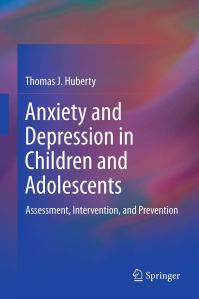
Anxiety and Depression in Children and Adolescents: Assessment, Intervention, and Prevention.
Author(s): Thomas J. Huberty..
Year: 2012.
Edition: First (1st).
Publisher: Springer.
Type(s): Hardcover and eBook.
Synopsis:
Although generally considered adult disorders, anxiety and depression are widespread among children and adolescents, affecting academic performance, social development, and long-term outcomes. They are also difficult to treat and, especially when they occur in tandem, tend to fly under the diagnostic radar.
Anxiety and Depression in Children and Adolescents offers a developmental psychology perspective for understanding and treating these complex disorders as they manifest in young people. Adding the school environment to well-known developmental contexts such as biology, genetics, social structures, and family, this significant volume provides a rich foundation for study and practice by analyzing the progression of pathology and the critical role of emotion regulation in anxiety disorders, depressive disorders, and in combination. Accurate diagnostic techniques, appropriate intervention methods, and empirically sound prevention strategies are given accessible, clinically relevant coverage. Illustrative case examples and an appendix of forms and checklists help make the book especially useful.
Featured in the text:
Developmental psychopathology of anxiety, anxiety disorders, depression, and mood disorders.
Differential diagnosis of the anxiety and depressive disorders.
Assessment measures for specific conditions.
Age-appropriate interventions for anxiety and depression, including CBT and pharmacotherapy.
Multitier school-based intervention and community programmes.
Building resilience through prevention.
Anxiety and Depression in Children and Adolescents is an essential reference for practitioners, researchers, and graduate students in school and clinical child psychology, mental health and school counselling, family therapy, psychiatry, social work, and education.
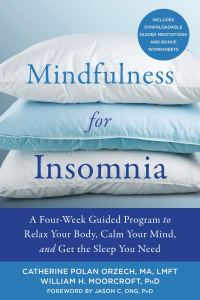
Mindfulness For Insomnia – A Four-Week Guided Program To Relax Your Body, Calm Your Mind, and Get the Sleep You Need.
Author(s): Catherine Polan Orzech (MA and LMFT) and William H. Moorcroft (PhD).
Year: 2019.
Edition: First (1st).
Publisher: New Harbinger.
Type(s): Paperback, Audiobook, and Kindle.
Synopsis:
Sleep plays a crucial role in our waking lives. While we sleep, our bodies are recharging with energy, damaged tissue is repaired, and our memories are stored. When we do not get enough sleep, we are tired, less positive, less motivated, less focused, and more likely to feel depressed. We may even experience more intense cravings for high-fat, sugar-rich foods. And yet, despite the myriad advantages of getting a good night’s sleep, countless people suffer from chronic insomnia. If you’re one of them, this book can help.
In this guide, a trained mindfulness expert teams up with a behavioural sleep specialist to offer evidence-based meditations and an innovative four-week protocol to address the emotional stresses and anxieties that lie at the root of sleep issues.
You’ll learn practices grounded in mindfulness-based stress reduction (MBSR), mindful self-compassion (MSC), and guided mindfulness and acceptance for insomnia (GMATI) to alleviate the mental, emotional, and physical suffering caused by insomnia. You’ll also learn to identify both internal and external factors that may be compromising your sleep, and develop a plan to address these issues.
There is nothing we can do to “make” ourselves fall asleep. In many ways, this is why insomnia can be so maddening. But what we can do is help create the conditions necessary for healthy slumber. The mindfulness tools in this book will help you do exactly that.
Mindfulness for Everyday Living – A Guide for Mental Health Practitioners.
Author(s): Patrick R. Steffen (Editor).
Year: 2020.
Edition: First (1st).
Publisher: Springer.
Type(s): Hardcover and Kindle.
Synopsis:
This book presents practical approaches for integrating mindfulness principles into daily life. It examines how to incorporate mindfulness principles into interventions across various fields and with different client populations. In addition, the volume describes how to teach clients to integrate mindfulness techniques into daily living – from general stress reduction and compassionate positive living to working with children with medical conditions or autism to mindful parenting and healthy marriages.
The book explains key concepts clearly and succinctly and details practical daily approaches and use. Each chapter presents cutting-edge research that is integrated into effective, proven interventions that represent the gold standard of care and are simple and powerful to use, and concludes with recommendations on how each individual can create his or her own personalized mindfulness approach that matches his or her needs and situation. This book is a must have resource for clinicians, therapists, and health professionals as well as researchers, professors, and graduate students in clinical psychology, psychotherapy/counselling, psychiatry, social work, and developmental psychology.
Behaviourism is a systematic approach to understanding the behaviour of humans and other animals. It assumes that behaviour is either a reflex evoked by the pairing of certain antecedent stimuli in the environment, or a consequence of that individual’s history, including especially reinforcement and punishment contingencies, together with the individual’s current motivational state and controlling stimuli. Although behaviourists generally accept the important role of heredity in determining behaviour, they focus primarily on environmental events.
It combines elements of philosophy, methodology, and theory. Behaviourism emerged in the early 1900s as a reaction to depth psychology and other traditional forms of psychology, which often had difficulty making predictions that could be tested experimentally, but derived from earlier research in the late nineteenth century, such as when Edward Thorndike pioneered the law of effect, a procedure that involved the use of consequences to strengthen or weaken behaviour.
During the first half of the twentieth century, John B. Watson devised methodological behaviourism, which rejected introspective methods and sought to understand behaviour by only measuring observable behaviours and events. It was not until the 1930s that B.F. Skinner suggested that covert behaviour – including cognition and emotions – subjects to the same controlling variables as observable behaviour, which became the basis for his philosophy called radical behaviourism. While Watson and Ivan Pavlov investigated how (conditioned) neutral stimuli elicit reflexes in respondent conditioning, Skinner assessed the reinforcement histories of the discriminative (antecedent) stimuli that emits behaviour; the technique became known as operant conditioning.
The application of radical behaviourism – known as applied behaviour analysis – is used in a variety of contexts, including, for example, applied animal behaviour and organisational behaviour management to treatment of mental disorders, such as autism and substance abuse. In addition, while behaviourism and cognitive schools of psychological thought do not agree theoretically, they have complemented each other in the cognitive-behaviour therapies, which have demonstrated utility in treating certain pathologies, including simple phobias, PTSD, and mood disorders.
Branches of Behaviourism
An outline of the various branches of behaviourism can be seen the table below.
Branch
Description
Interbehaviourism
Proposed by Jacob Robert Kantor before B. F. Skinner’s writings.
Methodological Behaviourism
1. John B. Watson’s behaviourism states that only public events (motor behaviours of an individual) can be objectively observed. 2. Although it was still acknowledged that thoughts and feelings exist, they were not considered part of the science of behaviour. 3. It also laid the theoretical foundation for the early approach behaviour modification in the 1970s and early 1980s.
Psychological Behviourism
1. As proposed by Arthur W. Staats, unlike the previous behaviourisms of Skinner, Hull, and Tolman, was based upon a program of human research involving various types of human behaviour. 2. Psychological behaviourism introduces new principles of human learning. 3. Humans learn not only by the animal learning principles but also by special human learning principles. 4. Those principles involve humans’ uniquely huge learning ability. 5. Humans learn repertoires that enable them to learn other things. Human learning is thus cumulative. 6. No other animal demonstrates that ability, making the human species unique.
Radical Behaviourism
1. Skinner’s philosophy is an extension of Watson’s form of behaviourism by theorising that processes within the organism – particularly, private events, such as thoughts and feelings – are also part of the science of behaviour, and suggests that environmental variables control these internal events just as they control observable behaviours. 2. Although private events cannot be directly seen by others, they are later determined through the species’ overt behaviour. 3. Radical behaviourism forms the core philosophy behind behaviour analysis. 4. Willard Van Orman Quine used many of radical behaviourism’s ideas in his study of knowledge and language.
Teleological Behaviourism
1. Proposed by Howard Rachlin, post-Skinnerian, purposive, close to microeconomics. Focuses on objective observation as opposed to cognitive processes.
Theoretical Behaviourism
1. Proposed by J.E.R. Staddon, adds a concept of internal state to allow for the effects of context. 2. According to theoretical behaviourism, a state is a set of equivalent histories, i.e., past histories in which members of the same stimulus class produce members of the same response class (i.e., B.F. Skinner’s concept of the operant). 3. Conditioned stimuli are thus seen to control neither stimulus nor response but state. 4. Theoretical behaviourism is a logical extension of Skinner’s class-based (generic) definition of the operant.
Hullian & Post-Hullian
1. A sub-type of theoretical behaviourism. 2. Theoretical, group data, not dynamic, physiological.
Purposive
1. A sub-type of theoretical behaviourism. 2. Tolman’s behaviouristic anticipation of cognitive psychology
Modern-Day Theory: Radical Behaviourism
B.F. Skinner proposed radical behaviourism as the conceptual underpinning of the experimental analysis of behaviour. This viewpoint differs from other approaches to behavioural research in various ways, but, most notably here, it contrasts with methodological behaviourism in accepting feelings, states of mind and introspection as behaviours also subject to scientific investigation. Like methodological behaviourism, it rejects the reflex as a model of all behaviour, and it defends the science of behaviour as complementary to but independent of physiology. Radical behaviourism overlaps considerably with other western philosophical positions, such as American pragmatism.
Although John B. Watson mainly emphasized his position of methodological behaviourism throughout his career, Watson and Rosalie Rayner conducted the renowned Little Albert experiment (1920), a study in which Ivan Pavlov’s theory to respondent conditioning was first applied to eliciting a fearful reflex of crying in a human infant, and this became the launching point for understanding covert behaviour (or private events) in radical behaviourism. However, Skinner felt that aversive stimuli should only be experimented on with animals and spoke out against Watson for testing something so controversial on a human.
In 1959, Skinner observed the emotions of two pigeons by noting that they appeared angry because their feathers ruffled. The pigeons were placed together in an operant chamber, where they were aggressive as a consequence of previous reinforcement in the environment. Through stimulus control and subsequent discrimination training, whenever Skinner turned off the green light, the pigeons came to notice that the food reinforcer is discontinued following each peck and responded without aggression. Skinner concluded that humans also learn aggression and possess such emotions (as well as other private events) no differently than do nonhuman animals.
Experimental and Conceptual Innovations
This essentially philosophical position gained strength from the success of Skinner’s early experimental work with rats and pigeons, summarized in his books The Behaviour of Organisms and Schedules of Reinforcement. Of particular importance was his concept of the operant response, of which the canonical example was the rat’s lever-press. In contrast with the idea of a physiological or reflex response, an operant is a class of structurally distinct but functionally equivalent responses. For example, while a rat might press a lever with its left paw or its right paw or its tail, all of these responses operate on the world in the same way and have a common consequence. Operants are often thought of as species of responses, where the individuals differ but the class coheres in its function-shared consequences with operants and reproductive success with species. This is a clear distinction between Skinner’s theory and S-R theory.
Skinner’s empirical work expanded on earlier research on trial-and-error learning by researchers such as Thorndike and Guthrie with both conceptual reformulations – Thorndike’s notion of a stimulus-response “association” or “connection” was abandoned; and methodological ones – the use of the “free operant”, so called because the animal was now permitted to respond at its own rate rather than in a series of trials determined by the experimenter procedures. With this method, Skinner carried out substantial experimental work on the effects of different schedules and rates of reinforcement on the rates of operant responses made by rats and pigeons. He achieved remarkable success in training animals to perform unexpected responses, to emit large numbers of responses, and to demonstrate many empirical regularities at the purely behavioural level. This lent some credibility to his conceptual analysis. It is largely his conceptual analysis that made his work much more rigorous than his peers’, a point which can be seen clearly in his seminal work Are Theories of Learning Necessary? in which he criticizes what he viewed to be theoretical weaknesses then common in the study of psychology. An important descendant of the experimental analysis of behaviour is the Society for Quantitative Analysis of Behaviour.
Relation to Language
As Skinner turned from experimental work to concentrate on the philosophical underpinnings of a science of behaviour, his attention turned to human language with his 1957 book Verbal Behaviour and other language-related publications; Verbal Behaviour laid out a vocabulary and theory for functional analysis of verbal behaviour, and was strongly criticised in a review by Noam Chomsky.
Skinner did not respond in detail but claimed that Chomsky failed to understand his ideas, and the disagreements between the two and the theories involved have been further discussed. Innateness theory, which has been heavily critiqued, is opposed to behaviourist theory which claims that language is a set of habits that can be acquired by means of conditioning. According to some, the behaviourist account is a process which would be too slow to explain a phenomenon as complicated as language learning. What was important for a behaviourist’s analysis of human behaviour was not language acquisition so much as the interaction between language and overt behaviour. In an essay republished in his 1969 book Contingencies of Reinforcement, Skinner took the view that humans could construct linguistic stimuli that would then acquire control over their behaviour in the same way that external stimuli could. The possibility of such “instructional control” over behaviour meant that contingencies of reinforcement would not always produce the same effects on human behaviour as they reliably do in other animals. The focus of a radical behaviourist analysis of human behaviour therefore shifted to an attempt to understand the interaction between instructional control and contingency control, and also to understand the behavioural processes that determine what instructions are constructed and what control they acquire over behaviour. Recently, a new line of behavioural research on language was started under the name of relational frame theory.
Education
Behaviourism focuses on one particular view of learning: a change in external behaviour achieved through using reinforcement and repetition (Rote learning) to shape behaviour of learners. Skinner found that behaviours could be shaped when the use of reinforcement was implemented. Desired behaviour is rewarded, while the undesired behaviour is not rewarded. Incorporating behaviourism into the classroom allowed educators to assist their students in excelling both academically and personally. In the field of language learning, this type of teaching was called the audio-lingual method, characterised by the whole class using choral chanting of key phrases, dialogues and immediate correction.
Within the behaviourist view of learning, the “teacher” is the dominant person in the classroom and takes complete control, evaluation of learning comes from the teacher who decides what is right or wrong. The learner does not have any opportunity for evaluation or reflection within the learning process, they are simply told what is right or wrong. The conceptualisation of learning using this approach could be considered “superficial,” as the focus is on external changes in behaviour, i.e., not interested in the internal processes of learning leading to behaviour change and has no place for the emotions involved in the process.
Operant Conditioning
Operant conditioning was developed by B.F. Skinner in 1937 and deals with the management of environmental contingencies to change behaviour. In other words, behaviour is controlled by historical consequential contingencies, particularly reinforcement – a stimulus that increases the probability of performing behaviours, and punishment – a stimulus that decreases such probability. The core tools of consequences are either positive (presenting stimuli following a response), or negative (withdrawn stimuli following a response).
The following descriptions explain the concepts of four common types of consequences in operant conditioning.
Type
Description
Positive Reinforcement
1. Providing a stimulus that an individual desires to reinforce desired behaviours. 2. For example, a child loves playing video games. 3. His mother reinforced his tendency to provide a helping hands to other family members by providing more time for him to play video games.
Negative Reinforcement
1. Removing a stimulus that an individual does not desire to reinforce desired behaviours. 3. For example, a child hates being nagged to clean his room. 3. His mother reinforces his room cleaning by removing the undesired stimulus of nagging after he has cleaned.
Positive Punishment
1. Providing a stimulus that an individual does not desire to decrease undesired behaviours. 2. For example, a child hates to do chores. 3. His parents will try to reduce the undesired behaviour of failing a test by applying the undesired stimuli of having him do more chores around the house.
Negative Punishment
1. Removing a stimulus that an individual desires in order to decrease undesired behaviours. 2. For example, a child loves playing video games. 3. His parents will try to reduce the undesired behaviour of failing an exam by removing the desired stimulus of video games.
Classical experiment in operant conditioning, for example the Skinner Box, “puzzle box” or operant conditioning chamber to test the effects of operant conditioning principles on rats, cats and other species. From the study of Skinner box, he discovered that the rats learned very effectively if they were rewarded frequently with food. Skinner also found that he could shape the rats’ behaviour through the use of rewards, which could, in turn, be applied to human learning as well.
Skinner’s model was based on the premise that reinforcement is used for the desired actions or responses while punishment was used to stop the undesired actions responses that are not. This theory proved that humans or animals will repeat any action that leads to a positive outcome, and avoiding any action that leads to a negative outcome. The experiment with the pigeons showed that a positive outcome leads to learned behaviour since the pigeon learned to peck the disc in return for the reward of food.
These historical consequential contingencies subsequently leads to (antecedent) stimulus control, but in contrast to respondent conditioning where antecedent stimuli elicits reflexive behavior, operant behavior is only emitted and therefore does not force its occurrence. It includes the following controlling stimuli:
Discriminative stimulus (Sd):
An antecedent stimulus that increases the chance of the organism engaging in a behaviour.
One example of this occurred in Skinner’s laboratory.
Whenever the green light (Sd) appeared, it signalled the pigeon to perform the behaviour of pecking because it learned in the past that each time it pecked, food was presented (the positive reinforcing stimulus).
Stimulus delta (S-delta):
An antecedent stimulus that signals the organism not to perform a behaviour since it was extinguished or punished in the past.
One notable instance of this occurs when a person stops their car immediately after the traffic light turns red (S-delta).
However, the person could decide to drive through the red light, but subsequently receive a speeding ticket (the positive punishing stimulus), so this behaviour will potentially not reoccur following the presence of the S-delta.
Respondent Conditioning
Although operant conditioning plays the largest role in discussions of behavioural mechanisms, respondent conditioning (also called Pavlovian or classical conditioning) is also an important behaviour-analytic process that need not refer to mental or other internal processes. Pavlov’s experiments with dogs provide the most familiar example of the classical conditioning procedure. At the beginning, the dog was provided a meat (unconditioned stimulus, UCS, naturally elicit a response that is not controlled) to eat, resulting in increased salivation (unconditioned response, UCR, which means that a response is naturally caused by UCS). Afterwards, a bell ring was presented together with food to the dog. Although bell ring was a neutral stimulus (NS, meaning that the stimulus did not had any effect), dog would start salivate when only hearing a bell ring after a number of pairings. Eventually, the neutral stimulus (bell ring) became conditioned. Therefore, salvation was elicited as a conditioned response (the response same as the unconditioned response), pairing up with meat – the conditioned stimulus). Although Pavlov proposed some tentative physiological processes that might be involved in classical conditioning, these have not been confirmed. The idea of classical conditioning helped behaviourist John Watson discover the key mechanism behind how humans acquire the behaviours that they do, which was to find a natural reflex that produces the response being considered.
Watson’s “Behaviourist Manifesto” has three aspects that deserve special recognition: one is that psychology should be purely objective, with any interpretation of conscious experience being removed, thus leading to psychology as the “science of behaviour”; the second one is that the goals of psychology should be to predict and control behaviour (as opposed to describe and explain conscious mental states); the third one is that there is no notable distinction between human and non-human behaviour. Following Darwin’s theory of evolution, this would simply mean that human behaviour is just a more complex version in respect to behaviour displayed by other species.
In Philosophy
Behaviourism is a psychological movement that can be contrasted with philosophy of mind. The basic premise of radical behaviourism is that the study of behaviour should be a natural science, such as chemistry or physics, without any reference to hypothetical inner states of organisms as causes for their behaviour. Behaviourism takes a functional view of behaviour. According to Edmund Fantino and colleagues: “Behaviour analysis has much to offer the study of phenomena normally dominated by cognitive and social psychologists. We hope that successful application of behavioural theory and methodology will not only shed light on central problems in judgment and choice but will also generate greater appreciation of the behavioural approach.”
Behaviourist sentiments are not uncommon within philosophy of language and analytic philosophy. It is sometimes argued that Ludwig Wittgenstein defended a logical behaviourist position (e.g. the beetle in a box argument). In logical positivism (as held, e.g. by Rudolf Carnap and Carl Hempel), the meaning of psychological statements are their verification conditions, which consist of performed overt behaviour. W.V.O. Quine made use of a type of behaviourism, influenced by some of Skinner’s ideas, in his own work on language. Quine’s work in semantics differed substantially from the empiricist semantics of Carnap which he attempted to create an alternative to, couching his semantic theory in references to physical objects rather than sensations. Gilbert Ryle defended a distinct strain of philosophical behaviourism, sketched in his book The Concept of Mind. Ryle’s central claim was that instances of dualism frequently represented “category mistakes”, and hence that they were really misunderstandings of the use of ordinary language. Daniel Dennett likewise acknowledges himself to be a type of behaviourist, though he offers extensive criticism of radical behaviourism and refutes Skinner’s rejection of the value of intentional idioms and the possibility of free will.
This is Dennett’s main point in “Skinner Skinned.” Dennett argues that there is a crucial difference between explaining and explaining away… If our explanation of apparently rational behavior turns out to be extremely simple, we may want to say that the behavior was not really rational after all. But if the explanation is very complex and intricate, we may want to say not that the behavior is not rational, but that we now have a better understanding of what rationality consists in. (Compare: if we find out how a computer program solves problems in linear algebra, we don’t say it’s not really solving them, we just say we know how it does it. On the other hand, in cases like Weizenbaum’s ELIZA program, the explanation of how the computer carries on a conversation is so simple that the right thing to say seems to be that the machine isn’t really carrying on a conversation, it’s just a trick.) (Curtis Brown, Philosophy of Mind, “Behaviorism: Skinner and Dennett”).
Law of Effect and Trace Conditioning
Law of Effect:
Although Edward Thorndike’s methodology mainly dealt with reinforcing observable behaviour, it viewed cognitive antecedents as the causes of behaviour, and was theoretically much more similar to the cognitive-behaviour therapies than classical (methodological) or modern-day (radical) behaviourism.
Nevertheless, Skinner’s operant conditioning was heavily influenced by the Law of Effect’s principle of reinforcement.
Trace conditioning:
Akin to B.F. Skinner’s radical behaviourism, it is a respondent conditioning technique based on Ivan Pavlov’s concept of a “memory trace” in which the observer recalls the conditioned stimulus (CS), with the memory or recall being the unconditioned response (UR).
There is also a time delay between the CS and unconditioned stimulus (US), causing the conditioned response (CR) – particularly the reflex – to be faded over time.
Molecular versus Molar Behaviourism
Skinner’s view of behaviour is most often characterised as a “molecular” view of behaviour; that is, behaviour can be decomposed into atomistic parts or molecules. This view is inconsistent with Skinner’s complete description of behaviour as delineated in other works, including his 1981 article “Selection by Consequences”. Skinner proposed that a complete account of behaviour requires understanding of selection history at three levels: biology (the natural selection or phylogeny of the animal); behaviour (the reinforcement history or ontogeny of the behavioual repertoire of the animal); and for some species, culture (the cultural practices of the social group to which the animal belongs). This whole organism then interacts with its environment. Molecular behaviourists use notions from melioration theory, negative power function discounting or additive versions of negative power function discounting.
Molar behaviourists, such as Howard Rachlin, Richard Herrnstein, and William Baum, argue that behaviour cannot be understood by focusing on events in the moment. That is, they argue that behaviour is best understood as the ultimate product of an organism’s history and that molecular behaviourists are committing a fallacy by inventing fictitious proximal causes for behaviour. Molar behaviourists argue that standard molecular constructs, such as “associative strength”, are better replaced by molar variables such as rate of reinforcement. Thus, a molar behaviourist would describe “loving someone” as a pattern of loving behaviour over time; there is no isolated, proximal cause of loving behaviour, only a history of behaviours (of which the current behaviour might be an example) that can be summarised as “love”.
Theoretical Behaviourism
Skinner’s radical behaviourism has been highly successful experimentally, revealing new phenomena with new methods, but Skinner’s dismissal of theory limited its development. Theoretical behaviourism recognised that a historical system, an organism, has a state as well as sensitivity to stimuli and the ability to emit responses. Indeed, Skinner himself acknowledged the possibility of what he called “latent” responses in humans, even though he neglected to extend this idea to rats and pigeons. Latent responses constitute a repertoire, from which operant reinforcement can select. Theoretical behaviourism links between the brain and the behaviour that provides a real understanding of the behaviour. Rather than a mental presumption of how brain-behaviour relates.
Behaviour Analysis and Culture
Cultural analysis has always been at the philosophical core of radical behaviourism from the early days (as seen in Skinner’s Walden Two, Science & Human Behaviour, Beyond Freedom & Dignity, and About Behaviourism).
During the 1980s, behaviour analysts, most notably Sigrid Glenn, had a productive interchange with cultural anthropologist Marvin Harris (the most notable proponent of “cultural materialism”) regarding interdisciplinary work. Very recently, behaviour analysts have produced a set of basic exploratory experiments in an effort toward this end. Behaviourism is also frequently used in game development, although this application is controversial.
Behaviour Informatics and Behaviour Computing
With the fast growth of big behavioural data and applications, behaviour analysis is ubiquitous. Understanding behaviour from the informatics and computing perspective becomes increasingly critical for in-depth understanding of what, why and how behaviours are formed, interact, evolve, change and affect business and decision. Behaviour informatics and behaviour computing deeply explore behaviour intelligence and behaviour insights from the informatics and computing perspectives.
Criticisms and Limitations
In the second half of the 20th century, behaviourism was largely eclipsed as a result of the cognitive revolution. This shift was due to radical behaviourism being highly criticised for not examining mental processes, and this led to the development of the cognitive therapy movement. In the mid-20th century, three main influences arose that would inspire and shape cognitive psychology as a formal school of thought:
Noam Chomsky’s 1959 critique of behaviourism, and empiricism more generally, initiated what would come to be known as the “cognitive revolution”.
Developments in computer science would lead to parallels being drawn between human thought and the computational functionality of computers, opening entirely new areas of psychological thought. Allen Newell and Herbert Simon spent years developing the concept of artificial intelligence (AI) and later worked with cognitive psychologists regarding the implications of AI. The effective result was more of a framework conceptualisation of mental functions with their counterparts in computers (memory, storage, retrieval, etc.)
Formal recognition of the field involved the establishment of research institutions such as George Mandler’s Center for Human Information Processing in 1964. Mandler described the origins of cognitive psychology in a 2002 article in the Journal of the History of the Behavioural Sciences.
In the early years of cognitive psychology, behaviourist critics held that the empiricism it pursued was incompatible with the concept of internal mental states. Cognitive neuroscience, however, continues to gather evidence of direct correlations between physiological brain activity and putative mental states, endorsing the basis for cognitive psychology.
Behaviour Therapy
Behaviour therapy is a term referring to different types of therapies that treat mental health disorders. It identifies and helps change people’s unhealthy behaviours or destructive behaviours through learning theory and conditioning. Ivan Pavlov’s classical conditioning, as well as counterconditioning are the basis for much of clinical behaviour therapy, but also includes other techniques, including operant conditioning, or contingency management, and modelling – sometimes called observational learning. A frequently noted behaviour therapy is systematic desensitisation, which was first demonstrated by Joseph Wolpe and Arnold Lazarus.
21st-Century Behaviourism (Behaviour Analysis)
Applied behaviour analysis (ABA) – also called behavioural engineering – is a scientific discipline that applies the principles of behaviour analysis to change behaviour. ABA derived from much earlier research in the Journal of the Experimental Analysis of Behaviour, which was founded by B.F. Skinner and his colleagues at Harvard University. Nearly a decade after the study “The psychiatric nurse as a behavioural engineer” (1959) was published in that journal, which demonstrated how effective the token economy was in reinforcing more adaptive behaviour for hospitalised patients with schizophrenia and intellectual disability, it led to researchers at the University of Kansas to start the Journal of Applied Behaviour Analysis in 1968.
Although ABA and behaviour modification are similar behaviour-change technologies in that the learning environment is modified through respondent and operant conditioning, behaviour modification did not initially address the causes of the behaviour (particularly, the environmental stimuli that occurred in the past), or investigate solutions that would otherwise prevent the behaviour from reoccurring. As the evolution of ABA began to unfold in the mid-1980s, functional behaviour assessments (FBAs) were developed to clarify the function of that behaviour, so that it is accurately determined which differential reinforcement contingencies will be most effective and less likely for aversive consequences to be administered. In addition, methodological behaviourism was the theory underpinning behaviour modification since private events were not conceptualised during the 1970s and early 1980s, which contrasted from the radical behaviourism of behaviour analysis. ABA – the term that replaced behaviour modification – has emerged into a thriving field.
The independent development of behaviour analysis outside the United States also continues to develop. In the US, the American Psychological Association (APA) features a subdivision for Behaviour Analysis, titled APA Division 25: Behaviour Analysis, which has been in existence since 1964, and the interests among behaviour analysts today are wide-ranging, as indicated in a review of the 30 Special Interest Groups (SIGs) within the Association for Behaviour Analysis International (ABAI). Such interests include everything from animal behaviour and environmental conservation, to classroom instruction (such as direct instruction and precision teaching), verbal behaviour, developmental disabilities and autism, clinical psychology (i.e., forensic behaviour analysis), behavioural medicine (i.e., behavioural gerontology, AIDS prevention, and fitness training), and consumer behaviour analysis.
The field of applied animal behaviour – a sub-discipline of ABA that involves training animals – is regulated by the Animal Behaviour Society, and those who practice this technique are called applied animal behaviourists. Research on applied animal behaviour has been frequently conducted in the Applied Animal Behaviour Science journal since its founding in 1974.
ABA has also been particularly well-established in the area of developmental disabilities since the 1960s, but it was not until the late 1980s that individuals diagnosed with autism spectrum disorders were beginning to grow so rapidly and groundbreaking research was being published that parent advocacy groups started demanding for services throughout the 1990s, which encouraged the formation of the Behaviour Analyst Certification Board, a credentialing program that certifies professionally trained behaviour analysts on the national level to deliver such services. Nevertheless, the certification is applicable to all human services related to the rather broad field of behaviour analysis (other than the treatment for autism), and the ABAI currently has 14 accredited MA and PhD programmes for comprehensive study in that field.
Early behavioural interventions (EBIs) based on ABA are empirically validated for teaching children with autism and has been proven as such for over the past five decades. Since the late 1990s and throughout the twenty-first century, early ABA interventions have also been identified as the treatment of choice by the US Surgeon General, American Academy of Paediatrics, and US National Research Council.
Discrete trial training – also called early intensive behavioural intervention – is the traditional EBI technique implemented for thirty to forty hours per week that instructs a child to sit in a chair, imitate fine and gross motor behaviours, as well as learn eye contact and speech, which are taught through shaping, modelling, and prompting, with such prompting being phased out as the child begins mastering each skill. When the child becomes more verbal from discrete trials, the table-based instructions are later discontinued, and another EBI procedure known as incidental teaching is introduced in the natural environment by having the child ask for desired items kept out of their direct access, as well as allowing the child to choose the play activities that will motivate them to engage with their facilitators before teaching the child how to interact with other children their own age.
A related term for incidental teaching, called pivotal response treatment (PRT), refers to EBI procedures that exclusively entail twenty-five hours per week of naturalistic teaching (without initially using discrete trials). Current research is showing that the majority of the population learn more words at a quicker pace through PRT since only a small portion of the non-verbal autistic population have lower receptive language skills – a phrase used to describe individuals who do not pay much attention to overt stimuli or others in their environment – and the latter are the children who initially require discrete trials to acquire speech.
Organizational behaviour management, which applies contingency management procedures to model and reinforce appropriate work behaviour for employees in organisations, has developed a particularly strong following within ABA, as evidenced by the formation of the OBM Network and Journal of Organisational Behaviour Management, which was rated the third highest impact journal in applied psychology by ISI JOBM rating.
Modern-day clinical behaviour analysis has also witnessed a massive resurgence in research, with the development of relational frame theory (RFT), which is described as an extension of verbal behaviour and a “post-Skinnerian account of language and cognition.” RFT also forms the empirical basis for acceptance and commitment therapy, a therapeutic approach to counselling often used to manage such conditions as anxiety and obesity that consists of acceptance and commitment, value-based living, cognitive defusion, counterconditioning (mindfulness), and contingency management (positive reinforcement). Another evidence-based counselling technique derived from RFT is the functional analytic psychotherapy known as behavioural activation that relies on the ACL model – awareness, courage, and love – to reinforce more positive moods for those struggling with depression.
Incentive-based contingency management (CM) is the standard of care for adults with substance-use disorders; it has also been shown to be highly effective for other addictions (i.e. obesity and gambling). Although it does not directly address the underlying causes of behaviour, incentive-based CM is highly behaviour analytic as it targets the function of the client’s motivational behaviour by relying on a preference assessment, which is an assessment procedure that allows the individual to select the preferred reinforcer (in this case, the monetary value of the voucher, or the use of other incentives, such as prizes). Another evidence-based CM intervention for substance abuse is community reinforcement approach and family training that uses FBAs and counterconditioning techniques – such as behavioural skills training and relapse prevention – to model and reinforce healthier lifestyle choices which promote self-management of abstinence from drugs, alcohol, or cigarette smoking during high-risk exposure when engaging with family members, friends, and co-workers.
While schoolwide positive behaviour support consists of conducting assessments and a task analysis plan to differentially reinforce curricular supports that replace students’ disruptive behaviour in the classroom, paediatric feeding therapy incorporates a liquid chaser and chin feeder to shape proper eating behaviour for children with feeding disorders. Habit reversal training, an approach firmly grounded in counterconditioning which uses contingency management procedures to reinforce alternative behaviour, is currently the only empirically validated approach for managing tic disorders.
Some studies on exposure (desensitisation) therapies – which refer to an array of interventions based on the respondent conditioning procedure known as habituation and typically infuses counterconditioning procedures, such as meditation and breathing exercises – have recently been published in behaviour analytic journals since the 1990s, as most other research are conducted from a cognitive-behaviour therapy framework. When based on a behaviour analytic research standpoint, FBAs are implemented to precisely outline how to employ the flooding form of desensitisation (also called direct exposure therapy) for those who are unsuccessful in overcoming their specific phobia through systematic desensitisation (also known as graduated exposure therapy). These studies also reveal that systematic desensitisation is more effective for children if used in conjunction with shaping, which is further termed contact desensitisation, but this comparison has yet to be substantiated with adults.
Other widely published behaviour analytic journals include Behaviour Modification, The Behaviour Analyst, Journal of Positive Behaviour Interventions, Journal of Contextual Behavioural Science, The Analysis of Verbal Behaviour, Behaviour and Philosophy, Behaviour and Social Issues, and The Psychological Record.
Cognitive Behaviour Therapy
Cognitive behaviour therapy (CBT) is a behaviour therapy discipline that often overlaps considerably with the clinical behaviour analysis subfield of ABA, but differs in that it initially incorporates cognitive restructuring and emotional regulation to alter a person’s cognition and emotions.
A popularly noted counselling intervention known as dialectical behaviour therapy (DBT) includes the use of a chain analysis, as well as cognitive restructuring, emotional regulation, distress tolerance, counterconditioning (mindfulness), and contingency management (positive reinforcement). DBT is quite similar to acceptance and commitment therapy, but contrasts in that it derives from a CBT framework. Although DBT is most widely researched for and empirically validated to reduce the risk of suicide in psychiatric patients with borderline personality disorder, it can often be applied effectively to other mental health conditions, such as substance abuse, as well as mood and eating disorders.
Most research on exposure therapies (also called desensitisation) – ranging from eye movement desensitisation and reprocessing therapy to exposure and response prevention – are conducted through a CBT framework in non-behaviour analytic journals, and these enhanced exposure therapies are well-established in the research literature for treating phobic, post-traumatic stress, and other anxiety disorders (such as obsessive compulsive disorder, or OCD).
Cognitive-based behavioural activation (BA) – the psychotherapeutic approach used for depression – is shown to be highly effective and is widely used in clinical practice. Some large randomised control trials have indicated that cognitive-based BA is as beneficial as antidepressant medications but more efficacious than traditional cognitive therapy. Other commonly used clinical treatments derived from behavioural learning principles that are often implemented through a CBT model include community reinforcement approach and family training, and habit reversal training for substance abuse and tics, respectively.
If you suffer from depression, you know that it is not something you can simply snap yourself out of. Depression is a potentially debilitating condition that must be treated and managed with care, but not knowing where to turn for help can make an already difficult time feel even more harrowing. Thankfully, Managing Depression with Mindfulness For Dummies offers authoritative and sensitive guidance on using evidence based and NHS approved Mindfulness Based Interventions similar to Cognitive Behavioural Therapy (CBT) to help empower you to rise above depression and discover a renewed sense of emotional wellbeing and happiness. The book offers cutting edge self-management mindfulness techniques which will help you make sense of your condition and teach you how to relate differently to negative thought patterns which so often contribute to low mood and depression.
The World Health Organisation predicts that more people will be affected by depression than any other health problem by the year 2030. While the statistics are staggering, they offer a small glimmer of hope: you are not alone. As we continue to learn more about how depression works and how it can be treated, the practice of mindfulness proves to be an effective tool for alleviating stress, anxiety, depression, low self-esteem, and insomnia. With the tips and guidance offered inside, you′ll learn how to apply the practice of mindfulness to ease your symptoms of depression and get your life back.
Heal and recover from depression mindfully.
Understand the relationship between thinking, feeling, mood, and depression.
Reduce your depression with effective mindfulness practices.
Implement positive changes and prevent relapse.
Whether you are struggling with low mood or simply wish to learn mindfulness as a way of enriching your life, Managing Depression with Mindfulness For Dummies serves as a beacon of light and hope on your journey to rediscovering your sense of wellbeing, joy and happiness.
The CBT Anxiety Solution Workbook: A Breakthrough Treatment for Overcoming Fear, Worry, and Panic.
Author(s): Matthew McKay (PhD), Michelle Skeen (PsyD), and Patrick Fanning.
Year: 2017.
Edition: First (1st).
Publisher:
Type(s): Paperback.
Synopsis:
You are stronger than your anxiety!
That’s the message best-selling authors Matthew McKay, Michelle Skeen, and Patrick Fanning tell readers in this evidence-based guide for moving past anxiety.
Based in proven-effective cognitive behavioural therapy (CBT), this practical workbook offers a breakthrough exposure-based approach to help readers understand and overcome fears and worries-rather than avoid them.
Developing Resilience: A Cognitive-Behavioural Approach.
Author(s): Michael Neenan.
Year: 2017.
Edition: Second (2nd).
Publisher: Routledge.
Type(s): Hardcover and Kindle.
Synopsis:
Some individuals emerge from grim experiences stronger in mind and spirit than others who suffered the same ordeal. In this updated and revised edition, Michael Neenan focuses on the meanings we attach to life’s adversities in order to understand how we respond to them. This is why different people can react to the same adverse event in a variety of ways such as fighting back or crumbling. Different meanings of what constitutes resilience are also discussed and the author takes issue with the simplistic view of it as bouncing back from adversity which suggests the absence of struggle and emotional pain as well as underestimating how long the process of self-righting can sometimes take.
Developing Resilience shows how people can find constructive ways of dealing with hard times by using the ideas and techniques of cognitive behavioural therapy as well as drawing on the viewpoints and experiences of other writers presented here. This book provides useful guidance and advice on topics including:
Managing negative emotions in difficult times.
Using an assets and liabilities model to understand resilient behaviour.
Distinguishing between what’s within and outside of your control.
Identifying and changing attitudes that undermine resilience building.
Developing self-belief.
Increasing your level of frustration tolerance.
Maintaining a resilient outlook.
This book will be essential reading for anyone interested in learning more about resilience as well as for mental health professionals, coaches and therapists looking for guidance in helping their clients to cope better with adversity.
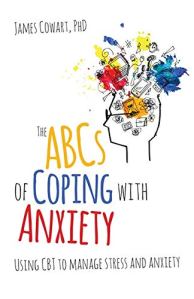
The ABCS of Coping with Anxiety: Using CBT to Manage Stress and Anxiety.
Author(s): James Cowart (PhD).
Year: 2017.
Edition: First (1st).
Publisher: Crown House Publishing.
Type(s): Paperback and Kindle.
Synopsis:
In ‘The ABCS of Coping with Anxiety: Using CBT to Manage Stress and Anxiety’, James Cowart offers a concise collection of tried-and-tested strategies from cognitive behavioural therapy (CBT) and makes them accessible to people who are learning to cope with their anxiety on a day-to-day basis. ‘The ABCS of Coping with Anxiety’ has been placed highly commended in the health and social care category in the 2018 British Medical Association Medical Book Awards.
Anxiety is a normal part of our human nature. For spurring you to make decisions or perform, it can actually be helpful. However, an unchecked pattern of intrusive negative thoughts can escalate the severity and persistence of the level of anxiety experienced over time. As this worsens, it is not uncommon to feel an increasing lack of control ultimately leading to a chain of self-defeating behaviors that may negatively affect all aspects of your daily life. Yet, while it is not possible to directly control our emotions (or what others think or do), it is possible to learn and apply coping skills that can help you face feared situations rather than escape or avoid them.
James Cowart s aim in ‘The ABCS of Coping with Anxiety’ is to share a toolbox of CBT techniques garnered over 40 years clinical practice that will enable you to manage your anxiety on a sustainable path toward taking back some of that control. These self-help strategies focus on developing key coping skills designed to reduce fear and anxiety, and are complemented by a user-friendly, step-by-step program of practical exercises that can be personalized to meet each individual s unique needs.
Informed by his extensive experience and therapeutic knowledge, and with real-life case studies to guide you along your own journey, James s easy-to-remember ABCS approach is as transformative as it is simple:
A is for accepting the thoughts and feelings you can and can not control.
B is for breathing slowly and naturally to relieve and relax muscle tension.
C is for countering any unrealistic or catastrophic thoughts with truth and logic.
S is for staying with it so you can face your fears and anxieties until they are reduced.
Each step is explored in detail in the first four chapters, and further discussion is also dedicated to using the ABCS with different types of anxiety (including social anxiety, specific phobias, panic attacks and obsessive compulsive disorder (OCD)) and coping with related depression, anger and impulsivity. Punctuated with research-informed insight and instruction throughout, The ABCS of Coping with Anxiety’ offers hope, relief and reassurance in helping you master your anxiety and work toward greater independence.
Suitable for those living with anxiety and for the health professionals including psychiatrists, psychologists, social workers and counselors working with them.
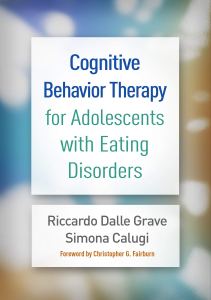
Cognitive Behaviour Therapy for Adolescents with Eating Disorders.
Author(s): Riccardo Dalle Grave and Simona Calugi.
Year: 2020.
Edition: First (1st).
Publisher: Guildford Press.
Type(s): Hardcover and Kindle.
Synopsis:
This state-of-the-art guide provides a powerful transdiagnostic approach for treating adolescent eating disorders (anorexia nervosa, bulimia nervosa, binge-eating disorder, and others) in either outpatient or inpatient settings.
It describes how enhanced cognitive behaviour therapy (CBT-E) – the gold-standard treatment for adult eating disorders – has been systematically adapted and tested with younger patients.
With a strong motivational focus, CBT-E gives the adolescent a key role in decision making. The book presents session-by-session guidelines for assessing patients, determining whether CBT-E is appropriate, developing case conceptualisations, conducting individualised interventions, addressing medical issues, and involving parents.
User-friendly features include case vignettes and reproducible forms; purchasers get access to a Web page where they can download and print the reproducible materials in a convenient 8 1/2″ x 11″ size.
CBT-E is recognised as a best practice for the treatment of adolescent eating disorders by the UK’s National Institute for Health and Care Excellence (NICE).
Author(s): Glenn Waller, Helen Cordery, Emma Corstorphine, Hendrik Hinrichsen, Rachel Lawson, Victoria Mountford, and Katie Russell.
Year: 2007.
Edition: First (1st), Illustrated Edition.
Publisher: Cambridge University Press.
Type(s): Paperback and Kindle.
Synopsis:
This book describes the application of cognitive behavioural principles to patients with a wide range of eating disorders – it covers those with straightforward problems and those with more complex conditions or co-morbid states.
The book takes a highly pragmatic view. It is based on the published evidence, but stresses the importance of individualised, principle-based clinical work.
It describes the techniques within the widest clinical context, for use across the age range and from referral to discharge.
Throughout the text, the links between theory and practice are highlighted in order to stress the importance of the flexible application of skills to each new situation. Case studies and sample dialogs are employed to demonstrate the principles in action and the book concludes with a set of useful handouts for patients and other tools.
This book will be essential reading for all those working with eating-disordered patients including psychologists, psychiatrists, nurses, counsellors, dieticians, and occupational therapists.





 Mental Health Matters
You must be logged in to post a comment.