What is the Impact of COVID-19 & Lockdown on the Mental Health of Children & Adolescents?

Research Paper Title

Impact of COVID-19 and lockdown on mental health of children and adolescents: A narrative review with recommendations.

Background

COVID-19 pandemic and lockdown has brought about a sense of fear and anxiety around the globe. This phenomenon has led to short term as well as long term psychosocial and mental health implications for children and adolescents. The quality and magnitude of impact on minors is determined by many vulnerability factors like developmental age, educational status, pre-existing mental health condition, being economically underprivileged or being quarantined due to infection or fear of infection.

This paper is aimed at narratively reviewing various articles related to mental-health aspects of children and adolescents impacted by COVID-19 pandemic and enforcement of nationwide or regional lockdowns to prevent further spread of infection.

Methods

The researchers conducted a review and collected articles and advisories on mental health aspects of children and adolescents during the COVID-19 pandemic. They selected articles and thematically organized them.

Results

The researchers put up their major findings under the thematic areas of impact on young children, school and college going students, children and adolescents with mental health challenges, economically underprivileged children, impact due to quarantine and separation from parents and the advisories of international organisations. They have also provided recommendations to the above.

Conclusions

There is a pressing need for planning longitudinal and developmental studies, and implementing evidence based elaborative plan of action to cater to the psycho social and mental health needs of the vulnerable children and adolescents during pandemic as well as post pandemic. There is a need to ameliorate children and adolescents’ access to mental health support services geared towards providing measures for developing healthy coping mechanisms during the current crisis.

For this innovative child and adolescent mental health policies with direct and digital collaborative networks of psychiatrists, psychologists, paediatricians, and community volunteers are deemed necessary.

Reference

Singh, S., Roy, D. Sinha, K., Parveen, S., Sharma, G. & Joshi, G. (2020) Impact of COVID-19 and lockdown on mental health of children and adolescents: A narrative review with recommendations. Psychiatry Research. 293, pp.113429. doi: 10.1016/j.psychres.2020.113429. Online ahead of print.

Linking PTSD and the Parents of Children with Cancer

Research Paper Title

Post-Traumatic Stress Symptoms among Lithuanian Parents Raising Children with Cancer.

Background

The study aims to evaluate post-traumatic stress symptom expression among Lithuanian parents raising children with cancer, including social, demographic, and medical factors, and to determine their significance for the risk of developing post-traumatic stress disorder.

Methods

The study was carried out in two major Lithuanian hospitals treating children with oncologic diseases. The cross-sectional study included 195 parents, out of which 151 were mothers (77.4%) and 44 were fathers (22.6%). Post-traumatic stress symptoms were assessed using the Impact of Event Scale-Revised. To collect the sociodemographic, childhood cancer, and treatment data, we developed a questionnaire that was completed by the parents. Main study results were obtained using multiple linear regression.

Results

A total of 75.4% of parents caring for children with cancer had pronounced symptoms of post-traumatic stress disorder. The female gender (β = 0.83, p < 0.001) was associated with an increased manifestation of symptoms, whilst higher parental education (β = -0.21, p = 0.034) and the absence of relapse (β = -0.48, p < 0.001) of the child’s disease reduced post-traumatic stress symptom expression.

Conclusions

Obtained results confirmed that experiencing a child’s cancer diagnosis and treatment is extremely stressful for many parents. This event may lead to impaired mental health and increased post-traumatic stress disorder (PTSD) risk; hence, it is necessary to provide better support and assistance to parents of children with cancer.

Reference

Baniene, I. & Zemaitiene, N. (2020) Post-Traumatic Stress Symptoms among Lithuanian Parents Raising Children with Cancer. Children (Basel, Switzerland). 7(9), pp.116. doi: 10.3390/children7090116.

Book: Understanding Children and Young People’s Mental Health

Book Title:

Understanding Children and Young People’s Mental Health.

Author(s): Anne Claveirole and Martin Gaughan (Editors).

Year: 2010.

Edition: First (1st), Illustrated Edition.

Publisher: Wiley-Blackwell.

Type(s): Paperback and Kindle.

Synopsis:

Understanding Children and Young People’s Mental Health has been designed to help the student and newly qualified health care professional to familiarise themselves with the key theoretical frameworks underpinning the field of children and young people’s mental health.

It explores the mental health challenges that children and young people face, and how we as adults can work alongside them to help them face and overcome such challenges.

This book provides comprehensive information on the theory and practice of particular mental health difficulties which children and young people may have to face, including self-harm, depression, suicide, child abuse, eating disorders, substance misuse, and early onset psychosis.

Understanding Children and Young People’s Mental Health is essential reading for pre-registration students in nursing and healthcare on child and mental health branches, and for newly qualified nursing, health and social care practitioners who work with children and young people.

  • Brings together specialist practitioners and academics in the field
  • Incorporates the latest guidelines and policies.
  • Practical and accessible in style with learning outcomes, activities, examples and recommended reading in each chapter.

What is the Impact of COVID-19 & Lockdown on the Mental Health of Children & Adolescents?

Research Paper Title

Impact of COVID-19 and lockdown on mental health of children and adolescents: A narrative review with recommendations.

Background

COVID-19 pandemic and lockdown has brought about a sense of fear and anxiety around the globe. This phenomenon has led to short term as well as long term psychosocial and mental health implications for children and adolescents.

The quality and magnitude of impact on minors is determined by many vulnerability factors like developmental age, educational status, pre-existing mental health condition, being economically underprivileged or being quarantined due to infection or fear of infection.

This paper is aimed at narratively reviewing various articles related to mental-health aspects of children and adolescents impacted by COVID-19 pandemic and enforcement of nationwide or regional lockdowns to prevent further spread of infection.

Methods

The researchers conducted a review and collected articles and advisories on mental health aspects of children and adolescents during the COVID-19 pandemic. They selected articles and thematically organised them. The researchers put up their major findings under the thematic areas of impact on young children, school and college going students, children and adolescents with mental health challenges, economically underprivileged children, impact due to quarantine and separation from parents and the advisories of international organisations. They have also provided recommendations to the above.

Conclusions

There is a pressing need for planning longitudinal and developmental studies, and implementing evidence based elaborative plan of action to cater to the psycho social and mental health needs of the vulnerable children and adolescents during pandemic as well as post pandemic.

There is a need to ameliorate children and adolescents’ access to mental health support services geared towards providing measures for developing healthy coping mechanisms during the current crisis.

For this innovative, child and adolescent mental health policies with direct and digital collaborative networks of psychiatrists, psychologists, paediatricians, and community volunteers are deemed necessary.

Reference

Singh, S., Roy, D., Sinha, K., Parveen, S. Sharma, G. & Joshi, G. (2020) Impact of COVID-19 and lockdown on mental health of children and adolescents: A narrative review with recommendations. Psychiatry Research. doi: 10.1016/j.psychres.2020.113429. Online ahead of print.

Book: Raising Generation Rx

Book Title:

Raising Generation Rx – Mothering Kids with Invisible Disabilities in an Age of Inequality.

Author(s): Linda M. Blum.

Year: 2015.

Edition: First (1ed).

Publisher: American Psychiatric Association Publishing.

Type(s): Hardcover, Paperback and Kindle.

Synopsis:

Recent years have seen an explosion in the number of children diagnosed with “invisible disabilities” such as ADHD, mood and conduct disorders, and high-functioning autism spectrum disorders. Whether they are viewed as biological problems in brain wiring or as results of the increasing medicalisation of childhood, the burden of dealing with the day-to-day trials and complex medical and educational decisions falls almost entirely on mothers. Yet few ask how these mothers make sense of their children’s troubles, and to what extent they feel responsibility or blame. Raising Generation Rx offers a groundbreaking study that situates mothers’ experiences within an age of neuroscientific breakthrough, a high-stakes knowledge-based economy, cutbacks in public services and decent jobs, and increased global competition and racialised class and gender inequality.

Through in-depth interviews, observations of parents’ meetings, and analyses of popular advice, Linda Blum examines the experiences of diverse mothers coping with the challenges of their children’s “invisible disabilities” in the face of daunting social, economic, and political realities. She reveals how mothers in widely varied households learn to advocate for their children in the dense bureaucracies of the educational and medical systems; wrestle with anguishing decisions about the use of psychoactive medications; and live with the inescapable blame and stigma in their communities.

The Importance of Positive Mental Health for both Mother & Child

Research Paper Title

Positive Maternal Mental Health, Parenting, and Child Development.

Background

While maternal mental health is an important influence on child development, the existing literature focuses primarily on negative aspects of maternal mental health, particularly symptoms of depression, anxiety, or states of distress.

The researchers provide a review of the evidence on the potential importance of positive mental health for both mother and child.

The evidence suggests that positive mental health is a distinct construct that is associated with improved birth outcomes and potentially with specific forms of parenting that promote both academic achievement and socioemotional function.

They review studies that provide a plausible biological basis for the link between positive mental health and parenting, focusing on oxytocin-dopamine interactions.

They caution that the evidence is largely preliminary and suggest directions for future research, noting the importance of identifying the operative dimensions of positive maternal mental health in relation to specific outcomes.

Finally, they suggest that the inclusion of positive maternal mental health provides the potential for a more comprehensive understanding of parental influences on child development.

Reference

Phua, D.Y., Lee, M.Z.L. & Meaney, M.J. (2020) Positive Maternal Mental Health, Parenting, and Child Development. Biological Psychiatry. 87(4), pp.328-337. doi: 10.1016/j.biopsych.2019.09.028. Epub 2019 Oct 16.

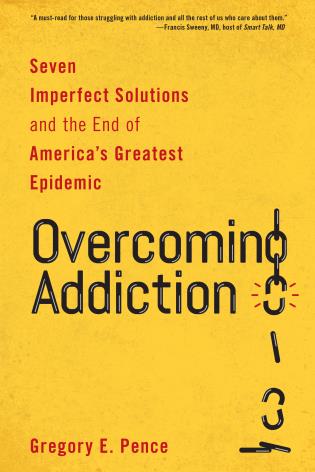
Book: Overcoming Addiction

Book Title:

Overcoming Addiction: Seven Imperfect Solutions and the End of America’s Greatest Epidemic.

Author(s): Gregory E. Pence.

Year: 2020.

Edition: First (1ed).

Publisher: Rowman & Littlefield Publishers.

Type(s): Hardcover and Kindle.

Synopsis:

With an estimated 20 million people addicted to drugs or alcohol, North America is in the grip of an unrivalled epidemic. Overcoming Addiction reveals how seemingly contradictory treatment theories must come together to understand and end dangerous substance abuse.

Addiction treatment has become a billion-dollar industry based on innumerable clinical and psychological perspectives. Zealous clinicians and researchers have gathered around the theories, proclaiming each as the sole truth and excluding alternate views. In this book, leading bioethicist Gregory Pence demystifies seven foundational theories of addiction and addiction treatment. From Alcoholics and Narcotics Anonymous to methadone clinics and brain chemistry studies, each method holds foundation beliefs about human nature, free will, and biology. Understanding the diversity of these theories allows us to build a framework for more effective treatment for all addiction types.

For individuals suffering from addiction, their families, and those who devote their lives to ending addiction’s grasp on our society, this book offers a fresh perspective and a framework for long-term solutions.

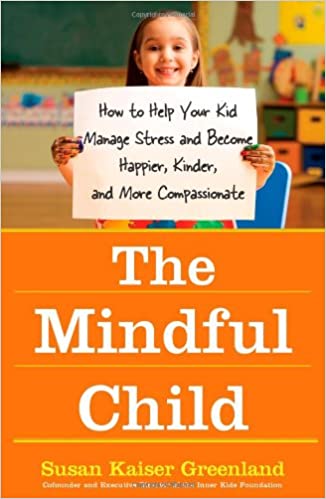
Book: The Mindful Child

Book Title:

Mindful Child, The – How to Help Your Kid Manage Stress and Become Happier, Kinder, and More Compassionate.

Author(s): Susan Kaiser Greenland.

Year: 2010.

Edition: First (1ed).

Publisher: Atria Books.

Type(s):Paperback, audiobook and Kindle.

Synopsis:

The techniques of mindful awareness have helped millions of adults reduce stress in their lives. Now, children -who are under more pressure than ever before – can learn to protect themselves with these well-established methods adapted for their ages. Based on a programme affiliated with UCLA, The Mindful Child is a groundbreaking book, the first to show parents how to teach these transformative practices to their children.

Mindful awareness works by enabling you to pay closer attention to what is happening within you – your thoughts, feelings, and emotions – so you can better understand what is happening to you.

The Mindful Child extends the vast benefits of mindfulness training to children from four to eighteen years old with age-appropriate exercises, songs, games, and fables that Susan Kaiser Greenland has developed over more than a decade of teaching mindful awareness to kids.

These fun and friendly techniques build kids’ inner and outer awareness and attention, which positively affects their academic performance as well as their social and emotional skills, such as making friends, being compassionate and kind to others, and playing sports, while also providing tools to manage stress and to overcome specific challenges like insomnia, overeating, ADHD, hyper-perfectionism, anxiety, and chronic pain.

When children take a few moments before responding to stressful situations, they allow their own healthy inner compasses to click in and guide them to become more thoughtful, resilient, and empathetic.

The step-by-step process of mental training presented in The Mindful Child provides tools from which all children – and all families – will benefit.

Foster Care, Mental Health, & Primary Care Visits

Research Paper Title

A Comparison Study of Primary Care Utilization and Mental Health Disorder Diagnoses Among Children In and Out of Foster Care on Medicaid.

Background

The purpose of this study was to compare the utilisation of primary care services and presence of mental health disorder diagnoses among children in foster care to children on Medicaid not in foster care in a large health system.

Methods

The data for this study were analysed from a clinical database of a multi-practice paediatric health system in Houston, Texas.

The sample included more than 95 000 children covered by Medicaid who had at least one primary care visit during the 2-year study period.

Results and Conclusions

The results of the study demonstrated that children not in foster care had a greater number of primary care visits and the odds of having >3 visits were significantly lower for children in foster care with a mental health disorder diagnosis.

Additionally, more than a quarter of children in foster care had a diagnosis of a mental health disorder, compared with 15% of children not in foster care.

Reference

Keefe, R.J., Van Horne, B.S., Cain, C.M., Budolfson, K., Thompson, R. & Greeley, C.S. (2020) A Comparison Study of Primary Care Utilization and Mental Health Disorder Diagnoses Among Children In and Out of Foster Care on Medicaid. Clinical Pediatrics. 59(3), pp.252-258. doi: 10.1177/0009922819898182. Epub 2020 Jan 3.

Is There a link between Separation Anxiety Trajectory in Early Childhood & Risk for Sleep Bruxism?

Research Paper Title

High separation anxiety trajectory in early childhood is a risk factor for sleep bruxism at age 7.

Background

The evolution of sleep bruxism manifestations and their co-occurrence with separation anxiety in early childhood remain unclear.

The researchers threefold aim was to:

  1. Describe developmental sleep bruxism trajectories in early childhood;
  2. Investigate co-occurrences between trajectories of sleep bruxism and separation anxiety; and
  3. Determine whether distinct trajectories of separation anxiety increase the risk of presenting sleep bruxism during the first year of elementary school.

Methods

This study is part of the Québec Longitudinal Study of Child Development.

Sleep bruxism scores were assessed from age 1.5 to 7 years with the Self-Administered Questionnaire for Mother (n=1,946).

Separation anxiety scores were measured from age 1.5 to 6 years with the Interviewer-Completed Computerised Questionnaire (n=2,045).

Results

The researchers identified:

  • Four sleep bruxism trajectories from age 1.5 to 6 years:
    • High-Increasing sleep bruxism at age 1.5 (14.1%);
    • High-Increasing sleep bruxism at age 4 (18.3%);
    • Low-Persistent sleep bruxism (12.1%); and
    • Never-Persistent sleep bruxism (55.5%).
  • Four separation anxiety trajectories from age 1.5 to 6 years:
    • Low-Persistent separation anxiety (60.2%);
    • High-Increasing separation anxiety (6.9%);
    • High-Decreasing separation anxiety (10.8%); and
    • Low-Increasing separation anxiety (22.1%).

Sleep bruxism and separation anxiety trajectories were weakly associated (X2=37.84, P<0.001).

Compared with preschoolers belonging to the Low-Persistent separation anxiety trajectory, preschoolers in the High-Increasing separation anxiety trajectory had almost double the risk of presenting sleep bruxism at age 7 (95% CI=1.25-3.22, P=.04).

Conclusions

When separation anxiety issues are detected in early childhood, it would be useful to target sleep bruxism during the first year of elementary school.

Reference

Rostami, E.G., Touchette, É., Huynh, N., Montplaisir, J., Tremblay, R.E., Battaglia, M. & Boivin, M. (2020) High separation anxiety trajectory in early childhood is a risk factor for sleep bruxism at age 7.