Book: Best Ways to Manage Stress

300300

Book Title:

Best Ways to Manage Stress: 30 Easy Ways to Beat Stress.

Author(s): Richard Malishe.

Year: 2020.

Edition: First (1st).

Publisher: Unknown.

Type(s): Paperback and Kindle.

Synopsis:

Best Ways to Manage Stress is the guide you need to not only understand why you are so stressed but to help you get rid of that stress for good. You do not need to keep feeling overwhelmed and discouraged by your stress; you can take charge of your feelings and walk with more confidence and reassurance. The best part is that you can start making changes today! You do not have to wait to feel better.

Most people know that stress is a part of many people’s lives, and they have probably felt the impacts of stress on their lives. You can probably list things that are stressing you right this very minute. Thus, stress is one of the most prevalent problems that humans face, but it is too often portrayed as something annoying without being shown as dangerous. The truth is that stress is incredibly harmful not only to your mental health but also to your physical health. Stress kills thousands of people each year, and it costs healthcare systems around the world billions of dollars. Heart disease, obesity, and immune disorders are just some of the ailments impacted by stress, and we have only begun to realise the tremendous influence of stress on the body. Imagine how much healthier people would be if they could get their stress under control. You can heal your body by merely being less stressed.

Stress most obviously impacts your mental health. You are probably familiar with that awful feeling of tension that consumes your body when you feel stressed. This feeling leads to side effects like rumination, chronic worry, and the inability to focus. Unfortunately, stress can also lead to mental illnesses like anxiety disorders and depression. The more you let stress linger, the worse your condition becomes. Some people go their whole lives feeling awful because of how much stress they have.

You don’t need to be like other people. You do not have to go to work and feel stressed. You do not have to lay in bed at night worrying about what will happen in the morning. This book will show you that you can take a breathe and let the knots in your shoulders dissolve. We need to stop calling stress normal because it does not have to be normal anymore. With the right tools, humans could release themselves from their stress and live their lives more freely.

Linking New Interests & Activities with Anxiety & Depression in Retirement for Navy Veterans

Research Paper Title

The impact of socio-demographic features on anxiety and depression amongst navy veterans after retirement: a cross-sectional study.

Background

Retirement from work may trigger various changes in everyday life that affect mental health.

The current cross-sectional study, conducted with 231 veterans, examines the relationship between socio-demographic features and both anxiety and depression in navy veterans after retirement.

Methods

Spielberg’s State-Trait Anxiety Inventory (STAI) was used for anxiety assessment, and the Beck Depression Inventory (BDI) was used for depression assessment.

The analysis was performed with the Statistical Package for Social Sciences (SPSS), version 20.0.

Results

It was found that the mean score of state anxiety was 41 and trait anxiety, 38.

Severe depression was found in 6.5% of the veterans, moderate in 8.3% and mild in 21.7%.

The presence of a serious health problems was an independent predictor of both anxiety and depression’s more serious symptoms.

Conclusions

Inversely, the stability in terms of retirement choice was negatively related to depression, while the development of new interests and activities after retirement was negatively related to both anxiety and depression.

Further, life satisfaction after retirement was a predictor of lower current anxiety levels among veterans.

Reference

Georgantas, D., Tsounis, A., Vidakis, I., Malliarou, M. & Sarafis, P. (2020) The impact of socio-demographic features on anxiety and depression amongst navy veterans after retirement: a cross-sectional study. BMC Rsearch Notes. 13(1), pp.122. doi: 10.1186/s13104-020-04966-x.

Maternal Mental Health MATTERS: Yes it Does

Research Paper Title

Maternal Mental Health MATTERS.

Background

Depression and anxiety during pregnancy and the postpartum period are common and have significant negative impacts on mother and child.

Suicide is a leading cause of maternal mortality.

Evidence-based efforts for screening, assessment, and treatment improve maternal and infant mental health, as well as overall family health, throughout the lives of women and children.

Reference

Kimmel, M. (2020) Maternal Mental Health MATTERS. North Carolina Medical Journal. 81(1), pp.45-50. doi: 10.18043/ncm.81.1.45.

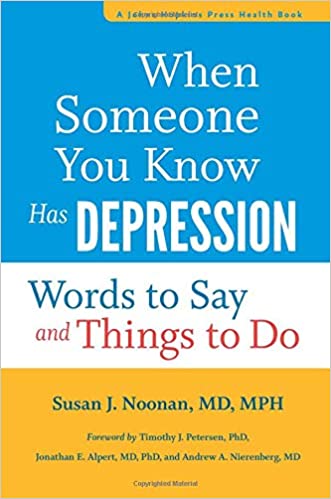
Book: When Someone You Know Has Depression

Book Title:

When Someone You Know Has Depression – Words to Say and Things to Do.

Author(s): Susan J Noonan M.D. MPH.

Year: 2016.

Edition: First (1ed).

Publisher: John Hopkins University Press (JHUP).

Type(s): Paperback, Audiobook, and Kindle.

Synopsis:

Mood disorders such as depression and bipolar disorder can be devastating to the person who has the disorder and to his or her family. Depression and bipolar disorder affect every aspect of how a person functions, including their thoughts, feelings, actions, and relationships with other people. Family members and close friends are often the first to recognise the subtle changes and symptoms of depression. They are also the ones who provide daily support to their relative or friend, often at great personal cost. They need to know what to say or do to cope with the person’s impaired thinking and fluctuating moods.

In When Someone You Know Has Depression, Dr. Susan J. Noonan draws on first-hand experience of the illness and evidence-based medical information. As a physician she has treated, supported, and educated those living with – and those caring for – a person who has a mood disorder. She also has lived through the depths of her own mood disorder. Here, she has written a concise and practical guide to caring fevor someone who has depression or bipolar disorder. This compassionate book offers specific suggestions for what to say, how to encourage, and how to act around a loved one – as well as when to back off.

Dr Noonan describes effective communication strategies to use during episodes of depression and offers essential advice for finding appropriate professional help. She also explains how to reinforce progress made in therapy, how to model resilience skills, and how caregivers can and must care for themselves. Featuring tables and worksheets that convey information in an accessible way, as well as references, resources, and a glossary, this companion volume to Dr. Noonan’s patient-oriented Managing Your Depression is an invaluable handbook for readers navigating and working to improve the depression of someone close to them.

Book: The Instinct to Heal

Book Title:

The Instinct to Heal – Curing Depression, Anxiety and Stress Without Drugs and Without Talk Therapy.

Author(s): David Servan-Schreiber.

Year: 2004.

Edition: First (1ed).

Publisher: Rodale Books.

Type(s): Hardcover, Paperback and Kindle.

Synopsis:

Millions of Americans try drugs or talk therapy to relieve depression and anxiety, but recent scientific studies prove certain alternative treatments can work as well or better-often bringing on a cure.

In the extraordinary international bestseller The Instinct to Heal, award-winning psychiatrist and neuroscientist David Servan-Schreiber, M.D., Ph.D., presents seven natural approaches, each with proven results, that together form a treatment plan that builds on the body’s relationship to the brain, yielding faster, more dramatic, and permanent changes. People who want to leave suffering behind now can live joyful, happy lives.

Book: Home Exercise to Relieve Anxiety

Book Title:

Home Exercise to Relieve Anxiety – The Ultimate Guide for Healthy Lifestyle and Happiness.

Author(s): Henri-Cartier Bresson.

Year: 2020.

Edition: First (1ed).

Publisher: Amazon.

Type(s): Paperback and Kindle.

Synopsis:

Are you tired of experiencing numb feet and fingers, sweaty nights, insomnia and other tiresome occurrences?

Is your friend, spouse, mother, father, sibling or anyone close to you suffering from uneasiness, heart palpitations and other symptoms associated with anxiety?

Have you been confusing anxiety with depression?

Do you feel uninformed about anxiety?

If you answered yes to any of the above questions, then you should proceed with digesting the subsequent chapters of this book.

This workbook on anxiety embodies that practice in an easy, user-friendly format that will guide you through understanding your anxiety, knowing where it comes from, and seeing how to best approach it in a unique way that will work for you.

Every one of us is affected by anxiety at some point in our life. You may experience mild anxiety before taking part in a job interview or public speaking session. These types of anxiety shrink when the event is over. However, when the anxiety appears out of nowhere in the absence of any actual threat and interferes with our daily lives, we have to do something about that.

There is nothing to fear in deciding now to face your anxieties. They are a part of you, just like your arms or legs. You can not remove your legs, neither should you amputate your anxiety. So, take a deep breath, turn the page, and meet your anxieties here and now. Get to know them, appreciate them, and learn from them.

This workbook is meant to be your companion. The more you practice it, the better your life will become dealing with your anxiety. Anxiety is not something that has to run your life instead of you. Anxiety should be something you learn to simply acknowledge as a dinner guest and move on without fear that it will start a food fight. That is why it is important to practice the exercises in this workbook daily. Write down your feelings daily. This is a day to day attack on anxiety in the fight for your freedom from it.

Here Is A Preview Of What You Will Learn :- 

  • What is anxiety.
  • Importance of Anxiety.
  • Symptoms of anxiety.
  • Causes of anxiety.
  • Physical Exercise and anxiety.
  • Anxiety Exercises.
  • How to Create a Successful Exercise Programme.
  • How to Enjoy Exercise.

This book is a guide to help you deal with your anxieties in a productive way, and it contains many exercises for doing this; however, if you feel totally overwhelmed, you may want to combine the use of this book with professional counselling sessions. When used together, they will provide you with even more powerful guidance and help as you face and embrace your anxieties.

Coronavirus: Healthcare Workers & their Mental Health

Research Paper Title

Factors Associated With Mental Health Outcomes Among Health Care Workers Exposed to Coronavirus Disease 2019.

Background

Health care workers exposed to coronavirus disease 2019 (COVID-19) could be psychologically stressed.

Objective: To assess the magnitude of mental health outcomes and associated factors among health care workers treating patients exposed to COVID-19 in China.

Methods

This cross-sectional, survey-based, region-stratified study collected demographic data and mental health measurements from 1257 health care workers in 34 hospitals from January 29, 2020, to February 3, 2020, in China. Health care workers in hospitals equipped with fever clinics or wards for patients with COVID-19 were eligible.

The degree of symptoms of depression, anxiety, insomnia, and distress was assessed by the Chinese versions of the 9-item Patient Health Questionnaire, the 7-item Generalized Anxiety Disorder scale, the 7-item Insomnia Severity Index, and the 22-item Impact of Event Scale-Revised, respectively. Multivariable logistic regression analysis was performed to identify factors associated with mental health outcomes.

Results

A total of 1,257 of 1,830 contacted individuals completed the survey, with a participation rate of 68.7%. A total of 813 (64.7%) were aged 26 to 40 years, and 964 (76.7%) were women. Of all participants, 764 (60.8%) were nurses, and 493 (39.2%) were physicians; 760 (60.5%) worked in hospitals in Wuhan, and 522 (41.5%) were frontline health care workers.

A considerable proportion of participants reported symptoms of depression (634 [50.4%]), anxiety (560 [44.6%]), insomnia (427 [34.0%]), and distress (899 [71.5%]).

Nurses, women, frontline health care workers, and those working in Wuhan, China, reported more severe degrees of all measurements of mental health symptoms than other health care workers (eg, median [IQR] Patient Health Questionnaire scores among physicians vs nurses: 4.0 [1.0-7.0] vs 5.0 [2.0-8.0]; P = .007; median [interquartile range {IQR}] Generalized Anxiety Disorder scale scores among men vs women: 2.0 [0-6.0] vs 4.0 [1.0-7.0]; P < .001; median [IQR] Insomnia Severity Index scores among frontline vs second-line workers: 6.0 [2.0-11.0] vs 4.0 [1.0-8.0]; P < .001; median [IQR] Impact of Event Scale-Revised scores among those in Wuhan vs those in Hubei outside Wuhan and those outside Hubei: 21.0 [8.5-34.5] vs 18.0 [6.0-28.0] in Hubei outside Wuhan and 15.0 [4.0-26.0] outside Hubei; P < .001).

Multivariable logistic regression analysis showed participants from outside Hubei province were associated with lower risk of experiencing symptoms of distress compared with those in Wuhan (odds ratio [OR], 0.62; 95% CI, 0.43-0.88; P = .008).

Frontline health care workers engaged in direct diagnosis, treatment, and care of patients with COVID-19 were associated with a higher risk of symptoms of depression (OR, 1.52; 95% CI, 1.11-2.09; P = .01), anxiety (OR, 1.57; 95% CI, 1.22-2.02; P < .001), insomnia (OR, 2.97; 95% CI, 1.92-4.60; P < .001), and distress (OR, 1.60; 95% CI, 1.25-2.04; P < .001).

Conclusions

In this survey of heath care workers in hospitals equipped with fever clinics or wards for patients with COVID-19 in Wuhan and other regions in China, participants reported experiencing psychological burden, especially nurses, women, those in Wuhan, and frontline health care workers directly engaged in the diagnosis, treatment, and care for patients with COVID-19.

Reference

Jianbo, Lai., Simeng, Ma., Ying, Wang., Zhongxiang, Cai., Jianbo, Hu., Ning, Wei., Jiang, Wu., Hui, Du., Tingting, Chen., Ruiting, Li., Huawei, Tan., Lijun, Kang., Lihua, Yao., Manli, Huang., Huafen, Wang., Gaohua, Wang., Zhongchun, Liu. & Shaohua, Hu. (2020) Factors Associated With Mental Health Outcomes Among Health Care Workers Exposed to Coronavirus Disease 2019. JAMA Network Open. 3(3):e203976. doi: 10.1001/jamanetworkopen.2020.3976.

Can a Novel Algorithmic Approach Operationalise the Management of Depression & Anxiety for Primary Care?

Research Paper Title

Effects of Brief Depression and Anxiety Management Training on a US Army Division’s Primary Care Providers.

Background

There is a nation-wide gap between the prevalence of mental illness and the availability of psychiatrists. This places reliance on primary care providers (PCPs) to help meet some of these mental health needs.

Similarly, the US Army expects its PCPs to be able to manage common mental illnesses such as anxiety and depression. Therefore, PCPs must be able to close their psychiatric skills gaps via lifelong learning.

Methods

Following needs assessment of PCPs in a US Army division, the curriculum was developed. Objectives targeted pharmacological management of depression and anxiety. Behavioural intervention skills were also taught to treat insomnia.

Didactics and case-based small groups were used. A novel psychotropic decisional tool was developed and provided to learners to assist and influence their future psychiatric practice. Pre-training, immediate post-training, and 6-month assessments were done via survey to evaluate confidence and perceived changes in practice.

The curriculum was executed as a quality improvement project using the Plan, Do, Study, Act framework.

Results

Among 35 learners, immediate confidence in selecting optimal psychotropic and perceived knowledge, skill to change the dose or type of medication, and confidence in prescribing behavioural sleep improved significantly with large effect sizes.

At 6-month follow-up, learners reported that they were more likely to adjust medications for anxiety or depression and were more likely to start a new medication for anxiety or depression because of the training with moderate effect sizes. Use and satisfaction with the psychotropic decisional tool are also reported.

Conclusions

The psychotropic decisional tool illustrates a novel algorithmic approach for operationalising the management of depression and anxiety.

Similar approaches can improve the skills of a variety of PCPs in the management of psychiatric disorders.

Further studies in the military operational setting are needed to assess the effects of similar educational interventions on access to behavioural health care, suicidal behaviours, and unit medical readiness.

Reference

Amin, R. & Thomas, M.A. (2020) Effects of Brief Depression and Anxiety Management Training on a US Army Division’s Primary Care Providers. Military Medicine. doi: 10.1093/milmed/usz443. Online ahead of print.

Gaming Disorders & their Association with Mental Disorders for African Countries

Research Paper Title

Insomnia, Sleepiness, Anxiety and Depression Among Different Types of Gamers in African Countries.

Background

Gaming has increasingly become a part of life in Africa. Currently, no data on gaming disorders or their association with mental disorders exist for African countries.

This study for the first time investigated:

  1. The prevalence of insomnia, excessive daytime sleepiness, anxiety and depression among African gamers;
  2. The association between these conditions and gamer types (i.e. non-problematic, engaged, problematic and addicted); and
  3. The predictive power of socioeconomic markers (education, age, income, marital status, employment status) on these conditions.

Methods

10,566 people from 2 low- (Rwanda, Gabon), 6 lower-middle (Cameroon, Nigeria, Morocco, Tunisia, Senegal, Ivory Coast) and 1 upper-middle income countries (South Africa) completed online questionnaires containing validated measures on insomnia, sleepiness, anxiety, depression and gaming addiction.

Results

Results showed the sample of gamers (24 ± 2.8 yrs; 88.64% Male), 30% were addicted, 30% were problematic, 8% were engaged and 32% were non-problematic.

Gaming significantly contributed to 86.9% of the variance in insomnia, 82.7% of the variance in daytime sleepiness and 82.3% of the variance in anxiety [p < 0.001].

Conclusions

This study establishes the prevalence of gaming, mood and sleep disorders, in a large African sample.

The results corroborate previous studies, reporting problematic and addicted gamers show poorer health outcomes compared with non-problematic gamers.

Reference

Sosso, F.A.E, Kuss, D.J., Vandelanotte, C., Jasso-Medrano, J.L., Husain, M.E., Curcio, G., Papadopoulos, D., Aseem, A., Bhati, P., Lopez-Rosales, F., Becerra, J.R., D’Aurizio, G., Mansouri, H., Khoury, T., Campbell, M. & Toth, A.J. (2020) Insomnia, Sleepiness, Anxiety and Depression Among Different Types of Gamers in African Countries. Scientific Reports. 10(1):1937. doi: 10.1038/s41598-020-58462-0.

Is Type 2 Diabetes an Independent Risk Factor for Alzheimer Patients with Depression?

Research Paper Title

Analysis of Risk Factors for Depression in Alzheimer’s Disease Patients.

Background

Depression, which affects about 52% of Alzheimer’s disease (AD) patients, can worsen cognitive impairment and increase mortality and suicide rates.

The researchers hope to provide clinical evidence for the prevention and treatment of depression in AD patients by investigating related risk factors of depression in AD patients.

Methods

158 AD inpatients of the Department of Neurology, Daping Hospital from September 2017 to March 2019 were enrolled. General information, laboratory tests, cognitive and emotional function assessments of the inpatients were collected.

Logistic regression was used to analyse the risk factors of depression in AD patients, and the relationship between 17 Hamilton depression scale scores and HbA1c levels in AD patients was further analysed.

Results

The prevalence of age, gender, hypertension, hyperlipidemia, Type 2 diabetes mellitus (T2DM), and white matter lesions (WML) in the AD with depression group was significantly different from without depression group.

Hypertension, T2DM, and WML are independent risk factors for depression in AD patients.

The depression scores of AD patients with HbA1c>6.5% were significantly higher than AD patients with HbA1c ≤ 6.5%, and there were significant difference in depression scale scores between using anti-diabetes drugs group and not using anti-diabetes drugs group whose HbA1c level is >6.5%, while no difference in depression scores between using anti-diabetes drugs group and not using anti-diabetes drugs group whose HbA1c level is ≤6.5%.

Conclusions

T2DM is an independent risk factor for AD patients with depression.

Increased HbA1c levels aggravate depression in AD patients, and controlling HbA1c levels and anti-diabetes drugs can reduce the severity of depression in AD patients.

Reference

Yang, H., Hong, W., Chen, L., Tao, Y., Peng, Z. & Zhou, H. (2020) Analysis of Risk Factors for Depression in Alzheimer’s Disease Patients. The International Journal of Neuroscience. 1-6. doi: 10.1080/00207454.2020.1730369. Online ahead of print.