Why Asking for Help Can Feel More Threatening Than Living With a Problem

Introduction

Someone can live with panic attacks, heavy drinking, or low mood for years, rehearse a call to their GP a dozen times, and still hang up before anyone answers. From the outside, it looks irrational. From the inside, the problem feels familiar, while asking for help feels like stepping into the unknown. Understanding why asking for help is threatening is often the first step towards doing it anyway. The fear has real psychological roots, and once those roots are visible, the first ask becomes far easier to manage.

Why Can a Familiar Problem Feel Safer Than Change?

A familiar problem feels safer because the brain prefers predictable discomfort to uncertain change. People learn the shape of their difficulties: which days are hardest, which situations to avoid, and which routines keep things just about manageable. Asking for help threatens that hard-won predictability, even when the current situation is painful.

Psychologists call one part of this loss aversion, the tendency to weigh potential losses more heavily than equal gains. Coping habits – such as drinking to sleep or avoiding friends – feel like losses to give up, not just problems to solve. That pattern is one reason addiction alongside mental health disorders appears so often, as substances become a familiar answer to unfamiliar pain.

Why Asking for Help Is Threatening to Your Sense of Self

Asking for help is threatening because it can feel like an admission of weakness, failure, or dependence. Psychologists Jeffrey Fisher and Arie Nadler described this in their threat-to-self-esteem model, which suggests help feels most uncomfortable when it seems to signal inferiority. Common fears include:

  • Being judged as weak, dramatic, or attention-seeking;
  • Losing control over decisions about treatment or daily life;
  • Becoming a burden on family, friends, or colleagues;
  • Facing a label that feels permanent once it appears in a medical record; and
  • Hearing that nothing can be done, which would end the hope of fixing it alone.

Much of this fear grows from self-stigma, the process of turning society’s negative beliefs about mental illness against yourself. Challenging common stigma and myths about mental health can loosen that grip, since many of the beliefs people hold about themselves were never true in the first place.

How Do Families Get Caught in the Same Pattern?

Families get caught in the pattern when they absorb the consequences so the person never has to ask. A partner phones in sick for someone after a heavy night, a parent covers missed rent, or a sibling stops raising the subject to keep the peace. These acts come from love, yet they can make the problem feel manageable enough to ignore. Learning to help without feeding their addiction lets families stay close while allowing the person to feel the real weight of their drinking. When the cost of carrying on becomes clearer, the threat of asking for help often shrinks by comparison.

How Can You Make Asking for Help Feel Less Threatening?

Make asking for help feel less threatening by shrinking the first request, preparing your words in advance, and choosing a format that feels manageable.

How Do You Shrink the First Ask?

Break help-seeking into a ladder of small steps, starting with the least frightening one. A typical ladder looks like this:

  • Write down what has been happening for two weeks, including sleep, mood, and drinking.
  • Tell one trusted person a single sentence about how you have been feeling.
  • Book an appointment with your GP, or (for example) self-refer to NHS Talking Therapies if you live in England.
  • Attend the appointment with your notes in hand.

Each step only needs to be slightly braver than the last.

What Can You Actually Say?

Scripts lower the stakes because they remove the pressure of finding perfect words. Try one of these:

  • To a GP: “I’ve been struggling with my mood for a few months, and it’s affecting work and sleep. I’d like to talk about options.”
  • To a friend: “I’m not okay at the moment. I don’t need you to fix it, but I’d like you to know.”
  • To a family member: “I’ve been drinking more than I want to. Can you help me find someone to talk to?”

Friends and relatives can make those conversations easier by practising non-judgemental listening, which focuses on understanding before offering advice.

Which Formats Feel Safer?

Some people find writing easier than speaking. Hand your GP a short note at the start of the appointment, or send a message through your practice’s online system. Anonymous phone lines also offer a lower-pressure first contact, for example:

  • Samaritans answers on 116 123; and
  • Breathing Space supports people in Scotland on 0800 83 85 87.

What Stops People From Booking That First Appointment?

Doubt about whether help will work stops many people before they start. In Mind’s 2025 Big Mental Health Survey, 33% of people who did not see a GP about their mental health said they did not think support would do them any good. Another 24% did not expect to get an appointment in time.

Those beliefs are understandable, especially when services are stretched, but they also feed the sense that living with the problem is the safer option. Asking more than once, and through more than one route, keeps that belief from having the final word.

Summary

Understanding why asking for help is threatening does not remove the fear, but it makes the fear easier to name and work around. Familiarity, self-stigma, and well-meant protection from loved ones all keep people living with problems longer than they need to. Choose one rung on your ladder, use a script if the words feel hard, and make that small ask before the week is out.
Rick Astley Songs & Mental Health!

Okay, so you might be wondering how Rick Astley songs are related to mental health.

Well, I was listening to his Essentials album (2019) whilst doing my phys this morning (Army lingo for exercise) and two songs stood out.

  • Song 03: Beautiful Life.
  • Song 05: Cry for Help.

My interpretations:

  • Song 03: This is about giving chance a life and finding the positives, and using them to steer a clear path.
  • Song 05: This is about asking for help or noticing when someone needs help.

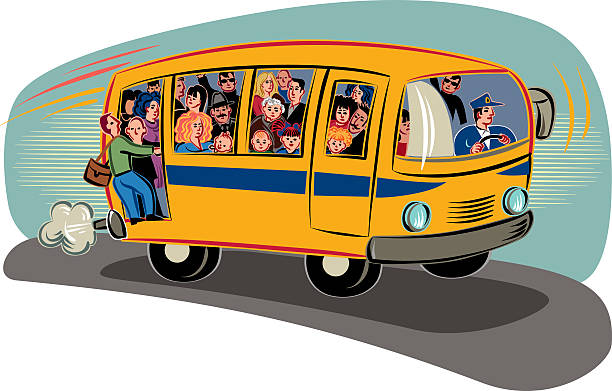
A Bus Called Friendship

Manufacturer: My Heart.

Year: 1974.

Seats: Not sure, although in good condition as many unused.

Description:

There are several features that come as standard for this model.

  1. Air conditioning: Blows hot and cold, but with some ENCOURAGEMENT the right temperature is achieved.
  2. Wired for CCTV: We CARE that you have a safe and comfortable journey.
  3. Fully carpeted: It is important to feel SUPPORTed.
  4. To be HONEST generally handles well, being a DEPENDABLE drive, even with bumps in the road.
  5. Can get stuck in a rut now and again, but with SYMPATHY/EMPATHY usually drives out, even with the deep ones.
  6. A GENEROUS luggage compartment comes as standard; it is important make space for the luggage carried rather than cram in to much.
  7. Slower than other models, but this means more TIME to cater to onboard needs.
  8. Recently added some headrests and armrests after LISTENING to some FEEDBACK.
  9. A TRUSTy manual gearbox which we know you will LOVE.
  10. Seat Belts: Fitted as standard to provide a SAFE environment on the journey.
  11. Reclining seats: Fitted as standard to provide a COMFORTABLE journey.
  12. Comes with TV, DVD player, fridge, USB, WIFI, and power sockets to CATER for different NEEDS.
  13. Reverse Camera: Fitted as standard to avoid bumping into any nasty surprises BEHIND you before driving FORWARD.
  14. Ramp access: To AID those having difficulty getting onboard.

Given years of LOYAL service and had a number of modifications over the years that have added VALUE.

Viewing welcome, please contact to arrange.

I will LISTEN to and consider any REASONABLE offers.

National Day of Encouragement

Introduction

The National Day of Encouragement in the United States was announced in 2007 and occurs each year on 12 September.

The first proclamation for the Day of Encouragement was made by Mayor Belinda LaForce of Searcy, Arkansas on 22 August 2007. In September Mike Beebe, the Governor of Arkansas, signed a proclamation making 12 September 2007 the “State Day of Encouragement” for Arkansas.

Later, President George W. Bush also signed a message making 12 September the official “National Day of Encouragement.”

The Encouragement Foundation is making plans to get more states involved in the National Day of Encouragement in the future.

What is the Purpose of the Day?

The National Day of Encouragement is a day meant to remind us that encouragement matters.

Brief History

It all started when a group of high school students attending a leadership forum were asked to come up with a solution to the biggest problem that faced young people in their day.

  • The problem: a lack of encouragement.
  • The solution: 12 September.

The National Day of Encouragement is a day dedicated to uplifting those around us and making a positive impact, no matter the magnitude.

Medical Students & Doctors: Mental Health & Stigma

Research Paper Title

Reducing Mental Health Stigma in Medical Students and Doctors towards their Peers with Mental Health Difficulties: A Protocol.

Background

Mental health problems are over-represented in doctors and medical students. However, stigma and ‘a culture of shame’ are formidable barriers to mental health services and consequently many doctors and medical students with mental health difficulties continue to suffer in silence despite the availability of effective treatment.

Indeed, a recent study on over 2,100 female physicians who met the diagnostic criteria for a mental disorder revealed that 50% were reluctant to seek professional help due to fear of exposure to stigma.

Left untreated or undertreated, mental health problems in doctors can result in impairment of occupational functioning, compromise patient safety and place considerable strain on the economy (by increasing the amount of sick leave taken).

Moreover, the consequences of mental health stigma in the medical profession can be fatal. Dr Daksha Emson, a psychiatrist with bipolar affective disorder, tragically killed herself and her baby daughter during a psychotic episode. An independent inquiry into Dr Emson’s death concluded that she was the victim of stigma in the National Health Service.

The mental health of medical students and doctors, in all of its aspects, must therefore be addressed with the urgency that it demands. Stephanie Knaak and colleagues conducted a data synthesis of evaluative studies on anti-stigma programmes for healthcare providers and identified six key ingredients one of which was a personal testimony from a trained speaker who has lived experience of mental illness.

In this paper the authors outline a study protocol with the aim of answering the following research question, ‘Does attending an anti-stigma programme comprised of a medic with first-hand experience of a mental health condition cause immediate and sustained reductions in mental health stigma from medical students and doctors towards their peers with mental health difficulties?’

Reference

Hankir, A., Fletcher-Rogers, J., Ogunmuyiwa, J., Carrick. F.R. & Zaman, R. (2020) Reducing Mental Health Stigma in Medical Students and Doctors towards their Peers with Mental Health Difficulties: A Protocol. Psychiatria Danubina. 32(Suppl 1), pp.130-134.

Is There a Mental Health Crisis among Canadian Postsecondary Students?

Research Paper Title

Mental Health among Canadian Postsecondary Students: A Mental Health Crisis?

Background

Recent reports express concerns about a mental health crisis among postsecondary students. These assertions, however, often arise from surveys conducted in postsecondary settings that lack the broader context of a referent group. The objectives of this study were:

  • To assess the mental health status of postsecondary students 18 to 25 years old from 2011 to 2017; and
  • To compare the mental health status of postsecondary students to nonstudents.

Methods

Prevalence was estimated for a set of mental health outcomes using seven annual iterations of the Canadian Community Health Survey (2011 to 2017). Logistic regression was used to derive odds ratio estimates comparing mental health status among postsecondary students and nonstudents, adjusting for age and sex. Random effects metaregression and meta-analyses techniques were used to evaluate trends in prevalence and odds ratio estimates over time.

Results

Over the study period, the prevalence of perceived low mental health, diagnosed mood and anxiety disorders, and past-year mental health consultations increased among female students, whereas binge drinking decreased among male students. With the exception of perceived stress, the odds of experiencing each mental health outcome were lower among postsecondary students compared to nonstudents.

Conclusions

These findings do not support the idea that postsecondary students have worse mental health than nonstudents of similar age. The perception of a crisis may arise from greater help-seeking behaviour, diminishing stigma, or increasing mental health literacy. Regardless, the observance of these trends provide an opportunity to address a previously latent issue.

Reference

Wiens, K., Bhattarai, A., Dores, A., Pedram, P., Williams, J.V.A., Bulloch, A.G.M. & Patten, S.B. (2020) Mental Health among Canadian Postsecondary Students: A Mental Health Crisis? Canadian Journal of Psychiatry. 65(1), pp.30-35. doi: 10.1177/0706743719874178. Epub 2019 Sep 4.

Could Programmes to Improve Mental Health Literacy Facilitate Formal as well as Informal Help-seeking among Unemployed Persons with Mental Health Problems?

Research Paper Title

Mental health literacy and help-seeking among unemployed people with mental health problems.

Background

Unemployed people with mental health problems often do not use available mental health services.

Help-seeking may depend on knowledge, recognition and attitudes associated with mental health – a concept referred to as mental health literacy (MHL).

Therefore the aim of this study was to investigate the influence of MHL on help-seeking intentions and behaviours among unemployed individuals with mental health problems.

Methods

A total of 301 unemployed individuals with mental health problems were recruited mainly from employment agencies in Southern Germany.

MHL was assessed by the Mental Health Knowledge Schedule (MAKS), the Depression Literacy Scale (DLS), and the Depression with Suicidal Thoughts Vignette.

Help-seeking intentions and behaviours were measured using the General Help-Seeking Questionnaire (GHSQ).

Associations between MHL and help-seeking intentions and behaviours were tested using regression analyses and structural equation modelling (SEM).

Results

All three MHL scales were significantly positively associated with help-seeking intentions and behaviors.

In their SEM model, greater MHL was significantly associated with increased intentions and behaviours to seek help from health professionals (formal help) and from family and friends (informal help).

Conclusions

Among unemployed persons with mental health problems, programmes to improve MHL could facilitate formal as well as informal help-seeking.

Future research should examine the efficacy of MHL-interventions to increase help-seeking.

Reference

Waldmann, T., Staiger, T., Oexle, N. & Rusch, N. (2020) Mental health literacy and help-seeking among unemployed people with mental health problems. Journal of Mental Health (Abingdon, England). 29(3), pp.270-276. doi: 10.1080/09638237.2019.1581342. Epub 2019 Mar 12.

What are the Perceptions of Mental Health and Perceived Barriers to Mental Health Help-Seeking Amongst Refugees?

Research Paper Title

Perceptions of Mental Health and Perceived Barriers to Mental Health Help-Seeking Amongst Refugees: A Systematic Review.

Background

Despite elevated rates of psychological disorders amongst individuals from a refugee background, levels of mental health help-seeking in these populations are low.

There is an urgent need to understand the key barriers that prevent refugees and asylum-seekers from accessing help for psychological symptoms.

This review synthesises literature examining perceptions of mental health and barriers to mental health help-seeking in individuals from a refugee background.

The researchers analysis, which complies with PRISMA reporting guidelines, identified 62 relevant studies.

Methods

Data extraction and thematic analytic techniques were used to synthesise findings from quantitative (n = 26) and qualitative (n = 40) studies.

Results

They found that the salient barriers to help-seeking were:

  • Cultural barriers, including mental health stigma and knowledge of dominant models of mental health;
  • Structural barriers, including financial strain, language proficiency, unstable accommodation, and a lack of understanding of how to access services, and
  • Barriers specific to the refugee experience, including immigration status, a lack of trust in authority figures and concerns about confidentiality.

Conclusions

The researchers discuss and contextualise these key themes and consider how these findings can inform the development of policies and programmes to increase treatment uptake and ultimately reduce the mental health burden amongst refugees and asylum-seekers.

Reference

Byrow, Y., Pajak, R., Specker, P. & Nickerson, A. (2020) Perceptions of Mental Health and Perceived Barriers to Mental Health Help-Seeking Amongst Refugees: A Systematic Review. Clinical Psychology Review. 75:101812. doi: 10.1016/j.cpr.2019.101812. Epub 2019 Dec 24.