Book: Meeting the Mental Health Needs of Young Children 0-5 Years

Book Title:

Meeting the Mental Health Needs of Young Children 0-5 Years.

Author(s): Samuel Jones and Marie Potter.

Year: 2019.

Edition: First (1st).

Publisher: Critical Publishing Ltd.

Type(s): Paperback and Kindle.

Synopsis:

The mental health of children is a current concern, and this applies even to the earliest years of a child’s life. This book supports trainees and practitioners working in early years contexts to understand the risk factors which can result in the development of mental health needs in children from birth to 5. It argues that high quality early years provision can mitigate against some of these risk factors and provides clear, evidence-informed guidance around government policy, transitions, attachment and working with parents or carers.

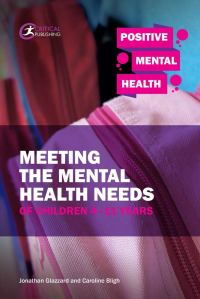
Book: Meeting the Mental Health Needs of Children 4-11 Years

Brain Changer eBook

Book Title:

Meeting the Mental Health Needs of Children 4-11 Years.

Author(s): Jonathan Glazzard and Caroline Bligh.

Year: 2018.

Edition: First (1st).

Publisher: Critical Publishing Ltd.

Type(s): Paperback and Kindle.

Synopsis:

The mental health of children in primary schools is a current concern.

  • Do you feel equipped to identify mental health needs in your pupils?
  • Do you have the knowledge and understanding to adequately support them?
  • Do you understand where your responsibilities start and stop?

This book helps you address these questions and more, providing a range of evidence-based strategies and tools. It introduces the various risk factors involved, shows how you can build resilience in children, and focuses on identifying and supporting both specific mental health needs and particular groups of pupils.

Book: Meeting the Mental Health Needs of Learners 11-18 Years

Brain Changer eBook

Book Title:

Meeting the Mental Health Needs of Learners 11-18 Years.

Author(s): Jonathan Glazzard and Kate Bancroft.

Year: 2018.

Edition: First (1st).

Publisher: Critical Publishing Ltd.

Type(s): Paperback and Kindle.

Synopsis:

The mental health of young people in secondary schools is a current concern.

  • Do you feel equipped to identify mental health needs in your learners?
  • Do you have the knowledge and understanding to adequately support them?
  • Do you understand where your responsibilities start and stop?

This book helps you address these questions and more, providing a range of evidence-based strategies and tools. It introduces the various risk factors involved, shows how you can build resilience in your students, and focuses on identifying and supporting both specific mental health needs and particular groups of learners.

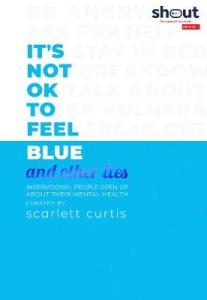
Book: It’s Not OK to Feel Blue (and other lies)

Book Title:

It’s Not OK to Feel Blue (and other lies): Inspirational people open up about their mental health.

Author(s): Scarlett Curtis.

Year: 2020.

Edition: First (1st).

Publisher: Penguin.

Type(s): Hardcover, Paperback, Audiobook, and Kindle.

Synopsis:

Everyone has a mental health. So we asked:

What does yours mean to you?

THE RESULT IS EXTRAORDINARY.

Over 60 people have shared their stories. Powerful, funny, moving, this book is here to tell you:

It’s OK.

Book: Life as a Clinical Psychologist

Book Title:

Life as a clinical psychologist: What is it really like?

Author(s): Paul Jenkins.

Year: 2020.

Edition: First (1st).

Publisher: Critical Publishing.

Type(s): Paperback and Kindle.

Synopsis:

Considering a career as a Clinical Psychologist? This book is an ideal, jargon-free introduction for those wishing to find out more about working in this demanding but rewarding mental health profession.

An accessible text that invites you to think critically about whether becoming a Clinical Psychologist is right for you, questioning and challenging your views and providing an honest perspective of life as a clinical psychologist.

Written from personal experience of over 10 years working in applied psychology, with a unique knowledge of the practice, theory, and application of Clinical Psychology, Paul Jenkins provides a first-hand perspective, blending anecdotes with factual advice on the clinical academic culture. It is also packed with case studies which highlight a range of different career pathways (including in other mental health fields) and includes coverage of post-qualification life to gives the reader a sense of the career you can have after training.

Book: This Book Will Change Your Mind About Mental Health

Book Title:

This Book Will Change Your Mind About Mental Health: A Journey into the Heartland of Psychiatry.

Author(s): Nathan Filer.

Year: 2019.

Edition: First (1st).

Publisher: Faber and Faber.

Type(s): Hardcover, Paperback, Audiobook, and Kindle.

Synopsis:

A journey into the heartland of psychiatry.

This book debunks myths, challenges assumptions and offers fresh insight into what it means to be mentally ill.

And what it means to be human.

This Book Will Change Your Mind About Mental Health was previously published in 2019 in hardback under the title The Heartland.

What is the Value of Mental Health First Aid for the UK Armed Forces?

Research Paper Title

Mental health first aid for the UK Armed Forces.

Background

Education programmes in mental health literacy can address stigma and misunderstanding of mental health.

This study investigated self-rated differences in knowledge, attitudes and confidence around mental health issues following participation in a bespoke Mental Health First Aid (MHFA) training course for the Armed Forces.

Methods

The mixed methods approach comprised quantitative surveys and qualitative interviews.

A survey, administered immediately post-training (n = 602) and again at 10-months post-attendance (n = 120), asked participants to rate their knowledge, attitudes and confidence around mental health issues pre- and post-training.

Results

Quantitative findings revealed a significant increase in knowledge, positive attitudes and confidence from the post-training survey which was sustained at 10-months follow-up.

Semi-structured telephone interviews (n = 13) were conducted at follow-up, 6-months post-attendance.

Qualitative findings revealed that participation facilitated an ‘ambassador’ type role for participants.

Conclusions

This study is the first to have investigated the effect of MHFA in an Armed Forces community.

Findings show participants perceived the training to increase knowledge regarding mental health and to enhance confidence and aptitude for identifying and supporting people with mental health problems.

Results suggest that such an intervention can provide support for personnel, veterans and their families, regarding mental health in Armed Forces communities.

Reference

Crone, D.M., Sarkar, M., Curran, T., Baker, C.M., Hill, D., Loughren, E.A., Dickson, T. & Parker, A. (2020) Mental health first aid for the UK Armed Forces. Health Promotion International. 35(1), pp.132-139. doi: 10.1093/heapro/day112.

Could an ‘Apple a Day’ Keep the (Mental Health) Doctor Away?

Research Paper Title

Fruit and vegetables intake in adolescents and mental health: a systematic review.

Background

The proper nutrition is indicated as a factor of a potential importance for the mental health early in life span, and among the potential products, which may influence, there are fruit and vegetables.

Therefore the purpose of this study was to conduct a systematic review of the observational studies analysing the association between the fruit and vegetables intake and the mental health in adolescents.

Methods

On the basis of PubMed and Web of Science databases, the papers presenting human studies and published in English until June 2019, analysing the association between intake of fruit and/ or vegetables, as well as related products (e.g. juices) and the mental health were included to the systematic review, while they analysed a group of adolescents.

Results

Based on the conducted systematic review, 17 studies were indicated as those which assess the influence of fruit and vegetables intake on the mental health in adolescents. For the assessment of mental health, diverse variables were taken into account, including positive (happiness, self-esteem), neutral (health-related quality of life, mental health status), and negative ones (loneliness, general difficulties, feeling worried, anxiety, stress and distress, depressive symptoms, depression, suicidal behaviours).

Conclusions

Based on the conducted systematic review of observational studies, it may be indicated that in a groups of adolescents there was a positive association between intake of fruit and vegetable products and mental health.

Especially beneficial for general mental health in adolescents, were such products as green vegetables, yellow vegetables and fresh fruit.

Reference

Glabska, D., Guzek, D., Groele, B. & Gutkowska, K. (2020) Fruit and vegetables intake in adolescents and mental health: a systematic review. Roxzniki Pantstwowego Zakladu Higieny. 71(1), pp.15-25. doi: 10.32394/rpzh.2019.0097.

Changing Attitudes & Stigma toward Mental Health in Nursing Students

Research Paper Title

Attitudes and stigma toward mental health in nursing students: A systematic review.

Background

This systematic review seeks to ascertain whether mental health-specific education reduces stigmatising attitudes in nursing students.

Methods

A systematic review of the literature was performed.

Results

Thirteen studies met the inclusion criteria.

Most of the results show an improvement in attitudes toward mental health, both in theory and clinical experience, but a greater improvement toward these stigmatising attitudes was observed in clinical placements than in theory.

Conclusions

Mental-health-specific training seems to improve perceptions toward mental health.

Clinical placement underpins theory, leading to a decrease in negative attitudes and stigma regarding mental health.

Reference

Palou, R.G., Vigue, G.P. & Tort-Nasarre, G. (2020) Attitudes and stigma toward mental health in nursing students: A systematic review. Perspectives in Psychiatric Care. 56(2), pp.243-255. doi: 10.1111/ppc.12419. Epub 2019 Jul 28.

How can Psychiatric Mental Health Nurse Practitioners Meet Rural Mental Health Challenges?

Research Paper Title

Psychiatric Mental Health Nurse Practitioners Meeting Rural Mental Health Challenges.

Background

To describe the current rural mental health system crisis in the United States and how psychiatric mental health nurse practitioners (PMHNPs) can holistically mitigate this systemic issue.

Methods

Respective to the objective, relevant literature is reviewed.

Results

PMHNPs have successfully increased access to care in under-served rural communities by practising at the fullest extent of their scope without mandated supervision, utilising telepsychiatry practice, while expanding PMHNP rural mental health education and research to meet and absolve pressing rural mental health challenges.

Conclusions

Current evidence supports that rural mental health care improves when PMHNPs have full scope of practice, utilise telepsychiatry, engage in related scholarly activity, and have formalised education and training for rural health care delivery, which collectively answer the professional and moral call serving the under-served rural population with mental illness.

Reference

Finley, B.A. (2020) Psychiatric Mental Health Nurse Practitioners Meeting Rural Mental Health Challenges. Journal of the American Psychiatric Nurses Association. 26(1):97-101. doi: 10.1177/1078390319886357. Epub 2019 Nov 15.